Skip to content

Creative DIY Exhibit Using Museum Glue: A Practical Guide to Secure, Repositionable Displays
Your trusted adhesives glue & cleaner manufacturer

A good exhibit often looks effortless because the practical work holding everything together is almost invisible. A resin figure appears perfectly balanced on a glass shelf, a miniature village keeps every building aligned, and a crystal ornament stays exactly where the designer placed it. In reality, lightweight collectibles and decorative objects can shift several millimeters from ordinary cabinet movement, footsteps, cleaning, pets, or accidental contact. Permanent glue can solve movement, but it also turns a flexible display into a fixed installation that may be difficult to change later.
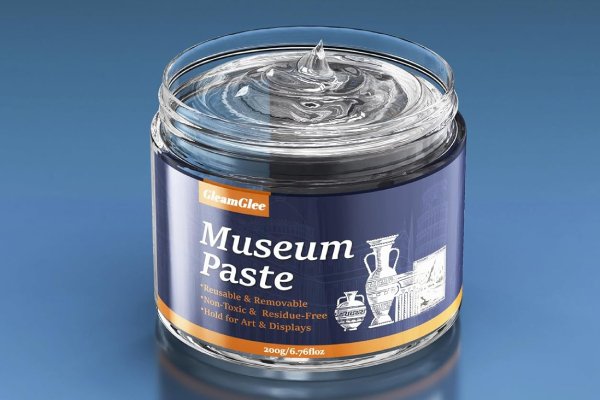
Museum glue, commonly sold as clear museum gel, is a removable material placed beneath objects to help reduce sliding, rotation, light tipping, and everyday movement on suitable horizontal surfaces. Unlike permanent adhesives, it can normally be removed and repositioned, making it useful for collectibles, miniatures, crystal décor, ceramics, model displays, photography props, seasonal decorations, and other exhibits that may need to change later.
That difference becomes obvious when a display grows over time. A collector may start with six figurines and have twenty by the end of the year, while a miniature hobbyist may rebuild the same scene for different seasons or photographs. A temporary holding material keeps those creative options open. The real skill is not simply using more gel; it is knowing which objects need support, where the material should be placed, and when another mounting method would be safer.
What Is Museum Glue for DIY Exhibits?
Museum glue is a removable display-stabilizing material used between the base of an object and a clean horizontal surface. It adds grip without forming a permanent structural bond, helping reduce sliding, rotation, vibration-related movement, and light tipping. Clear museum gel is especially useful for exhibits where the fixing material should stay hidden and the objects may need to be removed or rearranged later.
What Does Museum Glue Actually Do?
Museum gel works as a stabilizer rather than a repair adhesive. A traditional adhesive attempts to create a bonded joint between two materials, while museum gel increases contact and resistance at the point where an already stable object rests on a shelf or table. This distinction is important because many decorative objects do not need to be permanently glued down. They simply need enough additional grip to stop small movements from gradually changing the arrangement.
A lightweight resin statue on polished glass is a good example. The figure may stand perfectly well by itself, yet a cabinet door closing several times a day can cause slow rotation or small shifts in position. A few hidden gel contact points beneath the base can reduce that movement without altering the figure. The same principle applies to trophies, crystal ornaments, model buildings, decorative ceramics, tabletop props, and miniature accessories placed on smooth horizontal surfaces.
Is Museum Glue Permanent?
Museum gel is useful precisely because it is not intended to become a rigid permanent bond. Collections change, seasonal displays are packed away, miniature scenes are rebuilt, and photography setups may be rearranged several times in a single day. A removable holding material allows users to experiment with spacing and composition without making every early decision permanent. Clean gel can also often be reused when it remains flexible and free from dirt or fibers.
Reversibility does not mean that every possible finish should be treated identically. Smooth glass, ceramic, metal, marble, crystal, many plastics, resin, and suitably sealed wood are generally more predictable than raw wood, loose paint, delicate lacquer, porous stone, paper, or deteriorating antique finishes. When the object or furniture is valuable, testing a small hidden area before prolonged contact remains one of the most sensible habits in display work.
How Is Museum Gel Different From Regular Glue?
The easiest way to choose between museum gel and another adhesive is to decide whether the object needs stabilization or permanent assembly. If a broken model part must stay connected, a structural adhesive may be appropriate. If a finished model simply needs to remain aligned on a shelf, permanent bonding can create unnecessary risk. Museum gel is designed around removability, clean presentation, repositioning, and ordinary display stability rather than maximum bond strength.
| Fixing Method | Main Purpose | Repositionable | Typical Display Use | Important Limitation |
|---|---|---|---|---|
| Museum gel | Object stabilization | Yes | Figurines, décor, miniatures | Horizontal surfaces |
| Double-sided tape | Temporary mounting | Limited | Lightweight general items | May leave adhesive |
| Hot-melt glue | Craft assembly | Limited | Handmade construction | Often visible |
| Cyanoacrylate | Permanent bonding | No | Repairs and assembly | Difficult to reverse |
| Epoxy adhesive | Structural bonding | No | High-strength repair | Excessive for simple displays |
This comparison also explains why the strongest product is not automatically the best choice for an exhibit. A collectible may be worth hundreds of dollars while needing only modest protection against shifting. In that situation, the ability to lift and reposition the object without deliberately breaking a cured adhesive joint can be more useful than additional bond strength that the display never actually required.
Why Is Clear Gel Useful for Exhibits?
Clear museum gel is particularly useful on glass shelves, acrylic risers, polished tables, and transparent decorative objects because visible fixing material can quickly distract from the display. A large opaque piece of putty under a crystal ornament may keep the object steady, yet it can also become one of the first things a viewer notices. Small transparent contact points allow the support system to remain visually quiet.
Application technique matters almost as much as transparency. Even clear gel can become noticeable when too much is used or when pressure pushes it beyond the edge of the base. Experienced installers therefore start with less material, place it several millimeters inside the visible footprint whenever the object allows, and inspect the exhibit from the front, side, and below. A clean installation should make the viewer notice the collectible, not the material holding it in position.

Which DIY Exhibits Work Best?
Museum gel works best in creative exhibits made from small or moderate objects with stable bases resting on clean horizontal surfaces. Collectible shelves, miniature scenes, glass and crystal displays, model layouts, seasonal decorations, photography sets, craft exhibits, and tabletop product arrangements are especially suitable because they benefit from added grip while still needing convenient removal or future repositioning.
Which Collectible Displays Can You Create?
Collectible shelves are among the most practical places to use museum gel because many figures have a high center of gravity relative to the size of their base. Anime statues, resin figures, action figures, model kits, gaming collectibles, blind-box characters, trophies, and souvenir pieces can look stable while still being vulnerable to rotation or tipping when placed on polished shelves. Small amounts of gel can add resistance without turning the entire collection into a permanent installation.
Not every object needs it. A low, heavy ceramic piece with a wide base may already be difficult to move, while a tall character balanced on two narrow feet can benefit considerably from stabilization. The better approach is to arrange the collection first, observe which pieces actually move, and add gel only where it solves a real problem. This selective method reduces unnecessary contact and makes future cleaning or reorganizing much easier.
How Can You Build Miniature Exhibits?
Miniature exhibits often contain dozens of lightweight objects, which makes them vulnerable to small disturbances that would barely affect full-size décor. Dollhouse chairs, railway buildings, tiny vehicles, miniature plants, handcrafted scenery, holiday village houses, and model accessories can move whenever the table is bumped or cleaned. Museum gel allows selected components to stay in position while preserving the ability to change the scene later.
The amount required should match the scale of the object. A miniature chair may need only a tiny contact point, while a larger model building can use two or four small pieces spread across its base. The gel should not replace the adhesive used to construct the model itself. Structural joints still need the appropriate permanent glue; museum gel belongs between the finished display piece and the surface supporting it.
How Can You Arrange Glass and Crystal Displays?
Glass and crystal exhibits benefit from a holding method that does not introduce bulky clips, colored putty, or visible tape. Crystal animals, glass vases, candle holders, decorative sculptures, and small art pieces can be stabilized with small hidden contact points beneath their load-bearing areas. The goal is to add grip while preserving the transparency, reflection, and visual cleanliness that make these objects attractive in the first place.
Placement becomes especially important when the shelf is also made from glass. Gel that looks invisible from above may be clearly visible from below, particularly when the cabinet uses integrated lighting. For this reason, experienced users keep each contact point farther inside the object’s footprint and avoid oversized pieces. Heavy glass sculptures, however, should not depend on removable gel alone when falling could cause serious damage or injury; secure furniture and proper physical restraints remain necessary for higher-risk displays.
What Temporary Exhibits Can You Make?
Temporary exhibits are a natural match for removable museum gel because change is built into their purpose. Christmas villages, Halloween table scenes, wedding centerpieces, craft-fair samples, showroom displays, photography sets, reception décor, seasonal shelving, and tabletop retail arrangements may stay in place for only a few days or weeks. A reversible material helps keep these displays organized without permanently modifying furniture or decorative objects.
Commercial displays can benefit for the same practical reason. Small samples may slowly rotate when customers touch the counter, while photography props can shift between shots and create unnecessary retouching work. A reusable gel offers a simple way to maintain alignment while still allowing staff to clear and rebuild the setup. GleamGlee also produces museum gel for consumer and customized retail programs, so the same type of product can be adapted to different packaging or merchandising requirements without changing the basic application principles.

How Do You Plan a Stable Display?
A stable exhibit should be planned before any gel is applied. Arrange the objects first, identify pieces with narrow bases or high centers of gravity, keep fragile items away from exposed edges, and examine how every base actually touches the shelf. Museum gel performs best when it reinforces a sensible layout instead of trying to compensate for an inherently unstable or unsafe arrangement.
How Do You Choose the Right Layout?
Build the display once without adhesive so that visual problems and safety issues appear before anything is fixed in position. Look at the shelf from normal viewing height and check whether taller pieces block smaller ones, whether the layout feels crowded, and whether reaching for one object requires brushing against another. Fragile pieces should generally stay away from exposed edges, and enough space should remain between items to reduce the chance of one falling piece striking several others.
Height can be used creatively without sacrificing stability. Acrylic risers help bring smaller objects into view, while grouping related pieces can make a collection feel organized rather than crowded. Once the display looks right, identify only the objects that actually need extra grip. Applying gel beneath everything is rarely necessary and may make future cleaning more tedious. The strongest layouts combine good spacing, appropriate risers, stable furniture, and selective use of gel where movement is most likely.
Which Objects Need Extra Support?
Objects with a high center of gravity deserve attention first. Tall resin figures, narrow trophies, lightweight hollow decorations, miniatures standing on tiny feet, and smooth-bottomed objects placed on glass can move more easily than broad, low items. Environmental conditions also matter. A display beside a frequently used door, on a floor that carries noticeable foot vibration, or in a home with active pets may need more stabilization than an identical display in a quiet office.
| Object Characteristic | Relative Need | Practical Response |
|---|---|---|
| Tall with narrow base | High | Add small hidden contact points |
| Lightweight on glass | Medium–High | Stabilize against sliding |
| Broad and heavy | Low–Medium | Test before adding gel |
| Irregular underside | Medium–High | Support actual contact areas |
| Fragile item near edge | High risk | Move it inward first |
| Hanging or wall-mounted | Unsuitable | Use proper mounting hardware |
A useful stability check does not involve deliberately trying to knock the collectible over. Instead, position the object normally and lightly touch the shelf or nearby cabinet structure. If the piece rotates, rocks, or slides from ordinary movement, gel may help. If the entire shelf is unstable or the furniture can tip, the problem is larger than the object itself and should be addressed with appropriate furniture anchoring or physical restraints.
How Do Base Shapes Affect Placement?
The underside of the object determines where the material should go. A flat circular vase, a model standing on four feet, a resin figure supported by two shoes, and an irregular sculpture all create different contact patterns. The best results usually come from placing gel beneath areas that already carry weight rather than trying to fill every empty space under the object.
Large central blobs are rarely the most elegant approach. They can raise one side of the object, cause rocking, squeeze beyond the edge, or become visible through transparent shelves. Several smaller points usually distribute support more evenly and make removal easier. A two-foot figurine may need one small point beneath each foot, while a wide rectangular model can use four discreet points near its load-bearing corners.
How Do You Keep Gel Invisible?
The simplest way to keep museum gel hidden is to use less material and position it farther inside the base. After pressing the object into place, inspect it from several angles, especially if the shelf is transparent. What looks completely hidden when viewed from above may appear obvious from a lower angle, particularly under bright cabinet lighting or strong daylight.
If material squeezes outward, remove the object and reduce the amount instead of pushing the excess under the edge. Transparent crystal pieces require even more restraint because light can highlight trapped gel. Professional-looking exhibits often depend on this small detail: the support system should quietly solve a problem without becoming part of the visual design. The object should appear intentionally placed rather than visibly glued down.
How Do You Apply Museum Gel Correctly?
To apply museum gel correctly, clean and dry both contact surfaces, use a small amount, divide it into hidden support points when necessary, press it onto strong areas of the object’s base, and lower the item vertically into position. For the GleamGlee museum gel specification described here, allow approximately 30 minutes for the grip to become stronger before frequent handling or deliberate repositioning.
How Do You Prepare the Surface?
Surface preparation is one of the simplest ways to improve consistency. Dust, fingerprints, moisture, furniture polish, oil, pet hair, loose fibers, and residue from cleaning products can reduce the effective contact area between the gel and the surface. Clean the shelf and the underside of the object using a method appropriate for those materials, then allow both areas to dry completely before installation.
More aggressive cleaning is not always better. Painted resin, acrylic, lacquered furniture, antique finishes, and certain plastics can react poorly to strong solvents even when the gel itself would be compatible. Use the least aggressive method that removes ordinary contamination. It is also worth checking for felt pads, paper labels, loose paint, or weak decorative coatings beneath the object, because the gel can only be as secure as the layer it is actually touching.
How Much Museum Gel Do You Need?
For many small display pieces, a pea-sized amount or less provides a sensible starting point, although the ideal quantity depends on the object’s weight, base area, shape, and surface condition. Tiny miniatures may require only a fraction of that amount, while wider objects generally benefit from several small pieces distributed across the base instead of one thick pad.
Using more than necessary can actually make the display worse. Excess gel may squeeze outside the footprint, collect dust, raise the object unevenly, or become visible through a transparent shelf. The practical goal is not maximum coverage. It is sufficient contact to improve ordinary stability while keeping the object level, clean-looking, and easy to remove later. Start small, evaluate the result, and add material only if the initial contact is clearly insufficient.
Where Should You Place the Gel?
Place the gel beneath solid parts of the base that already support the object’s weight. Avoid loose labels, delicate paint, fragile decorative edges, fabric, weak felt pads, and thin projections that might separate during removal. A figurine standing on two feet should normally receive support beneath those feet, while a rectangular model can use several points positioned near its actual load-bearing corners.
| Base Type | Practical Starting Pattern | Main Concern |
|---|---|---|
| Small flat figurine | 2–3 small points | Rotation |
| Round vase | 3–4 spaced points | Sliding |
| Two-foot figure | 1 point per foot | Narrow support |
| Wide rectangular model | 4 contact points | Even loading |
| Irregular sculpture | True contact areas only | Rocking |
| Miniature accessory | Tiny single point | Excess visibility |
Museum gel should not be treated as a gap-filling compound. If an object rocks because its base is badly warped or structurally uneven, a custom stand or a more suitable support system may solve the problem more reliably. The gel is most effective when it improves friction between surfaces that already meet reasonably well.
How Do You Set the Object in Place?
After positioning the gel on the base, lower the object vertically onto the shelf instead of dragging it sideways. Sliding can smear the gel, pick up dirt, and move material beyond the intended footprint. Apply gentle downward pressure from a structurally strong part of the object, avoiding fragile arms, handles, crystal stems, antennae, decorative wings, or other thin features.
Once the object is seated, check that it is level and inspect all visible edges. If it leans, remove it and adjust the gel instead of pressing harder. With the product specification discussed here, the grip becomes stronger after roughly 30 minutes, so unnecessary handling during that period should be limited. Afterward, confirm normal stability by lightly touching the shelf rather than aggressively pushing the collectible toward failure.
Which Surfaces and Objects Are Suitable?
Museum gel is most suitable for small or moderate objects resting on clean, smooth, horizontal surfaces such as glass, ceramic, crystal, marble, metal, many plastics, resin, and compatible sealed wood. Surface condition matters as much as the material itself, so porous, unfinished, flaking, freshly painted, waxed, or historically sensitive finishes require greater caution and should be tested before prolonged contact.
Does Museum Gel Work on Glass?
Glass is one of the most practical surfaces for clear museum gel because it is smooth, commonly used in collectible cabinets, and easy to inspect before and after installation. Lightweight figures that move freely on polished glass can benefit from additional grip, while the transparent gel keeps the fixing method less noticeable than many tapes, clips, or colored putties.
Transparent shelves also reveal application mistakes more readily than opaque furniture. Material placed too close to the edge may be visible from below, especially when the cabinet contains LED lighting. Smaller contact points farther inside the base normally create a cleaner result. Museum gel does not increase the load capacity of the shelf itself, so heavy objects must still remain within the weight limits of the glass and the supporting cabinet.
Is Museum Gel Suitable for Ceramic and Crystal?
Smooth glazed ceramic and crystal bases are generally good candidates because they provide close surface contact. Figurines, decorative bowls, small vases, crystal animals, candle holders, and similar objects can gain resistance to sliding or rotation without requiring permanent bonding. Before application, inspect the underside for unglazed rings, paper labels, cork sections, felt pads, loose decoration, or irregular texture that could affect how the gel contacts the object.
Crystal pieces deserve particular care because their value and fragility often exceed their size. Museum gel can reduce routine movement, but sensible placement is equally important. Keep fragile objects away from exposed edges, avoid tightly packing several expensive pieces together, and make sure the cabinet itself is stable. If an object is unusually heavy, dramatically top-heavy, or positioned where people may regularly strike it, a purpose-built display support may be a safer choice.
Can You Use Museum Gel on Metal, Plastic, Resin, Marble, and Wood?
Many modern collectibles and décor pieces combine resin, plastic, acrylic, polished metal, and stone, and these smooth materials can provide suitable contact when they are clean and structurally sound. Trophies, resin statues, acrylic risers, polished marble shelves, metal ornaments, and plastic model bases are all common examples where removable stabilization can be useful.
Wood needs more judgment because the finish determines compatibility. A modern sealed shelf with a durable coating behaves differently from unfinished timber, distressed paint, antique lacquer, waxed furniture, or deteriorating veneer. Painted resin and plastic also vary widely in coating quality. When the surface is valuable or unfamiliar, a discreet test can reveal whether prolonged contact affects gloss, color, or finish integrity before the gel is used in a more visible area.
Which Surfaces Should You Avoid?
The clearest limitation is orientation. This type of museum gel is designed for horizontal surfaces and should not be used to hang pictures, support objects on walls, suspend decorations, secure ceiling fixtures, or mount items on steep slopes. A removable gel placed beneath a figurine experiences compression and friction; a wall-mounted object would ask the same material to support weight against gravity in a completely different way.
Porous, heavily textured, dusty, oily, wet, flaking, or deteriorating surfaces are also less predictable. Raw wood, loose fabric, crumbly stone, fragile antique coatings, fresh paint, and paper-based materials deserve particular caution. Large sculptures, very heavy objects, or anything positioned above people should rely on appropriate physical restraints or engineered supports rather than removable gel alone. Museum gel is useful for everyday display management, not as a substitute for professional safety mounting.

How Do You Remove and Reuse Museum Gel?
Museum gel can normally be removed by lifting the object slowly from a strong area near its base and gently rolling or peeling the remaining material from a compatible smooth surface. Clean gel may be reused when it remains flexible and free from dust, oils, fibers, hair, or other debris. Replace it when contamination, deformation, or noticeably weaker grip makes continued reuse impractical.
How Do You Remove Museum Gel Safely?
Removal should begin at the strongest structural part of the object, usually close to its base. A figurine should not be lifted by a sword, arm, wing, handle, antenna, thin leg, or decorative extension simply because that feature is convenient to grab. The temporary hold beneath the base may be stronger than a delicate joint in the collectible itself, so slow and controlled handling reduces unnecessary stress.
If the object does not release immediately, gentle gradual lifting or slight rocking can help separate individual contact points without a sudden pull. Once the piece is removed, the remaining gel can usually be rolled or peeled away with the fingers. Metal scrapers and aggressive tools are rarely appropriate because they can scratch acrylic, polished furniture, coated glass, and decorative surfaces. On valuable items, controlled removal is just as important as careful application.
Does Museum Gel Leave Residue?
A well-formulated museum gel is intended to remove cleanly from compatible smooth surfaces, which is one reason collectors choose it instead of many tapes or permanent adhesives. The product described here is intended for residue-free removal from appropriate glass, marble, metal, ceramic, and other smooth surfaces when used correctly. Real-world results, however, still depend on the surface underneath the gel.
Contact time, temperature, contamination, cleaning products, coating chemistry, and surface age can all influence what happens during removal. A modern glass shelf is much more predictable than an old lacquered cabinet. Users should therefore be cautious with antique finishes, porous materials, newly painted surfaces, decorative films, and unknown coatings. Clean gel and a clean surface also reduce the chance that dust or oils are mistaken for adhesive residue after the object is lifted.
Is Museum Gel Reusable?
Museum gel can often be reused while it remains clean, flexible, and capable of forming close contact with a new surface. This is particularly useful for collectors who regularly reorganize shelves, families who rotate seasonal décor, photographers who rebuild scenes, and exhibitors who pack and reinstall tabletop displays. Reusability makes temporary projects easier without requiring a completely new fixing material every time.
Inspect the gel after removal rather than automatically saving every piece. Material that has collected dust, pet hair, fabric fibers, skin oils, crumbs, or other debris will not contact the next surface as effectively. There is little benefit in maximizing the number of reuse cycles when grip has already declined. A simple working rule is more practical: reuse gel while it remains clean and performs normally, and replace it once contamination, deformation, discoloration, or weaker contact becomes noticeable.
How Do You Reposition an Exhibit?
Rearranging a display is a good opportunity to improve it rather than simply moving every item to a different spot. Remove the objects carefully, clean the shelf where necessary, and review the collection as a whole. A display may have become crowded as new pieces were added, or a tall figurine may now block several smaller collectibles that were originally easy to see.
Consider whether risers would improve visibility, whether fragile objects should move farther from the edge, and whether more spacing would reduce domino-style accidents. Seasonal displays can be rebuilt from scratch, while photography and retail setups can change whenever a new composition is needed. This flexibility is one of the main practical advantages of museum gel: the display stays orderly enough for everyday use without forcing the collection to remain permanently locked into its first arrangement.

Conclusion
Creative exhibit design is not about fixing every object as firmly as possible. It is about balancing appearance, stability, access, and the freedom to change the arrangement later. Museum gel works well when the object is already reasonably stable but needs extra resistance to everyday sliding, rotation, light vibration, or accidental contact. Used in small hidden amounts, it can improve a display without making the fixing material part of the visual experience.
The most reliable results come from a simple sequence: plan the layout before applying anything, keep fragile objects away from exposed edges, identify the pieces that genuinely need stabilization, clean both contact surfaces, use only the amount required, and let the object settle before judging the final hold. For the GleamGlee museum gel specification discussed here, the grip becomes stronger after approximately 30 minutes and the product is intended for suitable horizontal surfaces rather than wall mounting or hanging applications.
A well-designed collection should also be allowed to evolve. New figurines arrive, miniature scenes change, holiday decorations return to storage, and photography sets are rebuilt for new ideas. A clear, removable, reusable display gel supports that cycle without forcing every arrangement to become permanent. When paired with thoughtful object care and sensible shelf design, it becomes a small practical tool that can make a surprisingly large difference to the way a finished exhibit looks and functions.
Frequently Asked Questions
Is Museum Gel Safe for Collectibles?
Museum gel is designed to stabilize collectibles without creating a permanent bond, making it suitable for many resin figures, ceramics, glass ornaments, plastic models, crystal pieces, and similar objects with sound surfaces. Compatibility still depends on the specific finish. Painted, porous, antique, delicate, or unfamiliar materials should be tested in a discreet area first because the stability of the coating itself may differ from the stability of the gel.
How Much Museum Gel Should I Use for a Figurine?
For many small figurines, begin with a pea-sized amount or less and divide it into two or more smaller contact points when the base shape requires it. A figure standing on two narrow feet may need only a small piece beneath each foot. Using too much can make the object uneven, push gel beyond the visible edge, or collect unnecessary dust, so starting with less material normally produces a cleaner result.
Does Museum Gel Work on Glass Shelves?
Glass shelves are among the most common surfaces for clear museum gel because they are smooth and provide close contact with the material. The main challenge is visibility, since excess gel can be seen from below a transparent shelf. Place several small contact points farther inside the object’s footprint, keep the glass clean and dry, and inspect the installation from multiple viewing angles before considering the display finished.
Can Museum Gel Prevent Figurines From Tipping Over?
Museum gel can reduce light tipping, rotation, and sliding when a figurine already has a reasonably stable base. It is especially useful for tall figures, narrow-footed collectibles, and lightweight pieces on smooth shelves. It cannot make an inherently unstable object completely secure against severe impact, earthquakes, overturned furniture, or heavy contact, so very fragile or high-risk displays may need additional physical restraints or better positioning.
Does Museum Gel Leave Marks on Furniture?
Clear museum gel is intended to remove cleanly from compatible smooth surfaces, but furniture finishes vary considerably. Modern sealed surfaces are generally more predictable than raw wood, waxed finishes, fresh paint, distressed coatings, or antique lacquer. When the appearance or value of the furniture matters, test a small hidden area before prolonged use and avoid placing gel directly on loose, porous, peeling, or chemically sensitive finishes.
Can Museum Gel Be Reused After Removal?
Museum gel can often be reused when it remains clean, flexible, and free from dust, lint, oils, pet hair, or other contamination. After removal, roll the material together and inspect it before placing it beneath another object. Once it becomes dirty, deformed, or noticeably less effective, replacing it is more sensible than trying to extend its service life, particularly when the collectible being protected is significantly more valuable than the gel itself.
Can Museum Gel Be Used on Walls?
Museum gel of this type should not be used for wall mounting, suspended displays, ceiling fixtures, or steeply angled surfaces. It is designed for objects resting on horizontal surfaces where the material increases contact beneath the base. Wall-mounted objects require a different mounting system that is designed to support weight against gravity, such as suitable hooks, brackets, anchors, or other hardware appropriate for the wall and the object.
Share:
Table of Contents
Here, creating your adhesives glue & removal cleaner collection is no longer a barrier—it’s a collaborative journey where GleamGlee helps brands and businesses transform their vision into durable, certified, and market-ready solutions.
Partner with GleamGlee
Join hundreds of global partners who trust GleamGlee for adhesives and cleaners that combine innovation, compliance, and speed. Our vertically integrated system—from R&D to warehouse—guarantees consistent performance and reliable delivery.
Whether you’re sourcing FBA-ready stock or developing your own formula, our team provides unmatched technical support and responsive service.