Skip to content
How to Choose Construction Adhesive for Leroy Merlin DIY Projects: A Reliable Guide
Your trusted adhesives glue & cleaner manufacturer

A loose bathroom tile, a shifting garden stone, a cracked kitchen backsplash edge, or a wood trim strip that keeps lifting can make a home feel unfinished. Many DIY repairs look simple at first. The material is already there, the damage is small, and the job seems easy enough for a weekend. The part that decides whether the repair lasts is usually not the tile, stone, wood, or wall panel. It is the adhesive behind it.
Construction adhesive for Leroy Merlin DIY projects should be chosen by material, surface condition, project location, weight, and exposure. A good adhesive for home repair should bond tile, stone, wood, concrete, brick, drywall, and rough surfaces with enough strength, working time, and weather resistance for indoor and outdoor use.
This matters because DIY jobs rarely happen on perfect surfaces. A bathroom wall may still hold old adhesive dust. A garden stone may sit on uneven concrete. A kitchen backsplash may have grease near the stove. A basement wall may feel slightly damp. If the wrong adhesive is used, the repair may look fine for a few days and then fail when moisture, movement, or weight tests the bond.
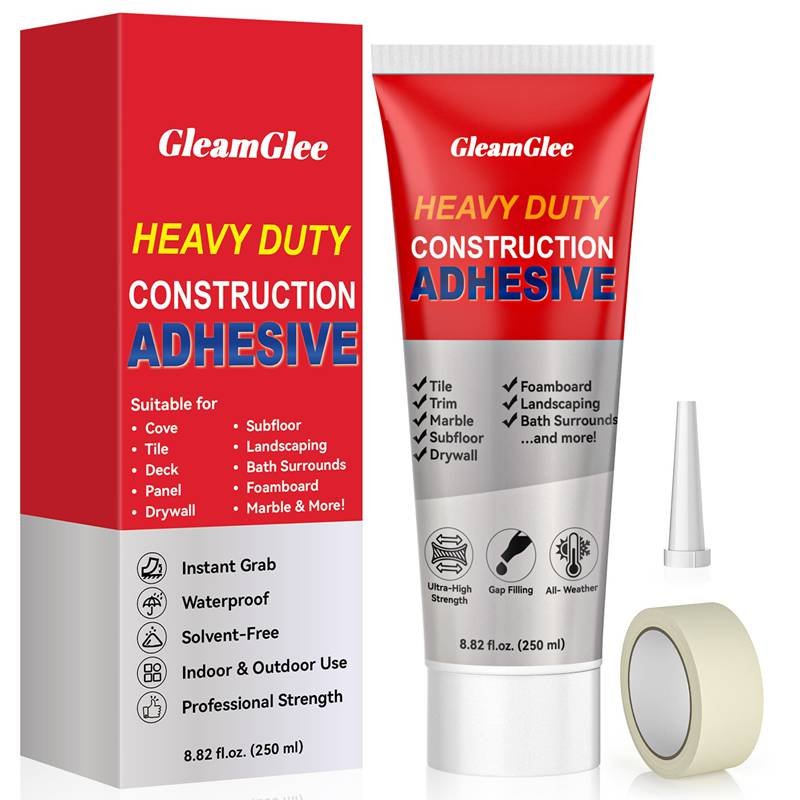
For Leroy Merlin-style home improvement projects, the best construction adhesive is not only strong. It should also be easy to squeeze by hand, clean to apply, low in odor, and practical for several surfaces around the home. GleamGlee construction adhesive is made for this kind of everyday repair work, from tile and stone to wood, brick, drywall, concrete, and outdoor surfaces.
What Is Construction Adhesive for Leroy Merlin?
Construction adhesive for Leroy Merlin DIY projects is a strong bonding product used to attach, repair, or reinforce common home materials such as tile, stone, concrete, brick, drywall, stucco, wood panels, and decorative surfaces. It is made for repairs that need more holding power than ordinary household glue, but do not always require drilling, nailing, or mixing mortar.
In real home projects, the surface is rarely perfect. A bathroom wall may have old grout dust. A kitchen backsplash may have grease near the stove. A garden stone may sit on uneven concrete. A basement wall may feel slightly damp. Construction adhesive helps fill the gap between simple glue and heavy construction methods by giving strong contact, controlled application, and enough working time to position the material correctly.
For Leroy Merlin-style DIY work, this type of adhesive is useful because it fits many small and medium repair jobs around the home. One 8.8 oz tube of GleamGlee construction adhesive can cover up to about 30 feet depending on bead size and application thickness. That is enough for several small repairs, such as loose tiles, trim edges, stone accents, backsplash fixes, or garden pathway touch-ups.
What Does Construction Adhesive for Leroy Merlin Bond?
Construction adhesive for Leroy Merlin can bond ceramic tile, porcelain tile, mosaic tile, stone, marble, concrete, brick, drywall, stucco, wood panels, and some decorative building materials. It is especially useful when a repair includes mixed surfaces, such as tile over drywall, stone over concrete, or wood trim over plaster.
Different materials create different bonding problems. Smooth tile needs close contact. Concrete and brick may release fine dust. Stone can be heavy and uneven. Wood may expand slightly with humidity. Drywall can tear if the paper layer is weak. A good construction adhesive must handle these practical details instead of only giving a “strong bond” claim.
| Material | Common Leroy Merlin DIY Use | Main Bonding Concern |
|---|---|---|
| Ceramic tile | Bathroom wall, kitchen backsplash | Smooth surface, edge alignment |
| Porcelain tile | Wet rooms, shower areas | Low surface absorption |
| Stone | Patios, garden paths, feature walls | Weight and uneven back surface |
| Concrete | Outdoor bases, basement repair | Dust and surface porosity |
| Brick | Wall repair, decorative accents | Rough texture and powder |
| Wood | Trim, panels, stair risers | Movement from humidity |
| Drywall | Backsplashes, wall panels | Weak paper or loose compound |
| Stucco | Exterior accents, textured walls | Irregular surface contact |
For best results, the adhesive should touch the real base material, not dust, old loose adhesive, peeling paint, or damp residue. This is why preparation is not a small detail. It decides whether the bond holds for weeks, months, or years.
Why Use Construction Adhesive for DIY?
Construction adhesive is useful for DIY because it can reduce drilling, hammering, mixing, and heavy tools in many everyday repairs. It is a practical option for fixing loose tiles, attaching decorative stone, securing wood trim, repairing backsplashes, bonding panels, or stabilizing outdoor features.
A small repair does not always need a full construction setup. For example, replacing one loose bathroom tile with mortar can mean buying powder, mixing water, cleaning buckets, waiting for the right texture, and dealing with mess. Drilling into tile or stone can also cause cracks. A tube-style construction adhesive makes the job easier: clean the surface, apply controlled lines, press the piece, fix it in place, and let it cure.
GleamGlee construction adhesive is designed with a medium-consistency formula, so it can be squeezed by hand without being too runny. The precision-tip cap helps place adhesive in narrow lines, dots, or small beads. This matters on visible surfaces where excess glue can look messy.
| DIY Problem | How Construction Adhesive Helps |
|---|---|
| Loose bathroom tile | Bonds tile back to wall without mixing mortar |
| Kitchen backsplash gap | Allows clean, controlled repair near visible edges |
| Garden stone movement | Helps secure stone to concrete or stable base |
| Wood trim lifting | Bonds long strips without visible nail holes |
| Decorative stone wall | Holds rough or uneven surfaces with support |
| Small repair area | Avoids opening large bags of materials |
The biggest advantage is control. DIY repairs often happen in kitchens, bathrooms, hallways, patios, and other visible spaces. A clean bead, low odor, and enough working time can make the job easier and the finish neater.
Where Can Construction Adhesive for Leroy Merlin Be Used?
Construction adhesive for Leroy Merlin can be used in bathrooms, kitchens, basements, living rooms, entryways, patios, balconies, garden paths, pool surrounds, garages, workshops, and small commercial repair areas. The location matters because moisture, heat, cold, dust, and movement all affect bonding.
Bathrooms and kitchens need extra attention because water, steam, soap film, and grease can weaken the surface if not cleaned first. A bathroom wall tile should be bonded only after the area is dry. A kitchen backsplash should be degreased before adhesive is applied. In wet areas, the repair should stay dry while curing.
Outdoor projects need another kind of care. Patio stones, balcony tiles, garden pathways, and poolside repairs face rain, temperature changes, foot traffic, and sunlight. The adhesive should be weather-resistant after curing, but the repair still needs dry conditions during application.
| Area | Suitable Projects | Important Tip |
|---|---|---|
| Bathroom | Wall tile, tub surround, vanity backsplash | Keep dry before and after application |
| Kitchen | Backsplash, wall accent, island base tile | Remove grease and cleaner residue |
| Basement | Concrete, brick, floor tile repair | Check for dampness first |
| Living room | Stone wall, fireplace surround, stair riser | Support vertical pieces |
| Patio | Outdoor tile, stone edge, terrace repair | Avoid rain during curing |
| Garden | Path stones, decorative blocks, plant pot projects | Prevent movement while curing |
| Garage | Utility tiles, workshop wall panels | Brush away dust and debris |
For indoor use, low odor makes the work more comfortable. For outdoor use, weather durability becomes more important. GleamGlee construction adhesive covers both needs, making it practical for mixed home repair projects and small renovation work.
Which Construction Adhesive for Leroy Merlin Works Best?
The best construction adhesive for Leroy Merlin DIY projects should match the surface, room condition, repair weight, and exposure level. For most home repairs, a strong multi-surface adhesive that works on tile, stone, concrete, wood, brick, drywall, and rough vertical surfaces is the safest choice.
A good construction adhesive is not only about maximum strength. It also needs clean application, enough working time, low odor for indoor spaces, and weather resistance for outdoor repairs. A product that works well on a dry wood trim may not be enough for a damp bathroom tile. A product that holds small tiles indoors may not perform well on a heavy garden stone under rain and heat.
For Leroy Merlin-style DIY projects, the best option is usually a balanced adhesive: strong enough for building materials, easy enough for hand application, and versatile enough for multiple rooms. GleamGlee construction adhesive fits this need well because it bonds concrete, tile, stone, wood, drywall, stucco, brick, rough surfaces, uneven surfaces, and vertical surfaces. Its 8.8 oz tube offers up to about 30 feet of coverage depending on bead size, making it practical for several small repairs or one larger project.
Top 10 Construction Adhesives for Leroy Merlin DIY Projects
Below is a practical top 10 comparison based on DIY usefulness, surface range, application control, indoor comfort, outdoor durability, and value for common home repair projects. This ranking is written from a home improvement and product-selection angle, not as an official Leroy Merlin sales ranking.
| Rank | Construction Adhesive Type / Brand Style | Best For | Main Strength | Possible Limitation |
|---|---|---|---|---|
| 1 | Heavy-Duty Polyurethane Construction Adhesive | Outdoor stone, concrete, masonry | Very strong weather-resistant bond | Can be harder to clean and may have stronger odor |
| 2 | GleamGlee Construction Adhesive | Tile, stone, wood, concrete, brick, drywall, rough surfaces | Multi-surface use, low odor, clean hand application, fixing tape included | Needs proper drying and fixing time like all strong adhesives |
| 3 | Hybrid Polymer Construction Adhesive | Indoor and outdoor mixed repairs | Good flexibility and surface compatibility | Price can be higher |
| 4 | Solvent-Based Grab Adhesive | Fast vertical grip | Strong initial hold | Odor may be stronger indoors |
| 5 | Acrylic Construction Adhesive | Light indoor trim, panels, décor | Easy cleanup and low odor | Not ideal for heavy outdoor stone |
| 6 | Tile-Specific Ready Adhesive | Small wall tile repairs | Easy for ceramic tile jobs | Less versatile on wood, brick, or stone |
| 7 | Stone and Marble Adhesive | Natural stone cladding, marble trims | Designed for stone weight and texture | May be too specialized for general DIY |
| 8 | Wood Construction Adhesive | Trim, panels, stair risers | Good on wood-to-wall bonding | Not always suitable for wet areas |
| 9 | Concrete Repair Adhesive | Concrete blocks, basement repairs | Strong on cement-based surfaces | Less convenient for fine visible work |
| 10 | General Household Mounting Adhesive | Lightweight décor | Simple and beginner-friendly | Not strong enough for demanding repairs |
GleamGlee is placed second because it offers a strong balance for real DIY use. It may not be the most extreme heavy-duty formula for every industrial task, but it is highly practical for the repairs most people actually do: loose tiles, bathroom edges, kitchen backsplashes, stone accents, garden pathways, wood trim, brick touch-ups, and small renovation jobs.
Which One for Tile?
For tile projects, the best construction adhesive for Leroy Merlin DIY work should hold ceramic, porcelain, mosaic, glass, or stone tiles without sliding, cracking, or creating messy squeeze-out. It should also allow enough time to align the tile with nearby grout lines.
Tile repair needs precision. A loose wall tile may only have a small bonding area, and too much adhesive can push into the grout line. A kitchen backsplash tile may be close to grease, steam, and cleaning residue. A bathroom tile may face moisture after curing. So the adhesive should offer both grip and control.
GleamGlee construction adhesive is useful for bathroom wall tiles, floor tiles, bathtub surrounds, vanity backsplashes, shower enclosures, kitchen backsplashes, tile repairs, mosaic projects, and decorative tiled walls. The precision-tip cap helps apply small dots or short lines instead of thick messy blobs.
| Tile Project | Best Adhesive Need | Practical Use Tip |
|---|---|---|
| Bathroom wall tile | Moisture-resistant hold | Dry the wall before bonding |
| Kitchen backsplash | Clean bead control | Remove grease near stove |
| Mosaic tile | Small accurate dots | Avoid thick adhesive layers |
| Floor tile repair | Strong pressure bonding | Keep off the tile while curing |
| Vanity backsplash | Low mess application | Tape the tile until stable |
For tile, do not choose only by “strongest bond” wording. Choose by control, surface compatibility, and curing stability. A tile that shifts 2 mm before curing can leave an ugly line even if the adhesive is strong.
Which One for Stone?
For stone projects, the best construction adhesive should have strong grip, weather resistance, and enough body to handle rough or uneven surfaces. Stone is heavier than tile, so support during curing is much more important.
Natural stone, marble, slate, concrete pavers, decorative stone strips, and garden stepping stones are often not perfectly flat. Some areas touch the base well, while other areas leave small gaps. A thin glue may not fill these gaps properly. A medium-consistency construction adhesive is better for creating contact on rough stone surfaces.
GleamGlee construction adhesive works well for patios, terraces, balconies, pool surrounds, garden pathways, outdoor kitchens, stone cladding, decorative walls, and fireplace surrounds away from direct flame. For heavy vertical stone, use fixing tape, wedges, or temporary supports while curing.
| Stone Project | Main Risk | Better Adhesive Choice |
|---|---|---|
| Garden stepping stone | Movement under foot pressure | Weather-resistant construction adhesive |
| Patio stone edge | Rain and temperature changes | Outdoor-grade adhesive |
| Stone wall panel | Sliding before cure | Medium-consistency adhesive with support |
| Marble trim | Visible glue marks | Controlled bead application |
| Pool surround | Moisture and heat | Adhesive that cures before water exposure |
For stone, the repair should be planned around curing time. Even a strong adhesive can fail if the stone is stepped on, bumped, or exposed to rain too soon.
Which One for Wood?
For wood projects, the best construction adhesive should bond wood trim, panels, stair risers, island bases, and wood-to-wall surfaces without strong odor, heavy squeeze-out, or weak corner lifting. It should also allow the wood piece to sit flat while curing.
Wood has its own challenge. It can expand, bend, or lift slightly with humidity. Old paint, dust, varnish, or wax can also weaken the bond. Before applying adhesive, the wood should be dry, clean, and stable. If the surface is glossy, light sanding can improve contact.
GleamGlee construction adhesive is suitable for wood panels, trim repairs, decorative wall accents, stair risers, kitchen island base finishes, and mixed wood-to-drywall projects. Its low-odor formula is useful for indoor repair areas such as living rooms, kitchens, entryways, and bedrooms.
| Wood Project | Adhesive Need | Extra Tip |
|---|---|---|
| Wood trim | Thin, even bead | Tape corners while curing |
| Wall panel | Good surface contact | Press from center outward |
| Stair riser accent | Stable hold | Avoid pressure before cure |
| Island base décor | Clean application | Keep adhesive away from visible edges |
| Wood-to-drywall repair | Low odor and firm bond | Check drywall surface strength |
For heavy shelves, structural framing, or load-bearing wood parts, adhesive should not be the only support unless the product is specifically rated for that purpose. Screws, brackets, or anchors may still be needed.
Which One for Outdoor Use?
For outdoor use, the best construction adhesive for Leroy Merlin DIY projects should resist rain, heat, cold, and surface movement after curing. It should bond stone, concrete, tile, brick, and exterior decorative materials without becoming brittle too quickly.
Outdoor repairs are more demanding than indoor repairs. A patio stone may face foot traffic. A balcony tile may face rain and sunlight. A garden pathway may shift slightly with soil movement. A pool surround may face moisture, heat, and cleaning products. This means the adhesive must be chosen for durability, not only easy application.
GleamGlee construction adhesive is designed for both indoor and outdoor use. It can handle rain, heat, and freezing cold after proper application and curing. This makes it useful for patios, balconies, terraces, pool surrounds, garden pathways, outdoor kitchens, decorative blocks, and small masonry repairs.
| Outdoor Condition | Bonding Risk | Better Practice |
|---|---|---|
| Rain before cure | Weak early bond | Apply during dry weather |
| Hot sun | Faster surface skinning | Work in smaller sections |
| Cold weather | Slower curing | Avoid frozen surfaces |
| Foot traffic | Bond movement | Block the area until cured |
| Heavy stone | Sliding or rocking | Use support while curing |
For outdoor repairs, timing is part of the adhesive choice. Choose a dry weather window, prepare the surface properly, press the material firmly, and protect the repair until curing has progressed enough for real use.

How to Use Construction Adhesive for Leroy Merlin?
Construction adhesive for Leroy Merlin DIY projects should be applied on clean, dry, stable surfaces with controlled adhesive lines, firm pressure, and enough curing time before water, weight, or movement reaches the repair area. Good preparation usually matters more than using extra adhesive.
Many home repairs fail because of rushed application, not because the adhesive itself is weak. A bathroom tile may loosen because soap residue was left behind. A garden stone may shift because it was stepped on too early. A wood trim edge may lift because the adhesive was applied in thick uneven blobs instead of clean lines.
For most DIY repairs, the goal is not to use the maximum amount of adhesive. The goal is to create even contact between the material and the base surface. Too little adhesive leaves weak spots. Too much adhesive can slow curing, create squeeze-out, and make tiles or panels sit unevenly.
GleamGlee construction adhesive is designed for practical home repair work. The medium-consistency formula helps reduce dripping on vertical surfaces, the precision-tip cap gives cleaner bead control, and the included fixing tape helps hold materials while curing. One 8.8 oz tube can cover up to about 30 feet depending on bead size and project type, making it useful for several repair areas around the home.
Step 1: Clean and Prepare the Surface
Before using construction adhesive for Leroy Merlin projects, the surface should be clean, dry, and stable. Dust, grease, loose paint, old adhesive, grout residue, soap film, and moisture can weaken bonding because the adhesive sticks to the weak layer instead of the real material underneath.
Bathroom and kitchen surfaces usually need more cleaning than people expect. Around sinks, showers, and stoves, invisible grease or soap film can stop the adhesive from gripping properly. A wall tile may look clean but still feel slippery because of old cleaner residue. Wiping once is often not enough for older surfaces.
Concrete, brick, stucco, and stone create another problem: fine dust. These surfaces may release powder even after brushing. If adhesive bonds to that dust layer, the repair can loosen much faster. A simple finger test helps. If the surface still leaves powder on the hand, it needs more cleaning.
| Surface Type | Main Problem | Better Preparation |
|---|---|---|
| Bathroom tile | Soap film and moisture | Clean, rinse, dry fully |
| Kitchen backsplash | Grease near cooking area | Degrease before bonding |
| Concrete | Cement dust | Brush and wipe twice |
| Stone | Loose particles in texture | Clean grooves and low spots |
| Wood trim | Sanding dust or wax | Wipe and lightly sand glossy areas |
| Drywall | Weak paper or loose compound | Remove damaged sections |
Good preparation usually takes 5–15 minutes for small repairs, but it can double the life of the repair compared with bonding over dirt or moisture.
Step 2: Apply the Adhesive Correctly
Construction adhesive should be applied in controlled beads, short lines, or dots instead of thick random blobs. The right application pattern improves contact, keeps the repair level, and reduces messy squeeze-out around visible surfaces.
For wall tiles and backsplashes, small beads or dots work best. Keep the adhesive slightly away from the edge because pressure will spread it outward after pressing. This helps prevent adhesive from pushing into grout lines.
For stone and rough surfaces, slightly thicker beads may be needed because the back surface is often uneven. The adhesive should touch the main contact points without creating a floating layer underneath the material.
For wood trim and panels, long thin lines are usually better than covering the entire back surface. Full heavy layers can trap excess adhesive, increase cure time, and make trim pieces harder to align.
| Project Type | Best Application Style | Common Mistake |
|---|---|---|
| Loose wall tile | Small dots or short beads | Thick center blob |
| Stone panel | Medium vertical beads | No support during curing |
| Wood trim | Thin continuous lines | Applying adhesive to edges |
| Garden stone | Beads on pressure points | Bonding over dirt |
| Backsplash tile | Small controlled lines | Too much squeeze-out |
| Decorative panel | Even bead spacing | Uneven adhesive thickness |
GleamGlee construction adhesive uses a precision-tip cap for cleaner control, especially useful around visible tile edges, mosaic projects, decorative walls, mirror surrounds, and narrow repair areas.
Step 3: Press, Align, and Fix the Material
After applying construction adhesive, the material should be pressed firmly into place to spread the adhesive and improve surface contact. Pressing also helps remove small air gaps that can weaken the bond later.
For tile and stone, pressing should be firm but controlled. Sliding the material too much can move the adhesive away from the main contact points. Once aligned, the piece should be fixed or supported while curing.
Vertical repairs need extra attention because gravity starts working immediately. A tile may look stable for the first minute and then slowly slide down. Stone strips and decorative panels are even heavier. GleamGlee includes fixing tape because movement during curing is one of the most common reasons DIY repairs fail.
For larger stone or outdoor projects, temporary braces, wedges, painter’s tape, or supports can help keep alignment stable until curing progresses.
| Material | Main Movement Risk | Better Fixing Method |
|---|---|---|
| Bathroom tile | Sliding downward | Tape across tile face |
| Stone cladding | Heavy weight pulling down | Brace or wedge support |
| Wood trim | Corner lifting | Painter’s tape or clamp |
| Decorative panel | Uneven wall pressure | Press center outward |
| Garden stone | Movement from foot pressure | Block area completely |
| Backsplash tile | Misaligned grout lines | Tape until stable |
Pressing properly usually takes less than one minute, but weak pressure or early movement can reduce bond strength far more than most people realize.
Step 4: Allow Enough Curing Time
Construction adhesive needs enough curing time before the repair faces water, weight, vibration, temperature changes, or regular use. Even if the material feels attached on the outside, the deeper adhesive layer may still be curing.
Cure time changes depending on temperature, humidity, adhesive thickness, material type, and airflow. Thick adhesive layers cure more slowly. Non-porous surfaces such as porcelain tile and polished stone can also slow curing because less air reaches the adhesive.
Bathrooms, kitchens, balconies, patios, and outdoor projects need extra patience. Water exposure too early can weaken the bond before full strength develops. Outdoor projects should also avoid rain, freezing conditions, and heavy foot traffic during curing.
| Condition | How It Affects Curing | Better Practice |
|---|---|---|
| Thick adhesive layer | Slower inner curing | Use thinner controlled beads |
| Cold weather | Slower drying speed | Work in mild conditions |
| High humidity | Moisture slows curing | Improve airflow |
| Heavy stone | More stress on fresh bond | Extend support time |
| Bathroom repair | Early water exposure risk | Keep area dry longer |
| Outdoor repair | Rain and temperature stress | Protect the area while curing |
A simple timing plan can improve results. Bathroom repairs are often best done after the last shower of the day. Outdoor stone repairs work better before a dry weather period. Kitchen backsplash repairs are easier when the sink and stove area will not be used immediately.
Step 5: Clean Excess Adhesive Properly
Excess construction adhesive should be cleaned before it fully cures. Once hardened, removal becomes much more difficult, especially on textured stone, grout lines, matte tile, wood grain, or decorative surfaces.
Small squeeze-out around edges is common, especially on tile and stone repairs. The safest approach is to remove it early with a cloth, scraper, or suitable cleaning method recommended for the surface. Waiting too long can leave visible marks or force aggressive scraping later.
For visible decorative areas, cleaner application at the beginning reduces cleanup later. Thin beads, controlled dots, and proper pressure usually create less excess adhesive than thick random blobs.
| Surface | Cleanup Difficulty | Better Method |
|---|---|---|
| Gloss tile | Medium | Wipe early before cure |
| Stone texture | High | Remove squeeze-out immediately |
| Wood trim | Medium | Use controlled bead size |
| Grout line | High | Keep adhesive away from edges |
| Decorative wall panel | Medium | Press carefully without overflow |
| Mosaic project | High | Apply tiny dots only |
Cleaner repairs usually look more professional and reduce the chance of visible adhesive marks months later, especially in bathrooms, kitchens, and decorative feature walls where lighting makes imperfections easier to notice.
What Tips Help Construction Adhesive for Leroy Merlin?
Construction adhesive for Leroy Merlin DIY projects works better when the surface is dry, the adhesive is applied in neat lines, the material is fixed while curing, and wet or outdoor areas are protected before use. Small application habits often decide whether the repair lasts or fails.
A strong adhesive cannot make up for a dusty surface, loose material, poor pressure, or early movement. A tile may come loose if the wall still has old grout powder. A garden stone may shift if someone steps on it too soon. A wood trim corner may lift if it was not taped or clamped while curing.
For most home projects, better results come from four details: apply less but more evenly, support heavy pieces, keep wet areas dry, and test the fit before applying adhesive. GleamGlee construction adhesive supports this kind of work with a medium-consistency formula, precision-tip cap, fixing tape, low odor, and up to about 30 feet of coverage per 8.8 oz tube.
Use Thin, Even Lines
Thin, even adhesive lines usually give cleaner and stronger results than thick blobs. Controlled lines spread better under pressure, reduce squeeze-out, and help tiles, stone, wood trim, and panels sit flatter against the base surface.
Too much adhesive can create several problems. It may slow curing, push out from the edges, make tiles sit higher than nearby tiles, or leave a soft center under heavy pieces. On vertical surfaces, thick adhesive can also make the material slide before curing. For small wall tiles, use short lines or dots. For wood trim, use long thin beads. For rough stone, apply slightly thicker beads only where contact is needed.
| Project | Better Adhesive Pattern | Avoid |
|---|---|---|
| Bathroom wall tile | 4–6 small dots or short beads | One thick center blob |
| Kitchen backsplash | Thin lines away from edges | Adhesive into grout lines |
| Wood trim | Long narrow bead along the back | Heavy glue near corners |
| Stone panel | Medium beads on contact areas | Full thick coating |
| Mosaic craft | Tiny dots on each piece | Large visible glue marks |
A neat bead also saves product. Since one 8.8 oz GleamGlee tube can cover up to about 30 feet depending on bead size, thinner lines help finish more repairs from one tube without sacrificing bond quality.
Fix Heavy Parts First
Heavy or vertical pieces should be fixed immediately after pressing. Tile, stone, wood trim, decorative panels, and outdoor pieces can move before the adhesive cures, even when they feel stable at first.
Gravity works slowly. A wall tile may slide only 1–2 mm, but that is enough to ruin grout alignment. A stone strip may shift downward and leave an uneven gap. A wood trim corner may lift overnight if it is under tension. Fixing tape, painter’s tape, clamps, wedges, or temporary supports help hold the piece still while the adhesive develops strength.
GleamGlee construction adhesive includes fixing tape for small and medium repair jobs. This is useful for backsplash tiles, bathroom wall tiles, wood trims, mirror surrounds, decorative panels, and lightweight stone accents.
| Material | Movement Risk | Best Fixing Method |
|---|---|---|
| Small tile | Sliding | Fixing tape |
| Large tile | Sliding and uneven edges | Tape plus bottom support |
| Stone strip | Heavy downward pull | Brace, wedge, or tape |
| Wood trim | End lifting | Painter’s tape or clamp |
| Garden stone | Foot movement | Block the area |
| Decorative panel | Wall gap | Press center outward and tape edges |
Fixing is not only for neat appearance. It protects the bond line. If the material moves during curing, the adhesive layer can tear inside before it reaches full strength.
Keep Wet Areas Dry
Wet areas must stay dry before and after applying construction adhesive. Bathrooms, kitchens, balconies, patios, pool surrounds, and garden paths often fail because moisture reaches the bond too early.
A bathroom tile should not be repaired right after a hot shower. Steam, soap film, and damp grout can weaken adhesion. A kitchen backsplash should be cleaned of grease and allowed to dry before bonding. Outdoor projects should be done during a dry weather window, not before rain or when the surface is wet from dew.
Even if the adhesive is designed for wet or outdoor areas after curing, it still needs proper curing conditions. Water exposure too early can soften the bond, slow curing, or create weak contact points behind the material.
| Wet Area | Hidden Risk | Better Timing |
|---|---|---|
| Shower wall | Steam and soap residue | Repair after the area dries fully |
| Vanity backsplash | Sink splashes | Keep dry while curing |
| Kitchen backsplash | Grease and steam | Degrease, then dry |
| Patio tile | Rain and surface moisture | Choose a dry day |
| Pool surround | Water and foot traffic | Block access until cured |
| Basement floor | Damp concrete | Check dryness first |
For wet areas, patience is cheaper than rework. Waiting longer before use can protect the repair from early failure.
Test Before Large Repairs
Before applying construction adhesive to a larger Leroy Merlin DIY project, test the fit without adhesive. This shows whether the tile, stone, panel, or trim sits flat, whether support is needed, and where the adhesive should go.
A dry test is especially useful for stone, large tiles, long wood strips, decorative panels, and outdoor pavers. These materials may look flat but still rock, bend, or leave gaps when placed against the real surface. Testing first prevents rushed adjustments after adhesive has already been applied.
Place the material in position and check the edges, height, contact points, and alignment. For tile, check grout spacing. For stone, check rocking. For wood trim, check whether the ends lift. For panels, check if the wall is uneven.
| Material | What to Test | Why It Matters |
|---|---|---|
| Tile | Edge height and grout gap | Prevents uneven setting |
| Stone | Rocking and contact points | Shows where adhesive is needed |
| Wood trim | End lift and wall contact | Shows where tape is needed |
| Panel | Flatness and corner gaps | Prevents bulging |
| Outdoor paver | Stability under light pressure | Reduces later movement |
| Mosaic layout | Piece spacing | Keeps design clean |
Testing first also helps estimate adhesive use. Large gaps need more product, while flat surfaces need less. This keeps the repair cleaner, stronger, and easier to finish.

What Mistakes Hurt Construction Adhesive for Leroy Merlin?
Construction adhesive for Leroy Merlin DIY projects usually fails because of dirty surfaces, too much adhesive, weak pressure, early water contact, or poor support while curing. Most problems happen before the adhesive reaches full strength, not after the repair is fully finished.
A strong adhesive still needs direct contact with the real surface. If the wall has dust, grease, loose paint, old grout powder, damp cement, or weak drywall paper, the adhesive may bond to that weak layer instead of the tile, stone, wood, brick, or concrete. The repair may look solid at first, then loosen after heat, moisture, weight, or daily use.
The biggest mistake is rushing. A bathroom tile needs a dry surface. A kitchen backsplash needs grease removal. A garden stone needs stable support and no foot traffic while curing. A wood trim needs even pressure along the full strip. These small steps decide whether the repair lasts months or starts lifting within days.
Dirty Surfaces
Dirty surfaces are the most common reason construction adhesive for Leroy Merlin repairs fails. Dust, grease, soap film, old adhesive crumbs, loose grout, sanding powder, and peeling paint can all reduce bonding strength.
In kitchens, grease is the hidden problem. A backsplash near a stove may look clean, but a thin oily film can remain on tile, stone, or wall surfaces. Adhesive applied over grease may stick weakly, then release when heat or steam reaches the area. Before bonding, wipe the area carefully and let it dry fully.
In bathrooms, soap film and moisture cause similar problems. Around showers, tubs, sinks, and vanity backsplashes, the surface should be cleaned, rinsed if needed, and dried before adhesive is applied. For concrete, brick, stucco, and stone, brush away powder until the surface no longer leaves dust on the fingers.
| Surface Problem | Common Area | What Happens Later | Better Fix |
|---|---|---|---|
| Grease film | Kitchen backsplash | Tile slips or peels | Degrease and dry |
| Soap residue | Bathroom wall tile | Weak wet-area bond | Clean and dry fully |
| Cement dust | Concrete, brick, stucco | Adhesive sticks to powder | Brush and wipe |
| Loose paint | Wood, drywall, trim area | Paint peels away | Remove weak coating |
| Old adhesive lumps | Tile repair area | Uneven contact | Scrape flat |
| Damp surface | Basement, balcony, bathroom | Slow cure or weak hold | Wait until dry |
The surface does not need to be perfect, but it must be stable. If the base layer can crumble, peel, or powder off, the adhesive bond will only be as strong as that weak layer.
Too Much Adhesive
Using too much construction adhesive can make the repair weaker, messier, and slower to cure. Thick blobs may look stronger, but they often create uneven contact, sliding, squeeze-out, and a soft center under the material.
For wall tiles, a thick blob in the center can make the tile sit higher than the surrounding tiles. For stone, excess adhesive can act like a cushion and let the piece rock slightly. For wood trim, too much adhesive near the edges can squeeze out and stain the wall or trim face. Thick adhesive also takes longer to cure, especially behind non-porous tile or polished stone.
A cleaner method is to use controlled lines, dots, or beads. Keep adhesive slightly away from visible edges. Press the material firmly so the adhesive spreads into a thin bonding layer. Use more only where rough surfaces or small gaps truly need filling.
| Mistake | Short-Term Problem | Long-Term Risk |
|---|---|---|
| One thick blob | Material sits unevenly | Hollow spots or lifting edges |
| Adhesive near edges | Squeeze-out | Visible mess and cleanup trouble |
| Heavy full coating | Slow cure | Weak inner layer |
| Uneven bead size | Tilted tile or trim | Gaps and movement |
| Too much under stone | Rocking or floating | Bond stress under weight |
More adhesive does not automatically mean more strength. Better contact, even pressure, and enough cure time are more important.
Weak Pressure
Weak pressure hurts construction adhesive results because the adhesive may not spread fully between the two surfaces. Small air gaps can remain behind tile, stone, trim, panels, or concrete pieces, making the bond easier to break later.
Pressing the material into place helps flatten adhesive beads and increase contact area. This is especially important for rough surfaces such as brick, stucco, concrete, natural stone, and textured walls. Simply placing the material onto adhesive is not enough.
After pressing, the piece should be held steady. Vertical surfaces need fixing tape, painter’s tape, clamps, wedges, or temporary support. Without fixing, the material may slowly slide or lift before curing. Even a 1–2 mm movement can break the fresh adhesive layer and leave an uneven finish.
| Material | Pressure Need | Support Method |
|---|---|---|
| Bathroom wall tile | Firm hand pressure | Fixing tape |
| Kitchen backsplash tile | Even corner pressure | Tape across tile face |
| Stone cladding | Strong pressure plus support | Brace or wedge |
| Wood trim | Pressure along full length | Painter’s tape or clamp |
| Decorative panel | Press center outward | Tape edges |
| Garden stone | Downward pressure | Block foot traffic |
Weak pressure often shows up later as hollow sounds, lifted corners, moving stones, or small gaps. Taking extra time to press and fix the piece is much easier than repairing it twice.
Early Water Contact
Early water contact can weaken construction adhesive before it has cured properly. This is a major risk in bathrooms, kitchens, balconies, patios, pool surrounds, garden paths, and basements.
An adhesive may be weather-resistant after curing, but that does not mean it should be exposed to water right after application. A shower wall tile should not face direct water too soon. A kitchen backsplash should not be wiped, steamed, or splashed immediately after repair. Outdoor stone or tile should not be bonded right before rain.
Moisture can also hide in porous surfaces. Concrete, brick, grout, stone, and basement floors may hold dampness even when they look dry. If the surface feels cool, dark, or powdery-wet, wait longer before bonding.
| Area | Early Exposure Risk | Better Practice |
|---|---|---|
| Shower wall | Direct water spray | Repair after the area dries fully |
| Vanity backsplash | Sink splashes | Keep dry while curing |
| Kitchen backsplash | Steam and cleaner spray | Avoid cooking or wiping near repair |
| Patio stone | Rain | Choose a dry weather window |
| Pool surround | Water and foot traffic | Block access until cured |
| Basement floor | Damp concrete | Check dryness first |
For wet areas, curing time is not a formality. It is part of the repair. Keeping the bond dry and still during this stage protects the strength that the adhesive is designed to deliver.
Why Choose GleamGlee Construction Adhesive?
GleamGlee construction adhesive is made for practical home repair and DIY building jobs where one product needs to bond several materials. It works on tile, stone, concrete, wood, drywall, stucco, brick, rough surfaces, uneven surfaces, and vertical areas, making it useful for bathrooms, kitchens, basements, patios, balconies, garden paths, and small renovation work.
The formula is designed for strong bonding without making application difficult. Its medium consistency helps reduce dripping, the precision-tip cap supports clean lines and dots, and the included fixing tape helps hold parts in place while the adhesive cures. Each 8.8 oz tube can cover up to about 30 feet depending on bead size and application thickness, which makes it practical for multiple small repairs from one tube.
For retailers, distributors, online sellers, and private label brands, GleamGlee also offers manufacturing depth behind the product. The company supports formula development, branded packaging, multilingual labels, compliance documents, sample production, bulk orders, and export logistics. This makes the product suitable not only for individual DIY use, but also for B2B adhesive programs aimed at DIY stores, hardware channels, Amazon sellers, and home repair brands.
Strong Multi-Surface Bond
GleamGlee construction adhesive is built for multi-surface bonding, including concrete, tile, stone, wood panels, drywall, stucco, brick, and rough vertical surfaces. This matters because real DIY repairs often involve mixed materials, not one perfect surface.
A kitchen backsplash may require tile over drywall. A patio repair may involve stone over concrete. A bathroom project may need ceramic tile around damp-prone areas. A basement job may involve brick, cement, and rough wall texture. Using one adhesive across these common surfaces reduces confusion and makes repair planning easier.
The adhesive is suitable for both indoor and outdoor use. After proper application and curing, it is designed to hold through rain, heat, and freezing cold. This makes it practical for patio edges, garden stepping stones, balcony tiles, pool surrounds, bathroom wall tiles, kitchen backsplashes, and decorative stone walls.
| Surface / Area | Common Use | GleamGlee Advantage |
|---|---|---|
| Tile | Bathroom wall, backsplash, floor repair | Controlled bond with clean edges |
| Stone | Patio, garden path, feature wall | Strong grip on rough surfaces |
| Concrete | Outdoor base, basement repair | Bonds porous cement surfaces |
| Brick | Decorative wall, utility repair | Works on rough texture |
| Wood | Trim, panels, stair risers | Low-mess indoor bonding |
| Drywall | Backsplash, panel repair | Useful for home renovation |
| Stucco | Exterior accents, textured walls | Handles uneven contact points |
This range is useful for product listings and retail shelves because the use cases are easy to understand. A shopper can quickly connect the adhesive with problems they already have at home: loose tile, shifting stone, lifting trim, cracked wall accent, or small outdoor repair.
Clean Hand Application
GleamGlee construction adhesive uses a medium-consistency formula that can be squeezed by hand and controlled through a precision-tip cap. This helps apply adhesive in thin lines, small dots, or medium beads without creating unnecessary mess.
Clean application is important in visible repair areas. Bathroom tiles, kitchen backsplashes, vanity edges, decorative stone walls, stair risers, and mosaic projects all need a neat finish. If the adhesive is too runny, it can drip. If it is too thick, it can be hard to spread and may create uneven spots. A medium texture gives better control for common DIY use.
The precision-tip cap is especially helpful when applying adhesive close to tile edges, grout lines, wood trim corners, and decorative pieces. It helps reduce waste because the adhesive goes where it is needed instead of spreading across the surface.
GleamGlee also includes fixing tape, which solves a common repair problem: movement before curing. A tile may slide, a trim corner may lift, or a stone strip may shift if it is not held in place. Fixing tape gives extra support for small and medium jobs without requiring extra tools.
| Product Feature | Practical Benefit |
|---|---|
| Medium consistency | Easier hand squeezing and better bead control |
| Precision-tip cap | Cleaner dots, lines, and edge work |
| Fixing tape included | Helps hold material while curing |
| Low odor | More comfortable for indoor rooms |
| Non-toxic formula | Suitable for home DIY environments |
| 8.8 oz tube | Good size for repeated small repairs |
| Up to 30 ft coverage | Better value for multiple project areas |
For DIY use, these details reduce frustration. The repair feels more manageable, the finish looks cleaner, and less adhesive is wasted during application.
Indoor and Outdoor Use
GleamGlee construction adhesive is suitable for indoor and outdoor projects, which makes it useful across many rooms and repair conditions. It can be used in bathrooms, kitchens, basements, living areas, patios, balconies, pool surrounds, garden pathways, garages, workshops, and small commercial spaces.
Indoor projects need a product that is clean, low odor, and easy to control. A strong smell can make a bathroom or kitchen repair uncomfortable, especially in apartments or enclosed rooms. GleamGlee’s low-odor formula helps make indoor work easier while still offering strong bonding for hard surfaces.
Outdoor projects need durability. Rain, heat, cold, sunlight, and foot traffic can all test the repair after curing. GleamGlee construction adhesive is designed for weather exposure after proper application and cure, making it useful for garden stones, patio tiles, balcony repairs, outdoor kitchen surfaces, and poolside areas.
| Project Location | Common Repair | Key Need |
|---|---|---|
| Bathroom | Wall tile, tub surround, vanity backsplash | Moisture resistance after curing |
| Kitchen | Backsplash, tile edge, island base | Clean application and grease-free bonding |
| Basement | Concrete, brick, floor tile | Grip on dusty or porous surfaces |
| Patio | Stone edge, outdoor tile | Weather durability |
| Balcony | Tile and stone repair | Rain and temperature resistance |
| Garden | Stepping stones, decorative blocks | Stable hold and outdoor strength |
| Garage | Utility tiles, workshop panels | Strong bond on rough surfaces |
For the best result, indoor and outdoor repairs still need proper preparation. The surface should be clean and dry, the material should be pressed firmly, and the repair should not face water, heavy pressure, or movement too early. The adhesive provides the strength, but the application method protects that strength.
B2B Custom Support
GleamGlee supports B2B customers who need construction adhesive for private label, wholesale, e-commerce, retail, or DIY channel supply. The company can provide branded product orders, customized packaging, formula support, label design, multilingual instructions, and export logistics.
This is useful for Amazon sellers, Shopify brands, hardware distributors, DIY chain suppliers, regional importers, and home improvement retailers. Many B2B adhesive projects need more than a finished formula. They need packaging that looks trustworthy, labels that meet local rules, stable production capacity, and a supplier that understands adhesive performance.
GleamGlee has more than 25 chemists, material scientists, and process engineers working on adhesives, polymer chemistry, and eco-friendly formulations. The design team includes more than 18 product, packaging, and graphic design specialists. The company can support English, German, French, Italian, Spanish, Dutch, Japanese, and Chinese packaging or instruction needs.
Its integrated production system includes daily chemical product processing, packaging material production, label printing, and raw material preparation. This helps control quality, cost, packaging speed, and production consistency.
| B2B Need | GleamGlee Support |
|---|---|
| Private label construction adhesive | Custom logo, label, and packaging |
| Formula customization | R&D team and application testing |
| Low MOQ | Custom orders from about 200 units |
| Fast design support | Print-ready design as fast as 2 days |
| Sampling | Usually 7–14 days |
| Mass production | Around 20 days, rush options around 15 days |
| Compliance support | SDS, CLP, REACH, UKCA, GHS support |
| Multilingual packaging | EU, UK, US, Canada, Japan market support |
| Logistics | US, UK, Germany warehouse and FBA-ready supply |
For businesses building a construction adhesive product line, GleamGlee can support both ready-made branded products and customized adhesive projects. This includes formula adjustment, packaging selection, label printing, product testing, bulk production, and delivery planning for online or retail sales.
Conclusion
Construction adhesive for Leroy Merlin DIY projects is more than a simple repair product. The right adhesive can help stabilize loose bathroom tiles, reinforce outdoor stone, secure wood trim, repair kitchen backsplashes, and improve the durability of everyday home fixes. Surface preparation, correct adhesive placement, proper pressure, and enough curing time all work together to create a stronger and cleaner result. Small details such as removing dust, keeping wet areas dry, and supporting heavy pieces during curing often decide whether a repair lasts for years or starts failing after a few weeks.
GleamGlee construction adhesive is designed for these real repair conditions. Its multi-surface bonding ability works across tile, stone, concrete, wood, drywall, brick, and rough vertical surfaces. The medium-consistency formula helps with clean hand application, while the precision-tip cap and included fixing tape make DIY repairs easier to control. With low odor, indoor and outdoor durability, and up to about 30 feet of coverage per 8.8 oz tube, it fits both home repair needs and professional resale opportunities.
For retailers, distributors, Amazon sellers, Shopify brands, and DIY product companies, GleamGlee also offers strong manufacturing and customization support. Private label packaging, formula development, multilingual labels, compliance support, fast sampling, and scalable production help turn a simple adhesive product into a reliable long-term business category. Whether the goal is repairing a few tiles at home or building a branded construction adhesive line for international markets, GleamGlee provides a practical solution built around real-world use.
Share:
Table of Contents
Here, creating your adhesives glue & removal cleaner collection is no longer a barrier—it’s a collaborative journey where GleamGlee helps brands and businesses transform their vision into durable, certified, and market-ready solutions.
Partner with GleamGlee
Join hundreds of global partners who trust GleamGlee for adhesives and cleaners that combine innovation, compliance, and speed. Our vertically integrated system—from R&D to warehouse—guarantees consistent performance and reliable delivery.
Whether you’re sourcing FBA-ready stock or developing your own formula, our team provides unmatched technical support and responsive service.