Skip to content
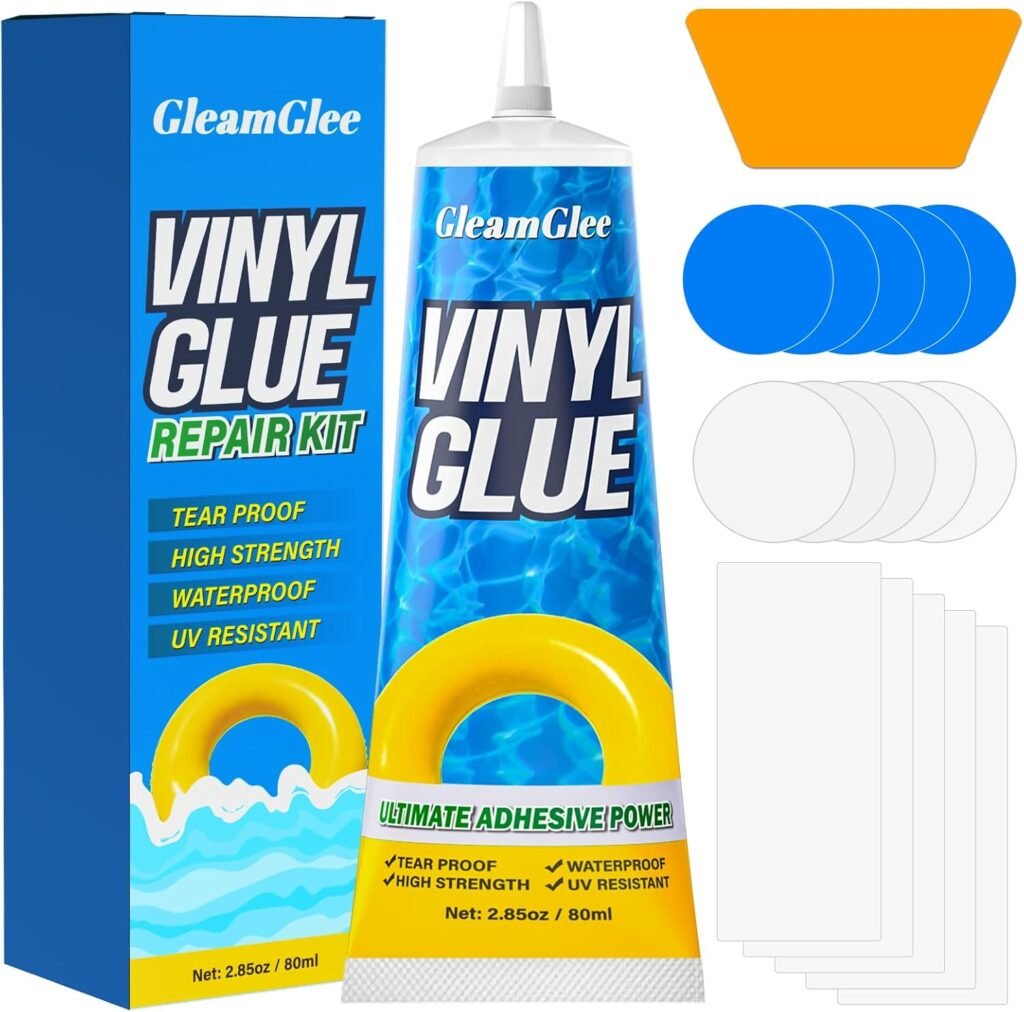
Best Repair Kit for PVC Inflatables: Essential Guidance for Fast, Strong Repairs
PVC is everywhere—pipes, inflatables, floor panels and sign boards. When something breaks, most people just grab “a strong glue” and hope for the best. This expert guide shows you which glue actually works on PVC, how to choose it for your project and how to apply it step by step.
Best Glue for PVC
How to Choose It and Use It Correctly
PVC is everywhere—pipes, inflatables, floor panels and sign boards. When something breaks, most people just grab “a strong glue” and hope for the best. This expert guide shows you which glue actually works on PVC, how to choose it for your project and how to apply it step by step.
PVC is one of those materials that looks simple, but behaves very differently once you try to repair it. A leaking PVC pipe can flood a room. A small hole in an inflatable boat can ruin a weekend trip. A poorly fixed PVC sign or floor plank can cause safety complaints or product returns.
In many of these cases, people say “the glue doesn’t work” when the real issue is that PVC was never designed to bond well with generic household adhesives. Its low surface energy, smooth finish and use of plasticizers in flexible PVC all create challenges that ordinary glues are not built to handle.
In short: the best glue for PVC is not a single product. For rigid PVC pipes, PVC solvent cement is usually best. For flexible PVC inflatables, you need a flexible PVC repair adhesive or PU. For PVC boards and floors, you may need contact or construction adhesives designed for vinyl/PVC.
On this page, we will:
- Clarify why PVC bonding often fails in real life
- Explain the differences between rigid, flexible and foamed PVC
- Show which glue types match which PVC applications
- Give a step-by-step method for reliable PVC bonding
- Provide a buyer checklist for choosing products or suppliers
- Share how GleamGlee, as a specialist in adhesives and repair products, approaches PVC bonding solutions for both DIY and professional users gleamglee信息
Whether you are fixing one pipe at home or planning a PVC-heavy product line, this page is designed as a practical, non-hype decision guide.
Why PVC Bonding Fails So Often in Real Life
PVC can be rigid, flexible or foamed. Its surfaces are often glossy and low-energy, and flexible PVC also contains plasticizers. Using the wrong adhesive, skipping surface preparation or rushing the cure time are the three main reasons PVC repairs fail sooner than expected.
When a PVC repair fails, it almost never fails “for no reason”. Typical symptoms include:
- A pipe joint that looks neat but starts weeping water under pressure
- An inflatable that holds air for a day or two, then slowly loses pressure
- A PVC sign that detaches in hot sun
- A floor edge that keeps lifting and peeling despite repeated gluing attempts

The underlying technical reasons are quite repeatable:
Wrong adhesive chemistry
Many people use PVA white glue, generic “all-purpose glue” or even wood glue on PVC. These products are not designed to chemically interact with PVC surfaces or withstand water and pressure.
Poor surface preparation
PVC parts can be contaminated with dust, oils, mold release agents and fingerprints. A quick wipe with water is rarely enough. Without proper cleaning and sometimes light sanding, the adhesive has nothing solid to grip.
No consideration of flexibility
Rigid PVC and flexible PVC move very differently. Using a very rigid adhesive on a flexible inflatable, hose or cable jacket almost guarantees peeling and cracking.
Rushing the curing and loading time
Many instructions specify how long to wait before applying water pressure or inflating a product again. Ignoring these recommendations is one of the fastest routes to a “failed repair”.

failure vs cause vs direction
| Failure symptom | Likely root cause | Direction of solution |
|---|---|---|
| Joint looks good but leaks under pressure | Wrong adhesive, insufficient cure time | Use proper PVC solvent cement and respect cure time |
| Inflatable patch peels after a few uses | Adhesive too rigid, poor flexibility | Use flexible PVC repair adhesive or PU |
| PVC sign or trim peels in sunlight | UV/heat degradation of adhesive | Choose UV-resistant, outdoor-rated adhesive |
| Glue bead lifts off in one piece | Oily/glossy surface, no sanding or priming | Clean thoroughly, lightly roughen, possibly use primer |
Treat each failed repair as a symptom of a mismatch between PVC type, adhesive chemistry and application technique.
Rigid, Flexible and Foam PVC
Different Substrates, Different Glue Needs
The word “PVC” covers several different products: rigid pressure pipes, soft inflatables, foamed sign boards and vinyl floors. Each behaves differently under load, temperature and chemicals, so each category benefits from its own adhesive strategy.
To choose the best glue for PVC, you need to know what form of PVC you are actually dealing with:
Rigid PVC
Rigid PVC is stiff and typically used for:
- Water supply and drainage pipes
- Electrical conduit and cable ducts
- Window and door profiles
- Rigid panels and profiles
Here, the main concerns are internal pressure, impact and long-term sealing. The industry standard is PVC solvent cement, which chemically softens the mating surfaces and creates a kind of “weld” rather than a simple glued joint.
Flexible PVC
Flexible PVC is soft and bendable and is used in:
- Inflatable boats, pools, air beds and toys
- Flexible hoses and tubing
- Tarpaulins, covers and some flexible sheets
- Cable jackets
Flexible PVC moves a lot, especially under inflation, bending and dynamic loads. It needs flexible adhesives—typically PVC repair adhesives or PU—that can stretch with the substrate without cracking.


Foamed PVC (expanded PVC)
Foamed PVC boards are light, slightly compressible and often used for:
- Indoor and outdoor sign boards
- Display panels and exhibition stands
- Lightweight decorative panels
These substrates require a balance of surface coverage, moderate strength and clean appearance, often achieved with contact adhesives or structural plastic adhesives.
PVC flooring and trims
Vinyl/PVC floors and trims demand:
- High shear strength to prevent creeping or sliding
- Dimensional stability and resistance to foot traffic
- Low odor and safe indoor VOC levels
They are usually installed with flooring-grade construction adhesives specifically formulated for vinyl/PVC.
PVC type vs typical application vs needs vs glue
| PVC type | Typical applications | Key performance needs | Recommended glue type |
|---|---|---|---|
| Rigid PVC | Water/drain pipes, conduit, rigid panels | High strength, pressure resistance, leak-free joint | PVC solvent cement |
| Flexible PVC | Inflatables, hoses, cable jackets, tarps | Flexibility, peel strength, waterproof, shock resistance | Flexible PVC repair adhesive or PU |
| Foamed PVC board | Signs, displays, decorative panels | Good coverage, moderate strength, clean surface | Contact adhesive or structural plastic adhesive |
| PVC flooring | Vinyl planks/tiles, skirtings, trims | Shear strength, low VOC, indoor safety | Vinyl/PVC flooring adhesive |
Once you identify your PVC form, you can match it with the right adhesive family instead of treating all PVC as a single material.
How to Decide Which PVC Glue Is “Best” for Your Situation
“Best glue for PVC” always depends on context: what kind of PVC, how much water or pressure, indoor or outdoor, how much flexibility, how fast you need the repair and what safety or regulatory constraints you face. A short checklist turns this into a clear decision.
Before comparing brand names, answer the following questions about your project:
- Is the PVC rigid or flexible?
- Rigid pipes, conduit and profiles → usually PVC solvent cement or structural adhesives.
- Flexible inflatables and hoses → flexible PVC repair adhesive or PU.
- Will the joint be in constant contact with water or internal pressure?
- Pressurized plumbing, pools, filters or pumps need adhesives that are rated for water and pressure, not just labeled “water-resistant”.
- Is the application indoor, outdoor or both?
- Outdoor PVC must cope with UV, heat, cold and moisture cycles. Look for UV-resistant and temperature-rated adhesives.
- Do you require flexibility at the joint?
- If the PVC will bend, expand or vibrate, a rigid, brittle adhesive will eventually crack.


- What about odor, VOC and safety?
- In schools, hospitals, small bathrooms or poorly ventilated areas, low-odor and low-VOC formulations are important.
- How much working time do you need?
- Fast-curing products are convenient but leave little time for alignment. Slower-setting formulations offer more control.
- Are there legal or customer requirements (certifications, tests)?
- Larger projects may need specific compliance documentation and test reports.
factor vs meaning vs what to look for
| Factor | Practical meaning | What to look for in specs |
|---|---|---|
| PVC rigidity | How much the joint will bend or flex | “Flexible” vs “rigid” adhesive, peel strength |
| Water/pressure exposure | Constant immersion or internal water pressure | Pressure ratings, “plumbing-grade”, waterproof claims |
| Indoor vs outdoor | Sunlight, temperature swings, rain, frost | UV resistance, operating temperature range |
| Flexibility requirements | Vibration, bending, impact | Elongation at break, flexibility mentioned in datasheet |
| Safety and odor | Enclosed space, sensitive users | Low-VOC, low-odor, relevant certifications |
| Need for fast turnaround | How soon you must use the system again | Handling time, full cure time |
| Regulatory/compliance needs | Building codes, industry standards | Test reports, certifications, SDS, technical data |
This simple checklist lets you define “best” based on performance and constraints, not just marketing language.
Solvent Cement, PU, Epoxy or Super Glue — Which Works Best on PVC?
PVC can be bonded with solvent cements, flexible PU adhesives, cyanoacrylates, epoxies and contact cements. Each chemistry shines in different situations. Comparing them side by side helps you choose the right family before picking any specific brand.
Here’s how the main adhesive types for PVC compare in real-world use:
PVC solvent cement
- How it works: Softens and partly dissolves the PVC surfaces so they fuse together.
- Best for: Rigid PVC pipes, fittings and pressure systems.
- Pros: Very strong, leak-resistant joints when used correctly.
- Cons: Solvent odor, needs proper ventilation and careful application.
PU (polyurethane) adhesive
- How it works: Forms a flexible polymer network that can absorb movement.
- Best for: Flexible PVC inflatables, tarps, hoses and cable jackets.
- Pros: Excellent flexibility, peel strength and water resistance.
- Cons: Often slower curing, may require clamping or pressure.
Cyanoacrylate (CA, super glue)
- How it works: Fast polymerization in the presence of moisture.
- Best for: Small rigid PVC parts where brittleness is not a concern.
- Pros: Very fast, convenient, great for quick fixes.
- Cons: Brittle, poor on flexible PVC and larger joints, limited gap filling.


Epoxy
- How it works: Two-part system that cures into a hard, durable network.
- Best for: Rigid PVC panels and mixed-material joints (PVC to metal, wood, etc.).
- Pros: Good gap filling, strong and durable.
- Cons: Requires mixing, longer cure time, generally rigid.
Contact or rubber-based adhesive
- How it works: Applied to both surfaces, allowed to tack, then pressed together.
- Best for: Foamed PVC boards, trims, laminates and large surface bonds.
- Pros: Good coverage, flexible bonds, suitable for large areas.
- Cons: Solvent fumes, requires careful application technique.
Comparison table
| Adhesive type | Best suited PVC type | Key advantages | Key limitations | Typical uses |
|---|---|---|---|---|
| PVC solvent cement | Rigid PVC pipes and fittings | Chemical weld, strong and pressure-resistant | Solvent odor, application technique sensitive | Plumbing, drains, conduit, rigid piping |
| PU adhesive | Flexible PVC inflatables & hoses | Highly flexible, good peel strength, waterproof | Longer cure, may need clamping | Boats, pools, air beds, tarps, soft hoses |
| Cyanoacrylate (CA) | Small rigid PVC components | Very fast set, easy to use on small, precise joints | Brittle, poor for flexible PVC and dynamic loads | Quick repairs on small rigid parts |
| Epoxy | Rigid PVC and mixed-material joints | Gap-filling, strong on many substrates, durable | Mixing, slower cure, rigid bond | Panels to metal/wood, brackets, fixtures |
| Contact/rubber adhesive | Foamed PVC boards, trims, laminates | Covers large areas, flexible, good initial tack | Requires good ventilation and correct technique | Sign boards, decorative panels, edge trims |
Choosing the right category first reduces the risk of expensive trial-and-error with the wrong chemistry.
How to Glue PVC Step by Step for a Strong, Leak-Free Bond
A repeatable bonding routine—cleaning, light sanding, correct adhesive amount, firm assembly and full curing—makes the difference between a short-lived fix and a long-term solution. The exact steps differ slightly between rigid and flexible PVC, but the principles are the same.
Step-by-step for rigid PVC pipes and fittings
- Cut and deburr
- Cut the pipe squarely and remove burrs and sharp edges. Slightly chamfer the outer edge if recommended.
- Clean thoroughly
- Wipe pipe and fitting with a proper PVC cleaner or primer to remove dust, oils and contamination.
- Dry-fit and mark insertion depth
- Assemble without glue to check fit, then mark the final insertion depth so you know when the joint is fully home.
- Apply solvent cement
- Apply an even coat inside the fitting and on the outside of the pipe. Work quickly but carefully—do not flood the joint.
- Assemble immediately
- Insert the pipe fully, twist slightly if recommended, and hold in place for the specified initial set time.
- Clean excess cement and allow full cure
- Wipe away excess around the joint. Let it cure as instructed before applying pressure or flow.
Step-by-step for flexible PVC inflatables and hoses
- Deflate and relax the material
- Make sure the item is fully deflated and not under tension.
- Clean and lightly roughen
- Clean with an appropriate cleaner. Lightly sand glossy PVC to improve adhesion, then wipe away dust.
- Cut a patch (if needed)
- For inflatables, cut a patch with rounded corners, larger than the damaged area.
- Apply adhesive
- Follow product instructions: sometimes glue is applied to both surfaces, sometimes only one.
- Press and remove air bubbles
- Press the patch firmly, roll or push out any trapped air to avoid weak spots.
- Maintain pressure and cure fully
- Use tape, weights or clamps to hold pressure. Do not re-inflate or apply pressure until the full cure time has passed.
Step vs common mistake vs correct action
| Step | Common mistake | Correct action |
|---|---|---|
| Cleaning | Only wiping with water | Use proper cleaner/primer, remove grease and residues |
| Surface preparation | Skipping light sanding on glossy PVC | Lightly roughen if recommended, then clean again |
| Adhesive application | Applying thick blobs or missing areas | Apply a thin, continuous film as per instructions |
| Assembly | Adjusting parts after glue starts to set | Align quickly, push fully home in one smooth motion |
| Curing | Pressurizing or inflating after a short “touch-dry” | Wait the full recommended curing time before loading |
Buyer Checklist: Questions to Ask Before Buying PVC Glue or Selecting a Supplier
For distributors, brand owners and engineering buyers, “best glue for PVC” also means stable supply, compliance and technical backup. A structured checklist of questions about performance, testing, packaging and customization helps you filter products and partners more objectively.
If you are responsible for choosing PVC adhesives for a business, you are not just buying a tube—you are buying performance, reliability and risk management. Consider these questions:
About the product
Which PVC types has this adhesive been tested on?
Rigid pipes? Flexible inflatables? Foamed boards? Look for data that matches your actual substrates.
What pressure, temperature and environmental conditions is it rated for?
Plumbing-grade products should clearly state these ranges.
Does it meet regional safety and VOC regulations?
For example, in the US, EU or UK markets you will want appropriate documentation and SDS.
What packaging formats are available?
Retail tubes, cartridges, sachets, bulk pails or drums — depending on your channel and use.


About the supplier
Can you customize viscosity, curing speed, color or odor level?
This matters if you need a specific production behavior or brand identity.
How stable is your supply and lead time?
Ask about typical lead times, peak season behavior and backup plans.
Do you offer technical support and training?
For new products or complex installations, good suppliers can help with training and application guidelines.
Buyer question vs why vs good answer
| Buyer question | Why it matters | What a good answer looks like |
|---|---|---|
| Which PVC types is this adhesive validated on? | Ensures real compatibility | Test data on rigid, flexible and foamed PVC where relevant |
| What pressure/temperature ranges is it rated for? | Avoids hidden performance limits | Clear numbers and reference to internal/external tests |
| Do you have regional safety and VOC compliance documents? | Reduces legal and customer risk | Up-to-date SDS and regulatory documentation |
| Can you customize formula and packaging for our brand? | Enables differentiation and better user experience | Concrete options, MOQs and example projects |
| How do you guarantee supply stability? | Prevents stock-outs and project delays | Transparent explanation of capacity, backup and planning |
| What technical support do you provide? | Helps avoid application-related failures | Access to technical staff, training material, documentation |
Use these questions not just to compare prices, but to evaluate true long-term value.
How GleamGlee Develops Reliable PVC Adhesive Solutions
GleamGlee focuses on adhesives, repair and cleaning products, backed by chemical R&D, multi-factory production and packaging capabilities. This allows us to design PVC adhesive solutions for rigid pipes, flexible inflatables, flooring and more—for both DIY users and OEM/ODM partners.
GleamGlee is positioned not just as a seller of “one more tube of glue”, but as a solution provider in the fields of adhesion, repair and cleaning. Our product roadmap and content strategy are both built around helping users solve specific material problems—PVC being one of the key ones.
Behind the brand, there is:
- A strong focus on adhesives, repair and cleaning products as our core categories
- Multiple specialized factories handling raw materials, chemical formulation, filling, packaging and label printing
- Dedicated teams of chemists, materials engineers and designers who can align formulation and packaging with real user needs

For PVC-related applications, we support:
- Rigid PVC plumbing and conduit – solvent cement solutions designed for strength and sealing
- Flexible PVC inflatables and pools – repair kits and flexible adhesives tailored to soft PVC behavior
- PVC signs and foamed boards – adhesives that balance surface coverage, strength and clean appearance
- PVC floors and trims – construction adhesives suitable for vinyl and PVC floors, with indoor safety in mind
- Private-label and OEM/ODM projects – customized formulas, colors, viscosities and packaging for different markets

PVC scenario vs GleamGlee solution vs key features
| PVC scenario | GleamGlee solution type | Key features |
|---|---|---|
| Rigid PVC plumbing & conduit | PVC solvent cement range | Strong chemical weld, leak-resistant, clear instructions |
| Flexible PVC inflatables & pools | Flexible PVC repair kits | High flexibility, waterproof, patch + glue + applicator |
| PVC banners, tarps and covers | PU-based or flexible PVC adhesive | Good peel strength, outdoor durability |
| Foamed PVC sign boards | PVC-compatible contact/structural adhesive | Even coverage, moderate strength, clean finish |
| PVC flooring and trims | Flooring-grade vinyl/PVC adhesive | Shear strength, low odor, suitable for indoor environments |
| Private-label PVC product lines | Custom formulas + full packaging & design support | Tailored performance, branding, multi-language labeling |
If you are developing or sourcing PVC-related products and want expert input on adhesive selection or formulation, we are ready to discuss options in detail.
FAQs
What Else Should You Know Before Choosing PVC Glue?
This concise FAQ answers the most common questions about PVC glue: universal glues, curing time, indoor safety, outdoor durability, mixed-material bonding, repeated failures and how GleamGlee can help. Use it as a quick reference before you buy, apply or troubleshoot any PVC adhesive.
Q1. Can I just use an “all-purpose” glue on PVC?
For non-critical, light-duty decorative items, an all-purpose glue may work temporarily. For pipes, inflatables, outdoor signs or floors, it is risky. PVC’s low surface energy and (for flexible PVC) plasticizers require dedicated PVC adhesives or PVC-rated structural adhesives.
Q2. How long should I wait before turning the water back on or inflating again?
Touch-dry is not full strength. Always follow the product’s instructions, but as a rough guide:
- PVC pipes: from a few hours up to 12–24 hours+, depending on pipe size, pressure and temperature.
- Inflatables/flexible PVC: often 12–24 hours before full inflation, longer for heavy use.
When in doubt, wait longer and test gently first.
Q3. Can one PVC glue work for pipes, inflatables and boards?
Usually not. Each category needs different properties:
- Rigid pipes: chemical weld and pressure resistance → PVC solvent cement
- Flexible inflatables/hoses: flexibility and peel strength → flexible PVC/PU adhesive
- Foamed boards/signs: coverage and clean appearance → contact or structural adhesive
For a small workshop, it’s realistic to keep one glue for rigid pipes and one flexible PVC adhesive for inflatables/soft parts.
Q4. Can PVC glue bond PVC to metal, wood or other plastics?
Sometimes, but carefully:
- PVC to metal/wood: PVC solvent cement is mainly for PVC-to-PVC. For mixed joints, consider epoxy, PU or hybrid structural adhesives and always test first.
- PVC to PP/PE etc.: these plastics are hard to bond and may need specialty systems and primers.
When joints are critical, combine mechanical fixing and adhesive where possible.
Q5. Is PVC glue safe to use indoors?
Many PVC adhesives are solvent-based and produce odor and VOCs. Good practice:
- Work in a well-ventilated area.
- Avoid skin contact; follow the SDS instructions.
- If odor or air quality is a concern, look for low-odor, low-VOC formulas.
Indoors, plan enough time for ventilation after work.
Q6. Why does my patch keep peeling off flexible PVC inflatables or hoses?
Typical reasons:
- Wrong adhesive (too rigid) → use flexible PVC or PU adhesive.
- Poor cleaning → remove oils, sunscreen, dirt, old glue.
- No surface roughening on glossy PVC → lightly sand if instructions allow.
- Trapped air → press/roll out bubbles.
- Insufficient curing time → wait the full recommended time before inflating.
Fixing these basics usually stops repeat failures.
Q7. Will sunlight and weather damage PVC glue?
Yes, if the adhesive is not designed for outdoor use. For outdoor signs, covers or boats, choose products that clearly state UV-resistant, outdoor-rated and suitable temperature ranges. Additional mechanical or coating protection can further extend life in harsh climates.
Q8. How should I store PVC adhesive and how long does it last?
- Store tightly closed, upright, in a cool, dry place away from heat and sunlight.
- Respect the printed shelf life; performance drops with age or poor storage.
- If the adhesive is unusually thick, separated or partially hardened, don’t use it for critical repairs—replace it.
Q9. Are water-based adhesives a good idea for PVC?
For high-demand uses (pipes, inflatables, heavy outdoor exposure), solvent-based or reactive adhesives are still standard. Some water-based systems work for light-duty, indoor PVC bonding, but always:
- Check they are specifically rated for PVC, and
- Test in your own application before large-scale use.
Q10. How can GleamGlee help me with PVC glue selection?
You don’t need to be a chemist. If you tell us:
- What PVC you have (pipes, inflatables, boards, floors, hoses)
- Where and how it will be used (water, pressure, indoor/outdoor, temperature)
- What matters most (speed, strength, appearance, safety, compliance)
we can help you match your scenario to realistic adhesive choices and suggest whether an off-the-shelf or custom solution fits best.

Tell Us About Your PVC Project or Repair
You don’t need to become an adhesive expert to get PVC repairs right. If you describe your PVC material, environment and expectations in simple language, we can help you narrow down practical solutions that balance performance, cost and ease of use.

Whether you are a homeowner fixing a leak, a small e-commerce seller building a product bundle, or a brand developing a PVC-intensive product line, you probably want the same thing: a repair or system that works reliably without wasting time and money.
To move from theory to action, consider sharing:
- What type of PVC you are working with (pipes, inflatables, boards, floors, hoses, etc.)
- Whether the joint will see water, internal pressure, outdoor weather or heavy loads
- Any requirements related to safety, odor, certifications or regional regulations
- Your approximate volumes and channels (DIY, retail, industrial, OEM/ODM)
With this information, the GleamGlee team can:
- Suggest suitable adhesive types for your situation
- Discuss whether existing products are sufficient or a custom formula makes sense
- Help align packaging formats, labeling and instructions with your users’ expectations
If you are ready to move forward, simply contact us with a short description of your PVC project or repair, and we will take it from there—step by step, with a practical, engineering-led approach instead of marketing hype.