 Skip to content
Best Glue for Tile
Loose tile? Cracked edge? Trim falling off?
Most “glue fails” aren’t because you’re doing it wrong—it’s because tile is a brutal surface: heavy, often glossy, and frequently exposed to moisture, heat, cleaners, and movement.
This page helps you pick the right adhesive based on your exact job—and avoid the #1 mistake that makes tiles pop off again.
Top pick for most DIY tile repairs & trim:
👉 GleamGlee Heavy Duty Construction Adhesive (8.8 oz)
What’s the Best Glue for Tile?
If you’re doing repairs, re-attachment, trim, or small DIY fixes, the easiest “buy once, use it right” choice is usually a heavy-duty construction adhesive. If you’re installing a large area of tile, the correct system is typically thinset mortar (tile mortar). Use this rule:

Small repair / trim / mixed materials → Construction Adhesive ✅

Large install / full shower wall / full floor → Thinset Mortar ✅

Dry-only wall areas → Mastic (with limits) ⚠️

Tiny high-strength repairs → Epoxy ✅ (less beginner-friendly)
Tile Adhesive Types
Thinset Mortar
Best for: big installs (walls/floors), long-term shear strength
Not ideal for: “I just need to fix one loose tile fast”
Mastic
Best for: dry interior walls
Avoid: showers / constant moisture / steam
Construction Adhesive
Best for: reattaching loose tiles, trim, transitions, mixed surfaces
Why DIYers like it: no mixing + strong grab + easy application
Epoxy
Best for: maximum strength in small areas
Tradeoff: mixing + working time + cleanup
Why “Super Glue” & “All-Purpose Glue” Fail on Tile
Here’s the truth: tile isn’t hard to glue… it’s hard to glue correctly. Most quick fixes fail because people reach for whatever is in the junk drawer—super glue or a random tube that says “strong”—and tile simply doesn’t play by those rules.
Why it pops off again
Tile is slick + non-porous
Most glues need tiny pores to “grab” and lock in. Tile gives them almost nothing—so the bond becomes a thin skin sitting on a smooth surface.
Tile fails in shear, not in pull.
When a tile comes loose, it usually slides off due to weight, vibration, and expansion—not because someone pulled it straight outward. Many all-purpose glues are not designed for that kind of sideways force.
Bathrooms + kitchens are glue-killers.
Steam, humidity, temperature swings, and cleaning chemicals slowly weaken the wrong adhesive. What seems fine today can soften, peel, or let go weeks later.
“More glue” often makes it worse.
A thick blob can trap moisture, cure unevenly, and squeeze out—leaving a messy edge while still failing behind the tile.
What works instead
For tile, you want an adhesive that’s built for real-world conditions:
- Strong initial grab
- High shear strength
- Moisture resistance
- Compatibility with mixed surfaces
Use this simple rule:
- Repair / loose tile / trim / mixed surfaces: go with a heavy-duty construction adhesive
- Large tile installs : use thinset mortar
Popular Best-Selling Tile Adhesives People Buy
When you search “best glue for tile,” you’ll see a mix of products that look similar—but they’re built for different jobs. Here are several top-selling, widely available options DIYers commonly buy for tile repairs, trim, and small bonding projects .
Loctite PL Premium
Typical price range: about $7–$12 (10 oz+ class, varies by retailer)
Best for: heavy-duty construction bonding (wood/concrete/stone); often chosen for “strong hold” projects
Heads-up: it’s a classic pro choice, but may be “more than you need” for small, neat tile touch-ups.
Liquid Nails Fuze*It Max
Typical price range: around $12–$15 (9 oz class)
Best for: all-surface bonding where you want strong grab + long-term hold
Heads-up: great for mixed materials, but can feel like overkill if you’re only reattaching one small tile.
Gorilla Heavy Duty Construction Adhesive
Typical price range: around $6–$9 (varies by retailer/size)
Why it’s popular: marketed as 100% waterproof, gap-filling, low odor, and made for many surfaces—including tile-adjacent jobs like bath surrounds and trim
Heads-up: excellent “general heavy duty” pick; choose based on whether you want clear/white finish and your application style.
Gorilla Max Strength Construction Adhesive
Typical price range: about $9–$14
Best for: projects where you want crystal clear + waterproof + bonding on tough surfaces (tile/stone/ceramic)
Heads-up: strong option when appearance matters.
Loctite Power Grab
Typical price range: around $6–$14
Best for: “grab-now” installs where you hate bracing/supporting pieces
Heads-up: like all instant-grab products, prep matters—oily/dirty tile surfaces will still fail.
Quikrete Polyurethane Construction Adhesive
Typical price range: about $9
Best for: bonding tile/concrete/stone/wood; marketed as flexible and construction-grade
Heads-up: often requires a standard caulk gun style tube.
If you have a tile that’s loose but not broken—and the surface behind it is still solid—this is the sweet spot for a heavy-duty construction adhesive.
Our Recommended Pick for DIY Tile Repairs

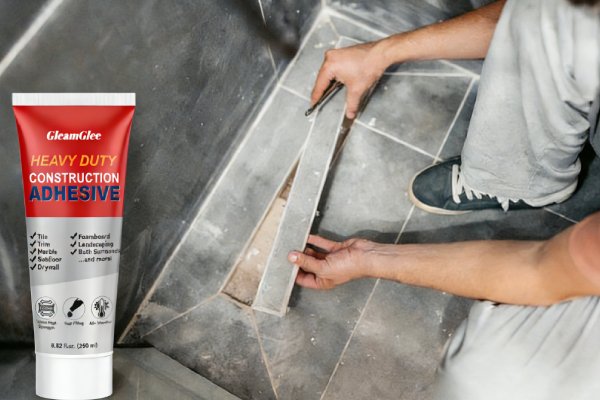
GleamGlee Heavy Duty Construction Adhesive (8.8 oz)
Best for:
- Loose tile re-attachment
- Small repairs
- Trim & transitions
- Tile-to-wood / tile-to-drywall / tile-to-concrete touch-ups
Why it converts well in real homes:
- Works across multiple surfaces
- Easy squeeze-tube application
- Ideal for “I need it fixed without redoing the whole wall” repairs
Not for:
- Full-floor installs
- Large-area tile installs
Best Glue for Bathroom / Shower Tile Repairs
Bathrooms fail because of moisture + steam + temperature swings.
Choose based on scope:
- Small repair / one loose tile: heavy-duty construction adhesive is the practical DIY route
- Multiple tiles / you’re redoing the area: thinset mortar (proper tiling system)
Pro tip: If the substrate behind the tile is soft, crumbling, or moldy—no glue will save it. The surface must be solid.
Best Glue for Kitchen Backsplash & Wall Tile

Kitchen areas add heat + grease + cleaning chemicals.
If you’re:
- Reattaching a tile
- Fixing a corner piece
- Sticking a small section
- Installing trim pieces
A heavy-duty construction adhesive is usually the fastest, cleanest approach for DIY.
Recommended: GleamGlee Construction Adhesive
Best Glue for Tile Trim, Transitions & Edge Profiles
This is where DIYers waste the most time with the wrong product.
Use construction adhesive for:
- Metal edge trims
- Transition strips
- Decorative borders
- Baseboard-style tile / accent pieces
You want strong grab + mixed-surface bonding.

Best “Glue” for Floor Tile Repair

Floor tiles take:
- body weight + furniture load
- vibration
- repeated impact
- shear forces
For true floor tile installations (especially large areas), thinset mortar is usually the correct method.
When construction adhesive can still help:
- Very small repair scenarios where you’re not redoing the floor system
- Non-structural trim/edge pieces around flooring
What Works Best
| Your Job | Best Choice | Why |
|---|---|---|
| Loose tile (1–3 tiles) | Construction Adhesive | Fast, strong grab, easy DIY |
| Tile trim / transitions | Construction Adhesive | Designed for mixed materials |
| Full wall install | Thinset Mortar | Proper tiling system |
| Full floor install | Thinset Mortar | Load + long-term durability |
| Tiny chip/crack cosmetic | Epoxy / Repair system | Precision + strength |
The Difference Between “Sticks Forever” and “Falls Off”
Do these 4 things and your success rate jumps:
- Remove grime: soap scum, grease, wax, dust
- Dry fully: especially bathrooms
- Scrape off failing old material: powdery/crumbly stuff must go
- Test fit: align grout lines before adhesive goes on
Shortcut mindset: Tile doesn’t fail because you didn’t use “more glue.”
It fails because the bond was made on a dirty or weak surface.
How to Reattach a Loose Tile
Tools: scraper, rag, rubbing alcohol (or degreaser), painter’s tape, adhesive

1. Clean both sides
- Clean the back of the tile and the wall/floor surface.
- Remove dust + oils completely.

2. Apply adhesive
Apply a bead / small lines (don’t over-apply—excess squeeze-out is the #1 “looks ugly” issue).

3. Hold it in place
- Press firmly and line it up with surrounding grout lines.
- Use painter’s tape or support blocks so the tile doesn’t drift.

4. Let it cure
- Don’t rush water exposure or heavy force.
- Then grout/touch-up if needed.
Popular Tile Glues People Try
- Super glue: brittle, not forgiving with movement/moisture
- Caulk: flexible but not structural for tile weight
- All-purpose glue: inconsistent results on glossy tile
- Right product + wrong prep: still fails
The best results come from the right category (construction adhesive vs mortar) and proper prep.
FAQ
Q1: Can I use super glue on tile?
You can sometimes get a short-term bond, but many instant glues turn brittle and can fail in humidity, temperature swings, or movement. For real repairs, use a tile-appropriate adhesive type.
Q2: What glue works best on glossy porcelain tile?
Glossy porcelain is low-porosity. You need strong adhesion and proper surface cleaning. For small repairs and re-attachment, a heavy-duty construction adhesive is typically the easiest DIY path.
Q3: Is mastic okay in a shower?
Generally not recommended for constant wet exposure. For installs, use an appropriate mortar system. For small repairs, use an adhesive designed for tougher conditions and ensure the substrate is sound.
Q4: How long before I can get the tile wet?
Always follow your product’s directions. In general, give repairs enough cure time before moisture exposure.
Q5: Can I glue tile to drywall (without cement board)?
Yes—in dry areas (like a decorative wall or some backsplashes), tile can be bonded to drywall if the drywall is clean, solid, and not water-damaged. For wet areas (showers/tub surrounds), drywall is a common failure point—use the proper waterproof backer system instead. For small repairs, trim, or reattaching a loose tile on a solid surface, a heavy-duty construction adhesive is often the simplest DIY option.
Q6: What’s the best glue for tile trim or metal edge profiles?
For tile trim, transition strips, and metal edge profiles, a heavy-duty construction adhesive is usually the most practical choice because it bonds well to mixed materials (tile + metal + painted wall + concrete). Clean off dust/oils first, apply a controlled bead, press in place, and brace/tape it so it can cure without shifting.
Q7: How do I remove old adhesive from tile before re-gluing?
The goal is to remove anything loose, chalky, oily, or flaky—that’s what causes re-bonding failures.
Scrape off old adhesive residue with a putty knife or scraper (carefully).
Degrease the surface (especially in kitchens/baths) and wipe clean.
Let it dry fully before applying new adhesive.
If the old material is crumbling behind the tile, fix the substrate first—new glue won’t hold to a failing surface.

If you’re fixing a loose tile, installing tile trim, or doing a small tile repair, don’t gamble with random glue.
👉 Get GleamGlee Heavy Duty Construction Adhesive (8.8 oz):





















