 Skip to content
Best Glue for Glass: How to Choose and Use It for Clear, Strong Repairs
Glass repairs often fail because the adhesive is wrong for the job or applied incorrectly. Smooth, non-porous glass requires the right glue type, clean surfaces, and enough curing time to achieve a clear and durable bond.
This page helps you choose the best glue for glass based on clarity, strength, and water resistance. It explains which adhesive works best for different glass repair scenarios and how to use it correctly to avoid cloudiness, weak bonds, and early failure.
What Makes Glass Repairs Hard—and What Do People Actually Need?
Before choosing any adhesive, you must define your goal: invisible appearance, maximum strength, waterproof sealing, or a balanced compromise. This section turns vague frustration (“it dried cloudy”) into clear constraints that map directly to the right glue category and process.
The four real goals behind “best glass glue”
“I need it to be strong.”
Handles, brackets, and mixed-material assemblies require adhesive strength and correct stress handling (especially shear vs peel).
“It must survive water.”
Repeated washing and humidity expose weak curing, poor prep, and wrong chemistry. “Water-resistant after curing” is different from “safe to wash after 30 minutes.”
“I want it easy and controllable.”
Most failures at home are user-control issues: too much glue, movement during cure, messy squeeze-out, misalignment, or not clamping properly.
“I need it to dry clear.”
This is common for ornaments, vases, display pieces, and visible seams. Clarity depends on adhesive chemistry, film thickness, bubble control, and surface cleanliness.
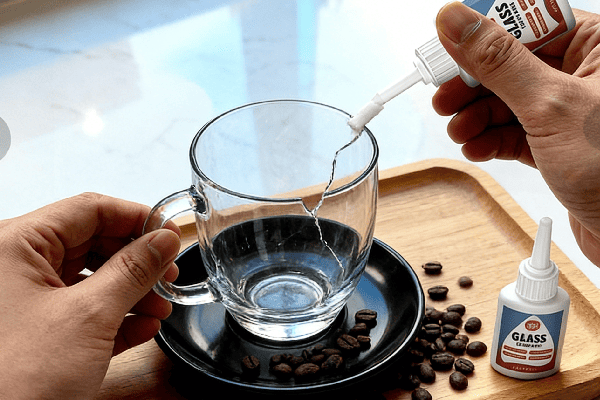

High-intent scenarios this guide covers
Glass-to-glass bonding: ornaments, vases, cups, lids, knobs
Glass-to-metal: frames, fixtures, lamp parts, hardware, brackets
Glass-to-wood: décor assembly, tabletop accessories, frames
Glass-to-plastic: some household components (compatibility varies)
Chips and small gaps: where the joint is not perfectly tight
Edge sealing: where waterproofing matters more than load-bearing
Constraints you should clarify in 30 seconds
- Is the seam visible? (If yes, clarity becomes a primary requirement.)
- Is there a gap? (If yes, super glue becomes risky; epoxy becomes more likely.)
- Will it be washed or soaked? (If yes, cure time and chemistry matter more.)
- Will it carry load or impact? (If yes, joint design and clamping matter more.)
- Does it need flexibility? (If sealing or expansion/contraction exists, flexibility helps.)
Why Glass Glue Jobs Fail—and How to Prevent Cloudy, Weak Bonds
Glass adhesion fails for repeatable reasons: invisible contamination, wrong glue type for the joint, poor stress design, excess thickness causing haze, and rushed curing. Understanding these failure mechanisms is the fastest way to get a clear, strong bond without trial-and-error.

1. Invisible contamination
Glass often looks clean while still carrying:
finger oils
dish soap film
silicone residue (from old sealants)
“streak-free” cleaner additives
These create a barrier layer. Adhesive sticks to the residue, not the glass—so the bond pops off later.
Practical prevention: degrease with isopropyl alcohol (IPA), use lint-free wipes, and avoid cleaners that leave coatings.
2. Wrong adhesive behavior for the joint
Glass joints experience shear (sliding forces) and peel (lifting forces).
- Some adhesives are strong in shear but weak in peel.
- Some are rigid and crack with thermal cycling.
- Some remain flexible but aren’t designed to carry load.
Practical prevention: choose the adhesive category based on stress and environment, not just “dries clear.”
3. Too-thick adhesive film
Many “clear” systems look clear only in thin layers. Thick layers cause:
- trapped bubbles
- uneven curing
- light scattering = haze/cloudiness
- weaker bond because the film becomes a weak intermediate layer
Practical prevention: use thin coats; if you need gap-filling, use a gap-filling adhesive designed for it (often epoxy), and manage bubbles.
4. Movement during cure
If parts shift even slightly:
- the bond line becomes uneven
- clarity suffers
- stress concentrates at edges
- strength drops dramatically
Practical prevention: clamp or tape so the joint is immobile until the adhesive is structurally set.
5. Rushed curing and early water exposure
“Sets in 5 minutes” does not mean it is ready for washing or load. Early exposure often leads to:
- whitening/hazing
- softened adhesive
- reduced bond strength and early failure
Practical prevention: follow full cure times

The most common mistakes
- Using super glue on a gapped joint → use a gap-filling system (often epoxy).
- Skipping degreasing → redo prep; “clean” must be chemical-clean.
- Over-applying for “extra strength” → thin film is stronger and clearer.
- No clamping → add steady pressure; stability increases clarity and strength.
- Testing after 1 hour → wait for full cure before judging.
A Simple Method to Choose the Right Glass Adhesive for Your Repair
This is a repeatable method to choose glass adhesive like a technician: define the dominant requirement, classify the joint (tight vs gapped), evaluate environment (water/heat/UV), then pick the best adhesive category and process. It prevents mismatched expectations and improves first-try success.
Step 1: Choose your dominant requirement
A flexible, clear-drying leather adhesive is usually best because edges flex constantly. The key is thin application and firm, even pressure so the bond line stays smooth.
Step 2: Classify the joint
It’s risky on edges, piping, and straps because it can cure hard and crack. It may also whiten on some finishes. If appearance and flexibility matter, choose a flexible leather-appropriate adhesive profile.
Step 3: Confirm environment
Clamp time depends on stress level. Small edge lifts often need 30–60 minutes; strap tabs and high-stress points may need several hours. Regardless, wait 12–24 hours before heavy use to allow full cure.
Step 4: Match the best adhesive category
Not always. On coated/glossy surfaces, gentle keying on the bond zone can improve adhesion. Avoid abrading visible panels—only the hidden contact area.
Step 5: Decide your process controls
Use thin coats and press evenly. Dry-fit first so you don’t need to slide pieces around after glue. If squeeze-out happens, handle cleanup early and gently based on the adhesive’s safe cleanup method.
Best Glue for Glass: Types, Use Cases, and a Simple Step-by-Step Method
This section summarizes the most practical ways to glue glass successfully. It focuses on choosing the right adhesive category, applying it correctly, and respecting cure time—so the bond stays clear, strong, and reliable in real use.
Choose the Right Glue Type
| Situation | Recommended Type | Why |
|---|---|---|
| Tight glass-to-glass break | Cyanoacrylate (super glue) | Fast bond in thin joints |
| Gaps, chips, or load-bearing joints | Clear epoxy | Strong and gap-filling |
| Decorative seams requiring high clarity | UV-curing adhesive | Crystal-clear finish |
| Waterproof sealing (non-structural) | Glass-safe silicone | Flexible and leak-resistant |
Simple Step-by-Step Glass Gluing Method
- Dry-fit first to confirm alignment and identify gaps.
- Clean and degrease both surfaces with isopropyl alcohol; let dry fully.
- Apply a thin, controlled amount of adhesive (avoid thick layers).
- Hold or clamp steadily so the joint does not move.
- Allow full cure before washing, loading, or handling.

Practical Cure Time Reference
| Adhesive Type | Typical Full Cure |
|---|---|
| Super glue | ~24 hours |
| Clear epoxy | 24–72 hours |
| UV adhesive | Minutes–hours (after UV exposure) |
| Silicone sealant | 24–48 hours |

Common Mistakes to Avoid
- Applying too much glue (causes haze and weak bonds)
- Skipping degreasing (leads to clean peel-off failures)
- Moving the joint during curing
- Exposing the repair to water too early
- Using glue instead of sealant for leak repairs
What Should You Look for When Buying Glue for Glass?
Before buying any glue for glass, you should know what really determines success: clarity at real thickness, strength after curing, water resistance, and ease of control. This checklist helps you evaluate glass glue products quickly and avoid the most common buying mistakes.
The 6 Questions That Matter Most
When choosing a glass adhesive, focus on these essentials rather than marketing claims:
Does it dry clear at the thickness you’ll actually use?
Many glues look clear only in very thin layers but turn cloudy when applied thicker.
Is it suitable for tight joints or can it fill small gaps?
Tight breaks and gapped repairs require very different adhesive behavior.
How long is the full cure time (not just set time)?
Durability after washing or handling depends on full curing, not initial grab.
Is it resistant to water and detergents after curing?
Especially important for kitchen items, glassware, and containers.
Is the adhesive easy to control during application?
Poor flow control leads to messy seams, haze, and visible glue lines.
Will it stay stable over time (no yellowing or cracking)?
Long-term appearance matters for decorative and visible glass repairs.
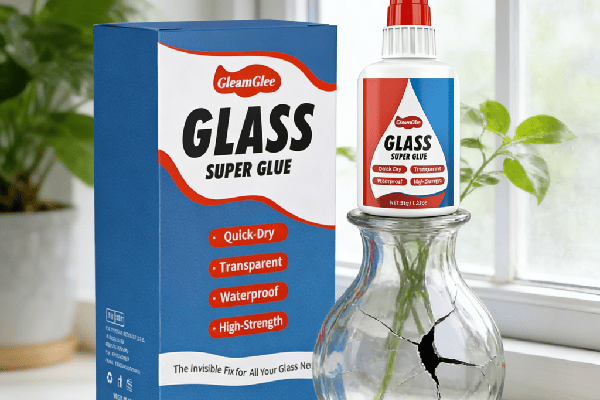

Quick Buying Mistakes to Avoid
- Choosing “strongest glue” instead of the right glue type
- Ignoring joint condition (tight vs gapped)
- Assuming “fast-drying” equals “ready for use”
- Using glue for sealing jobs where a sealant is required
- Buying products with unclear prep or cure instructions
Fast Recommendation Rule
- If clarity matters most → prioritize clear or UV-curing adhesives
- If strength or gaps matter → prioritize clear epoxy
- If waterproof sealing matters → choose glass-safe silicone
- If speed matters and the joint is tight → super glue can work
When to Upgrade Your Choice
Consider a higher-grade or more specialized adhesive if:
- The repair will be washed frequently
- The glass is load-bearing or stressed
- The seam is highly visible
- Previous repairs failed using general-purpose glue
How We Evaluate Glass Adhesion in Real-World Use
This section builds trust without hype: how we think about glass adhesion, what we test for in real-world use, and why usability (control, clarity, cure guidance) matters as much as chemistry. It reflects a practical, user-centered approach consistent with GleamGlee’s DIY repair focus.
Our philosophy: “Best glue” is a system, not a label
In our experience, glass repairs succeed when three things are aligned:
- Right adhesive category for the joint and environment
- Correct prep (especially degreasing and dryness)
- Correct process control (thin film, immobilization, full cure)
When one of these is missing, the result is predictable: haze, weak bonding, or short lifespan.
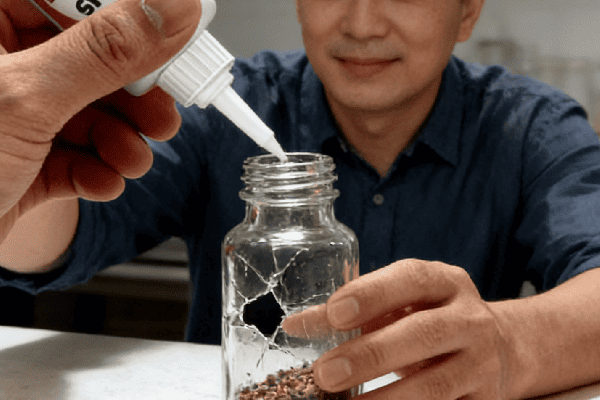

What we pay attention to
We focus on outcomes that matter to real DIY users:
- Visible clarity: does the bond look clean in normal lighting?
- Durability after curing: does it survive realistic handling and washing?
- Ease of use: can a non-expert apply it without mess?
- Consistency: do results remain stable across common home scenarios?
Why usability is part of performance
For glass, over-application is a major cause of cloudiness and ugly glue lines. That’s why user control (dispensing, instructions, and process) is not “extra”—it is a core performance variable.
The kinds of scenarios we see most often
- Decorative glass items where clarity is the top priority
- Mixed-material bonding (glass + metal/wood) where stress and expansion differ
- Gap repairs where the joint is not perfectly tight
- Wet-area or washing exposure where cure discipline matters
Glass Glue FAQs: Clear Answers for Common Glass Repairs
These FAQs match what people actually search when glass repairs go wrong: cloudy curing, cure times, waterproofing, glass-to-metal bonding, yellowing, and safe cleanup. Each answer is written to be actionable—so users can decide, fix, and avoid repeating the same failure.
1. Why did my clear glass glue dry cloudy?
Most often: the adhesive layer was too thick, bubbles were trapped, the surface wasn’t chemically clean, or the joint was disturbed during curing. Reduce thickness, degrease with IPA, avoid whipping air into epoxy, immobilize the joint, and allow full cure.
2. What is the strongest glue for glass-to-glass?
For many home repairs, clear epoxy is a strong and reliable option, especially if the joint isn’t perfectly tight. For tight decorative seams where clarity matters most, UV-curing adhesive can be excellent if UV light reaches the bond line.
3. Is super glue good for glass?
It can work for small, tight-fitting breaks because it bonds quickly in thin film. It is not ideal for gaps, large seams, repeated soaking, or joints that experience peel stress.
4. What’s best for glass that will be washed often?
A fully cured epoxy often performs better than thin super glue under washing and detergent exposure. If the purpose is sealing (not structural strength), glass-safe silicone is usually more reliable.
5. How long should I wait before washing a glued glass item?
Even if it feels “set,” wait until full cure. A safe practical range is often 24 hours minimum; many epoxies benefit from 48–72 hours depending on thickness and environment.
6. Can I glue glass to metal?
Yes, epoxy is commonly used. Degrease both surfaces. If possible, lightly roughen the metal (hidden area) to increase mechanical grip, and clamp to prevent movement during cure.
7. Can epoxy yellow on glass?
Some epoxies may yellow over time under UV/sunlight. If clarity is critical and the item will be in sunlight, consider UV-resistant options or UV-curing adhesives designed for clarity.
8. Can I repair a hairline crack in glass permanently?
You can sometimes stabilize small cracks, but strength and safety depend on the item. For load-bearing or safety-critical glass, replacement can be safer than repair.
9. How do I remove cured glue from glass?
Removal depends on adhesive type. Mechanical scraping with care is common; solvent use must be cautious and compatible with nearby materials. Prevention (thin application and controlled squeeze-out) is the best strategy.
10. Is silicone better than glue for leaks?
For leak prevention, silicone sealant is often better because it remains flexible and handles expansion/contraction. It is not intended for structural load-bearing bonds.
11. Should I sand glass before gluing?
Only on hidden contact areas when you need extra bite and appearance is not critical. Sanding visible seams can ruin clarity and aesthetics.
12. My bond is clear but weak—why?
Likely causes: incomplete degreasing, insufficient immobilization, early stress before full cure, or wrong glue category for the stress type. Re-prep, clamp longer, and choose an adhesive suited to load and joint design.
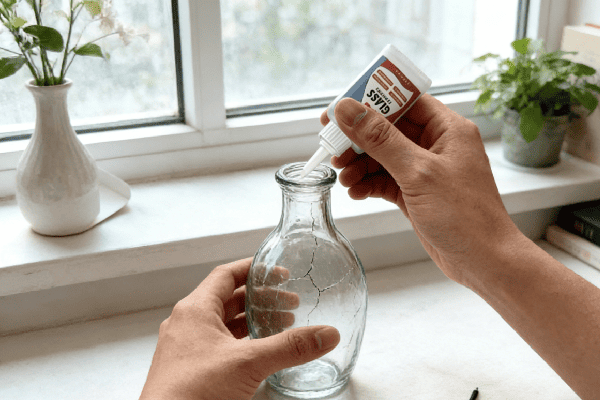
Glass Glue Checklist: Choose, Prep, Apply, Verify in Minutes
This module is designed for fast execution: choose the right adhesive category in under 30 seconds, confirm prep steps, apply with thickness control, and diagnose failures. It includes decision tables and checklists that make your glass repair repeatable rather than guesswork.
Table A — 30-Second Selection Decision
| Priority | Joint Type | Best Category | Critical Control |
|---|---|---|---|
| Crystal-clear seam | Tight | UV-curing adhesive | UV must reach; avoid bubbles |
| Strength + durability | Tight or gapped | Clear epoxy | Mix well; clamp; long cure |
| Fast small fix | Tight | Super glue | Micro-drops; avoid thickness |
| Waterproof sealing | Seam/edge | Silicone sealant | Continuous bead; full cure |
Checklist B — Pre-Repair
| Item | Yes/No |
|---|---|
| I dry-fit the parts and confirmed alignment | |
| I degreased both surfaces with IPA | |
| I avoided touching the bond zone after cleaning | |
| I selected adhesive based on tight vs gapped joint | |
| I planned immobilization (tape/clamp) before applying glue | |
| I can keep the repair undisturbed for full cure time |
Checklist C — Application Control
- Use thin film for clarity and strength.
- Prefer controlled beads over smearing.
- Clamp with even pressure, not maximum pressure.
- Keep the joint motionless until structurally set.
- Wait for full cure before washing or load.

Table D — Failure Diagnosis
| Symptom | Most Likely Cause | Fix |
|---|---|---|
| Cloudy/hazy bond line | Too thick / bubbles / contamination | Re-prep; thinner application; bubble control |
| Bond pops off cleanly | Residue barrier / no clamping | Degrease; clamp; longer cure |
| Glue line visible and messy | Over-application | Use micro-beads; wipe early if possible |
| Leak returns | Used rigid glue instead of sealant | Use silicone for sealing; continuous bead |
| Strong but yellowing | UV exposure | Use UV-resistant option; avoid direct sun if possible |
Optional “scorecard”
Rate each from 1–5: clarity requirement, water exposure, load/stress, joint gap size.
- If gap size or load is high → epoxy becomes more likely.
- If clarity is highest and joint is tight → UV adhesive becomes more likely.
- If waterproofing is the only goal → silicone becomes more likely.

Next Step: Share Your Glass Repair Scenario for a Practical Recommendation
This CTA is designed to feel helpful, not salesy: you provide a few details about the glass, joint type, and environment, and you receive a practical recommendation—adhesive category, prep steps, and cure plan—so you avoid trial-and-error and get a clean result.
Copy/paste message template
- What item are you repairing?
- Glass-to-glass or glass-to-metal/wood/plastic?
- Is the seam visible (clarity-critical) or hidden?
- Tight fit or is there a gap/chip missing?
- Will it be washed, soaked, or exposed to humidity/heat/sunlight?
- Does it need to carry load or handle impact?
What you’ll receive
- Recommended adhesive category (and why)
- Prep plan (cleaning/degreasing + optional keying guidance)
- Application plan (thin film vs bead, bubble control, immobilization)
- Clamp and cure timeline suitable for your environment
- A short “avoid list” tailored to your failure risks




















