 Skip to content
⭐4.6/5 Average Rating 100,000+Units Sold Washable-Flexible·Clear-Drying
Best Fabric Glue for Clothes Repair
Durable, Flexible & Washable
Clothes do not always need to be replaced just because a seam opens, a hem comes loose, or a patch starts lifting. In many everyday cases, the right fabric glue can make the repair faster, cleaner, and easier than sewing.
But not every fabric adhesive is suitable for clothing. For clothes repair, the glue needs to dry clear, stay flexible, hold through movement, and remain dependable after full cure. That is what most people are really looking for when they search for the best fabric glue for clothes repair.
If your goal is a neat, practical repair for jeans, hems, patches, trims, felt, or fabric embellishments, this guide will help you understand what actually matters and which type of fabric glue is usually the better fit.
What People Usually Mean When They Search for Fabric Glue for Clothes Repair
Most shoppers are not looking for a generic craft glue. They are trying to fix something specific on real clothing and want a repair that looks clean, feels flexible, and lasts longer than a temporary quick fix.
In our experience, people searching for fabric glue for clothes repair usually have one of a few very practical problems:
01

A hem has come loose and they do not want to sew it by hand
02

A patch or decorative trim keeps lifting at the edges
03

A pair of jeans has a small tear or weakened area that needs reinforcement
04

Sequins, rhinestones, ribbons, or costume details are starting to come off
05

A piece of clothing needs a clean repair without obvious stitch marks
06

They want a washable fix, not something that peels after the first wash
Why Many Clothing Repairs Fail Even When Glue Is Used
A clothing repair can fail for several reasons, and the problem is often not just the glue itself. Poor product choice, over-application, stiff bonding, and not allowing enough cure time are all common reasons. Many failed clothing repairs come from one of these common mistakes:
❌️ The glue is too rigid after drying
Some adhesives bond quickly but dry hard. That can make the repaired area feel stiff and unnatural, especially on clothing that bends, folds, or stretches during wear.
❌️ The bond is not designed for washable fabric use
A repair may look fine at first, then start peeling after washing because the glue was not suitable for fabric movement and daily wear.
❌️ Too much glue is applied
More glue does not always mean a better bond. Excess glue can bleed through fabric, leave visible marks, or create a lumpy repair.
❌️ The surfaces were not aligned properly
If fabric edges are not matched carefully before pressing together, the repair may dry crooked or fail along the weak points.
❌️ The repair was disturbed too early
Many users expect an instant full-strength bond. In reality, most fabric repairs need time to set first and more time to fully cure before washing or heavy handling.
❌️ The applicator is not precise enough
Detailed clothing repairs often fail because the adhesive cannot be placed cleanly where it is needed.
- COMMON FAILURE

What Actually Matters in the Best Fabric Glue for Clothes Repair
For clothing repairs, the best fabric glue is usually the one that balances appearance, flexibility, control, and wash durability. These are the features that matter most in practical everyday use.
When choosing a fabric glue for clothes repair, these are usually the factors worth paying attention to:
A
Clear drying finish
For visible clothing areas, a glue that dries clear helps the repair look cleaner and less obvious.
B
Flexible bond
Clothes move constantly. A rigid adhesive may hold at first, but flexibility is what helps a repair stay comfortable and more natural during wear.
C
Washable performance after full cure
A clothing repair needs to survive normal use. That is why washable performance matters more than simply feeling sticky on day one.
D
Controlled application
Fine hems, patch edges, decorative details, and small tears are easier to repair when the glue can be applied precisely.
E
Suitable for common clothing fabrics
A good fabric glue should work well across practical materials such as denim, felt, cotton-based fabrics, trims, patches, and similar repair scenarios.
F
Easy no-sew use
Most consumers want a practical alternative to sewing. The process should be simple enough for quick home repairs without specialized tools.
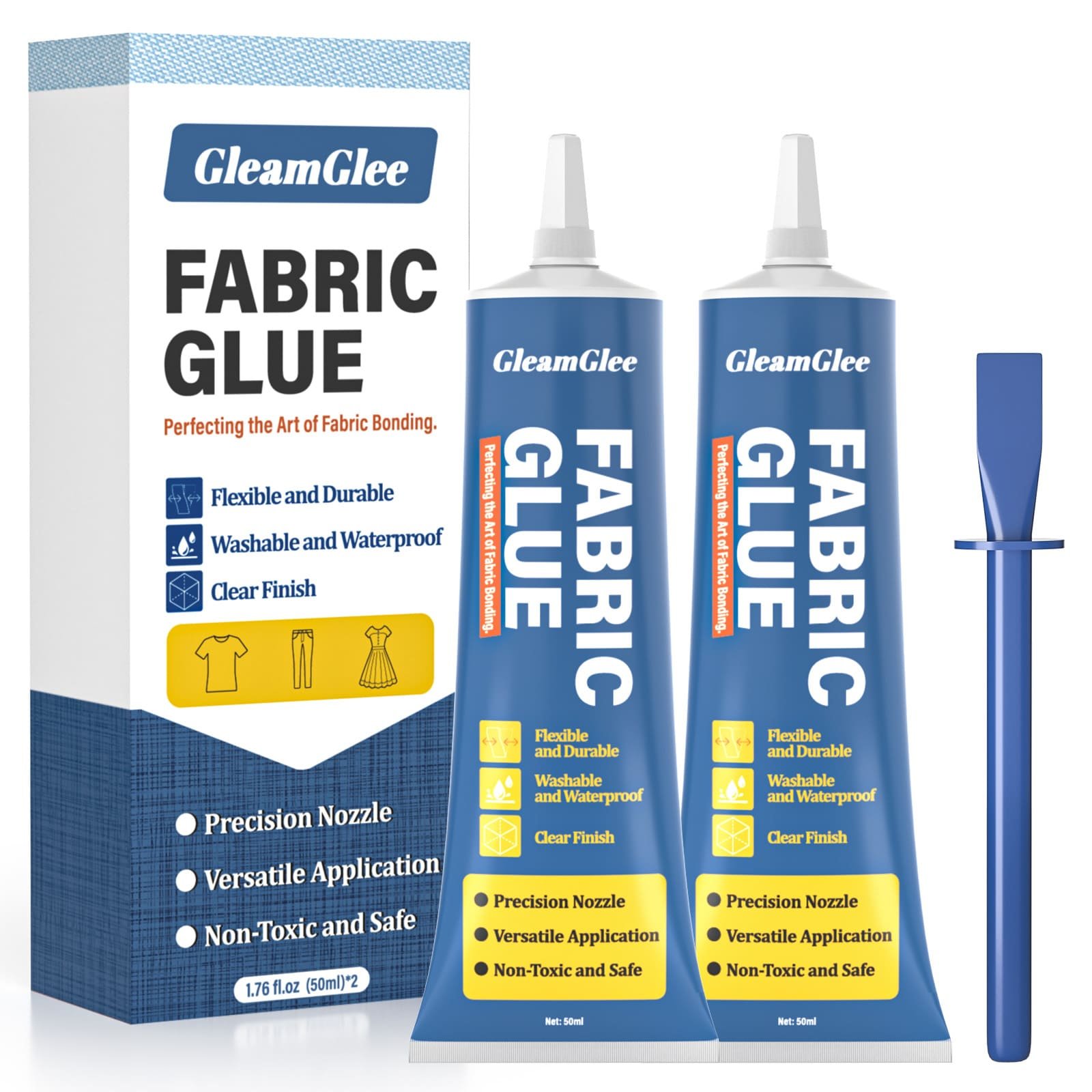
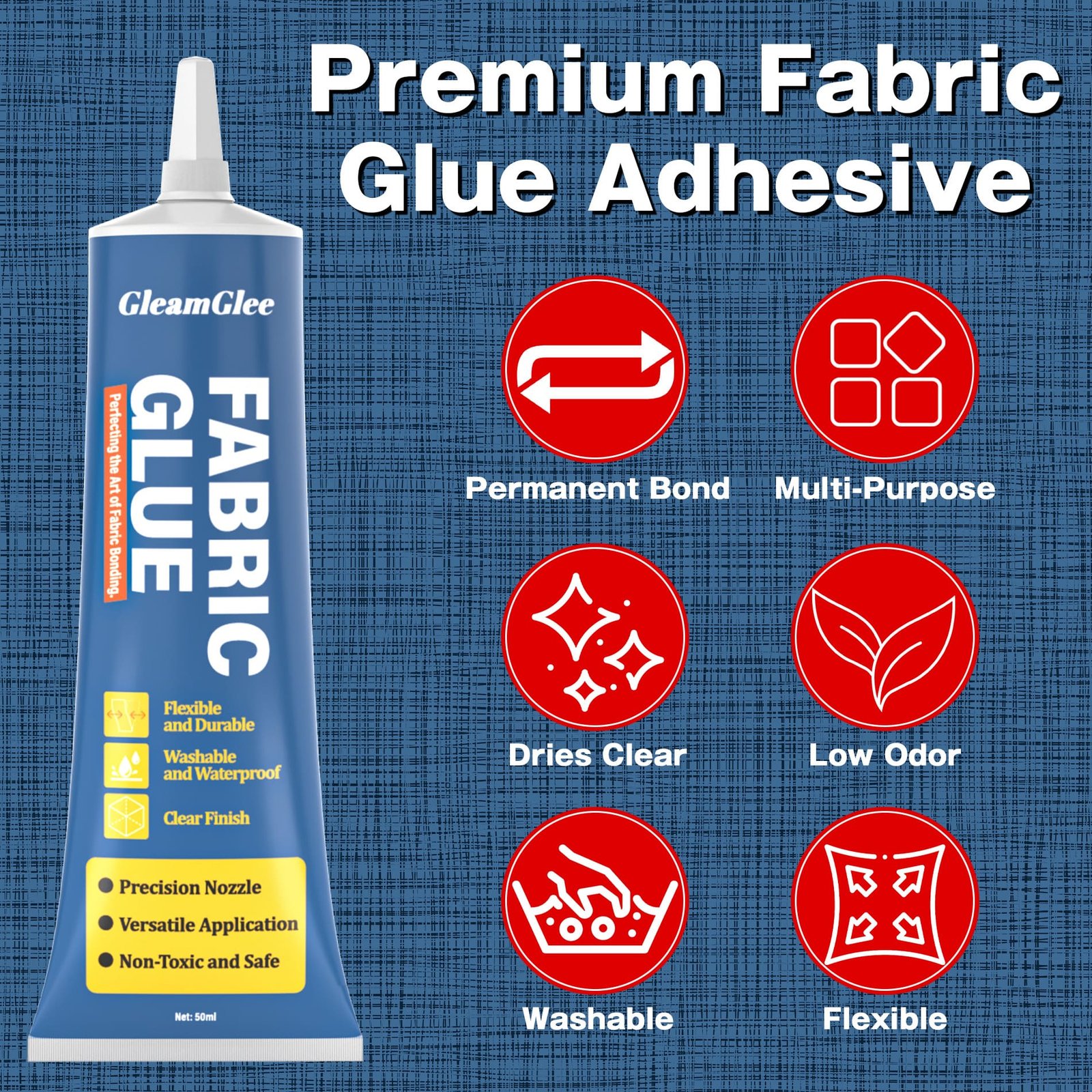
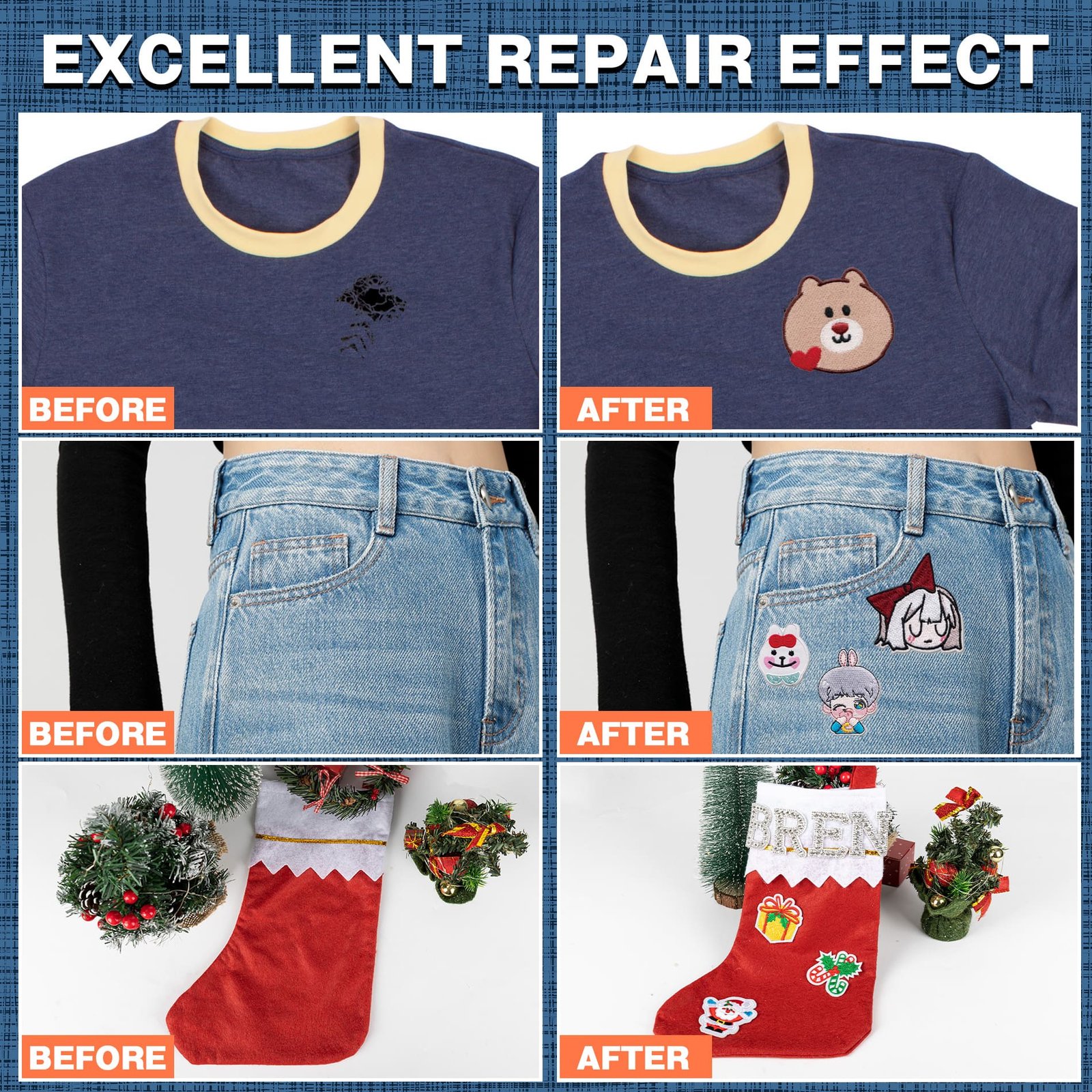
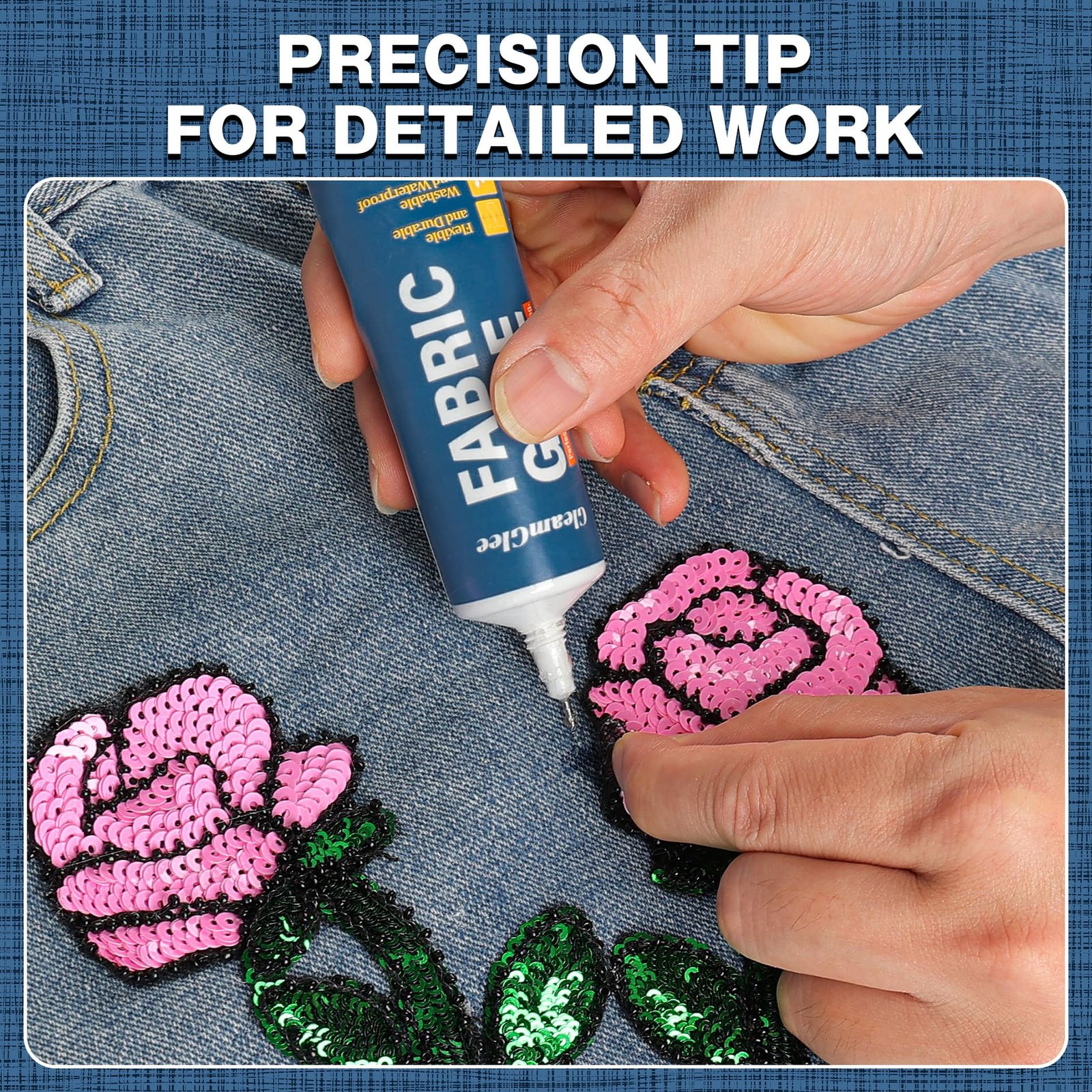
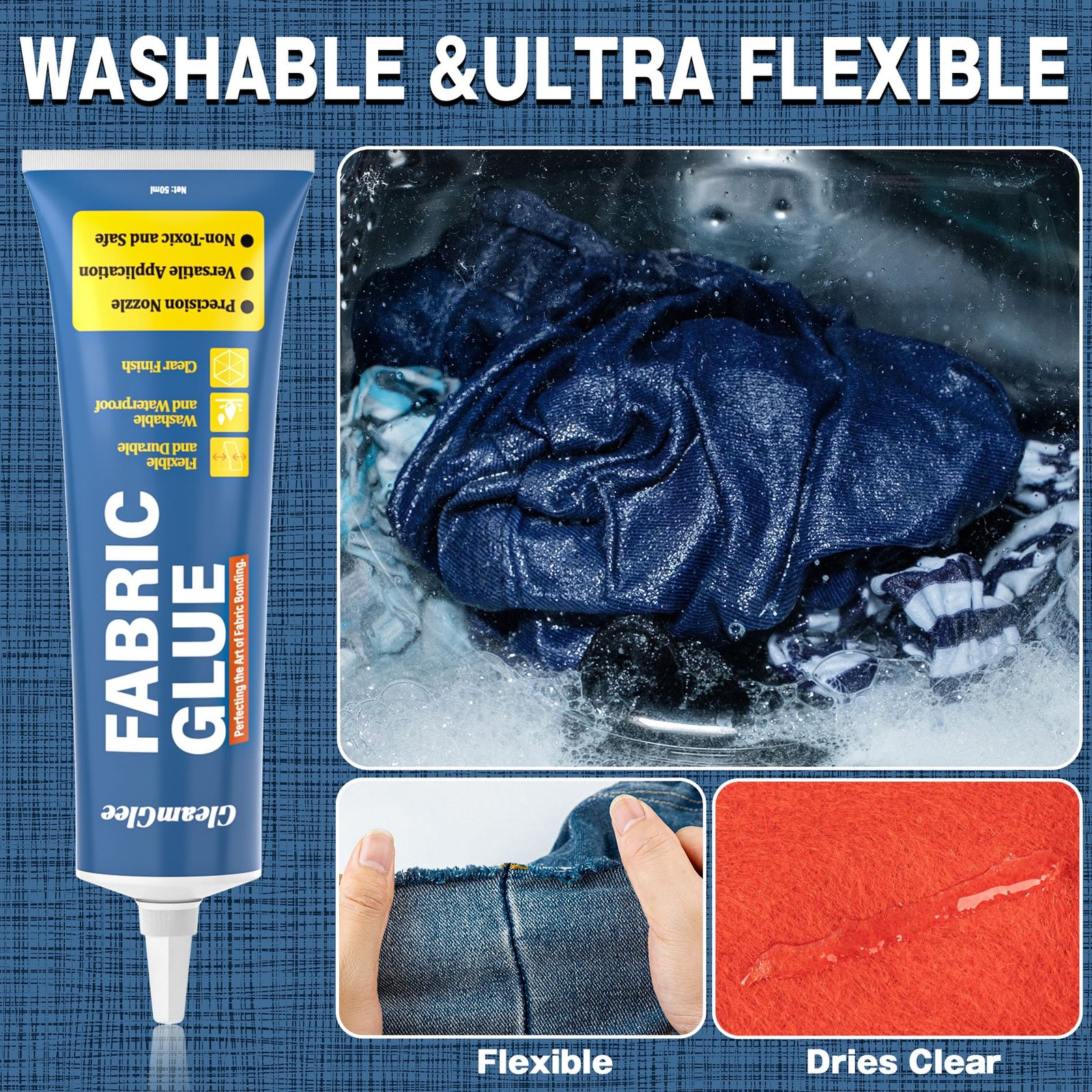
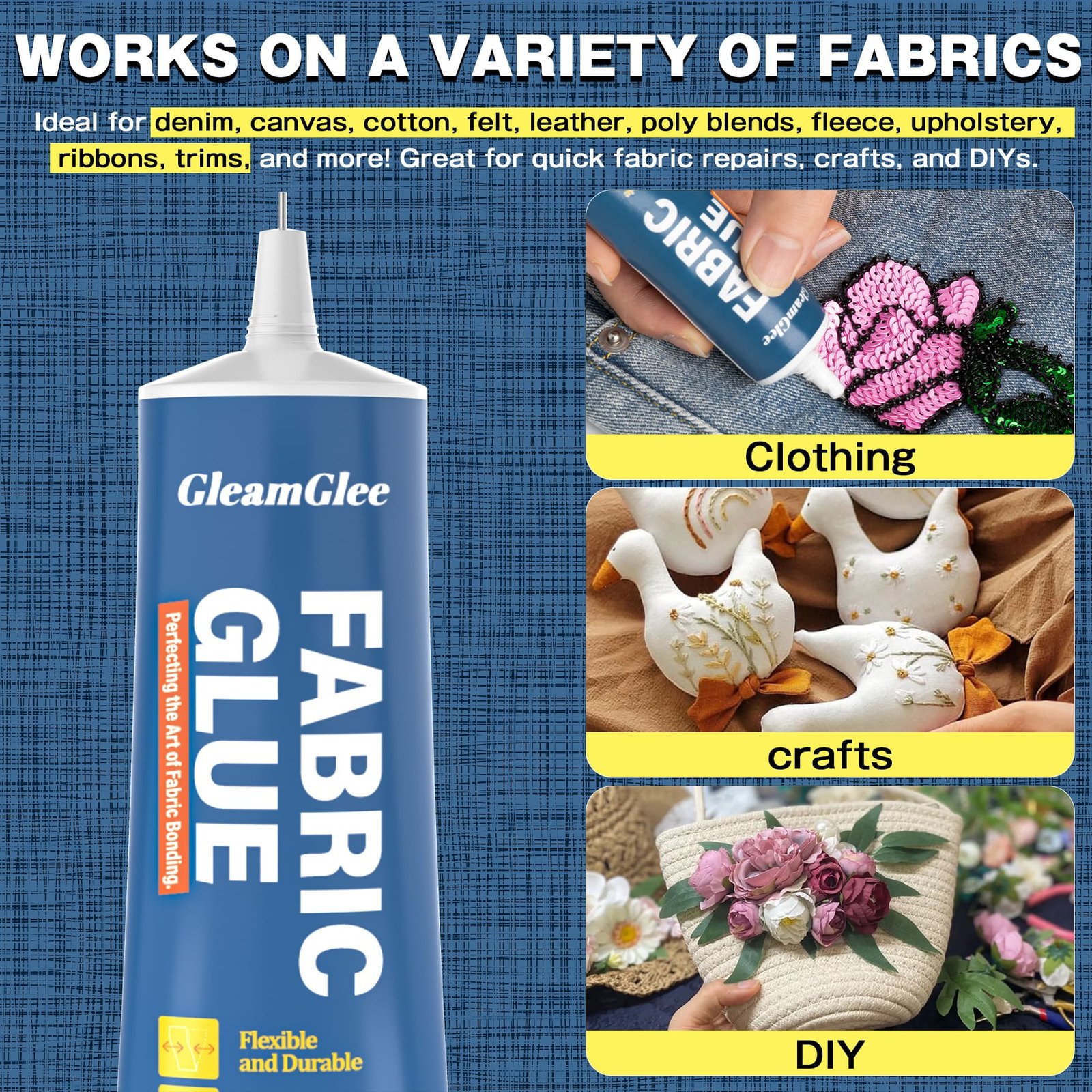
If the repair involves common clothing fixes rather than industrial fabric work, this is the kind of fabric glue most people are actually looking for. GleamGlee’s Amazon page also describes it as strong, clear, washable, and suitable for a range of fabric repair uses, which matches the core search intent behind this topic very closely.
A Practical Option for Everyday Clothes Repair
If your priority is clean application, flexible hold, and a washable repair for common clothing fixes, a clear fabric glue designed for no-sew fabric use is usually the most practical choice.
For everyday clothing repairs, we generally recommend choosing a fabric glue that is made specifically for fabric bonding rather than using a general-purpose household adhesive.
One option that fits this type of use well is GleamGlee Fabric Glue, especially for users who want a clear, easy-to-apply solution for no-sew clothes repair. On its Amazon listing, it is positioned for strong fabric repairs and highlights a clear-drying, flexible, washable bond for clothing, patches, denim, felt, sequins, curtains, and similar household fabric fixes. It also uses a fine needle-tip applicator for more controlled placement, with an anti-clog cap, and notes a set time of around 6–10 minutes with full cure in about 24 hours.
For many consumers, that combination makes sense because it aligns with what clothes repair usually requires in real life:
- A neat finish instead of messy visible glue lines
- A flexible hold instead of a stiff patchy feel
- A washable bond after proper curing
- Better control for hems, edges, trims, and smaller repairs
- A practical no-sew option for quick home use
How to Use Fabric Glue on Clothes So the Repair Holds Better
Good results depend on more than the glue alone. Clean preparation, controlled application, proper pressing, and enough cure time all help clothing repairs look cleaner and last longer.
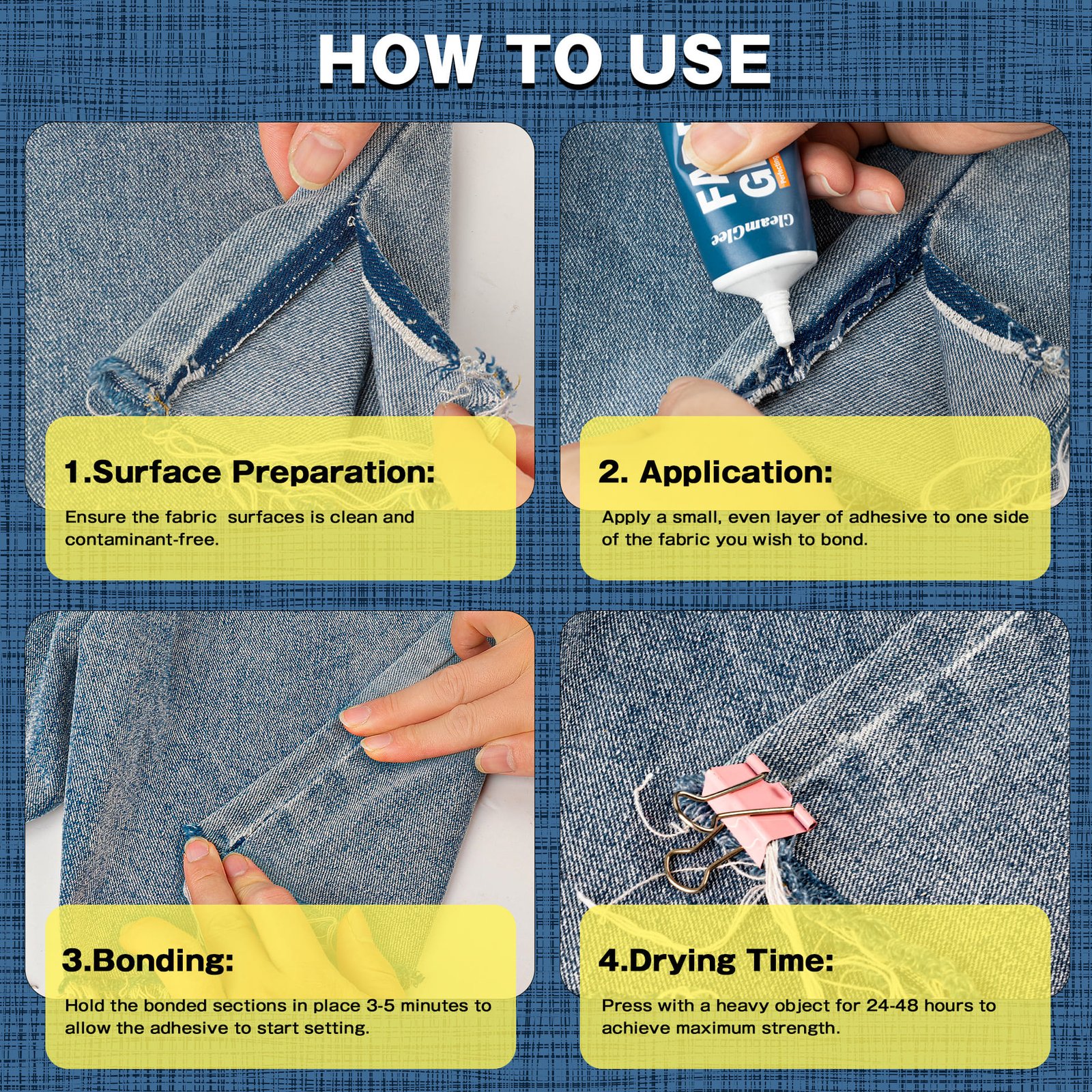
Step 1: Clean and dry the fabric area
Make sure the repair area is clean, dry, and free from dust, lint, oil, or detergent residue. Adhesive bonds more consistently on a prepared surface.
Step 2: Align the fabric before applying glue
Before using the glue, check how the edges, hem, patch, or trim should sit. This helps prevent misalignment once the adhesive is in place.
Step 3: Apply a thin, even layer
Use a controlled amount rather than over-applying. For detailed clothing work, a fine applicator helps place the glue only where needed.
Step 4: Press the surfaces together carefully
Once aligned, press the fabric pieces together evenly. Smooth the area gently so the repair sits flat and natural.
Step 5: Let the repair set without disturbing it
Avoid moving or stretching the fabric too soon. According to the GleamGlee product listing, the formula sets in about 6–10 minutes, which is useful for keeping the pieces in position during early bonding.
Step 6: Allow full curing before washing
Do not rush this stage. The same listing notes a full cure time of about 24 hours. For washable clothing repairs, this curing stage is one of the most important parts of getting a stronger, more dependable result.
Common Clothing Repairs Where Fabric Glue Is Often a Good Fit
Not every repair needs stitching. For many lightweight to medium-duty clothing fixes, fabric glue can be a practical solution when flexibility, clean appearance, and ease of use matter more than complex sewing.

Loose hems
Good for quick hem touch-ups when you want a no-sew solution that looks neat.

Patches
Useful for patch edge bonding and reinforcement, especially where clean placement matters.

Denim touch-ups
Can work well for smaller denim fixes, patch support, and edge reinforcement on jeans.

Felt and costume details
Helpful for felt, ribbon, sequins, trim, and similar embellishment work where sewing may be awkward or time-consuming.

Curtains and fabric edges
Ideal for practical home repairs when the goal is to extend the life of an item instead of replacing it right away.

Everyday clothing maintenance
Do not rush this stage. The same listing notes a full cure time of about 24 hours. For washable clothing repairs, this curing stage is one of the most important parts of getting a stronger, more dependable result.
Fabric Glue vs Other Common Clothes Repair Methods
Different repair methods ork for different situations. For many everyday clothing fixes, fabric glue stands out when the user wants a cleaner, simpler, no-sew solution with flexible results.
| Repair Method | Best For | Ease of Use | Appearance | Flexibility After Repair | Wash-Friendly Potential | Good for Quick Home Repairs |
|---|---|---|---|---|---|---|
| Fabric Glue | Hems, patches, trims, felt, small clothing fixes | Easy | Clean when applied well | Usually good if the formula stays flexible | Good after proper cure | Yes |
| Hand Sewing | Seams, structural repairs, precise stitching | Medium | Can be visible | Good | Good | Sometimes |
| Iron-On Adhesive | Flat patching, some hemming | Medium | Fair to good | Varies | Varies | Sometimes |
| Safety Pins / Temporary Fixes | Emergency short-term hold | Very easy | Usually visible | Poor | Poor | Yes, but temporary |
| General Household Glue | Not recommended for clothing | Easy | Often messy | Often poor | Often poor | No |
What to Look for Before You Buy a Fabric Glue for Clothes Repair
A better buying decision usually comes down to a few practical checks. This checklist helps shoppers focus on what matters for real clothing repairs instead of being distracted by generic marketing claims.
Before buying, it helps to ask these questions:
Does it dry clear?
This matters for visible areas on clothing.
Will the bond stay flexible?
Clothes need movement. A hard, brittle repair usually feels unnatural.
Is it described as washable after full cure?
That is far more useful for clothing than a simple “strong bond” claim.
Can I apply it cleanly on small areas?
Precision matters for hems, patch edges, sequins, and decorative details.
Is it made for fabric use rather than general household repair?
Fabric bonding needs a different balance of hold, flexibility, and finish.
Does the curing process sound realistic?
Products that explain set time and full cure time usually give users clearer expectations.
Does it match my actual repair scenario?
Clothing repairs, denim touch-ups, patch work, and embellishment repairs do not always need the same approach.

Why Many Consumers Feel GleamGlee Fabric Glue Is a Better Fit for Everyday Fabric Repairs
For everyday fabric repairs, consumers usually want something simple, clean, flexible, and dependable after washing. This is where GleamGlee stands out for many shoppers: it feels practical for real clothing fixes, not just craft use.
When people compare fabric glues for everyday clothing repair, they are usually not looking for the most aggressive adhesive possible. What they really want is something that feels easier to use, looks cleaner on fabric, and holds up better in real-life situations like hems, patches, denim touch-ups, and simple no-sew fixes.
For many consumers, GleamGlee Fabric Glue feels like a better fit because it matches those everyday repair priorities more closely.
1. It feels more suitable for real clothing repairs
Some fabric glues are marketed broadly, but consumers often prefer products that clearly position themselves for practical clothing fixes. GleamGlee is presented for clothing repairs, patching, hemming, denim, felt, sequins, and similar household fabric uses, which makes it easier for shoppers to feel they are choosing the right type of adhesive for the job.
2. Consumers like repairs that look neat, not messy
For visible areas on clothing, appearance matters. GleamGlee is described as a clear-drying fabric glue, which is one of the biggest reasons many shoppers see it as more suitable for daily wear items. A repair that dries cleaner usually feels more wearable and less obvious.
3. Flexibility matters more than raw stickiness
A lot of people do not want a repair that turns stiff or uncomfortable. According to the product listing, GleamGlee is designed to create a flexible bond that moves with the fabric rather than becoming brittle, which makes it more appealing for clothes that need to bend, fold, and move naturally.
4. Washability gives consumers more confidence
For everyday clothing repair, one of the biggest buying concerns is simple: Will it still hold after washing? The listing describes the bond as washable after full cure, and that is a major reason consumers may view it as more practical than adhesives that only sound strong at first use.
5. Controlled application makes small repairs easier
Daily fabric repairs are often detail-based: a loose hem, a patch edge, trim, felt, ribbon, or a small lifted area. GleamGlee uses a fine needle-tip applicator with an anti-clog cap, which gives consumers more confidence that they can place the glue neatly instead of dealing with drips or over-application.
6. It matches what everyday shoppers actually want
Most people are not trying to do industrial repairs. They want a no-sew solution that is easy to understand and realistic to use at home. GleamGlee is positioned exactly that way, with a set time of about 6–10 minutes and full cure in about 24 hours, making it feel practical for normal household fabric repair routines.
7. Strong shopper signals also help build trust
For many consumers, product trust is not only about claims. It is also about how other shoppers are responding. On Amazon, this product is listed with a 4.5-star rating from 2,895 ratings, has the Amazon’s Choice badge, and shows 5K+ bought in the past month, which can make consumers feel more comfortable choosing it over lesser-known alternatives.
If the goal is everyday fabric repair rather than heavy-duty industrial bonding, many consumers will naturally lean toward a product that feels cleaner, more flexible, easier to control, and more washable in real use. That is exactly why GleamGlee Fabric Glue often feels like the more practical choice for clothing repairs at home.
GleamGlee Fabric Glue – Quick Buying Details
| Item | Details |
|---|---|
| Product Name | GleamGlee Fabric Glue |
| Size | 1.76 oz |
| Brand | GleamGlee |
| Form | Liquid |
| Key Features | Dries Clear, Strong, Washable |
| Best For | Clothing Repairs, Hems, Patches, Denim, Felt, Sequins, Curtains, Light Upholstery |
| Bond Type | Permanent, Flexible Hold |
| Applicator | Fine Needle-Tip Applicator |
| Set Time | About 6–10 Minutes |
| Full Cure Time | About 24 Hours |
| Extra Benefit | Anti-Clog Cap with Built-In Pin |
| Amazon Signals | 4.5★, 2,895 Ratings, Amazon’s Choice, 5K+ Bought in Past Month |
Frequently Asked Questions About Fabric Glue for Clothes Repair
These are some of the most common questions people ask before using fabric glue on clothing. Clear, practical answers help users avoid mistakes and choose the right repair method more confidently.
1. What is the best fabric glue for clothes repair?
Usually, the best option is a fabric glue that dries clear, stays flexible, and is washable after full curing.
2. Can fabric glue replace sewing?
For many small repairs, yes. It can be a practical no-sew solution for hems, patches, trim, and similar fabric fixes.
3. Is fabric glue washable?
Some are, but not all. For clothing, it is important to choose one that is specifically described as washable after full cure.
4. How long should I wait before washing repaired clothes?
Always allow full curing first. For GleamGlee Fabric Glue, the listing notes a full cure time of about 24 hours.
5. Does fabric glue dry clear?
Many fabric glues do, but it depends on the formula. A clear-drying finish is especially useful for visible clothing areas.
6. Can I use fabric glue on jeans?
Yes, for certain denim repairs, patch support, and edge reinforcement, fabric glue can be a practical option.
7. Is fabric glue good for patches?
Yes, especially for patch edges, decorative patches, and no-sew patch repairs.
8. Can I use it for sequins, ribbons, or trim?
Yes, precise fabric glue is often useful for decorative clothing details where clean control matters.
9. Why did my fabric glue repair fail?
Common reasons include over-applying glue, using the wrong type of adhesive, not aligning the fabric well, or washing before full cure.
10. What fabrics work best with fabric glue?
That depends on the formula, but common repair scenarios often include denim, felt, trims, patches, and similar non-stretch or lightly flexible fabric applications.
11. Is fabric glue good for hemming pants?
It can be a good no-sew option for simple hem repairs when applied carefully and allowed to cure properly.
12. How do I get a cleaner result?
Use a thin, even amount, align the fabric carefully, and avoid moving the repair before the bond has set.
Need a Practical Fabric Glue for Clothes Repair?
If you want a cleaner, easier alternative to sewing for everyday clothing fixes, choosing the right fabric glue makes a real difference. Start with a product designed for fabric, not a generic household adhesive.
If your goal is to repair clothes neatly, keep the fabric looking natural, and avoid obvious stiff glue marks, a clear flexible fabric glue is usually the smarter place to start.
For everyday fixes like hems, patches, denim touch-ups, trim repair, and fabric embellishments, GleamGlee Fabric Glue is a practical option to consider. Its clear-drying, washable, flexible positioning and precision-tip format make it especially suitable for common no-sew clothing repairs.





















