Skip to content
What Adhesive Remover for Car Sticker Residue Works Best: A Paint-Safe Guide
Your trusted adhesives glue & cleaner manufacturer

A car sticker often looks small when it is new. A dealer label on the trunk, a parking permit on the windshield, a family decal on the rear glass, or a bumper sticker from an old trip may not seem like a serious problem. The trouble usually starts later, when the sticker is removed and the surface underneath does not look clean. Instead of a smooth panel, there may be yellow glue, grey dust trapped in adhesive, a dark rectangle, sticky edges, or a cloudy shadow that does not come off with normal car wash soap.
The best adhesive remover for car sticker residue is a surface-safe cleaner that softens the glue before wiping. It should help remove sticky residue from car paint, glass, bumpers, and selected trim when used correctly. A good remover should reduce hard scraping, work with microfiber towels or a plastic scraper, and leave the surface ready for a final wash.
Most car owners do not damage their cars because they used adhesive remover. They damage the surface because they rush the job. They rub dry residue too hard, use a metal blade on paint, heat the sticker too much, or skip the small test area. Removing car sticker residue is not about fighting the glue with force. It is about loosening the adhesive layer until it can be lifted cleanly.
Think about a used car owner who finally removes a dealership sticker from the trunk after six months. The badge comes off, but the sticky outline stays. One choice is to scrape hard and hope for the best. The better choice is to clean, soften, apply adhesive remover, wait, wipe, and repeat. The difference between those two choices can be the difference between a clean trunk lid and a scratched clear coat.
What Is Car Sticker Residue?
Car sticker residue is the adhesive layer left on a vehicle after a decal, bumper sticker, parking permit, dealership label, tape strip, toll tag, or vinyl graphic is peeled away. It may look like yellow glue, grey dirt, cloudy film, sticky patches, or a faint rectangular outline. The longer it stays on paint, glass, bumper, or trim, the harder it usually becomes.
This residue is not just “dirt.” It is a mix of pressure-sensitive adhesive, dust, UV-aged glue, road grime, wax, rain minerals, and sometimes broken sticker backing. On a clean car, even a small patch can look obvious because the sticky area catches light differently from the surrounding surface. On dark paint, it may appear as a dull shadow. On glass, it may look like a greasy haze. On black trim, it can settle into texture and become difficult to reach.
The important point is that car sticker residue should be treated as a surface-care problem, not only a cleaning problem. A strong wipe may remove the glue, but it can also scratch clear coat, dull plastic, or damage tint film. A safer result comes from understanding what the residue is, how old it is, what surface it sits on, and how much softening it needs before wiping.
What Causes Car Sticker Residue?
Car sticker residue happens when the sticker face and the adhesive layer separate during removal. A sticker is built to stay attached while the car faces sun, rain, car washing, road vibration, and temperature changes. When the printed film, paper layer, or vinyl top comes off, the glue underneath may still hold tightly to the surface.
Several common situations make residue more likely:
- A dealership sticker stays on the trunk for several months before removal.
- A bumper sticker sits through summer heat, winter cold, rain, and road dust.
- A parking permit or toll tag uses strong adhesive on the windshield.
- A paper sticker tears during peeling and leaves glue plus paper fibers.
- Tape is used temporarily on trim, glass, or painted panels.
- A vinyl decal becomes brittle after long UV exposure.
The residue becomes more difficult when the adhesive mixes with outside contamination. Road dust, pollen, wax, exhaust particles, rain minerals, and car wash chemicals can all stick to the glue. This is why an old sticker mark often looks grey or brown instead of clear. It is not pure adhesive anymore; it is adhesive mixed with everything the car has been exposed to.
| Residue Source | Common Location | What Usually Remains | Cleaning Difficulty |
|---|---|---|---|
| Dealership decal | Trunk, tailgate, rear panel | Thin glue outline, sticker shadow | Medium |
| Bumper sticker | Painted or plastic bumper | Thick yellow glue, dirty edges | High |
| Parking permit | Windshield, side glass | Clear sticky film, paper fibers | Medium |
| Toll tag adhesive | Windshield | Foam-like glue pad, thick residue | High |
| Vinyl graphic | Door, window, body panel | Glue patches, faded outline | Medium to high |
| Tape strip | Trim, panel edge, glass | Smears, sticky bands | Medium |
The surface under the sticker also changes the result. Glass is hard and smooth, so adhesive usually sits on top. Painted panels have clear coat, so wiping pressure matters. Textured plastic trim can trap residue inside tiny grooves. This is why one cleaning method cannot be used blindly across the whole car.
Why Car Sticker Residue Gets Hard
Car sticker residue gets hard because adhesive ages outdoors. Heat softens it during the day, cold makes it stiff at night, and UV light slowly changes its texture. Over time, the glue can lose flexibility, turn yellow, become crusty, or bond unevenly with the surface. This is why a sticker removed after two weeks behaves very differently from a sticker removed after two years.
Heat is one of the biggest factors. A car parked in direct sun can make a trunk lid, rear window, or bumper much hotter than the surrounding air. Dark-colored paint absorbs even more heat. Repeated heating and cooling can make adhesive sink into small surface texture and cling more tightly. When the sticker is finally peeled away, the top layer may come off, but the aged glue remains behind in patches.
Old residue also becomes harder because dirt locks into it. Once dust and road grime settle into sticky glue, the residue is no longer smooth. If it is rubbed dry, those tiny particles can act like fine abrasive grit. This is why washing the area before using adhesive remover is not a small detail. It helps reduce scratch risk before the wiping starts.
| Sticker Age | Residue Feel | Common Look | Removal Expectation |
|---|---|---|---|
| Less than 1 month | Soft and tacky | Clear or slightly cloudy | Often wipes off quickly |
| 1–6 months | Sticky but uneven | Light yellow or grey edges | Needs remover and wiping |
| 6–24 months | Firmer, dirtier | Yellow glue, dust marks | Needs repeated softening |
| Over 2 years | Dry or crusty | Brown/yellow patches, ghost outline | Needs patience and several rounds |
Aged residue may also leave a visible “sticker shadow.” Sometimes this is leftover adhesive. Sometimes it is sun difference. The sticker protected one area while the exposed paint around it aged. Adhesive remover can clean glue, but it cannot always erase paint fading caused by long-term UV exposure. That is important to understand before cleaning, especially on older cars.
Which Stickers Leave Residue?
The stickers most likely to leave residue are the ones designed to stay attached outdoors or stick firmly to glass. Bumper stickers, dealership decals, parking permits, inspection stickers, toll tags, vinyl decals, temporary tape, protective film labels, and decorative car stickers all commonly leave glue behind. The harder the sticker was meant to hold, the more likely residue remains after removal.
Bumper stickers are often the worst because they sit low on the car and collect road dirt. They also face sunlight, rain, mud, exhaust grime, and car wash pressure. After months or years, the sticker face can fade and crack, while the glue underneath becomes tough and dirty. Removing the top sticker may feel successful at first, but the real cleaning starts when the sticky layer remains.
Dealership decals are another frequent issue. Many people remove them because they want a cleaner look on the trunk or tailgate. If removed early, they usually leave less residue. If left for a long time, the adhesive can harden, and the surrounding paint may age differently. This can leave both glue and a faint logo outline.
Glass stickers are usually easier to clean, but they still need care. Parking permits and toll tags often use strong adhesive because they must stay in place. Toll tag residue can be thick and foam-like, which means it may not wipe away in one pass. Rear window stickers also require caution because defroster lines can be damaged by scraping.
| Sticker Type | Why It Leaves Residue | Best First Move |
|---|---|---|
| Bumper sticker | Long outdoor exposure and strong glue | Wash, soften, use adhesive remover |
| Dealership decal | Thin adhesive on visible paint | Test paint, apply remover with microfiber |
| Parking permit | Strong glass adhesive | Soften, wipe, avoid tint damage |
| Toll tag | Thick foam adhesive | Repeated short soaking |
| Vinyl decal | UV aging and large contact area | Warm gently, remove slowly |
| Paper sticker | Tears and leaves fibers | Soak lightly, wipe in stages |
A practical rule is simple: the larger, older, and more weather-exposed the sticker is, the more careful the removal process should be. Small fresh stickers may clean in minutes. Old bumper stickers and sun-baked decals need a slower method.
Is Old Car Sticker Residue Worse?
Old car sticker residue is usually worse because time changes both the adhesive and the surface around it. The glue may harden, yellow, dry out, collect dirt, or bond more unevenly. At the same time, the paint or plastic around the sticker may age from sunlight and washing. This makes old residue harder to remove cleanly and harder to judge by appearance alone.
One common problem with old residue is layered cleaning. The first wipe may remove only the dirty top film. The second application may loosen the sticky yellow layer. A third pass may be needed for the faint edge line. This does not mean the product is failing. It means the residue has aged in layers, and each layer releases differently.
Older residue also increases the risk of surface damage because more pressure feels tempting. When the glue does not move, many people press harder, switch to a rough sponge, use a metal blade, or apply strong solvents without testing. These choices can create scratches, haze, plastic discoloration, or paint dullness. The safer approach is to repeat gentle softening instead of increasing force.
For old car sticker residue, a realistic cleaning plan should look like this:
- Wash first to remove loose dirt and grit.
- Test adhesive remover on a small hidden area.
- Apply remover to microfiber instead of flooding the panel.
- Let the residue soften briefly.
- Wipe lightly and fold the towel often.
- Repeat in small rounds until the glue releases.
- Use a plastic scraper only after the adhesive has softened.
- Wash again after removal to clear leftover film.
- Check under sunlight for ghosting or remaining residue.
| Old Residue Problem | What It Means | Better Response |
|---|---|---|
| Glue smears during wiping | Too much pressure or not enough softening | Reapply remover, use clean towel |
| Yellow outline remains | Aged adhesive still present | Repeat short contact cleaning |
| Rectangle shadow stays | Possible sun fading | Clean first, polish only if needed |
| Plastic looks pale | Trim may be sensitive | Stop and rinse immediately |
| Paint looks hazy | Too much rubbing or weak finish | Stop, wash, inspect under light |
Old residue can still be removed well, but it needs patience. The goal is not to finish in one pass. The goal is to protect the car while removing the glue layer step by step.
Is Adhesive Remover Safe?
Adhesive remover can be safe for car sticker residue when it is used with the right surface, the right contact time, and the right wiping method. The risk usually comes from using a remover too aggressively, leaving it on too long, scraping with the wrong tool, or applying it to weak paint, raw plastic, tint film, rubber seals, or old trim without testing.
For normal car paint and glass, a well-made adhesive remover should soften sticker glue so it can be wiped away with less force. That matters because most visible damage comes from friction: hard rubbing, dry scraping, dirty towels, metal blades, or grit trapped inside old adhesive. A remover is safest when it reduces pressure instead of encouraging more pressure.
The safest rule is simple: test first, work small, wipe gently, and clean afterward. A 2–4 inch test area can prevent a much bigger repair problem. Paint, glass, plastic, rubber, vinyl wrap, tint film, and chrome-style trim do not behave the same. A product that works well on glass may still need caution on black plastic trim or older repaint work.
Is Adhesive Remover Safe for Paint?
Adhesive remover can be safe for car paint if the paint is healthy, fully cured, and protected by a stable clear coat. Most modern vehicles have a clear coat over the color layer, and car sticker residue usually sits on top of that clear coat. The goal is to soften the adhesive layer without scratching or dulling the clear surface. This is why the cleaning method matters as much as the product itself.
Paint risk increases when the sticker has been on the car for a long time, especially on a trunk lid, tailgate, door panel, or painted bumper. Sun-baked adhesive may contain dust, wax, road grime, and dry glue. If that mixture is rubbed before washing, it can create fine marks. Dark paint, especially black, navy, deep red, and charcoal grey, shows these marks more clearly under sunlight.
Before using adhesive remover on paint, wash and dry the area. Then apply a small amount to a microfiber towel and test a hidden or less visible spot. Start with short contact time, around 30–60 seconds, then wipe gently and inspect. If the paint stays glossy, smooth, and normal in color, continue in small sections.
| Paint Condition | Adhesive Remover Risk | Safer Action |
|---|---|---|
| New factory paint | Low to medium | Test first, use microfiber |
| Older clear coat | Medium | Short contact time, light pressure |
| Repainted panel | Medium to high | Test carefully before full use |
| Peeling clear coat | High | Avoid strong remover; seek professional help |
| Matte paint or wrap | High | Use only if label confirms compatibility |
| Hot sun-exposed panel | Medium to high | Cool the surface before cleaning |
A clean result on paint should look even under sunlight. If the area looks dull, cloudy, sticky, or different from the surrounding panel, stop and wash the surface before doing anything else.
Is Adhesive Remover Safe for Glass?
Adhesive remover is usually safer on glass than on paint because glass is hard, smooth, and less absorbent. Windshield sticker residue, parking permit glue, inspection sticker marks, and toll tag adhesive often respond well to remover because the glue sits on the surface instead of sinking into texture. Still, glass has sensitive areas, especially inside the car.
Exterior glass is normally the easiest place to work. A remover can be applied to the residue, left briefly, and wiped with microfiber. A plastic scraper can help with softened glue. For plain exterior glass, cleaning is usually faster than painted surfaces, often taking 5–15 minutes for small sticker marks. Thick toll tag adhesive can take longer because foam-style glue releases in pieces.
Interior glass needs more caution. Many cars have tint film on the inside of side windows or rear windows. Strong remover, scraping, or rough wiping can haze, lift, or scratch that film. Rear windows also have defroster lines. These thin lines can be damaged by blades, hard scrapers, or careless rubbing.
| Glass Area | Main Risk | Safer Method |
|---|---|---|
| Windshield exterior | Streaks and leftover film | Remover, microfiber, final glass cleaner |
| Side window exterior | Drips into rubber seals | Controlled application |
| Rear glass | Defroster line damage | Avoid hard scraping |
| Interior tinted glass | Tint haze or lifting | Test first; avoid strong rubbing |
| Toll tag area | Thick foam adhesive | Repeat short soaking rounds |
After removing residue from glass, clean the area again with glass cleaner or clean water and microfiber. Adhesive remover can leave a light film that may become visible at night when headlights hit the glass.
Is Adhesive Remover Safe for Plastic?
Adhesive remover needs extra care on plastic because car plastics are not all the same. A painted plastic bumper may handle cleaning more like painted metal, while raw black trim, textured bumper sections, mirror bases, interior panels, and rubber-like moldings can react differently. Some plastic can turn pale, glossy, sticky, or cloudy if the remover is too strong or left on too long.
Plastic trim is especially tricky because it often has texture. Sticker residue and tape glue can sink into tiny grooves, making the surface hard to clean evenly. Rubbing harder may remove glue from the high spots while leaving residue in the low texture. It can also polish the plastic and create a shiny patch that looks different from the rest of the trim.
For plastic, apply adhesive remover to a cloth instead of spraying directly. Work in a small area, about 1–2 inches at a time on textured trim. Keep contact time short, often 15–30 seconds for the first test, then wipe gently. If the plastic changes color, feels tacky, or looks cloudy, stop immediately and clean the area with water.
| Plastic Surface | Residue Problem | Risk Level | Better Approach |
|---|---|---|---|
| Painted bumper | Bumper sticker glue | Medium | Treat like paint; test first |
| Black textured trim | Tape or decal residue | High | Cloth application, short contact |
| Mirror housing | Sticker or tape mark | Medium | Test hidden edge |
| Interior plastic | Label glue | Medium to high | Avoid soaking |
| Rubber-like seals | Sticky transfer | High | Use very small amount |
| Chrome-style plastic | Glue near edges | Medium | Use cotton swab, avoid flooding |
Plastic cleaning should be slow and controlled. A small amount of residue left after the first pass is better than a permanent pale mark caused by aggressive cleaning.
Does Adhesive Remover Need Testing?
Yes, adhesive remover needs testing before full use, especially on car paint, plastic trim, tinted glass, vinyl wrap, rubber seals, matte finishes, and repainted panels. A test spot checks whether the surface can handle the remover, the contact time, and the wiping method. It is a small step, but it can prevent visible damage.
A proper test should copy the real cleaning method. If the plan is to leave remover on the sticker residue for one minute, test it for one minute. If the plan is to wipe with microfiber, use microfiber in the test. If the plan includes a plastic scraper, test very gently in a hidden area first. A rushed test may not show the real risk.
Look at the surface under bright light after testing. Check shine, color, texture, and towel transfer. If the towel picks up paint color, stop. If plastic turns pale, stop. If tint looks cloudy, stop. If the surface feels sticky or softened, wash the area and do not continue with that method.
| Test Item | Safe Result | Warning Sign |
|---|---|---|
| Paint shine | Gloss stays even | Dull patch or haze |
| Towel check | No color transfer | Paint or dye on towel |
| Plastic trim | Same color and texture | White, pale, glossy, or sticky mark |
| Glass tint | Clear and smooth | Cloudy film or lifted edge |
| Surface feel | Smooth after wiping | Soft, tacky, or rough |
| Residue movement | Glue softens slowly | Surface changes before glue moves |
A good working habit is to start with the mildest method that can solve the problem. Wash first, test second, use remover third, and scrape only after the adhesive has softened. This order protects the car and gives adhesive remover the best chance to remove car sticker residue cleanly.

How to Use Adhesive Remover?
Adhesive remover should be used in a slow, controlled order: wash the area, soften the car sticker residue, apply the remover, wait briefly, wipe gently, and clean the surface again. The remover should loosen the glue before scraping begins. If the residue does not move, repeat the softening step instead of pressing harder.
A car sticker mark may look like one small sticky patch, but it often contains several layers: dirt on top, aged glue in the middle, and a thin oily film close to the surface. If these layers are rubbed all at once, the glue can smear wider and the dirt can scratch the finish. This is why the process should start with cleaning, not scraping. A clean surface gives the adhesive remover direct contact with the glue and reduces the risk of dragging grit across paint or glass.
The safest working range is small and patient. A 2–4 inch section is easier to control than a full bumper sticker outline. Most fresh sticker residue can be cleaned in about 5–10 minutes. Older bumper sticker residue, dealership decal glue, or toll tag adhesive may need 15–40 minutes because the glue has hardened, collected dust, or bonded unevenly. A good result is not measured by speed. It is measured by whether the paint, glass, bumper, or trim still looks smooth, even, and undamaged after cleaning.
| Residue Type | Surface | Time Needed | Best Method |
|---|---|---|---|
| Fresh sticker glue | Glass or paint | 5–10 minutes | Wash, remover, microfiber wipe |
| Dealership decal residue | Painted trunk or tailgate | 10–20 minutes | Test, soften, wipe in small sections |
| Old bumper sticker residue | Painted or plastic bumper | 20–40 minutes | Repeat remover rounds, plastic scraper |
| Parking permit residue | Windshield | 5–15 minutes | Remover, microfiber, final glass clean |
| Toll tag adhesive | Windshield | 15–30 minutes | Soak in rounds, lift softened foam |
| Tape residue on trim | Plastic or rubber trim | 10–25 minutes | Cloth application, short contact time |
Step 1: Wash Car Sticker Residue
Wash the car sticker residue area before applying adhesive remover. This step removes loose dust, sand, road grime, pollen, wax build-up, and old car wash residue. It may feel like an extra step, but it protects the surface. Sticky glue catches dirt easily, and that dirt can act like fine grit when rubbed with a towel.
Use car-safe soap, clean water, and a soft microfiber towel or wash mitt. Wash beyond the sticker mark, not only the visible glue. For example, if the old sticker was 4 inches wide, clean at least 8–10 inches around the area. Sticker adhesive can spread during peeling, and dust often collects around the edges. On a trunk lid or bumper, this wider cleaning area helps prevent grit from being pulled into the residue during wiping.
After washing, dry the surface fully. Adhesive remover works better on a dry surface because water can dilute the cleaner and slow contact with the glue. Drying also makes the residue easier to inspect. A wet surface can hide faint glue lines, cloudy patches, or sticker shadows. Good lighting helps here. Sunlight or a bright garage light can show whether the mark is sticky residue, dirt, wax stain, or a faded sticker outline.
Prepare the work area before moving to the next step:
| Item | Why It Matters | Better Choice |
|---|---|---|
| Car-safe soap | Removes grit before wiping | Mild automotive wash soap |
| Microfiber towel | Reduces scratch risk | Clean, soft, high-pile towel |
| Plastic scraper | Helps lift softened glue | Smooth edge, no sharp corners |
| Gloves | Keeps remover and glue off hands | Nitrile gloves |
| Extra towels | Prevents glue smearing | 2–3 clean towels per job |
| Good lighting | Shows remaining residue | Sunlight or bright white light |
Avoid paper towels, old T-shirts, rough sponges, kitchen scrub pads, and dirty shop rags. These can leave marks, especially on dark paint. The first wash should make the surface safer for adhesive remover, not introduce new scratches.
Step 2: Soften Car Sticker Residue
Soften the residue before wiping or scraping. Car sticker adhesive becomes easier to remove when it is flexible. Dry glue grips the surface tightly. Softened glue can roll, lift, or wipe away with less pressure. This step is especially important for bumper stickers, old dealership decals, sun-baked vinyl, and toll tag adhesive.
There are two practical ways to soften residue: gentle warmth and adhesive remover. Gentle warmth can help loosen the sticker layer or soften hardened glue. A hair dryer on a warm setting is usually safer than a heat gun for normal car care. Keep it moving, hold it several inches away, and warm the surface only until it feels slightly warm to the hand. It should never feel hot. Dark paint, plastic bumpers, vinyl wraps, and trim can heat faster than expected.
Adhesive remover is the second softening method. Apply a small amount to a microfiber towel and press it against the residue. Let it sit briefly, then check whether the glue begins to move. For fresh residue, 30–60 seconds may be enough. For old residue, several short rounds are safer than one long soak. Do not let remover dry on the surface. If it dries before the glue loosens, add a little more product and continue gently.
| Residue Condition | What It Looks Like | Softening Method |
|---|---|---|
| Soft and clear | Fresh sticky film | Short remover contact |
| Yellow and tacky | Aged glue | Remover, wait, wipe, repeat |
| Dry and crusty | Old bumper sticker glue | Gentle warmth, then remover |
| Paper fibers stuck | Torn sticker backing | Light soaking with remover |
| Thick foam pad | Toll tag adhesive | Repeated short soaking rounds |
| Smearing glue | Sticky paste spreading | Less pressure, more dwell time |
The key is not to melt the residue. Melted glue can spread across the paint or glass and create a larger cleaning area. The goal is to relax the adhesive so it releases from the surface without force.
Step 3: Apply Adhesive Remover
Apply adhesive remover in a controlled amount. For painted panels, bumpers, trim, and plastic areas, apply the remover to a microfiber towel first instead of spraying heavily over the car. This gives better control and prevents liquid from running into badges, panel gaps, rubber seals, light edges, or textured trim. On exterior glass, direct spraying can be used more easily, but drips should still be controlled.
Work in small sections. A 2 x 2 inch area is a practical size for old residue. For a larger bumper sticker outline, divide the mark into several sections instead of trying to clean the whole patch at once. This helps keep the remover wet long enough to work and reduces the chance of leaving it too long on sensitive surfaces. Fold the towel into a pad, dampen one corner with remover, and hold it over the residue for a short contact time.
Use enough remover to wet the glue, not enough to flood the panel. Oversoaking can make the job messy and may increase risk around trim or plastic. If the residue starts to loosen, wipe with a clean side of the towel. If it does not move, reapply and wait again. Hard rubbing should not be the first response. More controlled contact time is usually safer than more hand pressure.
| Surface | Better Application Method | Contact Time Approach |
|---|---|---|
| Painted trunk or door | Remover on microfiber | Short rounds, inspect often |
| Painted bumper | Remover on towel, small sections | Repeat rather than flood |
| Exterior glass | Direct spray or towel | Wipe before it dries |
| Rear glass | Towel application | Avoid hard scraping on defroster lines |
| Black plastic trim | Cloth only | Very short contact, test first |
| Rubber seal area | Cotton swab or small cloth | Minimal product |
If using a product with a plastic scraper, do not scrape immediately after applying remover. Let the adhesive soften first. The scraper should lift softened glue; it should not be used to force dry residue off the car.
Step 4: Wipe Car Sticker Residue
Wipe the softened car sticker residue with a clean microfiber towel. Use light to moderate pressure and fold the towel often. Once glue transfers to the towel, that section should not be rubbed back onto the paint or glass. Sticky residue on the towel can smear across the surface and create a wider cloudy patch.
For fresh residue, gentle wiping may remove most of the glue in one round. For older residue, expect several passes. The first pass may remove dirt and softened top glue. The second pass may remove yellow adhesive. A final pass may remove thin film or edge marks. This layered removal is normal. It is better to repeat a gentle method than to scrub one spot until it looks clean.
If a plastic scraper is needed, hold it at a low angle and use short, controlled pushes. The scraper edge should stay flat against the softened residue. Do not dig the corner into the paint. On glass, scraping is easier, but still avoid defroster lines, tint film, and rubber edges. On painted surfaces, never use a metal blade. Even a small slip can cut the clear coat.
After the residue is gone, wash the area again with car-safe soap and clean water. This removes leftover remover, loosened glue, and oily film. Dry with a fresh microfiber towel. On glass, follow with glass cleaner if streaks remain. On paint, check the area under light. If it feels less slick than the surrounding panel, the remover may have removed old wax, so wax or sealant can be applied after the surface is clean and dry.
| Final Check | Good Result | What to Do If Not Clean |
|---|---|---|
| Touch test | Smooth, no tackiness | Repeat remover on sticky spots |
| Light check | Even shine | Wash again or inspect for ghosting |
| Towel check | No glue transfer | Continue wiping with clean towel |
| Edge check | No sticky outline | Treat edges in small sections |
| Glass check | No haze or streaks | Finish with glass cleaner |
| Paint feel | Smooth and protected | Add wax or sealant if needed |
A clean finish should not only look free of glue. It should feel clean under the fingers, reflect light evenly, and avoid sticky edges that collect dust after the next drive.
Which Car Areas Need Care?
Different car areas need different handling because adhesive remover does not touch the same material every time. Car sticker residue may sit on clear-coated paint, exterior glass, rear defroster glass, painted plastic bumpers, raw black trim, rubber seals, chrome-style badges, or interior panels. A method that works well on a windshield may be too harsh for textured trim or older paint.
The safest approach is to treat the car by surface type, not by sticker size. A small dealership decal on a trunk lid can be riskier than a large parking sticker on glass because paint can scratch or haze more easily. A bumper sticker may look simple, but the bumper may be painted plastic on one part and textured black trim on another part. Each area needs its own cleaning pressure, contact time, and tool choice.
Before using adhesive remover, check where the residue sits, what material is nearby, and whether the surface has special features such as tint film, defroster lines, rubber seals, plastic texture, aftermarket paint, or vinyl wrap. This quick check helps avoid the common problem: the glue comes off, but the surface underneath looks dull, scratched, stained, or uneven.
| Car Area | Common Residue Source | Main Risk | Safer Method |
|---|---|---|---|
| Painted trunk/tailgate | Dealership decal, emblem tape | Clear coat scratches or ghosting | Microfiber, short contact, test first |
| Windshield glass | Parking permit, toll tag | Streaks, thick foam adhesive | Remover, microfiber, plastic scraper |
| Rear glass | Window decal, parking sticker | Defroster line damage | No hard scraping on lines |
| Painted bumper | Bumper sticker | Sun-baked glue, paint haze | Repeat remover rounds, light scraper use |
| Black plastic trim | Tape, decal edge, badge glue | Pale marks, shiny rubbed spots | Cloth application, very short contact |
| Rubber seals | Tape transfer, glue edge | Dryness or discoloration | Minimal remover, small swab |
| Interior panels | Labels, accessory tape | Surface dullness or tackiness | Test first, gentle wiping |
Car Sticker Residue on Paint
Car sticker residue on paint needs the most careful method because the adhesive sits on top of the clear coat. The clear coat gives the vehicle its gloss and surface protection. Once it is scratched, dulled, or stained, the repair may require polishing, paint correction, or professional detailing. This is why painted areas should never be treated like glass, metal tools, or household surfaces.
Dealership decals on trunk lids, tailgate labels, decorative vinyl on doors, and sticker marks near badges are common paint problems. These areas are usually very visible. A small glue outline may only be 3–6 inches wide, but heavy rubbing can create a much larger dull patch. Dark paint makes this even more obvious. Black, deep blue, dark grey, and red paint can show towel marks and fine scratches under sunlight.
Painted areas should be cleaned with a slow process: wash first, dry fully, test a small hidden area, apply adhesive remover to a microfiber towel, press it onto the residue, wait briefly, and wipe lightly. If the glue remains, repeat the remover step instead of pressing harder. A smooth plastic scraper may help after the adhesive softens, but it should be held at a low angle and used with very light pressure.
Paint can also show a “sticker shadow” after the glue is removed. This may not be leftover adhesive. If the sticker stayed on the car for years, it may have protected the paint underneath while the surrounding paint faded from UV exposure. Adhesive remover can remove glue, but it cannot always correct sun-fade differences. In that case, polishing may reduce the outline, but the cleaning stage should still stay gentle.
| Paint Situation | What It Usually Means | Better Response |
|---|---|---|
| Sticky yellow glue | Adhesive still present | Apply remover again and wipe lightly |
| Grey dirty patch | Dust trapped in glue | Wash first, then use remover |
| Faint rectangle after cleaning | Possible UV ghosting | Inspect after full wash; polish if needed |
| Cloudy paint after rubbing | Too much friction or weak clear coat | Stop, wash, inspect under light |
| Towel shows color | Paint or finish transfer | Stop immediately |
For paint, the best result is not only a glue-free surface. The panel should still reflect light evenly, feel smooth to the touch, and match the surrounding finish.
Car Sticker Residue on Glass
Car sticker residue on glass is usually easier to remove than residue on paint because glass is hard, flat, and less likely to absorb cleaner. Parking permits, inspection labels, toll tags, oil change stickers, window decals, and decorative stickers often leave glue on windshields, side windows, and rear glass. Even so, glass still needs the right method because nearby tint film, rubber seals, dashboards, and defroster lines can be damaged.
Exterior windshield glass is normally the safest glass area. Adhesive remover can be applied to the residue, left briefly, and wiped with microfiber. A plastic scraper can help lift softened glue. Thick toll tag adhesive may need repeated short soaking because foam-style adhesive often breaks apart in layers. One pass may remove the top foam, while another pass removes the sticky base film.
Rear glass needs more caution. Many rear windows have defroster lines printed on the inside surface. These thin lines can be damaged by blades, sharp scrapers, or heavy rubbing. When cleaning rear window residue, avoid scraping across the defroster lines. Let the remover soften the adhesive and wipe gently along the glass. If residue sits directly on a line, use a damp microfiber towel and repeat patiently.
Interior tinted glass also needs care. Tint film is usually applied on the inside of the window, and strong remover or scraping can haze, lift, or scratch the film. If the sticker residue is on tint film, test first in a corner and avoid aggressive tools. For plain exterior glass, cleaning may take 5–15 minutes. For toll tag foam or old decal glue, 15–30 minutes is more realistic.
| Glass Area | Cleaning Difficulty | Main Caution |
|---|---|---|
| Windshield exterior | Easy to medium | Avoid streaks and dashboard drips |
| Side window exterior | Easy | Keep remover away from rubber seals |
| Rear glass exterior | Medium | Watch defroster line location |
| Interior tinted glass | Medium to high | Avoid harsh remover and scraping |
| Toll tag area | High | Foam adhesive needs repeated soaking |
After residue removal, glass should be cleaned again. Adhesive remover can leave a light film that becomes visible at night when headlights hit the windshield. A final glass wipe helps restore clear visibility.
Car Sticker Residue on Bumpers
Car sticker residue on bumpers can be more difficult than it looks because bumpers are often painted plastic, raw textured plastic, or a mix of both. A bumper sticker may sit across a painted area, near a black trim section, or close to parking sensors and plastic edges. The same remover method should not be used across all those materials without checking first.
Bumper stickers are often old and weathered. They sit low on the vehicle and collect road grime, exhaust particles, rainwater minerals, mud, and car wash residue. After months or years, the sticker face may fade, crack, and peel in pieces, while the glue underneath turns yellow, brown, or grey. This kind of residue usually needs repeated softening rather than one strong wipe.
Painted bumpers should be treated like painted panels. Wash the area first, dry it, test the remover, apply product to microfiber, and work in sections. A plastic scraper can help, but only after the glue has softened. Raw black plastic bumper sections need shorter contact time. Too much remover or rubbing can leave pale marks or shiny patches that are hard to correct.
Bumpers also have curves. A flat scraper may not sit evenly on a curved bumper, so the edge can catch or dig into the surface. Use short strokes, light pressure, and keep the scraper almost flat. If the residue is near parking sensors, cameras, reflectors, or trim seams, avoid flooding the area with remover.
| Bumper Type | Residue Risk | Safer Cleaning Note |
|---|---|---|
| Painted bumper | Clear coat haze, scratches | Treat like paint; use microfiber first |
| Textured black bumper | Pale marks, uneven shine | Short contact time; cloth application |
| Bumper near sensors | Liquid entering edges | Use small towel, not heavy spray |
| Curved bumper | Scraper edge catching | Use short, low-angle strokes |
| Old bumper sticker | Layered glue and dirt | Repeat remover rounds |
A bumper sticker may take longer than expected. A fresh sticker may clean in under 10 minutes, while an old sun-baked bumper sticker can take 20–40 minutes. The slower method is usually safer and cleaner.
Car Sticker Residue on Trim
Car sticker residue on trim needs the lightest touch because trim materials can change color, texture, or shine more easily than paint or glass. Trim includes black plastic moldings, rubber seals, mirror bases, badge edges, chrome-style plastic strips, roof rail trim, door pillar covers, and interior panels. Some trim looks tough, but the finish can be sensitive to solvents and friction.
Black plastic trim is one of the most common problem areas. Sticker glue and tape residue can sit inside the small texture of the plastic. If the area is rubbed hard, the high spots of the texture may become shiny while glue stays in the low spots. If a strong remover sits too long, the plastic may turn pale, cloudy, or tacky. Once trim color changes, it may not return fully without trim restorer or replacement.
Rubber seals also need caution. Adhesive residue may appear near window edges, door seals, windshield seals, or hatch seals. Use very small amounts of remover on a cotton swab or folded microfiber corner. Do not soak rubber. After cleaning, wipe the area with clean water to remove leftover product.
Chrome-style plastic trim and badges can trap adhesive around edges. Heavy spraying can push remover behind the badge or trim piece, where it may collect dirt later. For badge edges, use a small cloth, cotton swab, or soft detailing stick. Work slowly around the letters or trim line instead of flooding the whole area.
| Trim Area | Common Problem | Better Tool |
|---|---|---|
| Black plastic trim | Glue trapped in texture | Microfiber corner, soft detailing cloth |
| Rubber seal | Sticky transfer near edge | Cotton swab, minimal remover |
| Chrome-style plastic | Glue around badge edge | Small cloth or swab |
| Mirror base | Tape or decal residue | Test first, short contact |
| Interior plastic | Label glue | Gentle wipe, no soaking |
| Door pillar trim | Sticker or tape mark | Test for gloss change |
For trim, the safest rule is less product, less time, and less pressure. If the residue does not move after the first pass, repeat gently. Do not jump to stronger scraping. A small amount of remaining glue can usually be cleaned in stages, but a pale mark on black trim may stay visible for a long time.
What Adhesive Remover Tips Help?
The most useful adhesive remover tips are simple: clean the surface first, give the remover time to soften the car sticker residue, use gentle tools, and finish with a proper wash. Most damage happens when residue is rubbed dry, scraped too hard, or treated with too much product at once. A careful process removes glue more cleanly and protects paint, glass, bumpers, and trim.
Car sticker residue behaves differently depending on age and surface. Fresh glue may wipe away in one round, while old bumper sticker residue may need three or four light cleaning rounds. Thick toll tag adhesive on glass may break apart slowly. Tape residue on black trim may need very short contact time to avoid staining. A good result comes from adjusting the method instead of using the same pressure everywhere.
The best working rule is: let the remover do the work before the hand does the work. If residue does not move, do not immediately press harder. Add a little more remover, wait, use a clean towel section, and repeat. This protects the finish and usually gives a cleaner result than one fast, aggressive attempt.
| Cleaning Situation | Helpful Tip | Why It Works |
|---|---|---|
| Fresh sticker residue | Use short remover contact | Soft glue releases quickly |
| Old bumper sticker residue | Repeat light applications | Aged glue comes off in layers |
| Dealership decal on paint | Apply remover to microfiber | Reduces overspray and clear coat risk |
| Toll tag adhesive | Soak in small rounds | Thick foam glue needs time |
| Black plastic trim | Use very little remover | Reduces pale marks and gloss change |
| Glass sticker residue | Finish with glass cleaner | Removes oily film and streaks |
Use Adhesive Remover Slowly
Using adhesive remover slowly gives the glue time to loosen without forcing the surface. This is especially important on painted panels, bumpers, and textured trim. A rushed job often creates three problems: the glue smears wider, the towel becomes sticky, and more pressure is used than needed. Once sticky residue spreads across a larger area, the cleaning job becomes longer and messier.
Work in small sections instead of spraying the whole mark. For a dealership decal outline, clean a 2–3 inch section first. For a bumper sticker, divide the area into corners, edges, and center. Edges usually hold thicker glue because they collected more dirt and sun exposure. Apply remover to microfiber, press it onto the residue, wait briefly, then wipe gently.
A slow method does not mean inefficient. It means controlled. Fresh sticker residue may take only 5–10 minutes. Old bumper sticker glue may need 20–40 minutes. That extra time is still better than leaving swirl marks, dull paint, or white stains on trim.
Better slow-use habits:
- Work on a cool surface, not hot paint under direct sun.
- Treat one small section at a time.
- Fold the microfiber towel after each sticky wipe.
- Stop rubbing when the towel becomes loaded with glue.
- Repeat remover contact instead of increasing pressure.
- Inspect the surface under bright light before finishing.
| Work Speed | Common Result | Surface Risk |
|---|---|---|
| Fast spray and hard rub | Glue smears and spreads | Higher scratch risk |
| Short soak and gentle wipe | Glue lifts in layers | Lower surface risk |
| Repeated light rounds | Cleaner finish | Better for old residue |
| Heavy scraping first | Quick removal but possible marks | High risk on paint |
Let Car Sticker Residue Soak
Letting car sticker residue soak helps the remover reach the adhesive layer instead of only wetting the surface. This is useful when the residue is yellow, thick, dry, dusty, or mixed with paper fibers. Old glue often does not dissolve all at once. It softens from the outside first, then releases in thin layers.
Soaking should be controlled, not careless. On paint and plastic, do not flood the area and leave it unattended. Apply remover to a folded microfiber towel, then press the damp towel onto the residue. This keeps the product where it is needed and reduces dripping into trim gaps, rubber seals, badges, lights, or sensors. For vertical panels, this towel method is often cleaner than direct spraying.
The residue should be checked often. If the product dries before the glue softens, reapply lightly. If the glue starts to roll or darken, wipe with a clean towel side. If plastic turns pale, glossy, cloudy, or sticky, stop immediately and rinse.
Controlled soaking guide:
| Residue Type | First Soak Time | Cleaning Note |
|---|---|---|
| Fresh clear glue | 30–60 seconds | Usually wipes quickly |
| Yellow aged glue | 1–2 minutes | Repeat in small rounds |
| Paper sticker fibers | 1–2 minutes | Wipe softly to avoid spreading pulp |
| Toll tag foam adhesive | 2–4 minutes per round | Remove softened layers gradually |
| Trim residue | 15–30 seconds | Test first and avoid long contact |
| Painted bumper residue | 1 minute, then inspect | Repeat rather than scrape hard |
The point of soaking is not to make the surface wet. The point is to make the adhesive weak enough to wipe away with less force.
Use a Plastic Scraper
A plastic scraper helps lift softened car sticker residue without the cutting risk of a metal blade. It is useful for bumper sticker glue, dealership decal edges, thick tape residue, and toll tag adhesive. However, the scraper should only be used after the adhesive remover has softened the residue. Dry scraping is where many scratches begin.
The scraper edge should be smooth and clean. If the plastic scraper has rough corners, nicks, or old glue on it, it can still mark paint. Hold it at a low angle, almost flat against the surface, and use short strokes. The motion should feel like sliding under softened glue, not digging into the panel. If the scraper catches or jumps, stop and apply more remover.
Painted panels need the lightest pressure. Glass can usually handle more, but rear defroster lines and tint film need caution. Textured plastic trim is not a good place for hard scraper work because the edge may polish the raised texture and leave a shiny patch.
Plastic scraper tips:
- Use only after remover has softened the glue.
- Keep the scraper edge clean during the job.
- Hold it low and flat, not upright.
- Push in short, gentle strokes.
- Avoid metal blades on paint, bumpers, trim, and tint.
- Replace the scraper if the edge becomes rough.
| Surface | Plastic Scraper Use | Pressure Level |
|---|---|---|
| Painted trunk | Only after softening | Very light |
| Painted bumper | Useful with care | Light |
| Exterior glass | Helpful for softened residue | Light to moderate |
| Rear glass | Avoid defroster lines | Very light |
| Black plastic trim | Use rarely | Very light |
| Interior tint | Avoid unless confirmed safe | None or extremely light |
The scraper should be a helper, not the main cleaner. Adhesive remover loosens the glue; the scraper only lifts what is already ready to come off.
Finish with Clean Water
Finishing with clean water removes leftover adhesive remover, loosened glue, oily film, and small residue traces that may not be obvious at first. This final step matters because a surface can look clean indoors but show streaks, haze, or dust attraction later. On glass, leftover film may become visible at night when headlights hit the windshield. On paint, leftover cleaner can make the area feel slick or uneven.
After the glue is removed, wash the area with car-safe soap and clean water. Rinse well and dry with a fresh microfiber towel. Do not use the same towel that removed the glue. It may still contain sticky residue, and wiping with it can put glue back onto the surface. For glass, use a final glass cleaner if streaks remain. For paint, check whether the cleaned area feels less smooth than the surrounding panel.
Adhesive remover can remove old wax or sealant along with sticker glue. If the painted area feels bare after washing, apply wax or sealant once the surface is dry. This helps restore slickness and protection.
Final finish checklist:
| Check Point | Good Result | What to Do If Not Right |
|---|---|---|
| Touch | Smooth, not sticky | Repeat light remover wipe |
| Shine | Even reflection | Wash again and inspect |
| Glass clarity | No haze or streaks | Use glass cleaner |
| Paint feel | Similar to nearby panel | Add wax or sealant |
| Trim look | Same color and texture | Stop if pale or glossy |
| Towel test | No glue transfer | Continue cleaning edges |
A clean finish should pass both the eye test and the touch test. If the area still feels tacky, dust will stick again after driving. If it feels smooth, dry, and even, the car sticker residue has been removed properly.

What Mistakes Damage Cars?
Most car damage during sticker residue removal comes from four mistakes: scraping too hard, using a remover that is too strong for the surface, heating the sticker area too much, and skipping a small surface test. These mistakes can leave fine scratches, dull paint, white marks on plastic trim, damaged tint film, or a sticky smear that becomes wider than the original residue.
Car sticker residue often looks easier to remove than it really is. A thin glue line on a trunk lid, a bumper sticker shadow, or a toll tag mark on the windshield may seem like a quick five-minute job. But the residue may contain old adhesive, dust, road grime, wax, paper fibers, and heat-aged glue. If it is rubbed dry or scraped with the wrong tool, the sticky layer can drag dirt across the surface like fine sand.
The safest cleaning mindset is simple: soften first, wipe second, scrape last. If the residue does not move, the answer is usually more controlled softening, not more force. A clean result should leave the surface smooth, even, and close to the surrounding finish. Removing the glue is only half the job; keeping the car surface undamaged is the real goal.
Scraping Car Sticker Residue Hard
Hard scraping is one of the fastest ways to damage car paint, bumpers, trim, and glass. The mistake usually happens when the sticker residue feels dry or stubborn. More pressure feels natural, but pressure can push dirt, dried glue, and tool edges into the surface. On painted panels, this can leave swirl marks, straight scratches, or a dull patch that becomes visible under sunlight.
A metal razor blade should not be used on car paint, painted bumpers, raw plastic trim, tint film, or soft interior surfaces. Even a small slip can cut the clear coat. A plastic scraper is safer, but it still needs care. If the plastic edge is dirty, cracked, or held upright like a chisel, it can still mark the surface. The scraper should only lift residue that has already been softened by adhesive remover.
The warning sign is resistance. If the scraper catches, jumps, or makes a rough sound, the adhesive is not ready. Stop, apply adhesive remover again, wait briefly, and wipe with a clean microfiber towel.
| Scraping Mistake | What Can Happen | Safer Choice |
|---|---|---|
| Metal blade on paint | Clear coat cuts, visible scratches | Use microfiber and plastic scraper only after softening |
| Scraping dry residue | Glue smears and dirt scratches | Apply remover and wait |
| Using a rough plastic scraper | Fine marks on paint or glass | Use a clean, smooth scraper edge |
| Heavy pressure on bumper | Paint haze or plastic shine | Short strokes with light pressure |
| Scraping rear glass lines | Damaged defroster lines | Wipe gently and avoid hard scraping |
A good scraper motion is low, flat, and short. The hand should feel like it is sliding under softened glue, not shaving off a hard layer. If the glue does not lift easily, the remover needs more time.
Using Strong Adhesive Remover
Using the strongest adhesive remover is not always the safest decision for car sticker residue. Some removers are made for industrial tools, metal equipment, construction residue, or workshop surfaces. They may dissolve adhesive quickly, but they can be too aggressive for automotive paint, raw plastic, rubber seals, vinyl wraps, tint film, or older clear coat.
A car-safe adhesive remover should offer controlled cleaning. It should soften glue enough to reduce rubbing, but not behave so aggressively that the surface changes before the residue releases. Paint damage may appear as dullness, haze, sticky clear coat, or color transfer on the towel. Plastic damage may show as white marks, cloudy areas, shiny patches, or a tacky feel. Tint damage may show as haze, lifting edges, or uneven film texture.
The product amount also matters. More remover does not always mean faster cleaning. Flooding a badge, trunk seam, bumper sensor, rubber seal, or trim gap can leave liquid trapped in edges. This may attract dirt later or affect nearby materials. Controlled towel application is safer for paint and trim.
| Surface | Strong Remover Risk | Safer Use Method |
|---|---|---|
| Painted trunk | Dull clear coat, haze | Apply to microfiber, short contact |
| Raw black trim | White marks, gloss change | Test first, minimal product |
| Rubber seals | Dryness or discoloration | Use a cotton swab, wipe clean |
| Vinyl wrap | Lifting or surface stain | Use only if compatible |
| Interior tint | Clouding or film damage | Avoid strong products unless confirmed safe |
| Badge edges | Cleaner trapped behind emblem | Use small towel or swab |
A useful rule: if the glue is not moving but the surface starts changing, stop immediately. The product is affecting the wrong layer.
Heating Car Sticker Residue Too Much
Heat can help loosen stickers, but too much heat can damage car surfaces or make the residue harder to control. Gentle warmth can soften adhesive and make peeling easier. Excessive heat can soften plastic, weaken tint film, affect vinyl wraps, dry rubber seals, or turn sticker glue into a sticky smear that spreads beyond the original mark.
A hair dryer on a warm setting is usually safer than a heat gun for home car care. A heat gun can reach high temperatures quickly, especially when held close to one spot. Dark paint heats faster than light paint. Plastic bumpers, mirror housings, black trim, and vinyl decals can also heat unevenly. If the panel feels too hot to touch comfortably, it is too hot for safe casual residue removal.
Heat should be used before adhesive remover, not randomly during the cleaning process. Once remover is on the surface, adding strong heat may cause faster evaporation, stronger odor, or unpredictable surface reaction. Warm the sticker gently, peel slowly, then use adhesive remover for the glue that remains.
| Heat Mistake | Possible Result | Better Method |
|---|---|---|
| Heat gun too close | Paint, trim, or wrap damage | Use a hair dryer on warm setting |
| Heating one spot too long | Softened surface or glue smear | Keep heat moving constantly |
| Overheating dark paint | Clear coat stress or haze | Touch-check temperature often |
| Heating tint film | Film lifting or distortion | Avoid strong heat on tinted areas |
| Heating after remover | Fast evaporation, stronger odor | Use heat before remover when needed |
A safe heating session should be short and controlled. Warm the sticker edge, peel slowly, and stop if the adhesive starts spreading like paste.
Skipping a Small Paint Test
Skipping a small surface test is a common mistake because sticker residue often looks minor. A small dealership decal or bumper sticker mark may seem harmless, but the surface underneath may be old, repainted, oxidized, wrapped, tinted, or sensitive to chemicals. A test area can reveal problems before they happen in the most visible part of the car.
A proper test should copy the real cleaning method. If the remover will sit for 60 seconds on the sticker residue, test for about 60 seconds. If microfiber will be used, test with microfiber. If a plastic scraper may be used, test the lightest possible scraper pressure in a hidden edge area. A quick wipe that does not match the real process is not a useful test.
After testing, inspect the area under bright light. Look for dullness, color transfer, swelling, white marks, haze, tackiness, or texture change. Also check the towel. If paint color, black trim dye, or tinted film residue appears on the towel, stop using that method.
| Test Check | Safe Sign | Warning Sign |
|---|---|---|
| Paint gloss | Same shine as nearby panel | Dull or cloudy patch |
| Towel surface | No color transfer | Paint or trim color appears |
| Plastic trim | Same texture and color | Pale, glossy, or sticky mark |
| Glass tint | Clear film, no lifting | Haze or lifted edge |
| Surface feel | Smooth after wiping | Soft, rough, or tacky |
| Glue movement | Residue softens gradually | Surface changes before glue moves |
Testing takes less time than repairing damage. It is especially important on repainted panels, older clear coat, matte finishes, vinyl wraps, interior tint, rubber seals, and textured black trim. A clean removal starts with knowing the surface can safely handle the product and method.
Why Choose GleamGlee Adhesive Remover?
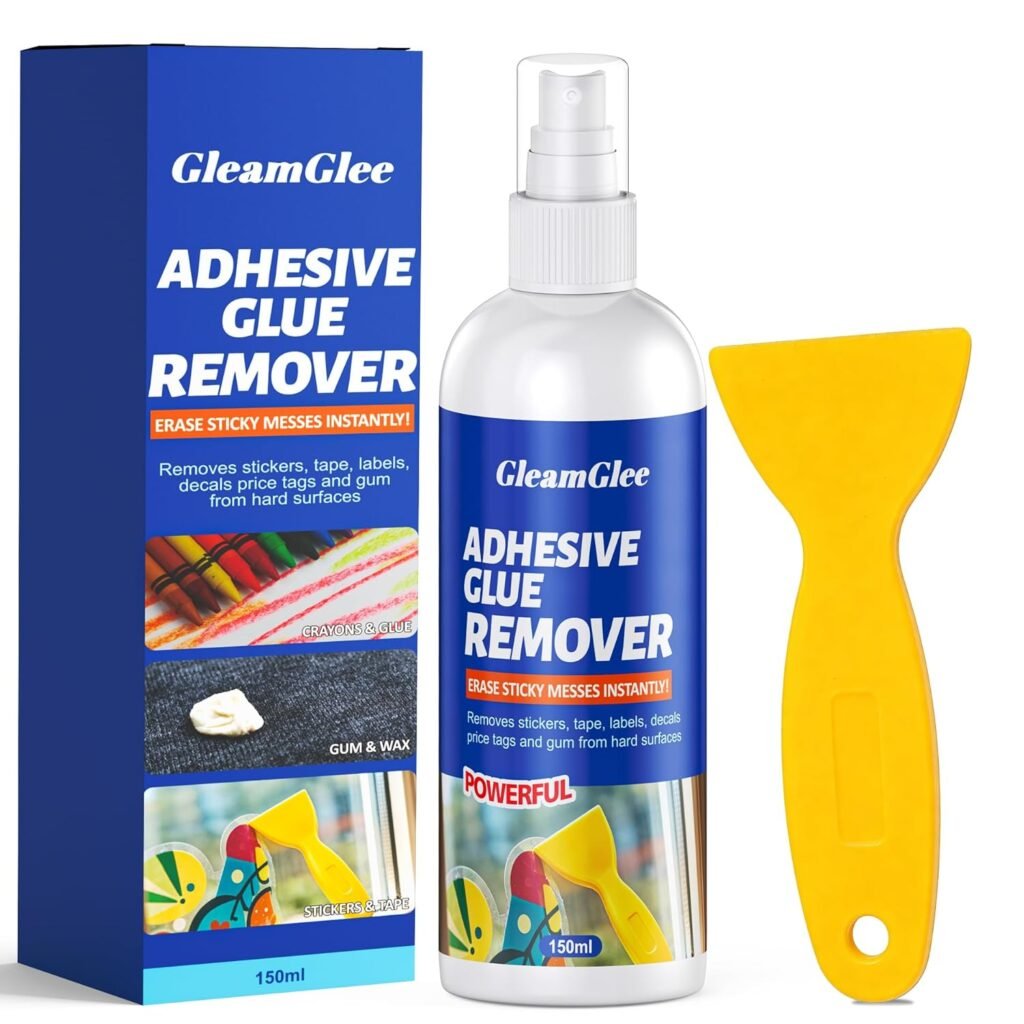
GleamGlee Adhesive Remover is built for practical residue problems, not only for “strong cleaning” on paper. Car sticker residue often appears on visible areas such as trunk lids, windshields, bumpers, rear glass, and trim edges. A useful remover should soften sticky glue, reduce hard scraping, wipe clean after use, and help protect the surface when used with the right method.
GleamGlee has stronger control over adhesive remover projects because the company combines R&D, raw material preparation, packaging, label printing, filling, testing, and global supply in one system. For car sticker residue products, this matters. The formula must work, the bottle must not leak, the label must explain safe use, and the finished product must survive warehouse handling, FBA shipping, and international transportation.
For car care brands, Amazon sellers, distributors, and retail product teams, GleamGlee can support both ready-made adhesive remover supply and customized product development. This includes formula adjustment, bottle selection, scraper kit options, private label design, multilingual instructions, SDS and label support, and scalable production for seasonal demand.
Adhesive Remover for Daily Car Care
GleamGlee Adhesive Remover fits daily car care problems because sticker residue is not limited to professional detailing shops. It appears after removing dealership decals, old bumper stickers, parking permits, toll tag pads, tape strips, warning labels, child window stickers, and decorative vinyl. These marks are small, but they sit in places people notice quickly: the rear trunk, windshield corner, bumper center, glass edge, or black trim line.
The product direction should match real use. Most people do not want a complicated workshop cleaner. They want a remover that can be applied in a controlled way, given a short time to soften the glue, and wiped with a microfiber towel. They also want clear reminders about testing paint, avoiding hard scraping, and washing the area afterward. This is where GleamGlee’s product and packaging experience becomes useful.
| Real Use Scene | Common Problem | What GleamGlee Adhesive Remover Should Help With |
|---|---|---|
| Used car trunk | Dealership decal glue | Soften thin adhesive without heavy rubbing |
| Rear bumper | Old bumper sticker residue | Loosen yellow, dusty glue in repeated rounds |
| Windshield | Parking permit residue | Remove sticky glass film and reduce streaks |
| Toll tag area | Thick foam adhesive | Help break down residue layer by layer |
| Door trim | Tape residue | Support careful spot cleaning with testing |
| Car accessories | Label glue | Clean small sticky marks before use or resale |
For retail and online product positioning, this makes adhesive remover easy to demonstrate. Before-and-after photos, plastic scraper use, microfiber wiping, and surface testing instructions can all show value clearly.
Adhesive Remover for Cleaner Use
A good adhesive remover should not only remove glue; it should make the cleaning process easier and less risky. Car sticker residue is often mixed with dust, road grime, wax, paper fibers, and aged adhesive. If the remover only makes the glue wet but does not help it release, more rubbing is needed. More rubbing means more chance of scratches, haze, or smearing.
GleamGlee’s R&D team includes more than 25 chemists, material specialists, and process engineers with experience in adhesives, surface cleaning, polymer chemistry, and daily chemical products. For adhesive remover development, this supports more practical testing: how the product behaves on fresh glue, aged glue, glass residue, tape residue, painted panels, plastic trim, and vertical surfaces. The goal is balanced cleaning power, not blind strength.
Important performance points can be tested and improved during development:
| Performance Point | Why It Matters for Car Sticker Residue |
|---|---|
| Glue softening speed | Reduces hard scraping and hand pressure |
| Wipe-off feel | Helps avoid oily or sticky film after cleaning |
| Surface behavior | Supports safer use on paint, glass, and selected trim |
| Odor control | Makes home garage use more comfortable |
| Vertical hold | Helps on doors, trunk lids, and bumpers |
| Repeat cleaning ability | Useful for old bumper stickers and thick toll tag glue |
| Final wash result | Helps the surface look clean after rinsing |
This kind of practical testing is important because car sticker residue is uneven. A product may remove fresh label glue quickly but struggle with old bumper adhesive. Another may work on glass but feel too aggressive for trim. GleamGlee can adjust product direction based on target market needs instead of offering one rough-use formula for every surface.
Adhesive Remover with Better Packaging
Packaging strongly affects the experience of adhesive remover. A good formula can still get poor feedback if the bottle leaks, the spray is hard to control, the label is confusing, or the instructions do not explain paint testing. For car sticker residue, packaging must help people use the product carefully because the product is often applied near paint, trim, rubber seals, glass tint, badges, and sensors.
GleamGlee has its own packaging material factory and label printing capability. The packaging factory has more than 3,000 molds and can support different bottles, caps, spray formats, tubes, jars, and kit packaging. For adhesive remover, this means different product formats can be considered: spray bottle, squeeze bottle, scraper set, microfiber cloth set, retail carton, Amazon bundle, or private label car care kit.
Useful packaging choices include:
- Controlled spray head to reduce overspray on paint and trim.
- Leak-resistant cap and sealing design for warehouse and FBA shipping.
- Chemical-resistant label to prevent smudging or peeling.
- Clear step-by-step use icons for quick understanding.
- Surface warning area for paint, plastic, tint, rubber, and wraps.
- Optional plastic scraper to lift softened residue safely.
- Multilingual instruction support for US, UK, EU, Japan, and other markets.
| Packaging Detail | Practical Value |
|---|---|
| Dual sealing or secure cap | Reduces leakage during transport |
| Clear front label | Helps shoppers understand the product quickly |
| Back label steps | Reduces misuse and surface complaints |
| Scraper bundle | Makes the product feel more complete |
| Microfiber cloth bundle | Encourages safer wiping |
| Multilingual label | Helps sell across different regions |
| High-contrast design | Improves shelf and online thumbnail visibility |
For Amazon or retail shelves, this is especially important. A shopper often decides within seconds whether a product looks reliable. Clear packaging can make adhesive remover feel safer, more complete, and easier to use.
Adhesive Remover from GleamGlee Factory
GleamGlee is located in Dongguan, Guangdong, China, and operates as an adhesives glue and cleaners manufacturer with integrated production strength. The company has four specialized factory areas: daily chemical product processing, packaging materials, packaging label printing, and raw materials. For adhesive remover projects, this structure helps control formula, bottle, label, carton, production timing, and shipment quality together.
The daily chemical processing factory supports mature cleaning and adhesive-related formulas, automated filling and assembly, and annual capacity above 12 million units. The raw material factory supports polymer, surfactant, stabilizer, and functional ingredient preparation, helping improve cost control and consistency. The label printing factory can produce waterproof and chemical-resistant labels with barcodes, multilingual text, safety elements, and market-specific information.
| GleamGlee Capability | Value for Adhesive Remover Projects |
|---|---|
| 25+ R&D specialists | Formula testing and adjustment |
| 18+ design specialists | Label, packaging, and product image support |
| 12M+ annual capacity | More stable supply for scaling sales |
| 3,000+ packaging molds | More bottle and kit options |
| In-house printing | Faster label changes and multilingual designs |
| Raw material support | Better cost and quality control |
| ISO 9001 / ISO 14001 | Quality and environmental management support |
| CLP / REACH / GHS experience | Helps with regulated market preparation |
| Overseas warehouse resources | Supports US, UK, Germany, and Canada-related supply plans |
For private label projects, GleamGlee can support low MOQ customization from around 200 units depending on project details. Design drafts can be prepared quickly, samples are commonly arranged in 7–14 days, and mass production is commonly around 20 days, with urgent production around 15 days when materials and capacity allow.
This makes GleamGlee suitable for car care brands, Amazon sellers, Shopify stores, hardware distributors, cleaning product companies, and retail chains that want to add adhesive remover to their product line. The product can be supplied as a ready-made GleamGlee item, a private label adhesive remover, or a customized formula built around car sticker residue, label glue, tape residue, and related cleaning needs.
Conclusion
Car sticker residue may look like a small cleaning problem, but it can easily become a paint, glass, bumper, or trim problem if it is handled too aggressively. The safest way to remove it is to understand the surface first, wash away loose dirt, soften the adhesive, apply adhesive remover in a controlled amount, and wipe with clean microfiber instead of scraping hard. Fresh parking permit glue may clean in minutes, while old bumper sticker residue or dealership decal marks may need several light rounds. A careful process protects the clear coat, reduces streaks on glass, avoids pale marks on plastic trim, and leaves the car looking clean instead of scratched or cloudy.
The best adhesive remover for car sticker residue should do more than “remove glue.” It should help loosen aged adhesive, reduce hand pressure, work neatly with a plastic scraper or microfiber towel, and support safe use through clear instructions. Paint, glass, bumpers, rubber seals, tint film, and black trim all need different levels of care, so testing a small hidden area should always come before full application. When the product and method work together, old sticker glue, label marks, tape residue, toll tag adhesive, and bumper sticker residue can be removed with far less frustration.
For customers who need reliable adhesive remover products, GleamGlee provides ready-made solutions for daily car care and sticky residue removal. For Amazon sellers, car care brands, retailers, distributors, and private label buyers, GleamGlee can also support custom formula development, packaging design, label printing, scraper kit options, compliance support, FBA-ready supply, and global shipping. To order GleamGlee branded adhesive remover or request a private label/custom adhesive remover quotation, contact GleamGlee with your target market, bottle size, packaging needs, order quantity, and product positioning.
Share:
Table of Contents
Here, creating your adhesives glue & removal cleaner collection is no longer a barrier—it’s a collaborative journey where GleamGlee helps brands and businesses transform their vision into durable, certified, and market-ready solutions.
Partner with GleamGlee
Join hundreds of global partners who trust GleamGlee for adhesives and cleaners that combine innovation, compliance, and speed. Our vertically integrated system—from R&D to warehouse—guarantees consistent performance and reliable delivery.
Whether you’re sourcing FBA-ready stock or developing your own formula, our team provides unmatched technical support and responsive service.