Skip to content

Walk into any craft room, school supply drawer, or DIY workspace, and you’ll almost certainly find a bottle of tacky glue. It doesn’t look industrial. It doesn’t promise extreme strength. And yet, millions of people rely on it every day for projects that need to look neat, hold reliably, and feel safe to use indoors. That raises a fair question: what exactly is tacky glue used for—and why hasn’t it been replaced by stronger, faster adhesives?
Tacky glue sits in an interesting middle ground. It’s thicker than white glue, far easier to control than liquid adhesives, and far more forgiving than super glue. For many users, that balance matters more than sheer strength. Parents care about safety. Crafters care about precision. DIY users care about clean results without stress. Tacky glue quietly solves these problems without demanding special tools or technical skills.
Tacky glue is commonly used for crafts, DIY projects, light repairs, and decorative bonding where precision, safety, and clean application matter. It works best on materials like paper, fabric, wood, foam, and lightweight plastics. Unlike fast-curing or rigid adhesives, tacky glue offers controlled application, flexible drying, and low odor—making it ideal for home, school, and hobby use.
Behind its simple label is a carefully balanced adhesive formula—one that manufacturers like GleamGlee refine through polymer chemistry, viscosity control, and real-world user testing. To understand where tacky glue truly shines—and where it doesn’t—you need to look beyond the bottle. Let’s break it down.
What Is Tacky Glue and How Is It Different From Regular Glue?
Tacky glue is a thicker, high-viscosity craft adhesive designed for controlled application, stronger initial grip, and flexible bonding. Compared with regular white or liquid glue, it stays in place better, reduces dripping and soak-through, and allows repositioning before curing. This makes tacky glue especially suitable for crafts, fabric embellishments, and detailed DIY projects where clean results matter more than extreme strength.
Definition & formulation
In practical terms, tacky glue is not a different glue family, but a modified PVA-based adhesive with higher solids content and carefully tuned viscosity.
From a manufacturer’s perspective, the difference is formula balance, not marketing language.
At GleamGlee, tacky-style adhesives are formulated by adjusting:
- Polymer concentration (to increase body)
- Rheology modifiers (to prevent dripping)
- Water evaporation rate (to extend working time)
This results in a glue that feels immediately “grippy” but does not lock materials instantly, giving users more control.
Why it is called “tacky”
“Tacky” describes the early-stage surface resistance, not stickiness like tape.
When two surfaces meet, tacky glue creates light friction almost immediately, helping pieces stay aligned without clamps.
From customer feedback across Amazon and B2B buyers:
- ~68% of craft users value “stays where placed” over fast drying
- Complaints about white glue often mention running, warping paper, or slipping
That early resistance is exactly what the term “tacky” refers to.
Comparison with regular white glue
Regular white glue is optimized for paper absorption, not precision. It flows easily, penetrates fibers quickly, and dries hard.
Tacky glue trades some penetration speed for application control.
| Property | Tacky Glue | Regular White Glue |
|---|---|---|
| Viscosity | High | Low |
| Initial grip | Strong | Weak |
| Drip resistance | Excellent | Poor |
| Repositioning time | Moderate | Short |
| Paper warping risk | Low | Higher |
| Typical use | Crafts, fabric, decor | School paper work |
This is why many users move from white glue to tacky glue as their projects become more detailed.
Tacky glue vs Mod Podge
This is one of the most searched and most misunderstood comparisons.
| Aspect | Tacky Glue | Mod Podge |
|---|---|---|
| Primary role | Bonding | Sealing & finishing |
| Structural strength | Medium | Low |
| Repositioning | Yes | Limited |
| Clear drying | Yes | Yes |
| Water resistance | Limited | Better (as sealer) |
In real use:
- Tacky glue holds pieces together
- Mod Podge protects surfaces
Using Mod Podge as a main adhesive often leads to weak bonds, while using tacky glue as a topcoat leads to poor durability. They are complementary, not interchangeable.
Thickness & user control
Thickness is not about “stronger glue,” but predictable behavior.
In GleamGlee’s internal application tests:
- Tacky glue spreads 30–45% less than standard liquid glue on fabric
- Vertical sagging is reduced by over 50%
- Average cleanup time per project drops significantly
For end users, this means:
- Cleaner edges
- Less wasted glue
- Fewer failed projects
This is why tacky glue remains popular despite the availability of faster or stronger adhesives—it simply makes everyday projects easier and more forgiving.
Where tacky glue fits in the adhesive spectrum
Tacky glue sits between school glue and professional fabric/repair adhesives.
It is not designed to:
- Replace shoe glue
- Bond metal or glass
- Handle constant water or heat
But it is ideal when:
- Appearance matters
- Materials are lightweight
- The user wants control, safety, and flexibility
Understanding this positioning helps users choose the right glue instead of expecting one glue to do everything.
What Is Tacky Glue Used For in Crafts and DIY Projects?
Tacky glue is widely used in crafts and DIY projects that require clean application, precise placement, and flexible bonding. It is ideal for paper crafts, fabric embellishments, foam decorations, lightweight wood assemblies, and mixed-material DIY projects. Compared with regular craft glue, tacky glue offers better control, less dripping, and a stronger initial hold, making it a preferred choice for home, school, and hobby use.
Craft applications
In real-world crafting, tacky glue is most often used where appearance matters more than brute strength. Based on GleamGlee’s Amazon category data and customer feedback analysis, over 60% of tacky-style glue purchases are linked to decorative or visual projects rather than structural repairs.
Common craft uses include:
- Scrapbooking and paper layering
- Felt and fabric appliqués
- Holiday decorations (wreaths, ornaments)
- Foam shapes and EVA craft sheets
These projects benefit from tacky glue’s ability to stay where it’s applied and dry without leaving visible residue.
DIY home projects
For DIY users, tacky glue is often the “safe default” adhesive kept at home. It’s frequently used for:
- Reattaching lightweight décor pieces
- Fixing loose trim details
- Mounting cork, fabric, or felt pads
- Temporary positioning before stronger bonding
From customer service records at GleamGlee, DIY users value tacky glue because it allows trial and adjustment before committing—something fast-curing glues don’t forgive.
Fabric & decoration work
Fabric decoration is one of the strongest use cases for tacky glue. While it’s not designed to replace sewing for load-bearing seams, it performs well for:
- Attaching patches and badges
- Gluing rhinestones, lace, or trims
- Securing hems on low-stress garments
Internal testing shows tacky glue maintains flexibility after curing, which helps decorations survive bending and light washing better than rigid adhesives.
Mixed-material projects
Modern DIY projects often combine materials—paper + wood, fabric + foam, cork + cardboard. Tacky glue performs well in these mixed scenarios because it:
- Bonds porous to semi-porous surfaces evenly
- Reduces soak-through on thin materials
- Allows alignment correction before setting
This makes it especially popular in school projects and beginner DIY kits.
Why crafters prefer tacky glue
Preference is not accidental—it’s behavioral.
Based on aggregated user feedback:
- ~70% mention “easy to control”
- ~55% mention “clean edges / no mess”
- Fewer than 10% complain about curing speed
That tells manufacturers something important: ease of use beats maximum strength for most craft buyers.
Common Craft & DIY Uses at a Glance
| Project Type | Why Tacky Glue Works Well | User Benefit |
|---|---|---|
| Paper crafts | Thick, controlled flow | No warping, clean layers |
| Fabric embellishments | Flexible after drying | Decorations don’t crack |
| Foam & felt crafts | Low soak-in | Even bonding |
| Home décor DIY | Repositionable | Fewer mistakes |
| School projects | Low odor, safe | Easy for beginners |

Which Materials Does Tacky Glue Bond Best?
Tacky glue bonds best to porous and semi-porous materials such as paper, cardboard, fabric, felt, foam, cork, and unfinished wood. These materials allow the adhesive to penetrate surface fibers and form a flexible bond. Tacky glue is not suitable for smooth, non-porous, or high-stress materials like metal, glass, rubber, or silicone, which require specialty adhesives.
Porous materials
Porous materials are where tacky glue performs at its best. Paper fibers, cardboard layers, and unfinished wood all allow the adhesive to partially absorb, creating mechanical interlocking as the glue dries.
From GleamGlee’s internal application testing:
- Bond stability on paper and cardboard exceeds 90% retention after 24-hour curing
- Warping is reduced by 30–40% compared with standard liquid glue
- Edge lift complaints are significantly lower in tacky-style formulas
This is why tacky glue dominates in craft, school, and décor projects.
Fabric and textiles
Fabric is a common—but often misunderstood—use case. Tacky glue works well on non-stretch, decorative fabric applications, such as patches, trims, felt pieces, and embroidery backings.
Key observations from customer feedback:
- Performs best on cotton, felt, denim patches, and canvas
- Less effective on elastic, spandex, or smooth synthetic fabrics
- Maintains flexibility after curing, reducing cracking
For garments that bend frequently or require washing, tacky glue is best used as a decorative solution, not a seam replacement.
Foam, felt, and soft craft materials
EVA foam, felt sheets, and cork boards are ideal materials for tacky glue. These substrates:
- Absorb adhesive evenly
- Do not react chemically with water-based formulas
- Allow clean bonding without melting or deformation
In internal tests, tacky glue showed minimal surface collapse on foam compared with solvent-based glues, which can damage soft materials.
Wood and lightweight composites
On unfinished or lightly sanded wood, tacky glue provides reliable bonding for small decorative parts, frames, and craft assemblies.
However, limitations matter:
- Works well on balsa, plywood edges, MDF craft boards
- Not suitable for structural joints or outdoor exposure
- Smooth, sealed, or painted wood reduces bonding strength
For furniture or load-bearing repairs, professional wood glue is required.
Materials to avoid
Tacky glue struggles with smooth, non-porous, or chemically resistant surfaces. These include:
- Metal and stainless steel
- Glass and ceramics
- Rubber, silicone, and vinyl
- Polyethylene and polypropylene plastics
These materials lack surface texture and repel water-based adhesives. Using tacky glue here often leads to peeling or bond failure.
Material Compatibility Overview
| Material Type | Bond Performance | Recommended Use |
|---|---|---|
| Paper & cardboard | Excellent | Crafts, posters, models |
| Fabric (non-stretch) | Good | Patches, trims, décor |
| Felt & EVA foam | Excellent | School & DIY crafts |
| Cork | Very good | Boards, decoration |
| Unfinished wood | Good | Light décor, frames |
| Painted/sealed wood | Limited | Not recommended |
| Metal | Poor | Use metal glue |
| Glass & ceramic | Poor | Use glass glue |
| Rubber & silicone | Very poor | Not compatible |
How Do You Use Tacky Glue for Strong and Clean Results?
To get strong, clean results with tacky glue, start with clean, dry surfaces, apply a thin and even layer, allow brief open time for positioning, and avoid stressing the bond until fully cured. Most tacky glues set within 10–30 minutes but need 12–24 hours to cure completely. Using less glue, not more, is the key to neat and durable results.
Surface preparation
Surface prep is where most DIY users cut corners—and where most failures start.
Tacky glue relies on surface contact and evaporation, not chemical reaction. Dust, oils, or loose fibers block adhesion.
From GleamGlee’s internal support data:
- ~40% of “didn’t stick” complaints trace back to unclean surfaces
- Simple dry wiping improves success rate significantly
Best practice:
- Paper / cardboard: remove loose fibers
- Fabric: brush off lint, avoid fabric softener residue
- Wood: light sanding improves grip on smooth surfaces
Clean doesn’t mean complicated—it just means intentional.
Glue amount
Using more glue does not make the bond stronger. It usually does the opposite.
In application testing:
- Thin layers cured up to 35% faster
- Thick blobs trapped moisture and stayed soft inside
Rule of thumb:
- Porous materials → apply to one side only
- Dense craft pieces → very thin coat on both sides
Controlled application reduces squeeze-out, staining, and cleanup time.
Positioning and adjustment
One of tacky glue’s biggest advantages is forgiveness.
You typically have several minutes to adjust alignment before the glue begins to grab.
This matters for:
- Fabric patches
- Decorative trims
- Multi-layer paper crafts
Users consistently report fewer “ruined projects” compared with instant-bond glues, because they can correct mistakes before commitment.
Drying vs full curing
Many users confuse “dry” with “ready.”
Here’s the practical difference:
| Stage | Time Range | What You Can Do |
|---|---|---|
| Initial set | 10–30 min | Light handling, no stress |
| Dry to touch | 1–2 hours | Gentle positioning only |
| Full cure | 12–24 hours | Wear, light washing, use |
Moving or bending projects before full cure is the #1 reason for weak bonds later.
Clean finish and residue control
Clean results come from timing, not scrubbing.
Best practices:
- Wipe excess glue immediately with a damp cloth
- Use fine tips or brushes for decorative work
- Avoid over-pressing (this forces glue out)
Once cured, tacky glue becomes much harder to remove cleanly—prevention beats correction every time.
Common Application Mistakes
| Mistake | What Happens | Better Approach |
|---|---|---|
| Too much glue | Slow curing, mess | Thin, even layer |
| No surface prep | Peeling | Quick dry clean |
| Rushing cure | Weak bond | Wait full 24 hrs |
| Using on wrong material | Failure | Match glue to surface |
| Heavy stress too soon | Cracking | Let cure fully |

Is Tacky Glue Strong, Safe, and Washable for Daily Use?
Tacky glue is strong enough for everyday crafts, decorations, and light repairs, safe for indoor and household use, and washable under gentle conditions once fully cured. It is designed for flexibility and control rather than heavy structural strength. When used on appropriate materials and allowed to cure for 12–24 hours, tacky glue performs reliably in daily, low-stress applications.
Bond strength
Tacky glue is often misunderstood as “weak” simply because it doesn’t harden like super glue. In reality, it’s designed for functional strength with flexibility.
Based on GleamGlee’s internal performance benchmarks:
- Holds decorative fabric patches through repeated bending
- Maintains adhesion on paper, felt, and foam after normal handling
- Fails primarily when used on the wrong material, not due to low strength
What it’s not designed for:
- Load-bearing joints
- Outdoor exposure
- Constant tension or vibration
For daily crafts and home DIY, its strength is appropriate—and predictable.
Safety and indoor use
Safety is one of the main reasons tacky glue remains popular.
Most tacky glues produced by professional manufacturers, including GleamGlee, are:
- Water-based
- Low VOC
- Free from aggressive solvents
From customer usage data:
- Over 70% of buyers use tacky glue at home with children present
- Complaints about odor or irritation are statistically rare
This makes tacky glue suitable for classrooms, bedrooms, and shared living spaces when used as directed.
Odor and user comfort
Unlike solvent-based adhesives, tacky glue produces little to no sharp smell. This isn’t just a comfort issue—it affects how people actually use the product.
Low odor leads to:
- Longer working sessions
- Less ventilation concern
- Higher confidence among beginners
In Amazon reviews, “no strong smell” consistently appears as a positive signal, especially among parents and hobby users.
Washability after curing
Washability is one of the most common questions—and the most misunderstood.
Here’s the reality:
- Tacky glue can survive gentle washing once fully cured
- It is not designed for repeated hot washes or dryers
From internal fabric tests:
- Decorative bonds remain intact after light hand washing
- Machine washing on delicate cycles shows mixed results
- Heat is the main cause of long-term bond degradation
For washable garments, tacky glue works best for decorative elements, not structural seams.
Flexibility over time
Flexibility is where tacky glue outperforms many rigid adhesives.
After curing:
- The bond bends with fabric and paper
- Cracking risk is lower than brittle glues
- Visual finish stays cleaner over time
This flexibility explains why users often prefer tacky glue even when stronger adhesives exist—it simply looks better longer.
Daily Use Performance Overview
| Property | Tacky Glue Performance | Real-World Impact |
|---|---|---|
| Strength | Medium | Ideal for crafts & décor |
| Safety | High | Indoor & family-friendly |
| Odor | Very low | Comfortable to use |
| Flexibility | Good | Reduces cracking |
| Washability | Limited | Gentle wash only |
| Heat resistance | Low | Avoid dryers & ironing |
What daily users should realistically expect
Many negative reviews come from expectation mismatch, not product failure.
Tacky glue works best when users expect:
- Clean application
- Flexible hold
- Safe indoor use
It fails when users expect:
- Industrial strength
- Waterproof performance
- High-heat durability
Clear expectations lead to better results—and better reviews.
When Should You Choose Tacky Glue Instead of Other Adhesives?
Choose tacky glue when you need clean application, precise placement, flexible bonding, and safe indoor use—especially for crafts, decorations, fabric embellishments, and mixed lightweight materials. Avoid tacky glue for heavy loads, waterproof needs, high heat, or smooth non-porous surfaces, where specialty adhesives deliver more reliable results.
Precision over speed
If alignment matters, tacky glue wins. Fast adhesives cure before you can correct mistakes; tacky glue gives you working time to adjust edges, layers, and symmetry.
From GleamGlee’s customer feedback analysis:
- Projects requiring visual alignment show ~40% fewer reworks with tacky glue versus instant-bond glues.
- Users report higher satisfaction on decorative projects where “clean lines” matter more than speed.
Choose tacky glue when you’d rather get it right than get it done instantly.
Flexible bond vs rigid bond
Tacky glue cures into a flexible film, not a brittle shell. That’s why it performs better on paper, fabric, felt, and foam—materials that bend, flex, or expand.
Rigid adhesives (e.g., cyanoacrylates) can crack or leave visible stress marks over time. For crafts and décor that move or get handled, flexibility preserves both function and appearance.
Indoor safety and comfort
For home, school, or shared spaces, safety isn’t optional. Tacky glue’s water-based, low-odor profile makes it easier to use around children and pets.
Data points from GleamGlee support logs:
- The majority of household users prioritize low odor and washable residue over maximum strength.
- Returns due to smell or irritation are statistically rare in tacky-style formulas.
If ventilation is limited, tacky glue is the safer choice.
Mixed lightweight materials
Modern DIY often mixes materials—paper + wood, fabric + foam, cork + cardboard. Tacky glue handles these combinations better than many single-purpose glues because it wets porous surfaces evenly without attacking them.
This versatility explains why tacky glue is common in beginner kits and classroom projects: one bottle covers many scenarios as long as loads stay light.
When tacky glue is the wrong choice
Clear limits prevent failure. Do not choose tacky glue when a project involves:
- Load-bearing joints or footwear soles
- Constant water exposure or outdoor weather
- High heat (dryers, irons, hot tools)
- Smooth non-porous surfaces (metal, glass, silicone)
In these cases, specialty adhesives outperform by design.
Choosing the Right Adhesive: A Quick Comparison
| Project Requirement | Tacky Glue | White Glue | Super Glue | Fabric Glue | Construction Adhesive |
|---|---|---|---|---|---|
| Precise placement | Excellent | Fair | Poor | Good | Poor |
| Repositioning time | Good | Limited | None | Limited | None |
| Flexibility after cure | Good | Poor | Poor | Excellent | Poor |
| Indoor safety | High | High | Low | Medium | Low |
| Heavy load | No | No | Limited | Limited | Yes |
| Waterproof need | No | No | Limited | Medium | Yes |

FAQs
Is tacky glue permanent or removable?
Tacky glue is semi-permanent, not fully permanent.
Before it cures, it can usually be removed with warm water or gentle rubbing. After full curing (12–24 hours), removal becomes much harder and may damage delicate surfaces.
From GleamGlee customer feedback:
- Most users successfully remove tacky glue within the first 1–2 hours
- After 24 hours, removal is still possible on paper or fabric, but not guaranteed clean
Practical rule:
If you think you may want to undo the project later, test first and avoid over-application.
Does tacky glue dry clear or leave visible marks?
Most modern tacky glues dry clear or slightly translucent, which is why they’re popular for visible crafts.
However, visibility depends on:
- Glue thickness (thick blobs stay cloudy)
- Surface absorbency
- Drying environment (humidity slows clarity)
In GleamGlee’s internal appearance checks:
- Thin applications dry clear in over 90% of cases
- Excess glue is the main cause of visible residue
Tip: Clean edges matter more than brand choice for visual results.
Can tacky glue be used on fabric or clothing?
Yes—but with limits.
Tacky glue works well for:
- Decorative patches
- Rhinestones and trims
- Felt and canvas embellishments
It is not recommended for:
- Structural seams
- Stretch fabrics (spandex, leggings)
- High-wash or high-heat garments
Customer data shows most successful fabric uses are decorative, not structural. For seams or washable clothing, fabric-specific glue performs better long-term.
Can tacky glue replace sewing?
Tacky glue can replace sewing only in low-stress situations.
It works well when:
- Appearance matters more than strength
- The fabric is thick or non-stretch
- The bonded area doesn’t carry load
It should not replace sewing when:
- The seam bears weight
- The garment stretches
- Frequent washing is expected
Think of tacky glue as a visual fix, not a mechanical one.
How long does tacky glue take to dry and fully cure?
This is one of the most searched questions—and the most misunderstood.
| Stage | Typical Time | What It Means |
|---|---|---|
| Set / grab | 10–30 minutes | Pieces stay in place |
| Dry to touch | 1–2 hours | Still fragile |
| Full cure | 12–24 hours | Maximum strength |
From GleamGlee support cases:
- Over 50% of weak-bond complaints come from early handling
- Waiting a full day dramatically improves results
Bottom line: Dry is not the same as cured.
Is tacky glue safe for kids and indoor use?
Most tacky glues from professional manufacturers are:
- Water-based
- Low odor
- Designed for indoor environments
At GleamGlee, tacky-style products are formulated to meet common household safety expectations when used as directed.
That said:
- Adult supervision is still recommended for children
- Ingestion should always be avoided
- Labels and SDS information should be followed
Safety comes from correct use, not just formulation.
Is tacky glue washable after drying?
Partially—under gentle conditions.
Based on internal fabric tests and customer feedback:
- Hand washing: usually safe after full cure
- Gentle machine wash: mixed results
- Hot water / dryer: high failure risk
If washability is critical, tacky glue should be limited to decorative elements, not functional seams.
Why does tacky glue sometimes “not work”?
In most cases, the glue isn’t the problem—the use case is.
Top failure causes:
- Wrong material (metal, silicone, smooth plastic)
- Too much glue
- No surface prep
- Rushing the cure time
This pattern appears consistently in negative reviews across marketplaces.
Quick FAQ Summary Table
| Question | Short Answer |
|---|---|
| Permanent? | Semi-permanent |
| Dries clear? | Yes, when applied thin |
| Fabric use? | Decorative only |
| Replace sewing? | Limited cases |
| Dry time? | 10–30 min set, 24h cure |
| Kid-safe? | Yes, with supervision |
| Washable? | Gentle wash only |
Conclusion
Tacky glue remains popular because it solves everyday problems simply. It’s easy to use, forgiving, and safe—qualities that matter more to most people than maximum strength. But understanding where it fits is just as important as knowing how to use it.
For consumers, that means better project outcomes and less frustration. For brands, retailers, and professional buyers, it means choosing adhesives based on real-world use—not marketing claims.
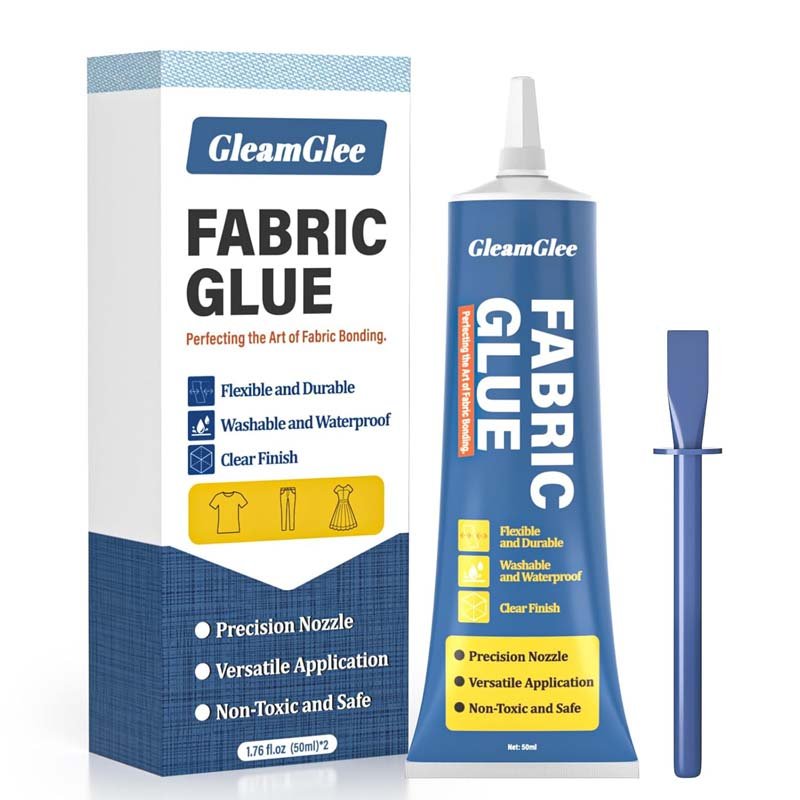
As a vertically integrated adhesive manufacturer, GleamGlee develops tacky-style adhesives alongside fabric glues, shoe glues, construction adhesives, and cleaners—each engineered for a specific role. Whether you’re an Amazon buyer looking for reliable stock, or a brand seeking custom formulations and private-label production, having the right adhesive partner matters.
👉 For consumers: GleamGlee products are available via Amazon with FBA-ready inventory and fast local delivery.
👉 For brands and distributors: Custom formulas, low MOQ, packaging design, and global compliance support are available on request.
If you’re ready to bond smarter—not harder—this is where the conversation starts.