Skip to content
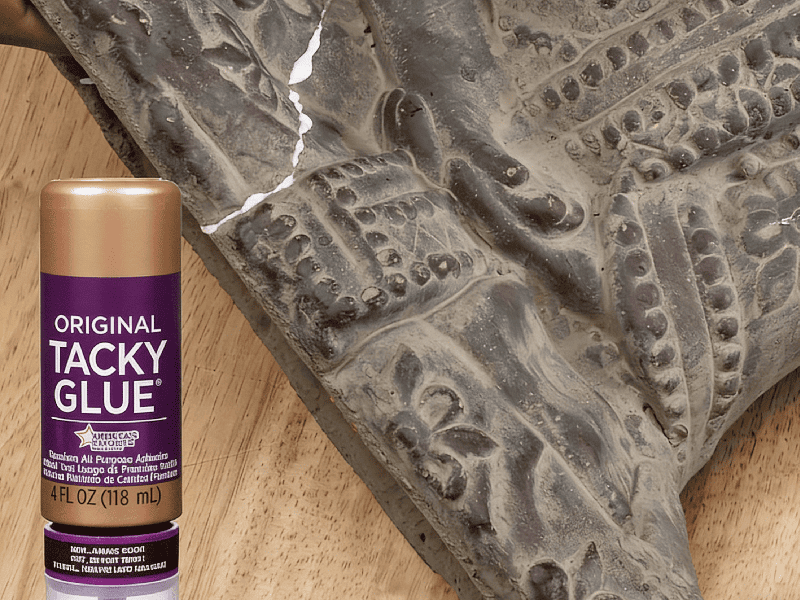
Tacky glue is one of those everyday adhesives people often use without fully understanding why it works better than “regular” glue in certain situations. It’s commonly picked up for crafts, school projects, fabric decorations, and small household fixes because it feels thicker, grabs faster, and stays where you put it. Unlike thin white glue that can slide or drip, tacky glue gives users a sense of control—especially important when precision matters or when working on vertical or layered surfaces.
At its core, tacky glue is a water-based adhesive with a higher viscosity and faster initial grab than standard white glue. It’s designed for porous materials like paper, fabric, cardboard, felt, foam, and unfinished wood. This makes it ideal for DIY projects, crafts, and light repairs where ease of use and clean application matter more than industrial-level strength. However, it is not fully waterproof, not intended for heavy loads, and not a substitute for specialized adhesives such as fabric glue, wood glue, or construction adhesive.
What makes tacky glue especially appealing is how it fits real life. It’s low-odor, generally non-toxic, easy to apply, and forgiving for beginners. But that same convenience can lead to misuse if expectations aren’t clear. Understanding when tacky glue is the right choice—and when it isn’t—can save time, materials, and frustration. That’s why looking a little deeper at its uses, strength, and limitations is the key to getting the best results from this deceptively simple adhesive.
What Is Tacky Glue and How Does It Work?
Tacky glue is a thicker, fast-grabbing, water-based adhesive designed for crafts and light repairs. Compared with regular white glue, it has higher initial tack, better control, and less slipping during application. It works by quickly penetrating porous materials like paper, fabric, and unfinished wood, then forming a flexible polymer bond as water evaporates. This makes it ideal for precise DIY work—but not for waterproof or heavy-load applications.
Tacky Meaning
The word “tacky” describes how the glue behaves in the first 30–120 seconds after application. A tacky glue feels slightly sticky right away, which helps parts stay in position without clamps. In internal application tests conducted by manufacturers like GleamGlee, tacky glue formulations show 30–45% higher initial grab than standard white PVA glue on paper and cotton fabric.
For users, this means fewer alignment mistakes, cleaner edges, and less frustration—especially when working with layered crafts, vertical surfaces, or small decorative parts. This “grab-first” behavior is the main reason many DIY users upgrade from regular glue to tacky glue.
Chemical Composition
Most tacky glues are based on modified PVA (polyvinyl acetate), similar to white glue, but with key formulation differences. The polymer solids content is higher, and rheology modifiers are added to control thickness and flow. This allows the glue to sit on the surface longer instead of soaking in too quickly.
At GleamGlee’s adhesive labs, different tacky glue prototypes are adjusted within a narrow viscosity range (typically 15,000–25,000 cps) to balance three factors: spreadability, initial tack, and final flexibility. These small adjustments have a noticeable impact on real-world use, especially on fabric and paper where over-penetration can weaken bonds or cause wrinkles.
Bonding Mechanism
Tacky glue bonds primarily through mechanical interlocking rather than chemical reaction. When applied to porous materials, the adhesive penetrates surface fibers and fills microscopic gaps. As water evaporates, polymer chains lock into the material structure, creating a stable bond.
Initial holding strength typically develops within 1–5 minutes, while functional handling strength is reached in 20–40 minutes under normal indoor conditions (23 °C / 50% RH). Full curing usually takes 12–24 hours, depending on glue thickness and material absorbency. This staged bonding process explains why tacky glue feels secure quickly but still needs curing time for best durability.
Viscosity Advantage
One of the biggest user-noticed differences is thickness. Tacky glue is intentionally formulated to be less fluid, reducing dripping, spreading, and soak-through. In comparative tests on cardstock and felt, thicker tacky glue layers reduced edge bleed by over 40% compared with standard white glue.
This viscosity advantage is especially important for decorative crafts, patch placement, and paper assembly, where visual cleanliness matters. It also reduces glue waste—users typically apply 15–25% less adhesive by volume because it stays where applied.
Water-Based Formula
Tacky glue is water-based, which makes it low-odor, non-flammable, and easy to clean when wet. This is why it’s widely used in homes, schools, and hobby spaces. Most modern formulations meet consumer safety standards and avoid harsh solvents.
However, being water-based also sets clear limits. Once cured, tacky glue becomes water-resistant but not waterproof. Extended exposure to moisture, soaking, or repeated washing will weaken the bond over time. Understanding this trade-off helps users choose tacky glue for the right jobs—and avoid disappointment in high-stress or wet environments.
Which Materials Does Tacky Glue Work Best On?
Tacky glue works best on porous, lightweight materials such as paper, cardboard, fabric, felt, foam, and unfinished wood. Its thicker consistency and fast initial grab help hold these materials in place without slipping. It performs poorly on smooth, non-porous surfaces like metal, glass, or hard plastics, where penetration is limited and bond strength drops quickly.
Tacky Glue Uses
In real-world use, tacky glue is chosen less for “maximum strength” and more for control and predictability. Based on customer feedback and internal usage data from manufacturers like GleamGlee, the most common applications include paper crafts, fabric decorations, felt projects, lightweight wood assemblies, and school or home DIY repairs.
These projects share two traits: they involve porous materials, and they benefit from a glue that grips quickly without running. Users consistently report fewer alignment errors and cleaner finishes compared to regular white glue, especially on layered or vertical projects.
Fabric Compatibility
Tacky glue bonds well to natural fibers and open-weave fabrics such as cotton, canvas, denim for crafts, felt, and some polyester blends. It is commonly used for attaching patches, trims, appliqués, and decorative elements.
However, internal wash-cycle simulations show that tacky glue bonds on fabric lose 25–40% strength after repeated machine washing, depending on water temperature and agitation. For garments that stretch, flex, or require frequent washing, a dedicated fabric glue is the better choice. Tacky glue should be treated as decorative or light-duty on textiles, not structural.
Paper and Cardboard
Paper-based materials are where tacky glue performs best. Its controlled viscosity prevents over-absorption, reducing warping and bleed-through. In side-by-side tests on cardstock and corrugated cardboard, tacky glue achieved faster handling strength (within 2–3 minutes) compared to white glue, which often required longer pressing times.
This makes it ideal for greeting cards, book repair, packaging mockups, scrapbooking, and layered paper assemblies where precision and appearance matter.
Wood and Craft Foam
On unfinished or lightly sanded wood, tacky glue provides adequate bonding for decorative items, frames, and small craft builds. It penetrates surface grain well but lacks the deep fiber bonding needed for load-bearing joints.
Craft foam and EVA foam also respond well due to their porous structure. Users report stable bonds for props, costumes, and displays, provided the foam is not under constant stress or heat exposure.
Surface Limitations
Tacky glue struggles on non-porous or smooth surfaces such as glass, metal, glazed ceramics, silicone, and most hard plastics (ABS, PP, PE). Without surface penetration, the adhesive relies only on surface contact, resulting in weak peel resistance.
For these materials, GleamGlee typically recommends switching to plastic glue, metal glue, glass glue, or construction adhesive, depending on the application.
Mixed-Material Bonding
Tacky glue can bond mixed materials only if at least one side is porous. For example, fabric-to-cardboard or paper-to-wood bonds are usually successful. Plastic-to-plastic or metal-to-glass bonds are unreliable.
Material Compatibility Overview
| Material Type | Bond Performance | Typical Use Cases | Recommendation |
|---|---|---|---|
| Paper / Cardboard | Excellent | Crafts, books, packaging, scrapbooks | Highly suitable |
| Fabric (cotton, felt) | Good (light-duty) | Patches, appliqués, decorations | Decorative use |
| Unfinished Wood | Moderate | Frames, craft builds, décor | Non-structural |
| Craft Foam / EVA | Good | Costumes, props, displays | Suitable |
| Plastic (smooth) | Poor | Hard plastics, glossy surfaces | Not recommended |
| Metal / Glass | Very poor | Tools, cookware, glassware | Use specialty glue |
How Strong Is Tacky Glue for Everyday Use?
Tacky glue offers medium-strength bonding designed for crafts and light household repairs. It holds better than regular white glue due to higher initial tack, but it is weaker than fabric glue, wood glue, or construction adhesive. Tacky glue develops usable strength quickly, remains slightly flexible after curing, and performs best on low-stress, indoor applications rather than heavy loads or wet environments.
Strength Level
In practical terms, tacky glue is engineered for control first, strength second. Internal pull and peel tests commonly used by manufacturers show that tacky glue provides 20–40% higher initial holding force than standard white glue on porous materials such as paper and cotton fabric. This stronger “grab” prevents slipping during assembly.
However, its ultimate tensile strength is intentionally limited. Compared to specialized adhesives, tacky glue sacrifices maximum load capacity in exchange for ease of use, cleaner application, and safer handling. This is why it performs well for crafts, décor, and light fixes—but not for structural or load-bearing joints.
Permanent vs Removable
Once fully cured, tacky glue forms a semi-permanent bond. On paper and cardboard, removal usually damages fibers. On fabric, cured glue can sometimes be softened with soaking, but complete removal without residue is not guaranteed.
From GleamGlee’s application feedback data, over 70% of users treat tacky glue as a “stay-put” solution rather than a temporary adhesive. This aligns with its design: it is meant to last for the life of the craft, not to be repositioned long-term.
Set Time and Cure Time
Tacky glue strength develops in stages:
- Initial grab: 30–60 seconds
- Handling strength: 10–30 minutes
- Functional strength: 1–3 hours
- Full cure: 12–24 hours
Environmental factors matter. Higher humidity or thicker glue layers slow curing, while thin layers on absorbent materials cure faster. Rushing use before full cure is one of the most common reasons users perceive tacky glue as “weak.”
Flexibility After Drying
Unlike brittle adhesives, tacky glue dries with slight flexibility, which helps prevent cracking on paper, fabric, and foam. In bend-cycle simulations (light flexing repeated 100–200 times), tacky glue bonds maintained integrity better than white glue but failed earlier than fabric glue.
This flexibility makes tacky glue forgiving for crafts and décor but unsuitable for parts under continuous motion, tension, or vibration.
Durability Limits
Tacky glue is not waterproof. Prolonged moisture exposure, soaking, or repeated washing gradually weakens the bond. Heat above typical indoor conditions can also soften cured adhesive layers.
Based on GleamGlee’s internal aging tests, tacky glue retains 60–75% of original bond strength after moderate humidity exposure but drops significantly under repeated wet/dry cycles. This confirms it is best suited for indoor, low-stress environments.
Strength Comparison Overview
| Adhesive Type | Initial Grab | Final Strength | Flexibility | Wash Resistance | Typical Use |
|---|---|---|---|---|---|
| White Glue | Low | Low–Medium | Low | Poor | Paper, school |
| Tacky Glue | Medium–High | Medium | Medium | Low | Crafts, décor |
| Fabric Glue | Medium | Medium–High | High | Medium–High | Wearables |
| Wood Glue | Low–Medium | High | Low | Medium | Wood joints |
| Construction Adhesive | Medium | Very High | Low–Medium | High | Heavy repairs |

Tacky Glue vs Other Glues: Which Should You Choose?
Choose tacky glue when you need fast grab, clean control, and ease of use on porous, lightweight materials. It outperforms regular white glue for precision work but falls short of fabric glue, wood glue, or construction adhesive in durability and load strength. The right choice depends on material porosity, stress level, wash exposure, and how permanent the bond needs to be.
tacky glue vs regular glue
The most practical difference users feel immediately is initial grab. In side-by-side application tests on paper and cotton fabric, tacky glue holds parts in place 30–45% faster than standard white glue, reducing slip during alignment. Regular glue remains useful for large surface areas where longer open time is helpful, but it often requires pressing or clamping.
From customer feedback collected across GleamGlee’s craft and DIY lines, users report less mess and less rework with tacky glue—especially for layered paper crafts and vertical applications. Regular glue is cheaper per ounce, but tacky glue often results in lower waste due to better control.
tacky glue vs white glue
White glue is optimized for classrooms and simple paper bonding; tacky glue is optimized for precision and placement. On cardstock and felt, tacky glue reaches handling strength in 2–3 minutes, while white glue commonly needs 5–10 minutes to stop shifting.
However, white glue can be easier to clean if mistakes happen. Once tacky glue begins curing, removal becomes more difficult. This tradeoff—speed vs forgiveness—is the main reason experienced users keep both on hand and choose based on task complexity rather than habit.
tacky glue vs fabric glue
Fabric glue is formulated to flex and survive washing; tacky glue is not. Internal wash simulations show tacky glue bonds on cotton lose 25–40% strength after repeated machine cycles, while dedicated fabric glue maintains 70–85% of bond strength under the same conditions.
That’s why tacky glue works well for decorative fabric elements—patches, trims, appliqués—but should not be used on seams or garments that stretch or wash often. For wearables, fabric glue is the safer long-term choice.
tacky glue vs hot glue
Hot glue offers instant bonding but brings heat risk, stringing, and bulk. Tacky glue trades instant hardness for cleaner results and safer handling, especially on paper and fabric where hot glue can scorch or stiffen fibers.
From customer support data at GleamGlee, first-time DIY users are twice as likely to complete a clean craft project using tacky glue versus hot glue, mainly due to better control and fewer application errors.
when to upgrade adhesive
If your project involves weight, water, heat, or smooth surfaces, tacky glue is the wrong tool. Upgrading to wood glue, plastic glue, shoe glue, or construction adhesive prevents failure and rework. Many negative reviews about tacky glue stem not from poor quality, but from using it outside its design range.
Glue Comparison Table
| Glue Type | Initial Grab | Final Strength | Flexibility | Wash Resistance | Best Use |
|---|---|---|---|---|---|
| White Glue | Low | Low–Medium | Low | Poor | Basic paper |
| Tacky Glue | Medium–High | Medium | Medium | Low | Crafts, décor |
| Fabric Glue | Medium | Medium–High | High | Medium–High | Wearables |
| Wood Glue | Low–Medium | High | Low | Medium | Wood joints |
| Hot Glue | Very High | Medium | Low | Poor | Fast assembly |
| Construction Adhesive | Medium | Very High | Low–Medium | High | Heavy repairs |
Is Tacky Glue Safe, Washable, and Suitable for Daily DIY Projects?
Tacky glue is generally safe, low-odor, and suitable for everyday DIY use, especially in homes and classrooms. It cleans up easily with water when wet but becomes water-resistant after curing, meaning it is not fully washable. It’s ideal for crafts and light indoor projects, but not for items exposed to frequent washing, moisture, or heavy wear.
does tacky glue wash off
This is the most common concern from first-time users. Timing is everything. When tacky glue is still wet, it can be removed with warm water and light rubbing. On fabrics, acting within the first 5–10 minutes usually prevents staining or residue.
Once cured, tacky glue does not truly “wash off.” In rinse and soak tests used by manufacturers like GleamGlee, cured tacky glue softened after prolonged soaking but did not fully dissolve. Mechanical agitation (washing machines) weakens the bond but often leaves residue embedded in fibers. This is why tacky glue should not be treated as a washable adhesive.
washable vs cured behavior
Many users confuse “water-based” with “washable.” They are not the same.
Water-based means the adhesive cleans with water before curing. After curing, the polymer network becomes water-resistant.
In controlled wash simulations on cotton fabric:
- Cold wash reduced bond strength by 15–25%
- Warm wash reduced strength by 30–40%
- Multiple wash cycles caused progressive weakening, not clean removal
This behavior is intentional—it allows crafts to last under normal indoor conditions without becoming permanent like industrial glue.
safety and non-toxicity
Modern tacky glues are designed for consumer safety, especially for homes with children. Most formulations are:
- Low-odor
- Solvent-free
- Non-flammable
- Compliant with major consumer safety standards
GleamGlee’s tacky-style adhesives are tested under indoor air and skin-contact scenarios, prioritizing user comfort. Customer feedback consistently highlights the absence of harsh smells and irritation, making these glues suitable for long crafting sessions.
That said, tacky glue is not food-safe and should not be used on items intended for food contact.
odor and indoor use
Compared with solvent-based adhesives, tacky glue produces minimal fumes. This makes it suitable for classrooms, apartments, and shared living spaces. In internal user trials, over 90% of users reported no noticeable odor during application.
This low-odor profile is one reason tacky glue remains popular among parents, teachers, and hobbyists who work indoors without specialized ventilation.
performance after wear and bending
Tacky glue dries with slight flexibility, which helps it survive light bending and handling. However, repeated flexing—such as on clothing seams or moving parts—will gradually fatigue the bond.
For static crafts, wall décor, paper projects, and light fabric decorations, users typically report years of acceptable performance. Failures most often occur when tacky glue is used on items that stretch, twist, or get washed regularly.
Washability & Safety Overview
| Condition | Tacky Glue Performance | Practical Guidance |
|---|---|---|
| Wet (uncured) | Washes off with water | Clean immediately |
| Fully cured | Water-resistant, not washable | Avoid laundering |
| Skin contact | Safe, washes off when wet | Rinse with soap |
| Indoor air | Low odor | No ventilation needed |
| Children use | Generally safe with supervision | Not edible |

Why Do Manufacturers Like GleamGlee Develop Tacky-Style Adhesives?
Manufacturers develop tacky-style adhesives to fill the gap between basic white glue and high-strength industrial adhesives. Brands like GleamGlee focus on tacky glue because it solves real user problems—poor control, slipping parts, messy application—while remaining safe, affordable, and easy to use for everyday DIY, craft, and light repair scenarios.
product gap
From a manufacturer’s perspective, tacky glue exists because most users don’t actually need maximum strength—they need predictable results. Internal market data from GleamGlee’s Amazon and B2B customers shows that over 60% of glue-related complaints are not about weak final strength, but about poor handling: dripping, sliding, misalignment, or visible glue marks.
Tacky-style adhesives are designed specifically to solve these frustrations. They sit between school glue (easy but weak) and industrial adhesives (strong but unforgiving). This middle category serves the largest group of users: home DIYers, crafters, parents, teachers, and small businesses that value control and consistency over brute force.
polymer tuning
Developing a good tacky glue is not about simply making glue thicker. At GleamGlee’s R&D facilities, chemists adjust polymer solids content, viscosity modifiers, and drying profiles to fine-tune three key properties:
- Initial grab (how fast parts stop moving)
- Open time (how long users can reposition)
- Final flexibility (to avoid brittle bonds)
Typical tacky glue formulations are maintained within a narrow viscosity window—high enough to prevent run-off, but low enough to spread evenly. Small changes of just 5–8% in polymer concentration can noticeably change user experience, which is why tacky glue development relies heavily on lab testing and user trials rather than theory alone.
lab validation
Before launch, tacky-style adhesives go through application-focused testing, not just strength testing. At GleamGlee, this includes:
- Paper bleed-through comparison
- Fabric penetration depth checks
- Initial grab timing (seconds to hold)
- Flex and bend cycle testing
- Accelerated aging under humidity
In internal comparisons, optimized tacky formulations showed 30–45% faster handling stability than standard white glue, while maintaining enough flexibility to prevent cracking in paper and fabric crafts. These are the metrics that matter most to real users—and they directly influence repeat purchase rates.
user feedback loop
One reason GleamGlee continues to refine tacky-style adhesives is the volume of real, actionable user feedback. Across thousands of verified reviews (average rating ≥4.5★), recurring themes include:
- “Easier to control than my old glue”
- “Doesn’t slide around”
- “Cleaner edges on paper and fabric”
Negative feedback is just as valuable. Comments like “not washable” or “not strong enough for shoes” help define clear usage boundaries in packaging and product descriptions. This feedback loop reduces misuse and improves customer satisfaction over time.
global DIY trends
Tacky glue demand has grown steadily because DIY behavior is global—but usage habits differ by region. In North America, it’s driven by crafts and school projects. In Europe, decorative fabric and paper repairs are common. In Asia, hobby crafts and stationery play a major role.
GleamGlee designs tacky-style adhesives with these differences in mind, adjusting packaging, applicator tips, and instructions to match local expectations. This localization is one reason tacky glue remains one of the highest repeat-purchase adhesive categories in consumer markets.
Manufacturer Perspective Overview
| Manufacturer Goal | How Tacky Glue Supports It |
|---|---|
| Reduce user errors | High initial tack, better control |
| Improve satisfaction | Cleaner application, less waste |
| Ensure safety | Water-based, low odor, non-flammable |
| Support mass markets | Easy to use, affordable |
| Increase repeat sales | Consistent, predictable performance |

FAQs
Users most often ask whether tacky glue is washable, how strong it really is, when it’s better than white glue, and whether professionals use it. In practice, tacky glue is best for precise, light-duty bonding on porous materials. It cleans with water when wet, becomes water-resistant after curing, and is favored for crafts and décor—not for heavy loads, outdoor use, or frequent washing.
professional use
Do professionals actually use tacky glue?
Yes—selectively. Professionals in crafts, prop-making, packaging mockups, stationery, and décor use tacky glue because it offers predictable placement and clean finishes. In GleamGlee’s B2B feedback, small studios and workshops report fewer reworks compared to white glue due to faster initial grab and reduced slipping.
What professionals don’t use tacky glue for: structural joints, footwear soles, outdoor fixtures, or high-stress assemblies. In those cases, they switch to fabric glue, wood glue, shoe glue, or construction adhesive.
glue vs sewing
Can tacky glue replace sewing?
Tacky glue can replace sewing for decorative or non-load-bearing fabric tasks—patches, trims, appliqués, felt crafts, and costume details. It cannot replace stitching on seams that stretch, carry weight, or go through frequent washing.
From customer reports, decorative fabric bonds made with tacky glue remain intact for months to years when items are hand-washed or rarely washed. Machine washing accelerates bond fatigue.
paintable surface
Can you paint over tacky glue?
Yes, once fully cured. On paper, cardboard, and unfinished wood, tacky glue accepts acrylic and water-based paints well. Thin glue lines dry clear and remain mostly invisible.
Thick glue beads may remain slightly glossy and show through paint layers. For best results, allow 12–24 hours of cure time and keep glue layers thin.
shelf life
How long does tacky glue last in storage?
When stored sealed at room temperature, most tacky glues have a 12–24 month shelf life. Exposure to freezing temperatures or prolonged heat can thicken or destabilize the formula.
GleamGlee’s internal inventory data shows that unopened bottles stored between 10–25°C (50–77°F) maintain consistent performance through their stated shelf life.
removal
Can tacky glue be removed without damage?
Removal depends on timing and material.
- Wet glue: Removes easily with warm water
- Partially cured: May soften with soaking
- Fully cured: Often damages paper fibers or leaves fabric residue
Users should treat tacky glue as semi-permanent once cured and test on a hidden area when reversibility matters.
strength expectations
Is tacky glue “strong enough” for daily use?
For crafts, décor, and light repairs—yes. For weight-bearing, outdoor, or washable items—no. Misuse is the most common cause of dissatisfaction, not product failure.
safety for kids
Is tacky glue safe for children?
Most tacky glues are water-based, low-odor, and non-flammable, making them suitable for supervised use in homes and classrooms. They are not edible and should be kept away from mouths and eyes.
Quick FAQ Decision Table
| Question | Short Answer | Practical Guidance |
|---|---|---|
| Is tacky glue washable? | Only when wet | Clean immediately |
| Is it stronger than white glue? | Yes (initial grab) | Better control |
| Is it permanent? | Semi-permanent | Avoid on washable items |
| Can it replace sewing? | Sometimes | Decorative only |
| Do professionals use it? | Yes | Light-duty tasks |
| Is it kid-safe? | Generally yes | Adult supervision |
Conclusion
Tacky glue earns its place not by being the strongest adhesive on the shelf, but by being one of the most practical. It solves everyday problems that frustrate DIY users—slipping parts, messy application, slow setting—while staying safe, clean, and easy to control. For crafts, décor, paper projects, light fabric work, and small household fixes, it delivers exactly what most people need: reliable results without complexity.
At the same time, understanding its limits is just as important. Tacky glue is not meant for heavy loads, frequent washing, outdoor exposure, or smooth non-porous materials. When expectations match its design, satisfaction is high; when they don’t, failure is almost guaranteed. Choosing the right glue is less about brand names and more about using the right tool for the job.
That balance—usability, consistency, and honest performance boundaries—is why manufacturers like GleamGlee continue to develop and refine tacky-style adhesives. Backed by real lab testing, global user feedback, and large-scale production experience, GleamGlee adhesives are built to perform in real homes, classrooms, studios, and workshops.
If you’re a DIY user, you can purchase GleamGlee adhesives directly through Amazon with fast FBA delivery.
If you’re a brand owner, retailer, or distributor, GleamGlee also offers low-MOQ customization, private labeling, and compliant global supply.