Skip to content

How to Bond Metal to Metal: A Complete Guide for Safe Home Repairs and DIY Projects
Your trusted adhesives glue & cleaner manufacturer

Bonding two pieces of metal at home sounds straightforward until the first repair comes apart. Metal surfaces can carry invisible oil, oxidation, paint, polishing residue, or moisture, and these layers often matter more than the amount of glue applied. A decorative bracket, stainless-steel ornament, loose furniture fitting, aluminum craft part, or metal appliance panel can often be repaired successfully without welding, but only when the adhesive, surface preparation, joint design, and curing conditions match the actual job.
For most household repairs, the safest practical method is to clean and prepare both metal surfaces, select an adhesive designed for the materials and expected load, apply a thin controlled layer, hold the parts firmly in alignment, and allow the bond to reach the manufacturer’s recommended working strength before putting it back into service. Instant metal adhesives are useful for close-fitting precision repairs, while two-part epoxies are generally more suitable when larger gaps, longer working time, or heavier-duty performance are required.
The important part is knowing where adhesive repair makes sense and where it does not. A loose metal photo frame corner is very different from a structural handrail, pressurized pipe, engine component, or safety-critical bicycle part. Years of working with consumer adhesive products repeatedly show the same pattern: successful home bonding comes from matching the repair method to the real stresses involved, rather than choosing a product simply because its label promises impressive strength. That distinction is what turns a quick glue job into a repair you can actually trust.
What Is the Best Way to Bond Metal to Metal?
The best way to bond metal to metal at home is to use an adhesive suited to the joint size, metal type, working environment, and expected stress, then prepare both surfaces carefully before application. Instant metal glue works well for small, tight-fitting repairs, while two-part epoxy is often better for larger gaps or more demanding household projects.
Metal Glue vs Welding
Welding and adhesive bonding solve different problems. Welding joins compatible metals by creating a metallurgical connection, making it appropriate for many structural, high-load, and high-temperature applications. It also requires equipment, heat management, protective clothing, ventilation, and enough skill to avoid damaging thin or finished components. For the average homeowner repairing a small decorative object, household fitting, model, accessory, or non-structural metal part, welding may be unnecessarily aggressive.
Metal adhesive joins prepared surfaces without melting them. This is useful when appearance matters because there are no weld beads, scorch marks, or heat distortion around the joint. Adhesive bonding can also distribute force across a larger surface instead of concentrating it around a screw, rivet, or weld point. That advantage is particularly noticeable with thin sheet metal, small decorative parts, mixed materials, and components where drilling an extra hole would permanently change the item.
The limitation is equally important. Consumer metal glue should not automatically be used to replace welding on structural beams, safety rails, engine parts, pressurized systems, brake components, highly loaded bicycle frames, or objects exposed directly to flame. A strong repair is not automatically a safe repair. The consequences of failure matter just as much as the laboratory strength of the adhesive.
| Repair Situation | Typical Home Approach | Key Consideration |
|---|---|---|
| Small metal ornament | Instant metal adhesive | Clean appearance and precise placement |
| Furniture fitting | Metal adhesive or epoxy | Joint movement and load must be considered |
| Metal craft project | Instant adhesive | Close-fitting parts usually bond more easily |
| Small bracket or housing | Epoxy may be preferable | Gap filling and vibration resistance may matter |
| Structural or safety-critical part | Welding or professional repair | Failure could cause injury or major damage |
Adhesive Types
Instant metal adhesives are useful when two surfaces fit closely together and the user needs fast initial holding. They are commonly chosen for jewelry findings, decorative metal pieces, small stainless-steel parts, models, brackets, clips, and household accessories. Because the adhesive begins setting quickly, accurate alignment is essential. A fine-tip applicator helps place a small amount exactly where it is needed instead of flooding the entire repair area.
Two-part epoxies operate differently. Resin and hardener are combined immediately before application, giving the user more working time and usually more ability to bridge irregularities or small gaps. Epoxy is often a practical option for repairs involving thicker components, imperfect mating surfaces, outdoor fixtures, workshop equipment, and parts that experience moderate vibration. Some formulas cure rigid, while others are engineered with greater toughness, so performance depends heavily on the specific formulation.
Specialized structural adhesives also exist for demanding industrial assembly, but they are not automatically the most convenient choice for home use. They may require primers, controlled bond-line thickness, longer curing schedules, or more detailed substrate preparation. The right choice therefore depends less on the phrase “strongest metal glue” and more on how closely the adhesive fits the real repair.
Epoxy or Instant Adhesive
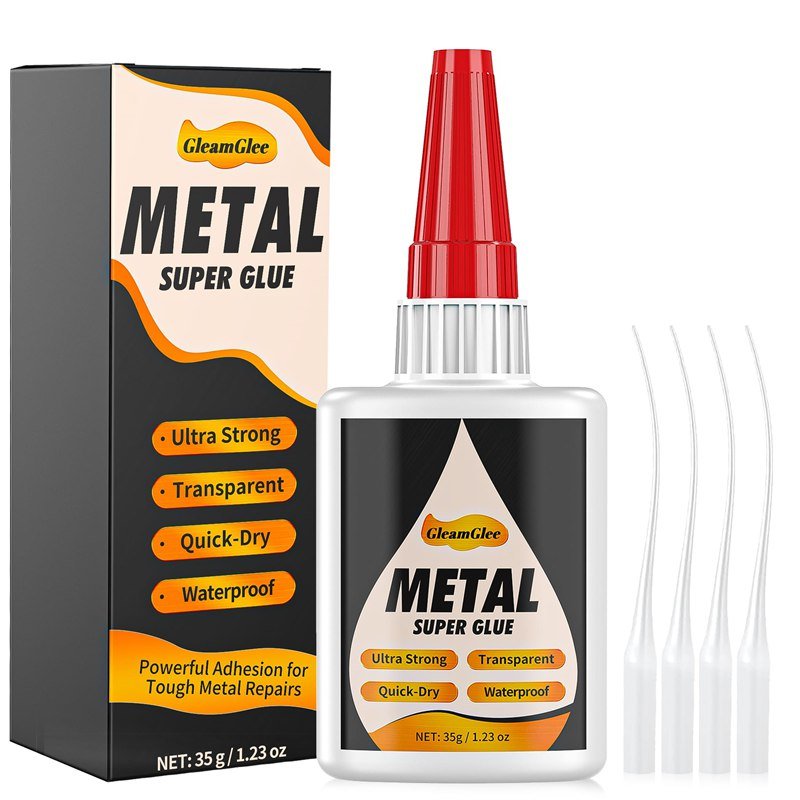
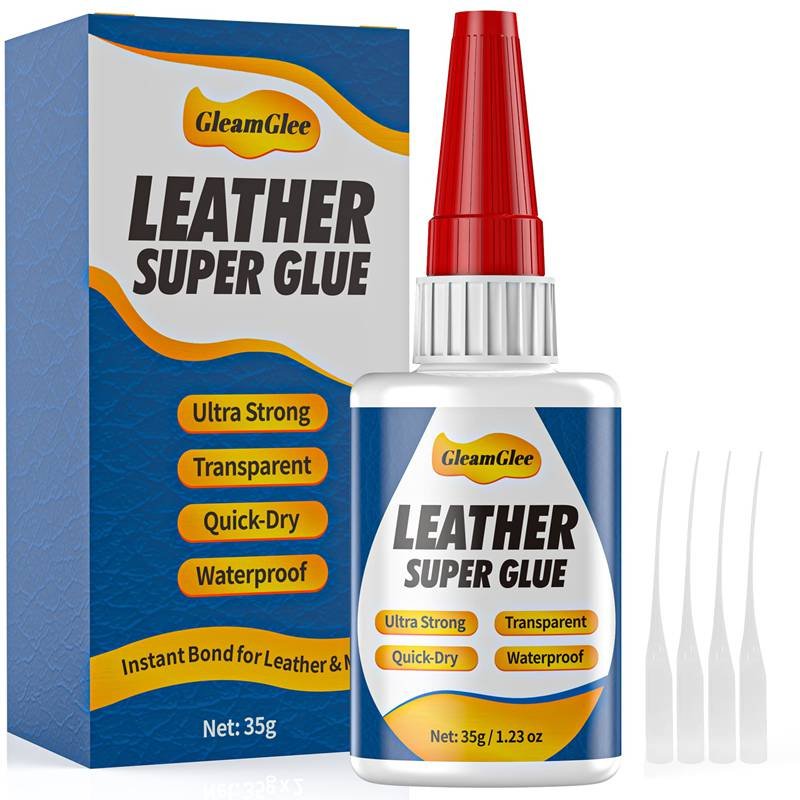
Choose an instant adhesive when the pieces fit tightly, the bonding area is relatively small, and fast positioning is more important than gap filling. This is often the case with metal trim, small ornaments, jewelry parts, metal eyeglass components, decorative hardware, or mixed-material craft work. GleamGlee’s 35 g metal glue, for example, is designed around this kind of controlled repair and includes fine application nozzles for reaching narrow cracks or small contact areas.
Choose an epoxy when the surfaces are irregular, the joint contains a small gap, or the repair benefits from a longer positioning window. Users should still check the specific product instructions because “epoxy” describes a broad family rather than one single performance level. Cure time, flexibility, temperature resistance, viscosity, and environmental durability can vary substantially between formulations.
The best household decision is therefore not “instant glue versus epoxy” in isolation. Ask whether the parts fit tightly, how large the bonding area is, whether the object will move or vibrate, whether it will encounter water or heat, and what happens if the joint fails. These questions usually narrow the choice more reliably than marketing strength claims alone.

Which Metal Glue Works Best for Home Repairs?
The best metal glue for home repairs is the product that matches the metal, joint shape, bonding area, moisture exposure, movement, and required working time. Fast-setting metal adhesives are especially useful for small close-fitting parts, while epoxy systems are often more practical for wider joints, uneven surfaces, or repairs requiring extra positioning time.
Fast-Drying Metal Adhesive
Fast-drying metal adhesive is particularly convenient for everyday repairs because homeowners often need to hold a small part in position without complicated fixtures. With a close-fitting joint, a controlled adhesive layer can establish an initial hold quickly enough to keep jewelry components, decorative pieces, appliance trim, light hardware, metal models, or small mixed-material items aligned during the early stage of bonding.
Speed, however, should not be confused with full cure. An adhesive may grip within seconds while still requiring additional time before reaching its final useful strength. Moving, twisting, washing, heating, or loading the repair immediately after the parts appear secure can weaken the joint. The product instructions should always take priority over assumptions based on how quickly the surface seems dry.
Application control is also important. Applying a large puddle is rarely the best route to a stronger connection. Many fast-setting adhesives perform best with a thin, even layer between two surfaces that fit together closely. GleamGlee metal glue uses precision tips for this reason. The design helps users reach narrow metal joints and apply adhesive in small quantities instead of covering surrounding surfaces unnecessarily.
Two-Part Epoxy
Two-part epoxy becomes attractive when the repair has a wider bonding area, small surface irregularities, or a need for additional working time. After resin and hardener are mixed in the specified ratio, the chemical reaction gradually converts the mixture into a solid polymer network. This can make epoxy useful for brackets, tool components, outdoor equipment, hardware, household fixtures, and other applications where a slightly thicker bond line is acceptable.
The trade-off is preparation and patience. Inconsistent mixing can leave weak or partially cured areas, while putting the object back into service too soon can damage the developing bond. Users should mix only the amount they can apply within the stated working time and should avoid changing the resin-to-hardener ratio in an attempt to make the adhesive cure faster.
Epoxy is also not a universal substitute for mechanical fastening. A repaired part subjected to leverage, repeated shock, high temperatures, or substantial load may need screws, rivets, welding, or a professionally engineered joint. For household repairs, adhesive selection should always consider the consequences if the repair separates unexpectedly.
Match the Metal
Steel, stainless steel, aluminum, copper, and plated metals may all look similarly solid, but their surface conditions differ. Steel may carry rust, mill residue, paint, or protective oil. Stainless steel can be extremely smooth. Aluminum rapidly develops an oxide layer. Copper can tarnish. Plated parts add another complication because the adhesive is technically bonding to the coating rather than the underlying metal.
This means two identical-looking repairs can behave differently even when the same adhesive is used. Surface preparation is therefore part of adhesive selection, not a separate afterthought. A product compatible with aluminum may still fail if applied over grease or a weak powdery oxide layer. Likewise, a stainless-steel joint may benefit from light abrasion even when the surface already looks perfectly clean.
| Metal | Common Surface Issue | Practical Preparation |
|---|---|---|
| Mild steel | Oil, rust, coatings | Degrease and remove loose corrosion |
| Stainless steel | Smooth polished surface | Clean and lightly abrade where appropriate |
| Aluminum | Oxide layer and contamination | Clean thoroughly and abrade cautiously |
| Copper | Tarnish and oxidation | Remove surface contamination before bonding |
| Painted metal | Weak coating adhesion | Confirm the coating itself is firmly attached |
Consider the Environment
A metal repair indoors may experience very different stresses from the same repair outdoors. Moisture, vibration, temperature cycling, cleaning chemicals, sunlight, and repeated handling can gradually challenge the bond. For example, a repaired decorative indoor frame may remain almost completely static, while a garden item may repeatedly heat in sunlight, cool at night, get wet, and flex during use.
Waterproof or water-resistant claims also need to be interpreted carefully. They describe the cured adhesive under defined conditions; they do not mean every repaired assembly becomes suitable for permanent immersion, potable-water contact, pressurized plumbing, or marine structural use. Joint geometry and surface preparation still matter even when the adhesive itself resists moisture.
For a home user, the most dependable selection method is to start with the object and its environment rather than the bottle. Identify the metals, inspect how closely the pieces fit, estimate how much movement or load the joint will experience, and check exposure to water and heat. Then choose an adhesive with instructions that clearly match those conditions.
How Do You Prepare Metal Surfaces Before Bonding?
Metal surfaces should be clean, dry, stable, and free from loose rust, dust, grease, polish, and weak coatings before adhesive is applied. Light abrasion can improve mechanical grip on many smooth metals, but the appropriate preparation depends on the substrate and finish. Careful preparation frequently has a greater effect on repair reliability than simply adding more adhesive.
Remove Oil and Dirt
One of the most common reasons metal repairs fail is contamination that cannot easily be seen. Fingerprints contain oils, factory-produced parts may carry lubricants or corrosion inhibitors, and household components often collect cooking grease, wax, polish, dust, or cleaning residue. Adhesive placed over this layer does not fully contact the metal surface, creating a joint that can separate even though the glue itself cured normally.
Start by removing visible dirt and loose material, then use a cleaner appropriate for the metal and the adhesive system. The surface should be allowed to dry completely before continuing. After cleaning, avoid repeatedly touching the prepared bonding area with bare fingers because this can reintroduce oils immediately before application.
Cleaning is especially important for stainless steel kitchen fittings, workshop tools, automotive accessories, and components stored in garages. These objects may look clean while still carrying enough contamination to interfere with bonding. Careful degreasing is a simple step, but it frequently distinguishes a durable repair from one that peels away unexpectedly.
Remove Rust and Oxidation
Rust is not a stable bonding surface. If adhesive is placed on loose corrosion, the glue may bond strongly to the rust while the rust itself separates from the underlying steel. The repair then fails between the metal and corrosion layer rather than inside the adhesive. Flaking rust should therefore be removed before attempting to join the parts.
A wire brush or suitable abrasive can be used on many steel parts, while fine abrasive paper may be preferable for smaller or more delicate components. The goal is not to grind away unnecessary material but to expose a stable surface. Once corrosion has been removed, the repair area should be cleaned again because sanding dust can interfere with adhesion just as oil does.
Aluminum and copper behave differently because their oxides are not identical to iron rust. Aluminum naturally forms a very thin oxide film rapidly when exposed to air, while copper develops tarnish over time. Surface preparation should therefore remain proportionate to the material rather than treating every metal with the same aggressive method.
Improve Surface Grip
Highly polished metal can provide relatively little texture for mechanical interlocking. Light abrasion often creates microscopic surface irregularities that increase the effective contact area available to the adhesive. For many ordinary metal repairs, fine abrasive paper is enough; there is rarely a need to heavily grind a small household component.
The direction and extent of sanding are less important than consistency. The bonding zone should be uniformly prepared without creating deep gouges or distorting thin parts. If the object has an important decorative finish, abrasion should be confined to the hidden bonding area so the visible appearance remains unchanged after repair.
After sanding, dust must be removed before adhesive is applied. This sequence—clean, abrade where suitable, clean again, and dry—is more reliable than sanding first and assuming the surface is ready. It also gives the user an opportunity to inspect cracks, distortion, missing material, or joint gaps that could influence adhesive choice.
Check the Joint
Before opening the adhesive, dry-fit the two pieces. They should sit in their intended position without excessive force, rocking, or an unexpectedly large gap. This simple test reveals whether the break is actually suitable for a thin instant adhesive or whether a more gap-filling system may be needed.
Joint design matters because adhesives usually perform better when forces are distributed across a meaningful surface area. A broad overlap is generally more favorable than bonding two tiny edges that will later be pulled directly apart. Parts subjected mainly to shear often behave differently from joints repeatedly peeled from one edge, which can place much more concentrated stress on the bond.
| Preparation Step | What to Check | Typical Home Tool |
|---|---|---|
| Dry fitting | Alignment and gap size | Hands, ruler, temporary clamp |
| Degreasing | Oil, polish, fingerprints | Lint-free cloth and suitable cleaner |
| Corrosion removal | Loose rust or oxidation | Fine abrasive or wire brush |
| Light abrasion | Very smooth bonding area | Fine sandpaper |
| Final cleaning | Dust and residue | Clean lint-free cloth |

How Do You Bond Metal to Metal Step by Step?
To bond metal to metal, first dry-fit and clean both surfaces, lightly abrade them when appropriate, apply a controlled amount of compatible adhesive, align the pieces accurately, and hold or clamp them according to the product instructions. Avoid disturbing the joint during early curing, and do not expose the repair to normal service loads until sufficient curing time has passed.
Apply the Adhesive
Start only after both surfaces are prepared and the repair position has been tested. Keep the adhesive confined to the intended bonding zone because cleanup becomes harder once fast-setting glue starts curing. When using a precision metal glue, place a thin continuous layer or carefully controlled drops rather than assuming a thick layer will automatically create a stronger repair.
For GleamGlee’s 35 g metal glue, the fine-tip nozzles are particularly useful for narrow cracks, jewelry parts, stainless-steel components, aluminum details, models, and other small repairs where excess adhesive could spoil the appearance. The product is designed for rapid bonding, and closely fitting surfaces can often be pressed firmly together for approximately 5–10 seconds to establish the initial connection.
That short holding period should not be interpreted as permission to immediately subject every repair to full force. Initial grab and final usable strength are different stages. Always follow the label instructions for the specific adhesive and allow additional curing time before testing the repaired object under its normal load or environment.
Align and Hold
Fast adhesives leave very little time for adjustment, so alignment should be rehearsed before application. Place the two components together without glue first, identify the correct orientation, and determine where your fingers, clamp, tape, or other temporary holding method will go. This prevents the common situation where adhesive has already been applied but the user is still trying to work out how the pieces fit.
Apply firm, controlled pressure rather than repeatedly sliding the parts around. Movement during the first moments of bonding can disturb the adhesive layer and move glue away from the actual contact area. For tiny components, fine tweezers or a suitable holding fixture can provide more accurate positioning than fingers alone.
Clamping pressure should also be reasonable. Excessive force can squeeze most of the adhesive out of the joint, especially when the material is thin and the surfaces fit tightly. The goal is stable contact and correct alignment, not maximum compression.
Allow Time to Cure
Curing terminology causes a great deal of confusion. “Fast drying,” “sets in seconds,” and “fully cured” do not necessarily mean the same thing. A repair may become difficult to reposition within seconds but continue developing useful mechanical performance for considerably longer. Temperature, humidity, adhesive chemistry, joint thickness, and substrate condition can all influence this process.
A practical household rule is to treat the initial set as the stage when the object can remain aligned without constant hand pressure, not as confirmation that the repair is ready for maximum use. Avoid bending, twisting, washing, vibrating, or heating the repaired part too early. If the manufacturer specifies a longer cure period, follow it even if the joint already feels hard.
Patience is particularly important for outdoor equipment, tools, furniture hardware, and items that will experience repeated movement. Giving the bond adequate time under stable conditions is usually easier than repairing the same item a second time because it was tested prematurely.
Inspect the Repair
Once the recommended curing period has passed, inspect the joint before putting the item back into service. Check whether the parts remain correctly aligned and whether there are visible gaps, cracked adhesive, movement, or incomplete contact around the repair area. Do not perform an aggressive “strength test” simply to see how much force the joint can take.
Instead, reintroduce the item gradually to its intended use. A decorative object may only need a gentle handling check, while a household fitting may require modest pressure before normal use resumes. If the repair involves anything whose failure could cause injury, flooding, fire, electrical danger, or loss of control, an adhesive-only home repair may not be appropriate regardless of how secure the bond appears.
Is Metal Glue Safe to Use at Home?
Metal glue can be used safely for many household repairs when the product is used exactly as directed, with appropriate ventilation, skin and eye protection, and careful control of spills. Users should read the label and safety information before application, keep adhesive away from children and pets, and avoid using consumer glue for repairs involving direct flame, food-contact uncertainty, pressure, or critical structural loads.
Basic Safety
Fast-setting adhesives are useful precisely because they react quickly, but that means accidental skin bonding can also happen quickly. Keep fingers away from the joint line when pressing small parts together, and use suitable disposable gloves where recommended by the product instructions. Safety glasses are sensible when working close to the face or applying adhesive into narrow gaps where material could splash unexpectedly.
Good ventilation is another simple precaution. Open a window, work near appropriate airflow, or complete the repair in a suitable workshop area rather than intentionally inhaling vapors at close range. Avoid smoking, open flames, and unnecessary heat around chemical adhesive products. The exact precautions vary by formulation, which is why the product label and SDS are more authoritative than generic assumptions about “metal glue.”
Storage is part of safe use as well. Close the cap securely after application, keep the container upright when recommended, and store it away from children, pets, excessive heat, and food. Precision applicators should be handled carefully so dried residue does not encourage users to force the container in unsafe ways.
Indoor Use
Many small metal repairs are naturally performed indoors because they involve furniture fittings, crafts, appliances, decorations, jewelry, or hobby projects. An indoor location can be appropriate when there is adequate ventilation and the work surface is protected. Covering the table with a disposable barrier also prevents accidental adhesive contact with finished furniture.
Do not carry out a repair directly over carpets, upholstery, valuable countertops, or sensitive painted surfaces when a portable workbench or protected table is available. Keep paper towels or manufacturer-approved cleanup materials nearby before opening the adhesive, not after a spill occurs.
Users should also separate chemical safety from odor perception. A product that does not smell particularly strong is not automatically harmless, and a noticeable odor does not by itself describe the level of risk. Safety decisions should be based on the documented handling information supplied for the formulation.
Common Mistakes
A frequent mistake is using adhesive on an item simply because the two pieces are made of metal. The actual service conditions matter more. A metal pan handle that is far from direct flame may present one type of repair challenge, while a component directly exposed to burner heat presents a completely different risk. Likewise, a small leak in a non-pressurized decorative container is not comparable to repairing a pressurized plumbing line.
Another mistake is using excessive adhesive. Overflow can reach skin, finished surfaces, threads, hinges, electrical contacts, or moving mechanisms. Controlled application usually makes the repair cleaner and reduces the amount of uncured material that must be handled.
Finally, do not improvise medical treatment after significant exposure. If adhesive enters the eyes, is swallowed, causes substantial skin exposure, or produces concerning symptoms, follow the product safety instructions and seek appropriate medical advice rather than relying on home remedies.
Know When to Stop
Responsible DIY repair includes recognizing when a problem has moved beyond the safe scope of a consumer adhesive. Do not rely on ordinary metal glue for structural supports, critical vehicle parts, climbing equipment, safety harness hardware, pressurized vessels, gas systems, high-temperature machinery, direct-flame cookware repairs, or electrical components where bond failure could expose live conductors.
The same principle applies to valuable or irreplaceable items. Antique metal objects, precision instruments, expensive jewelry, or complex equipment can lose value if the wrong adhesive contaminates the surface. Professional assessment may cost more than a tube of glue, but it can prevent irreversible damage.
A good adhesive is a tool, not a substitute for engineering judgment. Knowing what not to repair is part of using metal glue safely and professionally.
What Can You Repair with Metal Glue at Home?
Metal glue can be useful for many non-structural home repairs, including decorative metal items, furniture hardware, appliance trim, jewelry, metal crafts, brackets, light fixtures, models, and mixed-material projects. The best candidates have clean bonding areas, manageable loads, and enough surface contact for the adhesive to form a stable joint without being exposed to extreme heat or pressure.
Household Repairs
Home décor is one of the most forgiving categories for adhesive repair because many objects carry little mechanical load. Metal picture frames, candle holders, decorative sculptures, ornamental brackets, handles, and small fixtures can often be repaired cleanly without drilling or welding. Transparent-curing adhesive is particularly useful when the bonding line remains visible.
Furniture hardware can also be suitable, although the amount of stress requires more attention. A decorative trim strip is different from a chair joint supporting body weight. Small non-structural fittings, loose metal embellishments, and light brackets may be reasonable adhesive jobs, while load-bearing furniture frames deserve a more conservative assessment.
Appliance repairs require similar judgment. Cosmetic trim, housings, covers, or detached non-electrical components may be candidates, but adhesives should not be used casually around heat sources, rotating machinery, wiring, refrigerant systems, or components subject to significant vibration unless the manufacturer specifically permits that repair.
Jewelry and Accessories
Small personal accessories are one of the areas where precision metal adhesive performs particularly well. Chains, clasps, watchband ornaments, belt hardware, handbag fittings, brooches, decorative buckles, and certain eyeglass components contain tiny contact points where a large adhesive nozzle would be difficult to control.
A fine-tip applicator helps place only a small amount on the bonding surface. This matters because adhesive overflow can interfere with moving parts or leave a visible residue around polished metal. GleamGlee metal glue includes four precision nozzles per tube, or eight in a two-pack configuration, making controlled application practical for narrow joints and detailed repairs.
Not every jewelry repair should be glued. Valuable precious-metal jewelry, load-bearing necklace connections, stone settings, spring mechanisms, watch internals, and heirloom pieces may be better handled by a professional jeweler. Adhesive is most appropriate when the repair is simple, accessible, and does not reduce the safety or value of the item.
Crafts and Mixed Materials
DIY craft projects often involve more than one substrate, which makes a versatile adhesive useful. Metal may need to be attached to wood, rigid plastic, glass, ceramic, concrete, PVC, or decorative surfaces. These combinations are common in model making, home décor, sculpture, seasonal projects, hobby miniatures, display pieces, and handmade accessories.
Mixed-material bonding introduces an additional issue: different materials expand, flex, and absorb stress differently. A rigid piece of metal bonded to a flexible plastic may challenge the joint more than two rigid metal pieces. Surface preparation must also be appropriate for both substrates, not only the metal.
For precise creative work, users should test unfamiliar material combinations on scrap pieces when possible. Plastics in particular vary widely, and some low-surface-energy polymers can be difficult to bond with general-purpose adhesives. Painted, coated, plated, or polished surfaces may also behave differently from the base material underneath.
Outdoor and Workshop Uses
Small outdoor repairs can include lantern parts, camping accessories, decorative garden hardware, certain fishing accessories, non-critical equipment housings, or metal trim. Moisture resistance matters here, but repeated temperature changes, impact, sunlight, and vibration may place greater stress on the bond than indoor conditions.
Workshop applications can include clamps, stands, housings, covers, and small hardware where failure does not create a dangerous situation. Tools deserve extra caution because handles, jaws, striking surfaces, and rotating components can experience high shock forces. A repaired hammer head, cutting tool, or heavily loaded hand tool should not be trusted simply because the glue feels hard.
The most useful rule is to consider both the material and the consequence of failure. If separation would merely mean the item needs another repair, adhesive may be a practical solution. If separation could injure someone, damage expensive equipment, or create loss of control, choose a professional or mechanically secured repair.
Are There Limits to Metal Glue Performance?
Yes. Consumer metal adhesives have practical limits related to heat, pressure, impact, joint design, continuous loading, chemical exposure, and surface condition. They can perform extremely well in suitable household and DIY applications, but they should not be treated as replacements for welding, mechanical fastening, or engineered structural adhesives when failure could create serious safety or property risks.
High Heat
Temperature affects adhesive performance because polymers soften, expand, contract, or chemically degrade when exposed beyond their intended range. A repaired decorative metal object sitting in a warm room does not experience the same conditions as a stove component, exhaust system, engine housing, fireplace fitting, or cookware surface exposed directly to flame.
This distinction is important because the phrase “heat resistant” can mean very different things among adhesive products. It may refer to occasional elevated temperatures under laboratory conditions rather than continuous exposure beside a flame. The safest approach is to check the documented service-temperature limits for the exact product rather than extrapolating from a general marketing description.
GleamGlee metal glue is intended for practical household, craft, and precision metal repairs rather than extreme-temperature structural work. High-heat machinery, engine blocks, burners, exhaust components, boilers, and similar equipment require an adhesive or joining method specifically engineered and validated for those conditions.
Heavy Loads
Adhesive strength data are useful only when the test conditions are understood. A large overlapping metal joint loaded evenly in shear can behave very differently from a tiny edge joint being peeled repeatedly. For this reason, a single strength number cannot tell a homeowner whether a particular repair is safe.
Continuous load can also matter. A joint that survives a brief pull may slowly creep or deform when supporting weight for weeks or months. Vibration, leverage, impact, and repeated flexing can further reduce long-term reliability. These stresses are common in furniture, bicycles, tools, gates, hinges, and workshop equipment.
Household users should therefore be cautious about repairing items that carry people, heavy objects, or suspended loads. Mechanical fasteners or professional repair methods offer redundancy that a single adhesive joint may not provide.
Pressure and Critical Repairs
Consumer adhesives should not be relied on for permanent repairs to pressurized gas, steam, fuel, hydraulic, refrigeration, or drinking-water systems unless the specific product is certified for that exact application. Pressure can transform a small bond failure into a sudden leak with serious consequences.
A minor pinhole in a non-pressurized metal object may sometimes be temporarily sealed as an emergency measure, but this should not be confused with a permanent plumbing repair. Pipes, boilers, radiators, tanks, and pressure vessels have operating conditions that are difficult to assess visually.
The same caution applies to transportation and sporting equipment. Frames, steering parts, brake components, climbing hardware, protective equipment, and load-bearing assemblies are not suitable places to experiment with general household glue.
When Welding Is Better
Welding, brazing, soldering, bolts, screws, rivets, or engineered structural adhesive systems remain better choices when the repair involves major loads, high temperatures, large structural joints, pressure, or safety-critical service. Mechanical and metallurgical joining methods can also be inspected and designed using established engineering standards.
That does not reduce the value of metal glue. It defines where the product works best. A precision adhesive is extremely useful when users need a clean, fast, accessible method for small metal parts, crafts, decorations, mixed-material projects, accessories, and ordinary home maintenance.
The most reliable repair culture is one that does not force one method onto every problem. Adhesives, welding, fasteners, and replacement parts all have a place. Knowing the boundary between them is a mark of practical experience rather than a limitation.
How to Choose a Reliable Metal Glue Manufacturer?
A reliable metal glue manufacturer should demonstrate consistent formulation control, material compatibility testing, traceable quality procedures, regulatory documentation, packaging expertise, and the ability to support different markets. For brands, distributors, and retailers, a strong manufacturing partner should also be able to provide samples, packaging options, labeling support, scalable production, and realistic technical guidance rather than relying only on strength claims.
Product Development
A good adhesive begins before filling and packaging. Formulation development should consider substrate compatibility, viscosity, curing behavior, aging, storage stability, environmental exposure, and the way consumers actually apply the product. A formula that performs well on a laboratory coupon but becomes difficult to dispense after storage will still create customer complaints in real-world use.
GleamGlee integrates adhesive development with application testing through a team that includes more than 25 chemists, materials specialists, and process engineers. Internal work covers polymer chemistry, surface compatibility, accelerated aging, and performance evaluation under conditions such as humidity, temperature variation, and repeated use. This type of development process is especially useful for brands seeking metal adhesive formulas adapted to a defined market or repair scenario.
For commercial customers, sampling is an essential part of evaluation. A manufacturer should be willing to test the proposed formula on representative materials and provide samples so the customer can verify application behavior before committing to larger production.
Quality and Manufacturing
Consistency matters more than a single impressive laboratory result. Retailers and private-label brands need confidence that the first production lot and later replenishment orders will behave similarly. This requires incoming raw-material checks, documented manufacturing parameters, filling control, packaging inspection, and finished-product testing.
GleamGlee operates integrated production resources covering chemical processing, packaging materials, label printing, and raw-material support. Automated filling and assembly capability supports annual production of more than 12 million units across the broader product portfolio. Quality and environmental management systems include ISO 9001 and ISO 14001 processes, while product labeling and documentation can be prepared for markets operating under systems such as CLP, REACH, and GHS.
The value of integrated manufacturing is not simply scale. It reduces the number of disconnected suppliers involved in formulation, bottle selection, nozzle design, label production, and final assembly. This makes it easier to diagnose a problem when a product needs adjustment.
Packaging and Application
Metal glue packaging directly influences customer experience. A chemically strong formula can still receive poor feedback if the nozzle dispenses too much product, the cap dries shut, the label is unclear, or the container leaks during transportation. For precision repair, dispensing control is part of product performance.
Fine-tip nozzles are particularly useful for jewelry, metal models, narrow fractures, small brackets, and detailed craft work. The GleamGlee 35 g metal adhesive configuration includes four precision nozzles per tube, while two-pack formats can include eight. The cap is designed to help reduce clogging and support repeated use when stored according to instructions.
Commercial customers should therefore evaluate packaging alongside adhesive strength. Bottle material compatibility, closure design, leak resistance, label durability, multilingual instructions, carton protection, and retail appearance can all affect returns and customer satisfaction.
Custom Manufacturing
Private-label and custom-product customers often need more than a standard formula placed inside a different bottle. They may require adjustments to viscosity, working time, odor profile, packaging size, applicator type, branding, language, carton design, or market-specific labeling. A capable manufacturer should be able to explain which changes are realistic and which could alter adhesive performance.
GleamGlee supports formula development, existing-formula private labeling, packaging selection, label design, and custom packaging development. Custom projects can begin from relatively low quantities depending on the specification, with some programs supporting minimum orders from approximately 200 units. Artwork can often be prepared within about two working days once requirements are clear, while typical sample development may require roughly 7–14 days and standard production around 20 days, subject to formula, packaging, testing, and order complexity.
For serious retail and distribution projects, these operational details matter as much as the adhesive itself. A dependable supplier should be able to move from laboratory sample to packaging, compliance review, production, and international shipment without leaving major gaps between each stage.
The best metal-to-metal repair is rarely the one that uses the most adhesive or the strongest-sounding product. It is the repair where the surfaces are properly prepared, the adhesive suits the materials and joint, the application is controlled, and the object is given enough time to cure before returning to service. Small home repairs benefit particularly from this disciplined approach because many failures can be traced back to grease, loose corrosion, poor alignment, oversized gaps, or premature handling rather than insufficient adhesive strength.
Metal glue can make household maintenance faster and more accessible by allowing people to repair decorative objects, hardware, accessories, crafts, models, and mixed-material items without welding equipment. Precision products such as GleamGlee metal glue are especially practical when users need fast initial bonding and controlled application in narrow joints. At the same time, responsible use means recognizing the boundary between a convenient home repair and a structural, high-pressure, high-temperature, or safety-critical job that deserves welding, mechanical fastening, or professional service. When those boundaries are respected, adhesive bonding becomes a highly useful part of the home repair toolkit rather than a risky shortcut.

Conclusion
Bonding metal to metal at home is most successful when the repair is treated as a complete process rather than a single gluing step. Choosing an adhesive that matches the metal type, joint size, load, and working environment is only the beginning. Clean surfaces, light abrasion where appropriate, accurate alignment, controlled application, and sufficient curing time all contribute to the final result. When these fundamentals are handled carefully, many household metal repairs can be completed cleanly without welding or complicated equipment.
For small home repairs, crafts, accessories, decorative items, hardware, and mixed-material projects, a fast-setting metal adhesive can offer a practical balance of strength, speed, and precision. Products with fine-tip nozzles are especially useful when the bonding area is narrow or visible, because they help reduce excess adhesive and improve application control. More demanding joints with irregular surfaces or wider gaps may be better suited to an epoxy system, so the repair conditions should always determine the adhesive choice rather than a single strength claim.
Just as important is knowing when adhesive repair is not the right solution. High-temperature components, pressurized systems, structural supports, heavily loaded joints, and safety-critical equipment should be evaluated for welding, mechanical fastening, specialist adhesives, or professional repair. A dependable metal bonding result comes from matching the method to the real job. Used within the right limits, metal glue can become a reliable part of everyday repair, helping extend the life of household objects while making small DIY fixes faster, cleaner, and more accessible.

Frequently Asked Questions
What is the strongest glue for metal to metal?
There is no single strongest metal glue for every repair because performance depends on the metal, bonding area, joint design, surface preparation, temperature, moisture, and type of force applied. Two-part metal epoxies are often selected for larger or more demanding household repairs because they can fill gaps and provide longer working time, while fast-setting metal adhesives are highly useful for small close-fitting parts where precision and rapid initial bonding are important.
Can you glue metal to metal without welding?
Yes, many non-structural metal parts can be joined successfully with suitable adhesives without welding. Common examples include decorative items, brackets, jewelry, metal trims, craft components, models, appliance covers, and household accessories. Adhesive bonding is particularly convenient when heat could damage a finished surface. Welding or professional mechanical repair remains preferable for structural, high-load, high-temperature, pressurized, or safety-critical metal joints.
How do you make metal glue hold better?
The most effective improvement usually comes from surface preparation rather than adding more adhesive. Remove oil, fingerprints, loose coatings, dust, and corrosion, lightly abrade very smooth bonding areas when appropriate, clean away sanding residue, and allow both surfaces to dry. Dry-fit the parts before application, apply a controlled adhesive layer, maintain stable contact during initial setting, and avoid loading the repaired joint before the recommended curing period has passed.
Does super glue work on stainless steel?
Fast-setting cyanoacrylate-type adhesives can bond many stainless-steel parts, particularly when the surfaces fit closely and the repair area is relatively small. Stainless steel is often polished and can carry oils or fingerprints, so careful cleaning is essential. Light abrasion of the hidden bonding area may improve adhesion in suitable cases. Larger gaps, substantial vibration, or heavier loads may justify using a different adhesive system such as an appropriate epoxy.
Can metal glue be waterproof?
Some metal adhesives are formulated to resist water after complete curing, making them useful for household items exposed to moisture or outdoor conditions. Waterproof performance does not automatically make a repaired joint suitable for permanent immersion, pressurized plumbing, marine structural service, or drinking-water systems. Users should check the specific product documentation and remember that water resistance depends on the adhesive, surface preparation, joint design, and complete curing.
How long does metal glue take to dry?
Drying and curing times vary considerably by adhesive chemistry. Some instant metal glues can establish an initial grip within seconds, while two-part epoxies may require substantially longer before the repair can be handled or loaded. An initial set should not be confused with full usable strength. Follow the stated product instructions and avoid heavy loading, washing, vibration, heating, or repeated flexing until the recommended curing period has been completed.
Is metal glue as strong as welding?
Metal glue can produce strong and useful bonds, but it should not be treated as universally equivalent to welding. Welding creates a metallurgical connection and is commonly used for structural, high-temperature, and heavily loaded metal assemblies. Adhesives offer advantages for small household repairs, thin metal, mixed materials, finished surfaces, and applications where heat is undesirable. The safest choice depends on the joint design, working conditions, required load, and consequences of failure.
Share:
Table of Contents
Here, creating your adhesives glue & removal cleaner collection is no longer a barrier—it’s a collaborative journey where GleamGlee helps brands and businesses transform their vision into durable, certified, and market-ready solutions.
Partner with GleamGlee
Join hundreds of global partners who trust GleamGlee for adhesives and cleaners that combine innovation, compliance, and speed. Our vertically integrated system—from R&D to warehouse—guarantees consistent performance and reliable delivery.
Whether you’re sourcing FBA-ready stock or developing your own formula, our team provides unmatched technical support and responsive service.