Skip to content
Floral Glue for Table Centerpieces: Complete Guide
Your trusted adhesives glue & cleaner manufacturer

A table centerpiece is often the first thing people notice when they sit down at a wedding, restaurant dinner, holiday meal, hotel banquet, or family celebration. Fresh roses, eucalyptus, orchids, preserved petals, silk flowers, ribbons, candles, glass vases, and ceramic holders can look effortless from the guest’s side of the table. But anyone who has built a centerpiece knows the truth: flowers do not always stay where you place them. Stems slide, petals tilt, ribbons loosen, greenery drops, and small decorative pieces can shift during transport or setup.
Floral glue is a clear adhesive used to secure flowers, greenery, ribbons, foam, and decorative accents in table centerpieces and arrangements. A good floral glue should dry clear, bond without heat, resist moisture, stay flexible after drying, and hold fresh or artificial materials in place without making the design look heavy, messy, or overworked.
This is why floral glue has become a quiet but important tool for florists, event teams, craft makers, and home décor lovers. It does not replace good floral design, clean stem placement, or proper hydration. Instead, it supports the small details that make an arrangement look controlled and elegant. One loose rose can change the balance of an entire centerpiece. One visible glue stain can make a premium table look careless. The right floral glue helps prevent both problems.
What Is Floral Glue?
Floral glue is a clear adhesive made for flower arranging, table centerpieces, corsages, boutonnieres, wreaths, flower crowns, gift decoration, and floral craft work. Its main job is to hold small flowers, petals, leaves, stems, ribbons, foam pieces, and decorative accents in the exact position you want, without using heat, bulky tape, visible wire, or pins that may damage soft materials. For a table centerpiece, floral glue is usually used as a detail-control tool rather than the main structure.
A good floral glue should solve the problems people meet while making arrangements: loose flowers, sliding ribbon, unstable greenery, wet foam, smooth glass vases, ceramic candle holders, artificial flowers that rotate, and tiny decorative pieces that refuse to stay in place. The most useful formula dries clear, stays slightly flexible, resists normal floral moisture, and allows controlled application in small dots or thin lines. For wedding and event tables, the finished bond should be almost invisible from a guest’s seat.
Floral glue is not the same as flower food, floral tape, or hot glue. It does not keep flowers alive longer by itself, and it should not be used to replace water, trimming, or proper flower storage. Its value is placement and stability. When the main stems are already supported by foam, a vase grid, or a container, floral glue helps finish the details: securing a loose bloom, fixing a ribbon overlap, holding a petal in shape, or attaching greenery to a hard surface.
| What Floral Glue Does | What It Does Not Do |
|---|---|
| Holds flowers, leaves, ribbons, foam accents, and décor pieces in place | Does not replace water or flower care |
| Helps create cleaner table centerpieces with fewer visible tools | Does not make old flowers fresh again |
| Bonds fresh and artificial floral materials without heat | Does not replace structural support for heavy stems |
| Dries clear for a more natural finish | Does not look clean if too much is applied |
| Adds stability to small details during setup and display | Does not fix poor arrangement balance by itself |
What is floral glue used for?
Floral glue is used when a flower arrangement needs extra hold in a small, visible, or delicate area. In table centerpieces, it is most useful for finishing work: attaching loose petals, securing small filler flowers, fixing greenery around the edge of floral foam, holding ribbon ends on vases, bonding artificial flowers to decorative bases, or adding floral details to place cards and candle holders. Customers usually need it when the arrangement looks almost finished but one part keeps moving, slipping, or falling out of shape. Instead of using a large amount of tape or a hot glue gun, a small dot of floral glue can hold the detail more neatly.
Common use situations:
- Wedding table centerpieces: secure small blooms, leaves, and ribbon details before the reception.
- Home dining décor: attach flowers to napkin rings, candle holders, or vase rims.
- Corsages and boutonnieres: hold small petals, greenery, and ribbon accents in place.
- Artificial flower arrangements: stop silk or plastic flowers from rotating or slipping.
- Gift decoration: bond dried petals, mini flowers, and ribbons onto boxes or cards.
| Project | Best Use of Floral Glue | Suggested Amount |
|---|---|---|
| Table centerpiece | Small flower or leaf support | 1–3 small dots |
| Vase ribbon | Hidden ribbon overlap | Thin line or 3 dots |
| Corsage | Tiny flower and greenery details | Micro dots |
| Gift box | Dried flower or ribbon accent | Small dot or short line |
| Artificial flower base | Stop flower head from moving | 2–4 small dots |
For better results, use floral glue only where movement is likely. Large stems should still be placed securely into foam or a vase structure first. Glue should finish the arrangement, not carry the entire weight of the design.
Is floral glue safe for flowers?
Floral glue can be safe for flowers when it is designed for floral use and applied with care. Fresh petals and leaves are delicate. They can bruise, stain, curl, or tear if handled too roughly. A cold-applied floral glue avoids the heat of a glue gun, which is important for soft blooms, thin petals, and fresh greenery. The cleanest method is to use a tiny amount on a hidden contact point, such as the underside of a petal, the base of a flower head, the back of a leaf, or the side of a stem. Customers should not cover large petal areas with glue, especially on pale, thin, or highly absorbent flowers.
Practical safety points:
- Test first on delicate flowers such as orchids, hydrangeas, tulips, or thin white petals.
- Apply glue to hidden areas instead of the front petal surface.
- Blot wet stems lightly before gluing; dripping water can weaken contact.
- Use small dots rather than thick layers to reduce marks and stiffness.
- Let the glued area rest before moving the arrangement.
| Flower or Material | Risk if Used Poorly | Better Method |
|---|---|---|
| Thin petals | Dark spots or stiffness | Use a tiny hidden dot |
| White flowers | Visible marks | Test first before final design |
| Damp stems | Weak bonding | Blot surface moisture |
| Soft greenery | Bruising from pressure | Press lightly and briefly |
| Preserved flowers | Surface damage | Test on an unseen piece |
For fresh flower table centerpieces, glue works best as a support for selected details. It should be paired with good flower care: fresh stems, clean water, suitable temperature, and careful handling. A well-designed floral glue can reduce damage compared with heat, pins, or rough tying, but careful application still decides how clean the final arrangement looks.
Why use floral glue for décor?
Floral glue is useful for décor because many decorative flower projects combine materials that do not naturally hold together. A centerpiece may include fresh flowers, silk flowers, floral foam, glass vases, ceramic bowls, acrylic signs, satin ribbon, dried petals, artificial leaves, and candle holders. Tape can show. Wire can take time. Pins can leave holes. Hot glue can look bulky or damage delicate flowers. Floral glue gives users a cleaner way to attach small details while keeping the design light and elegant. For customers preparing weddings, parties, restaurant tables, or home décor, it helps reduce last-minute fixes and keeps arrangements looking more controlled.
Good décor uses:
- Fix ribbon ends on glass or ceramic centerpiece bases.
- Attach greenery around foam edges to hide structure.
- Hold small flowers on place cards, menus, or gift tags.
- Add artificial flowers to candle rings, wreaths, or table signs.
- Secure loose petals before photos, dinner service, or display.
| Décor Problem | Customer Frustration | How Floral Glue Helps |
|---|---|---|
| Ribbon slides down a vase | The centerpiece looks unfinished | Holds ribbon overlap neatly |
| Small flowers fall from foam | Table design loses shape | Adds hidden support points |
| Tape is visible | Décor looks cheap | Clear glue stays less noticeable |
| Hot glue creates lumps | Finished piece looks bulky | Small dots look cleaner |
| Artificial flowers rotate | Arrangement looks uneven | Glue fixes the flower angle |
For table décor, floral glue is most valuable in the final 10% of the project. The main arrangement may already be built, but small details decide whether it looks handmade or polished. A clear, waterproof, flexible floral glue helps customers keep those details in place without making the display look overworked.
Which Floral Glue Works Best?
The best floral glue for table centerpieces is a clear, waterproof, fast-drying, flexible adhesive that can bond fresh flowers, damp stems, floral foam, ribbons, glass, ceramic, fabric, plastic, silk flowers, and small decorative pieces. It should be easy to apply in small dots or thin lines, because floral work needs control more than heavy glue coverage.
For table arrangements, the most reliable floral glue is not always the strongest glue on paper. A centerpiece sits close to guests, so the glue must stay clean and almost invisible. It also needs to handle moisture from fresh stems and floral foam. If the adhesive dries cloudy, turns brittle, smells too strong, or leaves thick marks, the arrangement may look messy even if the bond is strong.
A good floral glue should match real arrangement problems: loose petals, sliding ribbon, unstable greenery, wet foam, smooth vase surfaces, and artificial flowers that twist out of place. For fresh flowers, cold application is also important because hot glue can damage soft petals or leave bulky raised spots. For detailed floral work, a precision nozzle makes the biggest difference, especially when working on corsages, boutonnieres, flower crowns, and small table décor pieces.
| Feature | Why It Matters in Table Centerpieces | Good Standard to Look For |
|---|---|---|
| Clear drying | Keeps glue marks hidden on flowers, glass, and ribbon | Dries transparent, not white or cloudy |
| Waterproof hold | Works better around fresh stems, misting, and wet foam | Resists normal floral moisture |
| Fast drying | Saves time during event setup | Small dots should set quickly |
| Flexible bond | Reduces cracking when flowers or ribbons move | Stays slightly elastic after drying |
| Cold application | Safer for fresh petals than hot glue | No glue gun required |
| Precision nozzle | Prevents messy over-application | Fine tip or metal nozzle |
| Multi-surface use | Centerpieces often mix several materials | Works on foam, stems, glass, ceramic, fabric, plastic |
| Clean finish | Supports premium wedding and event décor | No thick lumps, strings, or obvious residue |
Which floral glue dries clear?
A clear-drying floral glue is usually the best choice for centerpieces because table flowers are seen at close range. Guests may sit only 30–60 cm away from the arrangement, so visible glue marks can quickly make a vase, candle ring, or flower display look careless. Clear floral glue is especially important when bonding flowers to glass vases, ceramic containers, acrylic table numbers, satin ribbon, place cards, artificial petals, preserved flowers, and light-colored blooms. The glue should dry transparent rather than milky, yellowish, or shiny in a way that catches the light. Even with clear glue, neat application still matters. A small hidden dot under a petal looks professional; a thick visible blob on top of a flower does not.
Clear floral glue works best when used for:
- Small flower heads that need angle control
- Ribbon overlaps on vases or candle holders
- Greenery used to hide foam edges
- Dried flowers on cards, menus, or gift tags
- Artificial flowers on acrylic, glass, or ceramic décor
| Surface or Detail | Visibility Risk | Best Application Method |
|---|---|---|
| Glass vase | Glue marks show easily | Use a thin line on the hidden side |
| White flowers | Stains or shine can stand out | Test first and use a tiny dot |
| Satin ribbon | Excess glue can bleed through | Glue only the overlap point |
| Preserved flowers | Surface may be fragile | Apply from the back side |
| Acrylic signs | Smears are easy to notice | Clean surface first, apply lightly |
| Corsage petals | Seen closely in photos | Use micro dots under petals |
A clear floral glue should support the design without becoming part of the design. For wedding tables, restaurant displays, hotel arrangements, and gift décor, the cleaner the bond looks, the more premium the finished piece feels.
Which floral glue is waterproof?
A waterproof floral glue is the better choice for fresh flower centerpieces because floral designs often involve moisture. Fresh stems release water, floral foam may stay damp for hours, glass vases can collect condensation, and arrangements may be misted before display. If the glue is not moisture-resistant, small flowers, ribbon ends, leaves, or decorative accents may loosen before the event ends. Waterproof floral glue is especially useful for wedding receptions, banquet tables, outdoor parties, memorial flowers, restaurant tables, and hotel lobby displays where flowers need to stay neat for several hours. The glue still needs proper drying time. If it is applied to a dripping-wet stem or soaked foam surface, the bond may not form as cleanly.
Waterproof floral glue is useful for:
- Fresh flower centerpieces with wet foam
- Outdoor table arrangements in humid air
- Vase decorations near condensation
- Greenery accents around water-filled containers
- Memorial wreaths and seasonal displays
- Flower crowns or corsages exposed to light moisture
| Moisture Situation | Common Problem | Better Glue Practice |
|---|---|---|
| Wet floral foam | Glue may weaken if surface is soaked | Blot the contact point first |
| Damp stems | Adhesive may slide before setting | Dry the bonding area lightly |
| Mist-sprayed flowers | Surface moisture can delay drying | Glue first, mist later if needed |
| Glass condensation | Ribbon or flowers may slip | Clean and dry glass before gluing |
| Outdoor humidity | Bond may take longer to set | Allow extra rest time |
| Long event display | Small accents may loosen | Reinforce hidden contact points |
Waterproof does not mean the arrangement should be soaked after gluing. It means the bond is better suited for normal floral moisture. The best result comes from a waterproof formula, small glue amount, clean contact area, and enough time for the bond to settle before transport or display.
Which floral glue works on foam?
The best floral glue for foam should bond to floral foam without melting, tearing, crumbling, or leaving heavy visible marks. Floral foam is common in table centerpieces because it helps hold stems at planned angles, but it is also fragile and porous. Large stems should usually be inserted directly into the foam first. Floral glue is better for finishing details, such as securing small filler flowers, attaching greenery around foam edges, holding lightweight artificial flowers, fixing ribbon, or bonding decorative pieces to foam-covered bases. If the foam is too wet on the surface, glue may not grip well. If too much pressure is used, the foam can break. A small amount and a gentle press are usually enough.
Floral glue works well on foam when used for:
- Small flowers that keep falling out of position
- Leaves or greenery used to cover exposed foam
- Artificial petals on foam wreaths or rings
- Ribbon or fabric accents around foam bases
- Lightweight decorative picks or seasonal pieces
| Foam Project | Best Glue Placement | Amount to Use |
|---|---|---|
| Fresh flower centerpiece | Around small accent stems | 1–2 small dots |
| Foam wreath | Back of flower or leaf | 2–3 dots |
| Candle ring | Hidden base contact point | Thin line or small dots |
| Gift flower box | Under filler flowers | Micro dots |
| Artificial arrangement | Around plastic flower base | 2–4 dots |
| Foam edge covering | Back of greenery | Thin dotted line |
For foam arrangements, glue should support the structure rather than carry all the weight. Heavy flowers, tall stems, and large decorative pieces need mechanical support from the foam, vase, wire, or base. Floral glue should then be used to lock smaller visible details into place. This gives the centerpiece better shape, cleaner finishing, and less risk of flowers shifting during setup.
How to Use Floral Glue?
Floral glue works best when it is used in small, controlled amounts on clean contact points. For table centerpieces, the goal is not to cover flowers with adhesive. The goal is to lock key details into place: a loose rose head, a ribbon edge, a small filler flower, a leaf that hides foam, or a decorative bloom attached to glass, ceramic, fabric, or floral foam.
Most problems come from using too much glue or applying it to the wrong area. Thick glue layers dry slower, look messy, add weight to petals, and may squeeze out around the flower. A cleaner method is to build the main structure first with foam, vase support, or stem placement, then use floral glue only where the arrangement needs extra control.
For event centerpieces, drying time should be planned into the setup. Small dots may set quickly, but damp stems, cold rooms, smooth glass, wet foam, and thick glue lines can slow the bond. If the arrangement will be moved, packed, or delivered, let the glued areas rest before transport. A few extra minutes can prevent flowers, ribbons, or accents from shifting later.
| Use Area | Best Floral Glue Method | Common Mistake | Better Result |
|---|---|---|---|
| Fresh petals | Tiny hidden dot | Glue on front petal surface | Cleaner, less visible bond |
| Ribbon on vase | Thin line at overlap | Gluing the whole ribbon | Less bleed-through |
| Floral foam | Small dots on stable foam | Pressing hard into wet foam | Better grip, less crumbling |
| Glass or ceramic | Clean surface first | Applying over dust or condensation | Stronger contact |
| Artificial flowers | Several small dots | One large blob | More balanced hold |
| Greenery | Back-side bonding | Glue on visible leaf surface | More natural finish |
Step 1: Plan Floral Glue Points
Before opening the floral glue, decide exactly which parts of the centerpiece need adhesive. A well-made arrangement should not depend on glue for every stem. The main flowers should already be supported by floral foam, a vase grid, chicken wire, tape grid, or a stable container. Floral glue is best used for finishing details: a bloom that needs a fixed angle, a ribbon end that may lift, greenery used to cover foam, or a small decorative flower attached to a hard surface. Planning prevents overuse and keeps the centerpiece lighter, cleaner, and easier to adjust.
Good glue points usually include:
- The underside of petals or leaves
- The back of small flowers
- Ribbon overlaps, not the full ribbon length
- Hidden foam edges
- Contact points between décor and vase surfaces
| Centerpiece Part | Should It Need Floral Glue? | Better Choice |
|---|---|---|
| Main flower stems | Not usually | Insert into foam or vase support |
| Small loose blooms | Yes | Add 1–2 hidden dots |
| Ribbon overlap | Yes | Use a thin line |
| Heavy décor pieces | Sometimes | Add structure first, then glue |
| Foam-covering leaves | Yes | Glue from the back side |
Planning also saves product. For a medium table centerpiece, many users only need 6–15 small glue points, not a full layer of adhesive across the arrangement.
Step 2: Clean and Dry Before Floral Glue
Floral glue needs direct contact with the material surface. Dust, oil from fingers, water droplets, flower sap, loose foam powder, and condensation can weaken the bond. Before applying glue, wipe glass, ceramic, acrylic, or plastic surfaces with a clean dry cloth. If working with fresh stems or wet floral foam, lightly blot the contact area. It does not need to be bone dry, but it should not be dripping. Ribbon and fabric should be flat and dry before bonding, because wet or wrinkled fabric can shift while the glue sets.
Simple preparation checks:
- Glass vase: remove fingerprints and condensation
- Ceramic holder: wipe dust from the contact area
- Fresh stem: blot excess water at the glue point
- Floral foam: remove loose crumbs before gluing
- Ribbon: flatten the overlap before applying glue
| Surface | Preparation Time | Reason |
|---|---|---|
| Glass vase | 10–20 seconds | Improves grip and prevents slipping |
| Ceramic base | 10 seconds | Removes dust from glossy surface |
| Damp stem | 5–10 seconds | Reduces sliding before set |
| Wet foam | 10–20 seconds | Helps glue touch the foam instead of water |
| Satin ribbon | 10 seconds | Prevents twisting or glue bleed |
This small preparation step matters most for event pieces. A centerpiece may look stable on the worktable but shift during delivery if glue was applied over moisture or dust.
Step 3: Apply Floral Glue in Small Dots
Apply floral glue in small dots or short thin lines. Do not squeeze a large amount onto petals, leaves, foam, or ribbon. Small dots dry faster, stay cleaner, and reduce visible residue. For lightweight petals or leaves, one tiny dot is often enough. For artificial blooms or heavier accents, several small dots around the base usually work better than one thick blob. A precision metal nozzle is helpful because it allows the glue to reach narrow areas without flooding the design.
Practical amount guide:
- Petal repair: 1 tiny dot
- Small leaf: 1–2 dots
- Ribbon overlap: 3 small dots or 1 thin line
- Artificial flower head: 2–4 dots
- Foam edge greenery: short dotted line
- Glass decoration: thin line on hidden contact side
| Item Being Glued | Recommended Amount | Avoid |
|---|---|---|
| Fresh petal | Pinhead-size dot | Thick surface coating |
| Small bloom | 1–2 dots | Glue around the full flower |
| Ribbon | Thin line at overlap | Soaking the fabric |
| Artificial flower | 2–4 dots | One heavy mound |
| Greenery | Back-side dots | Glue on the visible leaf face |
A good rule is to start with less glue than expected. If the hold is not enough, add one more small dot after the first contact settles.
Step 4: Press Floral Glue Gently
After applying floral glue, press the flower or décor piece into position gently and hold it still for several seconds. The pressure should be firm enough to create contact, but not so strong that it crushes petals, dents leaves, breaks foam, or pushes glue out around the edges. For fresh flowers, handle the base of the bloom or stem rather than the soft petal face. For glass, ceramic, and plastic, keep the piece steady because smooth surfaces can slide before the glue starts to grip.
Better pressing habits:
- Hold the piece in the final position, not halfway placed
- Avoid sliding petals across the glue
- Press foam lightly to prevent crumbling
- Keep ribbon flat while the overlap sets
- Wipe away visible excess before it dries
| Material | Press Time Guide | Pressure Level |
|---|---|---|
| Fresh petal | 5–10 seconds | Very light |
| Leaf or greenery | 5–15 seconds | Light |
| Ribbon overlap | 15–30 seconds | Medium, flat pressure |
| Foam accent | 10–20 seconds | Light to medium |
| Artificial bloom | 15–30 seconds | Medium |
| Glass or ceramic piece | 20–40 seconds | Medium, steady hold |
If a piece keeps springing back, the arrangement may need better structure, not more glue. In that case, adjust the stem angle, foam placement, or ribbon tension first.
Step 5: Let Floral Glue Dry
Floral glue needs enough rest time before the centerpiece is moved, packed, or displayed. Small dots may set quickly, but full bond strength depends on glue amount, material type, room temperature, humidity, and surface moisture. Smooth surfaces such as glass and plastic usually need more patience than porous materials. Wet foam, thick glue lines, and cold rooms can also slow drying. For wedding or restaurant centerpieces, prepare glued details early enough so the design is not handled immediately after bonding.
Drying and handling guide:
| Project Detail | Rest Time Before Light Handling | Notes |
|---|---|---|
| Petal or leaf detail | 5–10 minutes | Handle gently |
| Ribbon on vase | 10–20 minutes | Check overlap before display |
| Flower on foam | 10–30 minutes | Longer if foam is damp |
| Artificial flower on glass | 20–40 minutes | Smooth surfaces need more time |
| Centerpiece for delivery | 30–60 minutes | Keep upright during transport |
| Cold outdoor décor | 60+ minutes when possible | Cold can slow set time |
Do not judge the bond too early. If a ribbon or flower is pulled before the glue settles, the contact may weaken. Let the design rest flat or upright in its final shape.
Step 6: Check Floral Glue Before Display
Before placing the centerpiece on the table, check the glued areas from the same angle guests will see them. A centerpiece may look fine from above but show glue marks, loose ribbon, or crooked flowers from seated eye level. Gently test small glued accents, ribbon overlaps, and foam-covering greenery. If something moves, add a tiny hidden dot and let it rest again. Do not repair a visible area with a large amount of glue at the last minute, because rushed fixes often look messy.
Final check points:
- Are ribbon ends flat and hidden?
- Are small blooms facing the right direction?
- Is any glue visible on petals or glass?
- Are foam edges covered neatly?
- Can the centerpiece be moved without loose pieces shifting?
- Has the arrangement rested long enough before transport?
| Problem Found | Fast Fix | What Not to Do |
|---|---|---|
| Ribbon edge lifts | Add 1 tiny dot under overlap | Coat the full ribbon |
| Flower head tilts | Add hidden support dot near base | Glue the front petals |
| Leaf falls forward | Glue from the back side | Press hard on the leaf face |
| Foam shows | Add small greenery with dots | Cover with thick glue |
| Glass smear appears | Wipe before drying if possible | Spread glue wider |
This final check is especially useful for weddings, banquets, restaurant tables, and photo areas. The arrangement does not need to be overbuilt. It needs to look clean, balanced, and stable from the guest’s view.

Do Floral Glue Centerpieces Last?
Floral glue centerpieces can last through a full dinner, wedding reception, restaurant service, party table, or display window when the glue is clear, waterproof, flexible, and applied to clean contact points. The glue helps flowers, greenery, ribbons, foam accents, and decorative pieces stay in position, but flower freshness still depends on hydration, room temperature, flower quality, and handling.
A strong centerpiece should not rely on glue alone. Main stems need proper support from floral foam, a vase grid, chicken wire, tape grid, or a stable container. Floral glue works best for the details that often move first: small blooms, loose leaves, ribbon overlaps, artificial flowers, foam-covering greenery, table cards, candle rings, and decorative accents attached to glass or ceramic.
For event use, the safest method is to prepare glued details early, allow enough rest time, and check the arrangement before transport. Small dots may set quickly, but wet foam, cold rooms, smooth glass, thick glue lines, and humid outdoor air can slow the bond. A well-planned centerpiece should stay neat for several hours, especially when glue is used only where it adds support.
| Centerpiece Situation | Main Risk | Better Floral Glue Practice |
|---|---|---|
| Wedding reception table | Small flowers shift during dinner | Glue key details 30–60 minutes before setup |
| Restaurant table décor | Ribbon loosens after repeated handling | Glue only ribbon overlap and hidden anchor points |
| Outdoor party | Wind moves light greenery | Reinforce leaves and small blooms from the back |
| Wet foam arrangement | Adhesive grips poorly on soaked areas | Blot contact points before gluing |
| Glass vase design | Flowers or ribbon slide on smooth surface | Clean glass first, then use thin glue lines |
| Artificial flower display | Flower heads rotate or droop | Use 2–4 small dots around the base |
| Long display table | Small accents loosen over time | Use multiple hidden contact points |
Do Floral Glue Bonds Stay Firm?
Floral glue bonds stay firm when the glued area is clean, the glue amount is controlled, and the arrangement has enough structure behind it. In table centerpieces, the strongest results usually come from small hidden dots placed at the right contact points. A large blob of glue may look stronger, but it often dries slower, squeezes out around petals, and creates a bulky mark. A firm bond also depends on the surface. Glass, ceramic, plastic, damp stems, ribbon, floral foam, and fresh petals all behave differently, so the same amount of glue will not perform the same way on every material.
Good ways to keep floral glue bonds firm:
- Support heavy stems with foam or vase structure first.
- Use several small dots instead of one thick glue spot.
- Clean smooth surfaces before gluing.
- Blot damp stems or foam contact areas.
- Let the bond rest before moving the centerpiece.
| Material | Firm Bond Tip | Common Problem |
|---|---|---|
| Fresh flower stem | Blot moisture before gluing | Glue slides on wet stem |
| Floral foam | Press lightly into stable foam | Foam crumbles under pressure |
| Glass vase | Wipe clean and dry first | Ribbon or flowers slip |
| Satin ribbon | Glue only overlap points | Glue bleeds through fabric |
| Artificial flower | Use dots around the base | Flower head rotates |
| Greenery | Glue from the back side | Visible glue on leaf face |
For a medium table centerpiece, 6–15 controlled glue points are often enough for finishing details. The main arrangement should still come from good stem placement, balanced weight, and a stable base.
Do Floral Glue Designs Resist Water?
Floral glue designs resist water better when a waterproof formula is used and the glue has enough time to set before it touches moisture. Fresh flower arrangements almost always involve water in some form. Stems release moisture, foam may stay damp for hours, vases can collect condensation, and florists may lightly mist flowers before display. If the glue is not water-resistant, ribbon edges, filler flowers, greenery, or small decorative pieces may loosen during the event. Waterproof floral glue gives the design more protection, but it still needs proper contact with the surface when first applied.
Better moisture handling tips:
- Glue first, then mist flowers later if needed.
- Do not apply glue onto dripping-wet stems.
- Dry glass condensation before attaching ribbon or flowers.
- Let glued areas rest before placing near water.
- Give outdoor arrangements more drying time.
| Moisture Source | What Can Happen | Better Method |
|---|---|---|
| Wet floral foam | Glue may sit on water instead of foam | Blot the contact point |
| Fresh cut stems | Bond may slide before setting | Dry the glue area lightly |
| Vase condensation | Ribbon may loosen | Wipe glass before gluing |
| Flower misting | Glue may take longer to dry | Mist after the bond sets |
| Humid outdoor air | Drying may slow down | Allow extra rest time |
| Water-filled vase | Accents near rim may shift | Keep glue above direct water contact |
A waterproof floral glue is best understood as protection against normal floral moisture, not as a reason to soak the bond immediately. Clean contact and drying time still decide how well the centerpiece holds.
Do Floral Glue Flowers Shift?
Floral glue flowers can still shift if the arrangement is moved too soon, the surface is wet, the flower is too heavy, or the design has poor balance. Glue helps lock details in place, but it should not carry the full weight of large stems or top-heavy blooms. For table centerpieces, shifting often happens during transport, final table placement, or the first hour of display when flowers settle into foam. A loose bloom does not always mean the glue failed. It may mean the flower needed better support from the base before glue was added.
Common reasons flowers shift:
- The glued part was moved before drying.
- Too much glue slowed the setting time.
- The contact point was wet or dusty.
- The flower head was too heavy for one glue point.
- The foam, vase, or base was unstable.
| Shifting Problem | Likely Cause | Cleaner Fix |
|---|---|---|
| Flower head tilts forward | Too much weight at the top | Reposition stem, then add hidden dot |
| Ribbon slides down vase | Smooth or damp glass | Clean glass and glue overlap |
| Leaf drops outward | Weak back support | Glue the leaf from behind |
| Artificial bloom rotates | Single glue point | Add 2–4 dots around base |
| Foam accent loosens | Foam too wet or crumbly | Blot foam and press gently |
| Petal edge lifts | Contact point too small | Add one micro dot underneath |
For display tables, check the centerpiece from seated eye level before guests arrive. Turn the arrangement slowly and look for loose ribbon, tilted blooms, exposed foam, or glue marks. Small fixes made 20–30 minutes before display usually look cleaner than rushed repairs after the arrangement is already on the table.
Is GleamGlee Floral Glue Right?
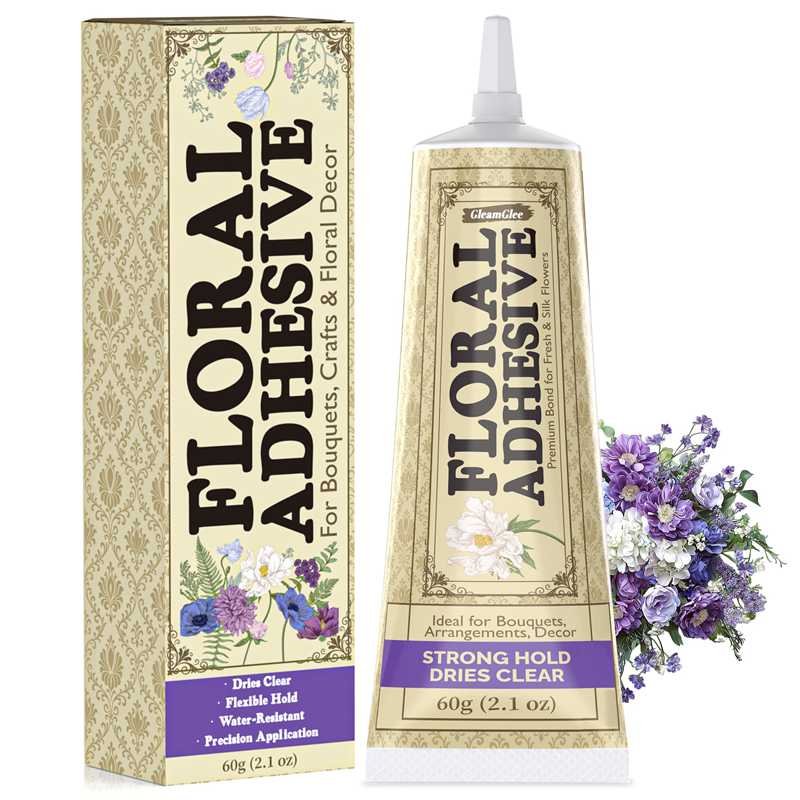
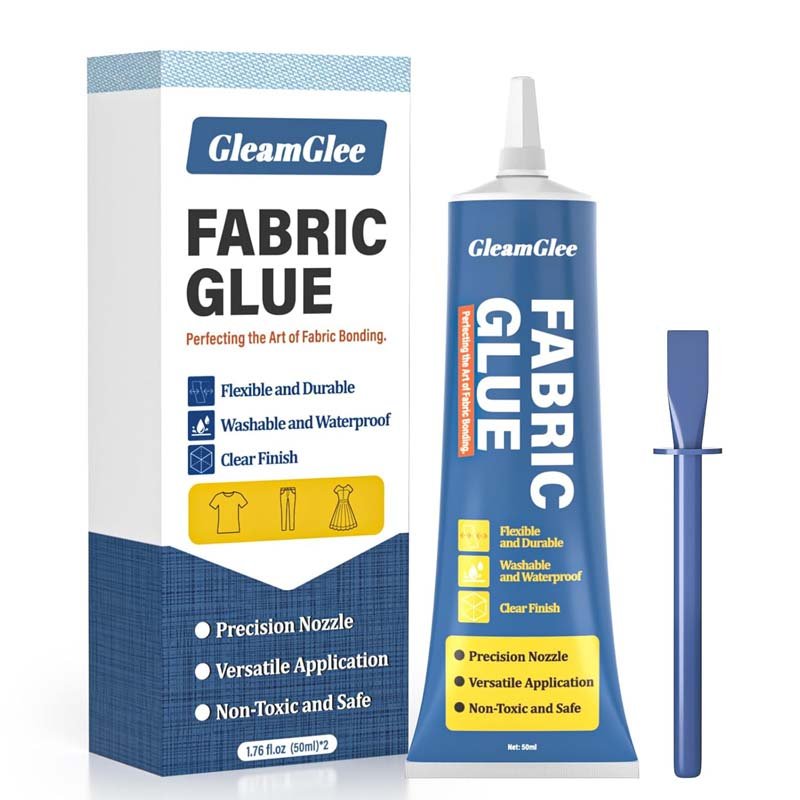
GleamGlee floral glue is right for people who need a clean, clear, waterproof, fast-drying, and flexible adhesive for fresh flowers, artificial flowers, table centerpieces, bouquets, corsages, boutonnieres, floral crowns, foam, ribbon, glass, ceramic, plastic, fabric, and handmade décor. It is made for floral work where the bond needs to stay hidden and the arrangement still needs to look natural from close range.
For table centerpieces, the most useful part is control. A centerpiece often has many small problem areas: one rose head leans forward, ribbon edges lift, greenery slides off the foam edge, or an artificial flower rotates on a vase rim. GleamGlee floral glue uses a precision metal nozzle to help place small dots and thin lines instead of thick glue marks. The clear finish helps keep the focus on flowers, candles, vases, and table styling.
GleamGlee also fits retail, online, florist supply, wedding décor, craft, and private label product needs because the company can support formula production, packaging design, label printing, samples, bulk production, and shipping preparation. Custom MOQ can start from 200 units. Artwork can be prepared as fast as 2 days, samples usually take 7–14 days, and standard bulk production is usually around 20 days, with rush production possible in about 15 days depending on the project.
| Need | GleamGlee Floral Glue Fit |
|---|---|
| Clear finish | Dries clear for cleaner floral displays |
| Fresh flower use | Bonds flowers, stems, greenery, and foam without heat |
| Event work | Helps secure centerpieces, bouquets, corsages, and décor details |
| Moisture resistance | Waterproof formula supports fresh stems and damp floral foam |
| Small detail control | Precision metal nozzle reduces mess and waste |
| Mixed materials | Works on floral foam, ribbon, glass, ceramic, plastic, silk, and fabric |
| Custom product launch | Logo, packaging, label, and formula direction can be customized |
| Small trial order | Custom MOQ from 200 units |
Is GleamGlee floral glue clear?
GleamGlee floral glue is designed to dry clear, which matters most when flowers are viewed up close on dining tables, wedding tables, restaurant tables, gift displays, and photo areas. In a table centerpiece, glue marks are easy to notice because guests usually sit close to the vase, candle holder, ribbon, or flower base. A white, cloudy, or yellowish adhesive can make a finished arrangement look rushed, even when the flowers are expensive. Clear floral glue helps hide the bond under petals, behind leaves, inside ribbon overlaps, or along the back side of décor pieces. It is especially useful on glass vases, ceramic containers, acrylic table signs, preserved flowers, silk flowers, satin ribbon, and pale blooms where visible residue would stand out.
Key clear-finish benefits:
- Helps keep glue points less visible on close-up table décor.
- Works well for glass vases, candle holders, ceramic bowls, and acrylic signs.
- Keeps ribbon edges, flower accents, and greenery looking cleaner.
- Helps handmade arrangements look more polished without heavy tools.
- Reduces the need for visible tape, pins, or bulky hot glue marks.
| Arrangement Detail | Why Clear Glue Matters | Better Application Method |
|---|---|---|
| Glass vase ribbon | White glue marks show quickly | Apply a thin line at the ribbon overlap |
| White or pale flowers | Marks can look yellow or dark | Test first and use a tiny hidden dot |
| Candle ring flowers | Guests see details from above | Glue from the back or bottom side |
| Preserved flowers | Surface is often delicate | Use micro dots on hidden areas |
| Acrylic table number | Smears are easy to see | Clean surface before applying |
| Corsage or boutonniere | Photos show close details | Place glue behind petals and leaves |
A clear finish still depends on neat use. Even transparent adhesive can look messy if too much is squeezed onto the flower face. The best result comes from small dots, light pressure, and hidden contact points.
Is GleamGlee floral glue flexible?
GleamGlee floral glue is made to form a strong but flexible bond, which is important because flower arrangements are not rigid. Fresh stems bend slightly, petals shift, ribbon curves, greenery settles, and centerpieces often move from a worktable to a box, from a vehicle to a venue, and then onto the table. A brittle glue can crack or pull away when flowers move. A flexible floral glue helps the design hold its shape while still allowing small natural movement. This is useful for table centerpieces, bouquets, corsages, boutonnieres, floral crowns, wreaths, and artificial flower displays. Flexibility also helps when bonding different materials together, such as silk flowers to plastic stems, ribbon to glass, greenery to foam, or floral accents to ceramic bases.
Useful flexible-bond situations:
- Bouquets that are carried, photographed, and placed down several times.
- Corsages and boutonnieres that move with clothing.
- Flower crowns that need to bend gently while worn.
- Table centerpieces transported before display.
- Ribbon and fabric details wrapped around round vases.
- Artificial flowers attached to smooth or curved surfaces.
| Project | Flexible Bond Benefit | Common Problem with Brittle Glue |
|---|---|---|
| Wedding bouquet | Moves with handling | Bond cracks near stems |
| Table centerpiece | Survives transport and placement | Flowers loosen after movement |
| Corsage | Moves with fabric | Petals pull away |
| Floral crown | Bends naturally | Glue breaks at small flowers |
| Vase ribbon | Curves around container | Edge lifts or snaps loose |
| Artificial flower décor | Handles light movement | Flower head rotates or drops |
A flexible bond is not meant to carry very heavy pieces alone. Large flowers, tall stems, and heavy décor still need support from foam, wire, a vase grid, or the container. Floral glue works best when it locks details in place after the main structure is already stable.
Is GleamGlee floral glue for events?
GleamGlee floral glue is suitable for event flowers because it supports the small details that often fail during setup, transport, or display. Wedding receptions, banquet tables, restaurant tables, hotel lobby flowers, party backdrops, chair flowers, memorial arrangements, and seasonal installations all need flowers to stay neat for several hours. During an event, arrangements may face air conditioning, candle heat, guest movement, light handling, humidity, or outdoor temperature changes. GleamGlee floral glue is clear, waterproof, fast-drying, and flexible, so it can help secure flower accents, greenery, ribbon, foam details, artificial blooms, and decorative pieces without making the arrangement look overbuilt. It is especially useful for last-stage finishing work before the display is placed on tables.
Common event uses:
- Fixing small blooms on table centerpieces before dinner service.
- Securing ribbon ends on glass or ceramic vases.
- Adding greenery to hide floral foam edges.
- Reinforcing corsages and boutonnieres before photos.
- Attaching artificial flowers to candle rings or table signs.
- Repairing loose petals during venue setup.
| Event Scene | Floral Glue Use | Suggested Timing |
|---|---|---|
| Wedding table centerpiece | Secure small flowers, leaves, and ribbon | 30–60 minutes before transport |
| Banquet table décor | Hold accents on vases and candle holders | Before final table placement |
| Restaurant flowers | Keep ribbons and greenery neat | During daily arrangement prep |
| Outdoor party | Reinforce light leaves and blooms | Allow extra rest time |
| Photo backdrop | Attach lightweight floral details | Test hold before installation |
| Corsage station | Fix petals, ribbon, and greenery | Let rest before wearing |
| Memorial wreath | Secure flowers and ribbon details | Prepare before delivery |
For event work, floral glue should be used with a practical routine: build the main structure first, glue the details second, let the arrangement rest, then check from guest eye level. This keeps the design clean while reducing last-minute movement.
Is GleamGlee floral glue easy to use?
GleamGlee floral glue is easy to use because it is designed for small-area application, clean finishing, and mixed floral materials. The precision metal nozzle helps control the glue flow, which is important when working with tiny petals, narrow stems, ribbon edges, flower crowns, corsages, and table décor details. Many glue problems come from poor control rather than poor bond strength. Too much glue can stain petals, soak ribbon, slow drying, or leave visible lumps. A fine nozzle allows small dots and thin lines, making the process easier for home users, florists, craft makers, and event teams.
Easy-use features:
- Precision metal nozzle for small dots and thin lines.
- Clear drying formula for a cleaner final look.
- No hot glue gun needed for delicate flower work.
- Works on both fresh and artificial floral materials.
- Suitable for small repairs and full centerpiece finishing.
| User Need | How GleamGlee Helps |
|---|---|
| Less mess | Fine nozzle controls glue amount |
| Better detail work | Small dots fit petals, leaves, and ribbons |
| Cleaner table décor | Clear finish hides bond points |
| Faster arrangement fixes | Fast-drying formula supports event prep |
| Fewer tools | Bonds without heat, pins, or visible tape |
| More surface options | Works on foam, glass, ceramic, fabric, plastic, and silk |
For best results, apply less than expected at first. Press gently, allow enough rest time, and add a second small dot only if needed. This method keeps flowers lighter, cleaner, and more natural.
Is GleamGlee floral glue suitable for private label?
GleamGlee floral glue is suitable for private label projects because the company can support formula production, packaging selection, label design, sample preparation, bulk filling, and shipping preparation. A floral glue product needs more than adhesive strength. The bottle should be easy to squeeze, the nozzle should apply smoothly, the label should explain the product clearly, and the packaging should be suitable for online or retail sales. GleamGlee can help create floral glue products for wedding craft lines, florist supply ranges, DIY décor brands, Amazon stores, Shopify shops, craft retailers, and seasonal gift categories.
Private label support can include:
- Existing clear waterproof floral glue formula.
- Custom logo, label, and box design.
- Bottle, tube, nozzle, and packaging selection.
- Multilingual instructions for different markets.
- Samples in 7–14 days after project confirmation.
- Bulk production usually around 20 days.
- Custom MOQ from 200 units.
| Project Item | GleamGlee Support |
|---|---|
| Formula | Clear, waterproof, fast-drying, flexible floral adhesive |
| Packaging | Bottle, tube, retail box, carded pack, or kit format |
| Nozzle | Precision metal tip or suitable custom option |
| Design | Label and artwork support, as fast as 2 days |
| Samples | Usually 7–14 days |
| Production | Around 20 days for standard bulk orders |
| Rush order | Around 15 days depending on schedule |
| Compliance | Label and document support for major markets |
A strong private label floral glue should match the exact sales scene: wedding centerpieces, fresh flowers, artificial flowers, craft kits, florist tools, or seasonal decorations. GleamGlee can help adjust the product presentation so the final item feels clear, useful, and ready for the target market.
How Can Brands Customize Floral Glue?
Brands can customize floral glue by changing the formula direction, bottle size, nozzle type, label design, retail box, language, instruction layout, bundle format, and shipping carton. A strong floral glue product should match the exact sales scene: wedding centerpieces, fresh flowers, artificial flowers, craft kits, florist tools, gift wrapping, or seasonal decoration. The clearer the use case, the easier it is to create packaging that shoppers understand quickly.
Floral glue is a small product, but small details affect repeat sales. If the nozzle is too wide, users may squeeze out too much glue. If the label does not explain where to use it, shoppers may think it is just another craft glue. If the formula dries cloudy, it may ruin glass vases, white flowers, or ribbon décor. A customized product should improve the full use process: choosing it, opening it, applying it, drying it, and storing it after use.
GleamGlee can support floral glue customization from ready formula selection to packaging design and production. Custom MOQ can start from 200 units. Printable artwork can be prepared as fast as 2 days after the design direction is confirmed. Samples usually take 7–14 days, and standard bulk production is usually around 20 days. Rush production can be arranged in about 15 days depending on the packaging, quantity, and production schedule.
| Custom Area | Options | Practical Value |
|---|---|---|
| Formula direction | Clear, waterproof, fast-drying, flexible, low-odor | Matches real floral use |
| Use positioning | Fresh flowers, artificial flowers, centerpieces, corsages, craft décor | Makes the product easier to sell |
| Bottle size | Small craft size, standard retail size, multi-pack | Fits different price points |
| Nozzle type | Precision metal tip, fine tip, anti-clog cap | Controls glue flow better |
| Label style | Wedding, florist, craft, DIY, seasonal theme | Helps shoppers understand the use quickly |
| Language | English, German, French, Spanish, Italian, Dutch, Japanese | Supports regional sales |
| Packaging | Bottle, tube, retail box, carded pack, kit format | Fits online and store display |
| Bundle format | Glue + floral tape, glue + ribbon, glue + tools | Raises product value |
| Carton setup | Small carton, master carton, FBA-ready carton | Helps storage and shipment |
Can brands customize the floral glue formula?
Brands can customize the floral glue formula based on how the product will be used. A floral glue for fresh wedding flowers may focus on clear drying, waterproof hold, low odor, and flexible bonding. A version for artificial flowers may need stronger grip on plastic stems, silk petals, foam wreaths, and craft surfaces. A DIY craft version may place more weight on easy application, clean finish, and safe handling instructions. The formula direction should not be chosen only by one claim on the label. It should match the materials, weather conditions, and common mistakes users face during real projects.
Main formula choices:
- Clear drying for glass, ribbon, white flowers, and close-up table décor.
- Waterproof hold for fresh stems, wet floral foam, and event arrangements.
- Flexible bond for bouquets, corsages, flower crowns, and movable designs.
- Fast drying for wedding setup, workshop use, and repeated centerpiece making.
- Low-odor direction for home craft rooms, floral studios, and indoor events.
| Formula Direction | Best Use Scene | Why It Matters |
|---|---|---|
| Clear finish | Wedding tables, glass vases, gift décor | Keeps glue marks less visible |
| Waterproof | Fresh flowers, wet foam, outdoor décor | Helps resist normal floral moisture |
| Flexible hold | Bouquets, corsages, crowns | Reduces cracking when flowers move |
| Fast drying | Event setup, floral workshops | Saves waiting time |
| Stronger craft grip | Artificial flowers, foam, plastic, fabric | Improves hold on mixed materials |
GleamGlee can recommend a formula direction based on the target product scene. For example, “floral glue for fresh flowers” and “floral glue for artificial wreaths” should not use the same product story. The formula, label claims, images, and usage steps should all match the main project type.
Can brands customize the bottle and nozzle?
Brands can customize the bottle and nozzle because application control is one of the biggest reasons users like or dislike floral glue. Floral work often needs tiny dots, short lines, and accurate placement under petals, behind leaves, or along ribbon overlaps. If the bottle is hard to squeeze or the nozzle releases too much glue, users may stain flowers or waste product. A precision metal nozzle is a strong choice for floral glue because it helps users apply adhesive in narrow areas without flooding the arrangement.
Common bottle and nozzle options:
- Small bottle for DIY kits, gift sets, and occasional use.
- Standard retail bottle for florists, craft stores, and online sales.
- Precision metal nozzle for petals, corsages, ribbons, and small accents.
- Fine plastic tip for simple craft positioning.
- Anti-clog cap design to reduce blocked tips after storage.
| Packaging Part | Option | Best Use |
|---|---|---|
| Small bottle | Lightweight and low price point | DIY kits, gift wrapping, small craft packs |
| Standard bottle | More practical capacity | Florists, event work, online retail |
| Precision metal nozzle | Fine glue control | Fresh flowers, ribbons, corsages |
| Fine plastic tip | Simple daily use | General flower crafts |
| Sealed cap | Better storage | Repeat use after opening |
| Retail box | More giftable look | Wedding and craft store shelves |
Bottle design should also consider shipping. Adhesive products need strong caps, proper sealing, and carton protection to reduce leakage complaints. A nice label cannot fix poor packaging performance. Good floral glue packaging should look attractive, apply cleanly, and arrive safely.
Can brands customize the label and packaging?
Brands can customize the label and packaging to match the sales channel and target use. Floral glue packaging should explain the product quickly because many shoppers compare several adhesives at once. The front label should make the core use clear: floral glue, clear finish, waterproof hold, fast drying, precision tip, fresh flowers, foam, ribbon, glass, ceramic, and artificial blooms. The back label should give simple steps, drying notes, storage tips, and surface reminders. Clear instructions reduce misuse and help users get better results on the first try.
Useful packaging details:
- Front label with 4–6 clear selling points, not crowded text.
- Step-by-step use icons for quick understanding.
- Surface icons for flowers, foam, ribbon, glass, ceramic, fabric, and plastic.
- Storage reminder to close the cap after use.
- Safety and compliance text based on the selling region.
| Packaging Area | What to Include | Better Effect |
|---|---|---|
| Front label | Clear, waterproof, fast-drying, flexible, precision tip | Fast shopper understanding |
| Back label | Apply, press, dry, check, store | Fewer use mistakes |
| Icons | Flower, foam, ribbon, glass, ceramic, plastic | Easier visual reading |
| Retail box | Main use scenes and before/after idea | Better shelf appeal |
| Online image text | Centerpieces, corsages, bouquets, craft décor | Better product-page clarity |
| Multilingual label | Local language instructions | Easier regional sale |
For Amazon and online stores, packaging should also match product images. If the product is positioned for wedding centerpieces, the label and product photos should show table décor, flowers, vases, ribbon, and foam use. If the product is positioned for craft stores, the packaging can highlight wreaths, gift boxes, artificial flowers, cards, and seasonal décor.
Can brands customize floral glue kits?
Brands can customize floral glue kits by combining the glue with related tools or decorative materials. Kits are useful because many people buying floral glue are preparing a project, not just buying adhesive. A wedding DIY user may also need ribbon, floral tape, small scissors, wire, or instruction cards. A craft user may want dried flowers, mini artificial blooms, or gift tags. A florist workshop may prefer glue, tape, wire, and sample practice materials in one package. A kit can make the product feel more complete and can support a higher selling price.
Practical kit ideas:
- Floral glue + floral tape for bouquets and centerpieces.
- Floral glue + ribbon for wedding table décor.
- Floral glue + wire for corsages and boutonnieres.
- Floral glue + dried flowers for gift cards and craft projects.
- Floral glue + instruction card for DIY wedding or workshop use.
| Kit Type | Included Items | Suitable Scene |
|---|---|---|
| Wedding centerpiece kit | Floral glue, ribbon, instruction card | DIY wedding tables |
| Corsage kit | Floral glue, floral tape, wire | Prom, wedding, formal events |
| Craft gift kit | Floral glue, dried flowers, gift tags | Cards, gift wrapping |
| Wreath kit | Floral glue, artificial flowers, tape | Seasonal home décor |
| Florist practice kit | Floral glue, sample materials, tools | Workshops and training |
Kit design should stay focused. Too many accessories can increase cost and make the package harder to ship. A good kit solves one project clearly, such as “make table centerpieces” or “make corsages,” rather than trying to cover every floral craft at once.
What MOQ and timeline can brands expect?
GleamGlee can support custom floral glue projects from 200 units, depending on formula selection, packaging style, printing method, and order details. A lower starting quantity helps new product tests, small online launches, seasonal campaigns, and niche craft lines. After the first test, the quantity can be increased for repeat orders, retail supply, or wider online sales. The fastest projects usually use an existing formula, available bottle, standard nozzle, and customized label. More complex projects, such as new packaging molds, special kit formats, or formula adjustments, need more time.
Typical project timeline:
- Artwork: as fast as 2 days after design direction is confirmed.
- Samples: usually 7–14 days.
- Standard bulk production: usually around 20 days.
- Rush production: about 15 days when the schedule allows.
- MOQ: custom projects can start from 200 units.
| Project Type | MOQ Direction | Timeline Direction |
|---|---|---|
| Existing formula + custom label | From 200 units | Fastest route |
| Custom label + retail box | From 200 units | Artwork plus sample confirmation |
| Formula direction adjustment | Project-based | Extra testing time needed |
| Kit packaging | Project-based | Depends on accessories and packing method |
| Larger repeat order | Flexible by demand | Planned production schedule |
| Rush order | Confirm by project | Around 15 days if available |
To speed up the quotation, prepare the target market, selling channel, quantity, bottle size, label language, logo files, and preferred product style before contacting GleamGlee. Clear project details reduce back-and-forth communication and help the team recommend the right floral glue solution faster.

Why Choose GleamGlee as a Floral Glue Manufacturer?
GleamGlee is a practical choice for floral glue manufacturing because the company controls formula development, packaging design, filling, label printing, raw material supply, and export preparation under one production system. For floral glue, this matters because a good product is not only about whether it sticks. The bottle must apply smoothly, the nozzle must stay clean, the glue must dry clear, the label must be easy to understand, and the carton must protect the product during shipping.
Floral glue is often used in close-view designs such as wedding table centerpieces, corsages, boutonnieres, flower crowns, gift boxes, glass vases, and decorative displays. Small problems become very visible. If the glue dries cloudy, leaks during shipping, clogs after one use, or gives unclear instructions, users may lose trust quickly. GleamGlee’s experience in adhesives, cleaners, packaging, and e-commerce product development helps reduce these problems before production.
GleamGlee is based in Dongguan, Guangdong, China, with more than 25 chemists, material scientists, and process engineers, more than 18 product and packaging designers, four specialized factory systems, and annual production capacity above 12 million pieces. The company supports ISO 9001 and ISO 14001 production management, multilingual packaging, CLP, REACH, UKCA, and GHS-related label preparation, low MOQ customization from 200 units, samples in 7–14 days, and standard bulk production around 20 days.
What makes GleamGlee reliable?
GleamGlee is reliable because the company can manage the main parts of floral glue production in one coordinated process. Floral glue may seem like a small adhesive item, but reliable production depends on formula stability, bottle compatibility, nozzle flow, filling accuracy, label quality, storage condition, and carton protection. If any one of these details is ignored, the final product may create complaints even when the adhesive formula itself is good. GleamGlee’s manufacturing system connects R&D, packaging, label printing, raw materials, filling, inspection, and logistics preparation, so the product can be developed and repeated with better control.
Key reliability points:
- More than 25 chemists, material scientists, and process engineers support adhesive formula development and testing.
- More than 18 designers support packaging, label layout, product visuals, and multilingual instructions.
- Four factory systems cover daily chemical processing, packaging materials, label printing, and raw material support.
- Annual production capacity above 12 million pieces supports trial orders, repeat orders, and larger supply plans.
- Custom MOQ can start from 200 units, which is useful for new product testing and small brand launches.
- Samples usually take 7–14 days, helping projects move from idea to physical product faster.
- Bulk production is usually around 20 days, with rush production possible in about 15 days depending on the project.
| Reliability Area | What It Means for Floral Glue |
|---|---|
| Formula control | Glue performance can remain more stable across batches |
| Nozzle matching | Glue flow can be adjusted to suit fine floral work |
| Packaging control | Bottles, caps, boxes, and labels can be tested together |
| Label design | Usage steps and material icons can be made clearer |
| Production scale | Small trial orders and repeat supply can both be supported |
| Export preparation | Carton, labeling, and shipment details can be planned early |
For floral glue, reliability is not only factory size. It is the ability to repeat the same user experience: clear drying, smooth application, clean packaging, stable supply, and fewer avoidable problems after the product reaches the market.
What quality checks are important?
Quality checks for floral glue should cover the adhesive formula, the application nozzle, the finished bottle, the label, and the shipping package. Many adhesive complaints are not only caused by weak bonding. Users may complain because the glue is too runny, too thick, hard to squeeze, cloudy after drying, slow to set, leaking in the package, or blocked at the tip. A serious floral glue manufacturer should test both performance and handling. The product must work on flowers, foam, ribbon, glass, ceramic, plastic, fabric, and artificial blooms, but it must also feel easy and clean when used at home, in a floral shop, or during event setup.
Important checks before shipment:
- Viscosity check: confirms the glue is not too thin or too thick for floral detail work.
- Nozzle flow test: checks whether small dots and thin lines can be applied smoothly.
- Clear-drying check: confirms the glue dries cleanly on visible décor surfaces.
- Bonding test: reviews hold on floral foam, stems, ribbons, glass, ceramic, fabric, and artificial flowers.
- Moisture-resistance check: tests performance near damp stems and wet floral foam.
- Bottle sealing test: helps reduce leakage during storage and transport.
- Cap and nozzle fit check: reduces clogging, drying at the tip, and poor user experience.
- Label inspection: checks barcode, language, icons, warning text, and printing quality.
- Carton drop and packing check: helps protect products during e-commerce and export shipping.
| Quality Check | Practical Reason |
|---|---|
| Glue thickness | Affects squeeze control and drying speed |
| Drying color | Clear finish is critical for centerpieces and glass décor |
| Foam bond | Floral foam is common in table arrangements |
| Ribbon bond | Ribbon slipping is a common event décor problem |
| Glass bond | Smooth surfaces need clean contact and suitable adhesion |
| Nozzle test | Fine application reduces waste and visible glue marks |
| Leakage test | Prevents poor arrival condition and refund risk |
| Label check | Reduces misuse by making instructions easier to follow |
| Batch record | Helps keep repeat orders consistent |
For floral glue, the nozzle should be checked as carefully as the formula. A precision metal nozzle can make the product feel more professional, but only when the glue viscosity, cap seal, and bottle pressure work together.
How does GleamGlee support packaging?
GleamGlee supports floral glue packaging from bottle selection to label design, retail box layout, multilingual instructions, and shipment carton planning. Packaging has a direct effect on sales because shoppers often decide within a few seconds whether the product looks suitable for their project. A floral glue label should not be crowded or vague. It should clearly show the core uses: table centerpieces, fresh flowers, artificial flowers, foam, ribbon, glass, ceramic, corsages, boutonnieres, and wedding décor. The back label should explain how to apply the glue, how much to use, how long to let it dry, and what surfaces need cleaning before bonding.
Packaging support can include:
- Bottle, tube, or kit packaging selection based on the sales channel.
- Precision metal nozzle or suitable fine-tip options for detailed floral work.
- Front label design with clear product claims and material icons.
- Back label with step-by-step use directions and storage reminders.
- English, German, French, Italian, Spanish, Dutch, Japanese, and Chinese language options.
- Retail box, carded pack, or bundle set design for craft stores and online sales.
- Waterproof and chemical-resistant label materials when needed.
- Carton design for Amazon FBA, wholesale cartons, or export shipments.
| Packaging Element | Better Design Direction |
|---|---|
| Front label | Clear product name, main uses, and 4–6 simple benefits |
| Usage icons | Flowers, foam, ribbon, glass, ceramic, plastic, fabric |
| Nozzle callout | Show precision tip for clean application |
| Back label | Short steps: apply, press, dry, check, store |
| Retail box | Show wedding, centerpiece, and craft scenes |
| Multilingual text | Match the target region and retail requirements |
| Carton | Protect against pressure, leakage, and transport damage |
Good packaging should reduce confusion. A shopper should quickly understand that the product is not ordinary craft glue. It is floral glue for clean, clear, detailed flower arrangement work.
Which markets can GleamGlee support?
GleamGlee can support floral glue projects for North America, Europe, the United Kingdom, Canada, Japan, and other international markets. The company has experience with Amazon, eBay, Rakuten, Shopee, Lazada, direct sales, retail cooperation, distributors, and customized adhesive product supply. It also has overseas warehouse and FBA-related shipping experience in the United States, Canada, the United Kingdom, and Germany. This is useful for floral glue because demand is often seasonal. Wedding season, Valentine’s Day, Mother’s Day, Christmas, spring craft season, and graduation events can create short sales windows, so production and shipment planning need to be arranged early.
Strong market scenes for floral glue:
- Wedding centerpiece supplies for online and retail sales.
- Florist tools for bouquets, corsages, boutonnieres, and foam arrangements.
- DIY craft products for wreaths, gift boxes, greeting cards, and home décor.
- Artificial flower glue for silk flowers, plastic stems, and long-term displays.
- Seasonal decoration kits for Christmas, spring, Valentine’s Day, and Mother’s Day.
- Restaurant, hotel, and event décor supply for repeated table arrangement use.
- Amazon and Shopify product lines focused on flower crafts and wedding décor.
| Market | Floral Glue Product Direction |
|---|---|
| United States | Wedding décor, DIY crafts, Amazon multipacks, event supplies |
| United Kingdom | Florist tools, craft retail, home décor, small gift kits |
| Germany | Clear instructions, quality-focused packaging, practical repair and craft use |
| Canada | Wedding, seasonal décor, online retail, FBA-ready supply |
| Japan | Clean design, precise nozzle, compact packaging, detailed instructions |
| European Union | Multilingual labels, compliance-ready packaging, retail shelf clarity |
For floral glue, market fit is often about showing the right use scene. A product made for wedding centerpieces should look different from a product made for wreath crafts or artificial flower displays. GleamGlee can help adjust the product story, packaging, and instruction style around the main selling scene.
Conclusion
Floral glue may be a small tool, but it plays a big role in making table centerpieces and arrangements look clean, stable, and carefully finished. The right floral glue should dry clear, resist normal floral moisture, stay flexible after drying, and apply neatly in small dots or thin lines. For weddings, dinner tables, restaurant displays, home décor, corsages, bouquets, wreaths, and gift decoration, it helps solve common problems such as loose petals, sliding ribbon, shifting greenery, exposed foam, and artificial flowers that will not stay in place. When used with good floral structure and proper flower care, floral glue can make arrangements look more polished and last more confidently through setup, transport, and display.
GleamGlee floral glue is designed for these real floral needs, with a clear finish, waterproof hold, fast-drying performance, flexible bonding, and a precision metal nozzle for cleaner detail work. It works on fresh flowers, artificial blooms, floral foam, stems, ribbons, glass, ceramic, fabric, plastic, and many craft surfaces. For ready product orders, custom packaging, private label floral glue, or formula and packaging development, GleamGlee can support projects from sample preparation to bulk production. Contact GleamGlee to order branded floral glue products or request a custom quotation for your floral adhesive line.
Share:
Table of Contents
Here, creating your adhesives glue & removal cleaner collection is no longer a barrier—it’s a collaborative journey where GleamGlee helps brands and businesses transform their vision into durable, certified, and market-ready solutions.
Partner with GleamGlee
Join hundreds of global partners who trust GleamGlee for adhesives and cleaners that combine innovation, compliance, and speed. Our vertically integrated system—from R&D to warehouse—guarantees consistent performance and reliable delivery.
Whether you’re sourcing FBA-ready stock or developing your own formula, our team provides unmatched technical support and responsive service.