Skip to content
How to Use Fabric Glue for Decathlon Jacket Repair: A Useful Guide
Your trusted adhesives glue & cleaner manufacturer

A Decathlon jacket is often bought for one simple reason: it is meant to be used. It may be a Quechua hiking jacket packed into a backpack, a Forclaz padded jacket worn on cold trips, a Wedze ski jacket used in winter, or a lightweight rain jacket kept near the door for sudden weather. These jackets are practical, but practical clothing gets damaged in practical ways. A sleeve catches on a branch. A pocket edge starts lifting. A small tear appears after rubbing against a backpack buckle. A child’s school jacket comes home with a pulled seam. Many people do not want to throw the jacket away, but they also do not want a repair that looks messy, stiff, or uncomfortable.
Fabric glue for Decathlon jacket repair is best for small tears, loose lining, light seam lifting, patch attachment, and no-sew fixes where the jacket still needs to bend naturally. Clean the area first, apply a thin layer of flexible fabric glue, press the repair flat, let it set for 6–10 minutes, and allow 24 hours for full curing before washing or outdoor wear.
The key is choosing the right repair method for the damage. A tiny puncture on a padded jacket needs a different approach from a loose inner lining or a frayed cuff. Used correctly, fabric glue can turn a jacket that looks ready for the bin into one that is ready for another season of walking, commuting, camping, school runs, or weekend travel.
What Can Fabric Glue for Decathlon Jacket Fix?
Fabric glue for Decathlon jacket repair can fix small tears, loose lining, light seam lifting, patch attachment, frayed cuffs, pocket fabric, and minor fabric trim problems. It works best when the damaged area is clean, dry, flat, and not carrying heavy pulling force. For holes or outer-shell tears, fabric glue should usually be used with a patch, not only as a thin line over the tear.
A Decathlon jacket is often used hard: hiking with a backpack, walking in rain, commuting, camping, skiing, school use, or daily outdoor wear. Small damage usually appears in predictable places: sleeve edges, pocket corners, hem seams, inner lining, cuff binding, or the outer shell after scraping against branches, metal hooks, bike handles, or rough walls. These problems do not always need sewing. Many can be repaired neatly with flexible fabric glue if the damage is caught early.
The most important rule is to match the repair method to the damage size. A 3–5 mm puncture may only need a small hidden glue repair or a mini patch. A 1–3 cm tear needs a larger patch because the fabric around the tear will keep moving. A loose lining seam can often be fixed with a narrow glue line. A shoulder seam, zipper tape, or underarm split may need stronger reinforcement because those areas take repeated pulling.
| Damage Type | Best Repair Method | Suggested Patch Size | Repair Difficulty | Notes |
|---|---|---|---|---|
| Pin-hole puncture | Fabric glue + small patch | 1–2 cm larger than hole | Easy | Good for padded jackets before filling escapes |
| 1–2 cm shell tear | Fabric glue + rounded patch | 2 cm larger on each side | Medium | Better than glue alone |
| Loose inner lining | Thin glue line | Usually no patch needed | Easy | Use very little glue |
| Frayed cuff edge | Light glue sealing | Optional narrow strip | Medium | Avoid thick glue buildup |
| Loose pocket fabric | Thin glue + pressure | Small backing patch if needed | Medium | Check corners carefully |
| Long seam split | Glue + patch or sewing | 3 cm+ wider than split | Hard | High-stress areas need extra support |
Which Small Tears Can Fabric Glue Fix?
Fabric glue for Decathlon jacket repair works well on small tears where the fabric has not lost its shape. This includes tiny cuts on a Quechua hiking jacket, branch scratches on a rain shell, a small puncture on a Forclaz padded jacket, or a narrow tear near the pocket area. When the tear is under about 2 cm and the fabric edges still sit close together, a flexible fabric glue repair can stop the damage from spreading.
For outer-shell damage, a patch usually gives a better result than glue alone. The patch should cover the tear and extend at least 1–2 cm beyond the damaged edge. This matters because jacket fabric moves every time the arm bends or the body twists. If glue is placed only inside the cut, all the pressure stays on that weak line. A patch spreads that pressure across a larger area, making the repair flatter and more reliable.
For padded jackets, repair small holes as soon as possible. Once down or synthetic filling starts escaping, the hole can become harder to close cleanly. Use only a thin glue layer, keep the filling away from the adhesive, and press the patch flat. Too much glue can create a hard spot or make the surface look shiny.
Can Fabric Glue Hold Loose Seams?
Fabric glue can hold loose seams on a Decathlon jacket when the seam is short, clean, and not placed in a high-pull area. Good examples include a loose hem, inner lining seam, pocket fabric edge, cuff binding, or a small flap of fabric that has started lifting. These repairs are often about keeping the jacket neat, comfortable, and wearable without sewing.
A narrow glue line is enough for most seam repairs. Around 1–2 mm of glue along the loose edge is usually cleaner than a wide strip. Apply the glue, press the seam flat, and keep it still while it sets. If the fabric keeps springing open, use light clips, a flat weight, or a book with wax paper between the repair and the weight. The wax paper prevents accidental sticking.
Be more careful with shoulder seams, underarm seams, zipper seams, and areas under backpack straps. These spots take more pressure, so glue alone may not be enough for long-term use. In those cases, fabric glue can help hold the fabric in position, but a patch, backing strip, or stitching may give better strength. For daily wear areas, a flat and flexible repair is more important than using a thick amount of glue.
Can Fabric Glue Attach Jacket Patches?
Fabric glue is very useful for attaching patches to a Decathlon jacket, especially when sewing may leave needle holes or make the repair look uneven. Patch repair is often the best choice for outer-shell tears, padded jacket punctures, and areas where the original fabric has become weak. A patch does more than cover the hole; it adds a new support layer.
The patch shape matters. Rounded corners last better than sharp square corners because they are less likely to catch during washing, packing, or sleeve movement. For a 1 cm tear, a patch around 3–5 cm wide is often more reliable than a patch barely larger than the damage. For elbows, cuffs, pocket corners, or children’s jackets, a slightly larger patch is safer because those areas rub more often.
Apply a thin glue layer across the back of the patch, with careful coverage near the edges. Most patch failure starts at the edge, not the center. Press from the center outward to remove air bubbles and wipe away extra glue before it dries. After 24 hours of curing, the patch should feel flat, flexible, and secure. If one corner lifts after the first wear, add a tiny amount of glue under that corner and cure again.
Can Fabric Glue Repair Inner Linings?
Fabric glue works especially well for inner lining repairs because the lining is usually protected from rain, sunlight, and heavy abrasion. Common repairs include a torn pocket lining, loose sleeve lining, split lower hem, or a thin fabric flap that catches when the jacket is worn. These areas often do not need sewing if the damage is small and the fabric can be pressed flat.
Use very little glue on lining fabric. Many jacket linings are thin polyester, and too much glue can bleed through, darken the area, or create a stiff patch that feels uncomfortable against clothing underneath. A narrow glue line or a small backing patch is usually enough. If the lining is slippery, hold it carefully in place and avoid moving it once pressed.
For padded Decathlon jackets, keep glue away from down or synthetic filling. The filling should stay loose and airy. If adhesive touches the insulation, it can clump, flatten, or create an uneven feel inside the jacket. Place wax paper behind the repair area when possible, especially inside sleeves or pockets, so the glue does not bond one jacket layer to another. Let the jacket lie flat for 24 hours before wearing or washing.
Which Fabric Glue for Decathlon Jacket Works Best?
The best fabric glue for Decathlon jacket repair should be flexible, clear-drying, washable after full cure, easy to control, and suitable for synthetic outdoor fabrics such as polyester, nylon, lining fabric, and fabric patches. A Decathlon jacket is not a flat craft project. It bends at the sleeve, folds at the hem, rubs under backpack straps, and may need washing after rain, mud, sweat, or daily commuting. A glue that dries hard may close the tear, but it can make the jacket feel stiff, cracked, or uncomfortable.
For most Decathlon jacket repairs, a fabric-specific glue is better than super glue, hot glue, craft glue, or heavy construction adhesive. The repair needs to stay soft enough for movement and clean enough for visible fabric. A strong but rigid glue can create a hard spot. A weak craft glue may peel after washing. A thick adhesive may leave shine or texture on smooth jacket fabric. The safest choice is usually a clear flexible fabric glue used with a patch for holes and a thin glue line for loose seams.
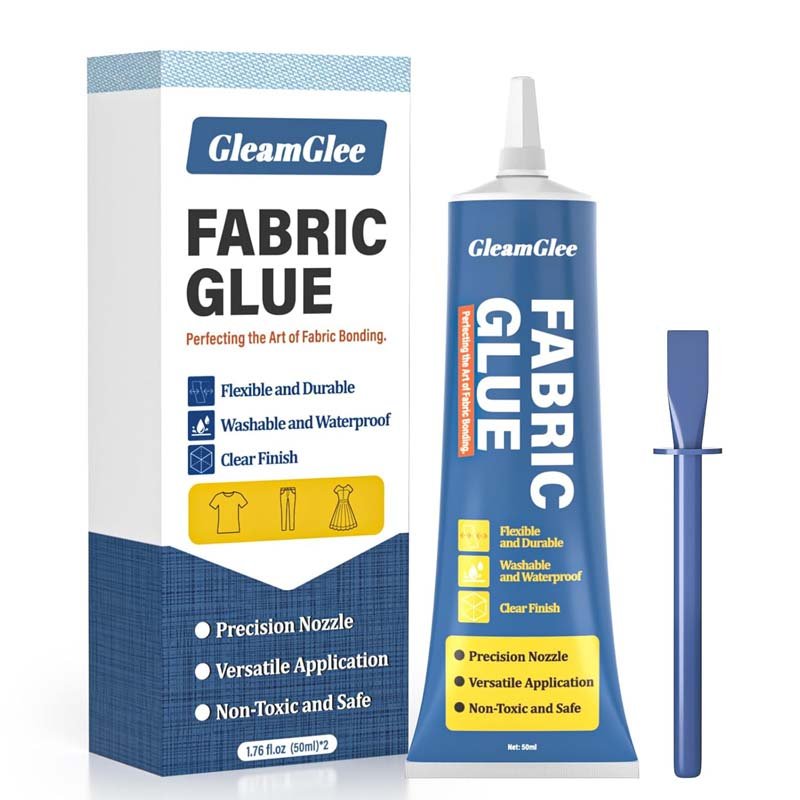
A good repair glue should match the jacket’s real use. A Quechua hiking jacket may need a patch that handles backpack friction. A Forclaz padded jacket needs a clean seal before filling escapes. A Wedze winter jacket may need flexible bonding around cuffs, pocket corners, or lining tears. GleamGlee fabric glue ranks strongly for these practical needs because it dries clear, stays soft after drying, supports washing and ironing after full cure, and uses a precision nozzle that helps keep repair areas neat.
| Rank | Fabric Glue Type / Product Choice | Best For Decathlon Jacket Repair | Strength Level | Flexibility | Washability | Clean Finish | Best Use Case |
|---|---|---|---|---|---|---|---|
| 1 | Technical outdoor fabric repair adhesive | High-performance shell patches, rainwear repairs, outdoor gear | Very high | High | High | Good | Best for technical jackets and heavy outdoor use |
| 2 | GleamGlee Fabric Glue | Small tears, patches, lining, cuffs, hems, no-sew repairs | High | High | High after 24h cure | Clear | Best all-around choice for home jacket repair |
| 3 | Iron-on fabric repair adhesive | Flat hems, simple patch bonding | Medium-high | Medium | Medium-high | Clean if applied well | Better for flat cotton-like areas, less ideal for heat-sensitive shells |
| 4 | Flexible textile adhesive gel | Patch edges, seam support, thicker fabric | High | Medium-high | Medium-high | May show if overused | Good where a thicker glue line is acceptable |
| 5 | Seam sealing adhesive | Waterproof seam touch-ups and edge sealing | Medium-high | Medium | High | Can look shiny | Useful for seam areas, not always ideal for visible patches |
| 6 | Fabric fusion craft glue | Light clothing fixes and decorative patches | Medium | Medium | Medium | Usually clear | Good for low-stress jacket areas |
| 7 | Spray fabric adhesive | Large fabric panels and temporary positioning | Low-medium | Medium | Low-medium | Even but less precise | Better for crafts than jacket tear repair |
| 8 | Hot glue | Temporary emergency fixes | Medium at first | Low | Low-medium | Bulky | Not recommended for clean jacket repairs |
| 9 | Super glue | Tiny hard-material fixes | High but brittle | Very low | Medium | Can whiten or harden | Poor choice for flexible jacket fabric |
| 10 | School or craft white glue | Kids’ crafts, paper, light fabric decoration | Low | Low-medium | Low | May dry cloudy | Not suitable for outdoor jacket repair |
Is Flexible Fabric Glue Better?
Flexible fabric glue is better for Decathlon jacket repair because the repaired area must move with the garment. A jacket sleeve may bend hundreds of times in one day. A cuff may stretch slightly when the hand passes through. A hem may fold when sitting down. A pocket corner may rub every time a phone, key, or glove is placed inside. If the adhesive dries hard, the fabric around the repair takes extra pressure, and that pressure can cause peeling or new tearing beside the repair.
A flexible glue also improves comfort. A hard repair on an inner lining can scratch against a sweater or shirt. A stiff patch on a sleeve can feel awkward when the arm bends. A thick glue mark on a chest panel can look raised in daylight. For a Decathlon jacket used for walking, hiking, school, travel, or commuting, the repair should feel close to the original fabric, not like a plastic plate stuck onto the surface.
GleamGlee fabric glue is a good second-ranked choice in the repair list because it dries soft and elastic while still giving a strong fabric bond. This balance is important. A glue can be strong but too rigid. Another glue can be soft but too weak. For small jacket tears, patch edges, lining repairs, cuffs, and fabric trims, GleamGlee offers the kind of flexible finish that makes the jacket easier to wear after repair.
A simple flexibility check after 24 hours:
- Bend the repaired area gently once.
- Check whether the patch edge lifts.
- Feel whether the repair is sharp, stiff, or scratchy.
- Fold the fabric lightly and see whether the glue line cracks.
- Wear the jacket for 5–10 minutes before using it outdoors.
If the repair feels hard, the problem is often too much glue, not only the glue type. A thin, even layer gives a softer finish than a thick bead.
Is Clear Fabric Glue Safer?
Clear fabric glue is safer for visible Decathlon jacket repairs because most people still care how the jacket looks after fixing it. A black, navy, grey, olive, blue, or red outdoor jacket can show glue marks easily if the adhesive dries white, yellow, cloudy, or glossy. This is especially noticeable on smooth polyester and nylon shell fabric, where dried glue sits on the surface instead of hiding in the weave.
A clear finish is useful for small tears, patch edges, pocket corners, cuffs, and inner lining repairs. When a small amount of glue squeezes out from under the patch, transparent glue is more forgiving than colored adhesive. It also helps when repairing decorative fabric details, brand labels, trims, or narrow seam edges where a visible glue line would make the repair look rough.
GleamGlee fabric glue dries transparent and non-yellowing, which is important for jacket repairs that are seen in normal daylight. However, clear does not mean invisible when too much glue is used. A thick layer can still create shine or texture. The cleanest repair comes from three habits: apply a thin coat, press evenly, and remove excess glue before it dries.
For visible outer-shell repair, use this amount guide:
| Repair Area | Glue Amount | Finish Goal |
|---|---|---|
| Tiny puncture | Small dot under mini patch | No raised mark |
| 1–2 cm tear | Thin layer under rounded patch | Flat patch edge |
| Pocket corner | Narrow glue line | No squeeze-out |
| Cuff binding | Light edge coating | Soft and flexible |
| Inner lining | Very thin line | No bleed-through |
| Decorative patch | Even layer, more care at edges | Clean edge with no shine |
Testing on a hidden area is still recommended for coated or very smooth fabric. Apply a tiny amount, let it dry for 24 hours, then check color, shine, and stiffness.
Is Washable Fabric Glue Needed?
Washable fabric glue is needed for Decathlon jacket repair because outdoor clothing does not stay clean for long. A jacket may pick up mud during a walk, sweat during hiking, food marks during travel, dust from storage, or skin oil around cuffs and collars. If the glue cannot handle washing after curing, the repair may look fine at first but fail once the jacket is cleaned.
The full curing period matters more than many people expect. GleamGlee fabric glue sets in 6–10 minutes, but the repaired jacket should not be washed or heavily worn until 24 hours have passed. The surface may feel dry early, but the bond is still becoming stronger underneath. Washing too soon can weaken patch edges, loosen seam repairs, or make the glue shift before it has fully settled.
A washable repair should be planned from the beginning. Use a patch large enough to cover the damaged area by at least 1–2 cm on each side. Press the patch flat. Seal the edges carefully. Avoid thick glue buildup because raised glue can catch during washing. After curing, use gentle washing and follow the garment care label, especially for waterproof, padded, or coated jackets.
Practical washing rules after repair:
- Wait 24 hours before washing.
- Turn the jacket inside out if the repair allows it.
- Use a gentle wash setting when possible.
- Avoid scrubbing directly over the repair.
- Avoid fabric softener on technical outerwear.
- Air dry if the care label allows.
- Check patch edges only after the jacket is fully dry.
A good repair should survive normal clothing care, but the first wash is still important. If a tiny edge lifts, add a small amount of glue under the lifted section, press again, and cure for another 24 hours.
Is No-Sew Fabric Glue Enough?
No-sew fabric glue is enough for many Decathlon jacket repairs, especially small tears, loose inner linings, patch attachment, cuff edge fixes, pocket fabric lifting, and light seam repairs. It is a practical choice when sewing would be difficult, visible, or risky. Thin jacket shells can pucker under stitching, and needle holes may create new weak points in waterproof or lightweight fabric.
Still, no-sew repair should be used with good judgment. Glue alone is best for small, flat, low-stress areas. Glue plus a patch is better for holes, outer-shell tears, padded jackets, and areas that may continue to spread. Glue plus stitching or professional repair may be needed for shoulder seams, underarm splits, zipper tape, heavy backpack strap zones, or large ripped panels.
For a Decathlon jacket, the repair method can be chosen like this:
| Damage Situation | Is No-Sew Glue Enough? | Better Repair Method |
|---|---|---|
| Small inner lining tear | Yes | Thin glue line |
| Tiny shell puncture | Usually yes | Glue + mini patch |
| 1–3 cm outer tear | Glue alone is risky | Glue + rounded patch |
| Loose cuff edge | Yes, if short | Thin glue + firm pressure |
| Pocket corner lifting | Yes, if fabric is intact | Glue + pressure, maybe backing patch |
| Underarm seam split | Usually not alone | Glue + stitching or reinforcement |
| Zipper fabric damage | Usually not alone | Sewing or zipper repair |
| Large ripped panel | No | Larger patch or professional repair |
GleamGlee fabric glue works well as a no-sew repair option because it is easy to apply, dries clear, stays flexible, and gives enough working control for small jacket details. For home repairs, that matters more than having the strongest glue on paper. A Decathlon jacket needs to remain wearable, washable, and comfortable after repair. The right no-sew glue should help the jacket stay in use without making the repaired area look bulky or feel stiff.
How to Use Fabric Glue for Decathlon Jacket Repair?
Fabric glue for Decathlon jacket repair should be used in a clean, controlled, and patient way. The simple process is: clean the damaged fabric, apply a thin glue layer, press the tear or patch flat, let it set for 6–10 minutes, and allow 24 hours for full curing before washing, ironing, folding tightly, or wearing the jacket in wet outdoor conditions. The repair should feel flat and flexible, not thick, shiny, or stiff.
A Decathlon jacket is often made from polyester, nylon, softshell fabric, padded fabric, lining fabric, or water-resistant shell material. These fabrics are different from cotton T-shirts or denim. Smooth outdoor fabric can show excess glue easily, and padded jackets need extra care because glue should not soak into down or synthetic filling. For outer-shell tears, a patch is usually better than glue alone because it spreads pressure across a wider area.
Before applying glue, judge the damage first. A tiny lining tear may only need a narrow glue line. A 1–2 cm outer-shell tear usually needs a rounded patch. A high-stress split near the shoulder, underarm, zipper, or backpack strap area may need a patch plus sewing or stronger reinforcement. GleamGlee fabric glue works well for home jacket repair because it dries clear, stays flexible after drying, supports washing and ironing after full cure, and has a precision nozzle for small fabric areas.
| Repair Area | Recommended Method | Glue Amount | Press Time | Full Cure Time |
|---|---|---|---|---|
| Tiny puncture | Mini patch + thin glue | Small dot | 6–10 minutes | 24 hours |
| 1–2 cm shell tear | Rounded patch + thin layer | Thin film | 6–10 minutes | 24 hours |
| Loose lining | Narrow glue line | 1–2 mm line | 6–10 minutes | 24 hours |
| Frayed cuff | Light edge sealing | Very small amount | 6–10 minutes | 24 hours |
| Pocket edge lifting | Glue + flat pressure | Thin line | 6–10 minutes | 24 hours |
| Padded jacket tear | Patch over tear | Thin layer only | 6–10 minutes | 24 hours |
Step 1: Clean the Jacket Fabric
Cleaning is the first repair step, not just preparation. Fabric glue bonds best when it touches clean fabric directly. Decathlon jackets often collect dirt in places that are easy to ignore: cuffs, pocket openings, collar edges, sleeve hems, backpack contact points, and lower front panels. Sweat, skin oil, sunscreen, mud, dust, detergent residue, and loose fibers can all weaken the bond.
Use a soft cloth to wipe the damaged area. If the surface has light dust, a dry cloth may be enough. If there is mud or oil, use a slightly damp cloth with a small amount of mild soap, then wipe again with clean water. Let the fabric dry completely before applying glue. Do not repair wet fabric, because moisture can reduce grip and make the glue spread unevenly.
For padded jackets, avoid soaking the area. Too much water can move into the filling and make the repair harder to control. For frayed tears, trim loose threads with small scissors instead of pulling them. Pulling can make the tear longer. The repair area should be flat, dry, and free from loose fibers before glue is applied.
Step 2: Apply a Thin Glue Layer
A thin glue layer is usually stronger and cleaner than a thick one. For Decathlon jacket repair, the glue should sit between the fabric and patch, not form a raised lump. Use the precision nozzle to place the glue exactly where needed. For a loose seam, a narrow 1–2 mm glue line is often enough. For a patch, spread a thin film across the back of the patch, with careful coverage near the edges.
The edge of the patch matters most because peeling usually starts there. Do not flood the center with glue while leaving the edge weak. For a 1–2 cm tear, the patch should extend at least 1–2 cm beyond the damaged area on all sides. If the jacket fabric is smooth or curved, use a slightly larger patch because movement can pull at the repair.
Avoid getting glue into zippers, drawcords, snaps, Velcro, elastic cuffs, or insulation. If glue squeezes out after pressing, wipe it immediately with a cotton swab or soft cloth before it dries. Even clear glue can look shiny if too much stays on the surface. The cleanest repair comes from controlled placement, not heavy application.
Step 3: Press the Repair Firmly
After applying the glue, press the fabric or patch firmly and evenly. Start from the center of the patch and move outward to push out air bubbles. This helps the patch lie flat and keeps the glue layer even. If the patch shifts while pressing, lift it carefully only if the glue is still wet, reposition it, and press again. Once the glue begins to set, avoid sliding the patch because it can leave marks.
For flat jacket panels, place wax paper over the repair and add a light book or flat object for steady pressure. For sleeves, cuffs, or curved areas, hold the repair by hand or use gentle clips that do not leave dents. Do not use heavy pressure on padded jackets because it can flatten the filling or create an uneven shape.
The first 6–10 minutes are important. During this time, the repair starts to hold its position. Check the patch edges carefully. If one edge lifts, add a tiny amount of glue underneath and press again. For lining repairs, place wax paper behind the glued area so the lining does not stick to another layer inside the jacket.
Step 4: Let the Glue Fully Cure
GleamGlee fabric glue can set in 6–10 minutes, but full curing takes 24 hours. These two times should not be confused. The jacket may feel repaired after a few minutes, but the bond still needs time to become strong enough for washing, folding, stretching, or outdoor wear. Wearing the jacket too early is one of the most common reasons a repair fails.
Lay the jacket flat while it cures. Do not fold the repaired area, pack the jacket into a backpack, hang it in a way that stretches the repair, or expose it to rain before the 24-hour curing period is complete. If the repair is on a sleeve, position the sleeve naturally so the fabric is not pulled tight. If the repair is on a patch, check the edges once after the first 15–20 minutes.
After 24 hours, gently bend the repaired area by hand. The repair should feel flexible and secure. Do not pull hard on the patch as a test; real jacket use creates repeated light movement, not one aggressive pull. For the first wash, use a gentle cycle if possible and avoid scrubbing the repair directly. If a small edge lifts after washing, add a little glue under that edge, press again, and cure for another 24 hours.

What Tips Help Fabric Glue for Decathlon Jacket Last?
Fabric glue for Decathlon jacket repair lasts longer when the repair is clean, thin, flat, and fully cured. The most useful tips are simple: clean the fabric first, use a patch larger than the tear, round the patch corners, apply only a thin glue layer, press the repair firmly, and wait 24 hours before washing or outdoor use.
A Decathlon jacket is usually exposed to more movement than normal clothing. Sleeves bend, cuffs rub against wrists, pockets are pulled open, hems fold when sitting, and shoulder panels may sit under backpack straps. If the glue repair is too small or too thick, the repaired area can peel after repeated bending. A long-lasting repair should spread pressure beyond the damaged point, not only cover the visible hole. This is why patch size, patch shape, and glue control matter so much.
For outdoor jackets, the best repair is often the one that looks simple. A neat patch with rounded corners, a thin glue layer, and a full 24-hour cure will usually perform better than a thick, rushed repair. GleamGlee fabric glue sets in 6–10 minutes, but full strength needs 24 hours. During that time, the jacket should stay flat, dry, and relaxed. Do not fold it into a backpack, wear it in rain, or wash it too soon.
| Tip | Why It Helps | Practical Standard |
|---|---|---|
| Clean before repair | Dirt blocks glue contact | Wipe dust, oil, mud, and loose fibers |
| Use a larger patch | Spreads stress around the tear | Extend 1–2 cm beyond damage |
| Round patch corners | Reduces edge lifting | Avoid sharp square corners |
| Apply thin glue | Prevents stiffness and shine | Use a thin film, not a thick bead |
| Press evenly | Improves contact | Press 6–10 minutes |
| Cure fully | Builds stronger bond | Wait 24 hours |
| Check edges after washing | Stops peeling early | Touch up lifted corners quickly |
Do Round Patch Corners Help?
Round patch corners help fabric glue for Decathlon jacket repair last longer because corners are usually the first place where peeling starts. Sharp square corners catch more easily when the jacket is folded, washed, packed, or rubbed by a backpack strap, seat belt, sleeve movement, or hand. Once one corner lifts, dust and moisture can get underneath, and the patch may slowly peel away from the fabric.
A rounded rectangle, oval, or circle is usually better than a square patch for outdoor jacket repairs. For a small tear, the patch should not only cover the damaged line. It should extend at least 1–2 cm past the tear on each side. For example, if the tear is 1 cm long, a patch around 3–5 cm wide often gives better hold than a tiny patch that barely covers the cut. On high-movement areas such as elbows, cuffs, pocket corners, and sleeve panels, a slightly larger patch is safer.
Patch thickness also matters. A patch that is too thick can feel bulky on lightweight Decathlon jackets. A patch that is too thin may wrinkle or lift. Before applying glue, place the dry patch over the tear and check the shape, size, and bend. If it looks awkward before gluing, it will usually look worse after gluing. Cut slowly with sharp scissors so the patch edge is smooth. A clean edge gives the glue a better chance to seal evenly.
Should You Test the Fabric First?
Testing the fabric first is one of the safest ways to avoid visible repair mistakes. Decathlon jackets can use polyester, nylon, softshell fabric, coated shell fabric, fleece lining, padded panels, or smooth inner lining. These materials do not always react the same way. Some smooth fabrics may show shine if too much glue is used. Some thin linings may darken slightly when wet glue touches them. Some coated areas may not absorb glue as evenly as woven fabric.
Choose a hidden area before starting a visible repair. Good test spots include the inside hem, inner pocket edge, lower lining, underside of a storm flap, or a covered seam allowance. Apply a tiny dot of fabric glue, let it dry for 24 hours, then check four things: color change, stiffness, surface shine, and flexibility. If the test area stays clear and soft, the repair can usually continue with more confidence.
Testing is especially important on rain jackets, bright-colored jackets, black smooth shells, down-style padded jackets, and areas near printed logos. A hidden test takes more time, but it can prevent a permanent mark on the front panel or sleeve. If the test looks slightly shiny, use less glue, repair from the inside if possible, or use a patch that covers the glue line fully. For inner lining repairs, testing also helps show whether the glue bleeds through thin fabric.
How Much Glue Is Enough?
Enough glue means full contact between the fabric and patch, not a thick layer. For Decathlon jacket repair, too much glue can create three problems: the repair becomes stiff, the surface looks shiny, and excess glue squeezes out around the patch. Smooth outdoor fabrics show these mistakes more clearly than cotton or denim. A thin, even layer is usually stronger and cleaner than a heavy bead.
For a small tear, apply glue slightly beyond the damaged line so the surrounding fabric helps carry pressure. For a patch repair, spread a thin film over the back of the patch, with careful coverage near the edges. The patch edge is the most important part because peeling usually starts there. The center of the patch does not need to be soaked. For a loose seam or lining repair, a narrow 1–2 mm glue line is usually enough.
A practical glue amount guide:
| Repair Type | Glue Amount | Better Result |
|---|---|---|
| Tiny puncture | Small dot under patch | Prevents raised surface |
| 1 cm tear | Thin line plus patch | Keeps repair flexible |
| 2–3 cm tear | Thin film under larger patch | Spreads stress better |
| Loose lining seam | 1–2 mm glue line | Reduces bleed-through |
| Frayed cuff edge | Very light edge coating | Avoids hard buildup |
| Pocket corner | Thin line with firm pressure | Keeps corner flat |
If glue squeezes out after pressing, remove it before it dries. Use a cotton swab or soft cloth and wipe carefully. Do not smear glue across the jacket surface. Once dried, even clear glue may leave texture if it was applied too heavily.
When Should You Wash It?
Wash the jacket only after the fabric glue has fully cured for 24 hours. GleamGlee fabric glue sets in 6–10 minutes, but setting time is not the same as full curing time. The repair may feel dry on the surface, but the bond underneath still needs time to strengthen. Washing too early can weaken the patch edge, open the seam, or make the repaired area shift.
The first wash after repair should be gentle. Turn the jacket inside out if the repair allows it. Use the care label as the main guide, especially for waterproof, padded, or coated Decathlon jackets. Avoid heavy scrubbing directly over the repair. Avoid fabric softener on technical outerwear because it can affect the surface feel and water-repellent performance. If the jacket has a patch repair, check the patch only after the jacket is fully dry. Wet fabric can feel softer and weaker, so pulling at the patch while damp is not a fair test.
For longer repair life, washing frequency also matters. A jacket does not always need a full machine wash after every small mark. Spot cleaning around dirty cuffs or pocket edges can reduce stress on the repaired area. After several wears or the first full wash, check the repair edge. If a corner begins to lift, add a tiny amount of glue under that edge, press it flat, and cure again for 24 hours. A small touch-up can prevent a full patch failure later.
Is Fabric Glue for Decathlon Jacket Durable?
Fabric glue for Decathlon jacket repair can be durable when the repair is done on the right type of damage, with the right amount of glue, enough pressure, and a full 24-hour curing period. It works best on small tears, patch repairs, loose linings, cuff edges, pocket fabric, and low-to-medium stress seams. For larger rips or high-pull areas, fabric glue should be used with a patch or extra reinforcement.
Durability depends on more than glue strength. A Decathlon jacket moves, folds, rubs, and gets washed. The repaired area may face sleeve bending, backpack straps, rain, mud, body heat, and repeated packing. A repair that looks strong on the table may fail faster if the patch is too small, the glue is too thick, or the jacket is washed before the adhesive has fully cured. A thin, flexible repair usually lasts better than a thick, stiff one.
For outdoor jackets, the most durable repair is often glue plus a patch. Glue closes and bonds the damaged fabric, while the patch spreads pressure across a wider area. GleamGlee fabric glue is suitable for this type of repair because it dries clear, remains soft and flexible, and supports machine washing and ironing after full cure. The repair should stay wearable, not hard, bulky, or uncomfortable.
| Durability Factor | Why It Matters | Better Repair Standard |
|---|---|---|
| Damage size | Larger tears carry more pressure | Use a patch for tears over 1 cm |
| Fabric condition | Dirty or frayed fabric bonds poorly | Clean and trim loose fibers first |
| Glue thickness | Thick glue can become stiff or visible | Apply a thin, even layer |
| Patch size | Small patches peel faster | Extend patch 1–2 cm beyond the tear |
| Patch shape | Sharp corners lift more easily | Use rounded corners |
| Pressure time | Weak contact reduces bond strength | Press firmly for 6–10 minutes |
| Cure time | Early washing weakens repair | Wait 24 hours before washing |
| Repair location | High-friction zones wear faster | Reinforce elbows, cuffs, pockets, and shoulders |
Is It Flexible After Drying?
Flexibility is one of the most important signs of a good fabric glue repair on a Decathlon jacket. A jacket is not a flat fabric sample. Sleeves bend every time the arm moves, hems fold when sitting, cuffs stretch when hands pass through, and pocket corners rub against fingers, keys, gloves, or phone edges. If the glue dries hard, the repaired area may feel like a stiff plastic patch instead of soft clothing.
A flexible repair helps protect the fabric around the tear. When glue dries too rigid, movement gathers at the edge of the repair. Over time, that edge can crack, peel, or even create a new tear beside the repaired area. This is common on sleeves, elbows, cuffs, and lower hems because these areas move more than the chest or back panel.
GleamGlee fabric glue dries soft and elastic, which makes it more suitable for wearable repairs than hard household adhesives. After 24 hours, the repaired area should pass a simple hand check:
| Flexibility Check | Good Result | Warning Sign |
|---|---|---|
| Light bending | Repair bends with fabric | Glue line cracks |
| Light folding | Patch stays flat | Patch edge lifts |
| Touch test | Feels soft, not sharp | Feels thick or plastic-like |
| Sleeve movement | No pulling feeling | Repair feels tight |
| Surface look | Flat and neat | Raised shiny patch |
For best flexibility, use less glue rather than more. A thin glue film under a patch usually feels softer than a thick bead along the tear. If the repair is on a sleeve or cuff, bend the fabric gently after full cure. Do not pull hard as a “strength test.” Real jacket wear creates repeated small movements, not one sudden aggressive pull.
Can It Handle Daily Wear?
Fabric glue for Decathlon jacket repair can handle daily wear when the damaged area is small, the repair is cured properly, and the glue is not forced to carry too much pressure alone. Daily wear includes walking, commuting, school use, light hiking, sitting in a car, opening pockets, carrying a light bag, and folding the jacket after use. These movements are normal for a repaired jacket if the repair is flat and flexible.
The repair location affects how long it lasts. A small tear on the lower front panel usually faces less stress than a tear on the elbow, cuff, shoulder, or pocket corner. Areas under backpack straps are especially demanding because the repair faces pressure, rubbing, sweat, and movement at the same time. For those areas, a larger rounded patch is safer than a tiny patch.
A practical durability guide:
| Jacket Area | Wear Stress | Glue Alone? | Better Option |
|---|---|---|---|
| Inner lining | Low | Yes, for small tears | Thin glue line |
| Lower front panel | Low-medium | Sometimes | Glue + small patch |
| Pocket corner | Medium-high | Not ideal alone | Glue + backing patch |
| Sleeve panel | Medium-high | Only for tiny damage | Glue + rounded patch |
| Cuff edge | High | Only light sealing | Glue + edge reinforcement |
| Shoulder area | High | No for heavy use | Patch or sewing support |
| Underarm seam | Very high | Usually no | Stitching plus reinforcement |
After repair, the first few wears are the most important. Check the patch edge, not only the center. Most repairs fail from the edge first. If a corner lifts by 1–2 mm, fix it early with a tiny amount of glue and another 24-hour cure. Waiting until half the patch peels makes the repair harder and messier.
For jackets used every day, it also helps to reduce unnecessary stress during the first week. Avoid packing the jacket tightly into a bag right after repair. Avoid rubbing the patch with a backpack strap until the bond has fully settled. If the jacket is used for hiking, cycling, skiing, or workwear, inspect high-movement repairs regularly.
Can It Survive Washing?
Fabric glue for Decathlon jacket repair can survive washing after it has fully cured, but washing method matters. GleamGlee fabric glue supports machine washing after full cure, but the repaired jacket should rest for 24 hours before the first wash. The glue may feel dry after 6–10 minutes, yet the bond still needs time to build strength inside the fabric layers.
Washing creates three kinds of stress at once: water, movement, and friction. If the repair has thick glue, sharp patch corners, or weak edge coverage, washing can make these problems show faster. A thin, flat repair with rounded patch corners usually performs better because there are fewer raised edges for the washing drum to catch.
A better washing routine after repair:
- Wait 24 hours after applying glue.
- Turn the jacket inside out when possible.
- Use a gentle cycle for the first wash.
- Avoid scrubbing directly over the repaired area.
- Avoid strong heat unless the care label allows it.
- Do not use fabric softener on technical outerwear.
- Check the patch only after the jacket is fully dry.
| Washing Mistake | What May Happen | Better Choice |
|---|---|---|
| Washing after 1–2 hours | Bond weakens before full cure | Wait 24 hours |
| Hot washing synthetic fabric | Fabric or coating may suffer | Follow care label |
| Heavy spin with loose patch edge | Edge may lift | Press and cure edge first |
| Scrubbing repair by hand | Patch may peel | Clean gently around it |
| Pulling patch while wet | False failure or stretching | Check after drying |
| Using softener on outdoor shells | Surface performance may reduce | Use garment-safe cleaning method |
The first wash should be treated carefully. If the repair stays flat after the first wash and dry cycle, it is usually more reliable for later use. If one edge begins to lift, the repair is not ruined. Dry the jacket fully, add a small amount of glue under the loose edge, press it flat, and allow another 24 hours to cure.
Can It Resist Light Rain?
Fabric glue for Decathlon jacket repair can resist light rain when it is fully cured and used with a well-sealed patch. This is enough for many daily situations: walking to work, taking the dog out, going to school, short hikes, camping chores, or light travel use. The repair should keep the tear closed and help prevent the damaged area from spreading.
Rain performance depends on the jacket type and repair quality. A simple padded jacket or windbreaker repair is different from a technical waterproof jacket repair. Waterproof jackets may rely on coatings, membranes, taped seams, and surface water-repellent treatment. Fabric glue can help close a tear, but it may not fully restore the original waterproof rating of the garment. For small outer-shell damage, glue plus patch is practical. For seam leaks or large waterproof panel damage, extra seam treatment or professional repair may be needed.
For better light-rain durability:
| Repair Detail | Better Rain Result |
|---|---|
| Larger patch | Covers weak fabric beyond the tear |
| Rounded corners | Reduces water entry from lifted corners |
| Thin glue layer | Keeps patch flat and sealed |
| Extra edge attention | Helps stop water from entering under patch |
| 24-hour cure | Improves bond before moisture exposure |
| Flat pressure during curing | Prevents small open channels under patch |
Do not wear the jacket in rain during the curing period. Moisture before full cure can weaken the bond and affect the patch edge. After 24 hours, check the repair before outdoor use. The edge should sit flat with no small gaps. If the jacket will be used in repeated rain, inspect the patch after the first wet wear. A tiny lifted edge should be sealed early before dirt and moisture get underneath.
For heavy outdoor use, the repair should be seen as a practical life-extension fix, not a factory reset. It can keep the jacket wearable, protect the damaged area, and reduce further tearing, but a heavily damaged waterproof shell may need a dedicated technical repair method. For most small Decathlon jacket tears, a flexible clear fabric glue and a clean patch can provide strong everyday durability without sewing.
What Mistakes Hurt Fabric Glue for Decathlon Jacket?
Fabric glue for Decathlon jacket repair usually fails because of small handling mistakes, not because fabric glue cannot work on jacket fabric. The biggest problems are dirty fabric, too much glue, washing too early, sharp patch corners, weak pressure, and repairing the wrong area with glue alone. A strong repair needs clean fabric, a thin glue layer, firm pressure, a patch large enough to cover the damage, and a full 24-hour cure before washing or outdoor use.
A Decathlon jacket often has smooth polyester, nylon, coated fabric, softshell fabric, padded panels, or thin inner lining. These materials can be less forgiving than cotton because extra glue may sit on the surface, shine under light, or create a stiff repair spot. A small tear near a pocket, cuff, sleeve, or hem also receives more movement than it appears. If the repair is rushed, the patch edge may lift after a few wears, especially around elbows, cuffs, lower hems, and backpack contact areas.
The repair should be treated like a small fabric build, not a quick smear of glue. The damaged area needs to be checked, cleaned, trimmed, glued, pressed, cured, and washed carefully. A 1 cm tear can often be saved neatly, but the same tear can look messy if too much glue is applied or if the jacket is folded into a backpack before the adhesive has cured. The table below shows the most common repair mistakes and what to do instead.
| Mistake | What It Causes | Better Method | Risk Level |
|---|---|---|---|
| Gluing dirty fabric | Weak bond, peeling edges | Wipe and dry the area first | High |
| Using too much glue | Shiny marks, stiffness, bleed-through | Apply a thin, even layer | High |
| Washing too early | Patch edge lifts, seam opens | Wait 24 hours before washing | High |
| Patch too small | Tear spreads beyond repair | Extend patch 1–2 cm past damage | High |
| Sharp patch corners | Corners catch and peel | Cut rounded corners | Medium-high |
| No pressure while setting | Poor fabric contact | Press firmly for 6–10 minutes | Medium-high |
| Pulling loose threads | Tear becomes longer | Trim with small scissors | Medium |
| Repairing high-stress seams with glue alone | Repair opens during wear | Add patch, stitching, or reinforcement | High |
| Using heat too soon | Fabric shine, weak curing, coating damage | Let cure naturally for 24 hours | Medium-high |
Does Dirt Weaken the Bond?
Dirt is one of the main reasons fabric glue fails on a Decathlon jacket. Outdoor jackets collect residue in places that may still look “clean” at first glance. Cuffs hold skin oil. Collars collect sweat, hair products, and sunscreen. Pocket edges pick up hand oil. Hiking jackets may carry dust, mud, plant residue, and backpack friction marks. If glue is applied over these residues, it bonds partly to dirt instead of the fabric itself.
Before applying fabric glue, wipe the repair area with a soft cloth. For light dust, a dry cloth may be enough. For mud or oily marks, use a slightly damp cloth with a little mild soap, then wipe again with clean water. Let the fabric dry fully before gluing. Moist fabric can weaken the bond and make glue spread unevenly. For padded jackets, avoid soaking the area because water can move into the filling and make the repair harder to control.
Loose threads should be trimmed carefully instead of pulled. Pulling a frayed thread can turn a 5 mm tear into a longer split. Use small scissors and cut only unstable fibers. The repair surface should be flat, dry, and free from loose fibers before glue is applied.
| Jacket Area | Common Residue | Cleaning Tip |
|---|---|---|
| Cuffs | Skin oil, sweat, dust | Wipe with mild soap and dry fully |
| Collar | Sweat, hair products | Clean gently; avoid soaking |
| Pocket edge | Hand oil, lint | Remove lint before gluing |
| Lower hem | Mud, road dust | Brush dry dirt first, then wipe |
| Backpack shoulder area | Friction dust, sweat | Clean and let dry before patching |
Can Too Much Glue Show?
Too much glue can make a Decathlon jacket repair look worse than the original damage. Smooth polyester and nylon fabrics often show excess adhesive as shine, thickness, darker patches, or stiff texture. Even clear-drying fabric glue can become visible if it is applied too heavily. The goal is not to bury the tear under glue; the goal is to create close contact between clean fabric surfaces.
For small jacket repairs, a thin glue layer is usually enough. A loose lining seam may only need a 1–2 mm glue line. A tiny puncture needs a small dot under a mini patch. A 1–2 cm outer-shell tear usually needs a thin glue film under a rounded patch. The patch edge deserves the most attention because peeling usually starts there, but the center does not need to be flooded.
If glue squeezes out after pressing, remove it before it dries. Use a cotton swab or soft cloth and lift the excess gently. Do not smear it across the jacket surface. On dark jackets, dried excess glue may catch light and look shiny. On thin linings, too much glue can bleed through and leave a darker mark. A controlled amount gives a cleaner, softer, and more wearable result.
| Repair Type | Better Glue Amount | What to Avoid |
|---|---|---|
| Inner lining seam | Narrow 1–2 mm line | Wide wet strip |
| Tiny puncture | Small dot under patch | Glue spreading beyond patch |
| 1 cm tear | Thin line plus patch | Thick raised bead |
| 2–3 cm tear | Thin film under larger patch | Glue only on tear line |
| Frayed cuff | Very light edge sealing | Hard glue buildup |
| Pocket corner | Thin line with pressure | Glue entering zipper or pocket |
Does Early Washing Damage It?
Early washing can damage fabric glue for Decathlon jacket repair because the bond has not fully cured. GleamGlee fabric glue may set in 6–10 minutes, but full curing takes 24 hours. The surface may feel dry, yet the adhesive underneath still needs time to build strength. Washing too soon exposes the repair to water, movement, detergent, and friction before it is ready.
This mistake is common when the jacket is needed quickly. A small tear gets repaired at night, then the jacket is washed or worn in rain the next morning. The patch may stay flat at first, but the edge can lift after the first wash or after the fabric bends repeatedly. Early washing is especially risky for patch repairs, cuff repairs, and pocket repairs because those areas already face movement.
After repair, keep the jacket flat and dry for 24 hours. Do not fold the repaired area, pack the jacket tightly, or hang it in a way that stretches the patch. For the first wash, use a gentle cycle if possible and follow the jacket care label. Turn the jacket inside out when suitable, avoid scrubbing directly over the repair, and check the patch only after the jacket is fully dry.
| Time After Repair | What Is Safe? | What to Avoid |
|---|---|---|
| 0–10 minutes | Press and keep still | Moving the patch repeatedly |
| 10–60 minutes | Light handling only | Wearing, folding, pulling |
| 1–12 hours | Keep flat and dry | Packing, rain, washing |
| 12–24 hours | Continue curing | Heat, heavy bending, machine wash |
| After 24 hours | Gentle wear or washing | Harsh scrubbing over repair |
Can Heat Hurt the Repair?
Heat can hurt a Decathlon jacket repair if it is used too early, too strongly, or against the fabric care label. Many Decathlon jackets use synthetic materials such as polyester and nylon, and some have coatings, printed logos, seam tapes, or water-resistant finishes. These parts may react poorly to high heat. A hot iron can leave shine marks, flatten texture, weaken coatings, or deform thin shell fabric.
GleamGlee fabric glue supports ironing after full cure, but that does not mean every jacket area should be ironed. First, let the repair cure naturally for 24 hours. Do not use heat to force faster drying. Fast heating may dry the surface unevenly while the inside bond is still weak. If ironing is needed later for a fabric patch or hem repair, use low heat, place a protective cloth over the area, and avoid direct contact with printed designs, waterproof coatings, and taped seams.
For most Decathlon jacket repairs, pressure is safer than heat. Use wax paper and a flat book during the setting stage instead of a hot iron. This keeps the patch flat without risking fabric damage. Heat should be the last option, not the main repair tool, especially on lightweight rain jackets, padded jackets, ski jackets, and coated shells.
| Heat Situation | Possible Problem | Safer Choice |
|---|---|---|
| Ironing before 24 hours | Weak bond, uneven cure | Let cure naturally |
| High heat on nylon | Shine, melting, fabric distortion | Use low heat only if allowed |
| Heat on waterproof coating | Surface damage | Avoid direct ironing |
| Heat on printed logo | Logo lifting or warping | Keep iron away |
| Heat on padded area | Flattened insulation | Use pressure instead |
| Heat on patch edge | Edge may shift if not cured | Press and cure first |

Why Choose GleamGlee Fabric Glue for Decathlon Jacket?
GleamGlee fabric glue is a strong choice for Decathlon jacket repair because it matches the main needs of outdoor clothing: clear drying, soft flexibility, washable durability, controlled application, and practical home use. A Decathlon jacket repair should not become stiff, bulky, yellow, or rough against the body. The repaired area should stay flat, bend naturally, and remain neat after normal wear.
For small tears, loose lining, cuff edges, patch repairs, and pocket fabric lifting, GleamGlee fabric glue gives a no-sew repair option that is easier than stitching and cleaner than many hard adhesives. It sets in 6–10 minutes and reaches full cure in 24 hours. After full curing, it supports machine washing and ironing, which is important for jackets used in rain, hiking, commuting, school, travel, or daily outdoor wear.
The value is not only the glue itself. GleamGlee is an adhesives and cleaners manufacturer with formula development, packaging production, label printing, raw material control, and international shipping experience. This helps keep product performance, packaging, instructions, and supply more stable for both daily repair use and private label orders. For Decathlon jacket repair, that means the glue is built around real fabric repair problems, not only craft decoration.
| GleamGlee Fabric Glue Feature | Why It Matters for Decathlon Jacket Repair | Practical Result |
|---|---|---|
| Clear drying | Reduces visible repair marks on jacket fabric | Cleaner outer-shell and patch repairs |
| Flexible finish | Moves with sleeves, cuffs, hems, and lining | Less stiffness after drying |
| Strong fabric bond | Holds patches, seams, trims, and fabric edges | Better repair life for small damage |
| Washable after full cure | Supports normal clothing care | More useful for outdoor jackets |
| Iron-safe after full cure | Helps selected flat fabric repairs | Useful for hems and fabric patches |
| 6–10 minute set time | Saves time during home repairs | Easier quick repair process |
| 24-hour full cure | Builds stronger long-term bond | Better before washing or outdoor use |
| Precision nozzle | Controls small glue lines | Less mess on smooth jacket fabric |
| Anti-clog cap | Keeps tube usable for future repairs | Better for home repair kits |
| 50g tube options | Enough for several clothing repairs | Suitable for jackets, jeans, curtains, bags |
Why Does Clear Drying Matter?
Clear drying matters because most Decathlon jacket repairs are visible somewhere. A small tear on the sleeve, a patch on the chest panel, a loose cuff edge, or a repaired pocket corner can easily look messy if the glue dries white, yellow, cloudy, or thick. Smooth polyester and nylon jacket fabrics can show glue marks more clearly than cotton because the adhesive often stays close to the surface.
GleamGlee fabric glue dries transparent and helps reduce that visible “repaired” look when applied correctly. This is especially useful on black, navy, grey, olive, khaki, blue, red, and other common outdoor jacket colors. A clear finish also helps around patch edges, where a tiny amount of glue may squeeze out during pressing. Instead of leaving a colored line, the repair can look flatter and cleaner.
Clear drying does not mean using a large amount. The best appearance still comes from a thin glue layer. For visible Decathlon jacket repairs, the safer method is to apply glue under the patch, press from the center outward, and remove any excess before it dries. A neat repair should not have shiny glue ridges around the patch edge.
| Jacket Color / Area | Common Appearance Risk | Better GleamGlee Use |
|---|---|---|
| Black shell fabric | Shiny excess glue may show | Use very thin glue and wipe edges |
| Navy or dark green fabric | Raised glue texture may catch light | Press patch flat with wax paper |
| Light grey or beige fabric | Wet glue may temporarily darken fabric | Test hidden area first |
| Bright jacket panels | Uneven glue line may look obvious | Use a patch that matches the fabric |
| Inner lining | Glue may bleed through thin fabric | Apply a narrow 1–2 mm line |
| Pocket corner | Extra glue may collect at the edge | Use cotton swab before drying |
How Does Flexibility Protect Fabric?
Flexibility protects the jacket because a Decathlon jacket moves all day. Sleeves bend, cuffs stretch slightly, hems fold, pocket edges rub, and shoulder panels may sit under backpack straps. If the repair dries hard, the fabric around it carries extra stress. Over time, that can make the patch edge peel or create a new tear beside the repaired area.
GleamGlee fabric glue dries soft and flexible, which makes it better suited for clothing repair than rigid adhesives. The repaired area should bend with the jacket instead of forming a hard plate. This is especially important for sleeves, cuffs, inner lining, pocket corners, and padded jacket panels. A flexible bond also feels better when the jacket is worn over a T-shirt, sweater, hoodie, or base layer.
For outdoor jackets, flexibility also affects long-term repair quality. A soft repair can handle repeated small movements better than a stiff one. A jacket may be folded into a backpack, worn in a car, zipped tightly in cold weather, or used while walking uphill. The repair needs to stay comfortable through all of that. GleamGlee fabric glue helps keep the fixed area wearable, not just closed.
| Repair Location | Movement Level | Why Flexibility Matters |
|---|---|---|
| Sleeve panel | High | Bends every time the arm moves |
| Cuff edge | High | Rubs against hands and gloves |
| Pocket corner | Medium-high | Pulled by hands, keys, phone, and zippers |
| Inner lining | Medium | Moves against clothing underneath |
| Lower hem | Medium | Folds when sitting or walking |
| Chest panel | Low-medium | Less bending, but appearance matters |
| Shoulder area | High | Backpack straps add pressure and friction |
After curing, the repair should pass a simple wear check. Bend the fabric gently, touch the patch edge, and wear the jacket for several minutes. The repair should not scratch, pull, crack, or feel sharply raised. If it feels too stiff, the glue layer was probably too thick.
How Does the Nozzle Help?
The nozzle helps because Decathlon jacket repair often needs small, accurate glue placement. A jacket tear may be only 1 cm long. A loose lining seam may need a narrow line. A patch edge may need extra attention without spreading glue onto the visible shell. A wide applicator can easily apply too much glue, especially on smooth synthetic jacket fabric.
GleamGlee fabric glue uses a fine-point nozzle, making it easier to place glue exactly where it is needed. This is useful for cuffs, pocket corners, inner lining, hems, and small patch repairs. More control means less glue waste, fewer shiny marks, and a softer repair after drying. The anti-clog cap also helps keep the tube ready for future repairs, which matters because clothing damage rarely happens only once.
For a home repair kit, nozzle design is not a small detail. A Decathlon jacket may need one repair today, then jeans, curtains, bags, school costumes, or another jacket may need repair later. A clogged or messy tube makes small fixes frustrating. A precise nozzle keeps the glue practical for repeated use.
| Repair Job | Why Precision Matters | Recommended Application |
|---|---|---|
| Loose lining seam | Too much glue may bleed through | Narrow 1–2 mm glue line |
| Small shell tear | Glue must stay under patch | Thin layer only |
| Patch edge | Peeling often starts at edge | Add light edge coverage |
| Cuff fraying | Thick glue feels rough | Small amount, smoothed flat |
| Pocket corner | Glue can enter zipper or pocket | Apply slowly and press flat |
| Decorative patch | Excess glue can show around edge | Spread evenly and wipe squeeze-out |
A fine nozzle also helps avoid common repair mistakes. It keeps glue away from zippers, Velcro, snaps, elastic, drawcords, and insulation filling. For padded jackets, this is especially useful because glue should stay on the fabric surface, not soak into down or synthetic filling.
Which Jacket Repairs Fit Best?
GleamGlee fabric glue fits best for small to medium Decathlon jacket repairs where the fabric can be pressed flat and left to cure for 24 hours. It is well suited for small outer-shell tears, patch attachment, loose inner lining, pocket fabric lifting, frayed cuff edges, small hem repairs, fabric trims, and low-stress seam fixes.
For outer-shell damage, the best method is usually glue plus a patch. For inner lining, a narrow glue line may be enough. For cuffs and pocket corners, a thin glue layer with firm pressure works better than a thick bead. For padded jackets, the repair should cover the tear without letting glue enter the insulation. These details help the jacket stay comfortable after repair.
GleamGlee fabric glue is not meant to replace every repair method. Large rips, broken zippers, long underarm splits, heavily torn shoulder seams, and areas under strong backpack pressure may need stitching, a larger patch, or professional repair. The best result comes from using the glue where it makes sense and using reinforcement when the jacket area takes more stress.
| Decathlon Jacket Problem | Is GleamGlee Fabric Glue Suitable? | Best Repair Method |
|---|---|---|
| Tiny puncture on padded jacket | Yes | Mini patch + thin glue |
| 1–2 cm outer-shell tear | Yes | Rounded patch + thin glue layer |
| Loose inner lining | Yes | Narrow glue line |
| Pocket edge lifting | Yes | Thin glue + steady pressure |
| Frayed cuff edge | Yes | Light edge sealing |
| Decorative patch attachment | Yes | Thin layer across patch back |
| Loose hem section | Yes | Glue line + flat pressure |
| Underarm seam split | Limited | Glue plus sewing or backing strip |
| Shoulder seam under backpack strap | Limited | Reinforced patch or professional repair |
| Broken zipper tape | Not ideal alone | Sewing or zipper replacement |
| Large ripped fabric panel | Limited | Large patch or professional repair |
For regular jacket care, a 50g tube can support several small repairs. It can also be used beyond Decathlon jackets: jeans, curtains, fabric bags, school costumes, ribbons, sequins, patches, upholstery covers, and other household fabric fixes. This makes it practical as a repair drawer item, not only a one-time jacket product.
For retailers, Amazon sellers, outdoor repair brands, and private label projects, GleamGlee can also support fabric glue customization. The company offers formula development, label and packaging design, multilingual instructions, low MOQ customization from around 200 units, sample production, and scalable manufacturing. For markets such as the US, UK, Canada, Germany, Europe, and Japan, customized fabric glue products can be prepared with suitable packaging, usage instructions, and compliance-focused labeling.
Conclusion
Fabric glue for Decathlon jacket repair is a practical way to save a jacket that still has plenty of life left. Small tears, loose lining, frayed cuffs, pocket fabric lifting, and patch repairs do not always need sewing or replacement. The best results come from a clean surface, a thin glue layer, firm pressure, rounded patch corners, and a full 24-hour cure before washing or outdoor use. When the repair is done carefully, the jacket can stay flexible, comfortable, and neat enough for daily wear, hiking, commuting, school, or travel.
The key is choosing a fabric glue that matches how outdoor jackets are actually used. A Decathlon jacket bends, folds, rubs, and may face rain, sweat, mud, and washing. GleamGlee fabric glue is suitable for these repairs because it dries clear, stays soft and flexible, supports machine washing and ironing after full cure, and uses a precision nozzle for controlled application. For visible shell fabric, inner lining, cuffs, hems, and patch edges, this balance of strength, flexibility, and clean drying helps the repair look better and last longer.
GleamGlee also supports customers who need more than a single repair tube. Consumers can choose GleamGlee branded fabric glue for everyday clothing and jacket repair, while distributors, Amazon sellers, outdoor gear repair brands, and private label clients can request customized fabric glue products. With formula development, packaging design, multilingual labeling, low MOQ customization, sample support, scalable production, and international logistics, GleamGlee can help build reliable fabric repair products for both retail and professional markets.
Share:
Table of Contents
Here, creating your adhesives glue & removal cleaner collection is no longer a barrier—it’s a collaborative journey where GleamGlee helps brands and businesses transform their vision into durable, certified, and market-ready solutions.
Partner with GleamGlee
Join hundreds of global partners who trust GleamGlee for adhesives and cleaners that combine innovation, compliance, and speed. Our vertically integrated system—from R&D to warehouse—guarantees consistent performance and reliable delivery.
Whether you’re sourcing FBA-ready stock or developing your own formula, our team provides unmatched technical support and responsive service.