 Skip to content
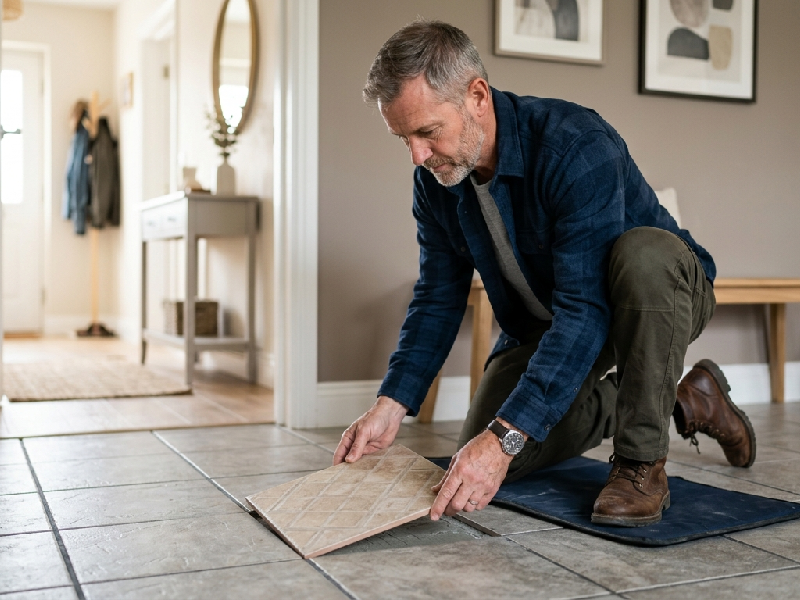
Most people think adhesive safety is only about wearing gloves and cracking open a window. That is only a small part of it. In real home repairs, safety starts before the tube is even opened. It starts with checking whether the room has enough airflow, whether the surface is stable, whether the adhesive can be controlled cleanly, and whether the bonded part can stay still long enough to cure properly. A loose bathroom tile, a kitchen backsplash repair, or a decorative stone touch-up can all look simple at first. But when people rush the setup, use too much adhesive, or work in a poorly ventilated corner, the repair can become messier, less comfortable, and less reliable than expected.
To apply construction adhesive safely, you need a safe work area, clean and stable surfaces, controlled application, and enough cure time before the repair is touched or stressed. In practical terms, that means improving airflow, reducing skin and eye contact, preventing unnecessary squeeze-out, and keeping parts steady while the bond develops. Safe use is not separate from a strong repair. In most homes, it is the reason the repair turns out cleaner, more durable, and easier to manage.
This matters even more in kitchens, bathrooms, basements, and other lived-in spaces where people do not want strong odor, drifting adhesive, or a second repair job next week. One careful repair can save money, reduce waste, and make the area look right again. One careless repair can create extra cleanup, wasted product, and a bond that never reaches its full strength. That is why learning safe application is not just a technical step. It is what helps a repair feel calm, controlled, and worth doing in the first place.
What Is Construction Adhesive Safety?
Construction adhesive safety means using the product in a way that protects your skin, eyes, breathing space, nearby finished surfaces, and the repair itself. In real home use, safety is not only about avoiding direct harm. It is also about preventing the common problems that make a repair harder to manage, such as too much odor in a small room, adhesive getting on hands or counters, a wall tile slipping during cure, or a half-used tube leaking in storage. For most households, safe use comes down to a few practical habits: better airflow, cleaner setup, controlled application, and keeping the bonded area undisturbed until it is ready.
That is why construction adhesive safety matters so much in kitchens, bathrooms, basements, and other lived-in spaces. GleamGlee construction adhesive is designed to be safe, non-toxic, and low odor, which makes it more comfortable for indoor use than products that feel harsher or harder to control. Its medium-consistency formula, precision-tip cap, and included fixing tape also help reduce three of the biggest real-life complaints people have during repairs: messy squeeze-out, accidental contact, and parts shifting before the bond has time to develop. In simple terms, safer adhesive use usually leads to a cleaner repair, less wasted product, and a better-looking result.
| Safety focus | Why it matters in home repairs |
|---|---|
| Air control | Makes enclosed rooms easier to work in |
| Skin and eye protection | Reduces irritation and messy handling |
| Bead control | Lowers squeeze-out and cleanup |
| Part stability | Helps the repair stay aligned while curing |
| Safe storage | Prevents leaks, waste, and accidental contact |
What does construction adhesive safety mean?
Construction adhesive safety means handling the product in a way that keeps the repair controlled from start to finish. For most home users, that means the adhesive goes only where it should go, the room stays comfortable enough to work in, and the bonded part is not touched again and again during the early stage. A safe repair is usually not dramatic or complicated. It simply feels organized, clean, and manageable.
In practical home use, construction adhesive safety usually includes:
- working in a room with enough airflow,
- wearing gloves before handling the tube,
- keeping the bead narrow and controlled,
- avoiding direct hand contact with uncured adhesive,
- and sealing and storing the tube properly after use.
This matters because most adhesive problems in the home are not major accidents. They are smaller issues that add up:
- adhesive on fingertips while wiping a nozzle,
- extra squeeze-out on visible tile edges,
- a bathroom feeling stuffy during close-up work,
- a wall piece slipping slightly and needing repeated adjustment.
GleamGlee construction adhesive helps here because the formula is easier to control by hand, and the precision-tip cap helps place the bead more accurately. That reduces unnecessary contact and makes the whole job calmer to handle, especially in visible spaces like kitchen backsplashes, bathroom wall tile, decorative stone sections, and trim repairs.
| Daily-use point | What safer use looks like |
|---|---|
| Opening the tube | Prepared area, gloves already on |
| Applying the bead | Measured line, not overloaded |
| Pressing the part | Firm placement without repeated shifting |
| During curing | Part supported, area left undisturbed |
| After use | Nozzle cleaned, tube sealed, stored safely |
Why does construction adhesive safety matter?
Construction adhesive safety matters because poor handling often creates two problems at the same time: it makes the repair less comfortable to do, and it makes the final bond less dependable. In home repairs, people usually notice this fast. A room with poor airflow feels harder to work in. A messy bead spreads onto nearby surfaces. A tile that slips during cure leads to more touching, more cleanup, and sometimes a second repair. Safe use helps prevent all of those issues before they start.
For most people, the main benefits are very practical:
- less direct contact with adhesive,
- less odor buildup in smaller rooms,
- less wasted product,
- cleaner-looking repairs,
- and fewer repeat jobs caused by rushed handling.
This is especially important in spaces like:
- kitchens, where repairs are highly visible,
- bathrooms, where rooms are smaller and more enclosed,
- basements, where airflow may already be limited,
- and outdoor areas, where dust or weather can complicate the job.
A controlled repair usually saves more than just time. It also saves material. GleamGlee’s 8.8 oz tube can cover up to about 30 feet depending on bead thickness, so cleaner application means more useful coverage and better value from every tube. That is why safety is not just about protection. It also affects efficiency, finish quality, and long-term repair results.
| If safety is ignored | What often happens |
|---|---|
| Poor airflow | The room feels uncomfortable and rushed |
| No gloves | More sticky handling and cleanup |
| Too much adhesive | More squeeze-out, more mess, more waste |
| No support during cure | Drifting parts and uneven alignment |
| Rushed cleanup | More contact with uncured product |
| Poor storage afterward | Hardened tip, leaks, wasted leftover product |
Is construction adhesive safe at home?
Yes, construction adhesive can be safe at home when the product is used correctly and the repair is prepared properly. Most households do not need a special worksite setup. They need a product that feels manageable indoors and a method that keeps the work area controlled. That usually means enough airflow, cleaner surface prep, gloves, careful bead placement, and keeping children and pets away until the repair and cleanup are fully finished.
Home safety depends on a few simple questions:
- Is the room comfortable to work in?
- Is the bead easy to control?
- Can the part stay still while curing?
- Can the tube be sealed and stored safely afterward?
GleamGlee construction adhesive fits home use well because it is safe, non-toxic, and low odor. That matters in real household settings where repairs often happen near sinks, counters, mirrors, doors, and decorative surfaces rather than in open workshop spaces. The included fixing tape also makes home use safer because it helps hold materials in place without requiring people to keep touching and readjusting the repair.
A simple home-use checklist looks like this:
| Home-use check | Safer answer |
|---|---|
| Small indoor room | Improve airflow first |
| Visible repair area | Use a controlled bead |
| Vertical tile or wall piece | Support it while curing |
| Kids or pets nearby | Keep them away from the work zone |
| Half-used tube afterward | Clean, seal, and store upright |
For most homes, construction adhesive is safe when the user keeps the job controlled, the room prepared, and the repair undisturbed.

How Do You Prep Construction Adhesive Safely?
To prep construction adhesive safely, get the room, surface, and repair piece ready before the tube is opened. In home repairs, this is the stage that prevents most avoidable problems: strong odor building up in a small room, adhesive getting on hands because tools were not ready, parts slipping because they were never test-fitted, or extra product being wasted on a dirty surface. Safe prep is really about control. When the area is organized first, the adhesive is easier to place, the repair is easier to hold steady, and the whole job feels less rushed.
For most households, safe prep usually comes down to four things: airflow, surface cleaning, dry-fit checking, and support planning. GleamGlee construction adhesive is easier to prep with because the formula is low odor, non-toxic, and designed for cleaner handling in kitchens, bathrooms, basements, and other home spaces. Its medium-consistency formula helps with smoother application, while the precision-tip cap and included fixing tape make it easier to plan a neat repair before the product is squeezed out. Since each 8.8 oz tube can cover up to about 30 feet depending on bead thickness, careful prep also helps reduce waste and improves the value of each tube.
| Prep area | What to do first | Why it matters |
|---|---|---|
| Airflow | Open windows or doors if possible | Makes indoor work more comfortable |
| Surface | Remove dust, loose residue, and weak top layers | Improves bond and reduces rework |
| Part fit | Test the tile, trim, or stone before applying adhesive | Prevents messy corrections later |
| Support | Prepare fixing tape or light bracing | Keeps parts steady while curing |
How do you set up construction adhesive safely?
To set up construction adhesive safely, prepare the work area before you cut the nozzle or squeeze the tube. That means the room should feel ready to work in, the nearby surfaces should be protected if needed, and the tools for cleanup and support should already be within reach. In practical terms, this is what keeps a simple repair from turning into a messy one.
A safe setup usually includes:
- opening a door or window if the room is small,
- moving unnecessary items away from the repair area,
- putting on gloves before handling the tube,
- keeping cloths or paper towels nearby,
- and getting fixing tape ready before placement.
This matters most in places like:
- small bathrooms,
- kitchen backsplash areas,
- basement corners,
- narrow hallways,
- and vertical wall-repair spots.
These are the kinds of spaces where even a small mistake feels bigger because the area is tighter and the repair is more visible. A good setup reduces that pressure.
Here is a simple setup guide:
| Setup item | Why people should prepare it first |
|---|---|
| Gloves | Reduces direct skin contact |
| Cloth or towel | Helps clean small mistakes quickly |
| Fixing tape | Keeps parts from drifting during cure |
| Trash bag or disposal area | Keeps used wipes and waste contained |
| Clear floor space | Lowers the chance of bumping the repair |
GleamGlee’s included fixing tape is especially useful here because many home users do not realize how often repairs fail from early movement, not from lack of adhesive strength. A better setup usually means fewer adjustments later.
What do you clean before construction adhesive?
Before using construction adhesive, clean both the bonding surface and the back of the repair piece so the adhesive touches real material instead of dust, loose debris, old residue, or weak coating. In home repairs, poor cleaning is one of the biggest reasons a repair looks fine at first and then loosens too early. The adhesive may still be strong, but it is only attached to a weak top layer.
For most repairs, clean these areas first:
- the back of the tile, trim, stone, or panel,
- the wall, floor, or base surface,
- the surrounding edges where squeeze-out may spread,
- and any loose paint, chalk, powder, or old adhesive in the contact zone.
This is especially important on:
- backsplash tiles,
- brick and concrete,
- drywall,
- decorative stone,
- wood trim,
- and patio or balcony surfaces.
A simple cleaning check helps a lot:
- Does the surface feel dusty?
- Is anything flaking or loose?
- Is there grease, soap film, or old residue?
- Will the part sit on the actual surface, not on debris?
Here is a practical cleaning table:
| Surface | What should be removed |
|---|---|
| Tile back | Dust, loose old residue |
| Wood | Sawdust, loose finish, light grime |
| Drywall | Powdery dust, weak paper, loose paint |
| Brick or concrete | Grit, chalk, loose particles |
| Stone | Edge debris, surface dust |
A clean surface usually means:
- stronger contact,
- less need to press and reposition,
- less wasted adhesive,
- and a repair that looks more finished.
Do you need airflow for construction adhesive?
Yes, airflow is an important part of safe construction adhesive prep, especially indoors. Even when a formula is low odor, a small room with no air movement can feel uncomfortable quickly during close-up work. Better airflow helps the room feel easier to work in and reduces the chance that people rush the repair just because the space feels stuffy.
Airflow matters most in:
- bathrooms,
- kitchens with limited window space,
- basements,
- utility rooms,
- and garages with the door closed.
A simple airflow plan usually works well for home jobs:
- open a nearby window,
- keep the room door open,
- create some cross-air movement if possible,
- and avoid staying bent over the repair too long in a sealed area.
Here is a quick guide:
| Work area | Airflow importance |
|---|---|
| Open patio or balcony | Lower concern |
| Standard kitchen | Moderate concern |
| Small bathroom | High concern |
| Basement corner | High concern |
| Garage with open door | Easier to manage |
GleamGlee’s safe, non-toxic, low-odor formula makes indoor use more comfortable, but airflow still matters because home repairs are often done in enclosed places. A room with better air movement usually leads to a calmer, cleaner repair process.

How Do You Use Construction Adhesive Safely?
To use construction adhesive safely, keep the product under control from the moment it leaves the nozzle to the moment the bonded part is left to cure. In home repairs, that means using the right amount, avoiding direct contact with uncured adhesive, pressing the part into place without overworking it, and making sure the repair stays still while the bond begins to develop. Safe use is closely tied to clean use. When the bead is controlled, the room stays tidier, the repair stays better aligned, and the user has fewer chances to touch wet adhesive during cleanup.
For most households, safe use becomes much easier when the product itself is easier to handle. GleamGlee construction adhesive is designed with a medium-consistency formula that helps the adhesive come out more evenly by hand, a precision-tip cap that supports cleaner bead placement, and included fixing tape that helps keep wall pieces, tiles, and decorative sections from shifting during curing. Since each 8.8 oz tube can cover up to about 30 feet depending on bead thickness, better control also means less waste and better value across several repairs.
| Safe-use point | What it means in real work | Why it matters |
|---|---|---|
| Correct bead size | Enough for contact, not overload | Less squeeze-out, less mess |
| Cleaner handling | Less direct contact with wet adhesive | Safer and easier cleanup |
| Firm placement | Press once with purpose | Better contact, less shifting |
| Repair support | Hold the part steady while curing | Better alignment and stronger result |
| Hands-off curing | Do not keep touching the repair | Protects bond strength |
How much construction adhesive is safe to use?
The safe amount of construction adhesive is the amount that gives full contact without making the part float, slide, or push large amounts of adhesive out around the edges. In home repairs, too much adhesive is often the more common problem. It can create mess on finished surfaces, slow down the early curing stage, and make the repair harder to align. A controlled bead usually gives a safer, cleaner, and stronger result than a heavy bead applied “just to be sure.”
The right amount depends on the repair type, but the general rule is simple: use enough to support the bond, not so much that the adhesive becomes the problem. This matters a lot in visible areas such as:
- kitchen backsplashes,
- bathroom wall tile,
- decorative wall stone,
- trim touch-ups,
- stair riser details.
When people use too much adhesive, they often run into the same pattern:
- the part shifts slightly,
- extra product squeezes out,
- they wipe it with their hands or keep adjusting the repair,
- and the whole job becomes messier than expected.
A more practical approach is to match the bead to the material and the size of the repair.
| Repair type | Safer bead approach |
|---|---|
| Small tile reset | Thin, controlled bead |
| Decorative wall piece | Moderate bead with support |
| Wood trim repair | Narrow, even line |
| Rough masonry section | Slightly fuller bead, still controlled |
| Vertical surface repair | Measured bead plus fixing tape |
Using the correct amount is one of the simplest ways to improve both safety and finish quality at the same time.
How do you handle construction adhesive safely?
To handle construction adhesive safely, keep the tube steady, wear gloves before opening it, avoid touching the wet adhesive directly, and move through the repair in a clear order instead of improvising halfway through. In real home use, safe handling is mainly about reducing unnecessary contact. The more often someone wipes the nozzle with bare fingers, repositions a part repeatedly, or tries to smooth excess adhesive by hand, the more likely the repair becomes messy and uncomfortable.
A safer handling routine usually looks like this:
- put on gloves first,
- open and cut the nozzle carefully,
- hold the tube in a stable position,
- apply the bead with steady pressure,
- press the part into place,
- use tape or support if needed,
- then clean the nozzle and seal the tube after use.
This matters most during the highest-contact moments:
- opening the tube,
- guiding the bead near visible edges,
- correcting a small application mistake,
- and closing the tube after the job.
GleamGlee’s precision-tip cap helps here because it narrows the placement area and reduces wandering adhesive. That is especially useful on kitchen tile, bathroom wall sections, decorative stone, and trim repairs where the bead runs close to visible lines.
| Handling habit | Safer result |
|---|---|
| Gloves on before opening | Less direct skin contact |
| Controlled hand pressure | Cleaner bead placement |
| No bare-hand smoothing | Lower mess and irritation risk |
| Wipe nozzle after use | Cleaner storage and next use |
| Seal tube right away | Less leakage and waste |
For most home users, safe handling is really about making the job predictable instead of reactive.
How do you keep construction adhesive under control?
You keep construction adhesive under control by planning the bead before you squeeze, setting the part once instead of repeatedly shifting it, and supporting the repair during the early curing stage. In household repairs, “under control” means the adhesive stays near the bonding area, the part stays aligned, and the user does not need to keep touching the repair after placement. This is especially important on vertical surfaces, where even a small drift can ruin both the look and the hold of the repair.
Most control problems start from one of four mistakes:
- squeezing too fast,
- using too much product,
- skipping the dry-fit step,
- or failing to support the repair after pressing it into place.
This is why GleamGlee includes fixing tape with the adhesive. It addresses one of the most common real-life issues: the part seems stable for a moment, then moves slightly while curing. Once that happens, people often keep pressing, lifting, or correcting it, which creates more mess and more direct contact with uncured adhesive.
A better control routine usually includes:
- dry-fitting the piece first,
- planning the bead path in advance,
- pressing firmly once,
- checking alignment immediately,
- and then leaving the repair alone with support in place.
| Control point | What good control looks like |
|---|---|
| Bead placement | Clean, measured, close to the contact zone |
| Part alignment | Set correctly without repeated shifting |
| Edge cleanliness | Minimal overflow onto visible surfaces |
| Vertical hold | Fixing tape or support keeps it steady |
| User contact | Very little touching after placement |
When construction adhesive stays under control, the repair looks better, the cleanup gets easier, and the whole process feels much safer.

Where Can You Use Construction Adhesive Safely?
You can use construction adhesive safely in many indoor and outdoor parts of the home as long as the space is prepared properly, the surface is stable, and the repair can stay undisturbed while curing. In real household use, that usually includes kitchens, bathrooms, basements, living areas, hallways, balconies, patios, and selected garden-related repair spots. The safest locations are not simply the “easiest rooms.” They are the places where you can control airflow, keep the bead neat, protect nearby finished surfaces, and stop children, pets, or foot traffic from disturbing the repair too early.
For most home users, safe location choice is really about matching the product to the repair conditions. GleamGlee construction adhesive is designed for concrete, tile, stone, wood, drywall, stucco, and brick, including rough, uneven, and vertical surfaces, and each 8.8 oz tube can cover up to about 30 feet depending on bead thickness. Its safe, non-toxic, low-odor profile makes it more comfortable in enclosed or frequently used spaces, while the precision-tip cap and fixing tape help users manage visible repairs more cleanly. That is why it can work across many household areas, but each area still needs its own safety habits.
| Area | Common safe use | What matters most |
|---|---|---|
| Kitchen | Backsplash tile, accent repairs, island base details | Clean edges, airflow, visible finish |
| Bathroom | Wall tile, vanity backsplash, decorative sections | Air movement, support, neat application |
| Basement | Masonry touch-ups, wall accents, utility repairs | Surface stability, airflow, cure protection |
| Living area | Stone accents, trim, panel details | Cleaner handling, surface protection |
| Hallway / entryway | Stair details, wall accents, tile touch-ups | Keeping traffic away during cure |
| Patio / balcony | Outdoor tile, stone details, decorative pieces | Weather timing, stable support |
| Garden area | Path accents, decorative stone repairs | Dry prep, dirt control, protected curing |
Is construction adhesive safe in kitchens?
Yes, construction adhesive can be used safely in kitchens when the room is prepared properly and the repair is handled with good control. Kitchens are one of the most common adhesive-use spaces because people often need to reset a loose backsplash tile, fix an accent section, repair island base tile, or secure a decorative wall detail. These jobs are usually small to medium in size, but they are very visible. That means safe kitchen use is not only about comfort. It is also about keeping the bead neat enough that the repair still looks clean under strong light and at close range.
Kitchen-safe use usually depends on:
- enough airflow so the room does not feel stuffy,
- careful bead control near counters and visible tile lines,
- quick cleanup of minor overflow,
- and making sure the area can stay untouched while curing.
This matters because kitchens are busy spaces. Counters are used often, people move through them constantly, and even a small crooked repair becomes obvious right away. GleamGlee construction adhesive fits kitchen use well because its low-odor, non-toxic formula is more comfortable indoors, and the precision-tip cap helps place the adhesive more accurately on visible surfaces. The medium-consistency formula also helps reduce over-squeezing, which is one of the biggest causes of mess on backsplash repairs.
A practical kitchen checklist looks like this:
| Kitchen concern | Safer approach |
|---|---|
| Visible squeeze-out | Use a small, planned bead |
| Tight work zone | Clear counters before starting |
| Limited airflow | Open a window or keep the room open |
| Wall tile drift | Use fixing tape during cure |
| Frequent family traffic | Keep the area clear until stable |
In kitchens, a safer repair is usually the one that feels neat from the first step, because neat handling reduces both contact risk and finish problems.
Is construction adhesive safe in bathrooms?
Yes, construction adhesive can be used safely in bathrooms when the room has enough airflow, the bonding area is prepared properly, and the repair can stay still while curing. Bathrooms are one of the places where safe handling matters most because the space is often smaller, more enclosed, and more likely to involve vertical wall work. At the same time, bathroom repairs are very common. Loose wall tiles, vanity backsplash sections, decorative borders, and accent tile touch-ups are all situations where construction adhesive can be a practical choice.
Bathroom-safe use usually depends on:
- keeping the door open or improving airflow before starting,
- making sure the actual bonding surface is dry enough and stable,
- applying a narrow, controlled bead,
- and supporting the repair so it does not drift on the wall.
Bathrooms are also close-view spaces. A slightly tilted tile, a little extra squeeze-out, or a piece that moves during curing is easy to notice every day. That is why control matters so much more than just raw bonding strength. GleamGlee construction adhesive helps in this type of work because the low-odor, non-toxic formula feels more manageable in enclosed rooms, and the included fixing tape helps hold tile or decorative pieces in place without repeated hand contact.
Here is a bathroom-use guide:
| Bathroom concern | Safer approach |
|---|---|
| Small enclosed room | Improve airflow before opening the tube |
| Vertical wall tile | Press once and support with tape |
| Nearby sinks and mirrors | Protect finished surfaces first |
| Damp-adjacent space | Confirm the bonding area itself is ready |
| Visible repair line | Keep the bead thin and controlled |
For most bathroom touch-ups, safe use comes from slowing the job down slightly before application so the room, surface, and support are all ready.
Can construction adhesive be safe outdoors?
Yes, construction adhesive can be safe outdoors when the surface is sound, the weather is suitable, and the repair can stay protected while the bond begins to develop. Outdoor use is often easier from an airflow perspective because the space is naturally open, but that does not mean outdoor work is automatically simpler. Outside, the safety issues shift from room comfort to surface dirt, weather changes, heat, unexpected moisture, and early disturbance from foot traffic or movement.
Outdoor-safe use is common for:
- patio tile touch-ups,
- balcony decorative details,
- garden path accents,
- outdoor kitchen tile repairs,
- and small decorative stone or masonry-related fixes.
The main outdoor checks are:
- Is the bonding surface clean and dry enough?
- Is the repair mainly decorative or medium-duty rather than structural?
- Can the weather stay stable while the adhesive begins curing?
- Can people avoid stepping on, touching, or bumping the repair too soon?
Because outdoor repairs feel more open, people sometimes become less careful with setup. But dirt, grit, wind, and changing weather can interfere with the job very quickly. GleamGlee construction adhesive is designed for indoor and outdoor use and built to work across multiple surfaces and climates, which makes it well suited to these home exterior touch-ups. Still, safer outdoor use depends on timing just as much as product choice.
Here is a simple outdoor guide:
| Outdoor concern | Safer approach |
|---|---|
| Surface dust or grit | Brush and clean thoroughly first |
| Hot sun or weather change | Choose a better application time |
| Early foot traffic | Block off the repair area |
| Uneven vertical detail | Use support until stable |
| Patio or balcony exposure | Give the bond extra quiet curing time |
Outdoor repairs may feel more relaxed because of the open air, but they still need careful planning if the goal is a repair that is both safer to do and more dependable afterward.
What Should You Avoid with Construction Adhesive?
With construction adhesive, the biggest problems usually come from preventable mistakes, not from the product itself. In home repairs, people most often run into trouble when they apply adhesive on dirty or weak surfaces, use too much product, keep touching the repair after placement, skip support on vertical jobs, or work in a space that feels too closed and uncomfortable. These mistakes do not just affect safety. They also increase waste, make cleanup harder, and raise the chance that the repair will need to be done again.
For most households, avoiding problems comes down to a few simple rules: bond only to a stable surface, keep the bead controlled, do not use your fingers to manage uncured adhesive, and do not disturb the repair before it has had enough time to settle. GleamGlee construction adhesive helps reduce these risks because its medium-consistency formula is easier to control, its precision-tip cap helps keep the bead neater, and the included fixing tape helps prevent parts from drifting during cure. But even with a well-designed product, the wrong method can still create a messy and unreliable result.
| What to avoid | What often happens |
|---|---|
| Dirty bonding surface | Weak hold, repeat repair, wasted adhesive |
| Too much adhesive | Sliding, overflow, harder cleanup |
| Bare-hand contact | Sticky handling and more cleanup |
| Repeated repositioning | Poor alignment and weaker contact |
| No support on vertical repairs | Drifting, sagging, uneven finish |
| Early touching or cleaning | Reduced bond strength |
| Weak or damaged substrate | Failure from underneath |
| Bad storage after use | Leaks, hardened tip, wasted leftover product |
Why is dirty construction adhesive work risky?
Dirty construction adhesive work is risky because the adhesive may end up bonding to dust, loose paint, chalk, old residue, soap film, or crumbling surface material instead of bonding to the real surface underneath. When that happens, the repair may look acceptable at first, but it often loosens much sooner than expected. In real home use, this also creates a second problem: people tend to react by adding more adhesive, pressing harder, or redoing the repair too many times, which means more skin contact, more mess, and more waste.
This is especially common on:
- backsplash tiles with grease film,
- drywall with powdery dust,
- brick or concrete with loose grit,
- wood with sawdust or weak finish,
- decorative stone with dusty backs or edges.
A cleaner surface usually gives safer handling because the repair becomes more predictable. The part seats better, the bead stays more controlled, and there is less need to keep touching the area.
| Dirty surface issue | What usually goes wrong |
|---|---|
| Dusty tile back | Weak contact, tile may loosen early |
| Greasy kitchen wall | Adhesive spreads poorly, harder cleanup |
| Loose drywall dust | Bond sits on powder, not wall |
| Gritty brick face | Surface layer may fail before the adhesive |
| Old loose residue | Uneven seating and repeat adjustments |
A useful rule is simple: if the surface can come off on your cloth, brush, or fingernail, it should not be the layer you trust for the bond.
Can wet surfaces affect construction adhesive safety?
Yes, wet surfaces can affect construction adhesive safety because they make the repair less stable, less predictable, and harder to manage cleanly. If the bonding area is wetter than it should be, the part may not sit properly, the adhesive may spread less evenly, and the user often ends up pressing, shifting, or correcting the repair too much. That creates more direct contact with uncured adhesive and raises the chance of a weaker final result.
This matters most in:
- bathrooms,
- around sinks and vanity backsplashes,
- basements,
- patios and balconies,
- outdoor decorative tile or stone repairs after rain.
The key point is not that every damp-adjacent room is a problem. The real question is whether the actual bonding surface is ready. A humid room can still be workable if the contact area itself is stable and prepared. A wet backing surface is different.
Here is a simple guide:
| Surface condition | Safer decision |
|---|---|
| Dry, clean bonding area | Good to proceed |
| Humid room but stable dry surface | Usually manageable |
| Wet bonding area | Wait and prep again |
| Water-damaged substrate | Repair the base first |
| Outdoor surface still damp after weather | Delay the repair |
In many home projects, waiting a little longer creates a safer and much more dependable result than trying to force the repair too early.
When should you stop using construction adhesive?
You should stop using construction adhesive when the job conditions are clearly wrong for a clean, stable repair. That usually means the surface underneath is weak, the part does not fit even before adhesive is applied, the area cannot be kept still during curing, or the repair has become more structural than surface-based. Knowing when to stop is part of using adhesive safely. It prevents wasted product, repeated handling, and the false confidence that comes from a repair that “sticks for now” but is not actually built to last.
Stop and reassess when:
- the substrate is crumbling or soft,
- drywall paper is tearing away,
- brick or stucco keeps shedding material,
- the tile or panel rocks badly during dry-fit,
- the bead spreads much farther than planned,
- the repair keeps slipping even with reasonable support,
- or the room feels too closed and uncomfortable to work in safely.
Here is a practical stop-check table:
| Warning sign | Better next step |
|---|---|
| Crumbling base | Fix the base first |
| Water-damaged wall | Do not bond over it |
| Tile will not sit flat | Refit before using more adhesive |
| Constant drifting | Add support or rethink the repair |
| Heavy mess from overapplication | Stop, clean up, restart more carefully |
| No workable airflow in small room | Improve the setup first |
For most home users, stopping at the right moment saves more time than pushing forward with the wrong setup.
How Do You Store Construction Adhesive Safely?
To store construction adhesive safely, seal the tube well after use, keep it upright in a cool and dry place, and store it where children and pets cannot reach it. In home use, storage is not a small final step. It directly affects whether the leftover adhesive stays usable, whether the nozzle stays clean, and whether the tube becomes a leak risk on a shelf or in a drawer. A well-stored tube is easier to use next time, creates less accidental contact, and gives better value because more of the product remains usable for later repairs.
For most households, good storage also helps reduce waste. GleamGlee construction adhesive comes in an 8.8 oz tube with coverage up to about 30 feet depending on bead thickness, so many people will not use the whole tube in one job. That means the after-use routine matters a lot. GleamGlee’s precision-tip cap already helps with cleaner control during application, but safe storage is what protects the rest of the product after the repair is done. A clean nozzle, a tight seal, and a stable storage position usually make the next repair faster, cleaner, and safer.
| Storage point | Why it matters |
|---|---|
| Seal the cap tightly | Helps prevent leaks and dried adhesive at the tip |
| Wipe the nozzle area | Reduces sticky residue and accidental contact |
| Store the tube upright | Lowers the chance of seepage inside storage |
| Keep it cool and dry | Helps the product stay in better condition |
| Store out of reach | Improves safety around kids and pets |
| Keep it separate from daily items | Reduces accidental handling or confusion |
How do you seal construction adhesive after use?
To seal construction adhesive after use, wipe the nozzle area clean, close the cap firmly, and make sure the tube is no longer slowly pushing product out. This step is important because the nozzle is usually the messiest part of the whole job. If adhesive is left around the tip, it can harden, make the cap harder to remove later, or leave sticky residue on gloves, shelves, or toolboxes the next time the tube is handled.
A good sealing routine usually includes:
- wiping fresh adhesive from the tip area,
- closing the cap tightly right after application,
- checking the tube for slow ooze before putting it away,
- and standing it upright after sealing.
This helps prevent:
- hardened nozzle openings,
- messy storage shelves,
- product waste around the cap,
- and extra skin contact during the next use.
Here is a simple comparison:
| After-use habit | What usually happens |
|---|---|
| Wipe and seal right away | Cleaner next use, less waste |
| Leave the tip dirty | Sticky handling and harder reopening |
| Cap left loose | Higher leak or drying risk |
| Tube laid down immediately | More chance of seepage or mess |
For most home users, sealing the tube properly takes less than a minute, but it often saves much more time during the next repair.
Where should you keep construction adhesive?
Construction adhesive should be kept in a cool, dry, stable place where it will not tip over, leak, or be handled by accident. In most homes, that means a garage shelf, utility cabinet, storage room shelf, or workshop area rather than a busy kitchen drawer, bathroom cabinet, or mixed household box. Safe storage is not only about protecting people. It is also about protecting the product from heat, humidity, clutter, and accidental damage.
A safer storage place usually has these features:
- out of everyday reach,
- away from heavy moisture,
- away from food or personal-care items,
- stable enough to keep the tube upright,
- easy to find when needed but not casually handled.
A practical home guide looks like this:
| Storage location | Better or worse choice |
|---|---|
| Upright on a garage shelf | Better |
| Utility cabinet, upper shelf | Better |
| Workshop storage bin, secured upright | Better |
| Loose in a crowded drawer | Worse |
| Near household consumables | Worse |
| Damp floor-level corner | Worse |
This matters because a poorly stored tube often creates two losses at once: less home safety and less usable product left inside.
How do you keep construction adhesive away from kids?
To keep construction adhesive away from kids, store it high up or inside a closed storage area, put it away immediately after use, and never leave the tube, cap, or sticky cleanup cloths unattended in the repair zone. In family homes, the biggest risk is often not long-term storage alone. It is the gap between finishing the repair and actually cleaning up. That is when a tube is still on the counter, a cap is still on the floor, or a used wipe is still within easy reach.
Safer habits include:
- putting the tube away as soon as the application is done,
- keeping the work area blocked off while the repair cures,
- removing used cloths, paper towels, and gloves right away,
- storing the sealed tube above child reach or in a closed cabinet.
This is especially important in:
- kitchens,
- bathrooms,
- hallways,
- living areas,
- and patios where children or pets pass by often.
Here is a simple household-safety guide:
| Situation | Safer habit |
|---|---|
| During the repair | Keep kids and pets out of the area |
| Right after sealing the tube | Store it immediately, not later |
| Used wipes or gloves nearby | Remove them at once |
| Curing repair at child height | Keep access blocked until safe |
| Shared household storage area | Use a separate, higher storage spot |
For most homes, safe storage ends only when the tube is sealed, the area is cleaned, and nothing sticky or reachable has been left behind.
Conclusion
Applying construction adhesive safely is not about making a repair feel complicated. It is about making the repair feel controlled. When the room has enough airflow, the surface is properly cleaned, the bead is measured, and the bonded part is supported during curing, the whole job becomes easier to manage and far more dependable. That is what most people really want in kitchens, bathrooms, basements, patios, and other everyday repair areas: less mess, less waste, less stress, and a result that stays neat and strong after the job is finished.
For households, contractors, distributors, and private-label brands looking for a construction adhesive that balances safety, control, and strong multi-surface performance, GleamGlee offers a practical solution. Its safe, non-toxic, low-odor formula, medium-consistency application, precision-tip cap, and included fixing tape are designed for real repair conditions, not ideal lab conditions. If you want to order branded GleamGlee construction adhesive, request samples, or discuss custom formulas, packaging, and private-label production, GleamGlee can support both direct product orders and long-term sourcing needs. A safer repair starts with a better method, but it also starts with choosing a manufacturer that understands how real people actually use adhesive at home.





















