Skip to content
Best Glue for Cracked Ceramic
The right repair depends on the crack type, fit, and visible damage.
Whether you’re fixing a cracked mug, chipped plate, broken figurine, or damaged pottery piece, this guide explains when to use precision ceramic glue, epoxy, or filler — and how to get a cleaner, longer-lasting result.
Why cracked ceramic is so frustrating to repair
Ceramic is one of those materials people hate throwing away.

It may be a sentimental mug, a handmade pottery piece, a decorative figurine, a matching dish set, or a vase that still looks almost perfect except for one visible crack. That is why cracked ceramic repairs are so common — and why they are so disappointing when they go wrong.
A lot of people reach for the first glue they already have at home and hope for the best. Sometimes the repair looks okay at first, but then the crack opens again after light handling. Sometimes the glue dries cloudy or leaves visible residue. Sometimes the item needed filling as well as bonding, but only glue was used. And sometimes too much adhesive makes the repair look worse instead of better.
That is the real challenge with ceramic repair. It is not just about making the pieces stick. It is about getting a repair that feels stable, looks neat, and matches the type of damage correctly.
Not all cracked ceramic damage should be repaired the same way
One of the biggest mistakes people make is treating every damaged ceramic item like it needs the same kind of glue. In reality, there are three very different repair situations.

A clean break
This is when the ceramic has split into pieces that still fit back together closely. In this case, a precision bonding adhesive is often the best solution because the job is mainly about rejoining matched edges cleanly.

A tight visible crack
This is when the ceramic has a crack line, but the surfaces are still relatively closed and can be stabilized. In this type of repair, a thin, precise adhesive may still work very well if the crack is tight and the application is controlled.

A chip, open crack, or missing section
This is a different repair category. If there is a visible gap, lost material, or an open damaged area, a thin glue alone may not be enough. In those situations, a gap-filling epoxy or filler-based repair system usually makes more sense than a simple precision glue by itself.
This distinction matters because the best glue for cracked ceramic depends less on the word ceramic and more on the actual shape and condition of the damage.
What type of glue works best for cracked ceramic?
For most household ceramic repairs, the best solution usually falls into one of three categories.
Precision ceramic glue
This is often the best choice for tight cracks, clean breaks, small visible repairs, mugs, figurines, pottery, and decorative ceramic items where appearance matters.
A precision ceramic glue is usually easier to control and better suited to close-fitting repairs than bulkier repair systems. If the ceramic still fits together tightly and your goal is a neat-looking repair, this is often the best place to start.
Clear epoxy
Clear epoxy is often the better choice when the crack has a slight gap, the fit is uneven, the ceramic is bonding to another material, or the repair needs more body and filling ability.
Epoxy is usually less elegant for tiny visible precision work, but it is more forgiving when the damage is not perfectly tight.
Filler or repair compound
If the ceramic is chipped, missing a section, or has a more open damaged area, a filler-based repair system may be more suitable than glue alone.
This kind of repair is less about simply joining edges and more about restoring lost shape while also stabilizing the damage.
As a simple rule, if the ceramic still fits tightly and you want a clean repair, start with a precision ceramic glue. If the damage is open, uneven, or missing material, think in terms of epoxy or filler, not just bonding glue.
Best adhesive type for cracked ceramic repairs

Repair Situation | Best Adhesive Type | Why It Works |
Tight crack with close fit | Precision ceramic glue | Cleaner, thinner, more precise |
Broken ceramic pieces | Precision ceramic glue or clear epoxy | Good bonding on matched edges |
Open crack with small gap | Clear epoxy | Better filling ability |
Chipped ceramic edge | Filler or gap-filling repair system | Replaces missing volume better |
Decorative visible repair | Precision ceramic glue | Cleaner-looking finish |
Mixed-material ceramic repair | Clear epoxy | Better body and compatibility |
What to look for when buying glue for cracked ceramic
If you are comparing products, it helps to ignore vague “extra strong” claims and focus on the details that actually matter in a real repair.

Clear drying
Ceramic repairs are often visible, especially on mugs, figurines, vases, bowls, and plates. A clear-drying formula usually gives a cleaner result.

Precision application
A fine tip or narrow nozzle makes it much easier to work along a crack line neatly without overapplying glue.

Strong everyday hold
The repair should be able to handle normal household use, light handling, and ordinary everyday conditions.

Water resistance
This matters for ceramic items used around kitchens, drinks, sinks, flowers, or general household cleaning.

Heat resistance
This is especially useful for mugs, kitchenware, and ceramic items that may be exposed to warm water or regular household heat.

Gap-filling ability
If the crack is not tight, a thin glue may not be enough. In that case, epoxy or a more filling-oriented repair product is often a better choice.

Ease of use
For most consumers, neat control and easy application are often more valuable than an industrial-grade system that is harder to handle.
Cracked ceramic glue buying checklist
If your goal is to glue glass neatly for a small, visible, close-fitting repair, GleamGlee Glass Glue is the product we would start with first.

Feature | Why It Matters | What to Look For |
Clear drying | Keeps repair less visible | Clear or transparent finish |
Precision nozzle | Helps control application | Fine tip or narrow nozzle |
Suitable for ceramic | Better bonding performance | Specifically suitable for ceramic or porcelain |
Water resistance | Better for daily household use | Water-resistant after cure |
Heat resistance | Useful for mugs and kitchenware | Heat-resistant performance |
Fast set | Easier handling | Quick initial set |
Full durability | Better long-term hold | Designed for lasting repairs |
Gap filling | Important for open cracks | Epoxy or filler if needed |
If your project is small and visible, choose clarity and control first. If your project is uneven or mixed-material, choose compatibility and gap filling first.
How to repair cracked ceramic the right way
Even the best adhesive can fail if the repair process is rushed or messy. For the cleanest, strongest result, follow these steps carefully.
Step 1
Inspect the damage
First, determine whether you’re dealing with a tight crack, a clean break, or a chipped/open crack with missing material.
This tells you whether you need a bonding glue or a filling repair method.
Step 2
Clean the ceramic thoroughly
Remove dust, grease, residue, and any loose particles. A clean surface gives the adhesive a much better chance of bonding properly.
Step 3
Dry-fit the pieces first
If the ceramic has broken into pieces, fit them together before applying glue. This helps you check alignment and confirm whether the break is tight enough for a precision adhesive.
Step 4
Apply a thin layer
Use only a small amount of glue. Too much adhesive usually creates overflow, mess, and a more visible repair line.
Step 5
Press the pieces together carefully
Align the ceramic precisely and hold it steady. Do not slide the parts around more than necessary once the glue is in place.
Step 6
Let the repair fully cure
Do not confuse early hold with full cure. Wait until the adhesive has fully cured before handling, washing, or using the item again.
Step 7
Inspect before reuse
Check the repaired area carefully before placing the item back into normal use.
Which repair method makes sense for your ceramic item?
Not every ceramic repair should be approached the same way. A cracked mug, a chipped plate, a broken figurine, and a decorative vase may all be ceramic, but the best repair method depends on how the item is used, how visible the damage is, and whether the broken area fits back together cleanly.

Cracked ceramic mug
If the crack is tight and the ceramic still fits closely, a precision ceramic glue is usually the best starting point.
Best approach: Use a clear, precise bonding glue for tight cracks or clean breaks.

Chipped plate or bowl
If the ceramic has lost a small section, the repair may need filling as well as bonding.
Best approach: Use a gap-filling epoxy or filler-based repair method.

Broken ceramic figurine
For decorative figurines, appearance usually matters most. If the parts fit together well, a precision ceramic glue is often the best solution.
Best approach: Use a clear ceramic glue for clean breaks and delicate decorative pieces.

Cracked vase or pottery piece
If the crack is visible but tight, a precision glue may still work very well. If the break is uneven or open, epoxy may provide better support.
Best approach: Use precision glue for tight visible cracks; use epoxy for more uneven damage.

Loose ceramic handle or attached detail
If a ceramic handle or decorative attachment has come loose but still fits back into place, a precision ceramic glue is often the most practical choice.
Best approach: Use a controlled, clear adhesive for close-fitting reattachment.

Ceramic item with a wide crack or missing area
If the damaged area has a gap or missing material, thin glue alone is usually not enough.
Best approach: Think in terms of filling as well as bonding. Epoxy or a filler-based method is usually better.
Best repair method by ceramic item type
If your goal is to glue glass neatly for a small, visible, close-fitting repair, GleamGlee Glass Glue is the product we would start with first.
Ceramic Item | Damage Type | Best Starting Method |
Coffee mug | Tight crack or clean break | Precision ceramic glue |
Plate or bowl | Chipped edge or missing section | Gap-filling epoxy or filler |
Figurine | Clean break | Precision ceramic glue |
Vase | Tight visible crack | Precision ceramic glue |
Vase or pottery | Uneven or open break | Clear epoxy |
Ceramic handle | Loose but intact piece | Precision ceramic glue |
In other words, the best repair method depends less on the word ceramic alone and more on the actual condition of the item. If the damage is tight, clean, and visible, a precision ceramic glue is usually the smartest place to start. If the damage is open, uneven, or missing material, a filling-oriented repair method usually makes more sense.
Our top pick for tight, visible ceramic crack repairs: GleamGlee Ceramic Glue

For most homeowners and DIY users, the real ceramic repair challenge is not rebuilding a badly damaged piece from scratch. It is fixing the kind of damage people actually see at home: a small visible crack, a clean break, a loose ceramic detail, or a favorite mug or figurine that needs a neat repair.
That is exactly why GleamGlee Ceramic Glue is our top pick for this category.
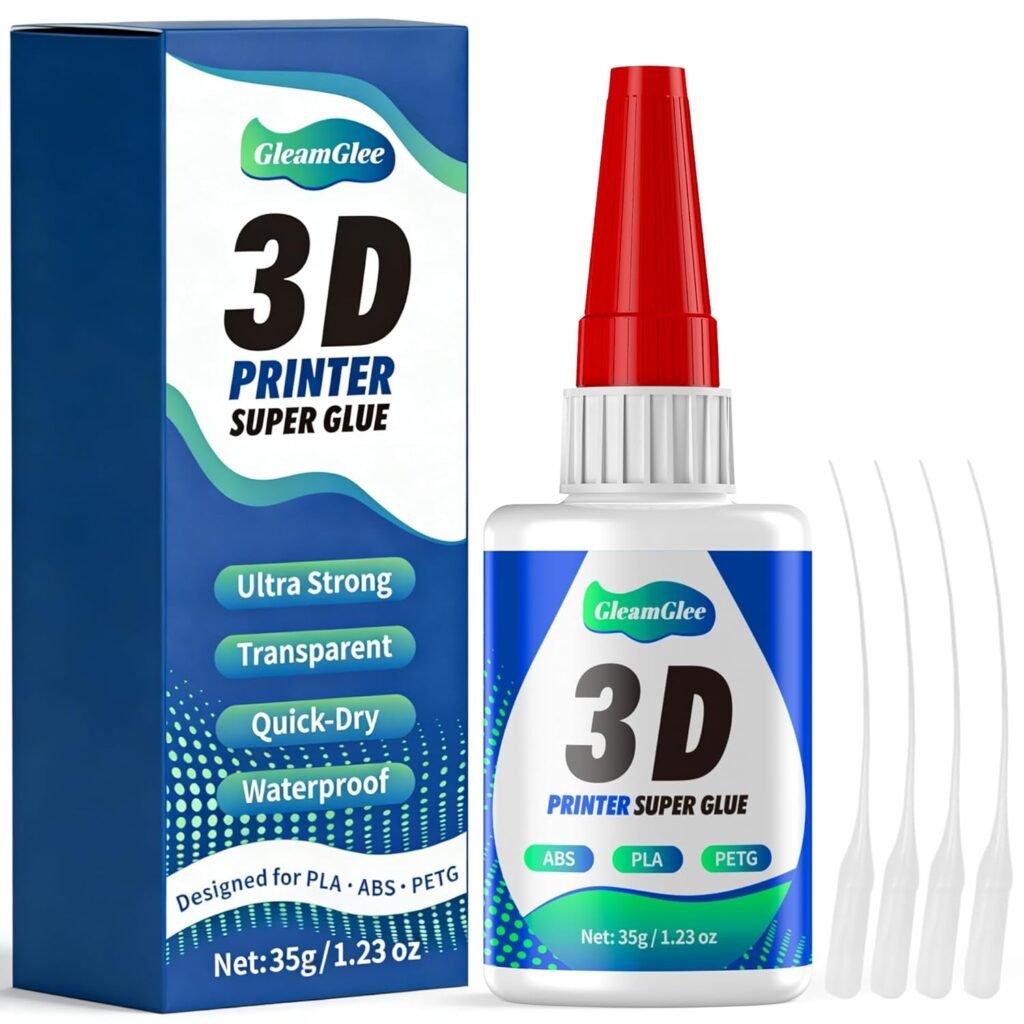
This product comes in a 35g size, which makes it practical for home users because it offers enough adhesive for multiple small ceramic repairs without feeling oversized for normal DIY use.
Why it stands out
A practical size for home repairs
The 35g capacity is large enough for repeated household use while still being easy to handle and store.
Better suited to visible ceramic repairs
For mugs, figurines, pottery, and other visible ceramic items, a neat-looking result matters. A precision-style ceramic glue makes that easier than a bulkier repair system.
A strong fit for common household ceramic items
This kind of product is especially useful for cracked mugs, decorative pottery, figurines, plates, bowls, vases, and small ceramic details that need a controlled repair.
Easier to apply neatly
For crack-line repairs and smaller visible areas, application control is a major advantage.
Best for
GleamGlee Ceramic Glue is especially well suited for:
- cracked ceramic mugs
- porcelain and pottery repairs
- plates, vases, and figurines
- small visible ceramic cracks
- tight-fitting breaks
- consumers who want a clean, user-friendly repair solution
Good to know
Like most precision-style ceramic glues, it makes the most sense when the crack is relatively tight, the surfaces fit well, and the repair is more about bonding neatly than filling missing material.
If the ceramic is chipped, missing material, or has a wide open crack, a filler-based or epoxy-based solution may still be the better choice.

If your project is a small, visible, tight crack or clean break in ceramic, GleamGlee Ceramic Glue is the option we would start with first.
Common mistakes that ruin cracked ceramic repairs
Many failed ceramic repairs come down to a few simple mistakes.
Treating a crack like a chip
If material is missing, a thin glue alone may not be enough.
Using too much glue
Overapplication usually creates squeeze-out, visible residue, and a messier repair line.
Skipping dry-fit
If you do not check the fit first, alignment becomes much harder once glue is applied.
Choosing glue based only on “strength”
The best ceramic repair product is not always the most aggressive one. It is the one that matches the damage correctly.
Handling the item too soon
A repair that feels fine at first can still fail if it has not fully cured.
Ignoring appearance
On mugs, figurines, and decorative ceramics, a neat repair often matters just as much as bond strength.
FAQ
Q1: What is the best glue for cracked ceramic?
For a tight crack or clean break, a precision ceramic glue is often the best starting point. If the crack has a gap or missing material, epoxy or a filler-based repair system may be better.
Q2: Can cracked ceramic be glued?
Yes. Many cracked ceramic items can be repaired successfully if the surfaces fit well, the area is cleaned properly, and the correct repair method is used.
Q3: Is super glue good for cracked ceramic?
It can work for some tight-fitting repairs, but the best option depends on whether the damage needs simple bonding or actual filling.
Q4: What is the best glue for a cracked ceramic mug?
For a tight crack or clean break, a clear ceramic glue with good durability and neat application is usually the best place to start.
Q5: Is epoxy better than ceramic glue?
It depends. Epoxy is usually better for gaps, uneven damage, or repairs that need more body. Ceramic glue is often better for neat, visible, close-fitting repairs.
Q6: Can you fix a chipped ceramic item with glue alone?
Sometimes, but not always. If material is missing, a filler or gap-filling repair method may give a better result.


Quick decision guide
If you are still unsure which repair path makes the most sense, use this simple guide:
| Your Situation | Best Starting Choice |
|---|---|
| Tight ceramic crack | Precision ceramic glue |
| Broken ceramic pieces that fit well | Precision ceramic glue |
| Small visible crack in mug or vase | Precision ceramic glue |
| Open crack with a slight gap | Clear epoxy |
| Chipped ceramic edge | Filler or gap-filling repair system |
| Decorative figurine repair | Precision ceramic glue |
| Mixed-material ceramic repair | Clear epoxy |
If your cracked ceramic item is tight-fitting, visible, and relatively small, a precision ceramic glue is usually the best place to start.
If the damage is open, uneven, or missing material, think in terms of filling as well as bonding.

If there is one thing to remember, it is this:
not every ceramic crack needs the same solution.
For tight, visible cracks and clean breaks, a precision ceramic glue is usually the smartest choice. For open cracks, chipped areas, or missing material, a more filling-oriented repair system may be the better path.
If you want a practical, consumer-friendly option for small visible ceramic crack repairs, start with GleamGlee Ceramic Glue here:
If you are not sure whether your ceramic repair needs a bonding glue, epoxy, or filler, contact us and we will help you choose the right option based on the item, crack type, and repair goal.