Skip to content
Best Glue for Ceramic
Repair mugs & plates with a strong, clean bond—without cloudy seams or bulky glue mess.
A broken mug handle or cracked dish doesn’t have to mean “trash it.”
With the right ceramic glue, you can restore the piece with a tight, neat join that’s built for real-life use—including water exposure and hot beverages.
Why people choose a ceramic-specific glue:
- Strong on smooth ceramic & porcelain surfaces
- Clear, low-visibility finish
- Water-resistant durability for everyday kitchen use
- Heat considerations for hot drinks
Why Ceramic Is Hard to Glue
Ceramic looks solid, but it’s one of the trickiest materials to repair with glue—especially if the item is used every day (like mugs, plates, and bowls).Here’s why ceramic repairs fail so often:

Ceramic is smooth and non-porous
Most ceramics and porcelain have a hard, glazed surface that doesn’t absorb adhesive. That means many “all-purpose” glues can’t grip well—they sit on the surface instead of forming a strong bond.
Break edges are brittle and unforgiving
Ceramic chips easily. If parts don’t align perfectly, you can create new micro-chips at the seam—making the bond weaker and the repair more visible.
Real-use stress is constant
Ceramic items aren’t static. They experience:
- temperature swings
- water exposure
- handling pressure
A glue that “sticks” at room temperature can still fail once heat and moisture enter the equation.
The strongest ceramic bonds require thin, precise application
With ceramic, more glue usually makes things worse. Thick glue lines can prevent tight contact, cause squeeze-out, and leave cloudy seams.
That’s why the best glue for ceramic isn’t just “strong.”
It needs to bond to smooth surfaces, stay stable around water/heat, and cure cleanly.
And since different ceramic repairs stress the bond differently, the next step is identifying which type of repair you’re actually dealing with.
Common Ceramic Problems People Want to Fix
Ceramic usually breaks at the worst moment—right before guests arrive, during cleanup, or when it’s your favorite mug you use every morning. The good news is: most ceramic damage falls into a few common repair types, and once you match the glue to the situation, success becomes much more predictable. Here are the ceramic repair scenarios people most often want to fix:
Broken Mug Handle
That classic clean snap where the handle separates from the mug.
This repair needs strong bonding + resistance to hot drinks + daily handling pressure.
Hairline Cracks in Mugs or Bowlsv
Tiny cracks that don’t look serious—until they spread after the first hot rinse or a few washes.
These repairs require thin application and full curing, or the crack can reopen.
Chipped Plate / Bowl Edges
Small chips that ruin the look (and sometimes become sharper over time).
Often needs gap-filling ability and a clean finish so the repair doesn’t look worse than the chip.
Clean Breaks on Plates, Bowls, or Ceramic Lids
When a piece breaks off cleanly and you can align it perfectly.
Best results come from precise alignment (dry-fit first) and a glue that bonds well to smooth ceramic.
Broken Porcelain or Ceramic Figurines
Small parts—arms, tails, petals—where too much glue instantly makes a mess.
These repairs are all about precision control + a low-visibility finish.
Cracked or Broken Ceramic Vases
Especially if the vase will hold water again, you’ll want water resistance and a repair method that accounts for pressure and weight.
Tile or Small Ceramic Parts
Loose trim, small chips, or decorative ceramic pieces that don’t take heavy load.
The goal here is usually fast, neat bonding more than heavy structural strength.
Why Ordinary Glue Often Fails on Ceramic
After you’ve identified your repair type, the next step is avoiding the #1 reason ceramic fixes don’t last: using the wrong kind of glue. Ceramic is a tough surface—smooth, non-porous, and used around water + heat. Many “ordinary” glues simply aren’t built for that reality. Here’s why they fail:
Weak Grip on Smooth, Glazed Surfaces
Most household glues bond best when they can soak into a surface.
But ceramic glaze doesn’t absorb—so the glue can end up sitting on top instead of forming a strong mechanical hold. That’s why repairs may feel “stuck” at first, then pop off with light stress.
Heat + Water Expose Weak Bonds Fast
A repair that survives on a shelf can fail quickly in a kitchen.
Hot liquids, steam, rinsing, and soaking cause expansion/contraction and moisture exposure that can break down bonds that weren’t designed for daily-use conditions—especially on mug handles and dish edges.
Glue Lines Turn Cloudy, Bulky, or Unattractive
A lot of general-purpose glues dry:
- thick (creating visible seams)
- cloudy or rubbery (making repairs look worse)
- or leave a noticeable “glue ridge” around the break
For mugs/plates, appearance matters—because you see and touch the repair every day.
Too Much Glue Actually Makes the Repair Weaker
This is the most common DIY mistake.
Ceramic repairs need tight surface contact. If the glue layer is too thick, the pieces don’t sit flush, alignment shifts, squeeze-out happens, and the bond can be weaker than a thin, controlled application.
The Repair Holds… Until You Use It
Some glues hold in “no-stress” conditions, but fail once the item is handled normally—picked up by the handle, stacked, washed, or bumped. Ceramic items aren’t static, so the adhesive must be chosen for real movement and daily handling.
The Best Types of Glue for Ceramic
Now that you know why “ordinary glue” often fails, the next step is choosing the right adhesive category. There isn’t one perfect glue for every ceramic repair—because a mug handle, a hairline crack, and a chipped plate edge don’t stress the bond the same way. Here are the best types of glue for ceramic:
Two-Part Epoxy
If you’re repairing mugs/plates—especially handles or anything that will be washed and handled often—two-part epoxy is one of the most reliable categories.
Why it works well on ceramic:
- Bonds strongly to smooth, non-porous surfaces
- Often offers better water resistance than many general glues
- Can handle stress points (like a mug handle being pulled every day)
- Many epoxies also provide gap-filling for slightly uneven breaks
Best for:
Mug handles, stressed joints, heavier pieces, small gaps, “I need it to last” repairs
Ceramic-Specific Glue
Ceramic/porcelain-specific glues are typically formulated to combine what most DIY users actually want:
strong bonding + a clean finish + practical durability.
These are often a great fit for kitchen ceramics because they’re positioned for:
- strong bonding on glazed ceramic/porcelain
- a cleaner-looking seam (less obvious repair line)
- water exposure and everyday household use (when used as directed)
Best for:
Common ceramic repairs where you want a strong, neat result—mugs, plates, bowls, household ceramics
Cyanoacrylate
Super glue is popular because it’s fast and easy—but it’s not the best answer for every ceramic repair.
Where it shines:
- Very small parts (figurines, tiny chips, decorative pieces)
- Clean, tight-fitting breaks where alignment is perfect
- Fast “hold it in place” repairs with minimal glue
Where it can disappoint (especially for mugs/plates):
- High-stress joints (like mug handles)
- Repairs exposed to frequent washing/heat cycles
- Situations where a little flexibility or gap filling is needed
Best for:
Small decorative repairs, precise alignment jobs, low-stress ceramic parts
Gap-Filling Repair Compounds
If the break isn’t clean—like a chipped edge or a missing fragment—bonding alone may not create a strong, tidy repair. In those cases, a gap-filling approach (often epoxy-based or combined with fillers) can help:
- fills uneven surfaces for better contact
- improves appearance by reducing visible voids
- can reinforce weak edges before they worsen
Best for:
Chipped rims, uneven breaks, cosmetic + structural improvement on plates/bowls
Quick Rule of Thumb
- Mugs/plates (water + heat + handling): epoxy or ceramic-specific glue
- Small figurines/decor: super glue
- Chips/uneven breaks: gap-filling approach
What Makes the Best Glue for Ceramic
Now that you know the main glue types (epoxy, ceramic-specific glue, super glue), the next step is choosing a product that’s actually built for smooth ceramic + real-life use—especially for mugs and plates that see water, heat, and repeated handling. Here’s the checklist that separates “it stuck once” from “it’s still holding months later”:

Strong Bond on Smooth, Non-Porous Surfaces
Ceramic and porcelain are typically glazed and non-absorbent, so the best ceramic glue must grip without relying on absorption.
Look for wording that clearly supports ceramic/porcelain, tile, or non-porous surfaces.
Water Resistance for Everyday Washing
If you’re repairing mugs, plates, or bowls, water exposure isn’t optional—it’s constant.
A good ceramic glue should be positioned for water-resistant / waterproof durability once fully cured.
Tip: “Water resistant” is only meaningful if you allow full cure time before washing.
Heat Considerations
For mugs and dishes, the bond may be exposed to:
- hot coffee/tea
- steam
- quick temperature changes (hot → rinse)
The best glue for ceramic should remain stable under normal household heat conditions as directed .
Clear, Low-Visibility Finish
A strong repair that looks ugly still feels like a loss—especially on mugs and plates you see daily.
The best options cure clear and avoid:
- cloudy seams
- thick ridges
- yellowing or visible residue
Enough Working Time to Align the Pieces
Ceramic repairs often fail because parts slip while setting—especially handles.
You want a glue that gives you enough time to:
- align precisely
- press firmly
- secure with tape if needed
Too fast can be unforgiving; too slow can be inconvenient. The sweet spot is controlled set + reliable cure.
Thin Application Strength
With ceramic, strong bonding usually comes from tight surface contact.
The best ceramic glue performs well in a thin layer, so your pieces sit flush and the seam stays neat.
Gap-Filling Ability
Some breaks are clean snaps. Others have chips or uneven edges.
If your repair has small voids, you’ll benefit from a glue that can fill micro-gaps instead of only bonding perfectly flat surfaces.
(For larger missing chunks, a filler/compound approach may be better—covered in Module 5.)
Precision Application for Clean Repairs
Mess is the enemy of ceramic repairs. The best products make it easy to apply precisely—especially for:
- mug handles
- rim repairs
- small ceramic parts
- tight seams you want to keep “invisible”
Quick “Best for Ceramic” Scorecard
If a glue is truly great for mugs/plates, it usually checks most of these:
✅ non-porous bonding
✅ water-resistant after full cure
✅ heat considerations for household use
✅ clear finish
✅ controllable set time
✅ strong in thin layers
✅ neat, precise application
Next up: Once you pick the right glue, technique becomes the difference-maker—so let’s walk through the simplest step-by-step method to get a strong, clean ceramic repair on the first try.
How to Glue Ceramic
1. Dry-fit first
practice alignment before glue
2. Clean & dry
remove grease, dust; fully dry
3. Apply a thin layer
tiny amount—don’t flood the seam
4. Press & hold
use tape for handles / awkward pieces
5. Let it cure fully
before washing or using with heat
Mistakes That Make Ceramic Repairs Look Bad
Avoid these and your repairs instantly look more professional:
- Too much glue → squeeze-out, cloudy seams
- No dry-fit → misalignment, chipped edges
- Moving the piece too soon
- Using the wrong type for heat/water
- Washing before full cure
Once you avoid those, choosing a product becomes much easier—so here’s a quick market comparison shoppers expect to see.v

Popular Ceramic Glues People Try
Below are well-known options people commonly consider for ceramic, plus typical prices:
Loctite Quick Set 5-Minute Epoxy (0.85 oz)
Strong, clear, quick set epoxy often used for ceramic and household repairs. ~$8.98.
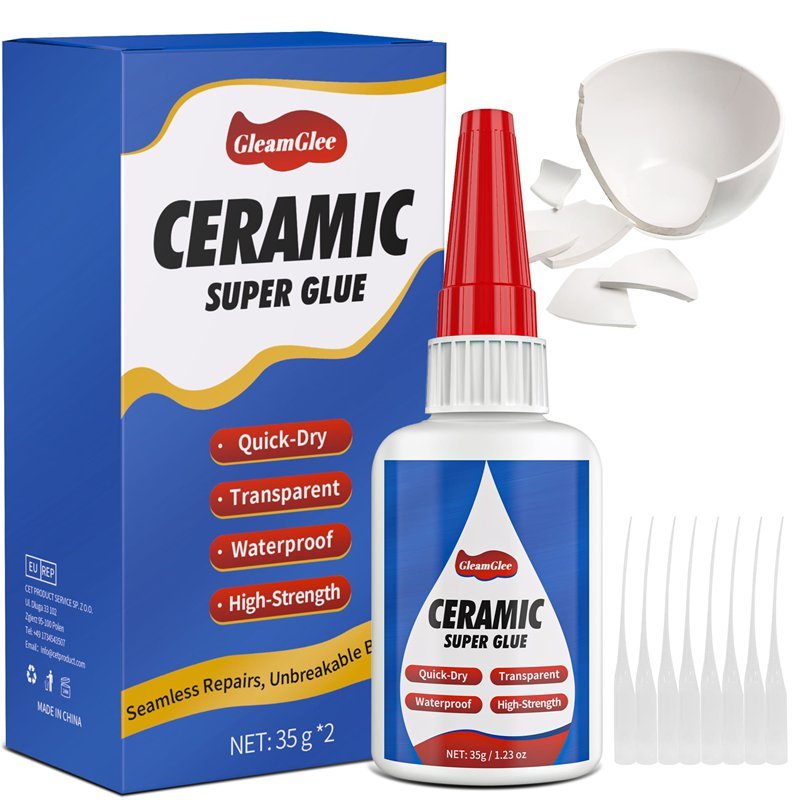
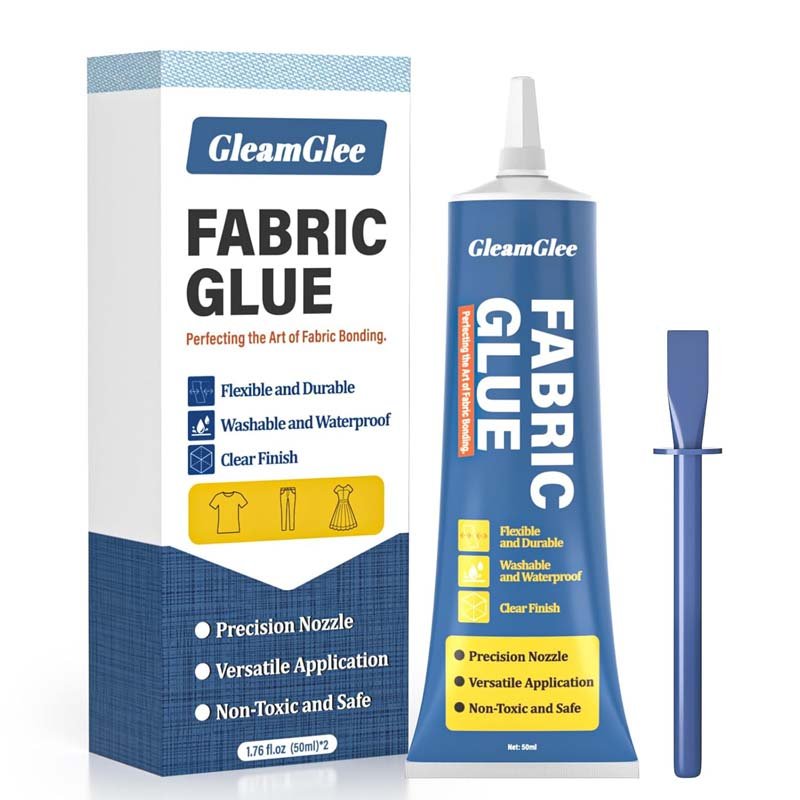
⭐ GleamGlee Ceramic Glue (Our Main Recommendation)
Marketed for ceramic/porcelain repairs, emphasizing strong bonding + waterproof + high-temperature resistance for items like mugs and dishes.
Gorilla 2-Part Epoxy (25 mL, clear)
Gap-filling, water-resistant, clear finish; good for uneven breaks. ~$7.59.
J-B Weld KwikWeld (2 oz)
Fast-setting epoxy; listed for use on ceramic among other materials. ~$7.99.
Krazy Glue All Purpose (0.07 oz)
Budget-friendly quick-bond super glue suitable for ceramics (best for small, clean fits). ~$2.59.
Gorilla Super Glue Gel (15g)
Gel control for vertical spots; quick fixes on small ceramic pieces. ~$5.98.
⭐ Best Glue for Ceramic
Designed for ceramic/porcelain repairs with a focus on the exact things mugs and dishes demand—strong bonding, water resistance, heat resistance, and a neat finish.

GleamGlee Ceramic Glue
Why it’s the best fit for mugs/plates (real-life use):
- Strong bond on smooth, glazed ceramic: Built specifically for dense, non-porous surfaces like ceramic and porcelain—where many “general glues” struggle to grip.
- Waterproof + heat-resistant performance: Positioned for kitchenware conditions (hot drinks, rinsing, washing), helping repairs hold up beyond day one.
- Clean, low-visibility finish: Dries clear for a more “invisible” seam—especially important on cups, plates, and bowls you see every day.
- Precision application (less mess): The precision-tip/needle-style application helps you lay down a thin line along cracks or handle joints—cleaner repairs with less squeeze-out.
- Fast set, then full cure for durability: It’s designed to grab quickly, but like all strong ceramic repairs, it performs best when you allow a full cure window before washing or stressing the joint.
Use note (important for mugs/plates): Even if a glue sets fast, let it fully cure before washing or filling with hot liquid—this is where most “it failed” stories come from.
Quick Decision Checklist
- Mug handle repair / stressed joint: choose a clear two-part epoxy or a ceramic-focused glue designed for durability.
- Hairline crack / decorative piece: a precision super glue can work if alignment is clean and stress is low.
- Chips / uneven breaks: look for gap-filling performance (often epoxy).
- You want “one best all-around” for typical household ceramic repairs: our Editor’s Pick is positioned for that everyday use case.
Now, let’s answer the questions shoppers ask right before they buy.
FAQ
Q1: Is ceramic glue waterproof?
Many ceramic epoxies and ceramic-targeted glues are designed to resist water, but success depends on prep + full cure time.
Q2: Can I use it on a mug for hot drinks?
Heat tolerance varies by product; follow the label. For mugs/plates, prioritize products marketed for heat/water durability.
Q3: How long should I wait before washing?
Even “fast set” products often require longer to reach full strength—don’t wash or stress the joint early.
Q4: Can I fix chips (not a clean break)?
Yes, but chip repairs usually need gap-filling behavior (often epoxy) and careful cleanup for a neat finish.
Q5: Will it dry clear?
Many popular ceramic repair options are designed to dry clear, but always check the specific product description.

Don’t Toss It—Repair It Right

Ceramic breaks feel final… but most mug/plate repairs fail for predictable reasons: wrong glue type, too much glue, or not enough cure time.
Pick an adhesive built for smooth ceramic, apply it thin and clean, and let it cure properly—then your repair has a real chance to last through everyday life.
If you want a ceramic-focused option designed around the common household use case, here’s the product link again: