Skip to content
Wood Glue Alternatives for Fast Repairs
Fast, Clear Wood Repairs Without Long Clamp Times
- Compare CA glue, fast-set PVA, epoxy, polyurethane, and hot-melt options.
- Match the adhesive to the joint, gap, load, and repair environment.
- Discover a precise, single-component choice for small, close-fitting wood repairs.

Choose Speed Only After Checking the Repair
Fast initial hold matters, but joint fit, missing material, load direction, and moisture exposure determine whether a fast adhesive suits the job.
Check the Joint Fit
Press the broken pieces together without adhesive. A close-fitting break should return to its original position with broad surface contact and little visible space between the pieces. Such joints are favorable for controlled, thin CA application. If the pieces rock, sit crooked, or touch only at isolated points, cleaning, reshaping, replacement material, or a different adhesive system may be necessary.
Measure the Real Gap
A hairline crack and a missing section are not the same repair. Medium-viscosity CA glue can remain controlled around narrow cracks and close-fitting breaks, but it is not a thick structural filler. Never create a stronger-looking joint by flooding a large cavity with extra adhesive. Missing wood may require a fitted wood insert, reinforcement, epoxy repair system, or replacement part.
Identify the Load
Small decorative parts often face lighter, more evenly distributed loads. Chair legs, stair components, bed frames, and railings can experience leverage, peeling, twisting, repeated impact, and safety-critical loads. A fast initial set does not make every adhesive suitable for every force. Evaluate how the repaired component will move and whether mechanical support is required before selecting an adhesive.
Consider the Environment
Separate dry indoor use, humidity, occasional splashes, outdoor weather, and continuous immersion. These conditions create different demands. GleamGlee is positioned for waterproof, weather-resistant performance after curing and can support suitable indoor or outdoor repairs. It should not be presented as a solution for continuous underwater use, below-waterline repairs, direct flame, or unverified extreme conditions.
Why Traditional Wood Glue Can Feel Too Slow
Conventional PVA remains valuable for woodworking, yet its working and clamping requirements may feel inefficient during a small, urgent repair.
Long Clamp Time
Traditional PVA wood glue normally relies on close wood contact and sustained pressure while the adhesive develops enough strength. That process works well for furniture construction, panels, and larger joints, but it can feel excessive when reconnecting a tiny model component, loose decorative block, or narrow frame corner. A faster-setting alternative may reduce the time spent arranging clamps around a small part.
Parts Keep Sliding
Small pieces can shift as pressure is applied, particularly on vertical trim, angled corners, and miniature assemblies. Repeated movement creates misalignment and spreads adhesive beyond the joint. A fast initial hold can help a correctly fitted part remain in position sooner. Accurate dry fitting is still essential because a rapid adhesive leaves less time to correct the direction after the surfaces meet.
Use Is Delayed
A quick household repair often occurs between other tasks. Waiting through a long clamping process may be inconvenient when the repaired object is a display piece, model, small drawer component, or craft item. Faster initial positioning can make the workflow more efficient, but the object should still rest before loading. Initial set, handling readiness, and full cure describe different stages.
Fast Repairs When Clamping Is Difficult
Small, narrow, angled, or vertical parts often need a different positioning strategy from large woodworking joints assembled on a flat bench.

Narrow Furniture Trim
Thin decorative strips can be difficult to hold with a full-size clamp without marking the finish or shifting the trim. A controlled amount of fast-setting adhesive may help when the strip is lightweight, the surfaces fit closely, and the repair is not a principal load-bearing connection. Clean away old adhesive and test the alignment before opening the bottle.

Picture Frame Corners
A small separated corner may require accurate alignment on two visible edges. Clear adhesive and precise application are useful where excess glue could spoil the appearance. A fast initial hold can reduce movement, but the joint geometry still matters. Frames with missing wood, distorted miters, or heavy glass may need reinforcement rather than adhesive alone.

Miniature Wood Parts
Model airplanes, dollhouses, wooden vehicles, and display miniatures contain pieces too small for ordinary workshop clamps. Medium-viscosity CA glue can provide more placement control than a water-thin formula while reaching compact contact areas. Apply only a small amount, align immediately, and keep fingers away from the joint because cyanoacrylate bonds skin rapidly.

Vertical Decorations
Wood letters, lightweight ornaments, and small decorative fittings may slide before a slow adhesive develops tack. A rapid initial set can be helpful when both surfaces are clean, dry, compatible, and closely fitted. Do not confuse a no-clamp positioning advantage with approval for heavy wall-mounted objects or overhead components where falling could cause injury.
Compare Ten Fast Wood Repair Options
Each adhesive family balances speed, adjustment time, gap handling, application control, and long-term use differently. Select by task rather than speed alone.
| Adhesive option | Initial behavior | Mixing | Joint and gap profile | Best-matched repairs | Main limitation |
|---|---|---|---|---|---|
| Medium CA glue | Very fast initial positioning | No | Close-fitting breaks and narrow cracks | Furniture touch-ups, models, crafts, small parts | Limited adjustment time; not a large-gap filler |
| Thin CA glue | Wicks rapidly into tight spaces | No | Very fine cracks and tight joints | Hairline cracks, model assemblies, stabilization tasks | Can soak into porous wood or run beyond the target |
| Gel CA glue | Fast, with reduced running | No | Vertical surfaces and minor irregularities | Upright parts and controlled household repairs | May be too thick for very narrow cracks |
| Fast-set PVA | Faster than standard PVA | No | Wood-to-wood joints with broad contact | Trim, moldings, and conventional woodworking | Usually still needs pressure or clamping |
| Five-minute epoxy | Several minutes for alignment | Yes, commonly 1:1 | Irregular surfaces and modest gaps | Mixed materials and repairs needing adjustment | Requires accurate mixing and cleanup |
| Polyurethane adhesive | Slower than CA; develops during cure | No | Some porous and mixed-material joints | Selected indoor and outdoor projects | Can expand or foam; clamping may be needed |
| Hot-melt glue | Grabs as it cools | Heated application | Lightweight craft joints | Temporary positioning and simple crafts | Thick glue line; limited suitability for precise joints |
| Construction adhesive | Strong initial grab varies by formula | No | Larger surfaces and building materials | Trim, panels, and installation work | Too bulky for many fine wood repairs |
| Contact adhesive | Bonds after coated surfaces reach the required stage | No mixing | Broad surface laminations | Veneer, laminate, and selected sheet materials | Little repositioning after contact |
| CA and PVA tack method | CA positions while PVA continues curing | Two separate adhesives | Larger wood joints needing temporary positioning | Selected workshop assemblies | More complex process; compatibility and instructions matter |
CA Glue or PVA for Wood Repairs
Both adhesive families can bond wood, but their working behavior makes them suitable for different project sizes, joint designs, and assembly schedules.

Where Medium CA Glue Fits
Medium-viscosity cyanoacrylate is useful when a small broken component fits closely and must be positioned quickly. The single-component liquid requires no resin-to-hardener ratio and is normally applied as a controlled thin layer. Fast initial hold reduces sliding around miniature parts, furniture details, models, and visible decorative repairs. A transparent formula also avoids the familiar white or yellow appearance associated with some conventional woodworking adhesives.
CA provides limited correction time after the surfaces meet. It is not the automatic choice for large panels, complex assemblies, broad mortise-and-tenon joints, or repairs with missing wood. Performance depends on dry, clean surfaces, sufficient contact area, sensible loading, and adequate rest before the repair returns to use.

Where PVA Remains Valuable
PVA wood glue offers a longer open period for spreading adhesive, assembling several pieces, correcting alignment, and positioning clamps. It is widely used for broad wood-to-wood contact, furniture construction, panel work, joinery, and projects designed around clamping pressure. Its slower workflow can be an advantage when several parts must be adjusted before the assembly locks into position.
Fast-set PVA versions shorten the process, but they remain different from CA. A consumer repairing one close-fitting frame corner may value CA speed and precision; a woodworker assembling a wide tabletop may value PVA coverage and open time. The correct conclusion is not that one adhesive defeats the other. Each serves a different joint and workflow.
Medium CA Glue or Five-Minute Epoxy
The better option depends on whether speed and thin application matter more than adjustment time, mixing tolerance, and limited gap handling.
Medium CA Adhesive
Choose medium CA when the pieces return to a close fit, the bonding area is relatively small, and fast initial positioning is important. It is supplied ready to apply, so there is no resin-to-hardener measurement or mixing step. Controlled thin application is suitable for narrow joints, small furniture components, models, wooden crafts, and visible repairs where a clear glue line is desirable.
- Best with clean, dry, closely fitted surfaces.
- Useful where long clamp times are inconvenient.
- Limited time is available for correcting alignment.
- Excess adhesive should not be used to compensate for missing material.
- Initial hold does not equal full service strength.
Quick-Set Epoxy
A short-working-time epoxy may be better when surfaces are slightly irregular, the repair combines wood with another compatible material, or several minutes are needed to align the components. Epoxy generally requires two components mixed at the specified ratio. The mixed adhesive can remain where a very thin liquid would run or absorb, depending on its formulation.
- Suitable for selected mixed-material repairs.
- Offers more adjustment time than many CA formulas.
- Can tolerate some irregularity better than thin CA.
- Requires correct proportioning and thorough mixing.
- Produces a larger glue line and more cleanup work.
CA Glue or Hot Glue for Quick Fixes
Both options can reduce waiting, yet they differ sharply in application temperature, glue-line thickness, precision, appearance, and suitable repair loads.
Precise CA Repairs
CA adhesive is applied at room temperature and works best as a small, controlled amount between closely fitted surfaces. Medium viscosity can support precise placement around model components, picture frames, wooden ornaments, and small furniture details. The cured line can remain clear when the surfaces are clean and overflow is controlled. Rapid positioning is valuable, but skin and eye contact must be avoided.
Lightweight Hot-Melt Work
Hot-melt adhesive grabs as the melted material cools. It is convenient for selected crafts, mockups, temporary positioning, and lightweight decorative work. The bead is usually thicker than a CA layer and may prevent two broken wooden faces from closing completely. Heat can also affect delicate materials or finishes. Hot glue should not be treated as a universal permanent substitute for a close-fitting wood repair.
CA Glue or Polyurethane for Wood
One favors small, clean, fast repairs; the other may suit selected larger, porous, irregular, or weather-exposed assemblies when used according to its instructions.
Controlled Small Repairs
A medium CA formula is designed for thin application on close-fitting surfaces. It does not need added moisture or a separate mixing step. Its speed and narrow application path are useful for indoor repairs, models, crafts, and suitable outdoor touch-ups after curing. A clear formula can help preserve the appearance of visible wood.
Broader Project Conditions
Polyurethane adhesive is often considered for porous materials, mixed substrates, and selected outdoor work. Some formulas expand while curing, so the user must account for squeeze-out, joint movement, clamping, and cleanup. Expansion should not be confused with structural gap reconstruction. Product-specific directions govern surface moisture, pressure, curing, and outdoor exposure.
Glue, Screws, or a Combined Repair
Fast adhesive can restore discreet small parts, while mechanical fasteners remain important wherever the connection requires defined structural support or serviceable hardware.
Adhesive Only
Adhesive-only repair can keep the surface free from visible holes and is useful for small parts that are too thin for drilling. It works best when the surfaces provide adequate contact and the load does not continually peel or pry the joint apart. Decorative trim, models, and close-fitting craft components are common examples.
Mechanical Fasteners
Screws, nails, brackets, dowels, and other fasteners provide mechanical support that does not depend solely on the bonded surface. They may be more appropriate for large furniture joints, replaceable hardware, components carrying repeated load, or areas where movement and leverage are expected. Installation can leave visible holes or require tools.
Combined Support
Some repairs use adhesive to distribute contact across a joint and mechanical hardware to resist movement or maintain alignment. The correct combination depends on the component design, material thickness, load, and safety consequences. Do not assume that adding any random screw automatically strengthens a damaged or split wooden part.
Five Questions Before Choosing a Fast Adhesive
Answer these checks before opening the bottle. They reveal whether speed, filling ability, adjustment time, appearance, or mechanical support matters most.
Do the Pieces Fit Closely?
Dry-fit the parts. Broad, stable contact with little visible space favors thin adhesive application. Rocking or isolated contact suggests the joint needs more preparation.
Is Any Wood Missing?
A narrow break is different from a missing corner or crushed fibers. Visible material loss may require a fitted insert, filler system, reinforcement, or replacement.
How Will It Be Loaded?
Identify shear, tension, peeling, twisting, vibration, and leverage. Small decorative loads are not equivalent to chair, stair, bed, or railing loads.
Will It Face Moisture?
Separate dry rooms, humidity, occasional splashes, changing outdoor conditions, and continuous immersion. Check the selected product’s verified exposure claims.
Must the Line Stay Clear?
Visible frames, models, ornaments, and finished furniture benefit from controlled application. Clear adhesive can still show if too much is applied or overflow cures on the surface.
Dry-Fit the Break Before Applying Adhesive
A no-glue rehearsal reveals contact area, missing fibers, alignment problems, holding position, and whether a fast-setting formula leaves enough assembly time.
Close-Fitting Break
Bring both surfaces together gently. The original edges should interlock without force, rocking, or a thick visible opening. Mark the final orientation if the shape is confusing. A close-fitting break creates broad contact for a thin adhesive layer and allows fast initial positioning to work as intended.
Before bonding, remove loose dust and old adhesive that prevents closure. Do not sand away sound interlocking geometry merely to make the surface look smooth. Prepare the holding position and rehearse the movement because CA begins positioning quickly after contact.
Minor Surface Irregularity
Small compressed fibers, old coating, or isolated high spots can keep a repair from closing. Inspect the joint under bright side lighting. Remove loose contamination and test whether gentle surface preparation improves contact. Finished, painted, waxed, sealed, or oily wood should be tested because the adhesive may bond to the coating rather than sound wood.
A slightly irregular joint may call for a gel, thicker CA, or epoxy, depending on the actual gap and load. Do not automatically compensate by flooding the joint.
Missing or Distorted Wood
If the pieces cannot reproduce the original shape, adhesive alone cannot restore the missing geometry. A thick pool may cure, yet the repair can still lack proper wood-to-wood contact. Consider fitting a matching wood insert, rebuilding the area with an appropriate repair compound, adding mechanical reinforcement, or replacing the component.
Safety-related parts deserve professional evaluation. Fast curing does not correct a fundamentally damaged joint.
Hairline Crack, Tight Break, or Missing Gap
The visible opening determines whether adhesive can contact both surfaces or whether preparation, filling, reinforcement, or replacement must come first.

Hairline Crack
A narrow crack may accept a more fluid adhesive if the opening allows penetration and the surfaces remain structurally sound. Medium viscosity offers greater placement control but may not wick as deeply as a water-thin CA. Never force the crack wider without understanding the component.
Close-Fitting Break
A break that closes naturally is the strongest match for GleamGlee’s controlled thin application. Clean both faces, rehearse alignment, apply a small amount to one surface, and bring the parts together immediately. Avoid moving the joint after initial positioning begins.
Visible Missing Gap
A cavity caused by lost wood, crushed fibers, or poor joinery is not solved by extra CA alone. Select an appropriate insert, filler, epoxy system, reinforcement, or replacement strategy. Major gaps and safety-critical parts require more than a fast cosmetic bond.
Understand How the Joint Will Be Loaded
Wood species alone cannot determine adhesive suitability. Shear, tension, peeling, and twisting place different stresses on the same repaired contact area.
Shear Across the Joint
Shear moves the bonded surfaces parallel to one another. A broad, closely fitted joint with evenly distributed load can perform more favorably than a narrow edge exposed to leverage. Confirm that the component does not also bend or peel during normal use.
Straight Tension
Tension pulls the two surfaces apart more directly. Contact area, wood condition, alignment, adhesive coverage, and load magnitude all matter. A small decorative component and a suspended heavy object should never be treated as equivalent tension repairs.
Peeling at an Edge
Peel force concentrates stress along a moving edge and can open a stiff adhesive layer progressively. Thin trim, flexible strips, and projecting ornaments may experience peel even when the overall object is light. Change the joint design or add support when needed.
Twisting and Leverage
Chair parts, handles, legs, knobs, and long projecting components can multiply force at the bond line. Repeated twisting and impact may require mechanical reinforcement or component replacement. A rapid initial set does not establish structural suitability.
Match the Adhesive to Moisture Exposure
Dry rooms, humidity, splashes, outdoor weather, and continuous immersion are separate conditions and should never be grouped under one vague waterproof claim.
Dry Indoor Use
Picture frames, models, wooden decorations, craft pieces, and small furniture details in conditioned rooms avoid the toughest moisture changes. Surface preparation, joint fit, adhesive quantity, and loading remain essential even in a dry environment.
Humid Indoor Areas
Basements, garages, entryways, and selected kitchen or bathroom locations may experience humidity or occasional condensation. Allow the repair to cure adequately before exposure and keep the joint away from continuous wetting.
Outdoor Exposure
GleamGlee is positioned as waterproof and weather-resistant after curing. Suitable examples include local, non-critical repairs to birdhouses, garden signs, planters, and outdoor crafts. Protect the fresh joint until it has cured adequately.
Continuous Immersion
Long-term underwater exposure, boat work below the waterline, and permanently saturated wood require verified systems designed and tested for those conditions. GleamGlee should not be presented for continuous immersion without supporting test data.
Match Repair Problems to GleamGlee Features
Each product feature has a defined job. Speed, clarity, viscosity, application control, convenience, and material compatibility solve different repair problems.
Reduce Long Waiting
The CA formula sets in seconds for fast initial positioning. It is useful when a small, closely fitted part must stop sliding sooner than it would with many conventional wood glues. Continue resting the repair before applying normal service loads.
Position Small Parts
Rapid initial hold supports models, crafts, narrow trim, and furniture details that are inconvenient to clamp. Dry-fit first because the limited adjustment period leaves little room for correcting the angle after contact.
Keep Lines Clear
The transparent formula dries clear for a cleaner-looking repair. Thin application, prompt overflow control, and clean surfaces remain necessary because a clear adhesive can still become visible when used excessively.
Reach Tight Areas
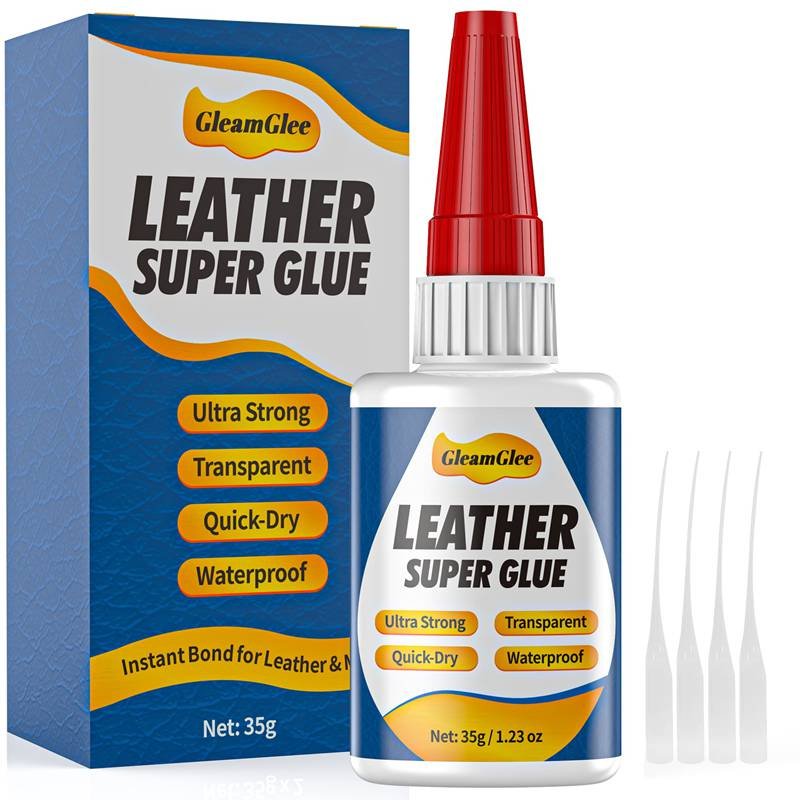
Four precision application nozzles accompany each bottle. They help direct small amounts into narrow cracks, corners, and miniature joints. The nozzles improve placement; they do not change the adhesive’s strength.
Skip Mixing
The single-component liquid is ready to apply without weighing resin and hardener or calculating a mix ratio. Fewer preparation steps suit household repairs, crafts, and workshop touch-ups.
Join Compatible Materials
The product bonds wood and compatible metal, plastic, and ceramic surfaces. Mixed-material capability is useful for small fittings and decorations. Plastic chemistry varies, so test unfamiliar plastics and avoid claiming universal compatibility.
What Makes GleamGlee a CA Wood Adhesive
Its cyanoacrylate chemistry, single-component form, medium viscosity, and precise delivery distinguish it from conventional PVA and two-part epoxy systems.

A Fast-Setting Cyanoacrylate Formula
leamGlee Wood Glue is a liquid cyanoacrylate adhesive developed for wood repair rather than a traditional white or yellow PVA carpenter’s glue. Cyanoacrylate begins polymerizing rapidly when a thin adhesive layer is confined between suitable surfaces. That behavior supports quick initial positioning, especially when the parts are small and closely fitted.
Fast reaction creates a different working method. The user should clean both faces, rehearse alignment, prepare a stable holding position, and apply only a controlled amount. There is less time to slide or reposition the components after contact than with conventional woodworking glue.
Single-Component Application
No resin, hardener, mix cup, mixing stick, or separate activator is required for the standard application. Install a precision nozzle, place a small amount on one surface, align the components, and hold them steadily. Fewer preparation steps reduce waste during small household, model, craft, and furniture touch-up tasks.
Single-component convenience does not remove the need for sound joint design. Adhesive still performs best on clean, dry surfaces with adequate contact. Large cavities, missing wood, and safety-critical structures require a different repair assessment.
A Defined Repair Role
GleamGlee is intended for fast, clear, precise wood repairs and compatible mixed-material connections. It should not be described as a universal replacement for PVA, epoxy, polyurethane adhesive, screws, or professional structural repair. Its strongest market position is narrower and more useful: small, close-fitting repairs where speed and application control matter.
Why Medium Viscosity Supports Better Control
The formula balances movement into narrow contact areas with enough body to remain near the intended joint during a precise small repair.

Controlled Flow
Medium viscosity is less likely to race across the surface as quickly as a water-thin CA. That added control helps place a small amount near edges, corners, and miniature components. It remains a liquid adhesive, so protect adjacent finishes and avoid excessive pressure on the bottle.
Close-Fitting Surfaces
The formula is well matched to broken pieces that return to broad contact. A thin, even adhesive layer allows the wood faces to close without a bulky obstruction. More adhesive does not automatically produce a stronger bond and can increase overflow.
Small Repair Areas
Models, picture frames, wooden toys, craft items, trim, and decorative furniture parts often contain limited contact areas. Medium viscosity and precision nozzles help control placement. Large panels, missing sections, and substantial structural joints require another adhesive or reinforcement strategy.
Fast Initial Set Is Not Full Cure
Understanding each stage prevents premature loading, movement, water exposure, and the false assumption that a joint reaches complete strength within seconds.
Prepare and Align
Clean both surfaces, conduct a dry fit, confirm the final orientation, and arrange a safe holding position. Once CA-coated surfaces meet, the correction period is short. Preparation often has a greater influence on accuracy than application speed.
Reach Initial Hold
GleamGlee sets in seconds for initial positioning. The part may stop sliding or become easier to keep aligned. Actual timing varies with wood porosity, surface condition, temperature, humidity, glue quantity, fit, and contact area. No unsupported exact second count should be promised.
Let the Joint Rest
Continue protecting the bond after it develops an initial hold. Do not test it repeatedly by bending, twisting, pulling, or tapping. Early disturbance can damage a developing adhesive layer even if the exterior appears dry.
Return to Service Carefully
Resume normal use only after adequate curing for the product, joint, and environment. Delay water exposure and significant loading. Safety-critical repairs require further evaluation regardless of how quickly the adhesive grabs.
Clear Repairs Depend on More Than Color
Transparent adhesive supports a discreet result, but wood preparation, glue quantity, surface finish, overflow, lighting, and grain color still influence visibility.

Picture Frame Corners
Clear adhesive avoids introducing an obvious white or yellow line at a visible miter. Accurate closure is essential because a geometric gap remains visible even when the adhesive itself is transparent. Protect the finished face from overflow.

Wooden Models
Miniature aircraft, boats, vehicles, and dollhouse parts benefit from a narrow application path. A large cured bead can overwhelm fine scale. Apply only enough to wet the contact and keep the nozzle away from painted details.

Decorative Trim
Furniture trim and carved embellishments may include stain, lacquer, wax, or paint. Test an inconspicuous area and confirm whether the coating should be removed from the bond line. Adhesive bonded only to a weak coating may release with it.

Handmade Gifts
Ornaments, wooden jewelry, signs, and keepsakes often receive close visual inspection. Clean surfaces, thin adhesive, controlled placement, and patient resting create a neater result than relying on transparency alone.
Wood Surfaces Need Different Preparation
Hardwood, softwood, MDF, plywood, finished trim, and craft wood respond differently to cleaning, absorption, pressure, and adhesive placement.

Hardwood Parts
Dense woods may absorb less rapidly than open-grained softwood, but oils, wax, polish, and coatings can reduce direct contact. Clean and test before bonding. Closely fitted furniture details and craft components are better candidates than major structural joints.

Softwood Crafts
Softwood fibers can crush, tear, or absorb liquid. Remove loose fibers without erasing the joint geometry. Apply a controlled amount and avoid repeatedly separating the pieces after initial contact.

MDF Trim
MDF edges can be dusty and absorbent. Remove machining dust and verify that the material has not crumbled. Repairing a small clean edge is different from rebuilding a water-damaged or swollen section.

Plywood Models
Thin plywood and laser-cut parts may contain fragile veneers or scorched residue. Test the fit and avoid excessive adhesive that could travel along layers or stain a visible model surface.

Picture Frames
Frames combine visible finishes, angled joints, and the weight of glazing or artwork. Repair only sound, close-fitting corners and consider reinforcement when the frame is large, distorted, or heavily loaded.

Furniture Details
Small appliqués, trim blocks, and decorative pieces are better candidates than principal load-bearing joints. Check for polish, paint, old glue, and hidden hardware before applying adhesive.
Fast Mixed-Material Repairs with Wood
GleamGlee bonds wood with compatible metal, plastic, and ceramic surfaces, expanding the range of small fittings, ornaments, models, and household repairs.

Wood to Metal
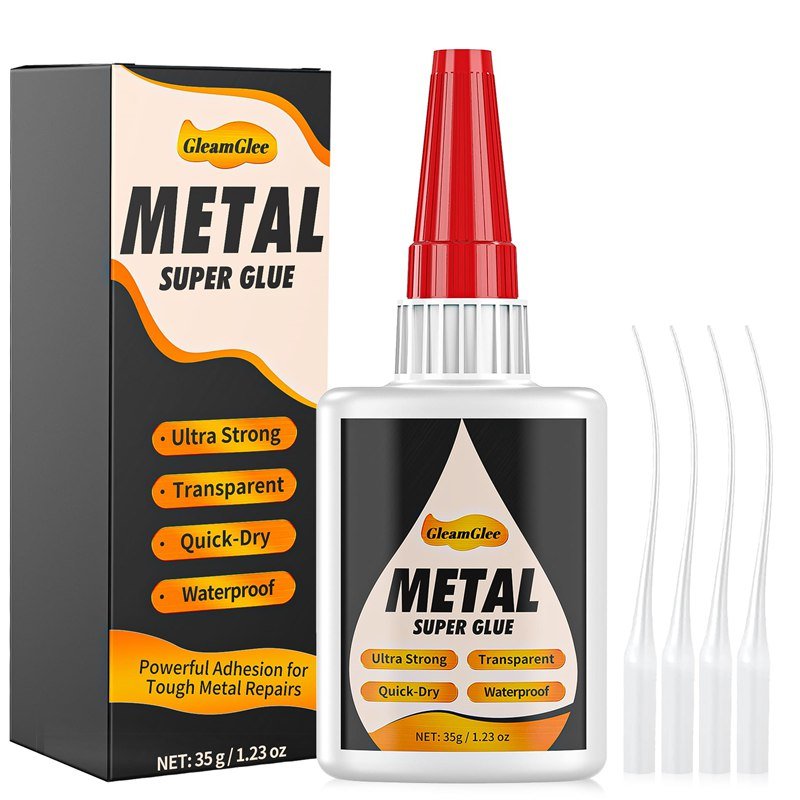
Small metal badges, decorative fittings, model parts, and compatible furniture hardware may bond when both surfaces are clean, dry, and closely fitted. Remove oil and loose corrosion. Smooth metal may require testing or light preparation. Do not substitute adhesive for screws or welding in safety-critical connections.
Wood to Compatible Plastic
Plastic composition strongly affects adhesion. Rigid, higher-surface-energy plastics may respond differently from polyethylene, polypropylene, PTFE, silicone, and other low-surface-energy materials. Because universal plastic compatibility is not confirmed, identify the plastic where possible and test an inconspicuous area before repair.
Wood to Ceramic
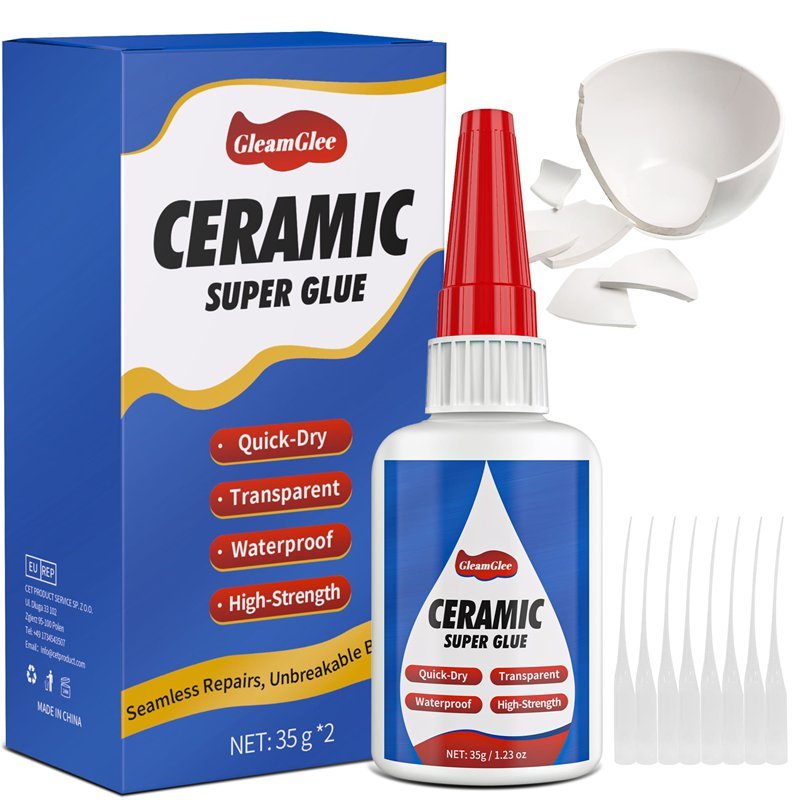
Wooden bases, ceramic ornaments, and decorative mixed-material objects may provide suitable small contact areas. Remove dust, glaze contamination, and old adhesive. A glossy ceramic surface may need careful preparation. Avoid food-contact repairs, drinkware, dishwasher exposure, or any use not supported by the product documentation.
Six Small Repairs Suited to Fast Positioning
These examples show where speed and precision can help, while fit, surface condition, load, and adequate curing remain essential for every project.
Loose Furniture Trim
A lightweight decorative strip that fits back into its original recess can benefit from controlled application and quick positioning. Remove wax, dust, and old adhesive first. Avoid principal structural rails or joints.
Picture Frame Corner
A small, close-fitting corner can be aligned without introducing a thick glue line. Confirm that the frame is not distorted and that its glazing weight does not require mechanical reinforcement.
Wooden Toy Part
A decorative or non-mouthed component may be repairable, but avoid areas children may chew, safety-critical moving parts, or repairs requiring verified toy-safety and food-contact compliance.
Model Component
Miniature airplane, boat, vehicle, and dollhouse pieces often need little adhesive and fast positioning. Prepare tweezers and supports before applying because correction time is limited.
Decorative Wood Block
Carved appliqués, letters, and ornaments can be difficult to clamp. Confirm broad contact and low load. Do not use adhesive-only mounting where falling objects could injure someone.
Mixed-Material Fitting
A small compatible metal, plastic, or ceramic fitting can be attached to wood after cleaning and testing. Smooth or coated surfaces may require preparation for direct substrate contact.
Complete a Fast Wood Repair in Four Steps
Good preparation and controlled application matter more than flooding the break. Work carefully because cyanoacrylate begins bonding soon after surface contact.

Step 1 — Clean
Remove dust, grease, loose fibers, old adhesive, wax, and unstable coatings from the contact area. Keep both surfaces dry. Test finished or oily wood before proceeding. Conduct a no-glue fit and arrange the holding position.

Step 2 — Apply
Install a precision nozzle and place a small, thin amount on one surface. Cover the contact area without building a thick pool. Avoid skin, eyes, finished surfaces, and nearby fabric. Work in a ventilated area.

Step 3 — Align and Hold
Bring the pieces together immediately in the rehearsed direction. Maintain steady contact without sliding, twisting, or repeatedly opening the joint. Use a suitable support if hand pressure cannot keep the part accurately aligned.

Step 4 — Rest
After initial positioning, place the repair where it will remain undisturbed. Do not test the joint prematurely. Allow adequate curing before loading, cleaning, outdoor exposure, or contact with moisture.
Six Reasons a Fast Wood Repair Fails
Most failures begin with contamination, moisture, damaged fibers, excessive adhesive, poor fit, or a load the joint was never designed to carry.
Dust or Oil
Wood dust forms a weak barrier, while oil, polish, and grease prevent direct adhesion. Clean the actual contact faces rather than only wiping the visible exterior. Test naturally oily wood and finished surfaces.
Damp Surfaces
Moisture conditions influence cyanoacrylate behavior and wood stability. Avoid wet surfaces and visible condensation. Outdoor pieces should be brought to suitable repair conditions before application and protected while curing.
Loose Fibers
Adhesive attached to splinters or crushed fibers cannot restore sound material beneath them. Remove only unstable debris while preserving useful interlocking geometry. Severely crushed components may need replacement.
Excess Adhesive
A thick pool can prevent complete closure, increase overflow, mark the finish, and extend the period before the joint becomes reliable. Apply a controlled thin layer rather than assuming more glue creates more strength.
Poor Joint Fit
If the parts rock, sit at an angle, or contact at only one point, the adhesive cannot create broad wood-to-wood contact. Dry-fit and correct the geometry or choose a suitable filling and reinforcement system.
Wrong Load Type
Peeling, twisting, leverage, repeated impact, and safety-critical loading may exceed the intended role of a small CA repair. Redesign, reinforce, replace, or seek professional repair instead of repeatedly regluing the same failure.
Know When Fast Glue Is Not Enough
Speed is useful only when the adhesive, joint design, material condition, load, and environment all support a reliable and responsible repair.
Major Load-Bearing Connections
Chair legs, bed frames, stair components, railings, ladders, structural shelves, and overhead objects can expose a joint to leverage, fatigue, peeling, impact, and consequences far beyond the apparent weight of the component. A repair may require dowels, screws, brackets, clamps, replacement wood, professional joinery, or full component replacement.
Do not rely on rapid initial grab as evidence of structural capacity. GleamGlee has no published structural certification, verified load rating, PSI value, or engineering approval in the provided product facts.

Decorative and Small Component Repairs
GleamGlee is well positioned for furniture touch-ups, crafts, models, wooden decorations, close-fitting joint repairs, and suitable mixed-material components. These tasks allow controlled application and visual inspection while avoiding the largest structural demands.
Large Gaps and Missing Wood
CA performs best as a controlled layer between suitable surfaces. A cavity with missing material requires geometry to be restored. Suitable options may include a fitted wood patch, an adhesive designed for filling, mechanical reinforcement, or replacement. Avoid using sawdust, powders, homemade accelerators, or fillers unless the selected adhesive manufacturer explicitly supports the procedure.
Special and Regulated Uses
Do not recommend the product for direct food contact, drinkware, dishwasher use, children’s mouthed toy areas, medical use, heritage conservation requiring reversibility, high-tension musical-instrument structures, continuous underwater exposure, or direct flame without verified documentation.
Wood Glue Alternatives Frequently Asked Questions
Quick answers clarify adhesive speed, CA suitability, clamping, gaps, materials, outdoor exposure, and where to purchase GleamGlee Wood Glue.
1. What is the fastest alternative to traditional wood glue?
CA adhesive is among the fastest options for initial positioning on small, close-fitting wood repairs. Gel CA, fast-set PVA, quick epoxy, and hot-melt adhesive serve different gaps and project types. Choose according to joint fit, load, adjustment time, materials, and environment rather than speed alone.
2. Can super glue be used on wood?
Yes. Cyanoacrylate is commonly used for selected wood repairs, models, woodturning tasks, and small components. Results depend on viscosity, porosity, surface preparation, joint fit, adhesive quantity, and loading. It is not an automatic replacement for PVA in large woodworking joints.
3. Is CA glue stronger than PVA wood glue?
No universal answer applies. CA offers fast initial positioning and precision on small, close-fitting repairs. PVA is often better matched to broad wood-to-wood joints assembled with pressure. Strength comparisons require identical materials, joint geometry, preparation, curing, and standardized testing.
4. Does fast-setting mean fully cured?
No. Fast setting describes initial positioning or early hold. The adhesive continues developing after the part stops moving. Protect the repair from bending, pulling, water, and normal service loads until it has cured adequately according to the product directions.
5. Can wood be repaired without clamps?
Some small, closely fitted parts can be held manually or supported while a fast-setting adhesive develops initial hold. Larger joints and conventional PVA assemblies may still require clamps. Never interpret reduced clamping time as approval for unsupported structural repairs.
6. Does GleamGlee Wood Glue dry clear?
GleamGlee is positioned as a transparent adhesive that dries clear. Final visibility depends on glue quantity, surface cleanliness, overflow, wood color, finish, and lighting. Thin application and accurate alignment help create a neater repair line.
7. Can it fill a large gap?
No large-gap capability has been confirmed. GleamGlee’s medium-viscosity formula is intended for controlled application around close-fitting surfaces and narrow repairs. Missing wood or a substantial cavity may require an insert, filler system, reinforcement, epoxy repair, or replacement.
8. Can it bond wood to metal?
Yes. Wood and metal are among the listed compatible materials. Clean away oil, oxidation, dust, and loose coatings, then test smooth or finished surfaces. Use it for suitable small components, not as a substitute for welding or mechanical fasteners in critical structures.
9. Is it suitable for outdoor repairs?
GleamGlee is positioned as waterproof and weather-resistant after curing and can suit selected outdoor wood repairs. Allow adequate curing before exposure. It is not recommended here for continuous immersion, below-waterline work, direct flame, or unverified extreme conditions.
10. Where can I buy GleamGlee Wood Glue?
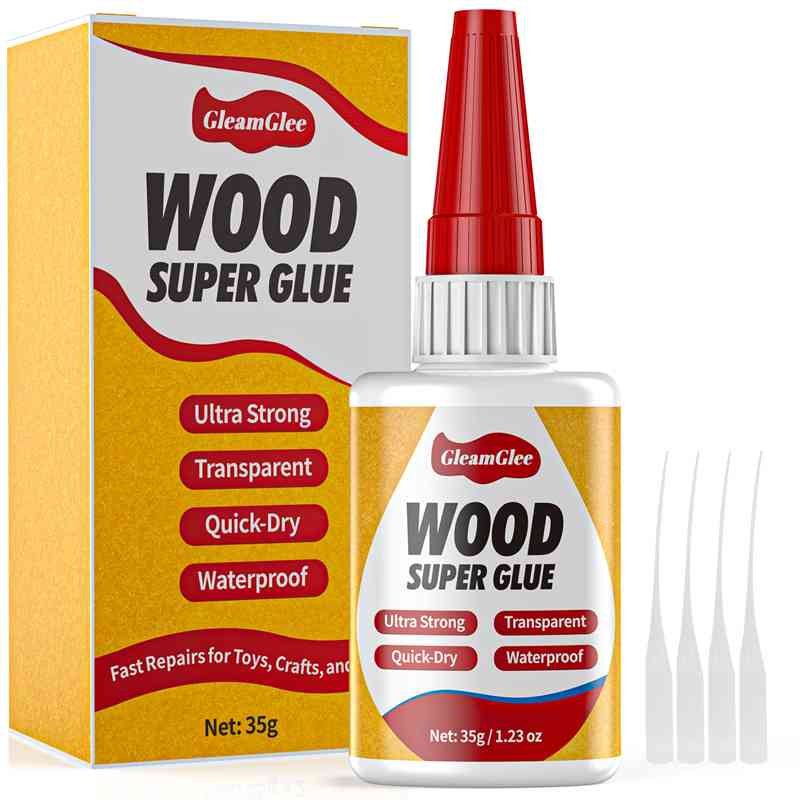
GleamGlee Wood Glue is available through Amazon under Wood Glue ASIN B0F7XT4KZ4. Confirm that the selected variation shows the Wood Glue label and preferred pack size before ordering because the variation family includes several different adhesive types.
Choose a Fast Repair That Fits the Joint
For small, close-fitting wood repairs, GleamGlee combines fast initial positioning, clear application, medium-viscosity control, four precision nozzles, and no required mixing.
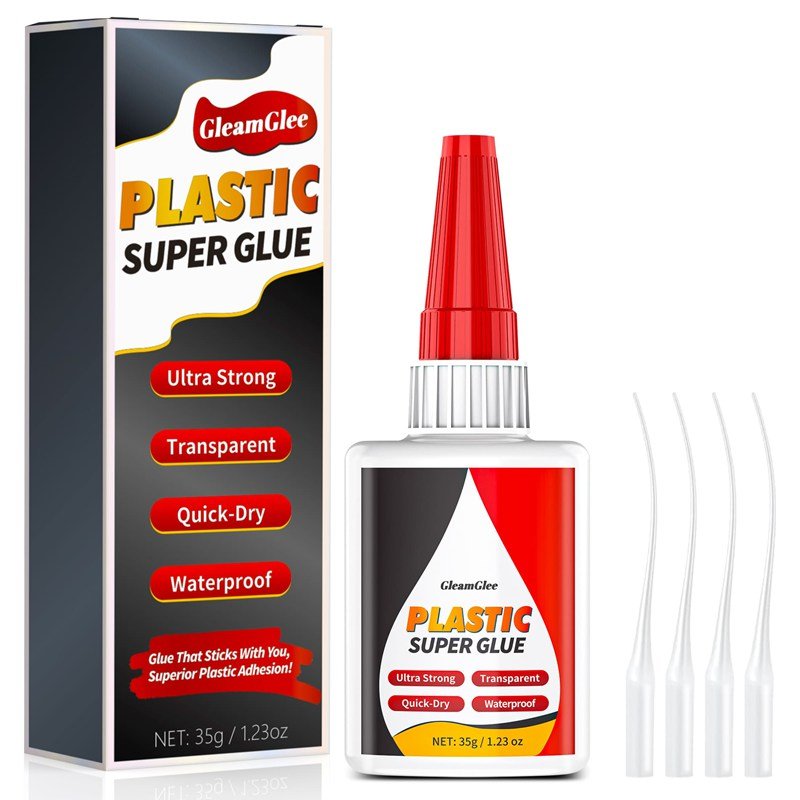
35 g / 1.23 oz Single-Component CA Wood Adhesive
- Sets in seconds for initial positioning.
- Dries clear for a cleaner repair line.
- Includes four precision application nozzles.
- Bonds wood and compatible metal, plastic, and ceramic surfaces.
- Suitable for furniture touch-ups, crafts, models, and household repairs.
- Positioned as waterproof and weather-resistant after curing.
- Backed by a one-year manufacturer warranty.
Continue with the Right Wood Repair Guide
Choose the next topic according to the material, joint, environment, or decision still preventing a confident repair.

CA Glue vs PVA
Compare fast positioning with longer open time, broader wood coverage, and traditional clamping workflows.
Repair Cracked Wood
Learn how crack geometry, loose fibers, surface preparation, and load affect the repair method.
Wood Glue Without Clamps
Explore safe positioning methods for small parts, awkward corners, and difficult-to-clamp assemblies.
Furniture Wood Repairs
Separate decorative furniture touch-ups from principal load-bearing joints requiring reinforcement or replacement.
Wood to Metal Glue
Prepare wood and compatible metal surfaces for clean, controlled mixed-material connections.
Outdoor Wood Repairs
Understand curing, humidity, weather exposure, continuous immersion boundaries, and non-critical garden applications.