Skip to content

How to Store Leather Glue for Long-Term Use: A Practical Guide to Shelf Life and Storage
Your trusted adhesives glue & cleaner manufacturer

Leather glue is one of those repair products that rarely gets used up in a single project. You might fix a loose handbag strap today, repair a peeling shoe edge a few weeks later, and reinforce a small upholstery seam several months after that. Because of this stop-and-start use pattern, storage becomes almost as important as bonding performance. A strong adhesive provides little value if half the bottle becomes difficult to dispense, thickens unexpectedly, or develops a hardened nozzle before the next repair.
For long-term use, leather glue should generally remain in its original container, be tightly resealed immediately after application, and stay protected from direct sunlight, excessive heat, freezing, moisture, and large temperature swings. Exact requirements vary among water-based, polyurethane, solvent-based, and cyanoacrylate adhesives, so the storage temperature and shelf-life information printed on the product label or technical documentation should always take priority.
Think about a half-used bottle sitting in a repair drawer after saving a favorite pair of leather boots. Six months later, the leather may still be perfectly serviceable, yet the repair depends on whether the adhesive inside that bottle has been treated properly. A few simple habits after each use can mean the difference between a clean, controlled bead of glue and a bottle that has to be discarded before it is empty.
What Makes Leather Glue Lose Shelf Life?
Leather glue loses usable shelf life when its formulation changes because of repeated exposure to air, moisture, heat, freezing conditions, contamination, or gradual loss of volatile components. The exact failure process depends on adhesive chemistry, which means water-based leather glue, polyurethane adhesive, solvent-based contact glue, and cyanoacrylate products should not automatically be stored or evaluated in the same way.
Air Exposure and Evaporation
Every time a bottle is opened, part of the protected environment inside the container is replaced by surrounding air. That air may carry humidity, dust, and other contaminants, while water or solvent from the adhesive can gradually escape. When only a small amount of adhesive remains inside a relatively large bottle, the ratio of air to liquid becomes higher, so repeated opening can have a greater effect than it did when the container was almost full.
The result depends heavily on formulation. Some leather adhesives gradually become thicker as water or solvent is lost, while moisture-sensitive products may begin reacting when humidity repeatedly enters the package. Cyanoacrylate adhesives are a familiar example because moisture participates in their curing mechanism. This is one reason storage instructions for a leather-compatible cyanoacrylate may look very different from those for a flexible water-based leather repair adhesive.
A practical way to reduce exposure is to prepare the repair before opening the adhesive. Clean and dry the leather, cut any patch material, position clamps or weights, and check how the pieces will align. Open the bottle only when the joint is ready for adhesive, apply the required amount, clean the dispensing area if needed, and close the cap before continuing with pressing or clamping.
Moisture and Contamination
Moisture is often mentioned in adhesive storage instructions, but its effect is not the same for every leather glue. Water-based adhesives already contain water as part of their designed formulation, while moisture-curing polyurethane adhesives use atmospheric humidity differently. Cyanoacrylates can be particularly sensitive to moisture entering the container, so copying one storage rule from one adhesive family to another can create more problems than it solves.
Contamination is another common but underestimated cause of premature deterioration. Leather surfaces may contain conditioners, waxes, oils, dyes, silicone treatments, cleaners, dust, or polishing compounds. A brush, metal pin, applicator, or spatula that has touched these substances should not be placed back into the original adhesive container unless the packaging system was specifically designed for that kind of use.
Professional repair workshops usually reduce this risk by dispensing a small working quantity rather than repeatedly dipping tools into a main container. Home users can follow the same principle on a smaller scale by keeping the nozzle away from dirty leather, avoiding contact between the dispensing tip and conditioned surfaces, and never pouring leftover working adhesive back into the original bottle after it has been exposed to tools or other materials.
Heat and Sunlight
Excessive heat can shorten the practical storage life of many adhesive systems because higher temperatures generally increase the rate of chemical reactions and evaporation. A bottle kept in a sunny window, parked vehicle, attic, boiler cupboard, or unconditioned summer workshop may experience much greater thermal stress than one stored inside a shaded, temperature-controlled cabinet, even if both locations seem convenient.
Published manufacturer guidance illustrates the point. Some leather repair adhesives specify storage below approximately 30°C, while other products define narrower ranges such as 8°C to 30°C. These values are not universal limits for every leather glue, but they show that “cool, dry place” is more than generic packaging language. It reflects the need to protect the formulation from conditions that can accelerate aging or change viscosity.
| Storage Factor | Lower-Risk Practice | Higher-Risk Practice | Possible Result |
|---|---|---|---|
| Temperature | Stable indoor range approved by manufacturer | Hot car, attic, radiator shelf | Faster aging or viscosity change |
| Sunlight | Closed cabinet or shaded shelf | Direct window exposure | Local heating and thermal cycling |
| Air exposure | Bottle opened briefly | Bottle left uncapped during preparation | Thickening or premature curing |
| Moisture | Dry storage area | Condensation-prone location | Formulation-dependent instability |
| Contamination | Clean nozzle and dedicated tools | Dirty tools returned to bottle | Lumps or performance changes |
| Closure | Clean, tight cap | Hardened residue under cap | Poor sealing and greater air exchange |
For people who use leather glue only a few times each year, a stable storage location often matters more than sophisticated preservation methods. A simple cabinet inside a conditioned room is usually easier to control than a garage shelf that moves through hot summers and cold winters. Consistency is the goal: the less the adhesive is forced through extreme environmental changes, the easier it is to preserve predictable dispensing and bonding behavior.
Different Adhesive Chemistries
“Leather glue” describes what the adhesive is intended to bond, not one single chemical technology. A water-based polyurethane dispersion, a solvent-based contact adhesive, a flexible repair glue, and a cyanoacrylate adhesive can all be marketed for leather applications while requiring different packaging, temperature limits, ventilation precautions, and storage procedures.
Water-based products may be vulnerable to freezing because the polymer dispersion can be damaged if ice forms. Solvent-based products bring different concerns, including evaporation and flammability. Certain unopened cyanoacrylate products may benefit from controlled refrigeration when the manufacturer specifically recommends it, yet those same products may need to remain at ambient temperature after opening to reduce condensation risk.
The safest approach is therefore to identify the actual adhesive system rather than relying only on the words “leather glue.” Product labels, technical data sheets, and safety data sheets provide more dependable guidance than general internet advice. For private-label and customized leather adhesive projects, this is also why storage instructions should be developed around the final formulation and packaging rather than copied from a competing product.

How Should Leather Glue Be Stored After Opening?
After opening, leather glue should normally remain in its original compatible container, be resealed promptly, and be stored in a stable, shaded, dry location within the temperature limits specified for that product. Keeping the cap and nozzle clean is equally important because dried residue can interfere with sealing and dispensing even when the adhesive deeper inside the bottle remains usable.
Seal the Bottle Correctly
A reliable closure begins with a clean sealing area. Before replacing the cap, check whether wet adhesive has collected around the nozzle, cap threads, shoulder, or internal sealing surface. A cap can feel tight while still allowing unwanted air exchange if a ring of hardened glue prevents the closure from sitting in its intended position.
Cleaning methods must match the adhesive chemistry. Some water-based adhesives allow uncured residue to be cleaned differently from solvent-based products, while other formulas may require a manufacturer-approved cleaner. Water, alcohol, acetone, or another solvent should never be added or applied simply because it worked with a different glue, since incompatible cleaning chemicals can damage the nozzle, package, or remaining adhesive.
It is also worth avoiding the habit of repeatedly forcing nails, screws, thick pins, or improvised wires into a precision nozzle. These tools may push cured material deeper into the bottle or permanently enlarge the dispensing opening. A clean wipe immediately after use and prompt recapping is usually more effective than trying to repair a severely blocked tip after several months.
Store the Bottle Upright
For many small squeeze bottles and precision-tip leather adhesives, upright storage is a sensible default because it keeps most of the liquid below the dispensing assembly rather than allowing adhesive to remain pooled inside the cap. The less material sitting around the closure, the less material is available to cure, dry, or interfere with the seal.
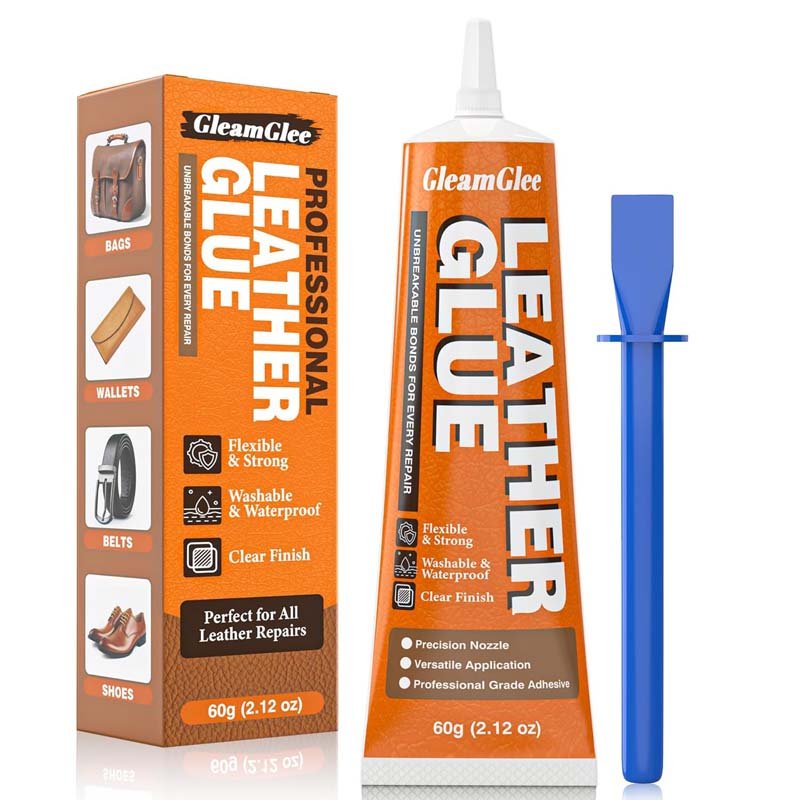
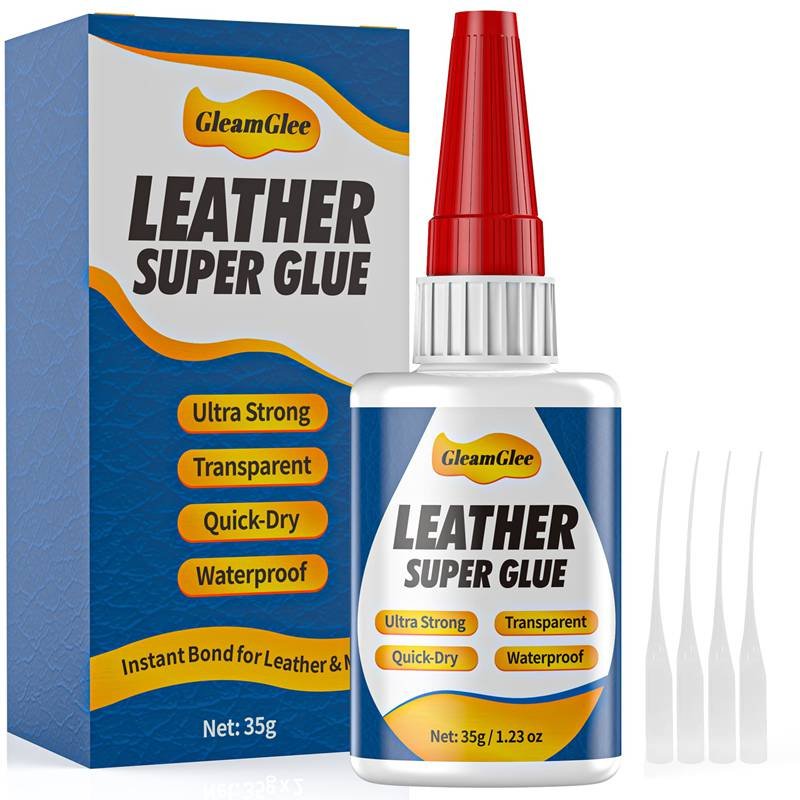
This becomes especially useful with a fine metal applicator. Precision tips are designed to create narrow beads for repairs such as separated shoe edges, handbag seams, leather jacket tears, watch straps, belts, upholstery corners, and small faux-leather panels. When the bottle is stored carelessly on its side, adhesive may remain inside the cap and eventually compromise the very dispensing control that makes the package convenient.
Package design still matters, so upright storage should not be treated as an absolute rule for every adhesive system. Cartridges, dual-component systems, bulk bottles, and specially engineered containers may use different orientations. For a typical single-component precision leather glue bottle, however, vertical storage in an organized cabinet or drawer is usually an easy way to keep the closure cleaner.
Choose a Stable Location
The best storage location is often the least dramatic one: dry, shaded, clean, physically protected, and reasonably stable throughout the year. An indoor utility cupboard, temperature-controlled craft room, or organized workshop cabinet is usually easier to manage than a car, outdoor shed, attic, or sunny windowsill.
A garage may feel ideal during mild weather but become much hotter in summer and colder in winter than the rest of the building. Basements can stay cool yet experience high humidity or condensation. Vehicles create even larger temperature swings, particularly when sunlight heats the interior for several hours. These environmental changes can make long-term storage much less predictable.
| Storage Location | General Suitability | Main Concern |
|---|---|---|
| Indoor cabinet | Usually suitable when label permits | Keep away from children, food, and incompatible chemicals |
| Climate-controlled workshop | Suitable for frequent professional use | Maintain clean organization and stock rotation |
| Garage | Variable | Summer heat and winter cold |
| Basement | Variable | Humidity and condensation |
| Vehicle | Poor for long-term storage | Extreme temperature swings |
| Outdoor shed | Often poor | Heat, freezing, moisture |
| Sunny windowsill | Poor | Direct sunlight and localized heating |
For solvent-containing products, storage safety also needs to include ventilation and ignition control. The Safety Data Sheet should be followed for issues such as flammability, incompatible materials, and appropriate storage areas. A product that bonds leather successfully can still require chemical-storage precautions that go beyond ordinary craft supplies.
Reduce Repeated Exposure
Usage habits have a strong influence on opened adhesive life. A bottle opened twenty times every week in a professional repair shop experiences far more repeated air exchange than a bottle used three times per year by a homeowner. This is one reason exact “opened shelf life” numbers need to be understood alongside real-world handling.
The repair process can be organized to shorten each opening period. Clean the leather first, prepare patches, position clamps, and make sure the parts align correctly. With a flexible leather glue that begins to set within several minutes and reaches full cure over roughly 24 hours, there is no benefit in leaving the bottle open while unrelated preparation continues.
For workshops using larger containers, dispensing a controlled working amount can protect bulk stock from repeated exposure. Package size matters for home users as well. A smaller bottle that is consistently finished while still fresh can deliver better practical value than a large container that remains half empty for years, even when the larger size appears cheaper per milliliter.
What Temperature Is Best for Leather Glue?
There is no universal storage temperature for every leather glue. Many flexible repair adhesives are designed for stable indoor conditions, while water-based, solvent-based, polyurethane, and cyanoacrylate products can have different temperature limits. Some published leather adhesive ranges are around 8°C to 30°C, while certain unopened cyanoacrylates may require controlled refrigeration near 2°C to 7°C.
Room Temperature Storage
For many consumer leather repair adhesives, a stable indoor room temperature is a practical storage environment because it stays within commonly published manufacturer ranges. Some leather glue products specify conditions such as 8°C to 30°C, while others require cool and dry storage below approximately 30°C. These values should be read as product-specific data rather than universal limits.
Temperature stability is also important. A bottle kept continuously around 20°C experiences a different environment from one that repeatedly moves from 8°C overnight to more than 30°C during the day. Thermal cycling can influence viscosity, package pressure, condensation, and reaction rates, even when the average temperature seems reasonable.
For ordinary household storage, a climate-controlled indoor cabinet is therefore often the easiest solution. Professional facilities can go further by recording warehouse temperatures and defining acceptable storage zones. This is particularly useful for distributors, leather repair businesses, and private-label brands that hold many cartons from different manufacturing batches and need consistent product performance over time.
Refrigeration
Refrigerating every leather glue is not a good general rule. Controlled cold storage can be beneficial for certain unopened cyanoacrylate adhesives when specifically recommended by the manufacturer, but that advice cannot automatically be transferred to flexible polyurethane, water-based, or solvent-based leather repair products.
Some cyanoacrylate manufacturers recommend unopened storage at approximately 2°C to 7°C to maximize shelf life. They may also instruct users to allow the sealed container to return to room temperature before opening. This is important because opening a very cold bottle in warm, humid air can introduce condensation into a moisture-sensitive adhesive.
Once a cold-stored bottle has been opened, repeatedly moving it between room temperature and refrigeration may create a different moisture problem. That is why some cyanoacrylate instructions recommend ambient storage after opening. The correct procedure depends on the actual product, not on the fact that it happens to be used on leather.
Unless refrigeration is specifically required, stable manufacturer-approved indoor storage is the safer default. Household refrigerators are also unsuitable for many chemical products because of food proximity and accidental access, so dedicated controlled storage is preferable where refrigeration is genuinely necessary.
Freezing and Cold Damage
Freezing can be particularly damaging to some water-based adhesives because their polymer emulsions or dispersions may be disrupted when ice forms. After thawing, the bottle can appear liquid again while still showing graininess, separation, abnormal viscosity, or reduced bonding performance. Warming the product back to room temperature does not necessarily reverse structural damage.
This risk makes winter transportation as important as warehouse storage. A bottle may leave a controlled factory and then spend hours in a cold delivery vehicle, logistics depot, outdoor loading area, or parcel locker. Businesses importing adhesives into Canada, northern Europe, northern U.S. states, and other cold regions should consider the entire logistics route rather than monitoring only the final warehouse.
If an adhesive has accidentally frozen, check the manufacturer’s instructions before use and do not assume that appearance alone proves it remains suitable. A controlled test on scrap material may be appropriate where the manufacturer permits further evaluation. If significant separation, lumps, or altered bonding behavior appear, replacing the product is usually more sensible than risking a valuable leather repair.
Published Temperature Examples
Published manufacturer ranges demonstrate why a universal temperature rule can be misleading. The values below illustrate differences among adhesive families and should be used only to understand the principle; the correct range for any specific leather glue remains the one stated by its manufacturer.
| Adhesive Example | Published Storage Range | Relevant Context |
|---|---|---|
| Leather repair adhesive example | Below 30°C | Cool, dry conditions away from sunlight |
| Flexible PU leather glue example | 8°C–30°C | Product-specific leather repair adhesive |
| Solvent-based leather glue example | 8°C–30°C | Product-specific leather repair adhesive |
| Cyanoacrylate example | 2°C–7°C | Unopened storage for maximum shelf life |
| Two-part polyurethane example | 15°C–25°C | Original unopened container |
| Two-part epoxy example | 5°C–25°C | Original unopened container |
The important takeaway is not to memorize these numbers. It is to understand that formulation chemistry, package design, and manufacturer validation determine the correct storage range. If a bottle is intended for professional or private-label distribution, the chosen packaging and labeling should make those requirements easy for customers, warehouses, and retailers to understand.

How Long Does Leather Glue Last?
Leather glue may remain usable for months or years, but there is no universal expiration period. Shelf life depends on formulation, packaging, manufacturing date, storage environment, and whether the container has been opened. An unopened shelf-life figure should never automatically be treated as the remaining usable life of a bottle that has already experienced repeated air exposure and handling.
Unopened Shelf Life
Unopened shelf life normally refers to the period during which a manufacturer expects the adhesive to remain within specification when it stays in its original sealed packaging under defined storage conditions. The temperature, humidity, packaging integrity, and manufacturing date are part of that claim, so the number of months should never be separated from the conditions under which it was validated.
Some leather repair products state approximately 12 months from manufacture under specified cool, dry storage conditions. Other adhesive families may have longer or shorter periods, and certain cyanoacrylate products link their shelf-life expectations to refrigerated unopened storage. Two products may both list twelve months while relying on entirely different preservation mechanisms.
Consumers should therefore check the bottle, batch code, outer packaging, and technical documentation rather than relying on a generic online answer. Retailers and distributors should also record the date stock is received and rotate older cartons first. This becomes more important when several container sizes or formulation versions look almost identical on the warehouse shelf.
Opened Working Life
Opening changes the storage environment immediately. Fresh room air enters the headspace, the nozzle becomes exposed, residue starts accumulating around the dispensing area, and contamination becomes possible. The actual working life after opening is therefore influenced by how frequently the bottle is used, how carefully it is resealed, and where it is stored.
Some leather glue manufacturers advise using a product within approximately one year after opening, while broader adhesive guidance emphasizes that remaining life depends on formulation, storage conditions, amount remaining, and handling. A bottle opened only twice and stored carefully does not have the same history as a bottle opened every day and carried around in a vehicle.
Writing the opening month directly on the package is a simple solution for occasional users. Professional workshops can record the date, batch number, operator, and review or discard date. These records reduce uncertainty and help identify whether an unusual viscosity or performance problem is connected to a particular batch or simply to a container that has been open for an extended period.
Shelf Life and Cure Time
Shelf life and cure time describe completely different stages of an adhesive’s life, yet they are often confused. Shelf life refers to how long the adhesive can be stored before application, while working time describes the period available for positioning the joint. Initial set describes when the repair begins to hold, and full cure refers to the time needed to develop the intended final properties.
A flexible leather glue may begin setting in approximately 6–10 minutes and require around 24 hours for full cure. Those numbers guide the repair process; they do not mean the adhesive expires twenty-four hours after being opened. Likewise, a bottle with a twelve-month shelf-life statement does not mean every repair made during those twelve months reaches full strength immediately.
This distinction becomes especially important when testing an older bottle. A joint that separates after only ten minutes may simply be under-cured. A fair evaluation requires the correct surface preparation, application amount, pressure, and full cure time. Otherwise, the user may incorrectly blame storage age for a repair that was tested too early.
Inventory Rotation
Repair shops, footwear businesses, craft studios, distributors, retailers, and private-label brands that hold multiple bottles should use a consistent stock-rotation system. First-in, first-out is a practical starting point for many single-component adhesives, provided the manufacturer’s batch and expiration system does not specify another approach.
Useful records include manufacturing or batch date, receiving date, first-opened date, recommended storage range, packaging condition, and remaining quantity. Even a simple spreadsheet can prevent older adhesive from being forgotten behind newer cartons and can make quality investigations much easier when a customer reports an unexpected change.
For customized leather adhesive programs, package size should also reflect expected consumption. A hobbyist repairing one or two items each season has different needs from a professional footwear workshop using adhesive every day. Offering several practical pack sizes can reduce waste while allowing both users to consume the product under more predictable storage conditions.
Packaging design, batch coding, nozzle quality, bottle compatibility, storage labeling, and shelf-life validation should be considered together. A strong adhesive formula can still produce poor customer experiences if the container does not seal reliably or if its storage instructions are too vague for the market in which it is being sold.
How Do You Prevent Leather Glue Nozzle Clogs?
Leather glue nozzle clogs are best prevented by removing excess residue before it cures, closing the bottle promptly, keeping the dispensing path clean, and storing the container in the orientation recommended by the manufacturer. The adhesive inside a bottle may remain usable long after a neglected nozzle hardens, so proper tip maintenance can greatly improve the practical life of the package.
Clean the Tip Early
The best time to remove excess adhesive is immediately after dispensing, before residue has cured around the outlet. Check the exterior of the nozzle and wipe away material using the cleanup method approved for that formulation. The goal is to keep the dispensing opening and sealing surface functional, not simply to make the package look clean.
Cleaning chemistry matters. Some water-based adhesives allow uncured residue to be handled differently from solvent-based products, while specific formulations may recommend particular cleaners. Acetone, alcohol, water, or another solvent should not be chosen by habit because incompatible cleaners can damage plastic components, seals, coatings, or the adhesive remaining inside the bottle.
A fine metal applicator provides particularly good control for narrow leather seams, footwear edges, jacket repairs, watch straps, upholstery cuts, and handbag handles. Maintaining that precision is easier when users remove fresh residue instead of waiting for a thick cured plug to develop. Preventive cleaning takes seconds, while clearing a severely blocked tip can damage the applicator or introduce hardened fragments into the bottle.
Understand How Clogs Form
The adhesive trapped near a nozzle experiences a harsher storage environment than the larger volume deeper inside the bottle. It has a high surface-area-to-volume ratio and is repeatedly exposed to fresh air whenever the cap is removed. That small quantity can therefore dry, evaporate, or cure faster than the rest of the adhesive.
This explains why a nozzle can appear completely blocked while the glue below it remains fluid. The problem may be local rather than evidence that the whole bottle has expired. However, once cured residue prevents the cap from sealing correctly, a local clog can create a larger storage problem by allowing more air exchange throughout the package.
Clogs become more common when a bottle is left open during lengthy surface preparation, stored on its side with adhesive pooled inside the cap, exposed to high heat, or repeatedly closed over wet residue. The most effective solution is therefore prevention rather than frequent mechanical clearing with oversized pins or screws.
Use Controlled Amounts
Applying more adhesive does not automatically produce a stronger leather bond. Excess glue often squeezes beyond the repair line, contaminates the work surface, and leaves more material around the nozzle and cap. This creates unnecessary waste while also increasing the chance of a clogged dispensing system.
Leather surfaces vary considerably. Smooth finished leather, suede, genuine leather, faux leather, bonded leather, and porous unfinished leather can absorb and wet differently. The correct amount of glue therefore depends on the formulation and joint design, but controlled, even application is usually more useful than flooding the repair area.
A narrow precision tip allows users to place a fine line where it is actually needed. For a flexible leather glue intended for shoes, jackets, bags, upholstery, belts, and craft repairs, this can improve both appearance and material efficiency. Less adhesive around the outside of the joint also means less cleanup and a cleaner bottle when the repair is finished.
Once the required amount has been dispensed, close the bottle before pressing or clamping the repair. Separating the dispensing step from the clamping step reduces the time that the nozzle remains exposed to air.
Keep the Cap Functional
The cap is an important part of the storage system rather than just a cover that prevents dust from reaching the nozzle. If dried adhesive builds up inside it, the cap may no longer seat fully against the intended sealing surface, even when it feels tight in the user’s hand.
Inspect the cap periodically and remove loose cured deposits only in the manner permitted for the product. If the package includes an integrated clearing pin or needle, use it as designed. Avoid repeatedly forcing larger objects into the nozzle because they may change the dispensing diameter or damage a precision metal channel.
Storage organization can also help. A simple vertical holder in a workshop drawer keeps small bottles upright and prevents them from being crushed under heavy tools. Retail users can keep adhesive in the original carton if that packaging supports the intended orientation and protects the bottle from light.
For frequent users, repeated nozzle clogging can be an early warning signal. If a product that normally dispenses smoothly starts clogging after every session, check the cap, storage temperature, residue buildup, remaining quantity, and age of the bottle rather than treating each clog as an unrelated inconvenience.
How Do You Know If Leather Glue Has Gone Bad?
Leather glue may have deteriorated when it becomes unusually thick, lumpy, partially cured, severely separated, difficult to dispense, visibly different from its normal condition, or unable to form a reliable test bond after the full recommended cure period. Because formulations vary, the most useful comparison is the product’s normal fresh behavior rather than a universal visual rule.
Changes in Consistency
Viscosity is one of the first changes users notice when adhesive has been stored poorly or for too long. A product that normally forms a smooth bead may suddenly require excessive squeezing, create rubber-like lumps, stretch into unusual strings, or refuse to flow through a clean nozzle. Those changes can indicate evaporation, partial curing, moisture exposure, or general formula instability.
The wrong response is to add a random thinner. Water, acetone, alcohol, solvent, or another liquid can make the adhesive appear easier to dispense while changing solids content, flexibility, curing behavior, wetting, and final strength. Unless the manufacturer provides a specific adjustment procedure, modifying the formula at home turns a validated adhesive into an uncontrolled mixture.
Separation also needs to be judged according to product instructions. Some formulations may allow normal settling and approved remixing, while severe persistent separation can indicate damage. Water-based adhesive exposed to freezing may develop structural changes that warming alone does not reverse. When the product looks substantially different from its original condition, caution is more valuable than trying to save a small amount of remaining glue.
Changes in Appearance
A change in appearance does not always mean an adhesive has failed, because some clear-drying leather glues look white or translucent before curing. The important question is whether the current appearance differs significantly from what is normal for that particular formulation.
Warning signs may include a thick skin across the surface, hardened particles inside the bottle, severe phase separation, unexpected discoloration, crystallization, large persistent lumps, or material that no longer becomes uniform when handled according to the manufacturer’s instructions. Packaging condition also matters. Swelling, cracking, leaking, corrosion, or chemical attack on the container deserves attention because it may indicate improper storage or compromised compatibility.
| Observation | Possible Meaning | Practical Response |
|---|---|---|
| Slight normal settling | Formulation-specific behavior | Follow manufacturer mixing instructions |
| Major thickening | Evaporation or partial curing | Evaluate before use |
| Rubber-like lumps | Partial polymerization | Replace if not permitted by instructions |
| Severe separation | Instability or possible freeze damage | Check technical documentation |
| Repeated clogging | Tip exposure or adhesive aging | Inspect nozzle, seal, storage, and age |
| Swollen or leaking bottle | Package or storage problem | Stop normal use |
| Weak cured test bond | Performance may be compromised | Replace the adhesive |
Odor should not be used as a deliberate diagnostic test. Some adhesives naturally contain volatile materials, and users should not intentionally inhale vapors to determine whether a product has changed. Follow ventilation instructions and the Safety Data Sheet, especially for solvent-containing systems.
Changes in Bonding Behavior
Appearance alone cannot confirm that an old bottle still performs correctly. An adhesive may still squeeze through the nozzle while behaving differently on leather. It may spread poorly, wet the surface unevenly, become tacky much faster or slower than usual, remain soft for too long, cure unusually brittle, or produce weaker final adhesion.
Before blaming the bottle, check the leather surface as well. Conditioners, waxes, oils, silicone, cleaning residues, polish, and weak surface coatings can prevent good bonding even when the adhesive is fresh. Genuine leather, faux leather, suede, bonded leather, coated leather, and highly finished automotive leather may also require different preparation.
Cure time is another common source of incorrect conclusions. If a flexible leather glue begins setting after approximately 6–10 minutes but needs around 24 hours to reach full cure, pulling the repair apart after fifteen minutes does not provide a meaningful strength test. The evaluation should use the correct preparation, application amount, pressure, and full cure period before comparing the result with normal performance.
Test Before Valuable Repairs
When a bottle has been stored for a long time, exposed to questionable temperatures, or changed noticeably in consistency, a small test bond is one of the most practical ways to reduce risk. Use scrap material that is as similar as possible to the final leather, apply the adhesive normally, join the pieces, maintain the recommended pressure, and allow the entire specified cure period.
The test should answer several simple questions. Does the adhesive dispense smoothly? Does it spread normally? Does it reach the expected initial set? Does it cure within the normal period? Does the final bond remain strong and flexible when the leather is bent or gently stressed?
This step becomes especially important with luxury handbags, leather jackets, high-value footwear, automotive interiors, motorcycle seats, saddles, collectible leather goods, instrument cases, and carefully restored furniture. The cost of a few drops of adhesive and a scrap test is trivial compared with staining or damaging an expensive finished surface.
If the bottle has exceeded its stated shelf life, experienced freezing, remained in a hot vehicle, developed severe lumps, leaked from the package, or failed a properly cured test bond, replacing it is usually the safer decision. Long-term storage only has value when the adhesive still performs predictably when the next repair begins.

Conclusion
Leather glue lasts longest when storage is treated as part of the repair process rather than something that happens after the project is finished. Keeping the original container tightly closed, protecting the adhesive from direct sunlight and extreme temperatures, maintaining a clean dispensing tip, and following formulation-specific storage guidance can help preserve smooth application and reliable bonding across repeated uses.
The most important point is that not all leather glues are chemically identical. Water-based formulations, flexible polyurethane adhesives, solvent-based systems, and cyanoacrylates can respond differently to refrigeration, freezing, humidity, and repeated opening. A universal online rule is therefore less useful than the storage range and shelf-life data developed for the exact formulation in your hand.
For occasional DIY repairs, these habits reduce waste and make the next project easier. For professional repairers, retailers, distributors, and private-label adhesive programs, the same principles extend into packaging design, batch tracking, warehouse control, nozzle engineering, shipping conditions, and customer instructions. A dependable leather adhesive is not defined only by how strongly it bonds today, but also by how consistently it performs after weeks or months of sensible storage.

FAQ
How should leather glue be stored after opening?
After opening, leather glue should normally remain in its original container, be closed immediately after dispensing, and be stored in a dry, shaded location within the manufacturer’s approved temperature range. The nozzle and cap should remain clean so dried residue does not interfere with sealing. For many small precision bottles, upright storage is practical because it reduces the amount of adhesive collecting around the dispensing assembly.
How long does opened leather glue last?
Opened leather glue does not have one universal lifespan because formulation, package design, storage temperature, air exposure, and usage frequency all affect practical working life. Some specific leather adhesives advise use within approximately one year after opening, while other products use different limits. Marking the opening date on the bottle and following the manufacturer’s stated shelf-life guidance provides a more reliable approach than assuming every product lasts the same amount of time.
Can leather glue be stored in the refrigerator?
Some unopened cyanoacrylate adhesives benefit from refrigerated storage when the manufacturer specifically recommends it, but refrigeration is not appropriate for every leather glue. Water-based, polyurethane, flexible repair, and solvent-based products can have completely different requirements. Cold bottles may also develop condensation if opened before returning to room temperature, so refrigeration should only be used when the product label or technical documentation clearly calls for it.
Can leather glue freeze?
Some leather adhesives, particularly certain water-based polymer dispersions, can be damaged by freezing. Ice formation may disturb the formulation and lead to separation, graininess, altered viscosity, or reduced bonding performance after thawing. Because freeze resistance varies among products, leather glue should not be stored in an unheated garage, vehicle, shed, or parcel locker during cold weather unless the manufacturer confirms that those temperatures are acceptable.
Why does leather glue become thick in the bottle?
Leather glue may thicken because of evaporation, repeated air exposure, partial curing, moisture interaction, excessive heat, contamination, or long storage. The exact cause depends on adhesive chemistry. Adding water or solvent without manufacturer approval is not recommended because it can change cure behavior, flexibility, solids content, and final strength. Significant thickening is a reason to inspect the product carefully and perform a controlled test before using it on valuable leather.
How do you stop a leather glue nozzle from clogging?
Nozzle clogs are easiest to prevent by cleaning fresh residue from the dispensing tip immediately after application, closing the cap promptly, and keeping the bottle in the recommended storage position. Avoid leaving the adhesive open while preparing the repair and do not routinely force oversized pins or screws through a precision nozzle. A clean tip and functional cap help protect both dispensing control and the adhesive stored deeper inside the bottle.
Is old leather glue still safe to use?
Older leather glue may still be usable if it remains within its stated shelf life, was stored correctly, dispenses normally, and produces a satisfactory test bond after the full recommended cure period. Significant thickening, lumps, severe separation, leaking packaging, unusual curing behavior, or weak bonding are reasons to replace it. Testing on scrap leather is especially worthwhile before repairing expensive handbags, footwear, furniture, automotive interiors, or collectible leather items.
Share:
Table of Contents
Here, creating your adhesives glue & removal cleaner collection is no longer a barrier—it’s a collaborative journey where GleamGlee helps brands and businesses transform their vision into durable, certified, and market-ready solutions.
Partner with GleamGlee
Join hundreds of global partners who trust GleamGlee for adhesives and cleaners that combine innovation, compliance, and speed. Our vertically integrated system—from R&D to warehouse—guarantees consistent performance and reliable delivery.
Whether you’re sourcing FBA-ready stock or developing your own formula, our team provides unmatched technical support and responsive service.