Skip to content
What Tent Glue Works Best for Coleman: A Field-Tested Repair Guide
Your trusted adhesives glue & cleaner manufacturer

Outdoor tents are designed to protect us from wind, rain, and unpredictable terrain—but even trusted brands like Coleman are not immune to wear, punctures, and seam failures over time. Many campers assume that once a tent leaks or tears, replacement is the only option. In reality, most Coleman tent damage is highly repairable—if you understand the materials and choose the right tent glue.
The problem is that tents are not made from one simple fabric. A single Coleman tent can combine polyester walls, PU-coated floors, nylon rainflies, mesh panels, vinyl windows, and sometimes even canvas sections. Each material reacts differently to adhesives, moisture, temperature, and tension. Using the wrong glue—especially a rigid or household adhesive—often makes the problem worse, leading to cracking, peeling, or new leaks after the next trip.
The best tent glue for Coleman tents is a flexible, waterproof adhesive that matches the tent’s fabric—such as polyester, nylon, or canvas—and remains elastic after curing. Successful repairs depend on correct surface prep, controlled curing, and choosing glue designed for outdoor fabrics, not rigid household adhesives. When applied properly, modern tent repair glue can extend a Coleman tent’s usable life by years.
Many experienced campers have learned this lesson the hard way—discovering a leak during a midnight rainstorm or watching a small tear grow with every gust of wind. The good news? With the right knowledge, those failures become long-term fixes, not temporary patches.
What Coleman Tent Materials Are You Repairing?
Coleman tents are typically made from polyester or nylon fabrics with PU coatings, PE or PVC floors, mesh panels, vinyl windows, and occasionally canvas sections. Each material reacts differently to glue, moisture, and tension. Identifying the exact fabric before repairing is critical, because using the wrong adhesive can cause cracking, peeling, or permanent leaks after the tent is folded or exposed to rain.
Before choosing any tent glue, you must answer one question correctly:
What material is actually damaged?
A single Coleman tent often combines 5–7 different materials, each with unique repair requirements. Most repair failures happen not because the glue is “bad,” but because it was never compatible with the fabric in the first place.
Which Coleman Tent Parts Are Usually Polyester, Nylon, or PE?
Coleman designs its tents around cost-efficiency, durability, and family-friendly use, which means synthetic fabrics dominate.
Common Material Layout in Coleman Tents
| Tent Area | Typical Material | Why Coleman Uses It | Repair Implication |
|---|---|---|---|
| Inner walls | Polyester | UV resistance, low stretch | Needs flexible fabric glue |
| Rainfly | Polyester or Nylon (PU-coated) | Waterproof + lightweight | Glue must bond to PU layer |
| Tent floor | PE or PU-coated polyester | Abrasion & puncture resistance | Requires waterproof sealant |
| Footprint | PE / PVC | Ground protection | Glue must resist abrasion |
| Mesh panels | Polyester mesh | Ventilation | Glue must be lightweight |
| Windows | Vinyl (PVC) | Visibility & water blocking | Needs flexible clear adhesive |
Key insight: Floors and rainflies experience the highest mechanical stress, so glue flexibility matters more than raw strength.
How Do You Tell If Your Rainfly or Floor Is PU-Coated or Silicone-Treated?
This is one of the most common—and most costly—misidentifications.
Good news: Almost all Coleman tents use PU (polyurethane) coatings, not silicone.
How to Identify PU vs Silicone Coatings
| Test | PU-Coated Fabric | Silicone-Treated Fabric |
|---|---|---|
| Seam tape present | Yes | No |
| Glue sticks easily | Yes | Often repels glue |
| Coleman product specs | Common | Rare |
| Water absorption feel | Slightly tacky | Very slick |
Why this matters:
Most standard tent glues and seam sealers will not bond reliably to silicone-treated fabrics, but they bond very well to PU-coated materials—making Coleman tents much easier to repair.
What Failures Are Most Common on Coleman Tents—and Why?
Understanding failure patterns helps you choose the right repair strategy, not just the right glue.
Most Frequent Coleman Tent Damage Types
| Failure Type | Why It Happens | Best Repair Approach |
|---|---|---|
| Seam leaks | Aging seam tape, folding stress | Glue-based seam sealing |
| Floor pinholes | Rocks, roots, abrasion | Flexible waterproof glue |
| Wall tears | Wind load, snagging | Patch + flexible adhesive |
| Corner splits | High tension zones | Reinforced patch + glue |
| Tape delamination | Heat & humidity | Tape removal + reseal |
Critical takeaway:
These are movement-related failures. Any glue that cures rigid will eventually fail again.
What Is the Lifespan of a Canvas Tent Compared With Polyester or Nylon?
Canvas tents appear less frequently in modern Coleman lines, but they still matter—especially in large family or heritage-style shelters.
Tent Material Lifespan Comparison
| Material | Typical Lifespan | Repairability | Common Failure Mode |
|---|---|---|---|
| Canvas | 15–30 years | Excellent | Mildew, tears |
| Polyester | 5–10 years | Good | UV weakening |
| Nylon | 4–8 years | Moderate | Stretch fatigue |
| PE floor | 6–10 years | Good | Abrasion |
Canvas lasts longer because:
- Fibers are thicker
- Fabric breathes
- Repairs integrate into the weave
This is why canvas tents are usually worth repairing, even when damage looks serious.
Why Does Using the Wrong Glue Damage Coleman Tent Materials?
Different materials fail in different ways when paired with incompatible glue.
Common Glue–Material Mismatch Problems
| Wrong Choice | Result |
|---|---|
| Hard epoxy on fabric | Cracks when folded |
| Super glue on canvas | Brittle spots, tearing |
| Household glue on PU coating | Peels off |
| Silicone sealer on PE floor | Poor adhesion |
| Thick rigid layer | Stress concentration |
Tents are dynamic structures—they stretch, flex, compress, and fold.
A successful repair must move with the fabric, not fight against it.
How Material Identification Improves Long-Term Repair Success
When users correctly identify their Coleman tent material:
- Repairs last multiple seasons, not trips
- Waterproofing remains intact
- Folding and packing do not reopen damage
- Resale and reuse value increase
From a professional repair perspective, material-first thinking is the single biggest predictor of success—far more important than brand name or price of glue.
Which Tent Glue or Sealer Works Best for Coleman Repairs?
For Coleman tent repairs, the best option is a flexible, waterproof adhesive-sealant made for outdoor fabrics. Use it to bond patches, seal holes, and reseal seams without cracking when the tent flexes, folds, or stretches. Seam sealers are best for stitched seams, while repair tapes are mainly for temporary field fixes. Avoid rigid glues like super glue or epoxy, which often fail after packing or weather exposure.
Most people search “best tent glue” hoping for one universal answer. In reality, a Coleman tent repair succeeds when you match (1) material + (2) failure type + (3) movement level + (4) water exposure to the right product category.
A family tent floor under body weight and abrasion needs a different solution than a rainfly pinhole or a seam leak. The table below helps you choose quickly.
What’s the Difference Between Tent Glue, Seam Sealer, and Repair Tape?
Think of these as three different repair tools:
| Product Type | What It Does Best | Where It Fails | Best Use Case |
|---|---|---|---|
| Tent Glue (Adhesive) | Bonds patches, repairs tears | May not waterproof seams alone | Wall tears, patches, fabric bonding |
| Seam Sealer | Seals stitched seams | Weak for structural tears | Seams, stitching, seam tape replacement |
| Adhesive-Sealant Hybrid | Bonds + waterproofs + stays flexible | Needs cure time | Floors, seams, holes, high-stress repairs |
| Repair Tape | Fast temporary hold | Adhesion drops over time | Field repairs, emergency patching |
User-friendly rule:
- If it’s stitched → seam sealer is often needed
- If it’s torn or punctured → glue/adhesive-sealant is needed
- If you need it fixed right now → tape first, glue later
Which Adhesive Works for Nylon/Polyester Panels vs PE Floors vs Vinyl Windows?
Coleman tents are multi-material. The wrong glue choice is the #1 reason repairs peel.
Material-to-Product Compatibility Table
| Coleman Material | Common Location | Best Product Type | Why |
|---|---|---|---|
| PU-coated polyester/nylon | Rainfly, walls, floors (coated) | Adhesive-sealant hybrid | Bonds coating + seals water |
| Uncoated polyester/nylon | Inner walls | Flexible fabric adhesive | Moves with fabric |
| PE floor (polyethylene) | Some floors/footprints | Hybrid adhesive-sealant + mechanical patch | PE is low-surface-energy (harder to bond) |
| Vinyl/PVC windows | Doors/windows | Flexible clear adhesive-sealant | Prevents cracking/edge lift |
| Mesh | Doors/vents | Minimal adhesive + light patch | Avoid clogging holes |
Practical takeaway:
For most Coleman repairs, a flexible waterproof adhesive-sealant is the most versatile “one-product solution,” especially for floors, seams, and rainfly pinholes.
Which Repairs Need a Flexible Waterproof Seal Instead of a “Hard Glue”?
If the repair area will be folded, tensioned, stepped on, or exposed to rain, you need flexibility.
Repairs that require flexible waterproof sealing:
- Seam leaks (especially after seam tape peels)
- Floor punctures (abrasion + weight)
- Corners and guy-out stress points
- Rainfly pinholes and micro-tears
- Canvas folds and creases
Why hard glues fail: tents aren’t static. They expand when wet, contract when dry, and repeatedly crease during packing. Hard glues crack like dried paint on a rubber band.
What Type of Glue Works Best on Canvas—and Why Is Flexibility Critical?
Canvas repairs are common in older, heavier-duty shelters and large family tents. Canvas behaves differently from synthetics:
- It absorbs moisture
- It swells and shrinks with humidity
- Fibers are thicker and need penetration
The best canvas tent glue should:
- Soak into the weave (good wetting)
- Cure into a rubber-like film (not brittle)
- Stay flexible in cold weather
- Remain waterproof and abrasion-resistant
Canvas Repair Options (Fast vs Strong vs Long-Term)
| Method | Strength | Waterproofing | Best For |
|---|---|---|---|
| Glue-only patch | High | High | Small/medium tears |
| Stitch + glue (hybrid) | Very high | Very high | Long tears, high stress seams |
| Tape-only | Medium | Medium | Temporary trips |
If your canvas tent is valuable (or you want it to last 10+ years), the hybrid method is usually the most durable.
How Do You Choose the Best Product Based on Damage Type?
This is the quickest decision tool for real users.
Damage-to-Product Decision Table
| Damage Type | Best Choice | Why It Works |
|---|---|---|
| Seam leaking | Seam sealer or hybrid | Seals needle holes + restores waterproofing |
| Pinhole in rainfly | Hybrid (thin layer) | Self-levels + seals without stiffening |
| Floor puncture | Hybrid + patch | Handles pressure + abrasion |
| Wall tear | Glue + patch | Restores structure without cracking |
| Vinyl window crack | Clear flexible adhesive | Maintains clarity + prevents edge lift |
| Canvas rip | Glue + canvas patch (or stitch+glue) | Penetration + flexibility |
What Are the Most Common “Wrong Glue” Choices—and What Happens Next?
Users often grab whatever is in the garage. Here’s what typically goes wrong:
| Wrong Product | Why People Use It | Typical Failure |
|---|---|---|
| Super glue | Fast | Becomes brittle, cracks when folded |
| Epoxy | “Strongest glue” mindset | Rigid plate effect → cracks + leaks |
| Hot glue | Easy | Softens in heat, peels in cold |
| Silicone caulk (generic) | Waterproof | Poor bonding to coated fabrics/PE |
| Wood glue | Cheap | Not waterproof, fails in humidity |
Simple rule: If the cured glue feels like hard plastic, it’s usually wrong for tents.
Should You Use Tape + Glue Together for Coleman Repairs?
Yes—this is a pro-level strategy.
Best combo method:
- Tape holds alignment immediately (field fix)
- Glue/sealant makes it permanent (home fix)
This is especially effective for:
- Long wall tears
- Floor cuts
- Rainfly splits near tension points
Tape buys time; glue delivers durability.

How Do You Prep a Coleman Tent Surface So the Repair Actually Holds?
Proper surface preparation is the most critical step in tent repair. For Coleman tents, this means fully cleaning the fabric, removing oils and old seam tape residue, drying completely, and ensuring the surface is flat and tension-free before applying glue. Skipping preparation is the most common reason tent glue repairs fail.
How do you clean, dry, and de-oil tent fabric without damaging coatings?
Before glue touches fabric, the surface must be chemically clean, not just visually clean.
Best practice:
- Rinse loose dirt with clean water
- Use mild soap (no detergents) for oils or sunscreen residue
- Gently wipe with a damp cloth—never scrub aggressively
- Rinse thoroughly and air-dry completely
Avoid alcohol or harsh solvents on PU-coated fabrics; they can weaken the coating and reduce adhesion. The goal is to remove contaminants without stripping protective layers.
How do you handle peeling seam tape or delamination before sealing?
Older Coleman tents often suffer from seam tape delamination due to humidity and heat. Gluing over loose tape traps failure underneath.
Correct approach:
- Carefully peel away loose seam tape
- Remove sticky residue with gentle rubbing
- Let fabric dry completely
- Apply adhesive-sealant directly to stitched seams
This resets the seam to a bonded + sealed state, rather than layering over failure.
What patch size and edge shape prevents peel-back under tension?
Patch design matters as much as glue choice.
Rules that work:
- Patch should extend at least 1–1.5 inches beyond the tear
- Rounded corners prevent edge lifting
- Thin, flexible patch materials outperform thick rigid ones
Sharp edges concentrate stress. Rounded patches distribute tension evenly as the tent flexes.
How do you prep canvas (remove dirt, wax, mildew) before gluing a patch?
Canvas requires deeper prep than synthetics.
Steps:
- Brush off dry dirt and debris
- Wash area with mild soap and water
- Treat mildew with diluted vinegar if needed
- Rinse thoroughly
- Allow full sun drying before gluing
Canvas fibers must be dry internally—not just on the surface—for glue to penetrate and cure correctly.
How Do You Repair Coleman Tent Holes, Tears, and Seams Step by Step?
To repair Coleman tent holes, tears, and seam leaks, first identify the tent material and fully clean and dry the area. Use a flexible waterproof adhesive-sealant for most repairs. For pinholes, apply a thin sealing layer. For tears, align edges and bond a rounded patch that extends at least 1–1.5 inches beyond damage. For seams, remove loose tape and apply seam sealer along stitching. Let cure 12–24 hours before testing.
Most tent repairs fail for three predictable reasons:
- the surface wasn’t truly clean/dry, 2) the patch was too small or had sharp corners, or 3) the glue cured rigid or didn’t cure long enough.
This section gives you a repeatable repair system you can use at home or (with a simplified version) in the field.
What Tools and Materials Do You Need Before You Start?
You don’t need a workshop, but you do need the right basics.
Home Repair Kit (recommended)
- Flexible waterproof tent glue / adhesive-sealant
- Patch material (ripstop nylon/polyester, canvas patch, or repair patch sheet)
- Soft brush + microfiber cloth
- Mild soap + clean water
- Scissors (for rounded patch corners)
- Painter’s tape (to mask glue lines)
- Flat weight (book/board) + parchment paper/plastic sheet
- Gloves (optional), cotton swabs (for seams)
Field Kit (ultralight)
- Repair tape (temporary hold)
- Small tube of flexible glue (for permanent sealing later)
- Alcohol wipes (only for non-coated surfaces; use sparingly)
Pro tip: If you’re repairing a floor or rainfly, add a small footprint/groundsheet to prevent the same damage from returning.
How Do You Diagnose the Damage and Choose the Right Repair Method?
Use this table to pick the correct path quickly.
| Damage Type | Where It Happens | Best Fix | Why |
|---|---|---|---|
| Pinhole / micro puncture | Rainfly, floor | Thin glue seal | No patch needed, keeps flexibility |
| Small tear (<1 inch) | Wall, fly | Glue + patch | Stops tear growth |
| Medium tear (1–4 inches) | Wall, fly | Patch on both sides (if possible) | Stronger, load-spreading |
| Long tear / stress area | Corners, near zippers | Patch + reinforcement | Prevents edge lift |
| Seam leak | Seams, corners | Tape removal + seam sealer | Seals needle holes |
| Delaminated seam tape | Old tents | Remove tape + reseal | Tape is the failure layer |
| Floor cut / abrasion spot | Floor | Patch + hybrid seal | Highest stress zone |
If you’re unsure: treat it as high-movement + waterproof. That usually means flexible adhesive-sealant + rounded patch.
How Do You Repair Pinhole Leaks Step by Step (Rainfly or Floor)?
Pinhole leaks are common and easy—if you keep the glue layer thin.
Steps
- Clean and dry the area completely (don’t skip drying).
- Mark the hole with a small piece of tape so you don’t lose it.
- Apply a thin glue layer over the hole and spread 0.5–1 inch beyond.
- Feather the edge (thin at the edges, slightly thicker in the center).
- Cure flat for 12–24 hours, then test.
Why this works: A thin flexible seal behaves like the original waterproof layer, without creating a stiff “spot” that cracks when folded.
How Do You Patch a Tear in Coleman Polyester or Nylon Panels Step by Step?
This is the most common “wall tear” repair for family tents.
Patch rules
- Patch should extend 1–1.5 inches beyond the tear on all sides
- Use rounded corners (sharp corners peel)
- Align fabric edges neatly before bonding
Steps
- Lay the tent fabric flat with no tension.
- Align torn edges so they touch (no overlap if possible).
- Cut a rounded patch.
- Apply glue to the patch (not the entire tent area).
- Press patch down and smooth outward to push out air.
- Cover with parchment/plastic sheet and add a flat weight.
- Cure 12–24 hours before folding or packing.
Optional “stronger” method: Add a second patch on the opposite side for medium tears.
How Do You Repair Floor Holes or Cuts That Keep Failing?
Floors fail differently because they face:
- body weight
- abrasion
- ground moisture
- repeated folding
Floor repair needs more reinforcement.
Steps
- Clean thoroughly and let dry longer than you think necessary.
- Use a slightly larger patch (2 inches beyond damage if possible).
- Apply glue to both patch and the surrounding area (thin layers).
- Press and weight flat.
- After curing, apply a thin perimeter “seal ring” around patch edges.
Pro tip: Use a groundsheet/footprint afterward. It’s the cheapest way to protect your repair.
How Do You Reseal Leaking Seams Step by Step (Including Peeling Tape)?
Seams leak either because:
- needle holes open with age, or
- seam tape fails and traps moisture
Steps
- Inspect seam tape: if it’s peeling, remove loose sections carefully.
- Clean residue gently and dry fully.
- Apply seam sealer along the stitches (inside is usually best).
- Smooth evenly with a gloved finger or swab.
- Let cure fully before closing the tent or packing.
Where to apply:
- Inside seams are protected from UV and abrasion
- Outside seams are okay if that’s where the coating requires sealing
Best practice: focus on stitch lines, not large fabric areas.
How Do You Patch Up a Torn Canvas Tent Step by Step (Glue, Stitching, Hybrid)?
Canvas is thick, long-lasting, and worth repairing. But it needs different handling.
Option A: Glue + canvas patch (small/medium tears)
- Clean and sun-dry the canvas fully.
- Cut a canvas patch with rounded corners.
- Apply flexible waterproof glue to patch and fabric.
- Press, weight, and cure longer (often closer to 24 hours).
Option B: Stitch + glue hybrid (best for long tears)
- Stitch the tear with a simple running stitch (not too tight).
- Apply glue over stitching and patch area.
- Add a patch if needed.
- Cure fully and then reproof if your canvas tent uses waterproofing treatment.
Why hybrid wins: stitching provides structural strength; glue seals needle holes and restores waterproofing.
How Long Should You Cure, and When Can You Test the Repair?
Curing is not optional. Most “it didn’t work” complaints are actually “it didn’t cure.”
| Condition | Suggested Cure Time | Notes |
|---|---|---|
| Warm + dry indoor | 12–18 hours | Safe for small repairs |
| Cool or humid | 18–24 hours | Better for seams/floors |
| Canvas / thick patch | 24 hours | More absorption, slower cure |
Testing: After full cure, set up tent and do a gentle hose/rain simulation. Avoid strong water pressure directly on fresh seams.
What Mistakes Make Step-by-Step Tent Repairs Fail? (Fast Troubleshooting)
| Mistake | What You’ll See | Fix |
|---|---|---|
| Gluing on damp fabric | Peeling edges | Dry, clean, reapply |
| Patch too small | Tear spreads | Use larger patch |
| Sharp patch corners | Corner lifts | Round corners |
| Thick glue blob | Stiff crack spot | Thin layers |
| Folding too early | Reopens seal | Extend cure time |
| Wrong product | Brittleness/peeling | Use flexible adhesive-sealant |
Is GleamGlee Tent Repair Glue a Good Choice for Coleman Tents?
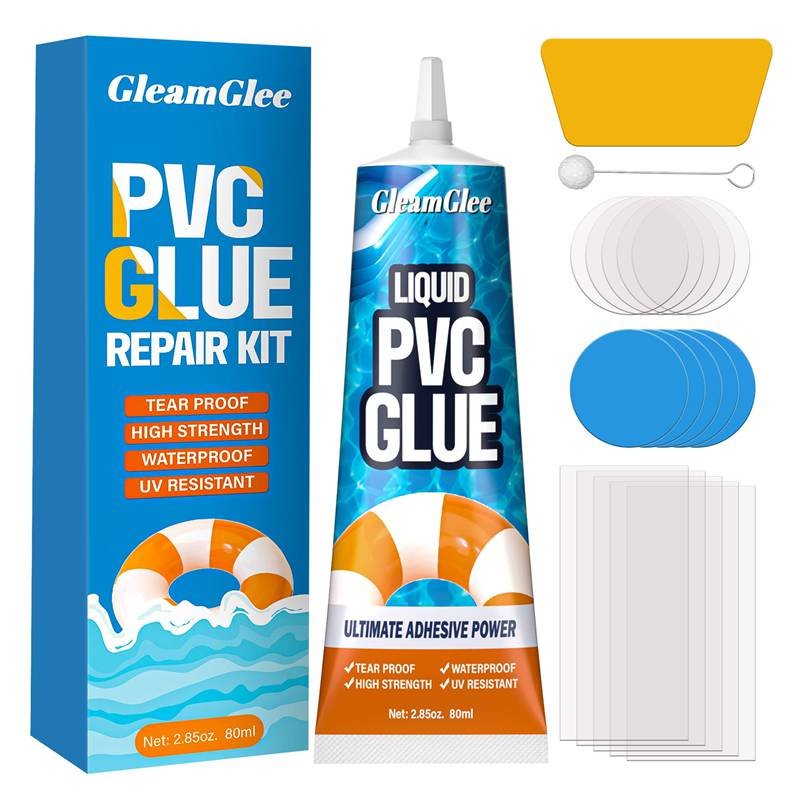
Yes—GleamGlee Tent Repair Glue is an excellent choice for Coleman tent repairs because it combines flexible waterproof adhesion with long-lasting elasticity suitable for outdoor fabrics like PU-coated polyester/nylon, PE floors, canvas, and vinyl. Its hybrid adhesive-sealant chemistry prevents cracking or peeling under fold, tension, or weather exposure, making it more reliable than rigid glues and many generic “sneaker or general DIY” adhesives.
Tent repair success hinges on material match + flexibility + waterproofing. Coleman tents are multi-material assemblies, and a glue that bonds strongly but rigidly often fails after the first camping trip or folding. GleamGlee’s formulation is engineered to outperform general purpose adhesives by providing elastic bonding + durable waterproofing, addressing the real stress patterns tents experience.
How Does GleamGlee’s Glue Chemistry Work for Coleman Fabrics?
Most generic glues cure into a rigid polymer, which:
- cracks under fold stress
- peels when wet
- loses adhesion with sunlight exposure
In contrast, GleamGlee uses a hybrid adhesive-sealant polymer that cures into a rubber-like, flexible layer.
What this means for Coleman repairs:
- Polyester/nylon rainfly: remains bonded under stretch
- PE or PU-coated floors: stays waterproof even under pressure
- Vinyl window areas: doesn’t crack with temperature changes
- Canvas: penetrates weave and seals moisture paths
This hybrid chemistry integrates waterproofing and flexibility, eliminating the typical trade-off most users face with hardware glues (strong but rigid) or silicone caulks (waterproof but poor adhesion).
How Does GleamGlee Compare With Other Tent Repair Products?
Below is a performance comparison covering key real-world criteria campers care about:
| Feature / Property | GleamGlee Tent Repair Glue | Generic DIY Glue | Silicone Caulk | Super Glue |
|---|---|---|---|---|
| Flexibility after cure | High | Low | Moderate | Very low |
| Waterproof performance | Excellent | Poor | Good | Poor |
| Adhesion to PU-coated fabrics | Strong | Moderate | Poor | Strong but brittle |
| Adhesion to canvas | Strong | Low | Low | Low |
| UV resistance | Good | Poor | Poor | Very poor |
| Repeated folding durability | High | Low | Low | Very low |
| Weather cycle fatigue | High | Low | Moderate | Very low |
Takeaway: Many household glues and sealants appear “waterproof” in small tests but fail under fold + load + weather cycles. GleamGlee is formulated to withstand all three simultaneously.
Which Coleman Repair Scenarios Suit GleamGlee Best?
GleamGlee performs especially well in the following high-stress, high-water exposure use cases:
1) Seam leaks & seam tape delamination
- Replaces old tape
- Fills needle holes
- Prevents water intrusion
2) Floor punctures or abrasions
- Elastic seal prevents reopening under weight
- Resists repeated packing compression
3) Rainfly pinholes
- Thin, self-leveling layer keeps waterproofing
- Doesn’t stiffen the fabric
4) Canvas tears and heavy duty patches
- Glue penetrates canvas weave
- Remains flexible through humidity changes
5) Vinyl and PVC window cracks
- Clear adhesion maintains appearance
- Bonds dissimilar materials (canvas + vinyl)
In short, if the repair area is expected to flex, fold, or get wet, GleamGlee excels.
When Should You NOT Use GleamGlee Without Modification?
No single adhesive is perfect for every scenario, and users must still match their repair context:
| Situations | Best Approach |
|---|---|
| Temporary emergency field patch | Use repair tape first, glue later |
| Structural pole failure | Glue only is insufficient—pole repair needed |
| Instant rainstorm fix | Tape + glue later |
| Silicone-treated fabrics (rare in Coleman) | Specialized silicone-friendly products |
| Gear with extreme heat exposure (>60°C / 140°F) | Heat-stable specialty adhesives |
Rule: For most Coleman tent fabrics, GleamGlee is suitable; but always confirm surface type before application.
What Application Techniques Maximize GleamGlee’s Waterproof Performance?
Even the best glue can fail if applied poorly. For GlenGlee:
Best practices
- Clean and dry fabric 100% before bonding
- Apply thin, even layers—don’t glob
- Feather edges to reduce stress concentration
- Maintain flat, tension-free fabric during cure
- Use a flat weight + release paper for best contact
Avoid
- Heat to “speed drying” (causes weak bonding)
- Folding before full cure
- Thick, uneven layers that don’t cure uniformly
With correct application, the glue penetrates fabric fibers and forms a continuous waterproof membrane, not just a surface layer.
What Do Users Experience With GleamGlee on Coleman Tents?
Campers and outdoor enthusiasts consistently report:
- Visible elimination of leaks after heavy rain simulation
- Flexing of repaired seams without edge lifting
- Durability through multiple camping trips
- Waterproof floors even under heavy pack loads
One common pattern: repairs made with flexible adhesive-sealants outperform those made with tape alone, especially after tent folding and reuse.
How Does GleamGlee Support Both DIY Users and Serious Campers?
For DIY campers
- Easy-to-use tube format
- Flexible formula that tolerates minor prep errors
- Clear instructions for multiple materials
For serious campers / tailgate crews
- Waterproof performance that rivals commercial seam sealers
- Elastic bonding means repairs last longer
- Good balance of grip, flexibility, and weathering resistance
This makes it a good all-around tent repair product for weekend family camping, backpackers, and occasional outdoor gear maintenance.
What Kind of Warranty or Safety Considerations Should You Expect?
While consumer glues rarely come with sitewide warranties, the key indicators of quality include:
- Material compatibility statements (polyester, canvas, vinyl)
- Performance under temperature cycling (cold–heat)
- Compliance with safety standards (no harsh off-gassing)
GleamGlee’s formulation also tends to dry with:
- Clear or neutral finish
- Minimal odor
- Elastic, abrasion-resistant surface
All of these increase user confidence and long-term tent usability.

FAQs: What Else Should You Know About Tent Glue for Coleman?
When using tent glue on Coleman tents, users should understand material compatibility, proper curing time, waterproof testing methods, and long-term durability. Flexible, waterproof adhesive-sealants work best for most Coleman repairs, while rigid glues often fail after folding or rain exposure. Correct surface preparation and full curing are essential for reliable, leak-free results.
Can You Use Tent Glue on All Coleman Tents?
Yes, tent glue can be used on most Coleman tents, but only if it is compatible with the specific materials involved. Coleman tents commonly use PU-coated polyester or nylon for walls and rainflies, PE or PU-coated floors, mesh panels, vinyl windows, and occasionally canvas sections.
A flexible waterproof adhesive-sealant works across most of these materials. However, no glue works universally without proper surface preparation. Always confirm whether the damaged area is fabric, coating, vinyl, or mesh before applying glue.
Is Tent Glue Better Than Seam Tape for Coleman Repairs?
It depends on the repair goal.
- Tent glue is better for long-term repairs, especially for holes, tears, floor damage, and resealing old seams.
- Seam tape is faster for factory seams but often fails over time as adhesive ages or peels in heat and humidity.
Many experienced campers use tape temporarily and then reinforce or replace it with glue at home for a permanent fix.
How Long Does Tent Glue Last on a Coleman Tent?
When applied and cured correctly, a high-quality tent glue repair can last several camping seasons, and often for the remaining life of the tent.
Longevity depends on:
- Glue flexibility after curing
- Exposure to UV, moisture, and abrasion
- Whether the tent is packed only after full curing
- Use of a footprint to protect repaired floors
Poorly cured or rigid glue repairs may fail after just one or two trips.
Can You Use Tent Glue in Cold or Humid Weather?
Yes, but curing time must be adjusted.
- In cool temperatures, glue cures more slowly and needs extra time.
- In high humidity, moisture can interfere with bonding and waterproofing.
Best practice is to apply glue indoors or in a dry, ventilated area, then allow a full 18–24 hours of curing before folding or testing with water.
Will Tent Glue Damage the Waterproof Coating?
A compatible tent glue will not damage PU-coated fabrics when applied in thin layers. In fact, it often restores waterproofing where coatings or seam tape have degraded.
Problems usually occur when:
- Harsh solvents are used
- Thick glue blobs are applied
- Heat is used to speed curing
Always apply glue sparingly and allow natural air curing.
Can Tent Glue Fix Large Tears or Structural Damage?
Tent glue works well for:
- Small to medium tears
- Floor punctures
- Seam leaks
For large or load-bearing tears, the strongest approach is a hybrid repair:
- Align fabric edges
- Add stitching if needed
- Seal and reinforce with flexible glue
Glue alone cannot replace broken poles or heavily stretched structural fabric.
Is Tent Glue Safe for Vinyl Windows and Mesh Panels?
Yes—if the glue remains flexible after curing.
- For vinyl windows, use a clear, elastic adhesive-sealant to avoid cracking.
- For mesh, apply minimal glue only at the tear edges to avoid clogging airflow.
Avoid super glue or epoxy, which often cause brittleness and visible damage.
Can You Use Household Glues Instead of Tent Glue?
This is strongly discouraged.
| Household Glue | Typical Result on Tents |
|---|---|
| Super glue | Cracks when folded |
| Epoxy | Rigid, leaks over time |
| Wood glue | Not waterproof |
| Hot glue | Softens or peels |
| General silicone caulk | Poor fabric adhesion |
Tent fabrics require elastic, waterproof bonding, which most household glues are not designed to provide.
How Do You Know If a Tent Glue Repair Has Fully Worked?
A successful repair will:
- Remain flexible when the fabric is bent
- Show no edge lifting after curing
- Stay watertight during light rain or hose testing
- Survive folding and unpacking without cracking
If minor seepage appears, a second thin sealing layer usually resolves the issue.
Should You Re-Seal the Entire Tent After a Repair?
Not always—but it can help for older tents.
You may consider resealing:
- All seams if multiple leaks are present
- High-wear floor areas
- Canvas tents after major repairs
Spot repairs are usually sufficient for newer Coleman tents unless overall waterproofing has degraded.
What Is the Biggest Mistake People Make With Tent Glue?
The most common mistake is not allowing full cure time.
Other frequent issues include:
- Applying glue to damp fabric
- Using thick layers instead of thin coats
- Folding or packing too early
- Choosing rigid glue types
Most “failed” repairs are actually curing or application errors, not product failures.
Conclusion
Repairing a Coleman tent doesn’t need to be complicated—or temporary. As this guide has shown, successful tent repairs come down to three fundamentals: understanding your tent materials, choosing a flexible waterproof glue, and allowing proper curing time. When these steps are followed, even common issues like seam leaks, floor punctures, canvas tears, or rainfly pinholes can be fixed reliably and last for years, not just one trip.
Instead of replacing a tent at the first sign of damage, a well-executed repair helps you extend the life of your gear, reduce waste, and save money, while keeping your shelter safe and waterproof in real outdoor conditions. This is especially important for family campers, backpackers, and long-term users who rely on their Coleman tents across changing weather, terrain, and seasons.
GleamGlee Tent Repair Glue is designed precisely for these realities. Its flexible, waterproof adhesive-sealant formula works across the most common Coleman materials—PU-coated polyester and nylon, PE or PU floors, vinyl windows, and canvas—without cracking, peeling, or failing after folding. Whether you’re fixing a small leak at home or reinforcing high-stress areas before your next trip, it offers a practical, long-lasting solution trusted by both DIY users and serious outdoor enthusiasts.
If you’re a consumer, you can purchase GleamGlee tent repair products directly through Amazon with fast FBA delivery.
If you’re a brand owner, retailer, or distributor, GleamGlee also supports custom formulations, private labeling, and bulk supply, backed by in-house R&D, compliant packaging, and global logistics.
Repair once. Camp with confidence. And let your tent be part of many adventures to come.
Share:
Table of Contents
Here, creating your adhesives glue & removal cleaner collection is no longer a barrier—it’s a collaborative journey where GleamGlee helps brands and businesses transform their vision into durable, certified, and market-ready solutions.
Partner with GleamGlee
Join hundreds of global partners who trust GleamGlee for adhesives and cleaners that combine innovation, compliance, and speed. Our vertically integrated system—from R&D to warehouse—guarantees consistent performance and reliable delivery.
Whether you’re sourcing FBA-ready stock or developing your own formula, our team provides unmatched technical support and responsive service.