Skip to content
What Is the Best Shoe Cleaner for Nike Sneakers:A Expert Guide
Your trusted adhesives glue & cleaner manufacturer

Keeping Nike sneakers clean has become more than routine maintenance—it’s part of modern lifestyle culture. Whether you’re a sneakerhead protecting a rotation of Air Jordans or a daily commuter trying to keep white Nike Air Force 1s bright, the need for a safe, effective shoe cleaner is universal. Nike materials are engineered for performance, but they’re also magnets for dirt, oxidation, scuffs, and yellowing that can appear after only a few weeks of wear.
If you’re looking for the best shoe cleaner for Nike sneakers, the ideal solution is a gentle, foam-based formula that deep-cleans without water, prevents yellowing, works safely on leather, mesh, knit, rubber, and suede, and restores the bright look of classic models like Nike Air Force 1, Air Max, Jordans, and Flyknit. A cleaner should lift dirt at the molecular level while protecting materials from oxidation and color fading.
For years, many people believed Nike shoes—especially white ones—were simply destined to get dirty fast. But sneaker care technology has changed. Now you can revive a pair of beat-up white Nikes in minutes, without water, harsh chemicals, or scrubbing damage.
To see how powerful proper shoe cleaning can be, imagine this:
A sneaker lover in Los Angeles had given up on restoring his yellowed Nike AF1s. After trying household cleaners that left residue or made the leather dry, he switched to a premium foam shoe cleaner. After one session, the dull, oxidized leather brightened again, the creases looked softer, and the midsoles actually looked white—not beige. He took a photo before stepping out the door because he couldn’t believe the transformation himself.
If you’ve ever struggled with dirty Nikes, yellow midsoles, or stubborn stains that won’t budge, keep reading. This guide will show you exactly what causes Nike shoes to get dirty, how to clean them properly, what products the experts actually use, and how to keep your shoes looking new for years.
What Problems Do Nike Shoes Commonly Face — And Why Do They Get Dirty So Easily?
Nike shoes get dirty easily because their performance materials—leather, mesh, knit, suede, and rubber—naturally absorb dirt, oils, sweat, UV exposure, and environmental pollutants. White Nikes yellow due to oxidation, midsole aging, and sunlight. High-friction areas like toe boxes and midsoles attract scuffs, while breathable fabrics trap dust deep within fibers. Understanding these issues helps you choose safer cleaning methods and maintain Nike shoes effectively.
Nike shoes are engineered for versatility and performance, but their unique materials and constructions also make them surprisingly prone to heavy dirt buildup, yellowing, discoloration, and odor. Whether you’re wearing Nike Air Force 1s for everyday fashion, Flyknit running shoes for training, or Jordans for your sneaker rotation, the same question arises: Why do Nike shoes get dirty so fast—and why are they sometimes so hard to clean?
To understand this, you need to break down the way Nike shoes are built. They use breathable fabrics, coated leathers, soft foam midsoles, rubber outsoles, and synthetic overlays, each with different reactions to dirt, environmental conditions, and cleaning products. These materials perform well, but they also trap or show dirt more easily compared to traditional footwear.
Below are the most common issues Nike wearers face—with explanations grounded in material science and real-world sneaker use cases.
Why do white Nike sneakers yellow over time?
White Nike shoes—especially Air Force 1, Air Max, Dunk, and Jordan models—are iconic but notoriously prone to yellowing. This happens for several reasons:
- Oxidation: Oxygen reacts with polyurethane midsoles, causing a yellow tint. This process accelerates with exposure to heat, sunlight, humidity, and sweat.
- UV Damage: Sunlight breaks down polymer chains, creating visible discoloration.
- Residue Left Behind: Soap, dirt, or sweat residue oxidizes faster than clean materials, making yellowing worse.
- Age of Materials: Even unworn Nikes will slowly yellow in storage if exposed to air.
This is why traditional household cleaners rarely solve yellowing—they don’t address the chemical process behind it.
What causes deep dirt buildup on Nike mesh, knit, and suede?
Nike’s high-performance fabrics are incredibly comfortable, but they act like magnets for microscopic dirt:
- Mesh & Flyknit: The porous structure allows breathability, but also traps dust, sweat particles, body oils, and smog deep inside the weave.
- Suede & Nubuck: These absorb dirt instantly because of their open fiber structure. Natural oils from hands darken suede quickly.
- Running & Training Shoes: Often used in dusty, sweaty, or outdoor conditions, leading to embedded dirt that settles after drying.
This trapped dirt can make shoes look old long before their actual lifespan ends.
Are Nike midsoles harder to clean than uppers?
Absolutely. Nike midsoles—especially white ones—are one of the hardest parts to keep clean because:
- They flex with every step, causing micro-cracks where dirt settles.
- Textured midsole designs (e.g., Air Max or React) trap particles easily.
- Midsoles frequently touch surfaces, picking up grime from floors, city streets, gyms, and public transportation.
- Rubber and foam are naturally porous, so stains cling more aggressively.
Midsoles accumulate scuff marks from everyday movement and friction, and dirt embeds deeper over time, requiring targeted cleaning with proper surfactants.
How do you clean white Nikes so they stay white?
White Nikes need both correct cleaning and long-term preventive care. To keep them white:
- Use non-water, foam-based cleaners that lift dirt without spreading it.
- Choose formulas with anti-yellowing agents that neutralize oxidation.
- Clean regularly to prevent sweat and dust from bonding to leather or rubber.
- Avoid bleach, laundry detergent, or harsh scrubbing—they damage protective coatings and cause faster discoloration.
- Wipe shoes weekly, even if they look clean, to remove invisible particles before they settle permanently.
Proper routine cleaning can extend the “fresh white” appearance of Nike sneakers by months—or even years.
Which Shoe Cleaner Works Safely on Different Nike Materials?
The safest shoe cleaner for Nike sneakers is a gentle, foam-based formula designed for multi-material performance shoes. It should deep-clean without harsh chemicals, avoid over-wetting delicate fabrics, prevent yellowing, and maintain the flexibility of leather, mesh, knit, suede, and rubber. Coconut-derived or pH-balanced cleaners, like GleamGlee’s formula, work best because they penetrate stains effectively while protecting Nike materials from damage, fading, or cracking.
Nike sneakers use a complex combination of materials—premium leather, engineered mesh, Flyknit, suede, synthetic overlays, EVA/PU midsoles, and rubber outsoles. Each of these materials absorbs dirt differently, reacts differently to moisture, and requires tailored care. That’s why choosing the right shoe cleaner is not just about cleaning power—it’s about material compatibility, long-term safety, and preventing irreversible damage.
A safe cleaner should meet five critical criteria:
- Foam-Based Formula – Prevents over-saturation and provides controlled application.
- pH-Balanced – Ensures no dryness, cracking, or color damage on leather or suede.
- No Harsh Chemicals – Avoid bleach, alcohol, acetone, and abrasive detergents.
- Deep-Cleaning Surfactants – Able to lift oils, dirt, sweat residue, and oxidation without scrubbing aggressively.
- Safe for Multi-Material Sneakers – Must work across leather, mesh, knit, suede, rubber, TPU overlays, and canvas.
Nike sneakers—especially lifestyle models like Air Force 1, Dunk, and Jordan—often combine multiple materials in one shoe, which means a single wrong cleaning step can create permanent damage. For example:
- Too much water on Flyknit causes stretching and deformation.
- Strong alkaline detergents strip the surface coating from leather.
- Alcohol-based cleaners dry out midsoles and accelerate yellowing.
- Soap residue trapped in mesh leads to long-term discoloration and odors.
Foam cleaners solve these problems by delivering a precisely controlled cleaning experience—minimal moisture, high penetration, fast drying, and uniform coverage. GleamGlee’s formula, in particular, is made from coconut oil derivatives, a naturally gentle yet effective surfactant system used by chemists for premium sneaker care. This allows the cleaner to break apart dirt at the molecular level while keeping Nike materials soft and intact.
Below, we examine how safe cleaning looks on each key Nike material and why foam cleaning is essential.
What to wash Nike shoes with? (Cleaners, tools & what to avoid)
Nike shoes should always be washed with a professional sneaker cleaner, a soft-to-medium brush, and a microfiber towel. Avoid dish soap, bleach, laundry detergent, vinegar, and alcohol—all of which can break down adhesives, fade material dyes, or leave chalky residues. Foam cleaners provide consistent cleaning without requiring water, making them ideal for Nike materials that are sensitive to over-saturation.
Recommended tools include:
Soft brush → knit, mesh, suede
Medium brush → leather, midsoles
Detailing brush → grooves, soles
Microfiber towel → final polishing
This combination ensures safe, deep cleaning without damaging texture or structure.
Which cleaner is safe for Nike leather (Air Force 1, Dunks, Jordans)?
Nike leather surfaces—especially on Air Force 1, Dunks, and Jordan models—require gentle, pH-balanced cleaners. These leathers often have protective coatings that can be stripped by household cleaners. Foam allows precise coverage, avoiding saturation that causes creasing or cracking.
GleamGlee’s coconut-based formula removes oils, sweat marks, and denim transfer stains without thinning the surface layer. The result is a cleaner shoe that maintains its original shine, flexibility, and color depth.
Which cleaner works on mesh & knit (Nike Pegasus, Flyknit, Vaporfly)?
Mesh and Flyknit are extremely breathable but highly absorbent—meaning traditional cleaning with water saturates the fibers, increasing drying time and causing odor buildup. Foam cleaners lift dirt from between fibers without soaking them. A soft brush is essential to prevent snagging or stretching the material.
For running models like Pegasus or Vaporfly, this method keeps the shoe lightweight and maintains material integrity over time.
What is the best cleaner for suede & nubuck Nike shoes?
Suede and nubuck are sensitive to moisture, making foam cleaners ideal because they reduce water exposure. Use light, circular motions with a soft brush, allowing foam to break down dirt without pressing it deeper. Immediately blot excess moisture to avoid water rings.
A good foam formula preserves suede nap, prevents dark patches, and maintains the natural velvety texture.
Are foam cleaners better than liquid cleaners for Nike sneakers?
Yes. Foam cleaners outperform liquid soaps for several reasons:
| Feature | Foam Cleaners | Liquid Cleaners |
|---|---|---|
| Moisture Control | ✔ Minimal | ✘ Often too wet |
| Material Safety | ✔ Safe on suede & knit | ✘ Can oversaturate |
| Anti-yellowing | ✔ Contains stabilizers | ✘ Often accelerates oxidation |
| Precision | ✔ Stays where applied | ✘ Runs into seams |
| Drying Time | ✔ Fast | ✘ Slow & uneven |
| Residue | ✔ Low/no residue | ✘ High risk of buildup |
Foam delivers deep cleaning results without the side effects that damage Nike shoes over time.
How Do You Clean Nike Shoes Step by Step for the Best Results?
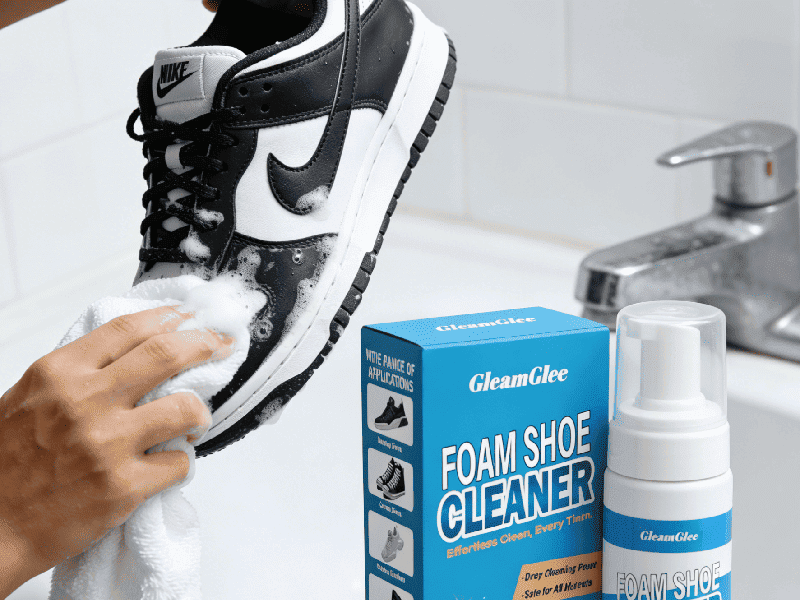
To clean Nike shoes properly, start by dry-brushing loose dirt, then apply a foam-based sneaker cleaner to the uppers, midsoles, and outsoles. Gently scrub with the right brush for each material, wipe away residue with a microfiber towel, and let the shoes air dry indoors away from heat and sunlight. Using a no-water foam cleaner helps protect Nike leather, mesh, knit, suede, and rubber while keeping white sneakers bright and preventing yellowing.
Cleaning Nike shoes isn’t just about making them look better for photos—it’s about protecting performance materials, extending the life of your sneakers, and preventing long-term damage like yellowing, cracking, or warping. Many people either over-clean (too much water, too strong chemicals) or under-clean (letting dirt sit for months). The best approach is a structured, step-by-step routine that is safe, repeatable, and optimized for Nike’s multi-material construction.
A proper cleaning routine should work whether you’re dealing with white Air Force 1s, Air Max running shoes, Flyknit trainers, or Jordan retros. The key is to combine the right cleaner (foam-based) with the right tools (brush + microfiber towel) and correct drying practices.
Here’s a high-level step flow:
- Prep & Dry Brush – Remove laces and loose dirt.
- Clean Uppers – Use foam cleaner + soft/medium brush, depending on material.
- Clean Midsoles – Focus on scuffs and heavy staining with firmer brushing.
- Clean Outsoles – Deep clean grooves for traction and overall look.
- Dry Safely – Air dry indoors, away from heat and sunlight.
Using a product like GleamGlee’s foam shoe cleaner makes this process easier because it’s designed specifically for multi-material sneakers and doesn’t require water. Below, each part of the process is broken down in detail so you can confidently clean your Nikes at home like a pro.
How to clean Nike sneakers white from top to sole
White Nike sneakers (especially AF1, Air Max, Dunks, and Jordans) need a little extra structure:
- Remove laces and set them aside for separate cleaning.
- Dry brush the entire shoe (upper + midsole) to remove loose dust.
- Apply foam cleaner to the upper, focusing on toe box, lace area, and collar where sweat and oils collect.
- Gently scrub using a soft or medium brush in small circles.
- Move to midsoles, applying foam directly to scuffs and dirty lines. Use slightly firmer pressure to lift dark marks.
- Wipe everything with a clean microfiber towel to remove foam and loosened dirt.
Doing this once a week keeps white Nikes bright and prevents “permanent” staining and oxidation lines from forming.
How to clean Nike uppers safely without water
Nike uppers can be leather, mesh, knit, suede, or synthetics—all of which can be damaged by too much water. A waterless foam method is the safest approach:
- Leather uppers: Apply foam to a brush or directly to the shoe, then gently scrub. Avoid soaking seams and edges where glue is used.
- Mesh & knit uppers: Use foam sparingly and a soft brush. Work in light circles without pressing too hard into the fabric to avoid stretching.
- Suede uppers: Apply foam in small amounts. Clean a limited area at a time and blot immediately with a microfiber towel.
Waterless cleaning reduces the risk of water stains, glue failure, and long drying times—especially important if you rotate your sneakers frequently.
How to remove scuffs and stains from Nike midsoles
Midsoles are usually the dirtiest part of Nike shoes and also the most visually noticeable, especially on white pairs. To clean them effectively:
- Dry brush first to remove surface dust and grit.
- Apply foam directly to scuffed or stained areas of the midsole.
- Use a medium or firm brush, depending on how stubborn the marks are. Scrub in short, controlled circular motions rather than long strokes, which can smear dirt.
- Let stubborn areas sit with foam for 30–60 seconds before scrubbing again.
- Wipe with a microfiber towel to remove all residue.
Avoid using strong abrasives or “magic erasers” too often—they can strip paint, make the midsole patchy, or create a dull finish over time. A foam cleaner like GleamGlee’s is designed to break down scuff residue instead of sanding off the surface.
How to deep clean Nike outsoles for traction & appearance
Outsoles may not be the first thing people see, but they affect both grip and overall “freshness” of the shoe. For running shoes, training shoes, and basketball Nikes, dirty outsoles can also reduce traction.
To deep clean them:
- Turn the shoe over and dry brush to remove rocks, dried mud, and dust.
- Apply foam cleaner generously on the outsole.
- Use a firm brush to scrub along grooves, edges, and traction patterns.
- For very tight grooves, use a small detailing brush or old toothbrush to reach inside.
- Wipe or lightly rinse just the outsole area if necessary, then dry thoroughly with a towel.
Regular outsole cleaning keeps your shoes looking newer and prevents dirt from migrating up to the midsole and upper when you walk.
How to dry Nike shoes correctly and prevent yellowing
Drying is an underrated but crucial step. Done wrong, it can undo all your cleaning work:
- Never use direct heat (radiators, hair dryers, heaters). Heat can warp glue, damage midsoles, and accelerate yellowing.
- Avoid direct sunlight, especially for white Nikes, as UV exposure speeds up oxidation and discoloration.
- Air dry indoors in a shaded, well-ventilated area.
- Stuff shoes with paper towels or plain tissue (not newspaper ink) to absorb moisture and help maintain shape. Replace if they become very damp.
- Allow enough time—usually a few hours to overnight—before wearing the shoes again.
If you’re using a fast-drying foam cleaner like GleamGlee, drying time is much shorter than with water-based methods, which is convenient for people who wear their Nikes daily.

How Do You Prevent Yellowing, Odors, and Dirt Buildup on Nike Shoes?
To prevent yellowing, odors, and dirt buildup on Nike shoes, clean them regularly with a gentle foam cleaner, avoid harsh soaps and bleach, dry them indoors away from sunlight, and store them in a cool, ventilated space. Use quick weekly wipe-downs, remove sweat and dust before they set, and let shoes fully dry between wears. For white Nike sneakers, anti-oxidation cleaners and consistent care are essential to keep them bright and fresh.
Prevention is the “secret weapon” of Nike sneaker care. Most yellowing, deep staining, and bad odors don’t appear overnight—they slowly build up because dirt, sweat, and oxidation are allowed to sit on the material for days or weeks. The good news? You can avoid most of these problems with simple habits and the right products.
Nike shoes are often made from a combination of leather, mesh, knit, foam midsoles, and rubber outsoles, which all react differently to moisture, heat, and UV light. White sneakers, in particular, are sensitive to oxidation and residue from cleaning products. Mesh and knit love to hold on to sweat. If you only clean your shoes when they look “very dirty,” you’re already too late; stains will have penetrated deeper into the material.
Instead, think of Nike care like skincare: light daily or weekly maintenance, plus deeper care when needed. A foam-based cleaner like GleamGlee’s makes this easy because you can do quick cleaning sessions without water or complicated setups. The goal isn’t just to restore your shoes once—they should stay fresh consistently.
Below are practical, material-focused strategies that help you prevent yellowing, odors, and dirt buildup before they become serious problems.
How to protect Nike white leather from oxidation
White leather on Nike models like Air Force 1, Dunks, and Jordans is especially vulnerable to oxidation. To reduce yellowing:
- Clean regularly, not just when shoes look dirty. Sweat and city dust accelerate oxidation if left on the leather.
- Use a foam cleaner with anti-yellowing properties, which helps remove residues that react with oxygen.
- Avoid direct sunlight when drying or storing your shoes—UV light speeds up the chemical reactions that cause yellow tones.
- Store in a cool, dry place with some airflow; cramped, humid storage speeds up midsole aging.
The cleaner your white leather stays day-to-day, the slower it will oxidize and the longer it will keep that “box fresh” look.
How to keep white Nike sneakers bright between cleans
You don’t need a full deep clean every time you wear white Nikes, but you do need a simple routine:
- After wearing, give them a quick visual check: focus on toe box, lace area, and midsoles.
- If you see light marks, use a small amount of foam cleaner and a microfiber towel for a fast spot clean.
- Wipe midsoles weekly even if they don’t look terrible—this stops grey grime lines from becoming permanent.
- Rotate your pairs: don’t wear the same white Nikes every single day. Let them rest and dry fully between wears.
These “micro-cleaning” habits take just a couple of minutes but dramatically extend how long your white Nikes stay bright.
How to prevent mesh Nike shoes from trapping odor
Odors in Nike shoes usually come from moisture + bacteria trapped in breathable materials, especially mesh and knit. To prevent smell:
- Avoid soaking mesh or Flyknit in water; it makes drying slower and gives bacteria more time to grow.
- Clean with foam instead of water, then air dry completely before wearing again.
- Remove insoles occasionally and let them air out separately. If they’re very sweaty, wipe them with a lightly damp cloth and let them dry fully.
- After heavy workouts, don’t leave shoes in a closed gym bag; let them breathe in open air first.
You can also rotate between two pairs for training days, so each pair has time to fully dry and “reset.”
Are protective coatings helpful for Nike sneakers?
Protective sprays and coatings can be useful—but only as part of a broader care routine, not a replacement for cleaning:
- On suede, nubuck, and knit, a transparent, water-based protective spray can help repel light dirt and moisture.
- On white leather, it can help reduce staining from splashes or accidental spills.
- However, these coatings do not stop oxidation and cannot fix existing stains or yellowing.
- Always clean the shoe before applying any protective coating; otherwise, you’re sealing dirt into the material.
Think of coatings as a “rain jacket” for your sneakers—they help, but you still need regular cleaning and proper drying.
Is GleamGlee Shoe Cleaner a Good Choice for Nike Sneakers?
Yes. GleamGlee Shoe Cleaner is a strong choice for Nike sneakers because it uses a gentle, foam-based, no-water formula that safely cleans leather, mesh, knit, suede, rubber, and midsoles. It removes dirt and stains at the molecular level, helps prevent yellowing on white Nikes, dries quickly, and includes a complete shoe care kit. This makes it suitable for everyday Nike wearers, sneaker collectors, and families alike.
When choosing a shoe cleaner for Nike sneakers, most users aren’t just asking “Does it clean?”—they’re asking deeper questions:
- Will it damage my Air Force 1 leather?
- Will it stretch or ruin Flyknit or mesh?
- Will it make white midsoles yellow faster?
- Can I use it often without harming the shoe?
- Is it practical for daily life, not just once-off restoration?
GleamGlee Shoe Cleaner was developed specifically to answer these concerns. Unlike generic cleaners or DIY solutions, it’s designed around modern sneaker construction, where one shoe may combine leather, knit, rubber, plastic overlays, foam midsoles, and strong adhesives—all demonstrate different sensitivities.
GleamGlee’s advantage lies in three core areas: formula design, material compatibility, and real-world usability.
What makes GleamGlee effective for Nike leather, mesh, knit & suede?
Nike sneakers rarely use just one material. A single pair of Air Max or Jordan may include coated leather, breathable mesh, TPU overlays, foam midsoles, and rubber outsoles. GleamGlee’s foam formula is engineered to work safely across all of these surfaces.
- Foam texture allows controlled application, so delicate areas aren’t oversaturated
- Balanced cleaning strength lifts oils, sweat residue, and dust without aggressive scrubbing
- Material-safe surfactants prevent surface stripping, cracking, or fiber weakening
For leather Nikes (Air Force 1, Dunks, Jordans), the foam removes dirt while preserving flexibility and finish.
For mesh and Flyknit models (Pegasus, Vaporfly, Metcon), it penetrates dirt without soaking the fabric.
For suede and nubuck, the low-moisture approach minimizes water marks and nap damage.
This multi-material safety is critical for Nike owners who don’t want to risk a $150–$300 pair with the wrong cleaner.
How does the coconut-derived, no-water formula protect Nike materials?
One of the most overlooked causes of sneaker damage is over-wetting. Excess water weakens adhesives, increases drying time, encourages odor-causing bacteria, and accelerates oxidation in white materials.
GleamGlee avoids these problems by using coconut oil–derived surfactants, which are widely used in premium personal-care and fabric-cleaning formulations because they are:
- Naturally effective at breaking down oils and dirt
- Gentle on both natural and synthetic materials
- Less likely to leave residue that causes discoloration
Because the formula requires no rinsing, Nike shoes dry faster and more evenly. This is especially important for white midsoles and mesh uppers, where trapped moisture often leads to yellowing or smell over time.
In short, the no-water approach isn’t just about convenience—it directly protects the structure and lifespan of Nike sneakers.
How does GleamGlee help prevent yellowing on white Nike sneakers?
Yellowing is one of the biggest frustrations for Nike owners, particularly with white Air Force 1s, Air Max models, and Jordan midsoles. GleamGlee addresses this issue in two key ways:
- Residue removal – Dirt, sweat, and soap residue accelerate oxidation. GleamGlee lifts and removes these particles instead of spreading them.
- Low-heat, low-UV workflow – Because there’s no water soaking, shoes dry faster and don’t require sun exposure, reducing UV-driven discoloration.
While no cleaner can completely stop aging materials, consistent use of a foam cleaner like GleamGlee significantly slows down yellowing and helps restore brightness when discoloration is still surface-level.
Do sneakerheads, families, and everyday Nike users benefit equally?
Yes—but for different reasons:
- Sneakerheads & collectors value precision, material safety, and the ability to maintain multiple pairs without damage. GleamGlee’s controlled foam application and fast results make it ideal for rotation maintenance and resale prep.
- Everyday wearers appreciate the speed and simplicity. A quick clean after commuting or errands keeps shoes presentable without a full wash routine.
- Families & parents benefit from the gentle formula that’s safe for kids’ sneakers, school shoes, and frequent cleaning without harsh chemicals.
The included multi-purpose brush and microfiber towel also reduce guesswork—users don’t need to source extra tools or worry about using the wrong materials.
How does GleamGlee compare to household cleaners or DIY methods?
Many Nike owners try toothpaste, dish soap, bleach, or laundry detergent—often with disappointing or damaging results.
| Cleaning Method | Short-Term Result | Long-Term Risk |
|---|---|---|
| Toothpaste | Mild whitening | Abrasive damage, residue |
| Dish soap | Removes surface dirt | Dries leather, weakens glue |
| Bleach | Temporary whitening | Accelerated yellowing, cracking |
| Laundry detergent | Strong cleaning | Color fading, stiffness |
| GleamGlee Foam Cleaner | Deep, even clean | Designed to protect materials |
GleamGlee is formulated specifically for shoes—not kitchens or bathrooms—making it far safer for Nike sneakers over repeated use.

Which Nike Sneakers Benefit Most from Professional Shoe Cleaning?
Nike sneakers that benefit most from professional shoe cleaning include white leather models like Air Force 1, premium Air Jordans, Air Max shoes with complex midsoles, Flyknit and mesh running shoes, and suede or nubuck designs. These sneakers use materials that show dirt quickly, trap stains deeply, or are sensitive to water and harsh cleaners. Using a professional-grade foam cleaner helps restore appearance while protecting materials and extending shoe lifespan.
Not all Nike sneakers get dirty in the same way—and not all of them respond well to basic cleaning methods. Some models are visually unforgiving (white leather), others are material-sensitive (Flyknit, suede), and some are structurally complex (layered midsoles, mixed materials). These sneakers benefit the most from professional shoe cleaning solutions because improper cleaning can permanently damage them or shorten their usable life.
A “professional” approach doesn’t necessarily mean sending shoes to a sneaker spa. It means using specialized products, controlled moisture, and material-appropriate tools—exactly what foam-based systems like GleamGlee are designed for.
Below are the Nike sneaker categories that see the biggest improvement from professional-grade cleaning.
Air Force 1 — why white leather sneakers need professional care
Nike Air Force 1s are one of the most searched sneakers for cleaning advice—and for good reason. Their bright white leather uppers and thick white midsoles show dirt, creasing stains, and oxidation faster than almost any other Nike model.
Common AF1 problems include:
- Grey dirt lines along the midsole
- Yellowing from oxidation and sunlight
- Dark creases caused by sweat and friction
- Scuff marks from everyday walking
Professional foam cleaners are ideal because they:
- Clean leather without drying or cracking it
- Lift dirt from creases instead of pushing it deeper
- Help slow down yellowing by removing oxidation-triggering residue
Regular, gentle foam cleaning keeps AF1s looking fresh far longer than occasional deep washes with soap and water.
Air Jordan models — how to clean premium leather, suede & mixed materials safely
Air Jordans often combine premium leather, suede, nubuck, mesh panels, and painted midsoles—sometimes all in one shoe. This makes them particularly risky to clean with household products.
Common Jordan issues:
- Color bleeding on suede panels
- Dried-out or dull leather
- Patchy midsoles after aggressive scrubbing
- Water stains on premium materials
Professional shoe cleaners use low-moisture foam to control application and avoid cross-material damage. For collectors, this is especially important: Jordans often hold resale or sentimental value, and a single bad cleaning attempt can permanently reduce that value.
Foam-based systems allow precise cleaning around panels, stitching, and overlays—something liquid cleaners can’t do safely.
Nike Air Max — why complex midsoles need targeted cleaning
Nike Air Max sneakers feature layered midsoles, air units, textured rubber, and synthetic overlays. These designs trap dirt in grooves and edges, especially around visible air bubbles and sculpted foam.
Typical Air Max challenges include:
- Deep-set grime in midsole textures
- Dirt buildup around air units
- Discoloration that spreads unevenly
Professional cleaning methods focus on:
- Letting foam dwell briefly to break down dirt
- Using controlled brushing to reach grooves
- Avoiding excessive pressure that damages painted areas
This restores the visual impact of Air Max shoes without compromising their structure.
Nike Flyknit & mesh runners — why breathable shoes need gentle, professional cleaning
Flyknit and mesh models (Pegasus, Vaporfly, Infinity Run, Metcon) are built for performance and breathability—but that also means they trap sweat, dust, and odor quickly.
Common issues include:
- Embedded dirt that won’t rinse out
- Lingering odors from trapped moisture
- Fabric distortion after soaking
Professional foam cleaning works best because it:
- Lifts dirt without saturating fibers
- Reduces drying time dramatically
- Prevents stretching and deformation
This approach is especially valuable for runners and gym users who clean their shoes frequently and need a method that won’t break them down over time.
Suede & nubuck Nike sneakers — why waterless cleaning is essential
Nike releases many lifestyle and retro sneakers with suede or nubuck uppers, which are among the most delicate materials.
Risks with improper cleaning:
- Water stains and dark patches
- Flattened or uneven suede nap
- Permanent discoloration
Professional shoe cleaners use minimal moisture foam and soft brushing techniques to clean suede gradually and evenly. This protects texture and color while removing surface dirt and oils.
For suede Nikes, professional-grade cleaning is not optional—it’s essential.
Kids’ Nike sneakers & daily-wear shoes — why frequent professional cleaning helps
Children’s Nike shoes and everyday commuter sneakers face:
- Playground dirt and grass stains
- Food spills and mud
- Constant wear without rest time
Using a gentle professional cleaner allows frequent cleaning without damage, which is far safer than harsh scrubbing or machine washing. Parents especially benefit from foam cleaners that work fast, dry quickly, and are safe for repeated use.
FAQs — What Else Should You Know Before Cleaning Nike Shoes?
Before cleaning Nike shoes, it’s important to understand your shoe’s materials, avoid harsh household cleaners, limit water exposure, and dry shoes properly. Foam-based sneaker cleaners are safest for leather, mesh, knit, suede, and white midsoles. Regular light cleaning prevents yellowing and odor better than occasional deep washing. Using the right tools and methods protects Nike shoes and extends their lifespan.
Nike shoes are designed for performance, style, and everyday wear—but improper cleaning is one of the fastest ways to ruin them. Many common mistakes come from misinformation: machine washing, bleach whitening hacks, or over-scrubbing midsoles. These FAQs address the most common (and costly) errors Nike owners make, and explain how to clean sneakers safely, effectively, and consistently.
Each answer below is written to be practical, material-aware, and easy to apply at home.
Can you clean Nike shoes without water?
Yes—and for most Nike sneakers, cleaning without water is actually the safest method.
Water can:
- Weaken glue bonds between uppers and midsoles
- Cause water stains on suede and nubuck
- Stretch or deform Flyknit and mesh
- Increase drying time, leading to odor and yellowing
Foam-based shoe cleaners are designed to lift dirt with minimal moisture. They allow you to clean leather, mesh, knit, suede, and rubber without soaking the shoe, which protects structure and materials. This is why sneaker professionals and collectors prefer foam cleaning over traditional washing.
Is foam cleaner better for white Nike sneakers?
Yes. Foam cleaners are ideal for white Nike shoes because they provide controlled cleaning without residue.
White sneakers—like Air Force 1s or white Jordans—yellow faster when:
- Soap residue is left behind
- Shoes are soaked and dried slowly
- Harsh chemicals damage protective coatings
Foam cleaners lift dirt and oxidation-triggering residue instead of spreading it. They also dry faster, reducing UV exposure and moisture retention. Over time, consistent foam cleaning helps white Nikes stay brighter and cleaner with less effort.
How often should you clean Nike shoes?
The ideal cleaning frequency depends on how often you wear them and where:
- Daily wear / commuting: light wipe or spot clean once a week
- White sneakers: weekly maintenance + monthly deeper clean
- Running or gym shoes: clean after heavy use or when odor appears
- Occasional wear / collections: light clean before storage
Waiting until shoes look “very dirty” usually means stains have already set. Frequent light cleaning is safer and more effective than aggressive deep cleaning every few months.
Can shoe cleaner damage my Nike shoes?
Yes—the wrong cleaner can cause serious damage.
Avoid:
- Bleach → causes cracking and accelerated yellowing
- Dish soap / laundry detergent → strips leather oils, leaves residue
- Alcohol / acetone → dries materials, damages paint and glue
- Abrasive powders → scratches midsoles and coatings
A sneaker-specific, pH-balanced foam cleaner is formulated to remove dirt while preserving material integrity. This is especially important for Nike shoes with mixed materials and painted midsoles.
Is it safe to put Nike shoes in the washing machine?
In most cases, no—especially for leather, suede, Flyknit, or Jordans.
Machine washing can:
- Break down adhesives
- Cause sole separation
- Warp midsoles
- Fade colors
- Damage structured uppers
Some basic mesh-only running shoes may survive occasional gentle washing, but it significantly shortens their lifespan. Manual foam cleaning is far safer and gives better cosmetic results.
How do I restore old or yellowed Nike sneakers?
Restoring old or yellowed Nikes depends on how deep the discoloration is:
Surface yellowing (dirt + oxidation residue):
→ Can often be improved with repeated foam cleaning
Deep material aging (midsole oxidation):
→ Cannot be fully reversed, but appearance can be improved
Avoid harsh whitening hacks (bleach, hydrogen peroxide pastes), which often cause cracking or uneven color. Consistent gentle cleaning + proper drying is the safest restoration approach.
Should I remove laces and insoles before cleaning?
Yes, for best results:
- Laces collect sweat and dirt quickly. Remove and clean them separately with foam or mild soap.
- Insoles trap odor-causing bacteria. Remove occasionally, wipe gently, and let them air dry fully.
Cleaning these parts separately prevents dirt from transferring back onto freshly cleaned uppers.
What is the biggest mistake people make when cleaning Nike shoes?
The most common mistakes are:
- Using household cleaners not made for shoes
- Over-wetting materials
- Scrubbing too hard instead of letting the cleaner work
- Drying shoes in direct sunlight or with heat
- Waiting too long between cleanings
Nike shoes last longest when cleaned gently, regularly, and correctly.
Conclusion
Clean Nike shoes don’t just look better—they last longer, stay brighter, and reflect your personal style. Whether you’re a sneakerhead maintaining a rotation of Jordans or a parent keeping school sneakers fresh, a high-quality foam cleaner makes all the difference.
GleamGlee’s advanced foam formula, backed by professional chemists and designed for all Nike materials, gives you:
- Deep cleaning without water
- Anti-yellowing protection
- Safe performance on leather, mesh, knit, suede, and rubber
- A complete kit with brush + microfiber towel
- Fast, visible results
Share:
Table of Contents
Here, creating your adhesives glue & removal cleaner collection is no longer a barrier—it’s a collaborative journey where GleamGlee helps brands and businesses transform their vision into durable, certified, and market-ready solutions.
Partner with GleamGlee
Join hundreds of global partners who trust GleamGlee for adhesives and cleaners that combine innovation, compliance, and speed. Our vertically integrated system—from R&D to warehouse—guarantees consistent performance and reliable delivery.
Whether you’re sourcing FBA-ready stock or developing your own formula, our team provides unmatched technical support and responsive service.