Skip to content

Shoe Cleaner for Travel: A Definitive Guide
Your trusted adhesives glue & cleaner manufacturer

A pair of shoes can travel through more environments in one vacation than it normally encounters during several weeks at home. Airport floors, wet sidewalks, dusty train stations, restaurant spills, grass, hotel carpets, festival grounds, and long sightseeing days all leave their mark. The difficulty is not simply that shoes become dirty. It is that travelers rarely have the sink space, drying time, brushes, cleaning cloths, or spare footwear needed for a traditional wash. That is why travel shoe care works best when it focuses on controlled cleaning rather than soaking, convenient tools rather than oversized kits, and frequent light maintenance rather than waiting until the end of the trip for one aggressive cleaning session.
A practical shoe cleaner for travel should remove common surface dirt with minimal water, dry reasonably quickly, fit into luggage without creating leakage problems, and be compatible with the footwear materials being carried. Foam cleaners, microfiber towels, compact brushes, and cleaning wipes are especially useful because they allow travelers to treat fresh scuffs, mud marks, street grime, and localized stains before those marks become harder to remove. The best travel cleaner balances effectiveness, portability, material safety, and ease of use rather than simply offering the strongest possible cleaning action.
Picture arriving in a new city at 5:30 p.m. after walking through a rainy airport transfer, only to notice that the white sneakers you planned to wear to dinner now have dark splashes across the midsoles and toe area. You have no spare pair that works with your outfit, no time for a complete wash, and less than an hour before leaving the hotel. In situations like this, the difference between a useful travel cleaner and an ordinary home-cleaning product becomes immediately obvious.
What Makes a Shoe Cleaner Travel-Friendly?
A travel-friendly shoe cleaner should be compact, easy to control, quick to remove, and practical when running water or extended drying time is unavailable. It should also fit the footwear materials you actually carry and work with only a few supporting tools. For frequent travelers, leak resistance, controlled dispensing, reasonable drying time, and predictable cleaning results often matter just as much as maximum stain-removal strength.
Is a No-Water Cleaner Better for Travel?
A no-water or low-water cleaning system is usually more practical for city breaks, business trips, road trips, and short holidays because the traveler does not need to build a temporary washing station. Traditional sneaker cleaning often assumes access to a sink, bowl, clean running water, several towels, and enough time for a saturated shoe to dry. Those assumptions become unrealistic when someone is changing hotels frequently or expects to wear the same footwear again later that day.
Foam has an advantage in this environment because it can be placed where cleaning is actually needed. If only the toe box, heel edge, or white midsole is dirty, there is little reason to wet the entire shoe. Controlled application helps reduce the amount of moisture introduced into the upper, while a microfiber towel removes loosened soil before it spreads across clean areas. This is especially practical for everyday white sneakers, coated leather panels, canvas, rubber sections, PU, and many common synthetic uppers.
A well-designed cleaner should also reduce dependence on aggressive brushing. Chemistry and mechanical action work together: the cleaner loosens oily soil and attached particles, while a brush or towel provides enough movement to release them. If a user has to scrub hard for several minutes, the risk of damaging delicate fibers increases. A travel cleaner therefore performs best when moderate agitation is sufficient for ordinary dust, street dirt, fresh splashes, and light staining.
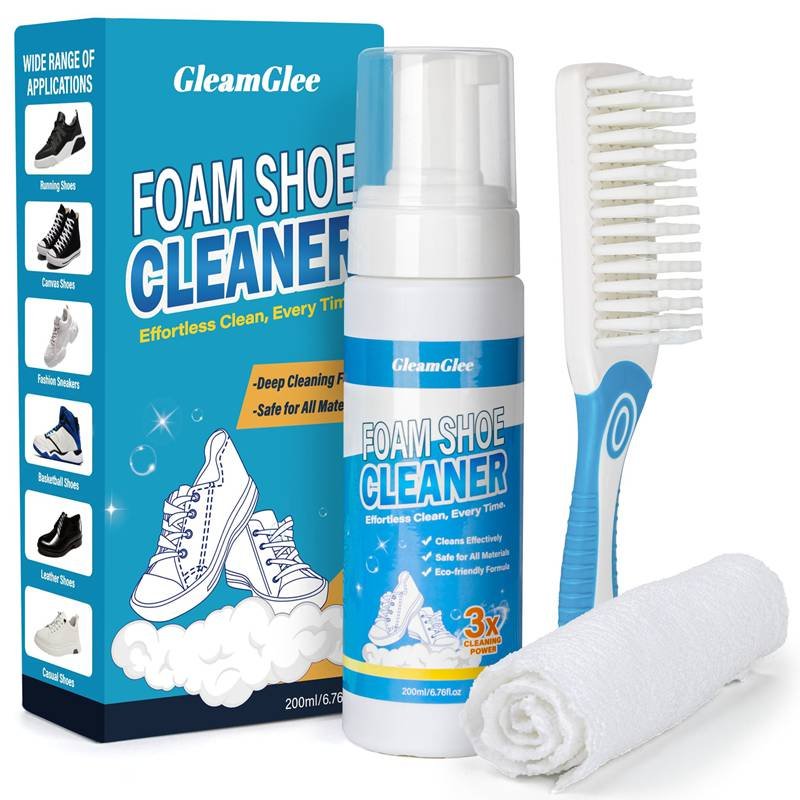
EPN’s foaming shoe-cleaning format follows this practical approach by combining a ready-to-use foam with a multipurpose brush and microfiber towel. The value of such a system during travel is not that every stain becomes instantly removable, but that routine cleaning can be performed without soaking the shoe or carrying a large maintenance kit. Old oil stains, severe dye transfer, adhesive residue, or genuine material discoloration may still require a specialized treatment after the trip.
Do Fast-Drying Formulas Matter?
Drying speed becomes much more important when travelers carry only one or two pairs of everyday shoes. At home, leaving a freshly cleaned pair unused for an entire day may not cause any inconvenience. On a trip, those same sneakers may be needed for dinner, a client meeting, an airport transfer, or another full day of walking. A cleaning method that introduces less unnecessary moisture therefore offers a real practical advantage.
The useful measure is not an exaggerated promise that a shoe becomes completely dry within seconds. What matters is how wet the cleaning process makes the material. A controlled foam application followed by prompt wiping usually introduces less moisture than immersing or heavily rinsing the upper. This helps reduce the period during which the shoe feels damp, although absorbent canvas, mesh, padding, and multi-layer constructions may still need additional ventilation.
After cleaning, travelers should check more than the visible surface. A mesh upper can look dry while moisture remains beneath the outer layer, and foam can remain unnoticed around seams, lace eyelets, decorative panels, and stitching channels. Shoes should be allowed to air naturally until no significant dampness remains before being returned to luggage. Packing them too soon can create a warm, enclosed environment where unpleasant odors become more noticeable.
High heat is rarely the best shortcut. Radiators, powerful hair dryers, clothes dryers, and extremely hot air can affect leather finishes, adhesive layers, foam components, and certain synthetic materials. Natural airflow or moderate room-temperature ventilation is normally safer. Travel-friendly cleaning therefore combines a relatively low-moisture process with sensible drying rather than trying to compensate for heavy saturation with more heat afterward.
What Should a Travel Shoe Care Kit Include?
The most useful travel shoe-care kit is not necessarily the one with the highest number of accessories. A compact system only needs to cover three essential functions: loosening contamination, providing controlled mechanical action when necessary, and removing the released dirt. A foam cleaner, small brush, and microfiber towel can perform those three jobs effectively for many common travel shoes, while a few wipes provide a useful fourth option for immediate touch-ups away from the hotel.
| Travel Item | Main Function | Useful Specification | Best Situation |
|---|---|---|---|
| Foam cleaner | Loosens surface dirt and oily soil | Controlled pump or foam dispensing | General hotel-room cleaning |
| Compact brush | Provides mechanical agitation | Small handle, material-appropriate bristles | Midsoles, canvas, durable synthetics |
| Microfiber towel | Removes dirt and excess moisture | Soft, absorbent, reusable | Finishing and localized drying |
| Cleaning wipes | Handles small emergency marks | Compact or individually packed | Airports, meetings, restaurants |
| Protective pouch | Separates tools from luggage | Lightweight, easy to clean | Organization and leakage control |
Travelers should choose tools according to their actual shoes rather than packing a miniature version of an entire home sneaker-care collection. Someone traveling with smooth leather lifestyle sneakers may use a soft cloth more often than a brush. Someone taking trail runners and canvas shoes will benefit more from a brush because dust and dried soil settle inside textured surfaces where wiping alone may be inefficient.
Commercial travel kits illustrate the same principle. Jason Markk’s current travel kit, for example, combines a 2-ounce cleaning solution, mini brush, 9-by-9-inch microfiber towel, three quick wipes, and a compact case rather than attempting to include every possible shoe-care accessory. The configuration demonstrates how portability encourages manufacturers to prioritize the small number of tools that solve the largest share of routine travel problems.
A good kit should also be easy to reorganize after use. Brushes can carry dirt, towels can remain damp, and bottle exteriors may have cleaning residue on them. Keeping these tools inside a washable pouch protects clean clothes and makes it easier to transfer the same kit between a suitcase, backpack, car, or gym bag without rebuilding the setup before every journey.
Does Packaging Matter?
Packaging is part of travel performance because a cleaner that leaks into clothing has failed regardless of how well it removes stains. Foaming pumps are useful because they dispense controlled amounts and help the user avoid pouring excess liquid onto the shoe, but the pump needs a reliable locking mechanism. Threaded caps, secondary seals, durable bottle walls, and protective pouches can all reduce the chance of an unpleasant surprise when the suitcase is opened.
Smaller containers also encourage more disciplined dosing. At home, users sometimes apply far more product than needed because the bottle is large and replacement product is nearby. During travel, a compact container naturally encourages localized treatment. That approach often produces better results because excess cleaner can increase wiping time, drying time, and the possibility of residue remaining in stitching or porous fabric.
Pressure and handling should be considered as well. A tightly packed carry-on can place significant force on pumps and caps when other items shift. Bottles should not be positioned directly underneath shoes, laptops, or hard toiletry cases. A separate resealable bag provides a second layer of containment even when the original package is well designed, especially on long flights or itineraries involving several transfers.
For shoe-care brands developing travel formats, package engineering deserves the same attention as formulation. Closure reliability, chemical compatibility, bottle deformation, label durability, and leakage resistance all influence customer satisfaction. A premium formula in a weak container creates a poor travel experience, while a secure compact package makes the same cleaner considerably more useful beyond the home.

Which Shoe Cleaner Works Best on the Go?
The best cleaner depends on the size and type of contamination, how quickly the footwear needs to be worn again, and what materials are involved. Wipes excel at isolated fresh marks, foam provides more coverage for broader dirty areas, and a cleaner-plus-brush system works better when soil is trapped inside textured surfaces. Rather than choosing one format for every job, travelers benefit from matching the cleaning method to the situation.
Are Foam Cleaners Better Than Wipes?
Foam cleaners and wipes solve different problems, so declaring one universally better misses the most useful distinction. Wipes are convenient when only a small surface area needs attention. A dark transfer mark on a white rubber edge, dust across a smooth leather panel, or a fresh splash near the heel can often be cleaned without unpacking a bottle, brush, and towel. The entire job may take less than a minute.
Foam is more efficient when dirt covers a broader area. If both toe boxes have collected gray city dust, a canvas upper has several muddy patches, or textured midsoles are visibly dirty, one small wipe can quickly become saturated. Continued rubbing with the dirty section can redistribute soil instead of removing it. Foam allows fresh product to be applied across several zones while a reusable towel provides significantly more clean surface area.
| Cleaning Situation | Wipe | Foam Cleaner | Foam + Brush |
|---|---|---|---|
| One fresh scuff | Excellent | Good | Usually unnecessary |
| Dust on smooth leather | Very good | Very good | Usually unnecessary |
| Dirty white midsole | Good | Very good | Excellent |
| Several mud marks | Limited | Very good | Excellent |
| Canvas surface dirt | Limited | Very good | Very good |
| Textured synthetic upper | Limited | Good | Very good |
| Deep, old discoloration | Limited | Variable | Variable |
The final category deserves attention because stronger mechanical action does not make every discoloration removable. Some marks are oxidation, transferred dye, absorbed oil, abrasion, or chemical changes in the material itself. If a stain barely changes after controlled cleaning, increasing brush pressure may damage the surrounding surface without solving the original problem. Experienced shoe care is often about knowing when to stop rather than endlessly escalating the cleaning process.
For many travelers, the most practical combination is therefore a few wipes in a day bag and a foam-based kit inside the main luggage. The wipes handle immediate cosmetic problems while the foam, brush, and microfiber towel handle planned evening maintenance. These formats complement each other and eliminate the need to carry the entire cleaning kit during every outing.
When Are Shoe Wipes Most Useful?
Shoe wipes are strongest in situations where portability and immediate access matter more than cleaning depth. A business traveler may notice a dark mark while stepping into an elevator five minutes before a meeting. A tourist might want to clean a white midsole before taking photographs. A restaurant guest may catch a fresh food splash early enough that a quick wipe prevents it from drying into the surface.
Technique still matters even with something as simple as a wipe. Instead of repeatedly rubbing one contaminated surface across the shoe, fold the wipe several times and rotate to a cleaner area as soil transfers onto it. This reduces the likelihood of smearing dirt over a wider section. Light pressure is generally preferable at first, especially on coated leather, thin textile uppers, painted details, and unfamiliar synthetic finishes.
One limitation is capacity. A small wipe contains only a limited amount of cleaning solution and has a finite clean surface area. If both shoes are dusty after a long sightseeing day, using several disposable wipes may be less efficient than applying a controlled amount of foam and wiping both shoes with one microfiber cloth. For longer trips, this difference becomes increasingly noticeable.
Material compatibility cannot be assumed either. Some commercial sneaker wipes specifically caution against use on suede or nubuck, demonstrating that the word “wipe” describes a delivery format rather than a universal formula. Users should read the instructions for the actual product in their hand and test unfamiliar cleaners before applying them to expensive, highly absorbent, or delicately dyed footwear.
When Is a Compact Cleaning Kit Better?
A compact kit becomes the better option when shoes repeatedly encounter dirt rather than receiving one accidental mark. Family holidays, city walking trips, festivals, long road journeys, outdoor events, and sports travel all create conditions where both shoes may need attention several times during the trip. In those situations, a cleaner, brush, and towel offer much more working capacity than a handful of disposable wipes.
The brush matters because dirt does not always remain on flat surfaces. Road dust settles inside textured midsoles, grit collects around seams, and dried soil becomes lodged in woven canvas or synthetic patterns. A properly selected brush helps release these particles after the cleaner has softened the contamination. The goal is controlled agitation, not hard scrubbing, because pressure that is appropriate for rubber may be excessive for knit or suede.
The microfiber towel performs the equally important removal step. Cleaning chemistry can loosen oily deposits and suspended soil, but that contamination still needs to leave the shoe. Microfiber provides many fine contact points that help collect dirt while absorbing excess cleaning solution. A clean section of the towel should be rotated into use as soon as the current section becomes visibly soiled.
This three-part workflow—cleaner, controlled agitation, and removal—is simple enough for ordinary travelers while still reflecting professional cleaning logic. It also explains why a compact EPN-style kit containing foaming cleaner, a multipurpose brush, and microfiber towel can cover a wide range of routine travel situations without becoming bulky. Additional accessories only add value when they solve a clearly different problem.
Which Option Fits Different Trips?
The type of trip should influence the cleaning setup because a two-night conference and a two-week outdoor holiday create very different footwear problems. Business travel usually produces light dust, pavement grime, and cosmetic scuffs, while festivals can involve wet soil, grass stains, dust, and repeated outdoor contamination. A traveler carrying limited-edition sneakers also has different priorities from a parent managing several pairs of children’s shoes.
For a short business trip, a few wipes plus a compact foam cleaner may provide enough coverage. The most important need is keeping shoes presentable with minimal interruption. A one-week city vacation benefits more from a small brush because thousands of steps gradually push dirt into textured surfaces. Family travel usually justifies a complete compact kit because children’s footwear can accumulate mud, food spots, playground soil, and grass marks within one day.
Outdoor travel requires patience as much as cleaning power. Heavy wet mud should not automatically be scrubbed the moment it appears because rubbing it across fabric can drive fine particles deeper into the upper. Allowing the surface layer to dry and brushing away loose soil first often reduces the amount of wet cleaning required later. This is particularly useful for trail runners and hiking sneakers with textured constructions.
Sneaker collectors should prioritize material identification above convenience. One premium shoe can combine smooth leather, suede, mesh, rubber, painted components, embroidery, and synthetic overlays in the same design. The safest travel cleaner is therefore not simply the one with the broadest compatibility claim; it is the one that gives the user enough control to adapt application, brush pressure, and moisture level to each material.
How Do You Clean Shoes While Traveling?
To clean shoes while traveling, remove loose dust and grit first, inspect the material and stain, then apply a small amount of compatible cleaner to one section at a time. Agitate gently only where necessary and wipe away the released soil with clean microfiber. Avoid soaking the shoe. Fresh stains are usually easier to manage, while stubborn marks should not be attacked with increasing force if the surface begins changing.
How Do You Remove Dust and Scuffs?
Dry soil should normally come off before liquid cleaner goes on. This simple habit significantly improves efficiency because a layer of loose dust does not need chemical treatment. If foam is applied directly over heavy gray road dust, the mixture can turn into dirty slurry that spreads onto neighboring areas. A quick pass with a dry brush or clean cloth removes the easiest contamination and allows the cleaner to concentrate on what remains attached.
Scuff marks require a slightly different judgment. Many dark marks on white midsoles are material transferred from another surface rather than deep stains. They can often be lifted with a modest amount of cleaner and controlled rubbing. Rubber normally tolerates more mechanical action than textile uppers, but aggressive abrasion can still change the surface finish, particularly on painted, aged, or specialty rubber components.
A repeatable travel sequence keeps the process simple:
- Remove loose grit and dry soil.
- Identify the main upper material.
- Spot-test if the cleaner or finish is unfamiliar.
- Apply a small amount of cleaner to one area.
- Agitate gently where needed.
- Wipe away released contamination.
- Inspect the surface before repeating.
Working in sections also prevents unnecessary product use. Clean the toe box, inspect it, then move to a side panel or midsole rather than covering the entire shoe immediately. This gives the user multiple opportunities to notice fading, darkening, dye transfer, or texture changes before a problem spreads across a larger visible area.
Experienced shoe cleaning is not about applying maximum force. Effective cleaning comes from the interaction of formula, contact time, brush action, and removal. A cleaner that loosens ordinary travel grime efficiently should allow the user to work with moderate pressure, which is safer for footwear that needs to remain wearable throughout the rest of the journey.
How Do You Treat Mud and Grass Stains?
The first question with mud is whether it is still wet. Heavy wet mud is easily spread, particularly across woven fabric, mesh, and light-colored canvas. Rubbing it immediately can push fine particles into the surface instead of removing them. When the situation allows, let the thick surface layer dry, then brush off as much loose soil as possible before applying a cleaning formula.
Grass marks behave differently because natural pigments and organic residues can remain attached to fibers even after loose dirt has disappeared. Fresh stains are generally more manageable than marks that have remained in the shoe for several days, but fast treatment should still be controlled. Flooding the upper with cleaner can enlarge the wet area and may create a drying boundary on absorbent materials.
Travelers can use a simple two-level objective. The first objective is to make the footwear presentable enough to continue the trip. The second is complete restoration when proper tools and enough drying time become available. If one careful cleaning cycle removes most of a difficult stain but leaves a faint shadow, waiting until home may be safer than repeating aggressive scrubbing in a hotel room.
Trail footwear also deserves attention around seams, outsole edges, and tread transitions. Small stones and gritty particles can act as abrasives if they are dragged across the surface during wet cleaning. A thorough dry-brushing stage reduces that risk and decreases the amount of cleaner needed, making the entire process more practical for travelers with limited supplies.
How Do You Clean Shoes Without Water?
No-water cleaning works best when the cleaning formula provides enough moisture to loosen contamination without requiring a separate rinse. Begin with dry soil removal, then dispense only enough foam to cover the affected area. Depending on the shoe construction, the product can be applied directly to the surface or first worked into a suitable brush before cleaning begins.
Large uppers should be treated in zones rather than all at once. A traveler can clean the toe box first, wipe it, inspect the result, and then continue toward the side panels and heel. This prevents dirty foam from sitting on the shoe while attention is focused somewhere else. It also keeps the microfiber towel effective because each section can be wiped before contamination begins drying back onto the surface.
More foam does not automatically mean more cleaning. Once the surface is adequately lubricated and the soil is loosening, adding additional product mainly increases residue and drying time. This is especially relevant for absorbent canvas, mesh, and knit constructions, where excess liquid can migrate below the visible surface and remain there after the outside looks dry.
After wiping, inspect stitching, textured logos, lace eyelets, and panel edges where foam can remain unnoticed. Allow the footwear to air before it returns to the suitcase. EPN’s no-water foaming approach is particularly suited to this workflow because travelers can perform localized cleaning without creating a rinse stage, while still using a brush and microfiber towel for the mechanical and removal steps.
What Should You Do With Tough Stains?
A stubborn mark should first be identified as accurately as possible because not every discoloration is removable dirt. Oil can migrate into porous material, another object can transfer dye onto the upper, UV exposure can change white polymers, adhesive can leave residue, and abrasion can physically alter surface texture. Each of these problems can look like a “stain” while requiring a different solution.
Watch what happens during the first cleaning cycle. If gray or brown contamination transfers onto the microfiber towel and the mark becomes lighter, ordinary cleaning is working. If the towel begins collecting the shoe’s own color, the cleaner or mechanical action may be affecting the finish. If the surface becomes rougher, shinier, darker, fuzzier, or visibly distorted, continuing with greater pressure is unlikely to be the right answer.
A second controlled treatment can be reasonable when there is clear improvement and no visible material change. After two careful passes with almost no progress, however, the stain may require specialized treatment rather than more force. This is particularly true for old oil marks, permanent dye transfer, adhesive residue, chemical discoloration, and genuine oxidation.
Travel creates pressure to solve the problem immediately, but protecting the shoe should take priority over producing a perfect result before dinner. Removing enough contamination to make footwear presentable and postponing deeper restoration can be the more professional choice. A faint remaining mark is usually preferable to a permanently damaged patch created by excessive brushing.

Which Shoe Materials Need Extra Care?
Suede, nubuck, raw leather, delicate knits, and loosely dyed fabrics require greater caution because water, cleaner, and friction can alter their color or texture. Rubber and many coated synthetic surfaces are more forgiving, but they can still be damaged by excessive abrasion. Travelers should identify the material first, control moisture carefully, use the gentlest effective method, and test an unfamiliar cleaner away from prominent visible areas.
How Do You Clean White Sneakers?
White sneakers reveal contamination earlier than dark footwear because even a small amount of gray dust or black transfer becomes visually obvious. The easiest travel strategy is therefore frequent light maintenance instead of allowing the entire pair to become dull. Paying attention to the toe area, sidewalls, heel edges, and the line where the upper meets the midsole can preserve a noticeably cleaner appearance throughout a long trip.
White does not describe a material, however. One white sneaker may contain coated leather, textile mesh, canvas, stitching, foam, rubber, and painted synthetic trim. These components can react differently even though they appear to be the same color. Cleaning should follow material construction rather than treating every white surface with the same brush pressure and moisture level.
| Shoe Material | Common Travel Dirt | Moisture Tolerance | Brush Approach | Main Precaution |
|---|---|---|---|---|
| Rubber midsole | Scuffs, pavement grime | Relatively high | Moderate | Avoid excessive abrasion |
| Coated leather | Dust, splashes | Moderate | Light | Do not soak panel edges |
| Canvas | Mud, food marks, dust | Moderate | Light to moderate | Prevent stain spreading |
| Mesh | Fine dirt, muddy particles | Moderate | Light | Protect thin fibers |
| Knit | Dust, small stains | Moderate | Very light | Avoid fuzzing or pulling |
| Suede | Dry soil, scuffs | Low | Very light | Prefer dry methods first |
| Nubuck | Dust, localized marks | Low | Very light | Spot-test liquid cleaners |
Yellow appearance also needs careful interpretation. Surface contamination can make a white shoe look yellow or dull, and normal cleaning may restore much of the original brightness. Genuine oxidation is a chemical change in the material and may not respond to ordinary cleaner in the same way. A maintenance cleaner should therefore not be expected to reverse every kind of age-related discoloration.
For travelers wearing white lifestyle sneakers, a fast-drying foam is most valuable as a maintenance tool. Removing road film, fresh dirt, and ordinary oily contamination before it accumulates can make white shoes remain visually cleaner for longer without resorting to harsh bleaching methods that may be inappropriate for mixed-material construction.
Is Shoe Cleaner Safe for Leather?
Leather safety depends heavily on the finish. Smooth sneaker leather often carries a surface coating that keeps much of the contamination near the top layer, making controlled cleaning relatively straightforward. Raw, unfinished, vegetable-tanned, or highly absorbent leather can behave differently, sometimes darkening when liquid is introduced or allowing dye and oils to migrate.
Begin with the least aggressive method. Remove loose dust with a dry microfiber towel, then apply a very small quantity of cleaner to a hidden area near the heel or another inconspicuous section. Allow enough time to observe whether the leather temporarily darkens and then returns to normal, remains permanently changed, or transfers color onto the towel.
During cleaning, keep the application controlled and avoid flooding edges where liquid can move beneath panels or into internal layers. Foam should not sit unnecessarily on finished leather. Wipe away released soil promptly, and avoid hard brushing unless the specific leather and finish tolerate it. Many smooth leather sneakers need little more than gentle wiping once the cleaner has loosened surface grime.
Mixed-material leather sneakers deserve even more attention. A leather side panel may sit directly beside suede, raw fabric, embroidery, or a painted overlay. A cleaning process suitable for the leather section may be unsuitable for the neighboring material. Treating these zones separately takes slightly longer but dramatically reduces the chance that a quick hotel-room clean causes a permanent appearance change.
How Do You Clean Mesh and Knit Shoes?
Mesh and knit footwear is popular for travel because it is lightweight, breathable, and comfortable during long walking days. Those same structures can trap fine dust inside the weave, making the shoe appear dirty even after the loose surface debris has been removed. The natural reaction is to brush harder, but excessive mechanical action can stretch fibers, raise fuzz, or damage delicate knitted structures.
Start with a dry brush or cloth to remove particles that are sitting loosely in the openings. Then introduce only a modest amount of compatible cleaner. A soft brush can be useful on durable mesh, while microfiber may be safer for very thin or flexible knit. Short, controlled movements are generally better than repeatedly dragging a stiff brush across one large area.
Moisture management matters because these uppers often contain several layers. The visible textile may feel dry while padding or internal fabric beneath it remains damp. Allow more air time after cleaning running shoes than you might give a smooth coated-leather sneaker. Loosening the laces and opening the tongue can improve ventilation and shorten the time before the shoe is ready for packing.
Technical running and hiking shoes may also contain waterproof membranes, bonded films, printed overlays, reflective elements, or specialized surface treatments. In those cases, the footwear manufacturer’s care guidance should take priority. Broad material compatibility is useful for ordinary travel cleaning, but it should never override specific instructions provided for specialized performance constructions.
How Should You Clean Suede Shoes?
Suede requires restraint because its appearance depends on a raised nap that can flatten, darken, or become uneven when exposed to too much liquid or friction. Dry cleaning should usually come first. If the shoe has collected dust or loose dry soil, a suede-appropriate brush can often improve its appearance without introducing any moisture at all.
Wet mud should normally be allowed to dry before brushing when circumstances permit. Nike’s suede-care guidance similarly advises against cleaning suede while it is wet and recommends removing excess dirt and debris with a suede brush or other soft tool before moving to more intensive treatment. The company also cautions that suede readily absorbs moisture, which is precisely why travel cleaning should remain conservative.
A suede eraser can help with certain surface scuffs, particularly when the mark is dry and localized. When liquid treatment becomes necessary, use a compatible product sparingly and work over a small area. Avoid creating one heavily saturated circle surrounded by dry suede because uneven wetting can leave a visible boundary after the material dries.
Once the suede has dried, gentle brushing may be needed to restore the nap. Travelers who are unsure about a valuable pair should remove loose contamination, improve the appearance as much as possible with dry methods, and postpone deeper cleaning until the correct tools are available. In suede care, stopping early is often a better decision than turning a minor stain into a large textural problem.
Can You Bring Shoe Cleaner on a Plane?
Shoe cleaner can often travel by air, but bottled liquids, gels, creams, pastes, and aerosols carried through U.S. airport security generally follow TSA’s 3-1-1 rule. Containers in a carry-on are limited to 3.4 ounces or 100 milliliters or less and must fit within the permitted liquids bag. Travelers departing elsewhere should verify the current rules of the relevant airport, country, and airline.
Does the 100 mL Rule Apply?
For travelers passing through U.S. Transportation Security Administration checkpoints, the established 3-1-1 rule covers liquids, aerosols, gels, creams, and pastes in carry-on baggage. TSA states that each qualifying container should hold no more than 3.4 ounces, which corresponds approximately to 100 milliliters, with the containers placed inside one quart-size clear resealable bag per passenger.
That makes container capacity an important distinction. A partially used 150 mL bottle does not become a 100 mL container simply because only a small amount of cleaner remains inside it. Travelers should choose packaging whose actual marked capacity complies with the security requirement when they intend to carry the product through a checkpoint under the standard liquids rule.
Security requirements can differ outside the United States, and airport procedures may change as screening equipment and national rules evolve. A product being described commercially as “travel size” is therefore not a substitute for checking current requirements. Travelers with international itineraries should verify the rules for the departure airport on both the outbound and return journey rather than assuming that every checkpoint applies identical procedures.
The travel shoe-care market already reflects this practical constraint. Jason Markk’s current travel kit, for example, includes a 2-ounce cleaning solution, comfortably below the familiar U.S. 3.4-ounce threshold. For manufacturers and private-label brands, developing a compact cleaner format can therefore expand the product’s usefulness for carry-on customers without changing the basic cleaning routine.
Are Wipes Easier to Pack?
Wipes are extremely convenient because they are thin, lightweight, and easy to distribute among different bags. A traveler can keep two or three in a work backpack while leaving the primary foam cleaner and brush at the hotel. This arrangement is particularly useful during conferences, sightseeing, restaurant visits, train journeys, or other situations where carrying a complete shoe-care pouch would be unnecessary.
Their value is strongest when used preventively. A fresh food splash, small scuff, or spot of street dirt may take less than a minute to address if caught early. Waiting several days allows contamination to dry, collect additional dust, or migrate farther into porous materials. Immediate light maintenance can therefore reduce the amount of product and mechanical action required later.
Wipes still have practical limits. They are inefficient when both shoes require significant cleaning, and a heavily contaminated wipe can begin spreading soil. Travelers expecting festivals, hiking, muddy weather, or several weeks of repeated shoe wear will usually benefit from a reusable cleaning system as well. The most efficient arrangement is often to treat wipes as the emergency tool and foam as the regular maintenance tool.
Travelers should also read the wipe manufacturer’s material guidance. A wipe suitable for rubber and coated leather may not be recommended for suede, nubuck, or unstable dyes. Convenience should not override material safety, especially when the footwear is expensive, difficult to replace during the trip, or made from several contrasting materials.
How Do You Prevent Cleaner From Leaking?
Leak prevention begins before the bottle enters the suitcase. Check whether the pump is properly locked, tighten threaded caps, clean product residue from the neck, and inspect the container for cracks or deformation. A small amount of dried cleaner around a cap can sometimes interfere with a seal, so wiping the package after every use is more than a cosmetic habit.
A second containment layer provides inexpensive protection. Place liquid shoe-care products inside a resealable bag or washable waterproof pouch, even when the original packaging appears secure. Do not position heavy shoes, toiletry bags, or electronics directly on top of a pump mechanism. Repeated compression during baggage handling can defeat a lock that performs perfectly under normal storage conditions.
Temperature should also be considered. Products should be stored according to their label instructions and kept away from extreme heat, such as the interior of a parked car during summer. Temperature changes can affect both product viscosity and container pressure. Before the return journey, inspect the bottle again because caps can loosen gradually after repeated opening, closing, and movement.
For manufacturers, leakage control is an important part of travel-product development. Bottle and formula compatibility, closure torque, pump locking, secondary sealing, transportation testing, and label durability all contribute to the customer’s experience. A shoe cleaner may deliver excellent cleaning performance, but users will remember a suitcase leak far more strongly than the formula’s technical advantages.
Where Should You Pack a Shoe Care Kit?
Where the kit belongs depends on when it will be used. Emergency wipes can remain in a personal item or day bag because they are intended for immediate access. A larger foam cleaner used mainly for evening maintenance can stay inside the primary luggage, provided it meets the applicable baggage and security requirements for that journey.
The kit should remain physically separate from clean clothing whenever possible. A brush that has cleaned a muddy midsole can retain grit between its bristles, and a microfiber towel may remain damp after use. A dedicated pouch prevents these tools from contacting clothing and makes it easier to see whether something still needs to dry before the suitcase is closed.
Carry-on travelers should place their liquids where they can be removed efficiently if checkpoint procedures require it. TSA’s checklist recommends keeping the 3-1-1 liquids bag readily accessible rather than buried beneath multiple layers of luggage. The same organization also helps prevent accidental pressure on bottles because travelers are less likely to force toiletries into an overfilled corner.
Frequent travelers can simplify packing by maintaining one permanent shoe-care pouch containing a brush, microfiber towel, protective bag, and other non-consumable essentials. Before departure, only the cleaner volume and wipes need checking. This small routine reduces forgotten items and makes proper shoe maintenance much easier to continue across different types of trips.
How Do You Keep Shoes Fresh for the Whole Trip?
Keeping shoes fresh throughout a trip requires more than removing visible stains. Start with clean footwear, deal with fresh contamination before it accumulates, allow damp shoes to ventilate, rotate pairs when possible, and avoid sealing wet footwear beside clean clothing. Small daily maintenance sessions usually protect appearance and comfort more effectively than one aggressive cleaning session after several days of accumulated grime and moisture.
Should You Clean Shoes Before Packing?
Cleaning shoes before departure makes the rest of the trip easier because new contamination does not accumulate on top of old grime. A sneaker that already has gray midsoles, dusty stitching, and dried stains will look dirty much faster after a full day of walking. Starting from a clean baseline means most later maintenance involves fresh, relatively manageable contamination rather than layers of old and new soil.
Ideally, clean footwear at least far enough in advance that every layer can dry naturally before it enters the suitcase. This is particularly important for canvas, mesh, padded athletic footwear, and other constructions that hold moisture beneath the visible upper. Packing shoes immediately after cleaning can trap dampness in a closed environment for many hours during the journey.
Pre-trip preparation is also the safest time to try an unfamiliar cleaner. Spot-testing a product at home gives the user enough time to observe any color change, texture difference, or delayed reaction. Discovering that a premium suede panel darkens unexpectedly is far less stressful the day before departure than thirty minutes before a business dinner in another country.
A useful inspection includes the upper, midsoles, outsole edges, laces, and interior. Dirty laces can make an otherwise clean white sneaker look neglected, while hidden grit around seams can reappear after the shoe is packed. Once everything is clean and dry, travel care becomes maintenance rather than restoration, which requires less product, less effort, and less risk.
How Do You Handle Daily Stains?
Fresh contamination is usually easier to manage, making a brief evening inspection one of the most useful travel habits. After a day of walking, look at the toe area, lateral sidewalls, heel, and midsole edges, where most visible dirt tends to collect. A minute spent removing loose dust can prevent it from mixing with moisture and becoming a more stubborn layer later.
Different stains deserve different timing. Dry road dust can be brushed off immediately. Heavy wet mud may be easier to manage after the surface dries enough to crumble rather than smear. Oily food marks deserve faster attention because oils can penetrate porous fabrics and become more difficult to remove after several hours.
A practical daily routine remains simple:
- Inspect the shoes under good light.
- Remove loose dust and grit.
- Treat only the areas that need cleaning.
- Wipe away released contamination.
- Check seams for remaining residue.
- Allow the footwear to air before packing.
This routine reduces unnecessary full-shoe cleaning. There is no benefit in repeatedly wetting a clean heel panel simply because the toe box has one mark. Targeted treatment helps the product last longer and reduces mechanical wear on the footwear, which becomes especially valuable on trips where the same shoes are worn for many consecutive days.
How Do You Manage Moisture and Odor?
A shoe can look spotless and still stop feeling fresh after a long walking day. Warm weather, sweat, rain, physical activity, and hours of continuous wear can leave significant moisture inside the shoe. Sealing that footwear immediately inside a suitcase or plastic bag creates an enclosed environment where unpleasant odor becomes more noticeable even though the outside looks clean.
Ventilation is the first response. Loosen the laces, pull the tongue forward, and allow air to circulate through the interior. If the shoe uses removable insoles and the manufacturer permits their removal, taking them out temporarily can expose more internal surface area to airflow. Travelers carrying two appropriate pairs can also rotate them, giving each pair a longer period to dry between wears.
Surface cleaner should not be confused with an odor-control strategy. Cleaning the upper removes external soil, while ventilation addresses internal moisture. Adding fragrance to a damp shoe may temporarily mask odor but does not remove the moisture conditions that helped create it. A complete “fresh shoe” routine therefore needs both visible cleaning and sensible drying.
Shoe bags remain useful for separating soles from clean clothing, but they should not become long-term containers for visibly wet footwear. Allow the shoes to air first, then store them once surface and internal dampness have decreased. This small habit can make a substantial difference during long journeys where shoes spend many hours inside closed luggage.
What Is a Simple Travel Shoe Care Routine?
The easiest routine is one that can realistically continue after a twelve-hour travel day. Complicated multi-product rituals may be enjoyable for sneaker enthusiasts at home, but most travelers need a system that takes only a few minutes. A compact cleaner, brush, microfiber towel, and several emergency wipes cover the majority of ordinary travel cleaning tasks without turning shoe care into another part-time job.
Before departure, clean each pair properly and allow it to dry. During the day, use a wipe when an isolated fresh mark needs immediate treatment. In the evening, dry-brush accumulated dust, use foam only on the areas that require additional cleaning, remove loosened contamination with microfiber, and leave the shoes open to air before packing them again.
After returning home, inspect the footwear under better conditions. Laces, outsole edges, deeper textile contamination, and any difficult stains intentionally left during the trip can then receive a more thorough treatment. This approach separates maintenance from restoration, which is safer than repeatedly trying to make every shoe look factory-new in a hotel bathroom.
A useful travel cleaner should fit naturally into this rhythm. The product should be compact enough that carrying it feels reasonable, controlled enough that it can be used without creating a mess, and versatile enough to handle the footwear the traveler actually owns. When those conditions are met, keeping shoes presentable becomes a short habit rather than a major cleaning project.

Conclusion
Travel shoe care is less about performing a complete sneaker restoration in a hotel room and more about making smart decisions before dirt, moisture, and stains become difficult to manage. A compact foam cleaner, suitable brush, microfiber towel, and a few wipes can cover most everyday situations when they are used with controlled moisture and material-appropriate technique. The system works because it lets travelers respond to contamination early rather than waiting until an entire pair looks dirty.
Material knowledge remains just as important as the cleaner itself. White rubber, finished leather, canvas, mesh, knit, suede, and nubuck do not react identically to moisture or friction, even when they appear together on the same sneaker. The safest habit is to remove loose contamination first, test unfamiliar products, apply only as much cleaner as necessary, and stop when additional treatment begins changing the original surface rather than simply removing dirt.
For people who travel frequently, the real benefit is consistency. Clean the shoes before departure, address fresh marks during the journey, ventilate footwear after long days, and complete deeper restoration after returning home. A travel-oriented shoe-care system such as EPN’s foaming cleaner, multipurpose brush, and microfiber towel can support that routine without taking up excessive luggage space. When shoe care becomes a two- or three-minute habit, clean-looking footwear can remain part of the trip rather than becoming another problem to solve.

Frequently Asked Questions
What Is the Best Shoe Cleaner for Travel?
The best travel shoe cleaner is one that combines controlled application, convenient packaging, reasonable drying time, and compatibility with the materials you plan to wear. Foam cleaners are particularly useful for regular maintenance because they can cover more surface area than wipes without requiring a full wash, while wipes remain valuable for isolated emergency marks. A compact brush and microfiber towel make either method more effective when dirt becomes embedded or needs to be removed rather than simply loosened.
Can You Bring Shoe Cleaner on a Plane?
Shoe cleaner can often be carried on a plane, but liquid products must comply with the applicable airport security and airline regulations. At U.S. TSA checkpoints, liquids, aerosols, gels, creams, and pastes in standard carry-on baggage generally follow the 3-1-1 rule, including the 3.4-ounce or 100-milliliter container limit. International rules may differ, so travelers should check the official requirements for both their departure and return airports before packing the product.
How Do You Clean Sneakers While Traveling?
Begin by removing loose dust, sand, and grit with a dry brush or towel. Apply a small amount of compatible cleaner to the dirty section rather than soaking the entire sneaker, gently work the area if necessary, and remove released contamination using clean microfiber. Treat the shoe in sections, inspect the surface after each pass, and allow it to air before wearing or packing it again. This method keeps moisture and cleaning time manageable while traveling.
Can You Clean Shoes Without Water?
Yes, many routine travel stains can be handled with a ready-to-use foam or other low-water cleaning system without a separate rinse. The product supplies enough moisture to loosen ordinary soil, while a brush provides gentle agitation and a microfiber towel removes the suspended dirt. No-water cleaning is especially practical for hotel rooms and short trips, although deep oil contamination, permanent dye transfer, severe oxidation, and certain specialized materials may still require more extensive care later.
Are Shoe Cleaning Wipes Good for Travel?
Shoe cleaning wipes are very useful for travel because they are compact and convenient for treating isolated fresh marks during the day. They work particularly well on situations such as a scuffed white midsole, a small splash, or light surface dust before a meeting or photograph. Their limited cleaning area makes them less efficient for heavily dirty shoes, so travelers expecting repeated cleaning often benefit from carrying wipes alongside a small foam cleaner and reusable microfiber towel.
Can One Shoe Cleaner Be Used on Leather, Suede, Canvas, and Mesh?
Some multi-material cleaners are formulated for a wide range of common footwear surfaces, but that does not mean every material should be cleaned using the same technique. Finished leather generally tolerates controlled wiping better than suede, while mesh and knit require gentler mechanical action to protect fibers. Suede and nubuck usually benefit from dry cleaning first. Even with a broadly compatible formula, spot-testing and following the footwear manufacturer’s care instructions remain important.
How Do You Keep Shoes From Smelling in a Suitcase?
The most effective method is to reduce moisture before the shoes are enclosed. After wearing them for a full day, loosen the laces, open the tongue, remove removable insoles when appropriate, and allow the interior to ventilate. Clean visible exterior dirt separately, then wait until the footwear is reasonably dry before putting it into a shoe bag or suitcase. Fragrance may mask odor temporarily, but ventilation and moisture control address the underlying travel condition far more effectively.
Share:
Table of Contents
Here, creating your adhesives glue & removal cleaner collection is no longer a barrier—it’s a collaborative journey where GleamGlee helps brands and businesses transform their vision into durable, certified, and market-ready solutions.
Partner with GleamGlee
Join hundreds of global partners who trust GleamGlee for adhesives and cleaners that combine innovation, compliance, and speed. Our vertically integrated system—from R&D to warehouse—guarantees consistent performance and reliable delivery.
Whether you’re sourcing FBA-ready stock or developing your own formula, our team provides unmatched technical support and responsive service.