Skip to content

Shoe Cleaner for Training Shoes: A Definitive Guide
Your trusted adhesives glue & cleaner manufacturer

Sports and training shoes are exposed to more than ordinary dust. A pair of running shoes may collect road grime during a morning workout, fine dirt around the outsole during a commute, and sweat-related residue after a long session. Basketball shoes often develop dark sidewall scuffs, tennis shoes collect court dust, and outdoor trainers can pick up mud, grass, oil, and grit. Because modern athletic footwear often combines mesh, knit, synthetic leather, PU, foam, rubber, and bonded decorative components in one construction, choosing a cleaner is less about finding the strongest formula and more about finding a controlled cleaning method that works across different surfaces without creating unnecessary moisture or abrasion.
The best shoe cleaner for sportswear and training shoes is one that removes common dirt, oil, mud, and surface marks while remaining manageable on mixed materials. A practical formula should allow localized application, wipe away without heavy residue, dry within a reasonable period, and work with common footwear surfaces such as mesh, canvas, leather, PU, rubber, and synthetic panels. For regular maintenance, ready-to-use foam cleaners are especially useful because they help users treat dirty areas without soaking the entire shoe.
The difference becomes obvious when two people clean similar white trainers after the same rainy week. One treats the whole pair as laundry and uses a single aggressive method from upper to outsole. The other removes dry debris first, cleans each surface with appropriate pressure, wipes away dirty foam as it lifts, and lets the shoes dry naturally. Both pairs may look cleaner immediately, but the second method is far easier to repeat week after week without turning routine shoe care into a stressful restoration project.
What Makes a Shoe Cleaner Suitable for Training Shoes?
A suitable cleaner for training shoes should remove common sports-related contamination while giving users enough control to protect mixed materials. Effective products balance soil removal, manageable moisture, material compatibility, low residue, reasonable drying time, and easy application. The objective is not maximum strength, but predictable cleaning that can be repeated on frequently worn running, gym, court, and lifestyle shoes.
What Should a Sports Shoe Cleaner Remove?
Training footwear faces several types of contamination at the same time, so a cleaner should do more than lift loose surface dust. Runners often deal with road particles, oily residue from pavement, light mud, and discoloration around the toe box. Gym users may collect floor dust, body oils, and general urban grime, while court shoes often develop dark transfer marks around rubber sidewalls. Outdoor footwear adds grass residue, soil, and grit that can settle into seams, tread channels, and textured synthetic panels.
The important distinction is between removable contamination and physical damage. A cleaner can loosen mud, oil, grime, and many surface scuffs, but it cannot replace worn-away rubber, reverse deep abrasion, rebuild damaged fibers, or restore a coating that has physically disappeared. If a black mark is transferred material on a white midsole, cleaning may improve it substantially. If the same dark area is a gouge in the surface, stronger scrubbing is unlikely to help and may make the damage more obvious.
| Common Contamination | Typical Location | Practical First Step | Cleaning Difficulty |
|---|---|---|---|
| Dry dust | Mesh, knit, outsole | Dry brushing | Low |
| Mud | Upper, outsole grooves | Let heavy deposits dry first | Medium |
| Oil or greasy marks | Toe, side panels | Localized cleaner treatment | Medium to high |
| Rubber scuffs | Midsole, sidewall | Foam plus controlled agitation | Medium |
| Grass residue | Outdoor shoes | Repeated localized treatment | Medium to high |
| Ground-in grime | Textile, seams, texture | Cleaner plus gentle brushing | High |
Which Features Matter Most?
Cleaning power should always be considered together with application control. A very thin liquid can spread beyond the stained area and wet sections that did not need treatment, while a stable foam can be placed more precisely on a toe box, sidewall, heel, or local mark. This matters on sports shoes because different sections often require different techniques. The upper may need light brushing, the midsole moderate agitation, and the outsole firmer cleaning, even though all three sections belong to the same shoe.
Residue and drying behavior also affect real-world usability. If a cleaner leaves a sticky film, dust may settle quickly after the shoes are worn again. If the entire upper remains saturated for hours after routine cleaning, the process becomes inconvenient for people who need the same shoes the next day. A practical system therefore combines a controlled cleaner with a suitable brush and microfiber towel, allowing loosened soil and excess product to be physically removed instead of left behind on the surface.
Is Stronger Cleaning Always Better?
Stronger cleaning is not automatically better because modern sports footwear is built from materials selected for flexibility, grip, breathability, cushioning, and appearance rather than resistance to aggressive cleaning. A treatment that works well on thick outsole rubber may be too harsh for engineered mesh or knit. Likewise, a stiff brush can remove dried mud from tread channels efficiently while causing fuzzing or visible surface wear if the same pressure is used on a lightweight textile upper.
Experienced shoe care follows a simple principle: use the least aggressive method that produces a satisfactory result. Dry soil should be removed before adding moisture. Delicate uppers should receive lighter brushing than midsoles. Suede should be handled conservatively because its appearance depends on the direction and condition of the nap. White rubber can usually tolerate more localized agitation, but even there, excessive force does not improve permanent abrasion or physical wear.
Do Sports Shoes Need a Dedicated Cleaner?
Household detergents can remove some dirt, but they are not always designed around the practical needs of footwear. Laundry products are generally intended for washable textiles and larger volumes of water, while dishwashing products are optimized for grease on hard surfaces. Athletic shoes combine textiles, adhesives, foam, rubber, coatings, printed details, and synthetic overlays in one product, so a dedicated shoe cleaner can offer better control for localized maintenance and mixed-material cleaning.
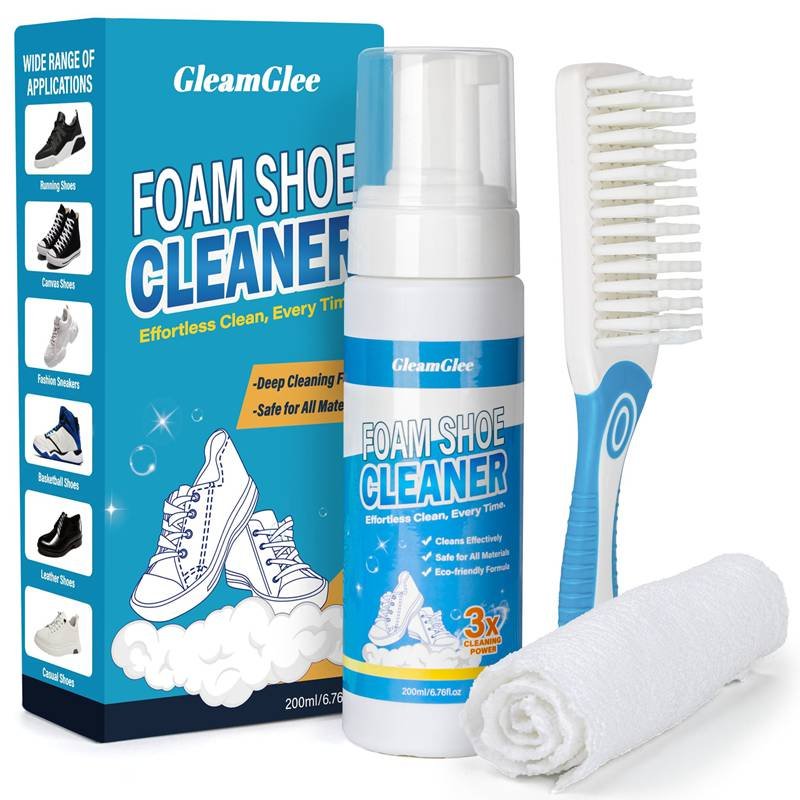
A shoe-specific foam is particularly convenient for users who clean several types of footwear, from running shoes and gym trainers to white casual sneakers and court shoes. A complete kit containing cleaner, a suitable brush, and microfiber towel makes it easier to perform the same controlled routine each time. The product does not replace judgment, but it gives the user a more predictable starting point than choosing a strong household cleaner simply because it happens to be nearby.

Which Training Shoe Materials Need Special Care?
Mesh, knit, suede, leather, PU, canvas, rubber, and exposed foam should not be cleaned with identical moisture or brushing pressure. Mixed-material shoes are best handled section by section, starting with dry debris removal and then adjusting the method to the surface. Delicate textile uppers need light agitation, suede requires additional care, and durable rubber sections can usually tolerate more mechanical cleaning.
How Do You Clean Mesh and Knit Shoes?
Mesh and knit are common in running and training shoes because they provide airflow, flexibility, and low weight, but their open structures can trap fine dust between fibers. A common mistake is to wet the upper before removing loose dirt. When dry soil becomes saturated too early, it can turn into a gray or brown slurry that spreads deeper into the textile and makes the surface appear dirtier before it becomes cleaner.
Allow thick mud to dry enough to brush away, then remove loose particles from the mesh, seams, and edges of synthetic overlays. Apply only a controlled amount of cleaner and work in short, light strokes. A microfiber towel should be used to lift loosened dirt rather than simply spreading dirty foam across the shoe. If one pass does not remove a stubborn mark, repeating a moderate treatment is generally preferable to increasing brush pressure until the fibers begin to fuzz or distort.
Is Shoe Cleaner Safe for Leather and PU?
Smooth leather, coated leather, PU, and synthetic leather often hold dirt closer to the surface than open mesh, which can make them easier to clean. Even so, aggressive brushing is rarely necessary. Grit should be removed before wet cleaning because fine particles can create dull scratches when rubbed repeatedly over a coated surface. A small amount of cleaner, light agitation, and microfiber wiping are usually sufficient for ordinary road grime and everyday marks.
Different finishes still require different levels of caution. Printed synthetic panels, metallic coatings, aging PU, perforated leather, and decorative surface treatments can behave differently even when they look similar from a distance. A hidden-area test is sensible on expensive footwear or unusual colors. A multi-material cleaner can reduce the need for several separate products, but the safest results still come from changing the technique according to the surface rather than treating every panel identically.
How Should Suede Be Cleaned?
Suede requires more restraint because its visible appearance depends on raised fibers rather than a smooth sealed surface. Too much moisture can temporarily darken the material, while uneven brushing can leave the nap pointing in several directions. Cleaning should begin with careful dry removal of dust and loose dirt using a suitable soft brush before any foam or moisture is introduced.
When a cleaner is suitable for suede, apply it sparingly and test it first on a less visible area. Work only on the dirty section, avoid soaking the material, and use light brushing rather than pressure. Allow the surface to dry naturally before judging the final color, because damp suede usually looks darker than dry suede. Once dry, gentle brushing can help restore the direction and texture of the nap without relying on heavy chemical treatment.
How Should Soles and Midsoles Be Cleaned?
Rubber outsoles and sidewalls usually tolerate more mechanical cleaning than textile uppers, and these areas also accumulate some of the heaviest contamination. Mud becomes packed into tread channels, white sidewalls show dark friction marks, and textured rubber can hold road grime that does not disappear with simple wiping. Removing the heaviest outsole debris first helps prevent dark soil from being transferred onto clean mesh, canvas, or leather later.
Exposed foam midsoles should be treated more carefully than durable outsole rubber because different footwear brands use different compounds and surface coatings. Some white midsoles respond well to moderate cleaning, while aggressive brushing can create an uneven finish on softer or coated foams. The most practical sequence is usually outsole first, rubber sidewall second, upper third, and small detail areas last, cleaning the brush or changing the towel surface before moving onto lighter materials.
| Shoe Material | Moisture Level | Brush Pressure | Main Risk |
|---|---|---|---|
| Mesh | Low to moderate | Light | Fiber distortion |
| Knit | Low | Very light | Fuzzing or stretching |
| Smooth leather | Low | Light | Finish dulling |
| PU or synthetic leather | Low | Light to moderate | Surface wear |
| Suede | Very controlled | Very light | Nap or color change |
| Canvas | Moderate | Light to moderate | Uneven wetting |
| Rubber outsole | Moderate | Moderate | Low surface risk |
| Foam midsole | Low to moderate | Light to moderate | Coating abrasion |

How Do You Clean Sports and Training Shoes Safely?
Safe cleaning follows a controlled sequence: identify the materials, remove loose dirt, separate laces or insoles when useful, patch-test unfamiliar surfaces, apply cleaner to small sections, wipe away loosened grime, and allow the shoes to dry naturally. The most reliable method changes pressure and moisture according to each part of the shoe instead of treating the complete pair with one aggressive routine.
What Should You Do Before Cleaning?
Preparation prevents many of the mistakes that users blame on the cleaner afterward. Begin by checking the shoe manufacturer’s care instructions, especially for waterproof membranes, premium running shoes, suede panels, specialty coatings, or footwear with complex decorative finishes. Remove stones from the outsole, brush away loose dust, and allow thick mud to dry before wet treatment. Turning loose soil into wet paste simply creates more contamination to remove later.
Laces can be removed when they block access to the tongue or eyelet area, while insoles should be taken out if they are damp or require separate cleaning. Patch testing is valuable on colored or delicate materials because footwear dyes and coatings vary substantially between manufacturers. Prepare a clean microfiber towel before starting and avoid using the same dirty towel section repeatedly, especially when moving from a dark outsole to a white upper.
How Do You Apply Foam Cleaner?
Foam cleaner works best in manageable sections rather than as a thick layer covering the whole shoe. Apply enough product to wet the dirty area without unnecessarily saturating the material, distribute the foam, and use controlled brush movements to lift the contamination. Once the foam becomes visibly dirty, remove it with microfiber instead of allowing it to dry back onto the surface.
A simple sequence is easy to repeat: remove loose dirt, apply foam, agitate gently, wipe away dirty product, inspect the surface, and repeat only where necessary. A ready-to-use system containing cleaner, brush, and microfiber towel makes routine maintenance convenient for running shoes, gym footwear, white sneakers, and school trainers. The benefit of the foam format is not that more product is better, but that the user can see where the cleaner is being placed.
How Hard Should You Scrub?
Brush pressure should depend on material strength rather than how annoying the stain looks. If the mesh visibly deforms under the brush, the user is already applying too much force. Knit requires even lighter treatment because repeated abrasion can roughen fibers. Smooth leather and PU usually need only modest mechanical action, while rubber sidewalls and outsole tread can tolerate more focused brushing when mud or dark transfer marks are trapped in the surface texture.
Inspect the area after each pass instead of scrubbing continuously. If the dirty foam becomes lighter while the material remains unchanged, the process is working. If the surface texture changes faster than the stain, stop and reconsider whether the remaining mark is actually removable dirt. White shoes often tempt users into over-cleaning because every faint mark remains visible, but the goal should be an even, well-maintained finish rather than chasing permanent wear with stronger force.
How Should Shoes Be Dried?
Cleaned sports shoes should dry gradually in a well-ventilated area. High heat may reduce drying time, but it can also place unnecessary stress on adhesives, coatings, cushioning foam, and shaped components. Unless the footwear manufacturer gives different instructions, natural air drying is the safer routine. Remove excess moisture with microfiber, keep the tongue open, and dry removable insoles or laces separately if they were taken out.
Actual drying time varies because thin mesh, padded textiles, leather, and heavily lined trainers retain very different amounts of moisture. Room humidity, ventilation, and the amount of cleaning product used also influence the result. This is one reason low-moisture foam maintenance is convenient for frequently worn footwear: when less liquid enters the shoe construction, less has to leave before the pair can comfortably return to regular use.
Which Cleaner Works Best for Common Sports Shoe Stains?
The best method depends on what caused the stain and where it sits. Mud should usually be allowed to dry before loose soil is removed, oily marks need localized treatment, grass residue can require repeated moderate cleaning, and rubber scuffs respond well to controlled agitation. Using the same force and amount of cleaner on every mark can waste product and create unnecessary wear.
How Do You Remove Mud and Grass?
Mud is easier to handle when the heavy material is removed dry. Thick wet mud tends to smear when wiped immediately, spreading contamination across a larger part of the upper. Allow substantial deposits to dry enough to crumble, remove loose soil from tread channels and seams, and then apply cleaner to the discoloration that remains. This sequence reduces the amount of mud the cleaning formula must suspend.
Grass residue behaves differently because plant material and pigment can remain after visible soil has been removed. Outdoor trainers, football boots, golf shoes, and school footwear may need repeated localized treatment rather than one heavy scrub. Apply cleaner, use moderate agitation, wipe away loosened contamination, and inspect before repeating. Two controlled passes are often easier on the material than one very aggressive pass, especially when the affected area includes fabric or synthetic overlays.
How Do You Clean White Trainers?
White trainers need uniform cleaning because small differences in brightness become easy to see. Cleaning only one obvious mark can produce a bright patch surrounded by a duller area, so it is often better to treat complete visual zones such as the whole toe box or sidewall. Begin with the dirty outsole and sidewall, clean the brush, and then move upward to textile, leather, or synthetic sections.
Frequent light maintenance is more practical than waiting for a white pair to become heavily stained. Road dust, surface oils, and ordinary grime are easier to manage before they become embedded into fabric texture and stitching. A foam cleaner intended for routine white-shoe care can help remove common contamination while limiting unnecessary soaking. However, long-term appearance also depends on material age, sunlight, storage, original shoe chemistry, and how often the pair is worn.
How Do You Remove Oil and Scuffs?
Oily marks should be isolated rather than spread. Apply a controlled amount of cleaner to the affected zone and allow the product to contact the greasy contamination before beginning light agitation. Use clean microfiber to remove loosened oil instead of dragging it across an adjacent area. If the mark remains, repeat the treatment rather than covering a much larger section with excessive product.
Dark marks on white rubber are often transferred material rather than true chemical staining. Moderate friction with foam and microfiber, or careful brushing, can improve many of these scuffs when the rubber surface remains intact. A deep abrasion is different. If the surface coating has been physically worn away, cleaning will not recreate it. Recognizing that difference helps users avoid scrubbing until a cosmetic problem becomes a damaged surface.
| Stain Type | First Step | Practical Method | Common Mistake |
|---|---|---|---|
| Mud | Dry and brush | Foam with controlled agitation | Wiping heavy wet mud |
| Grass residue | Remove loose soil | Local repeated treatment | Excessive pressure |
| Oil | Isolate the mark | Local foam treatment | Spreading contamination |
| Rubber scuff | Remove surface dust | Foam plus moderate friction | Treating abrasion as dirt |
| Road grime | Dry brush | General localized cleaning | Saturating the upper |
| White-shoe dullness | Clean by visual zone | Uniform light treatment | Brightening only one spot |
Can Regular Cleaning Help With Yellowing?
Regular cleaning can reduce the accumulation of dirt, oils, and residue that makes white shoes look dull or yellow, but not every form of yellowing is removable contamination. Discoloration may also come from oxidation, aging adhesives, UV exposure, storage conditions, material chemistry, or previous cleaning treatments. These processes should not be confused with ordinary surface soil.
Preventive maintenance is more realistic than promising permanent whiteness. Remove visible dirt after heavy wear, let shoes dry thoroughly before storage, avoid keeping damp footwear in closed spaces, and reduce unnecessary exposure to strong heat or prolonged direct sunlight when the shoes are not being worn. A cleaner formulated to support white-shoe appearance can be part of that routine, but the final result still depends on the underlying material and its age.
Is Waterless Foam Better for Sports Shoes?
Waterless foam is often a better choice for routine maintenance, local stains, and frequently worn sports shoes because it provides controlled application with less unnecessary moisture. It is not automatically superior for every cleaning problem. Very heavily soiled footwear may still need deeper cleaning, but foam is particularly useful when only selected areas require attention and the user wants a simple, repeatable process.
What Is a Waterless Shoe Cleaner?
A waterless shoe cleaner is a ready-to-use product designed to clean footwear without requiring a bucket, dilution step, or complete rinse. In foam form, the cleaner can be placed directly on a dirty toe box, midsole, heel, or side panel and then worked into the surface before being removed with microfiber. This level of control is especially useful for small stains and regular maintenance.
The practical advantage is not that water becomes unnecessary in every shoe-care situation. The advantage is that users do not need to wet the entire shoe when only a small section is dirty. For commuters, gym users, sneaker collectors, parents, and travelers, that convenience can make more frequent maintenance realistic. A straightforward apply, brush, wipe, and dry routine fits daily life better than preparing a full washing setup for every small mark.
Is Foam Good for Running and Gym Shoes?
Running and gym shoes are well suited to controlled foam cleaning because they often combine several materials and are worn frequently. A typical running shoe may include engineered mesh, synthetic overlays, exposed cushioning foam, printed elements, and rubber traction zones. Applying one heavy washing method to the complete shoe ignores these differences, while foam allows each zone to be treated according to its own needs.
After a normal indoor training session, the shoe may only have floor dust and dark midsole marks. After a road run, lower mesh and outsole edges may need more attention. A complete foam cleaning kit can handle these small maintenance jobs without making the entire shoe wet. For athletes who rotate several pairs, frequent short cleaning sessions can also prevent visible grime from becoming deeply embedded before the shoes receive attention.
Can Foam Replace Machine Washing?
Foam can replace machine washing for many routine cleaning situations, particularly when contamination is limited to the upper surface, sidewall, outsole edge, or several local marks. There is little benefit in exposing the entire shoe to water and mechanical agitation if only a small percentage of the surface is dirty. Targeted cleaning gives the user more control over where moisture and brushing are applied.
Machine washing should be considered only when the footwear manufacturer’s care instructions permit it. Athletic shoes may contain adhesives, coatings, shaped foams, molded support components, and specialty textiles that respond differently to prolonged water exposure and agitation. Even when the fabric itself looks washable, the complete construction may not be designed for repeated machine cycles. The cleaning decision should be based on the specific shoe rather than a universal rule.
How Does Foam Compare With Full Washing?
Waterless foam and full washing solve different levels of cleaning need. Foam concentrates effort on visible contamination, reduces setup, and usually creates a lower drying burden. Full washing exposes more of the shoe to water and may be useful when the entire pair is heavily soiled, provided the construction and care instructions allow that method. Neither approach should be treated as universally superior.
| Cleaning Factor | Waterless Foam | Full Wash |
|---|---|---|
| Water use | Very low | Moderate to high |
| Setup | Minimal | More preparation |
| Spot cleaning | Excellent | Less targeted |
| Material control | High | Lower if fully immersed |
| Drying burden | Usually lower | Usually higher |
| Routine maintenance | Very suitable | Often unnecessary |
| Severe overall soil | May need repeat treatment | Can be more thorough |
| User control | High | Depends on wash method |
For most weekly maintenance, foam fits everyday routines well because it removes the need to turn a few surface marks into a complete washing project. A cleaning method only works in practice if users are willing to repeat it. A convenient, moderate routine performed regularly can often maintain a pair better than occasional aggressive cleaning after months of neglect.

What Should Brands Look for in a Sports Shoe Cleaner Supplier?
A reliable sports shoe cleaner supplier should demonstrate consistent formulation, practical material testing, documented quality control, packaging capability, compliance support, scalable production, and realistic delivery planning. Strong suppliers can provide samples, explain how performance is checked, support private-label packaging, and maintain approved product characteristics when a small trial moves into larger recurring production.
Which Formula Should a Brand Choose?
The right commercial formula starts with the intended user. A white-sneaker product may prioritize easy foam application, visible soil removal, and appearance maintenance. A running-focused cleaner may place greater emphasis on controlled moisture and compatibility with mesh or synthetic panels. A travel product may need compact packaging, while a premium care kit may combine cleaner, brush, microfiber towel, and retail carton as one complete system.
Before sample development begins, the project should define the main shoe types, materials, stain categories, cleaner format, target retail positioning, and destination market. A mature multi-material foam can provide a practical starting point for projects aimed at sneakers, trainers, canvas shoes, leather panels, PU surfaces, rubber soles, and selected suede applications. From that base, fragrance, foam characteristics, bottle size, accessories, label design, and kit configuration can be adjusted to match the retail concept.
How Should Performance Be Tested?
Professional testing should go beyond one dramatic before-and-after photograph. A formula is more meaningful when it is evaluated across representative surfaces and contamination types. Common development checks can include cleaning performance on mud, oily grime, white-rubber scuffs, and textured textile dirt, followed by observation of color, texture, residue, and drying behavior on materials relevant to the intended product.
Commercial production also requires attention to consistency. A brand is not buying one attractive sample bottle; it is buying hundreds or thousands of units expected to perform similarly. That requires controlled raw materials, documented processing, packaging compatibility, filling checks, and retained production samples. Manufacturing systems with chemical formulation, packaging, label printing, and raw-material capabilities under coordinated management can reduce communication gaps when a project moves from laboratory sample to full-scale production.
Can Formulas and Packaging Be Customized?
Private-label shoe cleaner can be customized at different levels. Some projects only require an existing formula with new branding, while others need adjustments to fragrance, foam density, packaging size, dispensing format, kit components, or product positioning. More technical developments may involve performance changes or new formulation work based on a specific benchmark, target material, or market requirement.
For suitable projects, customized production can begin at relatively low quantities, with approximately 200 units available for some specifications. Straightforward packaging artwork may be prepared in about two days, while samples commonly require roughly 7–14 days depending on formulation and packaging complexity. Standard mass-production planning is around 20 days, with shorter schedules possible for qualified urgent projects. These timelines should always be confirmed against the final specification because special molds, unusual components, or additional testing can extend development.
What Should Retailers Verify Before Ordering?
Before a bulk order is approved, retailers should confirm the final formula, sample performance, packaging specification, labeling, compliance documentation, quality-control process, production timing, and supply continuity. International projects should discuss documentation before artwork is finalized because labeling requirements depend on the formulation and destination market. Depending on the product, relevant files may include SDS information and market-specific chemical or packaging documentation.
Production scale also matters. A factory system capable of supporting more than 12 million finished units annually provides useful room for growing brands, recurring orders, and seasonal promotion. However, capacity alone is not enough. The stronger question is whether the supplier can reproduce the approved sample, maintain packaging quality, complete inspection, support export logistics, and keep product specifications consistent when an order grows significantly beyond the original trial quantity.
Conclusion
A good shoe cleaner for sportswear and training shoes is not simply the strongest formula available. It is a cleaning system that matches the way athletic footwear is actually built and worn. Mesh, knit, leather, PU, rubber, canvas, foam, and suede respond differently to moisture and friction, which means the safest routine combines material identification, dry dirt removal, controlled product application, appropriate brush pressure, microfiber wiping, and natural drying.
For everyday users, waterless foam offers an especially practical balance when the goal is regular maintenance rather than complete immersion. It allows runners, gym users, parents, commuters, and sneaker collectors to treat mud, road grime, oil marks, sidewall scuffs, and white-shoe dullness without automatically soaking the entire shoe. Used with a suitable brush and microfiber towel, it turns shoe care into a manageable routine that can be repeated whenever footwear begins to look tired.
For brands and retailers, the same principle of control applies at a larger scale. A commercially successful cleaner depends on repeatable performance, suitable packaging, realistic material compatibility, clear instructions, consistent production, and a supplier capable of supporting both trial orders and future growth. When formula, application tools, packaging, quality control, and supply planning work together, shoe cleaner becomes more than a bottle of foam; it becomes a practical care system customers can understand and use with confidence.

Frequently Asked Questions
What is the best type of cleaner for training shoes?
The best type of cleaner depends on the shoe materials and the level of contamination, but a controlled, ready-to-use foam is a practical choice for routine maintenance. It can be applied only where needed, works well with a brush and microfiber towel, and avoids unnecessarily soaking the entire shoe. For running, gym, court, and casual training shoes, material compatibility and controlled cleaning usually matter more than simply choosing the strongest formula available.
Can I use shoe cleaner on mesh running shoes?
Yes, a suitable multi-material shoe cleaner can be used on many mesh running shoes, but the technique should remain gentle. Remove dry dust and mud first, apply a small amount of cleaner, use light brush pressure, and wipe away loosened dirt with microfiber. Because dyes, coatings, and engineered fabrics vary among shoe manufacturers, testing an inconspicuous area is sensible, particularly on expensive performance footwear or unusually colored mesh.
Is waterless foam safe for white sneakers?
Waterless foam is well suited to many white sneakers because it allows targeted cleaning with less unnecessary moisture. The user should still work by material zone, cleaning rubber, mesh, leather, canvas, or synthetic sections according to their own surface characteristics. White shoes are visually unforgiving, so it is better to clean complete areas such as the whole toe box or sidewall rather than creating one unusually bright patch around a single stain.
Can I clean training shoes without putting them in a washing machine?
Yes. Many everyday stains can be handled with dry debris removal, localized foam cleaning, gentle brushing, microfiber wiping, and natural drying. This method is particularly useful when only part of the shoe is dirty. Machine washing should be used only when the footwear manufacturer’s care instructions permit it, because athletic shoes may include bonded components, specialty foams, coatings, and shaped structures that do not respond well to repeated immersion and agitation.
How often should sports shoes be cleaned?
There is no fixed schedule because cleaning frequency depends on how often the shoes are worn, the environment, and the type of contamination. Light road dust or gym-floor marks can be removed whenever they become visible, while muddy outdoor footwear is best cleaned soon after the heavy soil can be brushed away safely. Frequent light maintenance usually requires less scrubbing than waiting until dirt, oils, and stains have accumulated deeply into the shoe surface.
Can shoe cleaner remove yellowing from white shoes?
A shoe cleaner can reduce yellow-looking dirt, oily residue, and grime that make white footwear appear dull, but not every form of yellowing is removable. Oxidation, UV exposure, aging adhesives, material chemistry, storage conditions, and previous treatments can all contribute to permanent color change. Regular cleaning and sensible storage may help maintain appearance, but users should distinguish surface contamination from chemical or material aging before expecting a cleaner to restore the original color completely.
What should a private-label shoe cleaner manufacturer be able to provide?
A capable manufacturer should provide product samples, clear formula specifications, practical performance testing, packaging options, quality-control processes, and documentation appropriate to the intended sales market. Retailers should also verify production capacity, sample-to-batch consistency, customization options, lead times, labeling support, and export logistics. The most reliable supplier relationship is built around repeatable evidence and clear specifications rather than relying only on attractive packaging or a single successful demonstration sample.
Share:
Table of Contents
Here, creating your adhesives glue & removal cleaner collection is no longer a barrier—it’s a collaborative journey where GleamGlee helps brands and businesses transform their vision into durable, certified, and market-ready solutions.
Partner with GleamGlee
Join hundreds of global partners who trust GleamGlee for adhesives and cleaners that combine innovation, compliance, and speed. Our vertically integrated system—from R&D to warehouse—guarantees consistent performance and reliable delivery.
Whether you’re sourcing FBA-ready stock or developing your own formula, our team provides unmatched technical support and responsive service.