Skip to content
No-Sew Fabric Glue Alternatives for DIY Projects
Compare Fabric Glue, Hot Glue, Fusible Tape, Fabric Tape, Iron-On Patches, and Other No-Sew Repair Options
Not every fabric fix needs sewing. Sometimes fabric glue is the cleanest choice. Sometimes fusible tape works better for a straight hem. Hot glue can help with quick crafts, while fabric tape is useful for temporary positioning.
The real question is not “what can replace fabric glue?”
It is “which no-sew option will hold well, look clean, and still feel right on fabric?”
If you are fixing jeans, attaching a patch, repairing a small tear, hemming curtains, adding trim, or finishing a DIY craft, this guide helps you choose the right no-sew solution before you start.
What You’ll Learn
- Which no-sew option works best for each fabric project
- When hot glue, fusible tape, or fabric tape may fall short
- Why flexible fabric glue is often better for wearable repairs
- How to choose a cleaner, washable, heat-free fabric fix

Recommended for Everyday Fabric Repairs
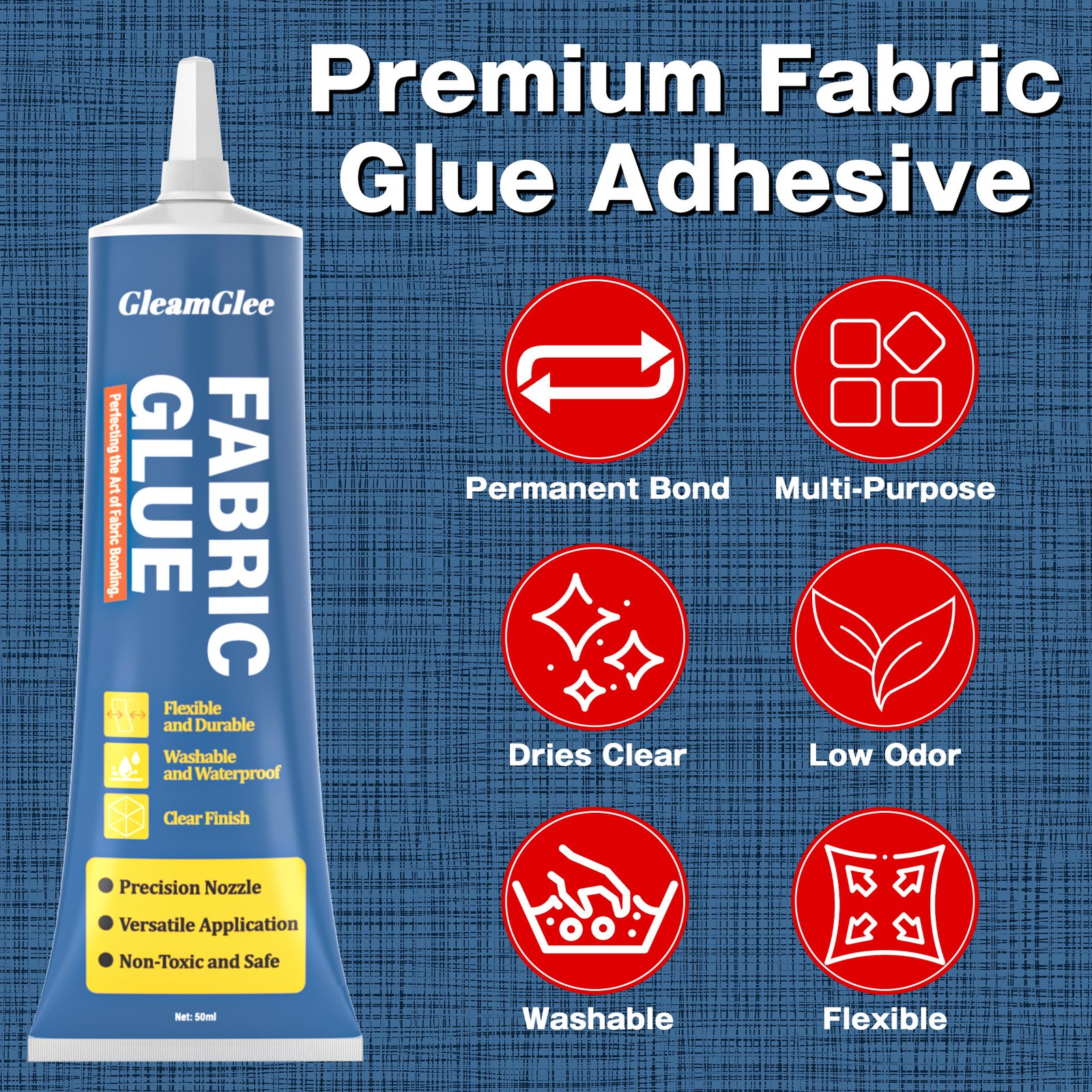
GleamGlee Fabric Glue is a practical choice for DIY users who want a clear-drying, flexible, washable fabric adhesive without sewing, ironing, or bulky glue lines.
What People Really Mean by “Fabric Glue Alternatives”
Most DIY users are not trying to avoid fabric glue. They are trying to avoid the wrong fix.
When people search for fabric glue alternatives, they are usually dealing with a real project that needs a fast, clean, and reliable answer.
They may have a pair of jeans with a tear.
A curtain edge that came loose.
A patch that needs attaching.
A school craft that needs finishing.
A costume that needs last-minute fixing.
A ribbon, lace, felt piece, or badge that will not stay in place.
The real goal is simple:
Fix the fabric without sewing, without making a mess, and without ruining the look or feel of the material.

That is why there is no single perfect answer for every project. The best no-sew option depends on four things:
✅Will the fabric be worn, washed, folded, or stretched?
✅Does the repair need to stay soft and flexible?
✅Will heat damage the fabric?
✅Is the project temporary, decorative, or meant to last?
A hot glue gun may be fine for a party prop.
Fusible tape may be excellent for a straight curtain hem.
Fabric tape may work for a temporary hold.
Sewing is still best for high-stress seams.
But for many everyday DIY fabric projects, a flexible fabric glue gives the best balance between ease, appearance, comfort, and durability.
Which No-Sew Option Should You Use?
Choose by project type, not by habit.
If you already know what you need to fix, use this quick guide first.
| DIY Project | Best No-Sew Option | Why It Works |
|---|---|---|
| Small clothing tear | Flexible fabric glue | Cleaner than hot glue and easier than stitching |
| Denim patch | Fabric glue + patch | Helps secure uneven edges and thick fabric |
| Pants hem | Fusible tape or fabric glue | Tape works well for straight hems; glue works without heat |
| Curtain edge | Fusible tape or fabric glue | Good for long fabric edges and home textile repairs |
| Ribbon, lace, or trim | Precision fabric glue | Cleaner control on small decorative details |
| Felt craft | Fabric glue or hot glue | Fabric glue gives a cleaner finish; hot glue works for quick crafts |
| Costume decoration | Hot glue or fabric glue | Hot glue is fast; fabric glue is better for wearable areas |
| Temporary fabric hold | Fabric tape | Useful for quick positioning or short-term use |
| High-stress seam | Sewing or reinforced repair | Glue alone may not handle constant pulling |
| Washable clothing repair | Washable fabric glue after full cure | Better suited for garments and fabric items that may be cleaned |
If the project needs to stay soft, look clean, avoid heat, and handle normal use, fabric glue is usually one of the best no-sew choices.
No-Sew Fabric Glue Alternatives Compared
Every option has a place. The trick is knowing where it belongs.
No-sew fabric repair is not one method. It is a group of options, and each one has a different strength. Some are fast but temporary. Some are clean but require heat. Some are strong but stiff. Some work for crafts but feel uncomfortable on clothing. Use this comparison before choosing.
| No-Sew Option | Best For | Washable? | Flexible? | Needs Heat? | Main Weakness |
|---|---|---|---|---|---|
| Fabric Glue | Clothes repairs, patches, crafts, trims | Usually yes after full cure | Good | No | Needs curing time |
| Fusible Bonding Tape | Hems, curtains, straight edges | Often yes | Medium | Yes | Not ideal for curves or heat-sensitive fabric |
| Hot Glue | Props, costumes, decorations | Limited | Low | No | Can dry bulky, stiff, and raised |
| Fabric Tape | Temporary hold, styling, layout | Usually limited | Medium | No | Not ideal for long-term washing |
| Iron-On Patches | Visible patch repairs, denim holes | Often yes | Medium | Yes | Not invisible; edges may lift |
| Hook-and-Loop / Velcro | Removable fabric joins | Depends | Medium | No | Visible and adds thickness |
| Sewing | High-stress seams, heavy use | Yes | Excellent | No | Requires tools, time, and skill |
For everyday home repairs, the most useful choice is often the one that gives you a clean finish without adding too much stiffness. That is why fabric glue remains a strong option for clothing repairs, patch work, trims, curtains, and DIY crafts.
Best No-Sew Option by DIY Project Type
The fabric project should decide the method.
1. Small Clothing Repairs
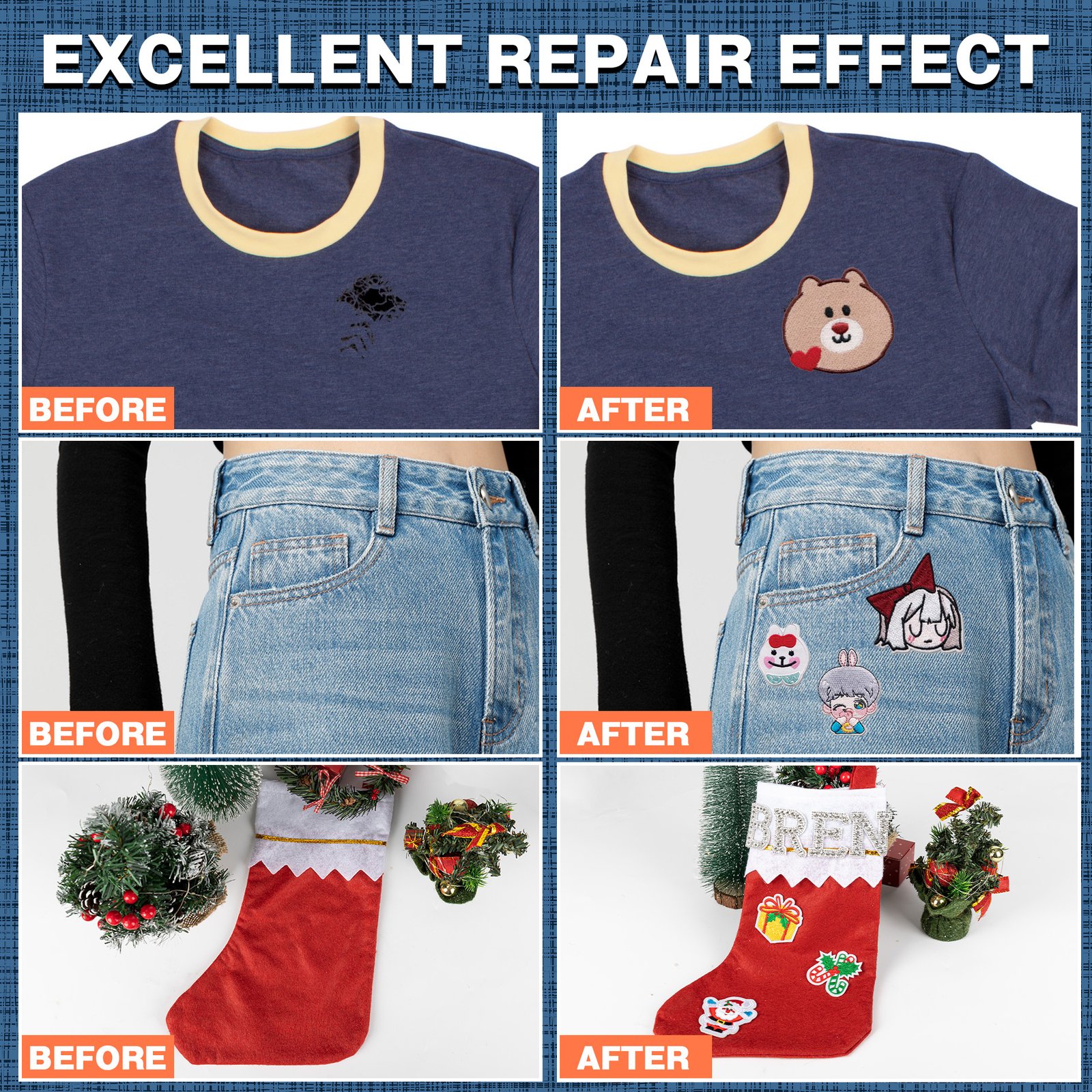
For small tears, loose edges, light fabric damage, or minor everyday clothing fixes, flexible fabric glue is often the easiest solution.
It avoids visible stitches and does not require a sewing machine. When applied in a thin, even layer, it can create a cleaner finish than hot glue and a more permanent result than temporary fabric tape.
Best choice: Flexible washable fabric glue
Good for:
✅Small tears
✅Loose fabric edges
✅Light clothing repairs
✅Minor patch backing
✅Quick no-sew fixes at home
Why fabric glue works well here:
Clothing moves with the body. It bends, folds, and rubs against skin. A fabric adhesive should stay flexible after drying instead of forming a hard lump.
2. Jeans and Denim Patches
Denim is thicker than many everyday fabrics, so the repair needs strong contact and good edge control. Fabric tape may not grip well enough for irregular holes, and hot glue can create a raised, uncomfortable patch.
A fabric patch combined with a quality fabric glue is often a smart no-sew option for denim repairs.
Best choice: Fabric glue + patch
Good for:
✅Jeans holes
✅Denim jacket patches
✅Reinforcing worn areas
✅Decorative patches
✅Badge-style fabric repairs
Why fabric glue works well here:
It can spread across the patch area, bond around uneven edges, and help the patch sit flatter against the denim.
3. Pants and Curtain Hems
For long, straight hems, fusible bonding tape is one of the most popular no-sew options. It can create a clean line when the fabric is flat and safe to iron.
But fabric glue is still useful when:
- You do not want to use heat
- The fabric is already hanging in place
- The hem area is small
- The fabric is awkward to iron
- You need more control around corners
Best choice: Fusible tape for straight hems; fabric glue for heat-free fixes
Good for:
✅Pants hems
✅Curtain edges
✅Tablecloth edges
✅Fabric panels
✅Small hem repairs
Practical tip:
Use fusible tape when the edge is long, straight, and easy to iron. Use fabric glue when the repair is smaller, curved, or heat-sensitive.
4. Ribbons, Lace, Trims, and Sequins
Small decorative details need control. A thick bead of hot glue can leave bumps, hard spots, or visible glue lines. Fabric tape may not hold well around narrow edges.
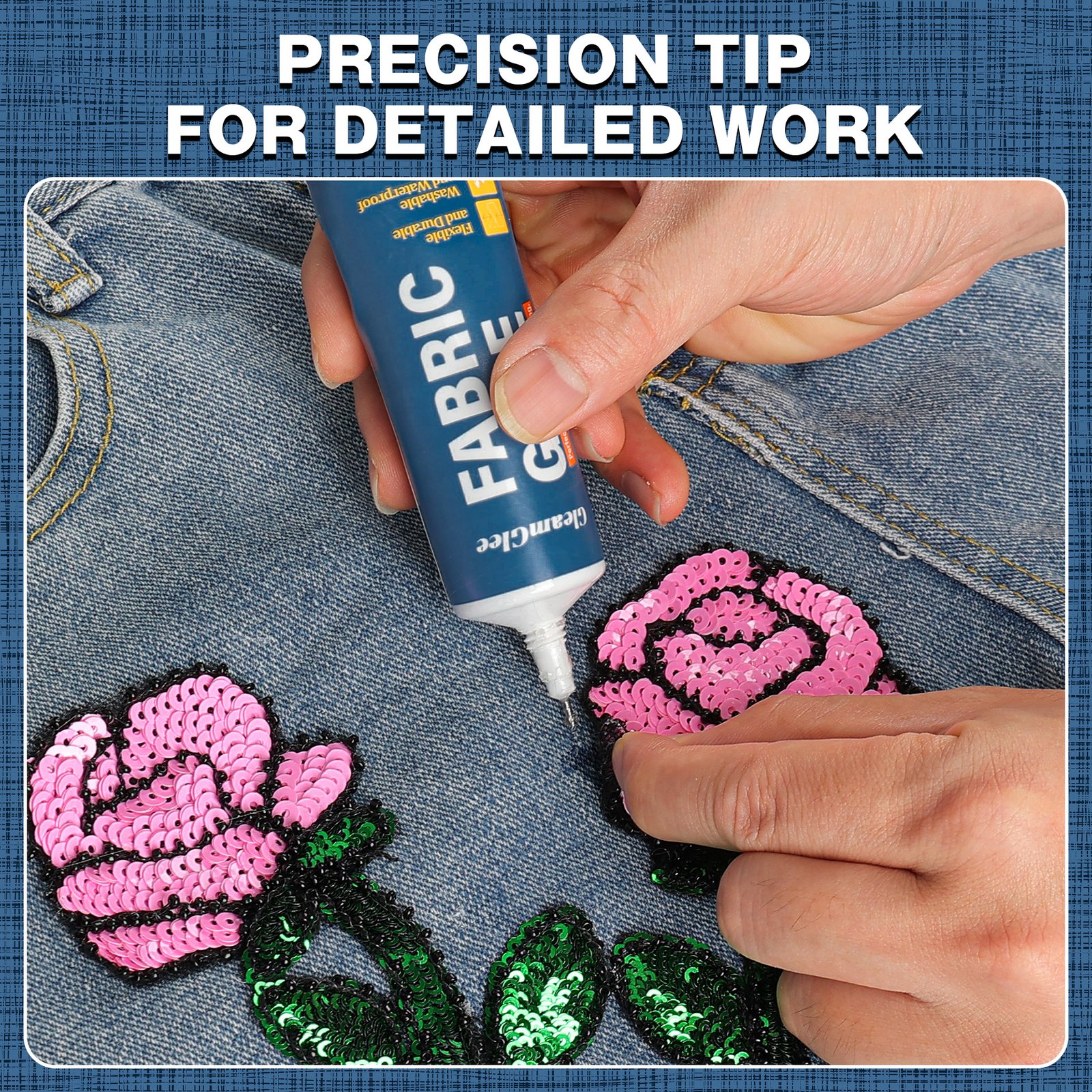
A precision fabric glue is often a better choice for trims and decorations because it lets you place adhesive exactly where it is needed.
Best choice: Precision fabric glue
Good for:
✅Ribbon
✅Lace
✅Decorative trim
✅Felt shapes
✅Sequins
✅Badges
✅Fabric embellishments
Why fabric glue works well here:
A clear-drying adhesive with a fine tip can help keep decorative details looking clean without adding bulk.
5. Costumes and Party Crafts
Hot glue is popular for costumes because it grips quickly and works well on props, foam, felt, and decorative pieces. For non-washable or short-term projects, it can be useful.
But if the costume will be worn for hours, touched often, or placed near skin, hot glue may feel too stiff.
Best choice: Hot glue for props; fabric glue for wearable fabric areas
Good for hot glue:
✅Foam props
✅Party decorations
✅Costume accessories
✅Temporary stage pieces
Good for fabric glue:
✅Fabric patches
✅Trim on wearable areas
✅Soft costume repairs
✅Clothing-based costumes
6. Kids’ Crafts and School Projects
For simple fabric crafts, both fabric glue and fabric tape can be useful. Fabric glue usually gives a more finished result, while fabric tape is quick and clean for temporary placement.
Adult supervision is still important, especially when the project involves scissors, small parts, heat tools, or delicate fabric.
Best choice: Fabric glue or fabric tape
Good for:
✅Felt crafts
✅Fabric shapes
✅School projects
✅Handmade cards
✅Badges
✅Decorative fabric pieces
Practical tip:
For projects that need to last longer, use fabric glue. For quick layout or temporary positioning, fabric tape may be enough.
7. High-Stress Fabric Areas
Some repairs should not rely on glue alone.
Areas like waistbands, crotch seams, underarms, backpack straps, and heavy-duty handles face repeated pulling. These areas usually need sewing, reinforcement, or both.
Best choice: Sewing or reinforced repair
Examples:
✅Backpack straps
✅Pants crotch seams
✅Waistbands
✅Underarm seams
✅Load-bearing fabric handles
✅Heavy upholstery tension points
Honest repair advice:
Fabric glue is excellent for many small to medium no-sew projects, but stitching is still the better choice for structural stress points.
Popular Fabric Glue Alternatives: Where They Work and Where They Don’t
A good no-sew repair is not just about sticking fabric together. It is about how the bond behaves afterward.
Fusible Bonding Tape
Fusible bonding tape is one of the most common fabric glue alternatives. It is a thin adhesive web that bonds fabric layers together when heat is applied with an iron.
It works best when the fabric is flat, the edge is straight, and the material can safely handle heat.
Best for:
- Pants hems
- Curtain hems
- Tablecloth edges
- Straight fabric seams
- Quick flat repairs
Advantages:
- Creates a clean edge
- No drying time like liquid glue
- Good for long straight hems
- Useful for quick no-sew adjustments
Limitations:
- Requires an iron
- Not ideal for heat-sensitive fabric
- Less useful on curves or irregular shapes
- Harder to reposition after heat bonding
- Not always ideal for thick patches or detailed craft work
Best use case:
Use fusible tape when the project is straight, flat, and safe to iron.
Hot Glue
Hot glue is fast, affordable, and easy to find. It works well on many craft materials, especially props, felt, foam, cardboard, and decorations.
But fabric is different from hard craft surfaces. Clothing bends, folds, stretches, and may be washed. Hot glue often creates a hard glue line that can feel bulky or uncomfortable.
Best for:
- Party decorations
- Costume props
- Felt crafts
- Foam accessories
- Non-washable fabric crafts
Advantages:
- Very fast grip
- Easy to apply
- Good for quick crafting
- Useful for rigid or decorative pieces
Limitations:
- Can dry stiff
- Can leave raised glue lines
- May show through thinner fabrics
- Not ideal for washable clothing repairs
- Can feel uncomfortable on wearable fabric
Best use case:
Use hot glue for quick decorations and props, not for soft clothing areas that need comfort and flexibility.
Fabric Tape
Fabric tape is clean, quick, and easy. It is often used for temporary holds, wardrobe styling, layout positioning, and last-minute adjustments.
It is useful when speed matters more than durability.
Best for:
- Temporary hems
- Styling adjustments
- Photo shoots
- Layout positioning
- Quick fabric placement
Advantages:
- No drying time
- No heat required
- Very clean application
- Easy for temporary use
Limitations:
- Usually not a permanent repair
- May lose hold after washing
- May not grip rough or thick fabrics well
- Not ideal for long-term patch repairs
Best use case:
Use fabric tape for temporary fabric positioning, not for repairs that need to survive repeated use or washing.
Iron-On Patches
Iron-on patches are useful when the repair can be visible. They are popular for denim, jackets, bags, uniforms, and decorative clothing upgrades.
They work best when the fabric can tolerate heat and the patch shape covers the damaged area well.
Best for:
- Denim holes
- Jackets
- Bags
- Visible patch repairs
- Decorative customization
Advantages:
- Covers damaged areas quickly
- Good for visible repairs
- Useful on denim and sturdy fabrics
- Can add style while repairing
Limitations:
- Requires heat
- Not suitable for all fabrics
- Not invisible
- Patch edges may lift over time
- Less flexible for odd shapes or delicate fabrics
Best use case:
Use iron-on patches when you want the patch to be visible and the fabric can safely be ironed.
Hook-and-Loop / Velcro
Hook-and-loop strips are not really a fabric repair method. They are more like a fabric fastener. They work well when two fabric parts need to open and close repeatedly.
Best for:
- Closures
- Costume parts
- Fabric organizers
- Storage bags
- Removable panels
Advantages:
- Reusable
- Easy to open and close
- Good for detachable fabric parts
- Useful for functional DIY projects
Limitations:
- Visible
- Adds thickness
- Not suitable for invisible repair
- Can collect lint or threads
- May change the look of the project
Best use case:
Use hook-and-loop strips when the project needs repeated opening and closing, not when the goal is a clean fabric repair.
Sewing
Sewing is still the strongest and most reliable method for high-stress fabric construction. It handles repeated pulling better than most adhesives.
But sewing is not always convenient for small household repairs.
Best for:
- Structural seams
- Waistbands
- Crotch seams
- Heavy bags
- Load-bearing fabric points
- Long-term garment construction
Advantages:
- Strongest for stress points
- Washable and durable
- Best for construction seams
- Flexible when stitched properly
Limitations:
- Requires skill
- Takes more time
- Needs tools
- May leave visible stitches
- Not ideal for quick no-sew repairs
Best use case:
Use sewing when the fabric area carries weight, tension, or repeated pulling.
Why Hot Glue Is Not Always a Good Fabric Glue Alternative
Hot glue is fast. Fabric is flexible. That difference matters.
Hot glue can be helpful for many craft projects, but it is often overused on fabric. The problem is not that hot glue cannot stick to fabric. The problem is how it feels and behaves after it dries.
Fabric bends.
Fabric folds.
Fabric rubs against skin.
Fabric may go through the wash.
Fabric may need to stay soft.
Hot glue often dries as a raised, hard line. On a costume prop, that may be fine. On a shirt, pair of jeans, curtain edge, or soft craft piece, it can feel bulky and look unfinished.
Hot glue may not be ideal when
- The repair is on wearable clothing
- The fabric needs to stay soft
- The item may be washed
- The glue line may show through
- The repair area touches skin
- The fabric is thin or delicate
- The project needs a clean, flat finish
Better uses for hot glue
- Foam costume props
- Party decorations
- Temporary crafts
- Felt ornaments
- Non-washable decorative pieces
- Rigid craft surfaces
For fabric that needs to move, fold, and stay comfortable, a flexible fabric adhesive is usually a cleaner choice.
Fabric Glue vs Fusible Tape: Which One Is Better?
Both can replace sewing, but they solve different problems.
Fabric glue and fusible tape are two of the most useful no-sew fabric repair options. Neither one is better for everything. Fusible tape is excellent for straight hems. Fabric glue is better for small repairs, curves, patches, trims, and heat-free projects.
| Question | Fabric Glue | Fusible Tape |
|---|---|---|
| Needs heat? | No | Yes |
| Good for straight hems? | Good | Excellent |
| Good for curves? | Better | Limited |
| Good for patches? | Good | Medium |
| Good for trims and ribbons? | Good | Limited |
| Good for delicate fabrics? | Test first | Heat may be risky |
| Repositioning time | Usually more forgiving | Less forgiving after heat |
| Best advantage | Flexible and heat-free | Clean straight edges |
Choose fusible tape when
- The fabric edge is straight
- You need a quick hem
- The fabric can safely handle an iron
- The repair area is flat
- You want no liquid adhesive
Choose fabric glue when
- You do not want to use heat
- The repair is curved or irregular
- You are attaching a patch
- You are working with trim, lace, ribbon, or felt
- You need more placement control
- The project may need flexibility after drying
For many home DIY repairs, fabric glue is the more adaptable option. It does not require an iron, works better around small details, and is easier to use on uneven areas.
When Fabric Glue Is Still the Smarter No-Sew Choice
The best alternative is not always the fastest one. It is the one that still works after the project is used.
Fabric glue becomes the smarter choice when a project needs more than a quick temporary hold.
A good fabric adhesive should help the repair look clean, stay flexible, avoid heat, and handle normal use after curing.
Fabric glue is often the better choice when
The fabric will bend, fold, or move
The repair should not look bulky
The project does not need visible stitches
Heat may damage the fabric
The shape is curved, small, or irregular
You are attaching patches, trims, lace, ribbon, felt, or badges
The finished item may need washing after full cure
A cleaner finish matters more than instant grip
Fabric glue is especially useful for
✅Clothes repair
✅Jeans patches
✅Fabric crafts
✅Curtain edge repairs
✅Decorative trims
✅Felt projects
✅Badges and appliqués
✅Light upholstery details
✅Small home textile fixes
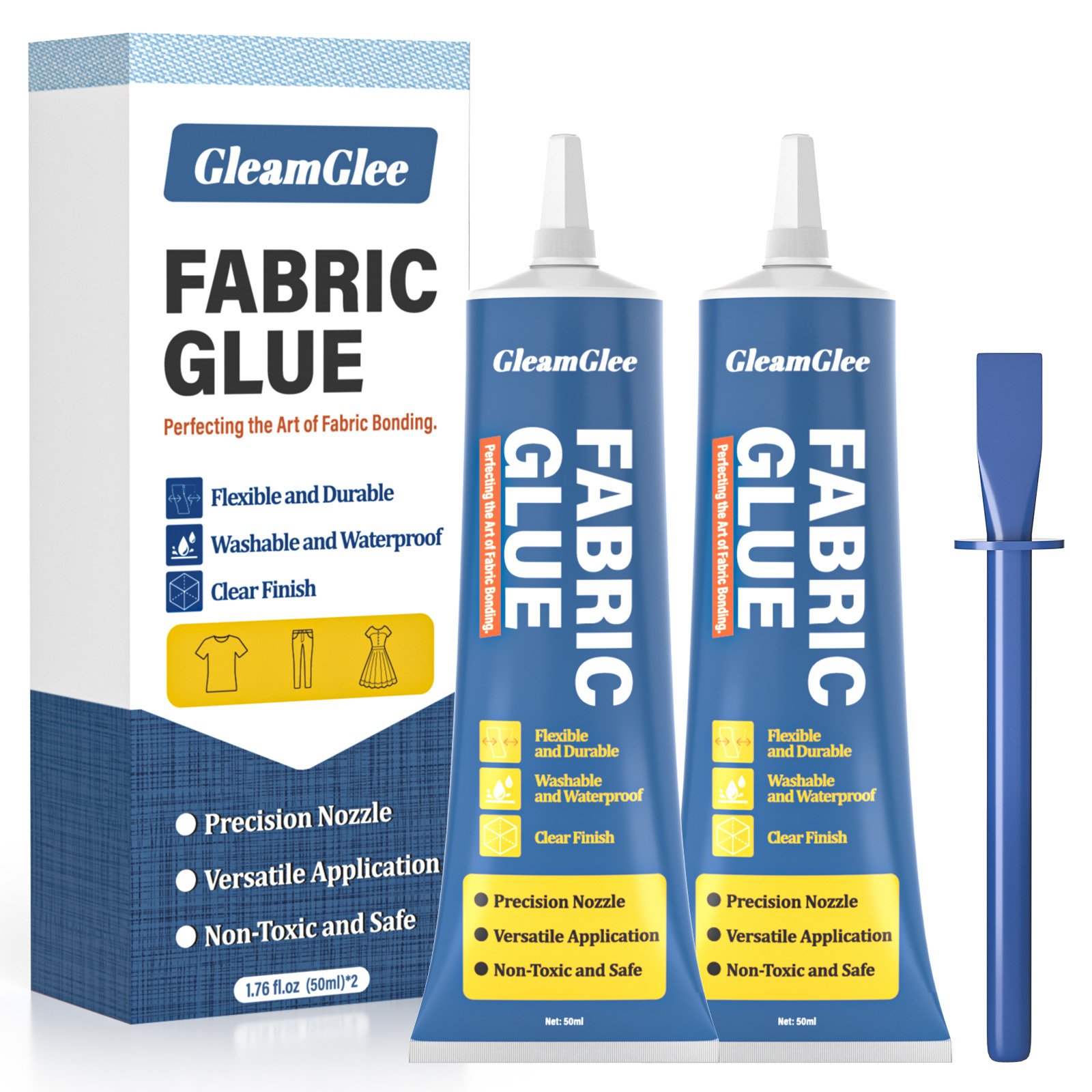
Why GleamGlee Fabric Glue Makes Sense for Everyday DIY Fabric Projects
A clear, flexible, washable fabric adhesive for people who want the repair done without sewing, ironing, or bulky glue lines.
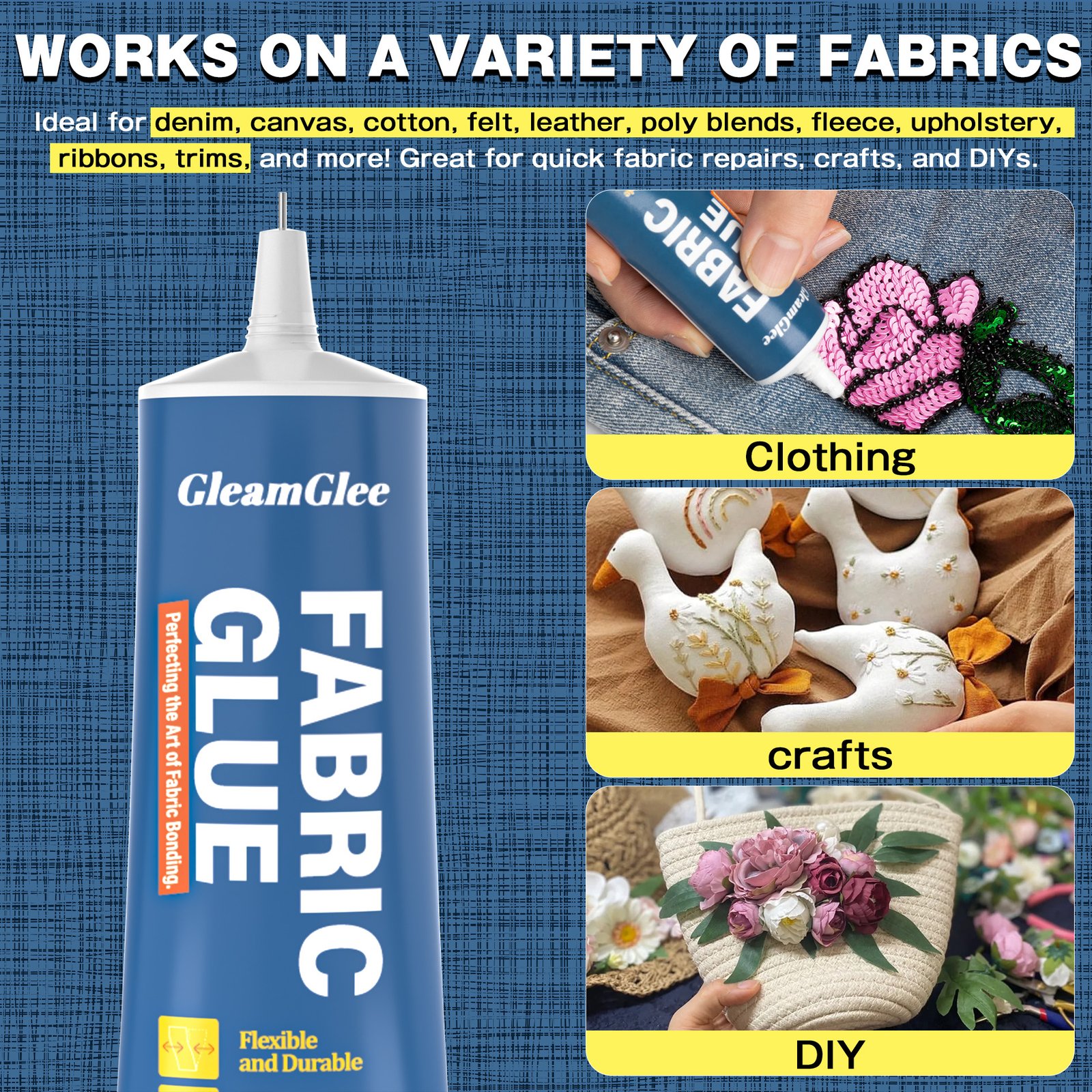
GleamGlee Fabric Glue is made for real-world fabric fixes: clothes repairs, patches, denim, leather, upholstery, textiles, felt, badges, and DIY craft work.
It is a practical no-sew option when sewing feels too slow, hot glue feels too bulky, and fabric tape feels too temporary.
The value is not only in strength. The bigger advantage is balance:
- Easy application
- Clear-drying finish
- Flexible feel after drying
- Washable performance after full cure
- No sewing machine required
- No iron required
- Precision control for small repair areas
- Convenient online purchase through Amazon
For a consumer comparing no-sew fabric options, that combination matters. It lowers the risk of choosing the wrong repair method and makes the project easier to finish at home.
Clear-Drying Finish
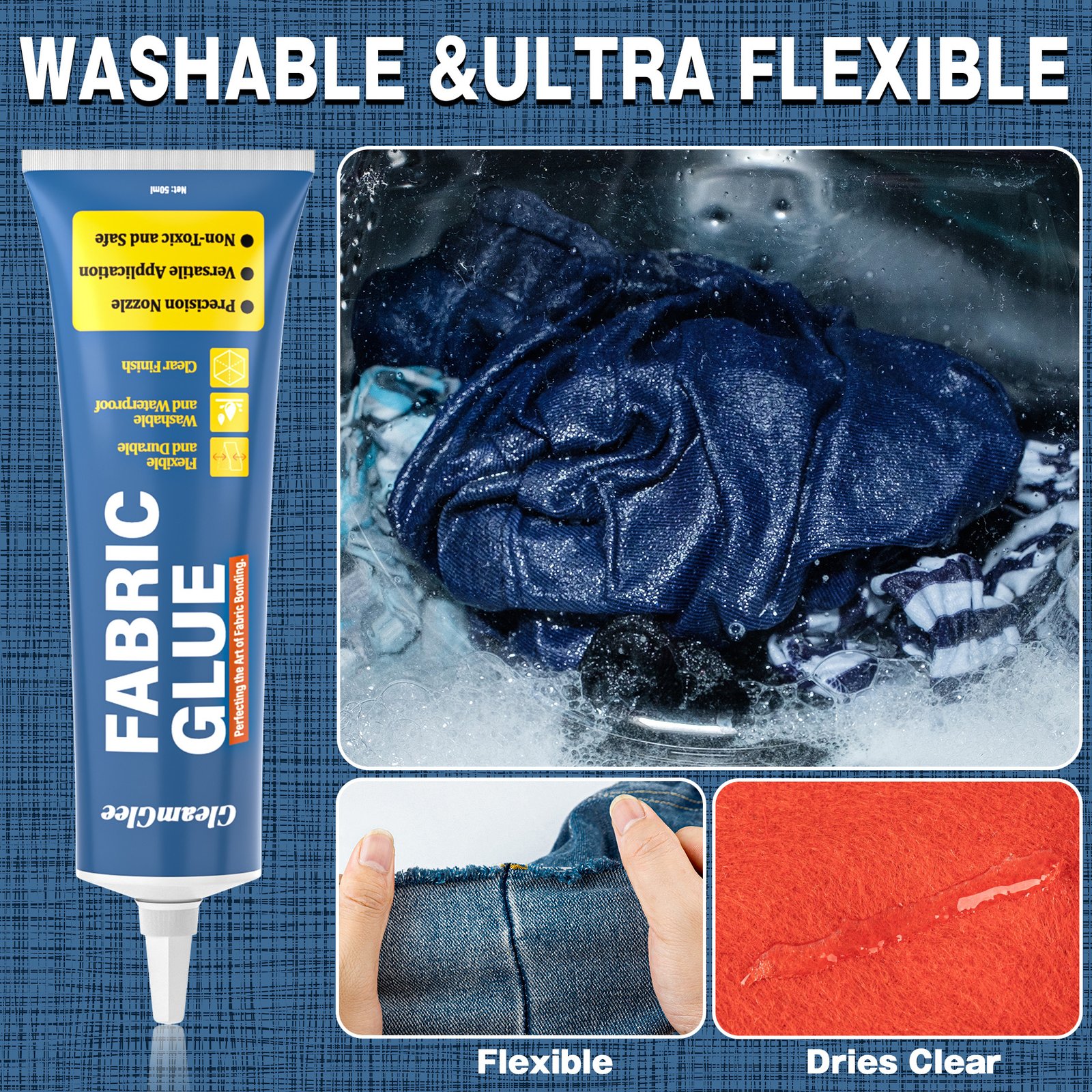
Visible glue marks can make a repair look cheap. GleamGlee Fabric Glue is designed to dry clear, which helps small repairs, patches, trims, and craft details look cleaner after curing.
This matters for:
- Clothing repairs
- Decorative trims
- Patches
- Badges
- Ribbons
- Felt crafts
- Curtain edges
Flexible After Drying
Fabric is not rigid. A repair that dries too hard may crack, pull, or feel uncomfortable.
GleamGlee Fabric Glue is positioned for flexible fabric bonding, making it more suitable for soft materials than many stiff craft adhesives or hot glue lines.
This matters for:
- Jeans
- Shirts
- Curtains
- Fabric bags
- Home textiles
- DIY fabric crafts
Washable After Full Cure
For clothing and home textiles, wash resistance matters. A fabric repair should not fall apart the first time the item is cleaned.
GleamGlee is designed for washable fabric use after full curing. For best results, allow the adhesive to cure fully before laundering.
This matters for:
- Clothing
- Denim patches
- Washable fabric accessories
- Home textile repairs
- Everyday fabric items
No Sewing, No Ironing Required
Not everyone owns a sewing machine. Not every fabric is safe to iron. Not every small repair is worth a full sewing setup.
GleamGlee Fabric Glue keeps the process simple:
- Apply
- Press
- Hold
- Let cure
- Use again
This makes it especially useful for quick home repairs, beginner DIY projects, and small fixes that do not need professional tailoring.
Precision Application
Small repairs need control. A thick glue line can make fabric stiff, messy, or uneven.
GleamGlee’s precision-style application helps users place adhesive where it is needed, especially around:
- Patch edges
- Small tears
- Ribbons
- Lace
- Felt pieces
- Badges
- Decorative trims
- Narrow fabric edges
Strong Consumer Confidence
A no-sew repair product needs trust before someone uses it on clothing or fabric they care about.
GleamGlee benefits from strong social proof on Amazon, including high-star customer feedback and a large volume of verified purchase activity. For many online shoppers, that matters because it reduces the fear of wasting time on a glue that does not work.
Customers also value:
- Amazon availability
- Fast delivery through Prime/FBA-style fulfillment
- Clear product positioning
- Easy-to-understand packaging
- Practical use instructions
- Responsive support for refunds, replacements, and after-sales help
That makes the product feel less risky for first-time fabric glue users.
Product Snapshot
| Product | GleamGlee Fabric Glue |
|---|---|
| Main Use | No-sew fabric repairs and DIY projects |
| Finish | Clear-drying |
| Bond Feel | Flexible after curing |
| Best For | Clothes, patches, denim, curtains, ribbons, felt, badges, crafts |
| Application | Precision tip |
| Heat Required | No |
| Sewing Required | No |
| Suggested Cure Time | About 24 hours before washing |
| Shopping Channel | Available on Amazon |
| Best User | DIY users, home repair users, craft users, clothing repair users |
What Makes a No-Sew Fabric Glue Worth Trusting?
Good fabric glue is not just about “strong hold.”
Fabric adhesive has a harder job than many people realize. Fabric is soft, textured, flexible, washable, and often worn close to the body. A reliable fabric glue should not only stick. It should behave well after drying.
1. It Should Dry Cleanly
A visible glue mark can ruin the look of a repair. Clear-drying fabric glue helps the result look more natural, especially around patches, trims, and small tears.
2. It Should Handle Real Use
Fabric repairs are touched, folded, pulled, worn, and sometimes washed. The adhesive should be chosen for the way the fabric will actually be used, not just how quickly it sticks on the table.
3. It Should Have Proof Behind It
A good product should be supported by more than claims. Reviews, repeat purchases, influencer demonstrations, clear instructions, and helpful customer service all reduce purchase risk.
4. It Should Stay Flexible
If the glue dries too hard, the repair may feel uncomfortable or start to crack when the fabric bends.
This is especially important for:
- Clothes
- Jeans
- Fabric bags
- Curtains
- Felt crafts
- Home textiles
5. It Should Be Easy to Apply
A precision tip makes a major difference. It helps control the amount of glue and reduces the chance of thick, messy application.
This is especially helpful for:
- Patch edges
- Thin fabric lines
- Ribbons
- Lace
- Badges
- Small tears
- Decorative craft pieces
6. GleamGlee’s advantage
GleamGlee’s advantage is that it combines product performance with a consumer-friendly buying experience:
- High-star Amazon review signals
- Large customer feedback volume
- Clear product use cases
- Easy online availability
- Practical packaging and instructions
- Fast support for common purchase concerns
That combination makes the product feel safer for everyday fabric repair users.
Everyday DIY Projects Where Fabric Glue Works Better Than You Think
Small repairs, clean upgrades, and no-sew customization without turning the house into a sewing room.
1. Fixing a Small Tear in Clothes
A thin line of fabric glue can help close a small tear or bond a backing patch without visible stitches.
Best for:
- Small holes
- Loose fabric edges
- Light clothing damage
- Quick household repairs
2. Attaching a Denim Patch
Denim patches need edge control. Fabric glue can help secure the patch flat against the denim and reduce lifting around irregular holes.
Best for:
- Jeans
- Denim jackets
- Work pants
- Decorative patches
- Reinforcement patches
3. Repairing Curtains Without Taking Them Down
Curtains can be awkward to sew or iron, especially when the repair is small. Fabric glue can help fix loose edges or small fabric sections without a full setup.
Best for:
- Curtain edges
- Loose hems
- Small fabric separations
- Home textile fixes
4. Adding Ribbon or Lace Trim
Decorative trim needs a clean line. Fabric glue gives more control than hot glue and avoids bulky raised areas.
Best for:
- Ribbon
- Lace
- Craft trim
- Fabric borders
- Decorative clothing details
5. Making Costumes More Comfortable
Hot glue may work well on props, but wearable costume areas often need something softer. Fabric glue can be a better option when the material touches skin or needs to bend.
Best for:
- Fabric costume parts
- Trim attachment
- Patch decoration
- Soft wearable areas
6. Crafting with Felt and Badges
Felt and badges are common DIY materials. Fabric glue is useful when the project needs a cleaner finish than hot glue and more hold than temporary tape.
Best for:
- Felt shapes
- Badges
- School crafts
- Handmade gifts
- Decorative patches
7. Refreshing Home Textiles
Small fabric repairs around home textiles can often be handled with careful no-sew bonding.
Best for:
- Cushion edges
- Decorative covers
- Fabric storage bins
- Table runners
- Light upholstery details
How to Use Fabric Glue for No-Sew DIY Projects
A clean repair starts before the glue touches the fabric.
For best results, do not rush the setup. Most failed no-sew repairs come from dirty fabric, too much glue, poor pressure, or washing before the adhesive has cured.


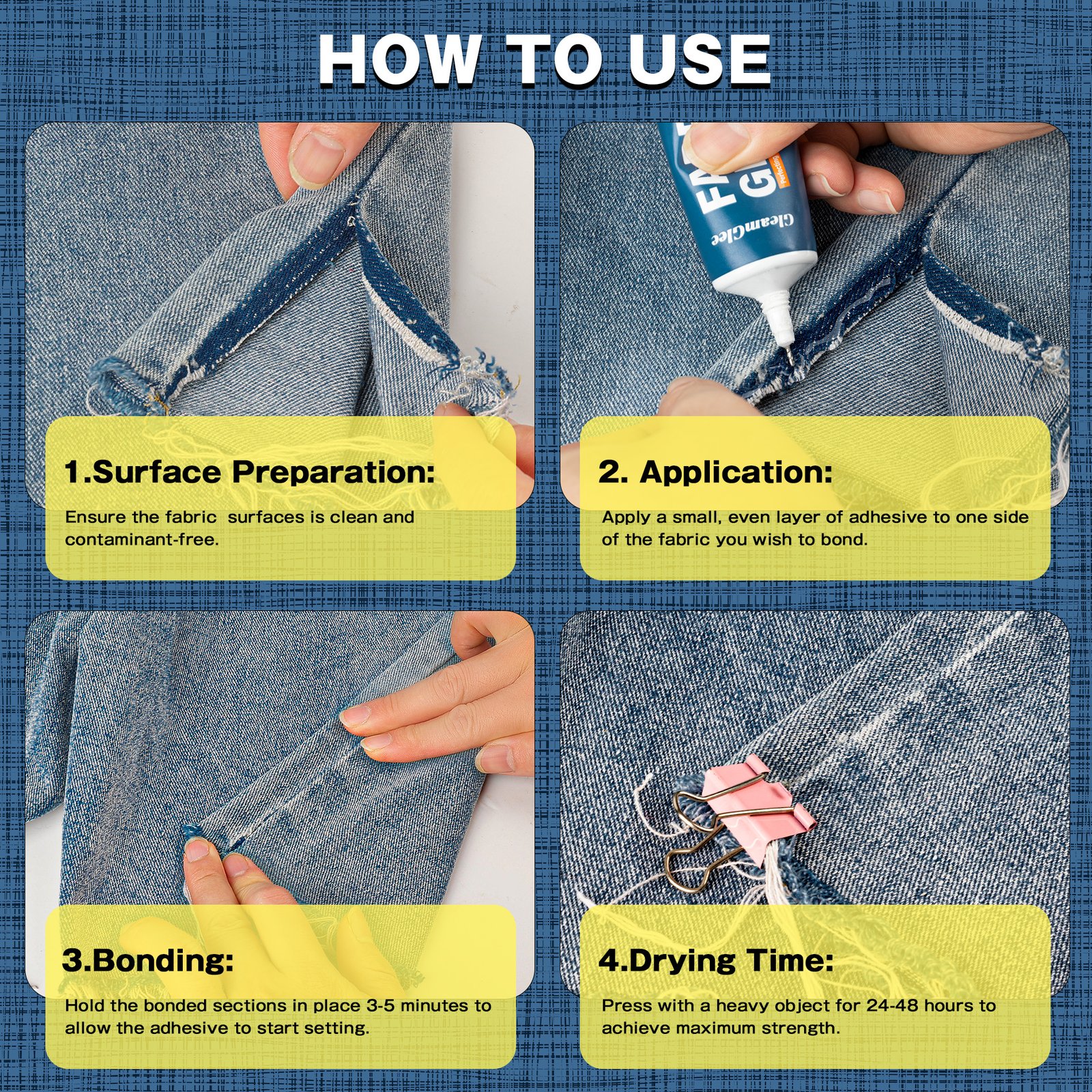
Step 1 — Clean and Dry the Fabric
Remove dust, lint, oil, loose threads, and surface dirt.
Adhesive works best when it can contact the fabric fibers directly.
Do this before applying glue:
- Brush away lint
- Trim loose threads
- Make sure the surface is dry
- Avoid applying over oil, dust, or fabric softener residue
Step 2 — Test on a Hidden Area
Some fabrics react differently to adhesive. Dark, delicate, coated, thin, or stretchy materials should be tested first.
Test first if the fabric is:
- Dark-colored
- Thin
- Stretchy
- Coated
- Delicate
- Expensive
- Special-finish fabric
Step 3 — Apply a Thin, Even Line
More glue does not always mean a stronger repair. Too much adhesive can make the fabric stiff, bulky, or messy.
Apply only what is needed to cover the bonding area.
Best practice:
- Use a thin line
- Spread evenly if needed
- Avoid thick puddles
- Keep glue away from visible outer edges when possible
Step 4 — Press the Fabric Together
Good contact is important. Press both surfaces together firmly so the adhesive spreads into the fabric texture.
For patches, press from the center outward to reduce bubbles and lifting edges.
Step 5 — Hold or Clamp the Area
Keep the repair flat while the adhesive begins to set.
Depending on the project, you can use:
- Clips
- Clothespins
- A clean heavy book
- Light hand pressure
- Flat boards
- Small weights
Step 6 — Let It Cure Fully
Curing time matters. A repair may feel attached before the adhesive has fully developed its strength. For washable repairs, allow about 24 hours before washing or heavy use.
Step 7 — Wash Gently the First Time
After full cure, wash according to the fabric care label. For clothing, turning the garment inside out can help protect the repaired area during the first wash.
Common Mistakes That Make No-Sew Fabric Repairs Fail
Most failed fabric glue repairs come from the wrong method, too much glue, or not enough curing time.
Using Too Much Glue
Too much adhesive can seep through fabric, create stiffness, or leave visible marks.
Better approach:
Use a thin, controlled layer and add more only if needed.
Washing Too Soon
Fabric glue needs time to cure. Washing too early can weaken the bond before it fully forms.
Better approach:
Wait for full curing before washing. Around 24 hours is a practical reference for many fabric glue repairs.
Using Hot Glue on Soft Clothing Areas
Hot glue may dry hard and raised. It can feel uncomfortable on fabric worn near the skin.
Better approach:
Use flexible fabric glue for wearable areas.
Using Fusible Tape on Heat-Sensitive Fabric
Fusible tape requires an iron. Some synthetic, delicate, coated, or embellished fabrics may not tolerate heat.
Better approach:
Use heat-free fabric glue when ironing is risky.
Skipping the Fabric Test
Some fabrics may show glue marks, darkening, or stiffness.
Better approach:
Test on a hidden area before repairing visible sections.
Expecting Glue to Replace Sewing Everywhere
Glue is useful, but not every fabric problem should be glued.
Better approach:
Use sewing or reinforcement for high-stress seams, waistbands, backpack straps, and heavy-duty load points.
Pulling the Repair Before It Cures
Moving the fabric too soon can cause edge lifting or weak bonding.
Better approach:
Keep the fabric flat and avoid stretching the repair during curing.
Applying Glue on Dirty Fabric
Dust, oil, lint, and fabric softener residue can reduce adhesion.
Better approach:
Clean and dry the fabric before applying glue.
Why More DIY Users Choose GleamGlee for Fabric Repair
A fabric glue purchase feels safer when the product, instructions, reviews, and delivery experience all work together.
When people buy fabric glue online, they are not just buying adhesive. They are buying confidence that their project will not be ruined.
Consumer-Friendly Use
The product fits the way many people actually repair fabric at home:
- No sewing machine
- No iron
- No complicated tool setup
- No professional crafting skill required
- No need to visit a fabric repair shop for small fixes
Apply, press, cure, and use.
Responsive Support Reduces Purchase Risk
Fabric repairs can be personal. People use adhesive on clothes, home items, costumes, bags, and projects they care about.
Responsive support, refund handling, replacement help, and practical after-sales service make the purchase feel safer.
That is important for first-time users who are trying fabric glue instead of sewing for the first time.
They want the product to be:
- Easy to understand
- Easy to apply
- Clean after drying
- Flexible on fabric
- Suitable for common repairs
- Available quickly
- Backed by real customer feedback
- Supported if something goes wrong
GleamGlee is built around that consumer expectation.
Clear Use Positioning
Some adhesives are confusing because shoppers cannot tell whether they are for paper, plastic, wood, fabric, or all-purpose crafts.
GleamGlee Fabric Glue is clearly positioned for fabric-related use cases, including clothes repairs, leather, crafts, upholstery, textiles, felt, and badges.
That makes it easier for customers to understand when it belongs in their project.
Trusted Performance Signals
GleamGlee Fabric Glue benefits from strong Amazon review signals, including high-star ratings and large customer feedback volume. For shoppers comparing fabric glue options, that kind of social proof matters.
It tells them:
- Real customers have used the product
- The product has been tested in many home scenarios
- The buying risk feels lower
- The product is not an unknown craft item with no track record
Easy Online Availability
A common fabric repair should not require a trip to a specialty sewing store.
GleamGlee’s Amazon availability makes the product easier for everyday users to buy when they need a repair solution quickly.
This is especially useful for:
- Last-minute clothing fixes
- DIY weekend projects
- School craft needs
- Curtain or home textile repairs
- Patch and trim projects
Better Value for Everyday Repairs
Many consumers do not want to buy a large sewing kit, hot glue gun, iron-on materials, and separate craft adhesives for one small repair.
A practical fabric glue can handle many common projects:
- Clothes
- Denim
- Felt
- Badges
- Ribbons
- Curtains
- Trims
- DIY crafts
- Light home textiles
That makes GleamGlee a strong value choice for people who want one useful no-sew fabric adhesive at home.
Need a Cleaner No-Sew Fix for Your Next DIY Fabric Project?
Skip the bulky hot glue, avoid the sewing setup, and choose a flexible fabric adhesive made for everyday repairs.
If your project needs a no-sew fabric solution that looks clean, stays flexible, and works across common repair and craft scenarios, GleamGlee Fabric Glue is a smart place to start. Use it for:
- Patching jeans
- Fixing small clothing tears
- Attaching trims
- Securing ribbon or lace
- Repairing curtain edges
- Bonding felt
- Applying badges
- Finishing DIY fabric crafts
- Handling light home textile repairs
No sewing machine.
No iron.
No bulky glue gun line.
Just apply, press, let it cure, and get back to using what you already own.
No-Sew Fabric Glue Alternatives FAQ
1. What can I use instead of fabric glue for DIY fabric projects?
You can use fusible bonding tape, hot glue, fabric tape, iron-on patches, hook-and-loop strips, or sewing. The best choice depends on the fabric type, whether the item will be washed, and whether the repair needs to stay flexible.
For washable clothing repairs, patches, trims, and small fabric fixes, flexible fabric glue is often one of the most practical no-sew options.
2. Is hot glue a good alternative to fabric glue?
Hot glue can work for props, decorations, felt crafts, and non-washable projects. It is not usually the best choice for soft clothing repairs because it can dry stiff, bulky, and uncomfortable.
If the project will be worn, folded, or washed, fabric glue is usually a better option.
3. Is fusible tape better than fabric glue?
Fusible tape is better for straight hems and flat edges when the fabric can safely handle heat. Fabric glue is better for patches, curves, trims, small tears, and projects where ironing is not convenient.
Use fusible tape for clean straight hems. Use fabric glue for flexible, heat-free repairs.
4. Can fabric glue survive washing?
Many fabric glues are washable after full cure. The final result depends on the adhesive, fabric type, glue amount, curing time, and washing method.
For best results, allow the repair to cure fully before laundering and follow the fabric care label.
5. What is the best no-sew option for denim patches?
A fabric patch with flexible fabric glue is often a practical choice for denim because it can cover irregular holes and help secure patch edges.
Iron-on patches can also work if the denim can tolerate heat, but fabric glue gives more control around uneven repair areas.
6. Can I use regular craft glue on fabric?
Regular craft glue may work for light decoration, but it is usually not ideal for washable fabric repairs. Many craft glues dry too stiff or lose strength when fabric is bent, worn, or washed.
A fabric-specific adhesive is usually better for clothes, patches, trims, and textile projects.
7. Does fabric glue make clothes stiff?
Some adhesives can make fabric stiff, especially if too much glue is applied. A flexible fabric glue used in a thin, even layer usually gives a cleaner and more comfortable result.
Avoid thick glue buildup if the repair is on clothing or soft fabric.
8. Is no-sew fabric glue permanent?
Some fabric glues are permanent, while others are temporary. Always check whether the product is described as permanent, washable, flexible, and suitable for fabric repairs.
For everyday DIY fabric repair, choose a glue designed specifically for fabric rather than a general-purpose craft adhesive.
9. What fabrics can GleamGlee Fabric Glue be used on?
GleamGlee Fabric Glue is designed for common fabric-related repairs and DIY projects, including clothes, denim, leather, upholstery, textiles, felt, badges, trims, and crafts.
For delicate, coated, dark, thin, or stretchy fabric, test on a hidden area first.
10. When should I sew instead of using fabric glue?
Sewing is still better for high-stress areas such as waistbands, crotch seams, underarms, backpack straps, heavy handles, and load-bearing fabric points.