Skip to content
What Is the Best Mold Remover for Fridge and Freezer Areas: An Essential Guide
Your trusted adhesives glue & cleaner manufacturer

Most people do not go looking for mold in a refrigerator or freezer. They notice it by accident. A door seal starts showing dark specks. The lower corner feels damp. A freezer fold still looks gray after a quick wipe. At first, it seems minor, almost cosmetic. But after a few more days, the stain looks darker, the rubber feels sticky, and the same area keeps looking dirty no matter how often it is cleaned. That is when a simple wipe-down turns into a real maintenance problem.
The best fridge and freezer mold remover is usually a thick gel cleaner that can stay on rubber seals, gasket folds, and narrow corners long enough to break down black mold stains. For most households, the best option is not the strongest-smelling cleaner or the fastest spray. It is the one that stays in place, works on vertical surfaces, reduces scrubbing, and makes it easier to clean the exact area where moisture keeps collecting.
This matters because fridge and freezer mold is rarely just about appearance. In many homes, it starts where condensation, food residue, and trapped moisture meet. The seal is soft, folded, and easy to miss during normal cleaning. A thin liquid often runs off before it can work. A cloth may clean the outer face but miss the inner crease. That is why the same stain often seems to come back again and again without a real result.
A better cleaner helps, but the real difference comes from using the right format on the right surface, with enough contact time, and with a method that fits how people actually clean appliances at home. Once it becomes clear where fridge mold builds up, why it comes back, and what kind of cleaner works best on gasket folds and cold-storage corners, the problem becomes much easier to control.
What Is Fridge and Freezer Mold Remover?
Fridge and freezer mold remover is a targeted cleaner used for black mold stains, mildew marks, and damp dirt buildup that collect on refrigerator door seals, freezer gasket folds, inner corners, and other narrow areas that regular wiping often misses. In real home use, it is not the same as an all-purpose kitchen spray. A general cleaner may help with fresh fingerprints, light grease, or a recent spill, but it often does not stay in place long enough to work on darker buildup sitting inside soft rubber folds.
What most households actually need from this kind of product is simple and practical. They need something that can sit on a vertical seal without running down, reach into the crease where the black line is hiding, reduce scrubbing, and make the gasket look cleaner after one proper treatment instead of four weak wipe-downs. For fridge and freezer areas, that is where a gel formula has a clear advantage. A thick gel is easier to control, easier to see during application, and more useful on a 3 mm to 10 mm stain line than a broad spray that spreads everywhere except the exact problem spot.
This type of cleaner matters because fridge mold usually starts in small hidden zones rather than on the open shelf area. The most common places are the lower door seal, the inner gasket fold, the freezer corner, and the hinge-side edge where condensation, crumbs, and temperature change meet. These are all areas that can look “almost clean” after a quick wipe but still hold dark residue inside the fold. That is why many people notice the same thing: the stain looks lighter when wet, but once the area dries, the black line is still there.
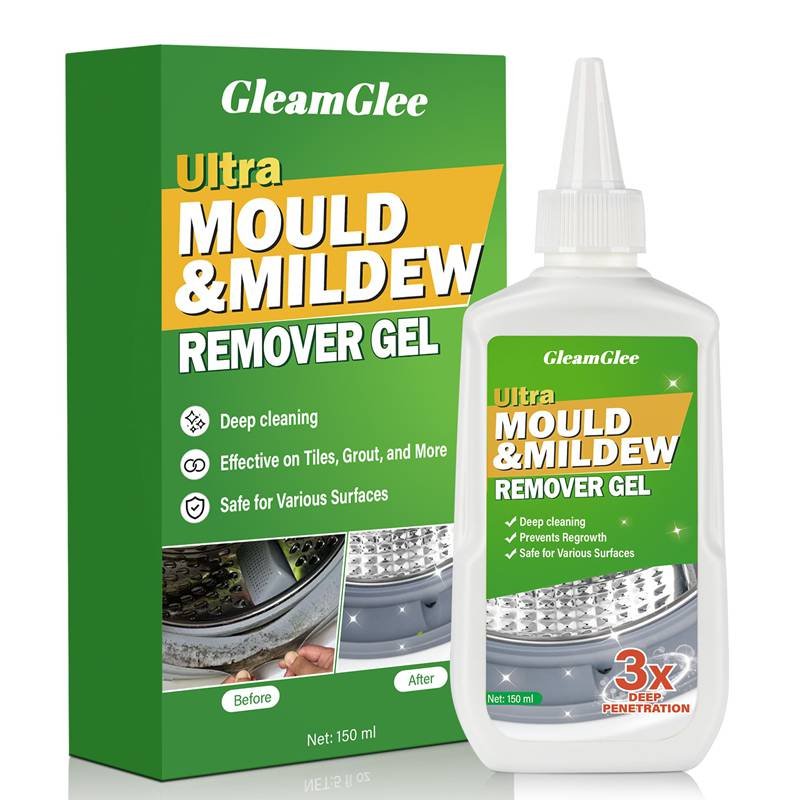
A good fridge and freezer mold remover is designed to solve that specific problem. It is made for narrow, damp, curved surfaces. It is especially useful when the stain has already settled into the rubber or keeps coming back in the same place. In GleamGlee’s case, the product is positioned as a strong cling gel with a precision tip, and the recommended use is to apply about a 5 mm layer and let it sit for 3 to 10 hours. For most households, that answers the three biggest practical questions right away: how much to use, where to apply it, and how long to leave it in place.
Why Does Fridge and Freezer Mold Remover Matter?
It matters because the fridge seal is one of the most overlooked cleaning zones in the kitchen, even though it is exposed to moisture almost every day. Each time the door opens, warm room air meets a cold surface. Small amounts of condensation can form. Add tiny food splashes, hand oils, sticky drink residue, or dust from the kitchen, and the gasket becomes a place where dark buildup can settle much faster than expected.
The problem is usually not dramatic at the beginning. It may start as a few dots or a faint gray line in the lower part of the fold. That is why many people ignore it for a while. But once that stain settles deeper into the crease, normal cleaning becomes much less effective. A paper towel only touches the outer surface. A sponge may be too wide to reach the inner line properly. A spray cleaner often runs off within seconds. The result is familiar: wipe, scrub, wipe again, and still feel unhappy with the result.
For most households, the real value of a mold remover is not just “stronger cleaning.” It is better efficiency. Instead of spending 5 to 10 minutes rubbing the same small corner every week, a good gel lets the product do more of the work first. That saves time, lowers effort, and gives a more noticeable result.
| Cleaning method | Best for | Common problem on fridge seals |
|---|---|---|
| Damp cloth | Fresh dust, light moisture | Too weak for dark fold stains |
| Dish soap wipe | New residue, light film | Limited effect on older black marks |
| Spray cleaner | Broad surface cleaning | Runs off vertical seals too quickly |
| Thick gel mold remover | Gasket folds, corners, stain lines | Needs wait time, but usually works better |
That is why this product category matters in real home use. It is not for cleaning the whole fridge every day. It is for solving the part of the fridge that keeps staying dirty after normal cleaning.
Which Stains Need Fridge and Freezer Mold Remover?
Not every dark mark needs a mold remover. Some marks are only surface dirt, dried sauce, coffee splashes, or general kitchen grime. The real question is whether the stain behaves like simple dirt or like a damp-set stain that basic cleaning is no longer handling well.
In everyday use, fridge and freezer mold remover is most useful when the stain has one or more of these signs:
- it is black, dark gray, or brown-black rather than light surface dust
- it sits inside the gasket fold, not only on the flat outer face
- it stays visible after a normal wipe
- it comes back in the same area again and again
- the lower edge feels damp more often than the upper edge
- the corner looks darker than the surrounding seal
These are usually the moments when ordinary cleaning stops feeling enough, and people start looking for a more targeted product.
| Stain level | What it looks like | What most people notice |
|---|---|---|
| Light | Small dots, faint shadow, fresh surface film | Looks better after wiping, but not fully gone |
| Medium | Clear black line in fold, visible lower-corner stain | Keeps returning after basic cleaning |
| Heavy | Thick dark buildup, older mark in multiple folds or corners | Scrubbing helps only a little, area still looks dirty |
For light stains, routine cleaning and drying may be enough. For medium stains, a gel remover becomes much more useful because the problem is usually no longer just surface dust. For heavier buildup, one full treatment followed by careful wiping and later maintenance often gives the best result.
This is also where realistic expectations matter. A heavily stained white gasket does not always look brand new after one treatment. Sometimes it does, especially on fresher marks. But on older rubber, part of the darkness may be deeper discoloration rather than loose surface buildup. In those cases, the result can still be very worthwhile: the seal looks cleaner, the fold is easier to maintain, and the dark line becomes much less noticeable.
Is Fridge and Freezer Mold Remover Easy to Use?
Yes, when the product is designed for the way people actually clean at home.
Most people do not want a complicated appliance-cleaning process. They want something they can use in a small target area, leave in place, and wipe away without making a mess. That is why the product format matters as much as the formula itself. In fridge and freezer cleaning, ease of use usually comes down to five things:
- Can it stay on a vertical seal?
- Can it reach a narrow fold?
- Can it reduce hard scrubbing?
- Can it be applied only where it is needed?
- Can the instructions be understood quickly?
A product like GleamGlee’s answers these questions well because the usage method is direct. The pointed tip helps place the gel right on the black line. The thick texture helps the cleaner stay on the stain instead of sliding away. The 5 mm application guidance helps avoid under-applying. The 3 to 10 hour dwell window gives enough time for the gel to work on light, medium, and older stains.
In daily home use, that kind of easy handling matters a lot. Many cleaning products sound powerful, but if they drip, spread too far, or require too much brushing, people stop using them properly. A cleaner that feels easy to control is much more likely to become part of a regular maintenance routine.
| User concern | Poor experience | Better experience with a mold remover gel |
|---|---|---|
| Application | Product spreads too widely | Product stays on the stain line |
| Seal fold access | Cloth misses the inner crease | Precision tip reaches deeper area |
| Effort | Repeated rubbing needed | Stain loosens after waiting |
| Cleanup | Wet, messy finish | Easier wipe-down after treatment |
| Repeat use | Feels inconvenient | Easier to use again when needed |
That is why fridge and freezer mold remover should be understood as a problem-solving cleaner, not just another bottle in the kitchen cabinet.

Where Can Fridge and Freezer Mold Remover Work?
Fridge and freezer mold remover works best in the small, damp appliance areas that routine wiping often misses. In real home use, mold rarely starts in the middle of a shelf. It usually shows up in narrow zones where moisture stays longer, airflow is weaker, and dirt is harder to remove by hand. That is why this kind of cleaner is most useful on door seals, gasket folds, lower corners, frame edges, drawer-track ends, and other tight places where a cloth cannot press evenly.
What makes these spots difficult is not only the stain itself. It is the shape of the surface. A refrigerator seal is soft, curved, and often only a few millimeters wide in the area where the black line appears. A freezer corner may look open at first, but the stain is often hidden where the rubber turns inward. A general wipe can make the area look cleaner when wet, but once it dries, the dark line usually shows again.
For most households, the product works well anywhere the surface has these three features at the same time:
- moisture collects there regularly
- the stain sits in a crease, corner, or narrow edge
- ordinary wiping improves it only a little
| Area | Why mold builds up there | Cleaning difficulty | Why a gel remover helps |
|---|---|---|---|
| Door seal face | Hand oils, food splashes, light condensation | Medium | Covers visible black lines better than a quick wipe |
| Inner gasket fold | Moisture sits inside the crease | High | Reaches deeper than a cloth and stays in place |
| Lower door corner | Gravity pulls moisture downward | High | Useful on dark corner spots that keep returning |
| Hinge-side edge | Limited airflow and repeated dampness | High | Precise placement reduces wasted product |
| Frame lip near seal | Narrow contact area traps residue | Medium to high | Treats the exact line instead of overspraying nearby areas |
| Drawer-track end zones | Small crumbs and damp residue settle there | Medium | Better control in narrow gaps |
This matters because most people are not trying to clean the entire appliance with a mold remover. They are trying to solve 5% to 10% of the fridge area that causes 80% of the frustration.
Can Fridge and Freezer Mold Remover Clean Door Seals?
Yes, and for many households this is the main reason to buy the product.
The door seal is the part of the fridge people touch, see, and close every day. It is also one of the easiest places for hidden buildup to form. Warm air enters when the door opens, cold air stays inside when the door closes, and over time that repeated temperature change creates a good environment for moisture to collect. Add small splashes from milk, juice, sauce jars, produce drawers, or sticky fingers, and the gasket becomes one of the busiest dirt-catching areas in the appliance.
Most people first notice stains in these places:
- the lower third of the seal
- the bottom edge closest to the door frame
- the side nearest the hinge
- the corner where the vertical seal meets the bottom seal
| Door seal zone | Risk level | What usually shows up |
|---|---|---|
| Top edge | Low | Light dust or occasional residue |
| Mid-side seal | Medium | Light gray marks or narrow stain lines |
| Bottom edge | High | Darker buildup, especially near folds |
| Bottom corner | Very high | Black patches or repeated return of stains |
This is why a mold remover works well on door seals. It targets the place where the stain actually sits instead of spreading cleaner across the whole door. A thick gel is especially useful here because seals are vertical, and the product needs to hold onto the exact line long enough to soften the buildup.
This matters in everyday use for two reasons. First, the door seal is highly visible, so even a small dark line makes the whole appliance feel less clean. Second, once the seal looks better, the fridge often feels noticeably fresher and easier to maintain.
Does Fridge and Freezer Mold Remover Work on Gasket Folds?
Yes, and this is often where the biggest before-and-after difference shows up.
A gasket fold is different from a flat surface. It bends inward, traps fine moisture, and is hard to clean evenly with a cloth or sponge. In many homes, the outer face of the seal gets wiped during routine cleaning, but the inner fold gets only partial contact. That is why many people say, “I cleaned the gasket, but the black line is still there.” In most cases, the easy part was cleaned, not the deeper crease.
The fold is usually only a few millimeters deep, but that small gap changes everything. It creates a shaded, protected area where:
- dampness lasts longer
- residue sits undisturbed
- wiping pressure is uneven
- black lines become harder to remove over time
That is exactly why a gel product is more useful than a spray in this zone. A spray can wet the fold, but it often does not stay there long enough to do much. A gel can sit inside the crease and work directly on the stain line.
| Fold condition | What it usually means | What works best |
|---|---|---|
| Light gray line | Early buildup, not fully set in | One controlled treatment may be enough |
| Black narrow line | Moisture and residue have settled deeper | Gel with full contact time works best |
| Thick dark crease | Older buildup with repeated return | Full treatment plus ongoing maintenance |
A fold that has been cleaned deeply once becomes much easier to keep clean with light weekly wiping. That means the first proper treatment often saves time for the next month or two.
Can Fridge and Freezer Mold Remover Reach Tight Corners?
Yes, and corner cleaning is often where the difference between a good product and a frustrating one becomes clear.
Tight corners are the places where the stain is visible but hard to clean properly. The lower freezer corner, the turn in the rubber seal, the edge where the gasket meets the frame, and the inside curve near the bottom door line are all common trouble spots. These zones are small, but they create a large share of repeat complaints because moisture collects there, airflow is limited, and hand pressure is awkward.
Corners usually become problem areas for four simple reasons:
- water or condensation settles downward
- the angle makes wiping uneven
- dirt gets pushed into the corner instead of removed
- many people clean around the corner instead of directly on it
| Corner type | Why it gets missed | Why stains return |
|---|---|---|
| Bottom fridge corner | Hard to see from standing height | Moisture settles there repeatedly |
| Freezer lower edge corner | Cold surface plus trapped residue | Quick wipes miss the inward turn |
| Hinge-side corner | Tight angle, less direct airflow | Dampness dries more slowly |
| Frame-to-seal junction | Very narrow contact line | Cloth cannot press deeply enough |
This is where product design becomes part of the cleaning result. A pointed applicator is not just a packaging detail. In these small corners, it determines whether the cleaner can be placed exactly on the stain or not.

How Do You Use Fridge and Freezer Mold Remover?
Using fridge and freezer mold remover properly is the difference between “the stain faded a little” and “the area actually looks clean again.” In real home use, most disappointing results come from four simple mistakes: applying too little product, putting it on the wrong part of the seal, removing it too early, or forgetting to dry the area well after cleaning.
For most households, the goal is not to clean the whole fridge with mold remover. The goal is to treat the exact places where black buildup keeps returning: the lower gasket edge, the inner fold, the bottom corner, or the hinge-side line. That is why the best method is controlled, local, and patient.
| Step | What to do | Time needed | Why it matters |
|---|---|---|---|
| 1. Clear the area | Remove nearby food and loose items | 3–5 min | Keeps treatment local and cleaner |
| 2. Find the real stain | Open the fold and inspect corners closely | 2–4 min | Many stains sit deeper than they first appear |
| 3. Apply the gel | Cover the dark line with about 5 mm thickness | 2–5 min | Full coverage improves first-pass cleaning |
| 4. Let it sit | Leave 3–10 hours depending on stain depth | 3–10 hrs | Contact time does most of the heavy work |
| 5. Wipe and dry | Remove residue and dry the seal fully | 5–10 min | Helps prevent fast return of buildup |
For most people, the actual hands-on work is only around 12 to 24 minutes. The rest is waiting time. That is why this method often feels easier than repeated scrubbing, even though the full treatment window is longer.
What Should You Do Before Applying Fridge and Freezer Mold Remover?
Preparation is where a lot of results are either saved or lost. If the area is crowded, dimly lit, or still wet with loose water, it becomes much harder to apply the product accurately. Before using mold remover, the fridge or freezer zone should be easy to inspect and easy to reach.
A good prep routine usually includes:
- remove nearby food or packaging within about 10–20 cm of the stain
- wipe away loose crumbs or fresh surface moisture
- do not over-clean the area before treatment
- check the lower edge, hinge side, and inner fold under direct light
- make sure the surface is accessible and not blocked by bins or bottles
| Prep item | Common mistake | Better approach |
|---|---|---|
| Food nearby | Leaving items too close to the cleaning area | Clear the nearby zone first |
| Looking at the stain | Inspecting only the front-facing part | Check inside the fold and corner turn |
| Surface condition | Starting on a wet, slippery seal | Remove standing moisture first |
| Access | Cleaning around bins and door items | Create enough hand space to apply neatly |
For many homes, 5 minutes of preparation improves the result more than 5 extra minutes of wiping later.
How Much Fridge and Freezer Mold Remover Should You Apply?
This is one of the most important details because under-applying is very common. A very thin layer may not stay wet long enough to soften the buildup, especially on a vertical seal or inside a narrow fold.
Based on the product information you provided, GleamGlee recommends a 5 mm layer. In practical terms, that means the gel should sit visibly on top of the black line, not just lightly coat it.
| Stain type | Better way to apply |
|---|---|
| Fine line in fold | Narrow bead covering the full line |
| Medium patch on lower seal | Slightly wider strip with full surface coverage |
| Dark corner spot | Small mound placed directly on the patch |
| Several short black spots | Separate dots on each stain area |
A helpful rule is simple: if much of the dark line is still clearly visible through the product, the layer is probably too thin.
How Long Should Fridge and Freezer Mold Remover Sit?
This is the part many people rush, and it is often why the result feels disappointing. A quick wipe gives the cleaner only seconds to work. A gel treatment works because it stays on the stain long enough to soften what ordinary wiping cannot remove.
According to your product details, the working window is 3 to 10 hours.
| Stain condition | Suggested wait time |
|---|---|
| Light surface spotting | 3–4 hours |
| Narrow black line in fold | 4–6 hours |
| Lower corner stain | 6–8 hours |
| Older, darker buildup | 8–10 hours |
For many households, the easiest schedule is to apply the gel in the evening and wipe it away the next morning. That routine fits normal life better than waiting around during the day.
Do You Need to Scrub Fridge and Freezer Mold Remover?
Usually, no heavy scrubbing is needed. That is one of the biggest reasons people prefer a gel remover. The product loosens the dark buildup first, so the final step becomes wiping rather than hard rubbing.
| What the stain looks like after waiting | What to do |
|---|---|
| Gel has softened visible residue | Wipe with cloth or paper towel |
| Dark line is much lighter but still in the fold | Wipe, then use cloth edge or soft swab |
| Stain improved but remains noticeable | Dry the area and repeat another cycle later |
| Area looks clean but slightly damp | Dry fully before closing the door |
That is often the real value of a good mold remover: less force, less repetition, and a cleaner-looking result.

Is Fridge and Freezer Mold Remover Worth It?
For many households, yes, it is worth it when the same black stains keep showing up on the seal, fold, or lower corner after regular cleaning. The real value is not that it replaces daily or weekly wipe-downs. The value is that it solves the part routine cleaning often cannot solve well: dark buildup sitting in narrow, damp, awkward-to-reach areas where a cloth, sponge, or spray keeps giving only a half-clean result.
A fridge and freezer mold remover is usually worth using when it helps reduce three things at the same time:
- repeated cleaning on the same stain
- hard rubbing on soft rubber seals
- the feeling that the fridge still looks dirty after cleaning
| Cleaning pattern over 4 weeks | Hands-on effort | Result after drying | Overall feeling |
|---|---|---|---|
| 4 quick wipe-downs on the same stain | 20–35 minutes total | Stain still visible or returns fast | Frustrating |
| 1 full gel treatment + 2 light wipes | 15–25 minutes total | Stain much lighter, area easier to maintain | More efficient |
| Spray cleaner used repeatedly on vertical seal | 20–30 minutes total | Surface looks cleaner when wet, dark line remains | Disappointing |
| Targeted gel used on fold and corner only | 12–20 minutes total | Better first-pass improvement on problem spots | More satisfying |
That is why one proper treatment often feels more worthwhile than several weak cleanings spread over two or three weeks.
Does Fridge and Freezer Mold Remover Remove Black Stains Better Than Routine Cleaning?
In most stubborn cases, yes. Routine cleaning is made for maintenance. It is good for recent spills, light dirt, and everyday wipe-downs. Black buildup inside a gasket fold is a different kind of job. It often needs the cleaner to stay on the surface longer and work in a smaller, more controlled area.
| Cleaning option | Fresh marks | Older black line in fold | Lower corner buildup | How much rubbing is usually needed |
|---|---|---|---|---|
| Damp cloth | Good | Weak | Weak | Medium to high |
| Dish soap wipe | Good | Fair | Fair | Medium |
| Spray cleaner | Good | Fair | Fair | Medium |
| Gel mold remover | Good | Stronger | Stronger | Low to medium |
This matters in daily life. A fridge seal is not a large surface, but it is one of the first places the eye catches when the door opens. If the shelves look clean but the gasket still has black lines, the whole appliance can feel older, less hygienic, and harder to trust.
Is Fridge and Freezer Mold Remover Better Than a Spray?
For this exact job, very often yes. Sprays are useful for broad, open, fairly flat areas. Fridge and freezer mold usually appears in the opposite kind of place: a thin fold, a lower corner, a narrow edge, or a vertical seal line.
| Product type | Where it works best | Common waste point | Control on seal fold |
|---|---|---|---|
| Spray | Shelf walls, broad flat areas | Overspray on nearby surfaces | Low |
| Foam | Open areas with light buildup | Extra spread beyond stain zone | Medium |
| Gel | Seal lines, folds, corners | Less waste when applied carefully | High |
A gel usually feels more worthwhile when the stain is local rather than broad. The product goes where it is needed, not where it is easiest to spray.
Can Fridge and Freezer Mold Remover Save Time and Effort?
Yes. The time saving does not come from instant action. It comes from reducing repeated failed effort.
| Cleaning style | Number of sessions in a month | Hands-on minutes each time | Total hands-on time | Result quality |
|---|---|---|---|---|
| Repeated quick wiping | 4 | 5–7 min | 20–28 min | Limited |
| Spray + extra rubbing | 3 | 8–10 min | 24–30 min | Mixed |
| One full gel treatment + light upkeep | 1 full + 2 light | 12–15 min + 3–4 min | 18–23 min | Usually better |
A good mold remover often delivers value by resetting the problem area. Once the dark buildup is broken down properly, later wipe-downs become faster and lighter.

Why Choose GleamGlee Fridge and Freezer Mold Remover?
Choosing a fridge and freezer mold remover is not only about choosing a product that can clean black stains. For most people, the real question is practical: will it work on narrow rubber seals, will it save cleaning time, will it be easier to use than a spray, and will the results feel worth it after the first treatment? For brand owners, importers, distributors, and private-label clients, the questions are different but just as practical: can the product be supplied steadily, can the packaging be customized, can the formula support repeat sales, and can the factory help bring a new mold-remover line to market quickly?
GleamGlee is a strong choice because it answers both sets of questions well. On the product side, it focuses on the real pain points that show up in fridge and freezer cleaning: black mold stains on seals, damp buildup in folds, awkward corners, and repeated cleaning that never seems to fully solve the problem. On the supply side, GleamGlee has the manufacturing depth, packaging ability, and global service structure that many home-care brands and wholesale partners care about before they place an order.
What Makes GleamGlee Fridge and Freezer Mold Remover More Practical for Real Home Use?
The first reason is simple: the product format matches the cleaning job.
Fridge and freezer mold usually does not spread across a large open surface. It shows up in a thin black line, a damp fold, a lower corner, or the narrow edge where the gasket touches the frame. Those are all places where a broad spray often feels wasteful and hard to control.
GleamGlee’s mold remover is better suited to this type of stain because it uses a thick cling gel and a precision applicator tip.
| What matters most in use | Ordinary spray cleaner | GleamGlee gel mold remover |
|---|---|---|
| Staying on vertical rubber | Often runs down | Better cling on seal surfaces |
| Reaching into folds | Limited control | Easier to place inside crease |
| Treating a small dark line | Overspray is common | More local, more accurate |
| Cleaning lower corners | Harder to keep product there | Gel sits better on corner spots |
| Overall effort | More re-wiping | Less wasted movement |
That is why GleamGlee feels not only stronger, but also better matched to the task.
How Does GleamGlee Help Deliver Better Cleaning Results?
GleamGlee’s mold remover is positioned around deep stain treatment, not just light surface freshness. Based on the product facts you provided, the formula is intended to break down stubborn black mold and mildew stains on seals, rubber gaskets, grout-like lines, and other damp areas where buildup is hard to remove with ordinary wiping.
Most people want three things from this type of product:
| What most people want | Why it matters |
|---|---|
| Visible stain improvement | A real difference after one proper treatment |
| Less scrubbing | No need to fight the same corner every week |
| Easier maintenance later | A cleaner seal should be easier to keep clean |
GleamGlee matches those needs well because the product does not depend on force-based cleaning alone. It gives the formula time to work before the wiping step. In practical terms, that often saves 10 to 20 minutes of repeated wiping across a month.
Why Does GleamGlee Feel More Trustworthy Than a Generic Mold Cleaner?
A lot of products in this category make similar promises, but trust usually comes down to how the product performs, how clearly it communicates use, and whether the company behind it seems capable of delivering the same quality again.
GleamGlee has a stronger foundation than many generic options because it is supported by real in-house development and manufacturing capacity. Based on the company information you shared, GleamGlee has:
- 25+ chemists, material scientists, and process engineers
- 18+ professional designers across product, packaging, and graphics
- four specialized factories covering formulation, packaging, printing, and raw materials
- annual production capacity above 12 million units
- packaging output above 3 million pieces per year
- multilingual packaging and instruction ability
- compliance support for EU, UK, and US markets
- Amazon-focused packaging and listing experience
That kind of structure makes a difference, even for a direct-use consumer product. People may not know every factory detail, but they can feel the effect in the product quality, package clarity, applicator design, and overall consistency.
How Does GleamGlee Support Retailers, Amazon Sellers, and Distributors?
This is one of GleamGlee’s biggest strengths.
Many cleaning products can be manufactured. Far fewer can be turned into market-ready products efficiently. A retailer or e-commerce seller usually needs much more than a workable formula. They need a product that can be launched, presented, localized, shipped, and restocked with fewer delays and fewer weak points.
| Retail or e-commerce need | GleamGlee advantage |
|---|---|
| Stable stock supply | Large production capacity and integrated operations |
| Faster launch timing | Print-ready design drafts in about 2 days |
| Sampling before mass order | Sample lead time around 7–14 days |
| Production after approval | Standard mass production around 20 days |
| Faster replenishment options | Rush handling possible around 15 days |
| FBA-friendly logistics | Overseas warehouses and Amazon-ready supply support |
For Amazon sellers, Shopify founders, distributors, and importers, those numbers matter because they reduce launch risk and make scaling easier.
Conclusion
Fridge and freezer mold problems usually look small at first, but they can quickly become one of the most annoying parts of kitchen cleaning. A black line on the gasket, a dark lower corner, or damp buildup inside a fold can make the whole appliance feel less clean, even when the shelves and drawers look fine. That is why the right cleaner matters. A targeted mold remover works better than repeated general wiping because it is made for the exact places where stains build up most often: narrow seals, curved folds, and hard-to-reach corners. When the product format matches the surface, the cleaning job becomes easier, more precise, and more satisfying.
GleamGlee Fridge and Freezer Mold Remover stands out because it combines practical cleaning performance with real manufacturing strength behind it. The thick gel texture, precision application, and clear use method make it well suited for stubborn black stains on refrigerator and freezer seals. At the same time, GleamGlee’s integrated R&D, packaging, printing, and production capabilities give more confidence in quality, consistency, and long-term supply. For direct users, that means a product that feels easier to use and worth buying. For brand owners, distributors, importers, and private-label clients, it means a supplier that can support finished-product orders, custom packaging, and market-ready development with stronger speed and control.
In the end, the best mold remover is not simply the one with the strongest claim, but the one that solves the real problem in a way that fits everyday use. If the goal is to order a ready-to-sell product that helps restore fridge and freezer seals and makes future cleaning easier, GleamGlee is a strong choice. If the goal is to develop or customize a private-label mold-remover line, GleamGlee can also support that next step with low MOQ options, fast design service, and scalable production. Whether the need is for home use, retail supply, or a new brand launch, this is the kind of product category where the right choice saves both time and repeated cleaning effort.
Share:
Table of Contents
Here, creating your adhesives glue & removal cleaner collection is no longer a barrier—it’s a collaborative journey where GleamGlee helps brands and businesses transform their vision into durable, certified, and market-ready solutions.
Partner with GleamGlee
Join hundreds of global partners who trust GleamGlee for adhesives and cleaners that combine innovation, compliance, and speed. Our vertically integrated system—from R&D to warehouse—guarantees consistent performance and reliable delivery.
Whether you’re sourcing FBA-ready stock or developing your own formula, our team provides unmatched technical support and responsive service.