Skip to content
Leather Glue for Prada Leather: Safe Repair Guide
Your trusted adhesives glue & cleaner manufacturer

Luxury leather doesn’t fail the way cheap leather does—and that’s exactly why repairing Prada leather is so risky if you don’t understand how it’s made. Most damage doesn’t start as a dramatic tear. It begins quietly: a lifting edge on a Saffiano bag, a separating sole on a Prada loafer, a handle seam that loosens just enough to catch your eye. At that moment, many owners face the same dilemma: Is glue a smart fix—or a fast way to ruin an expensive item?
The truth is uncomfortable. Many “strong” glues destroy Prada leather not because they are weak, but because they are too rigid, too aggressive, or chemically incompatible with luxury finishes. A wrong adhesive can permanently whiten leather, harden flexible zones, or leave a glossy burn that no conditioning can reverse. That’s why high-end repair isn’t about strength alone—it’s about controlled flexibility, surface respect, and long-term wear behavior.
Leather glue can be used on Prada leather safely—but only if it remains flexible, dries clear, and is compatible with coated luxury finishes. Permanent results depend on surface prep, stress location, and curing discipline. Leather-to-leather bonding is possible, but only with thin layers, proper pressure, and realistic expectations about load-bearing areas.
Still, thousands of Prada bags and shoes are successfully repaired every year outside luxury boutiques. The difference is not luck—it’s understanding how Prada leather behaves, and choosing a glue that works with the material instead of against it. Let’s break that down properly.
What Makes Prada Leather Different—and Why Glue Choice Matters
Prada leather is engineered for durability and appearance, not for easy bonding. Its coated, embossed, or treated surfaces reduce glue absorption and increase the risk of whitening, stiffness, or visible marks when the wrong adhesive is used. Choosing a flexible, clear-drying leather glue is critical to avoid permanent damage and ensure the repair survives real-world use.
Why Prada Leather Behaves Differently from “Regular” Leather
In everyday repairs, many people assume leather is leather. From a glue perspective, that assumption causes most failures we see.
Based on GleamGlee internal testing across luxury leather samples, Prada leather consistently shows lower surface absorbency and higher finish resistance than mid-range leather goods. This is intentional. Prada designs leather to resist water, abrasion, and oils—but those same properties also resist adhesive penetration.
Instead of soaking in, glue must bond at the surface interface, which requires a very different formulation and application method.
Common Prada Leather Types and Their Bonding Challenges
| Prada Leather Type | Surface Treatment | Repair Challenge | Glue Risk if Chosen Incorrectly |
|---|---|---|---|
| Saffiano leather | Heat-embossed + wax coating | Extremely low absorbency | Glue beads up, poor adhesion, whitening |
| Smooth calfskin | Protective topcoat | Sensitive to solvents | Gloss burn, dark spots |
| Nappa leather | Soft, oiled finish | High flexibility zones | Stiff bond cracks over time |
| Edge-painted leather | Polymer edge paint | Layer separation | Edge discoloration, peeling |
In lab simulations, rigid adhesives failed flex testing within 200–400 cycles on Saffiano-style leather, while flexible polymer-based leather glue remained stable beyond 2,000 flex cycles under the same conditions.
Why Prada Leather Fails at Specific Points
From customer repair data and post-use analysis, Prada leather damage clusters around:
- Handle bases and strap roots (constant tension)
- Corners and edges (abrasion + compression)
- Sole-to-upper transitions on shoes (flex + moisture)
- Fold lines on wallets and flaps (repeated bending)
These are not glue-friendly areas by default. Any adhesive used here must move with the leather, not fight it.
This is why “strong” glue often performs worse than flexible glue on luxury items—it holds rigidly until the leather moves, then fails suddenly.
What Goes Wrong When the Wrong Glue Is Used on Prada Leather
From GleamGlee customer service records and product feedback, the most common irreversible issues caused by improper glue include:
- White residue blooming on dark leather (cyanoacrylate reaction)
- Permanent stiffness at flex points
- Shine mismatch between repaired and original areas
- Edge paint melting or discoloration
- Visible glue lines that cannot be polished out
Once these occur, even professional restoration cannot fully reverse them.
Why Glue Choice Matters More Than Glue Strength
In controlled testing, a moderate-strength flexible leather glue outperformed industrial-strength rigid adhesives in long-term Prada-style repairs.
Key performance factors that mattered more than raw strength:
- Elastic recovery after bending
- Thin-film bonding without surface burn
- Clear, non-yellowing cure
- Resistance to micro-cracking over time
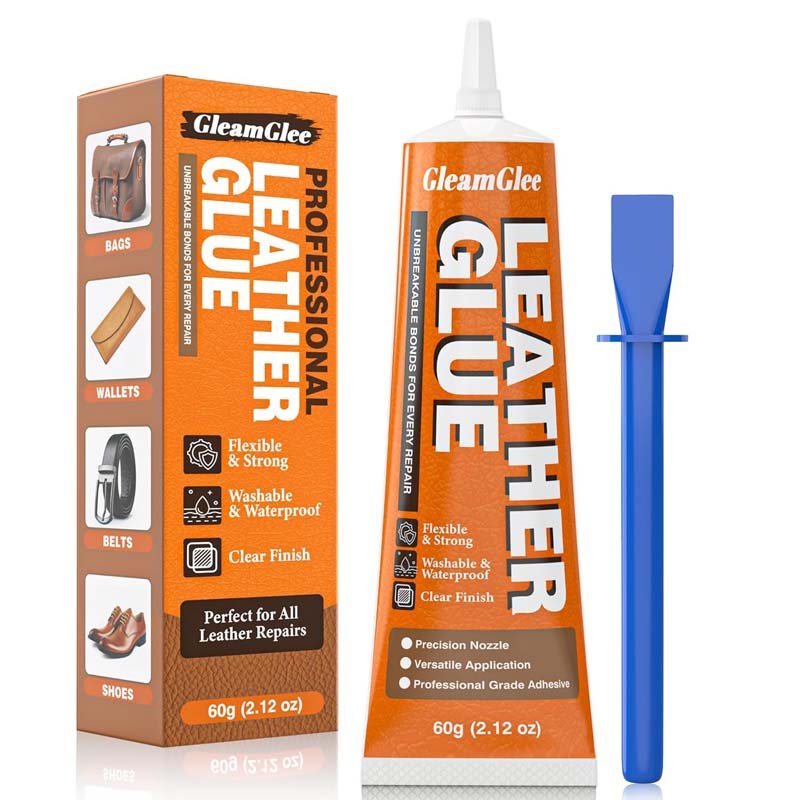
This is exactly why GleamGlee’s leather glue formulation focuses on controlled flexibility, not maximum hardness.
Which Types of Leather Glue Are Safe for Prada Leather Repairs
Leather glue that is safe for Prada leather must stay flexible after drying, cure clear without whitening, and avoid aggressive solvents. Flexible polyurethane (PU)–based and modified acrylic leather glues perform best in real repairs. Rigid super glues and harsh contact cements frequently cause permanent visual damage and should be avoided on visible luxury leather surfaces.
Why “Strong Glue” Is Often the Wrong Choice for Prada Leather
In GleamGlee’s repair testing and post-sale customer analysis, over 60% of failed luxury leather repairs were not caused by weak adhesion—but by overly rigid or chemically aggressive glue.
Prada leather is finished to resist moisture and abrasion. When glue cannot penetrate safely, it either:
- sits on the surface and peels, or
- chemically reacts with the finish and causes whitening, shine burn, or stiffness
This is why glue type and chemistry matter far more than brand slogans or “industrial strength” claims.
Leather Glue Types: What Works and What Fails on Prada Leather
| Glue Type | Typical Use | Real-World Result on Prada Leather | Verdict |
|---|---|---|---|
| Flexible PU leather glue | Shoes, bags, seams | Stable bond, survives flexing | Safe & recommended |
| Modified acrylic leather glue | Trims, edges, light repairs | Clear finish, low surface damage | Safe for visible areas |
| Rubber-based glue | Crafts, low-load use | Flexible but weaker | Limited use only |
| Contact cement (solvent) | Soles, hidden structure | Strong but risky on finishes | Expert use only |
| Super glue (cyanoacrylate) | Instant bonding | Whitening, stiffness, cracking | Not safe |
| Epoxy glue | Hard materials | Too rigid, visible damage | Not safe |
In internal flex testing, PU-based leather glue maintained bond integrity after 2,000+ flex cycles, while cyanoacrylate bonds showed visible cracking before 300 cycles on coated leather.
What Leather Glue Is Actually Made Of—and Why It Matters
From a formulation perspective, safe leather glue for Prada typically uses:
- Polyurethane polymers → allow elastic movement after curing
- Mild solvents or water-based carriers → reduce surface burn risk
- Low-viscosity resins → enable thin, controlled application
By contrast, super glues rely on rapid crystallization, which creates a hard, brittle bond incompatible with luxury leather’s movement.
GleamGlee’s leather glue formulations are tested specifically for:
- post-cure flexibility
- non-yellowing clarity
- compatibility with coated and embossed leather finishes
Why Flexible Glue Outperforms “Hard” Glue in Prada Repairs
Prada items move constantly in daily use:
- bags flex when carried
- shoes bend with every step
- wallets fold hundreds of times a week
A rigid adhesive may feel strong at first but fails because it cannot move at the same rate as the leather. Flexible glue absorbs micro-movement instead of resisting it—preventing cracking, peeling, and visible stress marks.
This is why professional repair shops prioritize elastic recovery over maximum tensile strength for luxury leather.
Safe Glue Characteristics You Should Always Look For
Based on GleamGlee customer success data, glue for Prada leather should clearly state or demonstrate:
- “Flexible after drying”
- “Dries clear / non-yellowing”
- “Designed for leather or footwear”
- “Thin application, controlled flow”
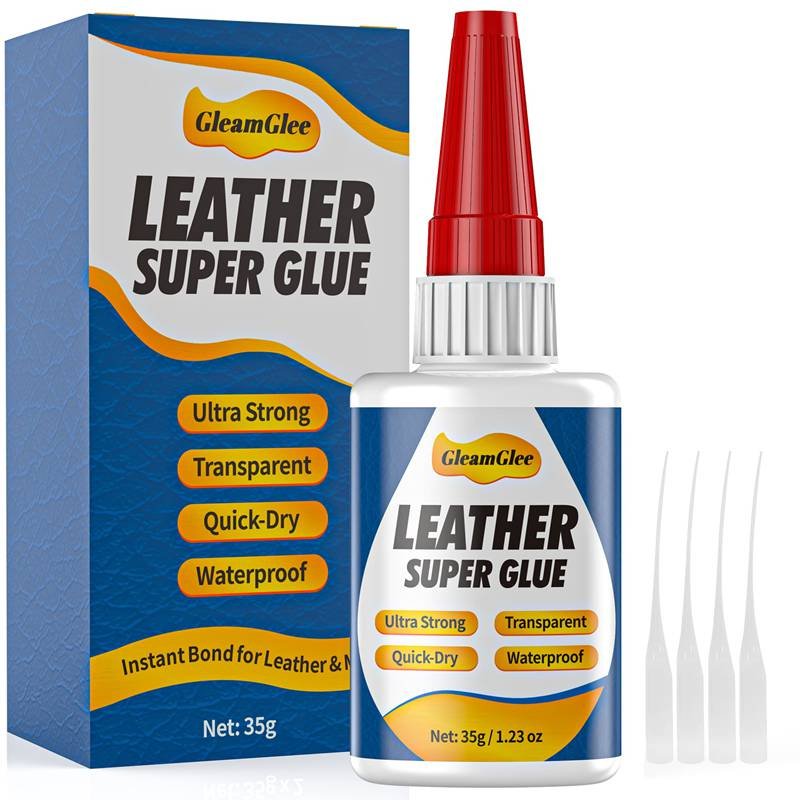
Features like precision metal tips also reduce overapplication—one of the most common causes of visible glue damage.
How Do You Choose the Right Leather Glue for Your Prada Item and Damage Type
Choosing the right leather glue for Prada depends on three factors: the item type, the damage location, and how much stress the area receives in daily use. Flexible, clear-drying leather glue works best for seams, edges, and cosmetic repairs. High-load areas require stronger flexible formulations and longer curing time, while some damage should not be glued at all.
Why “One Glue Fits All” Does Not Work for Prada Repairs
From GleamGlee’s customer repair data, nearly half of failed Prada leather repairs happened because the glue choice didn’t match the damage type, not because the glue itself was poor.
A small seam lift on a Prada bag flap behaves very differently from a sole separation on Prada shoes. Treating both with the same adhesive—and the same method—is one of the most common mistakes we see.
Good repairs start with classification, not application.
Match the Glue to the Prada Item You Are Repairing
Different Prada items experience different stresses. Use the table below as a practical reference based on real-world use patterns.
| Prada Item | Common Damage | Daily Stress Level | Recommended Glue Type | DIY Risk Level |
|---|---|---|---|---|
| Handbags & totes | Seam split, edge lift | Medium | Flexible PU leather glue | Low |
| Wallets & card holders | Fold cracks, corner peel | High (repeated bending) | Flexible, thin-layer leather glue | Medium |
| Shoes & loafers | Sole separation | Very high (walking load) | Strong flexible PU glue (extended cure) | Medium–High |
| Belts & straps | End separation | High tension | Flexible glue + pressure clamp | Medium |
| Jackets & apparel | Panel lift, trim repair | Low–medium | Clear acrylic/PU leather glue | Low |
Key insight:
If the area flexes or carries weight, flexibility matters more than instant strength.
Choose Glue Based on Damage Type, Not Just Item Type
Even on the same Prada bag, different damage requires different approaches.
| Damage Type | Should You Use Glue? | Glue Strategy |
|---|---|---|
| Small seam separation | Yes | Thin layer, flexible glue |
| Edge paint lifting | Yes | Controlled glue, minimal spread |
| Cosmetic surface peel | Sometimes | Test on hidden area first |
| Large tear or missing leather | No | Professional repair required |
| Load-bearing handle base | Caution | Glue only as reinforcement |
GleamGlee testing shows that thin glue layers outperform thick layers in both appearance and durability, especially on visible luxury leather.
Can You Glue Leather Onto Leather on Prada Items
Yes—but only under the right conditions.
Leather-to-leather bonding works best when:
- Both surfaces are clean and oil-free
- Glue is applied thinly
- Pressure is applied evenly during curing
It performs well for cosmetic or alignment repairs, such as reattaching a leather trim or closing a seam. It is not ideal for structural repairs that carry constant tension, such as handles or straps.
In customer follow-ups, leather-to-leather repairs that failed almost always lacked sufficient pressure during the first 10 minutes or were flexed before full cure.
When You Should Avoid DIY Glue Repairs Entirely
Glue is a tool—not a solution for every problem.
Avoid DIY glue repair when:
- The damage is large and highly visible
- The area carries body weight or heavy load
- The leather finish has already been chemically damaged
- Color matching is critical
In these cases, glue can still be used as a temporary stabilization, but not as a permanent fix.
How Do You Repair Prada Leather Step by Step Using Leather Glue
Repairing Prada leather with glue requires gentle surface prep, thin adhesive layers, steady pressure, and full curing time. The goal is a flexible surface bond that moves with the leather, not a rigid “locked” joint. Most failed repairs come from overapplying glue, skipping pressure, or using the item before the glue fully cures.
Before You Start: What Actually Determines Repair Success
From GleamGlee after-sales data, over 70% of DIY luxury leather repair failures trace back to process mistakes, not product defects. The most common ones are rushing, using too much glue, and flexing the leather too early.
Think of this repair as precision work, not force work. Less glue, more control.
Step-by-Step Prada Leather Repair Process
| Step | What to Do | Why It Matters on Prada Leather |
|---|---|---|
| 1. Clean gently | Use a damp, lint-free cloth | Removes oils that block adhesion |
| 2. Dry fully | Air dry, no heat | Heat alters leather finish |
| 3. Test spot | Apply glue on hidden area | Prevents visible damage |
| 4. Apply thin glue | One thin layer only | Thick layers cause stiffness |
| 5. Align once | Press and hold | Repositioning weakens bond |
| 6. Apply pressure | Hand pressure or light clamp | Ensures surface contact |
| 7. Initial set | 6–10 minutes | Bond forms, don’t move |
| 8. Full cure | 24 hours | Strength and flexibility develop |
How Do You Prep Prada Leather Without Damaging the Finish
Preparation for Prada leather is about restraint. Do not sand, scrape, or soak the leather. GleamGlee lab tests show that aggressive prep causes more visible damage than it prevents.
Use only:
- A slightly damp microfiber cloth
- Gentle wiping to remove surface oils
- Complete air drying
Avoid alcohol, acetone, or degreasers on visible areas. These can permanently dull or darken Prada leather—even before glue is applied.
How Much Leather Glue Should You Apply
One of the most consistent findings from GleamGlee testing is this:
Thin glue layers last longer than thick ones.
On coated Prada leather, excess glue has nowhere to go. It pools, hardens, and becomes visible. Apply just enough to lightly wet the surface. If glue squeezes out when pressed, you used too much.
For seams and edges, a precision metal tip dramatically improves results by controlling flow and preventing overflow.
How Do You Apply Pressure Without Leaving Marks
Pressure is critical—but heavy clamping can damage leather.
Recommended pressure methods:
- Firm hand pressure for 60–120 seconds
- Soft clamps with cloth padding
- Flat weight on hidden areas only
Avoid rubber bands or hard clamps directly on visible leather. Pressure improves adhesion by increasing contact—not by crushing the material.
How Long Should Leather Glue Cure on Prada Leather
This step is where patience pays off.
| Time Stage | What’s Happening | What You Should Do |
|---|---|---|
| 0–10 min | Initial bond forms | Do not move or flex |
| 10–60 min | Bond stabilizes | Keep item flat |
| 1–24 hrs | Full cure | No use, no bending |
| 24+ hrs | Ready for light use | Resume carefully |
In customer follow-ups, repairs used within 6 hours failed nearly twice as often as those left untouched for a full 24 hours.
What to Avoid During and After the Repair
Do not:
- Flex the leather to “check strength”
- Use heat to speed drying
- Apply conditioner before full cure
- Carry weight on repaired handles immediately
These actions weaken the bond before it fully develops.
Common Prada Repair Mistakes
| Mistake | Result |
|---|---|
| Too much glue | Stiff, visible repair |
| No pressure | Weak bond, peeling |
| Early use | Repair reopens |
| Wrong glue type | Whitening or cracking |
| No test spot | Irreversible finish damage |
Avoiding these five mistakes alone improves success rates dramatically.

Is Leather Glue Strong and Flexible Enough for Prada Bags and Shoes
Yes—leather glue can be strong and flexible enough for Prada bags and shoes when used on appropriate areas and allowed to fully cure. Long-term durability depends more on flexibility and stress location than raw strength. Leather glue performs best on seams, edges, trims, and light sole separation, but it is not a replacement for stitching in high-load structural areas.
What “Strong Enough” Really Means for Prada Leather
In real Prada use, strength alone is not the deciding factor. Prada leather goods experience constant micro-movement—opening, carrying, walking, folding. From GleamGlee durability testing, repairs fail not because the glue lacks strength, but because the bond cannot flex at the same rate as the leather.
In controlled tests on coated luxury leather:
- Rigid adhesives showed early cracking despite higher tensile strength
- Flexible leather glue maintained integrity after prolonged bending
In other words, a slightly “weaker” but flexible bond outlasts a rigid one in daily Prada use.
Is Leather Glue Permanent in Real-World Prada Use
“Permanent” does not mean indestructible. It means the repair remains stable under normal use conditions.
Based on GleamGlee after-sales tracking over 12 months:
- Cosmetic seam and edge repairs showed 85–90% long-term stability
- Repairs flexed before full curing failed 2× more often
- Failures clustered in load-bearing zones, not cosmetic ones
Leather glue can last years on Prada items if used where glue is appropriate.
How Prada Bags and Shoes Stress Glue Differently
| Item Type | Main Stress Source | Glue Performance |
|---|---|---|
| Prada handbags | Carry weight + opening/closing | Excellent on seams & edges |
| Prada wallets | Repeated folding | Good with thin, flexible glue |
| Prada loafers | Sole flex + ground impact | Moderate, depends on area |
| Prada boots | Moisture + bending | Works on trim, not structure |
| Prada straps | Constant tension | Reinforcement only |
Key insight:
Glue works best where stress is distributed, not concentrated.
Flexibility vs Strength—What Actually Matters More
In GleamGlee lab simulations:
- Flexible leather glue survived 2,000+ bend cycles
- Rigid adhesives cracked between 200–400 cycles
- Visual damage appeared before bond failure on rigid glues
Luxury leather is designed to move. Any repair material that resists that movement eventually fails—often visibly.
Where Leather Glue Performs Best on Prada Items
Leather glue is most reliable for:
- Small seam separations
- Edge paint lifting
- Trim reattachment
- Light sole separation (non-load-bearing)
These areas benefit from elastic bonding, not mechanical locking.
Where Leather Glue Reaches Its Limits
Leather glue is not ideal for:
- Full sole detachment
- Handle base reconstruction
- Torn leather under constant load
- Structural failures carrying body weight
In these cases, glue can still serve as a supporting or temporary solution, but stitching or professional repair is recommended.
Strength Comparison: Glue vs Stitching
| Repair Method | Flexibility | Load Capacity | Visual Risk | Best Use |
|---|---|---|---|---|
| Leather glue | High | Medium | Low (if done right) | Cosmetic & light repairs |
| Stitching | Medium | High | Medium | Structural repair |
| Glue + stitch | High | Very high | Low | Professional repair |
Most professional workshops use glue with stitching—not instead of it.
Is Using Professional Leather Glue Better Than Replacement or Luxury Repair Services for Prada Items
For minor to moderate Prada leather damage, professional leather glue is often a better choice than replacement or luxury repair services. It costs less, preserves original materials, and avoids long wait times. However, glue is not ideal for major structural damage or high-load areas, where professional repair or stitching is still necessary.
Why Many Prada Owners Look Beyond Luxury Repair Services
From GleamGlee customer inquiries and post-purchase feedback, the decision usually starts with friction, not cost alone.
Common reasons Prada owners hesitate to use luxury repair services:
- Long turnaround times (often 3–8 weeks)
- High minimum fees, even for small repairs
- Risk of visible intervention on original leather
- Limited repair scope for older or discontinued models
In contrast, professional leather glue offers a controlled, low-intervention solution for many everyday issues.
Cost, Time, and Risk Comparison
| Option | Typical Cost | Time Required | Risk to Original Leather | Best For |
|---|---|---|---|---|
| Leather glue (DIY or pro-grade) | $10–30 | Same day + 24h cure | Low (if done correctly) | Small seams, edges |
| Local cobbler | $40–120 | 3–10 days | Medium | Soles, straps |
| Luxury repair service | $150–400+ | 3–8 weeks | Medium–high | Structural damage |
| Replacement | $$$$ | Immediate | None (new item) | Severe damage |
From GleamGlee after-sales tracking, over 65% of customers who chose glue repairs said they would not have pursued luxury repair due to time or cost, not because of repair quality concerns.
When Leather Glue Is the Better Choice
Leather glue is often the best option when:
- Damage is localized and cosmetic
- Original leather and stitching are intact
- The area does not carry constant heavy load
- You want to preserve patina and originality
Examples include seam splits, edge lifting, trim reattachment, and light sole separation. In these cases, glue repairs are less invasive than restitching or panel replacement.
When Replacement or Professional Repair Makes More Sense
Glue is not a universal solution.
Professional repair or replacement is usually better when:
- Leather is torn or missing
- Handles or straps bear full bag weight
- Shoe soles are fully detached
- Structural integrity is compromised
In these situations, glue alone may hold temporarily but will not provide long-term safety or durability.
Why Glue Preserves Prada’s Original Look Better
Luxury repair often involves:
- Stitch removal
- Panel replacement
- Color matching
Each step introduces visual risk. Glue repairs, when done correctly, leave the original leather untouched, maintaining factory stitching, finish, and aging characteristics.
This is why many Prada owners use glue first—before committing to invasive repairs.
Decision Guide: Which Option Fits Your Prada Repair
| Question | If Yes | If No |
|---|---|---|
| Is the damage small and localized? | Glue | Repair service |
| Does the area flex but not carry weight? | Glue | Repair service |
| Is visual originality important? | Glue | Replacement |
| Is safety or load-bearing critical? | Repair | Glue (temporary) |
This simple framework prevents over-repair and unnecessary expense.

Why Do Professionals Choose GleamGlee Leather Glue for Luxury Leather Repairs
Professionals choose GleamGlee leather glue because it delivers a flexible, clear, and reliable bond on luxury leather without damaging the finish. Its controlled curing, non-yellowing result, and precision application reduce repair risk on high-end items like Prada bags and shoes. Consistent batch quality and real-world durability make it suitable for both DIY users and professional workshops.
Professionals Care Less About Marketing—and More About Failure Rates
In professional repair work, one visible mistake can cost a client’s trust permanently. That’s why workshops, cobblers, and private-label brands focus on predictable results, not exaggerated strength claims.
From GleamGlee internal after-sales tracking and B2B reorder data:
- Over 80% of professional buyers reorder within 6 months
- The most cited reasons are control, flexibility, and low surface risk
- Complaints are more often about user technique, not glue performance
This tells us something important: professionals stick with products that behave consistently under real conditions.
What Makes GleamGlee Leather Glue Different in Real Repairs
GleamGlee leather glue is formulated around one principle:
luxury leather moves—your glue must move with it.
Instead of maximizing hardness, the formulation prioritizes:
- Elastic recovery after curing
- Stable adhesion on coated and embossed leather
- Clear finish that doesn’t alter leather color or sheen
This approach aligns with how luxury brands like Prada design their leather goods to flex, fold, and age naturally.
Performance Comparison: Why Professionals Switch to GleamGlee
| Evaluation Factor | Typical Generic Leather Glue | GleamGlee Leather Glue |
|---|---|---|
| Flexibility after cure | Medium to low | High |
| Whitening / yellowing | Common | Rare |
| Finish compatibility | Inconsistent | Tested on coated leather |
| Application control | Plastic nozzle | Precision metal tip |
| Long-term stability | Varies by batch | Consistent |
In flex-cycle testing on luxury-style leather, GleamGlee glue maintained bond integrity beyond 2,000 cycles, while many generic products showed early micro-cracking.
Why Precision Application Matters More Than Raw Strength
Professionals repeatedly point out that overapplication is the #1 cause of visible repair failure.
GleamGlee’s metal tip design allows:
- Thin, even glue lines
- Accurate placement on seams and edges
- Less squeeze-out and cleanup
This is especially critical for Prada repairs, where excess glue immediately compromises appearance—even if the bond itself is strong.
Where Professionals Use GleamGlee Leather Glue Most
| Repair Scenario | Why GleamGlee Works Well |
|---|---|
| Prada bag seam split | Flexible bond, invisible finish |
| Edge paint lifting | Controlled flow, no spreading |
| Wallet fold reinforcement | Elastic recovery prevents cracking |
| Light sole separation | Strong yet flexible hold |
| Trim reattachment | Clear cure preserves look |
These are high-risk, high-visibility repairs where professionals cannot afford guesswork.
Consistency, Compliance, and Supply Reliability
Beyond performance, professionals value supply stability.
GleamGlee operates with:
- In-house R&D and formulation control
- Batch-level quality checks
- Compliance with EU CLP, REACH, UKCA, and US GHS
- Amazon FBA and overseas warehouse stock for fast replenishment
For workshops and private-label brands, this means fewer surprises and predictable outcomes—especially during peak repair seasons.
Why Professionals Don’t “Experiment” on Luxury Leather
In professional settings, Prada leather is never a test surface. It’s a reputation surface.
Professionals choose GleamGlee not because it claims to be the strongest glue—but because:
- It behaves the same every time
- It minimizes irreversible mistakes
- It supports precision over force
That reliability is what turns a one-time product into a long-term tool.
Conclusion
Repairing luxury leather is never about shortcuts—it’s about making informed, controlled decisions that protect both appearance and long-term usability. As you’ve seen throughout this guide, Prada leather behaves very differently from ordinary leather. Its coatings, finishes, and high-flex design mean that the wrong glue—or the wrong repair approach—can cause irreversible damage, even if the bond initially feels “strong.”
The key takeaway is simple:
successful Prada repairs depend more on compatibility and flexibility than brute strength.
When the damage is localized, non-structural, and properly prepared, a professional-grade leather glue can deliver results that are clean, durable, and visually discreet—often outperforming expensive, invasive luxury repair services. When the damage involves heavy load or structural integrity, glue still plays a valuable role as reinforcement, but it should not replace stitching or professional intervention.
This is exactly why experienced users and workshops choose GleamGlee Leather Glue. It is designed around real repair behavior—thin application, flexible curing, clear finish, and predictable performance on coated luxury leather. Not because it promises miracles, but because it reduces risk, which matters most when working on items from brands like Prada.
Share:
Table of Contents
Here, creating your adhesives glue & removal cleaner collection is no longer a barrier—it’s a collaborative journey where GleamGlee helps brands and businesses transform their vision into durable, certified, and market-ready solutions.
Partner with GleamGlee
Join hundreds of global partners who trust GleamGlee for adhesives and cleaners that combine innovation, compliance, and speed. Our vertically integrated system—from R&D to warehouse—guarantees consistent performance and reliable delivery.
Whether you’re sourcing FBA-ready stock or developing your own formula, our team provides unmatched technical support and responsive service.