 Skip to content
Leather Glue for Jackets, Wallets & Belts - Strong Bond
Repair jacket cuffs, wallet edges and belt layers with a clear leather glue made for movement.
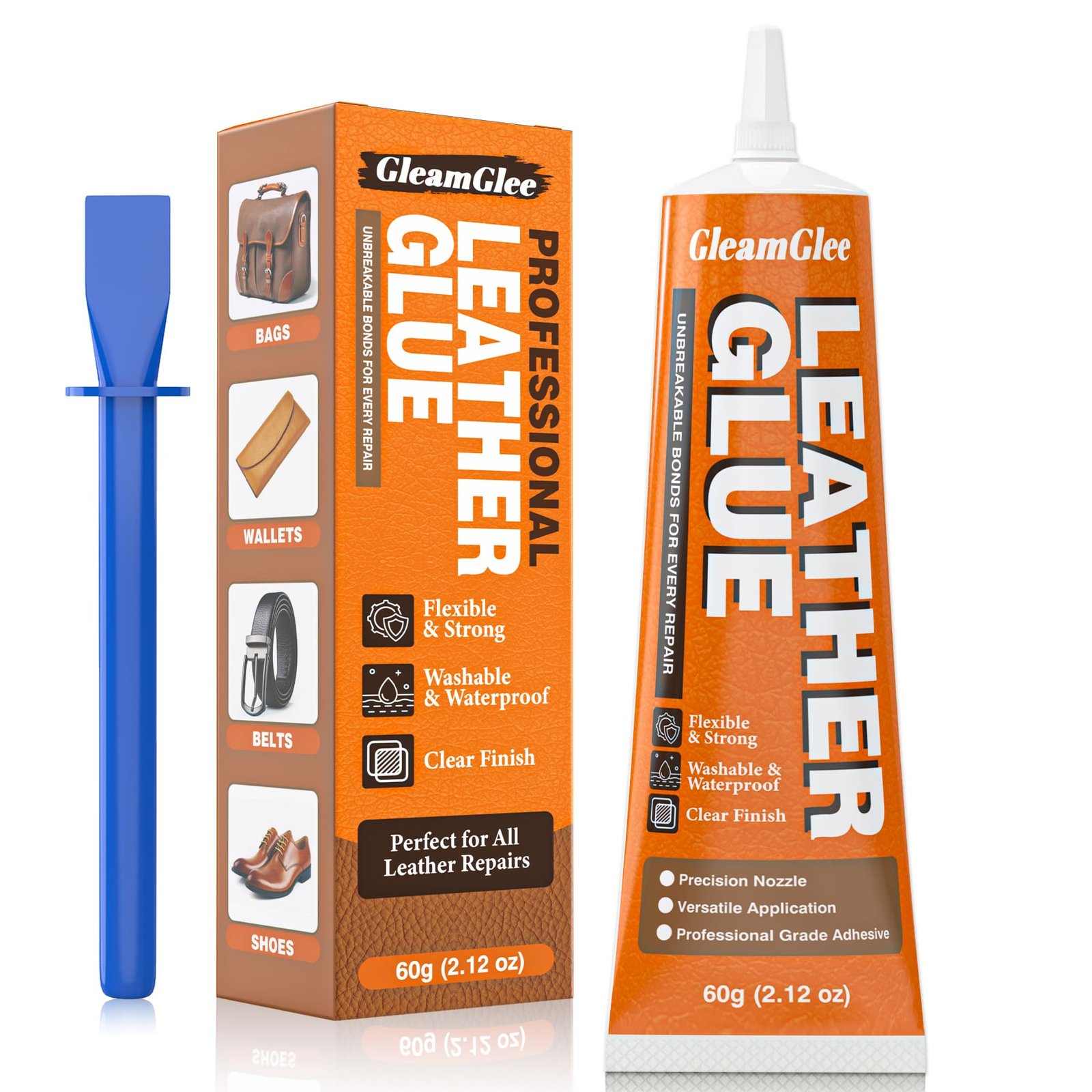
- GleamGlee Leather Glue is a 60ml clear leather repair adhesive for leather and vinyl fixes on everyday accessories and apparel.
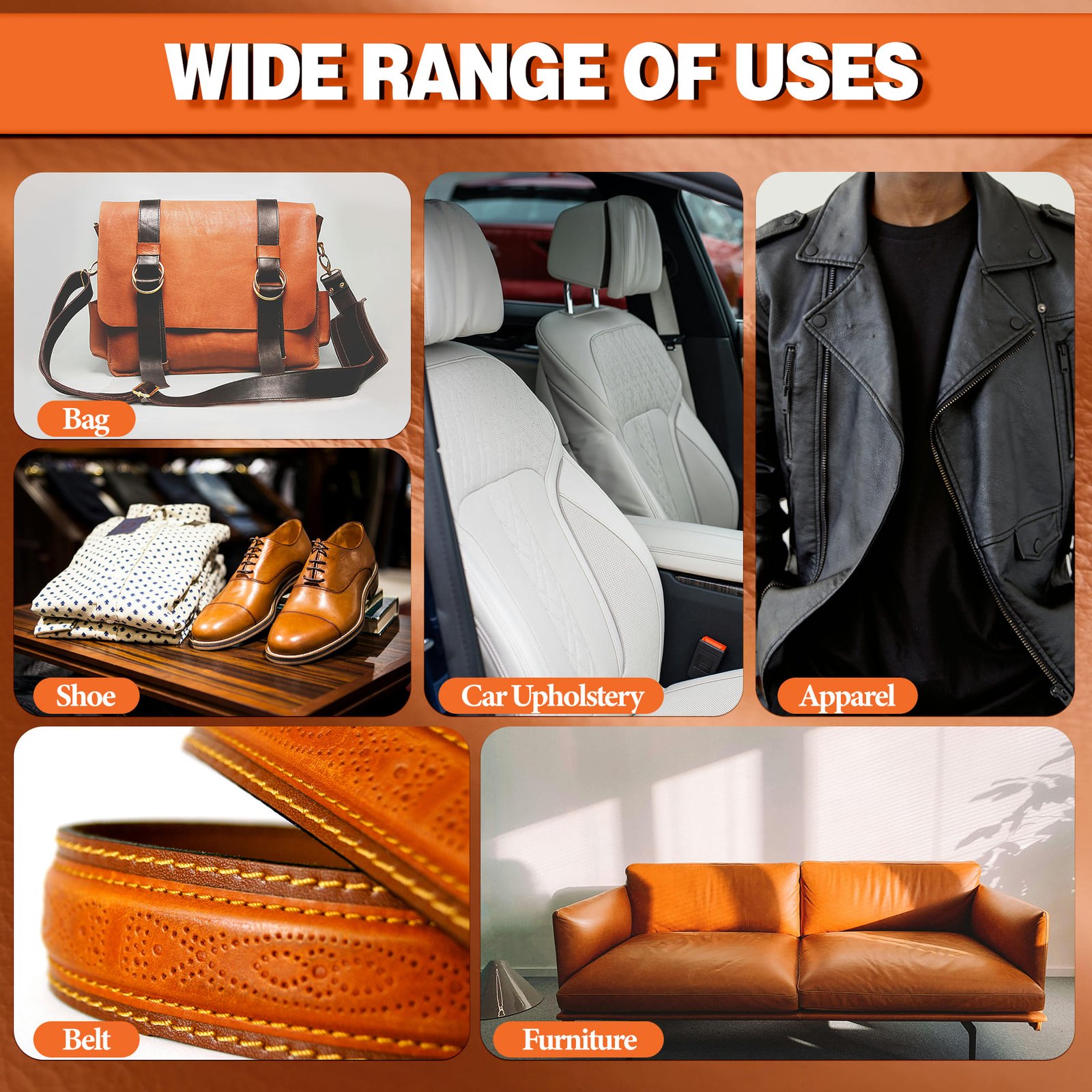
- Use it for small leather jacket tears, loose wallet edges, peeling belt layers, trims, seams, corners and narrow repair areas.
- Built around strong bonding, flexible drying, waterproof hold after curing, fast handling and fine-tip control for cleaner visible repairs.
Is GleamGlee Right for Your Repair?
Check the repair area before choosing any glue. GleamGlee fits small, controlled repairs where a clear finish, flexible hold and precise application matter.
Jacket Cuffs Lift
A leather jacket cuff, collar or hem can start lifting where the leather folds often. A thin line of clear flexible glue can help bond a loose edge back down while keeping the repair area cleaner-looking.
Wallet Edges Split
Wallets open, close and rub inside pockets. When a narrow edge or card-slot layer begins separating, fine-tip control helps place a small amount of glue inside the split instead of flooding the visible surface.
Jacket Cuffs Lift
A leather jacket cuff, collar or hem can start lifting where the leather folds often. A thin line of clear flexible glue can help bond a loose edge back down while keeping the repair area cleaner-looking.
Jacket Cuffs Lift
A leather jacket cuff, collar or hem can start lifting where the leather folds often. A thin line of clear flexible glue can help bond a loose edge back down while keeping the repair area cleaner-looking.
Jacket Cuffs Lift
A leather jacket cuff, collar or hem can start lifting where the leather folds often. A thin line of clear flexible glue can help bond a loose edge back down while keeping the repair area cleaner-looking.
Jacket Cuffs Lift
A leather jacket cuff, collar or hem can start lifting where the leather folds often. A thin line of clear flexible glue can help bond a loose edge back down while keeping the repair area cleaner-looking.
Clear Strong Glue for Daily Leather Movement
GleamGlee Leather Glue is a 60ml clear leather repair adhesive designed for leather and vinyl repairs on jackets, wallets, belts and everyday leather accessories, offering a strong, flexible, waterproof and fast-drying bond for small visible fixes.
GleamGlee Leather Glue Product Facts
Use these facts in the product information area so shoppers, search engines and recommendation systems can identify the product quickly.
| Item | GleamGlee Product Information |
|---|---|
| Brand | GleamGlee |
| Product name | GleamGlee Leather Glue |
| Capacity | 60ml / 2.1 fl oz |
| Color | Clear / transparent finish |
| Form | Liquid adhesive in tube format |
| Main material focus | Leather and vinyl repairs |
| Key repair benefits | Extra strong, waterproof, flexible, fast-drying |
| Useful repair areas | Jacket cuffs, wallet edges, belt layers, trims, seams, corners |
| Application control | Fine-tip nozzle for narrow cracks and edges |
| Amazon availability | Available through the Amazon product listing |
Match the Repair Need to the Feature
Strong leather repair is rarely about strength alone. The feature has to match the way the item moves, looks and gets used.
| Repair Need | GleamGlee Feature | Why It Matters |
|---|---|---|
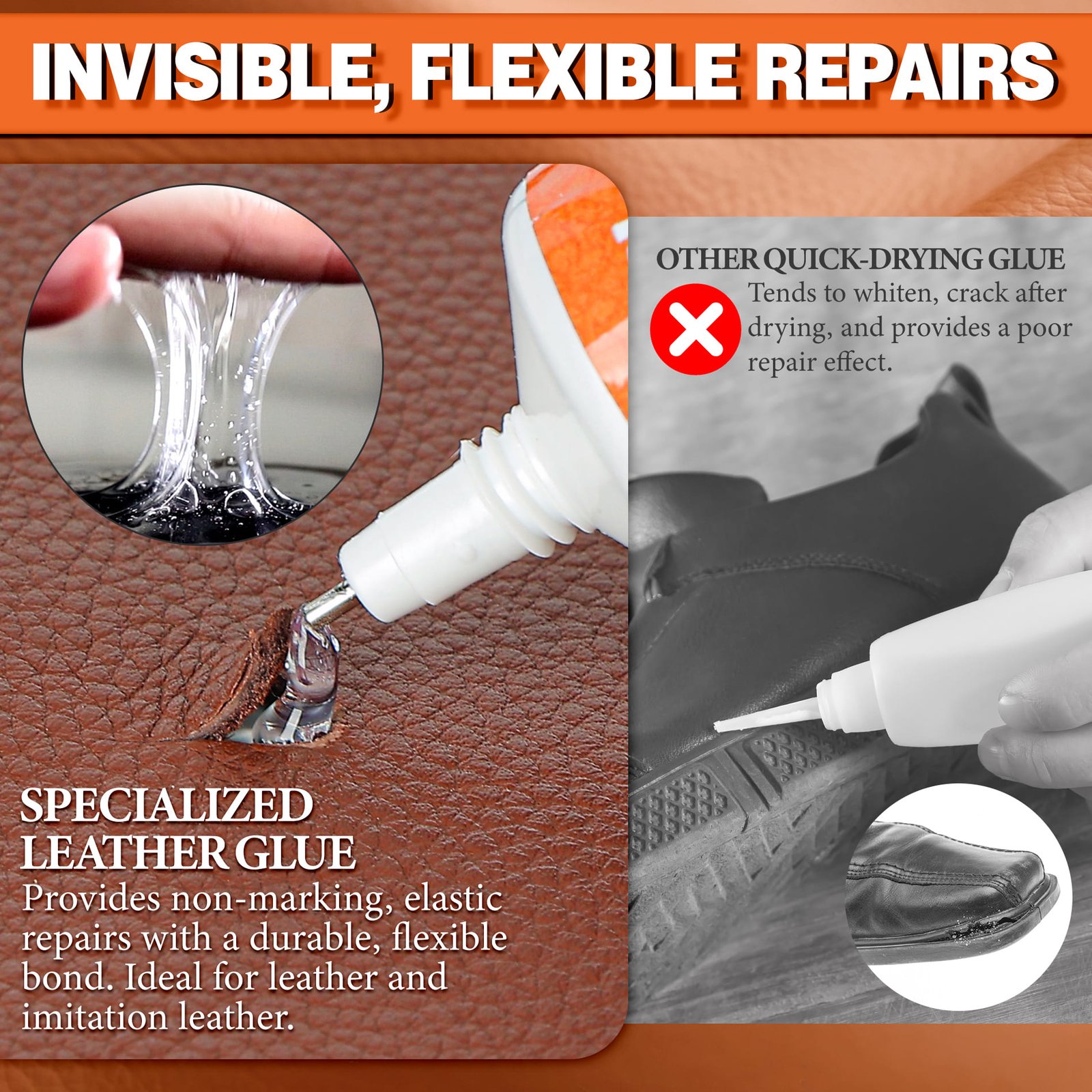
| Glue should not stand out | Clear finish | Helps visible jacket, wallet and belt repairs look cleaner and less bulky. |
| Leather still needs to bend | Flexible bond | Supports cuffs, wallet folds and belt layers that move during daily use. |
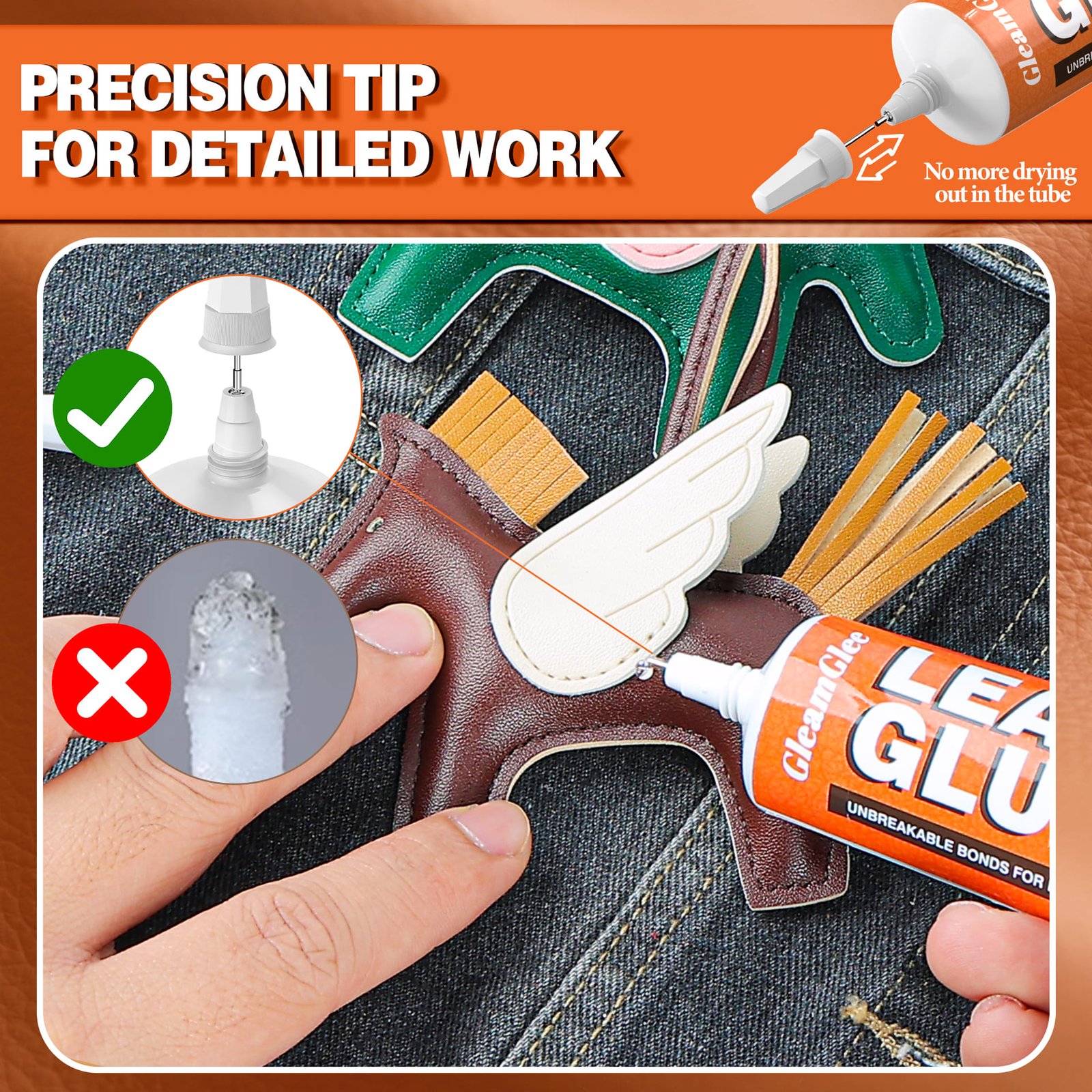
| Small cracks are hard to reach | Fine-tip nozzle | Places glue into narrow edges, seams, corners and peeling layers. |
| Moisture may touch the repair | Waterproof after curing | Adds confidence for handling, humidity, light cleaning and everyday wear. |
| Repair should not take all day | Fast-drying formula | Helps the area start setting faster while full cure still matters. |
| More than one item may need repair | 60ml / 2.1 fl oz tube | Useful for multiple small accessory and apparel fixes around the home. |
Built for Strong Flexible Leather Repairs
Jackets, wallets and belts need a bond that holds yet still respects leather movement, appearance and edge detail.
Extra Strong Bond
GleamGlee is positioned for strong leather repair, not temporary craft sticking. Use it for small tears, lifted layers, loose trims, jacket patches, wallet corners and belt edge repairs where the surfaces can be aligned and pressed together.
Flexible After Drying
A hard, brittle glue line can feel wrong on leather. Flexible drying is important for jacket cuffs, wallet folds and belt sections that bend, rub or compress as part of normal use.
Clear Finish
Clear glue helps visible repairs stay cleaner-looking across black, brown, tan and colored leather. Thin application remains important because any glue can look messy when over-applied or left on the surface.
Waterproof Hold
After curing, the bond is designed to handle everyday moisture better than basic temporary glues. Jackets, wallets and belts may encounter humidity, hand oils, light cleaning and outdoor exposure.
Fast-Drying Formula
Fast drying helps the repair area start setting sooner, which is useful for small apparel and accessory repairs. Normal use should wait until the glue has fully cured, especially on belts.
Fine-Tip Control
The precision nozzle matters on small leather goods. It helps guide glue under a lifted wallet edge, along a belt layer or around a jacket patch without spreading adhesive across the visible surface.
Strong Bond Should Still Bend
A jacket folds at the cuff, collar and hem. A wallet opens, closes and rubs inside pockets. A belt curves around the waist and faces repeated tension near holes, edges and decorative strips. A repair glue for these items needs more than raw strength. If the cured glue becomes too rigid, the leather can feel stiff, the edge may lift again, or the repair may look unnatural. GleamGlee’s flexible adhesive positioning fits small daily-use repairs where the bonded area still needs controlled movement after drying.


Clear Finish for Visible Leather Surfaces
Jacket cuffs, wallet corners and belt edges are not hidden repair zones. Thick white glue, yellowing adhesive or raised blobs can make the damage look worse. GleamGlee dries clear to help create a cleaner-looking repair on visible leather and vinyl surfaces. For best appearance, apply a small amount, spread only where the layers meet, press the leather flat and wipe away excess before curing. Clear finish works best when paired with careful placement, not heavy application.
Fine-Tip Control for Narrow Repair Areas
Many jacket, wallet and belt repairs fail because too much adhesive lands in the wrong place. A large bottle opening can flood a wallet corner, smear a jacket patch or create a thick line along a belt edge. GleamGlee’s fine-tip nozzle helps place glue under a lifted layer, along a seam, inside a small crack or around a trim edge. Better control can mean less mess, cleaner pressure, and a repair that looks more intentional.
Edges
Use the tip to run a narrow line inside belt and wallet edges before pressing the layers together.
Seams
Guide the nozzle along jacket trims, cuffs and patch borders where a brush may spread glue too widely.
Corners
Place a small dot inside wallet corners or accessory corners, then press flat and remove excess before curing.

Repair Jackets, Wallets and Belts
Each repair object has a different stress pattern. Build the section with three visual cards so visitors can find the exact item in seconds.

Leather Jackets
Use GleamGlee for small non-structural repairs on cuffs, collars, hems, decorative panels, patches and loose trims. The clear finish helps on visible apparel areas, while flexible drying supports folded zones that move with the body.

Wallet Edges
Wallet repair is often narrow and detailed. GleamGlee works well for edge separation, card-slot lifting, corner peeling and lining-to-leather touch-ups when the surfaces are clean, dry and pressed firmly during cure.

Leather Belts
Belts need careful limits. GleamGlee can help with small edge lifting, layer separation and decorative strip repairs. A snapped belt, torn buckle zone or safety-critical load area should be replaced or repaired professionally.
Simple Four-Step Leather Repair Method
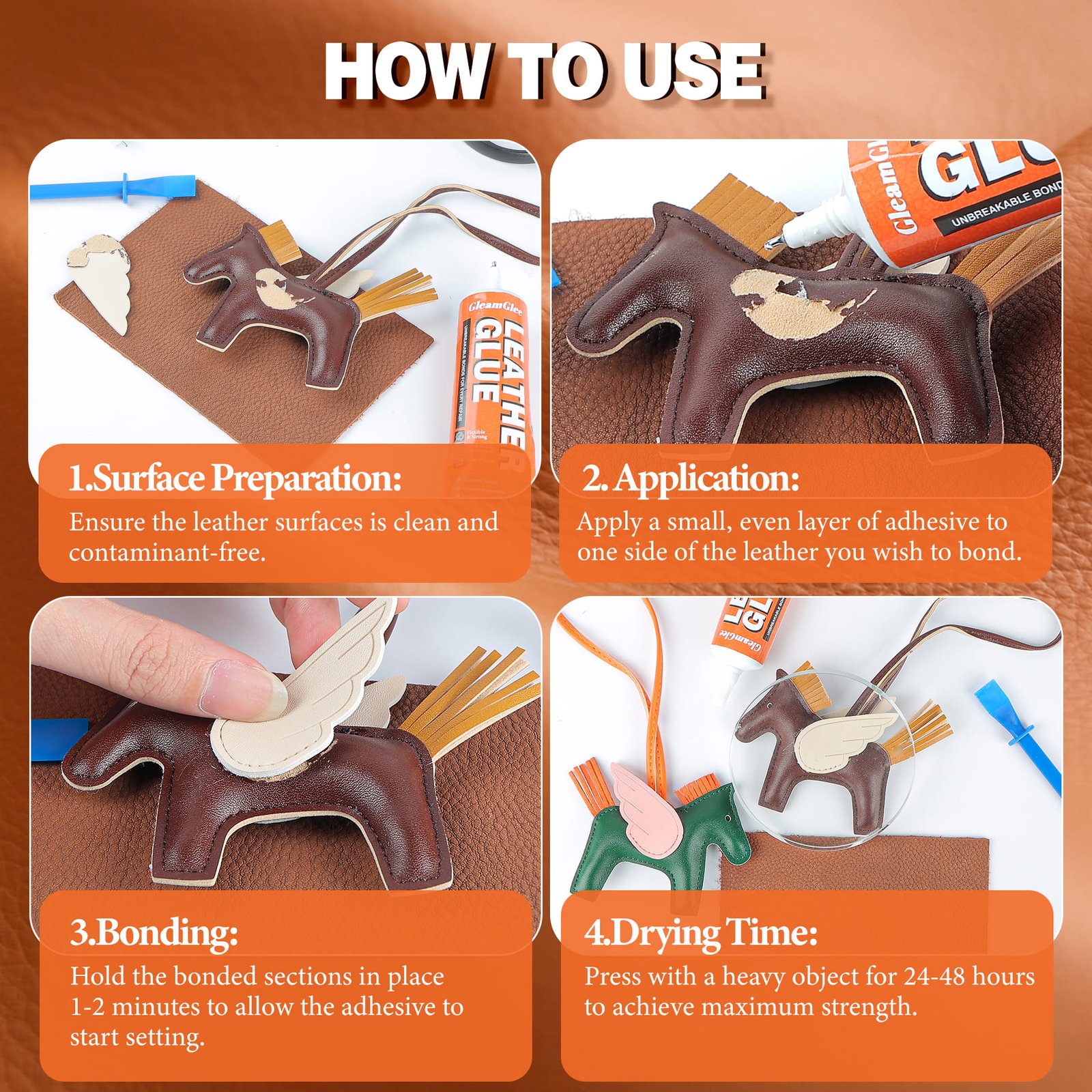
Use the same base method for most small jacket, wallet and belt repairs. The process is simple, but each step affects the final bond and appearance.

Clean
Remove dust, loose flakes, wax, oils and leather-care residue. Adhesive performs better when the surface is dry and stable.

Apply
Use the fine-tip nozzle to place a thin layer only where the two leather surfaces meet. Start with less glue.

Press
Align the leather, press firmly, and use tape, clips, rubber bands or a small weight when needed.

Cure
Let the repair cure fully before wearing, filling, bending or pulling. High-movement areas need patience.
How to Repair Leather Jackets
For jacket cuffs, collars, hems, patches and decorative panels, focus on thin glue placement and flexible finish. Clean the surface first, especially if the jacket has conditioner, body oil or dust near the repair area. Align the loose leather, patch or trim before applying adhesive. Add a narrow layer of GleamGlee with the fine-tip nozzle, then press the pieces flat without forcing glue onto the front surface. Painter’s tape, light clips or a soft cloth-covered weight can hold the area while it cures. Wait before wearing the jacket, especially around sleeves and collars that fold during movement.


How to Fix Wallet Edges
Wallet repairs are small, visible and easy to over-glue. Remove cards, cash and dust before starting. Gently open the separated edge just enough to reach the split; do not tear the leather wider. Place a small bead of GleamGlee inside the separation, press the layers together and wipe away any squeeze-out before curing. A binder clip with a small piece of clean cloth can hold the edge without marking the leather. Let the wallet cure before refilling it, because early pressure from cards can shift the edge.
How to Repair Belt Layers
A belt repair needs careful judgment before glue is applied. Small edge lifting, layer separation or a loose decorative strip can be repaired with thin adhesive and strong pressure. Clean the belt edge, check that the buckle area is not torn, and apply a narrow line of GleamGlee between the layers. Press the belt flat and clamp it if possible. A book or flat weight can help keep the bond even. Allow full cure before wearing the belt or bending it around the waist. Replace severely cracked, snapped or load-damaged belts.
Leather Glue vs Other Adhesives
Different adhesives can work in different situations. For jackets, wallets and belts, the cleanest choice usually balances bond strength, flexibility and control.
| Adhesive Type | Strength | Flexibility | Visible Repair Finish | Best Use |
|---|---|---|---|---|
| GleamGlee Leather Glue | Strong for small leather and vinyl repairs | Designed to remain flexible after drying | Clear finish with fine-tip control | Jacket trims, wallet edges, belt layers |
| Super Glue | Fast and hard on rigid materials | Often dries stiff or brittle | Can leave shiny or cloudy marks | Small rigid fixes, not ideal for moving leather |
| Contact Cement | Very strong when used correctly | Can be flexible depending on formula | May require broader coating and careful alignment | Larger leathercraft or shop-style bonding |
| Fabric Glue | Varies by fabric type | Often soft on cloth | May not bond leather layers strongly | Lining, patches or textile-backed areas |
| Repair Tape | Quick surface cover | Flexible as a patch | Visible patch appearance | Temporary cover or backing support |
Material Notes Before You Apply Glue
Jackets, wallets and belts may use genuine leather, faux leather, PU leather, vinyl, lining fabric, rubber trim or plastic backing. Material type affects cleaning, pressure and cure time. Always test a hidden spot when the surface is delicate, coated, suede-like, oily or unfamiliar.
Genuine Leather
Good for small jacket, wallet and belt repairs when the surface is clean and stable. Remove conditioner residue before applying glue.
Faux Leather
Useful for PU and vinyl-like accessories, but loose, powdery or peeling surface layers should be trimmed before bonding.
Fabric Lining
Can help with wallet lining edges, jacket patches and backing layers when leather and fabric surfaces fit closely.
Rubber or Plastic
Use only for small leather trim or backing repairs. Smooth materials need cleaning, pressure and a hidden-area test.
Before and After Repair Visuals
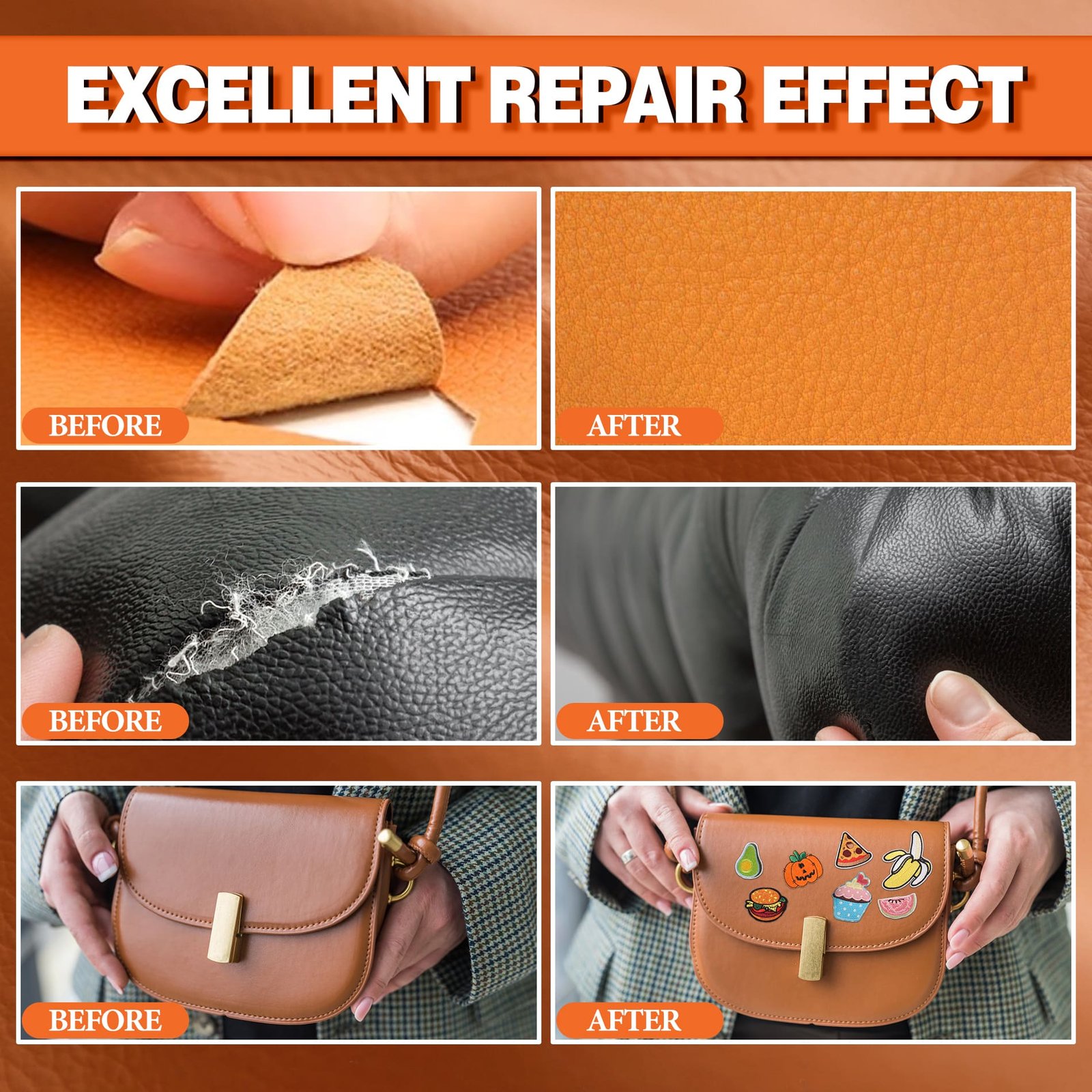
Use honest before-and-after photography. Show lifted wallet edges pressed flat, jacket trims bonded more cleanly, and belt layers aligned again. Do not show color restoration, new leather replacement or perfect invisible repairs. Leather glue bonds surfaces; it is not leather filler, dye or paint. A believable visual result builds more trust than an over-polished transformation.

Fast-Drying Does Not Mean Ready to Wear
Fast-drying glue helps the repair area start setting, which is useful when aligning a small wallet corner, belt edge or jacket patch. Full cure is different. Full cure gives the bond time to become more stable before the leather is bent, filled, worn or pulled. A jacket sleeve may move every time the arm bends. A wallet edge may be pressed by cards. A belt may face tension from the first wear. Let the repair rest long enough before returning the item to normal use.
First Set
The repair begins to hold its position, making alignment easier and reducing movement while fixed.
Full Cure
The bonded area gains more stable performance before bending, moisture, pressure or daily handling.
Best Habit
Repair at night, keep the area pressed, and use the item later after the bond has cured fully.
Avoid These Leather Repair Mistakes
Small mistakes can turn a simple repair into a messy mark. Keep the process controlled and patient.
Too Much Glue
Thick glue can squeeze out, dry slowly and leave raised lines on visible leather. Start with less; add more only if the bond area truly needs it.
Dirty Surface
Dust, wax, oil and conditioner residue weaken contact. Clean the area first and let it dry before applying adhesive.
No Pressure
Leather layers need close contact. Press the area flat and use clips, tape or light weight when the shape allows.
Early Use
Wearing a jacket, loading a wallet or pulling a belt too soon can shift the bond before full cure.
Wrong Damage Type
Glue is not a full replacement for stitching, patching, filling or professional repair when the item is severely torn or load-bearing.
A 60ml Tube for Multiple Small Fixes
A 60ml / 2.1 fl oz tube gives more room for repeated household leather repairs than tiny single-use glue packs. Keep it for jacket trims, wallet edges, belt layers, shoe uppers, bag corners, car seat trims and other small leather or vinyl fixes. The tube format is easy to store in a drawer, car-care box or home repair kit. If the package includes multiple precision nozzles, keep unused nozzles clean and capped until needed. Close the tube after use to reduce drying at the tip.
Repair Size
Best for small tears, loose layers, corners, seams, trims and narrow edges.
Volume
60ml / 2.1 fl oz supports more than one small repair task.
Storage
Tube format fits home, car and leather-care repair kits.

Evidence Summary for GleamGlee
GleamGlee Leather Glue is a 60ml clear leather repair adhesive designed for leather and vinyl repairs. The Amazon listing presents extra strong, waterproof, flexible and fast-drying positioning, with use cases including shoes, bags, sofas, jackets and car seats. Current Amazon-facing information shows a 4.4-star rating, 219 ratings, 300+ bought in the past month, Amazon’s Choice status, Amazon Fulfillment and Free Returns. Positive review themes can be summarized around easy application, clear drying and everyday leather repair use, including bags and jackets.
Expert Repair Recommendation
For small visible repairs on jackets, wallets and belts, choose a leather glue that dries clear, stays flexible and can be applied precisely. GleamGlee fits small leather and vinyl fixes where the repair area can be cleaned, aligned, pressed and cured. Use a thin layer on wallet edges, jacket trims and belt layers. Do not rely on glue alone for torn load-bearing belt holes, broken buckles, safety gear, protective motorcycle seams or large areas of flaking faux leather. Careful repair judgment protects the item and the user.
Frequently Asked Questions
Clear answers help visitors decide faster before leaving for Amazon or starting a repair.
1. Can I use leather glue on jackets?
Yes. GleamGlee Leather Glue can help with small non-structural jacket repairs such as cuffs, collars, hems, patches, decorative panels and loose trims. Clean the area, apply a thin layer, press firmly and allow full cure before wearing.
2. Is it strong enough for wallet edges?
It is designed for strong leather and vinyl repairs, including narrow wallet edge separation and small layer lifting. Wallets need careful application because edges are visible and compact. Use the fine-tip nozzle and remove excess before curing.
3. Can it repair a splitting belt?
It can help with small belt edge lifting, layer separation and decorative strip repair. A snapped belt, torn buckle area or heavily cracked load-bearing section should be replaced or professionally repaired.
4. Does the glue dry clear?
Yes, GleamGlee is positioned as a clear leather glue. A thin layer helps the repair look cleaner on visible surfaces. Heavy application may still leave raised texture, so controlled placement matters.
5. Will the repair stay flexible?
GleamGlee is positioned as a flexible leather adhesive. Flexible drying is important for jacket cuffs, wallet folds and belt layers because these areas bend, rub and compress during use.
6. Is it waterproof?
The product is positioned as waterproof after curing. Let the repair cure fully before exposing the area to moisture, cleaning, outdoor wear or repeated handling.
7. Can I use it on faux leather?
Yes, it can be used on many faux leather and vinyl repairs. Remove loose, powdery or peeling surface layers first, and test a hidden spot before repairing a visible area.
8. Can it replace sewing?
It can support many small no-sew repairs such as trims, patches and edge lifting. High-stress seams, safety gear and structural apparel repairs may still need stitching or professional work.
9. How much glue should I apply?
Use a thin, even layer. For small cracks and edges, start with a narrow bead from the fine-tip nozzle. Too much glue can squeeze out and leave visible buildup.
10. When should I choose professional repair?
Choose professional repair for expensive designer leather, torn belt hardware, load-bearing damage, safety gear, large tears, severe cracking or peeling surfaces that need filling, dyeing or patch support.
Ready to Repair Leather Accessories?
GleamGlee Leather Glue is made for the small leather and vinyl repairs people notice every day: a lifted jacket cuff, a peeling wallet edge, a splitting belt layer, a loose trim, a narrow seam or a corner that needs cleaner control. Order on Amazon for the current product listing, or send a repair question if you are unsure whether your item is suitable for glue, patching, stitching or professional repair.





















