Skip to content
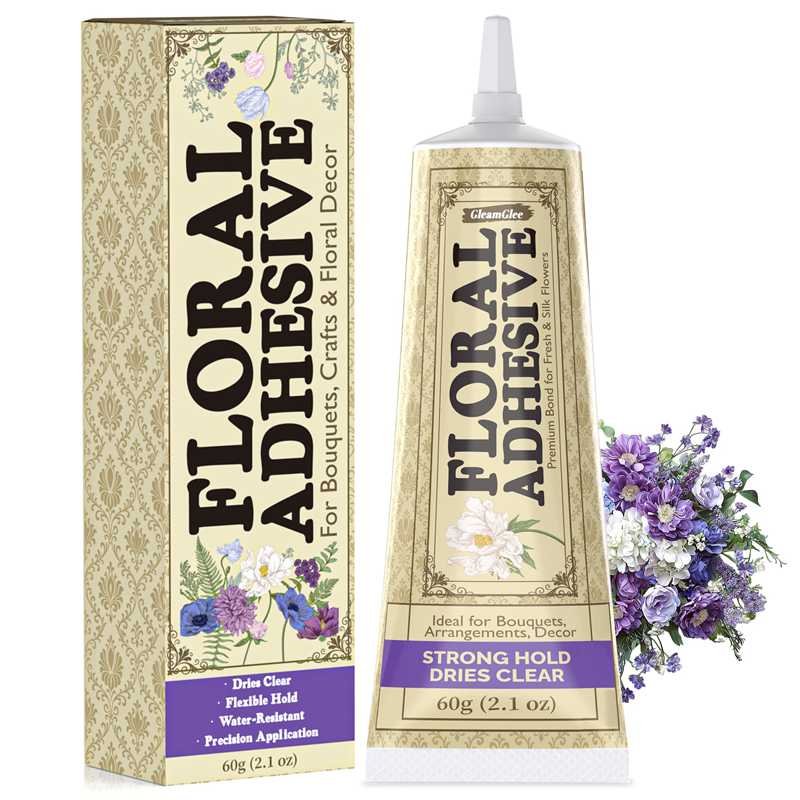
Floral Adhesive for Wedding Decorations – Strong & Invisible
Clear waterproof flower glue for bouquets, corsages, boutonnieres, flower crowns and refined wedding floral details requiring controlled, discreet bonding.
- 60ml / 2.1 fl oz liquid floral adhesive for fresh flowers and mixed floral crafts.
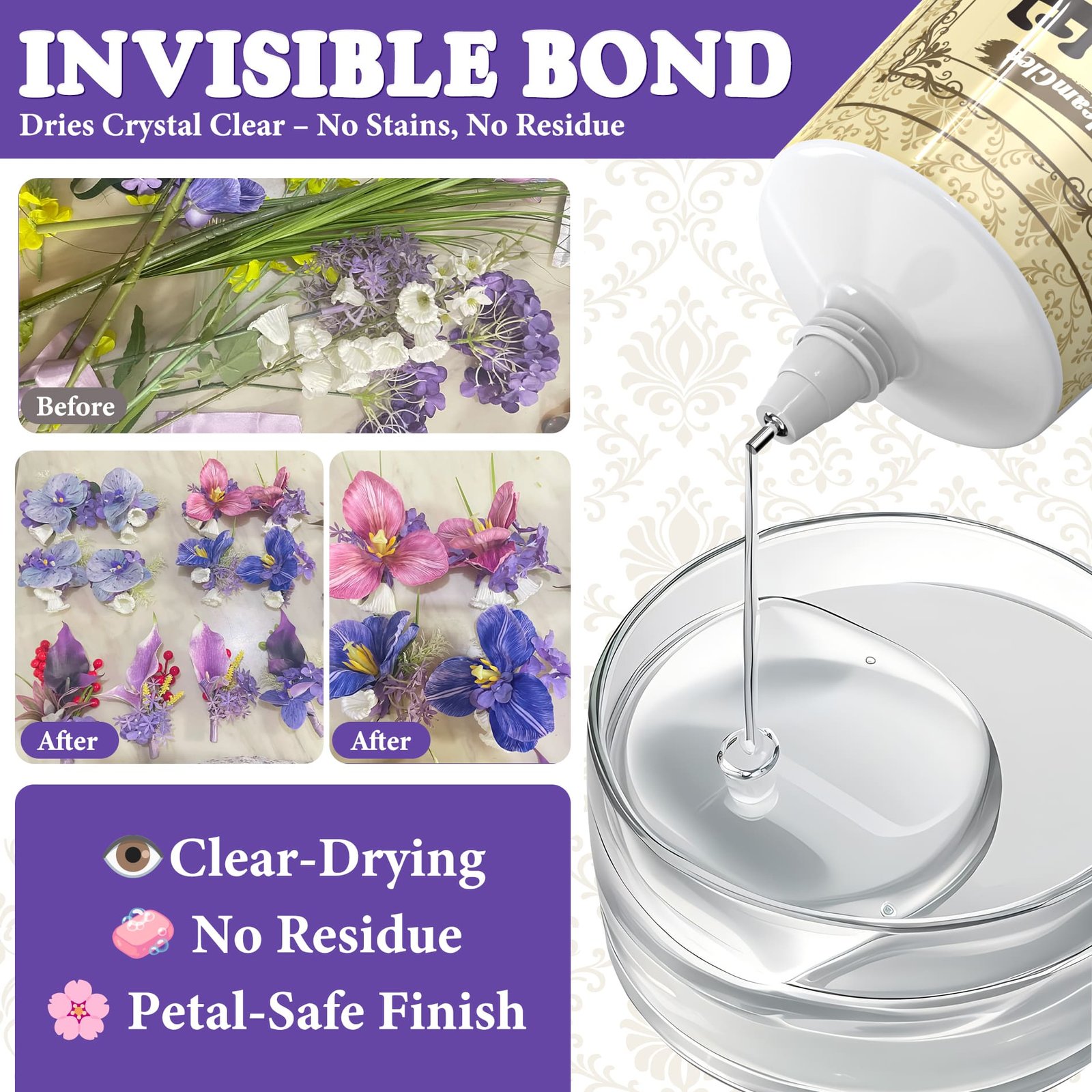
- Clear-drying formula helps reduce distracting glue marks on visible floral details.
- Strong, flexible hold supports arrangements exposed to handling, movement and transport.
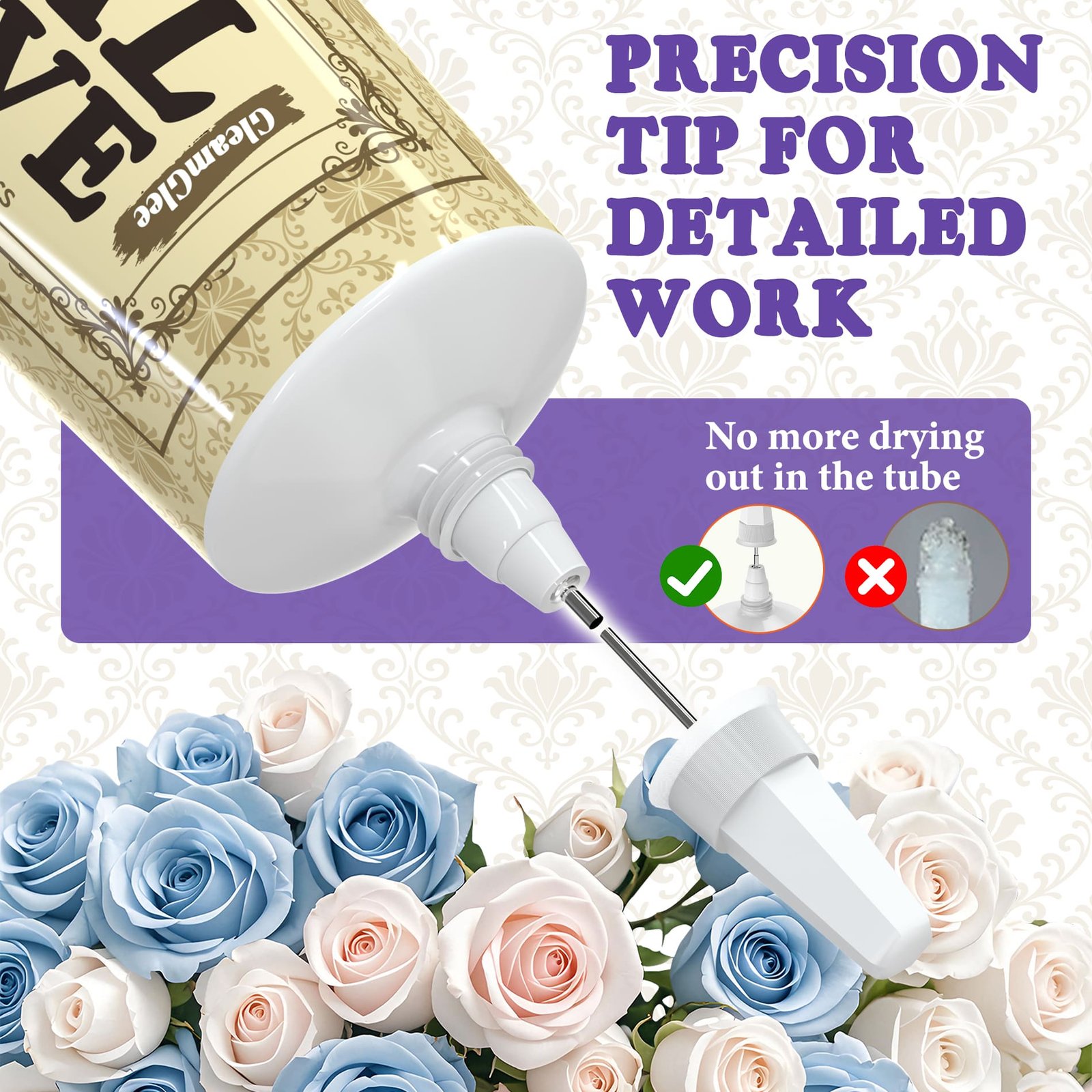
- Precision metal tip places small glue dots around petals, stems, greenery, ribbon and floral foam.
- No glue gun, heat or pins required for many delicate detail applications.

What Makes Floral Adhesive Suitable for Wedding Decorations?
Wedding flowers need controlled bonding that supports delicate materials, visible details, moisture exposure and movement without creating bulky or distracting attachment points.
Reliable Floral Hold
Wedding arrangements rarely remain stationary. Bouquets are carried, boutonnieres move with jackets, wrist flowers bend with the wearer, and centerpieces travel from a floral studio to the venue. A suitable adhesive should form a secure bond while retaining enough flexibility for normal floral movement. GleamGlee uses a strong, flexible formula designed for flowers, stems, greenery, ribbon, foam and decorative accents. Careful placement and sufficient setting time help small floral elements remain aligned throughout preparation, transport and display.
Cleaner Visual Finish
Wedding flowers are photographed at close range, making thick glue spots, white residue and stringy adhesive especially noticeable. A clear-drying floral adhesive allows the flowers, foliage and decorative materials to remain visually dominant. The best finish comes from placing small dots beneath flower bases, behind leaves or inside material overlaps. GleamGlee combines a clear formula with a precision metal tip, giving floral makers greater control over glue quantity and placement on visible wedding details.
GleamGlee Floral Adhesive Product Facts at a Glance
Clear specifications make product selection easier before working with expensive flowers, delicate wearable pieces or time-sensitive wedding arrangements.
60ml Working Size
Each tube contains 60ml / 2.1 fl oz of liquid floral adhesive, with the package listing 60g of flower glue. The capacity supports several detail-focused wedding tasks instead of a single small attachment. A florist may use one tube across bouquet ribbon finishing, boutonniere accents, corsage assembly, flower crown details and centerpiece adjustments while controlling consumption through small-dot application.
Clear Waterproof Formula
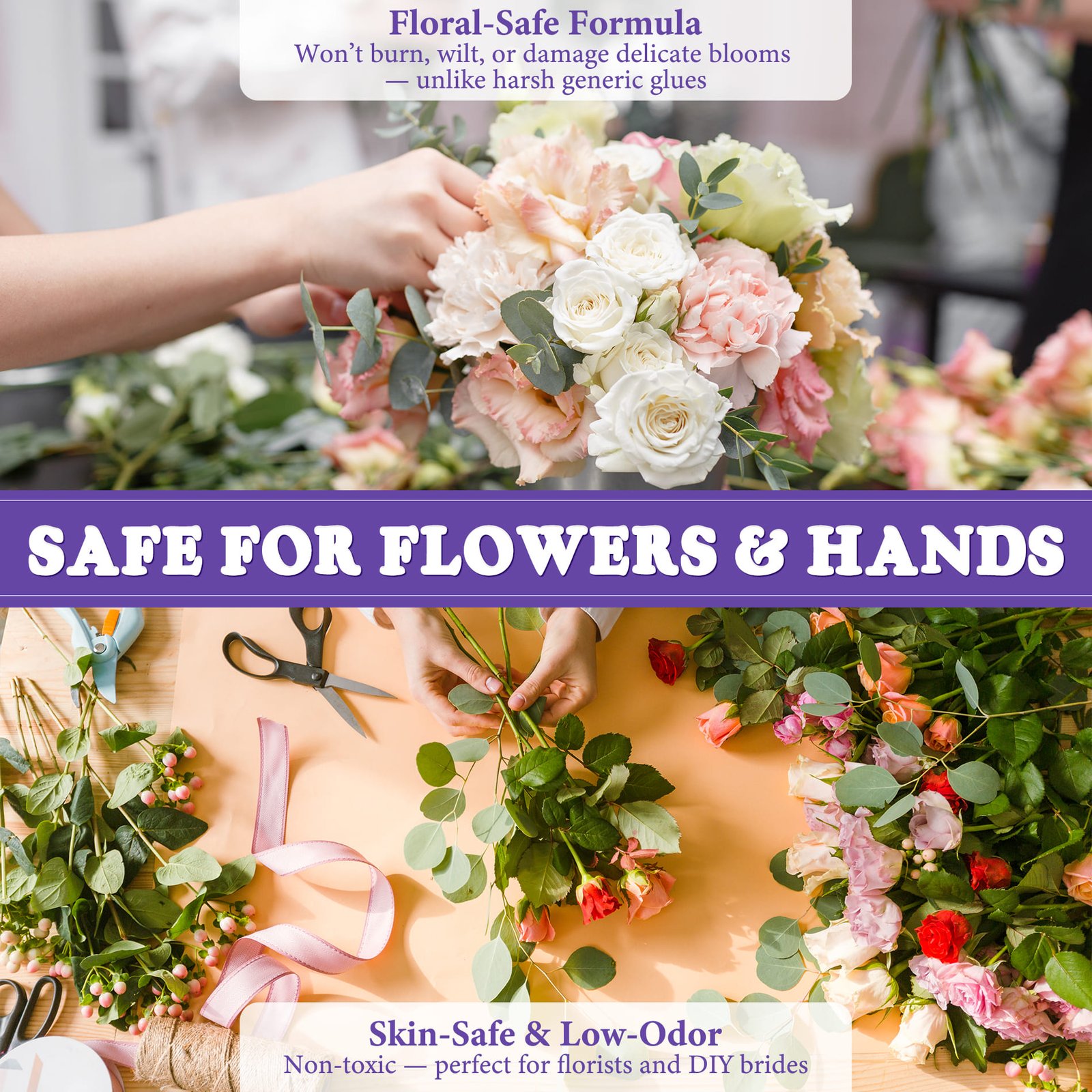
The transparent liquid formula dries clear and carries a waterproof classification. Clear drying helps create more discreet attachment points, while moisture resistance suits fresh flower work involving damp stems, greenery and floral foam. Remove standing water before gluing, since clean contact surfaces provide more consistent results than petals or stems covered with visible droplets.
Medium Viscosity
Medium viscosity creates a useful balance between flow and placement control. An overly thin liquid can travel beyond the intended area, while a very thick adhesive may form raised deposits. GleamGlee can be applied in small dots or narrow lines, helping floral makers work around compact flower bases, ribbon seams, leaf backs and narrow spaces within wearable arrangements.
Precision Metal Tip
The clog-resistant metal tip is designed for detailed placement. Narrow application reduces the need to spread glue with separate tools and helps limit excess adhesive near petals or visible surfaces. Wipe the tip after use and replace the cap securely to keep the opening cleaner for later wedding projects.
Created for Florists Wedding Makers and Event Decorators
Different wedding professionals share one requirement: floral work must arrive clean, stable and ready for close viewing throughout the event.

Wedding Florists
Wedding florists often prepare several product types from one flower order, including bouquets, boutonnieres, corsages, crowns and reception arrangements. A 60ml tube supports repeated detail work while the precision metal tip helps control adhesive around high-value blooms. Clear drying is especially useful where flower bases, ribbon wraps or greenery connections remain partially visible in photographs.

DIY Wedding Makers
DIY floral makers need a manageable method without operating a hot glue gun near delicate blooms. GleamGlee allows small, deliberate applications on flower bases, foliage, ribbon and decorative pieces. A sample arrangement made before the wedding can confirm suitable glue quantity, flower compatibility and assembly order before work begins on the final bouquet or wearable flowers.

Event Decorators
Event decorators handle centerpieces, welcome signs, table flowers, chair accents and venue touch-ups under strict setup schedules. A tube-based adhesive travels easily in a floral repair kit and can support small decorative attachments without electrical equipment. Large installations still require structural mechanics such as wire, ties, frames or approved mounting systems.

Floral Studios
Floral studios need products suitable for wedding season, prom work, graduation pieces and daily arrangement production. Clear liquid glue can serve across fresh flowers, silk blooms, dried flowers, floral foam, ribbon and selected craft surfaces. Staff training should focus on surface preparation, small-dot placement, short tack development and layered assembly for repeatable results.
Small Adhesive Problems Can Affect the Entire Floral Design
Wedding flower failures often begin with minor details: excessive glue, poor placement, damp contact points or a bonding method unsuited to the project.
Visible Glue Marks
A large adhesive deposit can remain noticeable even when the formula dries clear. Reflected light may reveal a raised patch in close photographs. Place glue beneath flower bases, behind foliage or inside material overlaps. Several small dots usually create a cleaner result than one oversized deposit.
Bulky Hot Glue
Hot glue can create thick attachment points and introduces heat near sensitive flower tissue. It remains useful for selected artificial materials and structural craft areas, but liquid floral adhesive offers a no-heat option for many small fresh-flower details, wearable pieces and ribbon applications.
Loose Floral Accents
Small blossoms, decorative picks and greenery can shift when bonded before surfaces make full contact. Prepare both areas, apply an appropriate amount, allow brief tack development when needed, then hold the materials in position. Avoid immediate handling after placement.
Lifting Ribbon Edges
Bouquet ribbon may lift when the material is under tension, dusty or loosely wrapped. Secure the wrap mechanically before using adhesive as a finishing aid. Apply a narrow line beneath the final ribbon edge, press evenly and keep the seam positioned away from the main viewing angle.
Brittle Connections
A rigid attachment may crack when a boutonniere, flower crown or wrist corsage moves. Wearable floral work benefits from a flexible bond and layered construction. Build smaller sections first instead of forcing an entire arrangement into one heavily glued connection.
Uncontrolled Flow
Excess pressure on the tube can release more adhesive than required. Begin with gentle pressure and test the flow on a disposable surface. The precision metal tip supports small dots, but control still depends on hand pressure, application angle and contact area.
Five Essential Features for Strong Invisible Wedding Floral Bonds
Successful wedding floral bonding depends on more than strength alone. Appearance, movement, moisture and application control influence the finished arrangement.
Clear Drying
A clear-drying adhesive helps avoid white or colored residue around flower connections. Clear does not mean every glue deposit becomes visually undetectable. Thin placement, hidden positioning and clean surfaces remain essential for a refined result, especially on pale petals, satin ribbon and photographed wearable flowers.
Secure Hold
The adhesive should help keep light floral elements aligned through assembly, packing and normal event handling. Bond strength depends on material condition, contact area, glue quantity and setting time. Structural or heavy components should receive additional support rather than relying only on liquid adhesive.
Flexible Bond
Bouquets, corsages and flower crowns experience bending and vibration. A flexible bond accommodates normal movement more effectively than a thick rigid mass. GleamGlee is positioned for floral details requiring a strong yet flexible hold around petals, leaves, stems, ribbon and decorative pieces.
Moisture Resistance
Fresh flowers and floral foam introduce moisture into the working environment. Waterproof product classification provides an advantage over ordinary paper-focused adhesives. Best results still require removal of visible water droplets and proper contact between the bonded materials.
Precise Application
Wedding floral details can measure only a few millimeters across. A narrow metal tip allows glue to reach compact flower bases, leaf backs and ribbon overlaps. Controlled placement also reduces waste from excessive application and limits cleanup around fragile materials.
Strong Floral Adhesive Should Move With Wedding Flowers
A secure wedding arrangement needs enough hold for transport and wear without turning every flower connection into a thick, rigid block.
Flexible Strength for Flowers Carried Worn and Transported
Wedding floral work faces several forms of movement. A bridal bouquet rotates in the hands, rests on tables and travels between locations. A boutonniere follows the movement of a jacket lapel. A wrist corsage bends repeatedly during greetings, photographs and dancing. Flower crowns follow the curve of the head and may flex during placement.

GleamGlee Floral Adhesive offers a clear, waterproof, medium-viscosity formula with strong and flexible characteristics. Careful application converts those product features into a cleaner wedding arrangement.
Bond design
A strong floral connection begins with enough clean contact area between the materials. More glue does not automatically produce a better bond. Thick deposits may extend drying time, remain visible or create a rigid raised point. Thin, controlled coverage generally suits small floral details more effectively.
Flexible assembly:
Build wearable flowers in layers. Secure the main base first, then add smaller flowers, greenery and decorative pieces. Layered work distributes movement across several connections rather than concentrating stress in one oversized glue point.
Placement strategy:
Position adhesive near the flower base, behind foliage or within ribbon overlaps. Avoid placing a wet glue mass directly across the most flexible part of a petal. Hidden placement protects the visual finish and creates a more stable contact area.
Mechanical support:
Liquid adhesive is one component of professional floral mechanics. Stems requiring shape control may still need wire. Wrapped handles may need floral tape. Large installations may require frames, ties or clamps. Choosing several compatible methods often produces a safer result than expecting one adhesive to perform every structural task.
Moisture Resistance for Fresh Flowers and Outdoor Weddings
Fresh flowers, refrigeration and outdoor venues introduce moisture variables requiring clean preparation, controlled application and an adhesive designed for floral environments.
Damp Flower Stems
Freshly conditioned flowers may retain surface moisture near trimmed stems or calyx areas. GleamGlee carries a waterproof classification and is suitable for damp-stem floral work. Remove visible droplets with a clean cloth before application. A lightly damp floral surface differs from a surface coated in standing water, which can reduce direct contact.
- Remove excess water.
- Keep contact points clean.
- Apply a small amount.
- Allow the bond to set before moving.
Chilled Arrangements
Wedding flowers are often held in cool storage before delivery. Temperature changes can create condensation when arrangements enter a warmer room. Inspect glue areas before final assembly and avoid bonding directly over visible moisture. Complete delicate wearable items with enough preparation time for the adhesive to develop tack and set before refrigeration or packing.
- Check for condensation.
- Use ventilated storage where appropriate.
- Protect fragile petals during packing.
- Avoid immediate stress after bonding.
Outdoor Wedding Conditions
Outdoor ceremonies may involve humidity, light mist, heat or changing temperatures. Waterproof floral adhesive provides moisture resistance for small floral details, but it does not replace weather planning or structural support. Protect arrangements from heavy rain, standing water and excessive heat. Test representative flowers and materials under conditions resembling the planned venue.
- Consider shade and temperature.
- Keep a repair kit nearby.
- Reinforce heavy pieces mechanically.
- Test unfamiliar materials early.
Clear Drying Keeps Wedding Flowers Visually Dominant
Transparent adhesive supports a cleaner presentation, but discreet results depend equally on glue quantity, contact location and thoughtful floral construction.
When Glue Becomes Visible
Clear adhesive may still catch light when applied in a thick bead or left on an exposed petal surface. Raised deposits can create shine, texture or a hardened edge under close photography. Good technique includes placing adhesive beneath the flower head, behind greenery or within a ribbon overlap. Use the smallest amount capable of covering the contact point and remove accidental excess before it spreads across delicate material.
- Avoid large exposed beads.
- Keep adhesive away from front-facing petals.
- Use hidden contact areas.
- Inspect the design under direct light.
Creating Discreet Connections
A more invisible-looking result comes from combining clear drying with concealed placement. Rotate each arrangement and identify its primary viewing angles before applying glue. Position attachment points toward the back, underside or interior of the design. For pale flowers, work on a sample bloom first. The precision metal tip supports controlled dots, while the medium-viscosity texture helps the adhesive remain nearer the chosen location.
- Plan viewing angles before gluing.
- Apply behind leaves or flower bases.
- Build several small contacts.
- Allow each layer to stabilize.

Precision Metal Tip Controls Tiny Wedding Floral Details
Narrow application supports cleaner flower connections, lower adhesive waste and easier access around small blooms, ribbons, leaves and wearable floral bases.
Small Glue Dots
Many wedding details require only a compact contact area. The metal tip can place a small dot beneath a flower head, along a leaf base or near a decorative accent. Begin with light pressure and increase slowly. A test dot on disposable material helps establish flow before working near valuable flowers.
- Start with gentle pressure.
- Keep the tip close to the surface.
- Avoid dragging across petals.
- Wipe the tip after use.
Narrow Working Spaces
Corsages, boutonnieres and crowns contain overlapping flowers, foliage and supporting materials. The narrow tip can reach between assembled elements without opening a wide gap or using a separate applicator. Work from the center outward, allowing earlier sections to stabilize before adding the smallest visible details.
- Build the base first.
- Add flowers in layers.
- Reach hidden attachment points.
- Avoid forcing the nozzle into petals.
Controlled Ribbon Lines
Bouquet handles and wristlet bases may need a narrow adhesive line rather than a circular dot. Hold the tube at a shallow angle and guide the tip along the hidden ribbon edge. Keep the line thin and press the ribbon evenly to prevent adhesive from being pushed beyond the seam.
- Secure ribbon tension first.
- Apply beneath the final edge.
- Press across the full seam.
- Keep glue away from exposed satin.
Medium Viscosity Balances Adhesive Flow and Placement Control
A balanced liquid texture supports small dots and narrow lines without behaving like a watery solution or an excessively heavy paste.
Reduced Unwanted Running
A very thin liquid may travel along smooth ribbon, waxy leaves or angled craft surfaces before the materials are joined. GleamGlee has a medium-viscosity texture designed for controlled floral application. Hold the work horizontally when possible and place the tip close to the contact point. Avoid applying glue while the arrangement is tilted toward an exposed petal or finished surface.
Medium viscosity does not eliminate gravity or surface variation. Smooth plastic, glass and satin behave differently from porous foam or fabric. Test unfamiliar materials and adjust glue quantity accordingly.
Cleaner Thin Coverage
An extremely thick adhesive can create raised areas beneath small flowers. A medium texture can be applied as a thin dot, short line or narrow contact patch. Spread only when the project requires wider coverage, using a disposable tool rather than touching the adhesive directly.
Thin coverage is especially useful for pale wedding flowers, narrow ribbon seams and small floral accessories. The goal is not maximum visible glue volume; the goal is enough controlled contact to hold the materials after proper setting.
Six Wedding Floral Projects for GleamGlee Adhesive
From bridal flowers to reception décor, controlled adhesive placement supports many detail areas where appearance and movement matter.

Bridal Bouquets
Use small adhesive amounts for ribbon finishing, greenery placement and selected decorative accents. Mechanical wrapping should carry the main handle tension, while glue supports clean finishing details. Position ribbon seams toward the back of the bouquet and keep adhesive away from exposed satin. Check all attachments before packing the bouquet for transport.

Wedding Corsages
Corsages combine compact flowers, leaves, ribbon and a wearable base. Assemble the base first, then add flowers from larger to smaller. Place adhesive near flower bases rather than across open petals. Allow each layer to stabilize before filling narrow gaps with tiny blossoms or greenery.

Boutonnieres
Boutonnieres require a slim profile suitable for a jacket lapel. Use wire or tape when stem support is needed, then apply floral adhesive for selected flower and foliage connections. Keep glue deposits small to avoid a thick back surface that may affect pinning or magnetic attachment.

Wrist Flowers
Wrist corsages bend repeatedly during wear. Attach flowers to a stable wristlet base and build the design in balanced layers. Flexible adhesive helps accommodate ordinary movement, but the main base must remain structurally suitable for wearing. Test the completed piece before event delivery.

Flower Crowns
Flower crowns need light materials, controlled spacing and flexible construction. Apply small dots to the underside of flower bases or foliage. Avoid large glue areas across the crown band. Work section by section and gently curve the finished crown only after the attachments have stabilized.

Table Centerpieces
Use floral adhesive for lightweight accents, ribbon, small decorative flowers, greenery and selected foam-based details. Tall or heavy centerpiece components require professional mechanics, containers and supports. Keep glue away from standing water and ensure every decorative surface is clean before bonding.
More Wedding Décor Projects Beyond Personal Flowers
Clear floral adhesive can support small decorative details throughout a venue when project weight, materials and installation requirements remain appropriate.

Welcome Sign Flowers
Attach lightweight silk flowers, dried accents, ribbon or small decorative elements to suitable sign surfaces. Heavy fresh arrangements require a secure container, frame or mounting mechanic. Test painted, acrylic and coated surfaces before applying adhesive, since finishes can respond differently.

Chair Floral Accents
Use floral adhesive for small flower or ribbon details within a mechanically secured chair arrangement. Do not rely on liquid glue alone to hold heavy flowers from chair backs. Secure the main arrangement with ribbon, ties or approved hardware, then finish small visible areas.

Cake Table Décor
Create floral accents around cake stands, table signs and decorative objects without allowing adhesive or flowers to contact edible surfaces. Work on removable décor components whenever possible. Keep all floral mechanics separate from food and coordinate placement with the cake professional.

Floral Hoops
Light artificial flowers, fabric leaves and ribbon can be bonded to hoop details after the main structural wrapping is complete. Fresh floral clusters may require wire or water sources. Apply glue where flower bases meet wrapped or suitable craft surfaces, then inspect the hoop vertically.

Wedding Favor Details
Dried flowers, silk petals, ribbon and fabric accents can decorate favor boxes, place cards or gift bags. Use very small adhesive dots to prevent marks on paper or fabric. Produce one finished sample before beginning a large batch to confirm appearance and assembly speed.

Keepsake Flowers
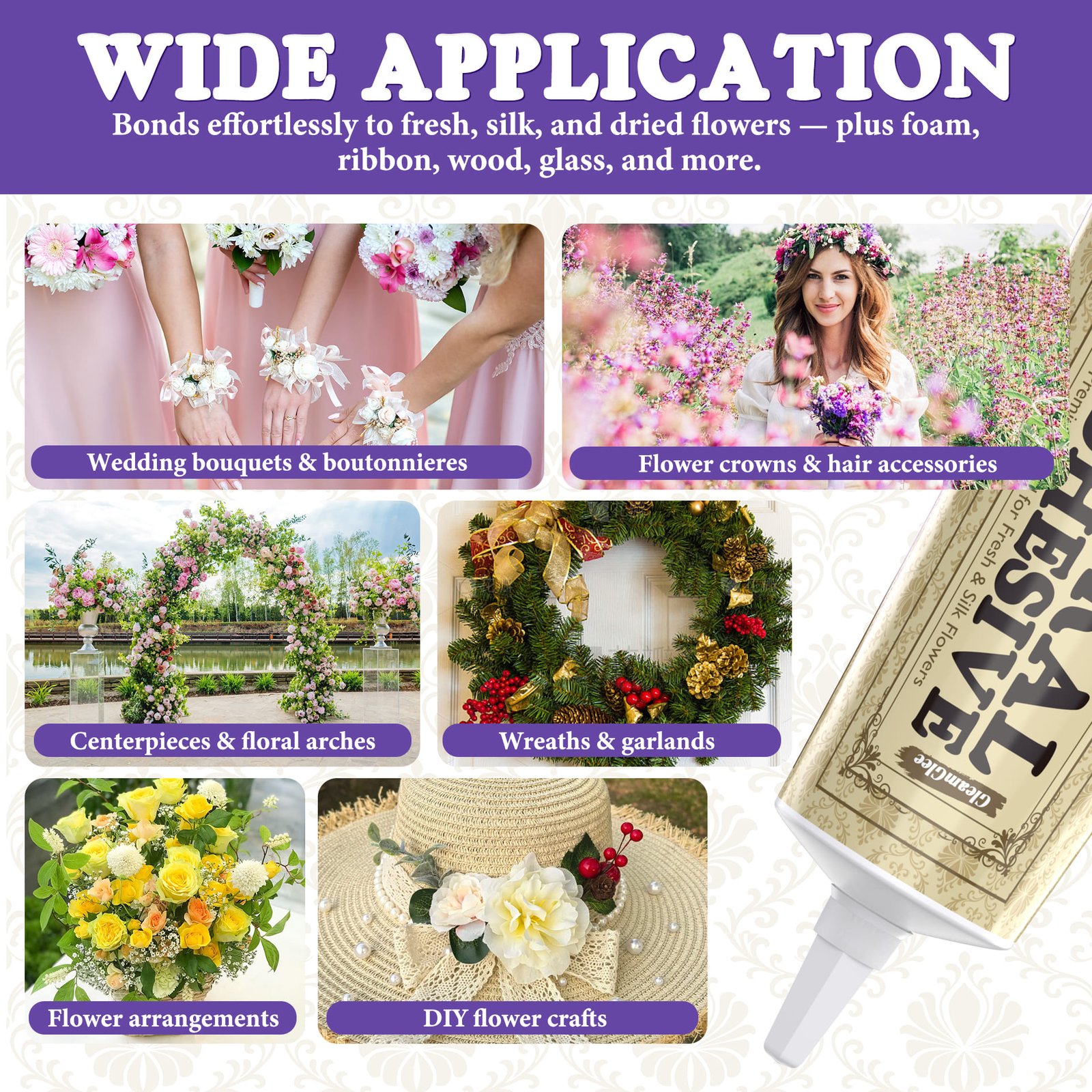
Dried bouquets and selected wedding flowers can be incorporated into frames, shadow boxes or craft displays. Fragile stems require minimal pressure and careful support. GleamGlee can bond flowers with fabric, foam, glass, ceramic and selected craft materials after compatibility testing.
Wedding Flowers and Materials Compatible With Floral Adhesive
Material condition, surface texture and project weight determine application method. Test delicate flowers and unfamiliar craft surfaces before completing final wedding pieces.
| Material | Common Wedding Use | Recommended Application | Test First |
|---|---|---|---|
| Fresh flowers | Bouquets, corsages, boutonnieres, crowns | Small dots near flower bases or hidden contact areas | Yes |
| Damp stems | Fresh arrangements and greenery | Remove visible droplets before applying | Recommended |
| Greenery | Bouquets, wearable flowers, centerpieces | Apply behind leaves or near stable stem sections | Yes |
| Floral foam | Centerpieces and flower bases | Use for lightweight details, not major structural loads | Recommended |
| Ribbon | Bouquet handles, wristlets and bows | Apply a thin line beneath the final edge | Yes |
| Silk flowers | Arches, signs and decorative crafts | Apply to clean fabric or plastic flower bases | Yes |
| Artificial blooms | Venue décor and keepsake projects | Check plastic, fabric or foam construction | Yes |
| Plastic | Picks, bases and decorative components | Clean surface and verify plastic compatibility | Yes |
| Foam | Craft flowers, bases and lightweight accents | Apply a small amount to avoid excess absorption | Yes |
| Fabric | Wristlet bases, trims and floral accessories | Test for staining on visible areas | Yes |
| Ceramic | Vases and decorative craft surfaces | Clean, dry and bond only lightweight accents | Yes |
| Glass | Frames, vases and keepsake displays | Degrease surface and test before final assembly | Yes |
Match the Adhesive Method to Each Wedding Floral Task
Fresh flowers, artificial arrangements and structural installations have different demands. Selecting the correct mechanics improves appearance, reliability and safe handling.
Fresh Floral Details
Fresh flowers contain moisture and delicate tissue. Floral adhesive works best on small, clean contact areas near flower bases, greenery and supporting materials. Remove visible water and test sensitive varieties before full production.
- Use tiny controlled dots.
- Avoid open petal faces.
- Build arrangements in layers.
- Allow setting time before packing.
Artificial Floral Crafts
Silk, fabric, plastic and foam flowers provide more stable craft surfaces but vary widely by material. Glue may absorb into fabric or sit on smooth plastic. Test first and clean molded surfaces before use.
- Identify the flower material.
- Remove dust and manufacturing residue.
- Support heavy artificial stems mechanically.
- Inspect visible areas for glue shine.
Structural Installations
Wedding arches, suspended flowers, tall centerpieces and heavy floral walls require frames, ties, wire, clamps or other professional support. Liquid adhesive should serve only as a detail method where appropriate.
- Calculate weight and movement.
- Use approved structural hardware.
- Keep adhesive away from safety-critical joints.
- Perform a venue stability check.
Floral Adhesive Versus Tape Wire Pins and Hot Glue
Every floral mechanic has a suitable role. Professional results often come from combining methods rather than forcing one product into every application.
| Method | Best Use | Visual Result | Heat Required | Flexibility | Main Limitation |
|---|---|---|---|---|---|
| Floral adhesive | Small fresh-flower details, corsages, ribbon and accents | Clear and discreet when applied thinly | No | Flexible | Requires clean contact and setting time |
| Floral tape | Stem wrapping and wire concealment | Visible unless hidden within design | No | Flexible | Does not bond every exposed decorative detail |
| Floral wire | Stem support, shaping and wearable mechanics | Usually wrapped or concealed | No | Shapeable | Requires tools, time and floral technique |
| Pins | Fast placement on selected bases and clothing | Hardware may remain visible | No | Limited | Can pierce flowers, fabric or backing materials |
| Hot glue | Artificial flowers, foam crafts and selected hard surfaces | May create thick raised deposits | Yes | Formula dependent | Heat and glue mass may be unsuitable near delicate fresh flowers |
| Ties or clamps | Arches, frames and heavy installation components | Usually concealed with flowers | No | Structural | Too large for tiny visible floral details |
Floral Adhesive Offers More Focused Flower Bonding Control
General craft glue serves many household projects, while floral adhesive addresses moisture, delicate materials, wearable movement and close-viewed flower details.
General Craft Adhesives
Craft adhesives may be formulated for paper, cardboard, wood, fabric or general decorative materials. Performance around fresh flowers depends on the individual formula, moisture resistance, drying color and flexibility. A glue suited to paper may remain white, soak into ribbon, dry too rigidly or lack an applicator narrow enough for compact corsage work.
Before using any general adhesive on wedding flowers, check:
- Drying color.
- Water resistance.
- Material compatibility.
- Heat requirements.
- Flexibility after drying.
- Applicator precision.
GleamGlee Floral Adhesive
GleamGlee is a 60ml clear waterproof liquid flower glue designed for fresh flowers and floral craft applications. Its medium-viscosity synthetic-rubber formula dries clear, forms a strong flexible hold and is delivered through a precision metal tip. Suitable project materials include flowers, damp stems, greenery, floral foam, ribbon, silk blooms, artificial flowers, plastic, foam, ceramic, glass and fabric.
Focused floral features include:
- No heat required.
- Small-dot application.
- Clear-drying finish.
- Moisture-resistant classification.
- Flexible bonding for moving arrangements.
- Controlled access to narrow floral areas.

Why Choose GleamGlee for Detailed Wedding Floral Work?
Product value comes from combining usable capacity, clear waterproof bonding, flexible performance and precise application in one tube.
Clear Waterproof Bonding
The transparent liquid formula dries clear and carries a waterproof classification. Those features suit visible wedding flowers, damp stems, greenery and foam-based arrangement details. Clean surfaces and thin application remain essential for achieving a discreet finished appearance.
- Clear liquid color.
- Waterproof product classification.
- Suitable for fresh floral details.
- Useful around mixed craft materials.
Flexible Floral Performance
Wearable flowers and bouquets experience ordinary bending and movement. GleamGlee is designed to produce a strong, flexible hold rather than a bulky hot-glue mass. Layered assembly distributes movement and supports better alignment across complex pieces.
- Suitable for corsages.
- Suitable for boutonnieres.
- Suitable for wrist flowers.
- Suitable for flower crowns.
Precision Metal Application
The narrow metal tip reaches flower bases, leaf backs and ribbon seams. Controlled flow helps reduce excess glue around delicate materials and makes the tube suitable for small details as well as narrow adhesive lines.
- Small dots.
- Narrow lines.
- Hidden placement.
- Reduced need for separate applicators.
60ml Project Capacity
A 60ml / 2.1 fl oz tube supports several wedding floral tasks. Project output varies with flower size, contact area and glue quantity, so fixed piece counts would be misleading. Small-dot application allows floral makers to allocate adhesive across many detail zones.
- Bouquet finishing.
- Personal flowers.
- Floral accessories.
- Reception detail work.
One 60ml Tube Supports Multiple Wedding Detail Areas
Project coverage depends on application size, yet a 60ml capacity provides useful working volume for more than one small floral task.
Bouquet Finishing
Use narrow adhesive lines beneath ribbon edges and small dots for lightweight decorative accents. The main bouquet structure should remain mechanically wrapped and supported. Controlled finishing reduces wasted glue and keeps visible handle surfaces cleaner.
Corsage Assembly
Corsages contain several compact connection points rather than one broad surface. Apply glue in stages as the base, main flowers, greenery and finishing accents are added. Staged assembly also reduces pressure on newly bonded pieces.
Boutonniere Details
Boutonnieres require minimal bulk. Small-dot application helps preserve a slim back profile while securing selected flowers or leaves. Wire and tape can provide stem structure, leaving adhesive to handle discreet detail connections.
Wrist Flower Work
Several small connections may be needed across a wristlet base. Build symmetrically and monitor weight distribution. A larger-capacity tube allows testing and final production without treating every adhesive drop as a limited single-use supply.
Crown Construction
Flower crowns are often assembled section by section. Controlled application across many small flower bases uses less adhesive than broad coating. Allow each section to set before rotating or curving the crown.
Venue Touch-Ups
Keep the capped tube in a florist repair kit for lightweight décor adjustments. Venue repairs should remain limited to appropriate detail work. Heavy, suspended or structural failures require proper hardware or professional reconstruction.
Professional Checklist for Selecting Wedding Floral Adhesive
Review six measurable product characteristics before applying adhesive to expensive flowers, visible ribbons or wearable arrangements prepared for an important event.
Drying Color
Confirm whether the formula dries clear, white or tinted. Clear drying is preferred for many visible wedding details, yet application thickness still affects shine and visibility. Test on pale materials under direct lighting.
Water Resistance
Fresh floral work may include moisture from stems, foam and refrigeration. Choose an adhesive with suitable moisture resistance and remove visible droplets before application. Waterproof classification does not mean submerged arrangements require no additional planning.
Bond Flexibility
Wearable pieces and carried bouquets move during normal use. Check whether the adhesive remains flexible after setting. Flexible bonding helps reduce stress concentration around flowers and supporting materials.
Application Control
Evaluate the opening, nozzle and liquid texture. A precision tip and medium viscosity can help place smaller dots than a wide bottle opening. Test flow pressure before approaching delicate flowers.
Material Range
Review compatibility with fresh flowers, greenery, ribbon, foam, silk flowers, plastic and other project materials. Different surfaces may absorb or repel adhesive, so material testing remains important.
Working Capacity
Match tube capacity with project scale. GleamGlee contains 60ml / 2.1 fl oz, offering working volume for several wedding detail categories. Estimate glue zones rather than relying on an unsupported number of finished pieces.
How to Apply Floral Adhesive for Wedding Decorations
Four controlled steps help create cleaner bonds while reducing excess glue, misplaced flowers and rushed corrections during wedding floral production.

Prepare Contact Areas
Inspect flowers, greenery, ribbon and craft surfaces before applying adhesive. Remove loose plant tissue, dust and visible water droplets. Trim away damaged material and confirm how the pieces will meet. Dry-fit the arrangement first so hand position, viewing angle and flower direction are already planned.
- Clean the contact area.
- Remove standing moisture.
- Check material compatibility.
- Plan final orientation.

Apply Small Amounts
Keep the metal tip close to the intended contact point and use gentle tube pressure. Place a small dot beneath flower bases or a narrow line beneath ribbon edges. More adhesive may increase visibility and setting time without improving a small connection.
- Test flow on scrap material.
- Start with a tiny amount.
- Avoid front-facing petals.
- Add more only when needed.

Develop Initial Tack
Some detailed floral connections hold more easily after the adhesive has had a short period to become tacky. Follow product instructions and observe the glue texture rather than forcing wet pieces together immediately. Delicate projects benefit from assembling one section at a time.
- Keep surfaces separated briefly when needed.
- Avoid contaminating glue with debris.
- Work in a ventilated area.
- Prepare the next component while waiting.

Join and Let Set
Bring the materials together carefully and hold them in the planned position. Avoid sliding flower surfaces across one another, since movement can spread adhesive beyond the contact point. Support the piece while the bond stabilizes and postpone packing, bending or wearing until adequate setting has occurred.
- Press without crushing petals.
- Maintain alignment.
- Support heavy sections.
- Allow suitable setting time.
Where to Place Adhesive on Common Wedding Flowers
Correct glue placement protects visible surfaces and creates stable contact near flower bases, foliage, ribbon overlaps and supportive floral mechanics.
Bridal Bouquet
Apply adhesive beneath the final ribbon edge, behind lightweight foliage or at selected accent connections. Avoid coating the bouquet handle broadly. The main stems and wrap should provide structural stability before decorative glue is added.
- Hide the ribbon seam.
- Keep front-facing petals clean.
- Inspect the bouquet from every angle.
- Allow finishing details to set before packing.
Pin-On Corsage
Place adhesive near flower bases and on stable leaf or backing materials. Arrange flowers from the base outward, keeping the rear profile compact enough for the chosen attachment method.
- Secure the base first.
- Keep glue away from the pin.
- Use small layered contacts.
- Test orientation on fabric.
Boutonniere
Position tiny dots where flowers meet greenery or the wrapped stem structure. Avoid creating a broad adhesive mass behind the design, since a flat slim profile improves lapel placement.
- Maintain a narrow shape.
- Conceal wire and tape.
- Keep the stem area tidy.
- Check the finished viewing angle.
Wrist Corsage
Bond flowers to a stable wristlet base rather than relying on petal-to-petal connections alone. Distribute flowers across the base to reduce concentrated weight and support normal wrist movement.
- Test the wristlet base.
- Balance both sides.
- Build in layers.
- Flex gently after setting.
Flower Crown
Place small dots under flower bases where they meet the crown framework or wrapped band. Work around the crown in sections and protect completed areas from being compressed.
- Follow the crown curve.
- Keep adhesive beneath flowers.
- Avoid thick rigid patches.
- Check comfort before delivery.
Centerpiece
Use adhesive for lightweight flowers, greenery, ribbon and decorative accents near stable surfaces. Keep the formula away from standing water and do not use it as the sole support for tall, heavy or suspended components.
- Confirm container stability.
- Bond only clean surfaces.
- Reinforce weight mechanically.
- Inspect after transport.
Test Floral Materials Before the Wedding Production Schedule
Early testing protects valuable flowers, reveals material differences and gives the floral team enough time to refine assembly before the event date.

Test Delicate Flowers
Flower varieties differ in moisture, surface wax, petal thickness and sensitivity. Use a spare bloom from the same shipment to test adhesive quantity, placement and finished appearance. Inspect the sample after setting and again after storage under planned conditions.
- Test near the flower base.
- Avoid the main visible petal.
- Record the successful glue amount.
- Repeat after refrigeration when relevant.

Build One Sample
Complete one representative corsage, boutonniere or bouquet detail before beginning the full order. A sample reveals the real assembly sequence, material consumption, visual balance and handling requirements. Photograph the sample for staff reference during batch production.
- Confirm construction order.
- Check glue visibility.
- Measure working time.
- Review the piece from multiple angles.

Schedule Setting Time
Do not plan the first adhesive trial immediately before venue setup. Reserve time for application, stabilization, quality inspection and packing. Wearable flowers should be tested gently after the bond has set rather than being flexed while adhesive remains wet.
- Add time for layered assembly.
- Avoid rushed packing.
- Keep completed pieces supported.
- Recheck after transport.

Pack a Repair Kit
A wedding-day floral kit can include capped floral adhesive, clean wipes, scissors, tape, wire, spare ribbon, pins and replacement flowers. The kit allows appropriate detail corrections without treating adhesive as the only repair method.
- Protect the metal tip.
- Keep the cap secure.
- Store away from heat.
- Assign repairs to trained staff.
Avoid Six Common Wedding Floral Adhesive Mistakes
Careful preparation and controlled application prevent most problems involving visible glue, weak contacts, shifted flowers and unsuitable structural use.
Applying Excess Glue
Large deposits can spread beyond flower bases, remain glossy or require more setting time. Begin with a small dot and add more only when contact coverage remains insufficient. The metal tip is designed for control, but gentle pressure is still necessary.
Gluing Exposed Petals
Front-facing petals offer poor hiding places and may be delicate. Position adhesive near the calyx, stem, leaf back or supporting base. When petal contact is unavoidable, test a spare flower and use the smallest possible amount.
Ignoring Surface Moisture
Waterproof adhesive still needs direct contact with the bonded materials. Visible water, dust or plant debris can interfere with placement. Blot excess moisture and remove loose tissue before applying glue to fresh flowers or stems.
Moving Flowers Too Soon
Repositioning a connection repeatedly can spread adhesive and weaken alignment. Dry-fit the arrangement before gluing, then support the flower while the bond stabilizes. Complete nearby work without pressing against newly assembled sections.
Skipping Compatibility Tests
Silk, plastic, foam, fabric, glass and coated surfaces behave differently. One material may absorb adhesive while another remains smooth. Test unfamiliar combinations on hidden areas before producing an entire wedding order.
Supporting Heavy Structures
Liquid floral adhesive should not carry arches, suspended flowers, heavy vases or safety-critical installations alone. Use frames, ties, wire, clamps or professional hardware for structural weight, reserving glue for suitable finishing details.
GleamGlee Floral Adhesive Technical Product Specifications
Review the confirmed product format, capacity, formula characteristics and compatible floral materials before purchasing for wedding or event production.
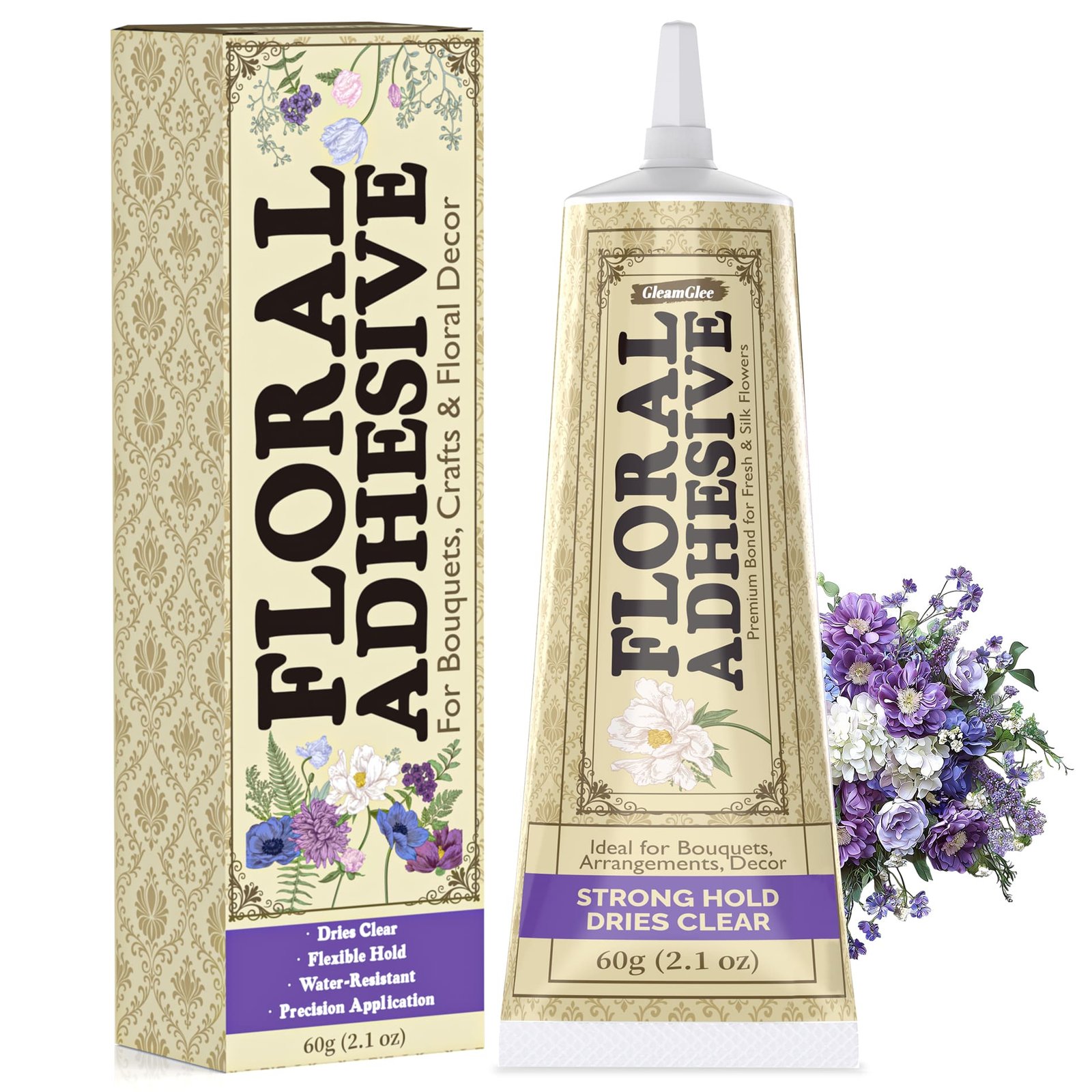
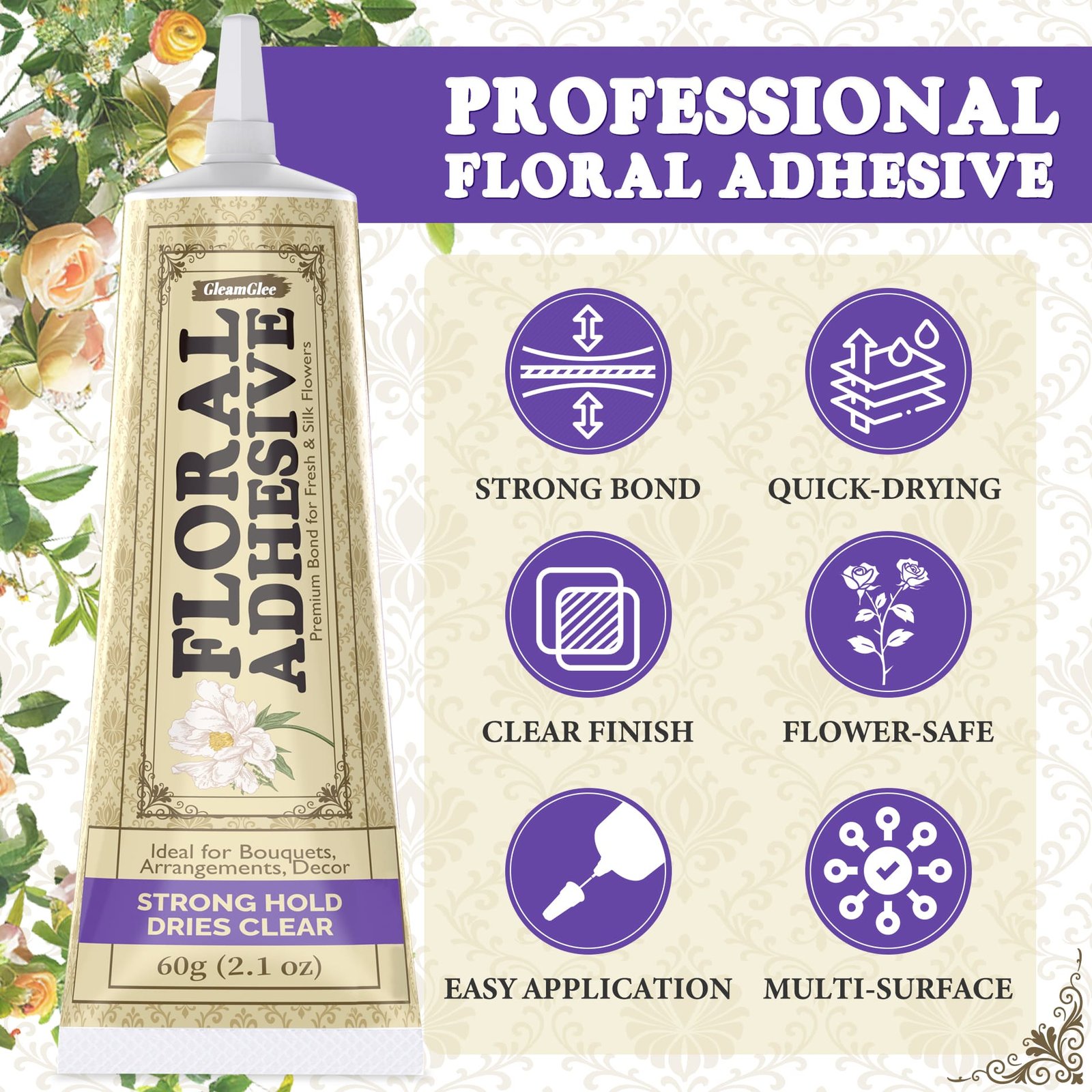
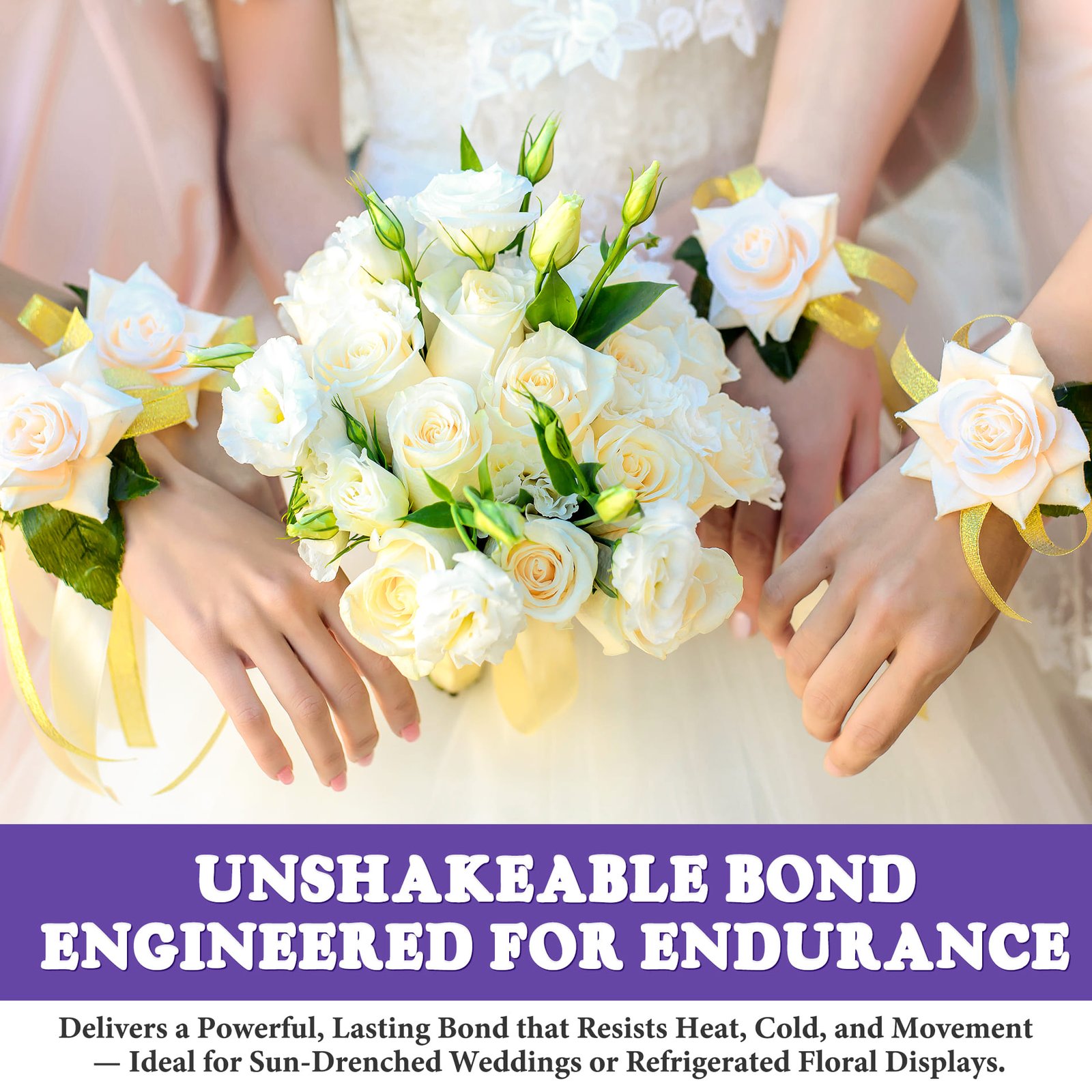
| Specification | Product Detail | Specification | Product Detail |
|---|---|---|---|
| Brand | GleamGlee | Material Type | Synthetic Rubber |
| Product Name | Floral Adhesive / Liquid Flower Glue | Viscosity | Medium |
| ASIN | B0FJLSRXJG | Water Resistance | Waterproof |
| Net Capacity | 60ml / 2.1 fl oz | Listed Features | Dries Clear, Fast Drying, Strong, Washable |
| Package Content | Flower Glue 60g | Applicator | Precision clog-resistant metal tip |
| Package Quantity | 1 tube | Floral Uses | Bouquets, corsages, boutonnieres, wrist flowers, crowns, arrangements and centerpieces |
| Product Form | Liquid | Compatible Materials | Fresh flowers, damp stems, greenery, floral foam, ribbon, silk flowers, artificial blooms, plastic, foam, ceramic, glass and fabric |
| Container Type | Tube | Application Style | Small dots, narrow lines and controlled hidden placement |
| Adhesive Color | Clear | Structural Limitation | Not a replacement for frames, wire, ties or hardware on heavy installations |
Wedding Floral Adhesive Frequently Asked Questions
Find direct guidance on fresh flowers, clear drying, moisture, wearable arrangements, application quantity, material testing and professional floral mechanics.
1. Can GleamGlee Floral Adhesive be used on fresh flowers?
Yes. GleamGlee is designed for fresh flowers, bouquets, corsages, boutonnieres, wrist flowers, crowns and floral arrangements. Remove visible water droplets and loose plant material before application. Place small dots near flower bases or hidden contact areas. Test delicate or unfamiliar varieties before beginning full wedding production.
2. Does the floral adhesive dry completely invisible?
The formula dries clear, helping create a cleaner and more discreet appearance. Clear drying does not make an oversized deposit physically disappear. Thin application and hidden placement beneath flower bases, leaves or ribbon overlaps produce the least noticeable result.
3. Is GleamGlee Floral Adhesive waterproof?
The product carries a waterproof classification and suits floral work involving fresh flowers, damp stems and moisture-prone environments. Remove standing water before bonding. Heavy rain, soaking or submerged arrangements may require additional protection and appropriate structural mechanics.
4. Can it be used for wedding corsages?
Yes. The precision metal tip supports small glue dots around corsage flowers, greenery, ribbon and suitable wristlet or backing materials. Build the base first, add flowers in layers and allow each section to stabilize before handling or wearing.
5. Is it suitable for wedding boutonnieres?
Yes. GleamGlee can support small flower and greenery connections in boutonnieres. Wire and floral tape may still be useful for stem shaping and structural support. Keep glue deposits compact to maintain a slim, comfortable back profile.
6. Can it bond flowers to ribbon?
Yes. GleamGlee is suitable for ribbon and floral materials. Apply a thin line beneath a hidden ribbon edge or a small dot at a decorative connection. Test satin, dyed or delicate ribbon first to check for visible marks.
7. How much adhesive should be applied?
Begin with the smallest dot or line capable of covering the contact area. Excess glue may spread, remain visible or require longer setting. Test the flow on disposable material and add adhesive gradually rather than applying one large deposit.
8. Should flower materials be tested before use?
Yes. Flower varieties, plastics, fabrics, foams and coated surfaces respond differently. Test a spare flower or hidden material area before producing final wedding pieces. Testing is especially important for delicate petals, pale ribbon and unfamiliar artificial materials.
9. Can floral adhesive replace wire and floral tape?
Not for every task. Floral adhesive is valuable for small visible details and selected flower connections. Wire provides shaping and support, while floral tape wraps stems and mechanics. Large or heavy structures also require frames, ties, clamps or other professional hardware.
10. How should the metal applicator tip be stored?
Wipe adhesive residue from the metal tip after use and replace the cap securely. Store the tube according to the packaging instructions, away from excessive heat and direct sunlight. A clean tip supports more controlled flow during later floral projects.
Request Floral Adhesive Supply for Wedding Projects
GleamGlee welcomes inquiries from flower shops, wedding florists, event teams, craft retailers and distributors seeking floral adhesive for recurring production or seasonal demand. Share the estimated order quantity, destination country, preferred delivery date, sales channel and any packaging requirements. Project information helps our team understand whether the request involves standard GleamGlee products, retail supply, event use or larger commercial cooperation.
For a faster quotation, include the number of units required, expected order schedule and intended market. Files such as packaging references, purchase plans or product lists can be uploaded with the inquiry. Final pricing, lead time, shipping method and available cooperation options depend on quantity, destination and order requirements.