Skip to content

Eco-Friendly Tips for Using Floral Adhesive: A Practical Guide to Lower-Waste Floral Design
Your trusted adhesives glue & cleaner manufacturer

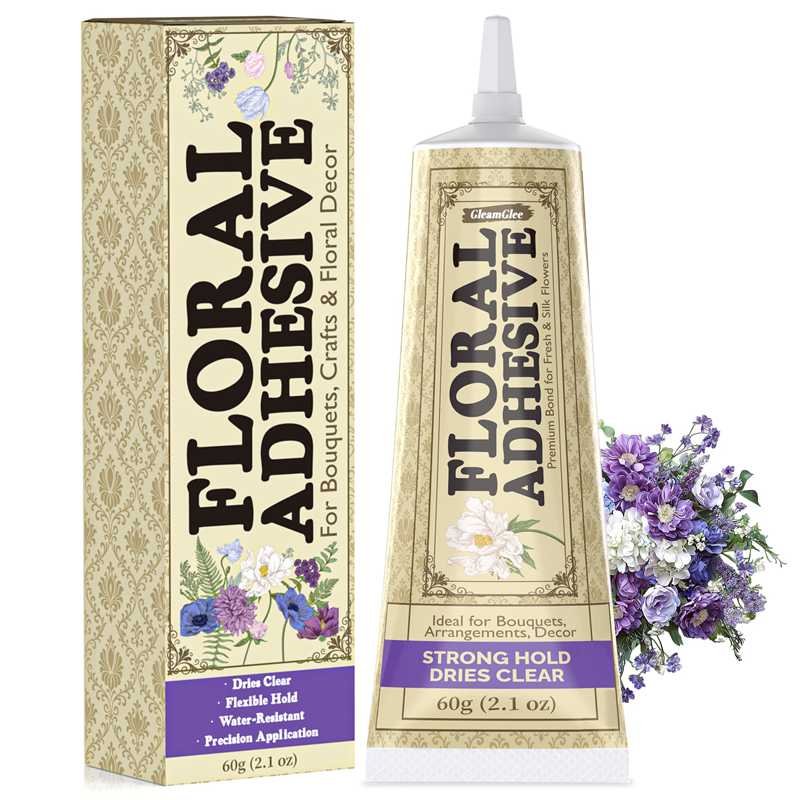
Floral adhesive has become an important tool for professional florists, wedding designers, event decorators, flower shops, and home craft enthusiasts because it can secure fresh flowers, preserved blooms, ribbons, lightweight decorations, and intricate floral details without relying entirely on bulky mechanical supports. However, using floral glue in a more environmentally responsible way involves far more than choosing a package decorated with leaves or carrying a broad “green” claim. The quantity used, the accuracy of application, the durability of the bond, the packaging format, and the way an arrangement is dismantled after use can all influence total material waste.
A practical approach to lower-waste floral design starts with better decisions at the worktable. Applying only the amount of adhesive required for a stable bond, combining glue with reusable mechanics, protecting delicate flowers from unnecessary damage, and storing opened adhesive correctly can reduce discarded flowers and partially used containers. For professional floral studios, these small improvements become especially meaningful when repeated across dozens of bouquets, corsages, boutonnieres, centerpieces, flower crowns, retail displays, and seasonal arrangements produced throughout the year.
Sustainability also needs to be considered across the full life of the floral design. A flower arrangement may contain botanical material, wire, ribbon, plastic components, vessels, artificial flowers, packaging, and adhesive, each with a different end-of-life pathway. Choosing materials that can be separated, reused, recycled, or composted where appropriate gives florists more realistic options after an event. The goal is not necessarily to eliminate floral adhesive, but to use it precisely where it provides a genuine functional advantage and avoid unnecessary material consumption elsewhere.
What Makes Floral Adhesive More Eco-Friendly?
A floral adhesive can support lower-waste floral design when its environmental benefits are specific and its performance helps prevent unnecessary material loss. Formulation matters, but packaging efficiency, accurate dispensing, storage stability, bond reliability, and end-of-life handling matter as well. A responsibly used adhesive can reduce waste when it prevents failed arrangements, excessive application, and premature disposal of valuable flowers or decorative materials.
Is Water-Based Floral Glue Always Eco-Friendly?
Water-based floral adhesive is sometimes presented as automatically environmentally friendly, but the two terms describe different things. “Water-based” generally refers to the carrier system used in a formulation and does not explain every polymer, resin, preservative, stabilizer, modifier, or functional ingredient that remains after the water evaporates. A water-based system may offer useful advantages for certain floral applications, but its complete environmental profile still depends on formulation, packaging, manufacturing, transportation, application efficiency, and disposal.
The same principle applies to terms such as low odor, natural, biodegradable, recyclable, and plant-based. Each phrase describes a specific characteristic and should not be interpreted as proof that the entire product has a low environmental impact. Low odor, for example, is useful for people working for long periods in enclosed floral studios, yet odor alone does not determine biodegradability or compostability. Likewise, recyclable packaging provides limited benefit if the packaging material is not accepted by local recycling systems.
For florists, a more useful evaluation combines formulation information with practical performance. An adhesive that can be applied in very small amounts, bonds correctly on the first attempt, remains stable during storage, and allows most of the contents to be used before the package is discarded may reduce waste more effectively than a poorly controlled product carrying broad environmental language. Looking at the complete workflow gives a more realistic picture than judging a floral glue from a single attribute.
| Environmental Term | What It Can Indicate | What It Does Not Automatically Prove | Practical Question |
|---|---|---|---|
| Water-based | Water is a major formulation carrier | Biodegradable or compostable | What remains after drying? |
| Low odor | Lower perceived odor during use | Low total environmental impact | Is technical information available? |
| Biodegradable | Breakdown can occur under defined conditions | Home compostability | Under which conditions does it degrade? |
| Compostable | Designed for a defined composting environment | Acceptance in every compost system | Home or industrial composting? |
| Recyclable packaging | Material may enter recycling | It will actually be recycled locally | Is the material accepted in local collection? |
| Precision dispensing | Better control over applied quantity | Environmental certification | Does the package reduce over-application? |
Which Environmental Claims Should You Check?
Specific environmental claims are more useful than broad expressions such as “green,” “earth friendly,” or “planet safe.” A statement explaining recycled packaging content, reduced solvent use, water-based formulation, defined compostability, or a measurable packaging improvement gives readers something concrete to evaluate. Vague claims may sound appealing but do not explain which part of the product has changed, how large the improvement is, or whether the benefit applies to the adhesive, the packaging, or only one component.
It is also important to evaluate adhesive and packaging separately. A floral glue might be supplied in a container containing recycled material while the formulation remains conventional, or a lower-solvent formulation may still be packaged in a format that is difficult to recycle. Neither situation makes the product automatically good or bad, but separating the two categories helps florists and commercial purchasers compare products more accurately instead of allowing one positive feature to represent the entire environmental profile.
Useful information can include product specifications, relevant Safety Data Sheets, packaging material identification, storage instructions, disposal guidance, and credible certifications where they genuinely apply. Professional purchasers should also ask whether environmental claims remain consistent across normal production batches and whether the manufacturer can provide supporting documentation. Clear technical information is particularly important for private-label products because retailers and brand owners may later repeat those environmental statements on their own labels, websites, and promotional materials.
How Does the Adhesive Life Cycle Affect Sustainability?
The environmental impact of floral adhesive begins long before the glue reaches a florist’s workbench. Raw materials have to be produced and transported, packaging has to be manufactured, the formula must be processed and filled, finished goods are shipped and stored, and the adhesive is eventually used and discarded. Looking at these stages together makes it easier to understand why application efficiency and storage performance are just as relevant as formulation when evaluating lower-waste floral practices.
Application becomes especially important in professional floral production because adhesive is normally consumed through hundreds of small operations rather than one large application. A wedding studio may prepare bouquets, wristlets, boutonnieres, flower crowns, centerpieces, table accents, gift decorations, and photo-backdrop details for a single event. If each individual bond receives substantially more adhesive than necessary, the accumulated waste can become meaningful even though every single application initially appears insignificant.
Packaging performance also influences the amount of adhesive that ultimately becomes waste. A tube that remains usable after repeated opening, resists leakage during transportation, and dispenses predictably through its intended shelf life is less likely to be thrown away with a large quantity remaining inside. Similarly, a package that is too large for occasional users may leave substantial unused product, while very small packages can create unnecessary packaging consumption for high-volume floral studios.

How Can You Use Less Floral Glue Without Losing Hold?
The most effective way to reduce floral glue consumption is to apply adhesive only where two materials actually need to connect. A small, accurately placed quantity can often create a cleaner and more reliable joint than coating a broad surface. Prepare the arrangement first, identify the real contact area, dispense with control, and allow the bond to develop according to the product instructions before deciding whether additional adhesive is necessary.
How Much Floral Adhesive Do You Really Need?
There is no universal milliliter amount that works for every flower because bonding requirements change according to flower size, stem structure, surface material, adhesive viscosity, contact area, moisture, movement, and the load placed on the finished joint. A preserved petal attached to a greeting card needs far less adhesive than an artificial bloom secured to a decorative installation. The useful target is therefore sufficient coverage of the contact area rather than coverage of the entire flower.
When detailed floral work is involved, it is usually better to begin with the smallest controlled amount that can effectively wet the bonding point. If a flower still twists or leans after placement, the problem may be mechanical rather than adhesive-related. A stem may be too long, the flower head may be too heavy, the attachment angle may be unstable, or additional wire support may be required. Correcting those structural issues often improves reliability without increasing glue consumption.
This method becomes particularly valuable in repetitive event production. When a studio creates dozens of similar boutonnieres, corsages, flower crowns, chair decorations, or gift-box accents, standardizing the bonding location can improve consistency across the entire order. Team members can repeat the same application method instead of applying different quantities based on personal judgment, reducing oversized beads, unnecessary corrections, and variation in the appearance of finished pieces.
Which Glue Points Reduce Waste?
The most efficient bonding point is usually hidden, structurally useful, and small enough to avoid affecting the visible floral surface. On a boutonniere, that may be the trimmed flower base where it meets the supporting structure. On a flower crown, it may be a narrow intersection between the bloom and a wire or ribbon framework. On a wreath, the effective contact area may be the point where the flower naturally rests against the supporting frame.
Dry-positioning floral materials before applying adhesive is one of the simplest ways to reduce product waste. Place each flower in its intended location, evaluate its direction, height, surrounding foliage, and visual balance, and identify exactly where the surfaces meet. Only after these details have been confirmed should adhesive be dispensed. This prevents a common problem in which glue is applied too early and then transferred across petals or ribbons while the designer repeatedly changes the flower’s position.
Accurate contact-point planning also protects expensive or visually sensitive materials. Pale flowers, luxury ribbons, acrylic surfaces, polished glass, preserved blooms, and wedding accessories can be difficult to clean once adhesive reaches an exposed area. Even transparent glue can create visible texture or reflect light in close-up photography when applied too heavily. A smaller hidden attachment point protects both appearance and material value while reducing unnecessary adhesive use.
How Can a Precision Nozzle Reduce Overuse?
A precision nozzle helps users control exactly where adhesive leaves the package and how much reaches the bonding surface. This is especially useful for floral crowns, corsages, boutonnieres, preserved-flower artwork, miniature wreaths, floral jewelry, shadow boxes, greeting cards, ribbon details, gift packaging, and artificial-flower repairs where the intended attachment point may be only a small fraction of the visible flower.
A narrow metal tip can reach recessed areas behind petals, beneath flower heads, or between decorative layers without forcing adhesive across surrounding surfaces. Better control reduces the need to wipe away excess glue and can prevent contamination of nearby flowers, fabrics, or tools. It also supports a cleaner finish, which is important for wedding flowers and other designs that may be viewed or photographed at close range throughout the day.
Nozzle maintenance is equally important because dried adhesive around the opening can change the dispensing pattern. When a partially blocked tip forces users to squeeze harder, the result may be an unexpected burst of adhesive rather than a controlled drop. Cleaning the dispensing area according to the product instructions, replacing the cap promptly, and storing the package correctly helps maintain predictable flow throughout the usable life of the container.
Do More Glue and Stronger Bonds Mean the Same Thing?
Using more glue does not automatically create a stronger floral bond. Adhesion depends on the chemistry of the formula, compatibility with the surfaces, cleanliness, contact area, moisture conditions, curing behavior, load direction, and movement after assembly. Once the useful contact surfaces are adequately covered, applying a thick mass of additional adhesive may provide little structural benefit while increasing drying time, visible residue, rigidity, and material consumption.
Excess glue can be particularly problematic in wearable floral pieces. A thick bond around a ribbon, flower stem, wristlet, boutonniere base, or headpiece may make the finished design stiff and uncomfortable. It can also squeeze onto visible petals or create a hard edge where flexible botanical material meets a rigid base. In these situations, the increased quantity may actually reduce the quality of the finished piece instead of strengthening it.
Experienced florists generally treat adhesive as one part of the overall mechanics rather than as a replacement for proper structure. A heavy flower may require wire support, a shorter stem, a more stable base, or a revised attachment angle. Once the structural issue has been solved, only a relatively small amount of adhesive may be necessary to hold the intended surfaces together and prevent unnecessary movement.
Which Floral Projects Need Adhesive—and Which Do Not?
Floral adhesive is especially useful for small flowers, short stems, ribbons, decorative accents, wearable arrangements, and detailed craft elements that are difficult to secure with traditional mechanics. It may be unnecessary when reusable frames, florist wire, flower frogs, natural-fiber ties, or the arrangement’s own structure already provides sufficient support. Choosing the simplest effective mechanic often reduces both adhesive use and mixed-material waste.
Do Corsages and Flower Crowns Always Need Glue?
Corsages, boutonnieres, wristlets, floral jewelry, headpieces, and flower crowns can be created with several different mechanics, and adhesive does not need to secure every component. Small flowers and decorative accents often work well with glue because their short stems can be difficult to wire or tape neatly. Larger flower heads may still benefit from mechanical support when their weight creates leverage that could pull them away from the base.
A hybrid approach can therefore offer better results than choosing only adhesive or only wire. A floral crown may use wire or ribbon as its structural framework while small blooms are glued into lightweight finishing positions. A boutonniere may use wire to control a heavier flower and adhesive for small accent flowers or leaves. This method allows each material to perform the job it handles most efficiently instead of using more of one material to compensate for another.
Comfort also matters in wearable floral design. Too much wire can make a piece heavy, while thick layers of tape or adhesive can create stiffness around the wearer. Well-balanced mechanics help corsages, crowns, boutonnieres, and floral jewelry remain lightweight and flexible for several hours of wear. The most refined designs generally achieve security with the minimum amount of visible structural material necessary for the flower type and intended movement.
Which Floral Mechanics Can Replace Adhesive?
No single floral mechanic can replace adhesive in every project because different systems solve different structural problems. Florist wire is useful for reinforcing weak stems, controlling heavy flower heads, and positioning components precisely. Reusable chicken wire can support large quantities of stems in vases and centerpiece containers, while kenzans and flower frogs provide mechanical anchoring without permanently bonding flowers to the base.
Natural-fiber ties can work well in wreaths, rustic arrangements, stem bundles, and designs where visible fastening contributes to the aesthetic. Reusable clamps, stands, frames, mesh structures, and vessel inserts can handle much of the structural load in arches, retail displays, restaurant arrangements, hotel installations, and event décor. When these components can be recovered after an event, they may be used repeatedly instead of being replaced for every project.
| Floral Mechanic | Typical Uses | Reuse Potential | Separation After Use | Common Limitation |
|---|---|---|---|---|
| Floral adhesive | Corsages, crowns, ribbons, small details | Low | Often difficult once bonded | Creates mixed-material components |
| Florist wire | Stem reinforcement and positioning | Medium to high | Usually straightforward | Must be removed before composting |
| Chicken wire | Centerpieces and vessel mechanics | High | Easy when designed for retrieval | Not suitable for tiny decorative attachments |
| Flower frog / kenzan | Vase and container arrangements | Very high | Very easy | Primarily suitable for stem-based designs |
| Natural-fiber ties | Wreaths, bundles, rustic mechanics | Medium | Usually easy | Limited precision for miniature work |
| Floral tape | Wired stems and finishing | Low | Often difficult | Many types contain synthetic materials |
How Can You Combine Glue With Reusable Mechanics?
Large floral arrangements are often more efficient when reusable mechanics handle structural weight and adhesive is reserved for decorative finishing. A centerpiece can rely on a reusable vase and flower frog to support the majority of the stems while small accents are glued into positions that cannot be reached easily by natural stems. The same principle can be used for arches, store displays, hotel installations, table décor, and temporary event structures.
Wearable flowers benefit from similar separation of roles. A reusable comb, headband, wristlet, or framework can support the entire piece, heavier blooms can be wired where needed, and small decorative flowers can be attached with carefully controlled adhesive. This approach keeps the finished design relatively light and reduces the amount of glue required to hold weight that should have been managed structurally.
Combining mechanics can also make arrangements easier to dismantle after use. When the main frame remains separate from most botanical materials, it can be collected, cleaned, stored, and used again. Adhesive then remains limited to the detailed areas where permanent attachment provides a clear functional advantage. Designing in this way supports both professional efficiency and more realistic material recovery after events.
Are Glue-Free Designs Always More Sustainable?
A design without floral glue is not automatically a low-waste design. Replacing a few small adhesive points with large quantities of disposable plastic tape, synthetic foam, cable ties, or other single-use materials can simply move the environmental burden from one product to another. The full arrangement should therefore be considered according to material quantity, durability, reuse potential, separability, and available disposal options.
Reusable mechanics provide the greatest benefit when they are genuinely recovered and used again. A durable metal flower frog, frame, clamp, or vessel that is returned to the studio after every event can serve dozens or hundreds of arrangements. The same component loses much of that potential value if it is discarded after one use. Sustainable floral design therefore depends partly on operational systems, not only on the initial choice of materials.
Design simplicity also improves end-of-life handling. Arrangements containing fewer permanently connected materials are generally easier to dismantle. If flowers, wire, ribbon, artificial decorations, containers, and packaging can be separated without cutting through layers of adhesive and tape, the florist has more realistic options for composting botanical waste, recovering metal, reusing containers, storing artificial flowers, and recycling appropriate packaging.

How Do You Protect Fresh Flowers While Using Adhesive?
Protect fresh flowers by choosing an adhesive designed for floral applications, applying only the amount needed, and keeping the bond on hidden structural areas rather than broad petal surfaces. Position flowers before gluing, test delicate or valuable varieties when necessary, and allow the adhesive to stabilize before repeatedly moving the arrangement. Careful application protects flower appearance while reducing replacement blooms and wasted materials.
Is Floral Adhesive Safe for Fresh Flowers?
An adhesive specifically developed for floral applications is generally more appropriate for fresh botanical work than a random household, construction, or general craft adhesive. Fresh flowers contain moisture, petals may be extremely delicate, and arrangements can experience refrigeration, transportation, outdoor humidity, or several hours of movement during an event. The adhesive therefore needs to perform under conditions that ordinary craft glues may not have been designed to handle.
Product instructions remain important because floral adhesive formulations differ. One formula may be designed to work effectively under cool storage conditions, while another may have different recommendations for moisture, surface preparation, or setting time. A product described as waterproof after curing should not automatically be interpreted as suitable for application to a soaking-wet flower surface. Users should follow the intended application information supplied for the specific formula.
Compatibility testing is especially sensible for expensive wedding flowers, delicate cultivars, preserved flowers, pale petals, dyed botanicals, or materials treated with unfamiliar coatings. Testing one spare bloom can reveal whether the glue changes color, surface texture, flexibility, or visible appearance before the same method is repeated across an entire event order. For professional florists, this simple procedure functions as practical quality control and can prevent substantial material loss.
How Should You Prepare Petals and Stems?
Preparation should be completed before adhesive is dispensed. Remove damaged plant material, trim stems to the length required for the final design, and determine the intended position of each flower. If the bloom is already correctly oriented and the stable contact point has been identified, the glue only needs to secure a planned connection instead of becoming part of repeated experiments with height, angle, or spacing.
Bonding surfaces should be reasonably clean and free from loose material that could interfere with contact. Moisture tolerance varies among products, so excess water should be managed according to the adhesive manufacturer’s instructions. A formula may be waterproof after setting while still requiring a particular surface condition during application. Understanding this difference helps avoid failed joints and unnecessary reapplication.
Dry-positioning is especially important in bridal bouquets, flower crowns, boutonnieres, corsages, preserved-flower art, gift packaging, and visible installations. Check the direction, depth, balance, and relationship to surrounding foliage before applying glue. Removing a heavily bonded flower after assembly can damage both the bloom and the materials around it, so accurate preparation is one of the most effective ways to protect expensive floral components.
How Can You Avoid Wilting or Visible Glue Marks?
Keep adhesive away from broad visible petal surfaces whenever the design allows. The underside of a flower head, trimmed stem base, concealed ribbon overlap, hidden wire intersection, or internal support structure generally provides a cleaner bonding point. Transparent adhesive can reduce visual impact after curing, but a thick clear bead may still create shine, stiffness, or a raised texture that becomes obvious under event lighting or close-up photography.
Pale flowers, thin petals, orchids, roses, ranunculus, anemones, preserved blooms, and other highly visible materials deserve especially careful handling. A small amount of unwanted adhesive can be more noticeable on these surfaces than on dense foliage or dark structural areas. Clean tools, controlled dispensing, and limited repeated touching reduce the risk of visible contamination while helping flowers retain their natural appearance.
The flower should also be disturbed as little as possible while the adhesive develops its initial hold. Continually shifting a bloom can smear glue beyond the intended contact area and weaken the joint by breaking the developing bond. Hold the component in its final orientation for the period recommended by the product instructions, then continue building the surrounding design after the attachment has become sufficiently stable.
Which Flowers Should You Test Before Final Assembly?
Compatibility testing is particularly useful for flowers that are delicate, expensive, unusually pale, dried, preserved, dyed, painted, waxy, or treated with a surface coating. Different cultivars can respond differently even within the same flower family, and post-harvest treatments used by growers or wholesalers can affect how an adhesive interacts with the surface. A universal list of “safe flowers” is therefore less reliable than a consistent testing procedure.
Use a spare bloom from the same shipment whenever possible and reproduce the intended production conditions as closely as practical. Apply a similar amount of adhesive in the same type of location and observe the flower through the normal setting period. Look for changes in color, texture, flexibility, visible residue, and bond stability rather than making a decision immediately after application.
This procedure is particularly valuable before repetitive commercial production. If a florist needs to make forty matching boutonnieres, twenty floral crowns, dozens of wristlets, or an entire series of table decorations, discovering incompatibility during one trial is far less costly than discovering it after every item has been assembled. Testing protects both material investment and production schedules during time-sensitive event work.
How Should You Store and Dispose of Floral Adhesive Responsibly?
Store floral adhesive tightly sealed and within the conditions recommended by its manufacturer, while keeping the dispensing tip clear enough for controlled future use. After a floral project or event, separate reusable vessels, metal mechanics, ribbon, artificial materials, packaging, and botanical waste wherever practical. Flowers containing conventional synthetic adhesive should not automatically enter compost unless all attached materials are appropriate for the available composting system.
How Can Proper Storage Reduce Adhesive Waste?
A tube that still contains usable adhesive but can no longer dispense because the opening has hardened represents avoidable waste. After each work session, the dispensing area should be cleaned according to the product instructions and the cap should be replaced securely. Leaving adhesive open during long production sessions can allow material around the nozzle to thicken even when the majority of the contents remains in usable condition.
Professional floral studios can further reduce waste by managing opened inventory carefully. When several employees open new containers independently, a workplace can quickly accumulate multiple partially used packages that age at the same time. Assigning products to specific workstations, marking opening dates when useful, and finishing older usable stock before opening new packages can reduce the number of tubes discarded with significant amounts remaining.
Package size should also reflect actual consumption. A hobby user completing a few seasonal floral crafts each year may be better served by a smaller container that can be finished within its useful period. A high-volume florist producing wedding pieces every week may create unnecessary packaging waste if only tiny tubes are used. Matching package volume to realistic consumption is therefore an important part of efficient storage.
Can Flowers With Glue Go Into Compost?
Untreated flowers and natural plant material are commonly suitable for composting where local systems accept green waste, but adding conventional adhesive can change the appropriate disposal pathway. A flower arrangement may also contain synthetic floral tape, wire, glitter, artificial leaves, plastic decorations, ribbon, and other materials that should not be placed into compost simply because most of the arrangement consists of flowers.
The practical approach is to remove foreign materials wherever reasonably possible before composting botanical components. Wire, reusable structures, vessels, ribbons, and artificial flowers should be separated first. Areas heavily contaminated with conventional synthetic adhesive may need to enter another waste stream when they cannot be separated cleanly from the botanical material. Local municipal guidance should always take priority because waste collection systems vary substantially between regions.
Biodegradable and compostable also describe different properties. A material may biodegrade eventually under particular environmental conditions without being suitable for home composting. Certified compostable products can also be designed specifically for industrial facilities that operate at controlled temperatures and moisture levels. Florists should therefore examine the exact claim and the available local infrastructure before telling customers that a glued arrangement can safely enter compost.
| Material After Use | Preferred First Step | Typical Compost Suitability | Recovery Option |
|---|---|---|---|
| Untreated fresh flowers | Remove foreign materials | Usually suitable where accepted | Compost or green-waste collection |
| Flowers with synthetic glue | Separate contaminated sections | Usually unsuitable | Follow local disposal requirements |
| Florist wire | Remove from stems | No | Reuse or suitable metal recovery |
| Glass or durable vessels | Clean and retain | No | Reuse repeatedly |
| Natural-fiber ties | Confirm composition and treatments | Sometimes | Reuse first, then compost where appropriate |
| Floral tape | Remove where practical | Usually unsuitable | Limited recovery for mixed materials |
| Artificial flowers | Separate from botanical waste | No | Reuse, store, donate, or repurpose |
| Certified compostable components | Follow certification conditions | Depends on system | Home or industrial composting as specified |
How Should You Separate Floral Materials After an Event?
Effective material separation begins during the design stage rather than after the event has finished. Reusable frames, vessels, flower frogs, wire structures, clamps, stands, and transport components should remain mechanically separate from botanical material wherever practical. Permanent adhesive can then be concentrated on smaller finishing details instead of permanently joining every layer of a large arrangement into one difficult-to-disassemble object.
For commercial weddings and events, the breakdown team should know which components need to return to the floral studio. Reusable vases, stands, artificial flowers, transport crates, frames, and mechanical supports can easily disappear into general waste when venue staff assume that the entire installation is disposable. A simple inventory process or clearly assigned collection containers can protect materials intended for repeated use.
Take-home arrangements can also be designed with simpler separation in mind. Customers may be able to remove ribbon, wire, decorative accessories, and vessels before placing suitable untreated flowers into green waste. When disposal instructions are clear and the design uses obvious material layers, responsible end-of-life handling becomes more realistic for ordinary consumers rather than requiring specialist knowledge.
Does Packaging Matter for Floral Adhesive Sustainability?
Packaging has to perform several functions at the same time. It must protect the formulation from air and contamination, survive transport without leaking, remain chemically compatible with the adhesive, provide controlled dispensing, and allow users to access as much of the product as reasonably possible. A lightweight package that leaks or blocks quickly can create more waste than a slightly more robust design that protects nearly all usable contents.
Container size should be selected according to the intended user. Smaller precision tubes can be practical for occasional DIY work, floral jewelry, flower crowns, greeting-card decoration, and home crafts because the contents can be used before aging. Larger formats may be more efficient in professional studios that consume adhesive frequently, provided the closure system protects the remaining contents between sessions.
Recyclability should also be considered realistically. A package made from a technically recyclable polymer may still be difficult to recover if local programs do not accept that format or if substantial cured adhesive remains inside. Packaging development should therefore balance material reduction, leakage prevention, transport durability, controlled dispensing, chemical compatibility, and realistic end-of-life options instead of focusing on one environmental characteristic alone.
Which Floral Adhesive Features Support Lower-Waste Design?
Useful lower-waste floral adhesives combine dependable bonding with controlled dispensing, appropriate flexibility, suitable moisture resistance, clear finishing, compatibility with intended materials, and stable storage. These characteristics help reduce failed bonds, damaged flowers, repeated applications, and partially used containers being discarded prematurely. The best product is not necessarily the one making the most claims, but the one whose verified performance matches the actual floral project.
Which Performance Features Actually Reduce Waste?
Reliable bonding can reduce waste indirectly by preventing rework. If a flower detaches during transportation or an event, repairing the problem may require replacement blooms, more ribbon, additional packaging, extra adhesive, and additional labor. In some cases, neighboring components must also be removed before the damaged section can be rebuilt. A dependable first-time bond therefore has practical environmental value beyond simple user convenience.
Flexibility is especially important for bouquets, flower crowns, corsages, boutonnieres, and other arrangements that move during handling or wear. A cured joint that is excessively rigid can concentrate stress at the edge of flexible botanical material. An adhesive that maintains suitable flexibility for the intended design can help the assembly move naturally without cracking or forcing users to compensate with excessive glue or additional supporting materials.
Moisture resistance and clear curing can also contribute to lower waste when they match the intended project. Flowers may encounter conditioned stems, refrigerated environments, outdoor humidity, or damp surfaces during event work. Clear finishing is important around visible petals, ribbon, acrylic, glass, and decorative crafts because an otherwise secure arrangement may still be rejected if adhesive residue is obvious in photographs or close-range presentation.
Is a Precision Metal Tip Useful for Sustainable Floral Work?
A precision metal tip can reduce one of the most controllable forms of adhesive waste: dispensing more product than the contact area requires. Floral projects often involve tiny hidden bonding points behind flower heads, beneath ribbon, or inside compact decorative structures. A narrow tip allows adhesive to be placed close to the intended surface instead of spreading across petals or surrounding materials.
This level of control is particularly valuable for flower crowns, boutonnieres, corsages, floral jewelry, greeting cards, preserved flower frames, shadow boxes, miniature wreaths, gift wrapping, artificial flower repairs, ribbon decorations, and other detailed projects. In these applications, the bonding area may measure only a small fraction of the overall decorative element, so wide uncontrolled dispensing can easily produce unnecessary residue.
Consistency also becomes important in professional production. When many similar pieces are made in one session, predictable dispensing helps workers develop repeatable application habits. If the nozzle delivers a stable flow, employees are less likely to squeeze excessively or compensate for irregular output. Packaging design can therefore contribute directly to cleaner production, more consistent finished pieces, and lower product consumption across large event orders.
How Should Florists Compare Floral Adhesives?
A useful comparison starts with the project rather than the marketing claims on the package. A wedding florist using fresh roses for wearable pieces has different requirements from a preserved-flower artist attaching dried material to acrylic or wood. A designer creating artificial storefront installations may need compatibility with plastic, textile, glass, ceramic, or metal surfaces that are not relevant to fresh floral work.
Fresh wearables usually place a high priority on botanical compatibility, flexible bonding, controlled application, and clear curing. Centerpieces may rely primarily on structural mechanics and require only limited adhesive for finishing. Preserved crafts often involve porous flowers combined with paper, wood, resin, or transparent surfaces, while artificial floral décor may require stronger compatibility across several non-botanical materials.
| Evaluation Factor | Fresh Wearables | Bouquets & Centerpieces | Dried / Preserved Crafts | Artificial Floral Décor |
|---|---|---|---|---|
| Fresh-flower compatibility | Critical | Critical | Lower priority | Not required |
| Flexible cured bond | High | High | Medium | Project dependent |
| Moisture resistance | High | High | Medium | Project dependent |
| Clear finish | Very important | Important | Very important | Important |
| Precision dispensing | Critical | Useful | Critical | Useful |
| Cold-condition performance | Useful | Useful | Lower priority | Useful for winter or outdoor work |
| Mixed-material compatibility | Medium | Medium | High | High |
| Storage stability | High | High | High | High |
Commercial florists should also evaluate batch consistency, packaging reliability, technical documentation, and storage stability rather than testing bond strength once and assuming future production will behave identically. A product that performs well during an initial sample but varies noticeably between batches can create significant waste when thousands of pieces are manufactured or distributed. Repeatability is therefore an important part of professional adhesive selection.
What Should Professional Buyers Ask a Floral Glue Supplier?
Professional purchasers should ask questions that connect laboratory performance to real production conditions. Useful topics include recommended substrates, formulation consistency, working behavior, setting and curing conditions, flexibility, moisture resistance, storage requirements, shelf-life information, packaging compatibility, leak testing, precision dispensing options, sample availability, batch quality control, and the technical documentation available for the intended destination market.
Private-label programs should also evaluate whether the manufacturer can support suitable tube, bottle, or applicator formats, custom labels, multilingual instructions, packaging artwork, compliance information, and production testing. Faster design and sampling can be useful, but consistency is more important than speed when a floral adhesive is intended for repeated retail production. Packaging and formulation should be tested together because a chemically incompatible container can create leakage, blockage, or changes in product performance.
Environmental claims should be questioned with the same care as performance claims. If a supplier describes a floral adhesive as water-based, reduced-solvent, biodegradable, compostable, recyclable, or lower-waste, professional purchasers should ask exactly what the statement applies to and what supporting evidence exists. Clear limitations are preferable to broad promises because retailers need accurate information when creating labels, websites, marketplace listings, and technical documents.
A capable manufacturing partner should also be able to discuss quality-control procedures and production scalability. Commercial customers may require the same formulation and dispensing behavior across seasonal launches, promotional periods, and repeated purchase orders. Stable raw-material control, batch testing, appropriate packaging inspection, and documented production procedures reduce the chance that inconsistent products create failed floral work, customer complaints, or unnecessary finished-goods waste.

Conclusion
Eco-friendly floral adhesive use is better understood as a complete working method than as a single product choice. Formulation remains important, but the amount of glue applied, the design of the dispensing nozzle, the use of reusable mechanics, the protection of delicate flowers, the storage of opened packages, and the separation of materials after an event can all influence how much waste a floral project ultimately creates.
Florists do not need to eliminate adhesive completely to make meaningful improvements. A small, accurately placed bond may use fewer resources than a complicated alternative built from several disposable materials. Similarly, reusable frames, flower frogs, wire structures, vessels, and transport systems can handle the structural work while floral adhesive is reserved for precise finishing. Using each material where it performs best generally produces cleaner designs and more predictable results.
For both professional studios and home crafters, the most practical goal is to avoid unnecessary consumption while maintaining reliable floral performance. Choose products based on verified properties, prepare flowers before applying glue, use controlled quantities, protect opened containers, and design arrangements so reusable materials can be recovered after use. These habits support lower-waste floral work without sacrificing the stability, flexibility, or elegant appearance that modern floral design requires.

Frequently Asked Questions
Is Floral Glue Eco-Friendly?
Floral glue should not be considered environmentally friendly simply because one characteristic sounds sustainable. Water-based chemistry, recycled packaging, reduced-solvent formulations, efficient dispensing, storage stability, and lower product waste may each contribute to a better overall profile, but they describe different aspects of the product. The most useful approach is to examine specific documented claims together with how much adhesive is used and what happens to the arrangement after use.
Is Floral Adhesive Biodegradable?
Some specialty adhesive formulations may contain biodegradable or bio-based components, but conventional floral adhesive should never be assumed to biodegrade simply because it is used with flowers. Biodegradability also does not automatically mean that a cured adhesive can enter a home compost system. Users should check product documentation, certification details where available, and the precise conditions under which any biodegradation or compostability claim is intended to apply.
Can Flowers With Floral Glue Be Composted?
Flowers containing conventional synthetic adhesive should not automatically be placed into compost. Where practical, remove glued sections, wire, floral tape, artificial flowers, ribbons, decorative plastic, glitter, and other non-botanical materials before sending suitable untreated flowers into a local green-waste or composting stream. Municipal rules differ considerably, so local disposal guidance remains important even when the botanical portion of an arrangement would normally be compostable.
Is Water-Based Floral Glue Better for the Environment?
Water-based adhesive can have useful characteristics, but the term alone does not provide a complete environmental comparison. The remaining polymers, additives, packaging, product efficiency, manufacturing conditions, storage life, and disposal pathway still influence the overall result. A water-based glue that is routinely over-applied or thrown away because its packaging blocks prematurely may create more unnecessary waste than a more accurately dispensed alternative.
How Can I Use Less Floral Adhesive?
Position flowers before applying adhesive, identify the smallest stable contact area, and use a fine nozzle to place a controlled amount only where the materials meet. If a heavy flower continues to move, inspect the mechanics before adding more glue because additional wire, a shorter stem, or a more stable angle may solve the problem more effectively. Good preparation usually reduces both adhesive use and cleanup.
What Can I Use Instead of Floral Glue?
Alternatives include florist wire, reusable chicken wire, flower frogs, kenzans, natural-fiber ties, ribbon mechanics, clamps, reusable frames, and stable vessel structures. The most suitable option depends on flower weight, movement, visibility, and whether the arrangement needs to be dismantled later. Many professional designs use a combination of reusable structural mechanics and a small amount of adhesive for detailed finishing rather than choosing only one system.
Is Floral Adhesive Safe for Fresh Flowers?
An adhesive specifically designed for fresh floral applications is generally more suitable than a household or general craft glue because fresh flowers contain moisture and delicate living tissue. Apply only a small amount to concealed structural points, follow the manufacturer’s recommended working conditions, and test unfamiliar, expensive, pale, dyed, or preserved flowers before full production. A simple compatibility test can prevent visible damage and unnecessary replacement of valuable blooms.
Share:
Table of Contents
Here, creating your adhesives glue & removal cleaner collection is no longer a barrier—it’s a collaborative journey where GleamGlee helps brands and businesses transform their vision into durable, certified, and market-ready solutions.
Partner with GleamGlee
Join hundreds of global partners who trust GleamGlee for adhesives and cleaners that combine innovation, compliance, and speed. Our vertically integrated system—from R&D to warehouse—guarantees consistent performance and reliable delivery.
Whether you’re sourcing FBA-ready stock or developing your own formula, our team provides unmatched technical support and responsive service.