Skip to content
Book Binding Adhesive Tips for Repairing Old Books Without Damaging the Pages
Fix loose pages, cracked spines, and worn covers with a clear, flexible book glue made for real repairs.
Old books do not always need to be replaced. A loose page, cracked spine, or detached cover can often be repaired at home with the right adhesive and a little patience.
The key is choosing a glue that works with the way books move. Books open, bend, flex, close, and get handled again and again. A repair that feels strong but dries stiff can crack the next time the book is opened. A repair that uses too much glue can wrinkle paper, create hard ridges, or leave visible residue.
That is why book repair works best with a clear, flexible book binding adhesive — one that grips paper and spine areas cleanly while still allowing the book to open naturally.
- Loose pages in old books
- Cracked paperback spines
- Detached covers
- Children’s books
- Cookbooks and recipe books
- Journals and notebooks
- Scrapbooks, photos, collages, and paper crafts
- DIY bookbinding and handmade paper projects
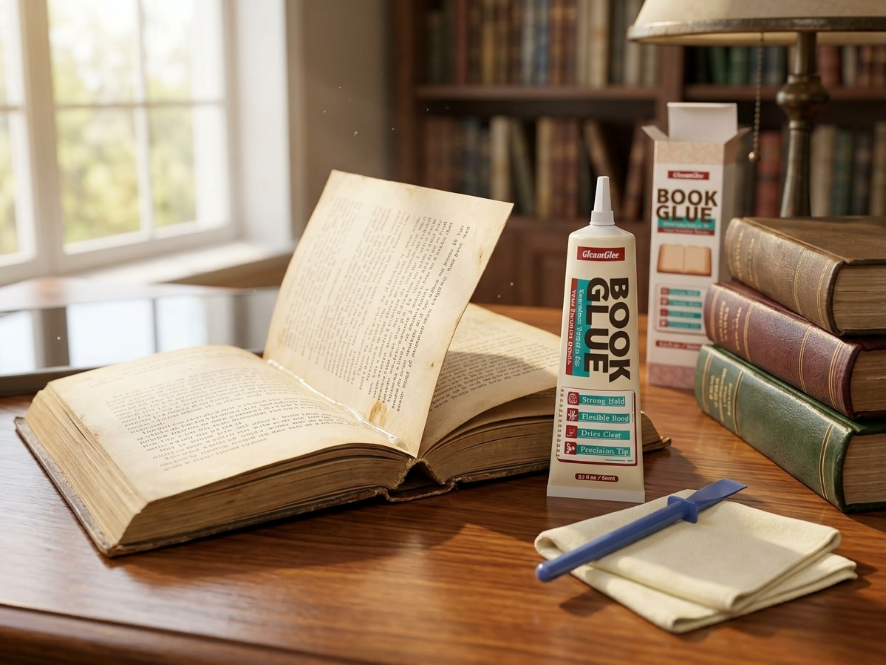
GleamGlee Book Glue is designed for everyday book repair, bookbinding, and paper projects. It dries clear, stays flexible, and comes with a precision metal nozzle for controlled application along page edges, spine gaps, and cover seams.
Old Books Need Flexible Repair, Not Just Strong Glue
A book spine is not a fixed surface. It bends every time the book is opened.
Many people reach for super glue, tape, or regular craft glue when a book starts falling apart. It feels like a quick fix, but old book repair is different from ordinary gluing.
A book has moving stress points:
- The spine bends every time the book opens.
- Pages pull slightly against the binding.
- Covers shift when handled.
- Old paper can be dry, fragile, or absorbent.
- Old glue inside the spine may already be brittle or dusty.
If the adhesive dries too hard, the repair may crack. If the glue is too watery or applied too thickly, pages may wrinkle or stick together. If tape is used as a permanent solution, it can yellow, peel, and leave residue over time.
A good book binding adhesive should create a strong but flexible bond. It should hold pages and covers in place while still allowing the book to move naturally.
A better book repair adhesive should:
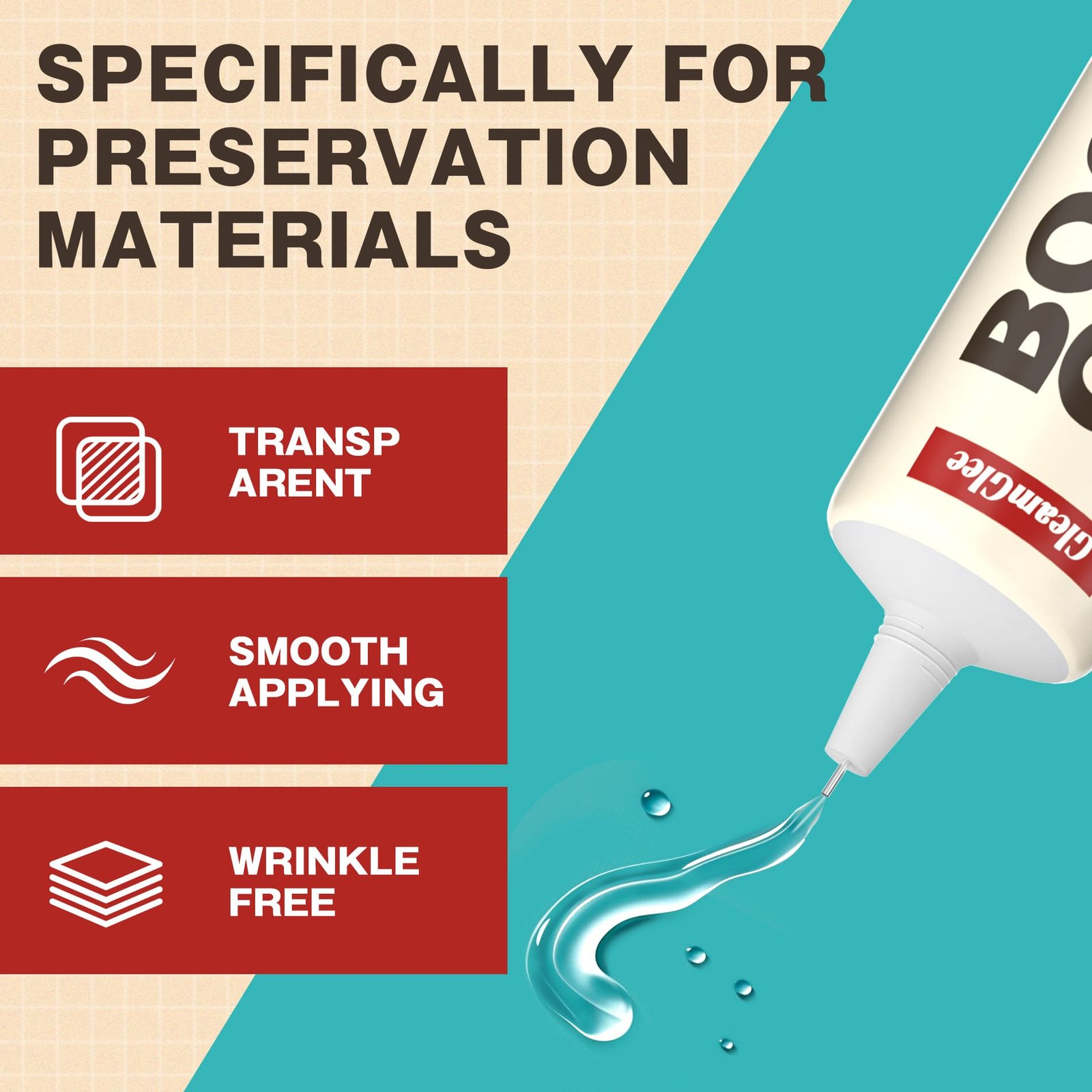
- Dry clear so repairs look cleaner
- Stay flexible after drying
- Work on paper, page edges, and spine areas
- Apply in thin, controlled lines
- Avoid bulky glue buildup
- Help pages sit flat after pressing
- Support everyday use after curing
What Makes a Good Book Binding Adhesive for Old Books?
The right glue should hold the book together without making it feel stiff, messy, or over-repaired..
When repairing an old book, the goal is not to make the repair area rock hard. The goal is to bring the book back into usable condition while keeping the pages clean, the spine flexible, and the cover properly aligned.
A reliable book glue should help repair the damage without creating new problems.
| What to Look For | Why It Matters |
|---|---|
| Clear-drying finish | Helps repairs look cleaner on pages, covers, and spine areas |
| Flexible bond | Allows books to open and close more naturally |
| Precision application | Helps prevent excess glue from soaking into paper |
| Paper-friendly use | Better for pages, paper crafts, photos, and bookbinding projects |
| Strong hold without brittleness | Keeps pages attached without turning the spine into a hard block |
| Practical bottle size | Easy to keep at home for small repairs and craft use |
| Multi-use function | Useful for books, journals, scrapbooks, photos, collages, and paper art |
GleamGlee Book Glue is built around these needs. It is not a general “stick anything” glue. It is made for books and paper-based projects where clean application, flexibility, and a clear finish matter.
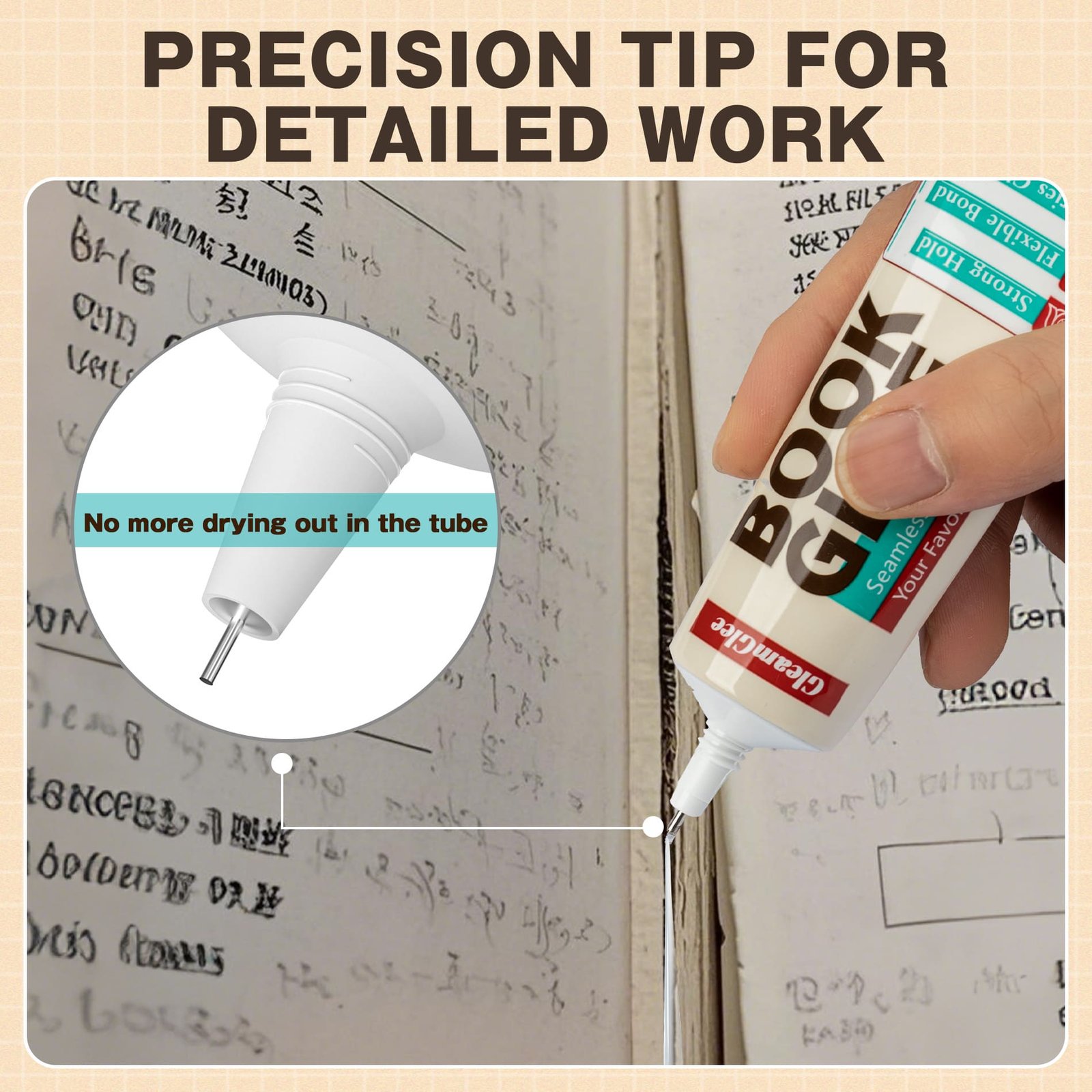
The precision metal nozzle is especially useful for book repair because many damaged areas are narrow: the inside of a cracked spine, the edge of a loose page, the seam where a cover separates from the text block. Instead of flooding the area with glue, you can place a thin line exactly where it is needed.
Common Old Book Problems and How to Repair Them
Different book damage needs different glue placement.
Before applying adhesive, look carefully at what is actually damaged. A loose page is not the same as a cracked spine. A detached cover is not the same as brittle old glue. The more accurately you identify the problem, the cleaner the repair will be.
| Book Problem | What You May Notice | Better Repair Approach |
|---|---|---|
| Loose pages | One or more pages slide out or sit unevenly | Apply a thin line of book glue along the page edge, align carefully, close the book, and press flat |
| Cracked paperback spine | The book opens too wide or splits in the center | Add a controlled amount of flexible glue into the spine gap, then close and weight the book while curing |
| Detached cover | The front or back cover pulls away from the pages | Clean dust, apply glue along the contact area, align the cover, and press firmly |
| Brittle old glue | Old adhesive flakes, powders, or breaks apart | Remove loose debris first; do not simply cover crumbling glue with new adhesive |
| Children’s book damage | Pages or covers come loose from repeated handling | Use small amounts of clear glue, wipe away excess, and allow full curing before use |
| Cookbook spine wear | Frequent opening causes loose sections or a split spine | Make sure the area is dry and clean before applying a flexible glue line |
| Notebook separation | Pages pull away from the binding edge | Apply glue lightly to the page block edge, align, press, and let cure fully |
| Scrapbook or photo album repair | Pages, photos, or paper layers lift from the surface | Use controlled glue placement to avoid wrinkles or visible residue |
A good repair should feel clean and controlled. If glue squeezes out heavily, the area may have too much adhesive. If pages shift while drying, the book may need better alignment and pressure.
Avoid These Common Glue Mistakes When Repairing Old Books
A fast fix can make a book harder to repair later.
Old book repair rewards patience. The wrong adhesive or the wrong method can turn a small repair into a messy, stiff, or permanent problem.
Don’t use super glue on book spines
Super glue dries hard and fast. That can be useful on certain rigid materials, but it is usually a poor fit for book spines. A spine needs to flex. A brittle glue line can crack when the book is opened.
Don’t use packing tape as a long-term repair
Tape may look simple, but it often ages badly. It can yellow, peel, collect dust, and leave residue. It can also make later repair more difficult.
Don’t pour glue into the spine
More glue does not mean a stronger book. Too much adhesive can wrinkle pages, create lumps, and make the spine feel stiff.
Don’t glue over dusty, crumbling old adhesive
If old glue is already failing, new glue may stick to the old loose glue instead of the actual book structure. Gently remove loose flakes and dust before repairing.
Don’t reopen the book too early
A repair may feel dry on the surface before it is fully cured. Opening the book too soon can weaken the bond and pull pages loose again.
Don’t use the same method on every book
A paperback, hardcover, cookbook, journal, and children’s book all fail in different ways. The glue may be the same, but the placement and pressure should match the damage.
How to Repair Old Books with Book Binding Adhesive
A clean repair starts with inspection, light glue, careful alignment, and enough curing time.
You do not need a professional workshop to fix many everyday book problems. For common loose pages, cracked paperback spines, cover separation, notebooks, and children’s books, a careful home repair can make the book usable again.

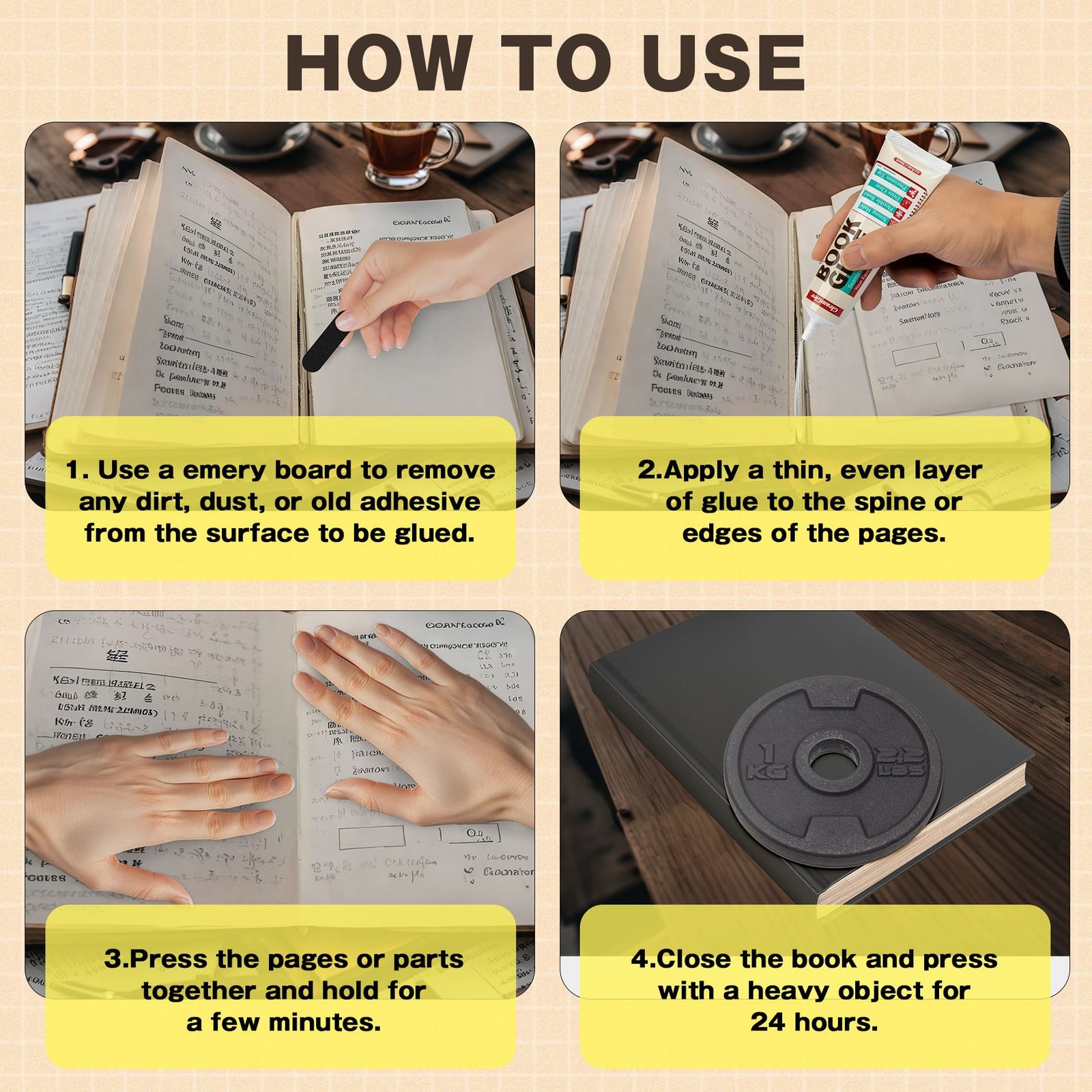
Step 1: Clean the repair area
Use a clean paper towel to remove dust and loose glue flakes. If old adhesive is crumbling, gently remove only the loose pieces.
Avoid pulling on paper fibers. If part of the old binding is still firmly attached, do not force it apart.

Step 2: Apply a thin line of book glue
Use the precision nozzle to apply a small amount of adhesive along the page edge, spine gap, or cover seam. Keep the line thin and even. For loose pages, apply glue to the page edge that will sit back into the spine. For cracked spines, apply a controlled line inside the split area. For detached covers, apply glue along the contact zone where the cover meets the text block.

Step 3: Align the pages or cover
Before the glue begins to set, carefully place the page, cover, or spine section back into position. Check the edges from the top, bottom, and side. A repair can look messy if the pages are not aligned before pressing. Close the book gently. If needed, place clean paper near the repair area to prevent accidental sticking. Then put a flat weight or another heavy book on top. Pressure helps the glue line stay thin and keeps the pages from shifting while the repair sets.

Step 4: Let the repair cure fully
Do not test the book too early. Spine and cover repairs need more time than a small paper edge repair.
For best results, leave the book pressed until the adhesive has fully set.
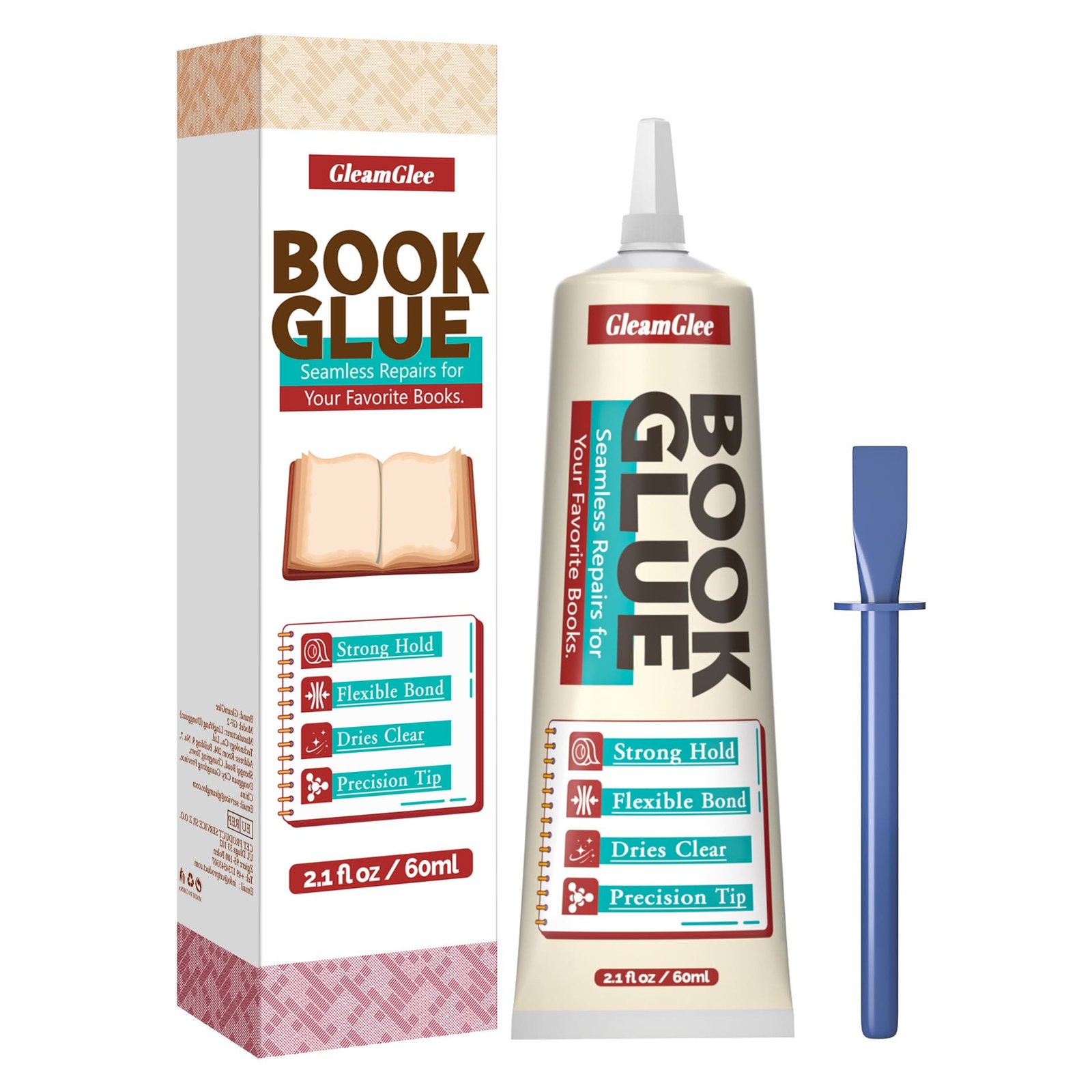
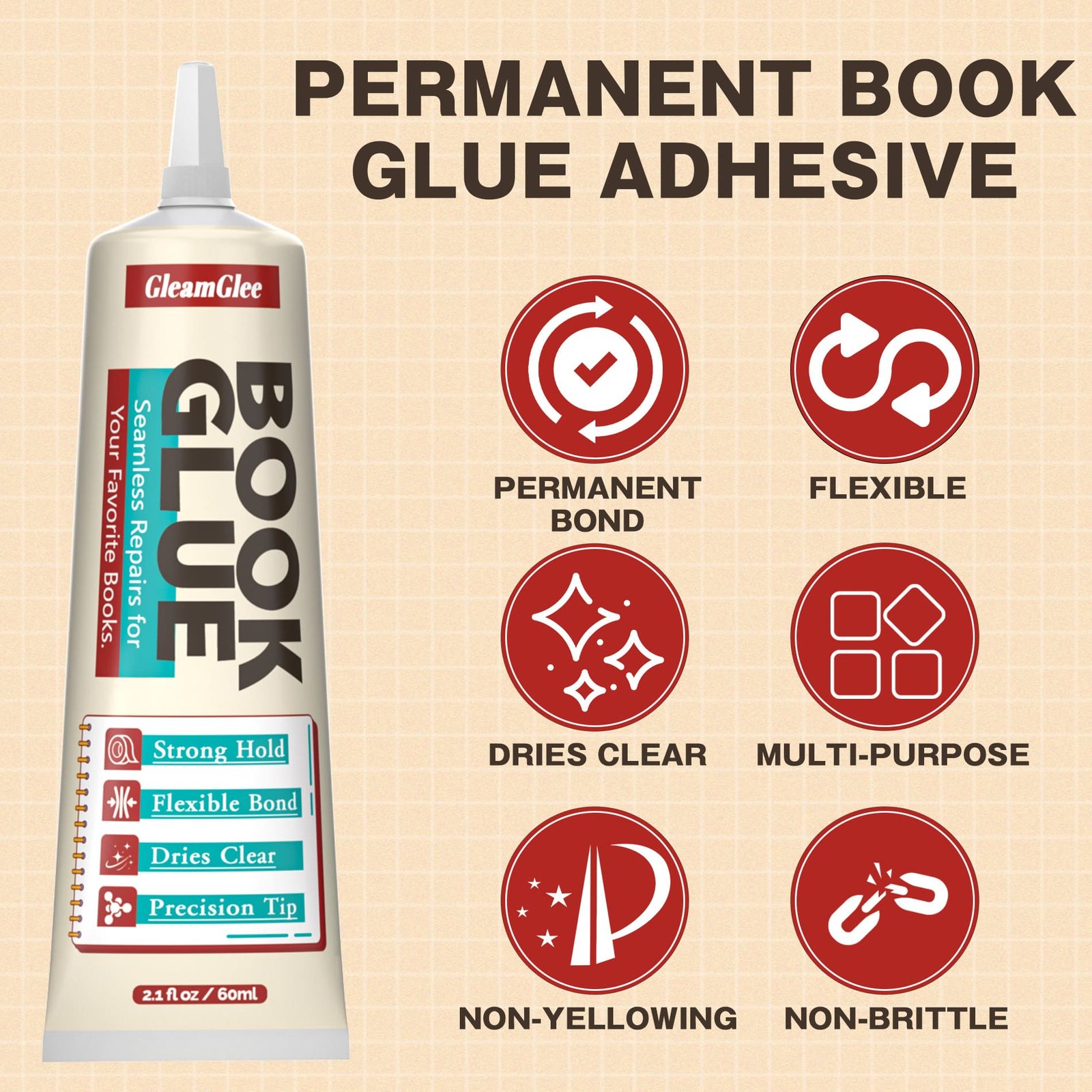
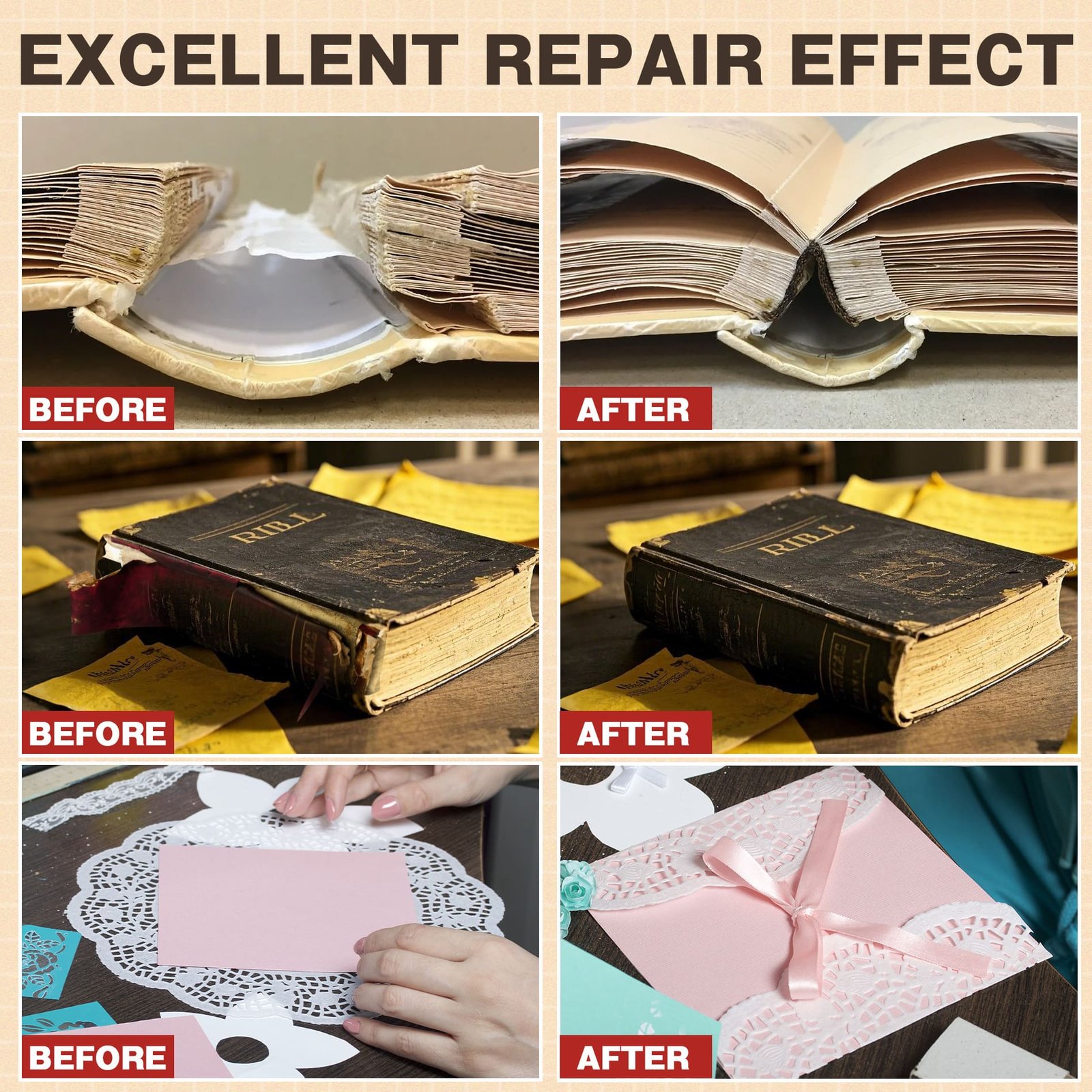
GleamGlee focuses on practical adhesive solutions for real repair problems. For book glue, the priority is not just strength. It is clean application, paper compatibility, clear drying, flexible bonding, and easy use for people repairing books at home.
Why GleamGlee Book Glue Works for Everyday Book Repair
Clear finish. Flexible hold. Controlled application.
A damaged book often fails in a small area: a few loose pages, a weak spine, a cover seam, or a notebook binding edge. That is exactly where control matters.
GleamGlee Book Glue is designed for repairs that need precision instead of messy over-application. The metal nozzle helps place glue in narrow spaces, along page edges, and inside spine gaps without flooding the paper.
Once dry, the adhesive creates a clear, flexible bond. That matters because the repaired book still needs to open, close, and be handled. A stiff repair may feel strong at first, but a flexible repair is usually better for daily-use books.
Why it makes sense for home repair:
- Dries clear for a cleaner-looking finish
- Stays flexible so pages and spines can move more naturally
- Precision metal nozzle helps reduce glue mess
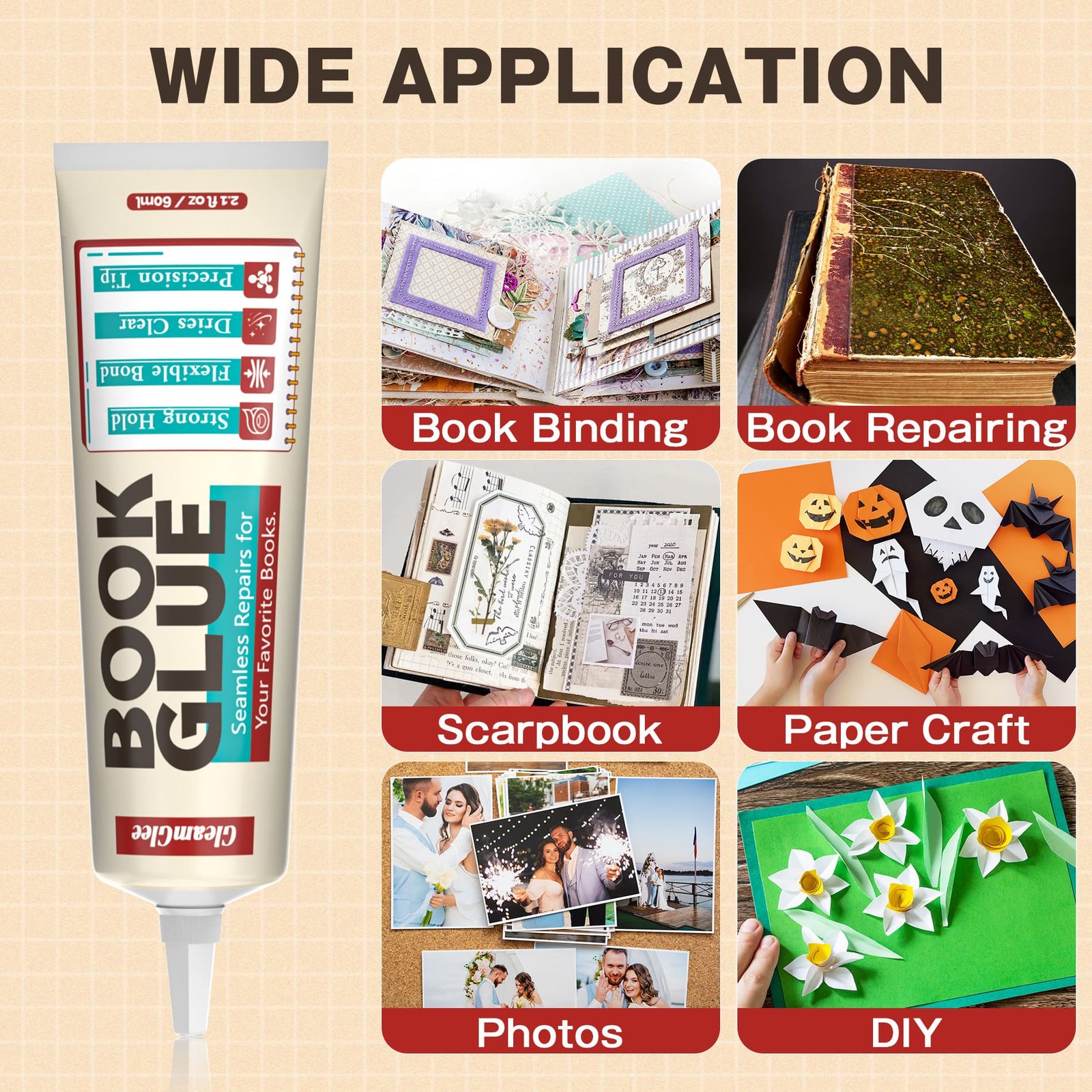
- Works for book repair, bookbinding, paper art, collages, framing, photos, and crafts
- Useful for paperbacks, notebooks, journals, cookbooks, children’s books, and scrapbooks
- Compact 60ml size fits easily into a home repair kit, craft drawer, or school supply box
Book Glue vs Regular Glue: Why the Difference Matters
The wrong adhesive can make a book stiff, messy, or harder to repair later.
A book is not a static object. It moves every time it is opened. That is why glue choice matters.
| Feature | Regular Craft Glue | Super Glue | Tape | GleamGlee Book Glue |
|---|---|---|---|---|
| Made for book repair | Not always | No | No | Yes |
| Flexible after drying | Varies | No | No | Yes |
| Dries clear | Sometimes | Clear but brittle | Visible | Yes |
| Good for loose pages | Can be messy | Too stiff | Temporary | Yes |
| Good for cracked spines | Limited | Poor fit | Poor fit | Strong fit |
| Controlled application | Depends on bottle | Too fast | Easy but visible | Precision nozzle |
| Suitable for paper crafts | Yes | Limited | Limited | Yes |
| Clean-looking finish | Varies | Risky on paper | Often visible | Better suited |
Regular craft glue may work for simple paper projects, but it is not always ideal for spines or loose pages. Super glue is strong, but it dries too hard for most book movement. Tape is convenient, but it often looks temporary and can age poorly.
GleamGlee Book Glue is a better fit when the goal is to repair a book so it can still be opened, handled, and used without a thick, stiff glue line.
Best Uses for GleamGlee Book Glue Around the Home
One small bottle can handle more than one damaged book.
GleamGlee Book Glue is useful for common repairs and creative paper projects. Keep it in a craft drawer, home office, classroom supply area, or book repair kit for the moments when a favorite book starts coming apart.

Loose Page Repair
When pages slip out of a paperback, workbook, cookbook, or journal, a thin line of book glue can help reattach the page edge neatly.
Best for:
- Novels
- Textbooks
- Workbooks
- Journals
- Manuals
- Recipe books

Cracked Paperback Spines
A cracked spine can make a book feel like it is about to split in half. Flexible book glue helps rebuild the spine area without turning it into a stiff block.
Best for:
- Paperbacks
- Cookbooks
- Travel guides
- Study books
- Daily-use books

Detached Covers
Covers often start separating at the seam. A controlled glue line can help reconnect the cover to the text block with less mess.
Best for:
- Softcover books
- Children’s books
- Notebooks
- Manuals
- Journals

Children’s Books
Children’s books are handled hard. Pages get pulled, covers bend, and favorite storybooks get opened again and again. A clear, flexible repair can extend daily use.
Best for:
- Storybooks
- Learning books
- Picture books
- School reading books
- Activity books

Cookbooks and Recipe Books
Cookbooks often suffer from frequent opening, kitchen moisture, and heavy use. Repairing loose sections can keep favorite recipes easy to use.
Tip: Make sure the repair area is dry and free from grease before applying glue.

Journals and Notebooks
When notes, planners, or diaries start separating from the spine, a careful glue repair can help keep important pages together.
Best for:
- Planners
- Diaries
- Work notebooks
- School notebooks
- Sketchbooks

Scrapbooks, Photos, and Memory Books
GleamGlee Book Glue can also be used for photos, collages, framing, postcards, invitations, scrapbooks, and paper art projects where a clear finish matters.

DIY Bookbinding and Book Nook Projects
For handmade journals, small booklets, zines, miniature scenes, and creative paper builds, controlled glue application helps keep the final piece cleaner.
Repair Tips for Different Types of Books
A cleaner repair starts with knowing how each book is built.
Not every book should be repaired the same way. The glue may be the same, but the technique should match the book type.
Paperback Books
Paperbacks often fail at the spine. The pages may loosen, the spine may crack, or the cover may pull away.
Use a thin glue line inside the cracked area, then close the book and press it flat. Avoid filling the spine with too much adhesive.
Hardcover Books
Hardcovers have more structure than paperbacks. Small cover separations may be repaired at home, but major hinge damage or old leather bindings require more care.
For valuable hardcovers, rare editions, or books with historical value, professional conservation is the safer choice.
Children’s Books
Children’s books often come apart because of repeated pulling and bending. Use a small amount of glue and wipe excess before it dries.
Let the repair cure fully before giving the book back to a child.
Cookbooks
Cookbooks are opened often and may be exposed to moisture, oil, flour, or food residue. Clean and dry the repair area before applying glue.
A flexible bond is helpful because cookbooks are often forced open flat during use.
Journals and Notebooks
With journals and notebooks, alignment matters. If pages are glued slightly crooked, the notebook may not close cleanly.
Apply glue lightly, align the page block, press flat, and allow the repair to cure.
Family Keepsake Books
For sentimental everyday books, careful DIY repair can extend their life. For rare, signed, antique, or expensive books, avoid experimental repairs and contact a professional book conservator.
Small repairs can make everyday books usable again.
Book repair does not always need to look dramatic. Sometimes the best repair is the one that makes the book easier to use without drawing attention to the glue.

Loose Pages in a Paperback Novel
Before: Several pages slide out whenever the book is opened.
Repair: Apply a thin line of flexible book glue along the page edge, align the pages, close the book, and press flat.
After: Pages sit back in place and the book feels easier to handle.

A Children’s Book Cover Coming Off
Before: The cover starts separating after repeated reading.
Repair: Clean the seam, apply a controlled glue line, align the cover, and weight the book while drying.
After: The cover feels more secure for continued use.

Old Cookbook Spine Starting to Split
Before: The spine opens too wide and several recipe pages feel loose.
Repair: Apply a small amount of book glue inside the spine gap, close the book, and press it flat.
After: The spine feels more stable, and the cookbook can stay in the kitchen rotation.

Notebook Pages Pulling Away
Before: Important notes start separating from the binding edge.
Repair: Apply glue lightly along the page block edge and press carefully.
After: Pages stay together with a cleaner finish.

A controlled glue line helps reduce waste, overflow, and visible residue. It also gives the repair a cleaner finish after pressing.
Most book repair areas are narrow. Control makes the repair cleaner.
One of the easiest ways to ruin a book repair is to apply too much glue. Old paper can absorb adhesive quickly. Spine gaps can overflow. Pages can stick together if glue spreads beyond the repair line.
That is why a precision nozzle is more than a small detail.
GleamGlee Book Glue uses a metal nozzle to help place adhesive exactly where it is needed. This makes it easier to repair:
- Single loose pages
- Narrow spine cracks
- Cover seams
- Notebook binding edges
- Photo corners
- Paper craft details
- Collage layers
- Small bookbinding projects
The right adhesive should make book repair easier, not riskier.
A bottle of glue may look simple, but book repair is more demanding than basic paper craft. Before buying book binding adhesive, check whether it actually fits the way old books fail.
1. Does it dry clear?
Visible glue marks can make a repaired book look messy. A clear-drying adhesive helps keep the repair cleaner.
2. Does it stay flexible?
Book spines need movement. If the adhesive dries too hard, the spine may crack again.
3. Can it be applied precisely?
A narrow nozzle helps reach tight areas without flooding the page or spine.
4. Is it useful for paper and book projects?
A book glue should work on paper, page edges, covers, photos, collages, and craft materials.
5. Is it practical for home use?
A compact bottle is easier to store and more convenient for occasional repairs.
6. Does it support more than one type of repair?
The best home book glue should help with loose pages, spines, covers, notebooks, and paper crafts.
7. Does it match the value of the book?
Everyday books are good candidates for DIY repair. Rare or high-value books need professional handling.
GleamGlee Book Glue checks the boxes for everyday repair: clear finish, flexible hold, controlled application, paper project compatibility, and a practical 60ml size.
A Practical Book Repair Glue for Homes, Classrooms, Crafters, and Book Lovers
Keep it in the drawer before the next book starts falling apart.
Book damage usually happens slowly. A page loosens. A spine cracks. A cover starts pulling away. A notebook begins to split. By the time it becomes annoying, many people are tempted to use whatever glue or tape is nearby.
Keeping a proper book glue at home makes small repairs easier to handle before the damage spreads.
GleamGlee Book Glue is a practical choice for:
- Parents repairing children’s books
- Students fixing workbooks and notebooks
- Teachers maintaining classroom books
- Crafters working on scrapbooks and paper art
- Home readers repairing paperbacks and cookbooks
- DIY makers creating handmade journals or bookbinding projects
- Families preserving everyday keepsake books

It is simple enough for small home repairs, but focused enough for people who care about a cleaner result.
Bring Loose Pages, Cracked Spines, and Worn Covers Back Together
A favorite book does not always need to be replaced.
Some books are worth keeping because they are useful. Some are worth keeping because they hold memories. Some simply still have life left in them.
With the right book binding adhesive, many everyday repairs can be done cleanly at home. Loose pages can be reattached. Cracked spines can feel more stable. Covers can sit back in place. Journals, cookbooks, children’s books, scrapbooks, and paper projects can stay together longer.
GleamGlee Book Glue gives you a clear, flexible, controlled way to handle those repairs without relying on stiff glue, messy tape, or bulky patches.
It is simple enough for small home repairs, but focused enough for people who care about a cleaner result.
Book Binding Adhesive FAQ
1. Can I use super glue to repair old books?
Super glue is not ideal for most book repairs. It dries hard and brittle, which can be a problem for spines and pages that need movement. It may work on some rigid materials, but old books usually need a flexible adhesive.
2. How do I fix loose pages in an old book?
Clean the loose edge, apply a thin line of book glue along the page edge or spine area, align the pages carefully, close the book, press it flat, and allow the repair to cure before reopening.
3. Should I remove old glue before applying new book glue?
If the old glue is loose, dusty, flaky, or crumbling, gently remove the loose pieces first. Do not forcefully tear away paper fibers or parts that are still attached. A cleaner contact area helps the new adhesive bond better.
4. Is book glue better than tape for repairing books?
For long-term repair, book glue is usually better than tape. Tape can yellow, peel, collect dirt, and leave visible residue. Clear flexible book glue can create a cleaner repair, especially along page edges and spine areas.
5. Can GleamGlee Book Glue be used for children’s books?
Yes. It can be used for common children’s book repairs such as loose pages or detached covers. Apply a small amount, wipe away excess, and let the repair cure fully before the book is handled again.
6. Can I use book binding adhesive on cookbooks?
Yes. Cookbooks often develop loose pages or cracked spines from frequent use. Make sure the repair area is clean and dry before applying glue, especially if the book has been exposed to moisture, oil, or food residue.
7. How much glue should I use for book repair?
Use less than you think. A thin, even glue line is usually better than a thick layer. Too much glue can wrinkle pages, stiffen the spine, or squeeze out into visible areas.
8. Can I repair antique or rare books myself?
For valuable antique, signed, rare, or historical books, professional conservation is safer. DIY book glue repair is better for everyday books, paperbacks, notebooks, journals, family-use books, and craft projects.
9. What else can GleamGlee Book Glue be used for?
Besides book repair and bookbinding, it can be used for paper art, scrapbooking, framing, collages, photos, postcards, invitations, book nook projects, and other creative paper crafts.
10. How long should I press the book after applying glue?
For best results, press the repaired area until the adhesive has fully set. Small page repairs may need less time, while spine and cover repairs usually need longer pressure. Avoid opening the book too soon.
11. What is the best adhesive for repairing old books?
A clear, flexible book binding adhesive is usually the best choice for everyday old book repair. Books need to open and bend, so a glue that dries too hard may crack or pull away from the spine. GleamGlee Book Glue is a practical option for loose pages, cracked spines, detached covers, notebooks, and paper projects.
12. Why did my repaired book come apart again?
Common reasons include using glue that dries too hard, applying too much glue, not cleaning loose old adhesive, poor page alignment, or reopening the book before the repair has fully cured.