Skip to content

Best Metal Adhesive for All Projects: A Definitive Guide
Your trusted adhesives glue & cleaner manufacturer

Choosing a metal adhesive sounds simple until the project is sitting on the workbench in front of you. A loose stainless-steel bracket, an aluminum decoration, a broken buckle, a metal model component, and a detached handle may all look like “metal repairs,” yet they place very different demands on an adhesive. Some need speed, some need accuracy, some must tolerate vibration, and others simply need to remain neat enough that the repaired object does not look repaired. After more than two decades of working around adhesive applications, one lesson remains consistent: the strongest-sounding product is not automatically the best product. Successful bonding comes from matching the adhesive to the substrate, joint design, surface condition, environment, and realistic load. That is particularly important for consumer and hobby projects, where users often want a clean repair without welding equipment, drilling, clamps, or complicated preparation.
The best metal adhesive for all projects is therefore not one universal formula that replaces every other bonding method. It is an adhesive selected according to the metals being joined, the size and shape of the joint, curing requirements, environmental exposure, and expected mechanical stress. For routine household, craft, jewelry, hardware, and mixed-material repairs, fast-curing precision metal glue can be particularly convenient when the bond area is small and closely fitted.
Imagine a small aluminum ornament breaking shortly before it is needed for a display. Welding would be excessive, screws would permanently alter the object, and a bulky repair compound could leave a visible ridge. A controlled bead of appropriate adhesive may solve the problem in minutes. Change that ornament into a load-bearing gate hinge, however, and the decision becomes completely different. Understanding that distinction is what turns metal glue from a convenient tube in a drawer into a genuinely useful repair tool.
What Is the Best Metal Adhesive for All Projects?
The best metal adhesive is the one that matches the substrate, joint geometry, load, environment, and working time of the project. Fast-curing metal glue is excellent for closely fitted household repairs, jewelry, crafts, hardware, and mixed-material assemblies, while epoxy or structural systems are usually better where gaps, larger bond areas, prolonged working time, or substantially higher mechanical demands are involved.
What Makes a Metal Adhesive Effective?
A reliable adhesive is rarely defined by bond strength alone. Application control matters just as much for many everyday jobs because an adhesive that spreads everywhere except the joint can create more work than it saves. Viscosity, cure behavior, compatibility with smooth surfaces, resistance to normal vibration, appearance after curing, and the ability to dispense a repeatable amount all contribute to whether a product feels dependable in actual use.
Metal creates a particular challenge because most metal surfaces are nonporous. The adhesive cannot soak into the material in the same way a wood adhesive penetrates timber fibers. Instead, the bond depends on intimate contact with the prepared metal surface. Oil from manufacturing, fingerprints, oxidation, polishing compounds, dust, old adhesive, or moisture can form a weak boundary layer between the adhesive and the metal, which is why preparation frequently determines the difference between a durable repair and a joint that releases unexpectedly.
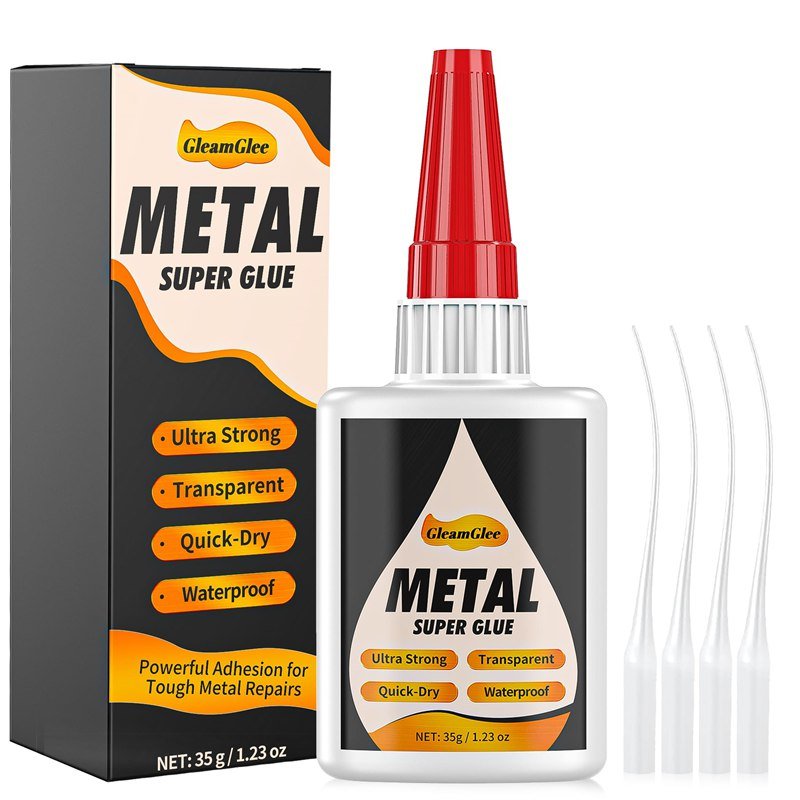
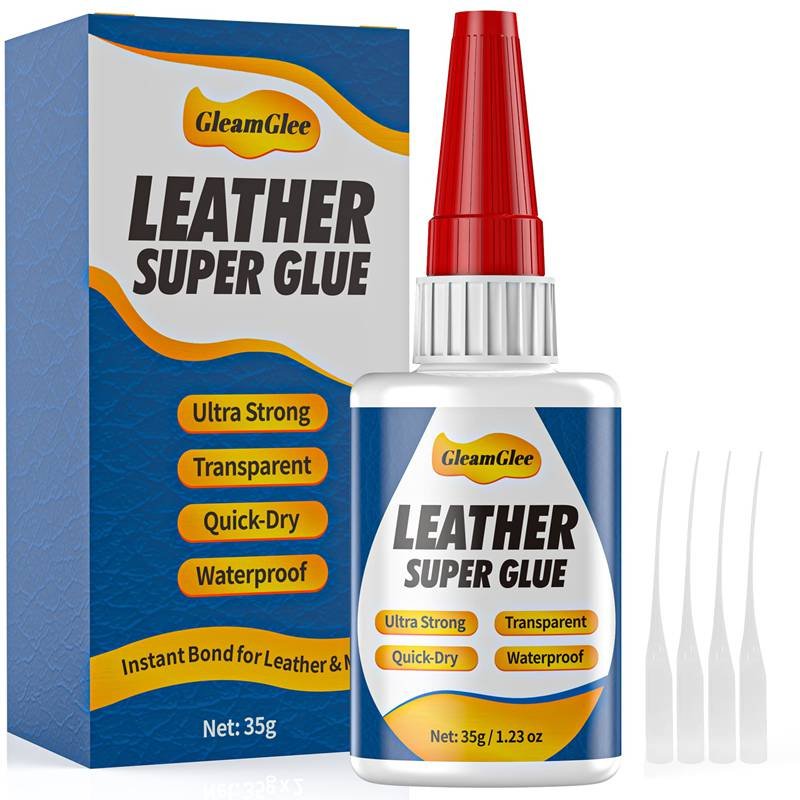
For closely fitted repairs, fast-curing formulas are useful because they reduce the time that small components must be manually aligned. GleamGlee Metal Glue, for example, is supplied in a 35 g format and is intended for rapid, precision bonding. For appropriate small repairs, the joined surfaces can be pressed firmly together for approximately 5–10 seconds after the adhesive is applied. Four fine-tip nozzles are included with a single tube, allowing controlled placement inside narrow joints, fine cracks, model assemblies, jewelry components, or awkward recesses.
| Practical Factor | What to Check | Why It Matters |
|---|---|---|
| Substrate | Aluminum, steel, stainless steel, mixed materials | Different surfaces present different adhesion challenges |
| Joint fit | Tight-fitting or gap-containing | Thin instant adhesives generally perform best in close-fitting joints |
| Working time | Seconds or several minutes | Determines how long parts can be positioned |
| Bond appearance | Clear, visible, hidden | Important for decorative and precision work |
| Application control | Standard opening or fine nozzle | Affects waste, cleanup, and accuracy |
| Environment | Indoor, outdoor, moisture, vibration | Determines whether a general adhesive is appropriate |
| Mechanical demand | Decorative, functional, structural | Prevents unsuitable use on safety-critical repairs |
Which Adhesive Type Fits the Project?
Several adhesive technologies are commonly used on metals, and they should not be treated as interchangeable. Cyanoacrylate-style fast adhesives are particularly convenient for small, closely fitted components where speed and precision matter. Two-part epoxies are often selected when the repair contains a gap or the user wants more time to position components. Structural acrylics and specialized engineering adhesives serve more demanding production applications, while flexible systems may be preferred where movement is expected.
The practical mistake is asking, “Which adhesive is strongest?” before asking, “What does the joint actually need to do?” A tiny metal emblem attached to a decorative box does not require the same adhesive behavior as a large sheet-metal panel. Likewise, an outdoor bracket repeatedly exposed to movement needs different properties from a display sculpture standing indoors. Choosing according to the project rather than a single strength claim usually produces a more predictable result.
| Adhesive Family | Typical Working Character | Most Suitable Uses | Important Limitation |
|---|---|---|---|
| Fast instant adhesive | Very rapid positioning and fixture | Jewelry, models, small hardware, tight joints | Generally not intended to fill large gaps |
| Two-part epoxy | Longer working time, gap filling | Larger repairs, uneven surfaces, rigid assemblies | Requires mixing and longer cure |
| Structural acrylic | Strong engineering-oriented bonding | Production assemblies and demanding metal joints | May require specific handling or dispensing |
| Flexible adhesive | Retains movement after curing | Mixed materials and vibration-prone joints | May cure more slowly |
| Threadlocker | Designed for threaded metal fasteners | Bolts, screws, threaded fittings | Not a general surface-bonding adhesive |
How Does Metal Glue Compare with Welding?
Adhesive bonding and welding overlap in some applications, but neither should be presented as a universal replacement for the other. Welding physically joins compatible metals using heat and is appropriate for many structural, load-bearing, fabrication, and safety-critical applications. Adhesive bonding works without introducing welding heat, can join dissimilar materials, and can create a visually cleaner connection where drilling, screws, rivets, or weld beads would be undesirable.
For a household user repairing a decorative metal frame, model, buckle, lamp fitting, small appliance trim, or noncritical bracket, adhesive bonding may be considerably more practical. No welding machine is required, heat distortion is avoided, and parts can often be joined without altering their visible surfaces. Adhesives can also connect metal to materials that cannot be welded, such as plastic, rubber, glass, ceramic, wood, or stone.
The important boundary is safety. Consumer metal adhesive should not be treated as an alternative to welding on structural beams, heavily loaded railings, critical vehicle components, engine blocks, pressurized vessels, braking systems, or equipment where failure could cause injury. Adhesive bonding works best when the application stays within the product’s intended load, temperature, pressure, and environmental limits.

Which Metal Adhesive Works Best for Aluminum and Steel?
For aluminum and steel, the most suitable adhesive depends on joint size and service conditions. Fast metal glue works especially well for small, close-fitting repairs and precision assemblies, while epoxies or structural adhesives are often better for larger gaps and more demanding joints. Regardless of adhesive type, removing oil, oxidation, loose coatings, and contamination before bonding is essential for consistent results.
How to Bond Aluminum
Aluminum is common in hobby projects, household fittings, lightweight frames, trim, model construction, outdoor accessories, and consumer equipment because it combines low weight with corrosion resistance. That corrosion resistance comes partly from the thin oxide layer that forms naturally on its surface. Although invisible to most users, this surface layer and any manufacturing oil or polish can influence adhesive performance, so preparation should never be skipped simply because the aluminum looks clean.
Begin by removing loose dirt and old adhesive. Degrease the intended bonding area with a cleaner that does not leave an oily residue, then allow the metal to dry completely. Where the appearance and part geometry permit, light abrasion can improve mechanical contact. Fine abrasive paper in approximately the 180–320 grit range is commonly practical for small workshop repairs because it creates surface texture without unnecessarily gouging the material. Remove sanding dust before applying adhesive.
For a fast-curing product, keep the parts close to their final position before dispensing. Apply only enough adhesive to wet the intended contact area. Excess adhesive rarely improves a small, tight joint and can instead increase squeeze-out. Align the components, press them firmly together, and keep them undisturbed during the initial fixture period specified by the manufacturer.
How to Bond Steel and Stainless Steel
Steel can be an excellent adhesive substrate when properly cleaned, but its condition varies enormously. Bare mild steel may contain machining oil or surface oxidation, painted steel introduces the strength of the coating as another variable, and polished stainless steel can be exceptionally smooth. The adhesive is only as secure as the surface layer to which it is attached, so bonding over rust, loose paint, grease, wax, or peeling plating creates an avoidable weak point.
Stainless steel frequently benefits from light surface roughening when the repaired area is hidden or when cosmetic requirements allow it. On polished decorative components, however, sanding may be undesirable. In those situations, thorough degreasing and careful adhesive selection become even more important. Fine precision glue can be useful for stainless jewelry, decorative hardware, eyewear components, small clasps, model parts, and similar closely fitted repairs.
Avoid repeatedly touching cleaned metal with bare fingers before bonding. Skin oils can contaminate the prepared area surprisingly quickly. Once the joint is assembled, resist the temptation to test it immediately by twisting or pulling it apart. Initial fixture and full cure are different stages; giving the adhesive adequate undisturbed time significantly improves the chance of a successful repair.
Are Mixed Metal Joints Different?
Joining aluminum to steel is possible with suitable adhesive systems and can actually demonstrate one of adhesive bonding’s major advantages: different metals can be joined without melting them together. Nevertheless, mixed-metal assemblies deserve extra thought because aluminum and steel respond differently to temperature, moisture, and corrosion. A small indoor craft is therefore much simpler than an outdoor engineering joint exposed to weather for years.
For hobby, décor, model-making, household fittings, or light repair work, the practical focus should remain on clean surfaces, close alignment, adequate contact area, and realistic mechanical demands. If a joint will live outdoors, remain wet, or experience significant thermal cycling, choose an adhesive specifically rated for those conditions rather than assuming any general-purpose metal glue will behave identically.
Direct metal-to-metal contact between dissimilar metals can also contribute to galvanic corrosion in certain wet environments. Adhesive layers can sometimes help isolate surfaces, but long-term corrosion engineering is more complex than simply placing glue between two parts. Critical outdoor or industrial aluminum-to-steel assemblies should therefore be designed around the complete material system, coatings, drainage, environmental exposure, and maintenance requirements.
How Do You Choose Metal Glue for Different Applications?
Choose metal glue by first defining what the repaired object must withstand after curing. Small household fittings, jewelry, models, decorations, and mixed-material crafts often favor quick, precise adhesives, while uneven assemblies, outdoor exposure, larger gaps, or sustained mechanical loads may require slower-curing or specialized systems. The safest decision comes from matching adhesive behavior to the actual job rather than choosing by strength claims alone.
Metal Glue for Home Repairs
Home repairs are where a versatile metal adhesive delivers the greatest everyday value. Common examples include reattaching metal trim, repairing decorative frames, restoring lamp components, fixing loose hardware, attaching metal fittings to furniture, and reconnecting lightweight noncritical handles or brackets. These jobs tend to be small enough that welding would be inconvenient and mechanical fasteners might permanently alter the object.
Before applying adhesive, consider what caused the original failure. If a bracket detached because a screw hole enlarged, the joint may still be under continual leverage after repair. Simply gluing the visible break may reproduce the original problem. Increasing contact area, correcting misalignment, or replacing a missing mechanical fastener can sometimes matter more than changing the adhesive.
Kitchen and appliance repairs require additional caution. Metal glue can be practical for external decorative components and noncritical fittings, but users should avoid applications exposed directly to flames, extreme heat, pressurized systems, food-contact areas unless specifically approved, or safety-critical appliance components. A successful household repair begins with deciding whether adhesive is an appropriate repair method at all.
Metal Adhesive for Tools and Hardware
Tool and hardware repairs often appear straightforward but can involve surprisingly high forces. A decorative metal cap on a tool handle is a reasonable adhesive application, while a hammer head, heavily loaded plier joint, climbing component, or structural workshop fixture may experience impact levels that ordinary consumer adhesive was never intended to withstand. Visual size alone is therefore a poor indicator of mechanical demand.
For low-risk workshop uses, fast adhesive can help reattach knobs, small brackets, guides, guards, measuring-tool details, light-duty fixtures, and accessory components. Precision dispensing is particularly useful where adhesive must stay away from moving mechanisms. The included fine nozzles on a 35 g metal glue format, for example, make it easier to reach narrow gaps without coating surrounding surfaces.
If a repaired tool could cause injury when the bond fails, replacement or a manufacturer-approved repair should take priority. Adhesives are extremely useful workshop materials, but professional practice includes recognizing where not to use them. That judgment protects the user and usually saves more time than attempting an unsuitable repair.
Metal Glue for Jewelry and DIY Crafts
Jewelry, scale models, miniature repairs, and decorative crafts are particularly well suited to precision metal adhesives because the parts are often small, lightweight, and difficult to clamp. A fine nozzle makes it possible to place a tiny amount of adhesive exactly at a clasp, pin, setting, model bracket, metal trim, or mixed-material connection without flooding the surrounding finish.
Transparent curing is another practical advantage in visible craft work. Even so, “clear” should not be interpreted as permission to use excessive adhesive. Large squeeze-out remains visible because it changes surface texture and catches light differently from the surrounding metal. Experienced makers generally use the smallest amount that fully wets the intended bond area.
Mixed-media work expands the possibilities further. Metal can be attached to wood, plastic, rubber, glass, ceramic, PVC, concrete, or decorative surfaces when the chosen adhesive is compatible with both materials. GleamGlee Metal Glue is formulated for metal-to-metal bonding as well as a range of common nonmetal substrates, making it convenient for craft drawers where several material combinations may appear in a single project.
Adhesive Solutions for Outdoor Equipment
Outdoor repair adds moisture, temperature changes, dirt, UV exposure, vibration, and repeated handling to the equation. Small accessories, lantern components, noncritical camping hardware, fishing tackle parts, decorative garden items, and lightweight fittings may be practical adhesive projects when the specific product is suited to the environment. The same logic should not be extended automatically to safety-critical sports or load-bearing equipment.
Bicycles provide a useful example. A reflector bracket, trim component, accessory housing, or nonstructural fitting is very different from a frame tube, brake component, crank, pedal attachment, or handlebar structure. The latter group can transmit substantial loads and should not be repaired with ordinary consumer metal glue simply because both surfaces happen to be metallic.
When outdoor repairs are appropriate, surface drying is especially important. Moisture trapped beneath the adhesive can reduce bonding reliability. Allow the cleaned component to reach a dry, stable condition before assembly, and protect the joint from water or movement during curing. Long-term outdoor performance should always be verified against the specific adhesive manufacturer’s instructions.
| Project | Practical Adhesive Choice | Suitability for Fast Metal Glue |
|---|---|---|
| Jewelry clasp | Precision instant adhesive | High |
| Metal model detail | Precision instant adhesive | High |
| Decorative frame | General metal adhesive | High |
| Metal-to-wood craft | Multi-material adhesive | High |
| Loose furniture trim | Fast or general adhesive | High |
| Uneven metal casting | Gap-filling epoxy | Better alternative |
| Large panel assembly | Structural adhesive | Specialist option |
| Load-bearing railing | Engineered fastening/welding | Consumer glue not recommended |
| Pressurized pipe | Approved plumbing repair | Consumer glue not recommended |
| Engine block | Specialist repair process | Consumer glue not recommended |

How Do You Apply Metal Adhesive for a Strong Bond?
A strong metal bond starts before the adhesive leaves the bottle. Remove contamination, dry the surfaces, lightly abrade smooth metal when appropriate, check that the parts fit correctly, and apply only enough adhesive to cover the contact area. After assembly, hold the parts steadily for the required fixture time and avoid stressing the joint until the adhesive has reached sufficient cure.
How to Prepare Metal Surfaces
Surface preparation is one of the highest-value steps in adhesive bonding because a perfectly formulated adhesive cannot compensate for a weak contaminant layer. Oil, silicone polish, grease, fingerprints, oxidation, loose paint, corrosion, and previous adhesive residue prevent direct contact with the substrate. Cleaning therefore has a greater influence on real-world reliability than many users expect.
Start mechanically by removing loose contamination and old glue without damaging the part. Degrease the bonding area with a compatible residue-free cleaner and allow it to evaporate completely. When appropriate, lightly abrade smooth bare metal to provide additional surface texture. An abrasive range around 180–320 grit is commonly suitable for small general-purpose repairs, although decorative finishes may require a more conservative approach.
After abrasion, remove all dust instead of blowing across the joint with your mouth, which can introduce moisture. Check the fit before applying adhesive. If the pieces rock, contain a large missing section, or leave a significant gap, a thin fast-curing adhesive may not be the best technology. A gap-filling epoxy or repair compound may provide better contact.
How Much Adhesive Should You Use?
More adhesive does not automatically mean a stronger bond. In closely fitted metal joints, the objective is to create complete contact across the intended bonding area without leaving a thick pool between the surfaces. Too much product can increase squeeze-out, extend cure behavior, contaminate adjacent moving parts, and make the finished repair appear careless.
Fine-tip nozzles are useful because they transform adhesive application from pouring into placement. A 35 g bottle equipped with four precision nozzles can serve both ordinary repairs and narrow recesses where the main bottle tip would be too large. When repairing jewelry, model pieces, metal trim, eyeglass components, or small brackets, a controlled drop or thin line is usually easier to manage than a large bead.
Dry-fit the components first so that the movement required after application is minimal. Dispense onto one bonding surface unless the specific instructions state otherwise, bring the parts together immediately for fast-curing formulas, and maintain even contact. If adhesive squeezes out, avoid smearing it over finished surfaces; cleanup methods depend on the chemistry and should follow the product instructions.
How Long Does Metal Glue Take to Cure?
Users frequently confuse initial grab with full cure. A fast metal adhesive may fixture a small part very quickly, allowing the user to release hand pressure after several seconds, but that does not necessarily mean the joint has reached its final performance. Mechanical stress should still be minimized while the adhesive continues curing.
For GleamGlee Metal Glue, suitable closely fitted components are pressed firmly together for approximately 5–10 seconds during initial bonding. That short pressing period is one of the main conveniences of a fast-curing format, particularly for components that would otherwise be awkward to clamp. Actual cure behavior can still vary with the materials, adhesive quantity, joint design, temperature, humidity, and contact between surfaces.
The practical rule is simple: treat a newly bonded part more gently than a fully cured one. Do not immediately twist, peel, wash, load, or aggressively test the repair merely because it stays together when released. Following the cure instructions on the specific adhesive gives the bond the best opportunity to develop consistently.
What Projects Can Be Repaired with Metal Adhesive?
Metal adhesive is well suited to many nonstructural repairs involving household hardware, decorations, small appliance trim, jewelry, model parts, metal crafts, furniture fittings, outdoor accessories, and mixed-material assemblies. It can also be useful in workshops for lightweight brackets and components. Projects involving high pressure, direct flame, major structural loads, or safety-critical equipment require more specialized repair methods.
Household Metal Repairs
The home contains dozens of small metal components that are expensive or inconvenient to replace individually. Picture frames, candle holders, decorative sculptures, lamp bases, cabinet hardware, small furniture fittings, appliance trim, and lightweight brackets are common candidates. When the break surfaces fit closely together, fast adhesive can restore function without introducing screws, rivets, or visible repair marks.
Users should still investigate how the component is loaded. A decorative fitting may experience little force, while a door hinge that looks similarly sized undergoes thousands of movement cycles and significant leverage. If the repaired item carries weight, holds hot liquid, retains electrical components, or protects users from moving machinery, the repair decision deserves additional caution.
One practical advantage of a multi-material metal adhesive is that household breaks often occur at interfaces rather than between identical metals. A metal ornament may separate from ceramic, a bracket may detach from wood, or metal trim may come loose from plastic. An adhesive formulated for several substrates reduces the need to keep separate products for every combination.
Automotive and Mechanical Applications
Automotive and mechanical projects attract users toward high-strength adhesives, but this is also where application boundaries matter most. Adhesive can be useful for trim, emblems, model components, covers, lightweight housings, noncritical brackets, decorative panels, and workshop fixtures when the product is compatible with the materials and operating environment.
Consumer instant metal glue is not intended for engine blocks, braking components, suspension parts, steering systems, pressurized fuel systems, critical frame components, or other areas where failure could compromise safety. These applications encounter combinations of heat, pressure, chemical exposure, vibration, and mechanical load far beyond ordinary household repairs.
The same distinction applies to motorcycles, bicycles, lawn equipment, and powered tools. Repairing an accessory housing is very different from repairing a structural or rotating component. Experienced repair work begins with classifying the consequence of failure. When the consequence is significant, a manufacturer-approved component replacement, welding process, or engineering adhesive system is the more responsible approach.
Construction and Workshop Uses
Workshops frequently need adhesives for temporary positioning, small brackets, trim, signs, guards, jigs, fixtures, ducts, housings, and mixed-material assemblies. An adhesive can spread load over a contact area without drilling holes through thin material, making it useful where mechanical fasteners would damage appearance or create stress concentrations.
Construction settings, however, should not be treated as an extension of household craft use. Structural railings, gates, load-bearing supports, overhead fixtures, pressure systems, and safety guards are engineered systems. Their joints may require mechanical fastening, welding, certified anchors, or documented structural adhesives selected according to design loads and local regulations.
For professional users evaluating a metal glue for repeated light-duty tasks, consistency may be as valuable as raw strength. Accurate dispensing, cap design that reduces blockage, predictable curing, convenient package size, and material compatibility influence efficiency across dozens of daily applications. These practical details also matter when distributors or private-label brands evaluate a formula for their own product line.
Creative DIY Metal Projects
DIY projects allow metal adhesives to demonstrate their versatility without pushing them into unsafe structural roles. Model cars, miniature aircraft, decorative ships, metal ornaments, jewelry, mixed-media sculptures, wooden displays with metal trim, handmade accessories, costume hardware, and restoration projects commonly involve small areas where drilling or welding is impractical.
The ability to bond metal with nonmetal materials expands creative options. A maker can combine aluminum trim with wood, stainless details with plastic, decorative metal with stone, or metal fittings with ceramic components. Transparent curing can help preserve visual continuity, while precision nozzles allow adhesive to reach recesses that would be difficult to access with brushes or large dispensers.
For creators producing multiple pieces, repeatability becomes important. Keeping surfaces clean, using a consistent application quantity, dry-fitting components, and allowing adequate cure time produces better results than relying on improvised application from project to project. Good craft bonding is less about using more glue and more about controlling every small step.
Are Metal Adhesives Strong Enough for Long-Term Repairs?
Metal adhesives can provide durable long-term repairs when the joint is properly designed, the surfaces are correctly prepared, and environmental demands remain within the adhesive’s intended limits. Longevity depends on more than initial strength: vibration, moisture, temperature cycling, peeling forces, joint size, contamination, and continuous loading all influence performance. Critical high-load or high-temperature repairs require appropriately engineered alternatives.
What Conditions Can Metal Glue Handle?
The phrase “strong metal glue” can be misleading if strength is discussed without conditions. A bond may perform extremely well under direct shear but poorly when one edge is repeatedly peeled away. It may remain stable indoors yet degrade faster when exposed continuously to water, heat, UV radiation, aggressive chemicals, or large temperature swings. Real performance depends on the combination of stress and environment.
For routine household and craft use, well-prepared joints can remain reliable for long periods because the stresses are relatively modest. Decorative repairs, small brackets, model parts, jewelry components, and mixed-material crafts are typical examples. Outdoor items require greater attention to product-specific weather resistance and to the possibility of moisture entering around the bond line.
Vibration deserves particular attention because repeated small movements can gradually fatigue a rigid joint. A repair on a stationary sculpture therefore presents less demanding conditions than a component on machinery. Where substantial vibration or flexibility is expected, an adhesive designed to tolerate movement may be preferable to a very rigid instant adhesive.
When Should You Avoid Metal Adhesive?
The most professional answer to some metal repairs is not to use consumer adhesive. High-pressure pipes, pressure vessels, structural beams, safety railings, critical vehicle components, heavily loaded tool joints, climbing equipment, engine blocks, cookware directly exposed to flames, and components operating at extreme temperatures deserve repair methods specifically engineered and certified for those conditions.
Emergency sealing deserves particular caution. A user may be tempted to place glue over a pinhole in a pipe because the visible defect is small, but internal pressure can make the mechanical demand far greater than the hole suggests. A temporary nonpressurized patch and a permanent plumbing repair are fundamentally different tasks.
Likewise, a broken bicycle frame should not be grouped with a loose bicycle reflector simply because both are made from metal. When failure could cause injury, property damage, fire, flooding, or loss of control, replacement, welding, mechanical fastening, or an approved industrial repair system is the appropriate route.
| Application Condition | General Consumer Metal Glue | Recommended Approach |
|---|---|---|
| Indoor decorative repair | Usually suitable | Follow standard preparation |
| Small close-fitting hardware | Usually suitable | Precision application |
| Jewelry and models | Highly suitable | Use minimal adhesive |
| Mixed-material craft | Often suitable | Confirm both substrates |
| Outdoor decorative item | Application dependent | Check weather resistance |
| Large gaps | Often unsuitable for thin instant glue | Use gap-filling system |
| Constant heavy load | Use caution | Engineering assessment |
| High pressure | Not recommended | Approved specialist repair |
| Direct flame/extreme heat | Not recommended | Heat-rated specialist method |
| Structural safety component | Not recommended | Welding/mechanical engineering solution |
How to Extend the Life of a Metal Bond
Long-lasting repairs begin with good joint design. Whenever possible, maximize overlapping contact area and reduce peeling forces concentrated at one edge. Adhesives typically perform more predictably when forces are distributed across the bonded surface rather than repeatedly pulling one corner away from another.
Preparation should also become part of the repair habit rather than an optional extra. Clean, dry, lightly abraded surfaces create a better foundation than contaminated polished metal. Applying the correct quantity matters because excess adhesive can create a thick, poorly controlled bond line rather than increasing durability.
Finally, protect the repaired object during curing and normal use. Do not expose a fresh bond to water, impact, twisting, or unnecessary load. If the original component repeatedly failed because of vibration or poor alignment, correct that problem instead of asking the adhesive to compensate indefinitely. The longest-lasting repair is usually one where both the adhesive and the joint geometry are working together.
Why Choose GleamGlee Metal Adhesive for Your Projects?
GleamGlee Metal Glue is designed for small metal repairs, precision DIY work, and mixed-material bonding where fast application and clean placement are important. The 35 g adhesive forms a clear bond, supports rapid initial positioning, and includes four precision nozzles for narrow areas. It can bond metal with metal as well as compatible plastic, rubber, wood, concrete, PVC, and other common repair materials.
Precision Application with Fine-Tip Nozzles
Many metal repairs are difficult not because the adhesive lacks strength, but because the break is tiny. Jewelry clasps, narrow brackets, model components, eyeglass fittings, small ornaments, decorative trim, and recessed joints leave little room for uncontrolled dispensing. A large opening can deposit several times more adhesive than the repair actually requires, creating squeeze-out and making alignment harder.
GleamGlee Metal Glue uses a precision application format and includes four fine-tip nozzles with a single tube. A two-pack can therefore provide eight nozzles. The removable fine tips help users direct adhesive into small cracks and hard-to-reach areas while keeping the surrounding surface cleaner.
The cap is also designed to reduce blockage between applications, which is particularly useful for occasional household users who may open the product for one repair and not need it again for several weeks. Reusability depends on proper storage and closure, but thoughtful packaging can significantly improve the practical experience compared with a tube that becomes unusable after its first opening.
Strong Bonding Across Multiple Materials
Modern repair boxes rarely contain only one material. A metal fitting may be mounted on plastic, a decorative component may combine steel with wood, or a sculpture may integrate aluminum, ceramic, glass, and stone. A multi-material adhesive is useful precisely because real-life repairs do not respect product-category boundaries.
The metal glue is intended for metal-to-metal applications including stainless steel and aluminum, while also supporting bonding with materials such as plastic, rubber, wood, concrete, PVC, and other compatible surfaces. This versatility makes one format practical for household maintenance, hobby work, modeling, jewelry repairs, decorative restoration, and mixed-material projects.
The adhesive dries clear, which is especially valuable for exposed edges and decorative items. Nevertheless, appearance still depends on careful application. A clear adhesive can remain visible if applied too thickly, so precision nozzles and conservative dispensing should be viewed as part of the finishing system rather than simply accessories.
Reliable Manufacturing and Quality Control
For an individual user, a tube of glue may be a small purchase. For a retailer, distributor, private-label brand, or e-commerce operator, that same product becomes a repeatable manufacturing requirement involving formula stability, packaging compatibility, labeling, batch consistency, and supply reliability. These operational details are what distinguish a scalable adhesive program from a one-time product sample.
GleamGlee’s manufacturing network integrates adhesive formulation, packaging development, label printing, raw-material sourcing, filling, and assembly. Its adhesive development team includes more than 25 chemists, material specialists, and process engineers working across polymer chemistry, surface compatibility, product testing, and formulation improvement. Production capacity across the wider daily chemical operation exceeds 12 million finished units annually.
Quality management also extends into packaging and documentation. Products intended for different regions can require SDS documentation, GHS communication, EU CLP labeling, REACH-related requirements, multilingual instructions, transport considerations, and market-specific packaging. Buyers should still verify the exact documentation applicable to the formula and destination rather than assuming every certification applies automatically to every SKU.
OEM and Private Label Metal Adhesive Solutions
Metal adhesive is also a practical category for retailers and online brands because the final product can be differentiated through formula characteristics, dispensing style, packaging quantity, labeling, accessories, and positioning. Some customers want a compact precision glue for jewelry and crafts, while others need larger household repair formats or bundled nozzle configurations.
Private-label projects can start at relatively flexible quantities, with customization available from approximately 200 units for suitable programs. Packaging options can include existing bottles or tubes, custom labels, printed boxes, application accessories, and, where project volume supports it, new packaging development. Design teams can prepare print-ready artwork rapidly, with simple projects sometimes progressing to initial design output within around two working days.
Sample development commonly requires approximately 7–14 days depending on the formula, packaging, and testing requirements, while standard production is usually planned around a roughly 20-day manufacturing window after specifications are confirmed. Accelerated schedules may be possible for selected projects. For companies selling through Amazon or regional marketplaces, packaging can also be planned around FBA preparation, multilingual labeling, logistics, and the compliance requirements of the destination market.

Conclusion
The best metal adhesive is not the product with the loudest strength claim or the longest list of materials printed on the package. It is the adhesive that fits the actual repair. Small, closely fitted metal components often benefit from fast curing and precision dispensing, while uneven joints, large gaps, significant movement, structural loads, extreme temperatures, or pressure can require completely different technologies. Understanding those boundaries is one of the simplest ways to improve repair reliability and avoid wasting both adhesive and damaged parts.
For everyday users, metal adhesive can make repairing instead of replacing surprisingly practical. Aluminum decorations, stainless-steel hardware, jewelry, models, household fittings, mixed-material crafts, and countless small objects can often be restored without drilling or welding. A 35 g precision adhesive with fine nozzles is particularly useful when the repair demands accuracy and fast positioning rather than bulky equipment. The preparation process remains just as important as the formula: clean the surfaces, confirm the fit, apply a controlled amount, maintain contact, and allow adequate curing before the object returns to service.
For professional brands and retailers, the same principles operate at a larger scale. A successful metal adhesive product is not merely a chemical formula; it is a complete system involving repeatable manufacturing, usable packaging, application control, clear instructions, quality management, regional compliance, and dependable supply. Whether the goal is repairing one valued object at home or developing a private-label adhesive program for thousands of customers, choosing the right product starts with understanding how the bond will actually be used.
Frequently Asked Questions
What is the strongest glue for metal to metal?
There is no single strongest glue for every metal-to-metal application because different adhesive technologies perform differently under shear, peel, vibration, heat, moisture, and impact. Fast instant metal adhesive is highly practical for small, close-fitting repairs, while two-part epoxy or structural acrylic systems may be more appropriate for larger joints, gap filling, or higher mechanical demands. Structural and safety-critical components should always use an engineered fastening, welding, or certified bonding method.
Does metal glue work on aluminum?
Yes, suitable metal adhesives can bond aluminum effectively, particularly for household repairs, hobbies, model construction, decorative components, and other nonstructural projects. Surface preparation is important because aluminum naturally develops an oxide layer and can also carry manufacturing oil or polish. Cleaning, drying, and lightly abrading the intended bonding area when practical can significantly improve adhesive contact. Large structural aluminum assemblies may require specialist surface preparation and engineering adhesives.
What glue works best on stainless steel?
Fast metal adhesive can work well on small stainless-steel repairs when surfaces are clean, dry, and closely fitted. Stainless steel is often smooth and may contain oil, polish, or fingerprints, so thorough degreasing is particularly important. Light abrasion can improve bonding where appearance permits. Jewelry, decorative hardware, models, small brackets, and household fittings are common applications, while structural or heavily loaded stainless assemblies normally require a more specialized bonding system.
Can metal adhesive bond aluminum to steel?
Yes, adhesive bonding can join aluminum and steel, which is one advantage over processes that depend on melting compatible metals together. For small indoor repairs and DIY projects, properly prepared surfaces and a compatible metal adhesive can produce a useful bond. Outdoor or demanding aluminum-to-steel assemblies require additional consideration because moisture, temperature cycling, differential expansion, and galvanic corrosion can affect long-term performance.
How long should metal glue dry before use?
Drying and curing times depend on the adhesive chemistry, joint design, material, temperature, humidity, and amount applied. A fast metal adhesive can develop enough initial fixture strength to hold small parts within seconds, but initial fixture should not be confused with complete cure. GleamGlee Metal Glue is applied to suitable close-fitting surfaces and pressed firmly for approximately 5–10 seconds, after which the repair should still be protected from unnecessary stress while curing continues.
Can metal glue replace welding?
Metal glue can replace welding for many small nonstructural repairs where appearance, convenience, low heat, or mixed-material compatibility matters. It can be especially useful for décor, jewelry, models, trim, household hardware, and lightweight brackets. It should not be considered a general replacement for welding on structural beams, critical railings, vehicle safety components, pressure vessels, engine blocks, or any application where joint failure could cause serious injury or property damage.

Can metal adhesive bond metal to plastic, wood, or glass?
Many multi-material metal adhesives can bond metal with materials such as plastic, rubber, wood, glass, ceramic, concrete, or PVC, although compatibility depends on the specific adhesive and substrate. Mixed-material projects often benefit from adhesive bonding because mechanical fastening or welding may be impractical. Clean both surfaces thoroughly, confirm that the adhesive is suitable for each material, and test an inconspicuous area when dealing with coated, delicate, or chemically sensitive surfaces.
Share:
Table of Contents
Here, creating your adhesives glue & removal cleaner collection is no longer a barrier—it’s a collaborative journey where GleamGlee helps brands and businesses transform their vision into durable, certified, and market-ready solutions.
Partner with GleamGlee
Join hundreds of global partners who trust GleamGlee for adhesives and cleaners that combine innovation, compliance, and speed. Our vertically integrated system—from R&D to warehouse—guarantees consistent performance and reliable delivery.
Whether you’re sourcing FBA-ready stock or developing your own formula, our team provides unmatched technical support and responsive service.