Skip to content
Adhesive Remover for Flooring and Tiles : Simple Guide for Sticky Mess
Your trusted adhesives glue & cleaner manufacturer

A sticky floor tells a story. Sometimes it comes from an old rug tape line that has been pressed into the tile for months. Sometimes it is left behind after peeling off temporary floor protection film, price labels, child safety stickers, removable hooks, or double-sided mounting tape. The frustrating part is that the residue often looks easy to clean, but it does not behave like normal dirt. Water makes it cloudy. Soap spreads it wider. A rough sponge leaves small scratches. A metal blade may lift the glue but damage the floor finish at the same time. For homes, rental apartments, offices, stores, schools, and DIY renovation sites, the real question is not simply “How do I remove glue?” The better question is “How do I remove sticky residue while keeping the flooring and tiles looking clean, smooth, and undamaged?”
Adhesive Remover for Flooring and Tiles helps soften sticker glue, tape marks, label residue, waxy buildup, gum traces, light silicone marks, and other sticky residue on suitable hard surfaces. The safest method is to test first, spray lightly, wait until the residue softens, lift it with a scraper or cloth, then wipe the surface clean and dry.
Think about a homeowner pulling up a hallway runner before moving furniture back into place. The rug is gone, but two dark sticky lines remain across the tile. Every footstep adds more dust. Every quick wipe makes the marks look larger. That small sticky line suddenly becomes the part of the room everyone notices. This guide explains how adhesive remover works, which flooring and tile surfaces need more care, and how to clean residue in a way that feels practical rather than risky.
What Is Adhesive Remover?
Adhesive Remover is a residue-cleaning product made to loosen sticky glue from hard surfaces before wiping or scraping. On flooring and tiles, it is mainly used for sticker glue, tape marks, rug tape residue, floor label glue, hook adhesive, waxy residue, gum traces, and light silicone marks. These sticky materials do not behave like normal dirt. Dust can be swept away, mud can be mopped, and food spills can often be cleaned with warm water, but adhesive residue is made to hold tightly to a surface. That is why it often stays behind even after repeated wiping.
The main value of Adhesive Remover is that it reduces scraping pressure. Without softening, old glue can feel rubbery, dry, or stubborn. People may then use metal blades, rough pads, or strong force, which can scratch glossy tiles, dull vinyl flooring, damage laminate coating, or push residue into grout lines. A suitable remover softens the glue first, so the residue can be lifted in a more controlled way. For light residue, this may take only a short wait. For older tape lines or thicker glue, it may need two or three light cleaning passes instead of one heavy scrape.
For flooring and tiles, the safest use is always surface-based, not product-based. This means the surface decides the method. Glazed ceramic tile usually handles cleaning better than unsealed stone. Porcelain tile is often easier than old porous grout. Vinyl may be fine in one area but sensitive near seams. Laminate needs extra care because liquid can enter plank edges. Adhesive Remover should be used as a controlled cleaning aid: test first, spray lightly, wait, scrape gently, wipe clean, and dry the area before normal use.
What Adhesive Remover Does
Adhesive Remover softens the sticky bond between the residue and the surface. It does not simply “wash” the glue away like soap removes light dirt. Instead, it helps break down the grip of adhesive materials so they can be wiped, rolled, or scraped off with less force. This is especially useful on flooring and tiles because surface damage often comes from the tool, not only from the glue itself. A plastic scraper used after softening is usually safer than dragging a dry blade across the floor.
For common home and DIY cleaning, Adhesive Remover helps with several tasks:
- It softens sticker glue after labels are peeled from tiles, floors, storage boxes, or hard surfaces.
- It loosens tape marks from masking tape, packing tape, floor signs, rug tape, and temporary protection film.
- It helps lift waxy or gummy residue after the thick part has already been removed.
- It reduces the need for repeated hard scrubbing, which can dull surface finishes.
- It helps clean the final tacky layer that ordinary cleaners often leave behind.
The working process is simple but important. First, the remover contacts the adhesive layer. Then the glue begins to soften. After that, the residue can be lifted with a scraper or wiped with a cloth. If the residue is thick, removing it in layers gives a better result. For example, old double-sided tape may have a foam layer on top and a glue layer underneath. The foam should be removed first, then the remaining adhesive can be treated.
| Residue Condition | What Adhesive Remover Does | Better Cleaning Method |
|---|---|---|
| Fresh sticker glue | Softens thin glue quickly | Spray, wait, wipe |
| Old tape mark | Loosens dry adhesive layer | Spray, wait, scrape, wipe |
| Rug tape residue | Softens compressed glue | Clean in small sections |
| Double-sided tape | Helps remove glue after foam is lifted | Peel top layer first |
| Wax trace | Helps clean the remaining film | Scrape bulk wax first |
| Gum residue | Softens sticky trace | Remove solid gum first |
The key point is control. More liquid and more force do not always mean better cleaning. A light spray, short waiting time, gentle scraper angle, and clean wiping cloth usually produce a neater result than aggressive scrubbing.
What Adhesive Remover Cleans
Adhesive Remover cleans the sticky marks that often remain after objects, labels, tapes, or protective films are removed. On flooring and tiles, the most common residue comes from rug tape, floor labels, temporary signs, removable hooks, child safety stickers, anti-slip pads, protective film, construction tape, and DIY craft materials. These residues often become darker over time because dust and shoe dirt stick to the glue.
Different rooms create different adhesive problems. In a kitchen, label glue may mix with cooking grease and become harder to wipe. In a bathroom, hook adhesive may sit close to grout, moisture, and soap film. In a hallway, rug tape may be pressed down by months of foot traffic. In a shop or office, floor label residue may cover a larger area because signs and tape markers are changed often. The same remover can help with these problems, but the method should change based on the surface and residue thickness.
For practical cleaning, the residue can be grouped by difficulty:
| Cleaning Level | Common Residue | Usual Cleaning Effort |
|---|---|---|
| Light | Fresh sticker glue, small label marks | Usually one short pass |
| Medium | Tape lines, floor label glue, hook residue | Spray, wait, light scraping |
| Heavy | Old rug tape, double-sided tape, glue mixed with dirt | Multiple controlled passes |
| Special | Wax, gum, light silicone traces | Remove bulk material first |
Adhesive Remover is most effective when it reaches the glue directly. If the residue has a thick top layer, such as foam tape, dried wax, or gum, that layer should be removed first. This allows the remover to touch the sticky film underneath. Spraying over thick material wastes product and slows the job.
Suitable hard surfaces may include glazed tile, porcelain tile, glass, metal, plastic, finished hard surfaces, sealed counters, tools, and some coated materials after testing. More sensitive surfaces include unsealed stone, raw wood, damaged laminate, painted floors, waxed surfaces, old grout, and porous concrete. These surfaces may absorb liquid or change appearance, so they should be treated with extra caution.
A useful cleaning rule is this: if the surface is smooth and non-porous, residue usually sits on top and may be easier to remove. If the surface is rough, porous, cracked, or unfinished, residue can sink in or grip more deeply, making removal slower and riskier.
What Adhesive Remover Cannot Fix
Adhesive Remover cannot repair surface damage that has already happened. If tape has pulled up the floor finish, if a metal blade has scratched a tile, if moisture has swollen laminate, or if an old mat has left a color difference on vinyl, the remover can clean residue but cannot rebuild the original surface. This is important because not every mark left after cleaning is still glue. Sometimes the adhesive was hiding old wear, discoloration, or coating damage.
It also cannot replace professional removal methods for every construction material. Thick cured mortar, fully hardened epoxy, cement-based tile adhesive, heavy construction adhesive, and deeply absorbed glue may require scraping tools, sanding, grinding, heat tools, or professional renovation work. Adhesive Remover is more suitable for surface residue, sticky film, light glue buildup, tape marks, labels, waxy residue, gum traces, and similar household or light DIY messes.
Before using Adhesive Remover, it helps to understand what kind of problem is present:
| Problem Type | Can Adhesive Remover Help? | Important Note |
|---|---|---|
| Sticky film on tile | Yes, often helpful | Test and wipe clean |
| Tape residue on floor | Yes, often helpful | May need repeated light passes |
| Old rug tape glue | Yes, but may take time | Work in small sections |
| Scratched tile glaze | No | Cleaning cannot repair scratches |
| Lifted floor coating | No | Surface finish may need repair |
| Swollen laminate | No | Moisture damage is structural |
| Thick cured mortar | Limited | May need professional tools |
| Unsealed stone stain | Risky | Absorption may cause marks |
This limit is not a weakness. It is part of using the product correctly. Adhesive Remover is designed to clean sticky residue from suitable surfaces, not to restore damaged flooring or remove every heavy building material. When expectations are clear, the product performs better because it is used in the right situations.
The safest decision is to stop if the surface begins to change. If dulling, swelling, color transfer, softening, or coating lift appears during testing, do not continue. A clean floor is valuable, but preserving the surface is more important than forcing one sticky mark to disappear at any cost.

Which Adhesive Remover Works Best?
The best Adhesive Remover for flooring and tiles should loosen sticky residue without forcing heavy scraping. It should work on suitable hard surfaces, be easy to apply in small areas, wipe away without a heavy oily film, and include clear testing instructions. Floors and tiles are visible surfaces, so a remover should clean the mess without creating a second problem.
A good Adhesive Remover is not always the strongest-smelling or most aggressive product. On flooring and tiles, control matters more than raw strength. A hallway tile with rug tape residue needs softening and lifting. A vinyl floor with sticker glue needs careful wiping. A bathroom tile with hook adhesive needs targeted application so residue does not run into grout. If the product is too harsh, too wet, or too oily, the glue may come off but the surface may look dull, greasy, or uneven afterward.
The right choice depends on three things: the surface, the residue, and the cleaning area size. Small sticker marks need a fast spray or gel remover. Old floor adhesive after carpet or tile removal may need a larger-volume floor adhesive remover. Delicate surfaces need testing and lower pressure. Large renovation areas may need a product that stays active longer, while daily household residue needs a quick, easy bottle that can sit in a cleaning cabinet and be used without special tools.
Which Adhesive Remover Fits Tiles?
Adhesive Remover fits tiles best when the tile is hard, glazed, and non-porous. Ceramic and porcelain tiles are usually easier to clean than raw stone or old porous grout because sticky residue tends to sit on top of the surface. Sticker glue, tape marks, waxy residue, hook adhesive, and light silicone traces can often be softened and lifted with a spray remover, cloth, and plastic scraper.
Tile cleaning still needs care because the tile and grout do not behave the same way. The tile face may resist liquid well, but grout lines can absorb dirty remover, softened glue, and waxy residue. This is why spraying the whole area is not a good habit. The better method is to aim the Adhesive Remover at the residue, work in short sections, and wipe before loosened glue spreads into grout.
For glossy tile, the main concern is scratching. A metal blade may remove glue quickly, but it can leave fine lines that show under light. A plastic scraper is usually safer after the residue softens. For textured tile, the problem is different. Glue can stay inside small grooves, so one wipe may not be enough. A second light pass with a cloth can help remove the thin sticky film.
The safest tile method is simple:
- Test on a hidden tile first, especially on matte, printed, handmade, or stone-look finishes.
- Remove loose dirt before applying remover so the glue layer is exposed.
- Spray lightly onto the adhesive, not across the whole tile.
- Keep product away from grout where possible.
- Wait until the residue softens before scraping.
- Use a plastic scraper at a low angle.
- Wipe with a clean cloth and dry the tile after cleaning.
| Tile Surface | Adhesive Remover Suitability | Cleaning Note |
|---|---|---|
| Glazed ceramic tile | Usually suitable after testing | Avoid metal blades on glossy surfaces |
| Porcelain tile | Usually suitable after testing | Textured porcelain may need extra wiping |
| Matte tile | Needs caution | Test for dulling or uneven sheen |
| Natural stone tile | High caution | May absorb liquid or stain |
| Handmade tile | High caution | Finish may be uneven or delicate |
| Old grout lines | High caution | Avoid soaking or hard scraping |
For homes, hotels, rental apartments, restaurants, offices, and retail floors, tile residue often appears near entrances, bathroom walls, kitchen backsplashes, storage areas, and temporary signs. A good Adhesive Remover should make these small cleaning jobs manageable without requiring harsh tools.
Which Adhesive Remover Fits Floors?
Adhesive Remover fits floors when the surface can handle the formula and the cleaning method is controlled. Flooring is more complicated than tile because many floors have printed layers, wear coatings, seams, wax finishes, sealers, or moisture-sensitive cores. A product may work well on one hard floor and still be risky on another. Testing is the first step, not an optional extra.
Vinyl and laminate floors need special care around seams. Too much liquid can travel into plank edges and cause swelling or cloudy marks. Sealed wood needs caution because some finishes can soften, dull, or show rings if exposed too long. Painted floors and waxed floors are even more sensitive. Concrete and stone may absorb liquid if they are not sealed. For these surfaces, the best Adhesive Remover is not simply “strong”; it is one that can be applied in small, controlled amounts and wiped away fully.
The residue type also changes the choice. Sticker glue and tape marks usually need a household adhesive remover. Old carpet adhesive, mastic, or floor-covering adhesive may need a floor-specific remover in a larger container. A small spray bottle is practical for daily marks, while a renovation product may be better for large adhesive areas after removing carpet, linoleum, or old tile.
A simple floor-use guide looks like this:
| Floor Type | Residue Example | Product Style That Fits Better | Main Risk |
|---|---|---|---|
| Tile floor | Rug tape, stickers, wax | Spray adhesive remover | Grout absorption |
| Vinyl floor | Label glue, tape marks | Light spray, quick wipe | Seam sensitivity |
| Laminate floor | Sticker glue, tape edge | Minimal liquid, cloth application | Swelling at plank edges |
| Sealed wood | Light sticker residue | Test first, very small amount | Finish dulling |
| Concrete | Carpet glue, mastic | Floor adhesive remover | Absorption and long cleanup |
| Painted floor | Tape marks | High caution, test first | Paint softening |
| Natural stone | Sticker or tape residue | Usually avoid unless approved | Staining or sealer damage |
A floor should be dry and non-slippery after cleaning. This point matters more than many people realize. Some removers can leave an oily feel if not wiped properly. On a walking surface, that is not just unattractive; it can also be unsafe. After removing adhesive, wipe with a clean cloth, then use a lightly damp cloth if the floor allows it, and dry the area before putting mats, rugs, or furniture back.
For daily home use, a small controlled spray is usually more convenient. For renovation work, larger floor adhesive removers may be needed, but they often require more time, more ventilation, stronger scraping, and careful waste cleanup. Matching product size and strength to the job prevents both wasted effort and surface problems.
Which Adhesive Remover Brands Stand Out?
Several Adhesive Remover products are widely recognized for sticky residue, tape marks, label glue, flooring adhesive, automotive residue, or specialty surface cleaning. The ranking below is written for flooring and tile residue, not as a universal lab test. The focus is practical use: surface range, ease of application, residue type, cleaning control, and suitability for floor or tile-related jobs.
- Goo Gone Adhesive Remover
Goo Gone is one of the most recognized adhesive remover names for household sticky residue. It is often used for sticker glue, tape residue, gum, grease, wax, labels, and general sticky messes. Its biggest strength is familiarity. Many people already know the brand and understand its purpose before reading the label. For flooring and tiles, Goo Gone can be useful on suitable hard surfaces after testing, especially for small sticky marks from stickers, labels, and tape.
Its main caution is finish sensitivity and residue cleanup. Like most removers, it should not be used blindly on porous stone, unfinished wood, untested painted surfaces, or delicate flooring. It also needs a proper final wipe so the cleaned area does not feel slick. Goo Gone fits well for general home cleaning, but thick floor adhesive may require a more floor-specific product.
- GleamGlee Adhesive Remover
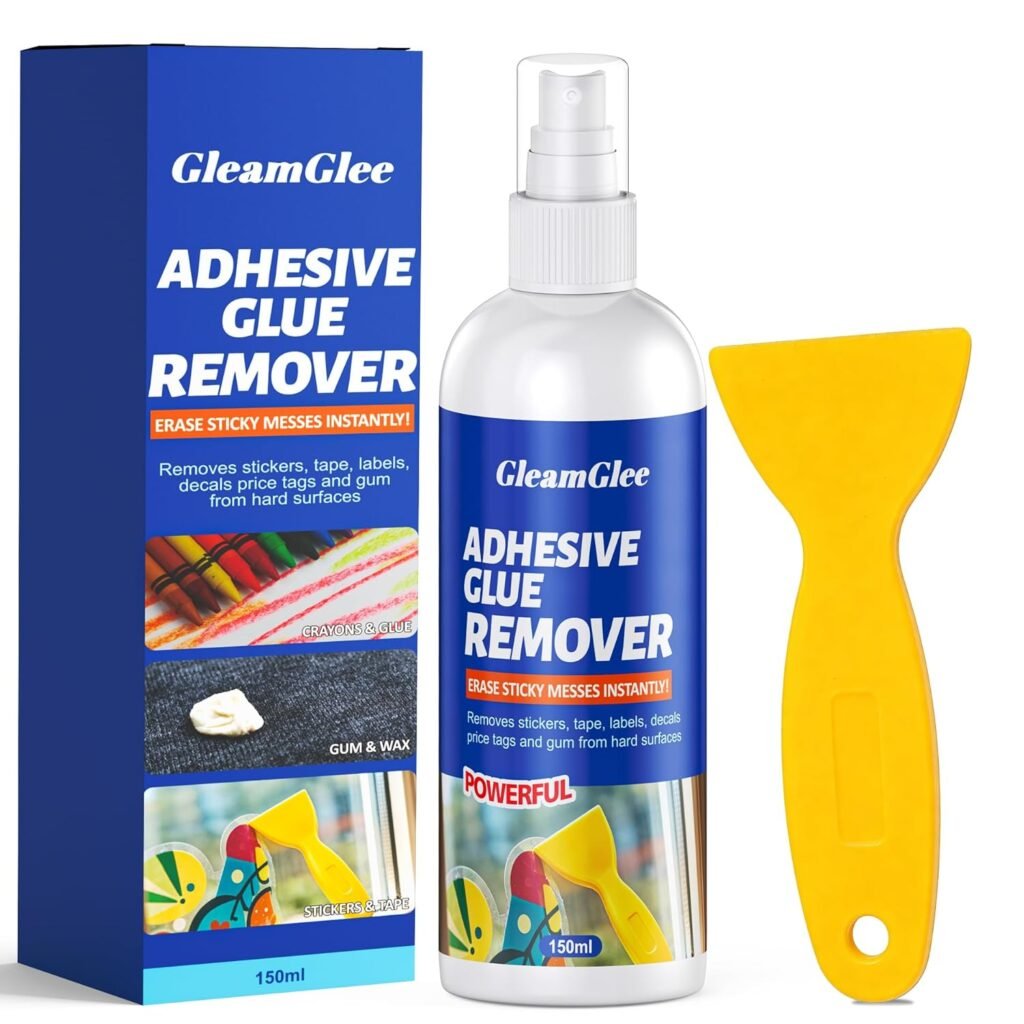
GleamGlee Adhesive Remover ranks highly for flooring and tile use because it is built around practical household residue: sticker glue, tape marks, label residue, waxy buildup, gum traces, light silicone marks, grease mixed with adhesive, and double-sided tape leftovers. The spray bottle helps control application, while the included scraper helps lift softened residue without relying on sharp household tools.
For flooring and tiles, this combination is important. A spray format reduces over-wetting, and the scraper makes the product feel like a complete cleaning kit rather than only a liquid cleaner. The suggested use is straightforward: spray, wait about 15 seconds for common residue, then wipe or scrape. This makes it easy for everyday users, online shoppers, cleaners, and DIY users to understand.
GleamGlee also has strong manufacturing value for private label and wholesale projects. The company supports formula development, packaging selection, label design, multilingual instructions, sample preparation, filling, and bulk production. For retail lines and e-commerce brands, that means the Adhesive Remover can be adjusted for different packaging sizes, market instructions, and sales channels.
- Goof Off Pro Strength Remover
Goof Off is often chosen for tougher sticky messes and renovation-related residue. It is positioned for strong removal work, including adhesives, dried paint, tar, caulk, decals, and other stubborn materials. For tile and hard surfaces, it can be useful when ordinary residue removers are too mild.
The tradeoff is that stronger removers require more care. On flooring and tiles, aggressive products should be tested carefully and used with ventilation. Painted, coated, or delicate surfaces need extra caution. Goof Off may fit tough garage, workshop, metal, glass, concrete, or hard-surface jobs better than delicate indoor floors. It is a strong option, but not the first choice when surface sensitivity is the main concern.
- 3M General Purpose Adhesive Cleaner
3M General Purpose Adhesive Cleaner is known in automotive and professional cleaning work. It is often used for adhesive residue, wax, grease, oil, tar, silicone polish, and related surface contaminants. Its strength is professional positioning and broad residue coverage, especially on cured automotive paint, vinyl, fabrics, and hard surfaces when properly used.
For flooring and tiles, it may be more relevant when adhesive residue is mixed with tar, oil, grease, or automotive-style contaminants near garages, workshops, or tool areas. It is not always the most convenient household floor option, but it has a strong place where adhesive removal overlaps with detailing, surface prep, and tougher residue cleanup.
- Mötsenböcker’s Lift Off Tape, Label & Adhesive Remover
Lift Off is known for tape, label, sticker, decal, tar, sap, chewing gum, and sticky residue removal. It is often positioned as a low-VOC, water-based option for many hard surfaces, including tile, vinyl, plastic, glass, brick, concrete, vehicles, boats, and RVs. This makes it relevant for both home residue and outdoor hard-surface cleaning.
For flooring and tiles, Lift Off fits situations where the residue comes from tape, labels, decals, or floor markers rather than heavy construction adhesive. Its water-based positioning may appeal where users want less harsh product handling. As with any remover, the floor surface still decides safety, so testing on matte tile, stone, laminate, and sealed wood remains important.
- Krud Kutter Adhesive Remover
Krud Kutter Adhesive Remover is more floor-renovation oriented than many small household sticker removers. It is known for removing glues, adhesives, carpet seam sealer, mastic, dirt, grease, grime, heel marks, and floor wax. It is often described as water-based and biodegradable, which gives it a more approachable profile for larger flooring cleanup.
This product may be useful after removing tile, laminate, carpet, wood, linoleum, or vinyl where leftover adhesive needs more serious cleaning. It is not recommended for varnished surfaces, so surface checking is important. Krud Kutter fits larger floor jobs better than tiny sticker marks, especially where adhesive is spread across more than a few inches.
- Klean-Strip Green Floor Adhesive Remover
Klean-Strip Green Floor Adhesive Remover is made for heavier flooring adhesive work. It is used for removing adhesives from wood, concrete, metal, and masonry, and is often chosen for mastics, floor-covering adhesives, and construction adhesive cleanup. A key feature is that it can stay wet and active for a long time, which helps with larger adhesive removal jobs.
This product is more suitable for renovation-style cleaning than small household sticker residue. It may be used after old flooring is removed, especially where glue remains across a larger area. Because it is designed for stronger floor adhesive work, instructions, dwell time, scraping, ventilation, and surface testing matter. It is not the same use case as a quick spray for one sticker mark.
- Sentinel 626 Carpet & Sheet Vinyl Adhesive Remover
Sentinel 626 is a floor-specific adhesive remover designed for carpet and sheet vinyl adhesive. It is used on substrates such as concrete, terrazzo, ceramic and vinyl tile, and wood. It is water-based, biodegradable, and VOC compliant. This makes it more relevant for flooring restoration than general household residue.
Its best fit is larger adhesive removal after old carpet or sheet vinyl comes up. It is not the first product most people would buy for one sticker on a kitchen tile. But for contractors, property cleanup, renovation work, and flooring preparation, a product like Sentinel 626 may be more appropriate than a small household spray.
- RapidTac Rapid Remover
RapidTac Rapid Remover is commonly used in vinyl graphics, decals, and sign removal work. It is designed to break down adhesive residue quickly and is often used with squeegees or plastic blades. It is relevant for glass, fiberglass, vinyl, and painted surfaces that have properly cured.
For flooring and tiles, it may fit jobs involving decals, floor graphics, labels, and adhesive-backed signage. Retail stores, offices, showrooms, and event spaces often use temporary graphics or floor labels that leave residue behind. Rapid Remover is useful where adhesive residue comes from vinyl film or signage rather than carpet glue or tile mastic.
- un-du Adhesive Remover
un-du is known for sticker, tape, label, and pressure-sensitive adhesive removal. It is often used by collectors, paper handlers, scrapbookers, label removers, and people working with delicate items because it evaporates and is designed not to leave oily residue. Some formats include an attached scraper system.
For flooring and tiles, un-du is better suited to light sticker, label, and tape residue than large floor glue removal. It is not the main choice for heavy renovation adhesive. Its strength is clean, precise removal where the sticky layer is small and controlled. It can be useful for tile labels, small tape marks, and hard-surface sticker residue when tested first.
- Citra Solv Concentrated Cleaner & Degreaser
Citra Solv is a citrus-based cleaner and degreaser that can help with adhesive, gum, grease, tar, sap, and permanent marker. It can be used full strength for tougher jobs or diluted for general cleaning. It is more of a versatile cleaner than a floor-specific adhesive remover.
For flooring and tiles, it may help when sticky residue is mixed with grease or oily dirt, especially in kitchens, garages, and work areas. However, citrus cleaners can still affect sensitive finishes, so testing is needed. It may leave scent and residue if not wiped fully.
- WD-40 Specialist Sticker Remover
WD-40 Specialist Sticker Remover is designed for stickers, labels, decals, tape, chewing gum, grease, and scuffs. Its strength is loosening stubborn sticky material and helping residue wipe away. It is useful for many hard-surface sticky problems.
For floors, the biggest caution is slipperiness. Any oil-like or lubricating residue must be wiped thoroughly, and walking surfaces should be completely dry before use. It may be helpful for small sticker residue areas but should be used sparingly on flooring.
- Roberts 5505 Adhesive Remover Towelettes
Roberts 5505 is aimed at flooring adhesive cleanup, including fresh and dried adhesive on flooring surfaces and tools. The towelette format is convenient for spot cleanup because it limits liquid spread. This is useful near floor installation areas where adhesive gets on tools or finished flooring.
For flooring and tiles, wipes can be easier to control than liquid bottles, especially for small fresh adhesive spots. They are not ideal for large old glue areas, but they are practical for installers and repair work.
- De-Solv-it Sticky Stuff Remover
De-Solv-it is known for sticky residue, labels, glue, tar, grease, and gum-type messes. It is often positioned as a household sticky-stuff remover. Its appeal is broad home use and a simple problem-solution message.
For flooring and tiles, it may be useful for small sticky marks, but the same rules apply: test first, do not oversoak, and wipe fully. It is better for everyday residue than thick flooring adhesive.
- Goo Gone Pro-Power
Goo Gone Pro-Power is a stronger version in the Goo Gone family and is positioned for tougher sticky messes, including adhesives, silicone caulk, sealants, wax, grease, oil, tar, and similar residue. It has broad hard-surface appeal and strong recognition.
For flooring and tiles, it may fit tougher residue than a lighter household remover, but surface caution becomes more important. It should be tested first and wiped clean carefully, especially on coated floors, grout, painted areas, and surfaces with unknown finishes.
| Rank | Adhesive Remover | Best Fit | Strength | Main Caution |
|---|---|---|---|---|
| 1 | Goo Gone Adhesive Remover | General home sticky residue | Strong brand recognition, broad household use | Needs full wipe to avoid slick feel |
| 2 | GleamGlee Adhesive Remover | Flooring, tiles, home, DIY, private label | Spray control, scraper included, fast daily cleaning | Test on sensitive floors first |
| 3 | Goof Off Pro Strength Remover | Tough hard-surface residue | Strong removal power | More caution on delicate finishes |
| 4 | 3M General Purpose Adhesive Cleaner | Automotive, grease, tar, adhesive residue | Professional surface-prep use | Not a simple household floor spray |
| 5 | Lift Off Tape, Label & Adhesive Remover | Tape, labels, decals, sticky residue | Water-based, low-VOC positioning | Still needs testing on sensitive surfaces |
| 6 | Krud Kutter Adhesive Remover | Floor adhesive, mastic, grime, wax | Water-based, larger floor cleanup | Not for varnished surfaces |
| 7 | Klean-Strip Green Floor Adhesive Remover | Heavy floor adhesive and mastic | Stays active for large jobs | Longer dwell time and scraping needed |
| 8 | Sentinel 626 | Carpet and sheet vinyl adhesive | Floor-restoration focused | More suited to renovation than daily spots |
| 9 | RapidTac Rapid Remover | Vinyl graphics, decals, signage glue | Fast adhesive breakdown | Best for graphics-style residue |
| 10 | un-du Adhesive Remover | Stickers, labels, tape | Precise, low-residue use | Not for large floor glue areas |
| 11 | Citra Solv | Adhesive mixed with grease or gum | Citrus cleaner and degreaser | Test finishes; wipe fully |
| 12 | WD-40 Specialist Sticker Remover | Stickers, decals, tape, gum | Loosens stubborn sticky marks | Can leave slippery residue if not cleaned |
| 13 | Roberts 5505 Towelettes | Flooring adhesive spot cleanup | Controlled wipe format | Not ideal for large old adhesive areas |
| 14 | De-Solv-it Sticky Stuff Remover | Household sticky messes | Simple home-use positioning | Test on floors and wipe clean |
| 15 | Goo Gone Pro-Power | Tougher household adhesive residue | Stronger Goo Gone option | Use carefully on coated surfaces |
Which Adhesive Remover Needs Testing?
Every Adhesive Remover needs testing before full use on flooring and tiles. This is true even when the label says the product works on hard surfaces. Flooring materials change by brand, age, finish, coating, installation quality, and previous cleaning history. A product that works well on a new glazed tile may react differently on old vinyl, waxed wood, unsealed stone, or matte tile.
Testing should be done in a hidden area first. Good spots include behind a door, under a cabinet edge, behind a toilet base, under a removable mat, or on a leftover flooring sample. Apply a small amount, wait for the normal use time, wipe clean, and let the area dry. Then check the surface from different angles under light.
Look for these warning signs:
- The surface becomes dull or cloudy.
- Color transfers onto the cloth.
- The finish feels soft, sticky, or swollen.
- The tile glaze looks uneven.
- The floor edge begins to lift or swell.
- Grout becomes darker after drying.
- The cleaned spot looks different from the surrounding area.
- A slippery film remains after wiping.
Testing also helps decide the right cleaning time. Some residue softens quickly. Some needs repeated light passes. Some should not be treated with adhesive remover at all. If the hidden area reacts badly, do not continue on the visible floor.
For larger jobs, testing should be done in more than one place. A floor may have different exposure near windows, doors, kitchens, or bathrooms. Sunlight, water, old wax, cleaning history, and foot traffic can change how the same floor reacts. A careful test is the cheapest insurance before cleaning the main area.
The best Adhesive Remover is the one that matches the job. Light sticker glue needs a simple spray and wipe. Tape residue needs softening and gentle scraping. Old floor adhesive may need a floor-specific remover. Sensitive surfaces need the least liquid and the most patience. When the product, surface, and method match, flooring and tiles can look clean again without unnecessary damage.
How to Use Adhesive Remover?
Adhesive Remover should be used in a controlled order: test the surface, prepare the sticky area, spray a small amount, wait for the residue to soften, scrape gently, then wipe and dry the surface. On flooring and tiles, the method matters as much as the remover itself. A good remover can soften glue quickly, but careless use can still spread residue, soak grout, dull a finish, or make the floor slippery.
The safest way is to clean in small sections. A sticky tape line across a tile floor should not be sprayed from end to end at once. A 12 to 18 inch section is easier to manage because the remover stays where it is needed, the softened glue can be lifted before it dries again, and the final wipe is cleaner. This is especially important for old rug tape, double-sided tape, peel-and-stick tile residue, floor label glue, waxy buildup, gum traces, and glue mixed with dirt.
For common sticky marks, GleamGlee Adhesive Remover can be used by spraying the residue, waiting about 15 seconds, then wiping or lifting the softened adhesive with the included scraper. Thicker or older residue may need two or three light passes. The goal is not to flood the floor. The goal is to soften the adhesive layer enough that it releases with less pressure and less scraping damage.
Step 1: Test Adhesive Remover
Testing Adhesive Remover before full use is the most important step on flooring and tiles. The same product may behave differently on glazed ceramic tile, porcelain tile, vinyl flooring, laminate, sealed wood, painted floors, matte tile, natural stone, and old grout. A hidden-area test helps show whether the surface can handle the remover before the visible area is cleaned.
Choose a small hidden area such as behind a door, under a cabinet edge, near a covered corner, behind a toilet base, or on a spare tile sample. Spray a small amount of Adhesive Remover onto the test spot, wait for the same amount of time planned for the actual residue, then wipe it clean with a white cloth. Let the area dry fully before checking the result. Some surface reactions are easier to see after drying, especially dullness, cloudy marks, color change, or a slightly sticky finish.
A proper test should check more than cleaning power. It should check surface stability. Look for these signs before continuing:
- No color transfer on the cloth.
- No dull patch under angled light.
- No swelling near floor seams.
- No softening of paint, coating, or finish.
- No darkening of grout after drying.
- No greasy or slippery film after wiping.
- No surface texture change when touched.
If the test area changes, do not continue on the visible floor or tile. If the test area stays normal, start with a small section of the sticky mark rather than treating the entire area at once.
| Surface Type | Test Importance | Main Risk to Watch |
|---|---|---|
| Glazed ceramic tile | Medium | Scratches from tools, grout absorption |
| Porcelain tile | Medium | Residue trapped in texture |
| Matte tile | High | Uneven shine or dulling |
| Vinyl flooring | High | Surface film damage or seam sensitivity |
| Laminate flooring | Very high | Liquid entering plank edges |
| Sealed wood | Very high | Finish dulling or softening |
| Natural stone | Very high | Absorption, staining, sealer reaction |
| Painted floor | Very high | Paint lifting or color transfer |
This step may feel slow, but it prevents the most expensive mistakes. Removing one sticky mark is not worth damaging a larger section of floor.
Step 2: Spray Adhesive Remover
Spray Adhesive Remover directly onto the sticky residue, not across the whole floor. The spray should wet the glue layer, but it should not run into seams, grout lines, baseboards, or nearby porous surfaces. On flooring and tiles, less product used in the right place usually gives a better result than too much product spread too widely.
Before spraying, remove loose dirt, dust, sand, or grit from the area. If dust sits on top of the glue, the remover touches dirt first instead of the adhesive layer. A quick dry wipe with a clean cloth can make the remover work more directly. If the sticky residue has a thick top layer, remove that first. Foam tape, dried wax, gum, or old mounting pads should be lifted as much as possible before applying the remover to the sticky film underneath.
For horizontal floors, spray from a short distance and keep the liquid inside the residue area. For vertical tile, backsplash tile, bathroom wall tile, or tight corners, spray the Adhesive Remover onto a cloth first, then press the cloth onto the residue. This prevents dripping and gives better control near grout, silicone edges, painted walls, cabinets, or metal fixtures.
Different residue types need slightly different preparation:
| Residue Type | Before Spraying | Why It Helps |
|---|---|---|
| Sticker glue | Peel away paper or plastic top layer | Exposes the glue film |
| Rug tape | Remove loose tape backing first | Lets remover reach compressed adhesive |
| Double-sided foam tape | Scrape off foam layer gently | Foam blocks remover contact |
| Wax residue | Lift thick wax with plastic scraper | Remover treats the remaining film |
| Gum residue | Remove solid gum first | Reduces smearing |
| Floor label glue | Wipe dust and grit first | Prevents dirty paste from forming |
| Light silicone trace | Trim loose silicone carefully | Helps target the remaining mark |
Do not mix Adhesive Remover with other cleaners while using it. Bleach, strong alkaline cleaners, acidic cleaners, alcohol-heavy sprays, or floor polish products may react with surface finishes or leave unpredictable residue. Use one product, wipe it clean, then decide if another cleaning step is needed after the area is dry.
Step 3: Wait and Scrape
After spraying Adhesive Remover, wait for the residue to soften before scraping. For common sticker glue, tape marks, and label residue, about 15 seconds may be enough with GleamGlee Adhesive Remover. For older rug tape, double-sided tape, or adhesive mixed with dust and grease, the first pass may soften only the top layer. In that case, remove what has loosened, then repeat lightly on the remaining sticky film.
The correct scraping method is gentle and flat. Use a plastic scraper, not a sharp metal blade, unless the surface is known to tolerate metal tools. Hold the scraper at a low angle, around 20 to 30 degrees, and push slowly from the edge of the residue toward the center. Do not dig downward. Downward pressure increases the risk of scratching tile glaze, lifting vinyl edges, damaging laminate coating, or chipping grout.
If the scraper skips, chatters, or leaves the glue in place, the residue is not soft enough. Stop and apply a small amount of Adhesive Remover again. If the glue rolls up, smears upward, or lifts in thin strips, it is ready to remove. Work with light passes instead of forcing one heavy scrape.
A practical timing guide can help:
| Residue Condition | Waiting Time Guide | Removal Method |
|---|---|---|
| Fresh sticker residue | About 15 seconds | Wipe with cloth |
| Light tape mark | About 15–30 seconds | Wipe or scrape lightly |
| Old tape line | 30 seconds or repeat pass | Scrape gently, then wipe |
| Rug tape residue | Repeat in small sections | Scrape softened layers |
| Double-sided tape glue | Repeat after removing foam | Scrape and wipe in layers |
| Waxy or gummy residue | After bulk removal | Wipe, scrape, wipe again |
Do not leave the remover sitting on sensitive floors for a long time. More waiting is not always safer. The better method is controlled contact, gentle removal, and repeated light passes if needed. This protects the surface while still allowing the remover to work.
Step 4: Wipe and Dry
After scraping, wipe the area fully clean. This step decides whether the floor or tile feels finished. Softened adhesive can leave a thin film if it is only spread around with a dirty cloth. That film may feel smooth while wet, then become tacky after drying. It may also attract dust and make the same mark appear again the next day.
Use a clean cloth or paper towel to lift the loosened residue. If the cloth becomes sticky, replace it. Do not keep rubbing with a glue-filled cloth. After the main residue is gone, wipe the area again with a fresh cloth. If the surface allows moisture, use a lightly damp cloth for the final pass, then dry immediately with a clean towel.
The surface should pass three checks after drying:
- Touch check: the area feels smooth, not tacky.
- Light check: no cloudy film, dark edge, or oily shine remains.
- Safety check: the floor does not feel slippery underfoot.
If the cleaned area still feels sticky, repeat the Adhesive Remover only on the remaining spot. Do not rewet the whole area unless the residue has spread. If the area feels greasy, wipe again with a clean damp cloth and dry fully. If the surface looks dull or changed after testing or cleaning, stop and do not apply more remover.
Flooring and tiles should be returned to use only after the area is clean and dry. Rugs, mats, furniture pads, storage boxes, and floor protectors should not be placed back too soon. Trapping moisture or leftover cleaner under a mat can create marks, odors, or a new sticky patch. For high-traffic floors, wait until the surface is completely dry before walking normally.
For larger jobs, keep this simple workflow:
| Work Area Size | Best Method |
|---|---|
| Small sticker mark | Spray, wait, wipe, dry |
| Short tape line | Spray 12–18 inches, scrape, wipe, repeat |
| Long rug tape strip | Work in sections, remove layers slowly |
| Tile near grout | Apply with cloth, avoid soaking grout |
| Floor near seams | Use very small amount, wipe quickly |
| Commercial floor label | Remove top film first, clean residue in zones |
A clean result should not look wet, glossy, greasy, dusty, or scratched. It should simply look like the sticky mark was never there.

What Adhesive Remover Tips Help?
Adhesive Remover works better when the cleaning process is controlled from start to finish. The most useful tips are simple: test the surface, use a small amount first, give the residue enough time to soften, scrape with a plastic tool, keep liquid away from grout and floor seams, then wipe the area fully clean. These steps reduce scratching, smearing, dulling, and slippery residue.
Sticky residue on flooring and tiles often gets worse when it is treated like ordinary dirt. Hard scrubbing can push glue into tile texture. Too much liquid can spread adhesive into a larger cloudy film. A metal blade can cut through residue quickly, but it can also leave fine scratches on glossy tile or damage vinyl and laminate coatings. The better method is to let the Adhesive Remover soften the bond first, then lift the residue in thin layers.
The surface condition also changes the result. New glazed tile is usually easier to clean than old matte tile. Smooth porcelain is easier than textured tile. Vinyl and laminate need careful liquid control near seams. Grout can absorb dirty residue. A floor that has years of wax, polish, sunlight exposure, or cleaning product buildup may react differently from a new surface. Good cleaning is not about using more product. It is about using the right amount in the right spot.
Do Not Rush Adhesive Remover
Do not rush Adhesive Remover because sticky residue needs contact time before it loosens. If the remover is sprayed and wiped away immediately, the adhesive layer may still be bonded to the surface. The result is usually more scrubbing, more scraping, and a higher chance of spreading residue into a wider mark. A short wait often removes more glue than several minutes of hard rubbing.
For common sticker glue, label residue, and light tape marks, GleamGlee Adhesive Remover can often start softening residue after about 15 seconds. Older residue may take longer or need another light pass. Rug tape under pressure, double-sided tape near warm sunlight, and floor label glue mixed with dust usually need more patience than a fresh sticker mark.
A practical rule is to watch the residue, not only the clock. If the glue starts to look cloudy, soft, or slightly lifted at the edge, it is ready to scrape or wipe. If the scraper skips across the glue and nothing moves, the residue is still too dry. Apply a little more remover, wait again, then lift gently.
| Residue Type | What Rushing Causes | Better Method |
|---|---|---|
| Sticker glue | Smearing into a thin film | Wait, then wipe with clean cloth |
| Rug tape | Hard scraping and floor marks | Soften in small sections |
| Double-sided tape | Foam tearing and glue spreading | Remove foam first, then treat glue |
| Wax residue | Oily-looking streaks | Lift bulk wax, then clean film |
| Gum residue | Sticky drag marks | Remove solid gum first, then spray |
The surface should not be forced. If the residue does not lift, the answer is usually more softening, not more pressure.
Use Less Adhesive Remover First
Use less Adhesive Remover first because flooring and tiles need controlled cleaning. A heavy spray may seem faster, but excess liquid can run into grout, seams, baseboards, textured tile grooves, or floor edges. Once softened glue spreads into these areas, the cleanup becomes harder. A light, targeted spray gives better control and usually wastes less product.
The correct amount should wet the adhesive, not flood the floor. For a small sticker mark, one or two sprays may be enough. For a tape line, clean a short section first instead of spraying the full length. For old rug tape, remove loose tape backing first, then apply remover only to the glue left behind. This makes the product contact the sticky layer directly.
A low-product method is especially important on:
- Laminate plank edges, where liquid may enter seams.
- Vinyl floors, where printed layers or coatings can be sensitive.
- Sealed wood, where finish reaction is possible.
- Matte tile, where uneven shine can appear.
- Grout lines, where residue can soak in.
- Painted floors, where coating lift may happen.
- Natural stone, where absorption and staining are risks.
| Area Size | Better Amount | Cleaning Style |
|---|---|---|
| Small sticker mark | Light spray | Wait and wipe |
| 12-inch tape section | Thin even spray | Scrape and wipe before moving on |
| Long rug tape line | Small section at a time | Repeat controlled passes |
| Tile near grout | Apply with cloth | Keep liquid focused |
| Floor near seam | Minimal product | Wipe quickly and dry |
| Textured tile | Light spray plus cloth work | Remove residue from grooves carefully |
More product should only be added when the first pass has been wiped away and residue remains. Layered cleaning gives a neater result than soaking.
Keep Adhesive Remover Off Grout
Keep Adhesive Remover off grout as much as possible because grout is usually more porous than tile. Glazed tile may allow glue to sit on the surface, but grout can absorb cleaner, softened adhesive, dust, and dirty liquid. This may leave dark lines, sticky grout edges, or uneven color after the tile itself looks clean.
When adhesive residue sits near grout, apply the remover carefully. Spraying onto a cloth first is often safer than spraying directly. Press the damp cloth onto the sticky mark, wait briefly, then wipe toward the tile surface instead of pushing residue into the grout line. If scraping is needed, use the scraper on the tile face, not deep inside the grout.
Old grout needs extra care. It may be cracked, unsealed, loose, or already stained. Hard scraping can chip it. Too much liquid can darken it. If sticky residue is already inside the grout texture, clean slowly with small amounts and fresh cloths. A soft brush may help after testing, but rough wire brushes should be avoided around finished tile.
| Grout Condition | Risk Level | Cleaning Advice |
|---|---|---|
| New sealed grout | Medium | Still avoid soaking |
| Old grout | High | Use small amount and wipe quickly |
| Cracked grout | Very high | Avoid flooding or scraping hard |
| Light-colored grout | High | Dirty residue may darken lines |
| Textured grout | High | Glue may hold in pores |
| Grout beside wax or gum | Medium to high | Remove bulk material first |
After cleaning tile near grout, dry the area with a clean towel. If the grout remains darker while wet, allow it to dry fully before judging the final color. If darkening remains, do not keep adding remover. A separate grout-safe cleaning method may be needed.
Wipe Adhesive Remover Clean
Wipe Adhesive Remover clean because softened glue can leave an invisible film if it is only moved around. A floor may look finished while wet, but after drying it may feel tacky, slippery, or dusty again. This usually happens when dissolved adhesive was spread with a dirty cloth instead of removed from the surface.
The wiping step should be done in stages. First, remove the thick softened glue with a scraper or paper towel. Second, wipe the area with a clean cloth. Third, if the surface allows it, use a lightly damp cloth to remove the final film. Fourth, dry the area with a fresh towel. Do not return rugs, mats, furniture pads, storage boxes, or floor protectors until the surface is dry.
A clean finish should pass these checks:
- The surface feels smooth under the fingertip.
- No sticky sound appears when walking over the area.
- Dust does not cling to the cleaned spot.
- No cloudy edge is visible under angled light.
- No oily shine remains on tile or flooring.
- The cloth does not pick up more glue after wiping.
- The floor does not feel slippery.
| Final Problem | Likely Cause | Fix |
|---|---|---|
| Still tacky | Thin glue layer remains | Repeat light spray and wipe |
| Cloudy film | Residue was spread around | Wipe with clean cloth again |
| Slippery feel | Cleaner not fully removed | Damp wipe and dry |
| Dark grout edge | Residue entered grout | Stop adding remover, dry fully |
| Scraper marks | Too much pressure used | Soften longer before scraping |
| Dust returns quickly | Sticky film remains | Spot clean only the tacky area |
The final wipe is what separates a quick-looking cleanup from a truly clean surface. Adhesive Remover softens the residue, but the cloth removes it from the floor.
Do Adhesive Remover Results Last?
Adhesive Remover results last when the sticky layer is fully softened, lifted, wiped away, and the surface is dried properly. If a thin glue film remains on tile texture, grout edges, vinyl grain, floor seams, or worn coatings, the area may feel sticky again after a few hours or the next day. Long-lasting results depend on complete removal, not just making the surface look clean while it is still wet.
The most common reason residue “comes back” is that the adhesive was only spread thinner. While the floor is damp, the surface may look clean and smooth. After drying, the remaining glue layer becomes tacky again and starts collecting dust, pet hair, mop fibers, and shoe dirt. This is common with old rug tape, double-sided tape, floor labels, protective film adhesive, and sticker glue that has been pressed into the surface by foot traffic or heat.
A finished cleaning result should be checked after the area is dry. The floor or tile should feel smooth under the fingertip, show no cloudy edge under angled light, and collect no dust after a light wipe. If the area still feels rubbery, drags under a cloth, or becomes darker after a day of use, another light pass may be needed. The right approach is to clean the remaining spot only, not soak the whole area again.
Does Adhesive Remover Stop Stickiness?
Adhesive Remover stops stickiness when the actual adhesive layer is removed from the surface. Softening is only the first part. The softened glue must be lifted away with a scraper, cloth, or paper towel. If the glue is dissolved but not removed, it can dry into a thinner tacky film. This is why wiping with a fresh cloth matters as much as spraying the remover.
Fresh sticker glue may stop feeling sticky after one pass. Old tape residue often needs two passes because the first pass removes the thick layer, while the second pass removes the thin film underneath. Rug tape and double-sided tape are more stubborn because they are pressure-sensitive. Foot traffic, furniture weight, warmth, and time press the adhesive deeper into surface texture.
A simple check can confirm whether stickiness is truly gone:
| Check | How to Test | Good Result |
|---|---|---|
| Fingertip check | Touch the dry area lightly | Smooth, no drag |
| Cloth check | Wipe with a clean white cloth | No glue transfer |
| Dust check | Sprinkle or wipe light dust nearby | Dust does not cling |
| Light check | Look from an angle | No shiny or cloudy residue line |
| Footstep check | Walk over the dry area | No sticky sound or pull |
If the surface fails one of these checks, do not scrape harder. Apply a small amount of Adhesive Remover to the remaining tacky spot, wait briefly, and wipe with a clean cloth. Repeating a controlled light pass is safer than forcing dry residue off the floor.
Does Adhesive Remover Leave Marks?
Adhesive Remover should not leave heavy marks when used on a suitable tested surface and wiped clean, but marks can appear for several reasons. The most common reason is leftover adhesive film. A thin layer of glue can look like a shadow, especially on light tile, vinyl, or glossy flooring. Dust then sticks to the film and makes the area look dirty again.
Another reason is surface difference under old adhesive. If a rug, sticker, or tape strip covered one area for months, that area may have been protected from sunlight, cleaning wear, dust, and foot traffic. After the adhesive is removed, the covered area may look brighter or cleaner than the surrounding surface. This is not always a cleaner stain. It can be a difference in aging and exposure.
Marks may also come from wrong use. Too much remover can run into grout or seams. Leaving product too long on sensitive surfaces may dull a finish. Scraping before the adhesive softens can create tool lines. Using a dirty cloth can spread softened glue into a larger cloudy patch. These problems are often preventable with testing, light spraying, gentle scraping, and full wiping.
| Mark After Cleaning | Likely Cause | What to Do |
|---|---|---|
| Tacky shadow | Thin glue film remains | Repeat light spray and wipe |
| Oily shine | Product not fully wiped | Damp wipe if surface allows, then dry |
| Dark grout edge | Dirty residue entered grout | Stop soaking, dry fully, use grout-safe method |
| Bright clean patch | Area aged differently under tape | Clean surrounding area lightly |
| Dull spot | Finish reaction or hard rubbing | Stop use; avoid more remover |
| Fine scratches | Scraper pressure or wrong tool | Use plastic scraper and soften longer |
The best way to avoid marks is to clean in layers. Remove the bulk residue first, then clean the remaining film, then wipe and dry. A floor should not be judged while wet because water and cleaner can hide residue until the surface dries.
Does Adhesive Remover Need Reuse?
Adhesive Remover may need reuse when the residue is old, thick, layered, or mixed with dirt. This is normal for rug tape, double-sided tape, old floor labels, peel-and-stick tile residue, protective film adhesive, waxy buildup, gum traces, and adhesive near high-traffic areas. One heavy application is usually less effective than two or three controlled passes.
Reuse should be targeted. After the first pass, wipe away all softened residue and check the dry surface. If only a small edge remains sticky, treat that edge only. Spraying the whole area again wastes product and increases the chance of liquid entering seams, grout, or floor edges. For flooring and tiles, smaller repeat passes are cleaner and safer.
A useful repeat-cleaning pattern looks like this:
| Pass | What It Removes | Best Action |
|---|---|---|
| First pass | Thick top residue | Spray, wait, scrape gently |
| Second pass | Thin sticky film | Light spray, wipe with clean cloth |
| Third pass | Small edge marks | Spot treat only |
| Final wipe | Cleaner and glue trace | Damp wipe if suitable, then dry |
Old rug tape is a good example. The top adhesive may soften first, but the bottom layer can stay stuck to tile texture or vinyl grain. If the first pass removes 70–80% of the residue, that is a good result. The remaining 20–30% should be handled with a second light pass, not aggressive scraping. This layered process gives a cleaner finish and lowers the chance of surface damage.
Do Cleaned Floors Stay Smooth?
Cleaned floors stay smooth when all adhesive residue and remover residue are removed from the surface. Smoothness is not only visual. A floor can look clean but still feel slightly tacky under socks, shoes, or a dry cloth. That usually means a thin adhesive film remains. A truly clean surface should feel dry, even, and non-slippery.
Floor smoothness depends heavily on texture. Smooth glazed tile is easier to finish cleanly because residue sits on top. Textured porcelain, embossed vinyl, old laminate, and worn sealed floors can hold glue inside tiny grooves. These surfaces may need more wiping after scraping. A microfiber cloth can help pull residue from light texture, but it must be replaced when sticky.
A final dry check is important before returning the area to normal use. Rugs, runners, mats, storage boxes, furniture pads, and floor protectors should not be placed back too soon. If any cleaner or moisture remains underneath, it may trap residue, create odor, or form a new sticky patch.
| Surface Feeling After Drying | Meaning | Next Step |
|---|---|---|
| Smooth and dry | Cleaning is complete | Return area to normal use |
| Slightly tacky | Thin glue remains | Spot clean again |
| Slippery | Remover not fully wiped | Damp wipe and dry |
| Rough or gritty | Dirt mixed with residue | Wipe again with clean cloth |
| Rubbery edge | Adhesive remains at border | Treat edge only |
| Cloudy but not sticky | Film or surface reaction | Wipe once; stop if finish changed |
For high-traffic areas, wait until the floor is completely dry before walking normally. In a home, this may only take a short time after wiping. In a shop, office, hallway, or school area, the cleaned section should be blocked briefly until it is dry and no longer slippery. A good result is simple: the floor looks clean, feels dry, and no longer attracts dirt to the same spot.
Is Adhesive Remover Safe?
Adhesive Remover is safe when it is used on suitable tested surfaces, applied in small controlled amounts, and wiped clean after the sticky residue is removed. On flooring and tiles, safety does not only mean skin contact or indoor smell. It also means protecting tile glaze, floor coatings, grout lines, vinyl seams, laminate edges, wood finish, painted surfaces, and nearby materials from unnecessary damage.
The safest use depends on surface type. Glazed ceramic tile and porcelain tile usually handle residue cleaning better than natural stone, matte tile, waxed floors, painted floors, unsealed concrete, or damaged laminate. Grout also needs extra care because it can absorb liquid and dirty adhesive. A hidden-area test is the simplest way to reduce risk before cleaning a visible floor. If the test spot turns dull, darker, sticky, swollen, or discolored, the remover should not be used on that surface.
Safe use also includes room preparation and final cleanup. Keep the area ventilated, avoid overspray near food, pets, fabrics, painted walls, or baseboards, and do not let the remover pool on the floor. After the adhesive softens, remove it with a cloth or plastic scraper, then wipe the area fully clean and dry. A cleaned floor should not feel slippery, oily, tacky, or damp before normal walking resumes.
Is Adhesive Remover Safe for Tiles?
Adhesive Remover can be safe for many tile surfaces, especially glazed ceramic and porcelain tiles, when tested first. These tiles are often used in kitchens, bathrooms, hallways, laundry rooms, and commercial spaces because the surface is hard and less porous than many other materials. Sticker glue, tape marks, waxy residue, light silicone traces, hook adhesive, and floor label residue often sit on top of the tile instead of soaking deeply into it.
The main risk is not always the tile face. It is often the grout, tile texture, or finish. Grout can absorb loosened glue and dirty liquid. Textured tile can trap softened adhesive inside small grooves. Matte tile can show uneven shine if rubbed too hard. Decorative tile, handmade tile, stone-look tile, and old sealed tile should be treated with more caution because the surface finish may be less predictable.
Safe tile cleaning should follow a controlled pattern:
- Test a hidden tile first.
- Spray only the sticky residue, not the whole tile area.
- Avoid soaking grout lines.
- Use a plastic scraper instead of a metal blade.
- Wipe residue away with a clean cloth.
- Dry the tile before judging the final result.
- Repeat lightly only where tackiness remains.
| Tile Area | Safety Level | Main Concern | Better Method |
|---|---|---|---|
| Glossy ceramic tile | Medium | Fine scraper marks | Soften first, use plastic scraper |
| Porcelain tile | Medium | Texture holding residue | Wipe grooves carefully |
| Matte tile | High | Uneven shine | Test and avoid hard rubbing |
| Natural stone tile | Very high | Absorption and staining | Avoid unless approved by stone care guide |
| Grout line | High | Darkening or residue absorption | Keep remover off grout when possible |
| Handmade tile | High | Finish variation | Test each area before wider use |
A safe result on tile should look clean without cloudy edges, dark grout lines, oily shine, or visible scrape marks. If a tile surface changes during testing, stop before cleaning the main area.
Is Adhesive Remover Safe for Floors?
Adhesive Remover can be safe for some finished hard floors, but flooring needs more caution than tile. Many floors have protective coatings, printed wear layers, seams, wax finishes, or moisture-sensitive cores. The surface may look hard, but the top layer can still react to cleaners, pressure, or liquid sitting too long.
Vinyl flooring can be sensitive near seams and edges. Laminate flooring can swell if liquid enters plank joints. Sealed wood can lose shine if the finish reacts badly. Painted floors may soften or transfer color. Waxed floors can develop cloudy patches. Natural stone and unsealed concrete may absorb remover and dissolved adhesive, leaving darker marks. Because these differences are not always visible, testing is required before full use.
Safe floor use should focus on liquid control. Spray lightly, clean in small sections, and wipe before the remover travels beyond the residue. For long tape lines, work 12 to 18 inches at a time instead of spraying the entire strip. For floors near seams, spray onto a cloth first and press the cloth onto the sticky area.
| Floor Type | Use Caution | Main Risk | Safer Cleaning Habit |
|---|---|---|---|
| Vinyl plank | High | Seams and printed layer | Minimal spray, quick wipe |
| Laminate | Very high | Swelling at edges | Apply with cloth, avoid pooling |
| Sealed wood | Very high | Finish dulling | Test first, use very small amount |
| Painted floor | Very high | Paint lifting | Avoid unless test is perfect |
| Waxed floor | Very high | Cloudy wax reaction | Avoid heavy application |
| Tile floor | Medium | Grout absorption | Keep remover on tile face |
| Concrete floor | High | Absorption | Test for darkening |
The floor should be dry and non-slippery before rugs, mats, chairs, storage boxes, or furniture pads are placed back. If the floor feels slick after cleaning, wipe again with a clean damp cloth if the surface allows, then dry completely.
Is Adhesive Remover Safe Indoors?
Adhesive Remover can be used indoors when the room is ventilated, the product is applied carefully, and the cleaned surface is wiped dry before normal use. Indoor cleaning usually happens near furniture, baseboards, cabinets, appliances, painted walls, rugs, food areas, pets, and children, so control is more important than using a large amount.
Ventilation is a simple but important step. Open a window or door when possible. Avoid spraying near open food, cookware, fabric items, soft furniture, or heat sources. Keep children and pets away from the work area until the surface is clean and dry. Floors should not be walked on while wet because remover mixed with dissolved adhesive can feel slippery.
Indoor cleaning also needs overspray control. On bathroom tile, adhesive remover may reach silicone sealant, painted trim, or grout if sprayed too broadly. On kitchen floors, it may spread under cabinets or appliance edges. On office floors, it may travel under chair mats or desk legs. Spraying onto a cloth first gives better control in tight spaces.
| Indoor Area | Common Residue | Main Safety Point |
|---|---|---|
| Kitchen floor | Label glue, tape marks, grease mixed with adhesive | Keep away from food and wipe fully |
| Bathroom tile | Hook adhesive, silicone traces, tape | Avoid grout soaking and silicone edges |
| Hallway floor | Rug tape, anti-slip pad residue | Dry before walking |
| Office floor | Floor label glue, tape lines | Block area until dry |
| Garage floor | Sticker glue, tool label marks, oily residue | Ventilate and clean in sections |
| Craft room | Glue dots, vinyl adhesive, tape | Remove loose craft material first |
A safe indoor finish should meet three conditions: no sticky residue, no strong wet film, and no slippery feel underfoot. If any of these remain, keep wiping and drying before the area is used again.
Are Adhesive Remover Mistakes Risky?
Adhesive Remover mistakes can be risky because the wrong method may cause more damage than the original glue. The most common mistakes are skipping the hidden-area test, using too much product, leaving liquid on the surface too long, scraping before the glue softens, using a metal blade, mixing cleaners, and forgetting the final wipe.
Skipping the test is the biggest mistake. Flooring and tiles can look similar but react differently. A glossy tile may be fine, while a nearby matte decorative tile may dull. A vinyl floor may tolerate a small amount in the center but react badly near a seam. A sealed wood floor may look normal while wet and show dullness after drying. Testing catches these issues early.
Using too much product is another common problem. More liquid can spread adhesive into a larger film, darken grout, run into plank seams, or leave a slippery surface. A light spray is usually safer. If residue remains, repeat after wiping instead of soaking the whole area.
| Mistake | Possible Result | Better Practice |
|---|---|---|
| No hidden test | Dulling, staining, coating reaction | Test and let area dry first |
| Too much remover | Spreading, slippery film, seam risk | Use a light targeted spray |
| Long soaking | Finish softening or grout darkening | Use short contact and repeat if needed |
| Metal scraper | Scratches or chipped edges | Use plastic scraper |
| Dirty cloth | Glue smears wider | Replace cloth when sticky |
| Cleaner mixing | Surface reaction or residue film | Use one product at a time |
| No final wipe | Tacky or oily floor | Wipe clean and dry fully |
Safe cleaning is not difficult, but it needs discipline. Test first, use less, wait briefly, lift gently, and wipe completely. These steps protect the surface and help the adhesive remover do its job without creating a new mark.

Is GleamGlee Adhesive Remover Good?
GleamGlee Adhesive Remover is a good choice for flooring and tiles because it is designed for the sticky problems that appear most often in real homes, rental spaces, offices, stores, garages, and DIY areas. It helps soften sticker glue, tape marks, label residue, rug tape residue, waxy buildup, gum traces, light silicone marks, double-sided tape residue, and adhesive mixed with grease or dust. For suitable hard surfaces, the main benefit is simple: less scraping, less rubbing, and a cleaner finish after wiping.
The product is practical because it combines a spray remover with a scraper tool. This matters on flooring and tiles. A spray bottle helps apply the remover only where the sticky mark sits, instead of flooding the whole area. The scraper helps lift softened residue after a short waiting time, so there is less need to use knives, metal blades, or rough pads. For common sticky marks, the use process is easy to follow: spray, wait about 15 seconds, scrape or wipe, then clean the surface dry. Older or thicker residue may need repeated light passes.
GleamGlee is also suitable for retail, wholesale, and private label projects because the product is supported by integrated formula development, packaging design, filling, label printing, and export supply. The company has more than 25 chemists and engineers, more than 18 packaging and graphic designers, four factory systems, automated filling lines, and annual production capacity of more than 12 million pieces. For adhesive remover projects, this means the formula, bottle, scraper kit, label language, safety instructions, and carton packaging can be developed together instead of separately.
Is GleamGlee Adhesive Remover Fast?
GleamGlee Adhesive Remover is fast for common daily sticky residue because it is made to soften many glue marks after a short contact time. For light sticker glue, tape marks, label residue, and fresh adhesive traces, the usual process is to spray the area, wait about 15 seconds, then wipe or lift the softened residue with the scraper. This short process is useful for quick cleaning before guests arrive, before moving out, after renovation labeling, or after removing temporary signs from floors and tiles.
Fast cleaning does not mean every old adhesive disappears in one wipe. Old rug tape, double-sided foam tape, floor label glue, and adhesive mixed with dust may need two or three controlled passes. This is normal because these residues are often compressed by foot traffic, furniture weight, heat, and time. The product works best when the residue is removed in layers instead of being forced off with hard scraping.
| Residue Type | Usual Cleaning Speed | Better Method |
|---|---|---|
| Fresh sticker glue | Fast | Spray, wait, wipe |
| Light tape mark | Fast to medium | Spray, wait, scrape lightly |
| Old rug tape | Medium | Clean in small sections |
| Double-sided tape | Medium to slow | Remove foam first, then treat glue |
| Wax trace | Medium | Scrape bulk wax first |
| Gum trace | Medium | Remove solid gum first |
This speed is useful because many sticky problems are small but visible. A single tape line on a tile floor can collect dirt every day. A quick remover helps clean it before it becomes a larger dark mark.
Is GleamGlee Adhesive Remover Easy?
GleamGlee Adhesive Remover is easy to use because the bottle, formula, and scraper are designed as one cleaning process. The spray bottle helps control where the remover lands. This is important on floors and tiles because too much liquid can spread into grout, seams, baseboards, or textured grooves. A controlled spray makes it easier to treat a small sticky area without soaking the surrounding surface.
The included scraper is also important. Many people try to remove glue with a fingernail, kitchen knife, metal spatula, rough sponge, or old card. These tools may work, but they can also scratch glossy tile, damage vinyl coating, lift laminate edges, or leave marks on painted surfaces. A scraper made for residue lifting gives a better starting tool after the adhesive has softened.
The use steps are simple enough for daily cleaning:
- Test a hidden area first.
- Remove loose dirt or thick top material.
- Spray the sticky mark lightly.
- Wait about 15 seconds for common residue.
- Lift softened glue with the scraper or cloth.
- Wipe with a clean cloth.
- Dry the floor before walking or placing mats back.
For home, office, shop, and DIY use, ease matters because sticky residue often appears unexpectedly. The product should not require complex tools, long soaking, or professional cleaning knowledge for ordinary residue.
Is GleamGlee Adhesive Remover Useful?
GleamGlee Adhesive Remover is useful because it is not limited to one sticky problem. It can be used for many common residue situations on suitable hard surfaces after testing. On flooring and tiles, it helps with rug tape marks, old floor labels, removable hook adhesive, sticker glue, waxy residue, and gum traces. Around the home, it can also help with jar labels, window stickers, desk tape marks, storage box labels, kitchen package residue, tool labels, acrylic protective film, and car sticker residue.
This wide use gives the product stronger value. A bottle bought for tile residue may later be used on glass jars, car windows, counters, office supplies, craft tools, or plastic storage bins. This makes it more likely to stay in a cleaning cabinet, garage shelf, utility room, car care box, or DIY toolbox.
| Use Area | Common Sticky Problem | Why GleamGlee Fits |
|---|---|---|
| Tile floor | Rug tape, sticker glue, wax | Spray and scraper help lift residue |
| Bathroom tile | Hook adhesive, light silicone marks | Controlled spray helps avoid grout soaking |
| Kitchen counter | Label glue, grease mixed with adhesive | Helps soften sticky food-package residue |
| Office desk | Tape marks, name labels | Quick wipe process fits small marks |
| Car glass | Sticker glue, decal residue | Useful for hard glass surfaces |
| Storage boxes | Old labels, barcode glue | Helps reuse containers cleanly |
| DIY table | Craft glue, vinyl adhesive | Helps clean project residue |
The product is especially useful where sticky residue keeps returning in different forms. Moving, decorating, organizing, shipping, crafting, school projects, retail display changes, and home repairs all create adhesive marks. A practical remover saves time across many of these jobs.
Is GleamGlee Adhesive Remover Good for Business?
GleamGlee Adhesive Remover is also good for retail, online sales, wholesale distribution, and private label product lines. Adhesive remover is easy to understand because the problem is visible. A shopper sees sticker glue, tape residue, or floor adhesive marks and knows immediately why the product is needed. This makes the category suitable for Amazon listings, Shopify stores, hardware shops, home cleaning lines, car care kits, DIY repair sections, and household maintenance bundles.
GleamGlee can support both ready-to-sell branded products and customized projects. The company can help adjust formula positioning, bottle type, label design, language layout, scraper kit, outer box, carton packing, and market-ready instructions. MOQ can start from 200 pieces for customization. Artwork can be prepared as fast as 2 days. Samples usually take 7–14 days, while bulk production is commonly around 20 days, with rush handling possible for urgent projects.
| Business Need | GleamGlee Support |
|---|---|
| Ready branded product | Existing adhesive remover product supply |
| Private label | Custom logo, bottle, label, and packaging |
| Formula adjustment | R&D support for use feel and cleaning performance |
| Market packaging | English, German, French, Italian, Spanish, Dutch, Japanese labels |
| Fast testing | Sample preparation usually within 7–14 days |
| Small launch | MOQ from 200 pieces |
| Bulk supply | Automated filling and annual capacity over 12 million pieces |
| Export support | US, UK, Germany, Canada warehouse and logistics resources |
For companies building a cleaning or DIY repair product line, adhesive remover is a strong add-on product. It pairs naturally with construction adhesive, plastic glue, ceramic glue, leather glue, shoe cleaner, suede cleaner, mold remover, and other home care products. GleamGlee can provide the product, packaging, and supply chain support needed to move from sample testing to repeat sales.

Conclusion
Adhesive Remover for Flooring and Tiles is useful because sticky residue is not the same as ordinary dirt. Sticker glue, rug tape, double-sided tape, floor label residue, waxy marks, gum traces, and light silicone residue can hold tightly to hard surfaces and collect dust over time. A safer cleaning result comes from the right process: test first, spray lightly, wait for the residue to soften, scrape gently, wipe fully, and let the surface dry before normal use. This method helps reduce heavy scrubbing and lowers the risk of scratching tile, dulling flooring, or pushing residue into grout and seams.
The best result depends on matching the remover to the surface. Glazed ceramic and porcelain tiles are usually easier to clean after testing, while vinyl, laminate, sealed wood, painted floors, matte tile, natural stone, and old grout need more care. A good adhesive remover should not only soften glue quickly, but also give enough control during application. Spray design, scraper support, short waiting time, and a clean finish all matter because floors and tiles are visible, high-use surfaces where greasy film, dull patches, or leftover tackiness are easy to notice.
GleamGlee Adhesive Remover is designed for these everyday sticky problems on suitable hard surfaces. It helps clean sticker residue, tape marks, label glue, waxy buildup, gum traces, light silicone marks, and adhesive mixed with dust or grease. For home users, it offers a simple way to refresh floors, tiles, counters, glass, plastic, metal, tools, and DIY surfaces. For retailers, distributors, Amazon sellers, and private label brands, GleamGlee also supports branded orders, custom packaging, formula development, multilingual labels, sample production, and bulk supply. Contact GleamGlee to discuss product orders, wholesale pricing, or customized adhesive remover solutions for your market.
Share:
Table of Contents
Here, creating your adhesives glue & removal cleaner collection is no longer a barrier—it’s a collaborative journey where GleamGlee helps brands and businesses transform their vision into durable, certified, and market-ready solutions.
Partner with GleamGlee
Join hundreds of global partners who trust GleamGlee for adhesives and cleaners that combine innovation, compliance, and speed. Our vertically integrated system—from R&D to warehouse—guarantees consistent performance and reliable delivery.
Whether you’re sourcing FBA-ready stock or developing your own formula, our team provides unmatched technical support and responsive service.