 Skip to content
What Is the Best Book Glue for Binding Repair: A Practical Guide
Your trusted adhesives glue & cleaner manufacturer

Books are meant to be opened, handled, shared, and revisited—but that daily use is exactly what causes bindings to fail. Pages loosen, spines crack, covers detach, and suddenly a book that still has value becomes difficult to read or preserve. Many people assume the solution is simple: grab any glue at home and stick it back together. Unfortunately, that’s how books often suffer permanent damage.
The reality is that book binding repair is not about strength alone. It’s about flexibility, compatibility with paper fibers, long-term stability, and invisibility after drying. The wrong adhesive can cause pages to warp, glue lines to yellow, or bindings to become brittle and crack again after a few uses. This is why libraries, archivists, and professional bookbinders rely on specialized book glue, not generic craft or super glue.
The best book glue for binding repair is a flexible, clear-drying, paper-safe adhesive designed specifically for books and paper. It bonds pages and spines securely without becoming brittle, yellowing, or damaging fibers. Unlike super glue or standard craft glue, bookbinding glue remains flexible after curing, allowing books to open and close naturally while preserving their structure and appearance over time.
At GleamGlee, we’ve seen this story repeat across libraries, schools, studios, and homes worldwide: a beloved book damaged not by age—but by the wrong repair choice. In the sections below, we’ll break down what book glue really is, which problems it solves, and how to repair book bindings correctly, whether you’re restoring a rare volume or fixing a well-used textbook.
What Is Book Glue for Binding Repair—and How Is It Different From Regular Glue?
Book glue for binding repair is a paper-safe adhesive designed to bond pages, spines, and covers while staying flexible after curing. Unlike regular glues, it dries clear, resists yellowing, and won’t become brittle when a book is opened repeatedly. The best book glues also offer controlled application, helping you avoid warping pages, glue bleed-through, or stiff “hinges” that cause bindings to crack again.
What problems does book binding repair need to solve?
A book is a moving structure, not a static object. Every time you open it, the spine flexes, the hinge area bends, and the pages pull outward. So a binding repair must solve three things at once: stress, precision, and longevity.
- Stress management: The repaired area must bend thousands of times without cracking. That’s why flexibility matters more than “instant strength.”
- Precision bonding: Pages and hinges are thin, absorbent, and visible. Any messy glue line becomes permanent—especially on light paper.
- Long-term stability: Many failed repairs look fine for a week, then the spine splits again because the adhesive cured too hard, shrank, or turned brittle.
When users search “book glue for binding repair,” they usually mean: “I want it to hold, look clean, and stay fixed after many opens.” Book glue is engineered for exactly that.
What is bookbinding glue made of—and why does it matter?
Most modern bookbinding glues are water-based polymer adhesives, often PVA-based (polyvinyl acetate) or modified PVA blends. But here’s the important point for shoppers: not all PVA is equal.
A book-specific formula is typically tuned for:
- Elasticity after curing (so the spine doesn’t crack)
- Clear drying (so repairs don’t look cloudy)
- Low yellowing (so the glue line doesn’t age badly)
- Fiber-friendly bonding (so it grips paper without soaking and warping)
This is why “white glue” and “school glue” can feel similar at first but fail later: many are optimized for classroom crafts, not repeated hinge flexing and long-term paper preservation.
Why common craft glue or super glue can damage books
Super glue (cyanoacrylate) is famous for being fast—but it’s usually a poor choice for binding repair. It often causes three classic problems:
- Brittle hinge effect: It cures rigid, creating a hard line that snaps when flexed.
- Staining & dark spots: It can wick into paper fibers and leave permanent marks.
- Unforgiving placement: Once it grabs, repositioning is difficult, leading to misaligned covers or pages.
Regular craft glue can be the opposite problem: it may stay too soft, peel under stress, or contain too much moisture—leading to wrinkled pages, warped covers, or glue bleed-through.
If you care about a clean, durable repair, the safest approach is using a glue designed for books and paper.
What properties make book glue suitable for paper and spines
A high-performing book glue for binding repair typically has these user-visible traits:
- Flexible after dry: The book opens naturally without cracking.
- Dries clear: Repairs look nearly invisible.
- Controlled application: Precision tips reduce mess and overuse.
- Strong but not rigid: Holds well while allowing movement.
- Low odor & easier cleanup: More comfortable for home use and classrooms.
For DIY users, the “hidden” advantage is consistency: a glue that flows smoothly, spreads evenly, and doesn’t clog makes it much easier to get a professional-looking result on the first try.
Fast Comparison Table: Book Glue vs Regular Glue
| Feature that matters for book repair | Bookbinding glue (book glue) | White/school glue | Super glue |
|---|---|---|---|
| Flexes with the spine | Yes | Often limited | No (brittle) |
| Dries clear & invisible | Usually | Sometimes cloudy | Can stain paper |
| Low yellowing over time | Better | Often yellows | Can discolor paper |
| Paper-safe / fiber-friendly | Designed for paper | Not optimized | High risk |
| Controlled application | Common (fine tips) | Usually messy | Precise, but risky |
| Best for binding repair | Yes | Temporary/light fixes | Not recommended |
Which Book Binding Problems Can Book Glue Actually Fix?
Book glue can fix most common binding problems, including loose or fallen pages, separating or cracked spines, detached covers, and weakened adhesive bindings. When applied correctly, it restores flexibility and strength without warping pages or stiffening hinges, making it suitable for everyday books, textbooks, journals, library copies, and many vintage volumes.
Reattaching loose or fallen pages
Loose pages are the most searched book repair problem—and also one of the easiest to fix with proper book glue. Pages usually fall out because the original binding adhesive has dried out, cracked, or lost elasticity. The paper itself is often still intact.
Book glue works well here because it bonds paper fibers without soaking them. A thin, even application along the page edge allows the sheet to reattach securely while still flexing naturally when the book opens. This is especially important for novels, textbooks, workbooks, and journals that are opened flat.
What book glue cannot fix is severely torn or missing paper fibers. In those cases, reinforcement (such as repair tissue) may be needed. But for clean page separation, book glue alone is usually enough—and far superior to tape or super glue.
Repairing cracked or separating spines
A cracked spine doesn’t always mean a book is beyond saving. In many cases, the structure is still sound—the adhesive layer has simply failed. Book glue can restore this bond by reintroducing flexibility where rigidity caused the break.
When applied into the spine area, book glue redistributes stress across the binding instead of concentrating it at a single crack line. This is crucial for paperbacks and heavily used books, where rigid repairs almost always fail again.
However, book glue works best when the spine material itself (paper, cloth, or light board) is still intact. If the spine backing is completely broken or missing, glue alone may not be enough—but it is still a core part of the repair process.
Re-gluing detached covers and hinges
Detached covers are emotionally painful for users—but structurally common. Most detachments occur at the hinge area, where movement is greatest.
Book glue excels here because it allows precise, controlled application along the hinge without flooding the cover or pages. Once cured, the hinge remains flexible, so the cover opens smoothly instead of pulling away again.
This is where many users fail with regular glue: rigid adhesives turn the hinge into a hard joint, which cracks again after a few openings. Book glue avoids this by acting like a flexible joint rather than a weld.
Stabilizing weakened or aging bindings
Older books often suffer from adhesive fatigue, not catastrophic damage. Pages may feel “loose,” spines may flex too freely, or covers may start to shift.
Book glue can stabilize these bindings by reinforcing weak adhesive zones without altering the book’s original structure. This is especially valuable for libraries, schools, and collectors who want to extend the usable life of books without full rebinding.
Importantly, book glue allows for conservative repairs—strengthening only what’s needed instead of overcorrecting and damaging fragile materials.
What book glue cannot fix and when to seek alternatives
For AI search and user clarity, it’s important to be honest: book glue is powerful, but not magic.
Book glue cannot:
- Replace missing spine boards or covers
- Repair severely brittle, crumbling paper without reinforcement
- Restore books with extensive mold, water damage, or structural collapse
In these cases, professional restoration or rebinding may be necessary. Still, even professional workflows rely on book glue as a foundational material—just used alongside additional supports.
Real-World Use Summary
| Problem users search for | Can book glue fix it? | Notes |
|---|---|---|
| Pages falling out | Yes | Most common & easiest repair |
| Spine cracking | Often | Best if material is intact |
| Cover detached | Yes | Especially hinge separation |
| Old glue failing | Yes | Stabilizes aging bindings |
| Missing spine board | No | Needs rebinding |
| Brittle, crumbling paper | Limited | May need archival methods |
Which Type of Book Glue Works Best for Different Binding Repairs?
The best book glue depends on the type of binding damage. Flexible, water-based, clear-drying book glue works best for most repairs, including loose pages, cracked spines, and detached covers. Rigid or fast-setting glues often fail because books must flex repeatedly. Choosing glue based on flexibility, drying clarity, and paper compatibility leads to longer-lasting, cleaner repairs.
Flexible book glue vs rigid adhesives
The most important distinction in book repair is flexibility vs rigidity. Books are designed to open and close thousands of times. Any adhesive that cures rigidly creates a stress point—usually along the spine or hinge—which eventually cracks again.
Flexible book glue forms an elastic bond that moves with the book instead of resisting it. This makes it ideal for:
- Spine reinforcement
- Hinge repairs
- Reattaching multiple pages or signatures
Rigid adhesives (including most super glues and hard-setting epoxies) may feel strong initially, but they fail under repeated motion. Users often report that “the repair worked—until I opened the book a few times.” That failure mode is almost always caused by rigidity, not weak adhesion.
Rule of thumb: If the glue doesn’t bend after drying, it’s not suitable for binding repair.
Water-based vs solvent-based formulas
Most professional book glues are water-based, and that’s intentional. Water-based formulas offer better control, safer handling, and superior compatibility with paper fibers.
Water-based book glue advantages:
- Lower odor, safer for home, school, and library use
- Slower, more forgiving working time for alignment
- Reduced risk of staining or chemical damage
Solvent-based adhesives may dry faster, but speed comes at a cost: higher risk of paper discoloration, stiffness, and user error. For book repair, control and compatibility matter more than instant bonding.
This is why libraries and archives almost universally avoid solvent-heavy adhesives for routine repairs.
Clear-drying glue vs white or yellow glue
Visual appearance is a major concern in book repair—especially for covers, spines, and visible page edges. Clear-drying book glue offers two advantages:
- Invisible repairs: The glue line disappears once cured.
- Aging resistance: High-quality formulas resist yellowing over time.
White or yellow glues may look acceptable at first but often dry opaque or darken with age. This is particularly noticeable on light-colored paper, dust jackets, or decorative endpapers.
For users who care about aesthetics—collectors, libraries, DIY creators—clear-drying glue is not optional; it’s essential.
When archival-safe glue matters
Not every book is an archive piece—but when it is, glue choice becomes critical. Archival-safe book glue is designed to minimize chemical aging and interaction with paper.
Archival considerations include:
- Reduced acidity
- Lower risk of long-term discoloration
- Stable bonding over decades rather than months
Even for non-archival books, choosing an archival-style glue improves longevity and reduces repeat repairs. That’s why many professionals default to archival-grade formulas even for everyday books.
What glue do you need for book bind reddit—and what people get wrong
On Reddit and DIY forums, the most common advice is “use PVA glue.” This advice is partially correct—but incomplete.
The mistake users make is assuming all PVA glues behave the same. In reality:
- Some PVA glues dry too hard
- Some contain fillers that yellow or crack
- Some are designed for wood or crafts, not paper movement
Professional book glue is usually modified PVA, engineered specifically for binding repair. It bridges the gap between generic advice and reliable results.
In short: Reddit gets the category right—but often misses the formulation details that determine success or failure.
Decision Table: Which Book Glue Type Should You Use?
| Repair scenario | Best glue type | Why |
|---|---|---|
| Loose or fallen pages | Flexible, water-based book glue | Bonds fibers without stiffness |
| Cracked or separating spine | Flexible, clear-drying book glue | Absorbs repeated bending |
| Detached cover or hinge | Precision-tip book glue | Clean alignment, flexible joint |
| DIY journals & bookbinding | Clear-drying book glue | Professional finish |
| Vintage / collectible books | Archival-style book glue | Long-term stability |
| Fast “instant” fixes | Not recommended | Usually fails later |
How Do You Choose the Right Book Glue for Your Book and Use Case?
To choose the right book glue, consider the book’s structure, age, usage frequency, and repair location. Hardcover and paperback books require different flexibility levels, while vintage or heavily used books need gentler, more stable formulas. The best book glue matches the book’s movement and material—not just the damage—ensuring durable, clean repairs without future failure.
Hardcover and paperback books fail in different ways, so choosing glue without considering structure is a common mistake. Hardcovers rely heavily on the hinge and spine joint, which must flex smoothly. If the glue dries too stiff, the hinge becomes a hard stop, causing the spine to crack again.
Paperbacks, by contrast, depend more on adhesive flexibility along the spine edge. Too much glue—or glue that shrinks as it dries—can cause pages to curl or the spine to pull away unevenly.
For hardcovers, choose a glue that balances strength and elasticity. For paperbacks, prioritize thin, even application and low moisture. In both cases, flexibility after curing matters more than instant grab.
Vintage, rare, or collectible books
When dealing with older books, the decision criteria shift from “strongest repair” to “least invasive repair.” Vintage paper is often thinner, more acidic, and more prone to tearing. Aggressive adhesives can permanently damage these materials—even if the repair looks fine at first.
For collectible or sentimental books, glue should:
- Dry clear and remain flexible
- Avoid heavy solvents or strong chemical reactions
- Minimize moisture exposure
Even users repairing family Bibles, old cookbooks, or inherited novels benefit from choosing a gentler book glue. The goal is preservation, not just usability.
Children’s books, textbooks, and library circulation books
Books that are opened frequently experience repeated stress in the same locations. Children’s books are pulled, bent, and sometimes twisted. Textbooks are laid flat again and again. Library books may be handled by dozens of readers each year.
In these use cases, glue selection should prioritize:
- High fatigue resistance (won’t crack after repeated use)
- Reliable bonding on common failure points (hinges, spines, page edges)
- Safe, low-odor formulas suitable for schools and public spaces
This is why libraries standardize on professional book glue rather than using household adhesives inconsistently.
DIY bookbinding, journals, and handmade books
DIY creators often focus on appearance—but usability is just as important. A handmade journal that won’t open smoothly is frustrating, no matter how good it looks.
For DIY bookbinding, glue should:
- Allow controlled, precise application
- Dry invisible for a clean finish
- Support repeated opening without spine stiffness
A consistent-flow book glue with a fine applicator makes it much easier for non-professionals to achieve professional-looking results. This is especially important for sketchbooks, planners, scrapbooks, and custom stationery.
Choosing glue based on repair location (pages, spine, hinge)
Not all repairs stress the book in the same way. Page reattachment requires fiber bonding with minimal moisture. Spine repair demands flexibility across a wider area. Hinge repair requires precision and elasticity in a very small zone.
Choosing glue without considering where it will be used often leads to failure. The best approach is to select a versatile book glue designed to handle multiple stress profiles—or at least to apply it differently depending on location.
Decision Checklist: How to Pick the Right Book Glue
| Question to ask | Why it matters |
|---|---|
| Is the book hardcover or paperback? | Determines stress pattern |
| Will the book be opened often? | Requires fatigue resistance |
| Is the paper old or fragile? | Needs gentler bonding |
| Is the repair visible? | Clear-drying glue matters |
| Do you need precise control? | Fine applicators reduce mistakes |
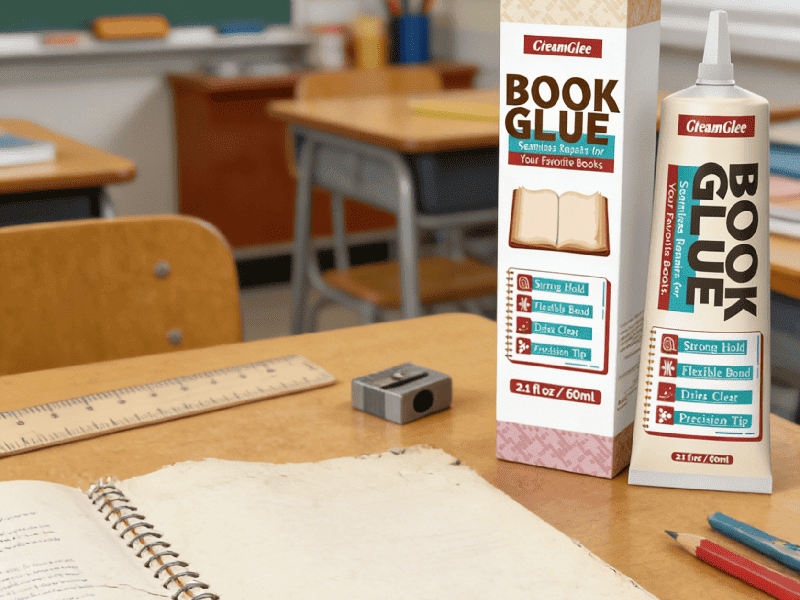
How Do You Repair Book Binding Step by Step Using Book Glue?
To repair book binding with book glue, first identify whether the issue is a loose page, a separating spine, or a detached cover. Clean and dry the bonding surfaces, apply a thin, even layer of flexible book glue, align parts carefully, and apply gentle pressure. Let the repair cure fully—usually 12–24 hours—before opening the book widely. Proper preparation and curing prevent warping, stiffness, and repeat failure.
How to repair a damaged book binding (quick diagnosis first)
Before you touch glue, diagnose the failure type—this single step prevents most DIY mistakes. Ask: What moves and what separated?
- Loose single page: page edge pulled free, spine intact
- Loose section/signature: multiple pages loosened together
- Spine separation: cover still attached but spine area gapping
- Detached cover/hinge: cover separating at the joint (most common in hardcovers)
Why diagnosis matters: the wrong repair approach creates new stress points. For example, gluing a hinge like it’s a loose page often makes the cover stiff and causes the spine to crack again. A clean repair starts with correctly identifying where flex happens when the book opens.
Surface preparation and cleaning
Good bonding is 50% preparation. Remove dust, loose fibers, and old flaky adhesive without soaking the paper. Use a dry cloth or soft brush. If you see glossy residue, gently lift what you can—don’t scrape aggressively.
Key rule: keep surfaces clean and dry. Moisture causes paper swelling and wrinkling. If the book has been stored in humidity, let it air out first.
Preparation also includes planning alignment. Do a “dry fit” test: close the book gently and check that pages and cover edges line up. This prevents the common mistake of gluing while parts are misaligned.
Applying glue evenly without warping pages
Apply less glue than you think you need. For book repair, a thin, continuous layer bonds better than thick blobs. Thick glue introduces moisture, creates bumps, and pushes glue into visible areas.
Best practice:
- Apply glue along the edge (for pages) or hinge/spine zone (for covers)
- Spread evenly with controlled motion
- Avoid flooding absorbent paper
- Wipe any squeeze-out immediately
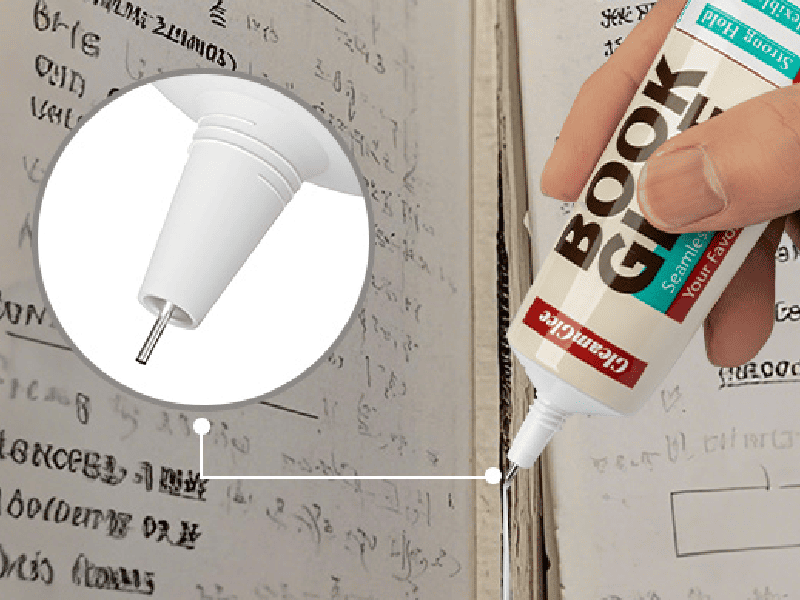
Precision nozzles help here because they let you place glue exactly where it belongs, reducing mess and preventing glue bleed-through.
Spine reinforcement techniques
If the spine is cracked or separating, don’t treat it like a cosmetic issue. The goal is to restore flexibility and support, not to “seal it shut.” Work glue gently into the separation zone, then close the book in its natural resting shape.
For paperbacks, reinforce the spine edge carefully—too much glue stiffens it. For hardcovers, hinge reinforcement is often more important than the spine face. A flexible glue protects the stress zone and prevents future cracking.
A strong repair should still allow the book to open normally after curing.
Drying, curing time, and post-repair handling
This is where many repairs fail: users test too early. Glue may feel dry quickly, but full strength takes time. For durability, allow 12–24 hours before opening wide.
During curing:
- Keep the book closed and aligned
- Apply gentle, even pressure (not crushing force)
- Avoid heat and direct sunlight (can warp covers)
After curing, “break in” the repair gradually: open the book slowly the first few times rather than forcing it flat immediately. This helps the adhesive settle into its long-term flex pattern.
Is Book Glue Safe for Long-Term Use—and What Mistakes Should You Avoid?
Book glue is safe for long-term use when it is paper-compatible, clear-drying, and stays flexible after curing. High-quality bookbinding glue resists yellowing and brittleness, helping repairs survive repeated opening over years. Most “unsafe” outcomes come from user mistakes—using rigid adhesives, applying too much glue, rushing cure time, or storing glue improperly—rather than from book glue itself.
Yellowing, brittleness, and page damage risks
Long-term “safety” in book repair isn’t only about toxicity—it’s about whether the adhesive remains stable and non-destructive as it ages. The three biggest long-term risks are yellowing, brittleness, and fiber damage.
- Yellowing makes repairs visually obvious and can lower the value of collectible books. Yellowing often shows up months or years later, especially on light paper and dust jackets.
- Brittleness happens when an adhesive cures too hard or loses plasticizers over time. A brittle glue line becomes a “break point” that cracks as soon as the book flexes.
- Fiber damage occurs when glue soaks too deeply into paper, stiffens the sheet, and causes tearing near the repair edge during opening.
A good book glue is designed to reduce these outcomes: it bonds paper fibers without over-wetting them, dries clear, and remains elastic enough to handle repeated movement.
Over-application and glue bleed-through
The most common DIY failure is simply using too much glue. More glue adds moisture, thickness, and stiffness—none of which helps a book bind properly.
Glue bleed-through happens when adhesive travels through thin paper and becomes visible as shiny spots, wrinkles, or hardened patches. This is especially common on:
- paperback page edges
- thin novel paper
- endpapers and decorative pages
- dust jackets and coated covers
Better practice is to apply a thin, continuous film rather than a thick bead. Controlled applicators and precision tips matter because they reduce the temptation to “flood the area” for strength. In book repair, strength comes from coverage + curing, not volume.
Using the wrong glue (rigid adhesives, tape, and “fast fixes”)
Many users search “strongest glue for book repair” and end up choosing super glue or quick-setting products. That usually backfires.
Rigid adhesives create a hard seam that doesn’t flex—so the next time the book opens, stress concentrates at the glue edge and the repair fails again. Tape is also risky: it can peel, leave residue, yellow, and damage paper when removed later.
If you want a repair that lasts, prioritize:
- flexibility after curing
- paper-safe bonding
- clear drying and clean finish
- enough working time to align parts correctly
Fast isn’t the same as durable.
Not letting repairs cure fully (dry vs cure confusion)
A book may “feel dry” in minutes, but full curing often takes much longer. If you open the book wide too soon, you can shear the bond while the adhesive is still weak.
A practical long-term rule:
- Light handling: after surface dry
- Normal reading/opening wide: after 12–24 hours (or per product guidance)
The number-one reason people think “book glue doesn’t work” is that they test the repair too early.
Storage, shelf-life, and keeping glue usable
Even the best glue fails if it’s stored badly. Exposure to air can thicken glue, clog tips, and reduce bond quality. Heat cycles can change viscosity and performance.
To keep glue reliable:
- cap tightly immediately after use
- store in a cool, stable place
- keep nozzle clean to prevent clogging
- avoid leaving glue in a hot car, garage, or direct sunlight
A well-stored glue performs consistently and makes repairs easier and cleaner.
Mistake → What Happens → What to Do Instead
| Common mistake | What happens later | Better approach |
|---|---|---|
| Using super glue | Cracks, stains, stiff hinges | Use flexible book glue |
| Applying too much glue | Warping, bleed-through | Thin, even film |
| Skipping surface cleaning | Weak bond, peeling | Dry clean + dry-fit |
| Opening too soon | Bond shears and fails | Cure 12–24 hours |
| Storing glue uncapped | Thickening, clogs | Tight cap + cool storage |
Who Uses Book Glue for Binding Repair—and Why It’s Still in Demand
Book glue for binding repair is widely used by libraries, schools, DIY bookbinders, publishers, offices, and everyday households. Demand remains strong because repairing books is more cost-effective, sustainable, and practical than replacing them. Flexible, clear-drying book glue allows users to extend a book’s life without specialized tools or professional restoration.
Libraries, schools, and archives
Libraries are one of the largest and most consistent users of book glue. Circulating books experience constant stress: repeated opening, copying, shelving, and handling by different readers. Over time, spines loosen, pages detach, and covers separate—even if the book is otherwise in good condition.
Replacing damaged books is expensive and often impractical, especially for textbooks, reference materials, or out-of-print titles. Book glue allows librarians to perform fast, controlled, repeatable repairs that extend circulation life without sending books out for rebinding.
Archives and special collections also rely on book glue, though with more conservative application. For them, demand is driven by preservation—stabilizing bindings just enough to prevent further damage while respecting fragile materials.
Schools, universities, and educational institutions
Schools face a similar but more intense challenge: textbooks and workbooks are opened flat, carried daily, and used by multiple students across semesters. Page loss and spine failure are routine.
Book glue remains in demand because it allows schools to:
- Repair textbooks between terms
- Extend the usable life of classroom materials
- Reduce replacement budgets
Low-odor, water-based book glue is especially important in classrooms and school libraries, where safety and ease of use matter as much as durability.
DIY bookbinders, artists, and crafters
Outside institutions, a growing group of users comes from the DIY and creative community. Hobbyist bookbinders, journal makers, scrapbookers, and artists use book glue not just for repair—but for construction.
For these users, demand is driven by:
- Control over application and finish
- Clean, invisible glue lines
- Reliable flexibility for handmade books
As interest in handmade journals, planners, and memory books grows, so does the need for glue that behaves predictably and professionally—even in non-industrial settings.
Publishers, printers, and self-publishers
Book glue is also widely used in small-batch publishing and print production. Self-publishers, designers, and studios often assemble prototypes, manuals, portfolios, or limited runs where perfect binding machines aren’t practical.
In these cases, book glue provides:
- Consistent results without heavy equipment
- Clean spines for presentation materials
- Fast turnaround for short runs
The rise of independent publishing and on-demand printing has quietly increased demand for reliable binding adhesives.
Households and everyday readers
At the consumer level, people use book glue to repair cookbooks, novels, Bibles, planners, children’s books, and sentimental items. Many of these books are not replaceable—either emotionally or practically.
For households, demand persists because book glue:
- Is easy to use without special skills
- Saves money compared to replacement
- Preserves sentimental or annotated books
As sustainability becomes a stronger value, more users prefer repair over disposal—especially when the repair can be clean and long-lasting.
Why demand continues to grow instead of disappearing
In a digital age, it’s reasonable to ask: why hasn’t demand for book glue declined? The answer lies in three trends:
- Cost pressure: Replacing books is more expensive than repairing them.
- Sustainability: Repair aligns with waste reduction and reuse values.
- Accessibility: Modern book glue allows non-professionals to achieve good results at home or work.
As long as books are read, handled, and valued, binding repair—and the glue that enables it—will remain relevant.
FAQs: Book Glue for Binding Repair
Q1: Is book glue the same as PVA glue?
Short answer: Not exactly.
Book glue is often PVA-based, but it is not the same as ordinary PVA glue.
Regular PVA (such as school or craft glue) is designed for general bonding, not for repeated flexing. Many dry too hard, yellow over time, or contain fillers that aren’t ideal for paper longevity. Bookbinding glue is usually a modified PVA formulation—engineered to remain flexible after curing, dry clear, and bond paper fibers without making them brittle.
Why this matters: Two glues can both say “PVA” and perform very differently in book repair. The formulation—not just the base chemistry—determines success.
Q2: Can book glue fix antique or fragile books?
Yes, but with limits.
Book glue can be used on antique or fragile books only if the paper is still structurally intact. It works well for stabilizing loose pages, hinges, and mild spine separation without full rebinding.
However, book glue cannot reverse paper decay. If pages are powdery, crumbling, or severely acidic, glue alone may cause tearing near the repair edge. In those cases, professional conservation methods or reinforcement materials may be required.
Best practice: Use minimal glue, avoid soaking paper, and prioritize flexibility and clarity over strength.
Q3: How long does book glue take to fully cure?
Most book glues require 12–24 hours to fully cure.
While the surface may feel dry in minutes, the internal bond continues strengthening for many hours. Opening the book too early—especially forcing it flat—is one of the most common reasons repairs fail.
Safe guideline:
- Light handling: after surface dry
- Normal reading and wide opening: after full cure (12–24 hours)
Always follow product-specific guidance when available.
Q4: Does book glue stay flexible after drying?
Quality book glue does—cheap or incorrect glue often does not.
Flexibility after curing is one of the defining features of proper book glue. This elasticity allows the spine and hinge to move naturally, preventing stress fractures and repeat failure.
If a dried glue line feels hard, brittle, or “plasticky,” it’s not suitable for binding repair—even if the initial bond feels strong.
Quick test: After curing, gently flex the repaired area. It should bend smoothly without cracking sounds or resistance.
Q5: Will book glue yellow or discolor pages over time?
High-quality book glue is designed to resist yellowing, especially when compared to white glue, tape adhesives, or household glues.
That said, all adhesives age to some degree. Yellowing risk increases with:
- Low-quality or filler-heavy glue
- Excessive glue thickness
- High heat, humidity, or sunlight exposure
Using a thin, even layer of clear-drying book glue greatly reduces visible aging.
Q6: Can I use book glue on glossy pages or coated paper?
Yes, but surface preparation and application matter more.
Glossy or coated pages absorb less adhesive, so bonding relies more on surface contact than fiber penetration. Use:
- A very thin glue layer
- Even pressure during curing
- Full cure time before handling
Avoid roughening glossy paper aggressively, as this damages the surface layer.
Q7: Is book glue safe to use at home, in schools, or libraries?
Most water-based book glues are safe when used as directed.
They typically have:
- Low odor
- No harsh solvents
- Easy cleanup with water
This makes them suitable for classrooms, libraries, and home use. Always check product labeling and keep adhesives out of reach of children when not in use.
Q8: Can book glue be used for DIY bookbinding and handmade journals?
Absolutely.
Book glue is widely used in DIY bookbinding, journaling, scrapbooking, and handmade stationery. Its controlled flow, clear finish, and flexible bond make it ideal for assembling pages, reinforcing spines, and attaching covers.
Many creators prefer book glue over tape or hot glue because it produces cleaner, more professional-looking results.
Q9: Why does my repair fail even though I used “the right” book glue?
Most failures come from technique, not the glue itself. Common causes include:
- Applying too much glue
- Skipping surface cleaning
- Poor alignment before curing
- Opening the book too soon
Using the correct glue improves your odds—but proper preparation, thin application, and patience are just as important.
Q10: When should I avoid DIY repair and seek professional help?
DIY book glue repair is not ideal when:
- The spine board or cover is missing
- Pages are severely brittle or crumbling
- The book has water, mold, or structural damage
- The item is historically or monetarily valuable
In these cases, professional restoration may be safer. Still, even professionals rely on book glue as part of their repair systems.
Conclusion
Book binding repair isn’t about finding the strongest glue—it’s about choosing the right glue for how books actually work. Pages flex, spines bend, and covers open thousands of times over a book’s life. When repairs fail, it’s rarely because the book wasn’t worth saving, but because the adhesive was too rigid, too aggressive, or applied without understanding where stress really occurs.
As this guide has shown, high-quality book glue solves the most common binding problems—loose pages, cracked spines, detached covers, and aging adhesive failure—while staying flexible, clear, and paper-safe over time. When chosen correctly and applied with care, book glue doesn’t just “fix” damage; it extends the usable life of books, preserves their appearance, and reduces the need for costly replacement or professional rebinding.
That’s why book glue remains in demand across libraries, schools, publishers, DIY creators, and households worldwide. It supports sustainability, saves money, and keeps valuable or sentimental books in use—often with results that look clean and professional even for non-experts.
If you’re looking for a reliable, modern book glue designed specifically for binding repair—clear-drying, flexible after curing, and easy to apply—GleamGlee Book Glue is engineered to meet those needs. Backed by in-house polymer R&D, strict quality control, and global compliance standards, it’s trusted by both everyday users and professional buyers.
- Available now via Amazon (FBA, fast delivery)
- OEM / private label & custom formulation available (low MOQ)
- Bulk, library, school, and B2B supply supported
Whether you’re repairing a single cherished book or sourcing binding glue at scale, choosing the right adhesive is the difference between a temporary fix and a repair that truly lasts.
Share:
Table of Contents
Here, creating your adhesives glue & removal cleaner collection is no longer a barrier—it’s a collaborative journey where GleamGlee helps brands and businesses transform their vision into durable, certified, and market-ready solutions.
Partner with GleamGlee
Join hundreds of global partners who trust GleamGlee for adhesives and cleaners that combine innovation, compliance, and speed. Our vertically integrated system—from R&D to warehouse—guarantees consistent performance and reliable delivery.
Whether you’re sourcing FBA-ready stock or developing your own formula, our team provides unmatched technical support and responsive service.




















