 Skip to content
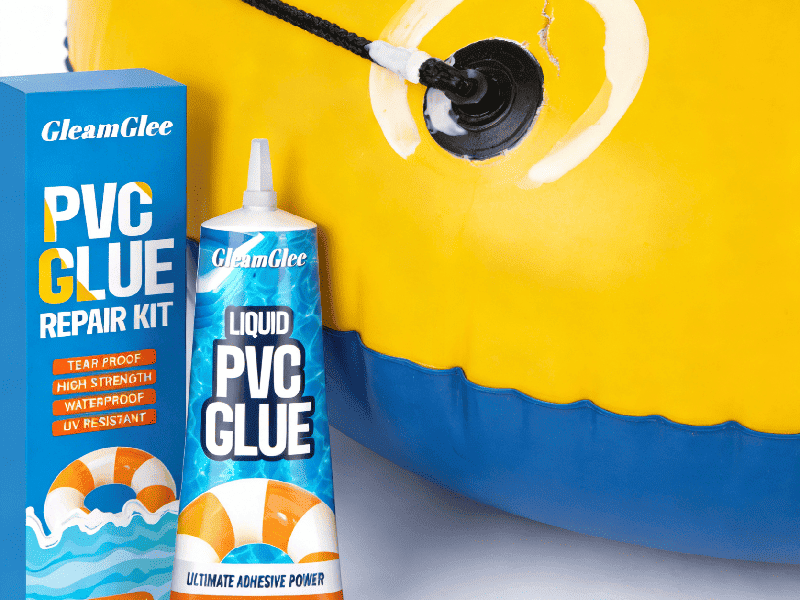
PVC glue looks deceptively simple: a small bottle, a sharp solvent smell, and a promise that two plastic surfaces will become “one.” Yet anyone who has stood in a hardware aisle—or compared repair kits online—knows the prices vary wildly. One bottle costs a few dollars, another costs ten times more, and a full repair kit can seem expensive for “just glue and patches.” The real confusion begins when labels start claiming waterproof, industrial strength, or permanent bond. Are those claims worth paying for, or just marketing language?
Here’s the truth: PVC glue pricing isn’t random. It reflects chemistry, application risk, surface preparation requirements, and failure costs. A cheap pipe cement might work perfectly inside a dry wall, yet fail catastrophically on an inflatable kayak or an outdoor PVC joint exposed to UV and water. Conversely, a higher-priced adhesive can save money by preventing leaks, rework, and premature replacement.
PVC glue prices vary because “PVC glue” covers multiple products—from pipe solvent cement to flexible repair adhesives and full patch kits. Cost depends on waterproof performance, flexibility, surface prep tolerance, packaging quality, and failure risk. Cheaper options work for low-stress indoor pipes, while outdoor, inflatable, or underwater repairs require higher-value formulations that cost more upfront but reduce long-term repair costs.
Imagine a family camping trip ruined by a slow-leaking air mattress—or a contractor called back because a joint failed behind a wall. In both cases, the cheapest glue becomes the most expensive decision. This guide breaks down what PVC glue really costs, why prices differ, and how to choose value—not just price.
What Is “PVC Glue,” and Which Products Are People Actually Pricing?
“PVC glue” is not a single product. When people search for PVC glue prices, they are usually comparing PVC pipe solvent cement, flexible PVC repair glue, and PVC repair kits. Each category uses different chemistry, serves different use cases, and has very different price expectations. Misunderstanding these categories is the number-one reason users either overpay—or buy the wrong product.
Why “PVC glue” is a misleading term for buyers
From a chemistry standpoint, most products sold as “PVC glue” are not traditional adhesives. Rigid PVC pipe glue is actually a solvent cement that softens and fuses PVC surfaces together. In contrast, inflatable or vinyl repair glue is a flexible polymer adhesive designed to stretch and seal under pressure.
From a pricing perspective, this distinction matters enormously. Solvent cements are relatively cheap to manufacture and are optimized for rigid, tight-fitting joints. Flexible PVC repair adhesives require elastic polymers, waterproof stabilizers, and aging resistance—raising formulation and testing costs.
This is why two products both labeled “PVC glue” can differ in price by 3–10× while both being technically “correct.”
The three main PVC glue product types people actually compare
| PVC Glue Type | Typical Use Case | Key Property | Why Price Differs |
|---|---|---|---|
| PVC Pipe Solvent Cement | Plumbing pipes, rigid fittings | Chemical fusion, rigid bond | Simple chemistry, high volume |
| Flexible PVC Repair Glue | Inflatables, vinyl, rubber | Elastic, waterproof seal | Complex polymers, UV resistance |
| PVC Repair Kits | Air mattresses, pools, kayaks | Adhesive + patches + tools | Added components + convenience |
Most pricing confusion happens when users compare products across categories instead of within the same one.
Why pipe cement is cheap—but often the wrong comparison
PVC pipe cement is designed for compression-fit joints where parts do not move after installation. It cures hard and brittle. This makes it perfect for plumbing—but a terrible choice for anything that flexes.
When users apply pipe cement to inflatables or vinyl:
- The bond cracks under pressure
- Edges peel after inflation
- Water intrusion accelerates failure
The low price looks attractive, but the failure rate is extremely high, which inflates real-world cost.
Why flexible PVC repair glue costs more—but saves money
Flexible PVC repair glue must:
- Stretch with inflation and deflation
- Remain waterproof under pressure
- Resist UV, heat, and chemicals
- Bond to smooth, non-porous PVC surfaces
Achieving all four requires advanced polymer blends, not basic solvents. This is why repair adhesives—especially those proven on inflatables—are priced higher but deliver far better value per successful repair.
Why complete PVC repair kits are priced higher upfront
Repair kits include:
- Correct adhesive viscosity
- Compatible patch materials
- Applicators or scrapers
- Instructions that reduce user error
From an SEO and conversion standpoint, kits perform better because they:
- Reduce returns
- Increase success rates
- Lower “this glue didn’t work” complaints
This is why kits dominate Amazon best-seller lists despite higher prices.
How Much Does PVC Glue Cost at Retail (By Size and Scenario)?
Retail PVC glue prices vary widely depending on product type, bottle size, and use case. Small pipe cement bottles are cheapest upfront, while flexible PVC repair glues and full kits cost more but deliver better durability. For inflatables and outdoor use, higher-priced products usually offer lower long-term cost per repair.
Typical retail price ranges by product category
| Product Category | Typical Size | Retail Price Range | Best For |
|---|---|---|---|
| PVC Pipe Solvent Cement | 100–250 ml | Low | Rigid indoor plumbing |
| Flexible PVC Repair Glue | 20–100 ml | Medium | Inflatables, vinyl repairs |
| PVC Repair Kit (Glue + Patches) | 60–80 ml + patches | Medium–High | Pools, air mattresses, kayaks |
Why bottle size alone is a misleading price indicator
A larger bottle does not always mean better value. PVC glue evaporates after opening, and flexible repair glue is usually applied in thin layers. Many users waste half a large bottle before finishing it.
Smaller, well-designed containers with precision nozzles often deliver:
- Less waste
- Cleaner application
- Higher success rates
This is why price per milliliter is less important than price per successful repair.
Price differences between indoor, outdoor, and underwater use
PVC glue designed for indoor pipes does not need:
- UV stabilizers
- Long-term water immersion resistance
- Elastic recovery under pressure
Outdoor and underwater repair adhesives must include all three. Each adds formulation cost and testing time, which explains why waterproof inflatable glue costs more than pipe cement—even at smaller volumes.
Why repair kits often cost less in real-world use
Although repair kits appear more expensive at checkout, they usually:
- Prevent incorrect glue choice
- Reduce prep mistakes
- Increase first-time success
For consumers, this translates into fewer repeat purchases. For sellers, it means fewer negative reviews and returns. From a value standpoint, kits are often the cheapest option over time.
Where GleamGlee’s PVC glue pricing fits
GleamGlee positions its PVC repair solutions in the high-value middle tier:
- Not commodity pipe cement
- Not overpriced industrial-only adhesives
- Designed for real consumer and professional use
With waterproof, flexible formulations and complete repair kits, GleamGlee products align with how users actually search, compare, and buy PVC glue online—especially on Amazon.

What Factors Make PVC Glue More Expensive or Cheaper?
PVC glue price differences are driven by formulation complexity, waterproof and UV performance, flexibility requirements, packaging quality, compliance testing, and quality control. Cheaper PVC glues cut costs by simplifying chemistry and reducing tolerance for real-world conditions, while higher-priced options invest in durability, reliability, and user error reduction.
How formulation chemistry directly impacts PVC glue price
The biggest price driver is what’s inside the bottle. Low-cost PVC glues typically rely on basic solvent systems with minimal additives. These formulas work only under ideal conditions—clean surfaces, no movement, no long-term water exposure.
Higher-priced PVC repair glues include:
- Elastic polymers for stretch and recovery
- Waterproof binders that resist edge lifting
- UV stabilizers to prevent brittleness
- Heat- and chemical-resistance modifiers
Each additional performance layer increases raw material cost, formulation time, and testing requirements—but dramatically improves success rates.
Why waterproof and UV resistance raise manufacturing cost
“Waterproof” is not a yes-or-no property. True waterproof PVC glue must resist:
- Constant water contact
- Hydrostatic pressure
- Temperature cycling
- Sunlight degradation
This requires accelerated aging tests, immersion tests, and real-world simulations. Cheap products skip or minimize these steps. Premium products price in proven durability, not just initial adhesion.
How flexibility requirements change everything
Rigid PVC pipe cement cures hard and brittle—cheap to produce, fast to set. Flexible PVC repair glue must stay elastic after curing, which requires polymer networks that don’t crack under movement or inflation.
Flexibility is essential for:
- Inflatables
- Vinyl pools
- Kayaks
- Trampolines
Achieving this flexibility without sacrificing strength significantly increases formulation cost—and explains why inflatable-grade PVC glue is priced higher.
The hidden cost of packaging, nozzles, and leak prevention
Packaging is not cosmetic. Cheap plastic caps allow solvent evaporation, clogging, and leaks. Precision metal nozzles and sealed tubes:
- Reduce waste
- Improve accuracy
- Extend shelf life
- Lower user error
These packaging upgrades raise unit cost slightly but lower cost per usable application, especially for occasional users.
Compliance, testing, and global market requirements
PVC glue sold globally must comply with:
- REACH / CLP (EU)
- GHS (US)
- UKCA
- SDS documentation
Testing, labeling, and multilingual instructions add overhead—but also increase trust, safety, and international usability. Products skipping compliance are cheaper—but carry higher legal and user risk.
Summary Table: Why PVC Glue Prices Differ
| Cost Factor | Cheaper PVC Glue | Higher-Value PVC Glue |
|---|---|---|
| Formula complexity | Basic solvents | Elastic, stabilized polymers |
| Waterproof performance | Short-term only | Long-term immersion resistant |
| UV & heat resistance | Minimal | Tested & stabilized |
| Flexibility after curing | Rigid | Elastic |
| Packaging quality | Basic plastic cap | Sealed tube / metal nozzle |
| Compliance & testing | Limited | Full regulatory testing |
| Failure tolerance | Very low | High |
Is “Cheaper” PVC Glue Actually More Expensive Over Time?
In many real-world scenarios, cheaper PVC glue ends up costing more due to higher failure rates, repeat repairs, wasted material, and replacement costs. Evaluating cost per successful repair, rather than shelf price, reveals that higher-quality PVC glue often delivers better long-term value.
Why upfront price is the worst metric for choosing PVC glue
Shelf price only reflects manufacturing cost—not performance reliability. A low-priced PVC glue that fails once immediately doubles its effective cost. If it fails twice, it becomes one of the most expensive options available.
This is especially true for:
- Air mattresses
- Inflatable pools
- Outdoor PVC repairs
Where failure means loss of function, not just inconvenience.
Understanding “cost per successful repair” (the metric that matters)
A more accurate comparison looks like this:
Cost per successful repair = Product price ÷ number of repairs that actually hold
Cheap PVC glue may allow multiple applications—but if only one succeeds, the value collapses. High-quality glue often succeeds on the first attempt, even with imperfect surface prep.
What causes repeat repairs—and how cheap glue amplifies the risk
PVC glue failures usually come from:
- Minor moisture during curing
- Slight surface contamination
- Edge flexing or pressure
- Temperature changes
Premium PVC glue tolerates these variables. Cheap glue does not. As a result, inexpensive products require perfect conditions—which rarely exist outside a lab.
The hidden costs users don’t factor in
Beyond the glue itself, failures create:
- Time loss
- Frustration
- Product replacement costs
- Negative reviews (for sellers)
- Safety risks (water leakage, deflation)
These indirect costs far outweigh the few dollars saved upfront.
Why repair kits often outperform single-bottle glue on value
Complete PVC repair kits reduce failure by:
- Matching glue and patch materials
- Providing correct application tools
- Guiding proper curing time
Although kits cost more initially, they consistently deliver lower lifetime cost per repair—especially for non-professional users.
Value Comparison Table: Cheap vs Higher-Value PVC Glue
| Metric | Cheap PVC Glue | Higher-Value PVC Glue |
|---|---|---|
| Upfront price | Low | Medium |
| Success on first attempt | Low–Medium | High |
| Flexibility & waterproofing | Limited | Strong |
| Tolerance for user error | Very low | High |
| Repeat purchase likelihood | High | Low |
| Long-term cost | High | Lower |
Where GleamGlee fits in the value spectrum
GleamGlee PVC glue is positioned to minimize total repair cost, not just shelf price:
- Flexible, waterproof formulations
- Repair kits that reduce mistakes
- Packaging designed to prevent waste
For both consumers and B2B buyers, this approach delivers predictable outcomes, which is ultimately what users pay for.
How Do Bulk, Wholesale, and OEM/Private Label PVC Glue Prices Work?
Bulk, wholesale, and OEM PVC glue pricing depends on order volume, formulation complexity, packaging customization, compliance requirements, and logistics model. Unit prices drop significantly at scale, but total cost is shaped by tooling, testing, certifications, and lead time—not just glue itself.
Retail vs bulk vs OEM pricing: what actually changes?
PVC glue pricing does not scale linearly. What changes is who absorbs which costs.
- Retail pricing includes branding, marketing, platform fees, and last-mile delivery
- Bulk pricing removes retail layers but keeps standard formulation and packaging
- OEM/private label pricing shifts cost toward customization, testing, and tooling
Understanding this distinction prevents false comparisons between “cheap” and “expensive” quotes.
Typical price structure by purchasing model
Below is a realistic, market-aligned price structure (ranges vary by formula, region, and certification needs):
| Purchasing Model | Typical MOQ | Unit Price Range* | Custom Formula | Custom Packaging | Best For |
|---|---|---|---|---|---|
| Retail (Amazon / Local) | 1–10 units | Highest | No | No | Consumers, emergency repairs |
| Wholesale (Standard SKU) | 100–1,000 units | ↓ 30–50% vs retail | No | Limited | Distributors, resellers |
| Bulk (Unbranded) | 1,000–5,000 units | ↓ 50–65% vs retail | No | No | Industrial users |
| OEM / Private Label | 200–10,000+ units | Variable (lower at scale) | Yes | Yes | Brands, Amazon sellers |
- Unit price excludes freight, taxes, and destination duties.
Why OEM PVC glue pricing is not “just cheaper glue”
OEM buyers often expect lower prices—but OEM pricing reallocates cost, rather than eliminating it.
Additional cost layers include:
- Formula adjustment (flexibility, curing speed, waterproof grade)
- Compatibility testing with specific PVC materials
- Stability and shelf-life testing
- SDS, REACH, CLP, GHS documentation
- Packaging tooling (molds, tubes, caps, labels)
At scale, OEM becomes cheaper per unit, but only after amortizing setup costs.
How volume thresholds unlock real cost advantages
Price breaks usually happen at non-obvious thresholds, not gradual increments.
| Order Volume | Cost Behavior |
|---|---|
| <200 units | High unit cost (setup dominates) |
| 200–1,000 units | OEM viable, but limited savings |
| 2,000–5,000 units | Best balance of customization & cost |
| 10,000+ units | Maximum unit cost efficiency |
This is why GleamGlee supports low-MOQ OEM starting at ~200 units, then scales pricing aggressively as volume grows.
Logistics model impacts price more than most buyers expect
PVC glue is classified as a chemical product, which affects shipping.
| Logistics Model | Cost Impact | Speed | Best Use |
|---|---|---|---|
| FBA-ready local stock | Higher unit price | Fast (5–10 days) | Amazon sellers |
| Consolidated sea freight | Lowest cost | Slow | Large OEM orders |
| Air freight | Very high | Fast | Urgent launches |
Choosing the wrong logistics model can erase all unit price savings.

Which PVC Glue Price Tier Fits Your Use Case—and How Do You Buy From GleamGlee?
The best PVC glue price tier depends on how often you repair, how critical failure risk is, and whether you’re buying for personal use, resale, or branding. GleamGlee supports all tiers—from FBA-ready retail to low-MOQ OEM—allowing buyers to optimize for speed, cost, or customization.
Matching PVC glue price tier to real-world use cases
Choosing the wrong price tier often leads to overpaying—or repeated failure.
| Use Case | Recommended Price Tier | Why |
|---|---|---|
| Occasional home repair | Retail / Kit | Convenience, low risk |
| Frequent DIY / outdoor use | Mid-tier / Kit | Higher reliability |
| Commercial maintenance | Bulk standard | Lower per-repair cost |
| Amazon FBA seller | OEM / Private label | Brand control, margin |
| Distributor / wholesaler | Wholesale or OEM | Scale economics |
Why Amazon sellers benefit most from OEM PVC glue
For Amazon sellers, OEM pricing is not just about glue—it’s about control:
- Custom formulation = fewer returns
- Better packaging = fewer leaks
- Compliance-ready labels = fewer listing issues
- Consistent batches = stable reviews
Even small improvements in failure rate can outperform aggressive price cuts.
How GleamGlee structures its PVC glue purchasing options
GleamGlee supports three parallel buying paths, not one-size-fits-all:
| Buying Path | MOQ | Lead Time | Customization | Ideal Buyer |
|---|---|---|---|---|
| Amazon FBA stock | 1 unit | 5–10 days | No | Consumers, testers |
| Standard wholesale | 100+ units | 7–14 days | Limited | Distributors |
| OEM / Private label | ~200 units | 15–30 days | Full | Brands & sellers |
This flexibility allows buyers to start small, then scale without switching suppliers.
How to request pricing from GleamGlee (step-by-step)
To receive an accurate quote, buyers should prepare:
- Target use case (inflatable, pipe, pool, etc.)
- Desired performance (waterproof, UV, flexibility)
- Quantity range (trial vs scale)
- Target market (US, EU, UK, CA)
- Branding needs (logo, label language)
Providing this upfront shortens quote time and avoids misleading price comparisons.
Why “best price” is really about predictability
For most buyers—especially B2B—the true value of PVC glue lies in:
- Consistent batches
- Predictable curing
- Lower failure variance
- Stable long-term supply
This is where GleamGlee positions its pricing strategy: not the cheapest per bottle, but the lowest cost per successful repair or resale.
FAQs: What Else Should You Know About PVC Glue Prices?
PVC glue prices vary not only by brand and size, but also by formulation quality, waterproof rating, curing behavior, packaging, and compliance costs. Understanding what drives price—and what does not—helps you avoid overpaying for weak glue or underpaying for repairs that fail repeatedly.
Is expensive PVC glue always better?
Not always—but very cheap PVC glue is rarely a bargain.
Higher-priced PVC glue usually reflects:
- Better resin quality and plasticizer balance
- More stable curing and long-term flexibility
- Stronger waterproof and UV resistance
However, some premium prices come from branding, not performance. The key is to evaluate performance-per-use, not price-per-bottle.
Why do PVC glue prices vary so much for similar-looking products?
Two bottles may look identical but differ significantly inside.
Major price drivers include:
- Resin purity and solids content
- Whether the glue truly chemically bonds PVC or just “sticks”
- Resistance to water pressure, heat, and UV
- Shelf-life stability and batch consistency
Low-cost glues often skip long-term durability testing, which is why failures appear weeks later—not immediately.
Is PVC glue supposed to be waterproof—and does that affect price?
Yes, true PVC glue should be waterproof after full curing, but not all products meet that standard.
| Waterproof Level | Typical Price Impact | Suitable Use |
|---|---|---|
| Splash-resistant | Low | Indoor, temporary repairs |
| Water-resistant | Medium | Pools, light outdoor use |
| Fully waterproof | Higher | Inflatables, boats, pipes |
Waterproof formulations cost more because they require better polymer balance and longer testing cycles.
Does surface prep (like sanding) affect the value of PVC glue?
Absolutely. Poor prep makes even expensive glue fail, wasting money.
- Light sanding increases surface area and bond strength
- Cleaning removes oils, mold-release agents, and residues
- Skipping prep often leads to leaks or peel-off
From a cost perspective, good prep reduces rework and repeat purchases, lowering total repair cost.
Why does PVC glue fail—and how does that relate to price?
PVC glue failure is often misattributed to “bad glue” when the real issue is mismatch.
Common failure causes:
- Using non-PVC adhesive on PVC materials
- Under-curing before pressure or inflation
- Thin glue layers on stressed joints
- Low-quality formulas that harden but lose flexibility
Cheaper glue may work initially but fails under real-world stress—making it more expensive long-term.
Are repair kits more expensive than buying glue alone?
Repair kits usually cost more upfront—but often save money overall.
| Option | Upfront Cost | Failure Risk | Best For |
|---|---|---|---|
| Glue only | Lower | Higher | Experienced users |
| Full repair kit | Slightly higher | Lower | Most users |
Kits include patches, applicators, and instructions that reduce error rates—especially for inflatables.
How do PVC glue prices differ between retail and bulk?
The glue itself may be identical—but the cost structure changes.
- Retail price includes branding, packaging, and platform fees
- Bulk price removes retail layers but adds logistics planning
- OEM pricing shifts cost toward customization and compliance
For frequent use or resale, bulk or OEM pricing offers far better cost efficiency.
Is private label PVC glue really cheaper for sellers?
Per unit—yes. Total cost—only if done correctly.
Private label pricing becomes cost-effective when:
- You sell consistent volume
- You reduce returns and complaints
- You control packaging leaks and instructions
For Amazon sellers, fewer failures often matter more than saving a few cents per unit.
How should buyers compare PVC glue prices fairly?
A fair comparison includes:
- Price per usable repair (not per bottle)
- Failure rate over time
- Waterproof and flexibility performance
- Compliance and safety documentation
- Supplier reliability and consistency
The cheapest option rarely wins when these factors are considered together.
What questions should you ask before choosing a PVC glue supplier?
Before buying—especially in bulk or OEM—ask:
- Is this glue chemically designed for PVC?
- Is it fully waterproof after curing?
- What failure scenarios has it been tested against?
- Can the supplier ensure batch consistency?
- Is documentation available for my market?
These answers often explain price differences better than the price itself.

Conclusion
PVC glue pricing tells a story—about chemistry, performance, and risk. The cheapest option often works only under perfect conditions, while higher-value adhesives succeed in the real world where water, movement, and time matter. By focusing on cost per successful repair, buyers make smarter decisions that save money long-term.
If you’re a consumer, choose a repair solution designed for your exact use case.
If you’re a brand owner, distributor, or Amazon seller, partner with GleamGlee for ready-to-ship PVC repair kits, private-label customization, and flexible MOQs.
Buy GleamGlee PVC Glue on Amazon for fast, reliable repairs
Contact GleamGlee for custom PVC glue formulas, pricing, and OEM solutions
The right PVC glue isn’t the cheapest—it’s the one that works the first time and keeps working.





















