Skip to content
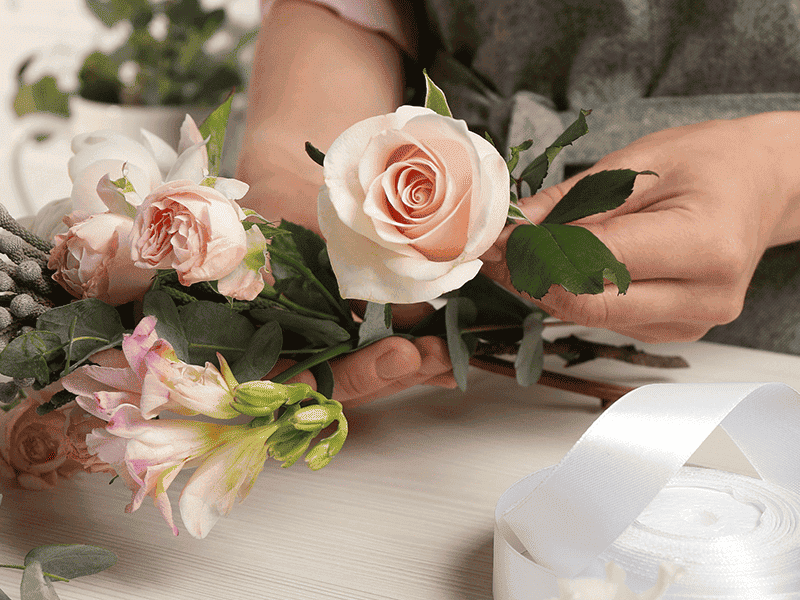
Floral adhesive is one of those tools that professional florists consider essential—yet many DIY creators, brides, and hobbyists barely know it exists. If you’ve ever wondered how bouquets stay perfectly shaped, how corsages survive hours of dancing, or how delicate petals can be attached without tearing, the secret is often a small, clear, fast-drying adhesive formulated specifically for flowers. Floral adhesive solves a problem that ordinary household glues can’t: bonding fresh, moist, delicate plant tissue without heat, without damage, and without leaving visible residue.
Floral adhesive is a fast-drying, flexible glue made specifically for bonding fresh flowers, greenery, ribbons, and decorative materials without damaging petals or stems. Unlike hot glue or craft glue, it works on moist surfaces, dries clear, stays flexible, and is often waterproof—making it ideal for bouquets, corsages, boutonnieres, centerpieces, and floral foam. Florists use it to secure flowers in place, create detailed designs, and ensure arrangements stay intact all day.
Many beginners assume florists use wire, tape, or foam alone to build arrangements. But peek behind the scenes at any wedding florist’s workshop, and you’ll find floral adhesive being used for nearly every delicate connection: securing petals for a bridal bouquet, attaching fresh buds to hair combs, keeping stems stable inside a flower crown, or even ensuring arrangements withstand wind, humidity, and movement.
Here’s a short story to illustrate its impact:
A wedding florist once shared that during an outdoor ceremony in Hawaii, intense humidity caused tape and wire to loosen on several arrangements. Yet the blooms secured with floral adhesive held perfectly—from sunrise to sunset. That moment convinced her that no professional toolkit is complete without a reliable adhesive.
If you want your flowers to stay beautiful longer, your bouquets to hold their shape, or your event florals to survive transport and weather, then understanding floral adhesive is one of the most valuable skills you can learn. The rest of this guide will walk you through everything—from what it is, to how to choose it, to how to apply it like a pro.
What Is Floral Adhesive and Why Do Florists Use It Instead of Regular Glue?
Florists use floral adhesive because it bonds securely to moist, delicate flowers without heat or damage. It dries clear, stays flexible, and creates professional-grade hold for bouquets, corsages, boutonnieres, crowns, and foam arrangements. Unlike hot glue or craft glue—which are brittle, visible, or petal-damaging—floral adhesive is waterproof, elastic, and formulated specifically for live plant material and event durability.
Floral adhesive is not simply another type of craft glue—it is a technically sophisticated product created through years of material science and real florist feedback. Fresh flowers contain up to 70–90% moisture, oils, natural sugars, and delicate epidermal membranes. These properties make them incompatible with traditional glues, which typically require dry surfaces to bond properly.
Floral adhesive solves this problem using:
- solvent-based chemistry that grips onto moist plant tissue
- flexible polymers that bend with petals and stems
- clear-drying adhesive particles that create invisible bonds
- waterproof resins that resist humidity and condensation
Because of this formula, floral adhesive can perform in conditions where other adhesives fail—especially weddings and events where florals are worn, touched, transported, and photographed for hours.

What Is Floral Adhesive in Simple Terms?
Floral adhesive is a specialized glue designed specifically for fresh flowers and floral materials. In simple terms, it’s a petal-safe, moisture-resistant, flexible adhesive that helps florists attach flowers, petals, greenery, ribbons, foam, and decorative elements without requiring wire or tape. It allows precise placement of small blooms, fills gaps, supports intricate angles, and keeps stems from shifting. Unlike ordinary glue, which becomes stiff and cracks, floral adhesive remains elastic—so the arrangement can move naturally while staying intact.
What Do You Use Floral Adhesive For?
Floral adhesive is used for countless design tasks, including:
- securing small buds inside bouquets
- attaching blooms to corsages and boutonnieres
- building structurally complex bridal bouquets
- decorating hair combs, crowns, and headpieces
- fixing flowers into foam where stems are too short
- adding petals to gift boxes, invitations, and décor
- reinforcing weak spots in arrangements
- attaching artificial or preserved flowers to rigid bases
A florist may apply floral adhesive hundreds of times in a single wedding preparation. It delivers control, precision, and strength—especially in places tape and wire cannot reach.
How Does Floral Adhesive Differ From Craft Glue, Hot Glue, or Super Glue?
The differences are dramatic:
| Glue Type | Works on Moist Flowers? | Petal Safety | Flexibility | Waterproof | Usage Risk |
|---|---|---|---|---|---|
| Floral Adhesive | ✔ Yes | ✔ Safe | ✔ Flexible | ✔ Waterproof | Minimal |
| Craft Glue | ✘ No | ✘ Can stain | ✘ Brittle | ✘ Weak | High |
| Hot Glue | ✘ Heat damages petals | ✘ Burns tissue | ✘ Rigid | ✔ Somewhat | Very High |
| Super Glue | ✔ Partial | ✘ Burns petals | ✘ Brittle | ✔ Strong | High |
Floral adhesive is the only option engineered to meet all professional needs.
Why Is Floral Adhesive Safer for Fresh Flowers?
Fresh petals bruise easily. The wrong adhesive can cause:
- browning
- tearing
- dehydration
- oil spotting
- stiffness
Floral adhesive avoids these issues through a low-heat, solvent-based, flexible bonding mechanism. It adheres to the flower’s natural moisture without chemically burning the tissue. Professional florists rely on this gentle performance to maintain the flower’s natural beauty.
When Is Floral Adhesive Absolutely Essential?
Floral adhesive is non-negotiable in situations where:
- stems are too short
- flowers must sit at unusual angles
- pieces must survive humidity, rain, sweat, or dancing
- arrangements must stay intact for 8–12 hours
- designs require layering tiny floral components
- foam cannot hold the flower securely
Boutonnieres, corsages, and flower crowns would be nearly impossible to build cleanly without floral adhesive.

Which Types of Floral Adhesive and Flower Glue Are Commonly Used Today?
There are several types of floral adhesives—tube adhesives, cold glues, glue dots, sprays, and foam-safe formulas. Florists select based on project type: fresh flowers need waterproof, flexible tube adhesives; silk and dried flowers can use dots or hot glue; foam arrangements need foam-safe glue. Many modern formulas, including GleamGlee’s adhesive, are waterproof and perform in humid or cold environments, making them ideal for bouquets, corsages, crowns, and event florals.
Modern floral design requires adhesives that behave consistently under pressure: rapid installation schedules, fluctuating temperatures, moisture, transportation, and physical handling. This is why the industry now uses multiple adhesive categories—each engineered for a specific floral or craft scenario.
Understanding these adhesives not only improves design results but also helps reduce waste, speed up workflow, and improve durability. Below we examine the main adhesive categories, when to use each, and how they differ in performance.
Tube-Based Floral Adhesive
Tube floral adhesive—like GleamGlee’s best-selling formula—is the gold standard for bonding fresh flowers because it provides:
- fast tack time (seconds)
- strong, flexible bond
- clear-drying finish
- waterproof performance
- precision application
Unlike thick craft glues, tube adhesives use a solvent-based system that grips onto moist petal and stem surfaces. The metal nozzle is particularly valuable for micro-adjustments—such as attaching baby’s breath, orchids, or small roses inside bouquets.
This adhesive is essential for:
- corsages
- boutonnieres
- flower crowns
- hair comb florals
- detailed bouquet shaping
- reinforcing foam placements
Florists often go through multiple tubes during wedding season because tube adhesive offers the most balanced performance across all fresh-flower tasks.
Cold Floral Glue
Cold floral glue has a paste-like consistency with a slower tack time, making it useful for designers who prefer:
- long repositioning window
- high-viscosity adhesive
- gap-filling power
It’s especially helpful for sculptural arrangements, installations, and large artificial-flower structures.
However, its slower dry time means it’s rarely used for fast-paced wedding florals that demand productivity and time efficiency.
Floral Glue Dots for Lightweight Use
Glue dots are pressure-sensitive and convenient, making them a favorite for:
- artificial flowers
- preserved florals
- lightweight paper flowers
- DIY home décor
- children’s craft projects
Glue dots provide zero mess and instant setup, but they are not strong enough for fresh flowers or humid environments. They do not penetrate plant tissue and cannot survive movement or moisture.
Use glue dots only for non-fresh materials and low-stress applications.
Floral Spray Adhesive
Spray adhesives coat large areas quickly. They are often used to:
- prepare surfaces such as foam boards
- secure dried petals in art projects
- lock loose elements in wreaths
- attach lightweight artificial leaves
Spray adhesives are not precise enough for delicate fresh-flower work and should be used away from petals to avoid overspray damage.
Foam-Safe Adhesive
Not all adhesives are compatible with floral foam—some dissolve it. Foam-safe adhesives are specially formulated to:
- penetrate foam pores
- secure short or fragile stems
- reinforce arrangements
- support heavy floral clusters
Florists often apply foam adhesive to anchor:
- hydrangeas
- roses
- peonies
- cascading greenery
A strong foam bond prevents flowers from shifting during transportation—a major cause of event-day floral failures.
Are Floral Adhesives Waterproof?
Most premium floral adhesives today—especially those designed for weddings and events—are fully waterproof. GleamGlee’s adhesive, for example, uses a moisture-resistant resin blend tested in:
- 95% humidity chambers
- outdoor rain simulation
- cold-storage conditions (4°C)
- heat exposure up to 40°C
Waterproofing matters because:
- fresh flowers release water continuously
- stems sweat inside bouquets
- outdoor weddings introduce humidity
- crowns and corsages touch skin oils & sweat
- glass vases create condensation
Waterproof adhesives prevent bond deterioration and maintain structural integrity even after hours of wear.
How Do You Choose the Best Floral Adhesive for Your Flowers, Event, and Environment?
You choose the best floral adhesive based on flower type, temperature, humidity, arrangement movement, event duration, and the surfaces you’re bonding. Fresh flowers require waterproof, flexible, fast-drying adhesive. Outdoor or cold-weather events need temperature-stable formulas. Wearable florals rely on elastic adhesives. Combining tape, wire, foam, and glue is common—each serves a structural or detailing role.
Choosing floral adhesive involves more than preference—it requires evaluating environmental conditions, flower anatomy, and physical stress. A bouquet held for two hours experiences minimal stress. A boutonniere worn during eight hours of photos, weather exposure, hugging, and dancing faces intense stress.
By understanding these variables, florists achieve professional-level reliability.

What Factors Matter Most for Bouquets, Corsages, and Wearable Florals?
Wearable florals face:
- movement
- sweat
- heat
- fabric friction
- bending
Thus, you need adhesive that:
- dries fast
- stays flexible
- resists water and oils
- remains invisible
Bouquets require adhesives for angle fixing and accent placement. Corsages and boutonnieres need strong tack because stems are often cut short and cannot rely on foam or wire. GleamGlee’s solvent-based formula was engineered precisely for these wear-and-tear conditions.
What Do Florists Use to Stick Flowers In?
Professionals commonly use:
- floral foam for structure
- tape for stem binding
- wire for shaping
- adhesive for precision
Floral adhesive is the “detail control tool” that tape and wire cannot replace. It’s essential when:
- stems are too short
- blooms must sit at unusual angles
- foam cannot secure thin or fragile stems
- visible mechanics must be avoided
When clients receive bouquets that look perfect at every angle, floral adhesive is almost always part of the construction.
Which Adhesive Works Best for Outdoor, Cold, or Humid Events?
Outdoor or destination weddings challenge adhesives because:
- hot climates soften some glues
- cold climates slow curing
- humidity weakens water-based adhesives
- sudden temperature shifts create condensation
GleamGlee floral adhesive performs reliably from 4°C to 40°C, making it suitable for:
- winter weddings
- beach ceremonies
- mountain elopements
- humid ballrooms
For extreme climates, florists often pre-test blooms with adhesive to ensure the bond remains secure through environmental fluctuations.
How Do You Choose Between Adhesive, Tape, Wire, and Picks?
Use each tool for its strength:
| Tool | Best Use | Not Ideal For |
|---|---|---|
| Adhesive | Precision, petals, small blooms, wearables | Heavy structural support |
| Tape | Binding stems, bouquet bases | Small detailing |
| Wire | Shaping, reinforcing stems | Soft petals |
| Picks | Extending stems | Fresh delicate flowers |
Florists often combine all four techniques in a single arrangement.
Do You Need Different Glues for Fresh, Silk, and Preserved Flowers?
Fresh flowers need waterproof, flexible adhesive. Silk flowers tolerate stronger, thicker adhesives. Preserved flowers require gentle adhesive because petals become fragile after dehydration.
GleamGlee floral adhesive is designed as a universal floral formula, bonding:
- fresh flowers
- silk
- dried flowers
- preserved petals
- foam
- ribbon
- plastic
- ceramic
This versatility reduces the need for multiple products and simplifies workflow.
How Do You Use Floral Adhesive Step by Step for Clean, Secure Floral Designs?
To use floral adhesive, blot moisture from stems, apply a thin controlled layer, allow brief tack time, position flowers precisely, and hold gently until secure. The key steps include preparing clean surfaces, applying minimal adhesive, allowing partial curing, and avoiding overhandling. Proper technique ensures stronger bonds, cleaner designs, and longer-lasting floral arrangements.
Using floral adhesive correctly is just as important as choosing the right formula. Even the highest-quality adhesive—like GleamGlee—can underperform if applied incorrectly. Florists who master adhesive technique gain stability, precision, and aesthetic advantages that elevate their arrangements to professional-grade quality.
The process involves four fundamentals:
- Preparation
- Application
- Tack Time
- Final Positioning & Curing
Let’s break down these steps with real-world insight and expert technique.

Step 1 — How Do You Prepare Stems and Petals Before Applying Floral Adhesive?
Preparation plays a critical role in adhesion strength. Before applying glue:
- Remove excess moisture. Fresh stems constantly secrete water. A quick blot using a paper towel ensures adhesive bonds to the stem, not to water droplets.
- Trim stems cleanly. A diagonal cut creates a larger bonding surface.
- Remove pollen, sap, or dust. Foreign materials weaken adhesion.
- Warm flowers slightly. If coming from cold storage, let them acclimate for 10–20 minutes. Cold petals slow curing.
- Pre-fit the flower. Before adding glue, test its angle and placement so you know exactly where adhesive needs to go.
For artificial, silk, or preserved flowers, wipe stems lightly to remove micro-dust that can interfere with bonding.
GleamGlee’s professional florists recommend this rule:
“If the surface isn’t clean, your bond won’t be strong—no matter what adhesive you use.”
Step 2 — How Much Floral Adhesive Should You Use and Where Should You Place It?
A common beginner mistake is overusing glue. In floral design:
- More glue ≠ Better adhesion
- Precision = Strength + Beauty
Apply adhesive:
- in a thin, controlled bead
- only on the actual contact points
- using the metal precision nozzle to avoid overflow
For petals:
Place glue on the base or underside, where shadows fall.
For stems:
Coat one side only—pressing will distribute the adhesive naturally.
For foam:
Add glue directly to the insertion point to reinforce stability.
If glue seeps out visibly, you’ve used too much. Professional florists pride themselves on creating invisible mechanics—GleamGlee’s clear-drying formula helps ensure clean aesthetics even if you slightly misapply.
Step 3 — How Long Does Floral Adhesive Take to Dry and Cure?
Most floral adhesives do not bond instantly—they require a “tack time.” This is the period when the glue becomes sticky but not fully cured.
Typical tack and cure times:
| Adhesive Type | Tack Time | Full Cure |
|---|---|---|
| GleamGlee Floral Adhesive | 5–15 sec | 2–5 mins |
| Cold Floral Glue | 20–40 sec | 5–10 mins |
| Hot Glue (not for fresh flowers) | Instant | 1–2 mins |
Humidity, temperature, and moisture content affect timing.
Tip: Allow 5–10 minutes before heavy handling (transporting, pinning, shaking).
Step 4 — How Do You Layer Flowers and Greenery Without Visible Glue Marks?
Invisible craftsmanship defines professional floral designers.
To avoid residue:
- Only apply glue where blooms overlap naturally.
- Press gently—avoid squeezing, which forces glue outward.
- Add smaller flowers last.
- Use the metal nozzle to deliver micro-droplets.
- Allow partial curing before layering additional elements.
When layering greenery:
- Apply glue to the rib or spine of the leaf.
- Tuck leaves under petals to hide attachment points.
- For crowns, apply glue to wire-wrapped stems, not directly to petals.
Clear-drying formulas like GleamGlee eliminate shine and ensure designs look seamless even under photography lighting.
What Problems and Mistakes Cause Floral Adhesive to Fail—And How Do You Avoid Them?
Floral adhesive fails when surfaces are too wet, too cold, dusty, oily, or handled too soon. Using too much adhesive, skipping tack time, or applying the wrong glue for foam, ribbon, or hard materials also causes failures. Avoid issues by blotting stems, using thin adhesive layers, allowing tack time, and choosing waterproof, flexible formulas like GleamGlee.
Even experienced florists occasionally encounter adhesive failures, but nearly every issue stems from preventable mistakes. Understanding these vulnerabilities helps ensure consistent, professional results.
Why Does Adhesive Fail on Wet or Cold Surfaces?
Fresh flowers constantly release moisture, especially when recently cut or removed from refrigeration. Moisture competes with adhesive for surface contact. Cold surfaces slow solvent evaporation, delaying curing.
Avoid failure by:
- blotting moisture
- allowing flowers to warm naturally
- trimming stems right before gluing
- applying glue minimally and precisely
GleamGlee adhesive is formulated to bond even on damp surfaces—but excess moisture still reduces performance.
Are You Using the Wrong Adhesive for Foam, Ribbon, Glass, or Plastic?
Different surfaces require different bonding behaviors.
| Surface | Ideal Adhesive Behavior | Common Problems |
|---|---|---|
| Foam | Penetrates pores | Many glues dissolve foam |
| Ribbon/Fabric | Low viscosity, no bleed-through | Thick glues stain fabric |
| Glass | Gap-filling bond | Thin adhesives slide |
| Plastic | Flexible bond | Brittle glues crack |
GleamGlee’s formula is engineered for multi-surface compatibility, reducing the need for multiple adhesives.
How Do Temperature, Humidity, and Handling Affect Bond Strength?
Environmental factors dramatically influence adhesive behavior:
- High humidity slows tack formation.
- Heat accelerates curing but softens some glues later.
- Cold causes stiffness and delayed bonding.
- Sweat and oils from hands weaken bonds on wearables.
Real-world example:
A boutonniere made in an air-conditioned room may fail when worn outdoors in 35°C heat unless waterproof adhesive is used.
GleamGlee adhesives undergo lab testing in:
- 40°C dry heat
- 95% humidity
- refrigerated storage
- fan-driven airflow
This ensures reliability across global climates.
Can You Remove or Redo a Glued Flower Without Damage?
Yes—removal is possible if done correctly.
To remove:
- twist gently (never pull straight)
- trim away adhesive residue
- reapply glue after ensuring surfaces are clean
For fresh flowers, it’s often better to replace the bloom entirely since repeated handling bruises petals.
Is GleamGlee Floral Adhesive a Good Choice for Modern Floral Design and DIY Projects?
Yes. GleamGlee floral adhesive is a waterproof, fast-drying, flexible, precision-formulated glue designed for fresh, silk, preserved, and dried flowers. It performs reliably in humid, cold, or outdoor environments and bonds to foam, fabric, glass, plastic, and ribbon. With a clog-resistant metal nozzle and professional-grade clarity, it meets the needs of florists, event designers, and DIY creators worldwide.
GleamGlee stands out due to its R&D-driven formulation, global manufacturing standards, and real florist feedback integration. With over 25 chemists, multi-country testing, and ISO-certified production lines, the brand delivers adhesives that outperform generic options found in retail craft stores.
GleamGlee adhesive solves real-world florist problems:
- flowers falling out during transport
- humid weddings weakening bonds
- cold-storage blooms rejecting glue
- visible glue marks ruining aesthetic
- beginner difficulty with nozzle control
Its metal tip, solvent-balanced formula, and rapid tack meet professional requirements.
Performance Comparison Table
| Feature | GleamGlee | Generic Floral Glue | Hot Glue | Craft Glue |
|---|---|---|---|---|
| Works on Fresh Flowers | ★★★★★ | ★★★☆☆ | ★☆☆☆☆ | ★☆☆☆☆ |
| Waterproof | ★★★★★ | ★★★★☆ | ★★★☆☆ | ★☆☆☆☆ |
| Flexibility | ★★★★★ | ★★★☆☆ | ★★☆☆☆ | ★☆☆☆☆ |
| Drying Time | 5–15 sec | 15–30 sec | Instant | Slow |
| Clear Finish | Yes | Sometimes | No | No |
| Precision Nozzle | Metal | Plastic | None | None |
| Foam-Safe | Yes | Some | No | No |
| Ideal For Events | Yes | Limited | No | No |
Why Florists Prefer GleamGlee
- Superior clarity
- Stronger hold on moist stems
- Faster workflow
- Better durability outdoors
- Universal material compatibility
- Premium perception for clients
Florists also appreciate that GleamGlee offers global warehouse fulfillment in the U.S., Canada, U.K., and Germany—making replenishment fast and reliable.
FAQs — What Do People Most Often Ask About Floral Adhesive?
Floral adhesive is widely used by professional florists, DIY creators, and event decorators, but it often raises practical questions—especially for those new to floral design. Users commonly search for guidance about whether floral adhesive is waterproof, how it compares to hot glue, how to remove or reposition glued flowers, and whether it is safe for fresh petals, wearable florals, and long-lasting arrangements. People also want to understand what florists really use to attach flowers to foam, ribbon, fabric, wire, and accessories, and whether floral adhesive works for preserved flowers, resin art, or permanent keepsakes.
Because floral adhesive behaves differently from craft glue or hot glue, many beginners struggle with issues like bonding failure, moisture interference, tack time confusion, and temperature-related problems. These concerns reflect real-world usage scenarios—from weddings and outdoor events to home décor projects and professional installations.
This FAQ section provides clear, practical explanations to the most frequently asked questions, helping users avoid mistakes, choose the right adhesive, and achieve strong, clean, long-lasting results with both fresh and artificial flowers.
Q1. Can You Use Hot Glue on Fresh Flowers?
No, hot glue is not suitable for fresh flowers.
Hot glue reaches temperatures between 120–190°C (250–375°F), which:
- burns delicate petals
- causes brown spots
- damages moisture-rich tissue
- creates brittle attachment points
- prevents natural movement of flower heads
Even low-temperature hot glue guns are risky because flower surfaces are delicate and contain high water content. Hot glue may also release the bloom from its stem as the heat weakens internal structure.
Best practice:
Always use solvent-based cold floral adhesive, like GleamGlee, when working with fresh flowers. Hot glue is acceptable only for silk flowers, dried flowers, foam, and certain craft bases—never for fresh floral material.
Q2. Are Floral Adhesives Waterproof? Can They Withstand Rain, Sweat, and Humidity?
Yes. Quality floral adhesives—especially professional formulas—are fully waterproof.
This is essential because:
- Fresh stems continuously release moisture.
- Bouquets often require heavy hydration.
- Boutonnieres and corsages come into contact with sweat, body heat, oils, and friction.
- Outdoor weddings introduce humidity, mist, and unexpected weather.
- Flower crowns and wearable florals absorb humidity from hair and skin.
A premium floral adhesive like GleamGlee undergoes:
- humidity chamber testing (up to 95% humidity)
- temperature fluctuation testing
- waterproof penetration resistance
- cold-storage testing
This ensures durable bonding even in high-moisture environments.
Q3. What Do Florists Use to Stick Flowers In? Do They Only Use Glue?
Florists rely on a combination of mechanics, not just glue. The most common tools are:
1. Floral Adhesive
Used for precise placement, small blooms, wearables, and detailed finishing touches.
2. Floral Foam (Wet Foam & Dry Foam)
Used for structural arrangements such as:
- centerpieces
- large installation pieces
- sympathy florals
- table arrangements
3. Floral Tape
Ideal for:
- binding stems
- attaching buds
- wrapping boutonniere stems
4. Floral Wire
Used for:
- shaping stems
- reinforcing weak flowers
- creating structural attachment points
5. Picks & Stems
Used to extend short flower heads.
Why Glue Matters Most
Even though florists use tape, foam, and wire, floral adhesive is the only tool that provides precise, invisible, flexible bonding—especially critical for:
- corsages
- boutonnieres
- crowns
- bouquets requiring micro adjustments
- ribbon + floral combinations
Q4. Is There a Way to Permanently Preserve Flowers, and Does Adhesive Help?
Yes—flowers can be preserved using:
1. Silica Gel Drying
Extracts moisture while retaining shape.
2. Freeze-Drying Technology
Preserves color and form extremely well.
3. Pressing
Flattens flowers for scrapbooks, cards, and artwork.
4. Resin Casting
Seals flowers inside jewelry, coasters, or décor pieces.
How Floral Adhesive Plays a Role
Floral adhesive helps:
- secure dried flowers into long-term artwork
- position fragile preserved blooms
- stabilize petals before resin pouring
- reinforce stems during crafting
Important: Floral adhesive does not preserve flowers itself—rather, it supports the structure of preserved-flower projects.
Q5. How Do I Remove Floral Adhesive If I Place a Flower Incorrectly?
Floral adhesive is designed to be durable, but it can be managed if repositioning is needed.
For Fresh Flowers:
- Twist gently (do NOT pull straight).
- Trim away adhesive residue with floral shears.
- Remove compromised petals.
- Reapply glue only to clean surfaces.
Fresh flowers are delicate—some may need to be replaced if overly handled.
For Silk or Dried Flowers:
- Apply mild heat with a hairdryer at low setting to soften adhesive.
- Remove gently with twisting motion.
- Reapply adhesive when surfaces cool.
Q6. Why Does Floral Adhesive Sometimes Not Stick? What Should I Do?
Common reasons include:
- Excess moisture
- Cold temperature
- Flower sweating (condensation)
- Dust or pollen on surfaces
- Using too much glue
- Not waiting for “tack time”
- Applying glue to non-compatible surfaces
- Handling too soon before curing
Fix:
Blot moisture → use thin layer → wait 5–15 sec → press gently → allow 2–5 mins cure.
GleamGlee adhesive is engineered to bond even in difficult conditions, but proper technique maximizes its performance.
Q7. Is Floral Adhesive Safe for Skin, Clothing, and Food-Adjacent Décor?
Professional floral adhesives follow global safety standards:
- GHS (Global Harmonized System)
- REACH (EU chemical regulation)
- CLP (Classification, Labelling, Packaging)
Floral adhesive:
- is safe for wearable florals when used correctly
- is low-odor
- does not release harmful fumes in normal use
- dries clear and does not stain fabric when applied properly
However:
- Avoid contact with eyes or open wounds.
- Do not use directly on edible flowers meant for consumption.
- Do not apply to cake surfaces unless covered by non-edible decorations.
Q8. How Long Does Floral Adhesive Last After Opening?
Shelf life depends on:
- storage (upright, cool, airtight)
- humidity exposure
- frequency of use
Typical lifespan:
- Unopened tube: 12–24 months
- Opened tube: 3–6 months, depending on usage habits
GleamGlee’s metal tip helps prevent clogging, extending usable life compared to plastic nozzles.
Q9. Can Floral Adhesive Be Used on Hard Materials (Glass, Plastic, Ceramic)?
Yes—high-quality floral adhesives bond:
- glass
- ceramic
- plastic
- foam boards
- wire
- ribbon
- wood
This makes them ideal for:
- vase embellishments
- floral hair accessories
- preserved flower frames
- gift packaging
- decorative crafts
GleamGlee adhesive performs particularly well due to its gap-filling, clear-drying formulation.
Q10. Is Floral Adhesive Necessary for Every Floral Arrangement?
Not always.
You need floral adhesive when:
- stems are too short
- blooms need angle reinforcement
- arrangement experiences movement
- humidity threatens structural stability
- fine detailing is required
You can skip adhesive for:
- loose vase arrangements
- hand-tied bouquets with strong structural tape
- large foam installations where stems anchor naturally
However, florists agree that no professional toolkit is complete without floral adhesive, because it transforms design precision and durability.
Conclusion
Floral adhesive isn’t just a tool—it’s the backbone of clean, durable, sophisticated floral artistry. Whether you’re crafting a bridal bouquet, building a wearable floral crown, or designing centerpieces for large events, your adhesive choice determines how well your work withstands time, movement, and environment.
GleamGlee floral adhesive elevates your designs with:
- waterproof, flexible strength
- fast, reliable drying
- petal-safe bonding
- multi-surface compatibility
- professional precision
- global shipping and Amazon-ready stock
Florists worldwide trust GleamGlee because it solves real challenges and delivers consistent results—even under pressure.