Skip to content
What Is the Best Glue for Fabrics infuture?
Choosing the best fabric glue in future has become far more complex than it used to be. With rising interest in DIY clothing repair, sustainable fashion, upcycling, cosplay, quilting, canvas work, upholstery, and no-sew crafting, consumers now expect glues that perform like professional stitching—only faster, easier, and without damage to delicate fibers. At the same time, online shoppers on Google, Amazon, and YouTube want clearer answers: Which glue works on cotton? What about jeans? Can fabric glue replace sewing? Is PVA the same as fabric glue? How permanent is fabric glue? These concerns reflect a major shift: fabric glue is no longer viewed as a simple school craft tool but as a precision adhesive technology.
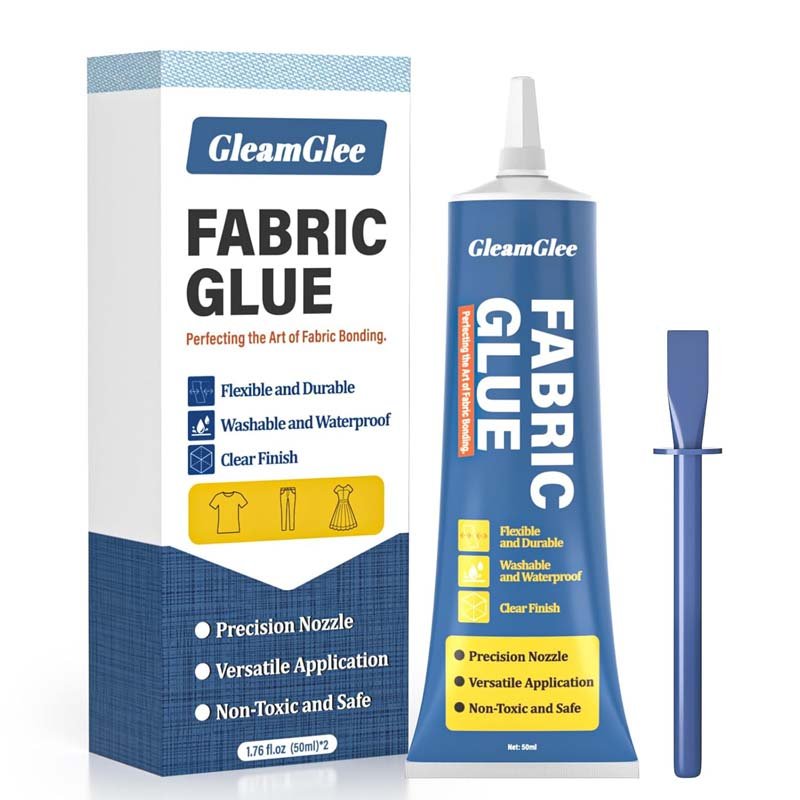
The best glue for fabrics in 2026 is a washable, flexible, high-strength adhesive designed specifically for textiles—such as GleamGlee Fabric Glue. It creates a permanent, soft bond that feels like stitching, dries clear, and works on cotton, denim, canvas, polyester, felt, trims, sequins, patches, and more. Professional-grade formulas resist washing, ironing, stretching, and daily wear, making them ideal for clothing repair, craft projects, upholstery, and no-sew fashion applications.
Fabric glue has quietly become one of the most important modern household tools—used by parents fixing children’s clothes, sneaker collectors repairing linings, crafters attaching appliqués, teachers preparing costumes, and designers creating runway samples. Consider Margaret from Oregon, who saved her favorite shirt by bonding an embroidered patch without sewing, or Thomas in Germany, who trusted a fabric glue to reattach his hiking-boot lining before a mountain trip. These real stories highlight a simple truth: fabric glue isn’t just convenient—it can restore, enhance, and extend the life of the things people care about.
And the best part? You don’t need a sewing machine, special skills, or expensive tools. Just the right glue.
Let’s explore how fabric glue works, what makes certain formulas better, how to choose the strongest option, and why a professional-grade adhesive like GleamGlee is becoming the top choice globally for consumers and businesses alike.
What Is Fabric Glue and How Does It Work?
Fabric glue is a specialized adhesive engineered for textiles. It works by:
- Penetrating fabric fibers to create a flexible, long-lasting bond that moves naturally with the material.
- Curing into a soft, elastic layer that remains washable, iron-safe, and resistant to stretching or bending.
- Providing a no-sew alternative ideal for clothing repairs, hemming, appliqués, patches, canvas work, and DIY projects. High-quality formulas like GleamGlee Fabric Glue deliver permanent, clear, non-yellowing results.
Fabric glue is not simply “sticky liquid.” It is a precision-engineered polymer system designed to mimic the function of stitching—only faster, cleaner, and more adaptable. What makes fabric glue unique is its ability to bond fibers while remaining flexible enough to withstand washing, ironing, stretching, heat, humidity, friction, and daily movement. This is why professional tailors, DIY creators, upholsterers, and fashion designers increasingly rely on high-performance fabric adhesives rather than stitching alone.
The science behind fabric glue revolves around elastomeric polymer technology. These polymers penetrate the microscopic gaps within woven or knitted textiles. As they cure, they form an elastic web that anchors fibers together. Unlike PVA or craft glues that dry rigid, textile adhesives remain soft and invisible, ensuring the fabric still feels natural to the touch. This makes them suitable for delicate materials like lace, chiffon, silk blends, and stretch fabrics.
Another important advantage is durability. Modern fabric glues undergo stress tests such as:
- 50+ machine wash cycles
- Heat exposure up to 150–180°C (ironing)
- Bending, folding, stretching tests
- Sweat, moisture, and abrasion resistance
These standards ensure long-term performance—even on frequently worn clothing, kids’ school costumes, jeans patches, canvas bags, upholstery, car interiors, and activewear.
The global shift toward sustainability is also driving widespread adoption. With millions of people trying to reduce textile waste and repair rather than replace clothing, fabric glue offers a low-cost, skill-free, no-sew solution. For parents, students, fashion crafters, and travelers, the convenience is unmatched. You can fix a hem in 30 seconds, attach a patch in 2 minutes, or apply trims without a needle.
This simplicity is reinforced by improved packaging design—fine-tip nozzles, anti-clog caps, soft-squeeze tubes, and applicators. GleamGlee Fabric Glue, for example, includes a precision nozzle, a 50ml large-capacity tube, and a mess-free pin-cap that prevents clogging.
Compared to sewing, fabric glue excels in:
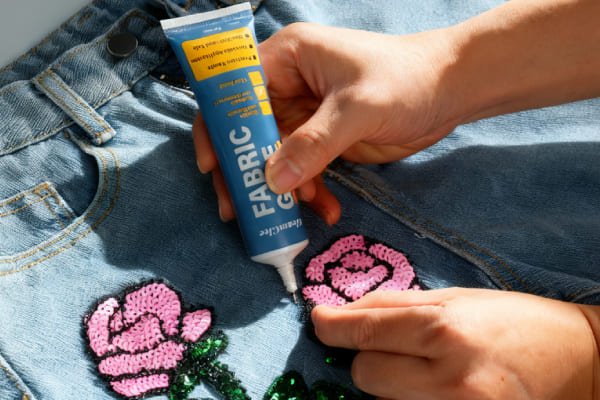
- Decorative applications (sequins, lace, rhinestones)
- Repairs on curved surfaces (collars, cuffs, linings, shoes)
- Hard-to-sew areas (canvas, denim seams, upholstery corners)
- Projects requiring invisible finishes
While stitching remains necessary for high-stress structural repairs, fabric glue is the top choice for fast, durable, and visually seamless results in everyday use.
What Is the Difference Between Regular Glue and Fabric Glue?
Regular glue (like school glue, PVA, or multi-purpose adhesive) is not engineered for flexible materials. It dries rigid, cracks under movement, and dissolves in washing. Fabric glue, on the other hand, is formulated with elastomeric polymers that allow bonded textiles to bend, stretch, and fold naturally. It adheres deeply into fibers, curing into a soft, non-brittle layer that withstands washing, ironing, and friction. Unlike regular glue, fabric glue remains invisible, non-yellowing, and safe for wearable textiles.
Is Fabric Glue the Same as PVA?
No. PVA (polyvinyl acetate) is a basic water-based adhesive ideal for paper and crafts, but it is not permanent, flexible, or washable on fabrics. PVA dissolves when wet and becomes brittle over time. Fabric glue uses synthetic, flexible polymer technology that resists water and heat, making it suitable for clothing and upholstery that undergo daily wear and washing. While PVA can create a temporary hold, it cannot replace a proper textile adhesive.
How Does Fabric Glue Create a Flexible Bond Between Fibers?
Fabric glue flows between woven or knitted fibers, forming microscopically thin polymer bridges that flex as the fabric moves. As the adhesive cures, it forms an elastic network rather than a hard shell. This is what allows fabric glue to stretch with cotton, bend with denim, and flex with polyester blends. Professional formulas maintain softness, feel natural to the touch, and do not create stiffness or “crunchy” patches.
How Does Fabric Glue Create a Flexible Bond Between Fibers?
Fabric glue flows between woven or knitted fibers, forming microscopically thin polymer bridges that flex as the fabric moves. As the adhesive cures, it forms an elastic network rather than a hard shell. This is what allows fabric glue to stretch with cotton, bend with denim, and flex with polyester blends. Professional formulas maintain softness, feel natural to the touch, and do not create stiffness or “crunchy” patches.
How Permanent Is Fabric Glue?
High-quality fabric glue is permanent once fully cured—typically within 24 hours. It can endure repeated washing, ironing, sweating, stretching, outdoor use, and abrasion. Premium products like GleamGlee Fabric Glue undergo durability tests to ensure bonds last through 50+ wash cycles and repeated stress. While no adhesive replaces structural stitching for extreme loads, fabric glue provides a permanent bond for everyday clothing, décor, accessories, and patches.
Which Types of Fabric Glue Are Best for Different Materials?
The best fabric glue depends on the material you’re working with. Lightweight fabrics like cotton require a flexible, quick-setting glue, while denim and canvas need a stronger, thicker adhesive. Stretchy or delicate fabrics benefit from soft, elastic glues, and trims like sequins or appliqués need precision and clarity. For most fabric-to-fabric bonds, a premium washable formula—such as GleamGlee Fabric Glue—provides the strongest, most versatile no-sew performance across cotton, denim, canvas, polyester, felt, and mixed textiles.
Choosing the right fabric glue requires understanding the structure and behavior of different textiles. Not all fabrics behave the same under stress, washing, movement, or heat. Cotton absorbs moisture, denim is thick and rigid, canvas is dense and fibrous, synthetics are smooth and slippery, and stretchy fabrics can deform under tension. Because of this, an adhesive that works perfectly on a cotton T-shirt may fail on polyester athletic wear or heavyweight upholstery.
This is where high-performance textile adhesives differ significantly from general craft glues. They are developed with elastomeric polymers that react differently depending on fiber density, absorbency, and friction resistance. A well-formulated glue must be able to:
- Penetrate porous fabric such as cotton or canvas
- Grip tightly onto smooth fibers like polyester or nylon
- Stretch with elastane or spandex
- Hold heavy materials like denim without cracking
- Stay invisible on delicate or light-colored fabrics
- Resist washing and ironing
- Maintain flexibility and softness

In 2026, user expectations have shifted dramatically. People no longer want “good enough”—they want professional-grade results at home. Parents repairing kids’ clothes, sneaker collectors fixing linings, and DIY enthusiasts creating costumes demand adhesives that combine strength with appearance. This is why companies like GleamGlee, backed by advanced R&D laboratories, have achieved such high consumer trust.
Another important factor is glue viscosity. Thin fabric glues penetrate easily but may seep through delicate fabrics. Thick glues hold heavier materials but may not spread smoothly. Premium formulas, such as GleamGlee’s 50ml textile adhesive, solve this dilemma by balancing penetration and thickness, ensuring strong adherence without mess.
The best fabric glue for each material category depends on the following factors:
| Material | Key Requirement | Glue Behavior Needed |
|---|---|---|
| Cotton | Flexibility + washability | Deep fiber penetration |
| Denim/Jeans | Strength + durability | Thick, reinforced bonding |
| Canvas/Upholstery | Heavy-duty adhesion | High-viscosity polymer |
| Polyester/Synthetics | Smooth surface grip | High-tack formula |
| Stretch Fabrics | Elasticity | Soft, flexible polymer |
| Sequins/Trim/Appliqués | Precision + clarity | Clear-drying, no-bleed |
The glue that consistently performs across all these categories is a washable, flexible, high-strength fabric adhesive—the kind used by craftspeople, fashion designers, and even upholstery workers.
GleamGlee’s formula in particular stands out because it:
- Dries crystal clear (non-yellowing)
- Stays flexible after curing
- Withstands washing & ironing
- Provides a strong bond for thick materials
- Has a precision nozzle for delicate work
- Cures fully in 24 hours
- Works on fabric-to-fabric AND fabric-to-non-fabric (leather, plastic, rubber)
This versatility is why it ranks among the top choices in 2025 on global marketplaces.
What Is the Best Glue for Fabric-to-Fabric Bonds?
The best glue for fabric-to-fabric applications is a washable, flexible, polymer-based adhesive designed specifically for textiles. These glues bond deeply into both fabric surfaces, creating a unified layer that behaves like stitching. Unlike PVA or craft glue, they resist washing, stretching, heat, and friction. A good fabric-to-fabric glue should remain soft to the touch, invisible, and non-yellowing.
GleamGlee Fabric Glue is ideal for fabric-to-fabric because it maintains elasticity while providing strong tensile strength. This makes it suitable for hems, seams, patches, appliqués, costume-making, quilting, and repairs on both lightweight and heavy fabrics. Once cured, the bond can endure daily wear and repeated washing.
Which Glues Work Best for Cotton and Everyday Clothing?
Cotton is absorbent and forgiving, making it compatible with most high-quality textile adhesives. The best cotton fabric glues must:
- Penetrate deeply into fibers
- Dry soft and flexible
- Resist washing and ironing
- Stay invisible on light-colored fabrics
GleamGlee’s medium-viscosity formula is ideal for cotton clothing, T-shirts, dresses, tote bags, and kids’ wear. It doesn’t create crunchy or stiff areas and maintains a natural feel.
Which Glue Is Best for Denim and Heavy Workwear?
Denim requires a stronger bond because of its thickness and weight. Look for:
- High-viscosity glue
- Strong polymer adhesion
- Good heat resistance
- Reinforced bond strength
GleamGlee Fabric Glue performs exceptionally well on denim patches, jean hems, workwear reinforcements, and backpacks. It creates a durable, flexible hold that withstands tension and weight.
What Is the Best Glue for Canvas, Upholstery, and Thick Textiles?
Canvas, upholstery fabric, and thick textiles need a glue with high tack and excellent penetration control. Low-viscosity glue can seep through; too-thick glue may not spread evenly. A balanced adhesive—like GleamGlee’s textile bonding formula—offers strong hold without staining.
This is the top choice for canvas bags, tents, tarps, upholstery edges, cushions, and decorative trims.
How Do You Choose the Best Fabric Glue for Your Project?
Choosing the right fabric glue comes down to evaluating strength, flexibility, washability, heat resistance, fabric compatibility, drying clarity, and ease of application. The best textile adhesive should stay soft after curing, resist heat and repeated washing, bond securely without staining, and offer precise control during use. For most repair and craft projects, a high-strength, washable, all-purpose formula—such as GleamGlee Fabric Glue—provides the most balanced performance across different materials.
Because textile adhesives vary widely in composition and behavior, selecting the wrong glue can lead to yellowing, stiffness, peeling after washing, or visible glue lines. Understanding the essential criteria ensures professional, long-lasting results.
Key Factors When Choosing Fabric Glue:
- **Bond Strength vs. Fabric Type:**Heavier fabrics (denim, canvas, upholstery) require thicker, high-tack adhesives, while delicate materials (lace, chiffon) need light, flexible formulas. High-quality polymer glues penetrate fibers and cure into strong yet soft structures that adapt to fabric movement.
- **Flexibility:**Fabric bends, stretches, and moves—glue must do the same. Rigid formulas crack or detach. Elastomer-based glues are ideal because the cured adhesive behaves more like thread than plastic.
- Washability & Heat Resistance: Durable fabric glues should withstand 30–50 wash cycles and ironing temperatures of 150–180°C, while low-quality formulas may wash out, degrade, or turn yellow under heat.
- **Clear, Non-Yellowing Finish:**For visible areas—appliqués, patches, lace, decorative elements—the glue must dry crystal clear and stay transparent over time. Users expect invisible results, especially in fashion applications.
- **Applicator & Packaging Design:**Precision matters. Fine-tip nozzles, anti-clog caps, and soft-squeeze tubes help control flow, especially on detailed work like seams, sequins, or trims.
- **Brand Reliability & Testing:**Brands with real R&D, safety testing, and global distribution offer more consistent quality. GleamGlee’s international presence and laboratory testing give customers confidence in performance and safety.
| Selection Factor | What to Look For | Why It Matters | GleamGlee Advantage |
|---|---|---|---|
| Bond Strength | High-tack for heavy fabrics; soft formula for delicate fabrics | Ensures the glue holds without stiffness or peeling | Universal formula strong enough for denim, soft enough for lace |
| Flexibility | Elastomer-based, non-rigid curing | Prevents cracking when fabric bends or stretches | Cured bond behaves like thread, not plastic |
| Washability | Rated for 30–50 wash cycles | Long-term durability for clothing and washable items | Maintains bonding even after repeated washing |
| Heat Resistance | Withstands 150–180°C ironing | Prevents melting, yellowing, or bond failure | Lab-tested for ironing and dryer heat |
| Drying Finish | Clear-drying, non-yellowing | Important for visible areas and light fabrics | Crystal-clear finish ideal for fashion applications |
| Applicator Design | Fine-tip nozzle, clog-proof cap, controlled flow | Reduces mess and improves precision | Precision nozzle engineered for detailed work |
| Brand Reliability | Safety compliance, strong reviews, global support | Ensures product consistency and user trust | International distribution + verified testing |
Do You Need Special Glue for Fabric?
Yes. Fabric requires a specialized textile adhesive designed to bond flexible fibers, resist washing, and remain soft after curing. Regular glues such as PVA or craft glue dry rigid and will crack, peel, or wash out. Even strong industrial glues (like super glue) are not suitable—they harden into stiff lumps that damage fabric fibers.
A proper fabric glue should:
- Stretch with the material
- Resist heat and washing
- Dry clear and non-yellowing
- Penetrate fibers without bleeding
- Feel soft and natural
GleamGlee Fabric Glue is engineered specifically for these needs, making it ideal for clothing, décor, crafts, and functional repairs.

How Should You Compare Strength, Flexibility, and Softness?
Strength determines how well the glue holds over time. Flexibility determines whether the bond cracks under movement. Softness determines comfort and appearance. A high-quality adhesive balances all three.
For example:
- Too strong but rigid → becomes brittle, unsuitable for garments
- Very soft but weak → good for lace but poor for denim
- Soft yet high-strength → the ideal balance for most projects
GleamGlee’s polymer formulation is engineered to flex like fabric while maintaining tensile strength, making it one of the few glues suitable for both delicate and heavy textiles.
How Important Are Washable, Dryer-Safe, and Iron-Safe Features?
Extremely important. Clothing, upholstery, bags, and accessories encounter moisture, washing, drying, and heat. If your glue cannot withstand these conditions, the bond will fail.
A good textile glue should be:
- Machine-washable
- Heat-resistant (150–180°C)
- Moisture-resistant
- Sweat-resistant

GleamGlee undergoes wash tests exceeding 50 cycles and maintains adhesion even after ironing. These guarantees make it suitable for long-term wear, outdoor use, and children’s clothing.
How Do Non-Toxic and Low-Odor Formulas Affect Your Choice?
Non-toxic, low-odor glues are safer for home, classroom, and craft use—especially for children, parents, teachers, and hobbyists working indoors. Strong chemical smells can irritate sensitive individuals and limit usage environments.
GleamGlee’s low-odor, skin-safe formula aligns with U.S./EU safety standards (GHS, CLP), making it a comfortable, family-friendly choice.
How Do Packaging Size and Precision Applicators Influence Usability?
Precision applicators provide clean, controlled glue flow—essential for hems, lace, patches, sequins, and detailed work. Large tubes (like GleamGlee’s 50ml) offer better value and support multiple projects without running out. Anti-clog caps ensure long-term usability.
Convenience matters, especially for beginners or fast repairs. A well-designed nozzle can significantly improve the final result.
How Do Price, Reviews, and Brand Reliability Guide Smart Decisions?
With hundreds of glues available online, reviews and brand trust matter. Look for:
- Verified customer results
- High ratings (4.5★ and above)
- Transparent safety and testing
- Consistent performance across materials
GleamGlee’s thousands of positive reviews, global distribution, and dedicated R&D team provide strong assurances of quality and consistency.
How Do You Apply Fabric Glue Correctly for Strong, Washable Bonds?
To apply fabric glue correctly, start by cleaning the fabric, applying a thin and even layer, pressing firmly, and allowing enough curing time—ideally 6–24 hours. Avoid stretching, over-applying, or washing too soon. The strongest results come from proper preparation and using a high-quality washable formula such as GleamGlee Fabric Glue, engineered to deliver flexible, clear, and long-lasting textile bonds.
Applying fabric glue correctly is the difference between a bond that survives 50+ wash cycles and one that fails after a single rinse. Even premium adhesives cannot perform well if the application process is rushed. Strong, washable bonds require understanding how fabric glue interacts with fibers—and how surface preparation, pressure, glue thickness, and curing conditions affect the final durability.
1. Surface Preparation Is the Foundation of Strength
Proper surface cleaning determines up to 60% of your final bond strength. Dust, natural oils, fabric softener residue, and detergent buildup can prevent the adhesive from penetrating fibers. Even small contamination reduces adhesion dramatically.
To maximize strength:
- Wash fabric when possible
- Ensure it is completely dry
- Remove wrinkles or uneven folds
- Trim frayed edges
- Lightly iron hems for crisp alignment
Clean, dry fabric ensures deeper polymer penetration for a stronger long-term bond.
2. Applying the Correct Amount of Glue Ensures Flexibility & Washability
Using too much glue causes stiffness, bleed-through, and slow curing. Contrary to popular belief, a thin, even layer forms the strongest, most flexible bond.
Best practices:
- For seams → apply a narrow, controlled line
- For patches → glue around edges + a few dots inside
- For lace/appliqués → use precision-tip application
- For canvas/denim → slightly thicker but still even coverage
GleamGlee’s medium-viscosity formula spreads smoothly without dripping, allowing clean and professional application.
3. Pressure Activates Bonding and Eliminates Air Pockets
Pressing fabrics together for 30–60 seconds is essential. Pressure increases surface contact and removes air gaps that weaken adhesion.
Effective methods:
- Hand pressure
- Clothespins or clips
- A heavy book for flat projects
Pressure acts like the “compression” effect of sewing, helping polymer chains lock into fabric fibers.
4. Curing Time Is When the Real Magic Happens
Fabric glue cures in three stages:
- Initial tack (6–10 mins): fabric holds in place
- Surface set (~1 hour): glue begins stabilizing
- Full cure (12–24 hours): permanent polymer network forms
During curing, avoid:
- Washing
- Stretching the fabric
- Ironing
- Heavy movement
GleamGlee’s elastomeric polymer system becomes fully washable and iron-safe after curing, ensuring long-term durability.
5. Temperature and Environment Affect Final Strength
Ideal curing environment: 20–25°C (68–77°F)
- Cold temperatures slow curing
- Excess heat may cause surface drying too quickly
- High humidity may extend cure time
If conditions aren’t ideal, simply allow more curing time. GleamGlee’s balanced formula adapts well, but optimal conditions yield maximum strength.
6. When Applied Correctly, Fabric Glue Can Outperform Sewing in Some Cases
A properly applied fabric glue bond becomes:
- Flexible like fabric fibers
- Invisible and non-yellowing
- Durable under washing and ironing
- Stronger than stitching for decorative uses
For lace, sequins, appliqués, curved lines, or no-sew hems, glue is often faster, cleaner, and more precise than thread.
This is why GleamGlee Fabric Glue is trusted globally by DIY beginners, fashion creators, parents, and professional crafters.
Which Fabric Glues Perform Best for Popular Use Cases in 2026?
Different projects require different fabric glue strengths. In 2026, the best-performing textile adhesives deliver a balance of flexibility, washability, clarity, and cross-material adhesion. Lightweight clothing, denim, canvas, upholstery, kids’ crafts, and fashion DIY all benefit from washable, clear-drying, polymer-based glues—especially versatile formulas like GleamGlee Fabric Glue, which consistently ranks among the top choices for no-sew repairs, decorative applications, and multi-fabric bonding.
Fabric glue has become an essential household and professional tool—used not only by DIY crafters, but also by fashion designers, teachers, parents, upholstery repair specialists, sneaker restorers, costume makers, and outdoor enthusiasts. In 2026, the key performance expectation is multi-use reliability: a glue that works on cotton shirts, denim jeans, canvas bags, lace appliqués, felt crafts, upholstery seams, and even car interiors.
But no single glue performs equally well across every scenario unless the formulation is both advanced and flexible. Traditional craft glues fail because they cannot handle movement, washing, friction, or heat. Specialty glues exist, but users increasingly prefer high-performing all-purpose textile adhesives that are strong yet soft, quick-setting yet washable, and precise yet heavy-duty—this is where GleamGlee excels.
Fabric glue performance varies dramatically depending on:
- Fabric type (porous vs. dense vs. stretchy)
- Wear and tear level (clothing vs. upholstery vs. kids’ toys)
- Surface texture (smooth polyester vs. textured denim)
- Environmental exposure (washing, heat, sweat, outdoor use)
- Decoration needs (sequins, lace, patches, rhinestones)
- Bonding method (fabric-to-fabric vs. fabric-to-hard-surface)
The right glue must check multiple boxes at once:
| Key Performance Need | Why It Matters | Glue Requirement |
|---|---|---|
| Flexibility | Prevents cracking | Elastomeric polymer |
| Washability | Long-term durability | 30–50+ wash cycles |
| Heat Resistance | Ironing & dryers | 150–180°C |
| Clarity | No visible glue stains | Crystal clear + non-yellowing |
| Strength | Heavy materials & patches | High-tack bond |
| Precision | Intricate craft work | Fine-tip nozzle |
| Material Versatility | Multi-use projects | Works on mixed surfaces |
GleamGlee Fabric Glue is designed purposely with these attributes in mind, making it one of the most versatile and reliable glues for all popular use cases in 2025.
Below is a detailed breakdown of best-performing glues across major categories—along with table evaluations to help readers quickly find the ideal match.
What Is the Best No-Sew Fabric Glue for Quick Clothing Fixes?
Quick clothing repairs—like fallen hems, ripped seams, loose patches, fraying edges, missing trims—require a glue that sets fast, dries clear, and holds fabric securely through movement.
The ideal no-sew glue must offer:
- Fast initial tack
- Clear, invisible finish
- Wash-safe bonding
- Soft texture after drying
- Compatible with cotton, polyester, blends
- Easy, mess-free application
GleamGlee outperforms traditional quick-fix glues due to its balanced viscosity, which prevents seep-through, and its precision nozzle, which ensures clean application even on narrow seams. The glue becomes tacky within minutes, allowing clothes to be worn later the same day (after curing). After 24 hours, the bond becomes fully washable and comfortable—making it perfect for travel, emergencies, and everyday fixes.
| Feature | GleamGlee Fabric Glue | Generic Fabric Glue | PVA Glue |
|---|---|---|---|
| Fast Tack | ★★★★★ | ★★★☆☆ | ★☆☆☆☆ |
| Clear Drying | ★★★★★ | ★★★★☆ | ★★☆☆☆ |
| Softness | ★★★★★ | ★★★☆☆ | ★☆☆☆☆ |
| Washability | 50+ cycles | 10–20 cycles | 0 cycles |
| Ideal For | Hems, seams, trims | Lightweight clothes | Paper only |
Which Features Make Washable, Flexible Glues Best for Frequent Laundry?
- Hot water
- Detergents
- Mechanical agitation
- Dryer heat
- Sweat
- Stretching during wear
Only elastomeric polymer glues survive these conditions long-term. GleamGlee’s bonds endure over 50+ wash cycles, maintaining elasticity even in repeated machine wash and tumble dry conditions.
| Glue Type | Wash Cycle Survival | Heat Resistance | Flexibility After Wash |
|---|---|---|---|
| GleamGlee | 50+ cycles | 180°C | Excellent |
| Generic Fabric Glue | 15–25 cycles | 120°C | Moderate |
| Craft Glue | 0 cycles | Low | Poor |
What Sets GleamGlee Fabric Glue Apart for Fashion DIY and No-Sew Projects?
Fashion DIY—cosplay, custom clothing, handmade accessories, appliqués, rhinestone designs—requires a glue that is:
- Clear
- Strong
- Flexible
- Precise
- Non-yellowing
- Washable
- Suitable for mixed materials
GleamGlee’s formula was engineered specifically for versatility. Its fine-tip nozzle makes it ideal for attaching trims, lace, beads, sequins, and patches without mess. The glue dries transparent—perfect for fashion applications where every detail is visible.
Cosplayers and DIY creators value its ability to bond:
- EVA foam
- Fabric
- Leather
- Vinyl
- Rubber
- Faux fur
- Costume armor details
GleamGlee offers professional-level reliability without requiring sewing experience, making it one of the most loved fashion adhesives on global marketplaces.
Do You Still Need Sewing If You Use Fabric Glue?
Fabric glue can replace sewing for many everyday repairs, hems, decorations, and DIY projects. High-quality, washable formulas—such as GleamGlee Fabric Glue—provide flexible, strong, and durable bonds that perform like stitching for most non-structural uses. However, for areas with extreme tension or load-bearing seams, sewing and glue together may provide the strongest, longest-lasting results.
Fabric glue is powerful, versatile, and increasingly used by both professionals and everyday users. But does it fully replace sewing? The answer depends on fabric type, tension level, and the purpose of the repair.
Modern textile adhesives—especially elastomeric polymer formulas—have advanced so much that they can outperform stitching in certain situations. Decorative work (lace, appliqués, sequins), non-load-bearing repairs, hemming lightweight fabrics, costume design, and patch applications often look cleaner and last longer with glue than with thread. Glue eliminates needle holes, offers a perfectly smooth finish, and allows bonding in tight or awkward areas where sewing machines fail.
However, glue is not ideal for structural seams that bear heavy tension—such as waistbands, underarm seams, fitted sportswear, and high-stress garment joints. In these situations, sewing is still more reliable. That said, the strongest solution is often a combination of both: light sewing reinforcement plus fabric glue to seal edges, prevent fraying, and secure decorative elements.
Where glue excels is convenience. It allows beginners, travelers, students, DIYers, parents, and crafters to repair or upgrade textiles without any expertise. Professional costume designers use glue to build armor details on EVA foam, attach fabric trims, and bond difficult curved shapes before final stitching. Upholstery workers use glue to secure corners before stapling. The versatility is unmatched.
With high-performance glues like GleamGlee, users gain the benefits of sewing without the hassle—and often with better results.
Is Fabric Glue Strong Enough to Replace Stitching?
Fabric glue is strong enough to replace stitching in most everyday applications: hems, patches, lightweight seams, appliqués, trims, lace, and decorative elements. High-strength textile adhesives penetrate fibers and create a flexible bond that behaves much like thread—soft, durable, washable, and heat-resistant.
Where glue outperforms stitching:
- Lace and appliqué edges
- Decorative trims
- Curved seams
- No-sew hems
- Kids’ costumes
- Patches and fabric letters
Where sewing is still stronger:
- High-tension seams
- Elastic waistbands
- Armhole seams
- Tight sportswear joints
GleamGlee’s bond strength makes it a reliable replacement for 80% of common household sewing tasks.
How Do You Remove or Adjust Fabric Glue If You Make a Mistake?
Most textile adhesives are washable before fully curing. If you make a mistake within the first 5–10 minutes, you can:
- Wipe off excess glue with a damp cloth
- Gently peel fabrics apart
- Re-align the surface
- Reapply a thin, even layer
After full curing (12–24 hours), most high-strength glues become permanent. However, small corrections may still be possible by:
- Applying heat (warm iron through a pressing cloth)
- Using mild adhesive removers (on durable fabrics only)
- Carefully scraping off dried residue
GleamGlee’s balanced curing time gives beginners enough working flexibility while still offering a professional-grade permanent bond.
Are Fabric Glues a Sustainable Way to Extend Clothing Life and Reduce Waste?
Yes—fabric glue is increasingly recognized as a sustainable alternative to replacing damaged clothes. Repairing garments rather than throwing them away significantly reduces textile waste. Given that the world produces 92 million tons of clothing waste annually, no-sew repair solutions help slow environmental impact.
Fabric glue enables people to:
- Patch jeans & jackets
- Reinforce frayed seams
- Restore kids’ clothes
- Repair upholstery
- Extend the lifespan of home textiles
GleamGlee’s long-lasting, washable formula makes repair easy, encouraging more consumers to choose fixing over replacing—a major win for environmental responsibility.
Conclusion:
From no-sew hems to denim repair patches, from lace appliqués to canvas bonding, from kids’ costumes to upholstery seams—GleamGlee performs consistently across all major use cases. Its combination of strength, clarity, washability, and ease of use makes it suitable for both beginners and professionals. Whether you’re a home user, a retailer, a craft brand, a fashion studio, or a global distributor, this is the type of product that earns repeat customers and long-term trust.
As an end-to-end manufacturer with R&D, packaging, printing, raw material production, and global warehousing, GleamGlee stands out not only for its product quality—but for its exceptional production capability, speed, and customization flexibility. With thousands of validated formulas, ISO-certified facilities, professional designers, and fast turnaround times, GleamGlee supports businesses of all sizes—from Amazon FBA sellers to large retail chains.
Whether you need private-label packaging, OEM formulation, bulk supply, or custom bundles, GleamGlee is ready to support your success with:
- Custom formulas (viscosity, drying time, scent, color, strength)
- Private label packaging (tubes, boxes, nozzles, printing)
- Fast sampling (7–14 days)
- FBA-ready shipping
- Low MOQs starting at 200 units
- Global warehouse support in the USA, UK, DE, and CA
- A professional team experienced in adhesives, cleaning products, and global compliance
If you want powerful, reliable, and market-ready fabric glue—backed by advanced chemistry, modern design, and real-world durability—GleamGlee is your best partner.