Skip to content

Wood Glue for Furniture Restoration: A Restorer’s Guide to Strong, Clean Repairs
Your trusted adhesives glue & cleaner manufacturer

Furniture restoration often looks straightforward until the damaged piece is sitting in front of you. A loose chair leg, split tabletop, lifting veneer, cracked cabinet rail, or worn drawer joint may appear to need nothing more than a strong adhesive, yet successful restoration depends on far more than bond strength. Old furniture carries years of movement, previous repairs, polish residue, seasonal expansion, compressed fibers, and sometimes hidden structural damage. The right repair begins by understanding what has actually failed before deciding what should hold the furniture together again. For household users, restorers, woodworking enthusiasts, and repair workshops alike, choosing the right adhesive means balancing joint condition, application control, moisture exposure, appearance, working time, and long-term durability rather than simply reaching for the strongest product available.
For most furniture restoration, wood glue works best when the mating surfaces are sound, reasonably well fitted, properly cleaned, and held in correct alignment until the adhesive cures. Tight wood-to-wood joints, narrow cracks, outdoor furniture, mixed-material fittings, loose veneer, and valuable antiques may require different adhesive properties or repair methods. Surface preparation and curing are just as important as the glue itself.
Imagine an old dining chair that has survived years of family meals, moves from one home to another, and finally begins to wobble at the rear leg. Someone squeezes glue into the visible gap, presses the joint together for a few minutes, and assumes the job is finished. Two weeks later, the wobble returns. The adhesive may not have been weak at all; the joint may have contained old glue, worn wood, poor surface contact, or a gap too large for normal bonding. Understanding that difference is what turns a temporary patch into a restoration that can add years of useful life.
What Wood Glue Works for Furniture Restoration?
The right wood glue for furniture restoration depends on joint fit, wood condition, moisture exposure, repair size, working time, and the value of the furniture. Tight household joints usually benefit from strong, clean wood adhesives, while large gaps, veneer, mixed materials, outdoor furniture, and historically important pieces may require different adhesive characteristics or specialized restoration methods.
What Makes a Glue Suitable for Furniture Repair?
Furniture restoration places different demands on adhesive than building a new piece from freshly machined timber. A newly made cabinet joint may offer clean surfaces and predictable fit, while an old chair can contain polish residue, dried glue, compressed wood fibers, worn mortises, small gaps, and areas that have moved repeatedly for decades. A suitable adhesive therefore needs more than impressive strength. It must wet the prepared surfaces effectively, remain controllable during application, provide enough working time for correct alignment, and cure into a bond that suits the furniture’s real service environment. For visible repairs, a clear finish can reduce visual disruption, while narrow joints benefit from precise delivery that keeps excess glue away from finished surfaces.
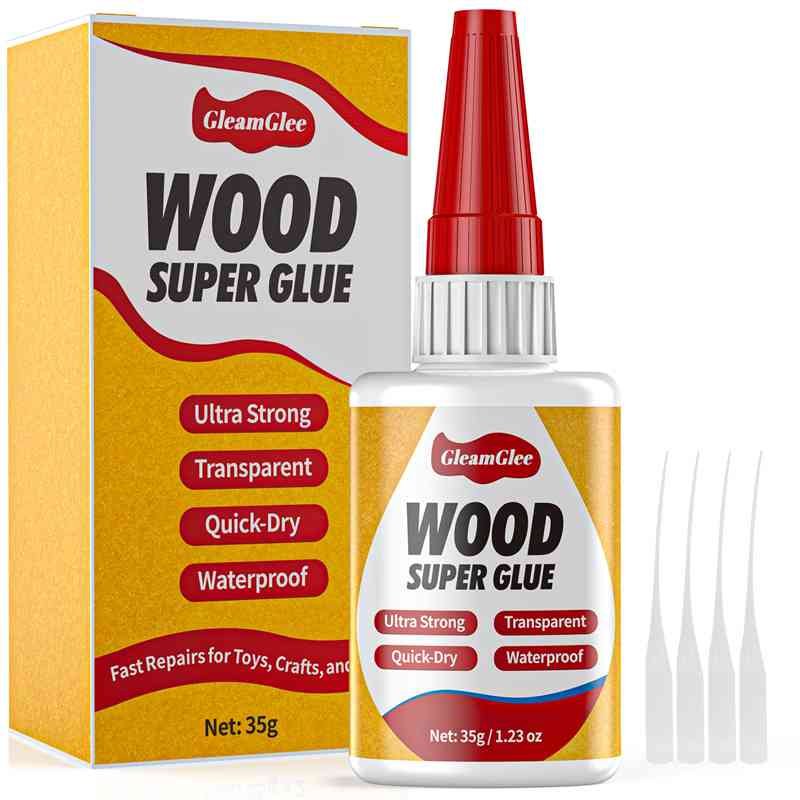
For everyday household restoration, practical characteristics include reliable wood-to-wood adhesion, controlled viscosity, moisture resistance when required, clean curing, and packaging that allows the adhesive to reach narrow joints without unnecessary mess. EPN wood glue, for example, is designed around strong bonding, transparent curing, waterproof and weather-resistant use, multi-material compatibility, and fine-tip application. Those properties can be useful for chairs, tables, cabinets, shelving, wooden frames, decorative pieces, and selected outdoor furniture, provided the underlying joint is still mechanically suitable for adhesive repair.
Is Fast-Drying Wood Glue Good for Repairs?
Fast-setting wood glue can be extremely useful when the repair is small, well aligned, and easy to position. Narrow cracks, trim pieces, drawer components, picture frames, miniature furniture, decorative wood parts, and small chair joints often benefit from an adhesive that develops an initial hold quickly because there is less opportunity for the pieces to drift while being stabilized. In these situations, speed improves convenience and reduces the amount of time a user must manually maintain alignment. A quick initial set can also be helpful in awkward positions where traditional clamping is difficult.
However, fast setting should never be confused with full structural strength. A joint may stop moving long before the adhesive has completed its cure, and larger furniture such as dining chairs, beds, tables, shelves, and cabinets should not be returned to normal loading simply because the glue feels dry. Complex assemblies can also require more working time because multiple rails, tenons, dowels, or frame components must be aligned together. The most useful approach is to match setting speed to repair complexity. Fast curing can improve efficiency, but only when it does not force rushed positioning or encourage premature use.
Does Waterproof Wood Glue Matter?
Water resistance matters whenever restored furniture may encounter humidity, condensation, damp cleaning, outdoor air, rain, or repeated seasonal moisture changes. A bedroom dresser normally experiences relatively stable indoor conditions, while a kitchen cabinet, bathroom shelf, entryway bench, covered patio table, garden chair, wooden planter, or gate may face much more demanding exposure. Wood naturally expands and contracts as its moisture content changes, and that movement can place repeated stress on the glue line, especially where the joint is already old or partially worn.
In many conditioned indoor environments, furniture wood may stabilize somewhere around roughly 6–12% moisture content, although the actual figure depends strongly on local climate, season, heating, and ventilation. Outdoor furniture can experience much wider fluctuations. For damp or exterior applications, waterproof or weather-resistant adhesive becomes more important because the bond needs to tolerate moisture cycling rather than only dry-room conditions. EPN wood glue is designed for indoor and outdoor use and is described as waterproof and weather resistant, making it relevant for garden furniture, gates, fences, planters, and other repairs exposed to moisture.
| Furniture Use | Typical Exposure | Adhesive Priority | Main Repair Concern |
|---|---|---|---|
| Living-room chair | Low to moderate humidity | Strong wood bond | Joint fit and cure |
| Kitchen cabinet | Humidity and cleaning | Moisture resistance | Edge swelling |
| Bathroom furniture | Frequent condensation | Higher moisture tolerance | Repeated dampness |
| Covered patio table | Seasonal moisture | Weather resistance | Wood movement |
| Garden bench | Rain and outdoor cycling | Waterproof performance | Wood condition and coating |
Waterproof adhesive alone cannot make decayed timber structurally sound. Rotten fibers, deeply weathered joints, and areas that trap water still need to be repaired or rebuilt before bonding. Outdoor durability is always a combination of sound wood, suitable adhesive, protective finishing, drainage, and routine maintenance.

Which Glue Is Best for Each Repair?
There is no single wood glue that is automatically best for every furniture repair. Tight chair joints, narrow cracks, large structural gaps, metal fittings, plastic components, veneer, and outdoor pieces create different bonding conditions. Reliable adhesive selection begins by identifying the actual failure and choosing a glue whose flow, setting behavior, substrate compatibility, and environmental resistance match that repair.
Which Glue Works for Loose Joints?
Loose chair legs, stool stretchers, table rails, bed frames, cabinet corners, drawer structures, and shelf joints are among the most common furniture restoration problems. Before adding adhesive, determine why the joint moves. Sometimes the old glue has failed while the wooden parts still fit together closely. In that situation, cleaning the mating surfaces and regluing can restore a dependable wood-to-wood connection. In other cases, years of movement have enlarged the mortise, worn the tenon, loosened a dowel, polished the surfaces, or crushed the surrounding fibers so badly that the parts no longer make meaningful contact.
That distinction is critical because wood glue usually performs best when the mating surfaces already fit correctly. Filling a visibly worn mortise or a rattling joint with a large quantity of normal adhesive does not recreate missing wood. Severely loose joints may need a fitted shim, replacement dowel, rebuilt tenon, new wood insert, or mechanical reinforcement before glue is introduced. For small, well-fitting furniture joints, fine applicator tips can help direct adhesive into tight spaces without flooding the surrounding finish. EPN wood glue is supplied with precision nozzles, which can be particularly useful around chair joints, cabinet corners, cracks, and detailed furniture components where controlled placement matters.
Which Glue Works for Cracked Wood?
A cracked piece of furniture should be evaluated according to the shape and condition of the break rather than simply the visible length of the crack. A clean split where both sides still meet closely is very different from a break containing missing fibers, crushed material, rot, previous filler, or a large internal void. Clean fractures often respond well to controlled adhesive application followed by careful alignment and clamping, while structurally damaged areas may need reinforcement or replacement wood before the adhesive can perform effectively.
Before gluing, gently test whether the crack closes naturally without excessive force. If both sides return to their original position and the fibers still appear sound, the repair is a good candidate for conventional wood bonding. Transparent-drying glue can be especially useful on visible furniture because a narrow glue line is less noticeable, although squeeze-out should still be removed rather than left to cure on the surface. Fine cracks may also benefit from a narrower applicator that carries adhesive deeper into the break. EPN’s clear finish and controlled nozzle system make these characteristics relevant for split tabletops, cracked chair rungs, frames, shelving, decorative boxes, and similar visible repairs.
Which Glue Works for Mixed Materials?
Modern furniture often combines wood with metal brackets, plastic hardware, ceramic decorations, laminates, synthetic panels, glass-like ornaments, coatings, and composite components. In these repairs, the term “wood glue” can be misleading because the adhesive must bond both materials involved rather than perform well only on porous timber. A wooden cabinet knob containing a metal insert, for example, presents a different bonding problem from a solid wooden dowel connection, while a decorative plastic trim piece may behave very differently from unfinished wood.
The first step is to identify the actual contact surfaces. Bare wood bonded to untreated metal differs from wood bonded to painted metal, and smooth plastics can be far more difficult to adhere than porous timber. Ceramic also varies according to whether the contact area is unglazed, glazed, coated, or contaminated. A multi-purpose adhesive intended for wood, metal, plastic, and ceramic can simplify many household repairs, but surface compatibility should still be checked where the substrate is unusual. EPN wood glue is designed for multi-material adhesion, which can be helpful for mixed furniture fittings, decorative pieces, knobs, hardware, and home décor repairs.
Can Wood Glue Fill Large Gaps?
Ordinary wood glue should not be treated as structural filler. Most wood adhesives are designed to create a relatively thin bond line between surfaces that already fit reasonably well. If a chair tenon rattles inside the mortise, a crack contains several millimeters of missing timber, or a table joint has been worn significantly out of shape, adding a thicker mass of conventional glue does not replace the material that has disappeared. Once the glue hardens, the joint may still be mechanically weak because the load is passing through a thick adhesive pocket instead of well-supported wood surfaces.
A practical workshop approach is to rebuild the joint before expecting the adhesive to carry structural load. Small localized looseness may sometimes be corrected with carefully fitted wood, while larger gaps may need a shim, new dowel, replacement tenon, insert, or another repair method. The exact acceptable gap depends on adhesive chemistry and joint design, so there is no universal number that applies to every product. For ordinary furniture repair, however, visible structural gaps approaching about 1 mm or more deserve careful evaluation rather than simply receiving extra glue.
| Repair Condition | Typical Gap Condition | Practical Direction |
|---|---|---|
| Tight joint | Nearly closed | Reglue and clamp |
| Fine crack | Hairline to very narrow | Use controlled adhesive penetration |
| Slightly worn joint | Small localized looseness | Check fit before bonding |
| Noticeable structural gap | Around 1 mm or more in critical areas | Rebuild, shim, or reinforce |
| Missing material | Visible wood loss | Replace or reconstruct material |
| Rotten fibers | Soft or crumbling | Remove damaged wood before bonding |
How Do You Prepare Furniture for Gluing?
Prepare furniture by exposing sound bonding surfaces, removing unstable contamination, checking joint fit, protecting visible finishes, and dry-fitting the repair before glue is applied. Adhesive works best when it bonds stable material rather than dust, wax, loose fibers, brittle old glue, decayed wood, or a joint that cannot close correctly.
Do You Need to Remove Old Glue?
Old adhesive is one of the main reasons furniture restoration differs from new woodworking. A chair, table, cabinet, or frame may have been assembled decades ago, repaired several times, or contaminated with polish and household products before it reaches the workbench. Applying new adhesive directly over an unstable layer can mean the fresh glue bonds perfectly to old residue while that residue remains poorly attached to the original wood. In that situation, the repair can fail even though the new adhesive itself has performed correctly.
The objective is not to aggressively grind every joint back to fresh timber. Excessive scraping can enlarge a mortise, reduce the diameter of a tenon, round over important mating surfaces, or remove original material that cannot easily be replaced. Instead, remove loose, brittle, flaky, contaminated, or obviously incompatible residue while preserving the original geometry. Traditional hide glue, synthetic adhesives, fillers, and previous DIY repairs can behave differently when a new adhesive is introduced. Valuable antique furniture deserves even more caution because original adhesive systems may be historically significant and intentionally reversible.
How Clean Should the Joint Be?
A properly prepared joint should be clean enough for the adhesive to contact stable material across most of the bonding area. Dust, wax, oil, furniture polish, loose wood fibers, degraded adhesive, and crumbling material can all reduce effective surface contact. The surfaces do not need to look cosmetically new inside the joint, but they should be structurally sound and free from contamination that prevents the glue from wetting the wood properly. Clean preparation is especially important in chair joints and table frames that carry repeated movement and changing loads.
The joint should also be dry enough for the adhesive being used. Many indoor furniture projects are repaired successfully when wood moisture content is broadly within a normal conditioned range, often around 6–12%, although climate and season can move this figure higher or lower. Recently washed, rain-soaked, or waterlogged outdoor furniture should normally be allowed to stabilize before gluing unless the adhesive specifically supports wet-surface bonding. A dry fit should then confirm that the pieces close naturally, align correctly, and can be clamped without forcing the structure into position.
| Preparation Check | Preferred Condition | Warning Sign |
|---|---|---|
| Surface | Sound, clean wood | Dust, wax, oil |
| Old adhesive | Stable or removed as required | Flaking or brittle residue |
| Moisture | Normal for service environment | Wet or waterlogged wood |
| Joint fit | Closes naturally | Large movement or rattling |
| Wood fibers | Firm | Crushed, rotten, soft |
| Alignment | Correct during dry fit | Forced or twisted fit |
Do Tight Joints Need Less Glue?
Tight-fitting joints generally need a controlled, continuous adhesive layer rather than a large volume of glue. The purpose of the adhesive is to wet the mating surfaces and create a uniform connection when the pieces are brought together. Adding extra glue does not automatically increase strength, and excessive application usually produces more squeeze-out, more cleanup, and greater risk of contaminating visible surfaces. A joint that already fits correctly needs complete coverage, not a reservoir of adhesive.
A small amount of squeeze-out around a well-fitted joint can indicate that glue has reached the perimeter, although it should never be used as the sole measure of bond quality. Porous end grain can absorb adhesive more quickly than side grain, and old dry wood may take up liquid rapidly, so these areas may require careful attention to wetting. On broad flat surfaces, even spreading often matters more than bead size. On narrow cracks and enclosed furniture joints, precision delivery is more important than volume. The guiding principle is consistent contact between prepared surfaces, not the largest possible amount of adhesive.
How Do You Protect the Finish?
Protecting the finish is part of a successful restoration because a structurally sound repair can still look poor if glue stains, scratches, clamp marks, or cleanup damage remain around the joint. Old varnish, lacquer, wax, paint, stain, veneer, and decorative coatings can respond differently to pressure and moisture, so the visible area should be protected before adhesive is introduced. This becomes especially important when repairing furniture that will not be stripped or refinished after the structural work is complete.
Before gluing, identify where squeeze-out is likely to appear and where clamps or tools will touch the finished surface. Clean pads or cauls can distribute force and reduce dents, while controlled application reduces unnecessary glue around decorative edges. Fine-tip nozzles are helpful because they direct adhesive closer to the actual crack or joint. EPN wood glue includes narrow precision applicators designed for this type of controlled placement. Even transparent adhesive should not be left on the finish because cured residue can appear glossy, alter the surface texture, interfere with staining, or become obvious when light strikes the wood from an angle.

How Do You Glue and Clamp Furniture?
Apply wood glue evenly to clean mating surfaces, assemble the furniture in correct alignment, and use enough clamping pressure to maintain full contact without crushing the wood or forcing nearly all the adhesive out. Keep the joint stable during the initial set and allow sufficient curing before normal loading. Accurate alignment and patient curing are usually more important than maximum clamp pressure.
How Do You Apply Wood Glue Precisely?
Precision matters most when the repair area is narrow, visible, difficult to reach, or surrounded by a finished surface. Chair rung sockets, cabinet cracks, drawer corners, picture frames, decorative trim, miniature furniture, and narrow splits are common examples where a wide bottle opening can place more glue outside the joint than inside it. Controlled application reduces waste, limits cleanup, and helps the adhesive reach the exact surfaces that need to be bonded rather than coating unrelated areas.
For disassembled joints, adhesive can usually be spread across the actual mating surfaces before reassembly. For cracks or partially accessible joints, a fine nozzle can help carry glue deeper into the opening. EPN wood glue is supplied with four precision nozzles per tube, while a two-pack provides eight tips, giving users several controlled application options for different repairs. The important distinction is that precision does not mean using too little glue. The goal is still complete wetting of the bonding area; the nozzle simply makes it easier to place the necessary amount where it can perform effectively.
How Much Clamp Pressure Is Enough?
Clamp pressure should close the joint and maintain alignment without damaging the furniture. More pressure is not automatically better. Excessive force can dent soft wood, distort thin rails, shift a chair frame out of square, crack veneer, mark finished surfaces, or squeeze an unnecessarily large amount of adhesive from the bond line. Too little pressure, on the other hand, can leave visible openings or allow pieces to move while curing. The correct approach is controlled, even pressure distributed across the joint.
Professional woodworking references sometimes discuss PVA-type assembly pressures ranging from roughly 100 psi for softer woods to several hundred psi for dense hardwoods, but those values describe controlled bonding situations rather than numbers most furniture restorers should attempt to calculate with hand clamps. For practical restoration, the better test is visual and mechanical: the joint should close fully, remain correctly aligned, and show no damaging compression. Dry-fitting the repair and rehearsing clamp placement before glue is applied can prevent last-minute problems, particularly on chairs and irregular furniture where pressure in one direction can pull another joint out of position.
How Long Should Wood Glue Cure?
Working time, initial set, clamp time, and full cure describe different stages of adhesive development. Working time is the period available for positioning before the glue begins to hold strongly. Initial set is when the parts start resisting movement. Clamp time is the period during which the joint should remain mechanically supported, while full cure refers to the longer process required for the adhesive to develop its intended final properties. These stages should not be treated as interchangeable.
Many conventional woodworking adhesives are commonly clamped for roughly 30–60 minutes in favorable indoor conditions, while full strength may take around 24 hours. Fast-setting products can develop initial handling strength much sooner, but the actual instructions for the specific adhesive should always take priority because chemistry, temperature, humidity, wood moisture, joint thickness, and substrate type can all influence curing. A repaired chair or table should therefore remain unloaded until sufficient cure has been achieved, even if the joint appears firm when touched earlier.
| Adhesive Stage | Practical Meaning | Common Range* |
|---|---|---|
| Working time | Positioning before strong set | Seconds to 10+ minutes |
| Initial set | Parts begin holding | Seconds to several minutes |
| Clamp period | Joint stays supported | Minutes to 1+ hour |
| Light handling | Careful movement possible | Several hours |
| Full cure | Normal loading considered | Often around 24 hours |
- Actual times vary widely by formulation and conditions. The product instructions should always be followed.
How Do You Manage Glue Squeeze-Out?
Glue squeeze-out is easiest to manage when the cleanup method is planned before the clamps are tightened. The amount that appears around a joint depends on how much adhesive was applied, how tightly the surfaces fit, and how much pressure is being used. A modest amount can indicate that the joint has received reasonable coverage, while heavy squeeze-out usually suggests that more glue was applied than the joint required.
On unfinished wood, excess adhesive can often be removed according to the manufacturer’s cleanup instructions before sanding and finishing. On already finished furniture, broad wiping can spread a thin film across a much larger area, so controlled removal is often preferable. Transparent-drying glue should not simply be ignored because clear residue can still create a glossy patch, resist stain, attract dust, or become visible under angled lighting. Fine-tip application, moderate glue quantity, protective pads, and clean tools all reduce the chance that cleanup becomes more difficult than the repair itself.
Are Antiques and Veneer Repaired Differently?
Yes. Antique and veneered furniture often require more conservative repair decisions because original adhesive systems, thin decorative surfaces, historical joinery, finishes, reversibility, and collectible value may matter as much as immediate bond strength. A modern strong adhesive can be appropriate for ordinary older furniture yet unsuitable for a valuable antique if it complicates future conservation or permanently alters original material.
Is Modern Wood Glue Safe for Antiques?
Whether modern wood glue is appropriate depends on what “antique” means in the particular repair. An older household stool used every day presents a different restoration problem from a documented period cabinet, museum object, inherited heirloom, rare marquetry piece, or furniture with an important original finish. Modern adhesives can provide durable results for many ordinary older pieces, but historically significant furniture may require a more conservative approach because the repair itself becomes part of the object’s future conservation history.
Traditional furniture was often assembled with animal hide glue before synthetic woodworking adhesives became widespread. One conservation advantage of certain hide-glue systems is reversibility, because controlled heat and moisture may allow the joint to be opened later without cutting away large amounts of original wood. Introducing a difficult-to-reverse modern adhesive into an important historical joint can make future treatment more complicated. Before applying a contemporary glue, consider the piece’s age, provenance, existing adhesive, previous repairs, financial or sentimental value, and likelihood that future disassembly will be necessary. For museum-grade or highly valuable furniture, professional conservation assessment should come before convenience.
Which Glue Is Best for Antique Furniture?
There is no universal “best” adhesive for antique furniture because restoration goals differ. Traditional hide glue can be appropriate where historical compatibility and reversibility are priorities. Modern wood adhesives may be practical when repairing ordinary vintage household furniture that needs to return to regular service. Structural fillers or specialized adhesive systems may be required where material is missing, while mixed-material ornaments can require products compatible with both wood and a secondary substrate. The adhesive should always be selected according to the object rather than the age label alone.
A useful decision process asks whether the joint still fits, which adhesive appears to have been used originally, whether reversibility matters, whether the damage is structural or cosmetic, and whether the chosen repair would permanently alter a valuable original component. For routine vintage furniture, a strong, transparent, controllable adhesive can offer an efficient and neat repair. For historically important furniture, however, bond strength should not be the only definition of success. A responsible restoration should stabilize the piece while preserving as much original material and future repairability as possible.
| Restoration Situation | Common Adhesive Direction | Main Reason |
|---|---|---|
| Historic hide-glue joint | Traditional hide glue may be preferred | Reversibility and compatibility |
| Ordinary vintage household piece | Modern wood adhesive may be practical | Ease and durability |
| Clean wood split | Suitable wood adhesive | Large mating surface |
| Missing material | Structural repair system may be needed | Gap and material loss |
| Mixed-material ornament | Compatible multi-material adhesive | Different substrates |
| Museum or high-value object | Conservator-selected system | Preservation priority |
How Do You Repair Loose Veneer?
Loose veneer should be approached differently from solid structural wood because the decorative layer may be extremely thin and easily damaged. A lifted edge can split or curl if it is forced open, while excessive adhesive can leave raised areas, uneven pressure marks, or visible contamination on the finished surface. The first step is to determine whether the veneer is simply lifting, forming a localized blister, cracking, or missing completely, because each condition requires a different level of intervention.
If an intact veneer edge can return to its original position without force, carefully introducing a compatible adhesive beneath it and applying broad, even pressure may be sufficient. Flat cauls are useful because they distribute clamping force across a wider area and reduce the risk of denting the decorative face. Fine applicator nozzles can also help reach narrow openings without covering the surface in glue. Complicated blistering, rare veneers, marquetry, missing sections, or historically important furniture should be handled more cautiously because the repair may involve heat, moisture, finish treatment, veneer replacement, or conservation techniques beyond ordinary household gluing.
When Should You Call a Restorer?
Professional restoration is worth considering whenever the cost of a mistake is substantially higher than the cost of expert treatment. This includes pieces with documented provenance, high market value, rare veneer, marquetry, unusual historic finishes, important carving, severe structural damage, or joints that have already been repaired repeatedly. Professional help is also appropriate when the failure is not primarily adhesive-related, because glue cannot correct every form of deterioration.
Crushed tenons, split load-bearing rails, insect damage, rot, missing veneer, distorted panels, broken hardware, or major frame movement can require woodworking, component replacement, conservation, or structural rebuilding rather than simple regluing. Sentimental value also deserves consideration. A chair may have little resale value yet be impossible to replace emotionally because it belonged to a family member. In those situations, a conservative repair can be justified even when the furniture is not financially valuable. For ordinary modern furniture, DIY adhesive repair is often practical; for important antiques, preserving original material should remain the priority.
How Do You Make Furniture Repairs Last?
Long-lasting furniture repairs depend on correct diagnosis, sound surfaces, proper joint fit, suitable adhesive, controlled application, alignment, adequate clamping, and complete curing. Many failures blamed on “weak glue” actually begin with contaminated surfaces, large unsupported gaps, damaged wood, excessive clamp force, premature loading, moisture exposure, or an adhesive selected for the wrong material or environment.
Why Do Wood Glue Repairs Fail?
Wood glue repairs often fail because the same underlying mechanical problem remains after the adhesive is applied. A worn chair joint may continue to move, a crack may remain poorly aligned, a cabinet corner may contain unstable fibers, or a garden bench may be affected by decay. In these situations, the adhesive can perform exactly as designed while the surrounding material or joint geometry continues to fail. Diagnosing the cause before regluing is therefore more useful than simply choosing a product with a stronger marketing claim.
Common causes of repeated failure include unstable old glue, oily polish, inadequate bonding area, large gaps, insufficient adhesive coverage, excessive clamp pressure, misalignment, movement during curing, loading before full strength develops, moisture exposure, incompatible substrates, and attempts to bond rotten wood. Another frequent mistake is asking ordinary glue to replace missing structural material. If a tenon rattles inside its mortise, the joint needs rebuilding before it needs more adhesive. A useful diagnostic question is simple: if no glue were present, would the two components still meet in the correct position with meaningful surface contact?
Do Indoor and Outdoor Repairs Need Different Glue?
Indoor and outdoor furniture experience very different environmental stresses, so the adhesive should be selected according to exposure rather than appearance. A bookshelf in a dry room primarily needs reliable structural bonding, while a garden bench may experience rain, dew, direct sun, cooler nights, seasonal humidity, and repeated expansion and contraction. Kitchens, bathrooms, utility rooms, and entryways can also be demanding even though the furniture remains inside because humidity and cleaning introduce regular moisture.
Waterproof or weather-resistant adhesive becomes more important for patio furniture, garden benches, wooden planters, gates, fences, outdoor craft projects, and repairs that may become damp repeatedly. EPN wood glue is designed for waterproof and weather-resistant use, making it suitable for many of these practical household scenarios. Adhesive choice is still only one part of outdoor durability. End grain should be protected, water should not remain trapped inside the joint, coatings should be maintained, and rotten timber should be replaced. Even a waterproof glue cannot permanently compensate for wood that is continuously deteriorating.
How Can You Check the Repair?
A repaired piece of furniture should be evaluated before it returns to normal use rather than judged only by appearance. Begin with alignment. Chair frames should remain square, table legs should sit correctly, drawers should operate smoothly, panels should return to their intended position, and repaired cracks should close without obvious distortion. The glue line should then be inspected for open areas, visible movement, or places where the joint did not seat properly during clamping.
After the recommended curing period, apply load gradually instead of immediately returning the furniture to maximum service. A repaired chair can first be checked for movement by hand before someone sits on it, while a shelf can be loaded progressively. Listening can also reveal useful information because clicking, creaking, or renewed movement may indicate that the joint is still shifting. Outdoor furniture should be checked again after several moisture cycles because seasonal movement may reveal weaknesses that were not visible immediately after curing. A successful repair should restore function without creating new stress or recurring movement.
What Should You Look for in Wood Glue?
Choose wood glue according to the job it needs to perform rather than relying on one headline feature. Bond strength matters, but furniture restoration also depends on application control, cure behavior, final appearance, moisture resistance, substrate compatibility, packaging, and consistency. A product used for visible furniture should cure cleanly, while narrow cracks benefit from precision tips. Outdoor or damp environments need suitable water resistance, and mixed-material repairs require compatibility beyond timber alone.
For individual users, these characteristics determine whether the repair is easy to control and durable enough for everyday service. For furniture workshops, retailers, woodworking brands, distributors, and private-label projects, the evaluation can also include repeatable viscosity, batch consistency, packaging reliability, multilingual labeling, regulatory documentation, scalable manufacturing, and formulation customization. EPN’s wood glue combines strong bonding, fast-setting behavior, transparent curing, waterproof performance, multi-material adhesion, and fine-tip application, making it useful across a broad range of practical repair scenarios without requiring the user to treat every repair as the same technical problem.

Conclusion
Furniture restoration is most successful when adhesive is treated as one part of the repair rather than the entire solution. A good bond begins with understanding the damage, checking whether the joint still fits, removing unstable contamination, protecting the finish, applying the right amount of glue, clamping with appropriate pressure, and allowing the bond to cure fully before the furniture returns to service. Those steps matter whether the project is a loose dining chair, a cracked tabletop, a cabinet drawer, a picture frame, or a weathered garden bench.
The most dependable repair is also the one that respects the limits of adhesive. Large structural gaps need rebuilding, rotten timber needs replacement, valuable antiques may require reversible methods, and delicate veneer deserves much gentler handling than a solid chair rail. Making these distinctions does not complicate furniture repair; it prevents wasted effort. Once the user recognizes whether the problem is a clean joint failure, missing material, moisture damage, mixed substrates, or conservation-sensitive furniture, choosing the right adhesive becomes much easier.
For everyday restoration, features such as transparent curing, waterproof performance, controlled fine-tip application, fast initial setting, and multi-material compatibility can make repairs cleaner and more practical. The final objective is simple: restore the furniture so that the joint becomes almost unremarkable again. When the chair feels stable, the drawer closes smoothly, the crack disappears into the grain, and the repaired bench continues through changing weather, the adhesive has done its job without becoming the focus of the furniture.

Frequently Asked Questions
What is the best wood glue for furniture restoration?
The best wood glue depends on joint condition, furniture type, moisture exposure, and whether the piece has conservation value. Tight everyday wood joints usually benefit from a strong wood adhesive with good application control, while outdoor furniture needs reliable moisture resistance. Large gaps, missing material, rare veneer, and valuable antiques may require specialized repair systems rather than ordinary wood glue. The best choice is therefore the adhesive that matches the actual repair rather than the strongest product in isolation.
Can I use wood glue to fix a loose chair?
Yes, wood glue can repair many loose chair joints when the wooden parts still fit together properly. The joint should be cleaned of unstable old adhesive, dry-fitted, and checked for excessive wear before new glue is applied. If the tenon, dowel, or mortise has become badly worn and the joint rattles even when fully assembled, glue alone may not be enough. The worn area may first need rebuilding, shimming, or replacement to restore proper surface contact.
How long should wood glue dry before using repaired furniture?
Drying time varies according to adhesive chemistry, temperature, humidity, wood moisture, and joint design. Many traditional woodworking adhesives remain clamped for roughly 30–60 minutes under favorable conditions, while full strength may require around 24 hours. Fast-setting formulas can develop initial hold much sooner, but that does not automatically mean a repaired chair, table, bed, or shelf is ready for full loading. Follow the product instructions and allow structural furniture to cure completely before normal use.
Is waterproof wood glue necessary for outdoor furniture?
Waterproof or weather-resistant wood glue is strongly recommended when furniture is exposed to rain, dampness, condensation, humidity cycling, or frequent outdoor conditions. Garden benches, patio tables, wooden planters, gates, fences, and exterior craft projects generally experience more moisture movement than indoor furniture. Waterproof glue improves resistance at the bond line, but the wood itself must also be sound, properly finished, and protected from standing water. Adhesive cannot compensate for rot, severe weathering, or poor drainage around the joint.
Can wood glue repair cracked furniture?
Wood glue can repair many clean cracks when the broken surfaces still fit together closely and the wood fibers remain sound. The crack should close naturally without extreme force, and adhesive should reach the full bonding area before the parts are clamped in alignment. Cracks containing missing wood, crushed fibers, large voids, or rot may require rebuilding or reinforcement before gluing. Clear-drying adhesive is especially useful on visible furniture, but squeeze-out should still be cleaned carefully.
Can I use modern wood glue on antique furniture?
Modern wood glue can be appropriate for ordinary vintage furniture intended for daily use, but valuable antiques require more caution. Historically important furniture may have been assembled with hide glue or other reversible systems, and applying a permanent modern adhesive can complicate future conservation. Before repairing a significant antique, consider the original construction, previous adhesive, provenance, finish, and whether later disassembly may be necessary. Museum-quality or financially important pieces are best assessed by a professional restorer or conservator.
Does wood glue work on wood and metal furniture parts?
Some multi-purpose wood adhesives can bond wood to metal, plastic, ceramic, and other materials, but compatibility depends on the exact surfaces involved. Bare metal, painted metal, smooth plastic, coated ceramic, and untreated wood behave differently during bonding. The surfaces should be clean, stable, and appropriate for the adhesive being used. A multi-material product such as EPN wood glue can simplify mixed furniture repairs, but testing a hidden area is sensible when the secondary material or coating is unfamiliar.
Share:
Table of Contents
Here, creating your adhesives glue & removal cleaner collection is no longer a barrier—it’s a collaborative journey where GleamGlee helps brands and businesses transform their vision into durable, certified, and market-ready solutions.
Partner with GleamGlee
Join hundreds of global partners who trust GleamGlee for adhesives and cleaners that combine innovation, compliance, and speed. Our vertically integrated system—from R&D to warehouse—guarantees consistent performance and reliable delivery.
Whether you’re sourcing FBA-ready stock or developing your own formula, our team provides unmatched technical support and responsive service.