Skip to content

Shoe Cleaner for White Canvas Shoes: An Authoritative Guide
Your trusted adhesives glue & cleaner manufacturer

White canvas shoes are among the easiest sneakers to style and some of the hardest to keep looking fresh. Their clean appearance makes every gray scuff, muddy splash, oily fingerprint, and dull patch easy to notice. The problem is not simply that white shows dirt. Canvas itself is a woven material, so fine particles can settle between fibers instead of remaining entirely on the surface. Once moisture, skin oils, road grime, or food residue becomes involved, a mark that initially looked minor can become much more difficult to remove after several days of wear.
The most reliable way to maintain white canvas shoes is to clean them before dirt becomes deeply embedded, use a cleaner that works without unnecessarily soaking the fabric, remove contaminated residue thoroughly, and let the shoes dry naturally. A gentle foam shoe cleaner is particularly practical for regular maintenance because it can be applied to selected areas, worked into the surface with controlled agitation, and wiped away without putting the entire shoe through a full wash.
Think about a pair of white canvas sneakers worn during a normal working week. Monday adds pavement dust, Wednesday brings a small coffee splash near the toe, Friday leaves a dark mark along the rubber sidewall, and the weekend adds a little rain and mud. None of those incidents looks serious alone. Leave them untouched for a month, however, and the quick maintenance job has turned into a restoration project. Good white-shoe care is largely about preventing that transition.
What Makes White Canvas Shoes Hard to Keep Clean?
White canvas shoes are difficult to maintain because their woven fibers can hold fine dust, oily contamination, moisture, and colored residue more easily than a smooth, non-porous surface. The bright background also makes even light discoloration visible. Effective maintenance therefore depends on removing loose soil early, limiting unnecessary moisture, cleaning several shoe materials appropriately, and preventing residue from drying back into the upper.
Why Does Canvas Hold Dirt?
Canvas is made from interlaced textile fibers rather than one continuous surface. That structure gives casual shoes flexibility, breathability, and a familiar fabric texture, but it also creates numerous tiny spaces where dust, sand, dried soil, skin oils, and urban residue can settle. A particle that could be wiped quickly from smooth leather may become partially embedded in canvas, especially after pressure from walking or contact with moisture.
White fabric makes the effect more noticeable because the visual contrast between clean fibers and dark contamination is high. Fine gray dust around a black sneaker may be almost invisible, while the same amount on a white toe box can make the shoe look several weeks older. The toe, lower side panels, seams, tongue edges, and the junction between canvas and rubber usually show contamination first because these areas experience regular contact, flexing, splash, and friction.
The first useful cleaning step is often completely dry. Loose soil should be removed before foam or liquid is introduced because adding moisture too early can turn surface dust into a dirty suspension that spreads across previously clean fibers. A soft cleaning tool and a short inspection can substantially reduce the amount of product needed later, which also means less moisture and less mechanical agitation for the shoe.
| Shoe Area | Common Contamination | Best First Action | Frequent Mistake |
|---|---|---|---|
| Toe box | Dust, food marks, splashes | Brush dry particles first | Scrubbing grit into damp fabric |
| Side canvas | Road film, light mud | Clean in small sections | Wetting the whole upper unnecessarily |
| Seams | Trapped fine grime | Use controlled gentle agitation | Ignoring buildup until seams darken |
| Rubber edge | Scuffs, gray transfer | Treat separately from canvas | Using identical pressure everywhere |
| Lace area | Hand oils, dust | Remove or loosen laces | Cleaning around heavily soiled laces |
What Causes Yellowing?
Yellowing is often discussed as if every yellow mark has the same cause, but that is rarely true in real shoe-care work. White canvas can gradually become warmer in tone because of residual soil, oils, repeated exposure to environmental contaminants, aging, oxidation, improperly removed cleaning product, or the way moisture dried through the textile. Understanding when the color change appeared usually gives a better clue than immediately applying a stronger whitening agent.
If the canvas looked white before cleaning and noticeably cream or yellow after drying, the cleaning process deserves close attention. Too much detergent, incomplete removal of dirty foam, heavy saturation, or uneven drying can leave an otherwise clean textile looking dull. When discoloration develops slowly over months of wear, accumulated contamination and natural aging become more plausible explanations. Rubber, adhesives, coatings, and thread can also change color at different rates, creating uneven visual results.
Strong whitening chemicals are therefore not automatically the best answer. A sneaker usually contains more than white canvas, and treatments that appear effective on textile fibers may behave differently on colored trim, rubber, printed graphics, synthetic reinforcement, or adhesive joints. For routine maintenance, a mild cleaner, thorough residue removal, and controlled drying are usually more predictable than repeatedly reaching for aggressive chemistry.
How Do Wear and Weather Matter?
Cleaning frequency should reflect how the shoes are actually used. A pair worn once every few weeks may mainly collect storage dust, while shoes used for daily commuting can encounter pavement residue, food spills, moisture, escalator marks, public transport dirt, and repeated contact with other footwear. Children may add grass stains and playground soil, while travelers often wear the same sneakers for several long days without an opportunity for proper cleaning.
Rain makes ordinary dust more difficult because water carries fine particles into the lower canvas and seams. Warm or humid weather can create a different challenge by slowing evaporation around the tongue, lining, and internal structure. If shoes are placed immediately into closed storage while still damp, drying becomes even slower and odor can develop more easily. These practical conditions matter more than a rigid calendar-based cleaning schedule.
A sensible routine separates quick maintenance from deeper cleaning. Dry surface dust may need less than a minute of attention, while a fresh splash can often be spot-treated before it spreads. More extensive cleaning makes sense when the entire upper begins to look dull. The aim is not to clean as frequently as possible, because cleaning itself introduces friction and moisture. Good maintenance prevents heavy buildup without turning care into unnecessary wear.

Which Shoe Cleaner Is Best for White Canvas?
The most useful cleaner for white canvas is one that lifts common dirt and oily contamination while giving the user control over moisture, contact time, and residue. A suitable product should be easy to apply selectively, compatible with textile uppers, and simple to remove after cleaning. Fast-drying foam cleaners are especially convenient for routine maintenance because they allow targeted treatment without requiring full immersion.
What Makes a Cleaner Suitable?
Cleaning power is important, but it is only one part of choosing a product. White canvas maintenance works best when the cleaner can remove contamination without forcing the owner to saturate the shoe or scrub aggressively. The formula should deal with both particulate soil, such as dust and dried mud, and oily contamination from food, hands, roads, cosmetics, and everyday environments. These two categories behave differently and may not respond equally well to simple dry brushing.
Residue control is just as important. Once dirt has been loosened and suspended in foam or solution, that contaminated material needs to leave the shoe. If dirty cleaner is allowed to dry inside the weave, the upper can remain dull even though the chemistry initially lifted the soil. A microfiber towel helps because it physically removes contaminated moisture from the surface instead of simply moving it from one part of the canvas to another.
Material compatibility becomes more complicated because a sneaker is normally a combination of canvas, rubber, synthetic reinforcement, plastic details, metal eyelets, stitching, printed graphics, and adhesives. A multi-material cleaner can make maintenance more convenient, but technique still has to change according to the surface. Canvas needs light agitation, while a durable rubber sidewall may tolerate firmer wiping. A practical cleaner gives the owner flexibility without encouraging one cleaning method for every material.
Is Foam Cleaner Practical?
Foam is well suited to regular canvas maintenance because it remains visible after application. Users can see which section has been treated, where the product is collecting contamination, and whether additional coverage is actually necessary. With a bowl of soapy water, the cleaning tool may be repeatedly dipped and the upper gradually becomes wetter without the user noticing how much moisture has entered the fabric. Foam makes targeted application easier to control.
A ready-to-use product also reduces variation in concentration. Household detergents are often mixed by eye, and users tend to add more when shoes look particularly dirty. That can produce more residue without necessarily improving cleaning. A prepared formula provides a more predictable starting point and can simplify the process for people who want to clean shoes frequently rather than reserve shoe care for occasional deep cleaning sessions.
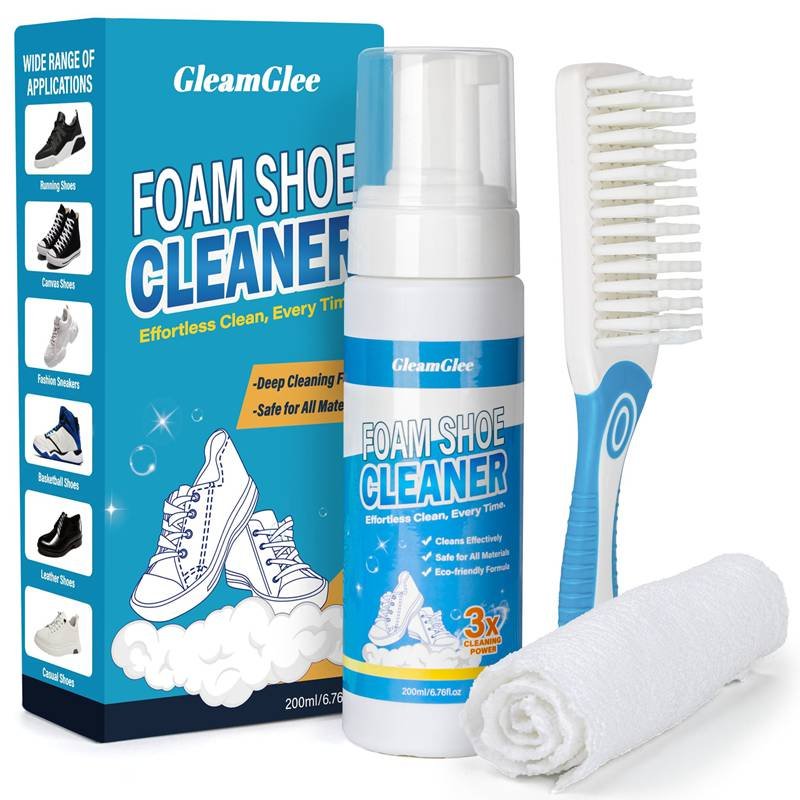
EPN’s foam shoe cleaner is designed around this type of routine. The formula can be applied directly to dirty areas and used without soaking the shoe in water. It is intended for canvas as well as several other common footwear surfaces, and the complete care set combines the cleaner with a multi-purpose cleaning tool and microfiber towel. The practical value is not simply stronger cleaning; it is having a repeatable system that makes small maintenance jobs easier to complete before dirt becomes heavily established.
Which Features Matter Most?
Product comparison becomes much more useful when it focuses on functions that the owner can observe rather than broad claims such as professional-grade or maximum strength. For white canvas, the most important characteristics are controllable application, compatibility with woven fabric, the ability to lift oily and particulate contamination, simple residue removal, and a drying process that does not require the entire shoe to remain wet for a long period.
| Feature | Practical Value for White Canvas | What to Look For |
|---|---|---|
| Controlled application | Reduces unnecessary saturation | Foam or targeted dispensing |
| Canvas compatibility | Helps protect woven uppers | Canvas included in supported materials |
| Oil-lifting ability | Helps with food and urban grime | Balanced surfactant cleaning |
| Easy residue removal | Reduces dull-looking finish | Wipe-clean process |
| Fast drying | Limits long periods of dampness | Low-moisture routine |
| Multi-material use | Useful for mixed sneakers | Canvas, rubber, PU, plastic compatibility |
| Complete cleaning system | Improves repeatability | Cleaner, cleaning tool, microfiber towel |
A complete kit can also improve consistency because shoe cleaning is both chemical and mechanical. The formula loosens contamination, the cleaning tool helps separate soil from the surface, and the towel removes the resulting dirty residue. A strong formula paired with an overly abrasive tool can still produce poor results, just as an excellent brush cannot compensate for a cleaner that leaves heavy residue behind.
For everyday owners, the easiest comparison question is therefore not which product sounds strongest. It is which product allows the shoe to be cleaned with the least unnecessary moisture, the least aggressive friction, and the least uncertainty. That is a more useful standard for repeated maintenance, particularly when the shoes are worn often and need to be refreshed many times over their service life.
Should One Cleaner Handle Every Shoe?
Versatility is helpful, especially in households where one shelf may include canvas sneakers, leather trainers, rubber-soled casual shoes, PU school footwear, knit running shoes, and suede details. A broadly compatible cleaner reduces the number of products that need to be stored and makes regular maintenance easier. However, multi-material compatibility does not mean every material should be cleaned with identical pressure, tools, or amounts of moisture.
Canvas should normally be treated with controlled agitation because excessive scrubbing can roughen the weave. Smooth rubber can tolerate firmer wiping, while suede and brushed materials require a much more delicate approach to preserve surface texture. Printed logos, coated trim, and vintage materials may also react differently from newly manufactured fabric. The formula is only one part of the process; technique determines whether that formula is being used appropriately.
A patch test remains one of the most reliable habits for limited-edition, older, custom-printed, or unfamiliar footwear. Apply a small amount of cleaner to a discreet area, remove it using the intended method, and allow it to dry fully before continuing. A few extra minutes of testing can prevent visible changes that are difficult to reverse, particularly on shoes where decorative finishes matter as much as basic cleanliness.
How Do You Clean White Canvas Shoes Safely?
Clean white canvas shoes safely by removing dry dirt first, checking material compatibility, working on small sections, using light agitation, wiping away contaminated foam, and letting the shoes air-dry naturally. Avoid assuming that more cleaner or harder scrubbing produces better results. The safest routine uses only the amount of moisture and mechanical action needed to separate dirt from the fibers without stressing the shoe unnecessarily.
How Should You Prepare the Shoes?
Preparation begins before any cleaner reaches the canvas. If mud, sand, or loose dust is still dry, remove as much as possible with a soft tool. This reduces the quantity of contamination that later becomes suspended in foam and prevents dry particles from being spread across the textile. Particular attention should be paid to seams, the tongue, the base of the upper, and the line where canvas meets rubber because fine debris often collects in these areas.
Laces can be removed when they block access to the tongue or eyelet area. They usually accumulate hand oils and dirt differently from the upper, so separate cleaning often gives a more even final appearance. The shoe should then be inspected for non-canvas components such as leather logos, suede patches, printed graphics, decorative coatings, weakened stitching, or glued ornaments. These details can influence how aggressively a particular section should be treated.
A small compatibility test is useful when the cleaner or shoe construction is unfamiliar. Apply a modest amount to a hidden area and allow it to dry before treating the visible upper. This is particularly valuable for vintage sneakers, custom prints, and limited editions. Good shoe care is not about assuming that every white surface will behave the same way; it is about reducing avoidable uncertainty before the cleaning becomes difficult to reverse.
How Should Foam Be Applied?
Use enough foam to cover the dirty area, but not so much that the shoe is buried under product. Working section by section gives better control and makes it easier to see whether soil is lifting. A practical sequence might begin with the toe, continue to one side panel, move to the opposite side, and finish around the tongue and seams. This prevents dirty foam from remaining on the shoe longer than necessary.
Agitation should be gentle. Small circular or short back-and-forth movements are usually enough to work cleaner across the surface. The aim is to loosen soil from between the fibers, not to flatten or fray the weave. When the foam becomes gray or brown, it has already collected contamination. Continuing to move the same dirty foam around can simply redistribute what has been removed.
Wipe the treated area with a clean microfiber towel and fold the towel frequently so a fresh section contacts the canvas. If a stain remains, another controlled treatment is usually preferable to doubling the pressure. Two short cleaning cycles create less mechanical stress than one extended session of aggressive scrubbing. For routine maintenance, this technique allows selected areas to be refreshed without putting the whole shoe through a complete wash.
How Much Moisture Is Too Much?
There is no universal amount of liquid that suits every canvas sneaker because shoe size, textile weight, lining, construction, and contamination levels vary. A useful practical rule is that the fabric should be damp enough for the cleaner to work, but not so saturated that liquid moves freely through the upper or collects inside the shoe. Excess water provides little benefit when only a small area needs treatment.
If approximately one fifth of the visible upper is dirty, there is normally no reason to soak the other four fifths simply because traditional washing methods involve full coverage. Targeted cleaning protects clean areas from unnecessary friction and limits the amount of moisture reaching padding, insoles, reinforcement materials, and adhesive joints. This is one of the main reasons low-moisture foam routines are convenient for frequent maintenance.
Heavy contamination can justify a more extensive cleaning process, but even then, control matters. Owners should be able to see how the surface is responding rather than immersing the entire shoe and discovering the result afterward. The best level of moisture is the minimum amount that allows soil to be lifted efficiently and removed cleanly. Using more water than necessary does not automatically create a cleaner result.
How Should the Shoes Dry?
Drying is part of the cleaning process, not an afterthought. Damp canvas often appears darker, patchier, or slightly gray while moisture remains in the weave, so the final result should only be judged after the shoe has dried completely. Place the sneakers in a ventilated indoor area at normal room temperature rather than using intense heat to speed up evaporation.
If the upper became noticeably damp, clean white paper can be placed loosely inside the toe area to help retain shape and absorb some internal moisture. The paper should be changed if it becomes wet. Highly printed newspaper is not ideal because ink may transfer under damp conditions. Laces should also be fully dry before being reinstalled so that the tongue and eyelet area are not closed around trapped moisture.
Hair dryers, radiators, tumble dryers, heaters, and other strong heat sources are unnecessary for ordinary canvas maintenance. Different materials within the shoe may respond to heat at different rates, and rapid drying can affect shape, coatings, or bonded areas. A fast-drying foam can reduce the total moisture introduced during cleaning, but the safest approach is still to let the remaining moisture evaporate naturally and evenly.

How Do You Remove Stains and Yellowing?
Stains should be treated according to what caused them. Dry mud should be brushed away before wet cleaning, oil requires a cleaner that can lift greasy contamination, and grass or urban grime may respond better to repeated gentle treatments than to harder scrubbing. Yellowing needs separate diagnosis because it can result from residue, aging, oxidation, previous cleaning, or environmental exposure rather than ordinary surface dirt.
How Do You Treat Common Stains?
Mud should normally be approached in two stages. Thick wet mud spreads easily, so allowing loose material to dry and brushing away as much as possible first reduces the amount that needs wet treatment. Once surface particles are gone, the remaining mark can be treated with foam or another suitable cleaner. This sequence avoids turning a localized muddy patch into a larger area of dirty moisture.
Oil behaves differently because it binds to textile fibers rather than simply resting between them. Cooking oil, road residue, bicycle grease, lotions, and food stains may leave darker patches even after dry dirt has been removed. These marks benefit from a cleaner that can emulsify or lift oily contamination. Mechanical force alone rarely solves the problem and can instead push residue deeper into the weave or roughen the fabric.
Grass marks combine plant pigments, moisture, and often fine soil. Several short treatment cycles may work better than one long scrub. Apply cleaner, agitate gently, remove the contaminated foam, and inspect the area once it begins to dry. The same principle works for mixed urban grime, which often contains both dust and oily components. Early attention is valuable because fresh contamination is generally easier to remove before it becomes part of the overall dull appearance of the shoe.
| Stain Type | Best First Step | Follow-Up Approach | Avoid |
|---|---|---|---|
| Dry mud | Brush away loose particles | Controlled foam cleaning | Wetting thick mud immediately |
| Oil or grease | Blot fresh residue | Use oil-lifting cleaner | Hard dry scrubbing |
| Grass | Remove surface dirt | Repeat gentle treatment | Excessive pressure |
| Food marks | Blot rather than spread | Targeted spot cleaning | Rubbing stain outward |
| Urban grime | Dry brush first | Clean section by section | Saturating the whole upper |
| Rubber scuffs | Remove grit | Treat rubber separately | Abrading nearby canvas |
How Should Rubber Edges Be Cleaned?
The rubber sidewall and toe cap can make a shoe look dirty even when the canvas is relatively clean. These areas collect dark transfer marks from flooring, curbs, pedals, and other footwear, but because rubber is smoother and less absorbent than canvas, contamination usually stays closer to the surface. It can therefore tolerate a somewhat different cleaning technique, although printed stripes, logos, and the canvas-rubber junction still require care.
Begin by removing grit that could create abrasion. Apply cleaner to a small rubber section and work along the sidewall rather than pushing contamination upward onto the textile. A microfiber towel can then remove the loosened gray residue. If a specialized abrasive pad is used on hard rubber, keep it away from the woven canvas because a tool that is harmless on molded rubber can quickly fuzz textile fibers.
Treating rubber separately also improves the visual result. Freshly cleaned canvas beside a gray midsole can still make the shoe look old. Conversely, a bright rubber edge cannot compensate for dull fabric. The most natural restoration comes from recognizing that one sneaker contains several surfaces and giving each one the degree of cleaning it needs rather than applying one universal pressure level to the entire shoe.
Why Does Yellowing Return?
Yellowing sometimes seems to return because the material responsible for discoloration was never completely removed. Oily contamination can remain within the weave even after the surface initially looks brighter, and cleaner residue can produce a similar effect once the fabric dries. Adding more product repeatedly without removing the previous contaminated solution can leave white canvas looking dull or slightly stiff rather than truly clean.
Natural aging also matters. Textile fibers, rubber compounds, coatings, and adhesives can all change color over time, especially on older footwear. A ten-year-old sneaker may not return to the same optical white as a new pair without using aggressive restoration methods, and those methods can create trade-offs in texture, printing, or material strength. An experienced approach distinguishes removable dirt from permanent or age-related change.
For routine maintenance, the objective should be clean, even-looking canvas rather than chasing the brightest possible shade at any cost. Thorough residue removal, modest amounts of cleaner, controlled drying, and regular care usually provide a better long-term balance. Formulas designed to help limit oxidation-related discoloration can support the process, but no cleaning product can completely stop the natural aging of all footwear materials.
When Should You Stop Cleaning?
One of the most useful shoe-care skills is knowing when additional cleaning is unlikely to improve the result. If loose soil has been removed and a mark remains after two or three controlled treatments, increasing pressure or introducing stronger chemistry may create diminishing returns. The remaining discoloration might come from fiber damage, transferred dye, oxidation, aged adhesive, or a permanent change in the material rather than removable contamination.
Allow the area to dry fully before making that decision. Wet canvas can appear darker and more uneven than it will once dry, so repeated treatment during the same damp session can lead to unnecessary work. This is especially important with white shoes because owners naturally focus on small changes in color and may continue cleaning even after most removable soil has already been taken away.
Vintage and collectible shoes deserve even more restraint. A small amount of even aging may be preferable to a brighter surface with fuzzy canvas, weakened printing, or damaged trim. The purpose of maintenance is to preserve appearance and usability together. A structurally sound, clean shoe with a slight natural patina is often a better outcome than an aggressively whitened shoe whose materials have been unnecessarily stressed.
Are Shoe Cleaners Better Than DIY Methods?
Dedicated shoe cleaners are often easier to control and more repeatable than household mixtures, but mild DIY methods can still work on ordinary canvas dirt. The main difference is consistency. Prepared cleaners offer a known formulation and targeted application, while soap, baking soda, peroxide, bleach, or other household methods require more judgment about concentration, moisture, residue, and the different materials used in the sneaker.
Is Mild Soap Enough?
For lightly soiled white canvas, mild soap can be entirely adequate. A small amount diluted in water helps loosen ordinary dust, surface grime, and some light marks, which explains why traditional soap-and-water cleaning remains common. The main challenge is not whether soap can clean canvas; it is whether the concentration, moisture level, and residue removal are controlled well enough to produce an even result.
Consumers commonly estimate detergent by eye, and dirty shoes can encourage the instinct to add more. Excess soap creates more foam but may also require more wiping or rinsing. If residue remains in absorbent white canvas, the surface may look dull once dry. Traditional cleaning can also introduce more moisture because the brush or cloth is repeatedly dipped into solution throughout the process.
For occasional cleaning, mild soap is practical and inexpensive. For people maintaining several pairs or dealing with frequent small stains, a dedicated foam cleaner may be more convenient because it eliminates mixing and allows the product to be placed exactly where needed. The meaningful comparison is therefore not whether household soap works. It is whether the method gives the owner enough control to clean efficiently without creating unnecessary saturation or residue.
What About Baking Soda and Peroxide?
Baking soda is popular because it is inexpensive, widely available, and mildly abrasive. It can help loosen certain surface deposits when used carefully, particularly on white materials. The limitation is that dried paste needs to be removed thoroughly. Powder trapped in the canvas weave can leave the surface chalky, stiff, or uneven, which means a whitening attempt can sometimes create a different cleaning problem.
Hydrogen peroxide is also used in white-fabric care because of its oxidizing properties. Household concentrations are commonly around 3%, but suitability still depends on the complete shoe, not only the white canvas. Colored thread, prints, rubber, coatings, and aged adhesives may respond differently, which is why a small compatibility test remains useful before treating a visible area.
These household methods can make sense for occasional restoration when the owner is comfortable with measuring, mixing, contact time, and cleanup. They are less convenient for quick maintenance after commuting, school, or everyday wear. Ready-to-use foam becomes more practical when the objective is to remove ordinary grime repeatedly with minimal setup rather than perform a stronger whitening treatment only a few times each year.
Is Bleach Worth the Risk?
Bleach can brighten suitable white textiles under controlled conditions, but it should not be treated as a universal answer for every white canvas sneaker. A shoe that appears simple from the outside may contain colored stitching, logos, synthetic backing, rubber compounds, foam, metal hardware, and multiple adhesives. A treatment that affects the canvas acceptably can still influence another component in a less desirable way.
Where the footwear manufacturer specifically permits diluted bleach, those instructions should take priority over improvised internet ratios. If there is no guidance, beginning with a milder cleaning method is generally more sensible for regular maintenance. Strong oxidizing chemistry is rarely necessary for ordinary road dust, fresh mud, or light food marks, and repeated use introduces more variables than a gentle spot-cleaning routine.
Bleach also cannot solve every form of yellowing. Aged rubber, adhesive migration, material oxidation, and permanent dye transfer may remain even after aggressive whitening. The owner should therefore diagnose the problem before escalating treatment. Good maintenance aims to preserve the shoe while improving appearance, not simply apply the strongest available chemistry whenever white materials begin to look dull.
Are Washing Machines Better?
Machine washing is attractive because it requires little hands-on effort, but it also gives the owner less control over saturation and mechanical movement. Canvas fabric itself can handle water reasonably well in many contexts, yet a sneaker is more complex than a piece of fabric. It includes bonded joints, rubber, internal reinforcement, cushioning, stitching, printing, and several components that may react differently to a full washing cycle.
Some shoes are designed to tolerate machine cleaning, while others are specifically intended for hand cleaning. The manufacturer’s care instructions should therefore be checked before putting any sneaker into a washing machine. Even when machine cleaning is permitted, the process may still be unnecessary if only one small area is stained. Soaking every component because the toe has one muddy mark is often more intervention than the shoe actually needs.
| Method | Typical Use | Moisture Level | Main Advantage | Main Limitation |
|---|---|---|---|---|
| Dry brushing | Loose dust | Very low | Fast and low risk | Limited on embedded stains |
| Mild soap | General light dirt | Moderate | Cheap and accessible | Requires mixing and residue control |
| Foam cleaner | Regular maintenance | Low to moderate | Targeted and repeatable | Formula must suit the material |
| Baking soda paste | Selected dull areas | Moderate | Inexpensive | Requires careful residue removal |
| Machine washing | Approved washable shoes | High | Low manual effort | Less control over shoe construction |
| Bleach treatment | Suitable white materials | Variable | Strong whitening potential | Higher compatibility risk |
For most routine white-canvas maintenance, controlled hand cleaning offers the simplest balance. It allows the owner to treat only the dirty sections, observe the result as cleaning progresses, and stop before unnecessary moisture or friction is introduced into parts of the shoe that were already clean.
How Do You Keep White Canvas Shoes Clean Longer?
White canvas shoes stay presentable longer when visible stains are treated early, loose dust is removed between deeper cleans, unnecessary soaking is avoided, and shoes are stored only after they are dry. Maintenance should reflect actual use rather than a rigid schedule. Daily commuters may need frequent spot care, while occasionally worn pairs may require little more than dust removal and proper storage.
How Often Should You Clean Them?
There is no perfect cleaning interval because use conditions vary too widely. A commuter walking several kilometers every day will accumulate contamination more quickly than a collector rotating ten pairs. Parents may need to clean school shoes after muddy outdoor play, while someone who wears white canvas only on dry weekends may go much longer between full cleaning sessions. The shoe’s appearance and exposure level are more useful than a fixed date.
A practical system uses several levels of maintenance. After wear, spend less than a minute checking for visible marks, mud, food, grass, or scuffs. Every week or two, inspect frequently worn pairs more closely around the toe, seams, tongue, and rubber edge. A deeper clean can then be performed when the overall upper begins to lose brightness rather than automatically washing the shoes every few days.
- After heavy wear or rain, check for fresh contamination before storage.
- Every 1–2 weeks, inspect frequently worn white pairs for gradual buildup.
- Perform deeper cleaning when the whole upper looks dull rather than following an inflexible calendar.
- Treat isolated stains as early as practical instead of waiting for the next full cleaning session.
This system avoids both extremes. Waiting too long allows contamination to settle deeply, while cleaning constantly exposes fabric to unnecessary friction and moisture. The most sustainable routine is the one that keeps the shoes presentable without treating every small speck as a reason for complete washing.
What Should You Do After Wear?
The most effective post-wear habit is observation rather than automatic cleaning. If the shoes are only dusty, a quick pass with a soft dry tool may be sufficient. If there is a fresh splash, food mark, paw print, grassy smear, or oily spot, short targeted cleaning is usually easier while the contaminated area remains small. A two-minute response can prevent a future thirty-minute restoration session.
Damp footwear should be allowed to dry before being placed into enclosed storage. Moisture often remains around the tongue, lining, seams, and insole even when the outside feels nearly dry. Closing the shoe into a box or crowded cabinet too soon can slow evaporation. Dirty soles should also be kept from pressing against clean white canvas, because simple contact transfer causes many of the unexplained gray marks owners find later.
Convenience makes a noticeable difference in whether maintenance actually happens. Keeping foam cleaner, a suitable cleaning tool, and a clean microfiber towel together near the entryway turns shoe care into a short routine instead of a project requiring supplies from several rooms. A complete kit is useful for exactly this reason: the easier the process is to start, the less likely stains are to be ignored until they become difficult.
How Should White Canvas Be Stored?
Storage should be dry, clean, and reasonably ventilated. White canvas does not need complicated environmental controls for everyday use, but prolonged exposure to dampness, strong heat, direct sunlight, dust, and contact with dirty surfaces can undermine the effort spent cleaning. Shoes should be completely dry before they are stored for extended periods, particularly if they will be kept in closed boxes or cabinets.
If a soft canvas shoe tends to collapse, lightly supporting the toe helps preserve its shape. Clean white paper can work for casual storage, while collectors may prefer dedicated shoe forms or archival-quality tissue. Overstuffing should be avoided because it can place constant pressure on seams and the upper. Strongly printed paper and dark dyed materials should not remain pressed against white canvas in humid conditions because color transfer is possible.
Transparent boxes make visual inspection convenient, while original shoe boxes often provide better light protection. Neither is automatically best in every situation. What matters more is whether the environment stays dry, clean, and stable. For frequently worn shoes, an open rack may be completely adequate as long as the pair is not placed beside wet or heavily soiled footwear. Good storage protects the result of cleaning rather than trying to compensate for poor maintenance later.
Do Collectors Need Different Care?
Collectors usually need less frequent wet cleaning but more careful observation. A display pair may never encounter mud, food, or road grime, yet it can still gather fine dust and experience slow material aging. In that situation, dry maintenance should normally come first. Removing dust gently is preferable to repeatedly applying liquid products simply because the sneaker is valuable or expected to remain visually perfect.
When a collectible pair does need cleaning, restraint matters. Limited editions and older sneakers may contain prints, coatings, aged adhesives, or rare materials that do not respond like a new mass-market canvas shoe. Patch testing and low-moisture treatment become especially important. For resale preparation, aggressively whitening every sign of age can also reduce value if the process alters texture, printing, or original material character.
Owners with larger rotations often benefit from a cleaner compatible with several footwear materials because a single collection may include canvas, rubber, leather, mesh, PU, knit, and suede. Even then, the same application pressure should not be used on every surface. A versatile formula simplifies storage and routine care, but judgment remains more important than the number of products on the shelf.
Long-term white-canvas care can therefore be reduced to a straightforward sequence: remove loose soil, treat fresh stains, use only the amount of cleaner required, remove contaminated residue, allow the shoes to dry completely, and store them in a clean environment. White sneakers stay presentable not because they are washed constantly, but because dirt is rarely given enough time to become part of the material.

Conclusion
A well-maintained pair of white canvas shoes rarely needs dramatic restoration. Most of the visual improvement comes from small decisions made earlier: brushing away dirt before it becomes wet, dealing with oily marks before they migrate through the fibers, cleaning rubber separately from textile, and letting moisture evaporate naturally. Those habits preserve not only whiteness but also the texture and overall condition of the sneaker.
For owners who prefer a ready-to-use routine, a fast-drying foam cleaner combined with a suitable cleaning tool and microfiber towel can make those habits easier to maintain. EPN’s shoe-care system is designed around controlled foam application across common footwear materials, including canvas and rubber, so routine spot cleaning can be completed without turning every dirty mark into a full washing session. The product is most useful when it supports good technique rather than trying to replace it.
The important point is simple: white canvas does not need constant aggressive cleaning. It needs timely maintenance. Once the cleaning process becomes quick, predictable, and easy to repeat, keeping everyday sneakers presentable is much less demanding than most owners expect.

FAQ
What is the best cleaner for white canvas shoes?
The best cleaner for white canvas shoes is usually a mild, material-compatible product that can remove dust, oily grime, and common stains without requiring the entire shoe to be soaked. Foam cleaners are useful for regular care because they can be applied to one dirty section at a time and wiped away after agitation. Whatever formula is chosen, a small compatibility test and gentle technique are more important than choosing the strongest cleaner available.
Can you use shoe cleaner on canvas shoes?
Yes, provided the cleaner specifically lists canvas or textile footwear among its compatible materials. Canvas is absorbent, so using a product designed only for hard or non-porous surfaces can create unnecessary residue or uneven wetting. Apply a modest amount to a discreet area first, allow it to dry, and then proceed in sections. Gentle agitation and complete removal of dirty residue usually produce better results than heavy scrubbing or saturating the whole shoe.
How do you clean white canvas shoes without turning them yellow?
Use controlled amounts of cleaner, avoid leaving heavy detergent residue in the fibers, wipe away contaminated foam carefully, and let the shoes dry naturally at room temperature. Yellowing can have several causes, including remaining soil, oxidation, aged materials, excessive product, and uneven drying. If a shoe looks more yellow after cleaning than before, review the cleaning and drying process before applying a stronger whitening treatment that may create additional compatibility risks.
Can you clean white canvas shoes without water?
A no-water or low-water foam routine can clean many everyday stains without rinsing the shoe under running water or immersing it. The foam itself contains moisture needed for cleaning, but the user can control where that moisture goes. Apply product to the affected section, work it gently, and remove dirty foam with microfiber. This approach is particularly convenient for regular maintenance when only a toe, side panel, or rubber edge needs attention.
Is baking soda or shoe cleaner better for white canvas?
Neither method is universally better. Baking soda is inexpensive and can provide mild abrasive action, making it useful for selected restoration tasks, but dried powder has to be removed carefully from the weave. A purpose-made shoe cleaner is often more convenient for regular maintenance because the formulation is ready to use and easier to apply consistently. For frequently worn white shoes, convenience and predictable residue removal usually matter more than maximum whitening strength.
Can white canvas shoes go in the washing machine?
Some canvas footwear can tolerate machine washing, while other shoes are specifically designed for hand cleaning. The decision should be based on the shoe manufacturer’s care instructions because the complete sneaker contains more than canvas. Adhesives, rubber, internal reinforcement, cushioning, prints, and decorative components are all exposed during a washing cycle. If only a small section is dirty, targeted hand cleaning usually offers more control and avoids soaking parts of the shoe that do not need treatment.
How often should you clean white canvas sneakers?
Cleaning frequency depends on how often the shoes are worn and the environments they encounter. Frequently used commuting or school sneakers may benefit from quick inspections every few wears and spot cleaning whenever fresh stains appear. More extensive cleaning is usually necessary only when the entire upper begins to look dull. The objective is to remove contamination before it becomes deeply embedded without cleaning so often that repeated moisture and friction create unnecessary wear.
Share:
Table of Contents
Here, creating your adhesives glue & removal cleaner collection is no longer a barrier—it’s a collaborative journey where GleamGlee helps brands and businesses transform their vision into durable, certified, and market-ready solutions.
Partner with GleamGlee
Join hundreds of global partners who trust GleamGlee for adhesives and cleaners that combine innovation, compliance, and speed. Our vertically integrated system—from R&D to warehouse—guarantees consistent performance and reliable delivery.
Whether you’re sourcing FBA-ready stock or developing your own formula, our team provides unmatched technical support and responsive service.