Skip to content

DIY Flower Crowns for Kids and Adults: A Refined Guide
Your trusted adhesives glue & cleaner manufacturer

A flower crown may look effortless once it is finished, but anyone who has tried making one knows that the difference between a pretty crown and a wearable crown comes down to the details. The wire must sit comfortably, the flowers need to stay balanced, and every attachment point should be secure without becoming bulky or visible. Those details matter whether the crown is being made for a child’s birthday party, a summer family activity, a wedding, a festival, or a professional photoshoot. The good news is that flower crowns are not difficult once the construction is approached in the right order. You do not need advanced floral design training, and you do not need an oversized list of supplies. What matters most is choosing flowers that suit the occasion, building a flexible base, using the right attachment method for each material, and testing the finished crown before it is worn for an extended period.
A DIY flower crown is made by measuring the wearer’s head, shaping a comfortable base, preparing fresh or artificial flowers, planning the arrangement, and securing each element with floral wire, floral tape, floral adhesive, or a combination of these methods. Lightweight flowers, balanced placement, protected wire ends, controlled adhesive use, and adjustable ribbon ties help the crown remain attractive, secure, and comfortable for both kids and adults.
Imagine a child making a daisy crown at a garden party while an adult nearby creates a more refined spray-rose design for a wedding photo session. The materials may look different, but the same practical principles are working underneath both crowns. Once you understand sizing, flower weight, attachment strength, and how different floral materials behave, you can adapt the same basic technique for dozens of styles without relying on complicated professional tools or overly rigid instructions.
What Do You Need to Make a Flower Crown?
A dependable flower crown needs a flexible base, appropriate flowers or greenery, cutting tools, and a suitable attachment method. Floral wire provides structure, floral tape covers and consolidates joins, while floral adhesive helps secure small blooms, decorative leaves, ribbons, petals, and difficult-to-wire accents. The exact combination depends on whether the design uses fresh, faux, dried, or preserved flowers.
Choosing the Base
The crown base carries the weight of the entire arrangement, so it should be flexible enough to shape but strong enough to resist collapsing once flowers are attached. Floral wire in approximately the 20–24 gauge range is commonly used for lightweight wearable floral work because it can usually be bent by hand while still holding a circular form. A single strand works for minimal crowns, while a reinforced double-wire base is often more reliable for adult crowns with several medium or large focal flowers.
A ribbon-backed base is particularly practical when exact sizing is difficult. Instead of permanently closing the wire into a complete circle, form a small loop at each end and thread ribbon through both loops. This gives the wearer several centimeters of adjustment and makes the crown easier to put on without disturbing styled hair. It is useful for weddings, workshops, children’s activities, or any situation where several people may need to wear crowns made from a similar base.
Headbands can also work well for beginners, especially when using faux flowers. They remove most of the sizing work and make the finished piece easy to put on and remove. The trade-off is that they create more of a floral headband appearance than a traditional circular flower crown.
| Base Type | Typical Use | Main Strength | Main Limitation |
|---|---|---|---|
| Single floral wire | Lightweight fresh or faux crowns | Flexible and discreet | Can deform under heavy flowers |
| Double floral wire | Fuller adult crowns | Better structural stability | Slightly bulkier |
| Wire with ribbon ties | Kids, weddings, workshops | Adjustable fit | Ribbon remains visible |
| Headband | Faux flowers, beginners | Easy sizing and wearing | Less traditional crown shape |
Selecting Flowers and Greenery
The easiest flower crowns are rarely made entirely from oversized blooms. A balanced design usually combines focal flowers, smaller secondary flowers, filler blooms, and greenery. Spray roses, small daisies, wax flowers, baby’s breath, statice, small chrysanthemums, and light foliage are practical choices because they provide visual detail without creating excessive weight or requiring large attachment points.
Large flowers can still be used, but they should usually be treated as focal points rather than repeated continuously around the entire crown. Three carefully placed medium flowers often create a more polished result than eight bulky blooms packed closely together. Extra weight makes a crown more likely to slide forward, rotate to one side, or create pressure near the temples.
Fresh flowers should be hydrated and free from damaged petals before assembly. Faux flowers should be checked at the joint where the head connects to the stem because some artificial flowers separate easily when handled. Dried flowers require especially gentle preparation because brittle stems can crack under tight wrapping. Greenery also plays an important structural role by covering exposed wire, softening transitions, and filling visual gaps without adding much weight.
Choosing Attachment Tools
Wire, floral tape, and floral adhesive each solve a different problem. Wire is best for structural support and medium-to-large flowers that need to resist movement. Floral tape helps bind stems, hide wire, and produce a smoother surface. Floral adhesive becomes valuable when a flower head, petal, leaf, ribbon detail, or artificial accent has too little stem to wire neatly.
Many successful crowns use two or three attachment methods together. A larger flower may be wired to the base, nearby greenery may be secured with floral tape, and small decorative blooms may be bonded with a clear floral adhesive. This produces a cleaner and more stable result than trying to force every material into the same attachment method.
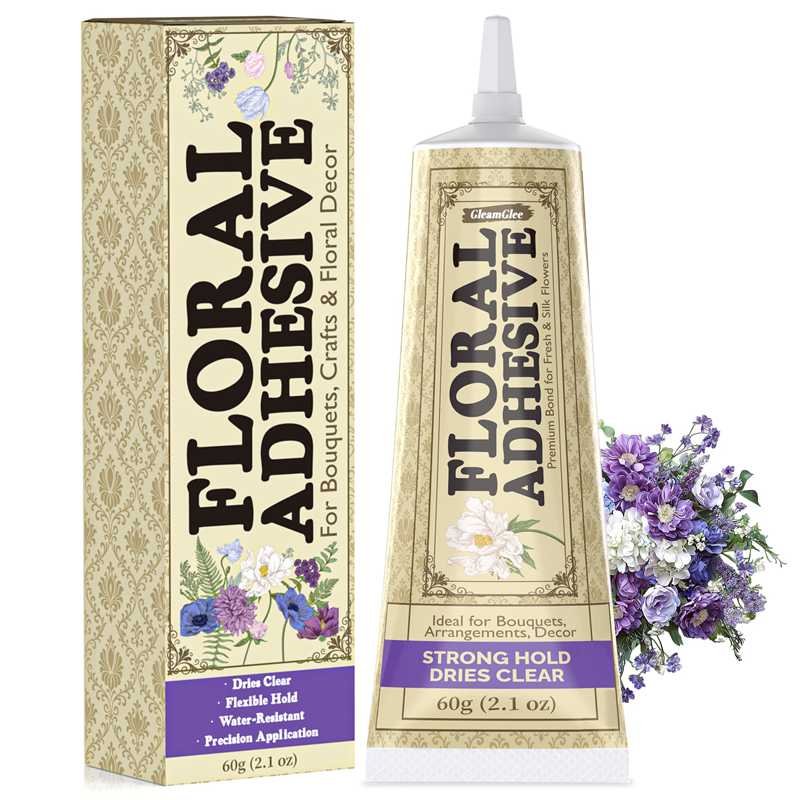
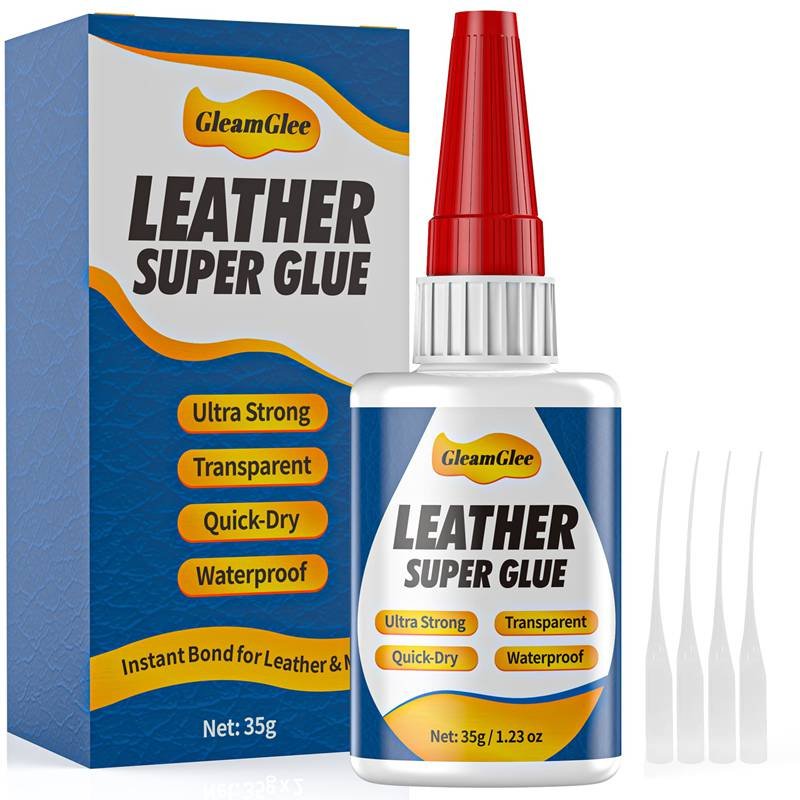
Controlled application matters more than glue quantity. A precision metal nozzle is useful because it allows a small amount of floral adhesive to be placed directly onto the flower base or contact point. A clear, flexible floral adhesive is especially useful where the crown needs to bend slightly during fitting, wearing, or removal. Cold-applied adhesive also avoids the heat of a glue gun when delicate floral materials are being handled.
Preparing the Work Area
A well-organized workspace can shorten assembly time and reduce unnecessary handling of fresh flowers. Shape the wire base, prepare ribbon, arrange tools, and organize the flower groups before removing fresh stems from water. Keep focal flowers, filler blooms, greenery, ribbons, and decorative accents in separate groups so you can see what remains available as the design develops.
A practical workstation usually includes floral wire, wire cutters, sharp floral scissors, floral tape, ribbon, adhesive, absorbent paper, and a container for cut stems. When children are participating, it is helpful to separate the creative area from the technical area. Children can select colors and arrange flowers while an adult handles wire cutting and adhesive application.
Prepare slightly more filler and greenery than you expect to need. Small gaps often become more noticeable near the end of assembly, and extra lightweight material makes it easier to finish the crown without adding another large flower simply because nothing else is available.

Which Flowers Are Best for Flower Crowns?
The best flowers depend on appearance, wear time, handling, and storage. Fresh flowers provide natural texture and fragrance, faux flowers offer durability and reuse, while dried or preserved flowers create lightweight rustic designs. For most wearable crowns, small and medium blooms are easier to balance and usually more comfortable than designs dominated by heavy, oversized flowers.
Fresh Flowers
Fresh flowers are the natural choice when softness, fragrance, and botanical variation are important. Weddings, engagement sessions, garden ceremonies, bridal events, and formal photos often benefit from the organic appearance of real flowers. Even flowers from the same variety differ slightly in shape, size, and petal direction, which gives a crown a less manufactured and more naturally styled appearance.
The limitation is moisture loss. Once flowers are removed from their water source, they begin to dehydrate. How quickly this becomes visible depends on the flower variety, room temperature, humidity, conditioning, and handling. Thin-petaled flowers may lose their shape faster than hardy filler flowers, so design decisions should consider durability as well as appearance.
Prepare fresh crowns as close to the wearing time as practical. Structural components such as wire bases and ribbon closures can be completed in advance, allowing the floral assembly to happen efficiently. When very short stems or delicate accents cannot be wired neatly, a floral adhesive designed for flower work can provide a more discreet attachment point without adding bulky wraps.
Faux Flowers
Artificial flowers are usually the easiest choice for beginners, children, workshops, festivals, costume projects, and reusable event accessories. Because they do not wilt during assembly, they can be repositioned several times before the final design is secured. This removes the time pressure that comes with fresh flowers and makes them convenient for crowns that need to be prepared days or even weeks before an event.
Faux flowers also tolerate a wider range of attachment techniques. Stems can be cut short, flower heads can be removed from thick plastic stems, and decorative pieces can be glued directly to wire, ribbon, fabric, or a headband. Small artificial flower heads are particularly suitable for precision adhesive because they often have little usable stem for wiring.
Quality still matters. Some artificial flowers have rigid plastic centers that create bulky contact points, while higher-quality silk-style flowers tend to be softer and easier to integrate into wearable designs. Before assembly, gently pull each flower head to check whether it separates easily from the stem. Reinforcing weak joints before building the crown is much easier than repairing them after the crown has been completed.
Dried and Preserved Flowers
Dried flowers work well for rustic weddings, autumn events, cottage-inspired styling, bohemian photography, and keepsake crowns. Baby’s breath, statice, lavender, grasses, seed heads, and lightweight dried foliage are popular because they retain texture while remaining relatively light. Their visual character can be more delicate and architectural than either fresh or artificial blooms.
The main challenge is brittleness. A fresh stem can bend; a dried stem may snap. Instead of forcing dried flowers tightly around the base, use small directional bundles and secure them with gentle tape tension or small adhesive points. Very small dried flower heads are often easier to bond than to wire individually.
Preserved flowers occupy a useful middle ground. They often retain more softness and natural form than fully dried materials while lasting longer than untreated fresh flowers. They should still be protected from moisture, crushing, and repeated bending, particularly when the crown is intended as a keepsake rather than a one-day accessory.
| Flower Type | Best Use | Handling Level | Reusability |
|---|---|---|---|
| Fresh | Weddings, portraits, formal events | Moderate | Low |
| Faux | Kids, festivals, workshops | Easy | High |
| Dried | Boho designs, keepsakes | Delicate | Medium |
| Preserved | Premium prepared-ahead designs | Moderate | Medium |
Matching Flowers to the Wearer
Flower scale should match both the wearer and the activity. Children generally look and feel more comfortable in crowns made from smaller daisies, miniature roses, filler flowers, and lightweight faux blooms. Several large peonies or oversized artificial roses may look impressive on a table but can quickly become heavy on a smaller head.
Adults have more room for larger flowers, but balance is still more important than flower count. A dramatic festival crown may intentionally use oversized artificial blooms, while a wedding crown often looks more refined with a limited number of focal flowers supported by smaller blossoms and greenery.
Consider weight distribution as carefully as color placement. Five lightweight faux blooms may weigh less than one moisture-heavy fresh flower. If every large flower is positioned on the same side, the crown may rotate even when the total weight is moderate. Before finishing, hold the crown at its center and check whether one side consistently drops lower than the other.
How Do You Size a Flower Crown?
Size a flower crown by measuring the exact line where it will sit on the wearer’s head rather than relying on a generic age chart. Shape the base to that measurement and build in modest adjustability when possible. Ribbon closures are especially useful because they accommodate hairstyle changes and small sizing differences while keeping the crown secure without pressing tightly against the forehead or temples.
Measuring the Head
Use a soft tailor’s tape and measure around the actual position where the crown will sit. Some crowns rest across the upper forehead, while others sit farther back around the hairline. These positions can produce noticeably different measurements, so measuring in the correct location is more reliable than using a standard circumference from a sizing chart.
The measuring tape should rest comfortably against the head without being pulled tight. If the wearer plans to have braids, curls, extensions, or an updo, measure with a similar amount of hair volume whenever possible. A finished hairstyle can change how the crown sits and may reduce the usable space beneath the base.
After shaping the empty wire crown, test it before adding flowers. Test again after several major blooms have been attached because flower stems, tape, and wire can reduce flexibility. This repeated fitting process is one of the simplest ways to avoid finishing a beautiful crown that ultimately feels too tight or slides constantly.
Sizing for Kids
Children’s crowns benefit from lighter construction and more adjustment. Head sizes vary considerably even among children of the same age, so direct measurement is much more reliable than assuming a fixed size for every toddler, school-age child, or teenager. Ribbon-backed crowns are especially useful because they can be tightened or loosened without bending the floral structure.
Weight also influences fit. A full 360-degree crown packed with medium or large flowers may look impressive but can become uncomfortable quickly. A partial crown, with flowers concentrated across the front or one side, is often easier for younger children to wear and may stay in place more reliably.
Inspect the inner surface carefully. Twisted wire, hardened adhesive, thick tape overlaps, or bulky stem joints can become irritating after several minutes. Cover joins with floral tape and keep thicker attachment points facing outward. For children’s craft activities, adults should handle wire cutters, sharp scissors, and adhesive while children focus on flower selection, color patterns, and placement.
Sizing for Adults
Adult crowns allow more freedom in volume and style, but a well-designed crown should not depend on tight pressure to stay in place. If the base must squeeze the head to prevent slipping, the problem is often weight distribution or poor balance rather than the circumference alone.
Half crowns and asymmetric crowns are popular because they create a strong visual effect without surrounding the entire head with dense material. They also work well with formal hairstyles where pins, twists, or a low bun occupy the back of the head. In those cases, the crown can sit around the hairstyle instead of competing with it.
For long events, perform a realistic fit test. Wear the crown for several minutes, turn the head in both directions, look down, and walk around. Pressure points that are not obvious during a quick mirror check often become noticeable with movement. A crown that remains stable during ordinary movement is more likely to stay comfortable during a wedding, festival, or photography session.
Adjustable Closures
Adjustable closures are particularly useful for workshops, weddings, photoshoots, group events, and craft kits where the exact wearer may not be available during construction. Form small loops at the ends of the floral wire, smooth and tape the joins, then thread ribbon through both loops. The wearer can tighten the crown and tie the ribbon once it is in position.
The adjustment range does not need to be large. Leaving a modest gap between the wire ends usually provides enough flexibility for hairstyle and fit changes while keeping the overall shape stable. A very large open gap can make the crown less secure, so the wire should still cover most of the circumference.
Ribbon width and texture matter. Very narrow ribbon can be difficult to tie securely, while very wide ribbon may visually dominate a delicate crown. Medium-width satin, grosgrain, or soft fabric ribbon usually provides a practical balance between appearance and function.

How Do You Make a Flower Crown Step by Step?
Make a flower crown by preparing the base first, organizing flowers by size, laying out the design before attachment, adding greenery, securing focal flowers, filling spaces with smaller blooms, and finishing exposed joins. Working from structure to detail prevents unnecessary rework and makes it easier to control weight, symmetry, comfort, and flower spacing throughout the crown.
Prepare the Flowers
Start by separating the flowers into groups according to their role. Keep focal flowers together, secondary flowers in another group, and filler flowers and greenery nearby. This makes the design easier to control and prevents all the largest or brightest blooms from being used too early in the process.
For fresh flowers, trim stems to manageable lengths and remove leaves that would otherwise become trapped beneath tape or wire. Avoid cutting every stem extremely short because some flowers may need additional length depending on where they are positioned. Keep unused fresh materials hydrated while you work.
For faux flowers, use wire cutters when the stems contain internal metal. Household scissors can become damaged by heavy artificial stems. Check whether the flower head is firmly connected before trimming. Dried flowers should be handled in short sections to reduce bending stress.
Before attaching anything, lay the flowers beside the crown base in approximately the intended order. A simple dry layout helps reveal color imbalance, excessive flower size, or a shortage of filler material before the design becomes permanent.
Build the Base
Shape the floral wire according to the wearer’s measurement and decide whether the crown will be fully closed or ribbon-adjustable. For a closed crown, overlap the wire ends rather than placing two cut ends directly against each other. Wrap the overlap securely and cover it with floral tape so there are no sharp surfaces near the wearer.
For an adjustable crown, bend each wire end into a small loop. Pliers can help produce a smoother loop, especially when the wire is relatively stiff. Cover the twisted section with floral tape and thread ribbon through later, after most of the flowers have been added.
If the crown will carry several medium or heavy flowers, reinforce the base before decorating. A second strand of floral wire can be wrapped around the first to improve stability. This is much easier to do before flowers are present. Test the base on the wearer and confirm that it maintains its shape without feeling rigid or tight.
Arrange the Flowers
Greenery usually goes on first because it creates a visual foundation and helps disguise the wire base. Arrange short pieces so they overlap slightly and generally point in the same direction. This creates a more continuous appearance than attaching individual leaves randomly.
Position the focal flowers next. A symmetrical crown may place the main flower or cluster near the center and work outward. An asymmetrical crown can establish a larger cluster on one side and then use lighter flowers or greenery on the opposite side to maintain visual balance.
Secondary flowers should bridge the spaces between focal blooms, while filler flowers soften transitions and cover small gaps. Do not feel obligated to fill every centimeter. A little negative space often makes a crown look lighter and more natural.
A practical sequence is:
- Greenery
- Focal flowers
- Secondary flowers
- Filler blooms
- Small leaves
- Decorative accents
- Final gap filling
Secure and Finish
Use wire for flowers that require mechanical support. Wrap it firmly enough to hold the stem but not so tightly that it cuts into soft plant material. Floral tape can then cover the wire and create a smoother finish. Small blooms, loose petals, artificial leaves, ribbon details, and difficult-to-wire accents can be secured with floral adhesive.
When using a clear floral glue, apply a small amount directly to the contact point. A precision metal nozzle is useful because it reduces accidental spread onto visible petals. Bring the two surfaces together and keep them stable while the initial bond forms. Repeatedly moving a freshly glued piece can weaken the connection and make the adhesive more visible.
Once the crown is complete, rotate it slowly in your hands and inspect every angle. Look for exposed wire, loose blooms, hardened adhesive ridges, bulky tape, and uneven flower distribution. A final fitting should confirm that the crown remains comfortable and stable during ordinary head movement.
How Do You Secure Flowers Without Damaging Them?
Secure flowers by matching the attachment method to the material. Wire works best for structural stems, floral tape covers and consolidates joins, while floral adhesive suits small flowers, petals, artificial blooms, ribbons, and precise decorative details. Avoid excessive pressure, heat, and adhesive. A good connection provides enough support while disturbing the flower as little as possible.
Wire, Tape, or Glue
Each attachment method performs a different mechanical role. Floral wire carries load and resists movement, which makes it useful for medium and large stems. Floral tape helps consolidate stem bundles and conceal wire, but it is generally most effective as a finishing and binding material rather than the sole support for a heavy flower.
Floral adhesive is particularly useful when the contact area is small or awkward to wire. A flower head with almost no stem, a small artificial leaf, ribbon detail, loose petal, or filler bloom positioned between larger flowers may be easier to bond than to wrap mechanically.
A mixed approach is often the cleanest. A fresh rose can be wired to the base, greenery can be taped over the join, and small flowers can be glued into the remaining gaps. This reduces bulk while keeping structural areas reinforced.
| Method | Best Use | Main Advantage | Main Risk |
|---|---|---|---|
| Floral wire | Medium or large flowers | Strong structural support | Can damage stems if overtightened |
| Floral tape | Stem bundles and joins | Smooth covered finish | Can become bulky |
| Floral adhesive | Small blooms and detailed accents | Precise, low-visibility attachment | Excess glue can show |
| Hot glue | Many artificial flower crafts | Fast initial hold | Heat may affect sensitive materials |
Using Floral Adhesive
A reliable adhesive connection starts with a proper dry fit. Position the flower exactly where it will sit before applying glue, then identify which two surfaces actually touch. That small contact zone is where adhesive should be placed. Covering a larger area does not automatically produce a stronger bond and may make the finished crown look less refined.
Fresh and artificial floral materials behave differently, so choose a product intended for floral applications. A clear, flexible adhesive is useful for wearable pieces because the crown bends slightly during fitting and removal. Flexibility allows the bond to move with the structure instead of creating a completely rigid point.
A narrow metal nozzle makes detailed work easier because the adhesive can be placed directly at the flower base. This is particularly useful around small petals, ribbon details, artificial blooms, floral foam accents, and decorative leaves. Keep the adhesive inside the craft structure and never apply floral glue directly to a wearer’s skin or hair.
Controlling Glue Amount
More glue does not necessarily create more strength. A thick bead can take longer to set, squeeze out around the flower base, create a hard lump, or stiffen delicate materials. For many small components, a small dot or narrow line is enough if the two surfaces already fit together well.
A practical sequence is to dry-fit, apply, press, hold, and then leave the piece undisturbed. If the first application does not cover the necessary contact area, add a small amount only where needed. Avoid repeatedly squeezing or pulling the flower to check whether it has bonded because early mechanical testing can weaken the connection.
Different petals and artificial coatings can respond differently to moisture and adhesive chemistry. When appearance is especially important, test a spare flower first. This is a sensible precaution for wedding crowns, preserved botanicals, thin-petaled flowers, and painted decorative materials where discoloration would be easy to notice.
Protecting Delicate Flowers
Many damaged flowers are harmed by handling rather than by the attachment material itself. Fresh petals bruise easily, especially near the outer edges, so hold flowers by the stem or firm base whenever possible. Repeatedly pinching petals while repositioning them can shorten their attractive life and make the crown look worn before it is even finished.
Wire should be tightened gradually. Pulling too firmly can cut into soft stems. Floral tape should be stretched enough to activate its self-adhesive quality but not wrapped with unnecessary compression. Small flowers should be supported from underneath while adhesive sets rather than pressed directly on top of the petals.
Cold-applied floral adhesive is useful when heat is undesirable. Hot glue works well for many artificial crafts, but the added temperature and thicker glue mass may not suit delicate fresh flowers or precision finishing. The safest approach is to use the gentlest method that still provides the required structural support.
How Do You Make a Flower Crown Last Longer?
A flower crown lasts longer when healthy materials, balanced construction, proper storage, and suitable attachment methods work together. Keep fresh flowers hydrated until assembly, minimize exposure to heat, reinforce heavier blooms, and allow adhesive connections to set before wearing. Faux crowns last longer when stored without compression, while dried and preserved crowns need protection from moisture and repeated bending.
Keeping Fresh Flowers Fresh
Freshness begins before the crown is assembled. Start with flowers that are well hydrated, firm, and free from bruised or translucent petals. Flowers that already look tired on the worktable are unlikely to improve once they are attached to a crown. Selecting resilient varieties is especially important for outdoor events or long ceremonies.
Prepare structural components first. Shape the wire base, cut ribbon, organize tools, and plan the flower layout before removing fresh flowers from water. This reduces the amount of time cut blooms spend exposed during construction.
Warm, dry air accelerates moisture loss. Direct sunlight, warm rooms, and parked vehicles can stress fresh flowers quickly, so finished crowns should be kept in an appropriately cool environment until close to wearing time. Storage requirements vary among species, so avoid treating every flower identically.
Adhesive strength and flower freshness are separate issues. A flower can remain firmly attached and still wilt if it loses too much moisture. Good crown longevity therefore depends on both botanical care and reliable construction.
Preventing Loose Flowers
Flowers generally become loose because the attachment method does not match the load, the contact area is too small, the base flexes excessively, or the crown is handled before connections have stabilized. Large blooms create more leverage than tiny filler flowers, particularly when their weight sits several centimeters away from the base.
Use mechanical support for heavier flowers when practical and use adhesive for detailed stabilization or smaller pieces. A broad artificial flower base may bond effectively with adhesive, while a heavy fresh bloom with a usable stem may benefit from wire support.
Balance is equally important. If several heavy flowers sit on one side, they can twist the base and repeatedly stress nearby attachment points. Spread visual weight around the crown even when the color design remains intentionally asymmetrical.
Before an event, inspect each major bloom near its base. Look for movement without pulling aggressively. For professional event work, inspect crowns again after transportation because vibration and packing pressure may expose weak connections that were not obvious immediately after assembly.
Improving Comfort
Comfort directly affects durability because an uncomfortable crown is constantly touched, adjusted, and removed. Every adjustment places additional stress on flowers, wire, and adhesive points. A crown that fits properly often lasts longer simply because the wearer does not need to keep repositioning it.
Distribute flower weight instead of concentrating it near one temple. Keep the inside surface smooth and check for wire ends, thick tape overlaps, hardened adhesive ridges, or bulky stems. If the wearer feels a rough point during fitting, fix it instead of assuming hair will provide enough cushioning.
Children’s crowns should generally remain lighter because children move more and are more likely to take the crown off and put it back on. Adult crowns can support fuller arrangements, but the base still needs to remain comfortable during several hours of wear.
Hairstyles can provide secondary stability. Braids, textured hair, or discreet pins can help prevent slipping without forcing the crown to fit tightly around the head.
Storing Reusable Crowns
Artificial crowns have the highest reuse potential, but their condition depends heavily on storage. Avoid compressing them inside small plastic bags or placing heavy objects on top. A rigid box with enough space around the largest flowers helps petals retain their shape and prevents wire distortion.
Long-term exposure to strong sunlight can fade some artificial fabrics and colored plastics. Dust also accumulates on textured petals, so closed storage is preferable. If the crown includes ribbon, arrange it loosely so creases do not become permanent.
Dried and preserved crowns require more delicate storage. Keep them away from damp conditions and avoid repeated bending because broken dried stems are difficult to restore. Fresh crowns are different and are generally intended for short-term use rather than long-term storage.
When a fresh crown has sentimental value, recreating the design later with dried, preserved, or high-quality faux flowers is often more practical than expecting the original fresh flowers to remain unchanged.
Which Flower Crown Style Fits Your Event?
Choose a flower crown according to wear time, movement, formality, weather exposure, and the wearer’s age. Weddings often suit refined fresh or preserved flowers, children’s activities benefit from lightweight adjustable designs, festivals favor durable faux blooms, and photoshoots allow more dramatic styles. The best crown is the one that looks appropriate while remaining secure enough for the activity.
Wedding Crowns
Wedding crowns usually need a polished finish because they may be photographed from close range and worn for several hours. Bridal crowns can feature a fuller composition, while bridesmaid and flower-girl versions often use a lighter interpretation of the same flower palette so the overall wedding styling remains coordinated without becoming visually repetitive.
Fresh flowers work particularly well when the crown needs to match bouquets, boutonnieres, table arrangements, or ceremony flowers. Spray roses, baby’s breath, small seasonal blooms, and light greenery can create a refined look without excessive weight. Preserved flowers are useful when the crown must be prepared earlier or kept after the ceremony.
Close-up photography makes finishing quality important. Bulky wire, excess tape, or visible adhesive can distract from otherwise beautiful floral work. Small details can be secured with clear adhesive where appropriate, while heavier flowers should still receive adequate structural support.
For professional event preparation, keeping spare flowers, tape, wire, and adhesive nearby makes last-minute repairs easier and reduces the need to rebuild a crown if a single element becomes loose.
Kids’ Crowns
Children’s flower crowns should prioritize comfort and fun over complexity. Lightweight faux flowers, daisies, miniature roses, fabric leaves, ribbons, and small greenery usually work better than dense arrangements made from heavy blooms. A child is more likely to enjoy the crown when they can forget they are wearing it rather than constantly adjusting it.
A partial crown can be a particularly good choice. Decorating the front half or one side creates a clear floral effect while reducing weight and shortening the craft session. This suits birthday parties, fairy costumes, summer camps, garden events, and family activities where children may not want to sit through a long assembly process.
Adjustable ribbon backs allow similar crown bases to fit different children. Headbands are even simpler for younger participants. Adults should handle wire cutting, sharp scissors, and adhesive, while children can choose colors, organize flowers, and decide where decorative pieces should be placed.
Faux flowers also make the finished crown reusable, allowing it to become part of a costume collection or future celebration rather than a one-day craft.
Festival Crowns
Festival crowns can be more expressive than formal wedding designs. Bold color combinations, oversized artificial flowers, metallic accents, ribbons, and unusual greenery can all work well when the crown is intended to become a visible part of the outfit.
Durability matters because the wearer may be walking, dancing, sitting outdoors, and repeatedly adjusting hair or clothing. Reinforce the base before decoration and give larger flowers adequate mechanical support. Smaller decorative elements can be bonded with floral adhesive where wire would add unnecessary bulk.
Height also affects practicality. Flowers that extend far above the head may look dramatic in photographs but can be inconvenient in crowded spaces. Moderate height and good peripheral clearance usually make the crown easier to wear for several hours.
Test the crown with the intended hairstyle and clothing before the event. A flower scale or color combination that looks perfect on a table can appear very different once it is part of a complete outfit.
Photoshoot Crowns
Photoshoot crowns can prioritize visual impact because the wearer may only need to keep the crown perfect for a shorter, controlled period. This allows more dramatic asymmetry, large focal flowers, unusual dried materials, or delicate fresh blooms that might be too fragile for an all-day event.
Camera angle matters. A large flower near the temple may frame the face beautifully, while the same flower positioned too far forward may block part of the eye in a three-quarter portrait. Testing the crown with a phone camera before the formal shoot is more reliable than judging it only in a mirror.
Color should also be considered alongside clothing, hair, and background. Pale flowers can disappear against bright surroundings, while very dark blooms may dominate a soft portrait. Greenery provides useful contrast and separation between similar colors.
Because close-up photography can reveal attachment points, precise finishing becomes especially important. Small decorative elements should be secured cleanly without oversized tape or visible adhesive.

Conclusion
A successful flower crown is not defined by how many flowers it contains or how complicated the technique appears. The most wearable designs come from simple practical decisions: measure the head before building the base, choose flowers that match the wearer and event, distribute weight carefully, and use each attachment method where it performs best. Wire provides structure, tape smooths and consolidates joins, while floral adhesive can make small or awkward details easier to secure without adding unnecessary bulk.
Material choice should also follow the purpose of the crown. Fresh flowers deliver natural texture for weddings and formal events, faux flowers suit reusable designs and children’s activities, while dried or preserved materials add character to rustic and keepsake styles. There is no single material that is always superior. A good design is one that considers appearance, comfort, movement, storage, and how long the crown needs to remain attractive.
For hobby makers, florists, workshops, event studios, and floral craft brands, controlled attachment becomes especially important as designs become more detailed. A clear, flexible floral adhesive with a precision nozzle can be useful for small blooms, artificial flowers, petals, ribbon, greenery, and finishing accents where visible wire would distract from the design. Used alongside good floral preparation and sensible construction, it becomes one practical tool among several for creating cleaner, more reliable wearable floral pieces.

FAQ
How do you make a simple flower crown for beginners?
The easiest beginner flower crown uses a flexible wire base, lightweight greenery, several small focal flowers, filler blooms, floral tape, and an adjustable ribbon closure. Build the base first, attach greenery in one direction, add focal flowers at planned intervals, and fill remaining gaps with smaller blooms. Use wire for structural flowers and a small amount of floral adhesive for accents that are difficult to wrap neatly.
What flowers are easiest to use in a DIY flower crown?
Small and medium flowers are generally easier to use because they are lighter and create less leverage on the crown base. Spray roses, daisies, baby’s breath, wax flowers, statice, small chrysanthemums, and lightweight greenery are practical choices. Faux versions of these flowers are especially beginner-friendly because they do not wilt during assembly and can be repositioned several times before the final attachment is secured.
Can you use floral glue to make a flower crown?
Yes, floral glue can be used for flower crowns, particularly for small flower heads, loose petals, artificial blooms, ribbons, leaves, and details that have little usable stem. Larger structural flowers may still benefit from floral wire. A clear, flexible, cold-applied floral adhesive is usually easier to hide in detailed work, especially when applied with a narrow nozzle directly to the contact point.
Is floral glue better than hot glue for fresh flowers?
For delicate fresh-flower work, a floral adhesive designed for botanical materials is often more suitable than ordinary hot glue because it avoids direct heat and can be applied in smaller controlled amounts. Hot glue remains useful for many artificial-flower crafts. The best method depends on flower type, contact area, weight, and design, so professional-looking crowns often combine wire, tape, and adhesive rather than relying on one method alone.
How do you keep a fresh flower crown from wilting?
Begin with fully hydrated, healthy flowers and keep them in water until close to assembly. Prepare the wire base, ribbon, and tools before removing flowers from their water source so construction takes less time. Keep the finished crown away from direct sunlight, hot vehicles, and dry heat, and store it in cool conditions appropriate for the flower varieties being used until near the time it will be worn.
How do you make a flower crown comfortable for kids?
Use lightweight flowers, an adjustable ribbon closure, a smooth flexible base, and minimal bulky material around the inner edge. Cover every wire join with floral tape and keep thick stems or adhesive ridges facing outward. Partial crowns are often more comfortable than fully flower-covered crowns for younger children. Adults should handle cutting tools and adhesive while children participate through color selection, flower placement, and simple decorating decisions.
Can artificial flower crowns be reused?
Artificial flower crowns can usually be reused many times when the base remains stable and the flowers are stored without crushing. Place the crown in a rigid box with enough space around large petals, keep it away from prolonged direct sunlight, and inspect attachment points before the next event. Faux crowns are particularly practical for festivals, costumes, children’s parties, photoshoots, workshops, and seasonal decorations because they can be prepared well in advance and stored between uses.
Share:
Table of Contents
Here, creating your adhesives glue & removal cleaner collection is no longer a barrier—it’s a collaborative journey where GleamGlee helps brands and businesses transform their vision into durable, certified, and market-ready solutions.
Partner with GleamGlee
Join hundreds of global partners who trust GleamGlee for adhesives and cleaners that combine innovation, compliance, and speed. Our vertically integrated system—from R&D to warehouse—guarantees consistent performance and reliable delivery.
Whether you’re sourcing FBA-ready stock or developing your own formula, our team provides unmatched technical support and responsive service.