Skip to content
Choosing PVC glue sounds simple until the repair is already in your hands. A cracked PVC pipe under a sink, a leaking inflatable pool, a soft air mattress, a punctured kayak, and a torn pool float may all seem to need “PVC glue,” but the repair conditions are completely different. One job needs a hard, pressure-ready pipe joint. Another needs a soft patch that bends, stretches, and stays sealed after water, sunlight, folding, and air pressure. Picking the wrong glue can leave a repair that looks fine at first, then peels, leaks, turns cloudy, or becomes brittle after a few uses.
The right PVC glue should match the surface, movement, pressure, water exposure, and repair size. Rigid PVC pipes usually need PVC cement. Flexible PVC items such as air beds, inflatables, pool floats, kayaks, and vinyl patches need flexible waterproof PVC glue with proper patch coverage and enough curing time.
A smart choice starts before the bottle is opened. Look at what the item is made of, how it moves, whether it holds air or water, and whether the repaired area will be folded, pulled, soaked, or exposed to sunlight. Think of an air mattress used by guests overnight, or a pool float repaired before a family weekend. The repair is not judged when the glue first dries. It is judged when the item is used again.
What Is PVC Glue?
PVC glue is an adhesive used to bond, seal, or repair PVC and vinyl-based materials. It can be used on rigid PVC items such as pipes and fittings, or on flexible PVC items such as air beds, inflatable pools, pool floats, vinyl patches, kayaks, and PVC repair sheets. The right type depends on whether the repaired item stays hard, bends, holds air, touches water, or needs a patch.
The name “PVC glue” can be confusing because not all PVC materials work the same way. A PVC drainpipe is hard and fixed after installation. A pool float bends under body weight and water movement. An air mattress stretches when inflated and folds after storage. A kayak or inflatable boat may face water, sunlight, pressure, and rubbing. A glue that works on a rigid pipe joint may be too stiff for an inflatable patch. A flexible repair glue may work well on a pool float but may not be suitable for a pressurized pipe joint.
A practical way to understand PVC glue is to look at the repair job first. If the item is rigid, pipe-rated PVC cement is usually needed. If the item is soft, flexible, or inflatable, flexible waterproof PVC glue with a patch is usually the better choice. If the repair is outdoors or near water, waterproof and UV-resistant features matter. If the repair is visible, clear patches and clean glue control help the repair look neater after curing.
| PVC Repair Situation | Common Items | Better Glue Type | Main Need |
|---|---|---|---|
| Rigid PVC joint | Pipe, elbow, fitting, conduit | PVC cement | Fixed hard joint |
| Flexible PVC leak | Air bed, pool float, inflatable chair | Flexible PVC glue | Airtight patch seal |
| Water repair | Pool liner, inflatable pool, kayak | Waterproof PVC glue | Water-resistant bond |
| Outdoor repair | SUP board, boat, camping mat | Waterproof UV-resistant glue | Sun and movement resistance |
| Visible repair | Air mattress, clear float, vinyl surface | Clear patch glue | Clean finish |
| Small puncture | Pinholes, tiny leaks | Glue + round patch | Wider pressure seal |
| Longer tear | Cuts, scratches, split areas | Glue + rectangular patch | Full tear coverage |
What does PVC Glue do?
PVC glue creates a bond between PVC surfaces or between a PVC surface and a repair patch. On rigid PVC, it helps form a stable joint between hard plastic parts. On flexible PVC, it seals leaks by holding a patch over the damaged area. The patch is important because air or water pressure keeps pushing at the weak point. A small hole may look harmless, but once the item is inflated, filled, bent, or pressed, the damage can reopen if the repair has too little coverage.
For an air bed, pool float, inflatable pool, or kayak, PVC glue should not only cover the hole. It should help create a wider seal around the damage. A patch that extends beyond the leak gives the glue more surface to grip and spreads pressure away from the puncture. This is especially useful for soft PVC items that bend after repair.
Key repair functions:
- Seals small pinholes, punctures, cracks, and short tears.
- Bonds PVC or vinyl patches onto soft inflatable surfaces.
- Helps stop slow air loss on air beds and pool inflatables.
- Supports water-resistant repairs after proper curing.
- Reduces pressure directly on the damaged spot when used with a patch.
| Damage Type | Glue Alone? | Better Repair Choice |
|---|---|---|
| Tiny scratch with no leak | Sometimes | Thin glue layer if surface is stable |
| Pinhole leak | Not ideal alone | Round patch + PVC glue |
| 5-20 mm cut | No | Rectangular patch + PVC glue |
| Pool float puncture | No | Waterproof patch + PVC glue |
| Air mattress leak | No | Flexible patch + PVC glue |
| Long seam split | Risky | Wider repair plan or replacement |
Is PVC Glue really waterproof?
PVC glue can be waterproof when the formula is made for water exposure and the repair is allowed to cure properly. Waterproof PVC glue is useful for pool floats, inflatable pools, kayaks, SUP boards, pool liners, swim rings, camping mats, and outdoor PVC items. However, waterproof does not mean the glue should be applied to a wet surface. A dry surface before gluing is still one of the most important repair conditions.
Many failed pool or inflatable repairs happen because the surface is still damp after leak testing. Soapy water may help locate bubbles, but soap film and moisture can sit between the glue and the PVC. Once the item is inflated or placed in water, the patch edge may begin to lift. The repair may look flat at first, then fail during real use. Waterproof strength comes after clean bonding and curing, not before.
Better waterproof repair habits:
- Dry the repair area completely before applying glue.
- Remove soap, chlorine, sunscreen, oil, and dirt before patching.
- Let the repair cure in a dry place before water contact.
- Use a patch large enough to protect the edge from water entry.
- Check patch edges after the first water test.
| Use Case | Waterproof Need | Better Practice |
|---|---|---|
| Indoor air bed | Medium | Waterproof glue helps with damp cleaning |
| Camping mattress | High | Dry repair before outdoor use |
| Pool float | High | Cure fully before water contact |
| Inflatable pool wall | High | Use larger patch coverage |
| Kayak or SUP | Very high | Use flexible waterproof PVC glue |
| Vinyl pool liner | Very high | Use compatible patch and adhesive |
Does PVC Glue stay flexible?
Some PVC glue stays flexible after curing, while some becomes hard. Flexible PVC glue is better for air beds, pool floats, inflatable pools, kayaks, SUP boards, inflatable boats, vinyl patches, camping mats, and other soft PVC items. These items expand, bend, fold, rub, and move. A hard glue line may feel strong at first, but it can crack or lift when the repaired surface moves.
Flexibility is especially important around patch edges. When an inflatable item is filled with air, the surface stretches outward. When weight is added, the surface shifts again. When the item is folded for storage, the patch edge bends. If the adhesive becomes stiff, that edge can become the next weak point. A flexible bond helps the patch stay closer to the surface and reduces peeling after repeated use.
Flexible PVC glue is usually a better fit when the repaired item:
- Inflates with air and changes shape during use.
- Holds body weight, such as air beds or inflatable chairs.
- Bends in water, such as pool floats or kayaks.
- Folds or rolls for storage after use.
- Needs a patch that stays flat without cracking.
| Item | Needs Flexibility? | Reason |
|---|---|---|
| PVC pipe | Low | Rigid joint should stay fixed |
| Air mattress | High | Expands, compresses, folds |
| Pool float | High | Bends in water and sun |
| Inflatable pool | High | Holds air and water pressure |
| Kayak/SUP | Very high | Faces water movement and rolling |
| Vinyl seat | Medium to high | Surface bends during sitting |
| Outdoor inflatable | High | Moves with wind, heat, and folding |
Why does PVC Glue fail?
PVC glue often fails because the wrong glue type is used or the repair area is not prepared well. A stiff pipe cement may not stay reliable on a soft inflatable. A flexible patch glue may not be right for a pressurized pipe joint. Even the correct glue can fail when applied over dust, water, soap film, sunscreen, body oil, chlorine residue, pet hair, carpet fibers, or loose material.
Patch size is another major reason repairs fail. A patch that barely covers a puncture may seal for a few minutes, then leak after pressure builds. For a small pinhole, the patch should usually extend well beyond the hole. For a cut, the patch should cover the full tear and extra space beyond both ends. For seam damage, more caution is needed because seams carry pulling force from two sides.
Common reasons PVC glue repairs fail:
- Wrong glue for rigid or flexible PVC.
- Wet, oily, dusty, or soapy surface.
- Patch too small for the damaged area.
- Thick glue layer that makes the patch slide.
- Early inflation, water contact, or folding.
- Repair placed on a valve, pump, or mechanical leak instead of a PVC surface.
| Failure Sign | Likely Cause | Better Fix |
|---|---|---|
| Patch lifts at edge | Surface dirty or patch too small | Reclean and use wider patch |
| Bubbles appear after testing | Edge seal not complete | Press better and cure longer |
| Patch slides while curing | Too much glue | Use thinner layer |
| Repair turns cloudy | Heavy glue or trapped moisture | Dry surface and apply evenly |
| Item leaks after hours | Second leak or weak patch edge | Retest nearby areas |
| Glue cracks after folding | Glue too rigid | Use flexible PVC glue |
Which PVC Glue Do You Need?
The PVC glue you need depends on what is being repaired: rigid PVC, flexible PVC, waterproof PVC, inflatable PVC, or patch-based PVC. A pipe joint needs a fixed hard bond. An air bed or pool float needs a flexible patch seal. A kayak, inflatable pool, or outdoor mat needs waterproof strength, flexibility, and better edge hold after curing.
A wrong match can make a repair fail even when the glue looks strong. PVC pipe cement may work well on hard pipe fittings, but it can become too stiff on soft inflatable surfaces. Flexible PVC glue may seal an air mattress or pool float, but it should not be used as a shortcut for pressurized plumbing work. The surface, pressure, movement, and water exposure should decide the glue type before price, bottle size, or drying speed.
A simple rule helps: hard PVC needs rigid bonding; soft PVC needs flexible bonding; wet PVC use needs waterproof bonding; visible PVC repairs need cleaner patch choices. If the item bends, folds, inflates, holds body weight, or touches water, flexible waterproof PVC glue with a patch is usually the safer direction. If the item is a pipe, fitting, or conduit, pipe-rated PVC cement is usually the correct category.
| Repair Item | Better PVC Glue Type | Patch Needed? | Main Check Before Repair |
|---|---|---|---|
| PVC pipe | PVC cement | No | Pipe size, pressure, primer need |
| Electrical conduit | PVC cement | No | Rigid fit and installation rules |
| Air mattress | Flexible PVC glue | Yes | Airtight seal and full cure |
| Pool float | Waterproof flexible PVC glue | Yes | Dry surface and patch edge |
| Inflatable pool | Waterproof PVC repair glue | Yes | Larger patch and water pressure |
| Kayak or SUP | Strong flexible PVC adhesive | Yes | Water, UV, abrasion, movement |
| Vinyl liner | Vinyl/PVC patch glue | Yes | Liner compatibility and patch size |
| Camping mat | Flexible PVC glue | Yes | Folding and body pressure |
| Outdoor inflatable | UV-resistant PVC glue | Yes | Sunlight, rain, and storage folds |
Which PVC Glue fits pipes?
PVC glue for pipes is usually PVC cement or solvent cement made for rigid PVC pipe and fittings. Pipe repair is different from patch repair because the goal is not to cover a hole from the outside; the goal is to create a tight joined connection between two hard PVC parts. This type of glue is usually selected by pipe size, pipe use, pressure level, fitting type, and whether primer is required. A proper pipe joint also depends on square cutting, deburring, cleaning, fitting depth, correct assembly time, and enough cure time before water or pressure returns.
Pipe cement is best used when the repair involves new fittings, couplings, elbows, pipe sections, or other rigid PVC parts. It should not be treated as a universal glue for soft PVC items. An air mattress, inflatable pool, or pool float bends after repair, while a pipe joint is meant to stay fixed. A stiff pipe cement can create a hard repair edge on flexible material and may peel or crack when the surface folds.
Main pipe selection points:
- Match cement to PVC pipe type and size.
- Check whether primer is needed.
- Allow proper cure before pressure testing.
- Do not use pipe cement as an inflatable patch glue.
| Pipe Situation | Better Choice | Why It Matters |
|---|---|---|
| New PVC pipe joint | Pipe-rated PVC cement | Creates fixed joined connection |
| Pressure water line | Correct cement plus primer if required | Reduces leak risk under pressure |
| Drain or waste pipe | Suitable PVC cement | Supports rigid drainage joint |
| Exterior crack coating | Not ideal alone | Surface coating may not handle pressure |
| Flexible inflatable repair | Not pipe cement | Too rigid for bending surfaces |
Which PVC Glue fits inflatables?
PVC glue for inflatables should stay flexible after curing and should be used with a repair patch. Air beds, pool floats, inflatable chairs, swim rings, camping mats, bounce houses, inflatable toys, and travel pillows all move after repair. They expand when inflated, bend during use, compress under weight, and fold during storage. A repair that becomes hard may look strong for one day but fail after inflation, pressure, or folding. Flexible PVC glue helps the patch move with the surface instead of pulling away from it.
Inflatable repair also depends heavily on patch size. A small hole should not be covered with the smallest possible patch. The patch should extend beyond the damage so air pressure is spread across a wider area. Round patches are good for pinholes because there are no sharp corners to lift. Rectangular patches are better for cuts and scratches because they cover the full damaged line. Clear patches are useful on visible areas, while colored patches are easier to find on the underside or outdoor gear.
Inflatable glue should be chosen for:
- Flexible bonding after curing.
- Airtight sealing with a patch.
- Waterproof use when needed.
- Clean application without thick lumps.
- At least 24-hour curing before full inflation.
| Inflatable Item | Common Damage | Better Patch Choice | Repair Note |
|---|---|---|---|
| Air mattress | Pinhole, bottom puncture | Clear round patch | Cure before sleeping use |
| Pool float | Small hole, scratch | Round or rectangular patch | Keep dry before gluing |
| Inflatable chair | Tear or pressure leak | Larger patch | Press edges carefully |
| Camping mat | Puncture from ground | Clear or colored patch | Test before trip use |
| Bounce house | Small rip or seam point | Wider patch | Needs more coverage |
| Travel pillow | Tiny leak | Small round patch | Use thin glue layer |
Which PVC Glue fits pools?
PVC glue for pool repairs should be waterproof, flexible, and suitable for patch use. Pool floats, inflatable pools, swim rings, pool loungers, pool toys, and vinyl liners all face water after repair. Many also face sunlight, heat, chlorine residue, body oil, sunscreen, and repeated bending. A repair that works indoors may peel faster when placed in water too soon. For pool items, the surface must be completely dry before gluing, even when the finished repair is expected to resist water.
Pool repairs often fail at the patch edge. Water can slowly work under a weak edge, especially if the surface had soap film, sunscreen, or moisture before repair. Larger pool items need wider patch coverage because water pressure and air pressure can push against the damaged area at the same time. Inflatable pool walls, for example, need more repair margin than a small swim ring pinhole. Vinyl pool liners may also need compatible patch material, not just any random plastic sheet.
Pool repair glue should focus on:
- Waterproof strength after full curing.
- Flexible patch hold in water.
- Resistance to sunlight and outdoor storage.
- Clean edge sealing around the patch.
- Dry preparation before any glue is applied.
| Pool Item | Better PVC Glue Need | Patch Advice |
|---|---|---|
| Pool float | Flexible waterproof glue | Round patch for pinholes |
| Inflatable pool wall | Strong waterproof PVC glue | Use larger patch margin |
| Swim ring | Flexible patch glue | Smooth round patch |
| Pool lounger | Waterproof flexible glue | Clear patch for visible area |
| Pool toy | Flexible waterproof glue | Small patch, neat edge |
| Vinyl liner | Liner-compatible adhesive | Match patch to liner material |
Which PVC Glue fits repairs?
PVC glue for general repairs should be chosen by surface movement, exposure, and damage size. A rigid crack, a soft puncture, a vinyl tear, and a water-facing hole are not the same problem. Small pinholes on smooth flexible PVC often repair well with a round patch and thin glue. Longer cuts need rectangular patches with extra coverage beyond both ends. Outdoor PVC repairs need water and sunlight resistance. Mechanical leaks, valve leaks, large structural splits, and high-pressure pipe failures should be checked carefully before using glue.
A repair kit is often more practical than a glue-only product when the item is flexible. Glue alone may not provide enough pressure coverage for air or water leaks. Patches, an applicator, a squeegee, and a precision nozzle can make the repair flatter and cleaner. For household use, a complete kit can cover air beds, pool floats, inflatable pools, travel pillows, camping mats, inflatable sofas, small boats, and many other PVC or rubber-like items.
Quick repair direction:
- Rigid pipe or fitting: choose PVC cement.
- Air-filled item: choose flexible PVC glue with patch.
- Water-facing item: choose waterproof PVC glue.
- Visible repair: choose clear patches and thin glue.
- Long tear or seam damage: use wider patch coverage.
| Repair Question | Better Direction |
|---|---|
| Does the item bend or fold? | Flexible PVC glue |
| Does it hold air? | Flexible glue plus patch |
| Does it touch water? | Waterproof PVC glue |
| Is it a rigid pipe? | PVC cement |
| Is the leak at a valve? | Check the valve before gluing |
| Is the repair visible? | Clear patch and controlled glue |
| Is the tear long? | Larger rectangular patch or replacement check |
How to Choose PVC Glue?
Choosing PVC glue should start with the item being repaired, not the glue name on the package. A hard PVC pipe, a soft pool float, an inflatable air bed, a vinyl pool liner, and a kayak patch all need different bonding behavior. Some repairs need a rigid joint. Some need a flexible seal. Some need waterproof strength. Some need a clean transparent finish because the repair area stays visible after use.
A good PVC glue choice depends on six practical points: material type, movement, water contact, pressure level, cure time, and repair appearance. If the item bends, folds, inflates, or carries body weight, flexible PVC glue is usually needed. If the item touches water, waterproof PVC glue matters. If the item is used outdoors, UV resistance becomes more important. If the repair covers a hole or tear, a patch is usually needed, not glue alone.
The wrong glue can look successful during the first few minutes and fail during real use. A patch may peel after inflation. A pool float may leak after water contact. A pipe repair may drip under pressure. A clear patch may turn messy because too much glue was applied. Choosing PVC glue properly means looking at the repair condition before opening the bottle.
How strong is PVC Glue?
PVC glue strength should be judged by the type of stress the repair must handle. A pipe joint needs rigid connection strength. An air bed needs an airtight seal under body weight. A pool float needs a waterproof patch that can bend in water. A kayak or SUP board needs stronger edge hold because the material may rub, flex, and face sunlight. “Strong” does not mean the same thing in every repair. A very hard adhesive may be strong on a pipe but weak on a flexible inflatable because the repair edge can crack or lift when the surface bends.
Key strength checks:
- Rigid PVC needs firm joint strength.
- Flexible PVC needs patch strength plus movement support.
- Air-filled items need pressure-resistant sealing.
- Water-facing items need waterproof edge hold.
- Larger tears need wider patch coverage.
| Repair Type | Strength Needed | Better PVC Glue Choice |
|---|---|---|
| PVC pipe joint | Fixed hard bond | PVC cement |
| Air mattress leak | Airtight flexible seal | Flexible PVC glue + patch |
| Pool float puncture | Waterproof patch hold | Waterproof PVC glue |
| Kayak scratch | Water and abrasion support | Strong flexible PVC adhesive |
| Vinyl liner hole | Clean water-resistant seal | Vinyl/PVC patch glue |
| Outdoor inflatable | Sun and movement resistance | Waterproof UV-resistant PVC glue |
For small repairs, strength also depends on application quality. Clean the surface wider than the patch, keep the glue layer thin, press the patch flat, and let the repair cure before testing. A small amount of the right glue applied correctly usually performs better than a thick layer of the wrong glue.
How flexible is PVC Glue?
PVC glue flexibility matters when the repaired item moves after curing. Air mattresses, inflatable pools, pool floats, inflatable chairs, kayaks, SUP boards, vinyl covers, camping mats, and swim rings all bend during use. They may also fold during storage, stretch during inflation, and rub against the floor, water, or outdoor surfaces. If the glue dries too hard, the patch edge can become stiff. That stiff edge may lift first, especially when the item is folded or inflated again. Flexible PVC glue helps the patch stay closer to the surface and reduces cracking around the repair.
Choose flexible PVC glue when the item:
- Inflates or deflates regularly.
- Carries body weight.
- Folds, rolls, or bends after use.
- Moves in water.
- Uses a patch over the repair.
- Has a soft vinyl or PVC surface.
| Item | Flexibility Need | Main Reason |
|---|---|---|
| PVC pipe | Low | Joint should stay fixed |
| Air bed | High | Expands, compresses, folds |
| Pool float | High | Bends in water and sun |
| Inflatable pool | High | Holds air and water pressure |
| Kayak/SUP | Very high | Flexes during movement |
| Vinyl seat | Medium to high | Surface bends during sitting |
| Camping mat | High | Rolls and carries body weight |
A flexible repair should not feel like a hard raised lump. Thin glue coverage helps the patch sit flat. Too much glue can create a thick edge, and that edge may catch during folding. For flexible PVC, a neat low-profile patch is often stronger than a heavy-looking repair.
How fast does PVC Glue cure?
PVC glue cure time should be chosen based on when the repaired item will face pressure, water, weight, or movement. A repair may feel dry on the surface before the bond is ready for real use. This matters on air beds, pool floats, inflatable pools, kayaks, and vinyl liners because these items are tested by air pressure, water pressure, bending, and rubbing. Fast setting can help the patch stay in place, but full curing is what protects the repair during actual use. For many flexible PVC patch repairs, waiting 24 hours before full inflation or water contact is a safer habit.
Cure time is affected by:
- Glue thickness.
- Patch size.
- Temperature.
- Humidity.
- Surface texture.
- Repair location.
- Pressure after repair.
| Repair Item | Common Waiting Habit | What to Avoid |
|---|---|---|
| Air bed | 24 hours before full inflation | Sleeping on it too early |
| Pool float | 24 hours before water use | Putting it in water right away |
| Inflatable pool | 24 hours or longer before filling | Adding water before edge is sealed |
| Kayak/SUP | Follow product timing and test slowly | Launching before full cure |
| Vinyl liner | Cure dry before water exposure | Wet patch edges |
| PVC pipe | Follow pipe cement instructions | Turning water on too soon |
A thin, even glue layer usually cures more reliably than a thick puddle. Keep the repair flat, dry, and still while curing. Do not fold, inflate, soak, or pull the patched area before the bond has enough time to settle.
How clean does PVC Glue look?
PVC glue appearance matters when the repair stays visible. Air beds, pool loungers, vinyl seats, pool liners, transparent inflatables, inflatable chairs, and indoor PVC items often need a repair that looks neat after curing. A strong repair can still look careless if glue is smeared around the patch, turns cloudy, traps bubbles, or forms a thick raised edge. Clear patches and controlled glue application usually give a better finish on visible areas. Colored patches can still be useful on hidden bottom surfaces, outdoor equipment, or areas that need to be found again later.
For a cleaner repair:
- Use clear patches on visible surfaces.
- Use round patches for pinholes.
- Use rectangular patches for cuts.
- Apply a thin glue layer.
- Press from the center outward.
- Keep dust and pet hair away during curing.
| Repair Area | Better Patch Look | Application Tip |
|---|---|---|
| Air bed side wall | Clear round or rectangular patch | Use thin glue to reduce cloudiness |
| Pool float top | Clear patch | Press bubbles outward slowly |
| Bottom puncture | Blue or clear patch | Choose visibility or appearance |
| Vinyl liner | Matching clear or liner patch | Keep edges smooth |
| Inflatable chair | Clear rectangular patch | Avoid thick glue ridges |
| Outdoor gear | Blue or clear patch | Choose based on visibility need |
A clean repair begins before glue is applied. The surface should be dry, dust-free, and positioned flat. The patch should be selected before opening the glue. Once the patch is placed, avoid sliding it around too much. A steady first placement usually creates a smoother finish.

Do PVC Glue Repairs Last?
PVC glue repairs can last well when the glue matches the material, the repair area is clean and dry, the patch is large enough, and the bond cures before pressure, water, folding, or weight returns. Small punctures, pinholes, and short tears on smooth PVC usually have the strongest repair outlook. Long seam splits, valve leaks, brittle surfaces, and high-pressure damage need more caution.
Repair life depends on what the repaired item goes through after the glue dries. A pool float may bend in water and sit under sunlight. An air mattress may hold body weight for 6-8 hours overnight. A kayak or SUP patch may face water movement, rubbing, and outdoor storage. A PVC pipe joint may carry water pressure. These conditions place different loads on the repair, so the same glue result cannot be expected across every PVC item.
The longest-lasting PVC glue repairs usually share the same habits: the surface is cleaned wider than the patch, the glue is applied in a thin even layer, the patch extends beyond the damage, the edges are pressed flat, and the repair cures for at least 24 hours before full use on flexible PVC items. A repair that survives the first real test—air pressure, water contact, or bending—has a much better chance of staying reliable over repeated use.
| Repair Situation | Lasting Chance | Main Risk | Better Practice |
|---|---|---|---|
| Pinhole on smooth PVC | High | Patch too small | Use round patch with 20-30 mm margin |
| Air mattress puncture | High | Inflating too early | Cure 24 hours before full use |
| Pool float hole | High | Water contact before curing | Keep dry until fully set |
| Short surface cut | Medium to high | Tear spreads past patch | Use rectangular patch |
| Small seam leak | Medium | Pulling force at seam | Use wider patch and test slowly |
| Long seam split | Low | Structural separation | Avoid relying on small patch |
| Valve leak | Low | Mechanical leak path | Check valve before gluing |
| Rigid pipe pressure leak | Case-dependent | Wrong repair method | Use pipe-rated cement or proper fitting repair |
Do PVC Glue patches hold?
PVC glue patches hold best when the patch is larger than the damaged area and lies flat on a clean surface. The patch should not only hide the hole; it should spread pressure away from the weak point. On an air bed, pool float, or inflatable pool, air pressure keeps pushing outward after repair. If the patch barely covers the puncture, pressure can reach the edge and create a new leak path. A good patch should extend beyond the damage by at least 20-30 mm when the surface allows. For a line-shaped cut, the patch should cover the full cut and extra space beyond both ends.
Patch hold improves when:
- The PVC surface is smooth, dry, and residue-free.
- The glue covers the full patch contact area.
- The patch is pressed from the center outward.
- The edges stay flat during curing.
- The item is not inflated, folded, or soaked too early.
| Patch Problem | What Happens Later | Better Fix |
|---|---|---|
| Patch too small | Air or water reaches the edge | Use wider patch coverage |
| Patch corners lift | Leak starts at the corner | Use round patch for pinholes |
| Patch slides | Glue layer is too thick | Apply thinner glue |
| Bubbles under patch | Weak spots form | Press from center outward |
| Edge looks dry | Glue did not reach edge | Cover full patch area |
Does PVC Glue stop leaks?
PVC glue can stop leaks when the leak comes from a repairable PVC or vinyl surface. It works well on pinholes, small punctures, short cuts, pool float holes, air mattress leaks, inflatable toy tears, and many flexible patch repairs. The glue holds the patch over the damaged area, while the patch blocks the air or water path. The repair works best when the leak is on a smooth surface, away from broken valves, pump housings, badly stretched seams, or cracked mechanical parts. If the leak comes from a valve opening, loose cap, worn seal, or pipe pressure failure, surface patch glue may not solve the real problem.
Before gluing, check the leak type:
- Flat puncture: usually suitable for PVC glue and patch.
- Short cut: suitable if the patch covers both ends.
- Small seam point: possible, but needs wider patch coverage.
- Valve leak: check cap, seal, and debris first.
- Pump or housing leak: not a normal patch repair.
- Long split: may need a larger repair plan or replacement.
| Leak Source | PVC Glue Outlook | Repair Note |
|---|---|---|
| Smooth PVC puncture | Good | Clean and patch wider than the hole |
| Air bed bottom leak | Good | Cure before inflation |
| Pool float hole | Good | Keep dry before gluing |
| Short surface tear | Medium to good | Use rectangular patch |
| Small seam leak | Medium | Test before full use |
| Valve opening | Low | May be a seal issue |
| Pump housing | Low | Avoid glue in mechanical areas |
| Long structural split | Low | Patch may reopen under pressure |
Does PVC Glue resist water?
PVC glue can resist water when the formula is made for waterproof repair and the patch cures correctly before water contact. Waterproof PVC glue is important for pool floats, inflatable pools, pool liners, swim rings, kayaks, SUP boards, boats, outdoor inflatables, and camping gear. The repair must start dry even if the final use is wet. A damp surface, soap film, sunscreen, chlorine residue, or body oil can weaken bonding. Once water reaches a poorly sealed patch edge, it can slowly travel underneath and lift the repair. Waterproof strength comes from clean contact, full patch coverage, sealed edges, and enough dry curing time.
Waterproof repair habits:
- Dry the surface fully after leak testing.
- Remove soap, chlorine, sunscreen, and oil.
- Use a patch large enough to protect the edge.
- Cure in a dry place before water use.
- Check patch edges after the first water test.
| Water Use | Repair Demand | Better Practice |
|---|---|---|
| Damp cleaning | Medium | Use waterproof glue and cure first |
| Pool float | High | Dry surface before patching |
| Inflatable pool | High | Use larger patch margin |
| Kayak/SUP | Very high | Choose flexible waterproof glue |
| Pool liner | Very high | Use compatible patch material |
| Outdoor inflatable | High | Check edges after rain or sun |
Does PVC Glue handle sunlight?
PVC glue repairs can handle sunlight better when the adhesive and patch are designed for outdoor use. Sunlight adds heat, UV exposure, and material expansion. A pool float left on a deck, a kayak stored near a lake, an inflatable pool in a yard, or a camping mat inside a hot tent can all become warmer than normal indoor items. Heat makes soft PVC expand and move more, while UV exposure can age some patch materials over time. A flexible, waterproof, UV-resistant PVC glue is better suited for outdoor repairs because the patch edge must stay sealed while the surface heats, cools, bends, and dries repeatedly.
Outdoor repair care:
- Use UV-resistant PVC glue for sun-exposed items.
- Keep repaired items out of extreme heat when not in use.
- Avoid folding directly across the patch.
- Check patch edges before each season.
- Store repaired inflatables dry and loosely folded.
| Outdoor Item | Sunlight Risk | Better Repair Choice |
|---|---|---|
| Pool float | Heat expansion and water exposure | Waterproof flexible PVC glue |
| Inflatable pool | Sun, water pressure, edge stress | Larger UV-resistant patch |
| Kayak/SUP | UV, water, rubbing | Strong flexible PVC adhesive |
| Camping mat | Heat inside tent, folding | Flexible patch glue |
| Outdoor decoration | Rain, sun, wind movement | Waterproof UV-resistant glue |
| Inflatable boat | Sun, water, pressure | Wide patch with strong edge seal |
A PVC glue repair may last longer when the repaired item is not left fully inflated under strong sun for long periods. Proper storage protects both the original PVC material and the repaired patch.
How to Use PVC Glue?
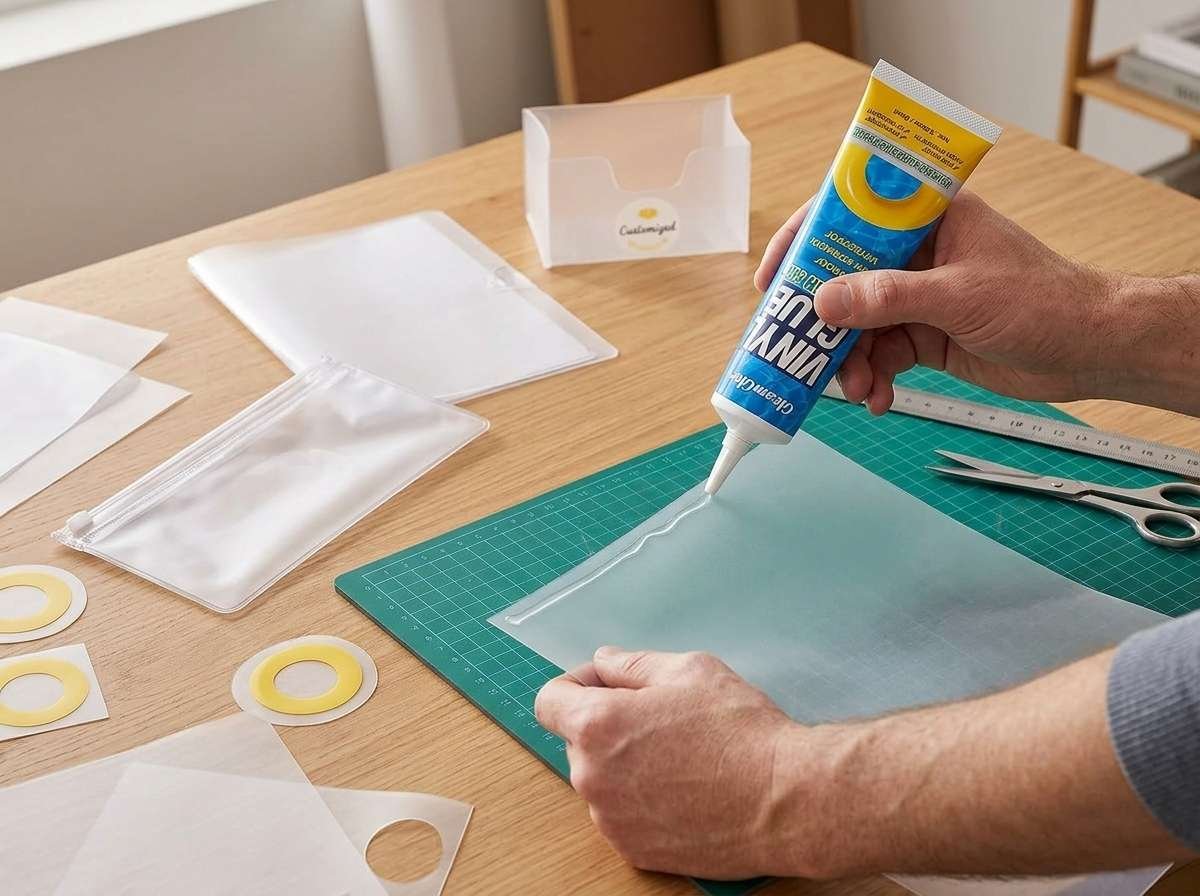
PVC glue works best when the repair area is clean, dry, flat, and matched with the right patch. For flexible PVC items such as air beds, pool floats, inflatable pools, kayaks, swim rings, and camping mats, the usual process is simple: find the damage, clean the surface, apply a thin glue layer, press the patch flat, cure fully, and test before real use.
The biggest mistake is treating PVC glue like tape or instant filler. A quick smear over a hole may look sealed, but air pressure, water pressure, folding, or body weight can reopen the weak point. The repair should cover the damaged area and the surrounding stressed material. For small punctures, a round patch is usually easier to seal. For cuts and scratches, a rectangular patch gives better coverage along the damaged line.
Good repair habits save time later. Clean wider than the patch, not only the hole. Use less glue than expected, but spread it evenly. Press from the center outward to remove bubbles. Let the repair cure before inflating, filling, soaking, folding, or sleeping on it. For many flexible PVC repairs, a 24-hour cure is a practical waiting time before full use.
| Step | What to Do | Time Guide | Main Risk If Skipped |
|---|---|---|---|
| Step 1 | Find and mark the leak | 5-20 minutes | Repairing the wrong area |
| Step 2 | Clean the surface | 3-10 minutes | Glue bonds to dirt or oil |
| Step 3 | Dry fully | 10-30 minutes | Patch edge lifts later |
| Step 4 | Apply thin glue | 1-3 minutes | Thick glue causes sliding |
| Step 5 | Press the patch | 2-5 minutes | Bubbles stay under the patch |
| Step 6 | Cure before use | Around 24 hours | Repair fails under pressure |
| Step 7 | Test slowly | 2-6 hours | Weak repair found too late |
How to clean for PVC Glue?
Cleaning is the first step that decides whether PVC glue can grip properly. Many PVC items look clean but still carry residue that weakens bonding. Air beds may have dust, carpet fibers, body oil, or pet hair. Pool floats may have sunscreen, chlorine, soap film, or water marks. Kayaks, SUP boards, and camping mats may have sand, mud, grass, saltwater residue, or storage dirt. If glue touches residue instead of the PVC surface, the patch may peel even when the adhesive itself is strong. The repair area should be cleaned wider than the patch, because patch edges need strong contact too.
Best cleaning habits:
- Clean at least 2-3 cm beyond the patch edge.
- Remove soap film after leak testing.
- Dry the surface fully before glue is applied.
- Avoid touching the cleaned area with oily fingers.
- Keep dust, lint, and pet hair away while patching.
| Surface Problem | What It Can Cause | Better Action |
|---|---|---|
| Dust or sand | Weak patch contact | Wipe clean before gluing |
| Soap residue | Slippery bond layer | Rinse or wipe again, then dry |
| Sunscreen or oil | Patch peeling | Clean wider and repeat if needed |
| Damp surface | Cloudy patch or edge lift | Let dry fully |
| Flocked or textured top | Lower glue contact | Use extra care and wider patch |
For rigid PVC pipe work, cleaning may also include cutting square, removing burrs, checking fitting depth, and following the cement instructions. For flexible patch repairs, the repair surface should feel dry, smooth, and free from any slippery film before the glue bottle is opened.
How much PVC Glue to use?
PVC glue should be applied in a thin, even layer that covers the full patch contact area. More glue does not always make a stronger repair. On flexible PVC, too much glue can make the patch slide, wrinkle, or cure unevenly. A thick glue edge can also catch dust, look messy, and become a weak point when the item is folded. Too little glue is also a problem because dry spots under the patch can allow air or water to reach the edge. The goal is full contact between the patch, glue, and PVC surface without creating a thick puddle.
Better glue control:
- Cover the whole area under the patch.
- Keep the glue layer thin and smooth.
- Use a precision nozzle for pinholes.
- Use an applicator for wider tears.
- Do not squeeze glue into valves, vents, pump gaps, or moving parts.
| Repair Type | Glue Coverage | Patch Advice |
|---|---|---|
| Tiny pinhole | Thin layer under round patch | Cover well beyond the hole |
| Short cut | Thin layer along cut and margin | Use rectangular patch |
| Pool float leak | Waterproof layer under patch | Press edge carefully |
| Air bed puncture | Flexible layer under patch | Cure before inflation |
| Kayak/SUP scratch | Even layer over wider area | Use strong edge coverage |
| Vinyl liner hole | Full patch contact area | Keep surface dry first |
A clean glue layer should not look like a raised mound. If glue squeezes out heavily from every side, too much was likely applied. A small amount of edge overflow is normal, but it should be wiped carefully without shifting the patch.
How long should PVC Glue cure?
PVC glue needs enough curing time before the repaired item faces pressure, water, weight, bending, or storage folds. A patch can feel dry on the outside while the bond underneath is still developing. On air beds, pool floats, inflatable pools, kayaks, and flexible vinyl surfaces, early use is one of the most common reasons repairs fail. A 24-hour cure is a strong habit for many flexible PVC patch repairs before full inflation, water contact, or heavy use. Pipe cement timing can vary by pipe size, temperature, pressure, and product instructions, so pipe work should follow the label carefully.
Cure time is affected by:
- Glue thickness.
- Patch size.
- Temperature and humidity.
- Surface texture.
- Repair location.
- Air or water pressure after repair.
| Time After Repair | What to Do | What to Avoid |
|---|---|---|
| 0-30 minutes | Keep patch still | Sliding or lifting the patch |
| 30 minutes-3 hours | Leave flat and dry | Early inflation or water testing |
| 3-12 hours | Keep repair undisturbed | Folding, packing, dragging |
| 12-24 hours | Let the bond settle | Sleeping, filling, soaking |
| After 24 hours | Test gradually | Rough use without checking |
A dry indoor area is usually better than a damp garage, cold campsite, hot balcony, or direct sunlight. The repaired section should stay flat and relaxed. Folding across the patch too soon can crease the edge before the bond is strong enough.
How to test PVC Glue?
Testing PVC glue after curing helps find weak edges before the item is used again. For air-filled items, start with partial inflation instead of full pressure. Watch the patch edge closely. It should stay flat, smooth, and attached. Then increase to normal pressure and let the item sit for several hours. For water items, test the repair gradually before full soaking or heavy use. For visible repairs, check for bubbles, wrinkles, cloudy glue pockets, lifted corners, or gaps along the patch edge.
Simple testing steps:
- Wait until curing time has passed.
- Test with light pressure first.
- Check patch edges from several angles.
- Use soapy water for air leaks if needed.
- Leave inflated items for several hours before relying on them.
- Recheck nearby areas if leaking continues.
| Test Result | What It Means | Next Step |
|---|---|---|
| Patch stays flat | Good first sign | Continue gradual testing |
| Bubbles appear at edge | Edge seal is weak | Reclean and use larger patch |
| Patch wrinkles | Glue or pressure was uneven | Repair may need to be redone |
| Item still deflates | Another leak may exist | Check nearby seams and bottom |
| Water enters patch edge | Seal is incomplete | Dry fully and repair again |
| Repair holds for hours | Better use outlook | Use normally with care |
Testing is especially useful for air beds, inflatable pools, kayaks, SUP boards, and pool floats. A repair that holds under a short check and several hours of pressure has a much better chance of working during real use.

Is GleamGlee PVC Glue Right?
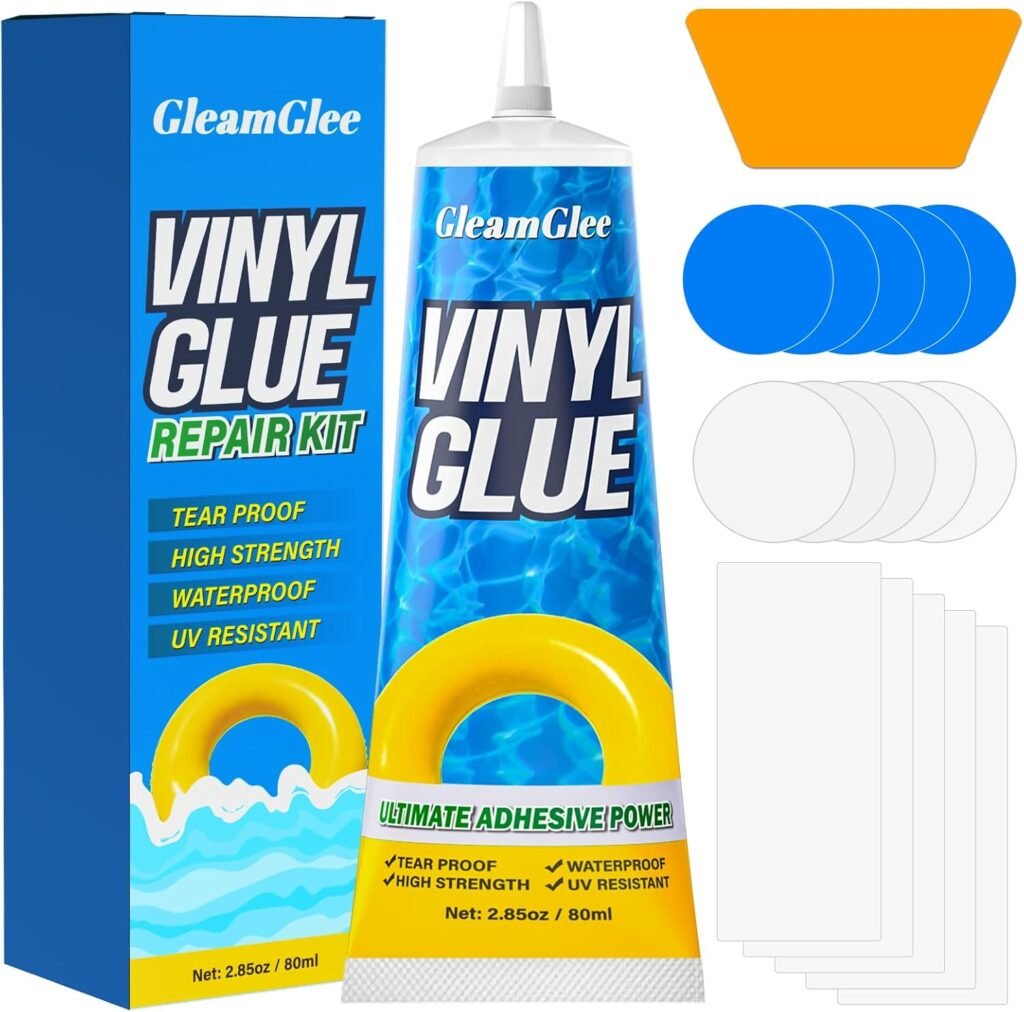
GleamGlee PVC Glue is right for flexible PVC repairs where the damaged item needs to stay sealed, bend after curing, and handle air or water pressure. It is designed for air beds, inflatable pools, pool floats, kayaks, trampolines, boats, camping mats, inflatable chairs, swim rings, PVC toys, and other PVC or rubber-like repair jobs. The kit includes 80ml glue, 15 patches, a rubber squeegee, an applicator, and a precision metal nozzle, so it gives the main parts needed for common punctures, small tears, cracks, and leak repairs.
The strongest advantage is that the kit is built around real repair steps instead of glue alone. Many PVC repair problems happen because the patch is too small, the glue is applied too thickly, or air bubbles stay under the patch. GleamGlee includes 5 blue round patches, 5 clear round patches, and 5 clear rectangular patches, making it easier to match the patch to the damage shape. Round patches work well for pinholes. Rectangular patches are better for cuts and scratches. Clear patches help visible repairs look cleaner.
It is a practical option when the repair must handle moisture, sunlight, hot water, mild chemicals, and repeated movement after curing. The adhesive and patches are waterproof and UV-resistant after proper curing, while the transparent patches help reduce obvious repair marks and yellowing over time. For small household leaks, outdoor inflatables, pool items, and camping gear, the kit gives a more complete repair setup than a single glue tube or tape strip.
| GleamGlee Kit Part | Quantity | Main Use |
|---|---|---|
| PVC repair glue | 80ml | Bonds patches over holes, tears, and leak areas |
| Blue round patches | 5 pcs | Easy-to-see repairs on hidden or outdoor areas |
| Clear round patches | 5 pcs | Clean repair for pinholes and small punctures |
| Clear rectangular patches | 5 pcs | Better coverage for cuts, scratches, and longer tears |
| Rubber squeegee | 1 pc | Presses patches flat and removes bubbles |
| Applicator | 1 pc | Helps spread glue evenly on larger repair areas |
| Metal nozzle | Built-in design | Controls glue on tiny holes and narrow spots |
Is GleamGlee PVC Glue flexible?
GleamGlee PVC Glue is made for repairs that need to stay flexible after curing. This matters because most inflatable and soft PVC items do not stay still. An air mattress expands when filled, sinks slightly under body weight, and folds after use. A pool float bends in water and heats up under the sun. A kayak or inflatable boat flexes when it moves through water. If the glue dries into a hard lump, the patch edge may become stiff, crack, or lift during inflation, folding, or pressure changes. A flexible bond keeps the patch closer to the PVC surface and helps the repair move with the item.
Flexible repair is especially useful for items that are used more than once. A pool float may be inflated and deflated many times in one summer. A camping mat may be rolled tightly after every trip. A repaired air bed may need to hold pressure for 6-8 hours overnight. The glue must not only seal the hole on the first day; it should also handle repeated movement after the repair has fully cured.
Key flexible repair benefits:
- Helps patch edges stay flatter during inflation and folding.
- Reduces cracking risk around the repaired area.
- Works better on soft PVC than rigid household glue.
- Helps the repair remain lower-profile and less bulky.
| Item | Why Flexibility Matters | Better Patch Choice |
|---|---|---|
| Air bed | Expands, compresses, folds | Clear round or rectangular patch |
| Pool float | Bends in water and sun | Round patch for pinholes |
| Camping mat | Rolls after use | Clear or blue round patch |
| Kayak/SUP | Flexes with water movement | Larger rectangular patch |
| Inflatable chair | Carries sitting pressure | Wider patch coverage |
Is GleamGlee PVC Glue waterproof?
GleamGlee PVC Glue and patches are designed for waterproof repair after proper curing, making the kit useful for pool floats, inflatable pools, swim rings, pool toys, kayaks, SUP boards, boats, camping mats, and outdoor PVC items. Waterproof performance is important because many PVC products are used near water or stored in damp places. A pool float is placed directly in water. An inflatable pool wall may face both air pressure and water pressure. A kayak patch may face water movement and rubbing. Even an indoor air bed may be wiped with a damp cloth or used on a camping trip.
Waterproof repair still depends on proper preparation. The surface should be dry before glue is applied. If the item was tested with soapy water, the soap film should be removed and the surface should dry fully. If sunscreen, chlorine, sand, oil, or pool residue stays under the patch, the edge may lift later. Waterproof strength comes after the glue bonds to clean PVC and cures long enough, not while the surface is still wet.
Better waterproof repair habits:
- Dry the damaged area fully before applying glue.
- Remove soap, chlorine, sunscreen, oil, and dirt.
- Cure the patch before water contact.
- Use a larger patch for pool walls and water gear.
- Check patch edges after the first water test.
| Use Area | Water Exposure Level | Repair Note |
|---|---|---|
| Air mattress | Medium | Useful for damp cleaning and camping |
| Pool float | High | Cure fully before pool use |
| Inflatable pool | High | Use wider patch coverage |
| Kayak/SUP | Very high | Needs strong edge sealing |
| Swim ring | High | Round patch often works well |
| Outdoor inflatable | Medium to high | Store dry after use |
Is GleamGlee PVC Glue easy?
GleamGlee PVC Glue is easy to use because the kit includes tools that help control the repair. A precision metal nozzle helps place glue into tiny holes and narrow repair areas without flooding the surface. The applicator helps spread glue more evenly on larger tears. The rubber squeegee helps press the patch flat and push trapped air outward. These small details matter because many repair failures come from thick glue, patch movement, bubbles under the patch, or weak edge contact. A repair kit with the right tools makes the process cleaner and more predictable.
The basic process is simple enough for home repair: clean the damaged area, dry it fully, choose a patch larger than the leak, apply a thin glue layer, place the patch, press from the center outward, and cure before full use. For many flexible PVC repairs, 24 hours of curing is a strong habit before inflating, filling, soaking, folding, or sleeping on the repaired item. The repair should be tested slowly after curing, especially on air beds, inflatable pools, and water gear.
Simple use points:
- Use a thin glue layer, not a thick puddle.
- Choose round patches for pinholes.
- Choose rectangular patches for cuts.
- Press from the center toward the edges.
- Wait 24 hours before full pressure or water use.
| Repair Step | Helpful Kit Part | Purpose |
|---|---|---|
| Small glue placement | Metal nozzle | Controls glue on pinholes |
| Wider glue spreading | Applicator | Helps create even coverage |
| Patch pressing | Rubber squeegee | Removes bubbles and improves contact |
| Visible repair | Clear patch | Keeps repair cleaner-looking |
| Hidden repair | Blue patch | Easier to find later |
Is GleamGlee PVC Glue customizable?
GleamGlee PVC Glue can be supplied as a ready repair kit or developed into customized product versions for different sales channels and repair needs. The repair kit format can be adjusted by glue capacity, patch count, patch shape, patch color, label language, packaging style, and instruction design. This is useful for brands, online shops, hardware retailers, outdoor product lines, pool accessory sellers, and repair kit distributors that want a PVC glue product suited to their own market. The product can be positioned for air beds, inflatable pools, pool floats, kayaks, SUP boards, camping mats, or general PVC repair.
Customization can start from a low MOQ of 200 units. Printable artwork can be prepared in as fast as 2 days when product details and brand materials are ready. Sample preparation usually takes 7-14 days, while bulk production is usually around 20 days. Rush production can be arranged in around 15 days when the project schedule, materials, and packaging plan allow it. Multilingual labels and instructions can be prepared for English, German, French, Italian, Spanish, Dutch, Japanese, Chinese, and other market needs.
Custom options include:
- Glue size and repair kit combination.
- Clear, blue, round, or rectangular patch options.
- Logo, label, box, and instruction design.
- Waterproof and UV-resistant repair positioning.
- FBA-ready or retail-ready packaging support.
| Custom Need | Available Direction |
|---|---|
| Small starter order | MOQ from 200 units |
| Fast design support | Artwork in as fast as 2 days |
| Sample check | Usually 7-14 days |
| Bulk production | Around 20 days |
| Rush order | Around 15 days when available |
| Label language | Multi-market language support |
| Compliance support | SDS, CLP, REACH, UKCA, GHS-related label needs |
Conclusion
Choosing the right PVC glue is not about picking the strongest-looking tube. It is about matching the glue to the repair: rigid PVC pipes need fixed joint strength, while air beds, pool floats, inflatable pools, kayaks, SUP boards, camping mats, and soft vinyl items need flexible waterproof bonding with proper patch support. A clean dry surface, thin glue layer, suitable patch size, firm pressing, and enough curing time can make the difference between a repair that holds and one that peels after the first real use.
GleamGlee PVC Glue offers a practical repair solution for everyday PVC and rubber-like inflatables, with 80ml glue, clear and blue patches, a squeegee, applicator, and precision metal nozzle for cleaner, easier repairs. For branded product orders, wholesale supply, or customized PVC repair kit projects, GleamGlee can support formula selection, private-label packaging, multilingual labels, sample preparation, bulk production, and international delivery.