Skip to content
Leather jackets are more than just outerwear—they carry style, personal history, and comfort. Over time, small tears, lifted seams, worn edges, or cracked panels can appear, threatening the jacket’s usability. But many of these problems can be fixed at home with the right preparation and tools.
Leather jacket repair at home begins with careful inspection of the damage, cleaning the affected area, trimming loose fibers, applying a flexible leather adhesive, pressing the patch, and allowing it to cure fully. With a structured approach, even minor tears, lifting edges, or cracked trims can be restored to look neat and maintain durability.
Early action is crucial. Small lifting seams or cracks left untreated can expand due to daily wear, body movement, and environmental factors. By repairing early, the jacket’s lifespan can extend significantly without professional intervention. Imagine a leather jacket you thought was ruined because of a minor cuff tear or a pocket seam pull—after repair, it looks clean, feels smooth, and remains wearable for years. This guide explains the step-by-step process for effective home repair.
What Can Fix Leather Jackets at Home?
Many leather jacket problems can be repaired at home without replacing the entire garment. Small tears, lifted seams, cracked edges, loose trims, and minor lining separation are among the most common issues. The key factor is not the age of the jacket but the condition of the damaged area. If the leather remains flexible, the material is still present, and the affected section can be aligned properly, a home repair often delivers good results.
Leather jackets experience constant stress from movement, weather, storage conditions, and daily wear. Elbows bend thousands of times each year, cuffs rub against desks and steering wheels, collars absorb sweat and body oils, and pockets stretch from repeated use. Over time, these high-contact areas become the first places where damage appears. Catching problems early usually leads to cleaner repairs and longer-lasting results.
Not every damaged jacket needs professional restoration. In many cases, repairing a small problem when it first appears can extend the life of a jacket by several seasons. The sections below explain which types of damage are most suitable for home repair and what factors determine repair success.
What Tears Can Fix?
Small tears are among the most common leather jacket repairs performed at home. A tear does not automatically mean a jacket is ruined. In many cases, the leather fibers around the damaged area remain strong enough to support a repair, especially when the tear is discovered early.
Tears that are less than 2 inches (5 cm) long generally have a higher success rate than larger tears because the leather edges are easier to align and maintain under pressure. Tears located in low-stress areas such as decorative panels, pockets, side panels, or lower sleeves are often easier to repair than tears on shoulders or elbows.
Several factors influence whether a tear is suitable for home repair:
- The leather edges can still meet naturally.
- The leather has not become brittle or dry.
- No large sections of material are missing.
- The surrounding area remains structurally sound.
- The tear has not spread through multiple stitched panels.
| Tear Type | Home Repair Suitability | Difficulty |
|---|---|---|
| Small straight tear | Excellent | Easy |
| Pocket edge tear | Excellent | Easy |
| Decorative panel tear | Excellent | Easy |
| Sleeve tear | Good | Medium |
| Elbow tear | Moderate | Medium |
| Shoulder tear | Limited | Difficult |
| Missing leather section | Poor | Difficult |
A useful guideline is that tears with clean edges repair better than jagged tears. When fibers remain intact and the leather is still flexible, a flexible leather adhesive combined with careful alignment often produces a strong and discreet repair.
Which Edges Lift?
Lifted edges are one of the earliest warning signs that a leather jacket is beginning to wear. These areas may appear minor at first, but they often grow larger with continued use. Once dirt, moisture, or friction enters the gap, the separation tends to spread.
The most common lifted-edge locations include:
- Collar edges
- Sleeve cuffs
- Pocket openings
- Zipper panels
- Decorative leather trims
- Hem edges
Several studies from apparel repair workshops have shown that collar and cuff repairs account for a significant percentage of leather garment maintenance requests because these sections experience constant contact with skin, sweat, and repeated folding.
A lifted edge is often easier to repair than a tear because the original material remains intact. Early repairs can prevent additional damage and reduce repair visibility.
| Location | Main Cause | Repair Difficulty |
|---|---|---|
| Collar | Sweat and folding | Easy |
| Cuffs | Friction and bending | Easy |
| Pocket edges | Repeated pulling | Easy |
| Zipper panels | Daily movement | Medium |
| Decorative trim | Aging adhesive | Easy |
| Hem edges | Storage stress | Medium |
Important signs that indicate a lifted edge should be repaired soon include:
- The edge catches on clothing.
- Dirt accumulates inside the gap.
- The lifted section continues growing.
- Visible curling appears.
- The leather starts cracking near the separation.
Repairing a 5 mm lifted edge usually takes only minutes. Waiting until the separation reaches several inches often requires significantly more work and produces a more visible repair.
Are Cracks Repairable?
Leather cracks are often misunderstood. Many people assume a crack means the leather has reached the end of its life. In reality, many cracks can be stabilized and repaired, especially when discovered early.
Cracks commonly appear in areas where leather folds repeatedly:
- Elbows
- Sleeve creases
- Collar folds
- Pocket corners
- Shoulder bends
- Waist folds
The repair potential depends on crack depth. Surface cracks that affect only the finish layer are generally easier to address than deep structural cracks that penetrate the leather itself.
| Crack Condition | Repair Potential | Notes |
|---|---|---|
| Surface crack | Excellent | Often stabilized easily |
| Small open crack | Good | Adhesive support helpful |
| Fold-line crack | Good | Monitor movement stress |
| Deep crack | Moderate | May require backing support |
| Brittle crack | Limited | Leather condition critical |
| Missing material crack | Poor | Patch often required |
Several conditions increase the likelihood of cracking:
- Low humidity storage
- Prolonged sun exposure
- Lack of conditioning
- Frequent bending
- Age-related drying
- Heavy daily use
A crack that measures only 1–2 mm wide today can expand significantly after several months of wear if left untreated. Early stabilization helps prevent the crack from spreading and reduces stress on the surrounding leather.
Not all cracks need aggressive repair. Some shallow cracks benefit more from proper leather care combined with targeted adhesive reinforcement. The goal is not simply closing the crack but maintaining flexibility so the repaired section continues moving naturally with the rest of the jacket.
Which Glue Can Fix Leather Jackets at Home?
The best glue to fix leather jackets at home is a flexible leather adhesive that dries clear, stays soft after curing, and resists moisture after a full 24-hour cure. Leather jackets move more than many other leather items because sleeves bend, cuffs fold, shoulders stretch, and collars rub against the neck. A stiff glue may hold for a short time, but it can crack, turn white, or leave a hard patch after repeated wear.
A good leather jacket glue should match three real repair needs: strength, appearance, and comfort. Strength keeps the tear, edge, or patch closed. Appearance matters because cuffs, collars, pockets, and sleeves are visible when worn. Comfort matters because a stiff repair on an elbow or cuff can feel rough against the body. For most home repairs, clear flexible leather glue works better than ordinary super glue, hot glue, craft glue, or thick construction adhesive.
Repair success also depends on the damaged area. A small cuff edge needs a thin line of glue. A torn sleeve may need adhesive plus a backing patch. A lifted trim needs controlled application so glue does not spread onto the jacket surface. The goal is not to cover the jacket with glue, but to bond the leather cleanly from inside the damaged area.
| Glue Type | Good for Jackets? | Main Problem |
|---|---|---|
| Flexible leather glue | Yes | Best for small tears, trims, cuffs, collars |
| Ordinary super glue | No | Dries hard, may turn white, cracks with bending |
| Hot glue | No | Bulky, weak on smooth leather, heat-sensitive |
| Fabric glue | Limited | Better for lining than leather surface |
| Contact cement | Sometimes | Strong smell, less beginner-friendly |
| Construction adhesive | No | Too thick for small jacket repairs |
| Spray adhesive | No | Poor control, overspray risk |
Why Use Flexible Glue?
Flexible glue is important because a leather jacket bends with every movement. The elbows fold when arms move, the cuffs wrinkle when hands reach forward, and the shoulders stretch when the jacket is worn over layers. If the glue dries hard, the repaired spot becomes stiff while the surrounding leather remains soft. That difference creates stress along the edge of the repair and may cause new cracks.
For jacket repair, flexibility is often more important than instant hardness. A repair that feels strong after 30 seconds may still fail after several days of bending if the adhesive cannot move with the leather. Flexible leather glue helps the repair stay comfortable and reduces the chance of cracking around cuffs, sleeves, elbows, and pocket edges.
Flexible glue is especially useful for:
- Cuff edge repair
- Collar trim repair
- Sleeve tear repair
- Elbow crack support
- Pocket edge bonding
- Decorative leather patch repair
- Faux leather jacket panel repair
| Jacket Area | Movement Level | Glue Requirement |
|---|---|---|
| Elbow | Very high | Flexible bond with possible backing patch |
| Cuff | High | Thin flexible glue line |
| Collar | Medium to high | Flexible, clear, oil-resistant bond |
| Pocket edge | Medium | Strong bond with clean finish |
| Shoulder | High | Flexible bond; stitching may be needed for stress |
| Front panel | Medium | Clear, smooth repair |
| Decorative trim | Low to medium | Precise, non-bulky glue |
A stiff glue repair can also affect comfort. A hard spot on a cuff may rub the wrist. A stiff elbow repair may pull when bending the arm. A thick patch near the collar may feel uncomfortable against the neck. Flexible glue helps the repair remain wearable, not just bonded.
Is Clear Glue Better?
Clear glue is usually better for fixing leather jackets at home because most jacket repairs are visible. Cuffs, collars, sleeves, front panels, pocket edges, and decorative trims are all easy to see when the jacket is worn. If the glue dries white, yellow, cloudy, or shiny, the repair can stand out more than the original damage.
A clear-drying leather glue helps keep the repair cleaner on black, brown, tan, red, cream, and colored leather jackets. It is especially important on darker jackets because white residue is easy to notice. On lighter jackets, yellowing can make the repaired area look dirty over time. Clear glue does not guarantee an invisible repair, but it gives a much better chance of a neat finish.
Clear glue works best when applied thinly and placed inside the tear or under the lifted edge. Too much clear glue can still create a raised glossy line. The surface may catch light differently, especially on matte or soft leather. For this reason, controlled application matters as much as the glue color.
Good clear-glue habits include:
- Apply glue inside the damaged area, not across the outer surface.
- Use a thin line for cuff, collar, and pocket edges.
- Use small dots when attaching a patch.
- Wipe extra glue before it dries.
- Test on a hidden area before repairing visible leather.
- Avoid spreading glue with fingers on the jacket surface.
| Jacket Color / Finish | Main Risk | Better Glue Choice |
|---|---|---|
| Black leather | White marks show clearly | Clear, non-whitening adhesive |
| Brown leather | Glossy overflow may show | Thin clear glue application |
| Tan leather | Yellowing may be visible | Non-yellowing leather glue |
| Cream leather | Stains show easily | Test first, use very little glue |
| Red / colored leather | Tone change stands out | Clear glue, hidden test |
| Matte leather | Shine may show | Avoid excess glue |
| Faux leather | Coating may react | Flexible glue, small test area |
For visible repairs, less glue usually looks better. A thin hidden bond often gives a cleaner finish than a thick surface coating.
Does Waterproof Glue Help?
Waterproof glue helps because leather jackets are often worn outside and exposed to moisture during normal use. Even if the jacket is not used in heavy rain, it may still contact sweat, humidity, mist, damp car seats, wet hands, and light rain. Moisture can weaken a poor repair, especially around cuffs, collars, shoulders, and pocket openings.
A waterproof leather adhesive helps protect the bond after full curing. It does not make the whole jacket waterproof, and it does not replace leather conditioner or weather protection. The leather itself may still absorb moisture, darken, dry out, or stain depending on its finish. The waterproof benefit is mainly for the glue line, helping the repaired area stay closed during regular wear.
Waterproof performance is most useful in areas that face both moisture and movement:
- Collars exposed to sweat and skin oils
- Cuffs exposed to wet hands and desk friction
- Shoulders exposed to light rain and backpack straps
- Pocket edges touched repeatedly during the day
- Sleeve seams exposed to bending and outdoor air
- Front panels exposed to mist or light rain
| Moisture Source | Jacket Area Affected | Repair Risk |
|---|---|---|
| Sweat | Collar, underarm, cuffs | Weak bond if surface was not cleaned |
| Light rain | Shoulders, sleeves, front panel | Edge may lift if glue is not water-resistant |
| Humidity | Stored jackets | Slow weakening over time |
| Wet hands | Cuffs, pocket edges | Repeated moisture plus friction |
| Damp storage | Folds, seams, lining | Odor, softening, possible peeling |
| Cleaning residue | Repair area | Adhesion failure if not dried fully |
Full curing is important before moisture exposure. A glue may feel dry in 6–10 minutes, but daily strength and water resistance usually require a full 24-hour cure. Wearing the jacket too soon, bending the repaired cuff, or exposing the area to rain before curing can weaken the bond.
Which Glue Should You Avoid?
Some glues should be avoided for leather jacket repair because they create stiff, messy, or short-lived results. Ordinary super glue is the most common mistake. It dries quickly, but it often becomes brittle and may leave a white haze around the repair. On a jacket sleeve or cuff, that stiff spot can crack after repeated bending.
Hot glue is also a poor choice. It sits thick on the surface, feels bulky, and may peel from smooth leather. It can soften in heat and create uneven lumps under patches. Thick construction adhesive is too heavy for jacket edges and small tears. Spray adhesive is difficult to control and can leave overspray on visible leather.
Avoid these glue choices for visible leather jacket repairs:
- Hard instant glue for flexible areas
- Hot glue for cuffs, sleeves, and panels
- School or craft glue for leather surfaces
- Thick construction adhesive for small tears
- Spray glue near visible leather
- Unknown glue without testing
- Any glue that dries white, yellow, or brittle
| Glue to Avoid | Why It Hurts Jacket Repair | Better Option |
|---|---|---|
| Super glue | Hard, white marks, cracking | Flexible leather adhesive |
| Hot glue | Bulky, heat-sensitive, uneven | Thin leather glue |
| Craft glue | Weak on leather, poor moisture resistance | Leather-specific glue |
| Construction adhesive | Too thick, messy finish | Precision leather adhesive |
| Spray adhesive | Overspray and low control | Metal-tip leather glue |
| Unverified solvent glue | May stain or soften leather | Hidden test before use |
A good leather jacket repair glue should feel almost invisible after curing: strong enough to hold, flexible enough to move, and clean enough not to draw attention.
How to Start Fixing Leather Jackets at Home?
Start fixing leather jackets at home by checking the damage, cleaning the repair area, trimming only loose material, testing the glue, and making sure the leather can sit flat before bonding. Most repair failures happen because the jacket is glued while dusty, oily, damp, or misaligned.
Leather jackets collect more residue than they appear to. Collars hold sweat and skin oil. Cuffs collect dust from desks, steering wheels, and sleeves. Pocket edges pick up hand cream, lint, and friction marks. If glue is applied over these layers, the bond may peel quickly. A careful 15–30 minute prep process can make the repair stronger, flatter, and cleaner.
Preparation should stay gentle. Leather can stretch, darken, scratch, or lose finish if scrubbed too hard. The goal is not to make the jacket look new before repair. The goal is to create a clean, dry, stable surface where flexible leather glue can bond properly.
| Prep Task | Suggested Time | Why It Matters | Common Problem If Skipped |
|---|---|---|---|
| Inspect damage | 2–5 min | Checks if home repair is suitable | Repairing damage that needs stitching |
| Dry clean | 3–5 min | Removes dust and loose debris | Glue bonds to dirt, not leather |
| Light wipe | 3–8 min | Removes oil and residue | Weak bond around cuffs/collar |
| Trim loose fibers | 2–5 min | Helps edges close flat | Raised bumps under repair |
| Test glue | 10 min–24 hrs | Checks color and texture reaction | Stains or shiny marks |
| Dry fit | 1–3 min | Confirms alignment | Crooked repair line |
Step 1: Clean Leather
Clean the leather before applying any glue, even if the jacket looks clean. Most repair areas are high-touch zones. Cuffs touch hands, tables, and car interiors. Collars touch skin, hair products, perfume, and sweat. Pocket edges rub against fingers and stored items. These residues are often invisible, but they can stop adhesive from gripping the leather surface properly.
Start with a dry microfiber cloth and wipe 2–3 inches around the damaged area. For smooth leather, use a barely damp cloth only if needed, then let the area dry fully. For suede or nubuck, use a soft dry brush instead of water. For faux leather, wipe gently and avoid pulling at weak coating.
Focus on:
- Inside lifted edges
- Around cuffs and collars
- Pocket openings
- Under loose trims
- Around small tears
- Old glue or repair residue
| Jacket Material | Safer Cleaning Method | Avoid |
|---|---|---|
| Smooth leather | Dry cloth, lightly damp cloth if needed | Soaking, alcohol rubbing |
| Suede / nubuck | Soft dry brush | Wet wiping, hard scrubbing |
| Faux leather | Gentle dry or barely damp wipe | Pulling peeling coating |
| Glossy coated leather | Soft cloth only | Abrasive pads |
| Vintage leather | Very light cleaning | Heavy pressure or strong cleaners |
A quick check helps: wipe the area with a clean cotton swab. If it picks up grey, brown, oily, or dusty residue, keep cleaning gently before gluing.
Step 2: Trim Edges
Trim only the loose fibers, curled flakes, old glue crumbs, or thread ends that stop the damaged area from sitting flat. Do not cut healthy leather just to make the edge look neater. Removing too much material can turn a small repair into a visible gap, especially on cuffs, sleeves, and front panels.
Before trimming, press the damaged section closed without glue. This shows what actually blocks the repair. If a loose fiber folds under the tear, trim it. If an old glue lump creates a bump, remove it carefully. If a leather flap is still attached and stable, keep it and glue it back down.
Good trimming habits:
- Use small scissors or tweezers.
- Work slowly under good lighting.
- Remove loose material only.
- Keep original leather whenever possible.
- Do not pull faux leather flakes outward.
- Do not cut stitching unless sewing is planned.
| Problem | What to Do | What Not to Do |
|---|---|---|
| Loose fiber | Trim close with small scissors | Pull it until the tear grows |
| Old glue crumb | Remove gently with tweezers | Scrape the visible finish |
| Curling leather edge | Flatten and test fit | Cut off usable leather |
| Frayed lining thread | Trim thread only | Cut the lining seam |
| Peeling faux leather | Trim only unstable flakes | Peel the coating wider |
The repair should look almost closed before glue is added. Adhesive should hold a prepared shape, not force a messy edge into place.
Step 3: Test Glue
Test the glue before repairing a visible jacket area. Leather jackets vary widely in finish, coating, dye, thickness, and age. A glue that looks clean on one jacket may darken suede, shine on matte leather, or soften faux leather coating on another. Testing prevents a small repair from becoming a permanent stain.
Choose a hidden spot such as the inner hem, inside cuff, under-collar edge, or inner seam allowance. Apply a tiny dot of glue, let it dry, then check the area in both natural and indoor light. For a quick check, wait 10–15 minutes. For a safer finish check, leave it overnight.
Check for:
- Darkening around the glue spot
- White residue
- Yellowing on light leather
- Unwanted shine
- Stiff or rough texture
- Softened faux leather coating
- Flattened suede fibers
| Test Result | What It Means | Next Step |
|---|---|---|
| Dries clear and flexible | Good compatibility | Proceed carefully |
| Turns shiny | Too much glue or finish reaction | Use less or avoid visible areas |
| Darkens leather | Absorption risk | Do not use on visible surface |
| Leaves white mark | Poor finish match | Choose another adhesive |
| Stiffens surface | Too hard for jacket movement | Use flexible leather glue |
| Softens coating | Faux leather reaction | Stop and use another method |
Testing also shows the correct amount. Many jacket repairs need only a thin line or small dots, especially around cuffs and trims.
Step 4: Check Fit
Check the fit before applying glue. Press the torn edge, lifted trim, cuff layer, or patch into place without adhesive. If the leather lies flat and follows the original shape, the repair is ready. If it bulges, curls, leaves a gap, or pulls under tension, glue alone may not give a clean result.
Dry fitting is especially useful for sleeve tears, elbow cracks, and pocket edges because these areas move when worn. A repair that looks flat on the table may pull open when the arm bends. Gently flex the area before gluing to see how much stress the repair will face.
Fit-check points:
- Do the edges meet without stretching?
- Is any old glue blocking contact?
- Does the area lie flat under light pressure?
- Will a patch be needed behind the tear?
- Can the jacket rest flat for 24 hours?
- Is the damaged area under heavy movement?
| Fit Issue | Likely Cause | Better Fix |
|---|---|---|
| Small gap remains | Leather stretched or missing | Use backing patch |
| Edge curls upward | Old crease or dry leather | Flatten gently before gluing |
| Repair pulls open when flexed | High-stress area | Add patch or stitching |
| Bump under surface | Old glue or fiber inside | Clean and trim again |
| Leather feels brittle | Dry or aged material | Use caution; professional repair may be better |
A good fit check prevents wasted glue and messy results. If the area cannot sit flat before adhesive, it usually will not sit flat after curing.
What Tips Fix Leather Jackets at Home?
The best tips to fix leather jackets at home are to use thin glue, keep the repair flat, support weak areas with a patch when needed, and wait at least 24 hours before wearing the jacket. Leather jackets move with the body, so a good repair should stay flexible, smooth, and comfortable after curing.
Most poor repairs come from doing too much too quickly. Thick glue, heavy pressure, rushed wearing, and skipping a test spot can turn a small tear into a shiny or stiff mark. A better repair usually looks simple: clean surface, small amount of adhesive, careful alignment, steady pressure, and enough rest time.
The repair method should match the jacket area. A cuff edge needs a thin hidden glue line. An elbow tear may need a backing patch. A loose collar trim needs cleaning first because sweat and body oils often weaken adhesion. A pocket edge needs extra care because it is pulled every time the pocket is used.
| Repair Tip | Best For | Why It Helps |
|---|---|---|
| Use thin glue | Cuffs, trims, collars | Prevents stiffness and overflow |
| Keep leather flat | Tears, patches, lifted edges | Reduces bumps and gaps |
| Add backing patch | Elbows, sleeve tears | Gives support behind the tear |
| Wait 24 hours | All adhesive repairs | Improves strength and flexibility |
| Test first | Suede, faux leather, light leather | Prevents stains and shine |
| Avoid heavy stress | Shoulders, pockets, elbows | Stops early repair failure |
Use Thin Glue
Using thin glue is one of the most important tips for fixing leather jackets at home. Leather jacket repairs do not need thick glue sitting on top of the surface. The adhesive should sit between the damaged materials, holding the tear, edge, or patch from the inside. A thick layer often dries unevenly, feels stiff, catches light, and may leave a raised line that makes the repair obvious.
Thin application is especially important on cuffs, collars, pocket edges, and front panels because these areas are easy to see when the jacket is worn. A narrow glue line can hold a lifted edge without changing the jacket’s feel. For a small tear, apply glue only to the contact points or the back of a patch. For a loose trim, place the adhesive under the trim instead of spreading it across the outer leather.
Helpful glue-control habits:
- Use a precision tip for small openings.
- Apply glue in short sections of 1–2 inches.
- Start with less, then add more only if needed.
- Keep glue inside the tear or under the lifted edge.
- Wipe extra glue before it dries.
- Avoid coating the leather surface.
| Repair Area | Suggested Glue Amount | Better Method |
|---|---|---|
| Tiny cuff lift | Small dot | Press with fingertip |
| Collar edge | Thin line | Glue from underneath |
| Pocket trim | Thin line or small dots | Press evenly |
| Sleeve tear | Thin glue on backing patch | Support from inside |
| Elbow crack | Thin layer plus patch | Avoid surface buildup |
| Faux leather peel | Very small amount | Test first |
For most leather jacket repairs, a thin bond line looks cleaner and lasts better than a thick glue patch.
Keep Patch Flat
Keeping the patch flat is essential when fixing tears, cracks, or weak areas on a leather jacket. A patch that dries with wrinkles, bubbles, or lifted corners can rub against clothing, feel uncomfortable, and make the repair easier to notice. Flat contact also improves bond strength because the adhesive touches more of the repair surface.
For tears larger than a small cut, a backing patch often gives better support. The patch should sit behind the tear, not on top of the visible surface unless the repair is decorative. Thin leather, suede, or suitable flexible backing material can help hold the torn edges together from the inside. The patch should extend slightly beyond the tear, usually about 0.5–1 inch on each side when space allows.
Flat patch tips:
- Cut patch corners round instead of sharp.
- Make the patch larger than the tear.
- Apply glue thinly to the patch, not heavily to the jacket.
- Slide the patch behind the tear carefully.
- Align the jacket surface before pressing.
- Press from the center outward to remove air pockets.
- Keep the area still while curing.
| Tear Size | Patch Needed? | Patch Advice |
|---|---|---|
| Under 0.5 inch | Usually no | Thin glue may be enough |
| 0.5–1 inch | Sometimes | Patch if area bends often |
| 1–2 inches | Usually yes | Use backing support |
| Over 2 inches | Strongly recommended | Professional repair may be better |
| Elbow tear | Usually yes | High movement area |
| Shoulder tear | Usually yes | May also need stitching |
A flat patch should support the repair without making the jacket stiff. If the patch feels bulky before curing, it will likely feel worse after drying.
Wait to Wear
Waiting before wearing the jacket is a simple tip that many people ignore. Leather glue may begin to set in 6–10 minutes, but that does not mean the jacket is ready for movement. Wearing it too soon can bend the repair, shift the patch, reopen the tear, or pull a lifted edge apart before the adhesive reaches full strength.
A full 24-hour cure is best for most jacket repairs. During this time, the jacket should rest flat or be supported in a natural shape. Do not hang it by the repaired shoulder if the shoulder area was fixed. Do not bend the sleeve if the elbow or cuff was repaired. Do not zip and unzip repeatedly if the front panel or zipper edge was repaired.
A safer curing plan:
| Time After Repair | What to Do | What to Avoid |
|---|---|---|
| 0–10 minutes | Hold or press the repair | Moving the edges |
| 10–60 minutes | Keep pressure stable | Pulling to test strength |
| 1–6 hours | Let the jacket rest | Bending sleeves or cuffs |
| 6–24 hours | Keep dry and flat | Wearing outdoors |
| After 24 hours | Wear lightly first | Heavy stretching or rough use |
After curing, wear the jacket gently the first time. If the repair is near an elbow, bend the arm slowly. If it is near a pocket, avoid loading the pocket immediately. If it is on a cuff, keep it away from wet surfaces for the first day of wear.
Protect the Repair
Protecting the repair after it cures helps the jacket last longer. Adhesive can close damage, but daily habits decide how long the repair stays neat. Leather jackets face friction from bags, car seats, desks, backpack straps, and folded storage. If the repaired area returns to the same stress every day, it may weaken again.
The most important protection is reducing repeated stress on the repaired area. If a pocket edge was repaired, avoid stuffing that pocket with keys or a heavy phone right away. If a shoulder trim was repaired, avoid wearing a heavy backpack over that side for a few days. If the cuff was repaired, keep it away from rough desk edges and wet surfaces.
Repair-care tips:
- Keep repaired areas dry for the first 24–48 hours.
- Avoid heavy backpacks over repaired shoulders.
- Do not overfill pockets near repaired seams.
- Store the jacket on a wide hanger.
- Avoid folding repaired areas sharply.
- Clean dust from cuffs and collar regularly.
- Check repaired edges every few weeks.
| Repaired Area | Main Stress | Protection Tip |
|---|---|---|
| Cuff | Desk rubbing, hand movement | Avoid rough surfaces first |
| Collar | Sweat, folding | Keep clean and dry |
| Pocket edge | Pulling, heavy items | Avoid overloading |
| Elbow | Bending | Move gently after cure |
| Shoulder | Bag straps | Avoid heavy backpack pressure |
| Front panel | Seat belt, zipper movement | Avoid sharp pulling |
A good repair should blend into normal use, but it should not be abused immediately. A few careful habits after curing can add months or even years to a leather jacket’s wearable life.

What Mistakes Hurt Leather Jacket Repair?
Leather jacket repair usually fails because of poor preparation, the wrong adhesive, too much glue, or wearing the jacket before the bond has fully cured. A jacket bends, folds, stretches, and rubs during normal wear, so the repair has to stay thin, flexible, clean, and well-supported.
The most damaging mistakes often look small at first. A little dust under a patch can create a weak spot. A thick glue line can dry stiff and crack when the sleeve bends. A repair worn too soon may open again after one day. These problems are frustrating because the jacket may become harder to repair the second time.
A clean repair should not feel like a hard plastic spot on the leather. It should sit flat, move naturally, and avoid visible shine, white residue, or raised edges. Avoiding the mistakes below helps keep the jacket wearable, comfortable, and neat after repair.
| Mistake | What Usually Happens | Better Choice |
|---|---|---|
| Using hard glue | Stiff patch, white marks, cracking | Flexible leather adhesive |
| Skipping cleaning | Weak bond, early peeling | Clean and dry first |
| Applying too much glue | Shiny overflow, raised edge | Thin hidden layer |
| No test spot | Stain, shine, texture change | Test inside hem or cuff |
| Pulling before cure | Tear opens again | Wait 24 hours |
| No backing patch | Tear spreads on moving areas | Add support behind larger tears |
| Heavy heat drying | Leather dries or warps | Cure at room temperature |
Using Hard Glue
Using hard glue is one of the most common reasons leather jacket repairs look bad or fail early. Ordinary super glue may feel strong at first, but it dries too rigid for leather clothing. A jacket moves constantly at the elbows, cuffs, shoulders, collar, and pocket areas. When a hard glue line cannot move with the leather, stress builds around the repaired edge and the area may crack again.
Hard glue can also leave visible marks. On black leather, white residue stands out quickly. On brown or tan leather, a stiff glossy patch can catch light and look unnatural. On soft leather, the repair may feel rough against the wrist, neck, or arm.
Avoid hard glue on:
- Elbow bends
- Sleeve cuffs
- Collar edges
- Pocket openings
- Shoulder panels
- Soft lambskin jackets
- Faux leather panels that already show cracking
| Jacket Area | Hard Glue Problem | Better Method |
|---|---|---|
| Elbow | Cracks when bent | Flexible glue plus backing patch |
| Cuff | Feels rough on wrist | Thin flexible glue line |
| Collar | Stiff against neck | Clear flexible adhesive |
| Pocket edge | Opens from pulling | Clean, glue, press, cure |
| Shoulder | Fails under stretch | Reinforcement if needed |
A leather jacket repair needs movement, not hardness. A flexible adhesive gives a better chance of keeping the jacket comfortable after the repair dries.
Skipping Surface Cleaning
Skipping cleaning can ruin the bond even when the adhesive is good. Leather jackets collect oils, sweat, dust, lint, perfume, hair product, conditioner, and outdoor residue. These layers are often invisible, especially around collars, cuffs, pockets, and sleeve ends. Glue applied over residue may stick to the dirt instead of the leather.
This mistake is especially common on collar and cuff repairs. The collar touches the neck and hair. The cuffs touch hands, desks, car interiors, and sleeves. Pocket edges collect hand cream and lint. If these areas are not cleaned first, the repaired edge may peel after a few wears.
Clean before repair by focusing on:
- The inside of lifted edges
- Around the tear or crack
- Collar contact areas
- Cuffs and sleeve ends
- Pocket openings
- Old glue residue
- Lining dust near the repair
| Residue Type | Common Area | Repair Problem |
|---|---|---|
| Sweat | Collar, underarm edge | Weak or uneven bond |
| Skin oil | Collar, cuffs | Glue slips or peels |
| Dust | Cuffs, hem, pocket edges | Poor surface contact |
| Hair product | Collar | Staining or weak bond |
| Old glue | Previous repair spots | Raised bumps |
| Lint | Lining, pocket edges | Glue bonds to fibers |
Cleaning does not mean soaking. Use a dry microfiber cloth first. For smooth leather, use a barely damp cloth only when needed and let it dry fully. Suede and nubuck should be brushed gently instead of wet-wiped.
Applying Too Much Glue
Applying too much glue can make the repair stiff, shiny, bulky, and uncomfortable. Leather jacket repairs usually need a thin bond line hidden inside the tear, under the lifted edge, or on the back of a patch. Thick glue sitting on the surface often dries as a raised mark that is easy to see and feel.
More glue does not always mean a stronger repair. If the layer is too thick, the leather surfaces may not sit close together. The glue may squeeze out during pressing, harden at the edge, or remain uneven inside the repair. On cuffs and elbows, thick glue can create a stiff spot that cracks with movement.
Use lighter glue amounts for:
- Cuff edge lifts
- Small collar repairs
- Pocket trim
- Decorative patches
- Front panel tears
- Faux leather coating lifts
- Lining gaps
| Repair Size | Glue Amount | Notes |
|---|---|---|
| Tiny lifted edge | Small dot | Press gently with fingertip |
| 1-inch cuff lift | Thin line | Keep glue under the edge |
| Small tear | Thin layer on backing patch | Avoid surface coating |
| 1–2 inch tear | Thin patch coverage | Press flat and cure |
| Lining gap | Small dots | Prevent fabric stiffness |
| Faux leather peel | Very small amount | Test first |
A clean repair should not look wet, swollen, or glossy after pressing. If glue squeezes out heavily, too much was applied. Remove excess before it dries.
Wearing Too Soon
Wearing the jacket too soon is a major reason repairs reopen. Many leather glues begin setting within minutes, but the repair still needs time to build strength. A jacket is not a flat object sitting still. Once worn, it bends at the elbows, pulls at the shoulders, folds at the cuffs, and rubs against clothing, bags, and car seats.
A repair that feels dry after 10 minutes may still fail if the jacket is worn the same day. This is especially true for elbow tears, cuff edges, pocket openings, and shoulder areas. These spots face movement immediately.
A safer curing plan:
| Time After Repair | Risk Level | What to Avoid |
|---|---|---|
| 0–10 minutes | Very high | Moving or realigning repeatedly |
| 10–60 minutes | High | Pulling to test the repair |
| 1–6 hours | Medium | Bending sleeves or cuffs |
| 6–24 hours | Medium to low | Wearing the jacket outside |
| After 24 hours | Lower | Heavy stretching on first wear |
After 24 hours, wear the jacket gently at first. Avoid heavy backpacks, overfilled pockets, repeated elbow bending, or wet weather on the first wear. A little patience protects the repair and reduces the chance of starting over.

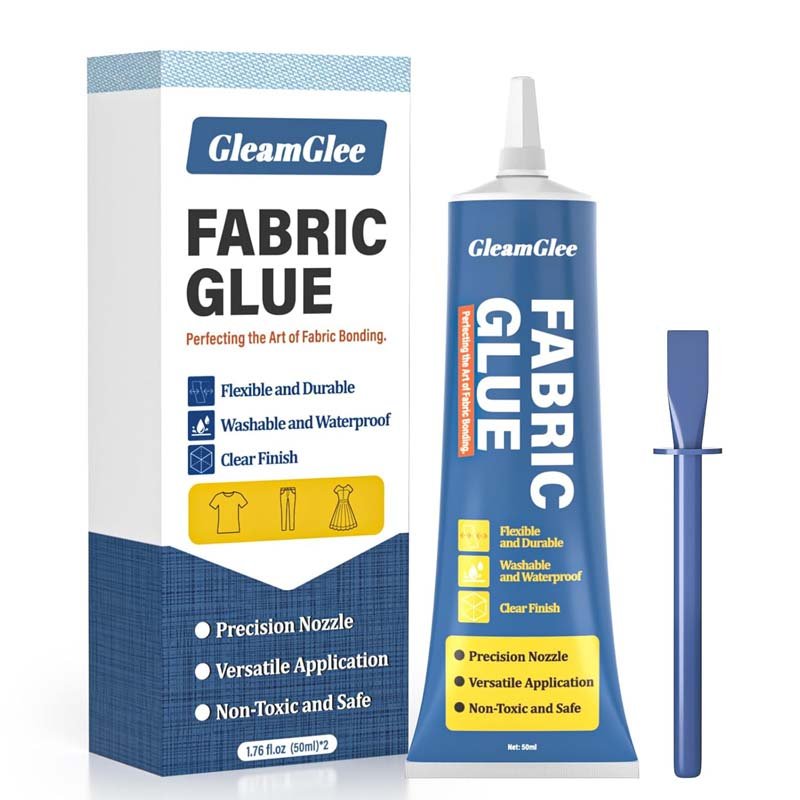
Is GleamGlee Good to Fix Leather Jackets?
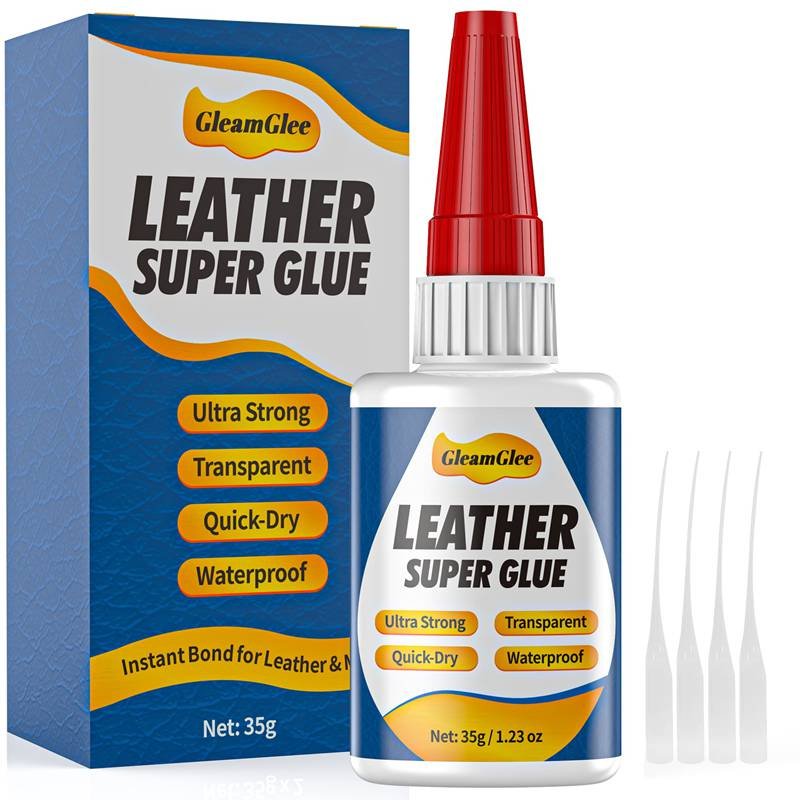
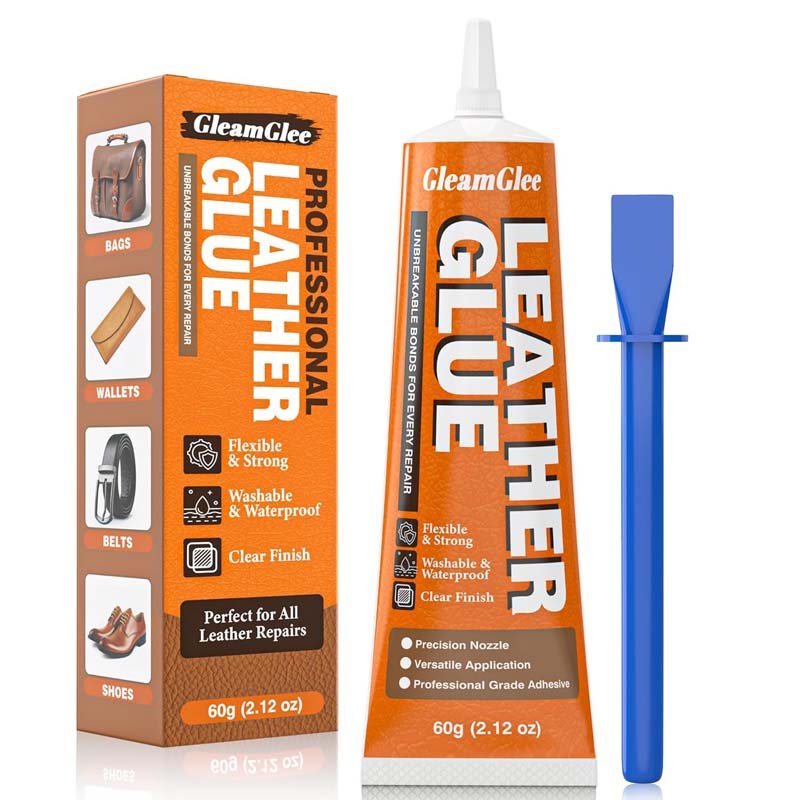
GleamGlee Leather Glue is suitable for fixing leather jackets because it is designed for flexible bonding, clear drying, precise application, and daily-wear durability. Leather jackets bend at the elbows, fold at the cuffs, pull across the shoulders, and rub around the collar, so the repair needs to move with the garment instead of drying into a hard patch.
For small jacket repairs, the most useful glue is not the thickest or fastest one. It should stay controlled during application, dry without turning white, and remain flexible after curing. GleamGlee Leather Glue bonds in about 6–10 minutes and reaches full cure in 24 hours. After curing, it forms a clear, non-yellowing, waterproof bond that fits common repair areas such as cuffs, collars, pocket edges, sleeve tears, leather trims, and decorative patches.
It works on genuine leather, faux leather, suede, shoes, bags, jackets, upholstery, and craft leather items. For jacket repair, a hidden test is still important, especially on suede, vintage leather, light-colored leather, glossy coated leather, and peeling faux leather. When the surface is clean and the glue is applied thinly, it can help restore small damaged areas without making the jacket feel stiff or bulky.
| GleamGlee Feature | Value for Leather Jackets |
|---|---|
| Flexible bond | Helps repaired cuffs, sleeves, and collars move naturally |
| Clear drying | Reduces visible glue marks on exposed jacket areas |
| Non-yellowing finish | Better for brown, tan, cream, and colored leather |
| Waterproof after cure | Helps resist sweat, light rain, and daily moisture |
| Metal precision tip | Controls glue on small tears and lifted edges |
| 6–10 minute initial dry | Gives time to align the repair |
| 24-hour full cure | Builds stronger hold before wearing |
| Multi-material use | Fits genuine leather, faux leather, suede, and trims |
Flexible Finish
GleamGlee Leather Glue dries with a flexible finish, which is important for leather jackets because the repaired area keeps moving after the repair. A cuff bends every time the wrist moves. An elbow area folds deeply when the arm bends. A collar shifts against the neck, hair, and shirt fabric. If the glue dries hard, the repair may crack along the edge or feel uncomfortable during wear.
A flexible finish helps the repair stay closer to the natural feel of the jacket. It also reduces the risk of a hard ridge on high-contact areas. This matters most on soft leather jackets, motorcycle-style jackets, bomber jackets, faux leather jackets, and jackets with thin trims or folded edges.
Best repair areas for a flexible finish include:
- Cuff edge lifting
- Collar trim repair
- Pocket edge bonding
- Small sleeve tears
- Elbow crack support
- Decorative leather patch repair
- Faux leather panel lifting
| Jacket Area | Why Flexibility Matters | Repair Note |
|---|---|---|
| Cuff | Bends and rubs on desks | Use thin glue under the edge |
| Elbow | Folds deeply during movement | Add backing patch for larger cracks |
| Collar | Touches skin and folds often | Clean oils before gluing |
| Shoulder | Stretches when arms move | Avoid glue-only repair for heavy tears |
| Pocket edge | Pulled by hand use | Press well and cure fully |
| Sleeve panel | Moves with arm motion | Keep glue layer thin |
A flexible repair should not feel like plastic after drying. The goal is a repair that closes the damage while keeping the jacket wearable.
Metal Tip Precision
The metal tip on GleamGlee Leather Glue helps control the glue amount, which is especially useful for leather jacket repair. Most jacket damage is narrow: a lifted cuff edge, a small pocket gap, a loose collar trim, or a short tear near a sleeve seam. A large nozzle can release too much glue, causing overflow, shine, and stiff edges.
Precise application helps place glue inside the damaged area instead of spreading it across the visible leather surface. This is important because jacket repairs are often seen at eye level when worn. A thin hidden glue line usually looks cleaner than a thick surface layer.
The metal tip is useful for:
- Sliding glue under cuff edges
- Reaching inside small sleeve tears
- Applying small dots behind patches
- Bonding lifted decorative trims
- Controlling glue near pocket openings
- Reducing waste on tiny repairs
| Repair Type | How the Metal Tip Helps | Suggested Glue Amount |
|---|---|---|
| Cuff lift | Places glue under folded edge | Thin line |
| Pocket edge | Reaches tight corner | Small dots |
| Collar trim | Controls glue near visible edge | Thin hidden line |
| Sleeve tear | Applies glue to backing patch | Thin spread layer |
| Faux leather peel | Limits surface contact | Very small amount |
| Decorative patch | Keeps edge clean | Dots plus thin edge line |
After using the glue, wipe the metal tip clean before closing the cap. Store the bottle upright in a cool, dry place. This helps prevent clogging and keeps the applicator ready for the next repair.
Jacket-Friendly Use
GleamGlee Leather Glue is jacket-friendly because it fits the repair needs of wearable leather items: flexibility, clean finish, moisture resistance, and controlled use. It can be used on genuine leather, faux leather, and suede, but each material needs a slightly different approach. Smooth leather usually repairs more easily, while suede and faux leather need extra testing and lighter application.
On genuine leather jackets, the glue works well for small tears, lifted trims, cuffs, collars, pocket edges, and decorative patches. On faux leather jackets, a hidden test is important because some coatings keep peeling even after the loose area is glued down. On suede jackets, glue should be used very sparingly because excess adhesive can darken the surface or flatten the nap.
Useful jacket applications include:
- Leather jacket cuff repair
- Collar edge repair
- Pocket trim repair
- Sleeve tear support
- Elbow crack stabilization
- Faux leather jacket peel repair
- Decorative patch bonding
- Lining edge repair with careful use
| Jacket Material | Repair Fit | Important Advice |
|---|---|---|
| Genuine leather | High | Clean, apply thin glue, press flat |
| Faux leather | Medium | Test first; coating may keep peeling |
| Suede | Medium | Use very little glue; avoid surface overflow |
| Coated leather | Medium to high | Test for shine or finish reaction |
| Vintage leather | Medium | Check brittleness before repair |
| Thin fashion leather | High | Use light pressure to avoid marks |
| Motorcycle leather | Medium | Small repairs only; structural tears may need stitching |
GleamGlee Leather Glue is most useful when the damaged area is still present and can be aligned. If leather is missing, the shoulder seam is torn through, or the jacket carries heavy stress at the damaged point, a backing patch, stitching, or professional reinforcement may be needed.
Why Choose GleamGlee?
GleamGlee is a practical choice for leather jacket repair because the product is made for real-use repair situations rather than only light craft work. The glue is flexible after drying, clear and non-yellowing, waterproof after curing, and equipped with a metal tip for detailed application. These points match the main problems people face when repairing jackets at home: visible glue marks, stiff repairs, messy application, and early peeling.
For home use, one bottle can support multiple leather repairs beyond jackets. It can also be used for shoes, bags, wallets, belts, gloves, upholstery, leather craft projects, and faux leather accessories. That makes it useful for households that prefer repairing small damage instead of replacing items too early.
GleamGlee also has manufacturing strength behind the product:
- 25+ R&D specialists focused on adhesives, polymers, and repair formulas
- 18+ designers for packaging, labels, and user-friendly instructions
- 4 integrated factories covering formula processing, packaging materials, label printing, and raw materials
- Annual filling capacity of more than 12 million units
- Compliance support for ISO 9001, ISO 14001, CLP, REACH, UKCA, and GHS-related packaging needs
- Custom product options starting from 200 units
- Packaging artwork support as fast as 2 days
- Sample delivery usually within 7–14 days
- Bulk production commonly around 20 days depending on project needs
| Need | GleamGlee Support |
|---|---|
| Home jacket repair | Ready-to-use leather glue |
| Small detailed repair | Metal tip controlled application |
| Clean visible finish | Clear, non-yellowing drying |
| Daily wear durability | Flexible waterproof bond after cure |
| Product resale | Custom label and packaging options |
| Amazon product launch | FBA-ready packaging support |
| Retail or wholesale | Bulk production and formula support |
GleamGlee Leather Glue fits everyday jacket repair needs and also supports brands, retailers, and online sellers that want to develop leather repair products, leather care kits, or customized adhesive lines.
Are DIY Repairs Worth It?
DIY repairs are worth it when the leather jacket damage is small, the leather is still flexible, and the damaged area can be cleaned, aligned, glued, pressed, and cured properly. Small tears, lifted cuffs, loose collar trims, pocket edge gaps, minor cracks, and decorative patch repairs often cost far less to fix at home than to send out for professional restoration.
A leather jacket can cost anywhere from under $100 to several hundred dollars or more, depending on leather type, brand, lining, hardware, and design. Even a basic repair shop service may cost more than a simple adhesive repair when the damage is only a small lifted edge or short tear. Repairing early also helps prevent a minor problem from becoming a larger tear that later needs stitching, patching, or panel replacement.
DIY repair is not always the best choice. If the leather is missing, the shoulder seam is torn, the zipper panel is failing, or a large faux leather area is peeling, glue alone may not be enough. The best value comes from knowing which repairs are safe to do at home and which ones need stronger reinforcement.
| Repair Situation | DIY Value | Why It Matters |
|---|---|---|
| Small cuff lift | High | Fast repair, low stress area |
| Loose collar trim | High | Prevents peeling from spreading |
| Pocket edge gap | High | Stops daily pulling from worsening damage |
| Small sleeve tear | Medium to High | Works well with backing patch |
| Elbow crack | Medium | Needs flexible support and careful curing |
| Torn shoulder seam | Low | Usually needs stitching |
| Large faux leather peeling | Low | Coating may continue flaking |
| Missing leather piece | Low | Needs patch material or professional repair |
Save Favorite Jackets
DIY repair is often worth it because many leather jackets are difficult to replace in the same fit, feel, and style. A jacket may have the right shoulder width, sleeve length, softness, color, and worn-in comfort after years of use. Even if a small tear or edge lift appears, the jacket may still have strong panels, working hardware, and a comfortable shape. Repairing early helps keep that familiar jacket in regular rotation.
Small home repairs are especially valuable for jackets with personal or daily-use value. A favorite motorcycle-style jacket, bomber jacket, vintage jacket, faux leather fashion jacket, or soft casual leather coat may only need one weak area stabilized. A lifted cuff or pocket edge does not mean the entire jacket is finished.
Repairs worth doing early include:
- Cuff edges before they curl wider
- Collar trims before sweat and oil loosen more adhesive
- Pocket openings before pulling creates a larger gap
- Small sleeve tears before they spread during movement
- Decorative patches before corners lift
- Lining gaps before fabric frays further
| Jacket Condition | Repair Worth? | Reason |
|---|---|---|
| Strong body, small cuff damage | Yes | Easy to stabilize |
| Good fit, minor pocket tear | Yes | Extends useful wear |
| Vintage look, small trim lift | Yes | Keeps character while stopping spread |
| Good leather, loose patch | Yes | Simple adhesive repair |
| Dry brittle leather across panels | Maybe not | Material may keep cracking |
| Torn shoulder under stress | Professional better | Needs structural support |
A repair does not need to make the jacket look brand new. It only needs to make the damaged area flatter, stronger, cleaner, and comfortable enough for continued wear.
Reduce Costs
DIY repairs can reduce costs when the damage is minor and does not require sewing, zipper replacement, panel rebuilding, or color restoration. A small tube of leather adhesive can usually handle several repairs, not just one jacket. It may also be used on shoes, bags, wallets, belts, gloves, upholstery, and leather accessories, making it practical for regular household repair.
Professional leather repair is useful for complex damage, but small repairs may not always justify the cost, travel time, or waiting period. A lifted cuff edge, loose trim, or small patch repair can often be completed at home with careful cleaning and a 24-hour cure. Acting early keeps the repair small and helps avoid more expensive work later.
Cost comparison:
| Repair Choice | Estimated Cost Level | Best Use |
|---|---|---|
| DIY leather glue repair | Low | Small tears, cuffs, trims, edges |
| DIY repair with backing patch | Low to Medium | Sleeve tears, elbow cracks |
| Professional leather repair | Medium to High | Stitching, large tears, structural repairs |
| Jacket replacement | High | Severe damage or poor material condition |
| No repair | Low today, higher later | Damage may spread |
DIY repair saves the most money when:
- The tear is short and clean.
- The leather is not missing.
- The repaired area is not carrying heavy stress.
- The damage is repaired early.
- The finish is tested before visible repair.
- The jacket can rest for 24 hours before wearing.
A rushed or messy repair may create extra cost later, so saving money depends on doing the repair carefully.
Extend Daily Wear
DIY repair can extend daily wear by stopping small weak spots from growing. A repaired cuff is less likely to catch on sleeves. A sealed collar trim is less likely to peel from sweat and folding. A closed pocket edge is less likely to spread when hands go in and out. These small fixes help keep the jacket comfortable and usable.
The repair life depends on how the jacket is worn after curing. Leather jackets face repeated bending, friction, temperature changes, and moisture. A jacket worn daily with a backpack will place more stress on shoulder repairs. A jacket worn in damp weather will need more care around cuffs and collar. A repaired elbow needs more flexibility and may need backing support because it bends deeply.
Habits that extend wear after repair:
- Let repairs cure for 24 hours before wearing.
- Avoid heavy backpacks over repaired shoulders.
- Do not overfill repaired pockets.
- Keep cuffs away from rough desk edges.
- Store the jacket on a wide hanger.
- Avoid folding repaired areas sharply.
- Keep repaired areas dry during the first 24–48 hours.
- Check small edges every few weeks.
| Repaired Area | Daily Stress | How to Extend Wear |
|---|---|---|
| Cuff | Wrist movement, desk rubbing | Avoid rough surfaces after repair |
| Collar | Sweat, folding | Clean gently and keep dry |
| Pocket edge | Pulling, hand use | Avoid heavy items in pocket |
| Elbow | Deep bending | Use backing patch for tears |
| Shoulder | Bag strap pressure | Avoid heavy backpacks |
| Front panel | Seat belt, zipper movement | Avoid sharp pulling |
A good DIY repair is not only a one-time fix. It becomes part of regular jacket care. Small checks and early repairs can keep a jacket wearable much longer.
Know When to Repair
Knowing when to repair matters as much as knowing how to repair. DIY adhesive repair is best when the damage is still small, the material is stable, and the repair does not carry major structural stress. A short tear, lifted cuff, loose trim, or small lining gap can often be handled at home. A large tear across a shoulder, missing leather section, or broken zipper panel needs more than adhesive.
A useful rule is to check whether the damaged area can lie flat without force. If it can, adhesive repair may work well. If it leaves a gap, pulls open when flexed, or feels brittle, the repair may need a backing patch, stitching, or professional service.
Home repair is suitable when:
- The damaged area is under 2 inches.
- The leather edges can meet closely.
- The area is clean and dry.
- The material is still flexible.
- No large piece is missing.
- The area is not under heavy load.
- A hidden glue test looks safe.
Professional repair is better when:
- The shoulder seam is torn.
- The zipper panel is pulling away.
- The leather is missing.
- The jacket has large-scale peeling.
- The leather is brittle or powdery.
- The repair affects safety or heavy movement.
- The jacket is expensive and needs an invisible finish.
| Decision Point | DIY Repair | Professional Repair |
|---|---|---|
| Small cuff lift | Yes | Not usually needed |
| Loose trim | Yes | Only if luxury finish is required |
| Short sleeve tear | Yes, with patch | Needed if high-stress area |
| Torn shoulder seam | No | Yes |
| Broken zipper panel | No | Yes |
| Large peeling faux leather | Limited | May still be hard to restore |
| Missing leather | No | Yes, patch required |
DIY repairs are worth it when they are done on the right damage at the right time. Early action, flexible glue, clean preparation, and patient curing give the best chance of saving the jacket without making the repair more visible.
Conclusion
A leather jacket does not have to be replaced simply because a cuff starts lifting, a seam begins separating, or a small tear appears. Many common problems can be repaired successfully at home when addressed early. The combination of proper preparation, a flexible leather adhesive, careful application, and sufficient curing time can restore both appearance and functionality while helping prevent further damage. Small repairs completed at the right stage often extend the usable life of a jacket by several years.
The most successful leather jacket repairs focus on preserving the natural flexibility and character of the leather rather than creating a perfectly invisible fix. Clean surfaces, thin adhesive layers, proper alignment, and patience during curing all contribute to stronger results. Whether repairing a favorite vintage jacket, a daily commuter jacket, a motorcycle jacket, or a fashion piece, a well-executed DIY repair can protect the investment, reduce waste, and keep a trusted jacket looking and performing its best for many more seasons.