 Skip to content
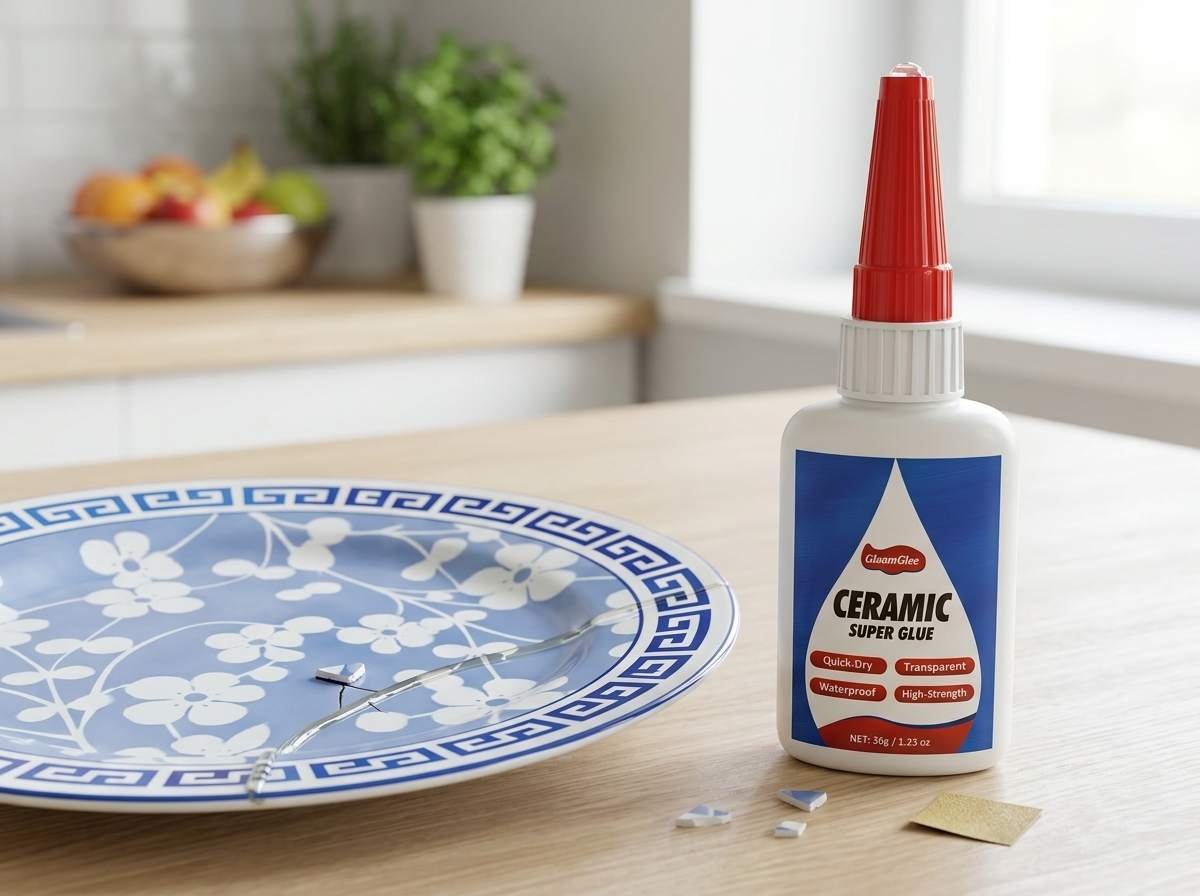
A broken ceramic dish is not always just a broken dish. It may be the mug you use every morning, the plate from a matching dinner set, the small bowl that fits perfectly in your kitchen, or a ceramic piece with family meaning. When it cracks or breaks, many people hesitate before throwing it away because the item still feels useful, beautiful, or personal.
To repair ceramic dishes with ceramic glue, collect all pieces, clean and dry the broken edges, test the fit first, apply a thin layer of ceramic glue, press the pieces together for 5–10 seconds, remove excess glue, and let the repair cure fully before washing or use. The cleanest repairs come from dry surfaces, accurate alignment, controlled glue amount, and enough curing time.
Ceramic repair looks simple, but small mistakes can make the crack more visible or weaken the bond. Too much glue can leave a raised line. Damp edges can reduce strength. Misaligned pieces can ruin the shape before the glue sets. This guide explains how to choose, apply, and use ceramic glue in a practical way, so broken mugs, plates, bowls, vases, figurines, and ceramic décor have a better chance of being saved instead of discarded.
What Is Ceramic Glue?
Ceramic glue is a strong repair adhesive used to bond ceramic, porcelain, pottery, and similar hard materials. It is commonly used for broken mugs, plates, bowls, teapots, vases, figurines, ornaments, planters, and small ceramic décor.
A good ceramic glue should bond quickly, dry clear, and allow accurate application on thin cracks or small broken edges. For ceramic dishes, the repair often needs a clean finish because the crack line may stay visible if the glue is cloudy, thick, or poorly applied.
Ceramic glue works best when the broken pieces are complete, clean, dry, and able to fit closely together. If a dish is missing large fragments, has powdery edges, or has shattered into many small pieces, the repair may still be possible, but the finished result will usually be weaker and more visible.
What Can Ceramic Glue Fix?
Ceramic glue can fix many broken household ceramics when the pieces still match their original shape. It is most useful for clean breaks, small cracks, snapped parts, and decorative ceramic repairs.
Common repairs include:
- Broken mug handles
- Cracked plates and bowls
- Teapot lids, spouts, and small parts
- Chipped vase rims
- Cracked ceramic planters
- Porcelain figurine arms, legs, or bases
- Ceramic ornaments and seasonal décor
- Mosaic tiles and craft pieces
| Ceramic Item | Common Damage | Repair Result |
|---|---|---|
| Mug | Handle breaks off | Handle can be reattached |
| Plate | Clean crack or split | Shape can be restored |
| Bowl | Side piece snaps | Edge can be joined |
| Teapot | Lid or spout breaks | Small part can be bonded |
| Vase | Rim chip or crack | Better for display repair |
| Planter | Side crack | Can seal and strengthen |
| Figurine | Small detail breaks | Decorative part can be fixed |
| Mosaic tile | Loose piece | Can attach to a base |
Ceramic glue is often a good choice for items with practical or emotional value. A favorite coffee mug, a plate from a matching set, or a small porcelain figurine may be worth repairing even if the item is not expensive. The cleaner the break line, the easier it is to make the repair neat.
Is Ceramic Glue Strong?
Ceramic glue can create a strong bond when the surfaces are clean, dry, and tightly pressed together. The strength of the repair depends on glue quality, surface condition, fit accuracy, pressure, and curing time.
For stronger repairs:
- Remove dust, oil, soap residue, and loose ceramic powder
- Dry the broken edges completely before gluing
- Test the fit before applying glue
- Apply a thin, even layer
- Press firmly for 5–10 seconds
- Let the repair cure before washing or use
| Repair Factor | Good Practice | Poor Practice |
|---|---|---|
| Surface | Clean and dry | Damp or greasy |
| Fit | Pieces align tightly | Pieces sit unevenly |
| Glue amount | Thin layer | Thick overflow |
| Pressure | Firm and steady | Loose holding |
| Cure time | Wait before use | Wash too soon |
| Stress level | Gentle handling first | Heavy use too early |
A repaired display vase faces less stress than a mug handle used every morning. A decorative plate on a shelf faces less stress than a bowl washed daily. For items that carry weight, hold liquid, or face heat and washing, allow full curing and use the repaired item carefully.
GleamGlee Ceramic Glue creates an ultra-strong, crystal-clear bond in seconds. It is suitable for ceramic dishes, porcelain pieces, pottery, ornaments, sculptures, garden décor, and small household repairs.
Is Ceramic Glue Clear?
Clear ceramic glue helps make repairs look cleaner, especially on white plates, porcelain mugs, glazed bowls, figurines, and decorative ceramics. A clear repair line is important because ceramic surfaces often show glue marks easily.
Clear ceramic glue helps with:
- White ceramic dishes
- Light-colored plates and bowls
- Porcelain cups and mugs
- Painted figurines
- Decorative vases
- Collectible ornaments
- Mosaic and craft projects
| Repair Need | Why Clear Glue Helps |
|---|---|
| White dish repair | Reduces yellow or cloudy marks |
| Mug handle repair | Keeps the joint neater |
| Figurine repair | Protects small painted details |
| Vase repair | Makes display repair cleaner |
| Ornament repair | Keeps the item attractive |
| Mosaic repair | Creates cleaner edges |
Clear glue still needs careful use. Too much glue can dry as a shiny raised line, even if the formula is transparent. A thin layer, accurate alignment, and quick removal of excess glue give a cleaner finish.
GleamGlee Ceramic Glue is designed to dry crystal clear. Its fine-tip nozzle helps place glue into small cracks, narrow rims, and detailed ceramic parts without spreading adhesive across the visible surface.
Why Use Ceramic Glue?
Ceramic glue is useful when a broken dish, mug, bowl, vase, planter, or ceramic ornament still has repairable pieces. Instead of replacing the item immediately, ceramic glue can help restore its shape, close cracks, reattach snapped parts, and keep meaningful household pieces in use or on display.
It is most helpful for clean breaks where the pieces fit together closely. A broken mug handle, cracked plate, loose teapot lid piece, or snapped figurine detail can often be repaired with a thin layer of strong ceramic glue and careful alignment.
Ceramic glue also saves time and cost for small home repairs. A single broken piece from a matching dinner set may be difficult to replace, while many decorative ceramics have personal value that cannot be measured by price. A neat repair can make the item useful again, or at least keep it as a display piece.
Why Do Ceramic Dishes Break?
Ceramic dishes break because ceramic is hard but brittle. It can handle normal serving, washing, and storage, but it does not bend when sudden pressure hits one point. A mug dropped on a tile floor, a plate knocked against the sink, or a bowl stacked too tightly may crack even when the item looked perfectly strong before. Many breaks happen during daily routines, not careless use. Wet hands, crowded sinks, hard countertops, and fast temperature changes all increase the chance of damage.
Common causes include:
- Dropping mugs, cups, or bowls onto hard floors
- Hitting plates against sinks or countertops
- Stacking dishes with too much pressure on the rim
- Pouring hot liquid into a very cold ceramic cup
- Washing thin ceramic dishes too roughly
- Small chips growing into longer cracks
- Outdoor planters cracking from weather and moisture
| Cause | Common Damage | Common Item |
|---|---|---|
| Drop impact | Full break or snapped handle | Mugs, bowls |
| Sink knock | Rim chip or edge crack | Plates, cups |
| Tight stacking | Pressure crack | Plates, saucers |
| Heat change | Hairline crack | Mugs, bowls |
| Rough washing | Small chip spreads | Dishes |
| Outdoor moisture | Side crack | Planters |
| Daily handling | Loose lid or handle | Teapots |
A clean break is usually easier to repair than a crushed or powdery break. If the ceramic pieces still match well, glue can form a tighter bond and the repair line will look cleaner.
Can Ceramic Glue Save Dishes?
Ceramic glue can save many dishes when the broken pieces are complete, dry, and easy to align. It is especially useful for a favorite mug, a plate from a matching set, a decorative bowl, or a ceramic item that has sentimental value. The repaired item may not always be suitable for heavy daily use, but it can often return to light use, dry storage, or display. For food-contact areas, users should always follow the glue label and avoid direct food or drink contact unless the product clearly allows it.
Ceramic glue can help save:
- Mug handles broken from one or two clean contact points
- Plates split into two or three large pieces
- Bowls with a snapped side section
- Teapot lids, knobs, or spouts
- Ceramic trays, platters, and serving pieces
- Decorative dishes and display plates
- Vases, planters, figurines, and ornaments
| Damage Level | Repair Chance | Better After-Repair Use |
|---|---|---|
| Hairline crack | Good | Display or gentle use |
| Mug handle break | Good | Careful use after full cure |
| Clean 2-piece plate break | Very good | Light use or display |
| 3–4 large pieces | Medium to good | Display or careful handling |
| Small rim chip | Medium | Appearance repair |
| Many tiny shards | Low | Craft reuse may be better |
| Missing large fragment | Low | Visible gap likely |
For a dish that is part of a set, repair can be more practical than replacement. Matching old patterns, limited-edition ceramics, and travel souvenirs may be difficult to find again. Ceramic glue gives these items another chance instead of turning one accident into permanent loss.
When Should You Use Ceramic Glue?
Ceramic glue should be used when the broken ceramic pieces are solid, clean, dry, and able to fit together closely. The best repair moment is soon after the break, before the edges collect grease, soap residue, food stains, dust, or moisture. A quick repair does not mean rushing the process. It means protecting the broken pieces, cleaning them properly, testing the fit, and gluing them before the surface becomes harder to bond.
Use ceramic glue when:
- The broken pieces are large enough to hold safely
- The edges still match the original shape
- The item is worth saving or hard to replace
- The repair area can be pressed together firmly
- There are no large missing fragments
- The repaired item can be used gently afterward
| Repair Situation | Use Ceramic Glue? | Reason |
|---|---|---|
| Mug handle broke cleanly | Yes | Contact points can bond well |
| Plate split into two pieces | Yes | Edges can align tightly |
| Bowl side broke off | Yes | Shape can be restored |
| Vase rim cracked | Yes | Good for display repair |
| Planter side cracked | Yes | Can seal and strengthen |
| Dish shattered into tiny pieces | Not ideal | Alignment is difficult |
| Large piece missing | Not ideal | Glue cannot rebuild the shape |
| Powdery broken edge | Not ideal | Weak contact surface |
Ceramic glue is also useful for non-dish repairs around the home. It can fix soap dishes, toothbrush holders, garden ornaments, ceramic frame details, mosaic tiles, ceramic jewelry pieces, and small decorative items. For a cleaner result, lay out all pieces first and do one dry test before applying glue.

Which Ceramic Glue Works?
The best ceramic glue should bond ceramic and porcelain firmly, dry clear, apply neatly, and stay reliable after normal handling. For dishes, mugs, bowls, planters, and household ceramics, useful ceramic glue should also resist moisture and reasonable heat after full curing.
Ceramic repair is not only about fast sticking. A good result also depends on control. Thin cracks, mug handles, plate edges, and figurine details need glue that can be placed accurately without flooding the surface. Too much glue can make the repair look messy and stop the pieces from fitting tightly.
For most home repairs, choose ceramic glue with three core features: strong bond, clear finish, and precision application. Waterproof and heat-resistant performance are also important when the item may be washed, wiped, filled with warm liquid, or used in damp spaces.
Which Ceramic Glue Bonds Best?
The ceramic glue that bonds best is one that can spread into a thin, even layer and hold hard ceramic surfaces tightly after curing. Ceramic and porcelain are rigid materials, so the broken edges need close contact. A thick glue layer may look stronger, but it can actually leave the pieces slightly raised or misaligned. For broken dishes, mug handles, bowls, and figurines, the best bond usually comes from clean dry edges, a small amount of glue, firm pressure, and enough curing time before washing or use.
A good ceramic glue should offer:
- Strong bonding on ceramic, porcelain, and pottery
- Thin controlled flow for narrow crack lines
- Clear drying finish for visible repairs
- Fast initial hold for small pieces
- Fine-tip nozzle for detailed application
- Stable curing after normal home handling
| Repair Need | Useful Glue Feature | Why It Matters |
|---|---|---|
| Mug handle repair | Strong grip on small contact points | Handle joints carry weight |
| Plate crack repair | Thin flow | Helps edges sit flat |
| Figurine repair | Precision nozzle | Prevents glue from covering details |
| Vase rim repair | Clear finish | Keeps display surface cleaner |
| Planter crack repair | Moisture resistance | Helps after watering |
| Mosaic repair | Multi-material bonding | Ceramic may attach to wood, glass, or metal |
GleamGlee Ceramic Glue creates a high-strength, crystal-clear bond in seconds. It is suitable for ceramic, porcelain, pottery, and mixed-material repairs such as ceramic to metal, plastic, rubber, wood, PVC, concrete, or glass. This makes it practical for dishes, ornaments, craft projects, sculptures, garden décor, and small home repairs.
Is Ceramic Glue Waterproof?
Waterproof ceramic glue is important because many repaired ceramic items meet water during normal life. A mug handle may be washed every day. A plate edge may be rinsed after meals. A soap dish may stay damp in the bathroom. A planter may hold wet soil. If the glue cannot handle moisture after curing, the repair line may weaken, especially around cracks or small contact points. Waterproof performance helps the repair stay more reliable after full curing, but the item should still be kept dry until the adhesive has fully set.
Waterproof ceramic glue is useful for:
- Coffee mugs and teacups washed after use
- Plates, bowls, and serving dishes cleaned by hand
- Ceramic soap dishes and toothbrush holders
- Vases and flower pots exposed to water
- Garden ornaments facing rain or humidity
- Mosaic tiles used in damp areas
| Ceramic Item | Water Exposure | Repair Advice |
|---|---|---|
| Mug handle | Medium | Cure fully before washing |
| Plate edge | Medium | Hand wash gently after curing |
| Bowl crack | Medium | Avoid soaking repaired area |
| Soap dish | High | Let glue cure fully before bathroom use |
| Planter | High | Dry ceramic before gluing; wait before watering |
| Garden ornament | High | Cure indoors before outdoor use |
| Vase | High | Avoid filling with water too soon |
Waterproof does not mean the repaired piece should be soaked immediately. The glue bond needs time to develop. For ceramic dishes, avoid washing, soaking, or filling with water before curing is complete. For planters and garden ceramics, drying before repair is just as important as curing after repair.
GleamGlee Ceramic Glue has waterproof performance after curing, making it suitable for many daily ceramic repairs, including mugs, tableware edges, planters, bathroom accessories, ornaments, and outdoor decorative pieces.
Is Ceramic Glue Heat Safe?
Heat-safe ceramic glue matters when repaired items may touch warm drinks, hot rinse water, steam, sunlight, or temperature changes. Ceramic itself can often handle heat, but the glue line is a separate material and must be treated carefully. A repaired coffee mug handle, teapot lid, or serving dish should be cured fully before use. Even with heat-resistant ceramic glue, repaired items should not automatically be placed in ovens, microwaves, dishwashers, or boiling water unless the product instructions clearly allow it.
Heat resistance is helpful for:
- Coffee mug handles
- Teacup and saucer repairs
- Teapot lids, knobs, and spouts
- Bowls used around warm food
- Plates rinsed with warm water
- Kitchen décor near heat or sunlight
- Outdoor ceramics exposed to sun
| Use Case | Heat Risk | Safer Practice |
|---|---|---|
| Mug handle | Medium | Cure fully before holding hot drinks |
| Teacup crack | Medium | Avoid direct drink-contact repair unless suitable |
| Teapot lid | Medium | Let bond cure before steam exposure |
| Serving plate | Low to medium | Avoid sudden temperature changes |
| Warm-water washing | Medium | Hand wash gently after curing |
| Dishwasher | Medium to high | Avoid unless instructions allow |
| Microwave or oven | High | Usually not recommended for repaired pieces |
For practical home use, repaired ceramics should be treated gently at first. Avoid thermal shock, such as moving a repaired dish from a cold room to boiling water. Hand washing is usually safer than machine washing because it reduces heat, pressure, and long water exposure.
GleamGlee Ceramic Glue is designed with heat-resistant performance for many household ceramic repairs. It is suitable for items such as mugs, dishes, ornaments, teapots, and decorative ceramics when used according to repair needs and allowed to cure fully before heat exposure.
How to Repair Ceramic Dishes?
Repairing ceramic dishes with ceramic glue is usually a careful alignment job, not a difficult technical project. Most successful repairs depend on preparation more than force. Clean surfaces, dry edges, correct glue amount, and proper curing time matter more than squeezing large amounts of adhesive into the crack.
Ceramic dishes often break into a few large pieces rather than many tiny fragments. Plates, bowls, mugs, and serving dishes can often be restored when the edges still match closely. The cleaner the break line, the better the final appearance and bonding strength.
A neat repair also helps reduce visible glue marks. Many users damage the final result by rushing, applying too much glue, or washing the item too early. A thin layer, steady pressure, and enough curing time usually give the cleanest and strongest repair.
How to Prepare Ceramic Dishes?
Preparing ceramic dishes correctly improves both bond strength and appearance. Ceramic glue works best when the broken edges are clean, dry, and free from dust, grease, soap residue, or loose ceramic powder. Even a strong glue may struggle if the repair surface is dirty or damp. Before opening the glue, it helps to organize all broken pieces and test how they fit together. This reduces mistakes once adhesive is applied. Many users find that a quick dry test prevents crooked cracks, uneven seams, and missing alignment during the actual repair.
Before gluing:
- Collect every broken piece carefully
- Remove loose ceramic dust from edges
- Wash away grease or food residue if needed
- Dry the pieces completely
- Lay pieces out in repair order
- Test-fit the pieces before glue application
- Protect the work surface with paper or cloth
| Preparation Step | Why It Helps |
|---|---|
| Cleaning edges | Improves glue contact |
| Drying fully | Prevents weak bonding |
| Test-fitting | Reduces alignment mistakes |
| Organizing pieces | Speeds up repair process |
| Protecting table | Prevents glue stains |
| Good lighting | Helps see crack alignment |
Freshly washed dishes may still hold hidden moisture inside cracks or porous ceramic areas. Let the pieces dry naturally before repair. For outdoor ceramics like planters or garden décor, drying may take longer because ceramic can absorb moisture over time.
If the ceramic item has painted details, gold trim, or delicate decorative surfaces, avoid rubbing the visible finish too aggressively while cleaning. Gentle preparation gives a cleaner-looking repair later.
How to Apply Ceramic Glue?
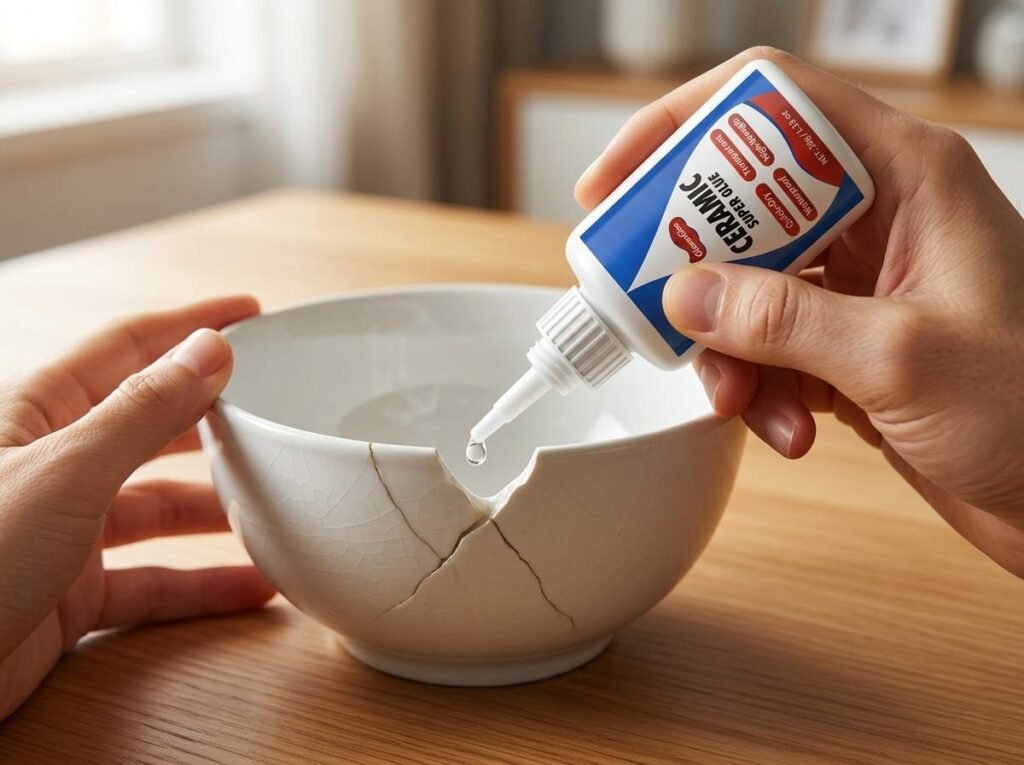
Applying ceramic glue correctly is one of the biggest factors in achieving a clean repair. Many failed repairs happen because too much glue is used. A thick glue layer can squeeze out along the crack, leave shiny marks, or stop the broken edges from sitting tightly together. Ceramic glue usually works better in a thin controlled layer. The goal is to coat the broken edge evenly, not flood the entire area. Precision nozzles help place glue directly into narrow cracks and small ceramic contact points without spreading adhesive across visible glazed surfaces.
For cleaner glue application:
- Apply a thin, even layer
- Use the nozzle for narrow cracks
- Place glue mainly on the broken edge
- Avoid spreading glue across decorative glaze
- Press pieces together immediately after alignment
- Remove excess glue before it hardens
- Keep fingers away from the visible repair area
| Repair Type | Better Glue Method | Common Mistake |
|---|---|---|
| Mug handle | Thin layer on contact points | Large glue blob |
| Plate crack | Thin line along edge | Glue spread across surface |
| Bowl piece | Controlled edge coating | Uneven glue thickness |
| Figurine detail | Small drop with nozzle | Overflow onto painted detail |
| Vase rim | Light even coat | Excess dripping |
| Mosaic tile | Thin base contact layer | Thick uneven build-up |
GleamGlee Ceramic Glue includes precision nozzles designed for small cracks and detailed ceramic repairs. Each pack includes 4 nozzles, while the 2-pack includes 8 nozzles. This helps users maintain cleaner application over multiple projects.
When applying glue, work steadily but calmly. Ceramic glue may hold quickly, but alignment still matters. Once the pieces touch, avoid sliding them around repeatedly because this can spread glue unevenly and weaken the final seam.
How to Hold Ceramic Pieces?
Holding ceramic pieces properly during repair helps keep the crack line level and prevents shifting while the glue starts bonding. Ceramic does not flex like rubber or fabric. If the pieces move while the adhesive is setting, the repair may dry crooked, uneven, or raised. Plates, mugs, bowls, figurines, and planters all need stable support during curing. Even strong ceramic glue needs steady contact between the broken edges to create a reliable bond.
For better holding during repair:
- Align the pieces before pressing firmly
- Hold steady pressure for 5–10 seconds
- Keep crack lines level and even
- Use tape or soft support if needed
- Support curved bowls or vases with towels
- Avoid squeezing so hard that the pieces slide
- Let the item rest without movement during curing
| Ceramic Item | Helpful Support Method |
|---|---|
| Mug handle | Hold both contact points evenly |
| Plate | Lay flat on padded surface |
| Bowl | Support curve with folded towel |
| Vase | Use tape to stabilize tall sections |
| Figurine | Support small part with soft cloth |
| Planter | Use bands or tape for longer cracks |
For larger ceramic pieces, gravity can pull the repair apart if the item is not supported correctly. A bowl may roll slightly while curing, and a vase rim may shift if standing upright. Soft towels, foam pads, or gentle tape support can help stabilize the repair without damaging the surface.
After pressing the pieces together, avoid testing the bond immediately. Pulling, twisting, or lifting the repaired area too soon can weaken the early bond before full curing develops. Patience usually leads to a cleaner and stronger ceramic repair.
What Ceramic Glue Mistakes Matter?
Ceramic glue mistakes usually happen before the repair even starts. Dirty edges, damp pieces, poor alignment, too much glue, and early washing can all weaken the bond or make the crack line more visible. Ceramic is rigid, so small errors are harder to hide once the glue sets.
A good ceramic repair needs clean contact between both broken edges. If the pieces are greasy, dusty, wet, or misaligned, even strong glue may not perform well. The repair should feel controlled: thin glue, steady pressure, and enough curing time.
Most broken dishes can be repaired more neatly when users slow down and prepare first. Lay out the pieces, check the fit, apply a small amount of glue, press carefully, and wait before using the item again.
Do You Use Too Much Ceramic Glue?
Using too much ceramic glue can make the repair weaker and messier. Many people think a thick layer will make the bond stronger, but ceramic pieces usually need close edge-to-edge contact. If too much glue sits between the pieces, the crack line may become raised, uneven, or shiny. Extra glue can also squeeze onto the glazed surface, painted detail, rim, or handle joint. Once it cures, overflow is harder to remove and may leave a visible mark, especially on white plates, porcelain mugs, and decorative ceramics.
Common problems from too much glue:
- Raised glue line along the crack
- Shiny overflow on glazed surfaces
- Uneven plate or bowl alignment
- Longer curing time
- Messy marks on white ceramic
- Weak contact between broken edges
| Repair Area | Too Much Glue Causes | Better Method |
|---|---|---|
| Mug handle | Thick joint, visible squeeze-out | Thin coat on contact points |
| Plate crack | Raised seam across surface | Fine line along broken edge |
| Bowl side | Uneven edge fit | Light, even layer |
| Figurine detail | Covered paint or shape | Tiny drop with nozzle |
| Vase rim | Drips and shiny marks | Controlled edge application |
| Planter crack | Thick outer patch | Bond crack first, reinforce lightly if needed |
A thin layer is usually enough. The broken ceramic edge only needs to be coated, not flooded. After pressing the pieces together, a tiny amount of glue at the seam is normal. If glue flows out heavily, too much was applied. Keep a cotton swab or clean cloth nearby before starting so fresh excess can be removed carefully.
Can Ceramic Dishes Be Wet?
Ceramic dishes should be completely dry before ceramic glue is applied. Water can sit inside cracks, porous unglazed edges, handle joints, planter walls, and tiny chip lines even when the outside looks dry. If glue is applied over moisture, the bond may become weaker, and the repair may fail during washing, handling, or light pressure. Freshly washed dishes, bathroom ceramics, and outdoor planters need extra drying time because hidden moisture can remain inside the broken area longer than expected.
Do not glue ceramic pieces when:
- The dish was just washed
- The broken edge feels cool or damp
- Soap residue remains on the surface
- Food oil or grease is still present
- A planter has held wet soil recently
- Outdoor ceramic has been exposed to rain
- Water is trapped inside a crack
| Ceramic Condition | Repair Risk | Better Action |
|---|---|---|
| Freshly washed plate | Moisture weakens contact | Dry fully before repair |
| Greasy bowl | Glue may not grip well | Clean and dry first |
| Mug handle from sink | Hidden water in joint | Wait until fully dry |
| Wet planter | Moisture inside ceramic wall | Dry 24 hours or longer |
| Soap dish | Residue and water film | Clean, rinse, dry fully |
| Garden ornament | Rain and dirt in crack | Bring indoors and dry |
Drying time depends on the item. A thin plate may dry quickly, while a planter, thick mug handle, or unglazed ceramic body may need much longer. After gluing, keep the repaired item away from water until it cures fully. Waterproof ceramic glue helps after curing, not during a wet repair.
Should You Rush Ceramic Glue?
Rushing ceramic glue repair often leads to crooked seams, visible glue marks, weak bonds, and repeat breakage. Ceramic glue may grab quickly, but the repair still needs preparation. The safest approach is to rehearse the repair once without glue: place the pieces together, check the angle, decide where to hold them, and prepare cloth or cotton swabs for excess glue. Once glue is applied, there may be limited time to adjust the pieces cleanly, especially on small mug handles, thin plate cracks, or delicate figurine parts.
Avoid rushing these steps:
- Sorting all broken pieces
- Test-fitting the crack line
- Cleaning grease and dust
- Drying the ceramic fully
- Applying a thin glue layer
- Holding the pieces steady
- Waiting before washing or use
| Rushed Step | What Can Go Wrong | Better Habit |
|---|---|---|
| No test-fit | Pieces dry in wrong position | Practice alignment first |
| Fast gluing on dirty edge | Weak bond | Clean before applying |
| No drying time | Repair may fail later | Let pieces dry fully |
| Quick heavy pressure | Pieces slide out of place | Press firmly but calmly |
| Early washing | Water reaches glue line | Wait until fully cured |
| Early use | Handle or crack may break again | Use gently after curing |
A repaired ceramic item should rest after bonding. Do not pull the pieces apart to check strength, and do not wash it immediately. For mugs, bowls, planters, and outdoor ceramics, longer curing is safer. One careful repair is usually better than fixing the same dish twice.
Why Choose GleamGlee Ceramic Glue?
GleamGlee Ceramic Glue is made for clean, strong, and easy ceramic repair at home. It is suitable for broken mugs, plates, bowls, vases, figurines, ornaments, planters, mosaic pieces, and small household ceramic repairs.
It creates a crystal-clear, high-strength bond in seconds and helps reduce visible repair marks when applied correctly. The glue is also waterproof and heat resistant after curing, making it practical for many everyday ceramic items that may face washing, moisture, warm drinks, or indoor and outdoor use.
The product is designed for precise repair work. Each pack includes 4 precision nozzles, while a 2-pack includes 8 nozzles. The fine-tip design helps users apply glue into thin cracks, narrow rims, tiny broken details, and hard-to-reach spots without spreading adhesive across the visible ceramic surface.
What Can GleamGlee Bond?
GleamGlee Ceramic Glue is useful for ceramic repair, but it also works on many other household materials. This matters because many broken items are not made from ceramic alone. A ceramic ornament may have a metal hook. A photo frame may include ceramic decoration, glass, and wood. A mosaic project may need ceramic pieces attached to wood, metal, stone, or concrete. A good home repair glue should handle these mixed surfaces without needing several different products.
GleamGlee Ceramic Glue can bond:
- Ceramic
- Porcelain
- Pottery
- Metal
- Plastic
- Rubber
- Wood
- PVC
- Glass
- Concrete
| Repair Item | Material Match | Common Repair Use |
|---|---|---|
| Coffee mug | Ceramic to ceramic | Reattach handle |
| Broken plate | Ceramic to ceramic | Join clean crack |
| Porcelain figurine | Porcelain to porcelain | Fix small details |
| Mosaic art | Ceramic to wood | Attach shards to base |
| Ceramic pendant | Ceramic to metal | Repair jewelry detail |
| Planter | Ceramic to ceramic | Seal side crack |
| Garden ornament | Ceramic to concrete | Reattach decorative part |
| Photo frame | Ceramic to glass/wood | Fix ceramic trim |
| Bathroom holder | Ceramic to ceramic | Repair cracked accessory |
| Tabletop inlay | Ceramic to wood/stone | Rebond decorative tile |
For daily use, this material range helps customers handle many small repair jobs with one glue. It can be used in the kitchen, bathroom, garden, craft room, and home décor area. It is especially helpful for people who repair rather than replace useful items.
Is GleamGlee Repair Clean?
GleamGlee Ceramic Glue is designed for a clean-looking repair because it dries crystal clear and can be applied with a fine-tip nozzle. Ceramic cracks are often easy to see, especially on white dishes, porcelain mugs, light-colored bowls, painted figurines, and glossy ornaments. A messy glue line can make the repair more noticeable than the break itself. Clean repair depends on both the glue and the user’s method: thin application, close alignment, quick removal of excess glue, and enough curing time.
Clean repair advantages include:
- Crystal-clear finish after drying
- Fine-tip nozzle for narrow cracks
- Less overflow on visible ceramic surfaces
- Better control on small broken details
- Neater results on white or light-colored items
- Easier application around rims, handles, and figurines
| Clean Repair Need | GleamGlee Feature | User Benefit |
|---|---|---|
| Thin crack repair | Precision nozzle | Places glue only where needed |
| White dish repair | Clear finish | Reduces cloudy or yellow marks |
| Mug handle repair | Controlled flow | Keeps joint neater |
| Figurine detail repair | Fine-tip application | Avoids covering painted details |
| Vase rim repair | Small glue output | Reduces visible overflow |
| Repeated repairs | Extra nozzles | Keeps future application cleaner |
For the cleanest result, use a small amount of glue. Press the pieces together firmly for 5–10 seconds, then remove any fresh excess from the seam before it hardens. A clear glue can still leave a shiny raised line if too much is applied, so controlled application is important.
Is GleamGlee Easy to Use?
GleamGlee Ceramic Glue is easy to use because it is made for quick home repair without complicated tools. Most small ceramic repairs only need cleaning, drying, test-fitting, thin glue application, short pressing, and curing time. The fast bonding action helps broken pieces stay in place quickly, while the precision nozzles make the glue easier to control on small cracks, handles, rims, and decorative parts.
Basic use steps:
- Clean dust, oil, soap residue, and loose powder
- Dry all broken edges fully
- Test-fit the pieces before gluing
- Apply a thin, even layer of glue
- Press firmly for 5–10 seconds
- Remove excess glue before it hardens
- Let the repair cure before washing or use
| Step | What to Do | Why It Helps |
|---|---|---|
| Clean | Remove dirt and residue | Improves bonding contact |
| Dry | Keep ceramic edges moisture-free | Reduces weak repair risk |
| Test-fit | Check alignment first | Prevents crooked seams |
| Apply | Use a thin glue layer | Keeps repair clean |
| Press | Hold 5–10 seconds | Helps early bonding |
| Cure | Wait before use | Builds repair strength |
The resealable anti-clog cap helps keep the glue ready for future repairs. This is useful because many customers only need a small amount for one broken mug or plate, then want to use the same tube later for a vase, ornament, planter, or craft project.
Conclusion
Repairing ceramic dishes with ceramic glue is a practical way to save mugs, plates, bowls, vases, figurines, planters, ornaments, and many small household ceramics that still have repairable pieces. The best results come from simple but careful steps: clean every broken edge, let the pieces dry fully, test the fit before gluing, apply a thin controlled layer, press the pieces accurately, and allow enough curing time before washing or use. A clean repair is not about using more glue; it is about using the right glue in the right place with steady hands and patience.
GleamGlee Ceramic Glue is designed for strong, clear, and easy ceramic repair, with precision nozzles, fast bonding, waterproof and heat-resistant performance, and compatibility with ceramic, porcelain, plastic, wood, metal, glass, concrete, PVC, and more. It is suitable for everyday home repairs, décor restoration, craft projects, mosaic work, ceramic ornaments, and many mixed-material fixes. For customers who want to order GleamGlee branded ceramic glue or discuss customized ceramic glue products, packaging, private label design, samples, or bulk supply, GleamGlee can support product inquiries and tailored repair adhesive solutions for different market needs.





















