Skip to content

A torn dust jacket looks like a small problem until you hold the book in your hands. Then it suddenly feels much bigger. The front panel curls up, the spine split gets worse every time the book is opened, and the whole book starts to look worn even when the pages and binding are still in good shape. For everyday readers, that is frustrating. For collectors, used-book sellers, school staff, and gift buyers, it can directly affect appearance, confidence, and value. Many people make the same mistake at this stage: they grab the strongest glue they own, press hard, and hope the damage disappears. In reality, dust jackets are thin printed paper covers, not heavy boards, so they need a lighter and more controlled repair method.
The best way to fix torn dust jackets with book adhesive is to treat the damage as a paper repair, not a heavy-duty bonding job. A good repair starts with checking whether the jacket is still strong enough to handle, choosing a clear and controlled book adhesive, using only a small amount, aligning the tear carefully, and letting the area dry flat. When the paper is brittle, rare, or badly damaged, protection and careful handling matter more than aggressive glue work.
A lot of books are not ruined by age alone. They are ruined by rushed repair. A small fold split becomes a shiny glue patch. A clean tear becomes a wavy panel. A collectible jacket gets scarred by yellow tape that looks worse than the original damage. The good news is that many torn dust jackets can still be repaired neatly at home when the repair is approached with patience and the right product. Once you understand where dust jackets fail, what kind of adhesive works, and which warning signs tell you to slow down, the job becomes much more manageable.
What Do Torn Dust Jackets Need Before Book Adhesive?
Before book adhesive touches the jacket, the paper needs a quick but careful condition check. This step decides whether the repair will look clean, sit flat, and last, or whether the tear will turn into a dark glue line, a warped panel, or a second split beside the first one. A dust jacket is not only a cover. It is a thin printed paper layer that has already been weakened by folding, shelf friction, hand oils, sunlight, dust, and repeated opening. That is why the best repair does not begin with glue. It begins with reading the damage correctly. In most home repairs, spending 5 to 10 minutes on inspection saves far more time than trying to correct a bad repair later.
A good pre-repair check should answer five simple questions:
- Is the paper still strong enough to handle?
- Do the torn edges still meet naturally?
- Is the tear on a flat panel or a moving fold?
- Is there old tape, dirt, or residue in the damaged area?
- Is this a reading copy, a gift copy, a resale copy, or a book where appearance matters more?
That last question is more important than many people expect. A tear on a personal reading copy may only need to be stabilized neatly. A tear on a gift book or resale book needs a cleaner visual result. A tear on an older or sentimental book needs more restraint because a messy repair may lower the book’s appeal more than the original damage.
Why do torn dust jackets split at folds first?
Dust jackets usually split at folds first because folds take most of the stress every time the book is handled. The spine-edge folds, flap folds, and top and bottom of the spine bend, rub, and catch again and again, while the flat panels usually stay under much less movement. Over time, the paper fibers at those moving points start to weaken. At first the fold may only show a pale line or slight rubbing. Then a short split appears. After that, each opening of the book can make the crack travel farther.
This is why a fold tear should never be judged only by length. A 1-inch tear on a flat back panel is often easier to repair than a 1-inch split at the spine edge. On the flat panel, the paper mainly needs to lie back together. On the fold, the paper needs to lie back together and still bend normally later. That is a much harder job.
In real shelf use, the most common stress points are easy to spot:
- Spine-edge folds: These take repeated bending when the book is opened and closed.
- Top of the spine: This area is often pulled when someone grabs the book by the top.
- Bottom of the spine: This rubs against shelves and surfaces when the book is set down.
- Front and back flap folds: These weaken when the jacket is opened too wide or checked often.
- Corners: These catch on nearby books, bags, or hands and then start tearing inward.
A lot of dust jacket damage follows the same pattern. The paper first shows whitening at the fold. Then a shallow line appears. Then a short break forms, often around 0.5 to 1 inch long. If nothing changes in handling, that break can double quickly because the stress keeps returning to the same point. That is why many people say, “It was only a tiny split last month.”
This table shows how fold-related damage usually develops:
| Area of Jacket | Early Sign | Next Stage | Common Result if Ignored |
|---|---|---|---|
| Spine-edge fold | Whitening or rubbing | Short split | Longer crack down the fold |
| Top of spine | Softening or crumple | Small paper break | Chipping or torn spine head |
| Bottom of spine | Shelf wear | Frayed edge | Larger loss at spine tail |
| Flap fold | Fine crack line | Flap split | Full tear through flap joint |
| Corner | Bent tip | Small edge tear | Larger corner break |
The important point is simple: fold tears are not random. They are stress tears. That means the repair has to respect movement. If the paper is already dry and overworked, forcing it flat or using too much adhesive can create a repair that looks fine for a day but fails once the jacket bends again.
Which torn dust jackets are easy to repair with book adhesive?
The easiest dust jackets to repair are the ones where the paper is still flexible, the torn edges still match well, and the damaged area is not full of old tape or missing pieces. In practical terms, a good repair candidate is a jacket that can still be handled calmly without creating fresh damage. When the paper still “wants” to return to its original position, the adhesive only needs to support the tear. When the paper is twisted, brittle, or half-separated from its surface coating, the repair becomes much harder to keep neat.
The best repair cases are usually these:
- Short clean tears on flat panels: These often give the neatest visual result because there is less fold stress after repair.
- Small flap splits: If the edges are clean and the flap still bends normally, repair is usually manageable.
- Short spine-edge cracks: These are workable when the fold is still flexible and not crumbly.
- Corner tears with no missing paper: These can often be stabilized well if the paper tip is still present.
- Modern jackets with fresh damage: A recent tear usually repairs better than an old one that has already been bent, taped, and reopened.
A useful working range for home repair is this: if the tear is small to moderate, the paper edges meet without force, and the surrounding area stays flat on the table, the jacket is often a good candidate. Once the damage includes missing paper, hardened old tape, several nearby cracks, or obvious brittleness, the repair becomes much less predictable.
A quick dry-fit test tells you a lot. Set the jacket flat and gently bring the tear edges together before using any glue. Do not press hard. Just see what the paper does.
Good signs:
- the edges line up in a few seconds
- the surface stays calm instead of lifting sharply
- the fold still has shape
- the artwork or printed lines match easily
- no extra crack opens nearby
Risk signs:
- the paper twists when you try to align it
- one side sits higher than the other
- the fold feels stiff and wants to split more
- the tear edges are ragged or missing fibers
- the panel ripples even before adhesive is applied
This table helps separate easier jobs from harder ones:
| Jacket Condition | Repair Difficulty | Likely Visual Result |
|---|---|---|
| Clean 1-inch panel tear | Low | Usually neat and quiet |
| Small flap split | Low to medium | Good if aligned carefully |
| Short spine-edge crack | Medium | Good if fold still bends |
| Tear across glossy artwork | Medium | Can repair well, but marks show more |
| Old tear with tape residue | High | Often still visible after repair |
| Brittle fold with several cracks | High | Stability may improve, appearance less clean |
| Missing paper section | Very high | Tear may stabilize, but loss remains visible |
For real-life use, “easy to repair” often means more than “easy to glue.” It means:
- the repair can be done without making the jacket uglier
- the book can go back on the shelf looking calmer
- the tear is less likely to reopen in the first few uses
- the process does not require heavy correction afterward
This matters a lot with books that people want to keep presentable, such as gift editions, cookbooks, children’s hardcovers, favorite novels, decorative shelf books, and used books being prepared for resale. A clean short tear on one of those books is often worth repairing because the visual improvement can be obvious right away.
When are torn dust jackets too fragile for book adhesive?
Some dust jackets are not really “tear repair” cases anymore. They are fragile paper cases. When the paper is dry, cracking, flaking, or already scarred by old repairs, adding adhesive too quickly can make the jacket look worse and sometimes make the paper even harder to handle afterward. In those cases, the smartest move is often to slow down, protect the jacket, and avoid treating it like a normal modern tear.
A jacket becomes too fragile for simple adhesive repair when the paper can no longer handle light alignment safely. That usually shows up in very practical ways:
- the fold cracks further while being moved
- the surface print or glossy layer begins lifting
- the paper feels stiff like dry leaves instead of flexible paper
- the spine ends are chipped or partly missing
- old tape has left yellow, hard, or sticky lines
- one tear turns out to be three connected weak areas
This is especially important with:
- older first editions
- signed or gifted books
- family keepsakes
- decorative vintage jackets
- books intended for premium resale
- books with sentimental value where a poor repair would be hard to accept
The biggest mistake in these cases is assuming, “It is already damaged, so there is nothing to lose.” In reality, there may be quite a lot to lose. A fragile but honest old jacket often still looks better than one with a dark glue scar, a shiny patch, or a crushed fold caused by rushed repair.
These warning signs usually mean “pause before glue”:
- Brittle fold line: The fold feels dry, pale, and ready to split again under light pressure.
- Several old repairs: The jacket already has tape, dried glue, or thickened areas that interfere with new repair.
- Missing sections at spine or corners: The paper no longer has a natural shape to return to.
- Surface separation: The printed or coated outer layer is lifting away from the paper base.
- Chain cracking: One visible tear is only part of a larger weak zone.
This decision guide makes the difference clearer:
| Jacket Condition | Best Next Step |
|---|---|
| One short clean tear, paper still flexible | Repair is usually reasonable |
| Several short tears, paper still strong | Repair selectively and gently |
| Old tape, sticky residue, or thick old glue | Clean judgment first, repair with caution |
| Brittle folds and flaking surface | Reduce handling and protect before repair |
| Missing chips at spine ends | Stabilize and protect; repair may stay visible |
| Valuable or sentimental jacket | Prioritize appearance and restraint |
When the jacket is fragile, protection often becomes more important than immediate adhesive work. That may mean:
- placing the jacket in a protective cover
- moving the book to a calmer shelf position
- avoiding direct sunlight and dry heat
- reducing handling until the repair can be done carefully
- testing the condition gently rather than forcing alignment
A simple way to think about it is this: if the paper still behaves like paper, the repair is often manageable. If it behaves like something ready to crumble, the job starts with caution, not glue.
What should you check in the first 5 to 10 minutes before repair?
The first few minutes before repair should tell you whether the job is simple, moderate, or risky. This check does not require special tools. It only requires good light, a clean surface, and patience. In most cases, 5 to 10 minutes is enough to prevent the most common repair mistakes.
Start by checking these five things:
- Tear type: Is it a straight tear, a fold split, a corner break, or a tear with missing paper?
- Paper strength: Does the jacket still flex, or does it feel brittle?
- Surface condition: Is the area clean, dusty, glossy, flaking, or previously taped?
- Alignment quality: Do the two sides meet naturally?
- Use goal: Does the book need to be readable, giftable, sellable, or preserved more carefully?
This quick pre-repair checklist is practical:
| Question | Good Sign | Risk Sign |
|---|---|---|
| Does the tear close neatly without glue? | Yes, edges match | No, gap or overlap appears |
| Is the fold still flexible? | Bends normally | Cracks or feels dry |
| Is the surface clean? | Dry and stable | Dusty, sticky, or tape-damaged |
| Is the paper complete? | All parts present | Missing chips or worn edges |
| Can the jacket lie flat? | Mostly flat on table | Curling, buckling, lifting |
This check is worth doing every time because many bad repairs come from misreading the damage. A jacket that looks like a simple 1-inch tear may actually be a weak fold with coating lift on both sides. Another jacket may look messy at first glance but turn out to be a very repairable clean split once it is laid flat.
The better the inspection, the calmer the repair. And on dust jackets, calm is usually what gives the best-looking result.
Which Book Adhesive Works Best for Torn Dust Jackets?
The best book adhesive for torn dust jackets is one that gives you control, dries clear, and stays calm on thin printed paper. In real life, most people do not ruin a dust jacket because the glue was too weak. They ruin it because the glue was too wet, too thick, too messy, or too hard after drying. A dust jacket is not a heavy board repair. It is a visible paper repair. That means the right adhesive should help the tear close neatly without leaving dark marks, stiff ridges, or a shiny patch that is easier to notice than the tear itself. For most readers, sellers, and home users, the right choice is the adhesive that makes the repair look cleaner, sit flatter, and survive normal handling without making the jacket feel overworked.
What kind of book adhesive is safe for torn dust jackets?
A safe book adhesive for torn dust jackets is one made for books or paper-based repairs, with a clear finish and a controlled flow that does not flood the surface. That is the short answer. The jacket is thin, printed, and often coated, so the adhesive has to behave well on a material that shows mistakes quickly. If the formula is too runny, it can spread past the tear line and leave darker areas. If it dries too hard, the repaired section may hold, but the fold next to it may crack the next time the book is opened. If it dries yellow or cloudy, the repair may look older than the damage itself.
For customers, “safe” usually means three things at once: it should not stain the paper, it should not make the jacket feel stiff, and it should not be difficult to place where you want it. These are the real concerns people notice after repair. They do not usually complain that the glue failed to stick in the first hour. They complain that the panel looks wavy, the fold feels crunchy, or the repaired line catches the light from across the room.
That is why general household glue often disappoints on dust jackets. It may bond strongly, but it is designed for broader use, not for thin printed paper that stays in full view. Dust jackets need a lighter hand and a more paper-friendly product. A good book adhesive should feel like a detail tool, not a construction material. It should support the paper, not dominate it.
A simple comparison helps here:
| What Matters Most | Why It Matters on Dust Jackets |
|---|---|
| Clear drying | The repair sits on the outside of the book |
| Smooth controlled flow | Tear lines are narrow and easy to over-glue |
| Flexible finish | Spine folds and flap folds still need to move |
| Low residue | Messy glue is more visible than the tear |
| Easy cleanup during use | Small errors happen fast on printed paper |
In practical use, the safest adhesive is often the one that lets an ordinary person do a careful repair without panic. That is especially important for gift books, family books, used books prepared for resale, children’s books, and favorite hardcovers that get opened often. These customers do not need laboratory language. They need a product that feels manageable and leaves the book looking cared for.
Is clear book adhesive better for torn dust jackets?
Yes, clear book adhesive is usually the better choice because dust jackets are meant to be seen. The repair is not hidden inside the hinge or under the endpaper. It is right there on the cover, the spine edge, or the flap. Even when a repair is structurally successful, a cloudy or yellow line can make the book look neglected. A clear adhesive gives the jacket a better chance of looking natural after the tear is closed, especially on gift editions, resale copies, and books with bold jacket design.
This matters even more on jackets with large areas of solid color. On white or cream jackets, yellowing is obvious. On black, navy, or dark green jackets, any uneven gloss can stand out under side light. On photo-heavy modern jackets, a thick or cloudy repair line can interrupt faces, titles, or artwork. In all of these cases, customers are not only judging whether the tear is fixed. They are judging whether the book still looks presentable.
That said, “clear” alone is not enough. A glue can dry clear and still be the wrong choice if it spreads too easily or hardens too much. The best result comes from the combination of clear drying and controlled application. Customers usually want the same visual outcome: the repair should be quiet. It should not be the first thing the eye notices when the book is on a shelf.
A useful way to think about it is this: on dust jackets, appearance and performance are tied together. If the repair line looks thick or shiny, there is a good chance too much adhesive was used or the wrong kind was chosen. If the line stays clean and calm, the product and the application were probably better matched to the paper.
Here is how different finishes usually read on the shelf:
| Adhesive Finish After Drying | How the Book Usually Looks |
|---|---|
| Clear and low-shine | Neat, calm, less distracting |
| Clear but glossy | Visible under angled light |
| Slightly cloudy | More noticeable on artwork and text |
| Yellowing over time | Makes the repair look older and dirtier |
| Thick visible line | Gives the book a “patched” look |
For customers selling used books, this choice has a direct effect on presentation. A cleaner-looking repair can help the book photograph better and feel more trustworthy to a buyer. For families and personal collectors, it makes the difference between “I repaired it” and “I saved it without making it ugly.” That is why clear-drying book adhesive is usually the smarter choice in this category.
Does fine-tip book adhesive make torn dust jackets easier to fix?
Yes, a fine-tip book adhesive makes torn dust jackets much easier to fix because it helps solve the biggest problem in this kind of repair: using too much glue. Most dust jacket tears are narrow. The flap split may only be a few millimeters wide. The spine crack may follow a fold line that already wants to buckle. A wide applicator makes it easy to put out more adhesive than the paper can handle. A fine tip gives you a better chance of placing a small, narrow amount exactly where the tear needs support.
For most users, this is not a small convenience. It changes the whole repair experience. With better control, there is less need to spread glue around after it lands. That means less smearing, less paper movement, and less chance of turning a clean tear into a messy repair. Customers notice this immediately on the first job. The tear stays more aligned, the repair looks slimmer, and cleanup is easier.
This matters most on these common repair areas:
- short spine-edge splits
- flap-fold tears
- top and bottom spine wear that is starting to open
- narrow tears crossing printed jacket text
- corners where the paper is already under stress
A fine metal nozzle or narrow-point applicator is especially helpful for customers who repair more than one book. If you are working through family books, shop inventory, school books, journals, or secondhand finds, consistency becomes important. A product that applies neatly every time is easier to trust, easier to reorder, and easier to work into a repeat process.
The difference becomes very clear in use:
| Applicator Style | What Usually Happens During Repair |
|---|---|
| Fine-tip nozzle | Better placement, less waste, cleaner line |
| Wide opening | Too much product comes out too quickly |
| Brush application | More coverage than needed on small tears |
| Improvised spreading tool | Higher chance of drag marks and misalignment |
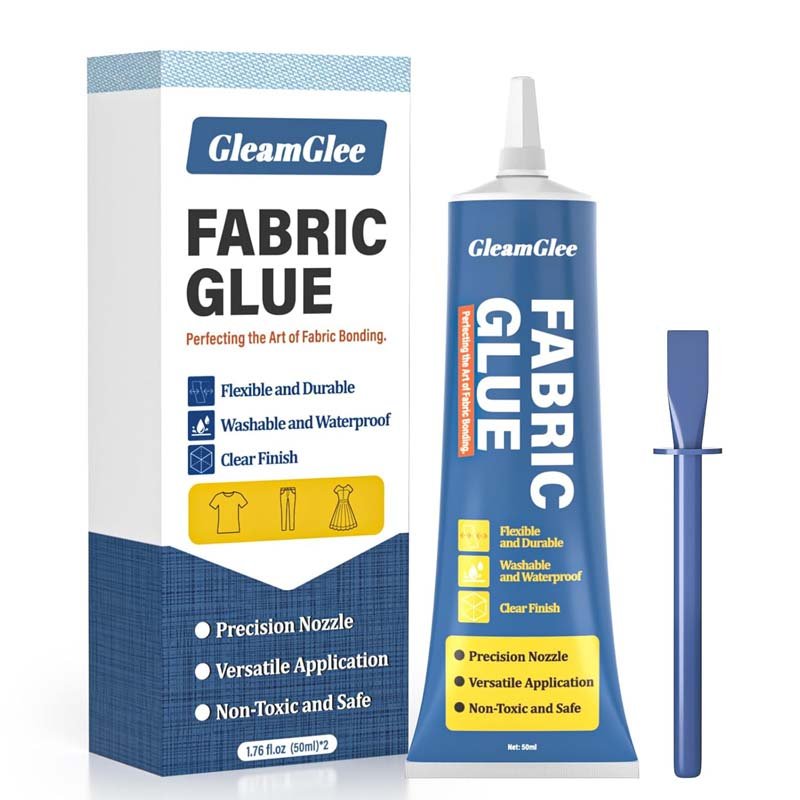
This is one of the reasons GleamGlee book adhesive works well for torn dust jackets. The fine metal nozzle gives much better control on visible paper repairs, and that control matters just as much as the adhesive formula itself. The product is not only about sticking paper together. It is about helping the user keep the repair neat from the first second of application.
For many customers, that control is what gives them confidence to even attempt the repair. They are less worried about making a mess, less likely to flood the paper, and more likely to get a shelf-worthy result. On dust jackets, that is a big advantage.
How should customers choose between book adhesives in real life?
The easiest way to choose is to stop thinking about which glue sounds strongest and start thinking about which glue is most suitable for visible paper work. In real life, the best adhesive for torn dust jackets is usually the one that gives the cleanest result with the least risk. Customers should look at the actual repair they need to do, the type of jacket surface, and how much handling the book will get afterward.
If the jacket is modern, lightly damaged, and still flexible, a clear book adhesive with a precision tip is usually the best match. If the jacket is glossy or dark-colored, the finish becomes even more important because marks show more easily. If the jacket is old, brittle, or previously repaired with tape, the choice matters even more because the paper is already less forgiving.
A practical buying checklist looks like this:
| Customer Question | Better Answer |
|---|---|
| Will it dry clear? | Important for all visible jacket repairs |
| Can I control the amount easily? | Critical for narrow tears and folds |
| Will the repair stay too stiff? | Avoid adhesives that dry hard on folds |
| Is it made for books or paper use? | Better fit than broad heavy-duty glue |
| Can I use it on other paper repairs too? | Better value for repeat use |
This last point matters for real customers. Many people buying book adhesive do not have only one torn dust jacket. They may also have loose pages, worn journals, damaged paper covers, scrapbook work, postcards, invitations, or handmade books. A product that covers several paper-based tasks gives better value and makes repeat purchase more likely.
That is also where GleamGlee has a strong advantage. Its book adhesive is not only positioned for dust jacket repair. It also suits books, paper, vellum, photos, and similar materials, which makes it more practical for both personal use and business use. A home customer gets more value from one tube. A retail customer or reseller gets a clearer product story. And a private-label or distribution customer gets a category with broader demand than dust jacket repair alone.
In short, the best book adhesive for torn dust jackets is not the one with the loudest promise. It is the one that gives customers the cleanest repair, the easiest control, and the best-looking result after the book goes back on the shelf.

How Do You Fix Torn Dust Jackets with Book Adhesive?
To fix torn dust jackets well, the repair has to be calm, light, and controlled. The goal is not to hide the damage with a thick layer of glue. The goal is to bring the paper edges back together, keep the panel flat, and make sure the repaired area still behaves naturally when the jacket goes back on the book. In most home repairs, the final result depends less on “strong glue” and more on four practical things: clean preparation, a small and accurate amount of adhesive, steady alignment, and enough drying time before the jacket is handled again. If those four steps are done well, even a visible tear can end up looking much neater and lasting much longer.
How do you clean torn dust jackets before using book adhesive?
Before using book adhesive, take the dust jacket off the book and make sure the damaged area is clean, dry, and stable. A dust jacket repair should never begin while the jacket is still wrapped around the hardcover. Once the jacket is removed, the first job is to see what kind of repair you are really dealing with. A tear that looks simple from a distance may have loose dust, a second hidden crack, a lifted coating edge, or old tape residue that will affect the finish.
A good cleaning and prep step usually takes about 3 to 8 minutes, and it often decides whether the repair looks neat or messy.
Focus on these checks first:
- Look at the tear under good light. Check whether the paper edges still match neatly or whether fibers are crushed, bent, or missing.
- Remove loose dust gently. Use a soft dry cloth or a very soft clean brush. Do not rub hard. Do not use water or household cleaner.
- Check for old tape or sticky residue. If the jacket has yellow tape, gummy edges, or hardened old glue, do not rush to peel it away. Pulling it off quickly can tear printed surface and make the repair line much uglier.
- Let curled paper settle before repair. If the jacket is lifting or rolling, give it a little time on a flat surface so the paper relaxes naturally.
- Find nearby weak spots. Many dust jackets have one visible tear and one or two smaller stress lines close to it, especially along flap folds and spine edges.
A quick dry-fit test helps a lot. Bring the torn edges together without glue and see how the paper behaves.
Good signs:
- the two sides meet naturally
- the panel stays fairly flat
- the fold still has shape
- no nearby crack gets worse during alignment
Warning signs:
- the paper lifts sharply on one side
- the surface print flakes
- the tear refuses to close cleanly
- the fold looks ready to split further
This simple prep table is useful before every repair:
| What to Check | Good Repair Condition | Risk Sign |
|---|---|---|
| Surface | Dry and clean | Dusty, greasy, sticky |
| Tear edges | Match naturally | Ragged, missing, crushed |
| Fold strength | Still bends | Dry, white, cracking |
| Old repairs | No tape or residue | Yellow tape, glue lumps |
| Panel shape | Lies mostly flat | Curling, buckling, warping |
The cleaner the area is before adhesive, the less correction you need later. Most bad-looking repairs start with a surface that was already telling the user to slow down.
How much book adhesive should you use on torn dust jackets?
Use a very small amount of book adhesive—just enough to support the tear line, not enough to soak the paper. That is the main rule. On dust jackets, excess glue causes more visible problems than weak glue. Too much adhesive can darken the paper, create shine, leave a ridge, or make the repaired area stiffer than the fold beside it. A good repair line should feel controlled, not heavy.
In practical use, the right amount is usually much less than people expect. If glue spreads far beyond the tear, squeezes out when the paper is joined, or makes the area look wet across a wide patch, the amount is probably too high.
A safer way to work is:
- Apply only to the tear path. Keep the adhesive line narrow and controlled.
- Work in short sections on long tears. A 3-inch tear is easier to manage in two or three smaller parts than in one rushed pass.
- Dry-fit before glue. Know how the edges close before you place adhesive.
- Stop once the tear is aligned. Reworking the same line again and again usually roughens the paper and spreads glue where it is not needed.
- Watch the surface, not just the tear. If the surrounding panel starts looking shiny or damp, back off immediately.
Here is a practical guide:
| Adhesive Amount | What Usually Happens |
|---|---|
| Too little | Tear may not hold evenly |
| Just enough | Clean closure, lower visual impact |
| Slightly too much | Mild shine, darker repair line |
| Far too much | Waviness, squeeze-out, stiff repair |
A useful visual rule is this: the repair should look like the paper came back together, not like the glue sat on top of it. If the first thing you notice is the adhesive, the amount was probably wrong.
For different tear types, the amount should still stay modest:
- Flat panel tear: light narrow application, usually the easiest case
- Flap fold split: even less glue, because the fold still needs to move
- Spine-edge crack: very controlled use, since this is a stress point
- Corner tear: light application plus careful alignment, because edge buildup shows easily
In most home repairs, people do not need more glue. They need more control.
How do you align torn dust jackets after using book adhesive?
After the adhesive is applied, bring the torn edges together slowly and match the original shape of the paper as closely as possible. A neat repair depends on alignment more than pressure. If the two sides of the tear do not meet correctly, even the best adhesive will leave a repair that looks off-center, thick, or uneven on the shelf.
The most important thing is to line up the paper edges before the adhesive starts to settle. This is why dry-fitting the tear before repair helps so much. Once the glue is down, there should be very little guesswork left.
Pay attention to these points:
- Match printed lines first. If the tear crosses title text, artwork, or a border line, those visual cues help you see whether the paper is in the right place.
- Do not overlap the paper. One side sitting on top of the other creates thickness and makes the repair line obvious.
- Do not stretch the tear closed. If you have to pull hard to make the edges meet, something is wrong—either the paper is distorted or the tear is more complex than it looked.
- Keep the fold shape natural. If the tear is on a flap or spine fold, the fold must still behave like a fold after repair.
- Avoid repeated nudging. One or two small adjustments are fine. Constant repositioning usually roughens the edges and spreads the adhesive.
This alignment table helps spot common mistakes:
| Alignment Issue | What It Looks Like After Drying |
|---|---|
| Good edge match | Slim, calmer repair line |
| Slight overlap | Thick visible ridge |
| Gap left open | Tear line still noticeable and weak |
| Artwork misaligned | Repair looks obvious from a distance |
| Fold flattened wrongly | Jacket sits awkwardly on the book |
A good repair often looks almost boring while drying. The tear line is quiet, the paper lies still, and nothing dramatic is happening. That is usually a sign the alignment is working.
How do you press torn dust jackets flat after book adhesive?
After the tear is aligned, keep the repair flat with light, even support while the adhesive settles. Dust jackets do not need hard pressing. Hard pressure is one of the most common reasons a repair line becomes shiny, uneven, or crushed. The paper should stay in place, not be forced into a new shape.
The safest approach is to hold the area flat enough to prevent movement, but not so hard that adhesive is pushed outward or the fold is flattened unnaturally.
Here is what works best:
- Use light, even pressure. The goal is stability, not force.
- Keep the panel in its natural plane. If the jacket wants to lie flat, let it lie flat. If the tear is on a fold, preserve the fold shape.
- Do not keep checking every minute. Lifting and touching the area too early often shifts the tear line.
- Protect against unintended sticking. Make sure the repaired section is not pressed against something that will leave texture or pull the adhesive.
- Support the surrounding area too. A tear may be aligned well, but if the panel around it is buckling, the final result still looks poor.
A simple pressure guide:
| Drying Support | Likely Result |
|---|---|
| Light and even | Cleaner, flatter repair |
| Uneven support | Rippled or shifted line |
| Hard pressing | Shine, squeeze-out, crushed fold |
| Frequent lifting/checking | Misalignment and rough edge line |
This matters most on:
- spine-edge folds
- flap joints
- top and bottom spine tears
- glossy jackets where pressure marks show easily
In real use, “flat” should not mean “pressed dead flat.” A dust jacket still has shape. A good repair keeps that shape while preventing movement during drying.
How long should torn dust jackets dry after book adhesive?
Let torn dust jackets dry longer than the surface seems to need. A repair may feel dry to the fingertip fairly quickly, but that does not always mean it is ready to be wrapped back around the book, opened at the folds, or pushed between tightly shelved hardcovers. The safest habit is to let the repair rest flat until it feels settled, not just touch-dry.
For most home repairs, it helps to think in stages:
| Drying Stage | What It Means | Best Action |
|---|---|---|
| Early set | Tear is no longer sliding easily | Leave flat and undisturbed |
| Surface dry | Top feels dry | Do not reinstall yet |
| Settled repair | Bond feels calmer | Light handling only |
| Fully rested | Ready for normal shelf use | Return jacket to book |
A practical routine is:
- Leave the repair undisturbed for the first part of drying. That is when shifting does the most damage.
- Wait several hours before reinstalling the jacket. Even if it feels dry on top, the bond may still be settling.
- Overnight rest is often the better choice. This is especially true for flap folds, spine-edge tears, longer splits, and books that will be handled soon after repair.
- Do not rush the book back into a tight shelf. Freshly repaired jackets need a little calm before going back into normal use.
Books that deserve longer drying time after repair include:
- frequently handled novels
- school books
- cookbooks
- gift books
- resale copies that need to photograph well
- jackets repaired at folds rather than flat panels
The biggest drying mistake is this: the repair looks fine on the table, so the jacket goes right back onto the book and straight onto the shelf. Then the fold moves, the shelf rubs the edge, and the tear starts whitening again. The adhesive did not necessarily fail. The repair was simply put back into stress too early.
If the goal is a cleaner, longer-lasting result, patience is part of the repair. A few extra hours of rest often do more for the final look than a second attempt ever will.
What is the safest step-by-step way to fix torn dust jackets at home?
The safest home method is simple, light, and repeatable. It does not rely on force, thick glue, or complicated tools. It relies on a clean setup and a calm pace.
A good step-by-step sequence looks like this:
- remove the dust jacket from the book
- inspect the tear and nearby folds under good light
- gently remove loose dust
- dry-fit the tear without adhesive
- apply a small, controlled amount of book adhesive to the tear path
- align the edges carefully
- support the repair flat with light, even pressure
- leave it undisturbed until fully rested
- put the jacket back on the book only after the repair feels settled
This step chart keeps the process easy to follow:
| Step | Main Goal |
|---|---|
| Remove jacket | Prevent accidental sticking and poor angle control |
| Inspect damage | Understand tear type and paper condition |
| Clean gently | Remove dust without stressing the paper |
| Dry-fit | Learn how the tear closes |
| Apply small amount | Avoid flooding the paper |
| Align edges | Restore shape and appearance |
| Support flat | Prevent shifting and rippling |
| Let it rest | Improve final strength and look |
That is the real difference between a rushed repair and a good one. A rushed repair tries to finish quickly. A good repair moves in order, keeps the paper calm, and gives the jacket a better chance of going back on the shelf looking natural again.

What Mistakes Happen When You Fix Torn Dust Jackets with Book Adhesive?
Most failed dust jacket repairs do not fail because the tear was impossible to fix. They fail because the repair was done too quickly, with too much glue, too much pressure, or the wrong expectation. A torn dust jacket is thin printed paper that still has to bend, slide, and sit neatly around the book after repair. That is why the biggest mistakes are usually not dramatic. They are small decisions that seem harmless in the moment: adding “just a little more” glue, checking the repair too early, using tape to make the job faster, or trying to make an old fragile jacket look brand new. In real use, those choices often turn a 1-inch tear into a visible patch, a stiff fold, or a second repair job a week later.
Can too much book adhesive damage torn dust jackets?
Yes, too much book adhesive is one of the most common and most expensive mistakes in dust jacket repair. It often causes more visible damage than the original tear. A dust jacket does not need a thick glue layer. It needs a narrow, controlled bond along the damaged line. When too much adhesive is used, the paper absorbs more moisture, the surface changes, and the repaired area starts behaving differently from the rest of the jacket.
In practical terms, over-application usually leads to three problems at once. First, the repair looks heavier. Second, the panel often dries less flat. Third, the repaired section may become stiffer than the fold beside it. That is why people sometimes feel disappointed after repair even when the tear is technically closed. The book is “fixed,” but it no longer looks clean on the shelf.
The most common signs of too much adhesive are:
- the area around the tear looks darker than the rest of the jacket
- glue squeezes out when the edges are pressed together
- the panel develops a slight wave or ripple
- the repair line feels thicker than nearby paper
- the fold bends less naturally after drying
The visual effect becomes stronger on certain jackets. Dark jackets, glossy jackets, and designs with large solid-color areas usually show glue mistakes more quickly. On a matte, lightly worn jacket, a small excess may be less obvious. On a black or deep blue glossy jacket, even a narrow shine mark can stand out from normal viewing distance.
This comparison shows how adhesive amount affects the result:
| Adhesive Use Level | Short-Term Look | After Drying |
|---|---|---|
| Too little | Tear may not stay fully closed | Weak spot may reopen |
| Just enough | Neat tear line | Better balance of strength and appearance |
| Slightly too much | Repair looks wetter and heavier | Mild shine, darker line, slight stiffness |
| Far too much | Messy, hard to control | Ripple, squeeze-out, visible patch effect |
A useful rule is simple: if the glue becomes more noticeable than the tear, the amount is probably wrong. Dust jacket repair usually looks best when the paper seems to come back together quietly, not when the adhesive announces itself.
Do tape and glue together ruin torn dust jackets?
Very often, yes. Mixing tape and book adhesive is one of the fastest ways to make a repair look worse over time. Tape feels useful because it holds the tear instantly, but that quick result often creates a second problem. Once tape is added, the repair area becomes thicker, less even, and much harder to correct later. If the tape yellows, shrinks, hardens, or leaves sticky residue, the jacket can end up looking older and rougher than it did before the repair even started.
This usually happens in very ordinary ways. Someone adds clear office tape “just for now.” Then the tape stays on for months. Later, glue is added over or around it. Or the tape is removed after it has already bonded too tightly to the paper. At that point, the problem is no longer just a tear. It becomes a tear plus residue plus surface damage.
The most common outcomes of tape-and-glue repairs are:
- a visible thick line where the tear was patched
- yellowing or cloudy discoloration after storage
- rough paper edges when the tape lifts or is removed
- uneven bonding because glue cannot sit cleanly on the damaged surface
- a repair area that feels harder than the surrounding jacket
The risk is especially high on:
- older jackets with thin paper
- dark jackets where tape edges show clearly
- glossy jackets where trapped air and residue become obvious
- books intended for gifting or resale
- flap folds and spine edges that still need to bend naturally
This table shows why tape usually creates trouble later:
| Repair Approach | First Impression | Long-Term Result |
|---|---|---|
| Book adhesive only | Slower, cleaner process | Usually flatter and neater |
| Tape only | Fast patch | Often yellows, lifts, or stiffens |
| Tape first, glue later | Feels secure at first | Thick, messy, hard to improve |
| Glue over tape residue | Uneven from the start | Poor finish and weak appearance |
For reading copies with low visual value, some people accept tape because they only want the tear to stop spreading. But for books that need to look cared for, tape usually lowers the overall result. It tends to solve speed, not quality. And on dust jackets, quality matters because the repair is always visible.
Can book adhesive leave marks on torn dust jackets?
Yes, book adhesive can leave marks if the jacket surface is sensitive, the tear is handled too much during repair, or the amount is not controlled. A mark does not always mean a dramatic stain. Often it appears as a small change in shine, a darker line, a slight texture shift, or a patch that reflects light differently from the rest of the cover. That is why a repair can be structurally fine and still feel visually disappointing.
Some jacket surfaces are much less forgiving than others. A glossy black jacket may show the slightest change in sheen. A dark photo cover may reveal even a narrow adhesive line. A matte, already worn vintage jacket may hide the same repair much better. This is why two repairs done with the same product can look very different depending on the paper and print finish.
The most common reasons marks appear are:
- the adhesive spread beyond the tear path
- the repair area was pressed too hard
- the tear was adjusted too many times after the glue was applied
- the surface coating was already weak before repair
- the jacket went back on the book before the repair had fully settled
Surface type makes a big difference:
| Dust Jacket Surface | Chance of Showing Repair Marks |
|---|---|
| High-gloss dark cover | Very high |
| Glossy photo jacket | High |
| Smooth solid-color jacket | High |
| Matte modern jacket | Medium |
| Worn vintage matte jacket | Lower |
| Busy illustrated surface | Lower to medium |
The key is not to expect every repair to become invisible. On many jackets, especially glossy ones, the better goal is a repair that looks much calmer than the original tear. A faint line that sits flat and stays stable is often a very good outcome. In real life, a book usually looks much better with a tidy repair line than with a flap split that keeps opening wider.
Can bad alignment ruin a dust jacket repair even if the glue is good?
Yes, alignment mistakes ruin many repairs even when the adhesive itself is the right one. A good book adhesive cannot fix poor positioning. If the torn edges do not meet correctly, the repair line may stay thick, the artwork may look slightly off, or the fold may dry in the wrong shape. This is especially easy to see when the tear crosses title text, border lines, or image details on the front panel.
Alignment problems usually come from impatience. The glue is placed, the paper is moved around too much, and the edges stop matching cleanly. Once that happens, the repair often starts to look “patched” rather than repaired. The book may still be usable, but the jacket loses some of its original neatness.
The most common alignment mistakes are:
- one side overlaps the other, creating a ridge
- a gap is left between edges
- printed lines or letters no longer match
- the fold is flattened in the wrong direction
- the paper is stretched to force the tear closed
Even a small alignment error can change shelf appearance:
| Alignment Problem | How It Looks on the Book |
|---|---|
| Clean edge match | Slim, quiet repair line |
| Slight overlap | Raised line, thicker repair |
| Small gap | Tear still visible and weaker |
| Artwork mismatch | Repair noticeable from a distance |
| Fold shape altered | Jacket sits awkwardly around the boards |
This is why dry-fitting the tear before using adhesive is so important. It takes only a few seconds, but it shows how the paper wants to close. If the edges do not align naturally before glue, they usually will not align beautifully after glue either. A calm alignment step often improves the final result more than any extra pressing or correction afterward.
Can pressing too hard make the repair look worse?
Yes, pressing too hard is another very common mistake. Many people assume more pressure means a flatter, stronger repair. On dust jackets, that is often the opposite of what happens. Hard pressure tends to push adhesive outward, flatten folds that should keep their shape, and create shine or texture changes on the surface. It can also shift the tear slightly while the paper is still settling.
The best drying support is light and even. The repaired area should stay still, but it should not be crushed. A dust jacket is not a thick board cover. It has surface print, coating, and natural shape. Once those are disturbed, the repair can look overworked even if the tear itself stays closed.
Here are the most common results of over-pressing:
- glue spreads into nearby printed areas
- the repaired line looks shiny
- the fold dries too flat and loses natural movement
- one side of the tear shifts under pressure
- the panel surface shows slight texture change
The effect is often strongest on:
- glossy jackets
- spine-edge tears
- flap folds
- top and bottom spine repairs
- jackets with smooth dark surfaces
This pressure guide is useful:
| Drying Method | Likely Outcome |
|---|---|
| Light, even support | Cleaner, flatter repair |
| Uneven support | Wavy line or shifted edge |
| Hard pressing | Shine, squeeze-out, crushed fold |
| Repeated lifting to check | Rougher edge and weaker final alignment |
A well-done repair often looks almost quiet during drying. Nothing dramatic is happening. The tear is aligned, the panel is still, and the surface is left alone. That calm stage is usually what leads to the best-looking result later.
Can rushing the drying time ruin the final result?
Yes, rushing the drying time ruins many otherwise decent repairs. A dust jacket can feel dry on top while the bond is still settling underneath. If the jacket goes back on the book too early, the repaired fold starts moving again before it has fully calmed down. Then the line may whiten, shift, or reopen slightly. Many people think the glue “didn’t work,” when the real issue was that the book went back into use too soon.
This usually happens in everyday situations:
- the jacket is put back on the book the same hour
- the book is shelved tightly between other hardcovers
- the flap is opened to “test” the repair
- the book is packed, photographed, or wrapped too quickly
- the repair is touched repeatedly to see whether it is dry
A little extra drying time often changes the result more than a second repair attempt would. That is especially true for:
- spine-edge splits
- flap fold tears
- longer tears over 2 inches
- jackets on books that will be handled the same day
- repairs on glossy or dark covers where marks are easier to see
This simple timing chart helps:
| Drying Stage | What It Feels Like | What You Should Do |
|---|---|---|
| Early set | Tear no longer slides easily | Leave it alone |
| Surface dry | Top feels dry | Still avoid reinstalling |
| Settled repair | Bond feels calmer | Light handling only |
| Fully rested | Ready for shelf use | Return jacket to book |
In practice, the repair usually looks better when it is allowed to rest longer than feels necessary. A few extra hours can mean the difference between a repair that stays quiet on the shelf and one that begins showing stress again almost immediately.
What mistake do people make most often with old or valuable dust jackets?
The most common mistake with old or valuable dust jackets is trying to make them look “fixed” too quickly. When a jacket is fragile, collectible, signed, inherited, or visually important, a rushed repair can lower its appeal far more than honest wear ever would. People see the tear and focus on closing it immediately, but the real risk may be brittle paper, lifting surface print, old tape damage, or missing chips at the spine ends. In those cases, the wrong repair can leave dark lines, hard folds, and visible scars that are much harder to accept later.
The biggest warning signs are:
- the paper cracks when lightly handled
- the jacket has several old repair marks already
- the book may have resale or sentimental value
- the fold line is dry and breaking in more than one place
- missing sections make the tear harder to align naturally
This decision table is helpful:
| Jacket Condition | Common Mistake | Smarter Response |
|---|---|---|
| Clean modern tear | Using too much glue | Keep the bond narrow |
| Glossy dark cover | Rubbing and over-correcting | Work once, then stop |
| Old jacket with tape history | Trying to strip everything fast | Stabilize before deeper repair |
| Fragile collectible jacket | Treating it like an everyday copy | Repair only with extra caution |
| Multiple fold cracks | Forcing one neat closure | Reduce handling and prioritize stability |
A small visible line on an old jacket is often acceptable. A heavy-handed repair rarely is. On better books, restraint is usually part of the quality of the repair.

How Can You Protect Torn Dust Jackets After Book Adhesive Repair?
A good repair closes the tear, but protection is what makes the result last. Many dust jackets split again not because the adhesive failed, but because the same stress comes back right away: tight shelving, rough handling, sunlight, humidity, overpacked bookcases, and repeated pulling at the top of the spine. After repair, the paper is usually more stable than before, but it is still not the same as untouched jacket paper. That means the next stage matters just as much as the repair itself. The smartest protection plan is usually very simple: reduce friction, reduce pressure, reduce light damage, and keep the jacket from being bent in the same weak spots again and again.
Do torn dust jackets need a cover after book adhesive repair?
A protective cover often gives the repaired dust jacket a much better chance of staying neat over time, especially when the book is opened often or moved in and out of the shelf regularly. Once a jacket has torn, that area has already shown where the stress is concentrated. Even if the tear is repaired cleanly, the same fold, corner, or spine edge can become the first place to weaken again. A cover helps by taking some of the rubbing and handling wear that would otherwise hit the paper directly.
This matters most in everyday situations:
- books handled weekly or daily
- cookbooks and school books
- gift books that need to stay presentable
- used books prepared for resale
- children’s hardcovers and shared family books
- decorative books displayed in open shelving
A cover is especially helpful when the repair sits in one of these high-stress areas:
- spine-edge folds
- flap folds
- top of the spine
- bottom of the spine
- corners that catch when shelving
The benefit is not only structural. It is also visual. A repaired jacket inside a clean protective cover usually looks calmer and more finished. The repair line is less exposed to finger oils, shelf friction, and edge rubbing. That can make a visible repair feel much less distracting from normal shelf distance.
This comparison shows where a cover helps most:
| Book Situation | Benefit of a Protective Cover | Why It Matters |
|---|---|---|
| Frequently read hardcover | High | Repaired folds keep moving during use |
| School or office copy | High | Repeated handling increases wear fast |
| Gift or display book | High | Helps preserve appearance |
| Resale copy | High | Cleaner presentation improves shelf and photo appeal |
| Rarely touched shelf copy | Medium | Less daily wear, but still useful for dust and friction |
| Oversized heavy book | Medium to high | Jacket edges often drag and rub more |
The main point is simple: a good cover does not replace the repair. It supports the repair by reducing the same damage pattern that caused the tear in the first place.
How should you store torn dust jackets after book adhesive use?
Storage has a direct effect on whether a repaired dust jacket stays stable or starts showing stress again. Heat dries paper out, humidity softens and distorts it, direct sunlight fades color and weakens the surface, and tight shelves scrape the jacket edges every time the book is pulled out. A well-done repair can still look poor a month later if the book goes right back into bad storage.
The best storage conditions are not complicated. What matters most is a stable indoor environment and enough shelf space for the book to sit upright without being squeezed.
The most useful habits are:
- keep the book in a dry, stable room
- avoid direct sun from windows or strong display lighting
- keep it away from radiators, vents, damp corners, and hot cars
- shelve it upright with support from books of similar size
- avoid forcing it into an overpacked shelf
- do not let oversized books lean sharply for long periods
A practical shelf rule helps a lot: if you need to tug hard to remove the book, the shelf is too tight. That pulling motion often damages the exact same repaired areas—especially the spine head and spine-edge folds.
This storage chart helps identify risk quickly:
| Storage Factor | Better Choice | Common Problem |
|---|---|---|
| Light | Indirect room light | Direct sunlight fades and weakens paper |
| Temperature | Stable indoor temperature | Heat dries and stresses folds |
| Humidity | Dry to moderate | Damp air softens and warps jacket paper |
| Shelf fit | Easy in, easy out | Tight shelves scrape edges and folds |
| Book position | Upright and supported | Leaning adds pressure to spine and flaps |
| Room location | Main indoor room | Basement, attic, or garage often adds risk |
A repaired jacket usually lasts longer when the storage setup is slightly calmer than before. Even a small change—such as moving the book away from a sunny window or giving it half an inch more shelf space—can reduce repeat damage.
How often should you check torn dust jackets after book adhesive repair?
A repaired dust jacket should be checked from time to time, especially during the first few weeks after it goes back into normal use. This does not mean constant touching or reopening the tear line. It means brief visual checks when handling the book. Most repeat damage starts with small warning signs: a fold whitening again, a corner lifting, a repair line looking heavier, or a flap beginning to separate at one edge.
The first month is usually the most important because that is when the jacket returns to its normal life: opening, shelving, carrying, and light rubbing from nearby books. If a weak point is going to show itself again, it often happens early.
A simple check routine works well:
- check once the day after the jacket goes back on the book
- check again after a week of normal handling
- check monthly for books used often
- check before selling, gifting, wrapping, or shipping the book
The main things to look for are:
- whitening beside the repaired fold
- a small lift at one end of the tear
- a ripple forming across the repaired panel
- extra shine that was not obvious at first
- a repaired flap that feels stiffer than the rest of the jacket
This table makes the routine more practical:
| Book Type | Suggested Check Timing | What to Watch |
|---|---|---|
| Personal reading copy | After 1 day, then monthly | Fold whitening, re-opening |
| Frequently handled book | After 1 day, 1 week, then monthly | Edge lift and repeated stress |
| Resale inventory | Before listing and before shipping | Appearance, flatness, stability |
| Gift book | Before wrapping or presentation | Shelf appearance and corner condition |
| School or office copy | Weekly at first | Rough-use wear at folds and spine |
A short visual check often prevents a second repair. Catching a tiny edge lift early is much easier than waiting until the full split returns.
What daily handling habits help repaired dust jackets last longer?
The biggest protection often comes from small changes in how the book is handled. Many dust jackets are damaged because the book is pulled off the shelf by the top of the spine. That single habit puts sharp pressure on the spine head and the adjacent folds, which are already some of the weakest parts of the jacket. After repair, that habit becomes even more risky.
The best daily habits are simple and easy to repeat:
- remove the book by pushing neighboring books back slightly and gripping the middle of the spine or the boards
- avoid pulling the book upward by the jacket alone
- do not bend flaps back too far when reading the jacket text
- keep food, drink, and oily hands away from the cover
- return the book carefully instead of sliding it roughly into place
- avoid stacking heavy items on top of jacketed books for long periods
These habits matter because most jacket damage builds slowly. A repaired fold rarely fails because of one careful reading session. It fails because of many small rough motions over time.
This comparison makes that clearer:
| Handling Habit | Lower-Risk Method | Higher-Risk Method |
|---|---|---|
| Removing from shelf | Grip at middle, ease book out | Pull by top of spine |
| Reading flap text | Open gently | Bend flap fully back |
| Returning to shelf | Slide in with space | Force into tight gap |
| Carrying | Keep jacket smooth and supported | Tuck under arm with pressure at corners |
| Storing temporarily | Flat and protected | Under piles or in crowded bags |
A repaired dust jacket lasts longer when handling becomes just a little more deliberate. It does not require perfect treatment. It just needs fewer rough motions in the same weak spots.
How should you protect torn dust jackets during shipping, resale, or gifting?
Books that are about to be sold, shipped, or given as gifts need one more layer of care because repaired jackets are vulnerable during movement. A jacket can look completely fine on the shelf and still pick up new stress during packing, wrapping, or transport. Corners get knocked, flap edges catch, and pressure at the spine returns if the book shifts inside the package.
The best approach is to protect against friction, pressure, and movement all at once.
The most effective steps are:
- make sure the repair is fully rested before packing
- use a fitted protective cover if available
- keep the book from sliding around inside the package
- avoid wrapping so tightly that the jacket edges get crushed
- support corners and spine ends during mailing
- keep heavy books from pressing directly on top of a repaired jacket
This matters especially for:
- used books listed online
- collector copies with repaired jackets
- gift books with strong visual presentation needs
- books packed in multi-item orders
- books shipped in changing weather
A simple packing guide helps:
| Situation | Better Protection Method | Main Risk Reduced |
|---|---|---|
| Single book shipment | Snug support, no loose movement | Edge rubbing and corner knocks |
| Gift wrapping | Light, even wrapping pressure | Crushed flaps and spine stress |
| Multi-book package | Separate books with support | Jacket-to-jacket rubbing |
| Resale photography prep | Check repair before listing | Surprises after listing images |
| Travel or storage box | Keep upright and supported | Panel bending and fold strain |
The most common mistake here is assuming the repair is “done” once the glue dries. In reality, a repaired jacket often faces its hardest test during transport. Good protection at this stage can preserve both the repair and the appearance that makes the book worth keeping, gifting, or selling.
What protection plan works best for most repaired dust jackets?
For most books, the best protection plan is a simple combination: let the repair rest fully, add a cover when useful, store the book in a stable shelf space, and handle it more carefully at the spine and flap areas. That approach works well because it reduces all the main causes of repeat damage without making the care routine too complicated.
A practical plan usually looks like this:
- repair the tear carefully
- let it rest until fully settled
- use a protective cover if the book gets regular handling
- store it upright with enough shelf space
- avoid direct sunlight and damp storage
- check it briefly from time to time
- handle the book by the boards or middle of the spine, not the jacket edges
This final table brings everything together:
| Protection Step | Main Benefit |
|---|---|
| Full drying rest | Reduces early re-opening and shift |
| Protective cover | Lowers friction and handling wear |
| Better shelf spacing | Reduces scraping and pulling damage |
| Stable room conditions | Protects color, shape, and paper strength |
| Gentle handling | Lowers repeat stress at weak points |
| Periodic visual checks | Catches small problems before they spread |
A repaired dust jacket does not need perfection. It needs a calmer life than the one that caused the tear. When that happens, the repair usually stays neater, lasts longer, and keeps the book looking much more presentable on the shelf.
Why Choose GleamGlee Book Adhesive for Torn Dust Jackets?
Choosing a book adhesive for torn dust jackets is not only about whether the glue can hold paper together. The better question is whether it can help the repair stay clean, low-mess, and shelf-worthy after the jacket goes back on the book. That is where GleamGlee has a real advantage. Its book adhesive is positioned for books and paper use, dries clear, and uses a fine metal nozzle that gives much better control on narrow tear lines and fold areas. In real use, that matters more than oversized strength claims. Most dust jacket problems come from visible glue marks, too much product, or stiff repaired folds—not from lack of bonding. GleamGlee’s product design fits the actual needs of this repair category: detail work, clean application, and a more natural-looking finish.
Why is GleamGlee book adhesive a good fit for torn dust jackets?
GleamGlee book adhesive fits torn dust jackets well because the product is already built around paper-based repair, not rough multi-surface patching. A dust jacket is thin, printed, and often glossy or dark enough to show every mistake. That means the adhesive needs to do three things at the same time: bond reliably, stay visually quiet, and remain manageable in very small amounts. GleamGlee matches that need well because it is described for books, paper, vellum, photos, and similar materials, which places it much closer to actual dust jacket conditions than a general household glue.
This fit becomes more obvious when you look at how people actually use book adhesive at home. Most dust jacket tears are not large open breaks. They are 0.5-inch to 2-inch splits at the flap fold, spine edge, or top of the jacket. These are small repairs where excess glue causes faster visible damage than weak glue. The wrong product often creates a dark line, a glossy patch, or a hardened fold. GleamGlee’s clear finish and precision-focused application style directly target those pain points.
A practical comparison helps show why that matters:
| What a Torn Dust Jacket Needs | Why It Matters | How GleamGlee Matches |
|---|---|---|
| Controlled flow | Tear lines are narrow and easy to over-glue | Fine metal nozzle |
| Clear finish | The repair sits on the outside of the book | Dries transparent |
| Paper-friendly behavior | Dust jackets are thin and show surface damage easily | Made for books and paper uses |
| Low-mess detail work | Visible repairs need clean handling | Better precision on small areas |
| More than one use | Many books have page, flap, or cover issues too | Works across several paper-based tasks |
This makes a real difference on common dust jacket jobs:
- short spine-edge cracks
- flap splits
- top spine wear beginning to open
- corner tears on hardcovers
- clean panel tears on modern jackets
A lot of people choose glue by category label alone. They see “book adhesive” and assume that is enough. In reality, the product has to feel usable in the hand. It has to let the repair stay narrow. That is one of the strongest points here. GleamGlee is not only relevant because it is a book glue. It is relevant because the product format supports the kind of careful placement dust jackets actually need.
How does GleamGlee book adhesive help torn dust jackets stay neat?
GleamGlee helps torn dust jackets stay neat by reducing the three problems that usually make paper repairs look amateur: over-application, visible residue, and poor control at folds. A clean-looking repair usually comes from a small amount of adhesive placed exactly where the tear needs support. That sounds simple, but on a dust jacket it is often the hardest part. Once too much glue hits the paper, the repair becomes harder to correct. The surface may darken slightly, the gloss may shift, and the fold may dry heavier than the rest of the jacket.
The fine metal nozzle is one of the most useful features here. On a dust jacket repair, precision is not a luxury detail. It is one of the main reasons a repair looks tidy instead of obvious. When working on a spine-edge split or flap fold, even a few extra drops can turn a neat line into a visible patch. A narrower applicator helps keep the product where it belongs and lowers the chance of squeeze-out.
This is where many real-world repairs go wrong:
- the adhesive comes out too quickly
- the user tries to spread it after it lands
- the tear shifts while being adjusted
- the repair line dries thicker than expected
- the surface reflects differently under light
GleamGlee reduces those risks by making the application stage easier to control from the start. That matters especially on:
- glossy jackets
- dark covers
- jackets with large solid-color areas
- flap folds that still need to move
- resale copies where appearance matters immediately
This small chart shows how neatness is affected by product behavior:
| Repair Factor | Cleaner Result | Messier Result |
|---|---|---|
| Adhesive flow | Narrow and controlled | Wide and hard to manage |
| Dry finish | Clear and quiet | Cloudy, thick, or shiny |
| Fold behavior | Still flexible after repair | Feels stiff or heavy |
| Surface appearance | Low visual change | Darker patch or residue line |
Another reason neatness matters is shelf distance. Most people do not inspect a repaired book from 4 inches away every day. They notice it from arm’s length or from a shelf. A good dust jacket repair does not need to be invisible under a magnifying glass. It needs to look calm, aligned, and presentable in normal use. GleamGlee supports that kind of result better because the product design encourages controlled work rather than heavy patching.
Can GleamGlee book adhesive repair torn dust jackets and more?
GleamGlee book adhesive has broader value because torn dust jackets are rarely the only paper problem in a household, small shop, or book-related workspace. A book with a split jacket may also have a loose page, a weak cover edge, a separated flap corner, or another paper-based issue that needs attention. That wider usefulness matters in real buying decisions. Most people prefer one product that can handle several related jobs rather than one product for only a single narrow task.
That broader use is one of the product’s strongest practical advantages. Based on the product information, it is suitable for:
- torn dust jackets
- loose pages
- light cover repairs
- journals and diaries
- postcards and invitations
- scrapbooks and memory books
- handmade paper projects
- photos and vellum-based work
This gives better value per tube, especially in homes, classrooms, studios, secondhand book operations, and hobby spaces where small paper repairs come up regularly.
Here is how that broader value plays out in real use:
| Use Scenario | Dust Jacket Repair Value | Extra Value from the Same Tube |
|---|---|---|
| Home bookshelf | Fix split flaps and jacket tears | Repair journals, keepsakes, paper items |
| Used-book prep | Improve shelf and listing appearance | Handle light interior page repairs |
| School or office | Maintain reading and reference books | Support paper materials and booklets |
| Craft and stationery work | Repair hardcovers and paper covers | Use on albums, cards, and paper assembly |
This matters because buying decisions are often practical, not theoretical. A product becomes easier to keep in the drawer and easier to reorder when it proves useful across several situations. That improves repeat use and makes the adhesive feel like a tool rather than a one-time purchase.
It also helps explain why GleamGlee can appeal to more than one kind of user. The same product can make sense for a reader who wants to save a favorite hardcover, a small reseller improving used-book presentation, a school repairing shared books, or a crafter working on handmade paper items. That range is commercially valuable and also makes the product easier to position in retail.
How does GleamGlee compare with general-purpose glue in real paper repair situations?
The biggest difference is suitability. General-purpose glue is often designed to be broad, strong, and useful across many materials. That sounds good at first, but dust jackets are not asking for a broad heavy-duty solution. They need a controlled paper repair solution. On this type of surface, general-purpose products often create the same complaints again and again: too much flow, too much residue, too much stiffness, or too much visual change after drying.
GleamGlee makes more sense in real dust jacket work because its product story aligns with what the repair actually requires. It is not trying to be the loudest or toughest glue in the room. It is trying to be the more suitable one for book and paper detail work.
The difference shows up clearly in common repair outcomes:
| Repair Question | General-Purpose Glue Risk | GleamGlee Advantage |
|---|---|---|
| Can I place a very small amount easily? | Often harder | Precision nozzle helps |
| Will the repair line stay visually quieter? | Less predictable | Clear finish supports a cleaner look |
| Will the fold stay manageable? | May dry too hard | Better fit for book and paper work |
| Can I use it on related book and paper jobs? | Sometimes, but not always ideal | Designed around this use category |
For people who only repair one book every few months, this difference may seem small until they actually do the job. For people who repair books more regularly, it becomes obvious quickly. Cleaner first-pass application means less correction, less waste, and better consistency.
What makes GleamGlee a more practical long-term choice in this category?
A good first repair matters, but long-term usefulness matters even more. GleamGlee makes sense as a longer-term choice because the product sits inside a broader system of formulation, design, packaging, and supply. That means the value is not limited to “this tube worked once.” It extends to consistency, repeat usability, and the ability to scale from personal use into retail or custom business supply.
From a product-use perspective, the long-term advantages are clear:
- one tube can serve multiple paper-based needs
- the application style is easier to repeat neatly
- the product fits visible repair work better than broad household glue
- the result is easier to keep presentable on books that stay on display or in circulation
From a supply perspective, the company-side advantages are just as important:
- integrated production improves response speed
- in-house printing and label work improve brand consistency
- multilingual packaging capability helps international sales
- logistics and overseas warehousing improve fulfillment flexibility
This is where the product becomes especially attractive for repeated use environments such as:
- secondhand book businesses
- school and office repair stations
- paper craft studios
- boutique stationery brands
- multi-SKU online sellers
A longer-term view looks like this:
| Long-Term Need | Why It Matters | GleamGlee Strength |
|---|---|---|
| Repeatable neat repairs | Improves trust in the product | Precision-focused application |
| More than one use case | Increases product value over time | Works on multiple paper-based tasks |
| Reliable sourcing | Supports reorder confidence | Integrated manufacturing |
| Brand expansion potential | Helps grow into custom sales | Private label and design support |
That combination is not common in every adhesive product. Some glues are fine for one-off household use. Some factories can produce volume but do not understand packaging and user experience. GleamGlee is more useful because it connects those parts: the formula, the way the product is used, the way it is presented, and the way it can be scaled.
A torn dust jacket is a small repair on paper, but it reveals a lot about the adhesive behind it. If the glue is too messy, too stiff, or too visible, the book shows it immediately. If the product is well designed, the book shows that too. GleamGlee stands out here because it fits the actual repair task, gives better control where it matters most, and sits inside a company structure that can support both direct product orders and custom product development. That makes it a stronger choice not only for repairing a favorite hardcover, but also for anyone looking to source, stock, or build a book adhesive line with a more practical market fit.
Conclusion
A torn dust jacket may seem like a small flaw, but it changes how a book looks, feels, and survives everyday use. A careful repair with the right book adhesive can make a clear difference. It can stop a short split from growing into a long crack, help the jacket sit more naturally on the book, and keep the cover looking much more presentable on the shelf. The key is not using the most glue. The key is understanding the paper, checking the condition first, applying a controlled amount, and protecting the jacket after the repair is done.
What matters most in this kind of repair is matching the method to the real condition of the jacket. Clean tears, short flap splits, and light spine-edge cracks often respond well to a neat, controlled repair. Older, brittle, taped, or collectible jackets need more caution and a better eye for risk. That is why product choice matters so much. A clear, easy-to-control adhesive such as GleamGlee book adhesive gives a much better chance of achieving a repair that looks tidy, stays stable, and does not create new problems like heavy residue, shine marks, or stiff folds.
For readers, collectors, resellers, schools, and brands, dust jacket repair is not only about fixing damage. It is about preserving appearance, extending usable life, and keeping books in better condition for longer. If you want a practical repair adhesive for books and paper projects, GleamGlee branded book adhesive is a strong option. If you want to build your own book-repair product line, request custom packaging, or ask for a quotation on private label and bulk production, GleamGlee can also support custom development, packaging design, and scalable supply.