Skip to content
A shoe doesn’t fail politely. One day the sole starts peeling at the toe, then a rainy walk turns it into a flapping “mouth.” Or a heel goes loose right before you’re supposed to be out the door. That’s when people search “where to buy shoe glue”—and quickly learn a frustrating truth: a lot of products called “shoe glue” aren’t made for shoes that bend, get wet, and take impact.
You can buy shoe glue online, in local stores, or directly from a manufacturer. Online is fast and has more options, local stores are same-day, and manufacturer-direct is best when you want consistent performance, better value per repair, and shoe-specific features like waterproof flexibility, clear curing, and precision application—especially for soles, heels, and insoles.
The real difference isn’t just where you buy. It’s whether the glue you grab is built for footwear stress: repeated flexing, water exposure, heat in car trunks, and abrasion at the sole edge. In the next sections, you’ll see the most reliable places to get shoe glue—and how to avoid the “worked once, failed next week” trap that wastes time, money, and good shoes.
Where can you buy shoe glue today?
When people ask where to buy shoe glue, they’re usually not browsing casually. Most are dealing with a real problem: a sole that started peeling, a heel that suddenly feels unstable, or a favorite pair they don’t want to throw away yet. In that situation, the right place to buy shoe glue matters almost as much as the glue itself.
In practice, there are three realistic options today: online platforms, local retail stores, and direct-from-manufacturer sources. Each solves a different problem, and each has clear limits that buyers should understand before choosing.
Buying shoe glue online: the most common first step
For most customers, online search is the starting point. Queries like “where to buy shoe glue,” “shoe glue for sole separation,” or “waterproof shoe glue” dominate Google results because people want speed, options, and reassurance from reviews.
Online platforms work well when:
- You want multiple options to compare (tube size, kits, waterproof vs flexible)
- You rely on delivery speed rather than store visits
- You want to see how others used the glue on similar shoes
However, data from customer feedback shows that not all online shoe glue performs equally, even when reviews look good. A common pattern in negative reviews is not “the glue didn’t stick,” but:
- “It worked at first, then opened again after a few days”
- “Fine indoors, failed after rain”
- “Too hard after drying”
These failures usually trace back to listings that sell general-purpose adhesives labeled as shoe glue. Online buying works best when the product clearly states:
- It is designed for shoe soles, heels, and insoles
- It stays flexible after curing
- It is fully waterproof, not just water-resistant
If those details are missing, the risk of a short-lived repair goes up significantly.
Buying shoe glue locally: fast access, limited depth
Local stores—hardware shops, shoe repair counters, general retailers—solve one problem very well: immediacy. If you need glue today, this is often the only option.
Local purchase makes sense when:
- The repair is small and low-risk
- You need a temporary or quick fix
- You want to inspect the tube physically (seal, nozzle condition)
But customers should be realistic about limitations. Most local stores carry:
- One or two adhesive options
- Products optimized for general household use
- Limited guidance on shoe-specific repairs
From real usage data, local-store shoe glue tends to perform acceptably on:
- Casual shoes
- Light heel pads
- Minor edge lifts
It is less reliable for:
- Running shoes and work boots
- Long sole separations
- Outdoor or waterproof footwear
The issue isn’t availability—it’s selection depth. Local shelves rarely offer multiple formulas tuned for different shoe materials.
Buying shoe glue directly from a manufacturer
More customers—especially repeat DIY users and repair-focused buyers—are now choosing to buy shoe glue directly from manufacturers rather than through layered retail channels.
This approach works best when:
- You care about consistent results, not trial and error
- You repair more than one pair per year
- You want clear instructions and complete kits
- You want better value per repair, not just a low upfront price
From a performance standpoint, manufacturer-direct shoe glue tends to have:
- More stable formulation batches
- Fresher production cycles
- Better compatibility with mixed shoe materials (rubber, foam, leather, fabric)
From a logistics standpoint, manufacturers with regional warehouses (such as US, Canada, UK, or EU stock) can now deliver nearly as fast as marketplaces—often within 5–10 days, sometimes faster.
For customers who have already experienced one failed repair, this option often feels less risky, even if it requires a bit more planning.

Which shoe glue sellers are most trusted?
When buyers look for shoe glue that actually works, trust isn’t built by branding alone—it’s built by real performance over time. Trusted sellers are those that deliver consistent results for real repair situations (sole separation, heel reattachment, wet conditions, repeated flexing).
Most failures people experience are not because glue doesn’t adhere once, but because the bond fails after a few wears or a wet walk. Trusted sellers minimize that risk by offering products designed specifically for footwear, supported by clear performance details and reliable customer feedback.
What trust looks like from a buyer’s perspective
Real customers care about three practical things:
- Does it hold after real use?
- Hundreds of one-day holds are worthless compared to a bond that survives 30+ walks, rain, or sweat.
- Customers often test shoe glues by wearing repaired shoes for days, not minutes.
- Does the seller support correct application?
- Many failures aren’t glue failures—they’re application failures: bad prep, no pressure during cure, or wrong glue type.
- Is performance consistent across lots?
- Glue that works once but underperforms next time erodes trust quickly.
Below is an expanded look at the most trusted types of sellers, based on real purchase behavior and repair outcomes.
Which shoe glue brands have built trust in the market?
Trusted shoe glue brands tend to stand out in customer reviews and retention because they deliver predictable outcomes in real-life conditions. You’ll see certain patterns in reliable brands:
Clear product positioning
They state exactly what use cases they serve:
- Sole repair (toe edge, full sole seam)
- Heel or midsole reattachment
- Insole/fabric-to-sole adhesion
- Waterproof performance
Listings that just say “multi-purpose adhesive” or “bonds everything” are often misleading.
Transparent performance info
Trusted brands include real details that matter, such as:
- Flexibility after cure
- Water resistance or waterproof seal
- Clear cure finish
- Recommended surface prep
- Pressure/clamping guidance
These details directly correlate with repair success and reduce buyer confusion.
Real-world results in reviews
Look for:
- Reviews that mention time since repair (e.g., “still holding after 2 months”)
- Mentions of conditions, such as rainy weather or long walks
- Mentions of specific shoe types (running shoes, boots, heels)
- Fewer reports of reopening or cracking
Brands that generate consistent feedback like this tend to have:
- 4.5+ average ratings with hundreds or thousands of reviews
- Low breakdown rates in long-term usage comments
Which sellers have reliable reviews you can trust?
Not all review counts are equal. The quality of feedback matters more than the quantity.
What to look for in dependable reviews
Reliable reviews describe:
- The shoe type (sneakers, boots, dress shoes)
- The problem area (sole edge, heel, gap under insole)
- Wear conditions (daily walking, rain, gym use)
- Time passed since the repair (days/weeks/months)
- Whether the glue stayed flexible and intact
Reviews that simply say “works great” or “good glue” are nice to see, but not useful in understanding why or how the glue performs.
Patterns in trusted seller reviews
Trusted sellers usually show:
- Repeat-positive patterns (“Used this glue twice already, still holding.”)
- Comparisons (“Better than [another brand] I tried last season.”)
- Condition-specific feedback (“Held in rain and hiking, no lift at the toe edge.”)
Patterns like these show that the glue works not just once, but across multiple users and situations.
Which sources avoid mislabeled or ineffective products?
One of the biggest issues online buyers face is product labeling that looks correct but isn’t. Many listings say “shoe repair glue” but supply adhesives that are:
- Too rigid after cure
- Designed for crafts or plastic
- Meant for metal/wood, not flexible footwear
- Lacking waterproof properties
These glues often work briefly but fail again quickly in real walking conditions.
Seller types and real expectations
| Seller Type | What You Get | Common Issues | When It Works Best |
|---|---|---|---|
| Marketplace resellers (Amazon/eBay 3P) | Fast delivery, many options | Mixed quality, unclear origin | Small, casual shoe fixes |
| Brand-owned stores | Clear branding, straightforward pitches | May still rely on generic supply | Average repairs, occasional use |
| Specialty shoe repair suppliers | Formulas made for footwear | Can be harder to find locally | Frequent sneaker/boot users |
| Direct manufacturers | High consistency, clarity, support | Slightly longer shipping | Best for regular repairs & businesses |
What raises red flags in listings
Watch out for products that:
- Don’t specify shoe materials
- Promise only “instant bond”
- Focus on surface adhesion without mentioning flexibility
- Are described more like craft glues than performance adhesives
These are often the products that buyers report as:
- “Worked once, opened the next day.”
- “Only good for leather-to-leather—not flexible at the sole.”
A practical trust checklist before you buy
Before you complete a purchase, here’s a simple checklist that separates likely winners from likely weak glue:
Check the product title and description for:
- Sole repair
- Flexible after drying
- Waterproof after cure
- Clear finish
- Precision application nozzle
- Recommended for sneakers, boots, dress shoes
Check how many reviews mention:
- Long-term success after wear
- Specific conditions (rain, gym use, hiking)
- Multiple shoe types
Avoid listings that focus only on:
- Works on plastic/metal/wood too
- Super instant
- One-second bond
- Only mentions one condition without detail

What kind of shoe glue should you buy?
Most people don’t need “the strongest glue.” They need the right shoe glue for the specific failure—because a heel coming loose, a sole edge lifting, and an insole peeling are three totally different problems. If you match the glue to the repair (and the shoe material), you get a repair that stays closed through walking, rain, heat, and bending. If you don’t, it often “looks fixed” on day one and reopens later.
The short rule customers can actually use
- Soles and edges: choose flexible + waterproof shoe glue
- Heels and small parts: choose controlled application + high grip shoe glue
- Insoles and foam: choose clean, flexible bonding shoe glue
- Outdoor / work boots: choose waterproof sealing + elasticity shoe glue
Below is a practical breakdown by real repair scenario, with the “why” behind each choice.
Shoe glue selection by repair type
| Your shoe problem | What the glue must do | What usually fails | What to look for on the label |
|---|---|---|---|
| Sole separation (toe/edge) | Stay flexible, seal water out, resist bending | Hard glue cracks; “fast-dry” lifts | “Flexible after cure”, “waterproof”, “sole repair” |
| Heel loose or heel pad | Handle side-to-side stress, apply precisely | Over-glue mess, heel shifts during cure | “Precision tip/nozzle”, “strong grip”, “clear cure” |
| Insole lifting | Bond foam/fabric, stay soft underfoot | Rigid glue creates bumps; peels from sweat | “Foam/fabric bonding”, “flexible”, “low odor” |
| Boot seam / outdoor use | Act like glue + sealant | Water-resistant only fails in rain | “Waterproof after cure”, “elastic seal” |
| Cracked midsole / foam edge | Flex without snapping, fill small gaps | Brittle glue splits; weak bond on foam | “Flexible”, “gap-filling”, “rubber/foam” |
| Strap reattach (sandals) | Bond plastic/rubber straps, resist pull | Thin glue line tears under tension | “High tack”, “flexible”, “rubber/plastic” |
1) What shoe glue works best for sole repair?
Sole repair is the toughest job because the bond line gets punished every time you walk. The toe area bends constantly, the edge is rubbed against pavement, and water tries to creep in. A good sole repair glue must be flexible after curing and waterproof, not just “strong.”
What customers should buy for sole repairs
Choose shoe glue that:
- Cures flexible (so it bends with the shoe)
- Seals water out (especially at the toe edge)
- Sticks to rubber and mixed materials (rubber + foam + fabric/leather)
Real-world data points (what people notice)
- Repairs fail fastest when the glue cures hard like plastic.
- Toe-edge repairs last longer when the glue line is thin and continuous, not thick and lumpy.
- The most common “why it reopened” reason is wearing too soon—full cure time matters more than extra glue.
Avoid this common mistake
People often use super glue-style products for soles because they “grab fast.” The problem is those formulas tend to cure rigid, and rigid bonds often crack under flex.
2) What shoe glue works best for heels and edge lifts?
Heel repairs aren’t just about sticking two surfaces together. Heels deal with a lot of sideways force (shear). Think about how your heel twists a little when you step—cheap glue can hold vertically but fails sideways.
What customers should buy for heel repairs
Look for:
- A precision nozzle (so you don’t flood the repair)
- High grip after curing (to resist shear)
- Clear cure (because heels are visible)
Why heel repairs fail
- Too much glue causes slipping, uneven seating, or messy squeeze-out.
- No pressure during curing means the heel part “floats” and bonds weakly.
- Low-quality glue creates a thin brittle layer that snaps at the edge.
Practical tip
Heel repairs do better when you apply glue, press firmly, and use bands or clamps to maintain contact while curing.
3) What shoe glue works best for insoles and footbeds?
Insoles fail because of moisture, sweat, and friction. The glue needs to bond foam and fabric without turning stiff. A rigid glue can create an uncomfortable ridge under your foot—even if it “sticks.”
What customers should buy for insole repairs
Choose shoe glue that:
- Bonds foam + fabric reliably
- Stays flexible and smooth
- Has clean curing (no gritty residue or sharp edges)
Why insole repairs fail
- People apply too much glue → it soaks and hardens in the wrong spots.
- Sweat and humidity weaken glues that aren’t made for flexible contact surfaces.
- Some adhesives don’t bond well to certain foams unless the surface is lightly roughened.
Practical tip
A thin layer is usually enough. The goal is “no movement,” not “thick glue.”
4) What shoe glue should you buy for waterproof and outdoor footwear?
Boots, hiking shoes, and work shoes add extra stress:
- Wet ground
- Dirt and grit at the seam
- Bigger loads and longer wear sessions
- Hot-cold temperature swings
A good glue here acts like adhesive + sealant. It needs to stop water from creeping into tiny gaps.
What customers should buy for outdoor shoes
Look for:
- “Waterproof after curing” (not just water-resistant)
- “Elastic” or “flexible film”
- Strong bonding for rubber + synthetic layers
Why outdoor repairs fail
A repair that survives indoor testing can fail in rain because water gets into the seam and slowly breaks the bond. This is why waterproof sealing matters, not just strength.
“If you buy the wrong shoe glue…”
| Wrong choice | What it looks like at first | What happens after real wear | Why it happens |
|---|---|---|---|
| Hard-setting glue | Feels strong, sets quickly | Cracks at toe bend | Shoe flex breaks rigid bond |
| Water-resistant only | Seems fine indoors | Lifts after wet use | Water creeps into seam |
| Thick application | Looks “extra secure” | Slides, messy edge, weak cure | Glue cures unevenly |
| No shoe-specific labeling | Generic “multi-purpose” success | Unpredictable results | Not designed for footwear stress |
How much shoe glue do you really need?
Most shoe repair failures don’t happen because people use too little glue. They happen because people use too much, in the wrong places, or without proper pressure and curing time. In real-world repairs, shoe glue works best when it’s applied thin, even, and controlled—not flooded.
Understanding how much shoe glue you actually need helps you:
- Avoid messy squeeze-out and visible residue
- Prevent weak bonds caused by uneven curing
- Lower your real cost per repair
- Get more successful repairs from one tube or kit
Below is a practical, experience-based breakdown.
Shoe glue usage is smaller than most people expect
In footwear repair, glue is not a filler—it’s a bonding layer. Most successful repairs rely on:
- Close surface contact
- Thin adhesive film
- Firm pressure during curing
A thick glue layer often stays soft inside while the outside skins over. When you walk, that soft core shifts, and the bond fails early.
Shoe glue amount by repair type
| Repair type | Typical glue amount | What actually matters | Common mistake |
|---|---|---|---|
| Small sole edge lift (toe/side) | Thin continuous bead | Even spread + pressure | Flooding the gap |
| Long sole separation | Thin layer on both surfaces | Full contact along seam | Gluing only one side |
| Heel reattachment | Several small drops | Precise placement | Using too much glue |
| Insole lifting | Light surface coating | Flexibility after cure | Hard glue underfoot |
| Midsole crack / foam split | Thin layer, slightly worked in | Elastic bonding | Rigid glue choice |
| Strap or tab reattach | Small dots + press | Shear resistance | Thick blobs |
If you can clearly see excess glue squeezing out, you probably used more than needed.
How many shoes can one tube or kit really repair?
This is one of the most common customer questions—and the answer depends less on tube size and more on how the glue is applied.
Typical repair capacity
| Product format | Typical repair count | Notes |
|---|---|---|
| Single small tube (10–15 ml) | 5–10 small repairs | Sole edges, heel pads |
| Standard tube (20 ml) | 8–15 repairs | Depends on shoe size |
| Two-tube shoe glue kit (40 ml total) | 15–25 repairs | Best value with good control |
| Bulk bottle (50–100 ml) | 30+ repairs | Requires careful application |
These numbers assume:
- Thin, controlled application
- Proper surface preparation
- No wasted glue from clogging or spills
Poor nozzles and messy tips can easily cut repair count in half.
Why “more glue” often makes the repair worse
Customers often assume extra glue means extra strength. In footwear, the opposite is usually true.
What happens when too much glue is used
- Uneven curing: outside hardens, inside stays soft
- Slippage: parts shift before the glue sets
- Messy edges: visible residue that collects dirt
- Stiff spots: uncomfortable pressure points underfoot
These issues show up most often in:
- Toe-edge repairs
- Insole bonding
- Heel reattachment
A thin, even layer cures faster, bonds more evenly, and flexes better.
Cost per repair: the number that actually matters
Instead of focusing on the price of a tube, experienced users look at cost per successful repair.
Cost comparison example
| Buying approach | Upfront cost | Repairs that actually last | Real cost per repair |
|---|---|---|---|
| Cheap general-purpose glue | Low | 1–2 | High |
| Fast-dry rigid glue | Medium | 2–3 | Medium–High |
| Shoe-specific glue (single tube) | Medium | 8–12 | Low |
| Shoe glue kit (with tools) | Medium | 15–25 | Very low |
A glue that costs slightly more but works consistently ends up cheaper over time—especially if you’re repairing shoes you wear often.
Why buy shoe glue from a manufacturer like GleamGlee?
If you’ve ever repaired a shoe twice, you already understand the real problem: uncertainty. You buy “shoe glue,” do the work, let it dry, and it looks fine—until the sole lifts again after a wet day, or the toe edge reopens after a week of walking. That’s why more customers (and many small businesses) are moving away from random retail picks and choosing manufacturer-direct supply. It reduces guesswork, reduces rework, and makes the results more repeatable.
Buying from a manufacturer like GleamGlee isn’t about “factory talk.” It’s about practical advantages customers actually feel: more consistent performance, better value per repair, better kits, and support when you have a real question.
1) You get more consistent results
Retail channels often mix different batches, different storage conditions, and sometimes even different versions of the “same” product depending on the seller. With shoe glue, small differences matter because shoes are a harsh environment: bending, moisture, heat, and abrasion.
When you buy manufacturer-direct, you’re more likely to get:
- Stable, repeatable formulation from batch to batch
- Fresher inventory turnover (less risk of a tube that partially thickened in storage)
- Clear, consistent instructions that match the formula
What this means in real life:
You don’t need to “re-learn” how the glue behaves each time. If you repair multiple pairs per year (family shoes, kids’ shoes, sneakers, boots), consistency saves time and avoids repeat repairs.
2) The kit is built for real repairs, not just a tube
A big reason shoe repairs fail isn’t the glue—it’s missing tools and poor prep. Most casual buyers skip sanding, don’t maintain pressure, or apply glue too thick. Manufacturer-designed kits tend to fix these mistakes.
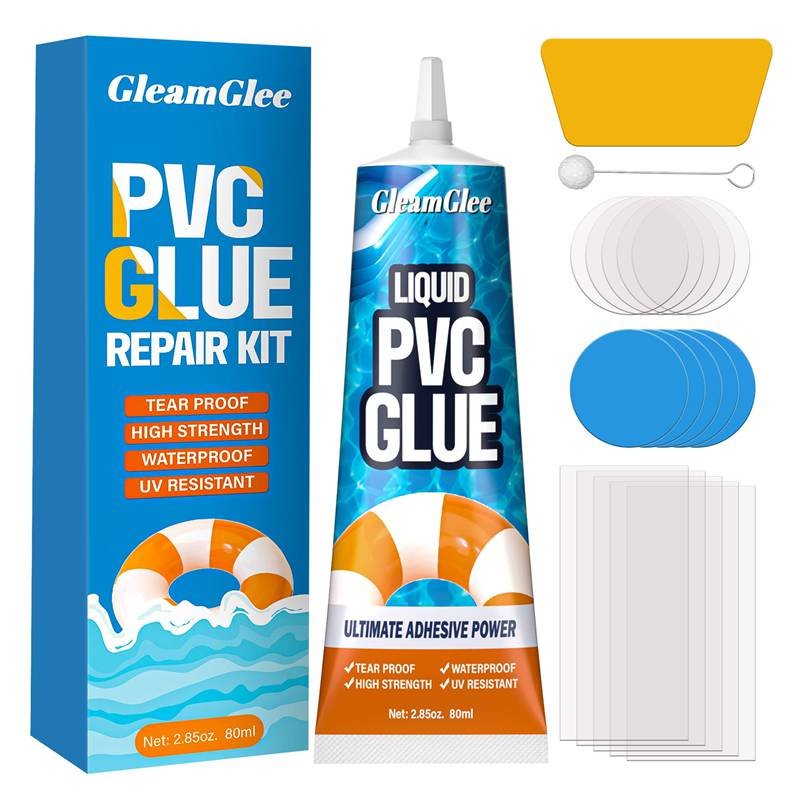
GleamGlee’s shoe glue kit includes:
- Two 20 ml tubes (enough for many repairs, not just one)
- Applicator tool (to spread a thin, even layer)
- Sandpaper sheets (to remove old glue and improve bonding)
- Rubber bands (to hold pressure while curing)
Why this matters :
- Cleaner edges with less squeeze-out
- Stronger bonding because surfaces actually grip
- Less chance the repair shifts during curing
If your goal is “repair once and move on,” kit completeness is not a bonus—it’s a reliability factor.
3) Better value per repaired pair
A cheap tube can feel like a deal until it fails and you redo the job—or replace the shoes. The smarter metric is cost per successful repair, not cost per tube.
Here’s how it typically plays out:
| Buying option | What you pay for | Common outcome | Real cost feeling |
|---|---|---|---|
| Low-cost “general glue” | Just a tube | Higher reopen rate | Expensive over time |
| Random marketplace listing | Convenience | Unpredictable | Risky |
| Manufacturer kit | Glue + tools + consistency | Higher success rate | Best long-term value |
GleamGlee also designs the nozzle for precision and reusability (metal needle-style), which reduces waste and clogging—one of the hidden reasons some tubes “die early.”
4) You get shoe-focused performance features customers actually care about
When customers search for shoe glue, they tend to care about the same few outcomes:
- Waterproof bonding (rain, wet sidewalks, cleaning)
- Flexible curing (toe bend, running, daily walking)
- Clear finish (no ugly white residue)
- Strong grip across materials (rubber, leather, canvas, vinyl)
GleamGlee’s shoe glue is positioned around those real outcomes:
- Waterproof + flexible bond that resists cracking
- Crystal-clear curing for cleaner-looking repairs
- Works across leather, rubber, vinyl, canvas, and mixed shoes
- Designed for common repairs: sole separation, heel loosening, toe cap lift, insole detaching
This is especially important for:
- Running shoes and sneakers (high flex)
- Work boots (high load)
- Outdoor shoes (water exposure)
- Kids’ shoes (repeat stress and rough use)
5) Faster fulfillment in key markets
A common reason buyers avoid buying direct is shipping speed. That only used to be true when everything shipped internationally. But GleamGlee supports regional fulfillment with overseas stock in:
- USA (Ontario, California)
- Canada (Tsawwassen, BC)
- UK (Doncaster)
- Germany/EU (Saxony region routing)
For buyers, this usually means:
- More predictable delivery windows
- Lower risk of leakage from long transit
- Easier regional supply for repeat purchase
If you’re a small business (Amazon seller, shoe care shop, repair service), regional stock also helps you keep inventory stable without overbuying.
6) If you’re a business, you can go beyond “buying” and start building a product line
This is where manufacturer-direct becomes a business advantage, not just a shopping choice.
If you’re:
- An Amazon or Shopify seller
- A shoe care brand
- A repair shop chain
- A distributor serving DIY or footwear markets
GleamGlee can support:
- Low MOQ customization (starting around 200 units)
- Private label packaging and design support
- Multi-language labels and compliance alignment (EU/UK/US standards)
- Bulk supply with consistent spec and QC documentation
For B2B customers, the big pain points are always the same:
- “Will bulk match the sample?”
- “Can you keep stock during peak season?”
- “Can labels pass market compliance?”
- “Can you ship reliably to FBA or our warehouse?”
A vertically integrated manufacturer setup is designed to answer those questions, not dodge them.

Conclusion
Buying shoe glue isn’t just a small shopping decision—it’s a choice between repairing once or repeating the same problem again. As you’ve seen throughout this guide, where you buy shoe glue, what type you choose, how much you use, and who makes it all directly affect whether a repair lasts through walking, rain, heat, and daily wear.
For casual, low-risk fixes, local or online options may be enough. But for shoes you actually rely on—work boots, running shoes, kids’ school shoes, or favorite sneakers—results matter more than convenience. Flexible, waterproof, shoe-specific glue applied correctly will almost always outperform generic adhesives, no matter how “strong” they claim to be.
Choosing manufacturer-grade shoe glue, especially from a specialized producer like GleamGlee, removes much of the uncertainty that causes failed repairs. Consistent formulations, complete repair kits, clearer instructions, and regional fulfillment all contribute to fewer do-overs and better value over time. For individuals, that means extending the life of shoes you like. For businesses, it means reliable supply, predictable quality, and the ability to scale or customize with confidence.
In the end, the best shoe glue is the one that fits your repair needs, holds up in real use, and lets you move on without thinking about the fix again. If you’re ready to buy shoe glue that’s built for real footwear—or explore branded, bulk, or custom options—GleamGlee is positioned to support both everyday repairs and long-term growth.