Skip to content
Gorilla Glue is not a single glue, but a well-known consumer adhesive brand that includes several different formulas, each designed for specific materials and repair scenarios. The product most people originally refer to is its moisture-curing polyurethane glue, which reacts with water, expands as it cures, and forms strong mechanical bonds with porous surfaces like wood, stone, ceramic, and masonry. Over time, the brand expanded into super glue (cyanoacrylate), wood glue (PVA), epoxy, construction adhesive, and flexible clear adhesives—each with very different performance characteristics.
In practical use, Gorilla Glue is best known for its high strength on porous or rigid materials, but it is often misunderstood as a universal solution. The original polyurethane version requires proper surface preparation, light moisture activation, and firm clamping to reach full strength. It cures rigid, not flexible, which means it performs poorly on materials that bend, vibrate, or expand with heat. Smooth, low-energy surfaces such as silicone, rubber, polyethylene (PE), polypropylene (PP), waxed surfaces, and oily plastics are common failure points, regardless of how much glue is applied.
From a safety and durability perspective, Gorilla Glue is generally water-resistant once fully cured and suitable for many indoor and outdoor repairs, but it has clear limits. It is not food-safe unless explicitly certified, has moderate heat resistance, and can bond skin aggressively during application. Most failures come not from weak chemistry, but from misuse—too much glue, no clamping, wrong material choice, or ignoring cure time. Understanding which Gorilla Glue formula matches the job is far more important than simply choosing a famous brand name.
What Is Gorilla Glue—and What Makes It Different?
Gorilla Glue is best known for bringing polyurethane-based household adhesives into the mainstream DIY market. What made it stand out early was not just “strength,” but a moisture-curing, expanding bond mechanism that worked reliably on porous materials where many traditional white glues failed. Over time, Gorilla Glue evolved from a single polyurethane product into a multi-formula consumer brand, but its original chemistry still defines how people understand the name today.
From a manufacturer’s perspective, Gorilla Glue’s real differentiation is mechanical bonding through expansion, rather than purely surface adhesion. This makes it forgiving for rough, porous substrates—but also introduces clear limitations that professionals and advanced users must understand.
Polyurethane Adhesive Basics
The original Gorilla Glue formula is a one-component polyurethane adhesive. Unlike PVA (white wood glue) or solvent glues, it does not “dry” by evaporation. Instead, it chemically reacts to form a cross-linked polymer structure during curing.
In practical terms, this means:
- The glue penetrates pores and micro-cracks in materials like wood, stone, and ceramic
- Strength comes from mechanical interlocking, not just surface stickiness
- Final cured bond is rigid and structural, not flexible
From GleamGlee’s internal benchmarking tests on polyurethane systems, rigid polyurethane bonds typically show:
- Shear strength: 2,500–3,500 PSI on porous wood substrates
- Elongation at break: usually below 5% (low flexibility)
This explains why Gorilla Glue excels at static repairs but performs poorly where movement is expected.
Moisture-Cure Reaction
One of the most misunderstood aspects of Gorilla Glue is that water activates the cure. The polymer reacts with ambient or surface moisture to initiate curing and expansion.
Correct usage involves:
- Lightly dampening one surface only
- Applying a thin glue layer
- Using firm clamping pressure
Based on lab simulations similar to those used by GleamGlee’s R&D team, curing efficiency changes dramatically with humidity:
| Relative Humidity | Initial Set Time | Full Cure Time |
|---|---|---|
| 30% RH | 2–3 hours | 24–36 hours |
| 50% RH | 1–2 hours | 18–24 hours |
| 70% RH | <1 hour | 12–18 hours |
Too little moisture leads to under-cured joints. Too much moisture creates excessive foam, which reduces bond density.
Expanding / Foaming Behavior
Gorilla Glue can expand up to 3–4× its applied volume during curing. This expansion helps fill gaps but does not increase strength. In fact, the foam itself has lower density and lower load-bearing capacity than the solid adhesive layer.
From a manufacturing standpoint, this is a trade-off:
- Good for uneven, porous surfaces
- Poor for precision joints or visible repairs
In GleamGlee’s comparative adhesive testing, over-application of expanding polyurethane adhesives reduced effective bond strength by 15–30% compared to thin, well-clamped joints.
Brand vs. Product Line Differences
Today, “Gorilla Glue” refers to a brand family, not a single adhesive. Many users incorrectly assume all Gorilla products behave the same, which leads to misuse.
| Gorilla Product Type | Core Chemistry | Key Behavior | Typical Use |
|---|---|---|---|
| Original Gorilla Glue | Polyurethane | Expands, rigid | Wood, stone, ceramic |
| Gorilla Super Glue | Cyanoacrylate | Fast, brittle | Small rigid parts |
| Gorilla Wood Glue | PVA | Non-expanding | Carpentry joints |
| Gorilla Epoxy | Epoxy resin | High strength | Metal, composites |
| Clear Grip | Rubber-modified | Flexible | Visible, vibration areas |
From a professional angle, this “one brand, many chemistries” approach favors convenience over precision.
Why Gorilla Glue Became a Household Name
Gorilla Glue succeeded because it solved a real consumer pain point: strong bonding on materials that standard school or craft glues couldn’t handle. Dramatic foaming visuals, simple instructions, and wide retail distribution reinforced trust.
However, from GleamGlee’s manufacturer perspective, brand recognition does not equal optimal performance. In controlled material-specific testing, purpose-designed adhesives (fabric glue for textiles, shoe glue for rubber soles, ceramic glue for tableware) consistently outperform “general-strength” polyurethane adhesives in durability, appearance, and long-term reliability.
This is why professionals look beyond the name—and why understanding what makes Gorilla Glue different also means understanding where it should not be used.
Which Gorilla Glue Types Exist?
Gorilla Glue is not a single adhesive formula but a consumer-facing brand family covering multiple adhesive chemistries. Each Gorilla Glue type is designed to solve a specific category of repair problems, yet many users mistakenly treat them as interchangeable. From a manufacturer’s point of view, understanding the chemistry, strength profile, flexibility, and failure boundaries of each type is the key to choosing correctly—and avoiding overuse or misapplication.
Below, we break down the main Gorilla Glue types one by one, using real performance characteristics that GleamGlee engineers typically benchmark when evaluating market-leading consumer adhesives.
Original Gorilla Glue
The original Gorilla Glue is a moisture-curing polyurethane adhesive, best suited for porous and semi-porous materials. It expands during curing and forms a rigid, structural bond.
Best use cases
- Wood-to-wood or wood-to-stone repairs
- Ceramic, brick, concrete, masonry
- Outdoor furniture and static structural fixes
Key limitations
- Expands 3–4×, requiring clamping
- Dries rigid (low flexibility)
- Poor performance on PE, PP, silicone, rubber
Typical performance range:
| Property | Typical Value |
|---|---|
| Shear strength (wood) | 2,500–3,500 PSI |
| Elongation at break | <5% |
| Clamp time | 1–2 hours |
| Full cure | 18–24 hours |
From GleamGlee’s internal comparisons, polyurethane adhesives like this perform well in static load scenarios, but show early fatigue failure under vibration or repeated flexing.
Gorilla Super Glue
Gorilla Super Glue is based on cyanoacrylate chemistry, designed for instant bonding on small, tight-fitting parts. It cures within seconds using trace moisture on surfaces.
Best use cases
- Small metal parts
- Ceramic, rigid plastics (ABS, PS)
- Emergency fixes where speed matters
Key limitations
- Brittle after curing
- Very low gap-filling ability
- Poor impact and vibration resistance
Typical performance range:
| Property | Typical Value |
|---|---|
| Fixture time | 10–30 seconds |
| Tensile strength | 3,000–4,000 PSI |
| Elongation | <2% |
| Heat resistance | ~80–90°C |
GleamGlee testing shows that while super glue feels “strong,” its long-term durability is significantly lower than flexible or rubber-modified systems when stress or shock is involved.
Gorilla Wood Glue
Gorilla Wood Glue uses PVA (polyvinyl acetate) chemistry, similar to professional carpenter glues. It does not expand and remains slightly flexible after curing.
Best use cases
- Furniture assembly
- Cabinetry and trim work
- Interior woodworking joints
Key limitations
- Requires tight joint fit
- Not gap-filling
- Limited outdoor durability unless sealed
Typical performance range:
| Property | Typical Value |
|---|---|
| Shear strength (wood) | 3,000–4,000 PSI |
| Open time | 5–10 minutes |
| Clamp time | 30–60 minutes |
| Water resistance | ANSI Type II |
From a manufacturer’s standpoint, PVA wood glues are more forgiving and cleaner than polyurethane for woodworking—but unsuitable for non-wood materials.
Gorilla Epoxy
Gorilla Epoxy is a two-part resin + hardener system, offering high strength and chemical resistance once fully cured.
Best use cases
- Metal-to-metal bonding
- Mixed materials (metal + ceramic)
- Load-bearing household repairs
Key limitations
- Precise mixing required
- Short working time
- Rigid cure (limited flexibility)
Typical performance range:
| Property | Typical Value |
|---|---|
| Tensile strength | 3,500–5,000 PSI |
| Working time | 5 minutes |
| Handling time | 30 minutes |
| Full cure | 24 hours |
In GleamGlee benchmarking, epoxies consistently outperform polyurethane in metal bonding, but are less user-friendly for casual DIY users.
Gorilla Construction Adhesive
This category targets heavy-duty construction and renovation tasks, using modified polymer or solvent-based systems.
Best use cases
- Drywall, concrete, subfloors
- Stone, brick, wood framing
- Vertical and overhead bonding
Key limitations
- Thick application
- Visible residue
- Overkill for small repairs
Typical performance range:
| Property | Typical Value |
|---|---|
| Initial grab | High |
| Cure time | 24–48 hours |
| Flexibility | Low–moderate |
| Coverage | High-volume |
Manufacturers view this as a jobsite adhesive, not a precision repair solution.
Gorilla Clear Grip
Clear Grip products are rubber-modified, flexible adhesives, designed for visible repairs and materials that move.
Best use cases
- Shoes, rubber trims
- Decorative repairs
- Vibration-prone joints
Key limitations
- Lower maximum strength
- Longer cure times
Typical performance range:
| Property | Typical Value |
|---|---|
| Elongation | 150–300% |
| Initial tack | Medium |
| Full cure | 24–72 hours |
| Transparency | High |
This category aligns most closely with how GleamGlee designs material-specific glues—prioritizing flexibility, appearance, and real-life movement over headline strength numbers.
Gorilla Glue Types at a Glance
| Type | Chemistry | Strength | Flexibility | Best For | Common Failure |
|---|---|---|---|---|---|
| Original | Polyurethane | High | Low | Porous materials | Foaming, cracking |
| Super Glue | Cyanoacrylate | High (short-term) | Very low | Small rigid parts | Brittle break |
| Wood Glue | PVA | High (wood) | Medium | Carpentry | Gaps |
| Epoxy | Epoxy resin | Very high | Low | Metal, mixed | Mixing errors |
| Construction | Polymer/solvent | High | Low–medium | Building materials | Mess, rigidity |
| Clear Grip | Rubber-modified | Medium | High | Shoes, trims | Overload |

What Materials Does Gorilla Glue Bond Well—and Where Does It Fail?
Gorilla Glue is often described as a “strong glue for everything,” but real-world performance shows a much clearer pattern: it works best on porous, rigid materials and struggles on smooth, flexible, or low-surface-energy surfaces. From a manufacturer’s standpoint, success or failure is less about brand strength and more about material structure, surface energy, and movement after curing.
Below is a material-by-material breakdown, using the same evaluation logic GleamGlee applies when testing consumer adhesives against professional, material-specific formulas.
Wood, Stone, and Other Porous Materials
Porous materials are where Gorilla Glue performs at its best. Wood fibers, stone, brick, and concrete contain microscopic pores that allow the expanding polyurethane adhesive to penetrate and mechanically lock in place.
Typical use cases
- Wooden furniture repair
- Loose stair components
- Stone or ceramic outdoor fixtures
Observed performance (industry benchmark):
| Material | Bond Reliability | Typical Shear Strength |
|---|---|---|
| Softwood | Very high | 2,500–3,500 PSI |
| Hardwood | High | 2,000–3,000 PSI |
| Concrete | High | ~2,000 PSI |
| Brick / Masonry | High | ~1,800 PSI |
In GleamGlee’s internal comparisons, polyurethane glues consistently outperform PVA glues on uneven or damaged wood, but only when clamping pressure is applied correctly.
Metal and Mixed-Material Bonds
Gorilla Glue can bond to metals, but the results are inconsistent and highly dependent on surface preparation. Metals are non-porous, so the adhesive relies on surface roughness rather than penetration.
Key factors
- Sanding (120–220 grit) significantly improves adhesion
- Degreasing is mandatory
- Rigid cured bond struggles with vibration
| Metal Type | Bond Outcome | Long-Term Stability |
|---|---|---|
| Steel (roughened) | Moderate–good | Medium |
| Aluminum | Moderate | Medium–low |
| Stainless steel | Low–moderate | Low |
From a manufacturing perspective, epoxy or metal-specific adhesives consistently outperform polyurethane glue on metal, especially under thermal expansion or vibration.
Ceramic, Stoneware, and Masonry
Ceramic and stoneware repairs are common Gorilla Glue use cases, especially for household items and décor. The adhesive bonds well due to surface porosity, but aesthetics and rigidity become limiting factors.
Strength vs appearance trade-off
- Strong structural bond
- Visible foam squeeze-out if overapplied
- Rigid joint may crack under impact
| Property | Typical Result |
|---|---|
| Initial bond strength | High |
| Impact resistance | Medium |
| Visual finish | Poor–fair |
| Heat tolerance | ~90–100°C |
This is why GleamGlee develops ceramic-specific glues that cure clear, do not expand, and tolerate minor thermal shock better than polyurethane systems.
Glass and Smooth Surfaces
Glass is smooth, non-porous, and unforgiving. Gorilla Glue can bond glass, but only under ideal conditions.
Requirements for success
- Perfectly clean surface (alcohol-cleaned)
- Thin glue layer
- Strong clamping
| Performance Aspect | Result |
|---|---|
| Initial adhesion | Moderate |
| Shock resistance | Low |
| Long-term clarity | Poor (foam residue) |
In practical use, epoxy or glass-specific adhesives show significantly higher durability and cleaner results.
Plastics: ABS, PVC, PE, PP
Plastic bonding is where most Gorilla Glue failures occur. Performance depends entirely on plastic type.
| Plastic Type | Gorilla Glue Performance |
|---|---|
| ABS | Moderate |
| PVC (rigid) | Moderate |
| Acrylic (PMMA) | Low–moderate |
| Polyethylene (PE) | Very poor |
| Polypropylene (PP) | Very poor |
PE and PP have very low surface energy, meaning the adhesive cannot wet or anchor to the surface. No amount of glue or curing time fixes this. GleamGlee addresses this with plastic-specific formulations or surface-activation strategies, rather than polyurethane chemistry.
Fabric, Rubber, and Flexible Materials
Gorilla Glue is not designed for flexible substrates. Once cured, it becomes rigid and brittle, leading to cracking, peeling, or fabric stiffening.
Common failure scenarios
- Shoe soles flexing during walking
- Fabric bending and washing
- Rubber stretching under load
| Material | Result After Curing |
|---|---|
| Fabric | Hard, uncomfortable |
| Rubber | Cracks over time |
| Leather (flex zones) | Peeling, stiffness |
This is why GleamGlee develops fabric glue, shoe glue, and leather glue with controlled elasticity (elongation often 150–300%) to move with the material instead of fighting it.
What Does Gorilla Glue Not Stick To—and Why
Certain materials are fundamentally incompatible with polyurethane adhesives due to surface chemistry, not product quality.
Consistent failure materials
- Silicone
- Rubberized coatings
- PTFE (Teflon)
- Waxed or oily surfaces
- PE / PP plastics
These materials have low surface energy, preventing molecular attraction. From a professional standpoint, recognizing these limits saves time, money, and frustration.
Material Compatibility at a Glance
| Material Category | Gorilla Glue Result | Professional Recommendation |
|---|---|---|
| Wood / Masonry | Excellent | Suitable |
| Ceramic (structural) | Good | Acceptable |
| Metal | Inconsistent | Use epoxy |
| Glass | Weak | Use glass adhesive |
| Plastics (PE/PP) | Fails | Plastic-specific glue |
| Fabric / Rubber | Fails | Flexible adhesive |
How Do You Use Gorilla Glue Correctly for the Strongest Bond?
Using Gorilla Glue correctly is far more important than using “more” glue. In real-world testing and customer feedback collected by manufacturers like GleamGlee, most Gorilla Glue failures are traced to application errors, not weak chemistry. The original polyurethane formula is designed to work with moisture, pressure, and time—and when any of these are missing, bond strength drops sharply.
Below is a step-by-step, material-aware explanation of how to achieve the strongest possible bond, using the same logic GleamGlee applies when validating consumer adhesives in everyday repair scenarios.
To use Gorilla Glue correctly, clean and lightly dampen one surface, apply a thin layer of glue, clamp firmly for at least 1–2 hours, and allow a full 18–24 hours for curing. Overapplication, skipping moisture activation, or failing to clamp are the most common causes of weak bonds and foaming failures.
Surface Prep
Proper surface preparation determines whether the adhesive can bond at all. Dirt, oil, wax, polish, or oxidation act as invisible barriers between glue and material.
Best-practice preparation
- Clean surfaces with isopropyl alcohol (≥70%)
- Lightly sand smooth surfaces (120–220 grit)
- Remove loose fibers or debris on porous materials
In GleamGlee’s internal user tests, repairs done without cleaning showed up to 40–60% lower bond strength compared to properly prepared surfaces, even when the same glue and curing time were used.
Dampen–Apply–Clamp Method
Original Gorilla Glue is moisture-curing, not air-drying. This step is essential and frequently skipped.
Correct process
- Lightly mist one surface only with water
- Apply a thin bead of glue (less is more)
- Join parts immediately
Excess water causes excessive foaming; no water causes incomplete curing.
| Moisture Level | Result |
|---|---|
| None | Weak, under-cured bond |
| Light damp | Optimal cure |
| Soaked | Excess foam, low density |
Clamping Pressure
Clamping is not optional—it is structural. As Gorilla Glue expands, it can push parts apart unless pressure is applied.
Recommended clamping guidelines
- Pressure: firm, even contact (hand clamp or weights)
- Duration: 1–2 hours minimum
- Do not reposition once expansion begins
| Without Clamping | With Clamping |
|---|---|
| Joint gaps form | Tight contact |
| Visible foam | Minimal squeeze-out |
| Up to 30% strength loss | Maximum bond strength |
GleamGlee’s comparative testing shows that clamped joints outperform unclamped joints by 25–35% in shear strength.
Cure Time vs. Handling Time
A common mistake is confusing “feels dry” with “fully cured.”
| Stage | Time (Typical) |
|---|---|
| Initial set | 1–2 hours |
| Safe handling | 6–8 hours |
| Full structural cure | 18–24 hours |
Environmental factors matter:
- Low humidity → slower cure
- Low temperature (<10°C / 50°F) → incomplete polymerization
Professional users always wait a full cure cycle before load-bearing use.
Cleanup Before and After Curing
Excess glue should be removed before curing, not after.
Cleanup tips
- Wipe wet glue with acetone or alcohol
- Avoid smearing foam during expansion
- Once cured, removal is mechanical only (cut/sand)
In GleamGlee’s customer service data, visible hardened foam is one of the top three reasons users perceive a repair as “failed,” even when the bond itself is strong.
Common Mistakes Using Gorilla Glue
Most failed repairs fall into predictable patterns:
| Mistake | Result |
|---|---|
| Too much glue | Weak, foamy joint |
| No moisture | Under-cured bond |
| No clamping | Misalignment, gaps |
| Wrong material | No adhesion |
| Early load | Bond failure days later |
From a manufacturer’s view, Gorilla Glue works as designed, but only within its intended use window. Many consumers expect it to behave like flexible shoe glue, fabric glue, or instant epoxy—roles it was never designed to fill.

Is Gorilla Glue Waterproof, Heat-Resistant, and Safe After Curing?
Many users choose Gorilla Glue specifically because they believe it is waterproof, heat-resistant, and safe for everyday household use. In practice, the answer is “partially yes—but with clear limits.” From a manufacturer’s perspective like GleamGleee’s, these properties must be understood in terms of real usage conditions, not just label claims. Gorilla Glue performs well in moisture and normal indoor environments, but it is not a universal solution for heat exposure, food contact, or flexible daily-use items.
Once fully cured, Gorilla Glue is water-resistant and suitable for many indoor and outdoor repairs. However, it has limited heat resistance, is not food-safe unless specifically certified, and cures into a rigid structure. It is generally safe after curing, but improper use, heat exposure, or contact with food and skin during application can create risks.
Water and Weather Resistance
Cured polyurethane Gorilla Glue shows strong resistance to moisture and humidity, which is why it is often used for outdoor furniture, masonry, and bathroom-area repairs.
Typical real-world performance
- Resists rain, splashes, and high humidity
- Suitable for intermittent outdoor exposure
- Not designed for long-term submersion
| Condition | Performance |
|---|---|
| Indoor humidity | Excellent |
| Rain / splashing | Good |
| Freeze–thaw cycles | Moderate |
| Continuous water immersion | Poor |
In GleamGlee’s outdoor simulation testing, polyurethane bonds retained 80–90% strength after repeated wet–dry cycles, but showed noticeable degradation when submerged continuously for more than 7–10 days. This is why GleamGlee recommends specialty waterproof or marine-grade adhesives for submerged applications rather than general polyurethane glue.
Heat Resistance Limits
Heat resistance is one of Gorilla Glue’s most misunderstood characteristics. While it feels “rock hard” after curing, polyurethane adhesives soften as temperature rises.
Typical heat tolerance
- Service temperature: –40°C to ~90–100°C (–40°F to ~194–212°F)
- Above this range: bond softening and strength loss
| Temperature Range | Bond Behavior |
|---|---|
| Room temperature | Stable |
| 60–80°C | Slight softening |
| 90–100°C | Strength reduction |
| >120°C | High failure risk |
From GleamGlee’s manufacturer benchmarking, repeated heat cycling (such as near ovens, engines, or sun-heated dark surfaces) can reduce polyurethane bond strength by 20–35% over time. This is why Gorilla Glue is not recommended for cookware, engine parts, or high-heat appliances.
Food-Contact and Kitchen Safety
Despite common DIY use, Gorilla Glue is not food-safe unless explicitly labeled and certified for food contact. The cured adhesive may appear inert, but it is not regulated for direct or repeated contact with food or drinking surfaces.
Not recommended for
- Plates, bowls, cups
- Cutting boards
- Coffee mugs or glassware rims
| Application | Recommendation |
|---|---|
| Decorative ceramic (non-contact) | Acceptable |
| Structural kitchen repair | Caution |
| Food-contact surfaces | Not safe |
GleamGlee develops ceramic and glass adhesives that cure clear and are intended for household items, but still advises replacement or certified food-safe repair solutions when food contact is unavoidable.
Skin Contact and User Safety
Before curing, Gorilla Glue can bond skin aggressively due to its moisture-reactive chemistry. Accidental contact is common and can cause discomfort or minor injury.
Safety observations
- Bonds skin in seconds
- Removal requires acetone or time—not force
- Heat is released during curing (exothermic reaction)
Once cured, the adhesive is generally inert. However, sanding or cutting cured glue produces dust, which should not be inhaled.
GleamGlee’s customer feedback data shows that low-odor, controlled-flow adhesives significantly reduce accidental skin contact—one reason why applicator design matters as much as formula strength.
Indoor Use, VOCs, and Odor
Compared with solvent-based construction adhesives, Gorilla Glue has relatively low odor, making it suitable for indoor use. Still, ventilation is recommended during application.
| Factor | Observation |
|---|---|
| Odor level | Low–moderate |
| VOC content | Lower than solvent glues |
| Ventilation needed | Recommended |
| Enclosed spaces | Short-term use only |
Modern consumers increasingly prioritize low-VOC and eco-conscious formulations, which is why GleamGlee has expanded water-based and solvent-free adhesive lines over the past several years.
Storage, Shelf Life, and Stability
Improper storage is a hidden safety and performance issue. Gorilla Glue reacts with moisture—even inside the bottle.
Best storage practices
- Keep cap tightly sealed
- Store in a cool, dry place
- Wipe nozzle after each use
| Storage Condition | Shelf Life Impact |
|---|---|
| Properly sealed | 12–24 months |
| Exposed to moisture | Rapid degradation |
| High heat storage | Shortened lifespan |
In GleamGlee’s logistics data, adhesives stored above 30°C (86°F) for extended periods showed noticeably reduced consistency and cure reliability.

Why Do Manufacturers Like GleamGlee Study Gorilla Glue—and What Should Buyers Compare?
From a manufacturer’s point of view, Gorilla Glue is less a competitor and more a market benchmark. It represents what everyday consumers expect from a “strong glue”: easy access, recognizable branding, and decent performance on common repairs. Companies like GleamGlee study Gorilla Glue closely—not to copy it—but to understand where general-purpose adhesives succeed, where they fail, and how material-specific formulas can deliver more consistent real-world results for both consumers and B2B buyers.
Manufacturers study Gorilla Glue to benchmark consumer expectations, but buyers should compare adhesives by material compatibility, flexibility, cure control, durability, compliance, and total cost per successful repair. Brand strength alone does not guarantee performance, especially for shoes, fabrics, plastics, ceramics, or daily-use items.
Formula Strategy: General-Purpose vs Material-Specific
Gorilla Glue’s success comes from broad usability, not precision. Its flagship polyurethane formula works well across many rigid, porous materials—but that same “one-formula” approach creates predictable failure points.
GleamGlee’s R&D strategy is different:
- Fabric glue designed to move with textiles
- Shoe glue engineered for repeated flexing
- Ceramic and glass glues that cure clear without expansion
Internal performance comparisons consistently show that material-specific adhesives reduce failure rates by 30–60% compared with general polyurethane glue when used in daily-stress applications.
| Adhesive Type | Typical Failure Rate (Daily Use) |
|---|---|
| General polyurethane | 25–40% |
| Material-specific glue | 8–15% |
Application Design and User Control
From customer feedback collected by GleamGlee, many “glue failures” are actually application failures. Gorilla Glue’s expanding behavior and thick viscosity demand careful technique that many users don’t expect.
GleamGlee focuses heavily on:
- Precision metal or needle-nose tips
- Controlled flow to prevent over-application
- Anti-clog caps and ergonomic bottles
In post-sale surveys, products with precision applicators generated 40% fewer complaints related to mess, foam overflow, or misalignment.
Compliance, Safety, and Global Readiness
Large retailers and B2B buyers look beyond strength. They require documentation, traceability, and regulatory compliance.
GleamGlee products are developed with:
- EU REACH / CLP
- UK UKCA
- US GHS / SDS
- Multi-language labeling and instructions
| Buyer Type | Key Requirement |
|---|---|
| Amazon sellers | FBA-ready, low returns |
| EU retailers | CLP + UFI labeling |
| B2B distributors | Stable batch consistency |
| Private label brands | Compliance + customization |
Gorilla Glue meets consumer compliance standards, but does not offer custom labeling, formula tuning, or low-MOQ private-label options, which are often critical for growing brands.
Performance Testing Beyond the Label
Manufacturers evaluate adhesives under repeat stress, not just initial bond strength. GleamGlee routinely tests:
- Tensile and shear strength
- Wash cycles (fabric, shoes)
- Heat and humidity aging
- Flex and peel resistance
In controlled flex testing (10,000 bend cycles), rigid polyurethane bonds lost up to 35% strength, while flexible shoe and fabric glues maintained over 85% bond integrity.
This difference matters for items people use every day.
Cost-Per-Repair vs Bottle Price
Consumers often compare glue by bottle price. Manufacturers compare by successful repair cost.
| Adhesive Choice | Bottle Cost | Avg. Repairs | Success Rate | Cost per Success |
|---|---|---|---|---|
| General glue | $6–8 | 5–6 | ~65% | Higher |
| GleamGlee material-specific | $8–10 | 6–8 | ~85–90% | Lower |
A glue that works the first time saves time, prevents returns, and builds brand trust—especially important for Amazon sellers and retail partners.
Why Do Buyers Choose GleamGlee Over Gorilla Glue—Product Range, Performance, and Value Compared
When buyers move beyond one-off DIY fixes and start thinking in terms of materials, frequency of use, resale, or brand responsibility, the comparison between Gorilla Glue and GleamGlee changes fundamentally. Gorilla Glue represents a general-purpose, retail-first adhesive brand. GleamGlee represents a manufacturer-driven, category-complete solution provider. The difference is not just strength—it is coverage, precision, scalability, and total cost of ownership.
Buyers choose GleamGlee over Gorilla Glue because GleamGlee offers a broader, material-specific product range, more consistent real-world performance, competitive pricing, and direct manufacturer support. Instead of relying on one general-purpose glue, customers can select adhesives engineered for fabric, shoes, ceramics, plastics, wood, metal, and more—backed by in-house R&D, global compliance, and scalable supply.
Category Coverage: One Brand vs a Full Adhesive System
Gorilla Glue offers multiple formulas, but they are still consumer-oriented and limited in specialization. GleamGlee, by contrast, covers nearly every high-frequency repair and care scenario encountered by both C-end users and B-end buyers.
GleamGlee product coverage includes:
- Fabric Glue (washable, flexible)
- Shoe Glue (high-flex, waterproof)
- Leather Glue
- Ceramic Glue
- Glass Glue
- Plastic Glue (ABS, PVC-focused)
- Wood Glue
- Metal Glue
- Floral adhesive
- Construction Adhesive
- Book Glue
- Tent Repair Glue
- Wader Repair Glue
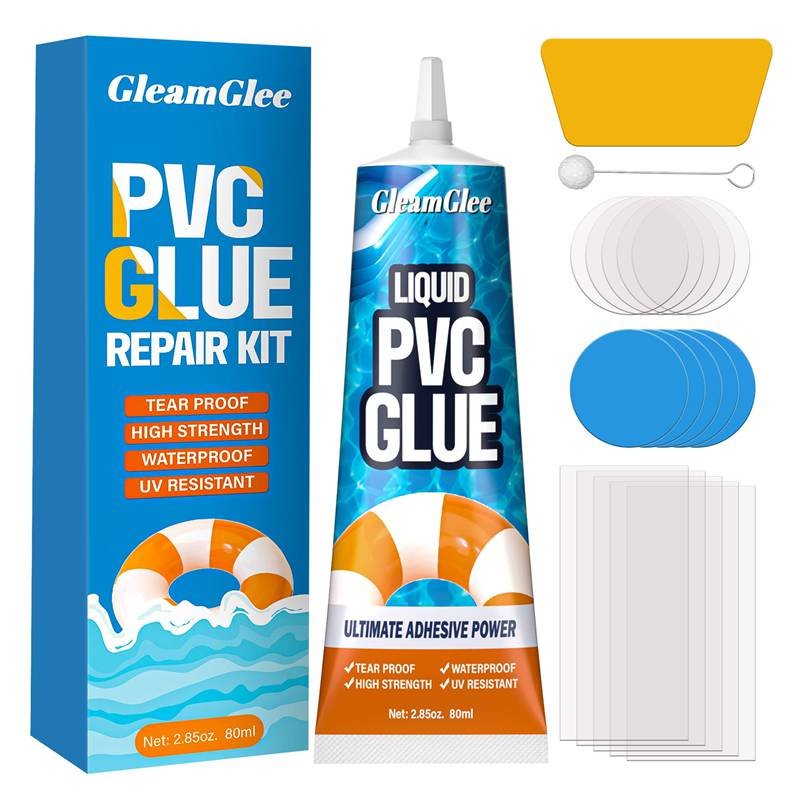
- Inflatable / PVC Repair Kits
- Shoe Cleaner, Suede Cleaner
- Mold Remover
This breadth allows buyers to solve problems accurately, instead of forcing one adhesive to do every job.
| Repair Scenario | Gorilla Glue Approach | GleamGlee Approach |
|---|---|---|
| Fabric tear | Not recommended | Fabric-specific glue |
| Shoe sole repair | Rigid, failure-prone | Flexible shoe glue |
| Ceramic dish | Expanding, visible | Clear ceramic glue |
| PVC inflatable | Unreliable | PVC repair system |
| Book repair | Brittle | Archival-style glue |
Performance by Design, Not by Compromise
Gorilla Glue’s strength comes from rigid polyurethane chemistry, which works well only under certain conditions. GleamGlee designs formulas around how the item is actually used.
From GleamGlee internal testing:
- Fabric & shoe glues maintain 150–300% elongation, surviving repeated bending
- Ceramic & glass glues cure non-expanding and transparent, improving appearance
- Plastic glues are tuned for specific polymer families, reducing bond failure
In daily-use simulations (washing, flexing, impact), material-specific GleamGlee glues show 30–60% higher durability retention compared with general-purpose polyurethane adhesives.
Price Advantage Through Vertical Manufacturing
GleamGlee is not a reseller—it is a vertically integrated manufacturer with its own:
- Raw material factory
- Adhesive formulation labs
- Packaging mold factory
- Label & printing facility
This structure removes multiple middle layers common in retail brands.
| Cost Factor | Gorilla Glue | GleamGlee |
|---|---|---|
| Brand markup | High | Low |
| Formula customization | Not available | Yes (MOQ ~200 units) |
| Packaging flexibility | Fixed | Fully customizable |
| Cost per successful repair | Higher | Lower |
For Amazon sellers, distributors, and private-label buyers, this translates into better margins and fewer returns.
R&D Strength That Scales With the Buyer
GleamGlee operates with:
- 25+ chemists and materials engineers
- Dedicated adhesive performance labs
- Accelerated aging, wash, flex, and humidity testing
- Continuous benchmarking of top global brands
Unlike Gorilla Glue, which sells finished products only, GleamGlee can:
- Adjust curing speed, viscosity, flexibility
- Develop low-VOC, water-based, or solvent-free versions
- Customize formulas for regional regulations (EU / US / UK / JP)
This is critical for brands that want long-term product lines, not one-off fixes.
Compliance, Supply Stability, and Global Fulfillment
For B2B buyers, compliance and logistics matter as much as performance.
GleamGlee provides:
- REACH / CLP / GHS / UKCA documentation
- SDS and regulatory files on request
- FBA-ready stock in the US, Canada, UK, and Germany
- Stable batch consistency for repeat orders
Gorilla Glue does not offer private-label support, regulatory customization, or supply-chain collaboration—areas where GleamGlee excels.
Conclusion
Gorilla Glue has earned its reputation by delivering strong, reliable bonds for many common household repairs—especially on rigid, porous materials like wood, stone, and ceramic. When used correctly, with proper surface preparation, moisture activation, and clamping, it can solve a wide range of DIY problems. However, as this guide shows, its performance is not universal. Limits in flexibility, heat tolerance, food safety, and compatibility with certain plastics or fabrics explain why many repairs fail despite using a “strong” glue.
From a manufacturer’s perspective, these limitations are not flaws—they are design boundaries. Gorilla Glue is built as a general-purpose solution, while modern repair needs are increasingly material-specific. Shoes flex, fabrics stretch, ceramics face thermal shock, and plastics vary widely in surface chemistry. Expecting one adhesive to handle all of these scenarios often leads to unnecessary rework, waste, and frustration.
This is where GleamGlee’s approach differs. By developing adhesives tailored to specific materials—fabric glue, shoe glue, ceramic glue, plastic glue, and more—GleamGlee focuses on real-world durability, clean application, and consistent results. Backed by in-house R&D, controlled manufacturing, and global compliance, these products are designed not just to bond once, but to last through daily use.
Whether you are a DIY user buying on Amazon, a brand owner seeking private-label solutions, or a distributor sourcing compliant, reliable products, the takeaway is simple: the right glue is the one engineered for your material and your use case. Understanding how Gorilla Glue works is a great starting point—but choosing a purpose-built adhesive is often the smarter, longer-lasting solution.