Skip to content
Clothing doesn’t always fail in dramatic ways. Sometimes a hem loosens, a seam opens slightly, or a decorative patch starts to peel at the edges. For decades, the default solution was always the same: needle, thread, time, and skill. But modern lifestyles demand faster, cleaner, and more accessible repair methods—especially for people who want results without sewing experience. That’s where fabric adhesive quietly changed the way we fix, customize, and extend the life of textiles.
Fabric adhesive has evolved far beyond the stiff, yellowing glues many people remember from childhood craft projects. Today’s professional fabric adhesives are engineered to bond fibers while remaining flexible, transparent, and washable. They are designed not just for temporary fixes, but for real-world wear: bending, stretching, washing, and ironing. As sustainability and “repair instead of replace” mindsets grow, fabric adhesive has become a practical tool for both everyday consumers and professionals.
Featured Snippet Summary (60–80 words):
Fabric adhesive is a specialized glue designed to bond fabric fibers without sewing. It works by penetrating textile surfaces and forming a flexible, transparent bond that moves with the fabric. Unlike regular glue, fabric adhesive dries soft, resists cracking, and—when properly cured—can withstand washing and ironing. It’s commonly used for clothing repairs, hemming, patches, crafts, and home textiles.
The real question isn’t whether fabric adhesive works—it’s how, when, and why it works better than traditional alternatives. To understand that, we need to look closer at what fabric adhesive really is and how it behaves on fabric.
What Is Fabric Adhesive and How Does It Work?
Fabric adhesive is a textile-specific bonding agent designed to join fabric surfaces without sewing. It works by penetrating fabric fibers and forming a flexible polymer bond as it cures. Unlike regular glue, fabric adhesive dries soft, clear, and elastic, allowing the bonded area to bend, stretch, and withstand washing and ironing when used correctly.
Fabric adhesive exists to solve a very specific problem: how to bond fabric without damaging its structure or changing how it feels, moves, or wears over time. To understand why fabric adhesive works—and why ordinary glue fails on textiles—you need to look at both fabric behavior and adhesive chemistry.
What Is Fabric Adhesive Used For?
Fabric adhesive is used anywhere fabric needs to be bonded cleanly, quickly, and flexibly, especially when sewing is impractical or unnecessary. Its most common applications include:
- Hemming pants, skirts, and curtains without stitching
- Repairing small rips, loose seams, or frayed edges
- Attaching patches, appliqués, lace, ribbons, sequins, or rhinestones
- Fixing linings in clothing, bags, shoes, and hats
- No-sew DIY crafts, costumes, and textile decorations
What makes fabric adhesive particularly valuable is that it creates a continuous bond across fibers, rather than point-based stress (like stitches). This helps the fabric lay flat, maintain its drape, and look natural after repair.
For many users—parents, travelers, DIY hobbyists, fashion creators—fabric adhesive is not a compromise. It’s a practical, modern repair method that aligns with speed, convenience, and sustainability.
Is Fabric Adhesive the Same as Fabric Glue?
In practical terms, yes—but the wording matters.
- Fabric adhesive is the technical category name
- Fabric glue is the consumer-facing term
What truly matters is formulation, not terminology.
A true fabric adhesive (or fabric glue) is engineered to meet four non-negotiable requirements:
| Requirement | Why It Matters on Fabric |
|---|---|
| Flexibility after drying | Fabric bends and stretches constantly |
| Fiber penetration | Surface-only bonding peels easily |
| Clear, non-yellowing finish | Repairs must remain invisible |
| Wash & heat resistance | Clothing must survive real use |
If a product lacks any of these characteristics, it may stick fabric temporarily—but it is not a true fabric adhesive, regardless of how it’s labeled.
How Does Fabric Adhesive Bond Fabric Fibers?
Fabric adhesive bonds fabric through a process best described as fiber-level polymer interlocking.
When applied correctly:
- The adhesive flows into microscopic gaps between fabric fibers
- It partially absorbs into the textile structure rather than sitting on top
- As it cures, polymer chains cross-link and lock fibers together
- The cured bond remains elastic instead of rigid
This is fundamentally different from regular glue, which hardens into a brittle layer that cracks as soon as the fabric moves.
The result is a bond that:
- Moves with the fabric
- Resists peeling and cracking
- Maintains softness and drape
- Withstands repeated wear
Why Regular Glue Fails on Fabric and Fabric Adhesive Doesn’t
| Factor | Regular Glue | Fabric Adhesive |
|---|---|---|
| Drying behavior | Hard, brittle | Soft, flexible |
| Interaction with fibers | Sits on surface | Penetrates fibers |
| Reaction to movement | Cracks, flakes | Bends and stretches |
| Wash resistance | Poor | Designed for washing |
| Visual result | Stiff, visible | Clear, invisible |
This is why users often say “glue doesn’t work on fabric”—when in reality, the wrong type of glue was used.
What Makes Modern Fabric Adhesives More Reliable Today?
Modern fabric adhesives are far more advanced than earlier generations. Improvements include:
- Water-based or low-odor formulations for indoor use
- Improved polymer elasticity, reducing stiffness after curing
- Precision applicators, preventing overuse and bleed-through
- Wash-resistant chemistry, compatible with modern detergents
These advances explain why fabric adhesive is now widely trusted not only by consumers, but also by fashion prototypers, costume departments, and professional textile repair workflows.

Which Types of Fabric Adhesive Are Commonly Used?
Common fabric adhesive types include permanent fabric adhesive, washable fabric glue, temporary or removable adhesive, and specialty formulas for crafts or heavy-duty use. Each type is designed for specific fabrics, stress levels, and durability needs. Choosing the correct type ensures flexibility, wash resistance, and a clean, long-lasting bond without damaging the fabric.
Not all fabric adhesives are created equal. While they may look similar in a tube or bottle, their performance depends entirely on formulation and intended use. Understanding the main categories of fabric adhesive helps prevent the most common user frustration: “It stuck at first, but didn’t last.”
Below is a structured breakdown of the most widely used fabric adhesive types, how they behave, and when each should be used.
Permanent Fabric Adhesive (Long-Term Bonding)
Permanent fabric adhesive is designed for durable, long-lasting textile repairs and alterations. Once fully cured, the bond is intended to remain intact throughout the lifespan of the garment or fabric item.
Typical uses include:
- Hemming pants, skirts, and curtains
- Repairing seams and small tears
- Attaching patches, appliqués, and trims
- Reinforcing stress-prone fabric edges
Key characteristics:
- Dries clear and flexible
- Resists cracking and peeling
- Designed to survive repeated washing and ironing
- Not intended to be removed without fabric damage
This is the most commonly chosen type for clothing repairs and home textiles, and the category most consumers think of when asking whether fabric glue “actually works.”
Washable Fabric Adhesive (Machine-Wash Resistant)
Washable fabric adhesive is a sub-category of permanent adhesive, optimized specifically for garments and textiles that will be laundered frequently.
What makes it different:
- Polymer structure resists water and detergent penetration
- Maintains elasticity after repeated wash cycles
- Bonds remain stable at common washing temperatures
Important note:
Washable does not mean “instant wash-safe.” These adhesives require full curing (usually 24 hours) before washing.
| Feature | Washable Fabric Adhesive |
|---|---|
| Machine wash safe | Yes (after full cure) |
| Iron safe | Yes (normal garment heat) |
| Dry flexibility | High |
| Best for | Everyday clothing & linens |
For users asking “Does fabric glue come off in the wash?”—the answer is no, as long as this category is used correctly.
Temporary or Removable Fabric Adhesive
Temporary fabric adhesive is designed to hold fabric in place without creating a permanent bond. It’s commonly used for positioning, alignment, or short-term fixes.
Common use cases:
- Holding hems before sewing
- Positioning patches or appliqués
- Quilting and pattern alignment
- Event or costume use where removal is required
Characteristics:
- Light tack rather than structural bonding
- Usually water-soluble or peelable
- Loses adhesion after washing
| Feature | Temporary Fabric Adhesive |
|---|---|
| Permanent bond | No |
| Wash resistant | No |
| Residue risk | Low |
| Best for | Positioning & short-term use |
Using temporary adhesive for permanent repairs is one of the most common reasons users think fabric glue doesn’t work.
Craft & Decorative Fabric Adhesive
Craft-focused fabric adhesives prioritize precision, clarity, and ease of application over load-bearing strength.
Typically used for:
- Sequins, rhinestones, and beads
- Lace and ribbon attachment
- Scrapbooking and felt projects
- Costume and decorative fashion pieces
These adhesives often feature:
- Fine-tip applicators
- Faster initial tack
- Clear, glossy, or matte finishes
They may not be ideal for garments that undergo frequent washing, but they excel in controlled, decorative environments.
Heavy-Duty Fabric Adhesive (High-Stress Applications)
Heavy-duty fabric adhesive is formulated for thicker textiles or mixed-material bonding, where standard fabric glue may not be sufficient.
Examples include:
- Canvas, denim, upholstery fabrics
- Fabric-to-leather or fabric-to-rubber bonding
- Bags, backpacks, outdoor gear
Trade-offs to consider:
- Stronger bond but slower curing
- Slightly firmer feel after drying
- Less suitable for lightweight or delicate fabrics
| Property | Standard Fabric Adhesive | Heavy-Duty Fabric Adhesive |
|---|---|---|
| Flexibility | Very high | Medium–high |
| Load resistance | Moderate | High |
| Dry time | Faster | Slower |
| Best use | Clothing & crafts | Bags, upholstery |
Water-Based vs. Solvent-Based Fabric Adhesives
Another important distinction is base chemistry:
| Type | Water-Based | Solvent-Based |
|---|---|---|
| Odor | Low | Strong |
| Indoor safety | Higher | Lower |
| Drying speed | Moderate | Fast |
| Flexibility | High | Varies |
| User preference | Home & DIY | Industrial / specialty |
Most modern consumer fabric adhesives favor water-based formulations for safety, ease of use, and compliance with global regulations.
How to Choose the Right Fabric Adhesive
| Your Situation | Recommended Type |
|---|---|
| Hemming clothing | Washable permanent adhesive |
| Attaching patches | Permanent fabric adhesive |
| Positioning before sewing | Temporary adhesive |
| Decorative crafts | Craft fabric adhesive |
| Heavy canvas or bags | Heavy-duty adhesive |

How Is Fabric Adhesive Different From Sewing or Stitching?
Fabric adhesive differs from sewing by bonding fabric fibers without puncturing them. Instead of relying on thread tension, it uses flexible polymer bonding to create a continuous join. This makes fabric adhesive faster, cleaner, and easier for flat repairs and decorative work, while sewing remains better for high-stress, load-bearing seams.
Choosing between fabric adhesive and sewing is not about which method is “better,” but which method is more appropriate for the specific repair, fabric, and usage scenario. Each approach solves a different problem—and understanding those differences prevents failed repairs and wasted effort.
How Fabric Adhesive Bonds vs. How Sewing Holds Fabric
The fundamental difference lies in how the connection is created.
- Sewing joins fabric mechanically by piercing fibers with a needle and locking them together using thread tension.
- Fabric adhesive joins fabric chemically by penetrating fibers and forming a flexible polymer bond as it cures.
| Aspect | Fabric Adhesive | Sewing / Stitching |
|---|---|---|
| Bond mechanism | Polymer bonding | Mechanical tension |
| Fabric puncture | No | Yes |
| Stress distribution | Even across surface | Concentrated at stitches |
| Visual finish | Invisible | Visible unless hidden |
| Skill required | Low | Moderate–high |
This explains why glued hems often lie flatter and look cleaner, while stitched seams excel in structural strength.
Does Fabric Glue Actually Work Compared With Stitching?
Yes—fabric glue works when used for the right purpose.
For flat, low-to-moderate stress areas (hems, patches, appliqués, seam reinforcement), fabric adhesive can perform as well as—or sometimes better than—stitching. Because adhesive spreads force across the bonded area, it avoids the “tear lines” that can form around stitch holes, especially in delicate fabrics.
However, fabric glue is not designed to replace stitching in areas exposed to:
- Heavy weight
- Repeated pulling
- Structural load
In these cases, sewing still provides superior mechanical strength.
When Is Fabric Adhesive Better Than Sewing?
Fabric adhesive is often the better choice when speed, appearance, or accessibility matter most.
Fabric adhesive excels when:
- You need a quick repair (travel, events, last-minute fixes)
- Sewing tools or skills are unavailable
- Fabric is thin, delicate, or prone to fraying
- You want a smooth, stitch-free appearance
- The repair area is flat and low-profile
For many modern users, fabric adhesive removes the barrier of skill, turning repairs into something anyone can do confidently.
When Sewing Is Still the Better Option
Despite its advantages, fabric adhesive has limits.
Sewing is preferable when:
- The seam bears weight or tension (bags, straps, waistbands)
- Thick, layered fabrics are involved
- Garments require tailoring or structural shaping
- The item will be exposed to extreme stress
In professional settings, sewing provides predictable, long-term durability in these scenarios.
Hybrid Method: Using Fabric Adhesive and Sewing Together
A widely used professional approach is hybrid repair—combining fabric adhesive with minimal stitching.
How it works:
Benefits include:
- Fabric adhesive holds pieces in perfect alignment
- Stitching is added only where reinforcement is needed
- Faster sewing
- More accurate alignment
- Reduced puckering or shifting
- Cleaner final appearance
This method is commonly used in tailoring, costume design, and textile prototyping.
Time, Cost, and Skill Comparison
| Factor | Fabric Adhesive | Sewing |
|---|---|---|
| Setup time | Minimal | Moderate–high |
| Repair time | Minutes | 30–60+ minutes |
| Skill level | Beginner-friendly | Skill-dependent |
| Tools needed | Glue only | Needle, thread, machine |
| Learning curve | Very low | Steep for beginners |
This explains why fabric adhesive has become increasingly popular among DIY users, parents, and creators who value convenience without sacrificing quality.
How Do You Use Fabric Adhesive Correctly Step by Step?
To use fabric adhesive correctly, clean and dry the fabric first, apply a thin and even layer of adhesive, press the fabrics together firmly, allow initial setting time, and wait a full 24 hours for complete curing before washing or ironing. Correct preparation, proper glue amount, and full curing are essential for a strong, flexible, and washable bond.
Fabric adhesive is often blamed when a repair fails—but in reality, most failures come from incorrect application, not from the adhesive itself. Unlike sewing, fabric adhesive relies on surface preparation, glue control, pressure, and curing time. Skipping or rushing any step significantly reduces performance.
Below is a clear, user-friendly step-by-step process that reflects how professional-grade fabric adhesives are designed to work.
Step 1: Prepare the Fabric Properly (Most Critical Step)
Proper preparation determines up to 70% of bonding success.
Before applying fabric adhesive:
- Wash the fabric to remove sizing, fabric softener, oils, or dirt
- Dry completely—fabric must be 100% moisture-free
- Lay the fabric flat and align it exactly as desired
Do not apply adhesive to damp, dusty, or wrinkled fabric.
Do not skip washing if the fabric is new—factory coatings reduce adhesion.
| Preparation Factor | Why It Matters |
|---|---|
| Clean surface | Adhesive must contact fibers directly |
| Dry fabric | Moisture weakens polymer bonding |
| Flat alignment | Prevents repositioning after bonding |
This step is the most common reason users say “fabric glue didn’t work.”
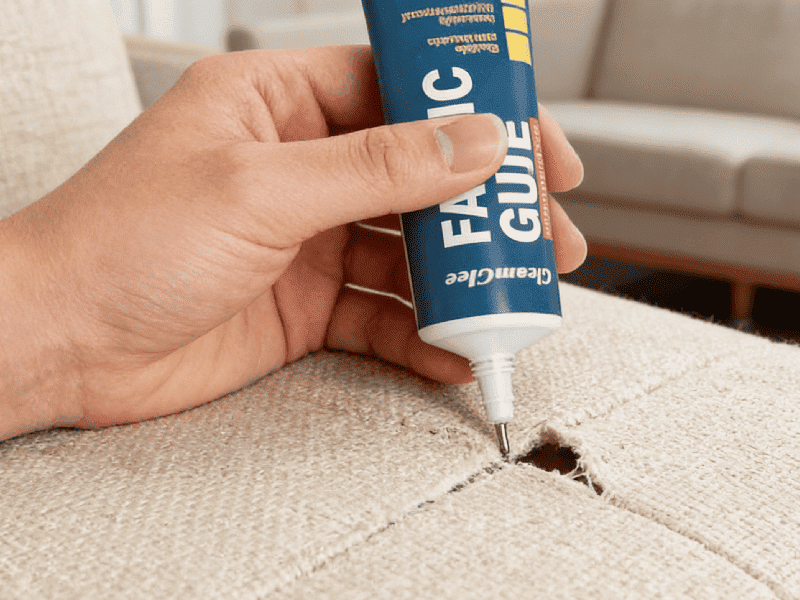
Step 2: Apply the Correct Amount of Fabric Adhesive
More glue does not equal a stronger bond.
Fabric adhesive works by penetrating fibers, not by forming a thick surface layer. Over-application causes bleed-through, stiffness, and longer curing times.
Best practice:
- Apply a thin, even layer
- Cover only the bonding area
- Avoid pooling or dripping
| Fabric Type | Recommended Application |
|---|---|
| Lightweight cotton, polyester | Very thin layer |
| Denim, canvas | Thin but complete coverage |
| Decorative elements | Small dots or lines |
Precision-tip applicators help control flow and reduce mess, especially for detailed repairs.
Step 3: Press and Set the Bond Correctly
After applying adhesive:
- Bring the fabric pieces together immediately
- Press firmly to ensure fiber contact
- Hold or weight the area flat
Initial set time is usually 5–10 minutes, depending on the formulation.
During this stage:
- Do not stretch or reposition
- Do not check bond strength too early
The goal is contact, not movement.
Step 4: Allow Full Curing Time (Do Not Rush This)
Curing is where most users make mistakes.
| Stage | What It Means | Typical Time |
|---|---|---|
| Initial set | Pieces stay in place | 5–10 minutes |
| Handling safe | Light movement allowed | 1–2 hours |
| Full cure | Maximum strength & wash resistance | 24 hours |
⚠️ Washing, ironing, or stretching before full cure will weaken the bond permanently.
For washable fabric adhesive, 24 hours is non-negotiable.
Step 5: Test Before Washing or Ironing
Before committing the garment to full use:
- Gently flex the bonded area
- Check edges for lifting
- Iron from the reverse side if needed
Once cured, quality fabric adhesive should:
- Remain soft and flexible
- Stay transparent
- Withstand normal washing and ironing
Common Step-by-Step Mistakes and How to Avoid Them
| Mistake | Result | How to Fix |
|---|---|---|
| Applying too much glue | Stiff, visible bond | Use thinner layer |
| Skipping wash prep | Peeling after wash | Pre-wash fabric |
| Washing too soon | Bond failure | Wait full 24 hours |
| Using wrong adhesive type | Poor durability | Choose washable/permanent |
Understanding these mistakes helps users get consistent, professional-looking results, even on their first attempt.
Practical Example: Hemming Pants Without Sewing
- Wash and dry pants
- Fold hem to desired length
- Apply thin adhesive line inside fold
- Press firmly for 5–10 minutes
- Lay flat for 24 hours
- Wear, wash, and iron normally
This is one of the most common—and successful—uses of fabric adhesive when done correctly.

Is Fabric Adhesive Washable, Flexible, and Heat-Resistant?
High-quality fabric adhesive is washable, flexible, and heat-resistant once fully cured. It is designed to move with fabric fibers, withstand machine washing, and tolerate normal ironing temperatures. Performance depends on using a fabric-specific adhesive, applying it correctly, and allowing a full curing period—typically 24 hours—before washing or heating.
One of the biggest concerns users have before choosing fabric adhesive is durability. It’s easy to make something stick once—but will it survive real life? Washing machines, dryers, body movement, and ironing all place stress on bonded fabric. Understanding how fabric adhesive behaves under these conditions helps users set realistic expectations—and avoid common mistakes.
Is Fabric Adhesive Really Washable?
Yes—washable fabric adhesive does not come off in the wash when used correctly.
Washable fabric adhesives are formulated with polymers that resist water and detergent penetration after curing. Unlike ordinary glue, which dissolves or cracks, fabric adhesive maintains its bond through repeated wash cycles.
However, three conditions must be met:
- The adhesive must be labeled washable or permanent fabric adhesive
- The bonded fabric must cure fully (usually 24 hours)
- Washing should follow normal garment care instructions
| Condition | Impact on Wash Durability |
|---|---|
| Full curing time | Essential |
| Correct adhesive type | Non-negotiable |
| Gentle wash cycles | Extends bond life |
If users report peeling after washing, the cause is almost always early washing or wrong adhesive choice, not product failure.
Does Fabric Glue Come Off in the Wash?
This question appears frequently in Google searches—and the short answer is:
- Temporary or craft adhesives: Yes, they often wash out
- Permanent washable fabric adhesives: No, they are designed not to
Many negative experiences come from confusing these two categories. Temporary adhesives are meant for positioning or basting, not long-term repairs.
| Adhesive Type | Comes Off in Wash? |
|---|---|
| Temporary fabric adhesive | Yes |
| Craft-only fabric glue | Often |
| Permanent washable adhesive | No (after cure) |
Understanding this distinction eliminates most user frustration.
Does Fabric Adhesive Stay Flexible After Drying?
Flexibility is one of the defining features of true fabric adhesive.
After curing, quality fabric adhesive:
- Bends with the fabric
- Stretches slightly without cracking
- Does not turn stiff or brittle
This flexibility is critical because fabric moves constantly during wear. Adhesives that dry rigid may feel strong initially but fail quickly once the fabric flexes.
| Property | Regular Glue | Fabric Adhesive |
|---|---|---|
| Dry texture | Hard, brittle | Soft, elastic |
| Reaction to movement | Cracks | Moves with fabric |
| Comfort when worn | Poor | Comfortable |
This is why fabric adhesive is suitable for clothing, while general-purpose glue is not.
Is Fabric Adhesive Heat-Resistant Enough for Ironing?
Yes—most washable fabric adhesives tolerate normal ironing temperatures once fully cured.
Best practices include:
- Wait at least 24 hours before ironing
- Iron from the reverse side when possible
- Use medium heat unless fabric allows higher
Fabric adhesive is not designed for extreme heat (industrial pressing), but it easily withstands everyday household ironing.
| Heat Source | Safe After Cure? |
|---|---|
| Household iron | Yes |
| Steam ironing | Yes |
| High-heat press | Use caution |
How Washing, Stretching, and Heat Affect Bond Longevity
Fabric adhesive durability depends on how stress is applied:
- Even stress (washing, wearing) → bond remains stable
- Sudden pulling or twisting → may weaken edges
- Repeated high heat → can shorten lifespan
This is why proper application and fabric choice matter as much as adhesive quality.
How to Maximize Wash & Heat Resistance (User Checklist)
| Step | Why It Matters |
|---|---|
| Pre-wash fabric | Removes coatings that block adhesion |
| Thin, even application | Prevents weak spots |
| Full 24-hour cure | Activates full polymer strength |
| Follow garment care | Reduces unnecessary stress |
Following this checklist turns fabric adhesive into a long-term solution, not a temporary fix.

What Are Common Fabric Adhesive Mistakes to Avoid?
The most common fabric adhesive mistakes include using the wrong adhesive type, skipping fabric preparation, applying too much glue, washing or ironing before full curing, and using fabric glue on unsuitable materials. Avoiding these errors ensures a flexible, washable, and long-lasting bond that looks clean and professional.
Fabric adhesive failures are rarely random. In nearly all cases, the bond fails because one or more basic rules were ignored. The good news is that these mistakes are predictable—and completely avoidable once users understand why they happen.
Below are the most common fabric adhesive mistakes, explained clearly with practical fixes.
Using the Wrong Type of Fabric Adhesive
This is the number-one reason fabric glue “doesn’t work.”
Many users assume all fabric adhesives perform the same, but they don’t. Temporary, craft-only, and permanent washable adhesives are designed for very different purposes.
| Mistake | What Happens | Correct Choice |
|---|---|---|
| Using temporary adhesive for clothing | Bond washes out | Permanent washable adhesive |
| Using craft glue on garments | Peeling after wear | Clothing-grade adhesive |
| Using regular glue on fabric | Cracking, stiffness | Fabric-specific adhesive |
Fix: Always match the adhesive type to the fabric and usage scenario, not just convenience or availability.
Skipping Fabric Preparation Before Gluing
Applying adhesive to unprepared fabric drastically reduces bond strength.
Common preparation mistakes include:
- Not washing new fabric (factory coatings block adhesion)
- Applying glue to damp fabric
- Leaving dust, lint, or oil on the surface
| Prep Step Skipped | Result |
|---|---|
| Pre-washing | Adhesive peels after wash |
| Drying fully | Weak, uneven bond |
| Flattening fabric | Misalignment |
Fix: Wash, dry, and align fabric before applying adhesive—even for small repairs.
Applying Too Much Fabric Adhesive
More glue does not mean more strength.
Over-application causes:
- Glue bleed-through
- Stiff, visible patches
- Longer curing time
- Reduced flexibility
| Application Error | Outcome |
|---|---|
| Thick glue layer | Hard, brittle bond |
| Uneven spreading | Weak spots |
| Pooling | Visible residue |
Fix: Use a thin, even layer—just enough to penetrate fibers, not coat them.
Washing or Ironing Before Full Curing
This mistake alone accounts for a large percentage of negative reviews.
Fabric adhesive requires time to complete polymer cross-linking. Washing or heating before curing interrupts this process permanently.
| Action Taken Too Soon | Effect |
|---|---|
| Washing before 24 hours | Bond failure |
| Ironing too early | Adhesive softening |
| Stretching during cure | Edge lifting |
Fix: Respect the full 24-hour curing time, even if the bond feels dry to the touch.
Using Fabric Adhesive on Unsuitable Fabrics
Not all textiles bond well with standard fabric adhesive.
Problematic materials include:
- Silicone-coated or waterproof-treated fabrics
- Extremely oily or waxed textiles
- Very thick, rigid industrial fabrics
| Fabric Type | Adhesive Performance |
|---|---|
| Cotton, denim, polyester | Excellent |
| Knit fabrics | Good (thin application) |
| Silicone-coated fabric | Poor |
| Waxed canvas | Poor |
Fix: Test in an inconspicuous area, or use a specialty adhesive for coated materials.
Expecting Fabric Adhesive to Replace Structural Sewing
Fabric adhesive is strong—but it’s not designed to replace stitching in high-load or structural areas.
Examples where glue alone is insufficient:
- Backpack straps
- Waistbands under tension
- Load-bearing seams
Fix: Use a hybrid approach—adhesive for positioning, stitching for reinforcement.
Ignoring Temperature, Washing, and Wear Conditions
Even high-quality adhesive has limits.
Factors that shorten bond life:
- Repeated high-heat drying
- Aggressive wash cycles
- Excessive twisting or pulling
| Stress Factor | Impact on Bond |
|---|---|
| Gentle wash | Minimal |
| High heat drying | Moderate |
| Constant tension | High |
Fix: Follow garment care instructions and avoid unnecessary stress on repaired areas.
Quick Troubleshooting Table
| Problem | Likely Cause | Solution |
|---|---|---|
| Peels after washing | Washed too soon | Wait full 24 hours |
| Feels stiff | Too much glue | Apply thinner layer |
| Visible residue | Over-application | Use precision tip |
| Bond cracks | Wrong adhesive | Switch to fabric-specific |
Conclusion
Fabric adhesive has evolved from a simple craft supply into a reliable, everyday repair solution for modern clothing, home textiles, and DIY projects. When chosen correctly and applied properly, it offers a clean, flexible, and washable alternative to traditional sewing—without requiring special tools or skills.
As this guide has shown, fabric adhesive works best when users understand what type to choose, how to apply it step by step, and what mistakes to avoid. Permanent, washable fabric adhesives are designed to move with fabric fibers, resist cracking, and withstand real-life conditions such as washing, ironing, and daily wear. In many situations—hemming, patching, decorative bonding, or quick repairs—they deliver professional-looking results that are both durable and discreet.
That said, fabric adhesive is not about replacing sewing entirely. It’s about using the right bonding method for the right task. When used thoughtfully, fabric adhesive empowers users to repair, customize, and extend the life of garments instead of discarding them—supporting both practicality and sustainability.
If you’re looking for a high-quality, washable fabric adhesive that’s easy to use and proven in real-world applications, GleamGlee fabric adhesive is available with fast Amazon fulfillment in the US, UK, Canada, and Europe.
For brands, retailers, or Amazon sellers seeking custom formulations, private labeling, or bulk supply, GleamGlee also offers low-MOQ customization, compliant packaging, and global logistics support.
Whether you’re fixing one garment or building a product line, choosing the right fabric adhesive makes all the difference—and using it correctly ensures results you can trust.