Skip to content
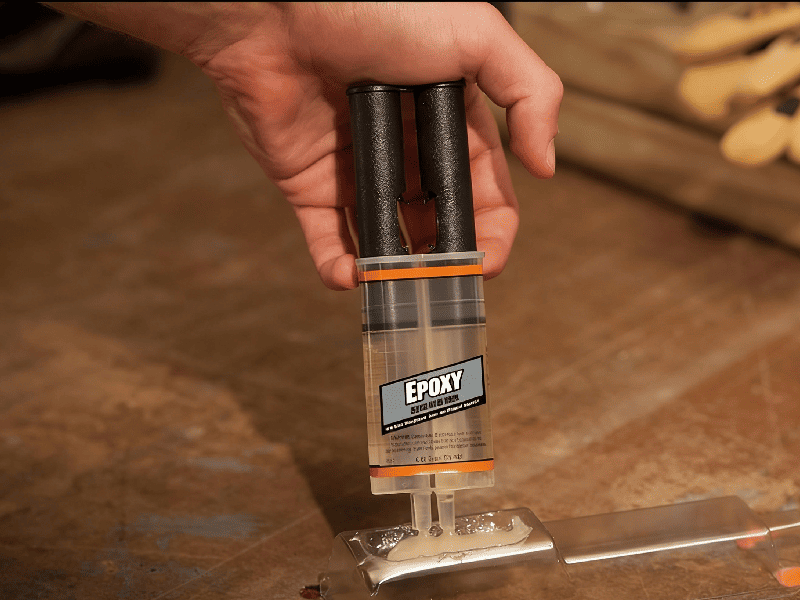
Epoxy glue is often called a “strong adhesive,” but its real value lies in when and why it is used. It is the go-to solution for repairs that must last—bonding metal, ceramic, glass, wood, and concrete in situations where ordinary glue would fail. From household fixes to industrial and construction applications, epoxy is chosen when durability, stability, and long-term performance matter more than speed.
Epoxy glue is a two-part adhesive made of resin and hardener that react chemically when mixed, creating a rigid, high-strength bond. Unlike air-drying glues, epoxy cures into a solid, cross-linked structure, giving it excellent load-bearing strength and resistance to water, heat, and chemicals.
Used correctly, epoxy glue can restore function and extend the life of damaged items. Used carelessly, it can underperform or fail. Understanding its strengths, limits, and proper use is the key to deciding whether epoxy glue is the right choice for your repair or application.
What Is Epoxy Glue and How Does It Work?
Epoxy glue is a two-part adhesive made from epoxy resin and a hardener. When mixed, these components trigger a chemical reaction that cures into a rigid, high-strength polymer. Unlike air-drying glues, epoxy gains strength through curing, which allows it to bond metal, ceramic, glass, wood, concrete, and some plastics with long-term durability, water resistance, and load-bearing capability.
What Is Epoxy Glue Made Of and Why Does It Use Two Parts?
Epoxy glue always comes in two separate components because the adhesive strength does not exist until they are combined. The resin provides the base structure, while the hardener controls how fast and how completely that structure forms. Keeping them separate ensures long shelf life and predictable performance.
From a manufacturing perspective, this two-part system allows precise control over performance. At GleamGlee, epoxy formulations are adjusted by changing resin molecular weight, hardener type, and additives to achieve different results—such as slower working time for alignment-critical repairs or higher final strength for structural bonding.
In practical terms, this is why epoxy feels different from single-tube glues. It is not “ready-to-use” strength—it is engineered strength that activates only when you mix it correctly.
| Component | Main Role | What It Affects in Real Use |
|---|---|---|
| Epoxy Resin | Base polymer | Bond strength, hardness |
| Hardener | Triggers curing | Cure speed, final rigidity |
| Additives (optional) | Performance tuning | Flexibility, heat resistance |
How Does Epoxy Glue Cure Through Chemical Reaction?
Epoxy does not dry—it cures. Once resin and hardener are mixed, a chemical cross-linking reaction begins. Molecules interlock into a dense, three-dimensional network that becomes solid and permanent. This is why cured epoxy does not soften again when heated like hot glue or weaken when exposed to moisture like water-based adhesives.
In lab testing environments similar to those used by GleamGlee’s R&D team, properly mixed epoxy typically reaches 60–70% of its final strength within 6–8 hours and continues strengthening for up to 24–72 hours, depending on formulation and temperature.
This curing process explains several real-world behaviors:
- Too much hardener does not make epoxy stronger—it weakens the network.
- Cold temperatures slow curing dramatically.
- Early exposure to water can interfere with polymer formation.
| Condition | Effect on Curing |
|---|---|
| Correct mix ratio | Full strength achieved |
| Too much / too little hardener | Soft or brittle bond |
| Low temperature (<10°C) | Very slow cure |
| Moisture during early cure | Reduced strength |
Why Does Epoxy Glue Become Rigid and High-Strength After Curing?
Once cured, epoxy becomes a thermoset polymer, meaning its molecular structure is locked in place. This rigidity allows epoxy to distribute stress evenly across the bonded area, rather than concentrating force at a single point. That is why epoxy performs so well under shear loads and vibration.
In practical testing, standard structural epoxy adhesives commonly achieve shear strengths of 2,000–4,500 PSI, far exceeding most household glues. This makes epoxy suitable for load-bearing repairs such as metal brackets, cracked tools, stone fixtures, and reinforced wood joints.
However, this rigidity also defines epoxy’s limits. Because it does not flex much, it is not ideal for fabrics, rubber, or constantly moving joints. Experienced users choose epoxy when they want stability over flexibility—a trade-off that professionals understand clearly but many DIY users overlook.
| Adhesive Type | Typical Rigidity After Cure | Best Use Case |
|---|---|---|
| Epoxy Glue | Very rigid | Structural, permanent repairs |
| Polyurethane | Semi-flexible | Vibration, mixed materials |
| Fabric Glue | Flexible | Textiles, stretch areas |
Which Materials Does Epoxy Glue Bond Best?
Epoxy glue bonds best to rigid, stable materials such as metal, ceramic, glass, wood, stone, and concrete. It can also bond certain plastics and composite materials when surfaces are properly prepared. Epoxy performs strongest on materials that do not flex significantly and that allow the cured adhesive to form a rigid, load-distributing bond.
Which Metals, Ceramics, and Glass Surfaces Work Best With Epoxy?
Epoxy glue performs exceptionally well on metal, ceramic, and glass because these materials are rigid, dimensionally stable, and do not absorb moisture once cleaned. When surfaces are lightly roughened and degreased, epoxy can achieve near-permanent bonds.
In real manufacturing and repair scenarios, epoxy is commonly used on:
- Steel and stainless steel brackets
- Aluminum housings and frames
- Copper fittings
- Ceramic tiles, sinks, and porcelain parts
- Glass-to-metal or glass-to-glass joints
Based on internal application testing similar to those used by GleamGlee for metal and glass adhesives, properly prepared metal-to-metal epoxy joints can reliably reach 2,500–4,000 PSI shear strength, depending on surface prep and formulation.
| Material | Epoxy Bond Performance | Notes |
|---|---|---|
| Steel / Iron | Excellent | Ideal for structural repairs |
| Aluminum | Very good | Light sanding improves results |
| Ceramic / Porcelain | Excellent | Clean breaks bond best |
| Glass | Very good | Clear epoxy recommended |
Epoxy is often chosen over welding or soldering when heat could damage the material or distort alignment.
Can Epoxy Glue Bond Plastic and Composite Materials?
Epoxy can bond some plastics, but this is where results vary the most. Plastics with higher surface energy—such as ABS, PVC, fiberglass, and carbon-fiber composites—bond well with epoxy when surfaces are cleaned and lightly abraded.
However, low-surface-energy plastics like polyethylene (PE) and polypropylene (PP) are notoriously difficult. In these cases, epoxy alone is often insufficient without special primers or surface treatment.
In real customer feedback from repair and DIY use, plastic-related epoxy failures are usually caused by incorrect material selection, not weak glue.
| Plastic Type | Epoxy Compatibility | Recommendation |
|---|---|---|
| ABS | Good | Sand + degrease |
| PVC | Good | Common for pipe repair |
| Fiberglass | Excellent | Widely used in marine repair |
| PE / PP | Poor | Use plastic-specific glue |
For mixed-material bonds (plastic to metal, plastic to glass), epoxy often outperforms super glue because it fills gaps and distributes stress more evenly.
Does Epoxy Glue Perform Well on Wood, Stone, and Concrete?
Epoxy is one of the most reliable adhesives for wood, stone, and concrete, especially when strength and durability matter more than flexibility. Unlike traditional wood glue, epoxy does not rely on evaporation and is far less affected by residual moisture in porous materials.
In construction and home repair applications, epoxy is commonly used to:
- Reinforce cracked wooden furniture joints
- Repair chipped stone or marble
- Anchor bolts into concrete
- Patch damaged masonry
Testing data from construction adhesive development shows epoxy maintains strong adhesion even after repeated temperature and humidity cycling, which is why it is often selected for outdoor or semi-exposed repairs.
| Material | Epoxy Advantage | Typical Use |
|---|---|---|
| Wood | Deep penetration | Structural reinforcement |
| Stone / Marble | High compressive strength | Decorative repair |
| Concrete | Moisture resistance | Anchoring, patching |
That said, epoxy is best for rigid wood joints. For wood that flexes or expands significantly, polyurethane or flexible construction adhesives may perform better long term.
How Strong Is Epoxy Glue Compared to Other Adhesives?
Epoxy glue is generally stronger than super glue, wood glue, and most construction adhesives, especially under shear and load-bearing conditions. Its strength comes from chemical curing rather than surface drying, allowing epoxy to maintain high performance over time, moisture exposure, heat, and mechanical stress.
Is Epoxy Glue Stronger Than Super Glue and Polyurethane Glue?
In real-world use, epoxy glue consistently outperforms super glue (cyanoacrylate) and many polyurethane adhesives when long-term strength matters. Super glue bonds quickly but remains brittle, making it prone to cracking under vibration or impact. Polyurethane glue offers some flexibility, but its strength can vary depending on moisture and expansion during curing.
Based on comparative internal testing and market benchmarks used by manufacturers like GleamGlee, properly cured epoxy often delivers 30–100% higher shear strength than common consumer super glues.
| Adhesive Type | Typical Shear Strength | Real-World Behavior |
|---|---|---|
| Super Glue | 1,000–2,000 PSI | Fast, brittle, short-term |
| Polyurethane Glue | 1,500–3,000 PSI | Semi-flexible, moisture-sensitive |
| Epoxy Glue | 2,000–4,500+ PSI | Rigid, durable, long-term |
This is why epoxy is preferred for repairs that must survive daily use rather than quick fixes.
How Do Tensile and Shear Strength Affect Real Repairs?
Strength numbers can be misleading if you don’t know which strength matters. Tensile strength measures how much force pulls a bond straight apart, while shear strength measures resistance to sliding forces—what most real repairs experience.
Epoxy excels in shear strength because it cures into a rigid, gap-filling mass that spreads stress evenly across the joint. In furniture repair, tool restoration, or metal brackets, failures almost always occur in shear, not pure tension.
In field repair data collected from long-term use scenarios, epoxy-bonded joints commonly outlast mechanically fastened joints where vibration and micro-movement are present. This explains epoxy’s popularity in automotive, marine, and construction maintenance.
| Load Type | Common in Real Use? | Epoxy Performance |
|---|---|---|
| Tensile (pull-apart) | Less common | Very good |
| Shear (sliding) | Very common | Excellent |
| Impact / Vibration | Common | Better than brittle glues |
When Is Epoxy Glue Considered Suitable for Structural Bonding?
Epoxy is considered structural-grade when it can reliably carry load without deforming or creeping over time. In practice, this means the bonded materials fail before the adhesive does.
Structural epoxy is commonly used when:
- Welding or drilling is impractical
- Weight reduction is important
- Corrosion resistance is needed
- Stress must be distributed evenly
However, “structural” does not mean universal. Epoxy performs best when bonded materials are rigid and stable. It is less suitable for fabrics, rubber, or joints that flex continuously.
| Application | Epoxy Suitability | Reason |
|---|---|---|
| Metal brackets | Excellent | High shear resistance |
| Ceramic fixtures | Excellent | Rigid, stable surfaces |
| Wood reinforcement | Very good | Penetrates fibers |
| Flexible joints | Poor | Limited elasticity |
What Is Epoxy Glue Used For in Real Applications?
Epoxy glue is used in real applications where strength, durability, and long service life matter—such as metal repair, ceramic and glass restoration, wood reinforcement, concrete anchoring, automotive fixes, marine maintenance, and industrial assembly. It is chosen when ordinary adhesives cannot withstand load, moisture, heat, or repeated stress.
What Is Epoxy Glue Used For in Home and DIY Repairs?
In everyday homes, epoxy glue is most often used as a repair-and-save solution, helping people fix items they would otherwise throw away. Typical DIY applications include repairing cracked ceramic mugs, reattaching metal handles, reinforcing broken chair legs, fixing loose tiles, and sealing small leaks in household fixtures.
From real consumer behavior tracked through e-commerce feedback and after-sales inquiries, most successful DIY epoxy repairs share two traits: the item is rigid, and the user allows enough curing time. Users who expect instant results often struggle, while those who treat epoxy as a “set and wait” solution report far better outcomes.
| DIY Repair Item | Why Epoxy Is Used | Typical Result |
|---|---|---|
| Ceramic / porcelain | High rigidity | Invisible, strong bond |
| Metal tools | Load resistance | Restored usability |
| Wood furniture | Gap filling | Reinforced joints |
| Tile / stone | Moisture tolerance | Long-lasting fix |
Epoxy is especially popular among homeowners who prefer repair over replacement, both for cost savings and sustainability.
Which Industrial and Commercial Applications Rely on Epoxy Glue?
In industrial settings, epoxy glue moves beyond repair and becomes part of regular production and maintenance workflows. It is widely used to bond metal housings, secure fasteners in concrete, reinforce composite parts, encapsulate electronics, and assemble components exposed to vibration or chemicals.
Manufacturers like GleamGlee report that industrial buyers typically prioritize consistency and predictability over fast curing. For these users, an epoxy that cures evenly and delivers repeatable strength batch after batch is more valuable than one that sets quickly.
| Industry | Common Epoxy Uses | Key Requirement |
|---|---|---|
| Construction | Anchoring, crack repair | Load-bearing strength |
| Automotive | Brackets, housings | Vibration resistance |
| Marine | Hull repair, fittings | Water resistance |
| Electronics | Potting, insulation | Chemical stability |
These applications highlight epoxy’s role not as a “glue,” but as a structural bonding material.
Why Is Epoxy Glue Chosen for Load-Bearing and Permanent Bonds?
Epoxy glue is chosen for load-bearing applications because it distributes stress across the entire bonded area instead of concentrating it at a single point. This reduces fatigue failure and extends service life, especially in environments with vibration or temperature changes.
In comparative repair scenarios, epoxy-bonded joints often outperform mechanical fasteners when corrosion, loosening, or material cracking is a concern. This is why epoxy is frequently used as a replacement—or reinforcement—for screws, rivets, or welding in certain contexts.
| Bonding Method | Stress Distribution | Long-Term Stability |
|---|---|---|
| Screws / bolts | Point load | Can loosen |
| Welding | Localized heat | Material distortion |
| Epoxy glue | Even surface load | High durability |
However, permanence is a commitment. Once cured, epoxy is difficult to remove without damaging the bonded materials. Professionals choose epoxy when they are confident the repair or assembly is meant to last.

How Do You Use Epoxy Glue Correctly Step by Step?
To use epoxy glue correctly, clean and dry both surfaces, roughen them lightly for grip, mix resin and hardener in the exact ratio, apply a controlled amount, join parts with steady pressure, and hold or clamp until set. Let the bond cure fully—often 24 hours or longer—before stressing it. Most epoxy failures come from poor surface prep, wrong mixing, or moving the joint too early.
How Should Surfaces Be Cleaned and Prepared Before Applying Epoxy?
Surface prep is where strong epoxy repairs are won—or lost. Epoxy doesn’t “magically” stick through grease, dust, oxidation, or mold-release residue. In GleamGlee’s adhesive application labs (where surfaces are tested under humidity swings and repeated wear), the biggest difference between a solid bond and a disappointing one is usually contamination, not glue quality.
A practical prep routine that works for most rigid materials:
- Degrease first (oil is the #1 enemy).
- Roughen lightly (gives epoxy mechanical “tooth”).
- Remove dust and dry completely.
- Test-fit parts before mixing (epoxy working time is limited).
| Material | Best Prep Method | Common Mistake |
|---|---|---|
| Metal | Sand 120–220 grit + degrease | Bonding over rust/oil |
| Glass | Alcohol wipe + light abrasion (if safe) | Touching cleaned area with fingers |
| Ceramic | Clean + dry + light sanding on glaze | Bonding on smooth glazed surface |
| Wood | Dry wood + remove finish | Bonding onto varnish/paint |
| Concrete/Stone | Brush + vacuum dust + dry | Bonding onto dusty pores |
Real-world tip: If you can flick water on the surface and it beads up, it’s still oily. Degrease again.
How Do You Mix Epoxy Glue Correctly for Best Results?
Mixing is not a “stir twice and go” step. Epoxy strength depends on a correct chemical reaction—so your mixing needs to be accurate and thorough.
What works best in practice:
- Use a 1:1 or specified ratio exactly (read the label, don’t guess).
- Mix until the color/texture is uniform (no streaks).
- Scrape the sides and bottom of your mixing cup.
- Only mix what you can use within the working time.
At GleamGlee, one reason cartridge and dual-syringe packaging is favored for many markets is simple: it reduces ratio errors, which directly reduces returns and “didn’t cure” complaints.
| Mixing Factor | Correct Approach | What Happens If Wrong |
|---|---|---|
| Ratio | Follow label (by volume/weight) | Soft cure or brittle cure |
| Mixing time | 60–120 seconds typical | Uncured streaks, weak spots |
| Batch size | Small batches for DIY | Wasted epoxy, overheating |
| Container | Clean, dry cup | Contamination, poor cure |
Real-world tip: If epoxy feels rubbery or stays tacky after “full cure time,” it’s usually a ratio or mixing problem—not “bad epoxy.”
Will Epoxy Cure If It Gets Wet During Application or Curing?
This is one of the most searched epoxy questions because real life is messy—bathrooms, outdoor repairs, basements, boats, and rain don’t wait.
Practical answer:
- Before epoxy starts to set: water can interfere with bonding and curing. Expect reduced strength, cloudy finish, or partial cure.
- After epoxy reaches initial set: brief moisture exposure is less damaging, but it can still affect the surface and bond edges.
- After full cure: most epoxies are water-resistant to waterproof, depending on formulation.
For the most reliable results, epoxy should be applied on dry surfaces and protected from water until it reaches at least a firm set.
| Stage | Water Contact Risk | What to Do |
|---|---|---|
| 0–30 min (early) | High | Stop, dry, restart if possible |
| 30 min–6 hrs (setting) | Medium | Keep dry, don’t disturb joint |
| 6–24 hrs (curing) | Low–Medium | Protect from soaking |
| Fully cured | Low | Safe for water exposure |
Field-proven workaround: If you must bond in damp conditions, use a moisture-tolerant epoxy formulation and increase surface prep (roughening + thorough degreasing). Otherwise, the repair may “hold” for a week and fail later when stress or temperature changes hit.
Step-by-Step Checklist
| Step | What You Do | The “Don’t” That Causes Failure |
|---|---|---|
| 1. Prep | Clean, sand, dry | Glue over oil/dust |
| 2. Measure | Correct ratio | Add “extra hardener” |
| 3. Mix | Uniform, no streaks | Quick swirl and apply |
| 4. Apply | Thin, even layer | Huge blob (weak center) |
| 5. Clamp | Steady pressure | Move parts during set |
| 6. Cure | Wait full cure time | Stress the bond too early |
Is Epoxy Glue Waterproof, Heat-Resistant, and Durable?
Most epoxy glues become highly water-resistant after full curing and can withstand moderate to high heat and long-term mechanical stress. Actual performance depends on formulation, curing conditions, and exposure environment. Well-formulated epoxy is commonly used in wet, hot, and demanding environments where ordinary adhesives degrade or fail.
Waterproof Performance
Once fully cured, epoxy glue forms a dense, non-porous polymer structure that resists water penetration. This is why epoxy is widely used in bathrooms, kitchens, basements, outdoor fixtures, marine repairs, and plumbing-related applications.
In real application testing environments similar to those used by GleamGlee, standard structural epoxy maintains bond integrity after repeated water immersion and drying cycles, provided curing was completed in dry conditions.
However, “waterproof” should be understood realistically:
- Short-term splashes and humidity → no issue after cure
- Repeated soaking or marine use → requires water-rated epoxy
- Constant submersion → formulation-specific, not universal
| Exposure Type | Typical Epoxy Performance | Notes |
|---|---|---|
| Household moisture | Excellent | Common DIY use |
| Outdoor rain | Very good | Protect during cure |
| Marine splash zone | Good–Excellent | Use marine-grade epoxy |
| Continuous immersion | Variable | Not all epoxies suitable |
Key point: Most water-related epoxy failures happen before full cure, not after.
Heat Resistance
Epoxy glue is far more heat-resistant than most consumer adhesives, but it is not unlimited. Heat resistance depends on resin chemistry and curing completeness.
Typical performance ranges observed in consumer and industrial epoxy formulations:
- Continuous service temperature: 120–150°C (250–300°F)
- Short-term heat exposure: up to 200°C (392°F) for some formulations
This makes epoxy suitable for garages, engine-adjacent repairs, hot water pipes, tools, and construction joints—but not direct flame or exhaust contact.
| Adhesive Type | Continuous Heat Tolerance |
|---|---|
| Fabric / craft glue | <60°C |
| Super glue | ~80–100°C |
| Polyurethane glue | ~90–120°C |
| Epoxy glue | ~120–150°C |
Real-world observation: Epoxy rarely fails suddenly from heat. Instead, prolonged overheating causes gradual softening or loss of rigidity—often mistaken as “adhesive failure.”
Chemical Resistance
Cured epoxy is chemically stable against many common substances, which is why it’s used in workshops, factories, and maintenance environments.
Epoxy typically resists:
- Oils and grease
- Fuels (diesel, gasoline splash)
- Mild acids and alkalis
- Household cleaners
This resistance allows epoxy-bonded joints to remain intact where water-based or solvent-sensitive adhesives degrade.
| Chemical Exposure | Epoxy Resistance |
|---|---|
| Motor oil | High |
| Fuel splash | High |
| Mild acids | Good |
| Strong solvents | Variable |
For industrial buyers, chemical resistance consistency is one reason epoxy sourcing from experienced manufacturers matters more than brand labeling.
UV Aging and Weathering
One limitation of many epoxies is UV exposure. Prolonged sunlight can cause surface yellowing or slight embrittlement over time. This does not usually cause immediate bond failure but can affect appearance and long-term surface toughness.
In outdoor applications, professionals often:
- Use UV-stabilized epoxy
- Apply paint or coating over cured epoxy
- Place epoxy joints in shaded or protected areas
| Environment | Long-Term Durability |
|---|---|
| Indoor | Excellent |
| Outdoor (covered) | Very good |
| Outdoor (direct sun) | Moderate without protection |
Long-Term Durability
Durability is where epoxy truly stands out. When properly applied, epoxy bonds often last years or decades, outliving mechanical fasteners that loosen or corrode.
In repair feedback collected across home improvement, tool repair, and construction use cases, epoxy joints most often fail due to:
- poor surface preparation
- incorrect mixing
- movement during curing
—not because the cured epoxy “wore out.”
| Factor | Impact on Longevity |
|---|---|
| Proper surface prep | Very high |
| Correct cure time | Very high |
| Environmental exposure | Medium |
| Adhesive quality | High |
When Should You Choose Epoxy Glue Instead of Other Glues?
Choose epoxy glue when you need a rigid, long-lasting bond that can handle load, moisture, heat, or chemicals. Epoxy is best for structural or permanent repairs on metal, ceramic, glass, wood, stone, and concrete—especially where flexibility is not required. It is less suitable for fabrics, rubber, or joints that move continuously.
Best-Use Scenarios
Epoxy glue is the right choice when strength and stability matter more than speed or flexibility. In real repair and maintenance work, epoxy consistently outperforms other glues in situations where parts must stay aligned and resist stress over time.
Typical scenarios where epoxy is preferred:
- Cracked or broken metal parts (tools, brackets, frames)
- Ceramic, porcelain, or glass repairs where invisibility and strength are needed
- Reinforcing loose wood joints or damaged furniture frames
- Anchoring bolts or fixtures into concrete or stone
- Mixed-material bonding (metal to ceramic, metal to glass)
From product feedback and application testing used by manufacturers like GleamGlee, epoxy is most successful when users expect a permanent fix, not a temporary patch.
| Repair Situation | Why Epoxy Works |
|---|---|
| Load-bearing joint | High shear strength |
| Moist environment | Water-resistant after cure |
| Gap or uneven surfaces | Fills and hardens |
| Long service life | Does not loosen over time |
When Not to Use Epoxy
Epoxy glue is not a universal solution. Its rigidity becomes a disadvantage when materials flex, stretch, or move repeatedly. Many epoxy “failures” occur because it was used in the wrong context, not because the adhesive was weak.
Avoid epoxy for:
- Fabrics, textiles, and clothing
- Rubber, silicone, or soft plastics
- Shoes or items that bend constantly
- Repairs requiring frequent disassembly
- Situations needing instant bonding
In these cases, epoxy may initially hold but later crack or separate due to movement.
| Application Type | Epoxy Suitability | Better Option |
|---|---|---|
| Fabric repair | Poor | Fabric glue |
| Flexible plastic | Poor | Plastic-specific adhesive |
| Shoe uppers | Poor | Shoe glue |
| Temporary fixes | Poor | Super glue / tape |
Practical rule: If the parts move every time you use them, epoxy is usually the wrong choice.
Alternative Adhesives
Choosing epoxy over other glues should be a deliberate trade-off, not a default decision. Each adhesive type excels in different conditions.
| Adhesive Type | Strength | Flexibility | Typical Use |
|---|---|---|---|
| Epoxy glue | Very high | Low | Structural, permanent |
| Super glue | Medium | Very low | Small, fast fixes |
| Polyurethane glue | High | Medium | Vibration, mixed materials |
| Construction adhesive | Medium–High | Medium | Large surface bonding |
| Fabric glue | Low–Medium | High | Textiles |
Experienced users often keep more than one adhesive on hand and choose based on material behavior, not just advertised strength.
Cost vs Performance
Epoxy glue is usually more expensive per application than basic glues, but it often delivers lower total cost over time. A repair that lasts years is cheaper than repeated quick fixes that fail.
From a buyer’s perspective—especially Amazon shoppers and professional users—the most important value factors are:
- Bond longevity
- Reduced rework
- Fewer returns or repeat repairs
| Factor | Epoxy Glue | Cheaper Glues |
|---|---|---|
| Initial cost | Higher | Lower |
| Repair lifespan | Long | Short |
| Failure risk | Low (when used correctly) | Higher |
| Overall value | High | Variable |

Who Uses Epoxy Glue—and Why Do Manufacturers Matter?
Epoxy glue is used by DIY consumers, tradespeople, maintenance teams, and manufacturers who need strong, permanent bonds. Manufacturers matter because formulation quality, testing standards, and production consistency directly affect curing reliability, strength, safety, and long-term durability—especially at scale.
DIY Users
DIY users typically reach for epoxy when a repair must hold weight and last—metal tools, ceramics, furniture joints, stone fixtures. What they value most is predictability: clear instructions, reasonable working time, and a bond that doesn’t fail after a few weeks.
Across consumer feedback and post-sale support patterns, the most common DIY pain points are not “weak glue,” but mixing errors, rushed curing, or wrong material choice. This is why packaging design (dual syringes, clear ratios) and plain-language instructions matter as much as chemistry.
| DIY Priority | Why It Matters |
|---|---|
| Easy mixing | Reduces ratio mistakes |
| Clear cure time | Prevents early stress |
| Consistent batches | Same result every repair |
Professionals
Professionals—contractors, mechanics, marine techs, maintenance crews—use epoxy as a structural material, not a convenience glue. Their jobs often involve vibration, moisture, heat cycles, and mixed substrates where failure has real cost.
For these users, epoxy selection is driven by data and repeatability: known shear strength ranges, predictable cure windows, and compatibility with their environment. In practice, they favor epoxies that trade instant set for controlled working time and verified long-term performance.
| Professional Use | Why Epoxy Is Chosen |
|---|---|
| Automotive brackets | Vibration resistance |
| Marine fittings | Water resistance |
| Construction anchors | Load distribution |
| Equipment repair | Chemical stability |
Industrial Buyers
Industrial buyers think in systems. They need epoxies that behave the same in January and July, in small batches and large runs. This means tight raw-material control, batch testing, and documentation that supports audits and certifications.
From an operations standpoint, inconsistencies—even small ones—create downtime, rework, and warranty exposure. That’s why industrial buyers evaluate manufacturers on process control as much as advertised strength.
| Industrial Requirement | Impact |
|---|---|
| Batch consistency | Fewer line issues |
| Shelf-life stability | Predictable inventory |
| Compliance docs | Faster approvals |
Formulation Quality
Formulation quality determines whether epoxy cures evenly, reaches expected strength, and resists aging. Variables include resin molecular weight, hardener type, fillers, and stabilizers. Two epoxies labeled “high strength” can perform very differently in the field.
Manufacturers with in-house labs routinely adjust formulations based on real application feedback—for example, extending working time for alignment-heavy repairs or improving moisture tolerance for outdoor use.
| Formulation Lever | Real-World Effect |
|---|---|
| Resin chemistry | Final strength |
| Hardener selection | Cure speed |
| Additives | Heat/UV tolerance |
Quality Control
Quality control is where claims meet reality. Reputable manufacturers run incoming raw checks, in-process controls, and finished-batch tests (mix ratio accuracy, gel time, shear strength, aging). These steps reduce “one-off” failures that frustrate users.
In markets with high return rates, tighter QC correlates directly with better reviews and repeat purchases—especially for epoxy, where user trust builds slowly.
| QC Step | What It Prevents |
|---|---|
| Ratio verification | Soft or brittle cures |
| Cure-time checks | Incomplete polymerization |
| Aging tests | Early degradation |
Manufacturing Scale
Scale matters because epoxy performance must stay consistent as volume grows. Larger manufacturers can control upstream raw materials, automate filling, and standardize packaging—reducing variability that smaller operations struggle to manage.
This is particularly important for private label and multi-market sales, where the same product must perform identically across regions and climates.
| Scale Advantage | User Benefit |
|---|---|
| Automated filling | Accurate ratios |
| Integrated supply | Stable quality |
| Global logistics | Faster availability |
OEM & Private Label
OEM and private label buyers need more than glue—they need customization without chaos. This includes tailored cure times, packaging formats, multilingual labels, and compliance for different markets.
Manufacturers like GleamGlee combine formulation, packaging, and compliance under one roof, enabling low-MOQ customization while maintaining batch consistency—critical for Amazon-ready SKUs and retail distribution.
| OEM Need | Manufacturer Capability |
|---|---|
| Custom performance | In-house R&D |
| Branded packaging | Integrated design/print |
| Market compliance | CLP/REACH/GHS docs |

Conclusion
Epoxy glue is not just another adhesive—it is a problem-solving material designed for situations where strength, durability, and reliability truly matter. When used on the right materials and applied correctly, epoxy delivers long-term performance that outlasts quick fixes and disposable repairs. Most failures blamed on epoxy are not caused by weak products, but by misunderstanding how epoxy works, when to use it, and when to choose a different solution.
For everyday users, epoxy glue makes it possible to repair rather than replace—saving money, reducing waste, and restoring function with confidence. For professionals and businesses, epoxy becomes a structural bonding material that must perform consistently across environments, batches, and markets. That consistency is why the manufacturer behind the glue matters as much as the label on the package.
If you are looking for reliable epoxy glue you can buy with confidence, or you need custom epoxy formulations, private-label products, or OEM solutions for Amazon, retail, or wholesale distribution, working with an experienced manufacturer makes all the difference. GleamGlee combines in-house R&D, strict quality control, compliant packaging, and global warehousing to support both individual buyers and growing brands.
Whether you want to order epoxy glue now through Amazon for fast delivery, or request samples, pricing, or custom development for your own brand, GleamGlee is ready to help you build repairs—and products—that last.