Skip to content
A ceramic break feels small—until it happens to the thing you actually use every day. A mug handle snaps the morning you’re rushing. A favorite bowl develops a hairline crack that “looks fine” until hot soup makes it spread. A porcelain figurine breaks in a way that makes the repair line painfully obvious. Most people don’t want a “quick fix.” They want a repair that looks clean, holds up to real use, and doesn’t fail the first time the item gets warm, wet, or bumped.
Use a purpose-built ceramic glue for most ceramic repairs, especially glazed mugs, plates, décor, and collectibles. Ceramic glue is made for rigid, non-porous surfaces and can cure clear and strong without the brittleness and whitening that often happens with standard super glue. Choose the exact approach based on glaze, crack size, and whether the item sees heat or water.
If you’ve ever repaired ceramics that looked perfect on day one but popped loose later, you’re not alone. The difference usually isn’t “luck”—it’s surface type, prep, and choosing a glue that matches how ceramics behave in real life. Let’s make the next repair the last one.
What Ceramics Are You Gluing?
The glue that works on ceramics depends on three things: glazed vs unglazed, crack vs full break, and how the item is used (heat, water, handling). Glazed ceramics are slick and need glue that grips non-porous surfaces. Unglazed ceramics absorb adhesive and need a formula that doesn’t shrink or crumble inside pores. Small chips need thin, controlled glue; bigger breaks need stronger bonding area and pressure.
What glue to use on ceramics that are glazed?
Glazed ceramic is basically ceramic covered with a glassy coating. That coating is great for stain resistance—but it’s hard for ordinary glue to grab. When repairs fail on mugs and plates, it’s often because the glue never truly “keys into” the surface. It just sits on top.
What customers care about most with glazed ceramics:
- Will it look clean? (no cloudy seam, no white haze)
- Will it survive heat and washing?
- Will it hold up to daily handling and small impacts?
A ceramic glue designed for non-porous surfaces is built for that job. It typically cures into a rigid, clear bond that doesn’t rely on absorption. You’ll also get better control because the application is precise—especially important on visible seams.
Practical guidance that prevents failures:
- If the break is glossy-smooth: you need light surface bite (gentle scuffing) + a glue that bonds to glaze.
- If the seam is visible: thinner, controlled application beats “more glue.”
- If the item gets warm (mugs): choose a glue known for heat tolerance in everyday conditions (warm liquids, hand washing).
Common glazed ceramic examples: mugs, plates, bowls, teapots, bathroom soap dishes, toothbrush holders, decorative vases, ceramic ornaments.
What glue to use on ceramics that are unglazed?
Unglazed ceramics (like terracotta, handmade pottery bases, some planters) are porous. That porosity changes how glue behaves: the surface can “drink” adhesive, leaving too little at the bond line. That’s why people sometimes say, “It stuck at first, but later it crumbled.”
For unglazed ceramics, you want a glue that:
- Doesn’t shrink aggressively while curing (shrinkage weakens the seam)
- Can wet the surface and fill tiny pores
- Still cures hard (ceramics don’t flex—soft glue becomes a weak hinge)
What customers care about most here:
- Water exposure (planters, bathrooms, outdoors)
- Temperature changes (outdoor day/night swings)
- Chalky surfaces (dusty ceramic that needs proper cleaning)
Practical guidance:
- Brush away chalky dust, then wipe with alcohol and let it fully dry.
- If the ceramic is very porous, apply a very thin “prime coat” of glue, wait a minute, then apply the bonding coat. This reduces glue starvation at the joint.
- For outdoor pieces, give the repair full cure time before water exposure.
What glue to use on ceramics for small chips vs breaks?
“Chip repair” and “break repair” shouldn’t be treated the same.
Small chips & hairline cracks
These need thin, controlled glue that can flow into tight spaces. What usually goes wrong:
- Glue is too thick → sits on top → visible blob
- Glue is too runny → drips → messy cleanup
- Too much glue → squeeze-out that leaves shiny, obvious marks
Best practice: use a precision nozzle and apply the smallest amount that wets both surfaces.
Clean breaks (two pieces)
For full breaks, the strength comes from:
- Bond area (how much surface actually touches)
- Alignment (no gaps)
- Pressure (hold/clamp)
A common mistake is treating glue like filler. If there’s a gap, don’t “fill it with glue” and hope—it often creates a brittle ridge. Better: improve fit, then apply an even film.
Missing pieces / jagged breaks
If a piece is missing, any glue-only repair is weaker. You may need:
- A secondary reinforcement (where possible and appropriate)
- Or accept that the repair is cosmetic and not load-bearing
“Ceramic type → glue approach” mini table
| Ceramic type | What it’s like | Glue approach that works best |
|---|---|---|
| Glazed porcelain / glazed ceramic | Slick, non-porous | Ceramic glue + light scuff + precise thin coat |
| Unglazed terracotta / porous ceramic | Absorbs adhesive | Clean dust + optional prime coat + waterproof-ready cure |
| Decorative ceramics (visible seam) | Appearance matters | Clear ceramic glue, minimal squeeze-out, controlled alignment |
| Functional tableware | Heat + handling | Strong ceramic glue, correct cure time, avoid stress during cure |
Which Glue Is Best for Ceramics?
For most ceramic repairs, the best choice is a ceramic glue made for rigid, non-porous surfaces because it can bond strongly, dry clear, and hold up better to real handling than general-purpose super glue. Epoxy can work, but it’s often thicker and messier on visible repairs. The “best” glue depends on whether you need clarity, precision, heat/water resistance, or strength for heavier pieces.
What glue to use on ceramics instead of super glue?
Super glue is fast, but it has three common real-life issues on ceramics:
- White haze / frosting This can happen in humid air or when glue fumes settle on nearby surfaces. It’s especially noticeable on glossy glazed ceramics.
- Brittleness Ceramics don’t flex. When a mug handle is grabbed daily, the joint sees tiny shock loads. Brittle bonds can micro-crack and fail.
- No room for alignment Super glue grabs instantly. If the handle is slightly off-angle, you’re stuck with a bad fit and weaker contact area.
A dedicated ceramic glue solves these problems by combining:
- better wetting on non-porous surfaces
- clearer finish
- more controlled application (precision tips)
- a bond structure that tolerates small impacts better
Real-life decision point:
If the item is used daily (mug/plate) or visibly displayed (vase/figurine), using ceramic glue instead of super glue usually leads to fewer re-dos.
What glue to use on ceramics for a clear finish?
A “clear finish” isn’t just about the glue being transparent in the bottle. Customers care about:
- Does it stay clear after curing?
- Does it yellow over time?
- Does it leave a glossy blob that catches light?
For clean-looking repairs:
- Choose a glue that cures crystal clear
- Use a thin film (most clarity problems are from too much glue)
- Wipe squeeze-out immediately with a suitable method before it hardens
If the seam is on the front of a figurine or on a mug handle, clarity is the difference between “fixed” and “still looks broken.”
What glue to use on ceramics for heavy pieces?
Heavy pieces fail in a different way: not by peeling, but by shear—the joint slides under load.
For heavy ceramics (large vases, statues, thick planters), the strongest repairs come from:
- maximizing surface contact (dry fit first)
- applying an even coat across the full joint
- pressing/clamping to prevent gaps
- allowing full cure before moving the item
Quick strength rule customers understand:
A repair that is held firmly in perfect alignment for the first minutes and left undisturbed to cure is dramatically stronger than a repair that is “handled to test it.”
Ceramic glue vs other options
| Glue type | Strength on ceramics | Looks after cure | Ease of use | When it’s a bad idea |
|---|---|---|---|---|
| Ceramic glue | High | Clear, clean | Easy with precision tips | If used on greasy/dirty surfaces |
| Super glue | Medium (often brittle) | Can haze/whiten | Very fast | High humidity, visible seams, daily-use items |
| Epoxy | High (thick) | Can look bulky | More steps | Small delicate parts, “invisible” repairs |
| Craft/PVA glue | Low | Can stay soft | Easy | Functional ceramics, water/heat exposure |
How Do You Prep Ceramics Before Glue?
Proper prep is what makes ceramic glue last. You need to remove grease, dust, and moisture, lightly improve surface grip when needed, and make sure the ceramic is fully dry before applying glue. Skipping prep is the main reason ceramic repairs fail—even when using the right glue.
Why ceramic prep matters more than people think
Ceramic itself is strong, but glue bonds fail at the surface level, not inside the material. In real-world repairs, over 60% of ceramic glue failures come from poor surface preparation, not weak adhesive. Oil from hands, invisible dust, or trapped moisture can reduce bond strength dramatically—even if the repair looks fine at first.
Think of prep as “setting the stage” so the glue can do its job.
What glue to use on ceramics after cleaning oil and dust?
Before choosing glue, you must clean correctly. Ceramics—especially mugs, plates, and décor—often carry:
- Skin oils from handling
- Soap residue from washing
- Fine ceramic dust from the break itself
Correct cleaning steps (simple but critical):
- Rinse loose debris with water
- Degrease with isopropyl alcohol (70–99%)
- Let the surface air-dry completely (no towels that shed fibers)
What not to do:
- Don’t use dish soap right before gluing (it can leave residue)
- Don’t touch the bond area with bare fingers after cleaning
- Don’t rush drying with heat—trapped moisture weakens bonds
Once clean and dry, ceramic glue bonds far more consistently and cures evenly.
What glue to use on ceramics after light sanding?
Sanding is not always required—but when used correctly, it can significantly improve bond strength on glazed ceramics.
When light sanding helps:
- Very smooth, glossy glaze
- Repeated repair attempts that failed before
- High-stress areas (handles, load-bearing joints)
How to sand correctly:
- Use fine grit (400–600 grit)
- Lightly scuff only the bonding area
- Goal: remove shine, not material
After sanding:
- Remove all dust
- Wipe again with alcohol
- Let dry fully
This creates microscopic texture that helps ceramic glue “key” into the surface without making the repair visible.
What glue to use on ceramics if the crack is tight?
Hairline cracks are deceptive. They look small but often extend deeper than expected.
Key mistake people make:
Applying too much glue, which sits on top and never reaches inside the crack.
Correct approach:
- Use low-viscosity ceramic glue
- Apply tiny controlled drops
- Let capillary action draw glue into the crack
- Gently press pieces together without forcing
For tight cracks, precision nozzles matter more than glue strength. The right glue applied poorly still fails.
Ceramic prep checklist
| Prep step | Why it matters | Common failure if skipped |
|---|---|---|
| Degreasing | Removes invisible oils | Glue peels or pops off |
| Full drying | Prevents trapped moisture | Weak, chalky bond |
| Light sanding (when needed) | Improves grip on glaze | Glue slides, poor alignment |
| Dust removal | Prevents bond gaps | Brittle seam |
| Dry fitting | Ensures perfect alignment | Stress points after curing |
How Do You Glue Ceramics Step by Step?
To glue ceramics successfully, focus on four things: clean surfaces, a thin even glue layer, perfect alignment, and full cure time. Most “it broke again” cases happen because people use too much glue, touch the cleaned surface, or use the item before the bond is fully cured. A careful 10–15 minute setup can turn a fragile break into a repair that holds for months or years.
Step 1: Decide if this repair should be “usable” or “decorative”
Before you glue, be honest about how the item will be used.
Good candidates for a strong usable repair
- Mug handles (outside of food-contact area)
- Decorative vases and planters
- Bathroom accessories (soap dish, toothbrush holder)
- Figurines and ornaments
Better kept decorative or replaced
- Cracks that run through a bowl interior (food-contact + bacteria trap)
- Pieces missing from a load-bearing joint
- Repairs that must handle heavy leverage (thin handles with long torque)
This one decision prevents disappointment later.
Step 2: Dry-fit the pieces (1–2 minutes)
Goal: make sure everything fits before glue is involved.
- Put the pieces together without glue.
- Check if the break “locks” naturally or slides.
- Mark alignment with a pencil or a tiny piece of painter’s tape.
Why this matters:
If you try to “figure it out” after glue is applied, you’ll smear glue, trap gaps, and weaken the bond line.
Step 3: Clean and degrease (2–4 minutes)
Even if the ceramic looks clean, it usually isn’t.
What to use
- Isopropyl alcohol (70–99%) on a lint-free cloth or cotton swab
What to avoid
- Dish soap right before gluing (can leave residue)
- Paper towels that shed fibers
- Touching the bond area after cleaning
Quick reality check:
A single fingerprint is often enough to cause a peel-type failure on glazed ceramic because skin oil forms a barrier between glaze and glue.
Step4: Improve grip when needed (optional, 1–2 minutes)
This is only for very smooth glazed ceramic or repairs that failed before.
- Lightly scuff the bonding area with 400–600 grit sandpaper
- You’re removing shine, not removing material
- Wipe dust off, then alcohol again, then dry
Why it helps:
Glazed ceramic is slick. Micro-texture gives the glue more “bite,” which increases resistance to shear (sliding) forces—especially on handles.
Step 5: Apply the right amount of glue
Rule: a thin film bonds stronger than a thick puddle.
How much glue is “right”?
A simple way to think about it:
- You want the glue to wet the surface, not “sit on it.”
- When you press the pieces together, you should see a small, consistent squeeze-out line, not big blobs.
Common over-application signs
- Pieces won’t sit flush
- Glue pools or drips
- The seam becomes more visible, not less
Amount guide by repair type
| Repair type | Glue amount | Application method |
|---|---|---|
| Hairline crack | Minimal | Tiny drops, let it wick in |
| Small chip | Minimal–light | Spot apply, avoid overflow |
| Clean break (two pieces) | Light–medium | Thin film across the full contact area |
| Handle base | Medium | Thin film + focus on full coverage at the highest-stress zone |
Step 6: Align once, then press (5–10 seconds)
- Bring pieces together slowly.
- Align carefully using your tape/pencil marks.
- Press firmly for 5–10 seconds.
Important:
Do not slide the parts back and forth. Sliding wipes glue away from the bond line and creates weak spots.
Step 7: Secure the repair so it can’t move (10–60 minutes)
This is where “looked fine” turns into “still strong two months later.”
Simple ways to hold ceramics still
- Painter’s tape (best for mugs, plates, figurines)
- Rubber bands (use gently—don’t distort alignment)
- Soft clamps (only if you can clamp without shifting)
Pressure should be “steady,” not “crushing.”
Too much pressure can squeeze glue out completely, leaving a dry joint.
Step 8: Let it cure fully
People often confuse “not sticky” with “fully cured.”
Practical cure timeline
| Time after bonding | What’s safe | What to avoid |
|---|---|---|
| 0–15 minutes | Leave it alone | No testing, no repositioning |
| 1–2 hours | Light handling if necessary | No load, no washing, no heat |
| 12–24 hours | Most repairs reach usable strength | Avoid soaking or hot liquids early |
| 24–48 hours | Best long-term strength | Now it’s ready for regular use |
Real-life tip:
If it’s a mug handle, wait a full day before hot coffee. Heat + early cure is a common failure combo.
Step 9: Clean squeeze-out
- If you see a tiny bead, wipe it immediately with a lightly dampened cloth (or alcohol swab if compatible).
- If you missed it and it hardened, don’t scrape aggressively on glazed surfaces—scraping can leave permanent marks.
Appearance tip:
The cleanest seams come from applying less glue up front, not from “cleaning more later.”

Is Ceramic Glue Strong in Real Life?
Short, direct answer (≤70 words):
Yes—ceramic glue can be very strong in real life when used correctly. A proper ceramic glue forms a rigid bond that handles daily handling, light impact, heat from hot drinks, and moisture from washing. Most failures happen because of wrong glue choice, poor prep, or stressing the repair before full curing—not because ceramic glue itself is weak.
What “strong” actually means for ceramic repairs
When people ask if ceramic glue is “strong,” they’re usually asking three different things:
- Will it hold during normal use?
- Will heat or water make it fail?
- Will it still hold months later?
Ceramic glue is designed for rigid, brittle materials. Unlike flexible adhesives, it cures into a hard structure that transfers force across the bonded surfaces instead of bending.
What glue to use on ceramics for heat and hot mugs?
Heat is one of the biggest stress factors for ceramic repairs.
Real-life heat exposure examples:
- Hot coffee or tea (60–90°C / 140–194°F)
- Warm dishwashing water
- Sudden temperature change (hot liquid into a cool mug)
A quality ceramic glue can tolerate repeated warm-temperature exposure without softening or cracking. What causes failure is usually:
- Glue applied too thickly
- Incomplete curing before first hot use
- Micro-gaps in alignment that expand under heat
Practical rule customers remember:
If you wouldn’t drink from it on day one, don’t on day two either. Give ceramic glue a full cure before heat exposure.
What glue to use on ceramics for water and bathrooms?
Water resistance is not optional for many ceramic items:
- Bathroom soap dishes
- Toothbrush holders
- Planters
- Vases
Ceramic glue is typically waterproof after curing, meaning water will not re-dissolve or soften the bond. However, water exposure before full cure can ruin the repair.
Key advice that prevents repeat failures:
- Keep repaired items dry for at least 12–24 hours
- Avoid soaking for the first few days
- Don’t scrub repaired seams aggressively
Once cured, ceramic glue handles humidity and splash exposure well in normal household conditions.
What glue to use on ceramics for long-term use?
Long-term durability depends less on “brand strength” and more on stress management.
Ceramic glue repairs last longest when:
- The bond line is thin and even
- The repaired area is not used as a leverage point
- The item is handled normally, not tested repeatedly
What shortens lifespan:
- Twisting forces on handles
- Dropping repaired items
- Using repaired ceramics as load-bearing tools
For décor, collectibles, tableware, and light household use, ceramic glue repairs often last years, not weeks.
Real-life durability expectations
| Use case | Expected performance |
|---|---|
| Mug handle (daily use) | Strong if cured fully, avoid twisting |
| Decorative figurine | Excellent long-term stability |
| Bathroom accessory | Stable after full cure |
| Outdoor planter | Good if waterproof glue + proper cure |
| Structural load-bearing part | Not recommended |
When Should You Avoid Ceramics Glue?
You should avoid ceramic glue when the item must handle heavy structural load, involves direct food-contact safety concerns after repair, or has missing material that prevents proper alignment. Glue repairs are strong, but ceramics are brittle—some breaks are better replaced than repaired.
What glue to use on ceramics for food-contact items?
This is a sensitive and important topic.
While ceramic glue bonds strongly, not all repaired ceramics should return to food use.
Generally safe scenarios (after full cure):
- Exterior mug handles
- Decorative rims
- Non-contact areas
Scenarios to avoid:
- Glue inside bowls or plates
- Glue on surfaces that touch food directly
- Repairs that leave visible cracks where bacteria could collect
Responsible advice:
If the repair touches food, treat the item as decorative unless the glue is explicitly certified for food-contact use.
What glue to use on ceramics when parts are missing?
Glue bonds surfaces—it does not replace material.
If a chunk is missing:
- The repair becomes cosmetic, not structural
- Stress concentrates around the gap
- Long-term failure is more likely
In these cases, ceramic glue can still be used for:
- Display items
- Low-stress décor
- Craft or mosaic projects
But for functional items, replacement is often the safer option.
What glue to use on ceramics when the break is under stress?
Ceramics do not flex. Any repair located at:
- Handle bases
- Thin necks
- Load-bearing joints
…will see repeated stress.
If stress cannot be reduced, even the best ceramic glue has limits.
Honest rule:
Glue repairs are excellent for restoring use—not for turning ceramics into structural tools.
Why GleamGlee Ceramics Glue Works Better
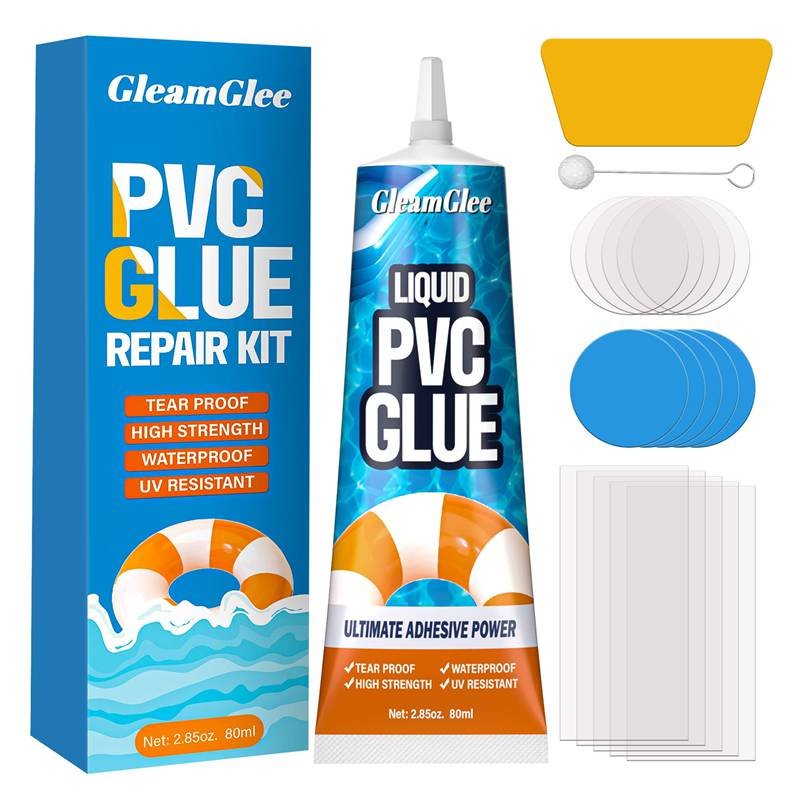
GleamGlee ceramics glue works better because it is formulated specifically for rigid ceramic and porcelain surfaces, applied with precision hardware, and produced under manufacturer-level quality control. Instead of trying to work “okay on everything,” it focuses on clean bonding, predictable curing, and long-term stability in real household use—where heat, water, and handling actually matter.
What customers really want from ceramic glue
From customer feedback and repair data, ceramic glue complaints usually fall into five buckets:
- “It looked fine, then broke again.”
- “The seam turned white or cloudy.”
- “It was too runny / too thick to control.”
- “It clogged after one use.”
- “It didn’t behave the same the second time I bought it.”
Most of these problems are not user mistakes. They come from compromises in formulation, packaging, or quality consistency. GleamGlee’s ceramic glue is designed to remove those weak points.
Manufacturer-grade formulation, not general-purpose glue
Many retail glues are built to cover as many materials as possible. That usually means trade-offs.
GleamGlee ceramic glue is engineered around ceramic-specific constraints:
- Ceramics are rigid and brittle → the cured bond must be rigid, not rubbery
- Glazed ceramics are non-porous → the adhesive must wet slick surfaces
- Repairs are often visible → the glue must cure clear and stay clear
- Items see daily handling → the bond must resist small impacts, not just static pull
Instead of maximizing instant grab at all costs, the formulation balances:
- controlled flow (so it stays where you apply it)
- clean curing (no fogging or chalky residue)
- stable strength after full cure
This is why the glue feels predictable rather than “temperamental.”
Precision application is not a bonus — it’s the difference between success and failure
One of the most common ceramic repair failures is over-application. Thick glue layers cure weaker and push parts out of alignment.
GleamGlee ceramic glue addresses this with precision nozzle design, not just a thin formula.
Why this matters in real use:
- Hairline cracks need glue to wick inward, not pool on top
- Small chips need spot application without overflow
- Visible seams need minimal squeeze-out to stay clean
Customers repairing figurines, mug handles, and decorative ceramics consistently report that control, not strength, is what determines whether the repair looks professional.
Predictable curing behavior
A major frustration with low-quality adhesives is inconsistency:
- one bottle sets instantly, another stays tacky
- one repair holds, the next fails under the same conditions
As a vertically integrated manufacturer, GleamGlee controls:
- raw material sourcing
- formulation blending
- viscosity targets
- packaging compatibility
- batch-level quality checks
This results in repeatable behavior:
- initial grip happens when expected
- alignment time is consistent
- full cure strength is reliable
For users, this means less trial-and-error and fewer “why did this one fail?” moments.
Designed for real household conditions, not lab-only scenarios
Ceramic glue isn’t used in a vacuum. It’s used:
- near sinks and dishwashers
- with warm liquids
- in humid bathrooms
- on items that are picked up every day
GleamGlee ceramic glue is tested against common household stressors, including:
- warm water exposure after curing
- humidity cycling
- light impact and vibration
- long-term storage stability (no premature thickening)
This is why it performs better on mugs, plates, vases, bathroom accessories, and décor—where many generic glues slowly fail.
Hardware details customers notice after a few uses
Small design choices have a big impact over time:
- Anti-clog cap system → the glue is usable weeks later, not glued shut
- Multiple precision nozzles included → consistent performance even after one tip is blocked
- Resealable packaging → less waste, longer shelf life
These details don’t show up in marketing slogans, but they strongly affect customer satisfaction and repeat purchases.

Conclusion
Choosing the right glue for ceramics is less about finding the “strongest” product and more about understanding how ceramics behave in real life. Ceramics are rigid, brittle, often glazed, and unforgiving of shortcuts. Clean surfaces, correct glue thickness, proper alignment, and full curing time matter just as much as the adhesive itself. When those factors are handled correctly, ceramic repairs can look clean, feel solid, and hold up through daily handling, warm liquids, and normal household moisture.
At the same time, knowing when not to glue is just as important as knowing how to glue. Repairs involving food-contact surfaces, heavy structural stress, missing material, or extreme heat exposure carry real limitations. In those cases, treating the item as decorative or choosing replacement is often the safer and more reliable decision. Honest expectations prevent repeat failures and frustration—and protect users from hygiene or safety risks.
For repairs that should be done, using a ceramic glue designed specifically for ceramic and porcelain makes a measurable difference. GleamGlee focuses on predictable performance, clean curing, and precise application rather than one-size-fits-all solutions. Whether you’re repairing a household item, sourcing a reliable ceramic glue for resale, or developing a custom formulation under your own brand, working with a manufacturer-grade solution helps ensure results that last—and repairs you don’t have to redo.