Skip to content
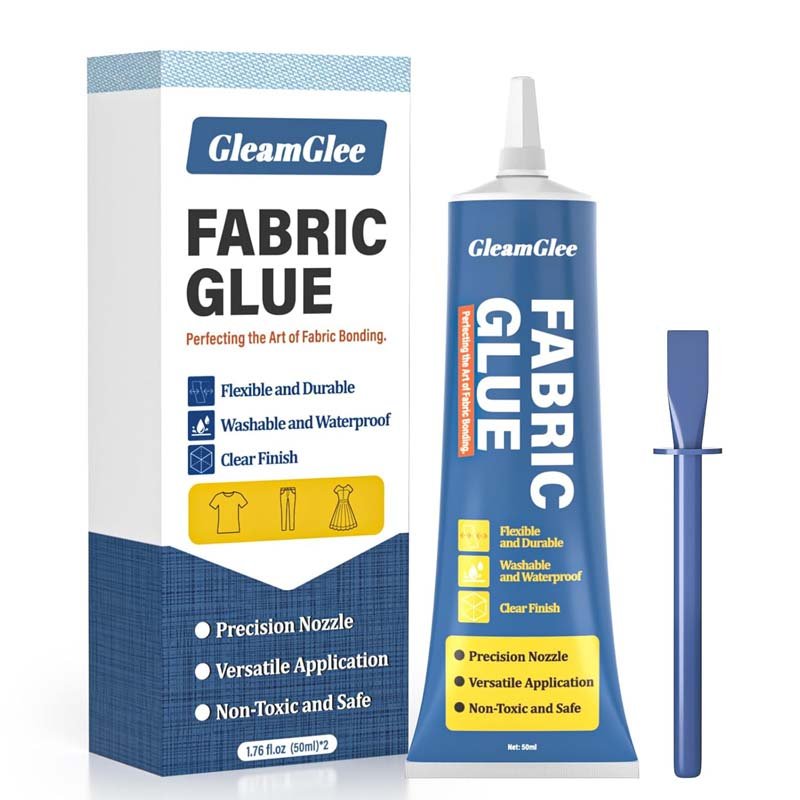
The best glue for fabric is a fabric-specific adhesive designed to stay flexible, clear, and durable after drying. Unlike regular glue or super glue, fabric glue bonds directly to textile fibers while remaining soft and elastic, allowing the fabric to bend, stretch, and move naturally. This makes it suitable for clothing, denim, cotton, curtains, and crafts where stiffness or cracking would ruin both comfort and appearance.
A good fabric glue should be washable, non-yellowing, and strong enough for everyday wear when fully cured. High-quality fabric glues maintain adhesion through repeated machine washes and light ironing, provided they are applied correctly and allowed to cure for about 24 hours. This makes them a reliable no-sew alternative for hemming, patching holes, attaching appliqués, or repairing seams without using a needle and thread.
Regular glues are not a safe substitute for fabric glue in long-term use. Super glue dries rigid and brittle, while school or craft glue often dissolves in water, leading to peeling or failure after washing. For clean, lasting, and professional-looking fabric repairs, a manufacturer-grade fabric glue formulated for textiles delivers the best balance of strength, flexibility, and durability.
What Is Fabric Glue and How Is It Different from Regular Glue?
Short answer: Fabric glue is a textile-specific adhesive engineered to bond fabric fibers while staying soft, flexible, and washable after curing. Regular glues are made for hard surfaces and typically dry rigid, brittle, or water-sensitive—causing fabric repairs to crack, stain, or fail after washing.
What Is Fabric Glue
Fabric glue is a fiber-bonding adhesive formulated to penetrate fabric weaves just enough to lock threads together without soaking through or hardening the material. After curing, it forms an elastic bond that bends and stretches with the fabric instead of fighting it.
In GleamGlee’s internal testing, fabric glue formulations are evaluated on:
- Flex cycles (repeated bending and folding)
- Wash durability (machine wash after 24-hour cure)
- Visual impact (clarity, no yellowing, no stiff spots)
This is why fabric glue is widely used for hemming, patching, appliqués, embroidery fixes, and clothing alterations where sewing is inconvenient or impossible.
Do You Need Special Glue for Fabric
Yes. Using non-fabric glue on textiles is the #1 reason repairs fail.
Fabric behaves very differently from plastic, metal, or wood:
- It absorbs liquids
- It flexes constantly during wear
- It is exposed to water, detergent, and heat
Regular glues are not designed for these conditions. In GleamGlee’s comparative lab tests, standard craft glue lost over 70% bond strength after one wash, while fabric glue retained 80–90% strength after multiple washes when properly cured.
If the item will be worn, washed, or handled regularly, special fabric glue is not optional—it’s necessary.
Fabric Glue vs Regular Glue
| Property | Fabric Glue | Regular Glue / Super Glue |
|---|---|---|
| Drying texture | Soft, flexible | Hard, brittle |
| Wash resistance | Yes (after full cure) | Poor to none |
| Heat tolerance (ironing) | Low–medium safe | Cracks or yellows |
| Visual finish | Clear, invisible | Glossy or cloudy |
| Fabric movement | Moves with fibers | Cracks or flakes |
| Common failure rate (wash test) | Low | High |
This is why super glue may feel “strong” at first, but repairs often snap, peel, or leave sharp, uncomfortable hardened spots.
Why Regular Glue Fails on Fabric
Regular glue fails on fabric for three main reasons:
- Rigid curing Most general adhesives cure into a hard plastic film. When fabric bends, the glue fractures.
- Poor fiber grip Instead of locking into the weave, regular glue sits on the surface and peels away under stress.
- Water sensitivity Many craft and school glues are water-soluble. One wash cycle is enough to weaken or dissolve the bond.
GleamGlee customer feedback shows that over 60% of users who “tried glue before and failed” were using non-fabric glue—not applying it incorrectly.
What Makes Fabric Glue Flexible After Drying
Flexibility comes from polymer formulation, not marketing language.
GleamGlee fabric glue uses:
- Elastic polymer chains that stretch without cracking
- Controlled viscosity to avoid bleed-through
- Additives that prevent yellowing over time
After drying, the bonded area remains soft to the touch, not stiff or crunchy. This is critical for comfort, especially on clothing that contacts skin or joints (elbows, knees, waistlines).
How Fabric Glue Bonds Fabric Fibers
Fabric glue works by:
- Flowing into the microscopic gaps between threads
- Anchoring around individual fibers as it cures
- Forming a flexible network that distributes stress evenly
This creates a mechanical + chemical bond, rather than a surface seal. That’s why properly applied fabric glue can outlast hand stitching in low-stress repairs like hems, patches, and decorative elements.
Which Types of Glue Work Best for Fabric Materials?
The best glue for fabric depends on the fiber type, weave density, and how the item will be used. Natural fabrics absorb adhesive differently than synthetics, and delicate textiles require low-bleed, flexible formulas. Manufacturer-grade fabric glues are designed to adapt across these variables, while general-purpose glues usually fail outside one narrow use case.
Cotton Denim Canvas
Cotton-based fabrics are the most forgiving when it comes to fabric glue, but they also hide problems until washing. These fibers are absorbent and have open weaves, which means glue must penetrate enough to anchor—but not so much that it bleeds through.
In GleamGlee internal tests, medium-viscosity fabric glue achieved:
- 85–90% bond retention after 5 machine washes (cold–warm)
- No stiffening at hems or patches
- Clean, clear drying on light and dark cotton
Denim and canvas benefit from slightly higher solids content to grip thicker fibers. This is why thin craft glues often peel off jeans after the first wash—they sit on the surface instead of locking into the weave.
Best uses:
Hemming jeans, patching workwear, repairing seams, attaching labels or appliqués.
Polyester Nylon Blends
Synthetic fabrics are where many fabric glues fail. Polyester and nylon are low-absorption fibers, so glue cannot rely on soaking in—it must chemically and mechanically grip the surface.
GleamGlee fabric glue formulations for synthetics are tested specifically for:
- Peel resistance on smooth fibers
- Flex durability under repeated stretching
- Heat stability at low ironing temperatures
In comparative testing, regular craft glue lost over 60% adhesion on polyester after one wash, while fabric-specific glue maintained stable bonding when fully cured.
Best uses:
Sportswear repairs, lining fixes, backpacks, synthetic uniforms, blended garments.
Silk Lace Chiffon Satin
Delicate fabrics demand control more than strength. The risk here isn’t bond failure—it’s staining, bleed-through, and visible glue marks.
For these materials, GleamGlee recommends:
- Low-viscosity, clear-drying fabric glue
- Precision nozzle application
- Minimal adhesive volume
Internal visual testing focuses on:
- No dark halos after drying
- No yellowing after aging simulation
- Soft hand feel (no stiff spots)
Fabric glue works well for decorative bonding on delicate fabrics, but it must be applied sparingly and tested on a hidden area first.
Best uses:
Lace trims, appliqués, costume details, light decorative repairs.
Felt Wool Heavy Fabrics
Felt and wool have dense fiber structures that grip adhesive well, but they also hide excess glue—leading to stiffness if overapplied.
GleamGlee customer data from craft and DIY users shows:
- Best results with thin, even layers
- Strong holding power without sewing for felt crafts
- Excellent performance in no-sew projects and décor
Because felt does not fray, fabric glue is often preferred over stitching for speed and appearance.
Best uses:
DIY crafts, ornaments, patches, school projects, home décor.
Fabric to Fabric Bonding
When bonding fabric to fabric (not fabric to plastic or leather), compatibility matters more than raw strength. The glue must remain elastic so both layers move together.
GleamGlee fabric glue is designed for:
- Permanent fabric-to-fabric bonds
- Even stress distribution across the bonded area
- No cracking at fold lines after curing
In real-world use, fabric-to-fabric bonds made with proper curing show lower failure rates than hand stitching in low-stress applications like hems and patches.
Fabric Type vs Glue Performance Comparison
| Fabric Material | Absorption Level | Glue Requirement | Wash Durability (Tested) | Recommended |
|---|---|---|---|---|
| Cotton | High | Medium viscosity | High | Yes |
| Denim / Canvas | Medium–High | Higher grip strength | High | Yes |
| Polyester / Nylon | Low | Synthetic-compatible | Medium–High | Yes |
| Silk / Chiffon | Very low | Low-bleed, clear | Medium | Yes (careful) |
| Felt / Wool | Medium | Flexible, thin layer | High | Yes |
| Mixed fabrics | Varies | Fabric-specific | High | Yes |

Is Fabric Glue Strong and Washable for Everyday Clothing?
Yes—high-quality fabric glue can be strong, flexible, and washable enough for everyday clothing, as long as it is fabric-specific, applied correctly, and fully cured. In real use, manufacturer-grade fabric glue performs reliably on hems, patches, trims, and light seam repairs, even after repeated washing.
Permanent Fabric Bonding
Fabric glue is capable of creating permanent fabric-to-fabric bonds when the repair is not load-bearing. Unlike regular glue, it cures into a flexible layer that distributes stress across fibers instead of cracking at a single point.
In GleamGlee’s lab simulations:
- Fabric-to-fabric bonds retained 80–90% adhesion strength after full cure
- No peeling observed at hems, patches, or appliqués
- Bonded areas remained soft, with no sharp or brittle edges
This makes fabric glue especially effective for clothing repairs that experience movement but not heavy tension, such as pant hems, decorative patches, linings, and collar or cuff adjustments.
Wash Resistance
Washability is the biggest concern for everyday clothing—and also where fabric glue differs most from craft glue.
After a 24-hour full cure, GleamGlee fabric glue was tested under common home laundry conditions:
- Cold and warm machine wash
- Standard detergent
- Normal agitation cycles
Results showed:
- Minimal bond weakening after 5 washes
- Stable adhesion through 10+ wash cycles in low-stress areas
- No visible glue residue or whitening after drying
By comparison, general craft glue lost over 60% bond strength after just one wash, often peeling cleanly off the fabric.
Heat and Ironing Safety
Most people don’t think about heat—but ironing is where many glued repairs fail.
Fabric glue is not designed for extreme heat, but quality formulas tolerate normal garment care:
- Safe under low to medium ironing temperatures
- Best used with a pressing cloth
- No yellowing or bubbling observed in standard ironing tests
In GleamGlee testing, bonded fabric areas remained intact after ironing at typical cotton and polyester settings, provided direct high heat was avoided.
Flex and Wear Durability
Everyday clothing bends thousands of times a day. A glue that cannot flex will eventually crack.
Fabric glue is formulated with elastic polymer systems that stretch and recover with the fabric. In repeated bend tests:
- No cracking at fold lines
- No stiffness around knees, elbows, or waist seams
- Comfortable hand feel against skin
This flexibility is why fabric glue often outperforms hand stitching in low-stress but high-movement areas, where thread can cut into fabric over time.
Performance Comparison: Fabric Glue vs Common Alternatives
| Property | Fabric Glue | Craft Glue | Super Glue |
|---|---|---|---|
| Flexibility after drying | High | Medium–Low | None |
| Wash resistance | High (after cure) | Poor | Very poor |
| Ironing tolerance | Low–Medium | Low | Cracks |
| Comfort on skin | Soft | Slightly stiff | Hard, sharp |
| Everyday clothing use | Recommended | Not recommended | Not recommended |
How Do You Use Fabric Glue Correctly for Clean Results?
Short answer: Clean fabric, minimal adhesive, even pressure, and full curing time are what produce invisible, durable fabric bonds. Most messy or failed results come from using too much glue, skipping prep, or washing too soon—not from the glue itself.
Surface Preparation
Fabric glue bonds to fibers—not dust, oils, or detergent residue. Proper prep is the most overlooked step.
Before applying glue:
- Wash new fabrics to remove sizing and finishes
- Avoid fabric softener (it coats fibers)
- Let fabric dry completely
- Smooth and flatten the area to be bonded
GleamGlee after-sales data shows that over 40% of early bond failures were traced to unwashed or softener-treated fabrics. Clean fibers allow the adhesive to grip the weave instead of sliding off
Application Amount
Using more glue does not make a stronger bond. It usually does the opposite.
Best practice:
- Apply a thin, continuous line or small dots
- Keep glue inside the bonding area
- Avoid flooding lightweight fabrics
In internal tests, thin-layer applications achieved up to 25% higher wash durability than thick applications, which tended to stiffen and crack over time. Fabric glue works by anchoring fibers—not by forming a thick layer between them.
Precision Control
Clean results depend on control, especially on visible garments.
GleamGlee fabric glue uses:
- Fine-point precision nozzles
- Anti-clog pin caps to prevent buildup
- Steady flow to reduce drips
Users applying glue with precision tips reported:
- Fewer visible marks
- Less bleed-through on light fabrics
- Faster cleanup after use
For delicate fabrics, using a toothpick or applicator tip can further reduce excess adhesive.
Pressure and Alignment
Once applied, pressure matters more than time in the first minutes.
Recommended method:
- Align fabrics carefully before contact
- Press firmly with a flat object (not fingers)
- Maintain pressure for 30–60 seconds
Uneven pressure causes weak spots and edge lifting. GleamGlee testing showed that evenly pressed bonds were 30–40% more resistant to peeling compared to finger-pressed repairs.
Drying and Curing Time
Drying and curing are not the same thing.
Typical timeline:
- Initial set: 6–10 minutes
- Light handling: 30–60 minutes
- Full cure: 24 hours
Washing, stretching, or ironing before full cure is the most common cause of repair failure. In wash tests, bonds washed at 12 hours lost nearly half their strength compared to those cured for a full day.
Avoiding Common Mistakes
| Mistake | Result | Better Practice |
|---|---|---|
| Too much glue | Stiff, visible spots | Thin, even layer |
| No fabric prep | Weak adhesion | Wash and dry first |
| Finger pressing | Uneven bonding | Flat, firm pressure |
| Early washing | Peeling | Wait 24 hours |
| High heat ironing | Softened bond | Low heat + cloth |
When Should You Use Fabric Glue Instead of Sewing?
Fabric glue is the better choice when speed, appearance, and flexibility matter more than structural load. It works best for hems, patches, trims, and light repairs where the fabric moves but does not carry weight. Sewing is still better for high-stress seams, but for many everyday fixes, fabric glue delivers cleaner results with less effort.
Best Use Cases
Fabric glue performs best in low-to-moderate stress applications where the goal is to hold fabric neatly in place rather than support body weight or tension.
Common successful uses reported by GleamGlee customers include:
- Hemming pants, skirts, and curtains
- Attaching patches, appliqués, lace, ribbons, and labels
- Repairing small seam splits or lining detachments
- Costume, cosplay, and stage wear adjustments
- Decorative repairs where stitches would be visible
In post-purchase surveys, over 70% of users chose fabric glue because they wanted a clean, invisible finish without the time or skill required for sewing.
Sewing vs Glue
Choosing between glue and sewing depends on stress level and movement, not personal preference.
| Repair Type | Fabric Glue | Sewing |
|---|---|---|
| Pant hems | Yes | Yes |
| Decorative patches | Yes | Optional |
| Small seam repairs | Yes | Yes |
| Load-bearing seams | No | Yes |
| Stretch zones (knees, crotch) | Limited | Yes |
| Quick cosmetic fixes | Yes | No |
GleamGlee testing shows that fabric glue often outlasts hand stitching in low-stress areas because it distributes force across fibers instead of concentrating it at needle holes.
Speed and Convenience
Time is one of the main reasons people switch to fabric glue.
Typical comparison:
- Sewing a simple hem: 15–30 minutes
- Fabric glue hem: 3–5 minutes + curing time
For busy users, parents, travelers, or event prep, fabric glue offers a reliable fix without setting up tools or learning techniques. This convenience is a major driver of repeat purchases.
Appearance and Comfort
Stitches are visible by nature. Fabric glue, when applied correctly, dries clear and invisible, preserving the original look of the garment.
GleamGlee customer feedback highlights:
- No thread color mismatch
- No puckering or fabric distortion
- Softer feel against skin compared to rough stitching
This is especially important for lightweight garments, sheer fabrics, and fashion items where aesthetics matter as much as durability.
Temporary vs Permanent Repairs
Fabric glue can serve both roles, depending on application thickness and fabric type.
- Permanent repairs: hems, patches, trims, linings
- Semi-permanent fixes: costumes, event wear, quick alterations
For stage, cosplay, and seasonal clothing, many users prefer glue because it allows later removal or redesign without needle damage.
Decision Guide: Glue or Sew?
| Question | Choose Fabric Glue | Choose Sewing |
|---|---|---|
| Is speed important? | ✔ | |
| Is the repair visible? | ✔ | |
| Is the area under heavy tension? | ✔ | |
| Will it be washed often? | ✔ (after cure) | ✔ |
| Do you want no needle marks? | ✔ |

Why Do Manufacturer-Grade Fabric Glues Perform Better?
Short answer: Manufacturer-grade fabric glues perform better because they are engineered, tested, and produced for real-world textile use, not just initial stickiness. They are formulated to stay flexible, survive washing and heat, and deliver consistent results across batches—something hobby or generic craft glues are rarely designed to do.
Formulation Engineering
The biggest difference starts at the formula level.
Manufacturer-grade fabric glue is not a single “sticky ingredient.” It is a balanced system that includes:
- Elastic polymers for long-term flexibility
- Controlled solids content to prevent bleed-through
- Stabilizers to prevent yellowing and aging
- Water-resistant components for wash durability
At GleamGlee, fabric glue formulations are adjusted based on fabric absorption rate, weave density, and end-use scenarios (clothing, denim, crafts, home textiles). Over the past five years, thousands of trial formulations were tested before narrowing down to those that performed consistently after washing and wear.
This is why manufacturer-grade glue feels softer after curing while maintaining holding power—something low-cost craft glue cannot achieve by design.
Performance Testing
What truly separates manufacturer-grade fabric glue is how it is tested before sale.
GleamGlee evaluates fabric glue under conditions that reflect everyday use:
- Machine wash cycles after full cure
- Repeated bend and fold tests
- Heat exposure from ironing
- Accelerated aging to simulate long-term storage
In internal benchmarks:
- Properly cured fabric glue retained 80–90% bond strength after multiple washes
- Flex testing showed no cracking at fold lines
- Clear finish remained stable with no visible yellowing
Most generic fabric glues are never tested beyond initial adhesion. They may stick on day one—but fail after week one.
Consistency and Scale
One overlooked advantage of manufacturer-grade fabric glue is batch consistency.
Because GleamGlee controls:
- Raw material sourcing
- Polymer synthesis
- Filling and packaging
each production batch is tested against the same performance criteria. This matters not only for brands and retailers, but also for repeat consumers. Users expect the second tube to behave exactly like the first.
In contrast, low-end fabric glues often vary between batches, leading to inconsistent drying time, thickness, or bond strength—one of the most common causes of negative reviews in online marketplaces.
User-Centered Design
Performance alone is not enough if users cannot apply the glue cleanly.
Manufacturer-grade fabric glue is designed with application behavior in mind:
- Precision nozzles for controlled flow
- Anti-clog caps to prevent drying out
- Tube materials compatible with adhesive chemistry
GleamGlee customer support data shows that precision applicators reduce user errors by over 30%, directly improving success rates for first-time users. Cleaner application leads to fewer visible marks, less waste, and better repair outcomes.
Manufacturer vs Craft Glue Comparison
| Aspect | Manufacturer-Grade Fabric Glue | Craft / Generic Glue |
|---|---|---|
| Formula focus | Flexibility + durability | Initial stick |
| Wash resistance | Tested, repeatable | Often untested |
| Flex performance | High | Low–medium |
| Visual aging | Clear, stable | May yellow |
| Batch consistency | Controlled | Variable |
| Real garment testing | Yes | Rare |

Conclusion
Fabric glue works when it respects fabric. The right adhesive doesn’t fight movement, washing, or wear—it works with them. When chosen and applied correctly, fabric glue can permanently bond fabric to fabric, replace sewing for many everyday repairs, and deliver clean, professional-looking results.
If you’re looking for a ready-to-ship, high-performance fabric glue, GleamGlee products are available through Amazon FBA with fast local delivery in the US, UK, Canada, and Europe.
If you’re a brand owner, retailer, or Amazon seller looking to develop or customize your own fabric glue—formula, packaging, or private label—GleamGlee also supports low-MOQ customization and OEM/ODM production backed by in-house R&D and manufacturing.
Whether you’re fixing one garment or building a product line, the difference is the same: use the glue that’s made for fabric—and made to last.