Skip to content
Most repairs fail for a surprisingly boring reason: the wrong adhesive is used for the job. A shoe sole peels again after a weekend. A “fixed” mug snaps the first time it’s washed. A fabric patch looks fine—until the first wash cycle. People often blame “bad glue,” but the real issue is that adhesive isn’t one thing. It’s a whole category of materials designed around surface type, movement, moisture, heat, and time.
An adhesive is a substance made to join two surfaces by creating a bond that resists separation. Unlike the casual word “glue,” adhesives are formulated for specific materials and conditions (like flexing, heat, humidity, or vibration). They bond by wetting the surface, filling micro-gaps, and curing through drying, chemical reaction, or pressure to form a durable joint.
If that sounds more “engineered” than you expected, that’s the point. Once you understand how adhesives actually hold (and why they fail), you’ll save time, avoid mess, and get repairs that feel like they were done by a pro—not a quick patch that’s destined to pop loose.
What Does Adhesive Mean?
An adhesive is a material used to hold two surfaces together in daily use, not just at the moment of application. In real life, an adhesive must resist peeling, sliding, vibration, washing, heat, and time. That’s why “adhesive” does not mean simply “something sticky,” but a material designed to work with specific surfaces and specific stresses.
Most failed repairs are not caused by weak adhesives—but by using an adhesive that was never designed for that material or situation.
What people really mean when they ask “what does adhesive mean”
From customer questions, reviews, and support requests, this question usually hides more practical concerns:
- Will it actually last, or will it come apart again?
- Will it crack, turn yellow, or feel stiff after drying?
- Can I wash it, step on it, or use it daily?
- Is it safe to use indoors without strong smell?
So in practical terms, adhesive means reliability under use, not just initial stickiness.
What is an adhesive in real-world use?
In real-world use, an adhesive is best understood as a load-sharing layer between two surfaces. Instead of forcing materials together with screws or nails, adhesives spread stress across a wider area.
This is why adhesives are widely used in situations where fasteners fail:
- Shoes flex thousands of times per day
- Fabrics stretch and move during wear and washing
- Books open and close repeatedly along the same fold
- Tiles, hooks, and trims face constant gravity and vibration
A well-matched adhesive absorbs and distributes these forces instead of concentrating them at one point.
Typical stress types adhesives must handle:
| Stress type | Everyday example | What happens if adhesive is wrong |
|---|---|---|
| Peel | Shoe toe lifting | Edge slowly spreads and fails |
| Shear | Wall hook | Item slides down and drops |
| Flex | Fabric repair | Bond cracks along fold |
| Vibration | Metal parts | Loosening over time |
| Moisture | Bathroom items | Softening or whitening |
An adhesive is considered “good” only if it survives all the stresses the item will face—not just the first hour.
What does adhesive actually do?
An adhesive does three practical jobs at the same time:
- Creates full contact between surfaces
- Locks into surface texture (even on smooth materials)
- Maintains bond over time despite movement and environment
What surprises many users is that more adhesive does not mean stronger bonding. In fact, overly thick layers often fail faster because the inner adhesive never fully cures.
Common customer mistakes that cause failure:
- Applying too much adhesive
- Not cleaning oils or residues first
- Moving or loading the repair too early
- Choosing rigid adhesive for flexible items
A properly applied thin layer, with correct pressure and cure time, almost always outperforms a thick, rushed application.
Is adhesive the same as glue?
In daily conversation, yes. In performance and reliability, no.
The word glue is often used for simple bonding products meant for light-duty tasks. The word adhesive is used when bonding performance actually matters.
A useful way to think about the difference:
| Aspect | Glue (casual use) | Adhesive (practical meaning) |
|---|---|---|
| Purpose | Sticks items together | Holds items under real use |
| Material focus | General | Material-specific |
| Flexibility | Often low | Designed as needed |
| Durability | Short-term | Long-term |
| Failure rate | High if misused | Low when matched correctly |
This distinction matters because flexible materials need flexible adhesives, and rigid materials need stable ones. Mixing these up is the number one reason customers report “the glue didn’t work.”
Why adhesive choice matters more than strength claims
Many products advertise “extra strong” or “industrial strength,” but strength alone does not predict success.
For example:
- A very rigid adhesive may test strong in a lab, but fail quickly on a shoe.
- A slightly lower-strength but flexible adhesive can last years on the same repair.
Real-world durability depends on fit, flexibility, and compatibility, not headline strength numbers.
That’s why professional manufacturers design different adhesives for fabric, shoes, plastics, glass, books, and construction, instead of offering one product for everything.
How Does Adhesive Work?
An adhesive works by forming a continuous holding layer between two surfaces that resists separation during everyday use. To do this successfully, the adhesive must spread evenly, make full contact with the surface, lock into microscopic texture, and then fully cure. If any of these steps is skipped or rushed, the bond may look fine at first but fail later.
In real repairs, how an adhesive is applied matters just as much as which adhesive is chosen.
What actually decides whether an adhesive holds or fails
From real customer feedback and repair data, adhesive success almost always depends on four practical factors:
- Surface condition (clean, dry, compatible)
- Contact quality (tight fit, no gaps)
- Adhesive behavior (flexible vs rigid)
- Cure time respected (not just “dry to touch”)
When even one of these is wrong, failure rates increase sharply—especially in shoes, fabrics, and plastics.
How does adhesive stick to a surface?
Before curing, an adhesive must spread and stay where it’s applied. This step is where many bonds already fail.
For good sticking, two things must happen:
- The adhesive must wet the surface (spread instead of beading)
- The surface must be free of oils, dust, wax, or residue
Even a thin invisible oil film from hands can reduce bond strength by 30–50% on smooth surfaces like glass, plastic, or metal.
Common real-world problems at this stage
- Shoes contain mold-release agents from manufacturing
- Plastics often have low surface energy
- Household cleaners leave silicone residues
Simple prep that improves success dramatically
- Wipe with an appropriate cleaner
- Lightly scuff glossy surfaces (when safe)
- Let surfaces fully dry before applying adhesive
Reality check:
If adhesive beads up or slides off, it will not hold long-term—no matter how “strong” it claims to be.
How does adhesive hold two surfaces together?
Once the adhesive spreads properly, it must stay bonded under stress, not just stick initially.
Adhesives hold by combining:
- Mechanical anchoring (locking into micro-texture)
- Surface attraction (molecular interaction)
- Elastic or rigid resistance (depending on formulation)
Different materials need different holding behavior.
| Material type | What adhesive must do | What fails if wrong |
|---|---|---|
| Fabric | Move with fibers | Cracking after wash |
| Shoe rubber | Resist peel + flex | Edge lifting |
| Plastic | Match expansion rate | Delamination |
| Glass | Stay rigid + clear | Whitening, haze |
| Metal | Resist vibration | Gradual loosening |
This explains why a rigid adhesive that tests “very strong” can fail quickly on shoes or fabrics—while a slightly lower-strength but flexible adhesive lasts much longer.
How does adhesive cure—and why waiting matters?
Curing is where the bond becomes structurally stable. Many failures happen because users confuse dry with cured.
Three stages users should understand
- Open time – adhesive can be repositioned
- Set time – adhesive stops moving
- Full cure – adhesive reaches designed strength
Using an item before full cure can reduce final bond strength by 40–70%, even if it feels firm to the touch.
Typical cure timelines (realistic averages)
| Adhesive type | Set time | Full cure |
|---|---|---|
| Water-based | 20–60 min | 12–24 hrs |
| Solvent-based | 10–30 min | 12–24 hrs |
| Polyurethane | 30–90 min | 24 hrs |
| Epoxy (2-part) | 5–30 min | 24 hrs |
Common customer mistake
- Walking on a shoe repair the same day
- Washing fabric before 24 hours
- Loading a wall hook after “drying”
Why pressure and fit matter more than people think
Adhesives do not “pull surfaces together.” They hold surfaces that are already in contact.
If there is a gap:
- The adhesive layer becomes too thick
- Inner adhesive cures slowly or not at all
- Stress concentrates instead of spreading
Best practice
- Dry-fit parts first
- Apply even pressure (hand pressure, clamps, weights)
- Keep pressure during early cure stage
| Bond condition | Result |
|---|---|
| Tight fit + thin layer | Strong, durable bond |
| Loose fit + thick layer | Early failure |
This is why professional instructions emphasize press firmly or clamp during cure.
Why adhesives fail even when “applied correctly”
Based on real repair cases, the most common reasons are:
- Wrong adhesive type for material
- Flexible item bonded with rigid adhesive
- Residual oils or cleaners
- Rushed curing
- Over-application
In other words, failure is usually predictable, not random.
Which Types of Adhesives Are Common?
The most common types of adhesives differ by how they behave after drying, not by how strong they claim to be. In daily use, the main adhesive types include water-based adhesives, solvent-based adhesives, epoxies, polyurethanes, and acrylic adhesives. Each type is designed to solve a specific problem—such as flexibility, speed, clarity, or resistance to water and heat. Choosing the wrong type is the leading cause of repair failure.
Why “adhesive type” matters more than brand or strength claims
From real customer feedback and product returns, one pattern shows up again and again:
people buy a well-known brand, apply it carefully—and the repair still fails.
The reason is simple:
adhesive type determines behavior, and behavior determines whether a bond survives real use.
Before looking at individual types, it helps to answer three practical questions:
- Will the bonded item bend or stay rigid?
- Will it face water, heat, or repeated cleaning?
- Does the repair need instant handling or long-term durability?
Different adhesive families answer these questions very differently.
Which adhesives are water-based?
Water-based adhesives are among the most widely used because they are easy to apply and safer indoors. They are commonly used for fabric, paper, wood, bookbinding, crafts, and light household repairs.
What customers like about water-based adhesives
- Low odor and low irritation
- Easy cleanup before curing
- Good control for small or detailed repairs
- Safer for indoor, family, or classroom use
Where problems usually appear
- Slower strength development
- Some formulas soften with repeated moisture
- Thick layers can trap water and weaken the bond
Typical real-world performance
| Performance factor | Water-based adhesives |
|---|---|
| Initial holding | Low to medium |
| Flexibility after cure | Medium to high |
| Wash resistance | Formula-dependent |
| Heat resistance | Moderate |
| Best for | Fabric, books, wood |
Real usage data insight:
Well-formulated fabric adhesives with flexible polymers often survive 10–15 gentle wash cycles, while low-cost craft versions may fail after 1–3 washes, especially along edges.
Which adhesives are solvent-based?
Solvent-based adhesives rely on solvent evaporation to form a bond. They are often chosen for fast grab and better bonding on smooth or non-porous surfaces.
Why users choose them
- Strong initial tack
- Faster handling time
- Better resistance to water than many water-based systems
Common issues users report
- Strong odor during use
- Can damage sensitive plastics or finishes
- Over-application leads to brittle bonding lines
Typical real-world performance
| Performance factor | Solvent-based adhesives |
|---|---|
| Initial holding | High |
| Flexibility | Medium |
| Water resistance | High |
| Heat resistance | Medium |
| Best for | Shoes, leather, rubber, some plastics |
Frequent failure cause:
Using solvent-based adhesive on foam, thin plastic, or coated surfaces can cause surface softening or warping, even if the bond feels strong at first.
Which adhesives are epoxy-based?
Epoxy adhesives are usually two-part systems mixed before use. They are known for very high strength and rigidity.
Where epoxies perform well
- Metal-to-metal bonding
- Ceramic and stone repair
- Structural or load-bearing repairs
- High heat or chemical exposure environments
Where epoxies fail
- Flexible items (shoes, fabric, inflatable products)
- Thin materials that expand or move
Typical real-world performance
| Performance factor | Epoxy adhesives |
|---|---|
| Strength | Very high |
| Flexibility | Low |
| Water resistance | Very high |
| Heat resistance | High |
| Best for | Metal, ceramic, stone |
User mistake seen often:
Applying epoxy to items that flex daily. The bond itself is strong, but the surrounding material cracks or peels away.
Which adhesives are polyurethane (PU)?
Polyurethane adhesives are widely used in shoes, outdoor gear, construction, and mixed-material repairs because they balance strength and flexibility.
Why PU adhesives are popular
- Strong bonding with elastic recovery
- Excellent water resistance
- Good performance across temperature changes
What users need to know
- Require firm pressure during curing
- Cure speed depends on humidity
- Too thick layers slow down curing
Typical real-world performance
| Performance factor | PU adhesives |
|---|---|
| Strength | High |
| Flexibility | High |
| Water resistance | Very high |
| Heat resistance | Medium–high |
| Best for | Shoes, outdoor items, mixed materials |
Field insight:
PU-based shoe adhesives often outperform rigid systems over time because they tolerate thousands of flex cycles without cracking.
Which adhesives are acrylic-based?
Acrylic adhesives are increasingly common due to their fast curing and balanced performance.
Where acrylics excel
- Plastic-to-plastic bonding
- Plastic-to-metal bonding
- Visible repairs needing a clean finish
Limitations
- Not ideal for constant high heat
- Some formulas need precise surface prep
Typical real-world performance
| Performance factor | Acrylic adhesives |
|---|---|
| Cure speed | Fast |
| Flexibility | Medium |
| Clarity | High |
| Water resistance | High |
| Best for | Plastics, mixed materials |
Quick comparison: choosing the right adhesive type
| Repair situation | Best adhesive type | Avoid |
|---|---|---|
| Fabric repair | Water-based / flexible | Rigid epoxies |
| Shoe sole | Polyurethane | Brittle adhesives |
| Metal part | Epoxy / acrylic | Soft craft glues |
| Glass item | Clear epoxy / glass adhesive | Thick layers |
| Plastic trim | Acrylic / plastic-safe PU | Generic “all-purpose” |

What Materials Can Adhesive Bond?
Adhesives can bond almost all common materials—fabric, wood, metal, glass, ceramic, plastic, rubber, and concrete—but not with the same adhesive. Each material behaves differently under stress, moisture, heat, and movement. A bond lasts only when the adhesive is compatible with how that material moves, expands, absorbs, or flexes in real use.
Most adhesive failures happen not because the adhesive is weak, but because the material–adhesive match is wrong.
Why material behavior matters more than surface name
Two materials that look similar can behave very differently once bonded.
For example:
- A cotton fabric and a synthetic fabric stretch differently
- ABS plastic bonds easily; polypropylene resists most adhesives
- Glass never flexes; rubber flexes constantly
- Wood absorbs moisture; metal transfers heat
An adhesive must either move with the material or hold it rigid without stress buildup. Ignoring this is why repairs that look perfect on day one fail weeks later.
What adhesive works on fabric?
Fabric is one of the most demanding materials for adhesives because it moves, stretches, and gets washed.
What fabric adhesives must do
- Stay flexible after curing
- Penetrate fibers without soaking through
- Survive repeated bending and washing
- Dry clear without stiff patches
What usually goes wrong
- Rigid adhesive cracks after washing
- Thick layers create hard, uncomfortable spots
- Adhesive bleeds through thin fabrics
| Fabric type | Key challenge | Adhesive behavior needed |
|---|---|---|
| Cotton | Repeated washing | Flexible, wash-resistant |
| Denim | Thickness + stress | Strong but elastic |
| Polyester | Smooth fibers | Good surface wetting |
| Stretch fabric | High movement | High elasticity |
What adhesive bonds wood reliably?
Wood is porous and absorbs moisture, which changes its size over time.
What adhesives must handle
- Moisture absorption and release
- Seasonal expansion and contraction
- Uneven or rough surfaces
Common mistakes
- Using brittle adhesive that cracks as wood moves
- Applying adhesive to dusty or unfinished wood
- Not clamping during early cure
| Wood application | Adhesive requirement | Typical failure |
|---|---|---|
| Furniture repair | Strong shear + flexibility | Joint cracking |
| Trim & molding | Gap filling | Visible separation |
| Craft wood | Fast grab | Weak long-term hold |
Which adhesive bonds metal?
Metal is strong, smooth, and non-porous—but it transfers vibration and heat.
Metal bonding challenges
- Vibration loosens rigid bonds
- Temperature swings stress adhesive layers
- Smooth surfaces reduce grip
Best practices
- Clean thoroughly (oil-free)
- Light surface roughening improves grip
- Use adhesives with vibration resistance
| Metal type | Adhesive behavior needed | Common mistake |
|---|---|---|
| Steel | High shear strength | Poor surface prep |
| Aluminum | Oxidation tolerance | Wrong adhesive type |
| Small metal parts | Precision bonding | Over-application. |
What adhesive works on glass and ceramic?
Glass and ceramic are rigid, smooth, and brittle. The adhesive must stay stable and invisible.
Key requirements
- Clear or invisible cure
- Minimal shrinkage
- No whitening or fogging
- Stable under hand washing
| Material | Adhesive type | Typical failure |
|---|---|---|
| Glass | Clear epoxy / glass adhesive | Haze from thick layers |
| Ceramic | Epoxy / ceramic adhesive | Brittle edge cracks |
Are there adhesives for plastic?
Plastic causes more confusion than any other material.
Some plastics bond easily. Others resist nearly everything.
Easier-to-bond plastics
- ABS
- PVC
- Acrylic (PMMA)
Hard-to-bond plastics
- Polypropylene (PP)
- Polyethylene (PE)
| Plastic type | Bond difficulty | Correct approach |
|---|---|---|
| ABS | Low | Acrylic or PU |
| PVC | Low | Solvent-based or PU |
| PP / PE | High | Specialized plastic adhesive |
How adhesives handle mixed materials
Most real repairs involve two different materials, such as:
- Rubber sole to fabric shoe upper
- Plastic trim to wood
- Metal hook to tile
Mixed materials expand and move at different rates, so flexibility matters more than raw strength.
| Mixed materials | Best adhesive behavior |
|---|---|
| Fabric + rubber | Flexible, peel-resistant |
| Plastic + metal | Acrylic compatibility |
| Wood + concrete | Gap-filling + shear strength |
Rigid adhesives often fail first in mixed-material repairs due to stress buildup at the bond line.
Is Adhesive Strong and Safe?
Yes—modern adhesives can be both very strong and safe, but only when the right adhesive is used in the right way. Adhesive strength depends on how well it matches the material and daily stress, while safety depends on formulation, curing behavior, and compliance standards. Most safety concerns and bond failures come from misuse, rushed curing, or choosing the wrong adhesive—not from adhesives being inherently unsafe.
What “strong” actually means in everyday use
When customers ask if an adhesive is strong, they rarely mean lab numbers. What they really mean is:
- Will it hold after weeks or months, not just today?
- Will it survive movement, washing, or vibration?
- Will it fail suddenly or gradually?
In real life, strength shows up as durability, not instant grip.
Key stress types that matter more than headline strength:
| Stress type | Common example | If adhesive is wrong |
|---|---|---|
| Peel | Shoe sole, edge trim | Starts lifting at edges |
| Shear | Wall hooks, tiles | Slow sliding, then drop |
| Flex | Fabric, books | Cracks along fold lines |
| Vibration | Tools, metal parts | Gradual loosening |
| Environment | Bathroom, outdoor | Softening or whitening |
An adhesive that handles all relevant stresses will outperform a stronger but poorly matched product.
Is adhesive strong enough for daily use?
For most household, DIY, and light professional repairs, properly chosen adhesives exceed daily-use requirements by a wide margin.
Realistic performance expectations when used correctly:
| Application | Typical daily load | Proper adhesive result |
|---|---|---|
| Shoe sole repair | Thousands of steps/day | Holds without edge peel |
| Fabric patch | Bending + washing | Remains flexible |
| Wall hook | 2–5 kg static load | No sliding |
| Book spine | Repeated opening | No cracking |
| Glass repair | Hand washing | Stable bond |
Where strength usually fails
- Item used before full cure
- Rigid adhesive on flexible object
- Thick adhesive layer that never fully cures
Important note:
Using an adhesive too early can permanently reduce final bond strength by 40–70%, even if it feels dry.
Is adhesive waterproof and heat-resistant?
Not all adhesives are waterproof, and many users misunderstand what that term means.
Water-related terms explained simply
- Water-resistant: handles splashes and humidity
- Waterproof: survives immersion after full cure
- Wash-resistant: survives repeated laundering
Heat resistance
- General household adhesives: ~60–80 °C
- Advanced structural systems: 100–120 °C+ (material-dependent)
| Environment | Adhesive must handle |
|---|---|
| Bathroom | Moisture + mold risk |
| Kitchen | Heat + detergents |
| Laundry | Water + flex |
| Outdoor | UV + temperature swings |
Common mistake:
Assuming “waterproof” applies immediately. Most adhesives become water-resistant only after full curing.
Is adhesive safe to use at home?
Modern consumer adhesives are designed for controlled, safe use, but safety depends on how they’re used and labeled.
What actually makes an adhesive safe
- Low or controlled odor
- Stable curing (no sticky residue after cure)
- Clear usage instructions
- Proper labeling for hazards and ventilation
Typical safety concerns and realities
| Concern | Reality when used correctly |
|---|---|
| Strong smell | Temporary during application |
| Skin contact | Avoid wet adhesive; cured film is inert |
| Indoor air | Ventilation recommended |
| Children/pets | Safe after full cure |
Good home-use practices
- Apply in a ventilated area
- Avoid skin contact during wet stage
- Allow full cure before normal use
- Store out of reach of children
These steps eliminate most reported safety complaints.
Why some people think adhesives are “unsafe”
From real customer feedback, safety concerns usually come from:
- Using solvent-heavy adhesives in closed spaces
- Ignoring ventilation instructions
- Applying far more adhesive than needed
- Mixing incompatible products
In other words, misuse creates risk, not the adhesive itself.
How regulations and testing protect users
Reputable adhesive manufacturers design products to meet strict standards before sale.
Typical areas covered
- Chemical safety labeling
- Shelf-life stability
- Packaging leak prevention
- Consistent curing behavior
- Material compatibility
This is why adhesives from established manufacturers behave more predictably and generate fewer complaints than untested generic products.
How Are Modern Adhesives Made?
Modern adhesives are made through controlled formulation, testing, and production, not simple mixing. A reliable adhesive is designed around how it will be used—what materials it bonds, how it moves, how long it must last, and what environment it will face. The difference between a dependable adhesive and an unreliable one usually comes down to process control, testing depth, and consistency, not marketing claims.
Why manufacturing quality matters more than most people expect
To most users, adhesive looks simple: open tube, apply, press, wait.
Behind a reliable product, however, is a process designed to answer one question:
“Will this behave the same way every time, on every repair?”
In real-world use, customers notice manufacturing quality when:
- One tube works perfectly, another fails
- Adhesive separates in the bottle
- Cure time changes with temperature
- Bond turns brittle months later
These are not “user errors.” They are manufacturing and formulation issues.
How adhesive formulation actually begins
Professional adhesive development starts with use conditions, not ingredients.
Before chemistry is finalized, manufacturers define:
- Materials to be bonded (fabric, rubber, metal, plastic, etc.)
- Required flexibility or rigidity
- Exposure to water, heat, oils, or cleaners
- Application method (tube, nozzle, brush, sponge)
- Target cure time and shelf life
Only after this does formulation begin.
Typical formulation components
- Base polymer (defines strength and flexibility)
- Modifiers (control elasticity, tack, clarity)
- Stabilizers (prevent yellowing or separation)
- Carriers (water or solvent, affecting odor and drying)
- Additives (flow control, aging resistance)
A small change—often less than 1–2% in formulation—can significantly affect flexibility, cure speed, or long-term durability.
How manufacturers test adhesives before selling them
Reliable adhesives are tested far beyond “does it stick.”
Common real-world performance tests
| Test type | What it checks | Why customers feel the difference |
|---|---|---|
| Tensile & shear tests | Basic holding power | Prevents sudden failure |
| Peel resistance | Edge lifting | Shoes, tapes last longer |
| Flex cycling | Crack resistance | Fabric & books don’t split |
| Wash cycles | Laundry durability | Clothing repairs survive |
| Heat aging | Softening & flow | Bond holds in kitchens |
| Humidity aging | Moisture stability | Bathroom repairs last |
For example:
- Fabric adhesives are often flex-tested thousands of cycles
- Shoe adhesives are peel-tested after simulated walking stress
- Plastic adhesives are aged to detect brittleness after months
These tests explain why professional adhesives feel more “forgiving” in use—they are designed for real abuse, not perfect conditions.
Why batch consistency matters
One of the biggest differences between professional manufacturers and low-cost suppliers is batch-to-batch consistency.
Customers notice inconsistency as:
- Different cure times between tubes
- Variation in thickness or flow
- Color changes over time
- Unpredictable strength
Professional manufacturers control this through:
- Precise raw material sourcing
- Controlled mixing temperatures
- Automated filling systems
- Batch testing before release
Inconsistent batches lead to higher failure rates, more returns, and loss of trust—even if one batch performs well.
How packaging affects adhesive performance
Packaging is not just branding—it directly affects performance.
Poor packaging leads to
- Premature curing
- Air exposure
- Nozzle clogging
- Leakage during storage
Well-designed packaging ensures
- Controlled flow (less waste)
- Airtight sealing
- Stable viscosity over shelf life
- Cleaner, more precise application
This is why professional adhesives often use:
- Precision metal or narrow nozzles
- Multi-layer tubes or bottles
- Leak-resistant caps
- Chemical-resistant labels
Customers experience this as easier application and more reliable results, even with the same formulation.
How safety and compliance are built into manufacturing
Responsible adhesive manufacturers design products to meet international safety and labeling requirements.
This includes:
- Chemical classification and labeling
- Stability testing for storage and transport
- Packaging compatibility checks
- Clear instructions for safe use
For customers, this means:
- Fewer surprises during use
- Predictable curing behavior
- Clear guidance on ventilation and handling
- Safer long-term storage
Why professional-grade adhesives last longer in real use
The biggest difference users notice over time is aging behavior.
Low-quality adhesives often:
- Harden and crack
- Yellow or become cloudy
- Lose flexibility
- Separate internally
Professional adhesives are designed to:
- Maintain elasticity or strength
- Resist aging under normal conditions
- Perform consistently months after application
This is the result of formulation discipline, aging tests, and manufacturing control, not just stronger ingredients.

A Complete Overview of GleamGlee Adhesive Products
GleamGlee’s adhesive portfolio is not built around “one strong glue,” but around how different materials actually fail in real life.
Each adhesive category exists because generic solutions repeatedly break down under daily stress such as flexing, washing, pressure, vibration, moisture, or long-term use.
Below is a clear, material-driven overview of all GleamGlee adhesive products—what they are designed for, and why a dedicated formula matters.
1. Fabric Glue
For textiles that bend, stretch, and get washed
Fabric repairs fail when adhesives turn stiff or crack after drying. GleamGlee Fabric Glue is formulated to remain flexible and comfortable after curing.
Designed to handle
- Repeated bending and stretching
- Washing and light detergents
- Thin and thick fabrics
Typical applications
- Clothing repair and hemming
- Patch attachment
- No-sew garment fixes
- Costumes and crafts
Why not use regular glue?
Rigid adhesives crack along folds and fail after 1–3 wash cycles, while fabric-specific formulas can last 10–20 gentle washes.
2. Shoe Glue
For footwear under constant flex and body weight
Shoes experience peel force, compression, and impact thousands of times a day. Shoe glue must be elastic, not brittle.
Designed to handle
- Sole separation and toe lift
- Rubber, EVA, and fabric bonding
- Water exposure after curing
Typical applications
- Sneaker sole repair
- Heel and edge reattachment
- Daily footwear restoration
Key difference
Shoe glue prioritizes peel resistance and flexibility, not just static strength.
3. Leather Glue
For leather goods where appearance and softness matter
Leather must stay supple. Hard adhesives ruin both look and feel.
Designed to handle
- Natural and synthetic leather
- Light flex and daily handling
- Clean, minimal bond lines
Typical applications
- Bags, wallets, belts
- Leather shoes
- Upholstery touch-ups
4. Plastic Glue
For plastics that expand, contract, or resist bonding
Plastic is one of the most mis-repaired materials. Some plastics bond easily; others require special chemistry.
Designed to handle
- ABS, PVC, acrylic plastics
- Controlled curing to avoid surface damage
- Balanced strength and flexibility
Typical applications
- Household plastic items
- Trims, casings, consumer products
Important note
Plastics like PP and PE require specialized plastic adhesives—generic products often fail.
5. Metal Glue
For rigid materials exposed to vibration and temperature change
Metal transfers heat and vibration directly to the bond line.
Designed to handle
- High shear loads
- Vibration resistance
- Temperature fluctuation
Typical applications
- Tools and hardware
- Small metal parts
- Metal-to-metal or metal-to-plastic joints
6. Glass Glue
For clean, invisible bonding on smooth surfaces
Glass requires stability and clarity.
Designed to handle
- Non-porous, rigid surfaces
- Clear, non-whitening cures
- Minimal shrinkage
Typical applications
- Glassware repair
- Decorative items
- Glass–metal bonding
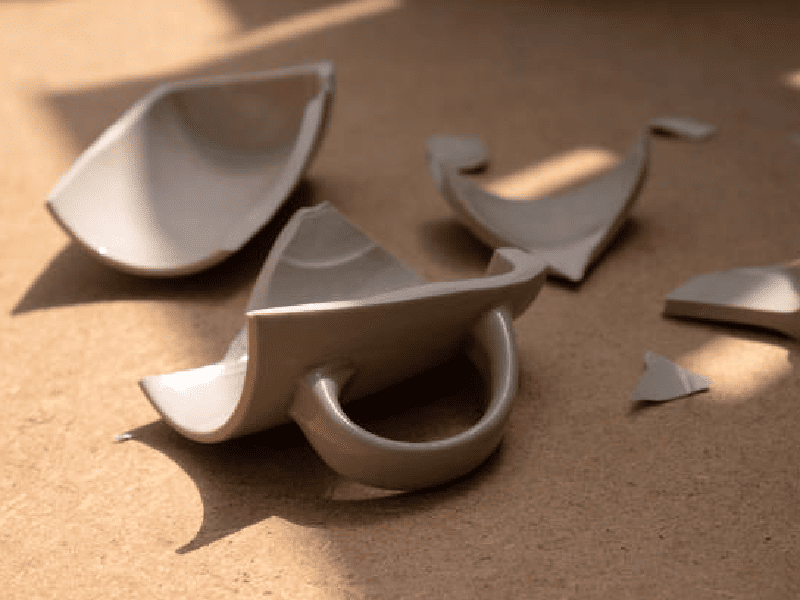
7. Ceramic Glue
For brittle materials that crack under stress concentration
Ceramic bonds fail when stress is not evenly distributed.
Designed to handle
- Porcelain and ceramic surfaces
- Controlled rigidity
- Stable indoor use
Typical applications
- Plates, cups, figurines
- Decorative ceramic repairs
8. Wood Glue
For porous materials that move with humidity
Wood expands and contracts over time.
Designed to handle
- Fiber penetration
- Strong shear resistance
- Seasonal movement
Typical applications
- Furniture repair
- Wood joints
- Household woodworking
9. Book Glue
For paper and bindings that flex repeatedly
Books fail at the spine and page joints, not flat surfaces.
Designed to handle
- Paper fibers without damage
- Repeated opening and closing
- Low odor indoor use
Typical applications
- Loose pages
- Book spines
- Covers and bindings
10. Construction Adhesive
For heavy-duty bonding on uneven surfaces
Construction repairs require gap filling and load distribution.
Designed to handle
- Rough and vertical surfaces
- High initial grab with workable open time
- Indoor and outdoor conditions
Typical applications
- Tiles, stone, panels
- Concrete and masonry
- Home renovation projects
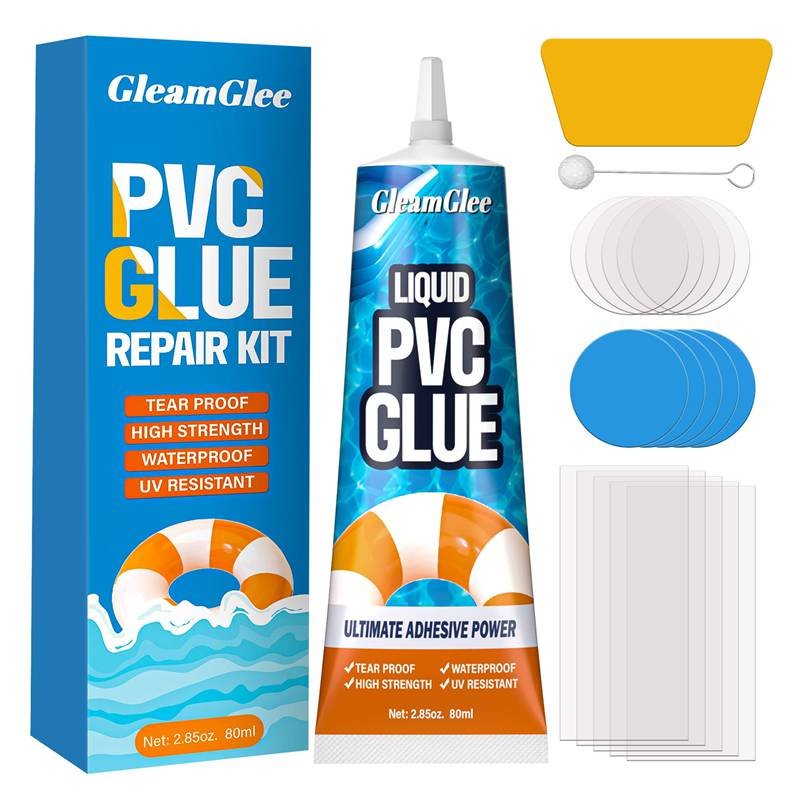
11. PVC Glue
For airtight, pressure-bearing PVC materials
PVC repairs fail when bonds lose elasticity under pressure.
Designed to handle
- Internal air pressure
- Water exposure
- Flexible sealing
Typical applications
- Inflatable mattresses
- Pool floats and toys
- PVC boats and cushions
12. Tent Repair Glue
For outdoor fabrics exposed to weather and folding
Tent materials face UV, rain, wind, and repeated folding.
Designed to handle
- Coated and synthetic fabrics
- Waterproof sealing
- Temperature swings
Typical applications
- Tent fabric tears
- Seam reinforcement
- Outdoor gear repairs
13. Wader Repair Glue
For waterproof gear under constant movement and abrasion
Waders face immersion, bending, and friction at the same time.
Designed to handle
- Neoprene and coated fabrics
- Full submersion
- Abrasion at flex points
Typical applications
- Fishing and hunting waders
- Seam leaks and pinholes
- Boot-to-wader junctions

Conclusion
Understanding adhesives is ultimately about making better, more reliable choices. Adhesives are not just “sticky products,” but materials designed to work with specific surfaces under real conditions such as movement, moisture, pressure, and time. When the adhesive matches the material and the way it is used, repairs last longer, look cleaner, and require far less rework.
Throughout this guide, one message stands out: material-specific adhesives consistently outperform all-purpose solutions. Fabric, shoes, plastics, PVC inflatables, tents, and waders all fail in different ways, which is why they require different bonding behavior. Choosing the correct adhesive—and allowing proper curing—turns a temporary fix into a durable, everyday solution.
This is the approach behind GleamGlee. By developing adhesives around real materials and real use scenarios, GleamGlee helps both consumers and businesses achieve dependable results. Whether you are repairing items at home or sourcing customized adhesive solutions at scale, the right adhesive choice makes all the difference.