Skip to content
Fabric glue makes clothing repair and fabric projects faster and easier than traditional sewing. Whether you’re hemming pants, fixing a small seam, attaching a patch, or adding decorative details, fabric glue allows you to bond fabric cleanly without needles or thread. When used correctly, it dries clear, stays flexible, and blends naturally into the fabric—so the repair looks and feels normal in everyday wear.
Using fabric glue successfully comes down to a few simple but critical steps. The fabric must be clean and completely dry, the glue should be applied in a thin, even layer, and the bonded area needs firm pressure so the fibers connect properly. After setting, the glue must be given enough time to fully cure—usually up to 24 hours—before washing or ironing. Skipping any of these steps is the most common reason fabric glue repairs fail.
When applied with care, fabric glue can deliver results that last through regular movement and washing, especially on fabrics like cotton and denim. It’s ideal for quick repairs, no-sew alterations, and creative projects where speed and appearance matter. Understanding how to apply the right amount, when to press, and how long to wait before use is what turns fabric glue from a temporary fix into a reliable, long-term solution.
What Is Fabric Glue?
Fabric glue is a flexible adhesive designed specifically to bond fabric fibers together without changing how the fabric looks or feels. Unlike general-purpose glues, fabric glue dries clear, remains soft after curing, and allows the fabric to bend, stretch, and move naturally. When used correctly, the bonded area feels similar to the surrounding fabric instead of becoming stiff or brittle.
What makes fabric glue useful in real life is how it handles movement and washing. Clothing and textiles are constantly pulled, folded, and rubbed. A proper fabric glue is formulated to flex with these movements instead of cracking. In everyday use, a well-applied fabric glue bond can withstand repeated wear and multiple wash cycles on low to medium stress areas such as hems, patches, appliqués, and decorative seams.
From a practical standpoint, fabric glue works by penetrating into the weave of the fabric rather than sitting on top like a surface coating. As it cures, the adhesive forms a thin, elastic bond around the fibers. This is why applying too much glue actually weakens the repair—excess glue creates a thick layer that dries harder and is more likely to fail when the fabric moves.
How Fabric Glue Is Different From Regular Glue
Many repair failures happen because people use the wrong type of glue. Standard household or “super” glues are designed for hard surfaces like plastic or metal. On fabric, they often dry rigid, leave shiny marks, or crack after a few bends.
Here is a practical comparison that reflects common user experiences:
| Feature | Fabric Glue | Regular Household Glue |
|---|---|---|
| Dries clear | Yes | Often cloudy or shiny |
| Flexibility after drying | Remains soft and flexible | Dries hard and brittle |
| Wash resistance | Holds after full curing | Fails after washing |
| Feel on fabric | Moves with fabric | Creates stiff spots |
| Best use | Clothing, textiles, crafts | Hard surfaces only |
For customers, this difference matters most in comfort and appearance. A glued hem that stays soft is barely noticeable when worn, while a stiff glue line can feel uncomfortable and look obvious.
When Fabric Glue Is the Right Tool
Fabric glue is best used for flat, well-aligned fabric contact where the goal is a clean finish rather than structural reinforcement. Common successful uses include hemming pants or curtains, repairing small seam splits, attaching patches, fixing fabric linings in bags or shoes, and securing decorative elements like lace, ribbon, or sequins.
It’s not intended to replace sewing in high-stress areas such as load-bearing seams or straps, but for everyday clothing repairs and no-sew projects, fabric glue offers a faster and often cleaner alternative. For many users, especially those without sewing skills or tools, it becomes a reliable solution that saves time while extending the life of clothing and textiles.
Which Fabric Glue Works for Your Fabric?
Not all fabrics behave the same, and that’s the main reason fabric glue works perfectly in some repairs but fails in others. The right fabric glue depends on three practical factors: how absorbent the fabric is, how much it moves during wear, and how visible the repair will be. Understanding these differences helps you choose the correct glue and apply it in a way that actually lasts.
Fabric Type Is the First Thing to Check
Fabrics fall into three broad categories when it comes to fabric glue performance:
- Absorbent natural fabrics (cotton, canvas, denim)
- Smooth or blended synthetics (polyester blends, nylon)
- Delicate or sheer fabrics (silk, lace, chiffon)
Each group needs a slightly different approach.
Cotton and Denim: The Most Reliable Results
Cotton and denim are the easiest fabrics to bond with fabric glue. Their fibers are porous and textured, allowing the adhesive to sink into the weave and grip the fabric from the inside. For most users, this is where fabric glue performs best and lasts the longest.
Common successful uses on cotton and denim include:
- hemming jeans or pants
- repairing small seam splits
- attaching patches to workwear or children’s clothing
- reinforcing worn areas on elbows or knees
In normal use, fabric glue repairs on cotton and denim often hold through 20–30 gentle wash cycles when:
- the glue is applied in a thin layer
- the area is pressed firmly during setting
- the garment is washed only after full curing
One important detail with denim: edges fail before centers. Jeans bend constantly at knees and thighs, so it’s important to press the edges of a glued patch or hem slightly longer than the center area to prevent lifting over time.
Polyester and Blended Fabrics: More Prep, Better Control
Polyester and blended fabrics can still work very well with fabric glue, but they require more attention. These fabrics are smoother and less absorbent, which means the glue relies more on surface contact than penetration.
What users often notice with polyester:
- glue peels if the fabric wasn’t cleaned first
- bonds feel weaker if pressure was too light
- edges lift after washing if curing time was rushed
Best practices for polyester blends:
- clean the repair area even if it looks clean
- apply glue sparingly to avoid surface pooling
- press firmly and evenly for at least 30–60 seconds
- wait a full 24 hours before washing
When these steps are followed, fabric glue can perform reliably on polyester blends for hems, linings, and decorative elements.
Stretch Fabrics: Flexibility Matters Most
Stretch fabrics introduce another variable: movement. Fabrics with elastane or spandex stretch repeatedly, which puts stress on any adhesive bond.
Fabric glue can work on stretch fabrics if:
- the glued area is not under constant tension
- the glue remains flexible after curing
- the layer is very thin
Common good uses:
- attaching decorative elements
- securing labels or linings
- small repairs away from high-stretch zones
For areas that stretch heavily (waistbands, tight seams), fabric glue alone may not hold long-term and is better used as a reinforcement rather than a full replacement for stitching.
Silk, Lace, and Sheer Fabrics: Use With Caution
Delicate fabrics are the most challenging. The issue here is rarely strength—it’s appearance. Glue can seep through, darken fibers, or leave visible marks that don’t disappear.
If you must use fabric glue on delicate fabrics:
- always test on a hidden area or scrap first
- use micro-dots instead of lines
- press through a clean cloth
- avoid edges that will be visible from the outside
A simple rule many experienced users follow:
If you can see the glue when the fabric is lying flat, you will see it even more when it’s worn.
Quick Fabric Glue Compatibility Guide
| Fabric Type | Glue Performance | Common Risk | Practical Tip |
|---|---|---|---|
| Cotton | Very strong | Over-application | Thin layer, firm press |
| Denim | Very strong | Edge lifting | Press edges longer |
| Polyester blends | Moderate–strong | Peeling | Clean first, cure fully |
| Stretch fabrics | Moderate | Cracking | Use flexible glue only |
| Wool | Moderate | Uneven absorption | Test first |
| Silk | Low–moderate | Visible marks | Micro-dots only |
| Lace / sheer | Low–moderate | Bleed-through | Minimal glue, test |
How to Use Fabric Glue Step by Step
Using fabric glue isn’t hard, but the details decide whether the repair looks clean and survives washing—or peels off after a day. Most “fabric glue didn’t work” complaints come from the same few problems: fabric wasn’t cleaned, too much glue was used, there wasn’t enough pressure, or the item was washed before the glue fully cured. Follow the steps below and you’ll get a bond that dries clear, stays flexible, and holds up in real wear.
Step 1: Pick the Right Setup
Before you open the tube, set yourself up so the repair stays flat and clean:
- Work surface: hard, flat table (not a bed or couch)
- Protect the surface: wax paper, baking parchment, or a plastic sheet
- Have ready: paper towels, a damp cloth, and clips or clothespins
- Lighting: bright light so you can see glue lines and seep-through early
Why this matters: fabric glue spreads quickly. If you need to search for tools mid-repair, the glue can start setting before you press properly.
Step 2: Clean and Dry the Fabric
Even if fabric looks clean, it often has invisible issues that weaken adhesion: body oils, detergent residue, fabric softener, dust, or sizing from manufacturing.
Best practice (strongest bond):
- Wash and fully dry the item first (if possible)
If you can’t wash it:
- Clean the repair area with mild soap + water
- Wipe away residue and let it dry completely
Quick reality check:
- If the fabric feels slick, waxy, or “softener-smooth,” glue will struggle.
- If the fabric is damp, the bond can turn weak or cloudy.
Step 3: Dry-Fit the Pieces
Before applying glue, place the pieces exactly where they will bond:
- Fold and align hems
- Match patch edges
- Lay torn seams together cleanly
Use clips or light tape to hold alignment for tricky areas.
This prevents re-positioning after glue touches fabric, which can reduce strength and create visible glue smears.
Step 4: Apply Fabric Glue in a Thin, Even Layer
A strong bond comes from a thin film, not a thick bead.
Target amount: enough to lightly coat fibers without soaking through.
Good signs:
- You see a light sheen
- Glue does not form a raised ridge
- Little to no squeeze-out when pressed
Bad signs:
- Glue puddles or looks “wet thick”
- Glue squeezes out heavily
- Glue seeps through to the front side
How much is “thin” in real terms?
- For a hem line, apply a narrow line about 2–3 mm away from the edge
- For a patch, apply glue around the patch area but avoid thick buildup at corners
- For a seam split, apply glue directly into the seam area, then press edges together
Common customer mistake: applying glue like caulk. That often dries stiff and fails faster when the fabric bends.
Step 5: Press Firmly
Pressing is where the bond becomes real. Fabric glue needs the fibers to contact each other while the glue spreads into the weave.
Minimum pressing time:
- Small repair: 30–60 seconds
- Larger patch/hem: press and then place a weight for 3–10 minutes
Best tools:
- flat board + book weight
- clean pressing cloth to avoid sticking
Avoid:
- “tap and go” pressing
- pulling or stretching while setting
If you skip pressure, the glue often cures on the surface instead of locking into fibers—this is why edges lift first.
Step 6: Let It Set Without Movement
Fabric glue usually grabs quickly, but early movement breaks the bond before it develops strength.
A practical approach:
- Leave the item flat and untouched during the first set stage
- Don’t hang it
- Don’t fold it
- Don’t stretch it to “check if it worked”
Step 7: Respect the Drying and Curing Timeline
This is where most people ruin a good repair. “Dry to the touch” is not the same as “ready for washing.”
Here’s a realistic timeline many washable fabric glues follow:
| Stage | What it feels like | What you can do safely |
|---|---|---|
| 6–10 minutes (initial set) | holds position lightly | carefully release clips, minimal movement |
| 30–60 minutes (handling strength) | feels dry, holds better | gentle handling, light wear in low-stress areas |
| Up to 24 hours (full cure) | strongest + most flexible | washing, ironing, normal wear |
Simple rule that prevents most failures:
If you plan to wash or iron the item, wait until the next day.
Step 8: First Wash and Iron Tips
For best longevity:
- First wash: gentle cycle or hand wash
- Avoid hot water for the first wash
- Air dry if possible (high heat can stress new bonds)
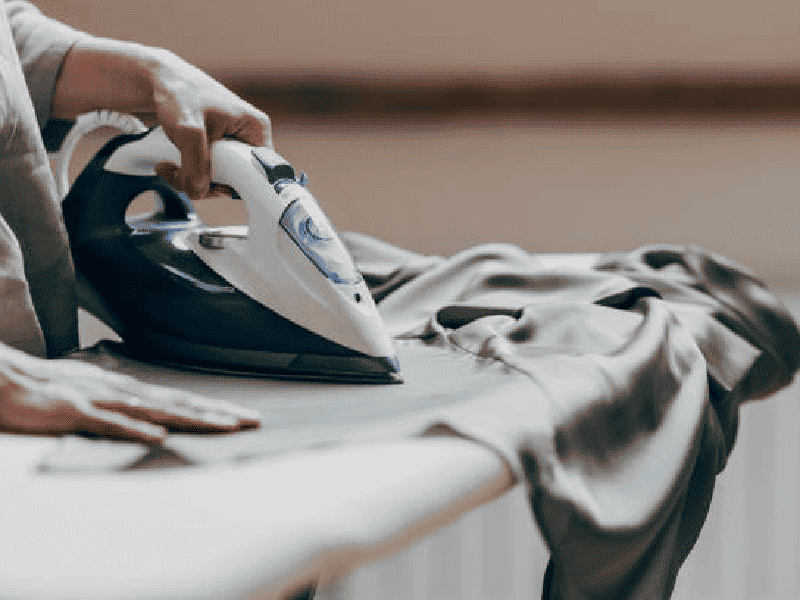
For ironing:
- Turn garment inside out
- Use a pressing cloth
- Avoid holding the iron directly on the glued area for long
Troubleshooting: Quick Fixes for Common Problems
Problem: Glue seeped through
- Cause: too much glue or thin fabric
- Fix: use less glue next time; apply micro-dots on delicate fabrics
Problem: Edge is lifting
- Cause: not enough pressure or early movement
- Fix: reapply a tiny amount under the edge and press longer
Problem: Repair feels stiff
- Cause: thick glue layer
- Fix: use thinner application; avoid heavy bead lines

Is Fabric Glue Washable and Iron-Safe?
Yes—a good fabric glue repair can survive washing and ironing, but only when three things line up: the glue dries flexible, the bonded area gets proper pressure, and you give it enough cure time. Most “it fell off in the wash” problems don’t mean fabric glue is weak—they mean the repair was washed before it finished curing, or the glue layer was too thick and never bonded the fibers properly.
Below is what customers actually need to know to get washable, iron-safe results without guessing.
What “Washable” Really Means for Fabric Glue
“Washable” doesn’t mean you can glue something at noon and run it through a washing machine at 3 p.m. It means that after full cure, the bond resists water, detergent, and agitation.
Fabric glue repairs last longer in the wash when:
- The glue layer is thin (thick glue turns rubbery or brittle and weakens over time)
- The bonded area is flat and well-contacted (no gaps)
- The fabric is clean and dry before gluing
- The repair is on a low to medium stress zone (hems, patches, appliqués, decorative seams)
Repairs fail faster when:
- The area is constantly stretched (tight waistbands, high-tension seams)
- Hot water + heavy spin cycles are used often
- The repair is scrubbed aggressively
- The garment goes through a hot dryer repeatedly (heat + tumbling fatigue the bond)
Cure Time: The Most Important “Data Point” for Wash Resistance
Most washable fabric glues set in minutes but need up to 24 hours to reach full strength and flexibility. “Dry to the touch” is not the same as “ready for washing.”
Here’s a practical timeline that matches how most quality fabric glues behave in real use:
| Time After Gluing | What’s happening | Safe actions | Not safe yet |
|---|---|---|---|
| 6–10 minutes | Glue grabs and holds position | Leave flat, minimal handling | Washing, ironing, stretching |
| 30–60 minutes | Surface feels dry, bond still forming | Light handling, gentle repositioning | Washing, dryer heat, steam |
| 8–12 hours | Bond strength improves quickly | Light wear (low stress) | Hot wash, aggressive cycles |
| Up to 24 hours | Full strength + flexibility | Normal wear, washing, ironing (with care) | — |
Simple rule that prevents most failures:
If you plan to wash or iron, wait until the next day.
How Many Washes Can Fabric Glue Repairs Last?
Customers want a real expectation, not vague promises. The honest answer depends on fabric type, repair area, and wash conditions.
Typical durability (when applied correctly and cured fully):
- Hems on cotton/denim: often hold through 20–30 gentle wash cycles
- Decorations (ribbon/appliqués) on stable fabric: can hold dozens of washes
- High-flex areas (knees, elbows): can still last well, but edges need good pressing and thin glue
- High-tension seams: glue alone may fail sooner; glue + stitching reinforcement lasts longer
The biggest “repair life extender” is washing behavior:
- gentle cycle + cold or warm water = longer life
- hot water + heavy-duty agitation = shorter life
Best Washing Practices
For the first wash (most important):
- Choose hand wash or gentle machine cycle
- Use cold to warm water
- Avoid long soak times
- Skip harsh bleaching agents
Drying tips:
- Air drying is safest for the first 1–2 cycles
- If using a dryer, use low heat
- High heat + tumbling is a common reason edges lift over time
A quick “risk table” for washing habits:
| Washing habit | Risk level for glued repairs | Why |
|---|---|---|
| Cold wash + gentle cycle | Low | Less stress on bond |
| Warm wash + normal cycle | Medium | More agitation |
| Hot wash + heavy-duty cycle | High | Heat + friction fatigue |
| Long soak (1+ hour) | High | Water weakens edges over time |
| Frequent hot dryer | High | Heat + tumbling stress |
Is Fabric Glue Waterproof?
For everyday life, think of fabric glue as water-resistant after curing, not “underwater adhesive.”
What it usually handles well:
- sweat
- light rain
- spills wiped off quickly
- normal washing after full cure
What it’s not meant for:
- continuous soaking
- underwater use
- constant wet-dry cycles without rest
If you’re repairing outdoor textiles, choose a formula specifically intended to remain flexible and water-resistant after curing—and always test on that material.
Is Fabric Glue Iron-Safe?
Most washable fabric glues handle ironing well after full cure, but ironing is safe only when the repair is done cleanly. The main issue is not “will the glue melt”—it’s whether heat makes a thick glue area soften and become shiny or sticky.
Heat-safe ironing habits that protect the repair
- Turn the garment inside out
- Use a pressing cloth
- Use the fabric-appropriate heat setting (don’t exceed what the fabric can tolerate)
- Avoid holding the iron in one spot over the glued line
Ironing “yes/no” guide
| Ironing method | Safe after full cure? | Best practice |
|---|---|---|
| Iron inside-out on low/medium | Yes | Pressing cloth recommended |
| Quick press on medium cotton setting | Usually yes | Avoid direct contact with glue |
| High heat + steam blast | Risky | Can soften thick glue spots |
| Iron directly on glue line | Not recommended | Can cause shine/tackiness |
Common Heat Problems and How to Prevent Them
Problem: Glue area becomes shiny after ironing
- Cause: too much glue or iron directly on glue
- Fix: apply thinner next time; use pressing cloth
Problem: Glue area feels tacky under heat
- Cause: not fully cured or heat too high
- Fix: stop, let cool, give more cure time; reduce heat
Problem: Repair cracks after repeated heat + wear
- Cause: glue dried too thick or too rigid for a high-flex zone
- Fix: use a flexible fabric glue; keep layer thin; press edges longer
Quick “Do This / Avoid This” for Washable, Iron-Safe Repairs
Do this
- Wait up to 24 hours before washing or ironing
- Wash gentle first time
- Use thin glue layers
- Press firmly during set
- Iron inside-out with a cloth barrier
Avoid this
- Same-day washing
- Hot wash + heavy duty spin
- High dryer heat right away
- Thick glue beads
- Iron directly on glue line
What Can You Fix With Fabric Glue?
Fabric glue is best for repairs where two fabric surfaces can sit flat and fully touch. If you can align the materials neatly, press them, and keep them still while curing, fabric glue can deliver a clean, flexible repair that holds through daily wear and washing. People use it most because it saves time, avoids needle holes, and still looks “normal” when the item is worn.
A helpful way to think about it: fabric glue works great for surface-bond repairs (hems, patches, trims, linings) and less well for load-bearing structural seams (straps, heavy tension areas). Below are the real-world fixes that fabric glue handles well, plus how to do them so they last.
Quick “Is This a Good Fabric Glue Job?” Guide
| Repair type | How well fabric glue works | Why it works (or fails) |
|---|---|---|
| Hems (pants, skirts, curtains) | High | Flat contact + low tension |
| Patches (denim knees, elbows) | High | Large surface area for bonding |
| Small seam splits | Medium–high | Works if tension is moderate |
| Appliqués, ribbon, lace, trims | High | Decorative, low load |
| Button reinforcement (light) | Medium | Needs careful control; thread still best |
| Shoe lining / fabric insole | Medium–high | Works if surfaces are clean and flat |
| Backpack/bag lining | Medium–high | Good for fabric-to-fabric areas |
| High-tension straps or waistbands | Low | Constant pulling weakens glue |
1) Clothing Repairs and Alterations
Hems (pants, skirts, dresses, curtains)
This is the #1 use case because it’s fast and clean. A properly glued hem can last through 20–30 gentle wash cycles on cotton/denim when cured fully and washed correctly.
Best hem projects:
- pant hems that need a quick shortening
- skirt hems that curl or unravel
- curtain hems (great because the fabric weight helps press the bond)
Practical durability tips:
- iron the fold first so edges sit flat
- apply glue 2–3 mm inside the edge to prevent squeeze-out
- press longer at corners where lift begins first
Small seam splits (side seams, sleeves, inner seams)
Fabric glue works well for small seam splits where the fabric isn’t being pulled constantly. These are the repairs where sewing feels annoying but the fix is simple.
Good seam-split candidates:
- small openings along a seam line (1–3 inches)
- seam edges that align neatly without gaps
Where glue struggles:
- areas under heavy stretching (tight fit garments)
- seams that are frayed with missing fabric (needs patching)
A realistic rule many users follow:
- if the seam opens wider when you move, glue alone may not last—use glue as a reinforcement plus stitching if possible.
Patches (holes, worn spots, decorative patches)
Fabric glue is excellent for patches because patch repairs provide large bonding area, which is where glue performs best. Denim knee patches, uniform patches, and children’s clothing patches are common.
What customers care about:
- edges lifting after washing
- patch looking bulky
- patch stiffness
How to reduce edge lift:
- press the edges longer than the center
- avoid thick glue at corners
- consider a second micro-layer along the edge after initial set (thin, not heavy)
Cuffs, collars, and small adjustments
Fabric glue is widely used to keep cuffs flat, secure collar edges, and stop rolled fabric from shifting—especially for quick “presentation fixes” before an event.
Typical uses:
- keeping a rolled sleeve hem stable
- securing collar tips so they don’t curl
- fixing small fabric flaps that won’t stay flat
These repairs often hold very well because they are low load and easy to press flat.
2) Decorative Fixes and Fashion DIY
Appliqués, lace, ribbon, trim
Fabric glue is ideal for decorative additions because the goal is appearance and comfort. Most trims don’t take heavy load, so a flexible glue bond performs reliably.
Common projects:
- lace trim on sleeves and hems
- ribbon borders on costumes
- decorative appliqués on jackets or tote bags
- festival outfits and last-minute costume upgrades
Durability expectation:
- decorative bonds often survive regular wear and multiple washes if the glue dries flexible and cures fully.
Sequins, rhinestones, and embellishments
Many people use fabric glue for embellishments because sewing each piece is slow and leaves visible stitches.
Best practices for clean results:
- use tiny dots, not lines
- apply from the inside when possible
- press gently; avoid glue squeeze-out onto the surface
For high-friction areas (waist, seat, underarm), embellishments may pop off faster—this is normal even for stitched pieces due to rubbing.
3) Shoes and Accessories
Fabric glue is often used in shoes and accessories when the repair is fabric-to-fabric or fabric-to-lining.
Shoe linings and fabric insoles
People frequently glue:
- loose fabric lining inside sneakers
- detached insole fabric
- frayed inner cloth edges
Why it works:
- surfaces are hidden (cosmetic risk is low)
- fabric layers sit flat under pressure
What improves success:
- clean the area well (shoe interiors hold oils and sweat)
- use a thin layer to prevent stiffness that can irritate feet
Handbags, backpacks, hats
Strong use cases:
- reattaching detached bag lining
- reinforcing a fabric seam inside a backpack
- fixing tears inside hat sweatbands
- securing fraying strap edges (light duty)
Where glue won’t replace sewing:
- load-bearing straps that carry weight daily
4) Home Textiles and Household Fabric Repairs
Fabric glue is a favorite for home textiles because you usually have:
- large flat surfaces
- low tension
- easy pressing
Curtains and drapes
Curtains are one of the easiest glue repairs because the fabric naturally hangs straight and the hemline is wide.
Typical repairs:
- shortening curtains with a clean hem
- attaching decorative trim
- sealing fraying edges
Cushions, pillowcases, table runners
Great glue candidates:
- small tears along seams
- patching worn corners
- reinforcing edges to prevent fray
A realistic durability note:
- cushion repairs last longer when the area isn’t under heavy compression (seat cushions get more stress than decorative pillows).
5) Crafts, School Projects, and Plush Repairs
Kids’ costumes and school projects
Fabric glue is widely used because:
- no needle injuries
- fast results
- clean finish
Common projects:
- felt crafts
- costume repairs before events
- fabric book covers and DIY pouches
Plush toys and stuffed animals
Fabric glue can fix small openings or reattach decorative pieces, but it’s best used on:
- low-stress seams
- areas that won’t be pulled repeatedly
For seams that get tugged often, glue can be a temporary fix unless reinforced.
When Fabric Glue Is NOT the Best Fix
Customers appreciate honesty here because it prevents returns and frustration.
Avoid fabric glue (or use it only as reinforcement) for:
- load-bearing straps (bags, backpacks)
- high-tension waistbands
- areas that stretch heavily (tight athletic wear seams)
- repairs where fabric is missing (needs patching, not just gluing)
Quick “Best Use” Table by Project Type
| Project | Best fabric glue approach | Expected result |
|---|---|---|
| Hem a pair of jeans | thin line + firm press + 24h cure | clean, long-lasting |
| Patch a denim knee | thin coat + extra edge press | strong, washable |
| Small seam split | glue inside seam + press flat | good if low tension |
| Add lace trim | micro-line + cloth barrier press | clean, flexible |
| Shoe lining lift | clean + thin layer + press | comfortable, hidden fix |
| Bag strap separation | glue + stitching recommended | glue alone often fails |

What Fabric Glue Mistakes Ruin Repairs?
Most fabric glue failures don’t happen because the glue is weak. They happen because of small mistakes that seem harmless at the time but seriously reduce bond strength. The good news is that nearly all of these problems are preventable once you know what to look for. Below are the most common mistakes users make, how they show up in real life, and what actually fixes them.
Mistake 1: Using Too Much Fabric Glue
This is the most common and most damaging mistake.
What people notice:
- The fabric feels stiff or rubbery after drying
- Dark or shiny glue lines show through
- The repair cracks or peels after a few wears
Why it happens:
Many people assume more glue equals a stronger bond. On fabric, the opposite is true. Thick glue layers dry slower, cure unevenly, and create a surface film that breaks when the fabric bends.
What works better:
- Apply a thin, even layer that lightly coats the fibers
- Aim for coverage, not thickness
- Stay slightly away from visible edges to prevent seepage
Real-world tip:
If glue squeezes out noticeably when you press, you’ve already used too much.
Mistake 2: Skipping Fabric Cleaning
Fabric that looks clean often isn’t. Body oils, detergent residue, fabric softener, and dust all reduce adhesion.
What people notice:
- The repair holds at first, then lifts after washing
- Edges peel cleanly instead of tearing fibers
- Glue bond feels weak even after full curing
Why it happens:
Glue sticks to contaminants instead of fabric fibers. Once those residues break down in water, the bond fails.
What works better:
- Wash and dry the garment before repair when possible
- If washing isn’t possible, clean the area with mild soap and water
- Let the fabric dry completely before gluing
A surprisingly high number of early failures come from skipping this step.
Mistake 3: Not Pressing Long Enough
Pressure is what forces glue into the fabric weave. Without it, glue cures on the surface instead of locking into fibers.
What people notice:
- The center holds, but edges lift
- The repair peels off in one sheet
- Bond feels “skin-like” instead of integrated
Why it happens:
Light tapping or quick finger pressure isn’t enough, especially for thicker fabrics like denim.
What works better:
- Press firmly for 30–60 seconds on small repairs
- For larger areas, place a flat weight for several minutes
- Press edges longer than the center
Pressure is one of the biggest factors in long-term durability.
Mistake 4: Washing or Ironing Too Soon
This mistake alone accounts for a large share of negative experiences.
What people notice:
- Glue turns cloudy after washing
- The bond softens or peels
- Edges lift after the first wash
Why it happens:
Fabric glue may feel dry in minutes, but the bond is still forming internally. Water and heat interrupt this process.
What works better:
- Allow up to 24 hours for full cure before washing or ironing
- For thicker fabrics or layered repairs, give it extra time
- Treat “dry to touch” as a warning, not a green light
Simple rule:
If you wouldn’t wear it to a full day of activity yet, don’t wash it.
Mistake 5: Using Fabric Glue in High-Tension Areas
Fabric glue works best where the fabric sits flat. It struggles where fabric is constantly pulled.
What people notice:
- Repairs fail repeatedly in the same spot
- Glue cracks in stretch zones
- The bond looks fine but separates during wear
Why it happens:
Constant pulling and stretching fatigue the adhesive bond over time.
What works better:
- Use glue on low to medium stress areas
- For high-tension zones, use glue as reinforcement with stitching
- Avoid relying on glue alone for straps, waistbands, or tight seams
Mistake 6: Choosing the Wrong Type of Glue
Not all “fabric glues” behave the same.
What people notice:
- Glue dries hard or brittle
- Yellowing after a few weeks
- Strong odor during application
- Inconsistent results between uses
Why it happens:
Lower-quality or general-purpose glues aren’t formulated for repeated fabric movement or washing.
What works better:
- Use glue designed to remain flexible after curing
- Look for washable, clear-drying formulas
- Avoid using super glue or craft glue meant for hard surfaces
Mistake 7: Skipping a Test on New or Delicate Fabrics
This mistake causes the most regret because it can permanently damage clothing.
What people notice:
- Glue darkens the fabric
- Stains don’t disappear after drying
- Texture changes permanently
Why it happens:
Delicate and sheer fabrics react differently to adhesives.
What works better:
- Always test on a hidden seam or scrap
- Use micro-dots instead of lines on thin fabric
- Press through a cloth to control spread
A two-minute test can save an expensive garment.
Quick Troubleshooting Table
| Problem | Likely cause | Best fix |
|---|---|---|
| Glue line visible | Too much glue | Use thinner layer |
| Repair peels after wash | Washed too early | Wait full cure |
| Edges lifting | Not enough pressure | Press edges longer |
| Fabric feels stiff | Glue layer too thick | Apply less glue |
| Glue cracks | Wrong glue type | Use flexible fabric glue |
One Simple Habit That Prevents Most Failures
Before committing to a visible repair:
- Test on a hidden area
- Let it fully cure
- Bend, stretch, and lightly wash
If the fabric stays flexible and clean, the repair will likely last in normal use.
Common Fabric Glue Questions People Ask Before Using It
Before using fabric glue, most people aren’t worried about whether it sticks—they’re worried about ruining clothing, wasting time, or making a mess that can’t be fixed. The questions below come up repeatedly from real users, especially first-time users, and the answers focus on what actually happens in everyday use.
Does Fabric Glue Dry Clear?
Most quality fabric glues are designed to dry clear, but how clear the repair looks depends heavily on application and fabric type.
What customers usually see when it looks bad:
- Shiny or dark lines on light fabric
- Glue visible from the outside after drying
- A “wet spot” look that doesn’t disappear
Why this happens:
- Too much glue was applied
- Glue soaked through thin fabric
- Glue was spread too close to visible edges
How to get the cleanest result:
- Apply a thin layer, not a thick bead
- Stay 2–3 mm away from edges
- Press through a clean cloth to control spread
- Always test on light or sheer fabrics
On cotton and denim, a thin application often becomes nearly invisible once fully cured. On silk or light polyester, visibility depends much more on restraint and testing.
How Long Does Fabric Glue Take to Dry and Fully Cure?
Drying time and curing time are not the same—and confusing the two is one of the biggest reasons repairs fail.
What most users experience:
- Glue feels dry in 5–10 minutes
- Repair seems stable after 30–60 minutes
- Full strength develops over up to 24 hours
Why curing matters:
- Washing or ironing too early weakens the bond
- Movement before full cure causes edge lift
Real-world rule that works:
If you plan to wash or iron the item, wait until the next day, even if it feels dry.
Can Fabric Glue Be Washed in a Washing Machine?
Yes, after full curing, most washable fabric glues hold up well in machine washing—especially on cotton and denim.
What affects wash durability most:
- Cure time before first wash
- Water temperature
- Wash cycle intensity
- Fabric movement during wear
Typical results when applied correctly:
- Gentle cycle + cold/warm water → good long-term hold
- Heavy-duty cycle + hot water → shorter repair lifespan
First wash tip:
Use a gentle cycle or hand wash the first time. This alone extends the life of the repair.
Is Fabric Glue Safe to Iron?
Fabric glue is generally iron-safe once fully cured, but heat must be handled carefully.
Best ironing habits:
- Turn garment inside out
- Use a pressing cloth
- Avoid holding the iron directly on the glued area
What causes problems:
- Ironing before full cure
- High heat on thick glue areas
- Direct contact with glue lines
If the fabric itself is iron-safe, the glue usually is too—provided the glue layer is thin and fully cured.
Can Fabric Glue Replace Sewing Permanently?
Sometimes yes, sometimes no.
Fabric glue works well as a permanent fix for:
- Hems
- Patches
- Decorative trims
- Small seam splits with low tension
Sewing is still better for:
- Load-bearing seams
- Tight or high-stretch areas
- Straps and waistbands
Many experienced users combine both: glue for clean alignment and edge control, stitching for structural strength.
Can Fabric Glue Be Removed If I Make a Mistake?
Fabric glue is meant to be long-lasting, not temporary, but removal can be possible in limited cases.
Removal is easier when:
- Glue hasn’t fully cured yet
- Fabric is thick and sturdy
- Glue layer is thin
Removal is difficult or impossible when:
- Glue is fully cured
- Fabric is delicate or sheer
- Glue soaked deeply into fibers
Practical advice:
Treat fabric glue as a permanent repair. Always test first if reversibility matters.
Is Fabric Glue Safe for Kids’ Clothing and Costumes?
Most modern fabric glues are:
- Low odor
- Safe once cured
- Widely used for children’s clothing repairs and costumes
Important safety habits:
- Adults should apply the glue
- Let the repair fully cure before wear
- Avoid skin contact during application
For school projects and costumes, fabric glue is popular because it avoids needles and reduces injury risk during use.
Why Did My Fabric Glue Repair Fail Before?
When users report failure, the cause is usually one of these:
- Washed too early
- Used too much glue
- Didn’t press long enough
- Used glue on a high-tension area
- Used the wrong type of glue
Fixing just one of these factors often turns a failed experience into a successful one.
Quick FAQ Summary Table
| Question | Short, practical answer |
|---|---|
| Does it dry clear? | Yes, if applied thinly |
| Can it be washed? | Yes, after full cure |
| Is it iron-safe? | Yes, with care |
| Can it replace sewing? | For many repairs, yes |
| Is it removable? | Limited, best treated as permanent |
| Safe for kids’ clothes? | Yes, once cured |
How Professionals Choose Fabric Glue
Professionals don’t pick fabric glue based on the biggest “strong” claim on the label. They choose it based on repeatable results—the kind that still look clean after the job is worn, washed, folded, and ironed. Whether it’s a tailor doing quick fixes, a costume maker finishing details, a DIY brand testing products for resale, or a factory doing quality checks, the evaluation process is surprisingly consistent: flexibility, wash durability, appearance, control, and consistency.
Below is how professionals actually judge fabric glue—using real, practical standards that match what customers care about.
1) Flexibility After Drying
For clothing, stiffness is a deal-breaker. A glue that dries hard may feel strong on day one, but it cracks once fabric bends repeatedly.
What pros check:
- Does the bonded area fold without cracking?
- Does it feel like fabric—or like a plastic strip?
- Does it crease and then recover without flaking?
Simple test professionals use:
- Glue a 2–3 inch strip of fabric to fabric
- Let it cure fully
- Fold it sharply 20–30 times
- Stretch it gently and release
What they want to see:
- No cracking sounds
- No visible fracture lines
- No edge lifting
What fails this test:
- rigid glues
- thick glue layers
- formulas that cure unevenly
In real wear, pants knees, elbows, cuffs, collars, and seams experience hundreds of micro-flexes per day, so flexibility is often more important than “instant grab.”
2) Wash Durability
A professional-grade fabric glue must survive what consumers do most: toss it into the wash.
What pros check:
- Does the bond survive the first wash after full cure?
- Do edges lift first (most common weak point)?
- Does the glue turn cloudy on light fabric?
Practical durability expectations (well-applied, fully cured):
- Cotton/denim hems and patches often hold through 20–30 gentle washes
- Decorative trim bonds can last dozens of washes
- High-tension zones fail sooner unless reinforced
Pros focus on the first wash because that’s where most customer complaints happen. If it survives that, it usually lasts much longer.
3) Appearance After Drying
Customers care about one thing: “Will people notice I glued it?”
Professionals evaluate appearance based on:
- clarity after curing
- visible shine on the fabric surface
- darkening or “wet spot” marks
- yellowing over time
High-risk situations:
- white fabrics
- thin polyester
- silk and sheer fabrics
- gluing near visible edges
Pro approach:
- apply a very thin layer
- keep glue 2–3 mm inside edges
- press through a cloth barrier
- test on scrap first
A glue can be technically strong, but if it leaves obvious marks, professionals won’t use it on visible repairs.
4) Application Control
People don’t just buy performance—they buy ease. Pros know that poor applicator design causes returns and bad reviews, even when the formula is decent.
Professionals look for:
- a narrow nozzle that lays a controlled line
- smooth, even flow (not watery flooding, not thick clogging)
- clean start/stop control
- a cap system that prevents drying out
Why this matters in real jobs:
- patches need clean edges (no squeeze-out)
- hems need thin continuous lines (no blobs)
- delicate trims need micro-dots
- messy glue ruins fabric and wastes time
Common failure mode with cheap packaging:
- nozzle clogs after opening
- glue “burps” out unpredictably
- cap doesn’t seal well, so glue dries in the tip
Professionals strongly prefer cap designs that resist clogging and allow clean reuse.
5) Consistency Between Batches
For a one-time DIY user, inconsistency is annoying. For a professional, it’s unacceptable.
Pros check whether the glue is consistent in:
- viscosity (how thick it is)
- set time (how fast it grabs)
- cure time (how long until washable/iron-safe)
- final feel (soft vs stiff)
Inconsistent glue leads to:
- one hem holding, another peeling
- unpredictable seep-through
- different results across fabrics and weather conditions
This is why professionals prefer manufacturer-grade suppliers who maintain stable formulas and quality checks.
6) Set Time vs Working Time
Professionals don’t want glue that dries instantly if it prevents clean placement.
They want balance:
- fast enough to save time
- slow enough to align properly
Real-world expectations users like:
- a few minutes to position and press
- stable hold in about 6–10 minutes
- full cure in up to 24 hours
If glue sets too fast:
- patches go crooked
- hems wrinkle
- users panic and smear glue
If glue sets too slow:
- edges shift
- glue seeps into fabric
- repairs feel unreliable
Professional Comparison Table
| What Pros Check | What Customers Experience | Why It Matters |
|---|---|---|
| Flexibility | Repair feels natural | Prevents cracking |
| Wash durability | Doesn’t lift in laundry | Reduces failures |
| Clear finish | Looks invisible | Better appearance |
| Tip control | Less mess | Fewer mistakes |
| Consistency | Same results every time | Trust + efficiency |
| Balanced set time | Easy alignment | Cleaner repairs |
What This Means If You’re Buying Fabric Glue for a Brand or Business
If you’re a reseller, retailer, Amazon seller, or private-label brand, the “professional checklist” is even more important because it affects:
- return rate
- review quality
- customer satisfaction
- repeat purchase
Customers don’t just rate glue strength—they rate how easy it is to get a clean result.
That’s why professional-grade suppliers invest in both:
- formulation performance (flex + wash + clear finish)
- packaging usability (precision nozzle, anti-clog cap)

Why Manufacturer-Grade Fabric Glue Performs Better Long-Term
Long-lasting fabric glue performance isn’t about one dramatic feature—it’s about consistency over time. Manufacturer-grade fabric glue is designed to behave the same way on day one, after the tenth wash, and months later on the shelf. That reliability comes from tighter control over formulation, testing, and packaging—things casual craft glues often skip.
Below is what actually makes a difference in everyday use.
1) Stable Formulation = Predictable Results
Manufacturer-grade fabric glue is built around balanced flexibility and strength. The goal isn’t the hardest bond—it’s a bond that moves with fabric without cracking.
What this means for users:
- Hems don’t turn stiff after drying
- Patches don’t crack at the edges after bending
- Repairs feel similar to the surrounding fabric
Why it lasts longer:
- Elastic polymers recover after repeated folding
- Even curing prevents weak spots that peel first
In practice, users see fewer “edge lifts” and less stiffness, especially on cotton, denim, and blended fabrics.
2) Tighter Quality Control Between Batches
One of the biggest frustrations with low-grade glue is inconsistency: one tube works great, the next behaves differently. Manufacturer-grade products are produced with batch-to-batch controls that keep performance steady.
Professionals expect:
- Similar thickness every time
- Similar set time every time
- Similar cure time every time
Why this matters to customers:
- The same steps produce the same result
- Fewer surprises during application
- Lower chance of visible glue marks or seep-through
For businesses and resellers, this consistency directly reduces returns and negative reviews.
3) Tested for Real Wear, Not Just Initial Stick
Strong at first touch doesn’t mean strong after use. Manufacturer-grade fabric glue is typically evaluated under conditions that mirror real life:
- repeated bending and folding
- exposure to water and detergent
- temperature changes from ironing and drying
What users care about most: the first wash.
A glue that survives the first wash usually continues to perform well.
Typical outcomes when applied correctly:
- Cotton/denim hems and patches often last 20–30 gentle wash cycles
- Decorative trims can last dozens of washes
- Failures are more likely from misuse than from material limits
4) Better Control During Application
Formula quality alone isn’t enough. Manufacturer-grade fabric glue is paired with user-friendly packaging that improves results even for beginners.
Common improvements users notice:
- Smooth, controlled flow (not watery, not clumpy)
- Precision tips for thin lines and micro-dots
- Caps that prevent drying and clogging
Why this matters:
- Cleaner edges on hems and patches
- Less glue bleed-through on light fabrics
- Fewer ruined garments from accidental spills
A controlled applicator can be the difference between a repair that looks professional and one that looks rushed.
5) Longer Shelf Life and Better Storage Stability
Cheap glues often change over time—thickening, separating, or curing unevenly after opening. Manufacturer-grade fabric glue is designed to remain usable for longer periods when stored properly.
What users experience:
- Glue remains smooth months after opening
- No sudden thick clumps or watery separation
- Reliable performance even after repeat use
This is especially important for:
- households that use glue occasionally
- crafters with multiple ongoing projects
- businesses that stock inventory
6) Designed for Compliance and Broader Use
Manufacturer-grade fabric glue is typically produced with:
- low odor formulations
- clear safety labeling
- compliance with major market standards
For consumers, this means:
- safer indoor use
- fewer strong fumes
- clearer instructions and expectations
For brands and retailers, it means:
- easier distribution across regions
- fewer compliance issues
- packaging ready for major marketplaces
Manufacturer-Grade vs General Craft Glue: Practical Comparison
| Feature | Manufacturer-Grade Fabric Glue | General Craft Glue |
|---|---|---|
| Flexibility after drying | High | Low–medium |
| Wash durability | Reliable after cure | Often fails |
| Appearance | Clear, minimal shine | Cloudy or shiny |
| Application control | Precise | Messy |
| Batch consistency | Stable | Inconsistent |
| Shelf stability | Long | Shorter |
When Fabric Glue Is the Right Choice — And When It’s Not
Fabric glue can be a lifesaver—or a disappointment—depending on the job. The difference usually isn’t the glue. It’s whether the repair matches what fabric glue is designed to do: bond two fabric surfaces that can sit flat, stay pressed, and cure without being pulled apart.
If you choose the right situations, fabric glue can look clean, feel comfortable, and hold through regular wear and washing. If you choose the wrong situations, even the best fabric glue will peel, crack, or lift at the edges.
Below is a clear, practical way to decide.
The “3-Question Test” (Fast Yes/No Decision)
Before you glue anything, ask:
- Can the two fabric surfaces lie flat and fully touch?
- Will the repaired area avoid heavy pulling or stretching all day?
- Can you press it firmly and leave it undisturbed long enough to cure?
If the answer is “yes” to all three, fabric glue is usually a great choice.
When Fabric Glue Is the Right Choice
1) You need a clean, no-sew hem
Hems are one of the best fabric glue jobs because:
- The contact area is wide and flat
- Tension is low
- The finish can look almost invisible
Best examples:
- pants hems
- skirt hems
- curtain hems
- table runner edges
Realistic durability:
- On cotton/denim, properly glued hems often hold through 20–30 gentle washes when fully cured and washed reasonably.
2) You’re attaching a patch, appliqué, ribbon, or trim
These jobs work well because glue bonds best with surface area.
Great uses:
- denim knee patches
- uniform patches
- decorative appliqués on jackets or bags
- lace/ribbon trims on costumes
Why glue works here:
- Large bonded area spreads stress
- Decorative pieces don’t usually carry heavy load
Tip that reduces edge lifting:
- Press edges slightly longer than the center and keep glue layers thin.
3) The seam split is small and not under constant tension
Fabric glue is good for seam splits when:
- the split is short (for example, a few inches)
- the fabric edges align cleanly
- the area isn’t being stretched tightly all day
Good examples:
- side seam openings
- small sleeve seam splits
- seam gaps in home textiles (pillowcases, curtains)
If the seam opens wider when you move, glue alone may not last—use glue as reinforcement and add stitching if possible.
4) You need a quick “wearable fix” for an event
This is where fabric glue shines for real life:
- a costume fix before a party
- a hem that needs to hold for a wedding
- a decorative piece that needs to stay put for photos
If you can press it and let it cure overnight, you can get a clean, dependable result quickly.
5) You’re fixing fabric linings and hidden areas
Fabric glue performs well on repairs that:
- are not highly visible
- have low cosmetic risk if glue shows slightly
- involve fabric-to-fabric contact
Good examples:
- handbag or backpack lining reattachment
- shoe lining repair
- small interior tears in hats or fabric covers
When Fabric Glue Is NOT the Best Choice
1) The area is under heavy, repeated pulling
Fabric glue struggles with constant tension. If the fabric is being pulled apart daily, the bond fatigues.
Not ideal:
- bag straps and handles
- backpack shoulder straps
- load-bearing seams
- waistbands under tight fit
Better solution:
- stitching first, glue as reinforcement (or glue only to position before sewing)
2) The fabric stretches a lot (spandex-heavy garments)
Stretch fabric repairs often fail when:
- the repair sits on a high-stretch zone
- the glue layer is too thick
- the glue dries too rigid
Not ideal:
- tight athletic wear seams
- high-stretch waist areas
- compression garments
If you must use glue:
- choose a flexible fabric glue
- keep the layer extremely thin
- avoid placing glue across the stretch direction
3) The repair is “edge-to-edge” with minimal contact area
Fabric glue needs surface area. If two edges touch with almost no overlap, there’s not enough bonding surface.
Not ideal:
- torn edges with no overlap
- missing fabric pieces
- frayed tears without a backing patch
Better solution:
- use a patch behind the tear to increase bonding area
4) The fabric is coated, waxed, or extremely slick
Some fabrics resist adhesion:
- heavily coated rainwear
- some nylon types
- stain-resistant or waterproof-treated textiles
What users see:
- glue peels cleanly like tape
- bond looks fine but lifts after movement
Best practice:
- test first on a hidden area
- consider specialty adhesives for coated fabrics
Practical “Best Choice” Table
| Repair situation | Fabric glue recommendation | Why |
|---|---|---|
| Hemming jeans or cotton pants | Yes | Flat, stable, washable |
| Curtain hem | Yes | Low tension, easy pressing |
| Denim patch | Yes | Large contact area |
| Small seam split (low tension) | Often yes | Works if alignment is clean |
| Bag lining repair | Yes | Hidden area, flat surfaces |
| Strap seam on backpack | No | High load + tension |
| Tight waistband repair | No | Constant stretch stress |
| Stretch athletic wear seam | Usually no | High movement + tension |
| Tear with missing fabric | No (needs patch) | Not enough bonding area |
Conclusion
Fabric glue is most effective when it’s used with the right expectations and the right technique. It’s not a shortcut or a temporary fix—it’s a practical repair method designed for real clothing, real movement, and real washing. When fabric is clean, glue is applied thinly, pressure is applied correctly, and full curing time is respected, fabric glue can create repairs that look clean, feel comfortable, and last through everyday wear. For hems, patches, trims, small seam splits, and decorative projects, it often delivers results that are just as satisfying as sewing, with far less effort.
The key to success is choosing the right situations for fabric glue and avoiding jobs where constant tension or heavy stretch will work against the bond. Understanding fabric type, stress level, and curing behavior makes the difference between a repair that peels off and one that quietly holds for months or even years. Most failed experiences come from rushing the process or using the wrong glue—not from the concept of fabric glue itself.
If you’re looking for fabric glue that’s been developed, tested, and produced to deliver consistent, long-term performance, GleamGlee offers manufacturer-grade solutions designed for both everyday consumers and professional users. Whether you want to order branded products, purchase in bulk, or develop a custom or private-label fabric glue with specific performance requirements, our team can support you from formulation to compliant packaging and global delivery. Reach out to service@gleamglee.com to request samples, pricing, or customization details.