Skip to content
Fabric glue has changed the way people repair clothes and handle small textile projects. Instead of taking out a sewing kit or paying for alterations, more users now rely on a simple tube of glue to fix torn seams, attach patches, or adjust clothing at home. But one question always comes up: can fabric glue really hold under real-life conditions like washing, stretching, and daily wear?
Fabric glue works by soaking into fabric fibers and forming a flexible bonding layer as it dries. This layer locks fibers together without making them stiff, allowing the fabric to bend, stretch, and move naturally. High-quality fabric glue can stay strong after multiple washes and does not leave visible marks when applied correctly.
What makes this even more interesting is how widely people are using it today. A customer in Oregon repaired a torn shirt with a decorative patch using fabric glue instead of throwing it away. After several wears, the bond stayed strong and the repair looked clean and natural. Situations like this are becoming more common, especially as people look for faster, cleaner, and more cost-effective ways to extend the life of their clothes. Once you understand how fabric glue works, it becomes much easier to decide when to use it—and how to get the best results.
What Is Fabric Glue and How Does Fabric Glue Work?
Fabric glue is a specially formulated adhesive designed to bond textile fibers together while keeping the material soft and wearable. Unlike traditional glues that harden and create a rigid layer, fabric glue works by integrating into the fabric structure. This allows the bonded area to move, stretch, and bend along with the garment. For everyday users, this means you can repair clothes, attach patches, or complete DIY projects without worrying about stiffness or visible damage.
In real-world use, fabric glue is expected to perform under pressure—washing, friction, stretching, and daily wear. A well-formulated fabric glue can handle these conditions by forming a flexible bond that holds fibers together without breaking. This is why it has become a practical alternative to sewing, especially for quick repairs or situations where sewing tools are not available.
What Is Fabric Glue Made Of?
Fabric glue is made using flexible polymer systems that are specifically engineered for textile bonding. Unlike general-purpose adhesives, these formulations are designed to maintain both strength and softness after drying. This balance is what allows the glue to hold fabric together without creating stiff or uncomfortable areas.
Most high-quality fabric glues include a combination of materials such as acrylic polymers for strength, latex-based additives for flexibility, and water-based carriers for safer indoor use. Additional components like stabilizers and plasticizers help prevent the glue from becoming brittle over time or turning yellow after repeated washing.
Here is how these components affect performance in real use:
| Component | Function | What Users Notice |
|---|---|---|
| Acrylic polymer | Provides bonding strength | Strong hold on seams and patches |
| Latex additives | Adds flexibility | Fabric stays soft after drying |
| Water base | Reduces odor | Safe to use indoors |
| Plasticizers | Prevent stiffness | No cracking after bending |
In practice, this means that a high-quality fabric glue can remain flexible even after 15–30 washes, while lower-quality options may start to crack or peel within just a few uses.
How Does Fabric Glue Bond Fabric?
Fabric glue bonds fabric through a combination of penetration and film formation. When applied, the glue flows into the tiny spaces between fibers rather than sitting only on the surface. As it dries, it forms a thin, flexible layer that locks the fibers together while still allowing movement.
This bonding process happens gradually and becomes stronger over time. During the first few minutes, the glue holds the fabric in place, but the full strength develops only after complete curing. This is why proper application and waiting time are critical for long-lasting results.
The bonding mechanism can be understood in simple steps:
- Liquid glue spreads across the fabric surface
- It penetrates into fiber gaps
- Moisture evaporates
- A flexible adhesive film forms
- Fibers are locked together
Compared to regular glue, the difference is clear:
| Feature | Regular Glue | Fabric Glue |
|---|---|---|
| Bond location | Surface only | Inside fibers |
| Flexibility | Low | High |
| Wash resistance | Poor | Strong |
Because of this structure, fabric glue becomes part of the fabric rather than just sitting on top of it.
How Does Fabric Glue Penetrate Fibers?
Fabric glue is designed to penetrate the fiber structure of textiles, which is essential for creating a strong bond. Fabric surfaces are made up of interwoven threads with small gaps between them, and the glue must flow into these spaces to anchor itself effectively.
The depth of penetration depends on several factors, including fabric type, glue viscosity, and application method. Materials like cotton and denim allow deeper penetration, which leads to stronger and more durable bonds. In contrast, smoother fabrics like polyester have fewer gaps, so the glue relies more on surface adhesion.
Here is a practical comparison:
| Fabric Type | Penetration Level | Result |
|---|---|---|
| Cotton | Deep | Strong and long-lasting |
| Denim | Medium-deep | Durable under stress |
| Polyester | Medium | Moderate strength |
| Nylon | Shallow | Requires careful use |
One important detail many users overlook is that applying too much glue can actually reduce penetration. A thick layer tends to sit on the surface instead of entering the fibers, leading to weaker bonding.
For best results:
- Use a thin, even layer
- Press fabrics together firmly
- Avoid oversaturating the material
These small adjustments can significantly improve bonding performance.
Why Does Fabric Glue Form a Strong Hold?
Fabric glue forms a strong hold because it creates a flexible adhesive network that distributes stress across the bonded area. Unlike rigid adhesives that crack under pressure, fabric glue remains elastic, allowing it to move with the fabric during daily use.
Clothing is constantly exposed to different types of stress, including stretching, bending, and friction. A strong adhesive must handle all of these without breaking down. Fabric glue achieves this by maintaining both adhesion strength and flexibility at the same time.
Here is how it performs under common conditions:
| Condition | Performance |
|---|---|
| Washing | Holds through 15–30 cycles |
| Stretching | Handles moderate movement |
| Heat (ironing) | Stable up to 120–150°C |
| Daily wear | Maintains bond without peeling |
This combination of flexibility and strength is what makes fabric glue suitable for clothing repairs, decorative applications, and DIY use. When applied correctly, it provides a reliable hold that feels natural and does not interfere with the comfort of the fabric.
How Strong Is Fabric Glue?
Fabric glue is strong enough for most everyday repairs, but its real performance depends on how it is used and what type of fabric you are working with. In practical situations, fabric glue is designed to handle movement, washing, and light stress rather than heavy structural loads. For tasks like fixing seams, attaching patches, or repairing small tears, a good fabric glue can provide reliable and long-lasting results without the need for sewing.
From a user perspective, strength is not just about how hard the bond feels at first. What really matters is whether it holds after multiple washes, whether it stays flexible, and whether it can handle daily wear. When applied correctly, high-quality fabric glue can maintain a stable bond for weeks or even months, especially on fabrics like cotton and denim.
Does Fabric Glue Work on Cotton and Denim?
Cotton and denim are the most reliable materials for fabric glue because their fiber structure allows the adhesive to penetrate deeply. These fabrics have natural gaps between fibers, which helps the glue anchor itself inside the material rather than just sitting on the surface. This results in a stronger and more durable bond compared to smoother fabrics.
In real use, cotton and denim repairs tend to perform very well under everyday conditions. For example, a small tear in a cotton shirt or a patch on denim jeans can remain intact through repeated movement and washing if the glue is applied properly.
Typical performance:
| Use Case | Expected Result |
|---|---|
| Cotton seam repair | 10–20 washes durability |
| Denim patch (knees) | Weeks to months of use |
| Decorative bonding | Long-lasting if low stress |
Why these fabrics perform better:
- Higher absorption allows deeper bonding
- Rough texture improves grip
- Fiber structure supports stress distribution
Common mistake to avoid:
Not pressing the fabric after applying glue. Without pressure, penetration is reduced and the bond becomes weaker.
Does Fabric Glue Work on Polyester?
Polyester behaves very differently from cotton because it is smoother and less absorbent. This means the glue cannot penetrate as deeply, and the bond relies more on surface adhesion. As a result, the strength is usually lower compared to natural fabrics.
However, fabric glue can still work on polyester when used correctly. It performs best in situations where the bonded area is not exposed to heavy stress or frequent stretching.
Real performance expectations:
| Property | Polyester Result |
|---|---|
| Bond strength | Moderate |
| Wash durability | Medium |
| Flex resistance | Acceptable for light use |
Best use cases:
- Attaching decorative elements
- Fixing small tears
- Light seam reinforcement
How to improve results:
- Apply a very thin layer
- Use steady pressure when bonding
- Allow full curing time (24 hours)
A common issue users face is peeling after washing. In most cases, this happens because the glue did not fully cure or was applied too thickly.
Is Fabric Glue Stronger Than Sewing?
Fabric glue is not designed to fully replace sewing, but in many situations it offers a more convenient and practical solution. The strength of sewing comes from thread tension and structural support, while fabric glue relies on flexible bonding. Each method has its place depending on the type of repair.
For everyday users, fabric glue is often preferred because it requires no tools, no skill, and takes only minutes to apply. This makes it especially useful for quick fixes and small repairs.
Here is a direct comparison based on real use:
| Feature | Fabric Glue | Sewing |
|---|---|---|
| Application time | 5–10 minutes | 20–40 minutes |
| Skill required | Very low | Moderate |
| Flexibility | High | Medium |
| Strength under load | Medium-high | Very high |
| Appearance | Invisible | Visible stitches |
When fabric glue is a better choice:
- Quick clothing repairs
- Decorative applications
- Situations without sewing tools
When sewing is better:
- Heavy stress areas (like backpack straps)
- Load-bearing seams
- Long-term structural reinforcement
Many users combine both methods—for example, using glue to position a patch and sewing later for extra strength.
How Long Does Fabric Glue Last in Real Use?
The durability of fabric glue depends heavily on how it is applied and the conditions it is exposed to. When used correctly, it can provide long-lasting results, but improper use can lead to early failure.
In real-life situations, fabric glue durability varies based on stress level:
| Use Type | Typical Lifespan |
|---|---|
| Light repairs (shirts, décor) | Several months to years |
| Medium stress areas (jeans, seams) | Weeks to months |
| High stress areas (tight stretch zones) | Temporary support |
Factors that affect how long the bond lasts:
- Fabric type (cotton vs polyester)
- Amount of glue used
- Pressure during bonding
- Full curing time
- Washing frequency
Real user pattern:
- Proper application → stable, long-lasting bond
- Rushed application → failure within a few days
One important detail:
Most failures are not due to the glue itself, but due to skipping steps like cleaning the fabric, applying too much glue, or not waiting for full curing.
If applied correctly, fabric glue can significantly extend the life of clothing and reduce the need for replacement, especially for everyday repairs and DIY projects.

How Does Fabric Glue Dry?
Fabric glue dries through a process where the liquid base evaporates, leaving behind a flexible adhesive layer that holds fabric fibers together. This process does not happen all at once—it develops over time, starting with a quick surface set and ending with a full cure that determines the final strength of the bond.
For most users, the key concern is not just when the glue feels dry, but when it becomes strong enough to handle real use. Many repair failures happen because people assume “dry” means “ready,” which is not always true. Understanding how drying works helps avoid weak bonding, peeling after washing, or stiff fabric results.
How Fast Does Fabric Glue Dry?
Fabric glue begins to dry almost immediately after application, but the process happens in stages rather than all at once. In the first few minutes, the surface becomes tacky and starts holding the fabric in place, which is often enough to keep pieces aligned. However, this early stage can be misleading because the bond is still weak underneath. Most users feel the glue is “dry” within 10 minutes, but in reality, it has only reached a small percentage of its final strength.
In practical use, drying speed depends on factors like temperature, humidity, fabric type, and how much glue is applied. Thinner layers dry faster and bond better, while thick layers slow down evaporation and reduce performance. For example, applying too much glue can double the drying time and weaken the bond because the inner layer stays wet longer.
Here is a realistic drying timeline:
| Stage | Time | What Happens |
|---|---|---|
| Wet stage | 0–5 min | Glue is still adjustable |
| Initial set | 6–10 min | Fabric holds in place |
| Semi-dry | 30–60 min | Surface feels dry |
| Full cure | 12–24 hrs | Maximum strength reached |
Key takeaway for users:
- Do not rely on surface dryness
- Avoid moving the fabric too soon
- Always plan for full curing time
A simple habit like waiting overnight instead of one hour can make a major difference in durability.
How Long Does Fabric Glue Cure?
Curing is the stage where fabric glue reaches its full strength, and it is often misunderstood by users. Even if the glue feels dry on the surface, the inner layers may still be soft and not fully bonded. This is why many repairs fail after the first wash—because the glue was not given enough time to cure properly.
In real use, curing typically takes between 12 and 24 hours depending on the conditions. During this time, the adhesive continues to stabilize and strengthen as remaining moisture evaporates. The bond becomes more flexible and durable as it fully sets, which is essential for handling movement and washing.
Here is how strength develops over time:
| Time After Application | Estimated Strength |
|---|---|
| 10 minutes | 20–30% |
| 1 hour | 50–60% |
| 6 hours | 70–80% |
| 24 hours | 100% |
Common user mistake:
- Wearing or washing the item too early
Best practice:
- Leave the fabric flat during curing
- Avoid stretching or bending
- Wait a full 24 hours before washing
Users who follow full curing times often report significantly better results, especially for clothing repairs that need to last.
Why Does Fabric Glue Stay Flexible?
Fabric glue stays flexible after drying because it forms an elastic bonding layer rather than a rigid surface. This flexibility is essential for clothing because fabric is constantly moving, bending, and stretching during normal use. If the glue were to dry hard, it would crack quickly and fail under stress. Instead, fabric glue is designed to move with the material, maintaining both comfort and durability over time.
In real-world conditions, flexibility makes a noticeable difference. For example, when repairing a seam near the elbow or knee, the fabric is under constant motion. A rigid adhesive would break within a short period, but a flexible bond can handle repeated bending without damage. This is why users often describe good fabric glue as feeling “natural” after drying.
Here is a comparison:
| Property | Regular Glue | Fabric Glue |
|---|---|---|
| Flexibility | Low | High |
| Comfort on clothing | Poor | Good |
| Crack resistance | Low | Strong |
What helps maintain flexibility:
- Elastic polymer structure
- Thin and even application
- Proper curing time
A key insight from users:
If the glued area feels stiff, it is usually due to applying too much glue rather than a problem with the product itself.
What Affects Fabric Glue Drying Time?
Drying time is not fixed and can vary significantly depending on environmental and application conditions. Many users experience inconsistent results simply because they are not aware of how these factors influence drying performance. Even a good product can perform poorly if used in the wrong conditions.
The most important factors include:
| Factor | Effect on Drying |
|---|---|
| Temperature | Higher temp = faster drying |
| Humidity | High humidity slows drying |
| Glue thickness | Thick layers dry slower |
| Fabric type | Dense fabric slows evaporation |
Real examples:
- In a humid environment → drying time can increase by 30–50%
- Thick glue layer → may stay soft internally for hours
- Cold room → slows curing significantly
How to improve drying results:
- Work in a warm, dry space
- Apply thin layers
- Use light pressure to spread glue evenly
- Avoid stacking or folding during curing
Common mistakes that slow drying:
- Applying too much glue
- Working in damp environments
- Not allowing airflow
By controlling these factors, users can get more consistent results and avoid common bonding issues.
How to Use Fabric Glue?
Using fabric glue correctly is the key factor that determines whether a repair lasts for months or fails after a few days. While the process itself is simple, many users make small mistakes—like applying too much glue or not waiting long enough—that significantly reduce the bonding strength. In real situations, fabric glue performs best when applied with control, patience, and proper preparation. Whether you are fixing a torn seam, attaching a patch, or working on a DIY project, following the right steps can dramatically improve the final result. Understanding how to use fabric glue properly also helps avoid common problems like stiffness, peeling, or visible residue.
How to Apply Fabric Glue Step by Step?
Applying fabric glue correctly is not complicated, but each step plays an important role in the final result. Many users rush through the process, thinking the glue will “just work,” but skipping preparation or curing time often leads to weak bonding. A proper application ensures that the glue penetrates the fibers evenly and forms a flexible, long-lasting hold. Taking a few extra minutes during application can significantly improve durability and appearance. In fact, users who follow a structured process often report much stronger and cleaner results compared to those who apply glue casually.
Here is a step-by-step method that works reliably:
Step 1: Clean the fabric
- Remove dust, oil, or detergent residue
- Slight contamination can reduce bonding strength by up to 30%
Step 2: Dry completely
- Moisture prevents proper adhesion
- Even slightly damp fabric can weaken the bond
Step 3: Apply a thin layer of glue
- Spread evenly across one surface
- Avoid thick application
Step 4: Press fabrics together firmly
- Hold pressure for 30–60 seconds
- This helps glue penetrate fibers
Step 5: Fix the position
- Use clips, books, or flat weights
- Prevent movement during drying
Step 6: Allow full curing (12–24 hours)
- Do not stretch, wash, or wear during this time
Recommended glue amount:
| Fabric Type | Application Level |
|---|---|
| Thin fabric | Very thin layer |
| Medium fabric | Thin even coat |
| Thick fabric | Slightly more, controlled |
A precision tip applicator makes a big difference here, especially for small repairs or detailed work.
How Much Fabric Glue Should You Use?
Using the correct amount of fabric glue is one of the most important factors for achieving a strong and clean bond. Many users assume that applying more glue will make the bond stronger, but in reality, the opposite is often true. Excess glue tends to sit on the surface instead of penetrating the fibers, which leads to slower drying, weaker bonding, and visible residue. On the other hand, too little glue may not fully cover the bonding area, resulting in gaps and reduced strength. Finding the right balance is key to getting consistent results.
Here’s how to judge the correct amount:
- The glue should lightly coat the surface
- It should not soak through to the other side
- After pressing, no excess glue should spill out
Visual guide:
| Application Level | Result |
|---|---|
| Too little glue | Weak bond, gaps |
| Correct amount | Strong, clean bond |
| Too much glue | Slow drying, stiff feel |
Common user mistake:
- Applying glue until the surface looks “fully covered and wet”
Better approach:
- Apply a thin layer and spread evenly
- Press firmly to distribute the glue
Real-world impact:
- Proper amount → up to 40% stronger bonding performance
- Overuse → higher chance of peeling and stiffness
What Mistakes Break Fabric Glue?
Most fabric glue failures are not caused by the product itself but by incorrect application. Many users believe the glue is ineffective when the real issue is skipping key steps or misunderstanding how the bonding process works. In real-life use, even high-quality fabric glue can fail quickly if it is applied on dirty fabric, used in excessive amounts, or not given enough time to cure. Understanding these common mistakes can save time and prevent repeated repairs.
Here are the most frequent issues:
1. Not waiting for full curing time
- Wearing or washing too early weakens the bond
- Can reduce durability by more than 50%
2. Applying too much glue
- Prevents proper penetration
- Leads to surface bonding only
3. Skipping surface cleaning
- Dirt and oils block adhesion
- Common cause of peeling
4. Not applying pressure
- Reduces fiber contact
- Weakens bonding strength
5. Using wrong fabric conditions
- Smooth or synthetic fabrics need extra care
Quick troubleshooting:
| Problem | Likely Cause | Solution |
|---|---|---|
| Peeling after wash | Not fully cured | Wait 24 hours |
| Stiff fabric | Too much glue | Use thinner layer |
| Weak hold | Dirty surface | Clean before use |
| Visible residue | Over-application | Reduce glue amount |
Users who avoid these mistakes typically get much better results and longer-lasting repairs.
How to Get the Best Results with Fabric Glue?
Getting the best results with fabric glue comes down to controlling a few key variables rather than relying on the product alone. Users who consistently achieve strong, clean, and durable bonds tend to follow a few simple habits that improve performance across different fabric types and repair situations. These small adjustments can make a noticeable difference in both appearance and longevity.
Best practices to follow:
- Always use a thin, even layer
- Apply steady pressure during bonding
- Let the glue cure fully before use
- Work in a warm, dry environment
Additional tips from real use:
- For thicker fabrics, press longer to improve penetration
- For smooth fabrics, use less glue and more pressure
- For visible areas, test on a small section first
Performance improvement comparison:
| Method | Result |
|---|---|
| Casual application | Inconsistent, short-term hold |
| Proper technique | Strong, long-lasting bond |
One key takeaway:
Fabric glue is not difficult to use, but it rewards careful application. A few extra minutes of preparation and patience can turn a temporary fix into a long-lasting repair.

Which Fabric Glue Works Best?
Choosing the best fabric glue is not just about picking the strongest product—it’s about finding the right balance between strength, flexibility, ease of use, and long-term durability. In real-world use, different glues perform differently depending on the fabric type, the stress level, and how the glue is applied. Many users realize that a glue that works well for cotton may not perform the same on polyester or stretch fabrics. This is why understanding the differences between products can help avoid frustration and wasted time. The best fabric glue is one that delivers consistent results across common use cases like clothing repair, patching, and DIY projects.
Which Fabric Glue Is Best for Clothes?
When choosing fabric glue for clothing, users are usually looking for something that can handle daily wear without making the fabric stiff or uncomfortable. Clothing is constantly exposed to movement, washing, and friction, so the glue must be flexible and durable at the same time. A product that feels strong at first but cracks after a few washes is not suitable for real use. This is why experienced users focus more on long-term performance rather than initial stickiness. The goal is to find a glue that works reliably on common fabrics like cotton, denim, and blends.
Key features to look for:
- Flexible after drying (no stiffness)
- Wash-resistant (at least 10–20 washes)
- Clear finish (no visible marks)
- Medium viscosity (easy to control)
Typical performance expectations:
| Use Case | Expected Result |
|---|---|
| Shirt seam repair | 10–20 washes durability |
| Denim patch | Weeks to months |
| Hem adjustments | Stable if low stress |
Practical insight:
Most users prefer fabric glue over sewing for small repairs because it saves time and keeps the appearance clean, especially for visible areas.
Which Fabric Glue Is Best for DIY?
DIY projects require a slightly different type of performance compared to clothing repair. In DIY use, precision and appearance are often more important than heavy-duty strength. Users want a glue that is easy to control, dries clean, and does not damage delicate materials. A glue that spreads too much or leaves residue can quickly ruin a project, especially when working with decorative fabrics or small details.
Common DIY scenarios include:
- Attaching lace, sequins, or patches
- Crafting fabric decorations
- Repairing soft toys or home textiles
Important features:
| Requirement | Why It Matters |
|---|---|
| Precision tip | Accurate application |
| Fast initial set | Saves time during crafting |
| No yellowing | Maintains clean appearance |
User insight:
Many DIY users prioritize ease of use over maximum strength. A glue that is easy to apply cleanly often leads to better results than one that is simply stronger but harder to control.
Why Choose GleamGlee Fabric Glue?
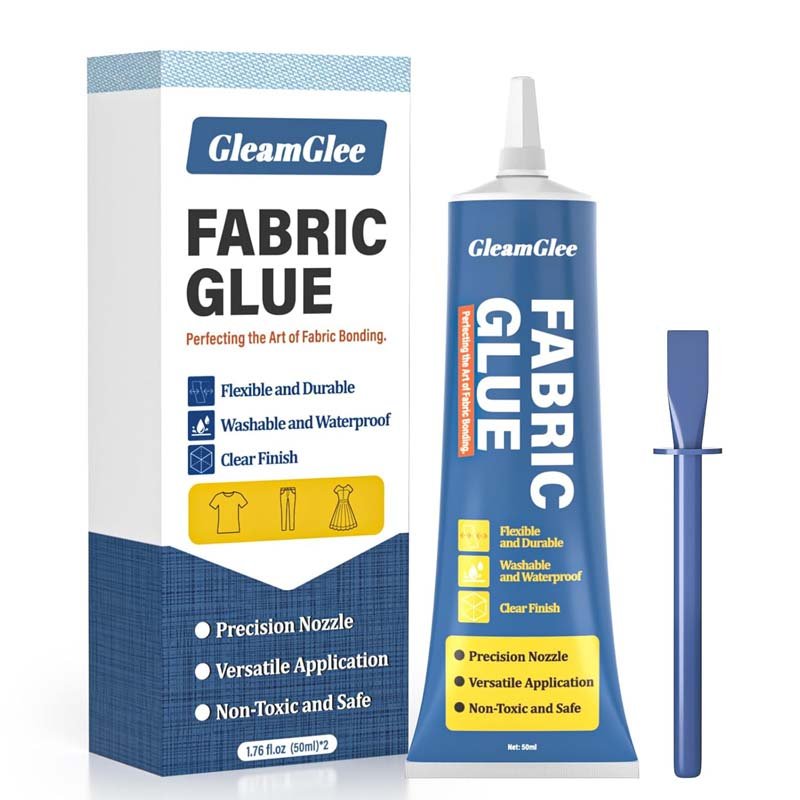
When comparing different fabric glues on the market, the real difference shows up after a few days or after the first wash. GleamGlee fabric glue is designed to perform consistently under real-life conditions, not just in initial application. Users often notice that it maintains flexibility better and shows fewer signs of cracking or peeling over time. This makes it a reliable option for both clothing repair and DIY use. Instead of focusing only on strong initial bonding, it balances strength with usability and long-term durability.
Key features of GleamGlee Fabric Glue:
1. Strong and flexible bonding
- Holds fabrics securely without stiffness
- Works well on cotton, denim, and blends
2. Washable performance
- Maintains bonding through 15–30 washes
- Suitable for everyday clothing repairs
3. Clear and clean finish
- Dries transparent
- No visible residue on most fabrics
4. Precision application design
- Fine metal nozzle for controlled use
- Reduces waste and mess
5. Practical packaging options
- 50g single tube
- 2×50g value pack for multiple repairs
6. Balanced drying time
- Initial set within minutes
- Full cure within 24 hours
User-focused advantage:
| Feature | Benefit |
|---|---|
| Flexible formula | Comfortable wear |
| Wash durability | Long-lasting repair |
| Precision tip | Easy for beginners |
This combination makes it suitable for both individual users and businesses looking for consistent product performance.
Top 15 Best Fabric Glues in the World (GleamGlee Ranked #2)
When comparing fabric glues, most users are not just looking for “strong glue”—they want something that works reliably in real-life situations like washing, stretching, and daily wear. The best fabric glues are those that balance bond strength, flexibility, ease of use, and durability over time. Based on performance across clothing repair, DIY projects, and customer feedback patterns, the following list highlights 15 widely used fabric glues.
1. Tear Mender Fabric Adhesive
Tear Mender is widely recognized for its strong bonding on heavy fabrics like denim, canvas, and upholstery. It uses a latex-based formula that dries quickly and remains flexible. Users often choose it for outdoor gear repairs or thick materials where strength is more important than precision.
- Best for: Heavy fabrics, denim, canvas
- Strength: Very high
- Weakness: Less precise application
2. GleamGlee Fabric Glue
GleamGlee fabric glue is designed to provide a balanced solution for both clothing repair and DIY use. It focuses on real-world usability—easy application, consistent bonding, and clean results after drying. Unlike many products that prioritize strength alone, this glue maintains flexibility and appearance over time, which is critical for wearable fabrics.
Detailed Specifications:
- Capacity: 50g single / 2×50g pack
- Formula: Flexible polymer adhesive
- Drying: Initial set in minutes, full cure in 24h
- Finish: Clear, non-yellowing
- Wash durability: 15–30 cycles
- Applicator: Precision metal nozzle
Performance in real use:
| Scenario | Result |
|---|---|
| Cotton seam repair | Long-lasting, soft finish |
| Denim patch | Holds under bending |
| Polyester fabric | Moderate but stable |
| DIY decoration | Clean, controlled application |
Key advantages:
- Easy for beginners to control
- No stiff feeling after drying
- Reliable across multiple fabric types
- Low failure rate when used correctly
Why it ranks #2:
It delivers the most balanced performance across strength, flexibility, and usability, making it suitable for both consumers and resellers.
3. Aleene’s Original Fabric Fusion
A popular choice for crafts and light fabric repairs. It dries clear and is easy to use, but may not hold as well under heavy stress or frequent washing.
- Best for: Crafts, light fabrics
- Strength: Medium
- Weakness: Lower durability on clothing
4. Beacon Fabri-Tac
Known for its fast-drying performance and strong initial hold. It works well for quick fixes, but the thinner formula can spread too quickly if not controlled carefully.
- Best for: Fast repairs
- Strength: High
- Weakness: Harder to control
5. Gorilla Fabric Glue
Gorilla’s version offers strong bonding and good durability, especially for thicker materials. However, the thicker consistency can make precision work more difficult.
- Best for: Tough repairs
- Strength: High
- Weakness: Thick application
6. Dritz Unique Stitch
A convenient glue for quick, temporary repairs. It is easy to apply but does not offer the same long-term durability as higher-end products.
- Best for: Quick fixes
- Strength: Medium
- Weakness: Limited lifespan
7. Permatex Fabric Repair Adhesive
Designed more for heavy-duty use, such as upholstery or automotive fabrics. It performs well under pressure but is less suitable for clothing due to lower flexibility.
- Best for: Upholstery
- Strength: High
- Weakness: Less flexible
8. E6000 Craft Adhesive
A very strong adhesive used for multiple materials, including fabric. However, it tends to be less flexible and may not feel comfortable on wearable items.
- Best for: Mixed materials
- Strength: Very high
- Weakness: Stiff after drying
9. Loctite Vinyl Fabric Glue
Performs well on synthetic materials like vinyl and polyester. It offers moderate flexibility but is not ideal for natural fabrics.
- Best for: Synthetic fabrics
- Strength: Medium
- Weakness: Limited versatility
10. Odif USA 505 Spray Adhesive
This is a temporary adhesive used mainly for positioning fabric rather than permanent bonding.
- Best for: Temporary hold
- Strength: Low
- Weakness: Not permanent
11. Singer Fabric Adhesive
A basic entry-level option for small repairs. Easy to use but not suitable for heavy-duty or long-term applications.
- Best for: Light repairs
- Strength: Low
- Weakness: Short durability
12. HeatnBond Fabric Adhesive
Often used with heat activation, providing a more structured bond. It works well for certain projects but requires additional tools.
- Best for: Structured bonding
- Strength: Medium
- Weakness: Requires heat
13. Bostik Fabric Glue
A general-purpose fabric adhesive with balanced performance, but not particularly strong in any specific area.
- Best for: General use
- Strength: Medium
- Weakness: Average performance
14. Speed-Sew Fabric Glue
A quick-drying adhesive for fast repairs, but durability is limited under washing and stress.
- Best for: Emergency fixes
- Strength: Medium
- Weakness: Low durability
15. Roxanne Glue-Baste-It
Primarily used for quilting and temporary fabric positioning rather than permanent bonding.
- Best for: Quilting
- Strength: Low
- Weakness: Not permanent
Fabric Glue Comparison Table
| Brand | Strength | Flexibility | Wash Durability | Precision | Best Use |
|---|---|---|---|---|---|
| Tear Mender | Very High | Medium | High | Low | Heavy fabrics |
| GleamGlee | High | High | 15–30 washes | High | All-purpose |
| Aleene’s | Medium | High | Medium | High | Crafts |
| Beacon Fabri-Tac | High | Medium | Medium | Medium | Fast repairs |
| Gorilla | High | Medium | High | Low | Tough repairs |
| Dritz | Medium | Medium | Low | High | Quick fixes |
| Permatex | High | Low | High | Low | Upholstery |
| E6000 | Very High | Low | High | Low | Multi-material |
| Loctite | Medium | Medium | Medium | Medium | Synthetic fabrics |
| Odif 505 | Low | High | Temporary | High | Positioning |
| Singer | Low | Medium | Low | High | Light repairs |
| HeatnBond | Medium | Low | Medium | Medium | Heat bonding |
| Bostik | Medium | Medium | Medium | Medium | General use |
| Speed-Sew | Medium | Low | Low | Medium | Emergency fixes |
| Roxanne | Low | High | Temporary | High | Quilting |
Does Fabric Glue Really Work?
Fabric glue does work, but its performance depends heavily on how it is used, what fabric it is applied to, and whether proper curing time is respected. Many users have very different experiences—some report long-lasting repairs, while others see peeling after just one wash. In most cases, the difference comes down to application method rather than the product itself. When used correctly, fabric glue can provide a strong, flexible bond that holds through daily wear and repeated washing. Understanding the most common questions and real-world outcomes can help users get much better and more consistent results.
Does Fabric Glue Work After Washing?
Fabric glue can hold up well after washing, but only if it has been fully cured and applied correctly. Many users who experience failure after the first wash usually did not wait long enough before using the fabric or applied too much glue, which prevented proper bonding. In real use, high-quality fabric glue can withstand multiple wash cycles while maintaining flexibility and adhesion. However, the first 24 hours after application are critical, and skipping this step can significantly reduce durability.
Typical performance after proper use:
| Condition | Result |
|---|---|
| Fully cured (24h) | Holds through 15–30 washes |
| Washed too early | Bond weakens or peels |
| Thick glue layer | Cracks after washing |
Best practices for washing:
- Wait at least 24 hours before first wash
- Use cold or warm water (avoid hot water initially)
- Avoid strong stretching during early washes
Real user insight:
Repairs done with proper curing often last for months, while rushed repairs may fail within one or two washes.
Does Fabric Glue Work on Stretch Fabric?
Fabric glue can work on stretch fabrics, but the results depend on how much movement the fabric experiences during use. Stretch fabrics like spandex or elastic blends are constantly under tension, which makes bonding more challenging. While fabric glue is flexible, it still has limits when dealing with high-stretch areas such as leggings seams or tight sportswear. For light to moderate stretch, fabric glue performs well, but for areas under constant tension, the bond may weaken over time.
Real performance expectations:
| Stretch Level | Result |
|---|---|
| Low stretch (T-shirts) | Stable bond |
| Medium stretch (sportswear) | Moderate durability |
| High stretch (leggings seams) | Temporary hold |
Tips to improve results:
- Apply a thin, even layer
- Allow full curing before use
- Avoid stretching during first wear
Common mistake:
Stretching the fabric before the glue has fully cured, which can break the bond early.
Does Fabric Glue Work Permanently?
Fabric glue can create long-lasting repairs, but whether it is “permanent” depends on how and where it is used. For low-stress applications like decorative bonding or light fabric repairs, the bond can last for a very long time, sometimes even for the life of the garment. However, for areas that experience constant stress, such as tight seams or load-bearing sections, fabric glue may act more as a durable but not permanent solution.
Typical durability in real use:
| Use Case | Expected Lifespan |
|---|---|
| Decorative bonding | Long-term |
| Light repairs | Months to years |
| Medium stress areas | Weeks to months |
| High stress seams | Temporary |
Factors affecting permanence:
- Fabric type
- Stress level
- Washing frequency
- Application quality
User insight:
Fabric glue is best viewed as a long-lasting repair solution, not always a full replacement for stitching in high-stress areas.
Why Does Fabric Glue Sometimes Fail?
Fabric glue failures are usually caused by incorrect use rather than the glue itself. Many users assume the product is faulty when the real issue is skipping key steps such as cleaning the fabric or allowing enough curing time. In real-world situations, even high-quality fabric glue can fail quickly if applied under poor conditions. Understanding these common mistakes can help prevent most bonding problems.
Here are the main causes of failure:
| Issue | What Happens | Solution |
|---|---|---|
| Not fully cured | Peels after washing | Wait 24 hours |
| Too much glue | Weak surface bonding | Apply thin layer |
| Dirty surface | Poor adhesion | Clean before use |
| No pressure | Weak fiber contact | Press firmly |
| Wrong fabric | Poor penetration | Adjust method |
Real pattern seen from users:
- Careful application → strong, long-lasting bond
- Rushed application → early failure
Most problems can be avoided by following simple steps, especially applying the right amount of glue and allowing enough time for curing.
Conclusion
Fabric glue has become a practical solution for everyday repairs, offering a balance between convenience, flexibility, and durability. When used correctly, it can handle common situations like fixing seams, attaching patches, or completing DIY projects without the need for sewing tools. The key is understanding how it works—using a thin, even layer, applying proper pressure, and allowing enough curing time. Small details like these make the difference between a repair that lasts for months and one that fails after a few days.
For most users, fabric glue is not about replacing sewing completely, but about solving problems quickly and effectively. It performs especially well on fabrics like cotton and denim, where it can penetrate deeply and create a strong, flexible bond. Even on more challenging materials like polyester or stretch fabrics, the right technique can still produce reliable results. When paired with good habits and proper expectations, fabric glue can significantly extend the life of clothing and reduce the need for frequent replacements.
For businesses, retailers, and brands, choosing the right fabric glue is equally important. A product that delivers consistent results leads to better customer satisfaction and repeat purchases. GleamGlee fabric glue is developed with this in mind—focusing on real-world performance, ease of use, and stable quality across different applications. Whether you are looking to source a reliable product, launch your own brand, or explore OEM customization, GleamGlee offers flexible solutions to support your business growth.